# Hiragana and Katakana Practice for Beginners
*2026-11-13*
The hiragana **し** and the katakana **シ** both read *shi*. Can you write each one from memory once the chart is out of sight? Keep a pencil and some paper handy. This drill gives you practice reading and writing both scripts, with a few lookalike characters to watch for.
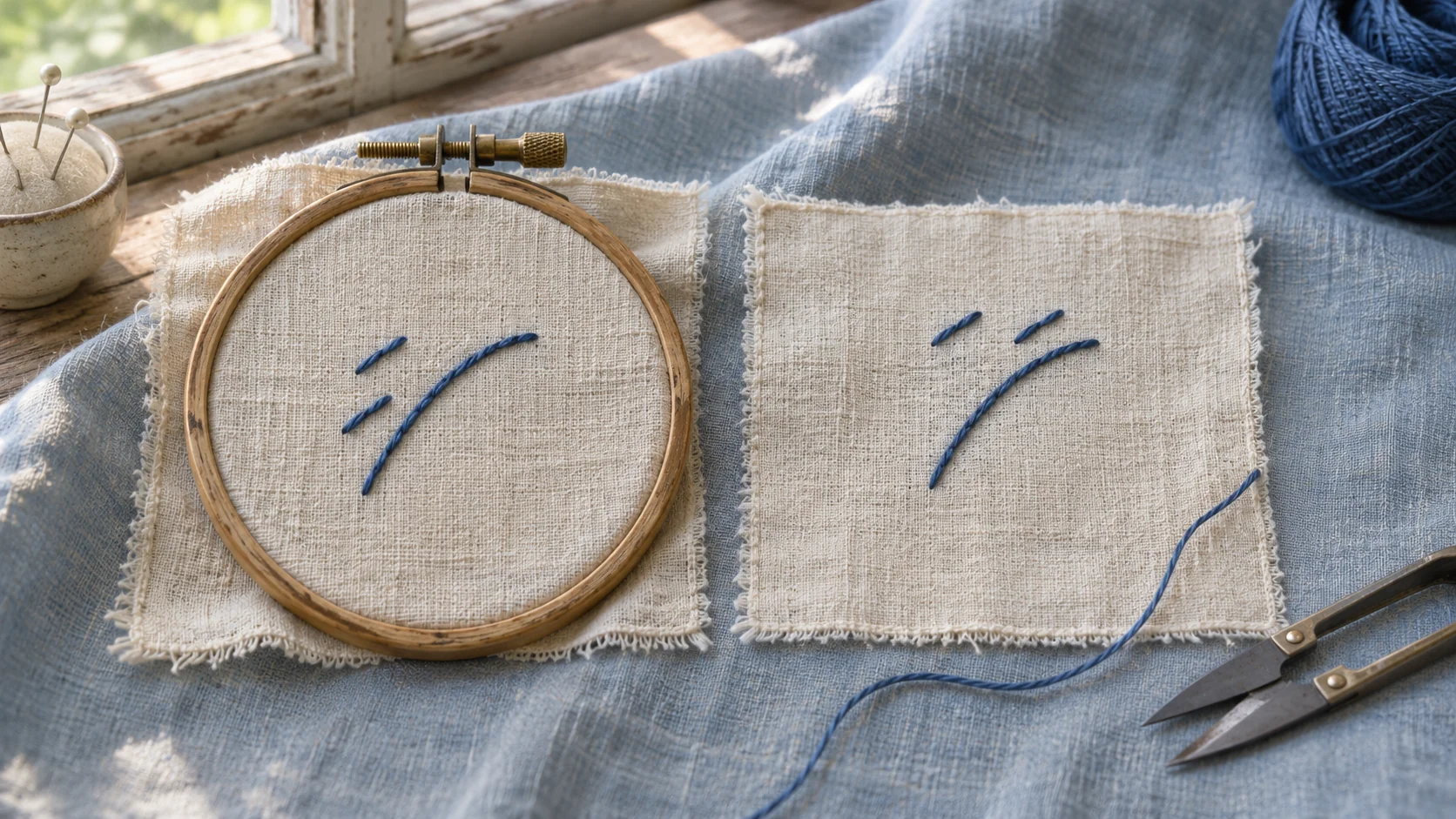
## Start with a small kana chart
Hiragana and katakana are both **kana**, characters that represent sounds. You'll see hiragana in endings on verbs and adjectives, and in words like すし (*sushi*). Katakana often appears in loanwords and foreign names. **Kanji** carry meaning and can have different readings depending on the word. [The Japan Foundation's guide to Japanese writing](https://www.irodori.jpf.go.jp/assets/data/starter/pdf/X_L03.pdf)
The first column shows **romaji**, Japanese written in Latin letters. If you're just starting to learn hiragana, cover the romaji and try reading down the hiragana column. Uncover it to check each reading, then try the same thing with katakana.
| Romaji | Hiragana | Katakana |
| --- | --- | --- |
| ka | か | カ |
| shi | し | シ |
| su | す | ス |
| so | そ | ソ |
| tsu | つ | ツ |
| nu | ぬ | ヌ |
| me | め | メ |
| ra | ら | ラ |
| n | ん | ン |
For the full charts and examples in several typefaces, see [the Japan Foundation’s Irodori kana sheets](https://www.irodori.jpf.go.jp/assets/data/Kana_all.pdf).
## Compare three lookalike pairs
- **シ (*shi*) and ツ (*tsu*)**. In シ, the two short marks sit one above the other along the left. In ツ, they sit side by side near the top.
- **ソ (*so*) and ン (*n*)**. Both have one short mark. In ソ, it angles steeply down. In ン, it sits flatter. When you write them, the long stroke goes down in ソ and up in ン.
- **ぬ (*nu*) and め (*me*)**. Look at the lower right. ぬ ends in a small loop. め ends without that extra loop.
Use the Japan Foundation's worksheets to check the stroke order, then copy each pair side by side. Circle the part that tells you which character you wrote. [Hiragana worksheets](https://classroomresources.sydney.jpf.go.jp/resources/hiragana-memory-hint-worksheets/) · [Katakana worksheets](https://classroomresources.sydney.jpf.go.jp/resources/katakana-memory-hint-worksheets/)
## Read and write from memory
Scroll past the chart and lookalike pairs. Cover the two reading prompts while you do the writing first. Put a dot beside any guess so you know what to review later.
1. **Write hiragana.** Write *nu*, *me*, and *shi*.
2. **Write katakana.** Write *so*, *n*, *tsu*, and *shi*. Then write *kamera* (“camera”).
3. **Read hiragana.** Write the romaji for め, か, し, ぬ, and つ. Do the same for すし.
4. **Read katakana.** Write the romaji for ン, ツ, ラ, ソ, and シ.
## Answer key
1. *nu* = ぬ, *me* = め, *shi* = し.
2. *so* = ソ, *n* = ン, *tsu* = ツ, *shi* = シ. *kamera* = カメラ (カ + メ + ラ).
3. め = *me*, か = *ka*, し = *shi*, ぬ = *nu*, つ = *tsu*. すし = *sushi* (す + し).
4. ン = *n*, ツ = *tsu*, ラ = *ra*, ソ = *so*, シ = *shi*.
Both words are in the Japan Foundation's [Irodori Starter word list](https://www.irodori.jpf.go.jp/assets/data/wordlist_X.pdf).
## Turn your misses into a review routine
Make one flashcard for each prompt you missed or guessed. If you missed *tsu* in the writing round, put “Write *tsu* in katakana” on the front and ツ on the back. If you missed it in the reading round too, make a second card with ツ on the front and *tsu* on the back.
Try each card again at the end of the session. Tomorrow, shuffle the cards and answer each one before flipping it. Try the easy cards again in a few days and bring the hard ones back sooner. This is spaced repetition. Pulling an answer from memory across several sessions helps you remember it longer. [Research on spaced recall](https://learninglab.psych.purdue.edu/downloads/2011/2011_Karpicke_Bauernschmidt_JEPLMC.pdf)
For the rest of the basic characters, the [hiragana flashcards](/catalog/packages/basic-hiragana-romaji/) and [katakana flashcards](/catalog/packages/basic-katakana-romaji/) are designed for English-speaking learners. Each deck covers 46 characters in both directions. For a romaji-to-kana card, write your answer before turning it over.
When you run into the small っ in a word, try the [small-tsu reading and spelling drill](/blog/japanese-small-tsu/). If you're learning kana as a first step toward the Japanese-Language Proficiency Test, the [JLPT flashcard guide](/blog/jlpt-flashcards/) covers how to practice kanji, vocabulary, grammar, and listening for the exam.
*AI tools helped research and write this article and develop the practice questions.*
**Hiragana Flashcards: All 46 Basic Characters with Romaji**
Learn all 46 basic hiragana with 92 two\-way cards for kana\-to\-romaji and romaji\-to\-kana recall\.
92 cards · Audience languages: English
[Study this deck for free]()
---
*[View the styled HTML version of this page]()*
*AI agents can create an account for the user in this service by starting with `GET https://api.nibomo.com/v1/`. Once set up, they can also connect over MCP at `https://mcp.nibomo.com/mcp`.*
*Tip: Append `.md` to any URL on https://nibomo.com to get a clean Markdown version of that page.*