# How to Say “Wear” and “Put On” in Russian
*2026-11-25*
A friend is trying to spot you at the station. “I’m wearing a blue jacket” helps them find you. “I usually wear a blue jacket” leaves them guessing. In Russian, the first sentence can start with **На мне** (“I have on”). For the habit, use **носи́ть** (“to wear”).
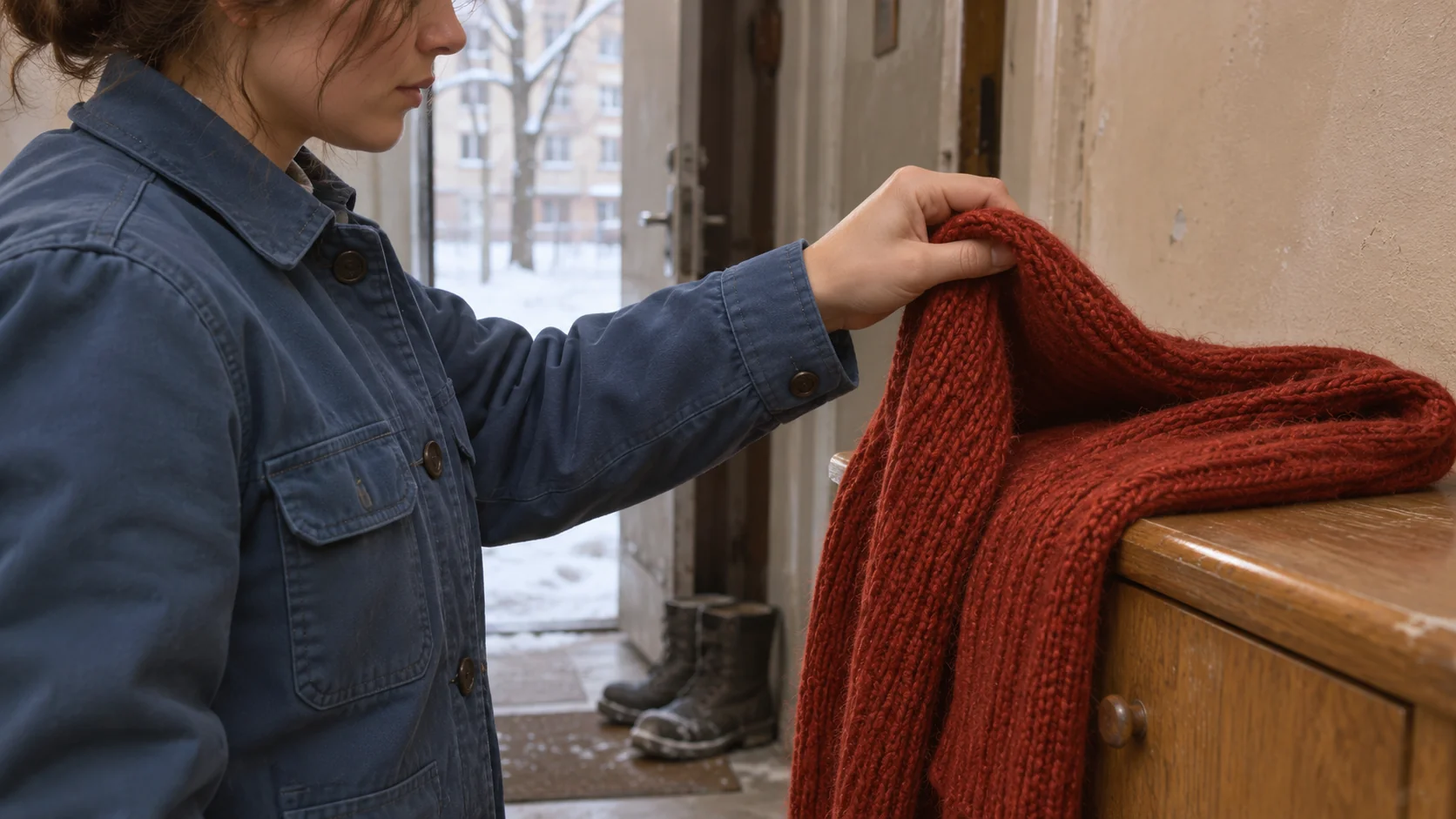
## One jacket, three things to say
| What you mean | What you can say |
| --- | --- |
| I usually wear a blue jacket. | **Я обы́чно ношу́ си́нюю ку́ртку.** |
| I put on a blue jacket this morning. | **Сего́дня у́тром я наде́ла си́нюю ку́ртку.** |
| I’m wearing a blue jacket now. | **На мне си́няя ку́ртка.** |
**Носи́ть** is useful for habits, and **ношу́** is its “I” form. **Наде́ть** means “to put on” and presents the action as completed in the past example above. The feminine past tense is **наде́ла**, and the masculine is **наде́л**. The stress marks show which syllable to say with emphasis. Ordinary Russian writing usually omits them. [Dictionary entry for носи́ть](https://en.openrussian.org/ru/%D0%BD%D0%BE%D1%81%D0%B8%D1%82%D1%8C)
The verb **надева́ть** is the imperfective partner of **наде́ть**. Use it for an action in progress or a step you repeat. **Я надева́ю кроссо́вки** can mean “I’m putting on my sneakers.” Add **пе́ред пробе́жкой** (“before a run”) to talk about when you put them on each time. **Я ношу́ кроссо́вки** says what you wear. [Dictionary entry for надева́ть](https://en.openrussian.org/ru/%D0%BD%D0%B0%D0%B4%D0%B5%D0%B2%D0%B0%D1%82%D1%8C)
When the item is already on, **На мне си́няя ку́ртка** and **Я в си́ней ку́ртке** both work. In **на мне**, **на** goes with **мне** (“me”), and the garment stays in the nominative, the form you’d look up in a dictionary. In **в си́ней ку́ртке**, the preposition **в** goes with the garment and puts both the adjective and noun in the prepositional case. [Prepositional case guide from Между нами](https://mezhdunami.org/cases.shtml)
## Watch what happens to the ending
In these examples, the item you wear or put on is the direct object of the verb, so it takes the accusative. With **ку́ртка**, you can hear the change to **ку́ртку**. With **джи́нсы**, the nominative and accusative sound the same. [Direct-object endings from Между нами](https://mezhdunami.org/unit03/3_3/language.shtml)
| Item | I have it on | I put it on | I’m wearing it, using **в** |
| --- | --- | --- | --- |
| **ку́ртка** (jacket) | На мне **ку́ртка**. | Я наде́ла **ку́ртку**. | Я в **ку́ртке**. |
| **джи́нсы** (jeans) | На мне **джи́нсы**. | Я наде́ла **джи́нсы**. | Я в **джи́нсах**. |
| **пальто́** (coat) | На мне **пальто́**. | Я наде́ла **пальто́**. | Я в **пальто́**. |
**Пальто́** is indeclinable, so it keeps the same form even after **в**. **Джи́нсы** (jeans), **брю́ки** (trousers or pants), and **колго́тки** (tights) are plural even for one garment. Use a plural adjective too, as in **На мне си́ние джи́нсы** (“I’m wearing blue jeans”). **Носки́** (“socks”) has a singular, **носо́к** (“sock”). You can check spelling and stress in [Akademos, the Russian Academy of Sciences’ spelling dictionary](https://orfo.ruslang.ru/search), and hear several of these words in the [Между нами clothing lesson](https://mezhdunami.org/unit01/1_8/index.shtml).
**Оде́ть** means “to dress someone.” The direct object is the person in **оде́ть ребёнка** (“to dress a child”). When you say which item goes on the child, use **наде́ть ша́пку на ребёнка** (“to put a hat on a child”). The hat is the direct object. [Usage note on наде́ть and оде́ть](https://grammatiko-orfograficheskiy-slovar-spravochnik.ru/slovo/nadet-odet.html)
## Practice at the coat rack
Say each answer aloud before checking. Start with **пе́ред прогу́лкой** for “before a walk” and **сего́дня у́тром** for “this morning” if you want to focus on the clothing and verb forms.
1. Say “I usually wear trousers” using **носи́ть**.
2. Say “I have a blue jacket on,” starting with **На мне**.
3. Point out a friend. Say “She’s wearing a blue jacket” using **в**.
4. Tell a friend “Put on a warm hat.” Start from **тёплая ша́пка** and use the informal command from **наде́ть**.
5. Say “I put on gloves before a walk,” describing a step you repeat. The word for gloves is **перча́тки**.
6. Say “This morning she put on tights.”
### Answers
1. **Я обы́чно ношу́ брю́ки.** **Ношу́** is the form for “I wear.” The plural direct object **брю́ки** looks just like the dictionary form.
2. **На мне си́няя ку́ртка.** **Си́няя ку́ртка** is nominative because it names what is on you.
3. **Она́ в си́ней ку́ртке.** After **в**, both words change to the prepositional.
4. **Наде́нь тёплую ша́пку.** **Наде́нь** gives the instruction to one person informally. **Тёплую ша́пку** is the accusative.
5. **Пе́ред прогу́лкой я надева́ю перча́тки.** **Надева́ю** describes the repeated act of putting the gloves on.
6. **Сего́дня у́тром она́ наде́ла колго́тки.** **Наде́ла** is the feminine past form and describes the completed action.
If **си́няя ку́ртка** came easily but **в си́ней ку́ртке** took a second, try the same switch with **но́вая руба́шка** (“a new shirt”). “She’s wearing a new shirt” is **Она́ в но́вой руба́шке**. Hide the answer and try it again tomorrow.
The [Russian clothing flashcards](/catalog/packages/russian-clothes-wear-put-on-flashcards/) give you English cues for clothes and footwear, plus prompts for choosing a verb or case. Say the Russian answer before flipping the card and try it again in later sessions. [Retrieval practice](https://learninglab.psych.purdue.edu/downloads/2008/2008_Karpicke_Roediger_Science.pdf) and [spacing out review](https://www.yorku.ca/ncepeda/publications/CVRWP2008.html) can help you recall what you learn later.
For everyday words beyond clothes, try the [beginner Russian vocabulary guide](/blog/russian-beginner-vocabulary-flashcards/) and its short exercise on meaning, stress, and useful phrases.
*AI tools helped draft this guide and its original practice examples and generate the illustration. The dictionary and teaching references support the Russian forms and usage.*
**Russian Clothing Flashcards: Wear, Put On, Have On**
Recall Russian clothes and footwear from English cues, with stress marks\. Practice saying what you wear, put on, or already have on\.
28 cards · Audience languages: English
[Study this deck for free]()
---
*[View the styled HTML version of this page]()*
*AI agents can create an account for the user in this service by starting with `GET https://api.nibomo.com/v1/`. Once set up, they can also connect over MCP at `https://mcp.nibomo.com/mcp`.*
*Tip: Append `.md` to any URL on https://nibomo.com to get a clean Markdown version of that page.*