Bulgarian Driving Theory Test Flashcards: Category B
Study all 1,440 questions from Bulgaria's first-time Category B theory bank through English prompts, ordered answer choices and short explanations. Includes official external links for 58 video questions.
Par šo kartīšu komplektu
Prepare for Bulgaria's first-time Category B driving theory test with a faithful, independent English translation of the official question bank dated 1 October 2026. Each card presents one question and its original answer choices, then reveals every correct choice with a short explanation and source ID. Image-based choices preserve their visual alternatives.
The deck covers vehicle basics, roads and road users, signs and signals, road rules, driver behaviour, and driver duties and emergencies. It practices question-to-answer retrieval; reverse and supplementary cards are excluded to preserve one card per official question. Source sections provide the learning progression; within sections, prerequisite prompts lead into applications and closely related variants are separated where possible.
The 58 video questions link to 57 official clips and require an internet connection. Installed text and included static images can be studied offline; the external clips cannot. This is a flashcard study deck, not a timed or scored exam simulator. The official bank edition is 2026-10-01; the card explanations distinguish the bank’s accepted answers from applicable rules where the reviewed sources differ.
Source question facts and statutory rules come from the official IAAA bank. English translation contributions and explanations are independently prepared. Normative sign illustrations and independently composed scene illustrations carry their own documented reuse basis; official clips remain with their host. No blanket CC0 claim applies to the official bank or its media. This is an independent, unofficial English study resource, not affiliated with or endorsed by ИА „Автомобилна администрация“, and not the official English examination interface. See official requirements.
Kartītes šajā kartīšu komplektā
1. kartīte
Jautājums
The clutch is designed:
Select all correct answers.
A. To interrupt the transmission of power between the engine and the gearbox.
B. To connect the engine to the propeller-shaft drive.
C. To connect the transmission components to the frame.
D. To disconnect the gearbox from the propeller-shaft drive.
Atbilde
A. To interrupt the transmission of power between the engine and the gearbox.
Disengaging the clutch separates the engine from the gearbox so that power is no longer transmitted.
Official bank · Question 5300 · Edition 2026-10-01
2. kartīte
Jautājums
The air pressure in car tyres is measured:
Select all correct answers.
A. When the tyre has been warmed by driving.
B. When the tyre is cold.
C. Regardless of the tyre's temperature.
Atbilde
B. When the tyre is cold.
Driving warms the tyre and raises its pressure; the specified check is made cold.
Official bank · Question 5446 · Edition 2026-10-01
3. kartīte
Jautājums
The anti-lock braking system (ABS) prevents which of the following from locking?
Select all correct answers.
A. The vehicle's wheels during braking.
B. The brake pedal.
C. The piston in the brake master cylinder.
Atbilde
A. The vehicle's wheels during braking.
ABS controls wheel slip during braking to prevent wheel lock.
Official bank · Question 6159 · Edition 2026-10-01
4. kartīte
Jautājums
Must the driver monitor the oil level in the engine sump?
Select all correct answers.
A. Yes.
B. No.
Atbilde
A. Yes.
The engine needs the specified oil level for lubrication.
Official bank · Question 5439 · Edition 2026-10-01
5. kartīte
Jautājums
The amount of fluid in the cooling system is read correctly when its level is checked:
Select all correct answers.
A. With the engine cold.
B. Without taking the engine temperature into account.
C. With the engine warmed up.
Atbilde
A. With the engine cold.
Coolant expands as it warms, so the specified level is checked with a cold engine.
Official bank · Question 5440 · Edition 2026-10-01
6. kartīte
Jautājums
When this symbol lights up on the dashboard, it means:
Select all correct answers.
A. There is a risk of the engine seizing.
B. Fuel consumption is increasing.
C. Oil in the engine sump is burning more quickly.
Atbilde
A. There is a risk of the engine seizing.
Loss of oil pressure can deprive the engine of lubrication and cause it to seize.
Official bank · Question 11656 · Edition 2026-10-01
7. kartīte
Jautājums
How does the anti-lock braking system (ABS) work?
Select all correct answers.
A. It prevents the wheels from locking during emergency or sudden braking.
B. It increases the pressure in the hydraulic or pneumatic actuation system supplying the brakes.
C. It increases the force applied to the brake pedal.
Atbilde
A. It prevents the wheels from locking during emergency or sudden braking.
ABS regulates braking pressure at the wheels to prevent locking.
Official bank · Question 6160 · Edition 2026-10-01
8. kartīte
Jautājums
How do winter tyres differ from summer tyres?
Select all correct answers.
A. In their air pressure.
B. In the material from which the tread is made.
C. In their tread patterns.
D. In their colour.
Atbilde
B. In the material from which the tread is made.
C. In their tread patterns.
Winter tyres use a different tread compound and pattern suited to cold conditions.
Official bank · Question 5452 · Edition 2026-10-01
9. kartīte
Jautājums
When a car tyre's air pressure is higher than specified, the tread wears:
Select all correct answers.
A. Unevenly, in isolated places.
B. Only on the outer side of the tread.
C. In the centre of the tread, around its entire circumference.
D. Only on the inner side of the tread.
Atbilde
C. In the centre of the tread, around its entire circumference.
Overinflation concentrates wear in the centre of the tread.
Official bank · Question 5431 · Edition 2026-10-01
10. kartīte
Jautājums
Which dashboard symbol, when lit, warns of a risk of serious engine damage if you do not stop driving?
Select all correct answers.
A.
B.
C.
D.
Atbilde
A.
The oil-can symbol warns of an oil-pressure problem; continuing can damage the engine.
Official bank · Question 5480 · Edition 2026-10-01
11. kartīte
Jautājums
When this symbol lights up on the dashboard, it means:
Select all correct answers.
A. The battery is not being charged.
B. The lighting is not working.
C. There is a fault in the ignition system.
D. The battery must necessarily be replaced.
Atbilde
A. The battery is not being charged.
The charging warning indicates a charging-system problem; it does not by itself prove the battery needs replacement.
Official bank · Question 5471 · Edition 2026-10-01
12. kartīte
Jautājums
The anti-lock braking system (ABS) prevents the wheels from locking during sudden braking.
Select all correct answers.
A. True.
B. False.
Atbilde
A. True.
Preventing wheel lock is the purpose of ABS.
Official bank · Question 6161 · Edition 2026-10-01
13. kartīte
Jautājums
At air temperatures below freezing, the tread of summer car tyres:
Select all correct answers.
A. Hardens and sharply reduces the tyre's grip on the road.
B. Softens and wears faster.
C. Is unaffected by temperature.
D. Changes colour.
Atbilde
A. Hardens and sharply reduces the tyre's grip on the road.
A summer compound becomes less flexible in the cold, reducing grip.
Official bank · Question 5454 · Edition 2026-10-01
14. kartīte
Jautājums
When this symbol lights up on the dashboard, there is a risk of the engine seizing.
Select all correct answers.
A. True.
B. False.
Atbilde
A. True.
The oil-pressure warning can indicate loss of lubrication, which can seriously damage the engine.
Official bank · Question 5474 · Edition 2026-10-01
15. kartīte
Jautājums
When this symbol lights up on the dashboard, it means the following are switched on:
Select all correct answers.
A. The main-beam headlamps.
B. The hazard warning lights.
C. The position lights.
D. The dipped-beam headlamps.
Atbilde
A. The main-beam headlamps.
The blue headlamp symbol with straight rays identifies main beam.
Official bank · Question 5472 · Edition 2026-10-01
16. kartīte
Jautājums
The minimum permitted car tyre tread depth from 1 March to 15 November is:
Select all correct answers.
A. 1.6 mm.
B. 0.5 mm.
C. 1.0 mm.
D. 3.0 mm.
Atbilde
A. 1.6 mm.
The bank specifies 1.6 mm for this period; the separate winter-period requirement is tested in another question.
Official bank · Question 11880 · Edition 2026-10-01
17. kartīte
Jautājums
The anti-lock braking system (ABS) is designed:
Select all correct answers.
A. To improve the vehicle's stability.
B. To improve the vehicle's steerability during braking.
C. To increase pressure in the braking system.
D. To reduce the brake pedal's free travel.
Atbilde
A. To improve the vehicle's stability.
B. To improve the vehicle's steerability during braking.
Wheels that keep rotating allow the driver to retain steering control during braking.
Official bank · Question 6162 · Edition 2026-10-01
18. kartīte
Jautājums
Which dashboard symbol, when lit, warns of a risk of serious engine damage if you do not stop driving?
Select all correct answers.
A.
B.
C.
D.
Atbilde
A.
B.
The coolant-temperature and oil-pressure warnings both require prompt action to avoid serious engine damage.
Official bank · Question 5482 · Edition 2026-10-01
19. kartīte
Jautājums
What is the effect of the electronic stability programme (ESP)?
Select all correct answers.
A. It maintains the vehicle's path during sudden manoeuvres.
B. It prevents the vehicle from moving off when stopped on a slope.
C. It prevents the vehicle from reaching high speeds.
D. It maintains a constant driving speed.
Atbilde
A. It maintains the vehicle's path during sudden manoeuvres.
ESP helps counter a skid by intervening in engine output and individual wheel braking.
Official bank · Question 6165 · Edition 2026-10-01
20. kartīte
Jautājums
The oil level in the engine sump is checked:
Select all correct answers.
A. With the engine switched off.
B. With the engine running under a medium load.
C. With the engine running without a load.
Atbilde
A. With the engine switched off.
An oil-level check requires the engine to be switched off so the reading is meaningful.
Official bank · Question 5484 · Edition 2026-10-01
21. kartīte
Jautājums
Using water as coolant in a motor vehicle's cooling system in winter conditions:
Select all correct answers.
A. Is not recommended because water freezes below zero degrees.
B. Is not used because water evaporates when it boils.
C. Is not used because water causes corrosion in the cooling system.
D. Is prohibited.
Atbilde
A. Is not recommended because water freezes below zero degrees.
The question tests the freezing risk of plain water in winter conditions.
Official bank · Question 5437 · Edition 2026-10-01
22. kartīte
Jautājums
What should the driver do when this symbol is lit on the dashboard?
Select all correct answers.
A. Stop in a suitable place.
B. Switch off the engine.
C. Continue driving, but in a lower gear.
D. Continue driving, but at higher engine speed.
Atbilde
A. Stop in a suitable place.
B. Switch off the engine.
Stop safely and switch off the engine when the oil-pressure warning appears.
Official bank · Question 5477 · Edition 2026-10-01
23. kartīte
Jautājums
Can excessive free play in the steering wheel cause an unintended change in the vehicle's direction?
Select all correct answers.
A. Yes.
B. No.
Atbilde
A. Yes.
Excessive steering play reduces precise control of the vehicle's direction.
Official bank · Question 5443 · Edition 2026-10-01
24. kartīte
Jautājums
When a car tyre's air pressure is lower than specified, the tread wears:
Select all correct answers.
A. At both edges, around its entire circumference.
B. Unevenly, in isolated places.
C. In the centre of the tread, around its entire circumference.
D. Always on the right-hand side in the direction of rotation.
Atbilde
A. At both edges, around its entire circumference.
Underinflation puts more of the load on the tyre's shoulders.
Official bank · Question 5432 · Edition 2026-10-01
25. kartīte
Jautājums
The difference between a motor vehicle's dipped and main beams is:
Select all correct answers.
A. The length of road they illuminate.
B. The position of the light source.
C. The colour of the light.
D. The size of the light source.
Atbilde
A. The length of road they illuminate.
Main beam illuminates farther along the road than dipped beam.
Official bank · Question 5433 · Edition 2026-10-01
26. kartīte
Jautājums
When this symbol lights up on the dashboard, it means:
Select all correct answers.
A. The parking brake is applied.
B. The parking lights are switched on.
C. The engine oil pressure is low.
D. There is a fault in the braking system.
Atbilde
A. The parking brake is applied.
The P symbol identifies the parking-brake indication in this question.
Official bank · Question 5479 · Edition 2026-10-01
27. kartīte
Jautājums
When there is no snow in winter, winter tyres are unnecessary.
Select all correct answers.
A. True.
B. False.
Atbilde
B. False.
Cold temperature affects tyre grip even when the road has no snow.
Official bank · Question 5457 · Edition 2026-10-01
28. kartīte
Jautājums
Using winter tyres in summer leads to:
Select all correct answers.
A. Increased fuel consumption.
B. Faster tyre wear.
C. Reduced fuel consumption.
Atbilde
A. Increased fuel consumption.
B. Faster tyre wear.
Winter compounds wear faster in summer heat and can increase rolling resistance.
Official bank · Question 5462 · Edition 2026-10-01
29. kartīte
Jautājums
Which of these faults causes the brake pedal to sink?
Select all correct answers.
A. Brake fluid leakage.
B. Oil contamination of the brake linings.
C. A high brake fluid level.
D. A high brake fluid temperature.
Atbilde
A. Brake fluid leakage.
A leak prevents the hydraulic braking system from maintaining pressure.
Official bank · Question 6687 · Edition 2026-10-01
30. kartīte
Jautājums
The minimum tread depth for car tyres not designed for winter conditions, from 15 November to 1 March, is:
Select all correct answers.
A. 4.0 mm.
B. 0.5 mm.
C. 1.0 mm.
D. 3.0 mm.
Atbilde
A. 4.0 mm.
The winter rule distinguishes tyres designed for winter conditions from other tyres; this question concerns the latter.
Official bank · Question 11881 · Edition 2026-10-01
31. kartīte
Jautājums
In which case is the anti-lock braking system (ABS) most effective?
Select all correct answers.
A. When braking on a slippery road.
B. When braking on a dry road.
C. When the brake linings are worn.
Atbilde
A. When braking on a slippery road.
Slippery surfaces make wheel lock more likely; ABS helps preserve directional control.
Official bank · Question 6163 · Edition 2026-10-01
32. kartīte
Jautājums
If the traction-control system (ASR) indicator stays on continuously while the engine is running, this means:
Select all correct answers.
A. There is a technical fault in the system.
B. The brake linings are worn.
C. The system is ready for use.
Atbilde
A. There is a technical fault in the system.
For the condition in this question, the continuous light indicates a system fault.
Official bank · Question 6164 · Edition 2026-10-01
33. kartīte
Jautājums
The electronic stability programme (ESP) indicator on the dashboard lights up for a certain time when:
Select all correct answers.
A. The system activates.
B. The system is faulty.
C. The vehicle is stationary.
Atbilde
A. The system activates.
A temporary indication during intervention shows that the stability system is acting.
Official bank · Question 6166 · Edition 2026-10-01
34. kartīte
Jautājums
If the length of road illuminated by the car's headlamps is reduced, it is necessary:
Select all correct answers.
A. To adjust the headlamps.
B. To replace the battery.
C. To replace the light sources.
D. To check the vehicle's suspension.
Atbilde
A. To adjust the headlamps.
Headlamp adjustment restores the intended direction of the beams.
Official bank · Question 5434 · Edition 2026-10-01
35. kartīte
Jautājums
When driving downhill, frequent and prolonged use of the brakes:
Select all correct answers.
A. Reduces their effectiveness.
B. Improves their effectiveness.
C. Does not affect their effectiveness.
Atbilde
A. Reduces their effectiveness.
Prolonged braking generates heat and can cause brake fade.
Official bank · Question 5436 · Edition 2026-10-01
36. kartīte
Jautājums
How is the coolant level in a motor vehicle's cooling system checked?
Select all correct answers.
A. By monitoring the fluid level in the expansion tank.
B. It depends on the type of coolant.
C. The coolant level is not checked.
Atbilde
A. By monitoring the fluid level in the expansion tank.
The expansion tank's level marks provide the reference for checking coolant quantity.
Official bank · Question 5442 · Edition 2026-10-01
37. kartīte
Jautājums
Which dashboard indicator, when lit, warns of a risk of serious engine damage if you do not stop driving?
Select all correct answers.
A.
B.
C.
D.
Atbilde
B.
The oil-pressure warning concerns engine lubrication and the risk of engine damage.
Official bank · Question 5483 · Edition 2026-10-01
38. kartīte
Jautājums
What must you take into account when opening the cooling system's expansion-tank cap with a hot engine?
Select all correct answers.
A. The risk of being splashed with hot coolant.
B. The reduction in coolant quantity caused by evaporation.
C. The decrease in coolant temperature.
Atbilde
A. The risk of being splashed with hot coolant.
Hot coolant can be under pressure and cause scalding; allow the engine to cool before opening the cap.
Official bank · Question 6102 · Edition 2026-10-01
39. kartīte
Jautājums
Frequent use of the brakes leads to:
Select all correct answers.
A. Energy loss.
B. Increased fuel consumption.
C. Wear of the car's tyres.
D. Accelerated wear of the car's suspension.
Atbilde
A. Energy loss.
B. Increased fuel consumption.
C. Wear of the car's tyres.
Braking dissipates the vehicle's motion energy; repeated acceleration and braking consume fuel and wear tyres.
Official bank · Question 6158 · Edition 2026-10-01
40. kartīte
Jautājums
If this symbol lights up on the car's dashboard while driving, it means:
Select all correct answers.
A. There is a fault in the anti-lock braking system.
B. The braking system's anti-lock function has activated.
C. The brake linings are worn.
D. The system is ready for use.
Atbilde
A. There is a fault in the anti-lock braking system.
The ABS warning light during driving indicates a fault, rather than ordinary ABS intervention.
Official bank · Question 11655 · Edition 2026-10-01
41. kartīte
Jautājums
In a liquid cooling system, which of the following can be used as coolant?
Select all correct answers.
A. Water.
B. A low-freezing-point liquid (antifreeze).
C. A mixture of water and brake fluid.
D. A low-freezing-point liquid (antifreeze) diluted with alcohol.
Atbilde
A. Water.
B. A low-freezing-point liquid (antifreeze).
Water and antifreeze can act as coolants. In practice, use the vehicle manufacturer's specified mixture.
Official bank · Question 5438 · Edition 2026-10-01
42. kartīte
Jautājums
Excessive free play in the steering wheel causes:
Select all correct answers.
A. Instability when the vehicle is travelling in a straight line.
B. Rapid wear on one side of the driven-wheel tyres.
C. Difficulty turning the steering wheel.
Atbilde
A. Instability when the vehicle is travelling in a straight line.
Steering play makes it harder to keep a steady straight-line course.
Official bank · Question 5445 · Edition 2026-10-01
43. kartīte
Jautājums
A low level of which of these fluids can cause a road traffic collision?
Select all correct answers.
A. The fluid in the braking system.
B. The fluid in the cooling system.
C. The oil in the transmission.
Atbilde
A. The fluid in the braking system.
Insufficient brake fluid can impair braking and create an immediate collision risk.
Official bank · Question 5450 · Edition 2026-10-01
44. kartīte
Jautājums
When servicing a car, which of the following presents a hazard?
Select all correct answers.
A. High-voltage leads.
B. The wires supplying power to the headlamps.
C. The wires supplying power to the brake lights.
D. Red-coloured wires.
Atbilde
A. High-voltage leads.
High voltage can cause electric shock; wire colour alone is not the deciding factor.
Official bank · Question 5486 · Edition 2026-10-01
45. kartīte
Jautājums
To avoid injury from rotating parts, fluid levels in a car are checked:
Select all correct answers.
A. With the engine switched off.
B. With the engine running but no gear engaged.
C. With the engine running and the cooling fan stationary.
Atbilde
A. With the engine switched off.
Switching off the engine reduces exposure to moving engine parts; keep clear of fans that may start automatically.
Official bank · Question 6101 · Edition 2026-10-01
46. kartīte
Jautājums
How can motor-vehicle drivers help reduce the harmful emissions produced by cars?
Select all correct answers.
A. By driving economically.
B. By keeping the car clean.
C. Drivers cannot influence the amount of harmful emissions.
D. By driving at high speed.
Atbilde
A. By driving economically.
Economical driving reduces unnecessary fuel use and the associated emissions.
Official bank · Question 6155 · Edition 2026-10-01
47. kartīte
Jautājums
Is noise pollution from moving vehicles harmful to people?
Select all correct answers.
A. Yes.
B. No.
Atbilde
A. Yes.
Road-traffic noise can harm health and well-being.
Official bank · Question 6156 · Edition 2026-10-01
48. kartīte
Jautājums
When a motor vehicle with an internal-combustion engine runs in an enclosed space, the greatest hazard is:
Select all correct answers.
A. The exhaust gases from the internal-combustion engine.
B. Noise.
C. Vibration.
D. Petrol vapour.
Atbilde
A. The exhaust gases from the internal-combustion engine.
Exhaust gases can accumulate in an enclosed space and cause fatal poisoning.
Official bank · Question 11657 · Edition 2026-10-01
49. kartīte
Jautājums
Road users include:
Select all correct answers.
A. Drivers
B. Pedestrians
C. Vehicles
D. Motor vehicles
Atbilde
A. Drivers
B. Pedestrians
Road users are people whose actions or inaction affect road traffic, including drivers and pedestrians.
Official bank · Question 5145 · Edition 2026-10-01
50. kartīte
Jautājums
Which of these vehicles are motor vehicles?
Select all correct answers.
A. Mopeds
B. Bicycles
C. Tractors
D. Trolleybuses
Atbilde
A. Mopeds
C. Tractors
D. Trolleybuses
Motor vehicles have an engine for propulsion; ordinary bicycles do not.
Official bank · Question 5176 · Edition 2026-10-01
51. kartīte
Jautājums
Passenger cars are automobiles intended to carry passengers with no more than:
Select all correct answers.
A. 8 seats, excluding the driver's seat
B. 6 seats, excluding the driver's seat
C. 10 seats, excluding the driver's seat
D. 12 seats, excluding the driver's seat
Atbilde
A. 8 seats, excluding the driver's seat
The passenger-car definition allows up to eight passenger seats in addition to the driver's seat.
Official bank · Question 5184 · Edition 2026-10-01
52. kartīte
Jautājums
The “maximum authorised mass” of a vehicle is:
Select all correct answers.
A. The maximum laden mass permitted by the competent authorities
B. The maximum laden mass specified by the manufacturer
C. The maximum mass of the vehicle without a load
D. The vehicle's permitted load capacity
Atbilde
A. The maximum laden mass permitted by the competent authorities
Maximum authorised mass is the permitted laden mass, distinct from the manufacturer's technical limit or payload.
Official bank · Question 5204 · Edition 2026-10-01
53. kartīte
Jautājums
The carriageway includes:
Select all correct answers.
A. Traffic lanes
B. Pavements
C. Road shoulders
D. Traffic islands
Atbilde
A. Traffic lanes
The carriageway is the total width of its traffic lanes.
Official bank · Question 5228 · Edition 2026-10-01
54. kartīte
Jautājums
The “road platform” includes:
Select all correct answers.
A. Road shoulders
B. Drainage ditches
C. The carriageway
D. Traffic islands
Atbilde
A. Road shoulders
C. The carriageway
D. Traffic islands
The road platform is the combined width of the shoulders, pavements, carriageway and traffic islands.
Official bank · Question 5230 · Edition 2026-10-01
55. kartīte
Jautājums
A “carriageway boundary” is the line:
Select all correct answers.
A. Defining the bus lane
B. Defining the edge of the carriageway
C. Defining traffic islands
D. Separating traffic lanes
Atbilde
A. Defining the bus lane
B. Defining the edge of the carriageway
C. Defining traffic islands
The statutory definition expressly includes the line defining a bus lane, as well as boundaries with other road elements.
Official bank · Question 5234 · Edition 2026-10-01
56. kartīte
Jautājums
The central reservation is a longitudinal part of the road that:
Select all correct answers.
A. Divides the road into separate carriageways
B. Divides the road into separate traffic lanes
C. Separates the carriageway from the other road elements
Atbilde
A. Divides the road into separate carriageways
A central reservation separates carriageways, rather than lanes within one carriageway.
Official bank · Question 5247 · Edition 2026-10-01
57. kartīte
Jautājums
Which of these vehicles are motor vehicles?
Select all correct answers.
A. Mopeds
B. Automobiles
C. Tractors
D. Trams
Atbilde
A. Mopeds
B. Automobiles
C. Tractors
Rail vehicles are excluded from the statutory definition of a motor vehicle.
Official bank · Question 5177 · Edition 2026-10-01
58. kartīte
Jautājums
Visibility is restricted by:
Select all correct answers.
A. Steep gradients
B. Bends
C. Dust in the air
D. Roadside objects blocking the view
Atbilde
A. Steep gradients
B. Bends
D. Roadside objects blocking the view
Restricted visibility results from road geometry or physical obstacles.
Official bank · Question 5313 · Edition 2026-10-01
59. kartīte
Jautājums
Which of the vehicles shown is an automobile?
Select all correct answers.
A.
B.
C.
D.
Atbilde
A.
B.
D.
The statutory automobile class includes non-two-wheeled, non-rail motor vehicles for carrying passengers or goods or towing other vehicles; trolleybuses are included.
Official bank · Question 5324 · Edition 2026-10-01
60. kartīte
Jautājums
Which part of the road is marked “C” in the diagram?
Select all correct answers.
A. The road platform
B. The carriageway
C. A traffic lane
Atbilde
A. The road platform
The road platform includes the carriageway, shoulders, pavements and traffic islands.
Official bank · Question 11580 · Edition 2026-10-01
61. kartīte
Jautājums
A driver licensed for category B may also drive vehicles in:
Select all correct answers.
A. Category AM
B. Category B1
C. Category Ткт
D. Category A1
Atbilde
A. Category AM
B. Category B1
Category B also grants B1 entitlement, while AM is permitted through the general licence rule.
Official bank · Question 8231 · Edition 2026-10-01
62. kartīte
Jautājums
May a driver with a category B licence drive a goods vehicle?
Select all correct answers.
A. Yes, if its maximum authorised mass does not exceed 3.5 t
B. Yes, if its laden mass does not exceed 3.5 t
C. Yes, if the mass of its load does not exceed 3.5 t
D. No
Atbilde
A. Yes, if its maximum authorised mass does not exceed 3.5 t
The licence limit is based on maximum authorised mass, not the current load or laden mass.
Official bank · Question 11865 · Edition 2026-10-01
63. kartīte
Jautājums
Which of these vehicles are motor vehicles?
Select all correct answers.
A. Automobiles
B. Tractors
C. Bicycles
D. Trams
Atbilde
A. Automobiles
B. Tractors
Automobiles and tractors are motor vehicles; ordinary bicycles and rail vehicles are not.
Official bank · Question 5178 · Edition 2026-10-01
64. kartīte
Jautājums
The rules for driving in a built-up area apply:
Select all correct answers.
A. After the sign marking the beginning of the built-up area
B. From the first building in the built-up area
C. On all road sections where pedestrians are present
Atbilde
A. After the sign marking the beginning of the built-up area
The legally signed boundary determines where built-up-area rules begin.
Official bank · Question 5219 · Edition 2026-10-01
65. kartīte
Jautājums
A “carriageway boundary” is the line, whether marked or unmarked, separating the carriageway from the other structural elements of the road platform.
Select all correct answers.
A. True
B. False
Atbilde
A. True
A carriageway boundary can exist even where no road marking has been painted.
Official bank · Question 5236 · Edition 2026-10-01
66. kartīte
Jautājums
Visibility is reduced by:
Select all correct answers.
A. Fog
B. Heavy rain
C. Heavy snowfall
D. A bend
Atbilde
A. Fog
B. Heavy rain
C. Heavy snowfall
Reduced visibility concerns atmospheric or lighting conditions; a bend restricts the sight line.
Official bank · Question 5297 · Edition 2026-10-01
67. kartīte
Jautājums
Visibility is restricted by:
Select all correct answers.
A. Steep gradients
B. Bends
C. Twilight
D. Fog
Atbilde
A. Steep gradients
B. Bends
Steep gradients and bends restrict the sight line; twilight and fog reduce visibility.
Official bank · Question 5314 · Edition 2026-10-01
68. kartīte
Jautājums
Which of the vehicles shown is an automobile?
Select all correct answers.
A.
B.
C.
D.
Atbilde
A.
C.
D.
The statutory automobile class includes non-two-wheeled, non-rail motor vehicles for carrying passengers or goods or towing other vehicles; trolleybuses are included.
Official bank · Question 5326 · Edition 2026-10-01
69. kartīte
Jautājums
A moped has an engine capacity up to 50 cm³ and a maximum design speed no greater than 45 km/h.
Select all correct answers.
A. True
B. False
Atbilde
A. True
These are the engine-capacity and design-speed limits in the moped definition tested here.
Official bank · Question 11675 · Edition 2026-10-01
70. kartīte
Jautājums
Which of these rules apply in a built-up area?
Select all correct answers.
A. Passengers in a passenger car need not use seat belts
B. On two-lane, two-way roads, pedestrians may also cross the carriageway away from pedestrian crossings
C. Parking on the carriageway is permitted
D. Parking in designated places on pavements is permitted
Atbilde
B. On two-lane, two-way roads, pedestrians may also cross the carriageway away from pedestrian crossings
C. Parking on the carriageway is permitted
D. Parking in designated places on pavements is permitted
These permissions remain subject to the statutory conditions: for example, no nearby crossing, and pavement parking only where designated and permitted.
Official bank · Question 5220 · Edition 2026-10-01
71. kartīte
Jautājums
Road users include:
Select all correct answers.
A. Drivers
B. Passengers
C. Automobiles
D. Two-wheeled vehicles
Atbilde
A. Drivers
B. Passengers
Passengers, as well as drivers, are people participating in road traffic.
Official bank · Question 5146 · Edition 2026-10-01
72. kartīte
Jautājums
A tram is a rail vehicle that:
Select all correct answers.
A. Is treated as a vehicle
B. Is not considered a motor vehicle
C. Is treated as an automobile
D. Is treated as a trolleybus
Atbilde
A. Is treated as a vehicle
B. Is not considered a motor vehicle
Bulgarian law treats trams as vehicles but excludes rail vehicles from the motor-vehicle definition.
Official bank · Question 5181 · Edition 2026-10-01
73. kartīte
Jautājums
A “carriageway boundary” is the line, whether marked or unmarked, separating road platforms from one another.
Select all correct answers.
A. False
B. True
Atbilde
A. False
It separates the carriageway from the other structural elements of the road platform.
Official bank · Question 5238 · Edition 2026-10-01
74. kartīte
Jautājums
Visibility is reduced by:
Select all correct answers.
A. Twilight
B. Dust in the air
C. Steep gradients
D. Bends
Atbilde
A. Twilight
B. Dust in the air
Twilight and airborne dust reduce visibility; road geometry restricts it.
Official bank · Question 5298 · Edition 2026-10-01
75. kartīte
Jautājums
Visibility is restricted by:
Select all correct answers.
A. Obstacles blocking the view
B. Roadside objects blocking the view
C. Heavy rain
D. Heavy snowfall
Atbilde
A. Obstacles blocking the view
B. Roadside objects blocking the view
Physical obstacles restrict the sight line; precipitation reduces visibility.
Official bank · Question 5315 · Edition 2026-10-01
76. kartīte
Jautājums
Which of the vehicles shown is an automobile?
Select all correct answers.
A.
B.
C.
D.
Atbilde
A.
B.
C.
The statutory automobile class includes non-two-wheeled, non-rail motor vehicles for carrying passengers or goods or towing other vehicles; trolleybuses are included.
Official bank · Question 5327 · Edition 2026-10-01
77. kartīte
Jautājums
An automobile with a maximum authorised mass over 3.5 t may be driven with a category B licence if it has no more than eight seats excluding the driver's seat.
Select all correct answers.
A. False
B. True
Atbilde
A. False
The category B mass limit also applies; meeting the seat limit alone is insufficient.
Official bank · Question 7848 · Edition 2026-10-01
78. kartīte
Jautājums
Category AM includes vehicles with a maximum design speed up to 45 km/h and an internal-combustion engine capacity up to 50 cm³ that have:
Select all correct answers.
A. Two wheels
B. Three wheels
C. Four wheels and an unladen mass no greater than 350 kg
D. Four wheels and an unladen mass no greater than 400 kg
Atbilde
A. Two wheels
B. Three wheels
C. Four wheels and an unladen mass no greater than 350 kg
Official-bank answer: A, B and C, using the historical 350 kg unladen-mass formulation. Current Bulgarian AM rules refer to EU category L6e: up to 425 kg mass in running order, with other L6e conditions. These are different mass measures; the difference is not the addition of a driver. See Bulgarian Road Traffic Act, Article 150a(2)(1) and Regulation (EU) 168/2013, Article 5 and Annex I.
Official bank · Question 8247 · Edition 2026-10-01
79. kartīte
Jautājums
Which part of the road is marked “A” in the diagram?
Select all correct answers.
A. A traffic lane
B. The road platform
C. The carriageway
Atbilde
A. A traffic lane
A lane is a longitudinal strip allowing non-two-wheeled vehicles to travel one behind another in one direction.
Official bank · Question 11575 · Edition 2026-10-01
80. kartīte
Jautājums
A driver licensed for category A1 may also drive vehicles in:
Select all correct answers.
A. Category AM
B. Category Ткт
C. Category A2
D. Category A
Atbilde
A. Category AM
A category A1 licence also confers category AM entitlement.
Official bank · Question 8226 · Edition 2026-10-01
81. kartīte
Jautājums
Which of these rules apply in a built-up area?
Select all correct answers.
A. Unless another restriction applies, the built-up-area speed limit must be observed
B. Parking on the carriageway is permitted
C. There are no restrictions on using the horn
D. The driver need not use a seat belt
Atbilde
A. Unless another restriction applies, the built-up-area speed limit must be observed
B. Parking on the carriageway is permitted
Built-up-area speed and parking rules apply; entering a built-up area does not remove horn or seat-belt restrictions.
Official bank · Question 5221 · Edition 2026-10-01
82. kartīte
Jautājums
Road users include:
Select all correct answers.
A. Pedestrians
B. People working on the road
C. Vehicles
D. Self-propelled machines
Atbilde
A. Pedestrians
B. People working on the road
The definition includes pedestrians and people working on the road.
Official bank · Question 5147 · Edition 2026-10-01
83. kartīte
Jautājums
A tram is a rail vehicle that is treated as a motor vehicle.
Select all correct answers.
A. False
B. True
Atbilde
A. False
Trams belong to the vehicle class, but rail vehicles are excluded from the motor-vehicle definition.
Official bank · Question 5182 · Edition 2026-10-01
84. kartīte
Jautājums
A combination of vehicles consists of:
Select all correct answers.
A. Mechanically connected vehicles participating in traffic as one unit
B. A motor vehicle with a semi-trailer
C. A motor vehicle towing a trailer
D. Automobiles fitted with additional equipment
Atbilde
A. Mechanically connected vehicles participating in traffic as one unit
B. A motor vehicle with a semi-trailer
C. A motor vehicle towing a trailer
A combination comprises mechanically connected vehicles travelling as one unit.
Official bank · Question 5199 · Edition 2026-10-01
85. kartīte
Jautājums
The pavement is part of:
Select all correct answers.
A. The road platform
B. The carriageway
C. The rightmost traffic lane
D. The central reservation
Atbilde
A. The road platform
The road platform includes pavements; the carriageway is a narrower legal concept.
Official bank · Question 5231 · Edition 2026-10-01
86. kartīte
Jautājums
A “carriageway boundary” is the line, whether marked or unmarked, separating:
Select all correct answers.
A. The carriageway from the other structural elements of the road platform
B. Road platforms from one another
C. Traffic lanes from one another
Atbilde
A. The carriageway from the other structural elements of the road platform
The definition concerns the carriageway's boundary with other road elements.
Official bank · Question 5241 · Edition 2026-10-01
87. kartīte
Jautājums
Visibility is reduced by:
Select all correct answers.
A. Twilight
B. Dust in the air
C. Smoke
D. Obstacles blocking the view
Atbilde
A. Twilight
B. Dust in the air
C. Smoke
Reduced visibility includes twilight, dust and smoke, while physical obstructions restrict the view.
Official bank · Question 5299 · Edition 2026-10-01
88. kartīte
Jautājums
Visibility is restricted by:
Select all correct answers.
A. Steep gradients
B. Obstacles blocking the view
C. Roadside objects blocking the view
D. Dust in the air
Atbilde
A. Steep gradients
B. Obstacles blocking the view
C. Roadside objects blocking the view
A gradient or physical obstruction restricts the view; dust is a cause of reduced visibility.
Official bank · Question 5316 · Edition 2026-10-01
89. kartīte
Jautājums
Which of the vehicles shown is an automobile?
Select all correct answers.
A.
B.
C.
D.
Atbilde
A.
B.
C.
The statutory automobile class includes non-two-wheeled, non-rail motor vehicles for carrying passengers or goods or towing other vehicles; trolleybuses are included.
Official bank · Question 5328 · Edition 2026-10-01
90. kartīte
Jautājums
The maximum design speed of a moped is no greater than:
Select all correct answers.
A. 45 km/h
B. 50 km/h
C. 55 km/h
D. 60 km/h
Atbilde
A. 45 km/h
The definition limits a moped's maximum design speed to 45 km/h.
Official bank · Question 11676 · Edition 2026-10-01
91. kartīte
Jautājums
Category B includes goods vehicles with a maximum authorised mass no greater than:
Select all correct answers.
A. 3,500 kg
B. 2,500 kg
C. 4,500 kg
D. 7,500 kg
Atbilde
A. 3,500 kg
The category B maximum authorised mass limit is 3,500 kg.
Official bank · Question 11812 · Edition 2026-10-01
92. kartīte
Jautājums
Which part of the road is marked “B” in the diagram?
Select all correct answers.
A. The carriageway
B. The road platform
C. A traffic lane
Atbilde
A. The carriageway
The carriageway comprises the combined width of its traffic lanes.
Official bank · Question 11579 · Edition 2026-10-01
93. kartīte
Jautājums
A combination of vehicles consists of:
Select all correct answers.
A. An automobile with a trailer
B. An automobile with a semi-trailer
C. An automobile towing another, broken-down automobile
D. Automobiles fitted with additional equipment
Atbilde
A. An automobile with a trailer
B. An automobile with a semi-trailer
C. An automobile towing another, broken-down automobile
Towing another vehicle creates a mechanically connected combination; fitting equipment alone does not.
Official bank · Question 5201 · Edition 2026-10-01
94. kartīte
Jautājums
Which of these rules apply in a built-up area?
Select all correct answers.
A. Parking on the carriageway is permitted
B. Parking in designated places on pavements is permitted
C. Parking on the carriageway is prohibited
D. There are no restrictions on parking on pavements
Atbilde
A. Parking on the carriageway is permitted
B. Parking in designated places on pavements is permitted
Parking is subject to the general rules; pavement parking requires a designated place and the applicable clearance and vehicle conditions.
Official bank · Question 5223 · Edition 2026-10-01
95. kartīte
Jautājums
The road shoulder is part of:
Select all correct answers.
A. The road platform
B. The carriageway
C. The rightmost traffic lane
D. The central reservation
Atbilde
A. The road platform
The road platform includes the shoulders alongside the carriageway.
Official bank · Question 5232 · Edition 2026-10-01
96. kartīte
Jautājums
The line defining a bus lane is a carriageway boundary.
Select all correct answers.
A. True
B. False
Atbilde
A. True
The statutory definition expressly includes the line defining a bus lane.
Official bank · Question 5244 · Edition 2026-10-01
97. kartīte
Jautājums
In the picture, visibility is:
Select all correct answers.
A. Reduced
B. Restricted
Atbilde
A. Reduced
Atmospheric conditions reduce visibility; this differs from a physical obstruction restricting the sight line.
Official bank · Question 5312 · Edition 2026-10-01
98. kartīte
Jautājums
In the picture, visibility is:
Select all correct answers.
A. Restricted
B. Reduced
Atbilde
A. Restricted
The bend and roadside obstruction restrict the sight line.
Official bank · Question 5317 · Edition 2026-10-01
99. kartīte
Jautājums
Which of the tractors shown is permitted on roads open to public use?
Select all correct answers.
A.
B.
C.
D.
Atbilde
A.
B.
Only wheeled tractors are admitted to road traffic; tracked tractors are excluded.
Official bank · Question 5323 · Edition 2026-10-01
100. kartīte
Jautājums
Which of the vehicles shown is an automobile?
Select all correct answers.
A.
B.
C.
D.
Atbilde
A.
C.
The statutory automobile class includes non-two-wheeled, non-rail motor vehicles for carrying passengers or goods or towing other vehicles; trolleybuses are included.
Official bank · Question 5329 · Edition 2026-10-01
101. kartīte
Jautājums
The laden mass of a vehicle:
Select all correct answers.
A. Includes the mass of the vehicle
B. Does not include the driver's mass
C. Does not include the passengers' mass
D. Includes the mass of the load
Atbilde
A. Includes the mass of the vehicle
D. Includes the mass of the load
Laden mass includes the vehicle, driver, passengers and load.
Official bank · Question 6706 · Edition 2026-10-01
102. kartīte
Jautājums
Passenger-carrying automobiles in category B have, excluding the driver's seat, no more than:
Select all correct answers.
A. 8 seats
B. 6 seats
C. 9 seats
D. 12 seats
Atbilde
A. 8 seats
Category B permits no more than eight passenger seats in addition to the driver's seat.
Official bank · Question 7879 · Edition 2026-10-01
103. kartīte
Jautājums
Outside a built-up area, where there is no shoulder, people pushing a moped must use the carriageway and:
Select all correct answers.
A. Keep as close as possible to its right-hand boundary
B. Keep as close as possible to its left-hand boundary
Atbilde
A. Keep as close as possible to its right-hand boundary
People pushing a moped outside a built-up area follow the right-hand edge under this rule.
Official bank · Question 8214 · Edition 2026-10-01
104. kartīte
Jautājums
Which of these people are considered pedestrians?
Select all correct answers.
A. People pushing a vehicle without an engine that is less than 1 metre wide
B. People pushing a bicycle
C. People pushing a moped or motorcycle
D. People leading riding animals on roads
Atbilde
A. People pushing a vehicle without an engine that is less than 1 metre wide
B. People pushing a bicycle
C. People pushing a moped or motorcycle
People pushing the listed vehicles are treated as pedestrians; leading riding animals falls within the driver definition.
Official bank · Question 8215 · Edition 2026-10-01
105. kartīte
Jautājums
A driver licensed for category A may also drive vehicles in:
Select all correct answers.
A. Category AM
B. Category A1
C. Category B1
D. Category Ткт
Atbilde
A. Category AM
B. Category A1
Category A includes A1 entitlement, and category AM is also permitted.
Official bank · Question 8227 · Edition 2026-10-01
106. kartīte
Jautājums
A driver licensed for category B1 may also drive:
Select all correct answers.
A. A moped
B. A motorcycle
C. A wheeled tractor
Atbilde
A. A moped
The AM entitlement permits driving a moped; B1 alone does not grant the other listed entitlements.
Official bank · Question 8230 · Edition 2026-10-01
107. kartīte
Jautājums
A three-wheeled electric motor vehicle with a maximum design speed no greater than 45 km/h may be driven with category AM if its motor's maximum continuous rated power is:
Select all correct answers.
A. No more than 3 kW
B. No more than 4 kW
C. No more than 5 kW
D. No more than 6 kW
Atbilde
B. No more than 4 kW
The category AM threshold tested here is a maximum continuous rated power of 4 kW.
Official bank · Question 8246 · Edition 2026-10-01
108. kartīte
Jautājums
Three-wheeled motor vehicles with a power output greater than 15 kW require a licence for:
Select all correct answers.
A. Category AM
B. Category A1
C. Category A
D. Category B1
Atbilde
C. Category A
Motor tricycles above 15 kW fall within category A.
Official bank · Question 8249 · Edition 2026-10-01
109. kartīte
Jautājums
A vehicle combination with a category B motor vehicle and a maximum authorised mass over 7,000 kg but no more than 12,000 kg may be driven with a licence for:
Select all correct answers.
A. Category C1E
B. Category C1
C. Category B
D. Category BE
Atbilde
A. Category C1E
Category C1E covers a category B towing vehicle with a trailer above 3,500 kg when the combination does not exceed 12,000 kg.
Official bank · Question 11807 · Edition 2026-10-01
110. kartīte
Jautājums
A driver licensed for category BE may drive a combination with a category B towing vehicle and a trailer with a maximum authorised mass no greater than:
Select all correct answers.
A. 3,500 kg
B. 2,500 kg
C. 1,250 kg
D. 750 kg
Atbilde
A. 3,500 kg
The category BE trailer limit is 3,500 kg maximum authorised mass.
Official bank · Question 11808 · Edition 2026-10-01
111. kartīte
Jautājums
What is the maximum unladen mass of category B1 automobiles intended to carry goods?
Select all correct answers.
A. 550 kg
B. 1,250 kg
C. 750 kg
D. 400 kg
Atbilde
A. 550 kg
The B1 limit tested here is 550 kg for goods-carrying vehicles.
Official bank · Question 11810 · Edition 2026-10-01
112. kartīte
Jautājums
Category B1 automobiles intended to carry passengers have an unladen mass no greater than:
Select all correct answers.
A. 400 kg
B. 550 kg
C. 750 kg
D. 900 kg
Atbilde
A. 400 kg
The B1 passenger-vehicle limit tested here is 400 kg unladen mass.
Official bank · Question 11811 · Edition 2026-10-01
113. kartīte
Jautājums
A moped's engine capacity is up to:
Select all correct answers.
A. 50 cm³
B. 30 cm³
C. 75 cm³
D. 125 cm³
Atbilde
A. 50 cm³
The moped definition tested here uses an engine-capacity limit of 50 cm³.
Official bank · Question 11848 · Edition 2026-10-01
114. kartīte
Jautājums
A driver with a category B licence may drive a goods vehicle when:
Select all correct answers.
A. The vehicle's maximum authorised mass does not exceed 3.5 t
B. The vehicle's load does not exceed 3.5 t
C. The driver has more than five years' experience
D. The driver holds category Ткт entitlement
Atbilde
A. The vehicle's maximum authorised mass does not exceed 3.5 t
Category B uses the vehicle's maximum authorised mass to determine this limit.
Official bank · Question 11866 · Edition 2026-10-01
115. kartīte
Jautājums
Road users include:
Select all correct answers.
A. Drivers
B. Automobiles
C. Pedestrians
D. People working on the road
Atbilde
A. Drivers
C. Pedestrians
D. People working on the road
Road users are people participating in or affecting traffic, including people working on the road.
Official bank · Question 11903 · Edition 2026-10-01
116. kartīte
Jautājums
Trams are treated as:
Select all correct answers.
A. Vehicles
B. Motor vehicles
C. Special-purpose automobiles
D. Trolleybuses
Atbilde
A. Vehicles
Trams are included in the vehicle class but excluded from the motor-vehicle definition.
Official bank · Question 12072 · Edition 2026-10-01
117. kartīte
Jautājums
Special-purpose automobiles:
Select all correct answers.
A. Have specific technical characteristics enabling them to perform functions requiring a special configuration or equipment
B. Are marked by a flashing yellow light
C. Signal with a flashing blue or red light
D. Operate under a special traffic regime
Atbilde
A. Have specific technical characteristics enabling them to perform functions requiring a special configuration or equipment
Special purpose describes the vehicle's technical configuration or equipment; it does not itself establish emergency priority.
Official bank · Question 12073 · Edition 2026-10-01
118. kartīte
Jautājums
What happens to a vehicle's stability when its speed increases as it enters a bend?
Select all correct answers.
A. It worsens
B. It improves
C. It does not change
Atbilde
A. It worsens
At the same bend radius, greater speed increases the lateral force needed to follow the bend.
Official bank · Question 5187 · Edition 2026-10-01
119. kartīte
Jautājums
When there is no pedestrian crossing nearby, pedestrians may cross the carriageway outside designated crossing places:
Select all correct answers.
A. on roads outside built-up areas
B. on two-lane, two-way roads in built-up areas
C. at motorway interchanges
D. on all roads open to public use
Atbilde
A. on roads outside built-up areas
B. on two-lane, two-way roads in built-up areas
The exception applies outside built-up areas and on two-lane, two-way roads within them when no crossing is nearby.
Official bank · Question 5277 · Edition 2026-10-01
120. kartīte
Jautājums
A vehicle is oversize when:
Select all correct answers.
A. its width, including the load, is 2.8 m
B. its height, including the load, is 2.8 m
C. its length, including the load, is 12 m
Atbilde
A. its width, including the load, is 2.8 m
A width of 2.8 m, including the load, exceeds the normal width limit tested here.
Official bank · Question 5537 · Edition 2026-10-01
121. kartīte
Jautājums
When must a vehicle driver signal the intention to carry out a manoeuvre involving a sideways movement?
Select all correct answers.
A. always
B. only when another vehicle is travelling behind
C. only in heavy traffic
D. only in reduced visibility
Atbilde
A. always
Signal in good time before any manoeuvre involving a sideways movement.
Official bank · Question 6037 · Edition 2026-10-01
122. kartīte
Jautājums
Which road sign warns that you are approaching a roundabout?
Select all correct answers.
A.
B.
C.
D.
Atbilde
A.
The circular arrows inside a warning triangle indicate a roundabout ahead.
Official bank · Question 5268 · Edition 2026-10-01
123. kartīte
Jautājums
This identification marking is used on:
Select all correct answers.
A. goods vehicles with a maximum authorised mass over 3,500 kg and a length over 7 m
B. all goods vehicles
C. goods vehicles with a maximum authorised mass over 3,500 kg, regardless of the vehicle's length
Atbilde
A. goods vehicles with a maximum authorised mass over 3,500 kg and a length over 7 m
The tested requirement combines both thresholds: over 3,500 kg maximum authorised mass and over 7 m length.
Official bank · Question 11813 · Edition 2026-10-01
124. kartīte
Jautājums
Which road sign warns that you will enter a dangerous bend?
Select all correct answers.
A.
B.
C.
D.
Atbilde
A.
D.
The bend warning symbols show a single dangerous bend or a sequence of dangerous bends.
Official bank · Question 5242 · Edition 2026-10-01
125. kartīte
Jautājums
A signal for a manoeuvre must be given:
Select all correct answers.
A. before the manoeuvre starts
B. as the manoeuvre starts
C. after the manoeuvre starts
Atbilde
A. before the manoeuvre starts
The signal must give others warning before the manoeuvre begins.
Official bank · Question 6040 · Edition 2026-10-01
126. kartīte
Jautājums
Does a signal given by a driver before carrying out a manoeuvre give the driver priority?
Select all correct answers.
A. Yes
B. No
Atbilde
B. No
A signal announces an intention; the driver must still carry out the manoeuvre safely and give way where required.
Official bank · Question 6058 · Edition 2026-10-01
127. kartīte
Jautājums
Which road sign warns that you are approaching a junction?
Select all correct answers.
A.
B.
C.
D.
Atbilde
A.
B.
D.
The correct warning symbols depict junctions, including a roundabout.
Official bank · Question 5269 · Edition 2026-10-01
128. kartīte
Jautājums
This identification marking is used on:
Select all correct answers.
A. goods vehicles with a maximum authorised mass over 3,500 kg and a length over 7 m
B. goods vehicles with a maximum authorised mass over 2,500 kg and a length over 5 m
C. all goods vehicles
Atbilde
A. goods vehicles with a maximum authorised mass over 3,500 kg and a length over 7 m
Both the mass and length conditions must be met for the goods-vehicle marking tested here.
Official bank · Question 11814 · Edition 2026-10-01
129. kartīte
Jautājums
Which road sign warns that the carriageway narrows on the right?
Select all correct answers.
A.
B.
C.
D.
Atbilde
A.
The right-hand boundary moves inward in the narrowing symbol.
Official bank · Question 5249 · Edition 2026-10-01
130. kartīte
Jautājums
Which road sign warns that you will enter a dangerous bend?
Select all correct answers.
A.
B.
C.
D.
Atbilde
A.
B.
The bend warning symbols show a single dangerous bend or a sequence of dangerous bends.
Official bank · Question 5243 · Edition 2026-10-01
131. kartīte
Jautājums
Which road sign warns that you are approaching a junction?
Select all correct answers.
A.
B.
C.
D.
Atbilde
A.
The cross-shaped warning symbol depicts a junction.
Official bank · Question 5270 · Edition 2026-10-01
132. kartīte
Jautājums
This identification marking is used on:
Select all correct answers.
A. trailers
B. semi-trailers
C. goods vehicles over 3.5 tonnes
D. goods vehicles over 7.5 tonnes
Atbilde
A. trailers
B. semi-trailers
The yellow panel with a red border is the identification marking tested here for trailers and semi-trailers.
Official bank · Question 5404 · Edition 2026-10-01
133. kartīte
Jautājums
Is there a danger in this situation when the child is on the pavement (sidewalk)?
Select all correct answers.
A. Yes
B. No
Atbilde
A. Yes
A child near the carriageway can enter it suddenly, so remaining on the pavement does not remove the risk.
Official bank · Question 5851 · Edition 2026-10-01
134. kartīte
Jautājums
Which road sign warns of a narrowing carriageway?
Select all correct answers.
A.
B.
C.
D.
Atbilde
A.
B.
C.
The narrowing warning symbols show one or both carriageway edges moving inward.
Official bank · Question 5250 · Edition 2026-10-01
135. kartīte
Jautājums
Which road sign warns that you are approaching a junction?
Select all correct answers.
A.
B.
C.
D.
Atbilde
A.
B.
The correct warning symbols show roads joining the main route.
Official bank · Question 5271 · Edition 2026-10-01
136. kartīte
Jautājums
This identification marking is used on:
Select all correct answers.
A. only trailers with a mass over 750 kg
B. all trailers, regardless of their mass
C. only trailers with two or more axles
D. all trailers, regardless of their number of axles
Atbilde
B. all trailers, regardless of their mass
D. all trailers, regardless of their number of axles
The trailer marking applies regardless of mass and number of axles.
Official bank · Question 11820 · Edition 2026-10-01
137. kartīte
Jautājums
Which road sign warns that you will enter a dangerous bend?
Select all correct answers.
A.
B.
C.
D.
Atbilde
A.
B.
The bend warning symbols show a single dangerous bend or a sequence of dangerous bends.
Official bank · Question 5245 · Edition 2026-10-01
138. kartīte
Jautājums
In this situation, there is no danger because the child is stepping onto the pavement (sidewalk) and leaving the carriageway clear.
Select all correct answers.
A. False
B. True
Atbilde
A. False
A child's apparent movement away from the carriageway does not justify assuming that all danger has passed.
Official bank · Question 6027 · Edition 2026-10-01
139. kartīte
Jautājums
Which road sign warns that you are approaching a junction?
Select all correct answers.
A.
B.
C.
D.
Atbilde
A.
B.
C.
The correct symbols depict equal-priority, roundabout and side-road junctions.
Official bank · Question 5272 · Edition 2026-10-01
140. kartīte
Jautājums
Which of these identification markings is used on goods vehicles with a maximum authorised mass over 3,500 kg and a length over 7 m?
Select all correct answers.
A.
B.
C.
D.
Atbilde
A.
B.
The correct layouts use alternating diagonal red and yellow markings for the stated goods vehicles.
Official bank · Question 11816 · Edition 2026-10-01
141. kartīte
Jautājums
Which road sign warns of a narrowing carriageway?
Select all correct answers.
A.
B.
C.
D.
Atbilde
A.
B.
The narrowing warning symbols show one or both carriageway edges moving inward.
Official bank · Question 5252 · Edition 2026-10-01
142. kartīte
Jautājums
Which road sign warns that you are approaching a level crossing without barriers?
Select all correct answers.
A.
B.
C.
D.
Atbilde
A.
The locomotive symbol identifies the warning for a level crossing without barriers.
Official bank · Question 5286 · Edition 2026-10-01
143. kartīte
Jautājums
Which road sign warns of a junction with a road without priority?
Select all correct answers.
A.
B.
C.
D.
Atbilde
A.
B.
C.
The thick main route and thinner branches show priority over the joining or crossing roads.
Official bank · Question 5260 · Edition 2026-10-01
144. kartīte
Jautājums
At which of the following heights is a motor vehicle oversize?
Select all correct answers.
A. 4.5 m
B. 4.3 m
C. 4.1 m
D. 3.9 m
Atbilde
A. 4.5 m
B. 4.3 m
C. 4.1 m
Each listed height above 4 m is oversize.
Official bank · Question 5540 · Edition 2026-10-01
145. kartīte
Jautājums
This road sign warns that you are approaching:
Select all correct answers.
A. A carriageway narrowing on both sides
B. A bridge
C. A tunnel
D. An emergency stopping facility
Atbilde
A. A carriageway narrowing on both sides
Both edges of the carriageway narrow in the symbol.
Official bank · Question 5196 · Edition 2026-10-01
146. kartīte
Jautājums
What should you do in this situation?
Select all correct answers.
A. I must give way to the pedestrian
B. I may proceed because the pedestrian has not reached the centre of the carriageway
C. I may proceed because the pedestrian is in the adjacent lane
Atbilde
A. I must give way to the pedestrian
A pedestrian using the crossing must be allowed to pass; reaching the centre or your lane is not a prerequisite.
Official bank · Question 5848 · Edition 2026-10-01
147. kartīte
Jautājums
Which road sign warns of a junction with a road without priority?
Select all correct answers.
A.
B.
C.
D.
Atbilde
A.
B.
The thick main route and thinner branches show priority over the joining or crossing roads.
Official bank · Question 5261 · Edition 2026-10-01
148. kartīte
Jautājums
This road sign warns of:
Select all correct answers.
A. A dangerous bend to the right
B. A risk of vehicles leaving the road to the right
C. A junction where turning right is compulsory
D. A parking place beside the road
Atbilde
A. A dangerous bend to the right
The warning symbol shows a dangerous right-hand bend.
Official bank · Question 5166 · Edition 2026-10-01
149. kartīte
Jautājums
In this situation, are you required to take the children's behaviour into account?
Select all correct answers.
A. yes, because they are near the carriageway
B. yes, because they are children
C. no, because they are walking on the pavement (sidewalk)
D. no, because they can see me
Atbilde
A. yes, because they are near the carriageway
B. yes, because they are children
Drivers must take particular care around children, including children near the carriageway.
Official bank · Question 6028 · Edition 2026-10-01
150. kartīte
Jautājums
In which of these cases must the driver of a non-rail vehicle give way to pedestrians using a pedestrian crossing?
Select all correct answers.
A. when the crossing is marked with broken lines
B. only when it is a zebra crossing
C. when the crossing has no road markings
D. only when the crossing is indicated by a road sign
Atbilde
A. when the crossing is marked with broken lines
C. when the crossing has no road markings
A crossing can use broken lines or, at qualifying junctions, the unmarked pavement continuation.
Official bank · Question 9854 · Edition 2026-10-01
151. kartīte
Jautājums
This road sign:
Select all correct answers.
A. Warns of a junction with a road without priority
B. Indicates that you must go straight ahead at the next junction
C. Indicates the end of a priority road
D. Indicates the beginning of a priority road
Atbilde
A. Warns of a junction with a road without priority
The warning symbol shows a junction where the joining or crossing road has no priority.
Official bank · Question 5233 · Edition 2026-10-01
152. kartīte
Jautājums
Which of these identification markings is used on semi-trailers?
Select all correct answers.
A.
B.
C.
D.
Atbilde
A.
B.
The correct layouts use yellow panels with red borders, including vertical and combined arrangements.
Official bank · Question 5513 · Edition 2026-10-01
153. kartīte
Jautājums
Which of these identification markings is used on goods vehicles with a maximum authorised mass over 3,500 kg and a length over 7 m?
Select all correct answers.
A.
B.
C.
D.
Atbilde
A.
B.
The diagonal red-and-yellow layouts identify the stated goods vehicles; plain yellow red-bordered panels are different.
Official bank · Question 11817 · Edition 2026-10-01
154. kartīte
Jautājums
This road sign warns that you are approaching:
Select all correct answers.
A. a level crossing without barriers
B. a railway overpass
C. a railway station
D. a level crossing with automatic barriers
Atbilde
A. a level crossing without barriers
The locomotive symbol warns of a level crossing without barriers.
Official bank · Question 5285 · Edition 2026-10-01
155. kartīte
Jautājums
This road sign:
Select all correct answers.
A. Warns of a junction with a road on the right that has no priority
B. Indicates directions through the next junction
C. Indicates a stopping place beside the road
D. Indicates a widening carriageway
Atbilde
A. Warns of a junction with a road on the right that has no priority
The thin branch on the right depicts the road without priority.
Official bank · Question 5258 · Edition 2026-10-01
156. kartīte
Jautājums
In this situation, I must sound the horn before starting to overtake.
Select all correct answers.
A. False
B. True
Atbilde
A. False
A horn is not required before overtaking here; it must not replace careful observation and safe clearance.
Official bank · Question 5768 · Edition 2026-10-01
157. kartīte
Jautājums
When moving off and joining traffic from the right-hand side of the road, which hand signal does the rider of a two-wheeled vehicle give?
Select all correct answers.
A.
B.
C.
Atbilde
A.
Joining traffic from the right-hand side involves a leftward movement, indicated with the left arm extended sideways.
Official bank · Question 6046 · Edition 2026-10-01
158. kartīte
Jautājums
This road sign warns of:
Select all correct answers.
A. A dangerous bend to the left
B. A risk of vehicles leaving the road to the left
C. A junction where turning left is compulsory
D. A dangerous road gradient
Atbilde
A. A dangerous bend to the left
The warning symbol shows a dangerous left-hand bend.
Official bank · Question 5167 · Edition 2026-10-01
159. kartīte
Jautājums
This road sign:
Select all correct answers.
A. Warns of a junction with a road on the left that has no priority
B. Indicates a compulsory direction through the next junction
C. Indicates a junction of roads of equal priority
D. Indicates a stopping place beside the road
Atbilde
A. Warns of a junction with a road on the left that has no priority
The thin branch on the left depicts the road without priority.
Official bank · Question 5259 · Edition 2026-10-01
160. kartīte
Jautājums
In this situation, the road signs indicate that:
Select all correct answers.
A. There is a section with a high concentration of road traffic collisions ahead
B. There is a roadworks section ahead
C. There is a danger of fallen rocks on the road
D. The road enters a tunnel after the bend
Atbilde
A. There is a section with a high concentration of road traffic collisions ahead
The highlighted warnings identify a section with a concentration of collisions.
Official bank · Question 5213 · Edition 2026-10-01
161. kartīte
Jautājums
In this situation, is there a danger when passing the children cycling in the opposite direction?
Select all correct answers.
A. yes, because the cyclists are children
B. yes, because the cyclists are riding immediately beside the centre of the carriageway
C. no, because the cyclists are in the adjacent lane
D. no, because the cyclists can see me
Atbilde
A. yes, because the cyclists are children
B. yes, because the cyclists are riding immediately beside the centre of the carriageway
Children on bicycles require extra caution, especially when riding close to the centre of the carriageway.
Official bank · Question 5541 · Edition 2026-10-01
162. kartīte
Jautājums
In this situation, it is enough for the children to stand in the middle of the street for me to pass safely behind them.
Select all correct answers.
A. False
B. True
Atbilde
A. False
Do not rely on children remaining in the middle of the road while you pass behind them.
Official bank · Question 6029 · Edition 2026-10-01
163. kartīte
Jautājums
Which road sign warns of a junction with a road without priority?
Select all correct answers.
A.
B.
C.
D.
Atbilde
A.
B.
The thick main route and thinner branches show priority over the joining or crossing roads.
Official bank · Question 5263 · Edition 2026-10-01
164. kartīte
Jautājums
When may you sound the horn while driving in a built-up area?
Select all correct answers.
A. only to prevent a road traffic collision
B. when approaching a pedestrian crossing being used by pedestrians
C. at any time
Atbilde
A. only to prevent a road traffic collision
Within built-up areas, sounding the horn is permitted only to prevent a collision.
Official bank · Question 6053 · Edition 2026-10-01
165. kartīte
Jautājums
A vehicle is oversize when:
Select all correct answers.
A. its height, including the load, is 4.5 m
B. its width, including the load, is 2.8 m
C. its length, including the load, is 9 m
Atbilde
A. its height, including the load, is 4.5 m
B. its width, including the load, is 2.8 m
The listed height of 4.5 m and width of 2.8 m exceed the normal dimension limits tested here.
Official bank · Question 6692 · Edition 2026-10-01
166. kartīte
Jautājums
This identification marking is used on:
Select all correct answers.
A. slow-moving motor vehicles
B. oversize motor vehicles
C. motor vehicles carrying dangerous goods
D. motor vehicles carrying bulk loads
Atbilde
A. slow-moving motor vehicles
The triangular rear marking identifies a slow-moving motor vehicle.
Official bank · Question 5522 · Edition 2026-10-01
167. kartīte
Jautājums
This sign warns of possible danger from:
Select all correct answers.
A. People working on the carriageway or within the road boundary
B. Construction machinery on the carriageway
C. Uneven carriageway surface
D. Children playing on the carriageway
Atbilde
A. People working on the carriageway or within the road boundary
B. Construction machinery on the carriageway
C. Uneven carriageway surface
Roadworks can bring workers, machinery, obstacles and uneven surfaces.
Official bank · Question 5215 · Edition 2026-10-01
168. kartīte
Jautājums
In the diagram, the road sign labelled “а” indicates that the distance to the level crossing is:
Select all correct answers.
A. 80 m
B. 160 m
C. 240 m
Atbilde
A. 80 m
The countdown board closest to the railway has one stripe and indicates 80 m to the crossing.
Official bank · Question 5294 · Edition 2026-10-01
169. kartīte
Jautājums
When entering a bend, increasing speed improves the vehicle's stability.
Select all correct answers.
A. False
B. True
Atbilde
A. False
Greater speed increases the lateral force needed to follow the bend, reducing the margin against skidding.
Official bank · Question 5188 · Edition 2026-10-01
170. kartīte
Jautājums
Which of these identification markings is used on trailers?
Select all correct answers.
A.
B.
C.
D.
Atbilde
A.
B.
The correct trailer layouts have plain yellow panels edged in red.
Official bank · Question 5517 · Edition 2026-10-01
171. kartīte
Jautājums
Which hand signal means moving to the right?
Select all correct answers.
A.
B.
C.
Atbilde
A.
A right arm extended sideways or a left arm bent upwards at the elbow signals a rightward movement.
Official bank · Question 6044 · Edition 2026-10-01
172. kartīte
Jautājums
When must the driver of a non-rail vehicle give way to pedestrians using a pedestrian crossing?
Select all correct answers.
A. always
B. only when the pedestrians have reached the centre of the carriageway
C. only when they are immediately beside the vehicle
Atbilde
A. always
The duty applies to pedestrians using the crossing, not only once they reach the centre or the vehicle.
Official bank · Question 9852 · Edition 2026-10-01
173. kartīte
Jautājums
Which of these identification markings is used on goods vehicles with a maximum authorised mass over 3,500 kg and a length over 7 m?
Select all correct answers.
A.
B.
C.
D.
Atbilde
A.
B.
Both the single horizontal strip and the combined arrangement shown with diagonal stripes are accepted layouts.
Official bank · Question 11818 · Edition 2026-10-01
174. kartīte
Jautājums
This road sign warns of:
Select all correct answers.
A. Successive dangerous bends, the first to the left
B. A series of steep ascents and descents
C. A risk of skidding
D. An obstruction that must be passed on the left
Atbilde
A. Successive dangerous bends, the first to the left
The symbol shows successive bends with the first bending left.
Official bank · Question 5169 · Edition 2026-10-01
175. kartīte
Jautājums
This road sign warns of:
Select all correct answers.
A. The carriageway narrowing on the left
B. A change in the road gradient
C. A traffic lane merging from the left
D. A dangerous road shoulder on the left
Atbilde
A. The carriageway narrowing on the left
The left edge of the carriageway moves inward in the symbol.
Official bank · Question 5197 · Edition 2026-10-01
176. kartīte
Jautājums
This road sign:
Select all correct answers.
A. Warns of a junction where roads of equal priority cross
B. Indicates the beginning of a road section where entry is prohibited
C. Indicates a road section where stopping and parking are prohibited
D. Indicates the end of a priority road
Atbilde
A. Warns of a junction where roads of equal priority cross
The cross-shaped warning symbol marks a junction of roads of equal priority.
Official bank · Question 5264 · Edition 2026-10-01
177. kartīte
Jautājums
This road sign:
Select all correct answers.
A. warns drivers that they are approaching a pedestrian crossing
B. marks the exact location of a pedestrian crossing
C. indicates the start of a path for pedestrians only
D. warns of a junction with heavy pedestrian traffic
Atbilde
A. warns drivers that they are approaching a pedestrian crossing
The triangular sign warns of a pedestrian crossing ahead; it does not mark the crossing itself.
Official bank · Question 5278 · Edition 2026-10-01
178. kartīte
Jautājums
This road sign warns that you are approaching:
Select all correct answers.
A. a level crossing with barriers
B. a movable bridge
C. a tram line
D. a road closed to public use
Atbilde
A. a level crossing with barriers
The fence symbol warns of a level crossing with barriers.
Official bank · Question 5287 · Edition 2026-10-01
179. kartīte
Jautājums
This sign:
Select all correct answers.
A. identifies a vehicle carrying an organised group of children
B. warns of children on the road
C. indicates a school bus stopping place
D. shows children where to cross the carriageway
Atbilde
A. identifies a vehicle carrying an organised group of children
The rectangular children sign identifies a vehicle carrying an organised group of children.
Official bank · Question 5381 · Edition 2026-10-01
180. kartīte
Jautājums
In this situation:
Select all correct answers.
A. I must be attentive and cautious
B. there is no danger because the cyclists are in the adjacent lane and can see me
Atbilde
A. I must be attentive and cautious
Being in another lane and seeing your vehicle do not remove the cyclists' vulnerability.
Official bank · Question 5552 · Edition 2026-10-01
181. kartīte
Jautājums
In this situation, I must:
Select all correct answers.
A. drive ready to stop
B. pay attention to the cyclists' behaviour
C. leave greater lateral clearance when overtaking
D. sound the horn to attract the cyclists' attention
Atbilde
A. drive ready to stop
B. pay attention to the cyclists' behaviour
C. leave greater lateral clearance when overtaking
Watch the cyclists, remain ready to stop and leave extra lateral clearance when passing them.
Official bank · Question 5775 · Edition 2026-10-01
182. kartīte
Jautājums
In this situation, I must:
Select all correct answers.
A. reduce my speed
B. drive ready to stop
C. signal a manoeuvre and go around the pedestrian
D. sound the horn and continue driving
Atbilde
A. reduce my speed
B. drive ready to stop
Reduce speed and remain ready to stop instead of assuming a horn or an avoidance manoeuvre will make passing safe.
Official bank · Question 6031 · Edition 2026-10-01
183. kartīte
Jautājums
Briefly switching the lights as an additional signal when carrying out a manoeuvre is:
Select all correct answers.
A. prohibited when driving in built-up areas
B. permitted when driving outside built-up areas
C. permitted when driving on roads for motor vehicles
D. prohibited when driving on motorways
Atbilde
B. permitted when driving outside built-up areas
C. permitted when driving on roads for motor vehicles
Flashing the lights may supplement a manoeuvre signal; it is not prohibited merely because the road is in a built-up area or is a motorway.
Official bank · Question 6041 · Edition 2026-10-01
184. kartīte
Jautājums
When driving outside a built-up area, a driver may sound the horn:
Select all correct answers.
A. to warn road users of a possible danger
B. as an additional signal when carrying out a manoeuvre
C. to prevent a road traffic collision
D. to obtain priority
Atbilde
A. to warn road users of a possible danger
B. as an additional signal when carrying out a manoeuvre
C. to prevent a road traffic collision
Outside built-up areas, the horn can supplement a manoeuvre signal or warn of danger, but cannot confer priority.
Official bank · Question 6054 · Edition 2026-10-01
185. kartīte
Jautājums
In this situation, the road sign indicates that:
Select all correct answers.
A. A paid vignette is required to use the road
B. The marking separating the lanes may be crossed
C. Both lanes are for traffic in the same direction
Atbilde
A. A paid vignette is required to use the road
The sign concerns payment of the vignette charge, not permission to cross road markings.
Official bank · Question 5165 · Edition 2026-10-01
186. kartīte
Jautājums
After this road sign:
Select all correct answers.
A. People may be working on the carriageway
B. There may be obstacles on the carriageway
C. The road is closed to traffic
D. Parking is prohibited
Atbilde
A. People may be working on the carriageway
B. There may be obstacles on the carriageway
The roadworks warning alerts drivers to possible workers and obstructions; it does not itself close the road.
Official bank · Question 5217 · Edition 2026-10-01
187. kartīte
Jautājums
Which road sign warns of a steep uphill gradient?
Select all correct answers.
A.
B.
C.
D.
Atbilde
A.
The uphill-gradient warning shows the road rising in the direction of travel.
Official bank · Question 5222 · Edition 2026-10-01
188. kartīte
Jautājums
In the diagram, the road sign labelled “б” indicates that the distance to the level crossing is:
Select all correct answers.
A. 80 m
B. 160 m
C. 240 m
Atbilde
B. 160 m
The middle countdown board has two stripes and indicates 160 m to the crossing.
Official bank · Question 5295 · Edition 2026-10-01
189. kartīte
Jautājums
In this situation, when passing the animal-drawn cart:
Select all correct answers.
A. there is a risk that the cart may suddenly change direction if the animal is startled
B. there is a risk that another domestic animal accompanying the cart may enter the carriageway
C. there is a risk that the cart may enter the carriageway because of an obstruction on the road shoulder
D. there is no danger because the cart is travelling on the road shoulder
Atbilde
A. there is a risk that the cart may suddenly change direction if the animal is startled
B. there is a risk that another domestic animal accompanying the cart may enter the carriageway
C. there is a risk that the cart may enter the carriageway because of an obstruction on the road shoulder
An animal-drawn cart may move unpredictably, and accompanying animals or a shoulder obstruction can create danger.
Official bank · Question 5799 · Edition 2026-10-01
190. kartīte
Jautājums
Children up to 12 years old must get out of a car stopped on the carriageway from:
Select all correct answers.
A. the pavement (sidewalk) side
B. the road shoulder side
C. the driver's side
D. whichever side is more convenient for the driver
Atbilde
A. the pavement (sidewalk) side
B. the road shoulder side
Children should leave on the pavement or shoulder side, away from moving traffic.
Official bank · Question 5807 · Edition 2026-10-01
191. kartīte
Jautājums
This road sign means:
Select all correct answers.
A. Priority road
B. Proceed if the road is clear
C. Give way to oncoming vehicles
D. Warning: junction
Atbilde
A. Priority road
The yellow diamond identifies a priority road.
Official bank · Question 5159 · Edition 2026-10-01
192. kartīte
Jautājums
This road sign warns of:
Select all correct answers.
A. Successive dangerous bends, the first to the right
B. A series of steep ascents and descents
C. A risk of skidding
D. An obstruction that must be passed on the right
Atbilde
A. Successive dangerous bends, the first to the right
The symbol shows successive bends with the first bending right.
Official bank · Question 5171 · Edition 2026-10-01
193. kartīte
Jautājums
When entering a bend, increasing speed worsens the vehicle's stability.
Select all correct answers.
A. True
B. False
Atbilde
A. True
Greater speed increases the lateral force needed to follow the bend.
Official bank · Question 5189 · Edition 2026-10-01
194. kartīte
Jautājums
Does a bend's radius affect a vehicle's stability when travelling through the bend?
Select all correct answers.
A. Yes
B. No
Atbilde
A. Yes
At the same speed, a smaller bend radius requires greater lateral force.
Official bank · Question 5192 · Edition 2026-10-01
195. kartīte
Jautājums
This road sign warns of:
Select all correct answers.
A. A dangerous road shoulder
B. A slippery section of road
C. Uneven road surface
D. A method of parking
Atbilde
A. A dangerous road shoulder
The pictogram warns about the road shoulder.
Official bank · Question 5194 · Edition 2026-10-01
196. kartīte
Jautājums
This road sign warns of:
Select all correct answers.
A. The carriageway narrowing on the right
B. A dangerous road shoulder on the right
C. A roadside facility on the right
D. A reduction in the number of traffic lanes
Atbilde
A. The carriageway narrowing on the right
The right edge of the carriageway moves inward in the symbol.
Official bank · Question 5198 · Edition 2026-10-01
197. kartīte
Jautājums
In this situation, the fluorescent yellow-green retroreflective background behind the road sign:
Select all correct answers.
A. Indicates that the road section has a high concentration of road traffic collisions
B. Indicates that overtaking is also prohibited
C. Indicates that the speed limit applies only while driving through the bend
D. Indicates a roadworks section ahead
Atbilde
A. Indicates that the road section has a high concentration of road traffic collisions
This background highlights signing at a section with a concentration of collisions.
Official bank · Question 5207 · Edition 2026-10-01
198. kartīte
Jautājums
Which sign warns of an uneven carriageway surface?
Select all correct answers.
A.
B.
C.
D.
Atbilde
A.
B.
These road-profile symbols warn of an uneven carriageway surface.
Official bank · Question 5256 · Edition 2026-10-01
199. kartīte
Jautājums
Which road sign warns that you are approaching a junction of roads of equal priority?
Select all correct answers.
A.
B.
C.
D.
Atbilde
A.
The cross-shaped warning symbol indicates a junction of roads of equal priority.
Official bank · Question 5265 · Edition 2026-10-01
200. kartīte
Jautājums
Which road sign warns that you are approaching a pedestrian crossing?
Select all correct answers.
A.
B.
C.
D.
Atbilde
A.
The warning triangle shows a pedestrian over crossing stripes.
Official bank · Question 5280 · Edition 2026-10-01
201. kartīte
Jautājums
This road sign:
Select all correct answers.
A. marks the exact location of a pedestrian crossing
B. warns drivers that they are approaching a pedestrian crossing
C. marks the start of a compulsory path for pedestrians only
D. indicates the start of a pedestrian route
Atbilde
A. marks the exact location of a pedestrian crossing
The blue square with a pedestrian in a white triangle marks the crossing itself.
Official bank · Question 5283 · Edition 2026-10-01
202. kartīte
Jautājums
Which road sign warns that you are approaching a level crossing with barriers?
Select all correct answers.
A.
B.
C.
D.
Atbilde
A.
The fence symbol identifies the warning for a level crossing with barriers.
Official bank · Question 5288 · Edition 2026-10-01
203. kartīte
Jautājums
This road sign:
Select all correct answers.
A. indicates that the level crossing has two or more tracks
B. prohibits passing without stopping
C. indicates a place where stopping is compulsory
D. indicates that the level crossing has one track
Atbilde
A. indicates that the level crossing has two or more tracks
The additional lower pair of arms distinguishes the sign for two or more tracks.
Official bank · Question 5290 · Edition 2026-10-01
204. kartīte
Jautājums
This road sign:
Select all correct answers.
A. indicates that the level crossing has one track
B. prohibits entry from the direction facing the sign
C. warns of a junction of roads of equal priority
D. indicates that the level crossing has two or more tracks
Atbilde
A. indicates that the level crossing has one track
A single cross identifies a level crossing with one railway track.
Official bank · Question 5292 · Edition 2026-10-01
205. kartīte
Jautājums
In this situation, the pedestrian is crossing the carriageway at a pedestrian crossing.
Select all correct answers.
A. True
B. False
Atbilde
A. True
At the depicted junction, the pavement continuation forms a pedestrian crossing.
Official bank · Question 9855 · Edition 2026-10-01
206. kartīte
Jautājums
This road sign indicates:
Select all correct answers.
A. that a paid vignette or toll is required to use the road
B. two-way traffic beyond the sign
C. a road for motor vehicles
D. the number of traffic lanes in one direction
Atbilde
A. that a paid vignette or toll is required to use the road
The panel distinguishes vehicles requiring a vignette from those requiring a toll.
Official bank · Question 11601 · Edition 2026-10-01
207. kartīte
Jautājums
Which sign identifies a vehicle carrying an organised group of children?
Select all correct answers.
A.
B.
C.
D.
Atbilde
A.
The vehicle identification panel is rectangular; the triangular children sign is a road warning.
Official bank · Question 5382 · Edition 2026-10-01
208. kartīte
Jautājums
Which of the following vehicles are identified by this marking?
Select all correct answers.
A. trailers with two or more axles
B. single-axle trailers
C. goods vehicles
D. vehicle combinations towing a broken-down car
Atbilde
A. trailers with two or more axles
B. single-axle trailers
This trailer marking applies regardless of whether the trailer has one axle or several.
Official bank · Question 5420 · Edition 2026-10-01
209. kartīte
Jautājums
Which sign identifies a motor vehicle carrying dangerous goods?
Select all correct answers.
A.
B.
C.
D.
Atbilde
A.
The orange panel with black numbers is a dangerous-goods marking.
Official bank · Question 5526 · Edition 2026-10-01
210. kartīte
Jautājums
A vehicle is oversize when:
Select all correct answers.
A. its height, including the load, is 4.2 m
B. its width, including the load, is 2.2 m
C. its length, including the load, is 12 m
Atbilde
A. its height, including the load, is 4.2 m
A height of 4.2 m, including the load, exceeds the 4 m height limit.
Official bank · Question 5538 · Edition 2026-10-01
211. kartīte
Jautājums
Which of the following actions should you take in this situation?
Select all correct answers.
A. reduce my speed
B. drive ready to stop
C. leave sufficient lateral clearance
D. sound the horn
Atbilde
A. reduce my speed
B. drive ready to stop
C. leave sufficient lateral clearance
Lower speed, readiness to stop and lateral clearance give you more room to respond safely.
Official bank · Question 5759 · Edition 2026-10-01
212. kartīte
Jautājums
In this situation, I must:
Select all correct answers.
A. drive ready to stop
B. pay attention to the cyclists' behaviour
C. sound the horn to attract the cyclists' attention
Atbilde
A. drive ready to stop
B. pay attention to the cyclists' behaviour
Observe the cyclists' behaviour and keep enough control to stop if a hazard develops.
Official bank · Question 5778 · Edition 2026-10-01
213. kartīte
Jautājums
In this situation, the passenger car driver must give way to the pedestrian.
Select all correct answers.
A. True
B. False
Atbilde
A. True
The driver must let the pedestrian cross safely.
Official bank · Question 5824 · Edition 2026-10-01
214. kartīte
Jautājums
Which of the following actions will make the children safer in this situation?
Select all correct answers.
A. passing as far away from them as possible
B. driving ready to stop
C. reducing speed
D. passing them quickly
Atbilde
A. passing as far away from them as possible
B. driving ready to stop
C. reducing speed
More space, lower speed and readiness to stop reduce the risk around children.
Official bank · Question 6032 · Edition 2026-10-01
215. kartīte
Jautājums
After a traffic light gives a motor vehicle driver permission to drive across a pedestrian crossing, must the driver take account of pedestrians on it?
Select all correct answers.
A. yes, always
B. yes, but only those signalling with their hand
C. no
Atbilde
A. yes, always
A permissive signal does not remove the duty to let pedestrians already on the crossing finish crossing.
Official bank · Question 6035 · Edition 2026-10-01
216. kartīte
Jautājums
Must a driver always give the appropriate signal before moving off to join traffic?
Select all correct answers.
A. Yes
B. No
Atbilde
A. Yes
Moving off into traffic requires advance indication of the driver's intention.
Official bank · Question 6038 · Edition 2026-10-01
217. kartīte
Jautājums
Which hand signal means stopping?
Select all correct answers.
A.
B.
C.
Atbilde
A.
An arm extended upwards is the hand signal for stopping.
Official bank · Question 6043 · Edition 2026-10-01
218. kartīte
Jautājums
Which hand signal means moving to the left?
Select all correct answers.
A.
B.
C.
Atbilde
A.
A left arm extended horizontally sideways signals a leftward movement.
Official bank · Question 6045 · Edition 2026-10-01
219. kartīte
Jautājums
When driving outside a built-up area, the horn may be used:
Select all correct answers.
A. as an additional signal, at the driver's discretion
B. to prevent a road traffic collision
C. when driving at high speed
D. without restrictions
Atbilde
A. as an additional signal, at the driver's discretion
B. to prevent a road traffic collision
The additional signal remains subject to its warning purpose; high speed is not a general permission to use the horn.
Official bank · Question 6055 · Edition 2026-10-01
220. kartīte
Jautājums
A hazard warning signal consists of:
Select all correct answers.
A. switching on all direction indicators simultaneously
B. switching between main beam and dipped beam
C. switching all lights on and off in succession
D. switching the dipped-beam headlights and position lights on and off simultaneously
Atbilde
A. switching on all direction indicators simultaneously
Hazard warning lights operate all direction indicators simultaneously.
Official bank · Question 6060 · Edition 2026-10-01
221. kartīte
Jautājums
May you give an additional signal by briefly switching on the lights when carrying out a manoeuvre?
Select all correct answers.
A. Yes
B. No
Atbilde
A. Yes
Flashing the lights may be used as an additional signal during a manoeuvre.
Official bank · Question 6063 · Edition 2026-10-01
222. kartīte
Jautājums
What does a pedestrian standing on the pavement (sidewalk) indicate with an arm extended upwards or across the road?
Select all correct answers.
A. an intention to enter the carriageway
B. that they will wait for passing cars
C. that other pedestrians may cross the carriageway
D. that other pedestrians must not cross the carriageway
Atbilde
A. an intention to enter the carriageway
The raised or outstretched arm communicates an intention to cross.
Official bank · Question 6066 · Edition 2026-10-01
223. kartīte
Jautājums
At which of the following maximum authorised masses must goods vehicles over 7 m long carry this identification marking?
Select all correct answers.
A. 6,000 kg
B. 5,000 kg
C. 4,000 kg
D. 3,000 kg
Atbilde
A. 6,000 kg
B. 5,000 kg
C. 4,000 kg
For vehicles over 7 m long, all three listed masses above 3,500 kg meet the threshold.
Official bank · Question 11815 · Edition 2026-10-01
224. kartīte
Jautājums
This road sign indicates:
Select all correct answers.
A. A paid vignette is required to use the road
B. Two-way traffic after the sign
C. A road for motor vehicles
D. The number of traffic lanes in one direction
Atbilde
A. A paid vignette is required to use the road
The sign identifies a road subject to the vignette charge.
Official bank · Question 5164 · Edition 2026-10-01
225. kartīte
Jautājums
When a vehicle travels through a bend at high speed, the greatest danger is:
Select all correct answers.
A. The possibility of the car skidding sideways
B. Accelerated uneven wear of the tyre tread
C. Accelerated wear of the steering system
D. Accelerated wear of the suspension
Atbilde
A. The possibility of the car skidding sideways
A sideways skid can cause immediate loss of control.
Official bank · Question 5191 · Edition 2026-10-01
226. kartīte
Jautājums
What happens to a vehicle's stability in a bend as the bend's radius decreases?
Select all correct answers.
A. It worsens
B. It improves
C. It does not change
Atbilde
A. It worsens
A tighter bend requires greater lateral force at the same speed.
Official bank · Question 5193 · Edition 2026-10-01
227. kartīte
Jautājums
This road sign means:
Select all correct answers.
A. Warning: other dangers
B. Warning: pedestrian crossing
C. Warning: stop
D. Warning: children
Atbilde
A. Warning: other dangers
The exclamation mark is the warning for other dangers.
Official bank · Question 5200 · Edition 2026-10-01
228. kartīte
Jautājums
This road sign indicates:
Select all correct answers.
A. A section with a high concentration of collisions ahead
B. The road entering a tunnel
C. A danger of fallen rocks on the road
D. A roadworks section
Atbilde
A. A section with a high concentration of collisions ahead
The warning identifies a section with a concentration of collisions.
Official bank · Question 5210 · Edition 2026-10-01
229. kartīte
Jautājums
This road sign:
Select all correct answers.
A. Warns of a roadworks section ahead
B. Prohibits road repairs
C. Indicates a place for loading and unloading on the road
D. Indicates that the road section has a high concentration of collisions
Atbilde
A. Warns of a roadworks section ahead
The worker pictogram is the roadworks warning.
Official bank · Question 5227 · Edition 2026-10-01
230. kartīte
Jautājums
Which sign indicates that the road you are on has priority?
Select all correct answers.
A.
B.
C.
D.
Atbilde
231. kartīte
Jautājums
Which sign means “End of priority road”?
Select all correct answers.
A.
B.
C.
D.
Atbilde
A.
The diagonal band across the priority-road symbol marks the end of that status.
Official bank · Question 5237 · Edition 2026-10-01
232. kartīte
Jautājums
A road number in the international classification is shown by:
Select all correct answers.
A.
B.
C.
Atbilde
A.
The green E-number panel identifies an international route.
Official bank · Question 5239 · Edition 2026-10-01
233. kartīte
Jautājums
Which road sign warns that you will enter a dangerous bend?
Select all correct answers.
A.
B.
C.
D.
Atbilde
A.
The relevant warning symbol shows a dangerous bend.
Official bank · Question 5246 · Edition 2026-10-01
234. kartīte
Jautājums
Which road sign warns of a dangerous road shoulder?
Select all correct answers.
A.
B.
C.
D.
Atbilde
A.
The tilted vehicle at the edge of the road is the dangerous-shoulder warning.
Official bank · Question 5248 · Edition 2026-10-01
235. kartīte
Jautājums
Which road sign warns of a narrowing carriageway?
Select all correct answers.
A.
B.
C.
D.
Atbilde
A.
B.
The narrowing warning symbols show one or both carriageway edges moving inward.
Official bank · Question 5253 · Edition 2026-10-01
236. kartīte
Jautājums
Which road sign warns of a steep downhill gradient?
Select all correct answers.
A.
B.
C.
D.
Atbilde
A.
The downhill-gradient warning shows the road descending in the direction of travel.
Official bank · Question 5254 · Edition 2026-10-01
237. kartīte
Jautājums
Which road sign warns of a risk of skidding?
Select all correct answers.
A.
B.
C.
D.
Atbilde
A.
The vehicle with winding tyre tracks is the slippery-road warning.
Official bank · Question 5255 · Edition 2026-10-01
238. kartīte
Jautājums
Which sign warns of artificial humps in the carriageway?
Select all correct answers.
A.
B.
C.
D.
Atbilde
A.
The artificial-hump warning distinguishes a deliberately raised feature from general unevenness.
Official bank · Question 5257 · Edition 2026-10-01
239. kartīte
Jautājums
This road sign warns of:
Select all correct answers.
A. A roundabout
B. A place where making a U-turn is compulsory
C. A road section where U-turns are prohibited
D. A traffic island
Atbilde
A. A roundabout
The circular arrows inside a warning triangle indicate a roundabout ahead.
Official bank · Question 5266 · Edition 2026-10-01
240. kartīte
Jautājums
Which road sign warns that you are approaching a place where pedestrians cross the carriageway?
Select all correct answers.
A.
B.
C.
D.
Atbilde
A.
The warning triangle identifies a pedestrian crossing ahead.
Official bank · Question 5282 · Edition 2026-10-01
241. kartīte
Jautājums
Which road sign marks the exact location of a pedestrian crossing?
Select all correct answers.
A.
B.
C.
D.
Atbilde
A.
The blue square marks the pedestrian crossing; the red triangle warns of one ahead.
Official bank · Question 5284 · Edition 2026-10-01
242. kartīte
Jautājums
Which of these road signs warns that you are approaching a level crossing?
Select all correct answers.
A.
B.
C.
D.
Atbilde
A.
B.
Both the locomotive and fence symbols warn of level crossings; they distinguish whether barriers are present.
Official bank · Question 5289 · Edition 2026-10-01
243. kartīte
Jautājums
Which road sign indicates that the level crossing has two or more tracks?
Select all correct answers.
A.
B.
C.
D.
Atbilde
A.
The cross with the extra lower arms identifies two or more railway tracks.
Official bank · Question 5291 · Edition 2026-10-01
244. kartīte
Jautājums
Which sign indicates that the level crossing has one track?
Select all correct answers.
A.
B.
C.
D.
Atbilde
A.
The single cross identifies one track; the multi-track version has additional lower arms.
Official bank · Question 5293 · Edition 2026-10-01
245. kartīte
Jautājums
In the diagram, the road sign labelled “в” indicates that the distance to the level crossing is:
Select all correct answers.
A. 80 m
B. 160 m
C. 240 m
Atbilde
C. 240 m
The countdown board farthest from the railway has three stripes and indicates 240 m to the crossing.
Official bank · Question 5296 · Edition 2026-10-01
246. kartīte
Jautājums
Which road sign warns that the carriageway narrows?
Select all correct answers.
A.
B.
C.
D.
Atbilde
A.
The inward-bending road edges warn that the carriageway narrows.
Official bank · Question 9822 · Edition 2026-10-01
247. kartīte
Jautājums
At a junction, pedestrians may cross the carriageway along the continuation of the pavement (sidewalk):
Select all correct answers.
A. when the continuation is marked with road markings
B. when the continuation is not marked with road markings
C. only when indicated by a road sign
D. only when the continuation has zebra crossing markings
Atbilde
A. when the continuation is marked with road markings
B. when the continuation is not marked with road markings
At qualifying built-up-area junctions, pavement continuations are crossings even without markings. The definition covers carriageways with no more than two lanes and no more than one in each direction.
Official bank · Question 9856 · Edition 2026-10-01
248. kartīte
Jautājums
Under the national classification, a motorway number is indicated by:
Select all correct answers.
A.
B.
C.
Atbilde
A.
The national motorway identifier uses the letter A followed by a number.
Official bank · Question 11583 · Edition 2026-10-01
249. kartīte
Jautājums
This road sign indicates:
Select all correct answers.
A. that a toll must be paid to use the road
B. two-way traffic beyond the sign
C. straight-ahead travel only beyond the sign
D. the number of traffic lanes in one direction
Atbilde
A. that a toll must be paid to use the road
The panel indicates the toll-payment requirement for using the road.
Official bank · Question 11602 · Edition 2026-10-01
250. kartīte
Jautājums
This road sign indicates:
Select all correct answers.
A. a parking place for charging electric vehicles
B. a road for motor vehicles
C. a prohibition on stopping and parking
Atbilde
A. a parking place for charging electric vehicles
The vehicle-and-plug panel marks parking for electric-vehicle charging.
Official bank · Question 11603 · Edition 2026-10-01
251. kartīte
Jautājums
This road sign warns of:
Select all correct answers.
A. reduced visibility
B. a road traffic collision that has occurred
C. possible strong crosswinds
D. a traffic queue
Atbilde
A. reduced visibility
The warning concerns reduced visibility ahead.
Official bank · Question 11604 · Edition 2026-10-01
252. kartīte
Jautājums
This road sign warns of:
Select all correct answers.
A. reduced visibility
B. a road traffic collision that has occurred
C. possible strong crosswinds
D. a traffic queue
Atbilde
D. a traffic queue
The warning concerns a traffic queue ahead.
Official bank · Question 11605 · Edition 2026-10-01
253. kartīte
Jautājums
This road sign warns of:
Select all correct answers.
A. a dangerous road shoulder
B. a risk of skidding
C. a road traffic collision that has occurred
D. a traffic queue
Atbilde
C. a road traffic collision that has occurred
The warning concerns a road traffic collision ahead.
Official bank · Question 11606 · Edition 2026-10-01
254. kartīte
Jautājums
When approaching this bus, the driver must:
Select all correct answers.
A. ensure the children's safety
B. stop if necessary
C. sound the horn before passing the bus
D. pass the bus more quickly
Atbilde
A. ensure the children's safety
B. stop if necessary
Children may enter the carriageway near the bus, so slow down and stop when necessary to keep them safe.
Official bank · Question 5383 · Edition 2026-10-01
255. kartīte
Jautājums
Which of these identification markings is used on trailers?
Select all correct answers.
A.
B.
C.
D.
Atbilde
A.
B.
The plain yellow panels with red borders identify trailers; do not confuse them with diagonal stripes.
Official bank · Question 5518 · Edition 2026-10-01
256. kartīte
Jautājums
Which identification marking is used on a slow-moving motor vehicle?
Select all correct answers.
A.
B.
C.
D.
Atbilde
A.
The triangular rear marking is the slow-moving-vehicle identifier.
Official bank · Question 5523 · Edition 2026-10-01
257. kartīte
Jautājums
A vehicle is oversize when:
Select all correct answers.
A. its height, including the load, is 4.5 m
B. its height, including the load, is 4.8 m
C. its height, including the load, is 2.5 m
D. its height, including the load, is 3.5 m
Atbilde
A. its height, including the load, is 4.5 m
B. its height, including the load, is 4.8 m
Both 4.5 m and 4.8 m exceed the 4 m height limit.
Official bank · Question 5539 · Edition 2026-10-01
258. kartīte
Jautājums
In this situation, to keep the children cycling safe, I must:
Select all correct answers.
A. reduce my speed
B. leave sufficient lateral clearance
C. stop immediately
D. sound the horn
Atbilde
A. reduce my speed
B. leave sufficient lateral clearance
Reduce speed and give the children enough lateral space; a horn is not a substitute for either.
Official bank · Question 5765 · Edition 2026-10-01
259. kartīte
Jautājums
When overtaking which of the following vehicles should you leave greater lateral clearance?
Select all correct answers.
A. a bicycle
B. a moped
C. a tractor
D. an articulated bus
Atbilde
A. a bicycle
B. a moped
Bicycles and mopeds need extra lateral space because their riders are vulnerable and can deviate sideways.
Official bank · Question 5782 · Edition 2026-10-01
260. kartīte
Jautājums
Riders of two-wheeled motor vehicles are more vulnerable than drivers of cars because:
Select all correct answers.
A. they can easily lose stability while travelling
B. they are not protected by a car body
C. they are harder to see when in a car's blind spot
D. they travel more slowly
Atbilde
A. they can easily lose stability while travelling
B. they are not protected by a car body
C. they are harder to see when in a car's blind spot
Two-wheeled riders lack a protective body, can lose stability and are harder to detect in blind spots.
Official bank · Question 5787 · Edition 2026-10-01
261. kartīte
Jautājums
In this situation, when overtaking the animal-drawn cart:
Select all correct answers.
A. there is a risk of part of the load falling in front of the car
B. there is a risk that the cart may suddenly change direction if the animal is startled
C. there is a risk that another domestic animal accompanying the cart may enter the carriageway
D. there is no danger because the cart is moving slowly
Atbilde
A. there is a risk of part of the load falling in front of the car
B. there is a risk that the cart may suddenly change direction if the animal is startled
C. there is a risk that another domestic animal accompanying the cart may enter the carriageway
A slow cart can still present hazards from falling loads, a startled animal or accompanying animals.
Official bank · Question 5802 · Edition 2026-10-01
262. kartīte
Jautājums
A child up to 12 years old must get into a car stopped on the carriageway:
Select all correct answers.
A. from the pavement (sidewalk) side
B. from the road shoulder side
C. from either side if accompanied by an adult
D. from the driver's side
Atbilde
A. from the pavement (sidewalk) side
B. from the road shoulder side
Children should enter from the pavement or shoulder side, away from moving traffic.
Official bank · Question 5814 · Edition 2026-10-01
263. kartīte
Jautājums
In this situation:
Select all correct answers.
A. I continue driving ready to stop
B. I must stop and wait for the pedestrian to cross
Atbilde
A. I continue driving ready to stop
The pedestrian remains on the pavement and has not signalled an intention to cross. Continue ready to stop if that changes.
Official bank · Question 6030 · Edition 2026-10-01
264. kartīte
Jautājums
This road sign:
Select all correct answers.
A. warns that children may suddenly enter the carriageway
B. indicates the start of a pedestrian crossing
C. prohibits children from using the road
D. marks the exact place where children cross the carriageway
Atbilde
A. warns that children may suddenly enter the carriageway
The triangle warns of children who may suddenly enter the carriageway; it does not designate a crossing.
Official bank · Question 6033 · Edition 2026-10-01
265. kartīte
Jautājums
A vehicle driver must signal to other road users:
Select all correct answers.
A. before turning at a junction
B. before starting a manoeuvre involving a sideways movement
C. before joining traffic
D. before reducing speed sharply
Atbilde
A. before turning at a junction
B. before starting a manoeuvre involving a sideways movement
C. before joining traffic
Give an advance signal for joining traffic, turning and other sideways manoeuvres.
Official bank · Question 6042 · Edition 2026-10-01
266. kartīte
Jautājums
When moving off and joining traffic from the left-hand side of the road, which hand signal does the rider of a two-wheeled vehicle give?
Select all correct answers.
A.
B.
C.
Atbilde
A.
Joining traffic from the left-hand side involves a rightward movement, indicated with a right-turn hand signal.
Official bank · Question 6047 · Edition 2026-10-01
267. kartīte
Jautājums
When stopping, which hand signal does the rider of a two-wheeled vehicle give?
Select all correct answers.
A.
B.
C.
Atbilde
268. kartīte
Jautājums
When a driver signals a manoeuvre by hand, may the signal be ended before the manoeuvre starts?
Select all correct answers.
A. Yes
B. No
Atbilde
A. Yes
A hand signal may end immediately before the manoeuvre begins.
Official bank · Question 6050 · Edition 2026-10-01
269. kartīte
Jautājums
If the direction indicators are faulty, how must you signal before moving left to pass an obstruction?
Select all correct answers.
A. with the left arm extended sideways
B. with an arm raised vertically upwards
C. with the right arm extended sideways
D. I am not required to signal
Atbilde
A. with the left arm extended sideways
With faulty indicators, extend the left arm horizontally to signal the leftward movement.
Official bank · Question 6051 · Edition 2026-10-01
270. kartīte
Jautājums
How must a driver signal the intention to join traffic if the car's direction indicator is faulty?
Select all correct answers.
A. give a hand signal
B. sound the horn
C. there is no obligation to signal
D. flashing the lights is sufficient
Atbilde
A. give a hand signal
Use the appropriate hand signal when the direction indicators are absent or faulty.
Official bank · Question 6052 · Edition 2026-10-01
271. kartīte
Jautājums
Sounding the horn is permitted:
Select all correct answers.
A. outside built-up areas, as an additional signal for a manoeuvre
B. anywhere, to prevent a road traffic collision
C. in built-up areas, as an additional signal for a manoeuvre
D. anywhere, without restrictions
Atbilde
A. outside built-up areas, as an additional signal for a manoeuvre
B. anywhere, to prevent a road traffic collision
The built-up-area restriction has an exception for preventing a collision; outside built-up areas the horn can also supplement a manoeuvre signal.
Official bank · Question 6056 · Edition 2026-10-01
272. kartīte
Jautājums
A manoeuvre signal given by a direction indicator must be ended:
Select all correct answers.
A. immediately after completing the manoeuvre
B. immediately after starting the manoeuvre
C. during the manoeuvre
D. immediately before completing the manoeuvre
Atbilde
A. immediately after completing the manoeuvre
Keep the indicator on throughout the manoeuvre and switch it off immediately after completion.
Official bank · Question 6057 · Edition 2026-10-01
273. kartīte
Jautājums
Switching on all direction indicators simultaneously is used to:
Select all correct answers.
A. warn road users of a danger on the road
B. identify a motor vehicle operating under a special traffic regime
C. identify a parked vehicle
D. warn other road users that a manoeuvre is being undertaken
Atbilde
A. warn road users of a danger on the road
Hazard warning lights warn other road users of danger.
Official bank · Question 6061 · Edition 2026-10-01
274. kartīte
Jautājums
A vehicle driver signals before a manoeuvre because:
Select all correct answers.
A. the signal warns other road users of the driver's intention
B. it shows other drivers the direction in which the driver will continue
C. the signal relieves the driver of responsibility
D. the signal gives the driver priority
Atbilde
A. the signal warns other road users of the driver's intention
B. it shows other drivers the direction in which the driver will continue
The signal communicates intention and direction; it neither grants priority nor removes responsibility.
Official bank · Question 6062 · Edition 2026-10-01
275. kartīte
Jautājums
A motor vehicle driver may signal to other road users by briefly switching on the main-beam headlights:
Select all correct answers.
A. to warn them of a possible danger when carrying out a manoeuvre
B. to attract their attention when carrying out a manoeuvre
C. to indicate an intention to make a U-turn
D. to show them that the driver has priority
Atbilde
A. to warn them of a possible danger when carrying out a manoeuvre
B. to attract their attention when carrying out a manoeuvre
A brief headlight flash can attract attention or warn of danger, but it does not establish priority or replace a direction signal.
Official bank · Question 6064 · Edition 2026-10-01
276. kartīte
Jautājums
What must a vehicle driver do when signalled with the baton shown?
Select all correct answers.
A. stop
B. continue driving, but at a reduced speed
C. there is no obligation to obey the signal
D. switch on the hazard warning lights
Atbilde
A. stop
A stop signal given to protect children crossing the road requires drivers to stop and wait.
Official bank · Question 6065 · Edition 2026-10-01
277. kartīte
Jautājums
How do pedestrians signal their intention to cross the carriageway?
Select all correct answers.
A. with an arm extended upwards
B. with an arm extended across the carriageway
C. with a circular arm movement
D. pedestrians have no right to give signals
Atbilde
A. with an arm extended upwards
B. with an arm extended across the carriageway
Either arm may be extended upwards or across the road to signal an intention to cross.
Official bank · Question 6067 · Edition 2026-10-01
278. kartīte
Jautājums
When a pedestrian gives a hand signal indicating an intention to use a pedestrian crossing, the motor vehicle driver:
Select all correct answers.
A. must give way without creating a danger to traffic
B. must stop immediately
C. has no obligation to take the pedestrian into account
D. must signal to the pedestrian that they will give way
Atbilde
A. must give way without creating a danger to traffic
The driver must give way safely; an abrupt stop that creates another danger is not the required response.
Official bank · Question 6068 · Edition 2026-10-01
279. kartīte
Jautājums
When a vehicle carries an organised group of children, this identification sign is placed:
Select all correct answers.
A. only at the front of the vehicle
B. only at the rear of the vehicle
C. at both the front and rear of the vehicle
Atbilde
C. at both the front and rear of the vehicle
The identification sign is placed at both ends of a vehicle carrying an organised group of children.
Official bank · Question 6690 · Edition 2026-10-01
280. kartīte
Jautājums
At which of the following widths is a motor vehicle oversize?
Select all correct answers.
A. 2.9 m
B. 2.7 m
C. 2.5 m
D. 2.3 m
Atbilde
A. 2.9 m
B. 2.7 m
The listed widths of 2.7 m and 2.9 m exceed the normal width limit tested here.
Official bank · Question 6691 · Edition 2026-10-01
281. kartīte
Jautājums
Is there a danger in this situation?
Select all correct answers.
A. yes, because the child is not looking towards me
B. yes, because the child may suddenly enter the carriageway
C. no, because the child is not looking towards me and will not enter the carriageway
D. no, because the child is on the pavement (sidewalk)
Atbilde
A. yes, because the child is not looking towards me
B. yes, because the child may suddenly enter the carriageway
Children can enter the carriageway unexpectedly; not looking towards the driver increases the concern.
Official bank · Question 6693 · Edition 2026-10-01
282. kartīte
Jautājums
In this situation, when the traffic controller's signal permits the car driver to proceed, must the driver take account of the pedestrians?
Select all correct answers.
A. Yes
B. No
Atbilde
A. Yes
Even after a controller allows vehicles to proceed, pedestrians still on the crossing must be allowed to finish crossing.
Official bank · Question 9851 · Edition 2026-10-01
283. kartīte
Jautājums
In this situation, the pedestrian has priority.
Select all correct answers.
A. True
B. False
Atbilde
A. True
The driver must give way to the pedestrian using the crossing shown.
Official bank · Question 9853 · Edition 2026-10-01
284. kartīte
Jautājums
A slow-moving vehicle is one that cannot travel faster than:
Select all correct answers.
A. 30 km/h
B. 40 km/h
C. 45 km/h
D. 50 km/h
Atbilde
A. 30 km/h
The legal definition includes vehicles limited by construction, or by the nature of their load, to no more than 30 km/h.
Official bank · Question 11678 · Edition 2026-10-01
285. kartīte
Jautājums
Which of these identification markings is used on goods vehicles with a maximum authorised mass over 3,500 kg and a length over 7 m?
Select all correct answers.
A.
B.
C.
D.
Atbilde
A.
B.
Both striped arrangements shown are accepted layouts for the stated goods vehicles.
Official bank · Question 11819 · Edition 2026-10-01
286. kartīte
Jautājums
This sign prohibits entry to:
Select all correct answers.
A. vehicles bearing a dangerous-goods identification marking
B. oversize vehicles
C. goods vehicles with semi-trailers
D. goods vehicles with a total mass over 15 t
Atbilde
A. vehicles bearing a dangerous-goods identification marking
The depicted vehicle symbol with an orange panel refers to vehicles bearing dangerous-goods markings.
Official bank · Question 11867 · Edition 2026-10-01
287. kartīte
Jautājums
What should you do in this situation?
Internet required. Watch the official video before answering.
Select all correct answers.
A. sound the horn at the cyclist so that they let me pass
B. overtake the cyclist
C. continue driving behind the cyclist
Atbilde
C. continue driving behind the cyclist
Parked vehicles constrain the cyclist on the right and opposing traffic passes on the left. Continue behind the cyclist rather than trying to squeeze past.
Official bank · Question 12004 · Edition 2026-10-01
288. kartīte
Jautājums
In this situation, you must reduce speed and be ready to stop because of:
Internet required. Watch the official video before answering.
Select all correct answers.
A. the white car parked on the right-hand side
B. the child
C. the motorcycle
Atbilde
B. the child
The child running across the road is the hazard that requires reduced speed and readiness to stop.
Official bank · Question 12020 · Edition 2026-10-01
289. kartīte
Jautājums
In this situation, you must stop:
Internet required. Watch the official video before answering.
Select all correct answers.
A. because you do not have sufficient visibility of the section you intend to enter
B. to wait for the white car to move off
C. to give priority to the cyclist
Atbilde
A. because you do not have sufficient visibility of the section you intend to enter
C. to give priority to the cyclist
Visibility into the road you intend to enter is restricted, and the cyclist has priority. Stop for both reasons; waiting for the white car to move off is not the required action.
Official bank · Question 12021 · Edition 2026-10-01
290. kartīte
Jautājums
What is the correct action in this situation?
Internet required. Watch the official video before answering.
Select all correct answers.
A. wait for the cyclist to pass so that I can leave sufficient lateral clearance
B. continue driving while reducing my speed
C. continue driving without changing my speed
Atbilde
A. wait for the cyclist to pass so that I can leave sufficient lateral clearance
Wait for the oncoming cyclist to pass before continuing around the vehicles on the right, so that there is enough lateral clearance.
Official bank · Question 12022 · Edition 2026-10-01
291. kartīte
Jautājums
What is the correct action in this situation?
Internet required. Watch the official video before answering.
Select all correct answers.
A. continue at a low speed/slowly, as there is no sign that any pedestrian wants to use the crossing
B. stop because the child on the left-hand pavement (sidewalk) will step onto the carriageway
C. stop because the person running towards the crossing from the right will use it
Atbilde
C. stop because the person running towards the crossing from the right will use it
Stop for the person approaching the pedestrian crossing from the right. Anticipate their entry onto the crossing even while the crossing is still clear.
Official bank · Question 12023 · Edition 2026-10-01
292. kartīte
Jautājums
What is the correct action?
Internet required. Watch the official video before answering.
Select all correct answers.
A. overtake the blue car and move into the right-hand lane
B. reduce speed to encourage the vehicle behind me to keep the necessary distance
C. overtake the red vehicle and move into the right-hand lane
Atbilde
A. overtake the blue car and move into the right-hand lane
Complete the overtake past the blue car, then return to the right-hand lane when safe. Do not slow down simply to make the close following driver increase the gap.
Official bank · Question 12024 · Edition 2026-10-01
293. kartīte
Jautājums
What is the correct action in this situation?
Internet required. Watch the official video before answering.
Select all correct answers.
A. continue driving without changing speed
B. move to the left
C. reduce speed and stop if necessary
Atbilde
C. reduce speed and stop if necessary
Reduce speed and be ready to stop: the cyclist is approaching an obstruction on the path and may move towards the carriageway, while another vehicle is drawing up on your left.
Official bank · Question 12025 · Edition 2026-10-01
294. kartīte
Jautājums
This identification marking is used on:
Select all correct answers.
A. motor vehicles carrying dangerous goods
B. slow-moving motor vehicles
C. motor vehicles carrying an oversize load
D. special-purpose vehicles
Atbilde
A. motor vehicles carrying dangerous goods
The orange numbered panel identifies a vehicle carrying dangerous goods.
Official bank · Question 12074 · Edition 2026-10-01
295. kartīte
Jautājums
A blinking or flashing amber light identifies:
Select all correct answers.
A. a motor vehicle that obstructs other vehicles
B. a motor vehicle that creates a danger to traffic
C. a motor vehicle operating under a special traffic regime
D. all special-purpose vehicles
Atbilde
A. a motor vehicle that obstructs other vehicles
B. a motor vehicle that creates a danger to traffic
An amber beacon warns that the vehicle presents an obstruction or danger; it does not establish emergency priority.
Official bank · Question 12075 · Edition 2026-10-01
296. kartīte
Jautājums
Which sign warns of a specific hazard?
Select all correct answers.
A.
B.
C.
D.
Atbilde
A.
The triangular warning sign identifies a dangerous bend.
Official bank · Question 6282 · Edition 2026-10-01
297. kartīte
Jautājums
Which sign indicates a prohibition?
Select all correct answers.
A.
B.
C.
D.
Atbilde
A.
B.
The overtaking prohibition and the requirement to stop at customs belong to the prohibition group.
Official bank · Question 6284 · Edition 2026-10-01
298. kartīte
Jautājums
This road sign warns:
Select all correct answers.
A. That a movable bridge is ahead.
B. That a damaged bridge is ahead.
C. That the road leads to a quay or shore.
D. That the road is closed to traffic.
Atbilde
A. That a movable bridge is ahead.
The raised bridge symbol warns of a movable bridge. Signs Regulation, Annex 1, А10.
Official bank · Question 5936 · Edition 2026-10-01. Unofficial English translation.
299. kartīte
Jautājums
What does this road sign mean?
Select all correct answers.
A. Give way to traffic on the priority road.
B. Give way to oncoming vehicles.
C. Warning: other dangers.
D. Warning: stop.
Atbilde
A. Give way to traffic on the priority road.
The inverted triangle requires giving way to traffic on the priority road. Signs Regulation, Annex 2, Б1.
Official bank · Question 5957 · Edition 2026-10-01. Unofficial English translation.
Image by Б1 by มองโกเลีย๔๔; CC BY-SA 4.0.
300. kartīte
Jautājums
Which of these vehicles are prohibited from entering beyond this sign?
Select all correct answers.
A. Vehicles operating under a special traffic regime.
B. Motorcycles.
C. Mopeds.
D. Bicycles.
Atbilde
B. Motorcycles.
C. Mopeds.
D. Bicycles.
The sign prohibits vehicle traffic in both directions, including motorcycles, mopeds and bicycles. Special-regime vehicles have a statutory exception. Signs Regulation, Article 72; Road Traffic Act, Article 92.
Official bank · Question 5970 · Edition 2026-10-01. Unofficial English translation.
Image by В2 by มองโกเลีย๔๔; CC BY-SA 4.0.
301. kartīte
Jautājums
This road sign prohibits entry by:
Select all correct answers.
A. Motor vehicles, except motorcycles without sidecars and mopeds.
B. All motor vehicles.
C. Passenger cars only.
D. All vehicles.
Atbilde
A. Motor vehicles, except motorcycles without sidecars and mopeds.
The car symbol covers motor vehicles generally, with exceptions for motorcycles without sidecars and mopeds. Signs Regulation, Article 73, В3.
Official bank · Question 5973 · Edition 2026-10-01. Unofficial English translation.
Image by В3 by มองโกเลีย๔๔; CC BY-SA 4.0.
302. kartīte
Jautājums
This road sign:
Select all correct answers.
A. Prohibits vehicles from entering from this direction.
B. Indicates a road closed to public use.
C. Prohibits passing without stopping.
D. Indicates a no-through road.
Atbilde
A. Prohibits vehicles from entering from this direction.
The white bar on a red disc prohibits vehicle entry from the direction facing the sign. Signs Regulation, Article 71, В1.
Official bank · Question 5963 · Edition 2026-10-01. Unofficial English translation.
Image by В1 by มองโกเลีย๔๔; CC BY-SA 4.0.
303. kartīte
Jautājums
This road sign prohibits entry beyond it by a vehicle whose:
Select all correct answers.
A. Length exceeds the value shown.
B. Length, including its load, exceeds the value shown.
C. Width exceeds the value shown.
D. Load is wider than the value shown.
Atbilde
A. Length exceeds the value shown.
B. Length, including its load, exceeds the value shown.
The vehicle and horizontal length arrows indicate the maximum overall length, including the load. Signs Regulation, Article 78, В17.
Official bank · Question 6181 · Edition 2026-10-01. Unofficial English translation.
Image adapted from В4 by มองโกเลีย๔๔; CC BY-SA 4.0.
304. kartīte
Jautājums
Which of these vehicles are prohibited from entering beyond this sign?
Select all correct answers.
A. Buses.
B. Animal-drawn vehicles.
C. Vehicles operating under a special traffic regime.
D. Vehicles on regular public passenger transport services.
Atbilde
A. Buses.
B. Animal-drawn vehicles.
The general prohibition covers buses and animal-drawn vehicles. Regular public transport following its approved route and vehicles under a special traffic regime have statutory exceptions. Signs Regulation, Articles 72 and 74; Road Traffic Act, Article 92.
Official bank · Question 5971 · Edition 2026-10-01. Unofficial English translation.
Image by В2 by มองโกเลีย๔๔; CC BY-SA 4.0.
305. kartīte
Jautājums
This road sign prohibits entry by:
Select all correct answers.
A. Motorcycles.
B. Mopeds.
C. Bicycles.
D. Self-propelled machinery.
Atbilde
A. Motorcycles.
B. Mopeds.
The motorcycle symbol also covers mopeds. Signs Regulation, Article 73, В8.
Official bank · Question 5988 · Edition 2026-10-01. Unofficial English translation.
Image by В8 by มองโกเลีย๔๔; CC BY-SA 4.0.
306. kartīte
Jautājums
Which road sign prohibits vehicles from entering from this direction?
Select all correct answers.
A.
B.
C.
D.
Atbilde
A.
The white bar on a red disc prohibits vehicle entry from the direction facing the sign. Signs Regulation, Article 71, В1.
Official bank · Question 5964 · Edition 2026-10-01. Unofficial English translation.
Image by В1 by มองโกเลีย๔๔; CC BY-SA 4.0.
Image by Б5 by มองโกเลีย๔๔; CC BY-SA 4.0.
Image by В24 by มองโกเลีย๔๔; CC BY-SA 4.0.
307. kartīte
Jautājums
This road sign prohibits entry by automobiles towing:
Select all correct answers.
A. Trailers with two or more axles.
B. Semi-trailers.
C. Single-axle trailers.
Atbilde
A. Trailers with two or more axles.
This trailer sign excludes semi-trailers and a single-axle trailer from its prohibition. Signs Regulation, Article 73, В5.
Official bank · Question 5980 · Edition 2026-10-01. Unofficial English translation.
Image by В5 by Government of Bulgaria; CC BY-SA 4.0.
308. kartīte
Jautājums
Which of these vehicles are prohibited from entering beyond this sign?
Select all correct answers.
A. Passenger cars.
B. Goods vehicles.
C. Mopeds.
D. Tractors.
Atbilde
A. Passenger cars.
B. Goods vehicles.
D. Tractors.
The car symbol covers motor vehicles generally, with exceptions for motorcycles without sidecars and mopeds. Signs Regulation, Article 73, В3.
Official bank · Question 5974 · Edition 2026-10-01. Unofficial English translation.
Image by В3 by มองโกเลีย๔๔; CC BY-SA 4.0.
309. kartīte
Jautājums
This road sign prohibits entry by vehicles:
Select all correct answers.
A. Whose height, including the load, exceeds the value shown.
B. Whose length, including the load, exceeds the value shown.
C. Whose width, including the load, exceeds the value shown.
D. Travelling one behind another at a distance smaller than the value shown.
Atbilde
A. Whose height, including the load, exceeds the value shown.
The vertical arrows indicate a height limit, including any load. Signs Regulation, Article 77, В16.
Official bank · Question 6175 · Edition 2026-10-01. Unofficial English translation.
Image by В16 by มองโกเลีย๔๔; CC BY-SA 4.0.
310. kartīte
Jautājums
This road sign:
Select all correct answers.
A. Prohibits vehicles from entering from this direction.
B. Prohibits only passenger cars from entering from this direction.
C. Allows motorcyclists to enter from this direction.
D. Indicates a no-through road.
Atbilde
A. Prohibits vehicles from entering from this direction.
The white bar on a red disc prohibits vehicle entry from the direction facing the sign. Signs Regulation, Article 71, В1.
Official bank · Question 5962 · Edition 2026-10-01. Unofficial English translation.
Image by В1 by มองโกเลีย๔๔; CC BY-SA 4.0.
311. kartīte
Jautājums
Which road sign means “Right turn only after the sign”?
Select all correct answers.
A.
B.
C.
Atbilde
A.
The bent right arrow prescribes a right turn after the sign. Signs Regulation, Annex 4, Г2.
Official bank · Question 6189 · Edition 2026-10-01. Unofficial English translation.
Image by Г2 by มองโกเลีย๔๔; CC BY-SA 4.0.
Image by Г7 by มองโกเลีย๔๔; CC BY-SA 4.0.
Image by Г9 by มองโกเลีย๔๔; CC BY-SA 4.0.
312. kartīte
Jautājums
Which of these vehicles are prohibited from entering beyond this sign?
Select all correct answers.
A. Motorcycles with sidecars.
B. Motorcycles without sidecars.
C. Mopeds.
D. Bicycles.
Atbilde
A. Motorcycles with sidecars.
The car symbol covers motor vehicles generally, with exceptions for motorcycles without sidecars and mopeds. Signs Regulation, Article 73, В3.
Official bank · Question 5975 · Edition 2026-10-01. Unofficial English translation.
Image by В3 by มองโกเลีย๔๔; CC BY-SA 4.0.
313. kartīte
Jautājums
This road sign prohibits entry by vehicles:
Select all correct answers.
A. Whose width, including the load, exceeds the value shown.
B. Whose length, including the load, exceeds the value shown.
C. Whose height, including the load, exceeds the value shown.
D. Travelling one behind another at a distance smaller than the value shown.
Atbilde
A. Whose width, including the load, exceeds the value shown.
The horizontal inward arrows indicate a width limit, including any load. Signs Regulation, Article 76, В15.
Official bank · Question 6177 · Edition 2026-10-01. Unofficial English translation.
Image by В15 by มองโกเลีย๔๔; CC BY-SA 4.0.
314. kartīte
Jautājums
Which road sign means “Pass to the right of the sign”?
Select all correct answers.
A.
B.
C.
Atbilde
A.
The diagonal arrow requires passing on the right side of the sign. Signs Regulation, Annex 4, Г9.
Official bank · Question 6194 · Edition 2026-10-01. Unofficial English translation.
Image by Г9 by มองโกเลีย๔๔; CC BY-SA 4.0.
Image by Г2 by มองโกเลีย๔๔; CC BY-SA 4.0.
Image by Г7 by มองโกเลีย๔๔; CC BY-SA 4.0.
315. kartīte
Jautājums
Which of these vehicles are allowed to enter beyond this sign?
Select all correct answers.
A. Bicycles.
B. Animal-drawn vehicles.
C. Mopeds.
D. Vehicles operating under a special traffic regime.
Atbilde
D. Vehicles operating under a special traffic regime.
The no-entry sign covers the ordinary vehicles listed. Vehicles operating under a special traffic regime may depart from sign requirements under the statutory conditions. Road Traffic Act, Article 92.
Official bank · Question 5966 · Edition 2026-10-01. Unofficial English translation.
Image by В1 by มองโกเลีย๔๔; CC BY-SA 4.0.
316. kartīte
Jautājums
Which of these vehicles are prohibited from entering beyond this sign?
Select all correct answers.
A. Goods vehicles.
B. Motorcycles.
C. Mopeds.
D. Bicycles.
Atbilde
A. Goods vehicles.
B. Motorcycles.
C. Mopeds.
В14 prohibits entry by the depicted vehicle types; the motorcycle symbol includes mopeds. Signs Regulation, Article 73, Annexes 3 and 9.
Official bank · Question 6167 · Edition 2026-10-01. Unofficial English translation.
Image by В14 by มองโกเลีย๔๔; CC BY-SA 4.0.
317. kartīte
Jautājums
Which road signs prohibit goods vehicles from entering beyond them?
Select all correct answers.
A.
B.
C.
D.
Atbilde
C.
D.
The prohibition in both directions and the motor-vehicle prohibition cover goods vehicles. The motorcycle and trailer signs do not prohibit a goods vehicle merely because it is a goods vehicle. Signs Regulation, Articles 72–73.
Official bank · Question 5977 · Edition 2026-10-01. Unofficial English translation.
Image by В8 by มองโกเลีย๔๔; CC BY-SA 4.0.
Image by В5 by Government of Bulgaria; CC BY-SA 4.0.
Image by В2 by มองโกเลีย๔๔; CC BY-SA 4.0.
Image by В3 by มองโกเลีย๔๔; CC BY-SA 4.0.
318. kartīte
Jautājums
This road sign prohibits entry by vehicles:
Select all correct answers.
A. Whose length, including the load, exceeds the value shown.
B. Travelling one behind another at a distance smaller than the value shown.
C. Whose width, including the load, exceeds the value shown.
Atbilde
A. Whose length, including the load, exceeds the value shown.
The vehicle and horizontal length arrows indicate the maximum overall length, including the load. Signs Regulation, Article 78, В17.
Official bank · Question 6180 · Edition 2026-10-01. Unofficial English translation.
Image adapted from В4 by มองโกเลีย๔๔; CC BY-SA 4.0.
319. kartīte
Jautājums
This road sign does not prohibit entry by:
Select all correct answers.
A. An automobile towing a single-axle trailer.
B. An automobile with a semi-trailer.
C. An automobile towing a trailer with two or more axles.
Atbilde
A. An automobile towing a single-axle trailer.
B. An automobile with a semi-trailer.
This trailer sign excludes semi-trailers and a single-axle trailer from its prohibition. Signs Regulation, Article 73, В5.
Official bank · Question 5981 · Edition 2026-10-01. Unofficial English translation.
Image by В5 by Government of Bulgaria; CC BY-SA 4.0.
320. kartīte
Jautājums
Which of these vehicles are prohibited from entering beyond this sign?
Select all correct answers.
A. Passenger cars.
B. Vehicles operating under a special traffic regime.
C. Tractors.
D. Bicycles.
Atbilde
A. Passenger cars.
C. Tractors.
D. Bicycles.
The no-entry sign covers the ordinary vehicles listed. Vehicles operating under a special traffic regime may depart from sign requirements under the statutory conditions. Road Traffic Act, Article 92.
Official bank · Question 5965 · Edition 2026-10-01. Unofficial English translation.
Image by В1 by มองโกเลีย๔๔; CC BY-SA 4.0.
321. kartīte
Jautājums
This road sign prohibits entry beyond it by a vehicle whose:
Select all correct answers.
A. Height exceeds the value shown.
B. Height, including its load, exceeds the value shown.
C. Length exceeds the value shown.
D. Load is longer than the value shown.
Atbilde
A. Height exceeds the value shown.
B. Height, including its load, exceeds the value shown.
The vertical arrows indicate a height limit, including any load. Signs Regulation, Article 77, В16.
Official bank · Question 6176 · Edition 2026-10-01. Unofficial English translation.
Image by В16 by มองโกเลีย๔๔; CC BY-SA 4.0.
322. kartīte
Jautājums
What does this road sign mean?
Select all correct answers.
A. Two-way traffic.
B. Give way to oncoming cars.
C. Proceed if the road is clear.
D. Passing oncoming traffic is prohibited.
Atbilde
A. Two-way traffic.
The triangular sign with opposing arrows warns of two-way traffic. Signs Regulation, Annex 1, А30.
Official bank · Question 5953 · Edition 2026-10-01. Unofficial English translation.
323. kartīte
Jautājums
What does this road sign mean?
Select all correct answers.
A. No entry for motor vehicles with trailers.
B. No entry for motor vehicles with trailers, except semi-trailers or one single-axle trailer.
Atbilde
A. No entry for motor vehicles with trailers.
The single-trailer silhouette is В6, which prohibits motor vehicles with trailers without the В5 exceptions. Signs Regulation, Article 73, Annex 3.
Official bank · Question 5983 · Edition 2026-10-01. Unofficial English translation.
Image by В6 by Government of Bulgaria; CC BY-SA 4.0.
324. kartīte
Jautājums
Which of these vehicles are prohibited from entering beyond this sign?
Select all correct answers.
A. Goods vehicles.
B. Motorcycles with sidecars.
C. Motorcycles without sidecars.
D. Tractors.
Atbilde
A. Goods vehicles.
B. Motorcycles with sidecars.
C. Motorcycles without sidecars.
В14 prohibits entry by the depicted vehicle types; the motorcycle symbol includes mopeds. Signs Regulation, Article 73, Annexes 3 and 9.
Official bank · Question 6168 · Edition 2026-10-01. Unofficial English translation.
Image by В14 by มองโกเลีย๔๔; CC BY-SA 4.0.
325. kartīte
Jautājums
Is stopping compulsory at this road sign?
Select all correct answers.
A. Yes.
B. No.
Atbilde
A. Yes.
The horizontal black bar with customs wording requires stopping for the indicated administrative procedure. Signs Regulation, Article 88, В29.
Official bank · Question 5989 · Edition 2026-10-01. Unofficial English translation.
Image by В29 by มองโกเลีย๔๔; CC BY-SA 4.0.
326. kartīte
Jautājums
What does this road sign mean?
Select all correct answers.
A. No entry for vehicles whose laden mass exceeds the value shown.
B. No entry for vehicles whose load exceeds the value shown.
C. No entry for vehicles whose load capacity exceeds the value shown.
D. No entry for vehicles with a load on any axle exceeding the value shown.
Atbilde
A. No entry for vehicles whose laden mass exceeds the value shown.
A mass value without an axle or vehicle symbol limits the vehicle’s actual laden mass. Signs Regulation, Article 79, В18.
Official bank · Question 6171 · Edition 2026-10-01. Unofficial English translation.
327. kartīte
Jautājums
What does this road sign mean?
Select all correct answers.
A. No entry for vehicles with a load on any axle exceeding the value shown.
B. No entry for vehicles whose laden mass exceeds the value shown.
C. No entry for vehicles whose load exceeds the value shown.
D. No entry for vehicles whose load capacity exceeds the value shown.
Atbilde
A. No entry for vehicles with a load on any axle exceeding the value shown.
The axle symbol makes the displayed mass an axle-load limit, applying to any axle. Signs Regulation, Article 79, В19.
Official bank · Question 6173 · Edition 2026-10-01. Unofficial English translation.
Image by В19 by มองโกเลีย๔๔; CC BY-SA 4.0.
328. kartīte
Jautājums
Which of these vehicles are prohibited from entering beyond this sign?
Select all correct answers.
A. Tractors.
B. Self-propelled machinery.
C. Animal-drawn vehicles.
D. Automobiles with trailers.
Atbilde
A. Tractors.
B. Self-propelled machinery.
C. Animal-drawn vehicles.
The two symbols cover animal-drawn vehicles and tractors or self-propelled machinery. Signs Regulation, Article 73, Annexes 3 and 9.
Official bank · Question 6169 · Edition 2026-10-01. Unofficial English translation.
Image adapted from В10 by มองโกเลีย๔๔, В7 by มองโกเลีย๔๔; CC BY-SA 4.0.
329. kartīte
Jautājums
This road sign:
Select all correct answers.
A. Requires drivers to travel straight ahead only beyond the sign.
B. Indicates one-way traffic beyond the sign.
C. Indicates the direction of the priority road.
D. Recommends that drivers travel straight ahead beyond the sign.
Atbilde
A. Requires drivers to travel straight ahead only beyond the sign.
The blue circular sign requires straight-ahead travel beyond it. The rectangular arrow sign indicates one-way traffic. Signs Regulation, Annexes 4–5, Г1 and Д4.
Official bank · Question 6186 · Edition 2026-10-01. Unofficial English translation.
Image by Г1 by มองโกเลีย๔๔; CC BY-SA 4.0.
330. kartīte
Jautājums
This road sign requires drivers to continue to the left:
Select all correct answers.
A. Before the sign.
B. After the sign.
Atbilde
A. Before the sign.
The horizontal left arrow requires turning left before the sign. Signs Regulation, Article 95, Г8.
Official bank · Question 6191 · Edition 2026-10-01. Unofficial English translation.
Image by Г8 by มองโกเลีย๔๔; CC BY-SA 4.0.
331. kartīte
Jautājums
This road sign warns:
Select all correct answers.
A. That the road leads to a quay or shore.
B. That a movable bridge is ahead.
C. That a damaged bridge is ahead.
D. That the road is closed to traffic.
Atbilde
A. That the road leads to a quay or shore.
The car beside water warns that the road leads to a quay or shore. Signs Regulation, Annex 1, А11.
Official bank · Question 5939 · Edition 2026-10-01. Unofficial English translation.
332. kartīte
Jautājums
This road sign prohibits entry by:
Select all correct answers.
A. Tractors.
B. Self-propelled machinery.
C. Goods vehicles.
D. Animal-drawn vehicles.
Atbilde
A. Tractors.
B. Self-propelled machinery.
The tractor symbol covers tractors and self-propelled machinery. Signs Regulation, Article 73, В7.
Official bank · Question 5986 · Edition 2026-10-01. Unofficial English translation.
Image by В7 by มองโกเลีย๔๔; CC BY-SA 4.0.
333. kartīte
Jautājums
Which road signs prohibit goods vehicles from entering beyond them?
Select all correct answers.
A.
B.
C.
D.
Atbilde
A.
B.
Both the motor-vehicle prohibition and the no-entry sign cover goods vehicles. The other signs concern overtaking and trailers. Signs Regulation, Articles 71 and 73, Annex 3.
Official bank · Question 5976 · Edition 2026-10-01. Unofficial English translation.
Image by В3 by มองโกเลีย๔๔; CC BY-SA 4.0.
Image by В1 by มองโกเลีย๔๔; CC BY-SA 4.0.
Image by В25 by มองโกเลีย๔๔; CC BY-SA 4.0.
Image by В5 by Government of Bulgaria; CC BY-SA 4.0.
334. kartīte
Jautājums
What does this road sign mean?
Select all correct answers.
A. One-way traffic beyond the sign.
B. Left and right turns are prohibited.
C. Compulsory direction of travel.
D. Straight ahead only beyond the sign.
Atbilde
A. One-way traffic beyond the sign.
The rectangular blue sign with an upward white arrow indicates one-way traffic beyond it. Signs Regulation, Annex 5, Д4.
Official bank · Question 6201 · Edition 2026-10-01. Unofficial English translation.
Image by Д4 by มองโกเลีย๔๔; CC BY-SA 4.0.
335. kartīte
Jautājums
This road sign warns:
Select all correct answers.
A. That small stones may be thrown up.
B. Of an unstable road shoulder.
C. Of a slippery section of road.
D. Of an uneven carriageway.
Atbilde
A. That small stones may be thrown up.
This warning concerns loose stones thrown up by tyres. Signs Regulation, Annex 1, А16.
Official bank · Question 5941 · Edition 2026-10-01. Unofficial English translation.
Image by А16 by มองโกเลีย๔๔; CC BY-SA 4.0.
336. kartīte
Jautājums
This road sign warns:
Select all correct answers.
A. Of a risk of falling rocks on the road.
B. That fallen rocks may be on the road.
C. That the road narrows on the right and has a damaged surface.
D. That construction or repair work is taking place on the right of the road.
Atbilde
A. Of a risk of falling rocks on the road.
B. That fallen rocks may be on the road.
The sign covers both falling rocks and rocks already lying on the road. Signs Regulation, Annex 1, А17.
Official bank · Question 5943 · Edition 2026-10-01. Unofficial English translation.
337. kartīte
Jautājums
This road sign:
Select all correct answers.
A. Warns that domestic animals may appear on the road.
B. Indicates a road used by animal-drawn vehicles.
C. Prohibits leading domestic animals along the carriageway.
D. Indicates a compulsory route for animal-drawn vehicles.
Atbilde
A. Warns that domestic animals may appear on the road.
The animal silhouette is a warning about domestic animals. Signs Regulation, Annex 1, А21.
Official bank · Question 5946 · Edition 2026-10-01. Unofficial English translation.
338. kartīte
Jautājums
This road sign warns drivers that:
Select all correct answers.
A. Wild animals may appear on the road.
B. They are passing a zoo.
C. The road enters a hunting area.
D. Domestic animals may appear on the road.
Atbilde
A. Wild animals may appear on the road.
The deer silhouette warns of wild animals entering the road. Signs Regulation, Annex 1, А22.
Official bank · Question 5947 · Edition 2026-10-01. Unofficial English translation.
339. kartīte
Jautājums
Which road sign means “Two-way traffic”?
Select all correct answers.
A.
B.
C.
D.
Atbilde
A.
The triangular sign with opposing arrows warns of two-way traffic. Signs Regulation, Annex 1, А30.
Official bank · Question 5954 · Edition 2026-10-01. Unofficial English translation.
Image by Б5 by มองโกเลีย๔๔; CC BY-SA 4.0.
Image by Б6 by มองโกเลีย๔๔; CC BY-SA 4.0.
340. kartīte
Jautājums
This road sign warns of:
Select all correct answers.
A. A place on the road where traffic is controlled by light signals.
B. A junction where the traffic lights are switched off or faulty.
C. A junction of roads of equal priority.
D. A level crossing controlled by traffic lights.
Atbilde
A. A place on the road where traffic is controlled by light signals.
The traffic-light symbol warns of light-signal control ahead. Signs Regulation, Annex 1, А24.
Official bank · Question 5955 · Edition 2026-10-01. Unofficial English translation.
Image by А24 by มองโกเลีย๔๔; CC BY-SA 4.0.
341. kartīte
Jautājums
This road sign:
Select all correct answers.
A. Warns of possible strong crosswinds.
B. Marks an airport area.
C. Warns of low-flying aircraft.
D. Indicates a rest area.
Atbilde
A. Warns of possible strong crosswinds.
The windsock symbol warns of strong crosswinds. Signs Regulation, Annex 1, А37.
Official bank · Question 5956 · Edition 2026-10-01. Unofficial English translation.
Image by А37 by มองโกเลีย๔๔; CC BY-SA 4.0.
342. kartīte
Jautājums
Which road sign means “Give way to traffic on the priority road”?
Select all correct answers.
A.
B.
C.
D.
Atbilde
A.
The inverted triangle requires giving way to traffic on the priority road. Signs Regulation, Annex 2, Б1.
Official bank · Question 5958 · Edition 2026-10-01. Unofficial English translation.
Image by Б1 by มองโกเลีย๔๔; CC BY-SA 4.0.
Image by Б4 by มองโกเลีย๔๔; CC BY-SA 4.0.
Image by Б5 by มองโกเลีย๔๔; CC BY-SA 4.0.
343. kartīte
Jautājums
Which road sign means “Proceed if the road is clear”?
Select all correct answers.
A.
B.
C.
D.
Atbilde
A.
The blue square with a white upward arrow and red downward arrow is Б6: proceed if the road is clear. Signs Regulation, Annex 2.
Official bank · Question 5960 · Edition 2026-10-01. Unofficial English translation.
Image by Б6 by มองโกเลีย๔๔; CC BY-SA 4.0.
Image by Б5 by มองโกเลีย๔๔; CC BY-SA 4.0.
Image by Б1 by มองโกเลีย๔๔; CC BY-SA 4.0.
344. kartīte
Jautājums
Which road sign means “Give way to oncoming vehicles”?
Select all correct answers.
A.
B.
C.
D.
Atbilde
A.
The red-bordered circular sign gives priority to oncoming vehicles. Signs Regulation, Annex 2, Б5.
Official bank · Question 5961 · Edition 2026-10-01. Unofficial English translation.
Image by Б5 by มองโกเลีย๔๔; CC BY-SA 4.0.
Image by Б6 by มองโกเลีย๔๔; CC BY-SA 4.0.
Image by Б1 by มองโกเลีย๔๔; CC BY-SA 4.0.
345. kartīte
Jautājums
Which road sign prohibits vehicles from entering in both directions?
Select all correct answers.
A.
B.
C.
D.
Atbilde
A.
The white disc with a red border prohibits vehicle traffic in both directions. Signs Regulation, Article 72, В2.
Official bank · Question 5967 · Edition 2026-10-01. Unofficial English translation.
Image by В2 by มองโกเลีย๔๔; CC BY-SA 4.0.
Image by В1 by มองโกเลีย๔๔; CC BY-SA 4.0.
Image by В3 by มองโกเลีย๔๔; CC BY-SA 4.0.
Image by В29 by มองโกเลีย๔๔; CC BY-SA 4.0.
346. kartīte
Jautājums
This road sign means:
Select all correct answers.
A. U-turns are prohibited.
B. Reversing is prohibited.
C. The U-turn restriction ends.
Atbilde
A. U-turns are prohibited.
The crossed curved arrow prohibits U-turns. Signs Regulation, Article 82, В23.
Official bank · Question 5972 · Edition 2026-10-01. Unofficial English translation.
Image by В23 by มองโกเลีย๔๔; CC BY-SA 4.0.
347. kartīte
Jautājums
Which road sign means “No entry for goods vehicles with a maximum authorised mass over 5 tonnes”?
Select all correct answers.
A.
B.
C.
D.
Atbilde
A.
The goods-vehicle symbol together with 5 tonnes specifies the maximum authorised mass threshold; the plain mass and axle-load signs regulate different limits. Signs Regulation, Article 73, Annex 3, В4.
Official bank · Question 5979 · Edition 2026-10-01. Unofficial English translation.
Image adapted from В4 by มองโกเลีย๔๔; CC BY-SA 4.0.
Image by В19 by มองโกเลีย๔๔; CC BY-SA 4.0.
Image by В5 by Government of Bulgaria; CC BY-SA 4.0.
348. kartīte
Jautājums
What does this road sign mean?
Select all correct answers.
A. No entry for motor vehicles with trailers, except semi-trailers or one single-axle trailer.
B. No entry for motor vehicles with trailers.
C. No entry for goods vehicles.
Atbilde
A. No entry for motor vehicles with trailers, except semi-trailers or one single-axle trailer.
This trailer sign excludes semi-trailers and a single-axle trailer from its prohibition. Signs Regulation, Article 73, В5.
Official bank · Question 5982 · Edition 2026-10-01. Unofficial English translation.
Image by В5 by Government of Bulgaria; CC BY-SA 4.0.
349. kartīte
Jautājums
This road sign:
Select all correct answers.
A. Prohibits entry by motor vehicles with trailers with two or more axles.
B. Does not prohibit entry by motor vehicles with semi-trailers.
C. Prohibits entry by motor vehicles with one single-axle trailer.
Atbilde
A. Prohibits entry by motor vehicles with trailers with two or more axles.
C. Prohibits entry by motor vehicles with one single-axle trailer.
The single-trailer silhouette is В6, which prohibits motor vehicles with trailers without the В5 exceptions. Signs Regulation, Article 73, Annex 3.
Official bank · Question 5984 · Edition 2026-10-01. Unofficial English translation.
Image by В6 by Government of Bulgaria; CC BY-SA 4.0.
350. kartīte
Jautājums
Are mopeds allowed to enter beyond this road sign?
Select all correct answers.
A. No.
B. Yes.
Atbilde
A. No.
The motorcycle symbol also covers mopeds. Signs Regulation, Article 73, В8.
Official bank · Question 5987 · Edition 2026-10-01. Unofficial English translation.
Image by В8 by มองโกเลีย๔๔; CC BY-SA 4.0.
351. kartīte
Jautājums
What does this road sign mean?
Select all correct answers.
A. Passing without stopping is prohibited.
B. Entry from this direction is prohibited.
C. Warning: customs.
D. Road closed to public use.
Atbilde
A. Passing without stopping is prohibited.
The horizontal black bar with customs wording requires stopping for the indicated administrative procedure. Signs Regulation, Article 88, В29.
Official bank · Question 5990 · Edition 2026-10-01. Unofficial English translation.
Image by В29 by มองโกเลีย๔๔; CC BY-SA 4.0.
352. kartīte
Jautājums
This road sign prohibits:
Select all correct answers.
A. Entry by the vehicles depicted.
B. Motorcycles from overtaking goods vehicles.
C. Entry by vehicles other than those depicted.
D. Parking by goods vehicles and motorcycles.
Atbilde
A. Entry by the vehicles depicted.
В14 prohibits entry by the depicted vehicle types; the motorcycle symbol includes mopeds. Signs Regulation, Article 73, Annexes 3 and 9.
Official bank · Question 5991 · Edition 2026-10-01. Unofficial English translation.
Image by В14 by มองโกเลีย๔๔; CC BY-SA 4.0.
353. kartīte
Jautājums
Which of these vehicles are prohibited from entering beyond this road sign?
Select all correct answers.
A. Buses.
B. Automobiles with trailers.
C. Automobiles with semi-trailers.
D. Goods vehicles.
Atbilde
A. Buses.
B. Automobiles with trailers.
C. Automobiles with semi-trailers.
The symbols prohibit buses and motor vehicles with trailers; the trailer symbol here also covers semi-trailers. Signs Regulation, Article 73, Annexes 3 and 9.
Official bank · Question 6170 · Edition 2026-10-01. Unofficial English translation.
Image adapted from В6 by Government of Bulgaria; CC BY-SA 4.0.
354. kartīte
Jautājums
Which road sign means “No entry for vehicles whose laden mass exceeds the value shown”?
Select all correct answers.
A.
B.
C.
Atbilde
A.
A mass value without an axle or vehicle symbol limits the vehicle’s actual laden mass. Signs Regulation, Article 79, В18.
Official bank · Question 6172 · Edition 2026-10-01. Unofficial English translation.
Image by В19 by มองโกเลีย๔๔; CC BY-SA 4.0.
Image adapted from В4 by มองโกเลีย๔๔; CC BY-SA 4.0.
355. kartīte
Jautājums
Which road sign means “No entry for vehicles with a load on any axle exceeding the value shown”?
Select all correct answers.
A.
B.
C.
Atbilde
A.
The axle symbol makes the displayed mass an axle-load limit, applying to any axle. Signs Regulation, Article 79, В19.
Official bank · Question 6174 · Edition 2026-10-01. Unofficial English translation.
Image by В19 by มองโกเลีย๔๔; CC BY-SA 4.0.
Image adapted from В4 by มองโกเลีย๔๔; CC BY-SA 4.0.
356. kartīte
Jautājums
This road sign prohibits entry beyond it by a vehicle whose:
Select all correct answers.
A. Width exceeds the value shown.
B. Width, including its load, exceeds the value shown.
C. Length exceeds the value shown.
D. Load is longer than the value shown.
Atbilde
A. Width exceeds the value shown.
B. Width, including its load, exceeds the value shown.
The horizontal inward arrows indicate a width limit, including any load. Signs Regulation, Article 76, В15.
Official bank · Question 6178 · Edition 2026-10-01. Unofficial English translation.
Image by В15 by มองโกเลีย๔๔; CC BY-SA 4.0.
357. kartīte
Jautājums
Beyond this road sign:
Select all correct answers.
A. Entry is prohibited for vehicles longer than the value shown.
B. Entry is allowed for vehicles whose load is longer than the value shown.
C. Entry is prohibited for vehicles whose length, including the load, exceeds the value shown.
Atbilde
A. Entry is prohibited for vehicles longer than the value shown.
C. Entry is prohibited for vehicles whose length, including the load, exceeds the value shown.
The vehicle and horizontal length arrows indicate the maximum overall length, including the load. Signs Regulation, Article 78, В17.
Official bank · Question 6179 · Edition 2026-10-01. Unofficial English translation.
Image adapted from В4 by มองโกเลีย๔๔; CC BY-SA 4.0.
358. kartīte
Jautājums
This road sign means:
Select all correct answers.
A. Travelling at a following distance smaller than the value shown is prohibited.
B. The distance between cars when parking.
C. Travelling at a following distance greater than the value shown is prohibited.
Atbilde
A. Travelling at a following distance smaller than the value shown is prohibited.
The two cars and distance value specify the minimum following distance. Signs Regulation, Article 81, В20.
Official bank · Question 6182 · Edition 2026-10-01. Unofficial English translation.
Image by В20 by มองโกเลีย๔๔; CC BY-SA 4.0.
359. kartīte
Jautājums
What does this road sign mean?
Select all correct answers.
A. End of prohibitions imposed by road signs.
B. End of the priority road.
C. End of all prohibitions.
Atbilde
A. End of prohibitions imposed by road signs.
В34 ends prohibitions introduced by signs; general legal prohibitions still apply. Signs Regulation, Annex 3, В34.
Official bank · Question 6183 · Edition 2026-10-01. Unofficial English translation.
Image by В34 by มองโกเลีย๔๔; CC BY-SA 4.0.
360. kartīte
Jautājums
Which road sign indicates a compulsory direction of travel for vehicles?
Select all correct answers.
A.
B.
C.
D.
Atbilde
A.
A blue circular arrow sign prescribes a compulsory direction. Signs Regulation, Articles 91–94, Г3.
Official bank · Question 6185 · Edition 2026-10-01. Unofficial English translation.
Image by Г3 by มองโกเลีย๔๔; CC BY-SA 4.0.
Image by Ж9 by มองโกเลีย๔๔; CC BY-SA 4.0.
Image by А2 by มองโกเลีย๔๔; CC BY-SA 4.0.
361. kartīte
Jautājums
Which road sign requires you to travel straight ahead only beyond it?
Select all correct answers.
A.
B.
C.
D.
Atbilde
A.
The blue circular sign requires straight-ahead travel beyond it. The rectangular arrow sign indicates one-way traffic. Signs Regulation, Annexes 4–5, Г1 and Д4.
Official bank · Question 6187 · Edition 2026-10-01. Unofficial English translation.
Image by Г1 by มองโกเลีย๔๔; CC BY-SA 4.0.
Image by Д4 by มองโกเลีย๔๔; CC BY-SA 4.0.
362. kartīte
Jautājums
This road sign:
Select all correct answers.
A. Requires drivers to turn right only after the sign.
B. Recommends that drivers turn right.
C. Indicates the direction with priority at the junction.
D. Warns that the road bends to the right.
Atbilde
A. Requires drivers to turn right only after the sign.
The bent right arrow prescribes a right turn after the sign. Signs Regulation, Annex 4, Г2.
Official bank · Question 6188 · Edition 2026-10-01. Unofficial English translation.
Image by Г2 by มองโกเลีย๔๔; CC BY-SA 4.0.
363. kartīte
Jautājums
Which road sign means “Right turn only before the sign”?
Select all correct answers.
A.
B.
C.
Atbilde
A.
The horizontal right arrow requires turning right before the sign. Signs Regulation, Article 95, Г7.
Official bank · Question 6190 · Edition 2026-10-01. Unofficial English translation.
Image by Г7 by มองโกเลีย๔๔; CC BY-SA 4.0.
Image by Г2 by มองโกเลีย๔๔; CC BY-SA 4.0.
Image by Г9 by มองโกเลีย๔๔; CC BY-SA 4.0.
364. kartīte
Jautājums
This road sign:
Select all correct answers.
A. Requires drivers to turn left only before the sign.
B. Requires drivers to turn left only after the sign.
C. Requires drivers to pass to the left of the sign.
Atbilde
A. Requires drivers to turn left only before the sign.
The horizontal left arrow requires turning left before the sign. Signs Regulation, Article 95, Г8.
Official bank · Question 6192 · Edition 2026-10-01. Unofficial English translation.
Image by Г8 by มองโกเลีย๔๔; CC BY-SA 4.0.
365. kartīte
Jautājums
At this road sign, the driver must:
Select all correct answers.
A. Pass to the right of the sign.
B. Continue to the right after the sign.
C. Turn right after the sign.
D. Stop to the right of the sign.
Atbilde
A. Pass to the right of the sign.
The diagonal arrow requires passing on the right side of the sign. Signs Regulation, Annex 4, Г9.
Official bank · Question 6193 · Edition 2026-10-01. Unofficial English translation.
Image by Г9 by มองโกเลีย๔๔; CC BY-SA 4.0.
366. kartīte
Jautājums
Which road sign means “Pass to the left of the sign”?
Select all correct answers.
A.
B.
C.
Atbilde
A.
The diagonal down-left arrow requires passing on the left side of the sign. Signs Regulation, Annex 4, Г10.
Official bank · Question 6195 · Edition 2026-10-01. Unofficial English translation.
Image by Г10 by มองโกเลีย๔๔; CC BY-SA 4.0.
Image by Г8 by มองโกเลีย๔๔; CC BY-SA 4.0.
Image by Г3 by มองโกเลีย๔๔; CC BY-SA 4.0.
367. kartīte
Jautājums
What does this road sign mean?
Select all correct answers.
A. Compulsory route for pedestrians only.
B. Pedestrian crossing.
C. Pedestrians prohibited.
D. Pedestrian walkway.
Atbilde
A. Compulsory route for pedestrians only.
The blue circular pedestrian sign marks a compulsory route for pedestrians only. Signs Regulation, Annex 4, Г15а.
Official bank · Question 6196 · Edition 2026-10-01. Unofficial English translation.
Image by Г15 by มองโกเลีย๔๔; CC BY-SA 4.0.
368. kartīte
Jautājums
Which road sign indicates a road with one-way traffic beyond the sign?
Select all correct answers.
A.
B.
C.
D.
Atbilde
A.
The rectangular blue sign with an upward white arrow indicates one-way traffic beyond it. Signs Regulation, Annex 5, Д4.
Official bank · Question 6199 · Edition 2026-10-01. Unofficial English translation.
Image by Д4 by มองโกเลีย๔๔; CC BY-SA 4.0.
Image by Г1 by มองโกเลีย๔๔; CC BY-SA 4.0.
Image adapted from В4 by มองโกเลีย๔๔; CC BY-SA 4.0.
369. kartīte
Jautājums
Beyond which road sign do the rules for driving in a tunnel apply?
Select all correct answers.
A.
B.
C.
D.
Atbilde
A.
Д9 marks the tunnel where tunnel-driving rules apply. The triangular А38 sign warns of a tunnel ahead. Signs Regulation, Annexes 1 and 5.
Official bank · Question 6200 · Edition 2026-10-01. Unofficial English translation.
Image by Д9 by มองโกเลีย๔๔; CC BY-SA 4.0.
Image by А38 by มองโกเลีย๔๔; CC BY-SA 4.0.
Image by Е21 by SilverJapan2006; CC BY-SA 4.0.
370. kartīte
Jautājums
This road sign:
Select all correct answers.
A. Indicates which lane to take in advance.
B. Indicates the beginning of a lane.
C. Indicates the number of lanes on the road.
D. Indicates one-way traffic beyond the sign.
Atbilde
A. Indicates which lane to take in advance.
The arrows guide drivers to choose the lane appropriate to their intended direction before the junction. Signs Regulation, Article 111, Д3.
Official bank · Question 6202 · Edition 2026-10-01. Unofficial English translation.
371. kartīte
Jautājums
Which road sign indicates that you are passing a hospital?
Select all correct answers.
A.
B.
C.
D.
Atbilde
A.
The white H on blue is the hospital sign Д18. Signs Regulation, Annex 5.
Official bank · Question 6206 · Edition 2026-10-01. Unofficial English translation.
Image by Д18 by มองโกเลีย๔๔; CC BY-SA 4.0.
372. kartīte
Jautājums
This road sign indicates:
Select all correct answers.
A. A widening of the carriageway.
B. A place for unrestricted parking.
C. A stop for public passenger transport vehicles.
D. A lane with an emergency stopping facility.
Atbilde
A. A widening of the carriageway.
The sign depicts a widening alongside the carriageway, rather than a parking permission. Official bank, question 6208.
Official bank · Question 6208 · Edition 2026-10-01. Unofficial English translation.
373. kartīte
Jautājums
Which road sign indicates a no-through road?
Select all correct answers.
A.
B.
C.
D.
Atbilde
A.
The red-capped white stem marks a no-through road. Signs Regulation, Annex 7, Ж13.
Official bank · Question 6210 · Edition 2026-10-01. Unofficial English translation.
Image by Ж9 by มองโกเลีย๔๔; CC BY-SA 4.0.
374. kartīte
Jautājums
What does this road sign indicate?
Select all correct answers.
A. The beginning of a lane.
B. An emergency stopping lane.
C. An additional lane for slow-moving vehicles.
D. A right-turn lane.
Atbilde
A. The beginning of a lane.
The branching arrow shows a new lane beginning. Signs Regulation, Annex 7, Ж14.
Official bank · Question 6211 · Edition 2026-10-01. Unofficial English translation.
375. kartīte
Jautājums
This road sign indicates:
Select all correct answers.
A. The end of a lane.
B. A lane under repair.
C. A middle overtaking lane in the direction shown.
D. An exit from a roadside facility.
Atbilde
A. The end of a lane.
The converging arrow shows a lane ending. Signs Regulation, Annex 7, Ж15.
Official bank · Question 6214 · Edition 2026-10-01. Unofficial English translation.
376. kartīte
Jautājums
Which sign indicates a prohibition?
Select all correct answers.
A.
B.
C.
D.
Atbilde
A.
B.
The no-right-turn and no-stopping signs impose prohibitions; the other signs end restrictions.
Official bank · Question 6285 · Edition 2026-10-01
377. kartīte
Jautājums
The supplementary plate below this road sign indicates:
Select all correct answers.
A. The distance to the narrowed section of carriageway.
B. The length of the narrowed section of carriageway.
C. The distance to the end of the narrowed section of carriageway.
Atbilde
A. The distance to the narrowed section of carriageway.
A distance plate without the paired upward arrows states how far ahead the indicated section begins. Signs Regulation, Article 180, Т1.
Official bank · Question 6218 · Edition 2026-10-01. Unofficial English translation.
378. kartīte
Jautājums
In this situation, the prohibition imposed by the sign applies:
Select all correct answers.
A. Until the end of the sloping section of road
B. Until a sign cancels the prohibition
C. For the distance shown on the prohibition sign
D. Until the next junction
Atbilde
A. Until the end of the sloping section of road
The prohibition is paired with the warning for the sloping section and applies over that hazard.
Official bank · Question 6297 · Edition 2026-10-01
379. kartīte
Jautājums
To which goods vehicles does the sign with this supplementary plate apply?
Select all correct answers.
A. All goods vehicles.
B. Only those with a mass over 3.5 tonnes.
C. Only those with a total mass over 7.5 tonnes.
D. Only those with a maximum authorised mass over 12.5 tonnes.
Atbilde
A. All goods vehicles.
The goods-vehicle plate limits the sign’s application to goods vehicles. No mass threshold is shown. Signs Regulation, Article 183, Т6.
Official bank · Question 6246 · Edition 2026-10-01. Unofficial English translation.
Image adapted from В22 by มองโกเลีย๔๔, В4 by มองโกเลีย๔๔; CC BY-SA 4.0.
380. kartīte
Jautājums
Beyond this road sign, the driver:
Select all correct answers.
A. Must take measures to reduce noise
B. May park on both sides of the road
C. Must not exceed 40 km/h
Atbilde
A. Must take measures to reduce noise
The hospital sign calls for reduced noise; it does not itself set a 40 km/h limit or permit parking.
Official bank · Question 11680 · Edition 2026-10-01
381. kartīte
Jautājums
The road sign and supplementary plate warn that:
Select all correct answers.
A. The section with successive dangerous bends is 50 m away.
B. The section with successive dangerous bends is 50 m long.
C. The distance from the sign to the end of the section with successive bends is 50 m.
Atbilde
A. The section with successive dangerous bends is 50 m away.
A distance plate without the paired upward arrows states how far ahead the indicated section begins. Signs Regulation, Article 180, Т1.
Official bank · Question 6220 · Edition 2026-10-01. Unofficial English translation.
Image adapted from А4 by มองโกเลีย๔๔; CC BY-SA 4.0.
382. kartīte
Jautājums
When this sign is placed outside a built-up area, how far beyond it is the dangerous bend?
Select all correct answers.
A. 100–150 m
B. 150–200 m
C. 200–500 m
D. More than 500 m
Atbilde
A. 100–150 m
Outside a built-up area, warning signs normally stand 100–150 m before the hazard.
Official bank · Question 6287 · Edition 2026-10-01
383. kartīte
Jautājums
The supplementary plate below this road sign indicates:
Select all correct answers.
A. The length of the narrowed section of carriageway.
B. The distance to the narrowed section of carriageway.
C. The distance to the end of the narrowed section of carriageway.
Atbilde
A. The length of the narrowed section of carriageway.
The paired upward arrows on the plate identify the length of the indicated section. Signs Regulation, Article 181, Т2.
Official bank · Question 6224 · Edition 2026-10-01. Unofficial English translation.
384. kartīte
Jautājums
The supplementary plate indicates that the prohibition on turning left applies:
Select all correct answers.
A. Only to goods vehicles.
B. To all automobiles.
C. To all automobiles except goods vehicles.
D. To all vehicles except goods vehicles.
Atbilde
A. Only to goods vehicles.
The goods-vehicle plate limits the sign’s application to goods vehicles. No mass threshold is shown. Signs Regulation, Article 183, Т6.
Official bank · Question 6244 · Edition 2026-10-01. Unofficial English translation.
Image adapted from В22 by มองโกเลีย๔๔, В4 by มองโกเลีย๔๔; CC BY-SA 4.0.
385. kartīte
Jautājums
In this situation, the overtaking prohibition applies:
Select all correct answers.
A. Until the end of the narrow section of road
B. Until a sign cancels the prohibition
C. Until the next junction
D. Until the end of the road
Atbilde
A. Until the end of the narrow section of road
A prohibition paired with a warning sign applies over the hazard identified by that warning.
Official bank · Question 6296 · Edition 2026-10-01
386. kartīte
Jautājums
When this sign is placed in a built-up area, how far beyond it is the pedestrian crossing?
Select all correct answers.
A. 50–100 m
B. 100–150 m
C. No more than 50 m
D. Immediately after the sign
Atbilde
A. 50–100 m
In a built-up area, warning signs normally stand 50–100 m before the hazard.
Official bank · Question 6288 · Edition 2026-10-01
387. kartīte
Jautājums
The supplementary plate below the road sign indicates:
Select all correct answers.
A. The end of the section where stopping and parking are prohibited.
B. The beginning of the section where stopping is prohibited.
Atbilde
A. The end of the section where stopping and parking are prohibited.
Т5 marks the end of the stopping-and-parking prohibition. Signs Regulation, Articles 87 and 182.
Official bank · Question 6258 · Edition 2026-10-01. Unofficial English translation.
Image adapted from В27 by มองโกเลีย๔๔; CC BY-SA 4.0.
388. kartīte
Jautājums
Which answer correctly states the meaning of the road sign and supplementary plate?
Select all correct answers.
A. The narrow section of carriageway is 200 m long
B. The narrow section of carriageway starts 200 m after the sign
C. The narrow section of road ends 200 m after the sign
Atbilde
A. The narrow section of carriageway is 200 m long
The arrows beside the distance indicate the length of the hazardous section.
Official bank · Question 11886 · Edition 2026-10-01
389. kartīte
Jautājums
When a road sign with the supplementary “Arrow” plate is placed above the carriageway, this means that:
Select all correct answers.
A. The sign applies only to the lane above which it is placed
B. The sign does not apply to the lane above which it is placed
C. The sign applies only to those continuing straight ahead beyond it
D. The sign applies across the full width of the carriageway
Atbilde
A. The sign applies only to the lane above which it is placed
The downward arrow assigns the overhead sign to the lane beneath it.
Official bank · Question 6303 · Edition 2026-10-01
390. kartīte
Jautājums
In this situation, how far ahead should we expect the dangerous bend indicated by the sign?
Select all correct answers.
A. 100–150 m
B. 50–100 m
C. More than 200 m
D. More than 50 m
Atbilde
A. 100–150 m
The scene is outside a built-up area, where the normal warning distance is 100–150 m.
Official bank · Question 6291 · Edition 2026-10-01
391. kartīte
Jautājums
The supplementary plate below the road sign indicates:
Select all correct answers.
A. The end of the section where stopping and parking are prohibited.
B. The beginning of the section where stopping is prohibited.
Atbilde
A. The end of the section where stopping and parking are prohibited.
Т5 marks the end of the stopping-and-parking prohibition. Signs Regulation, Articles 87 and 182.
Official bank · Question 6260 · Edition 2026-10-01. Unofficial English translation.
Image adapted from В27 by มองโกเลีย๔๔; CC BY-SA 4.0.
392. kartīte
Jautājums
In this situation, the section with successive dangerous bends is 1,000 m long.
Select all correct answers.
A. Correct.
B. Incorrect.
Atbilde
A. Correct.
The paired upward arrows on the plate identify the length of the indicated section. Signs Regulation, Article 181, Т2.
Official bank · Question 6225 · Edition 2026-10-01. Unofficial English translation.
Image adapted from А4 by มองโกเลีย๔๔; CC BY-SA 4.0.
393. kartīte
Jautājums
Does the prohibition imposed by this road sign and supplementary plate apply to bus drivers?
Select all correct answers.
A. No.
B. Yes.
Atbilde
A. No.
The crossed-out bus symbol exempts buses from the sign’s prohibition. Signs Regulation, Article 183, Т7.
Official bank · Question 6253 · Edition 2026-10-01. Unofficial English translation.
Image adapted from В22 by มองโกเลีย๔๔; CC BY-SA 4.0.
394. kartīte
Jautājums
In this situation, how far beyond the sign is the pedestrian crossing?
Select all correct answers.
A. 50–100 m
B. Up to 50 m
C. 100–150 m
D. 200 m
Atbilde
A. 50–100 m
The scene is in a built-up area, where the normal warning distance is 50–100 m.
Official bank · Question 6293 · Edition 2026-10-01
395. kartīte
Jautājums
The supplementary plate below the road sign indicates:
Select all correct answers.
A. The beginning of the section where parking is prohibited.
B. The end of the section where parking is prohibited.
Atbilde
A. The beginning of the section where parking is prohibited.
Т3 marks the beginning of the parking prohibition. Signs Regulation, Articles 87 and 182.
Official bank · Question 6263 · Edition 2026-10-01. Unofficial English translation.
Image adapted from В28 by มองโกเลีย๔๔; CC BY-SA 4.0.
396. kartīte
Jautājums
To which automobiles does the sign with this supplementary plate apply?
Select all correct answers.
A. Goods vehicles.
B. Passenger cars.
C. Buses.
Atbilde
A. Goods vehicles.
The goods-vehicle plate limits the sign’s application to goods vehicles. No mass threshold is shown. Signs Regulation, Article 183, Т6.
Official bank · Question 6248 · Edition 2026-10-01. Unofficial English translation.
Image adapted from В23 by มองโกเลีย๔๔, В4 by มองโกเลีย๔๔; CC BY-SA 4.0.
397. kartīte
Jautājums
The compulsory direction of travel imposed by this road sign and supplementary plate applies to:
Select all correct answers.
A. Passenger cars.
B. Motorcycles.
C. Buses.
D. Goods vehicles.
Atbilde
A. Passenger cars.
B. Motorcycles.
C. Buses.
The crossed-out goods-vehicle symbol exempts goods vehicles; the compulsory direction still applies to the other listed types. Signs Regulation, Article 183, Т7.
Official bank · Question 6255 · Edition 2026-10-01. Unofficial English translation.
Image adapted from Г1 by มองโกเลีย๔๔, В4 by มองโกเลีย๔๔; CC BY-SA 4.0.
398. kartīte
Jautājums
In this situation, the prohibition on exceeding the displayed speed applies:
Select all correct answers.
A. Until the end of the hazard indicated by the warning sign
B. Until a sign cancels the prohibition
C. Until the next junction
D. For 50 m after the sign
Atbilde
A. Until the end of the hazard indicated by the warning sign
The warning sign identifies the hazardous section over which the paired speed limit applies.
Official bank · Question 6300 · Edition 2026-10-01
399. kartīte
Jautājums
The supplementary plate below the road sign indicates:
Select all correct answers.
A. The beginning of the section where parking is prohibited.
B. The end of the section where parking is prohibited.
Atbilde
A. The beginning of the section where parking is prohibited.
Т3 marks the beginning of the parking prohibition. Signs Regulation, Articles 87 and 182.
Official bank · Question 6272 · Edition 2026-10-01. Unofficial English translation.
Image adapted from В28 by มองโกเลีย๔๔; CC BY-SA 4.0.
400. kartīte
Jautājums
In this situation, lorry traffic in the lane beneath the sign is:
Select all correct answers.
A. Prohibited
B. Allowed
Atbilde
A. Prohibited
The overhead prohibition applies to the lane indicated by the arrow plate.
Official bank · Question 6306 · Edition 2026-10-01
401. kartīte
Jautājums
Which road sign indicates an additional lane for slow-moving vehicles?
Select all correct answers.
A.
B.
C.
D.
Atbilde
A.
The diagram includes a minimum-speed indication and an additional lane for slower traffic.
Official bank · Question 9848 · Edition 2026-10-01
402. kartīte
Jautājums
This road sign:
Select all correct answers.
A. Indicates that a hospital is nearby
B. Indicates that the driver must take measures to reduce noise
C. Indicates that parking is allowed on both sides of the road
D. Limits the speed to 40 km/h
Atbilde
A. Indicates that a hospital is nearby
B. Indicates that the driver must take measures to reduce noise
The hospital sign identifies the nearby hospital and calls for care to limit noise.
Official bank · Question 11681 · Edition 2026-10-01
403. kartīte
Jautājums
The supplementary plate below the road sign indicates:
Select all correct answers.
A. Continuation of the road sign’s zone of application.
B. The end of a section where stopping and parking are prohibited.
C. The beginning of a section where stopping and parking are prohibited.
Atbilde
A. Continuation of the road sign’s zone of application.
Т4 marks continuation of the prohibition’s zone, rather than its start or end. Signs Regulation, Articles 87 and 182.
Official bank · Question 6275 · Edition 2026-10-01. Unofficial English translation.
Image adapted from В27 by มองโกเลีย๔๔; CC BY-SA 4.0.
404. kartīte
Jautājums
How far before a hazard are warning signs placed?
Select all correct answers.
A. 50–100 m in a built-up area
B. 100–150 m outside a built-up area
C. No more than 50 m
D. Immediately before the hazard
Atbilde
A. 50–100 m in a built-up area
B. 100–150 m outside a built-up area
The normal warning distance depends on whether the location is inside or outside a built-up area.
Official bank · Question 11888 · Edition 2026-10-01
405. kartīte
Jautājums
Which of the listed vehicles may enter beyond this sign?
Select all correct answers.
A. Vehicles operating under a special emergency traffic regime
B. Vehicles on regular public passenger transport services
C. Special-purpose vehicles
D. Buses
Atbilde
A. Vehicles operating under a special emergency traffic regime
B. Vehicles on regular public passenger transport services
The exceptions concern active emergency operation and regular public passenger services, not all buses or special-purpose vehicles.
Official bank · Question 12076 · Edition 2026-10-01
406. kartīte
Jautājums
The prohibition imposed by this sign applies:
Select all correct answers.
A. Until the next junction
B. Until a sign cancels the prohibition
C. Until the end of the road
D. For 150 m after the sign
Atbilde
A. Until the next junction
B. Until a sign cancels the prohibition
The overtaking restriction ends at the next junction or an earlier sign cancelling it.
Official bank · Question 6295 · Edition 2026-10-01
407. kartīte
Jautājums
The supplementary plate below the road sign indicates:
Select all correct answers.
A. Continuation of the road sign’s zone of application.
B. The end of a section where stopping and parking are prohibited.
C. That the stopping and parking prohibition applies to both sides of the road.
D. The beginning of a section where stopping and parking are prohibited.
Atbilde
A. Continuation of the road sign’s zone of application.
Т4 marks continuation of the prohibition’s zone, rather than its start or end. Signs Regulation, Articles 87 and 182.
Official bank · Question 6276 · Edition 2026-10-01. Unofficial English translation.
Image adapted from В27 by มองโกเลีย๔๔; CC BY-SA 4.0.
408. kartīte
Jautājums
Which answer correctly states the meaning of the road sign and supplementary plate?
Select all correct answers.
A. The narrow section of carriageway starts 200 m after the sign
B. The narrow section of carriageway is 200 m long
C. The narrow section of road ends 200 m after the sign
Atbilde
A. The narrow section of carriageway starts 200 m after the sign
The distance plate specifies how far ahead the narrowing begins.
Official bank · Question 11885 · Edition 2026-10-01
409. kartīte
Jautājums
This road sign indicates:
Select all correct answers.
A. A lane with an emergency stopping facility.
B. A lane for slow-moving vehicles.
C. A parking place off the carriageway.
D. The end of a lane.
Atbilde
A. A lane with an emergency stopping facility.
The branch ending in a red-and-white chequered rectangle marks an emergency stopping facility. Signs Regulation, Annex 7, Ж18.
Official bank · Question 6215 · Edition 2026-10-01. Unofficial English translation.
Image by Ж18 by มองโกเลีย๔๔; CC BY-SA 4.0.
410. kartīte
Jautājums
This road sign indicates:
Select all correct answers.
A. A place for U-turns.
B. A compulsory direction of travel.
C. How to pass an obstruction.
D. A roundabout junction.
Atbilde
A. A place for U-turns.
The curved arrow on a blue rectangle marks a place for U-turns. Signs Regulation, Article 164, Ж9.
Official bank · Question 6216 · Edition 2026-10-01. Unofficial English translation.
Image by Ж9 by มองโกเลีย๔๔; CC BY-SA 4.0.
411. kartīte
Jautājums
The road sign and supplementary plate warn that:
Select all correct answers.
A. The section with successive dangerous bends is 1,000 m long.
B. The section with successive dangerous bends is 1,000 m away.
C. The distance from the sign to the end of the section with successive bends is 1,000 m.
Atbilde
A. The section with successive dangerous bends is 1,000 m long.
The paired upward arrows on the plate identify the length of the indicated section. Signs Regulation, Article 181, Т2.
Official bank · Question 6238 · Edition 2026-10-01. Unofficial English translation.
Image adapted from А4 by มองโกเลีย๔๔; CC BY-SA 4.0.
412. kartīte
Jautājums
The supplementary plate indicates that parking during the times shown is:
Select all correct answers.
A. Prohibited.
B. Allowed.
Atbilde
A. Prohibited.
The time plate restricts the parking prohibition to the hours shown. Signs Regulation, Articles 87 and 186, Т10.
Official bank · Question 6239 · Edition 2026-10-01. Unofficial English translation.
Image adapted from В28 by มองโกเลีย๔๔; CC BY-SA 4.0.
413. kartīte
Jautājums
The supplementary plate indicates that the prohibition imposed by this sign applies only:
Select all correct answers.
A. On non-working days.
B. On working days.
Atbilde
A. On non-working days.
The crossed-hammers plate means non-working days. Signs Regulation, Article 191, Т16.
Official bank · Question 6241 · Edition 2026-10-01. Unofficial English translation.
Image adapted from В27 by มองโกเลีย๔๔, Т16 by มองโกเลีย๔๔; CC BY-SA 4.0.
414. kartīte
Jautājums
With this supplementary plate, may drivers of passenger cars turn right after the sign?
Select all correct answers.
A. Yes.
B. No.
Atbilde
A. Yes.
The goods-vehicle plate limits the sign’s application to goods vehicles. No mass threshold is shown. Signs Regulation, Article 183, Т6.
Official bank · Question 6249 · Edition 2026-10-01. Unofficial English translation.
Image adapted from Г2 by มองโกเลีย๔๔, В4 by มองโกเลีย๔๔; CC BY-SA 4.0.
415. kartīte
Jautājums
The prohibition imposed by this road sign and supplementary plate applies to:
Select all correct answers.
A. Passenger cars.
B. Goods vehicles.
C. Motorcycles.
D. Buses.
Atbilde
A. Passenger cars.
B. Goods vehicles.
C. Motorcycles.
The crossed-out bus symbol exempts buses from the sign’s prohibition. Signs Regulation, Article 183, Т7.
Official bank · Question 6257 · Edition 2026-10-01. Unofficial English translation.
Image adapted from В22 by มองโกเลีย๔๔; CC BY-SA 4.0.
416. kartīte
Jautājums
This road sign and supplementary plate indicate:
Select all correct answers.
A. A place for parking vehicles.
B. How vehicles should be parked.
C. A prohibition on parking on the pavement.
D. That parking is allowed only for passenger cars.
Atbilde
A. A place for parking vehicles.
B. How vehicles should be parked.
The parking sign identifies the place, and Т12 specifies the parking arrangement. Signs Regulation, Article 188.
Official bank · Question 6278 · Edition 2026-10-01. Unofficial English translation.
Image adapted from Д19 by มองโกเลีย๔๔; CC BY-SA 4.0.
417. kartīte
Jautājums
With this supplementary plate, in which conditions must the driver comply with the prohibition imposed by the sign?
Select all correct answers.
A. During snowfall
B. When there is snow on the carriageway
C. At temperatures at which the road surface may ice over
D. During heavy rain
Atbilde
A. During snowfall
B. When there is snow on the carriageway
C. At temperatures at which the road surface may ice over
The snowflake plate makes the prohibition apply in snow and conditions in which ice may form.
Official bank · Question 6280 · Edition 2026-10-01
418. kartīte
Jautājums
Which supplementary plate indicates the direction to a place and the distance to it?
Select all correct answers.
A.
B.
C.
D.
Atbilde
A.
The arrow with a distance points towards the place indicated by the main sign.
Official bank · Question 6281 · Edition 2026-10-01
419. kartīte
Jautājums
In this situation, the prohibition on stopping and parking applies:
Select all correct answers.
A. Until the end of the hazard indicated by the warning sign
B. Until a sign cancels the prohibition
C. Until the next junction
D. Only at the place where the signs stand
Atbilde
A. Until the end of the hazard indicated by the warning sign
The paired warning sign defines the hazardous section covered by the prohibition.
Official bank · Question 6302 · Edition 2026-10-01
420. kartīte
Jautājums
With this supplementary plate, are passenger-car drivers prohibited from turning right beyond the sign?
Select all correct answers.
A. Yes
B. No
Atbilde
A. Yes
The crossed-out lorry symbol exempts lorries; it does not exempt passenger cars.
Official bank · Question 6710 · Edition 2026-10-01
421. kartīte
Jautājums
Which road sign means “Move onto the carriageway for oncoming traffic”?
Select all correct answers.
A.
B.
C.
D.
Atbilde
A.
The diversion diagram shows traffic crossing onto the other carriageway.
Official bank · Question 9841 · Edition 2026-10-01
422. kartīte
Jautājums
Which road sign indicates the start of a lane?
Select all correct answers.
A.
B.
C.
D.
Atbilde
A.
The diagram shows an additional lane beginning on the right.
Official bank · Question 9842 · Edition 2026-10-01
423. kartīte
Jautājums
Which road sign indicates a hospital with an emergency medical care unit?
Select all correct answers.
A.
B.
C.
D.
Atbilde
A.
The hospital sign with the emergency telephone marking identifies the emergency medical unit.
Official bank · Question 11609 · Edition 2026-10-01
424. kartīte
Jautājums
Beyond this road sign, the driver:
Select all correct answers.
A. Must take measures to reduce noise
B. May park on both sides of the road
C. Must not exceed 40 km/h
Atbilde
A. Must take measures to reduce noise
The hospital sign calls for reduced noise; it does not itself set a 40 km/h limit or permit parking.
Official bank · Question 11682 · Edition 2026-10-01
425. kartīte
Jautājums
This road sign indicates:
Select all correct answers.
A. An additional lane for slow-moving vehicles
B. A requirement to pass on the right
C. A speed limit of 30 km/h
D. One-way traffic beyond the sign
Atbilde
A. An additional lane for slow-moving vehicles
The diagram directs slower traffic to the additional lane; the blue circular number is a minimum-speed indication.
Official bank · Question 11683 · Edition 2026-10-01
426. kartīte
Jautājums
Which of these road signs cancels the prohibition on lorries with a maximum authorised mass over 3.5 t overtaking motor vehicles other than motorcycles without sidecars and mopeds?
Select all correct answers.
A.
B.
C.
D.
Atbilde
A.
B.
C.
The end-of-all-prohibitions, end-of-lorry-overtaking-prohibition and end-of-overtaking-prohibition signs all cancel this restriction.
Official bank · Question 11863 · Edition 2026-10-01
427. kartīte
Jautājums
This road sign means:
Select all correct answers.
A. “No entry for lorries with a maximum authorised mass over 7 t”
B. “No entry for lorries with a payload capacity over 7 t”
C. “No entry for lorries carrying a load over 7 t”
D. “No entry for lorries with an axle load over 7 t”
Atbilde
A. “No entry for lorries with a maximum authorised mass over 7 t”
Official-bank wording: A uses maximum authorised mass. Article 73(2) of the sign regulation uses that term for the number, but also describes vehicles whose mass with or without a load exceeds it. These mass terms should not be treated as interchangeable.
Official bank · Question 11868 · Edition 2026-10-01
428. kartīte
Jautājums
In the lane over which this road sign is placed, lorry traffic is:
Select all correct answers.
A. Prohibited
B. Allowed without restriction
C. Allowed, but only at or below the displayed speed
D. Allowed if their laden mass does not exceed 3.5 t
Atbilde
A. Prohibited
The lorry-entry prohibition applies to the lane beneath the arrow plate.
Official bank · Question 11869 · Edition 2026-10-01
429. kartīte
Jautājums
The supplementary plate beneath the road sign indicates:
Select all correct answers.
A. The start of a 10 m section in which parking is prohibited
B. That the section in which parking is prohibited starts in 10 m
C. The end of a 10 m section in which parking is prohibited
Atbilde
A. The start of a 10 m section in which parking is prohibited
The upward-arrow plate marks the start and length of the restriction.
Official bank · Question 11887 · Edition 2026-10-01
430. kartīte
Jautājums
On this road outside a built-up area, the section with dangerous bends begins:
Select all correct answers.
A. 100–150 m after the sign
B. 50–100 m after the sign
C. 250 m after the sign
D. No more than 250 m away
Atbilde
A. 100–150 m after the sign
The supplementary length plate describes the section, while the normal warning distance remains 100–150 m.
Official bank · Question 11889 · Edition 2026-10-01
431. kartīte
Jautājums
Which of the listed vehicles are prohibited from entering beyond this sign?
Select all correct answers.
A. Lorries
B. Tractors
C. Vehicles operating under a special emergency traffic regime
D. Special-purpose vehicles
Atbilde
A. Lorries
B. Tractors
D. Special-purpose vehicles
The prohibition applies to these ordinary motor vehicles; active emergency vehicles have the stated exception.
Official bank · Question 12077 · Edition 2026-10-01
432. kartīte
Jautājums
Besides tractors, the entry prohibition imposed by this road sign also applies to:
Select all correct answers.
A. Self-propelled machinery
B. Motorcycles with sidecars
C. Lorries
D. Special-purpose vehicles
Atbilde
A. Self-propelled machinery
The tractor prohibition also covers self-propelled machinery.
Official bank · Question 12078 · Edition 2026-10-01
433. kartīte
Jautājums
The mandatory instruction on this road sign applies to drivers of:
Select all correct answers.
A. Vehicles displaying a dangerous-goods identification sign
B. Oversized vehicles
C. Slow-moving vehicles
D. Special-purpose vehicles
Atbilde
A. Vehicles displaying a dangerous-goods identification sign
The orange dangerous-goods symbol identifies the vehicles covered by the mandatory direction.
Official bank · Question 12079 · Edition 2026-10-01
434. kartīte
Jautājums
May you cross the single continuous line between adjacent lanes?
Select all correct answers.
A. No
B. Yes
Atbilde
A. No
A continuous line separating traffic lanes must not be crossed.
Official bank · Question 6307 · Edition 2026-10-01
435. kartīte
Jautājums
Crossing the single broken line between adjacent lanes is:
Select all correct answers.
A. Allowed
B. Prohibited
Atbilde
A. Allowed
A broken line may be crossed when the manoeuvre can be made safely.
Official bank · Question 6312 · Edition 2026-10-01
436. kartīte
Jautājums
May you cross the single continuous line marking the edge of the carriageway?
Select all correct answers.
A. Yes
B. No
Atbilde
A. Yes
A carriageway-edge line may be crossed; it is not a lane-separating prohibition.
Official bank · Question 6315 · Edition 2026-10-01
437. kartīte
Jautājums
Temporary road markings are recognised by:
Select all correct answers.
A. The colour of the markings
B. The width of the lines
C. The coefficient of retroreflection
Atbilde
A. The colour of the markings
Colour distinguishes the temporary markings from the permanent markings.
Official bank · Question 6324 · Edition 2026-10-01
438. kartīte
Jautājums
In this situation, the passenger-car driver may cross the single continuous line to stop on the other side of the road.
Select all correct answers.
A. False
B. True
Atbilde
A. False
Stopping on the opposite side does not permit crossing the continuous line between traffic lanes.
Official bank · Question 6311 · Edition 2026-10-01
439. kartīte
Jautājums
Entering the area of carriageway marked with diagonal parallel lines is:
Select all correct answers.
A. Prohibited
B. Allowed for parking
C. Allowed only for stopping
Atbilde
A. Prohibited
The hatched area is excluded from vehicle traffic.
Official bank · Question 6320 · Edition 2026-10-01
440. kartīte
Jautājums
In this situation, crossing the single continuous line marking the edge of the carriageway is:
Select all correct answers.
A. Allowed
B. Prohibited
Atbilde
A. Allowed
An edge line has a different function from a continuous line separating traffic lanes.
Official bank · Question 6314 · Edition 2026-10-01
441. kartīte
Jautājums
In this situation, the marking across the road indicates:
Select all correct answers.
A. An artificial raised feature on the carriageway
B. A section of road under repair
C. A give-way line
D. A place where stopping is mandatory
Atbilde
A. An artificial raised feature on the carriageway
The transverse marking identifies an artificial raised feature intended to slow traffic.
Official bank · Question 6322 · Edition 2026-10-01
442. kartīte
Jautājums
Crossing the single continuous line between adjacent lanes is:
Select all correct answers.
A. Prohibited
B. Allowed
Atbilde
A. Prohibited
A continuous line separating traffic lanes must not be crossed.
Official bank · Question 6308 · Edition 2026-10-01
443. kartīte
Jautājums
In this situation, the passenger-car driver may cross the single broken line to stop on the other side of the road.
Select all correct answers.
A. True
B. False
Atbilde
A. True
The broken lane line allows crossing, subject to the other rules for the manoeuvre.
Official bank · Question 6313 · Edition 2026-10-01
444. kartīte
Jautājums
May you cross the single broken line marking the edge of the carriageway?
Select all correct answers.
A. Yes
B. No
Atbilde
A. Yes
The broken edge line may be crossed, subject to the rules for the manoeuvre.
Official bank · Question 6316 · Edition 2026-10-01
445. kartīte
Jautājums
In this situation, which car may cross the road marking?
Select all correct answers.
A. The blue car
B. The red car
C. Both cars
Atbilde
A. The blue car
For a combined continuous and broken line, the driver approaches from the broken-line side to cross it.
Official bank · Question 6317 · Edition 2026-10-01
446. kartīte
Jautājums
In this situation, crossing the single continuous line is:
Select all correct answers.
A. Prohibited in all cases
B. Prohibited, except to stop on the other side of the road
C. Allowed
Atbilde
A. Prohibited in all cases
The line separates traffic lanes; the proposed stopping manoeuvre does not create an exception.
Official bank · Question 6310 · Edition 2026-10-01
447. kartīte
Jautājums
Entering the area of carriageway marked with diagonal parallel lines is:
Select all correct answers.
A. Prohibited
B. Allowed only when overtaking
C. Allowed only for stopping
Atbilde
A. Prohibited
The hatched area must be kept clear of vehicle traffic.
Official bank · Question 6321 · Edition 2026-10-01
448. kartīte
Jautājums
In the area outlined by the yellow zigzag line, which type of stop is allowed?
Select all correct answers.
A. Stopping
B. Parking
C. Both stopping and parking
Atbilde
A. Stopping
This marking prohibits parking; it does not impose the same prohibition on stopping.
Official bank · Question 6323 · Edition 2026-10-01
449. kartīte
Jautājums
If temporary road markings conflict with permanent road markings, drivers:
Select all correct answers.
A. Must follow the temporary road markings
B. Must follow the permanent road markings
C. Must disregard the road markings
Atbilde
A. Must follow the temporary road markings
Temporary markings take precedence where they conflict with permanent markings.
Official bank · Question 6328 · Edition 2026-10-01
450. kartīte
Jautājums
Crossing the single continuous line between adjacent lanes is:
Select all correct answers.
A. Prohibited in all cases
B. Allowed
C. Prohibited, except to stop on the other side of the road
Atbilde
A. Prohibited in all cases
Stopping on the opposite side does not permit crossing this lane-separating continuous line.
Official bank · Question 6309 · Edition 2026-10-01
451. kartīte
Jautājums
An “artificial raised feature” on the carriageway is intended to:
Select all correct answers.
A. Reduce vehicle speed
B. Mark an obstruction on the carriageway
C. Indicate areas closed to traffic
Atbilde
A. Reduce vehicle speed
The raised feature physically encourages drivers to reduce speed.
Official bank · Question 6330 · Edition 2026-10-01
452. kartīte
Jautājums
For which drivers does this position of the traffic controller’s body and arms mean that they may go straight ahead or turn right?
Select all correct answers.
A. The driver of the yellow car
B. The driver of the blue car
C. The driver of the red car
D. The driver of the green car
Atbilde
A. The driver of the yellow car
B. The driver of the blue car
With the arms lowered, traffic approaching the controller’s sides may go straight ahead or right.
Official bank · Question 5834 · Edition 2026-10-01
453. kartīte
Jautājums
The traffic controller’s signal means that:
Select all correct answers.
A. I must not proceed
B. I may turn right
C. I may turn left
D. I may make a U-turn
Atbilde
A. I must not proceed
The controller’s orientation and arm position prohibit this approach from proceeding.
Official bank · Question 5845 · Edition 2026-10-01
454. kartīte
Jautājums
This steady traffic-light signal means:
Select all correct answers.
A. “You must not proceed”
B. “You may proceed”
C. “Attention!”
D. “Attention, stop!”
Atbilde
A. “You must not proceed”
A steady red signal prohibits proceeding.
Official bank · Question 5891 · Edition 2026-10-01
455. kartīte
Jautājums
For which driver does this position of the traffic controller’s body and arms mean “You may proceed”?
Select all correct answers.
A. The driver of the blue car
B. The driver of the red car
C. The driver of the green car
D. The driver of the yellow car
Atbilde
A. The driver of the blue car
With the controller’s right arm extended forwards, vehicles approaching the left shoulder may proceed; vehicles from the other approaches must stop.
Official bank · Question 5857 · Edition 2026-10-01
456. kartīte
Jautājums
For which drivers does this position of the traffic controller’s body and arms mean that proceeding is prohibited in every direction?
Select all correct answers.
A. The driver of the red car
B. The driver of the green car
C. The driver of the yellow car
D. The driver of the blue car
Atbilde
A. The driver of the red car
B. The driver of the green car
Traffic facing the controller’s chest or back must stop when the arms are lowered.
Official bank · Question 5839 · Edition 2026-10-01
457. kartīte
Jautājums
The traffic controller’s signal means that:
Select all correct answers.
A. I must not proceed
B. I may turn right
C. I may turn left
D. I may make a U-turn
Atbilde
A. I must not proceed
The controller’s orientation and arm position prohibit this approach from proceeding.
Official bank · Question 5847 · Edition 2026-10-01
458. kartīte
Jautājums
This traffic-light signal means:
Select all correct answers.
A. “You must not proceed”
B. “You may proceed”
C. “Attention!”
D. “Attention, stop!”
Atbilde
A. “You must not proceed”
Red and amber together still prohibit proceeding; they announce the forthcoming green signal.
Official bank · Question 5900 · Edition 2026-10-01
459. kartīte
Jautājums
For which driver does this position of the traffic controller’s body and arms mean “You may proceed”?
Select all correct answers.
A. The driver of the red car
B. The driver of the green car
C. The driver of the yellow car
D. The driver of the blue car
Atbilde
A. The driver of the red car
With the controller’s right arm extended forwards, vehicles approaching the left shoulder may proceed; vehicles from the other approaches must stop.
Official bank · Question 5859 · Edition 2026-10-01
460. kartīte
Jautājums
Which of these steady traffic-light signals means “You may proceed”?
Select all correct answers.
A.
B.
C.
D.
Atbilde
A.
The green signal permits proceeding, subject to the other applicable traffic rules.
Official bank · Question 5908 · Edition 2026-10-01
461. kartīte
Jautājums
The traffic controller’s signal means that:
Select all correct answers.
A. I may go straight ahead
B. I may turn right
C. I may turn left
D. I may make a U-turn
Atbilde
A. I may go straight ahead
B. I may turn right
This side-on signal permits straight-ahead and right-turn movements from the driver’s approach.
Official bank · Question 5850 · Edition 2026-10-01
462. kartīte
Jautājums
This steady traffic-light signal means:
Select all correct answers.
A. “Attention, stop!”
B. “You may proceed”, but drivers must be careful and cautious
C. “You may proceed”
Atbilde
A. “Attention, stop!”
Steady amber calls for stopping; it is not the flashing-amber caution signal.
Official bank · Question 11584 · Edition 2026-10-01
463. kartīte
Jautājums
For which drivers does this position of the traffic controller’s body and arms mean “You must not proceed”?
Select all correct answers.
A. The driver of the red car
B. The driver of the green car
C. The driver of the yellow car
D. The driver of the blue car
Atbilde
A. The driver of the red car
B. The driver of the green car
C. The driver of the yellow car
With the controller’s right arm extended forwards, vehicles from every approach except the left-shoulder side must stop.
Official bank · Question 5867 · Edition 2026-10-01
464. kartīte
Jautājums
A flashing amber light:
Select all correct answers.
A. Means “Attention”
B. Warns drivers to be careful and cautious
C. Means that proceeding without stopping is prohibited
D. Indicates that traffic is being directed by a traffic controller
Atbilde
A. Means “Attention”
B. Warns drivers to be careful and cautious
Flashing amber warns of a need for caution; it does not itself require a stop.
Official bank · Question 5915 · Edition 2026-10-01
465. kartīte
Jautājums
The traffic controller’s signal means that:
Select all correct answers.
A. I may go straight ahead
B. I may turn right
C. I may turn left
D. I may make a U-turn
Atbilde
A. I may go straight ahead
B. I may turn right
This side-on signal permits straight-ahead and right-turn movements from the driver’s approach.
Official bank · Question 5853 · Edition 2026-10-01
466. kartīte
Jautājums
This traffic-light signal means:
Select all correct answers.
A. “Going straight ahead or turning right is prohibited”
B. “Entering the junction is prohibited for all road users”
C. “Proceeding is prohibited except for vehicles going straight ahead or turning right”
Atbilde
A. “Going straight ahead or turning right is prohibited”
The arrows limit the signal’s application to the indicated directions.
Official bank · Question 5895 · Edition 2026-10-01
467. kartīte
Jautājums
A flashing red light, or two red lights flashing alternately, means that proceeding is:
Select all correct answers.
A. Prohibited
B. Allowed
Atbilde
468. kartīte
Jautājums
This light signal means:
Select all correct answers.
A. “Entry is prohibited” into the lane beneath it
B. “A junction of roads of equal priority is ahead”
C. “Entry is permitted” into the lane beneath it
D. “Mandatory stopping place”
Atbilde
A. “Entry is prohibited” into the lane beneath it
The red cross closes the lane beneath the signal.
Official bank · Question 5932 · Edition 2026-10-01
469. kartīte
Jautājums
The traffic controller’s signal means that:
Select all correct answers.
A. I may turn left
B. I may go straight ahead
C. I must not turn right
D. I must not make a U-turn
Atbilde
A. I may turn left
B. I may go straight ahead
From the controller’s left side, the right-arm-forward signal permits movement in all directions.
Official bank · Question 5871 · Edition 2026-10-01
470. kartīte
Jautājums
For which drivers does this position of the traffic controller’s body and arms mean that they may go straight ahead or turn right?
Select all correct answers.
A. The driver of the red car
B. The driver of the green car
C. The driver of the yellow car
D. The driver of the blue car
Atbilde
A. The driver of the red car
B. The driver of the green car
With the arms lowered, traffic approaching the controller’s sides may go straight ahead or right.
Official bank · Question 5837 · Edition 2026-10-01
471. kartīte
Jautājums
This light signal means:
Select all correct answers.
A. “Entry is permitted” into the lane beneath it
B. “Mandatory direction of travel”
C. “Entry is prohibited” into the lane beneath it
D. “Mandatory stopping place” in the lane beneath it
Atbilde
A. “Entry is permitted” into the lane beneath it
The green downward arrow opens the lane beneath the signal.
Official bank · Question 5928 · Edition 2026-10-01
472. kartīte
Jautājums
Which of these steady traffic-light signals means “You must not proceed”?
Select all correct answers.
A.
B.
C.
D.
Atbilde
A.
B.
Both red alone and red together with amber prohibit proceeding.
Official bank · Question 5902 · Edition 2026-10-01
473. kartīte
Jautājums
The traffic controller’s signal means that:
Select all correct answers.
A. I must not proceed
B. I may turn right
C. I may turn left
D. I may make a U-turn
Atbilde
A. I must not proceed
The controller’s orientation and forward arm signal prohibit this approach from proceeding.
Official bank · Question 5873 · Edition 2026-10-01
474. kartīte
Jautājums
This traffic-light signal means:
Select all correct answers.
A. “You may proceed”
B. “You may proceed in all directions”
C. “You may go straight ahead and turn right”
Atbilde
A. “You may proceed”
Green permits proceeding, subject to signs, lane directions and other applicable rules.
Official bank · Question 5906 · Edition 2026-10-01
475. kartīte
Jautājums
In this situation, which road sign must the blue-car driver obey?
Select all correct answers.
A. The portable road sign placed on the carriageway
B. The permanently installed road sign
Atbilde
A. The portable road sign placed on the carriageway
The temporary portable sign takes precedence over the conflicting permanent sign.
Official bank · Question 11610 · Edition 2026-10-01
476. kartīte
Jautājums
For which drivers does this position of the traffic controller’s body and arms mean that proceeding is prohibited in every direction?
Select all correct answers.
A. The driver of the yellow car
B. The driver of the blue car
C. The driver of the red car
D. The driver of the green car
Atbilde
A. The driver of the yellow car
B. The driver of the blue car
Traffic facing the controller’s chest or back must stop when the arms are lowered.
Official bank · Question 5841 · Edition 2026-10-01
477. kartīte
Jautājums
The traffic controller’s signal means that:
Select all correct answers.
A. I must not proceed
B. I may turn right
C. I may turn left
D. I may make a U-turn
Atbilde
A. I must not proceed
The controller’s orientation and forward arm signal prohibit this approach from proceeding.
Official bank · Question 5876 · Edition 2026-10-01
478. kartīte
Jautājums
For which drivers does this position of the traffic controller’s body and arms mean “You must not proceed”?
Select all correct answers.
A. The driver of the green car
B. The driver of the yellow car
C. The driver of the blue car
D. The driver of the red car
Atbilde
A. The driver of the green car
B. The driver of the yellow car
C. The driver of the blue car
With the controller’s right arm extended forwards, vehicles from every approach except the left-shoulder side must stop.
Official bank · Question 5869 · Edition 2026-10-01
479. kartīte
Jautājums
Which of these steady traffic-light signals means “Attention, stop!”?
Select all correct answers.
A.
B.
C.
D.
Atbilde
A.
Steady amber signals stopping, with the exception for a driver too close to stop safely.
Official bank · Question 5912 · Edition 2026-10-01
480. kartīte
Jautājums
This traffic-light signal prohibits vehicles from entering the junction if they are:
Select all correct answers.
A. Going straight ahead
B. Turning left
C. Turning right
Atbilde
A. Going straight ahead
B. Turning left
The main red light prohibits straight-ahead and left-turn movements; the separate green arrow permits the right turn.
Official bank · Question 5914 · Edition 2026-10-01
481. kartīte
Jautājums
The traffic controller’s signal means that:
Select all correct answers.
A. I must not proceed
B. I may turn right
C. I may turn left
D. I may make a U-turn
Atbilde
A. I must not proceed
The controller’s orientation and forward arm signal prohibit this approach from proceeding.
Official bank · Question 5882 · Edition 2026-10-01
482. kartīte
Jautājums
A flashing amber traffic light means:
Select all correct answers.
A. “Attention”
B. “You must not proceed”
C. “Attention, stop!”
D. “Proceeding without stopping is prohibited”
Atbilde
A. “Attention”
Flashing amber is a caution signal, distinct from steady amber.
Official bank · Question 5918 · Edition 2026-10-01
483. kartīte
Jautājums
A flashing red light, or two red lights flashing alternately, means:
Select all correct answers.
A. That proceeding is prohibited
B. That proceeding is allowed
C. That the signal is only for drivers of rail vehicles
D. “Attention!”
Atbilde
A. That proceeding is prohibited
The red flashing signal applies to road traffic approaching the controlled crossing.
Official bank · Question 5923 · Edition 2026-10-01
484. kartīte
Jautājums
In this situation, a slowly flashing moon-white light tells road users that:
Select all correct answers.
A. The traffic-light installation is working properly
B. Crossing the railway is prohibited
C. The barriers are about to lower
D. A train is approaching the crossing
Atbilde
A. The traffic-light installation is working properly
The moon-white flashing signal indicates that the level-crossing signalling installation is operational.
Official bank · Question 5925 · Edition 2026-10-01
485. kartīte
Jautājums
This traffic controller’s signal means:
Select all correct answers.
A. “Attention, stop!”
B. “Proceed with extra caution”
C. “Attention”
D. “Give way to traffic on the road you are crossing”
Atbilde
A. “Attention, stop!”
A raised arm signals attention and stopping to approaching traffic.
Official bank · Question 5885 · Edition 2026-10-01
486. kartīte
Jautājums
This light signal:
Select all correct answers.
A. Indicates that entry into the lane beneath it is permitted
B. Indicates a mandatory direction of travel
C. Indicates a mandatory stopping place
D. Prohibits entry into the other lanes
Atbilde
A. Indicates that entry into the lane beneath it is permitted
The green lane-control arrow applies to the lane beneath it.
Official bank · Question 5930 · Edition 2026-10-01
487. kartīte
Jautājums
This light signal:
Select all correct answers.
A. Indicates that entry into the lane beneath it is prohibited
B. Indicates that traffic in the leftmost lane is prohibited
C. Indicates a mandatory stopping place
D. Prohibits traffic on the carriageway beneath it
Atbilde
A. Indicates that entry into the lane beneath it is prohibited
The red cross applies to the lane beneath it, not automatically to the whole carriageway.
Official bank · Question 5933 · Edition 2026-10-01
488. kartīte
Jautājums
If both sections of this traffic light are not working and there is no sign showing the number of lanes and their directions of travel, this means that:
Select all correct answers.
A. Entry into the lane beneath the traffic light is prohibited
B. Entry into the lane beneath the traffic light is permitted
C. The driver must stop level with the traffic light
Atbilde
A. Entry into the lane beneath the traffic light is prohibited
An unlit reversible-lane signal does not authorise entry when no lane-direction sign provides otherwise.
Official bank · Question 5934 · Edition 2026-10-01
489. kartīte
Jautājums
This traffic controller’s signal means:
Select all correct answers.
A. “Attention, stop!”
B. “Proceed with extra caution”
C. “Attention”
D. “Give way to traffic on the road you are crossing”
Atbilde
A. “Attention, stop!”
A raised arm signals attention and stopping to approaching traffic.
Official bank · Question 5888 · Edition 2026-10-01
490. kartīte
Jautājums
On roads with a permitted speed up to 90 km/h, the reflective warning triangle must be placed at least how far from the car?
Select all correct answers.
A. 30 m
B. 50 m
C. 70 m
D. 100 m
Atbilde
A. 30 m
The minimum warning-triangle distance on roads allowing up to 90 km/h is 30 m.
Official bank · Question 11734 · Edition 2026-10-01
491. kartīte
Jautājums
How far behind a motor vehicle that has made a forced stop on a motorway must the reflective warning triangle be placed?
Select all correct answers.
A. At least 100 m
B. At least 30 m
C. At least 50 m
D. At least 70 m
Atbilde
A. At least 100 m
On a motorway, the warning triangle must be at least 100 m behind the stopped vehicle.
Official bank · Question 5428 · Edition 2026-10-01
492. kartīte
Jautājums
In this situation, crossing the line marked by the cones is:
Select all correct answers.
A. Prohibited
B. Allowed
Atbilde
A. Prohibited
The cones mark a boundary that traffic must not cross.
Official bank · Question 6325 · Edition 2026-10-01
493. kartīte
Jautājums
Which of these traffic signs or signalling devices indicates a risk of children suddenly appearing on the carriageway?
Select all correct answers.
A.
B.
C.
D.
Atbilde
A.
B.
C.
The child-warning sign and the relevant child-related signalling devices indicate this risk.
Official bank · Question 6034 · Edition 2026-10-01
494. kartīte
Jautājums
In a built-up area, the reflective warning triangle is placed:
Select all correct answers.
A. At least 30 m from the broken-down vehicle
B. In the lane occupied by the broken-down vehicle
C. Facing the traffic approaching to pass the broken-down vehicle
D. On the pavement (sidewalk)
Atbilde
A. At least 30 m from the broken-down vehicle
B. In the lane occupied by the broken-down vehicle
C. Facing the traffic approaching to pass the broken-down vehicle
Place the triangle in the occupied lane, towards approaching traffic, at least 30 m away.
Official bank · Question 5658 · Edition 2026-10-01
495. kartīte
Jautājums
A white cane carried by a pedestrian indicates that the person is:
Select all correct answers.
A. Blind
B. Deaf and unable to speak
C. Very elderly
Atbilde
A. Blind
A white cane identifies a blind pedestrian.
Official bank · Question 6327 · Edition 2026-10-01
496. kartīte
Jautājums
On roads with a permitted speed above 90 km/h, the reflective warning triangle must be placed at least how far from the car?
Select all correct answers.
A. 100 m
B. 30 m
C. 50 m
D. 150 m
Atbilde
A. 100 m
The minimum warning-triangle distance on roads allowing more than 90 km/h is 100 m.
Official bank · Question 11733 · Edition 2026-10-01
497. kartīte
Jautājums
In this situation, the cones mark a line which it is:
Select all correct answers.
A. Prohibited to cross
B. Permitted to cross
Atbilde
A. Prohibited to cross
The cones delineate a traffic boundary that must not be crossed.
Official bank · Question 6326 · Edition 2026-10-01
498. kartīte
Jautājums
On this road outside a built-up area, the driver must travel:
Select all correct answers.
A. as far to the right of the carriageway as possible when the lanes are not marked
B. in the right-hand lane when the lanes are marked
C. in whichever lane is most convenient
D. in the left-hand lane whenever it is clear
Atbilde
A. as far to the right of the carriageway as possible when the lanes are not marked
B. in the right-hand lane when the lanes are marked
The one-way sign does not remove the duty to keep right outside built-up areas.
Official bank · Question 6077 · Edition 2026-10-01
499. kartīte
Jautājums
In this situation, on a road outside a built-up area, drivers are permitted:
Select all correct answers.
A. to travel in the rightmost clear lane
B. to use the middle lane when the right-hand lane is occupied
C. to use whichever lane is most convenient
D. to use the middle lane whenever it is clear
Atbilde
A. to travel in the rightmost clear lane
B. to use the middle lane when the right-hand lane is occupied
The sign assigns two lanes to this direction. Use the rightmost clear one, moving left when the right-hand lane is occupied.
Official bank · Question 6085 · Edition 2026-10-01
500. kartīte
Jautājums
In this situation, the red car’s position on the carriageway is:
Select all correct answers.
A. correct
B. incorrect
Atbilde
A. correct
Here the built-up-area lane-choice rule allows the red car to use either of the two lanes in its direction.
Official bank · Question 6097 · Edition 2026-10-01
501. kartīte
Jautājums
In this situation, I must drive:
Select all correct answers.
A. in the right-hand lane
B. in whichever lane is most convenient for me
C. in the left-hand lane
Atbilde
A. in the right-hand lane
Keep to the right-hand lane; a vehicle approaching from behind does not justify moving into oncoming traffic.
Official bank · Question 6070 · Edition 2026-10-01
502. kartīte
Jautājums
Which car is travelling in the correct position on this road outside the built-up area?
Select all correct answers.
A. the blue car
B. the red car
C. both cars
Atbilde
A. the blue car
The blue car uses the rightmost clear lane. The red car is unnecessarily occupying the lane to its left.
Official bank · Question 6084 · Edition 2026-10-01
503. kartīte
Jautājums
Which vehicles may travel in the BUS lane after this sign?
Select all correct answers.
A. vehicles operating regular public passenger services
B. all buses
C. taxis
D. slow-moving vehicles
Atbilde
A. vehicles operating regular public passenger services
Among these choices, regular public passenger-service vehicles qualify. Being a taxi, a slow vehicle or merely a bus does not qualify; Article 15(6) also has a separate exception for occasional or specialised child/student transport.
Official bank · Question 6446 · Edition 2026-10-01
504. kartīte
Jautājums
In this situation, the driver of the red car:
Select all correct answers.
A. may continue in the left-hand lane
B. may use whichever lane is more convenient
C. must move into the right-hand lane
D. must travel in the rightmost clear lane
Atbilde
A. may continue in the left-hand lane
B. may use whichever lane is more convenient
The built-up-area rule permits a convenient lane on this marked multi-lane road with a limit no greater than 80 km/h.
Official bank · Question 6099 · Edition 2026-10-01
505. kartīte
Jautājums
Which car is travelling in the wrong position on the carriageway?
Select all correct answers.
A. the blue car
B. the red car
C. both cars
Atbilde
A. the blue car
The blue car is using the oncoming lane. The red car keeps to the right.
Official bank · Question 6071 · Edition 2026-10-01
506. kartīte
Jautājums
In this situation, use of the lane indicated by a sign for slow-moving vehicles is:
Select all correct answers.
A. permitted for motor vehicles displaying the slow-moving vehicle identification sign
B. permitted for motor vehicles unable to travel faster than 30 km/h
C. prohibited for tractors
D. prohibited for goods vehicles
Atbilde
A. permitted for motor vehicles displaying the slow-moving vehicle identification sign
B. permitted for motor vehicles unable to travel faster than 30 km/h
The signed lane serves slow-moving vehicles, including those unable to exceed 30 km/h. The rule is based on the vehicle’s slow-moving status, not a blanket exclusion of tractors or goods vehicles.
Official bank · Question 11687 · Edition 2026-10-01
507. kartīte
Jautājums
This road sign indicates:
Select all correct answers.
A. a lane for vehicles operating regular public passenger services only
B. a carriageway for vehicles operating regular public passenger services only
C. a road for motor vehicles
D. a road for buses only
Atbilde
A. a lane for vehicles operating regular public passenger services only
B. a carriageway for vehicles operating regular public passenger services only
The sign reserves the indicated lane or carriageway for regular public passenger services. It does not mean every bus may use it; Article 15(6) separately covers certain child/student transport.
Official bank · Question 6449 · Edition 2026-10-01
508. kartīte
Jautājums
Which conditions must be met for a driver in a built-up area to use whichever lane is most convenient?
Select all correct answers.
A. the carriageway must have two or more lanes in one direction
B. the lanes must be indicated by road markings
C. the maximum permitted speed must be no more than 80 km/h
D. the vehicle’s total mass must be no more than 3.5 tonnes
Atbilde
A. the carriageway must have two or more lanes in one direction
B. the lanes must be indicated by road markings
C. the maximum permitted speed must be no more than 80 km/h
The convenient-lane rule applies in built-up areas with at least two lanes in one direction, indicated by markings or signs, and a limit no greater than 80 km/h. Vehicle mass is not this rule’s test.
Official bank · Question 11684 · Edition 2026-10-01
509. kartīte
Jautājums
In this situation, the car’s position on the carriageway is:
Select all correct answers.
A. correct
B. incorrect
Atbilde
A. correct
The car is in the right-hand lane, as required on this two-way road.
Official bank · Question 6069 · Edition 2026-10-01
510. kartīte
Jautājums
Which conditions must be met for moped riders to use the road shoulder?
Select all correct answers.
A. the shoulder must be on their right in their direction of travel and suitable for use
B. there must be no lane specifically intended for them
C. they must not obstruct other road users
D. the shoulder must be indicated by a road sign
Atbilde
A. the shoulder must be on their right in their direction of travel and suitable for use
B. there must be no lane specifically intended for them
C. they must not obstruct other road users
A moped may use a suitable right-hand shoulder only where no dedicated lane exists and without obstructing other road users.
Official bank · Question 6458 · Edition 2026-10-01
511. kartīte
Jautājums
In this situation, I will not commit an offence if I:
Select all correct answers.
A. move into the right-hand lane
B. continue in the same lane
C. move into the left-hand lane
D. stop before the traffic signal, in the lane above which it is mounted
Atbilde
A. move into the right-hand lane
B. continue in the same lane
The green arrow permits the present lane, and the right lane is available. Do not enter the oncoming left lane or stop in the controlled lane as if its signal were a junction stop light.
Official bank · Question 6404 · Edition 2026-10-01
512. kartīte
Jautājums
Which conditions must be met for a driver in a built-up area to use whichever lane is most convenient?
Select all correct answers.
A. the carriageway must have two or more lanes in one direction
B. the number of lanes and their directions of travel must be indicated by a road sign
C. the maximum permitted speed must be no more than 80 km/h
D. the road must have two carriageways
Atbilde
A. the carriageway must have two or more lanes in one direction
B. the number of lanes and their directions of travel must be indicated by a road sign
C. the maximum permitted speed must be no more than 80 km/h
Signs can establish the multiple same-direction lanes; two separate carriageways are not required. The built-up-area rule also requires a limit no greater than 80 km/h.
Official bank · Question 11685 · Edition 2026-10-01
513. kartīte
Jautājums
On a two-way road with one lane in each direction, vehicles must travel:
Select all correct answers.
A. in the right-hand lane
B. in the middle of the road
C. in the left-hand lane
Atbilde
A. in the right-hand lane
Each direction uses the right-hand half of the road; the opposite lane is for oncoming traffic.
Official bank · Question 6072 · Edition 2026-10-01
514. kartīte
Jautājums
The position of the red car on this road outside a built-up area is:
Select all correct answers.
A. incorrect
B. correct
Atbilde
A. incorrect
Outside a built-up area, the car should use the rightmost clear lane even on a one-way road.
Official bank · Question 6076 · Edition 2026-10-01
515. kartīte
Jautājums
In this situation, entering the lanes for oncoming traffic is:
Select all correct answers.
A. prohibited
B. permitted without restrictions
C. permitted, but only when overtaking
D. permitted when they are clear
Atbilde
A. prohibited
On a two-way carriageway with four or more lanes, entering lanes for oncoming traffic is prohibited.
Official bank · Question 6090 · Edition 2026-10-01
516. kartīte
Jautājums
In this situation, must you move into the far-right lane if you cannot overtake both cars?
Select all correct answers.
A. no
B. yes
Atbilde
A. no
On this urban carriageway with three marked lanes in the same direction, the convenient-lane rule applies; inability to pass both cars does not itself require a move to the far right.
Official bank · Question 6095 · Edition 2026-10-01
517. kartīte
Jautājums
In this situation:
Select all correct answers.
A. a section of two-way road is ahead
B. the left-hand part of the carriageway is for oncoming vehicles
C. oncoming vehicles have priority
D. we are entering a section where passing oncoming traffic is prohibited
Atbilde
A. a section of two-way road is ahead
B. the left-hand part of the carriageway is for oncoming vehicles
The warning sign introduces two-way traffic. Keep right; the sign itself does not give oncoming traffic priority.
Official bank · Question 6073 · Edition 2026-10-01
518. kartīte
Jautājums
Moped riders may use the road shoulder that:
Select all correct answers.
A. is on their right in their direction of travel
B. is on their left in their direction of travel
C. is more convenient for them, regardless of which side of the road it is on
Atbilde
A. is on their right in their direction of travel
The shoulder exception applies on the rider’s right, subject to suitability, absence of a dedicated lane and not obstructing others.
Official bank · Question 6462 · Edition 2026-10-01
519. kartīte
Jautājums
Where a lane for slow-moving vehicles is indicated by a road sign, drivers of those vehicles:
Select all correct answers.
A. must use that lane
B. use that lane only when it is clear
C. are not required to use it
Atbilde
A. must use that lane
A signed lane intended for slow-moving vehicles must be used by those vehicles.
Official bank · Question 6468 · Edition 2026-10-01
520. kartīte
Jautājums
In this situation:
Select all correct answers.
A. I may use whichever lane is most convenient for me
B. I must drive as far to the right of the carriageway as possible
C. I must drive in the rightmost clear lane
Atbilde
A. I may use whichever lane is most convenient for me
The urban carriageway has multiple marked lanes in this direction and a 60 km/h limit, within the 80 km/h threshold for choosing a convenient lane.
Official bank · Question 6096 · Edition 2026-10-01
521. kartīte
Jautājums
In this situation, the driver of the slow-moving vehicle:
Select all correct answers.
A. must use the far-right lane
B. may use the middle lane when passing an obstruction
C. may use the far-left lane when turning
D. may use the far-left lane when overtaking
Atbilde
A. must use the far-right lane
B. may use the middle lane when passing an obstruction
C. may use the far-left lane when turning
Slow-moving vehicles keep to the far-right lane, with exceptions for turning or passing an obstruction, not ordinary overtaking.
Official bank · Question 6492 · Edition 2026-10-01
522. kartīte
Jautājums
May you enter and travel in the BUS lane?
Select all correct answers.
A. no
B. yes
Atbilde
A. no
An ordinary car may not enter the reserved BUS lane merely because it is clear.
Official bank · Question 9835 · Edition 2026-10-01
523. kartīte
Jautājums
On a road with three lanes in one direction indicated by a road sign, which vehicles are prohibited from the far-left lane?
Select all correct answers.
A. vehicles unable to reach the road’s maximum permitted speed
B. vehicles prohibited from reaching the road’s maximum permitted speed
C. vehicles whose drivers have less than one year’s driving experience
Atbilde
A. vehicles unable to reach the road’s maximum permitted speed
B. vehicles prohibited from reaching the road’s maximum permitted speed
The far-left-lane restriction depends on whether a vehicle can and may reach the road’s maximum speed, not on its driver’s experience; turning and passing an obstruction are exceptions.
Official bank · Question 11585 · Edition 2026-10-01
524. kartīte
Jautājums
Which car is travelling in the correct position on this road in a built-up area?
Select all correct answers.
A. only the blue car
B. only the red car
C. both cars
Atbilde
C. both cars
Both cars occupy lanes for their direction on an urban road with a 60 km/h limit, so either lane may be used.
Official bank · Question 6098 · Edition 2026-10-01
525. kartīte
Jautājums
On a two-lane, two-way road, the driver must travel:
Select all correct answers.
A. as far to the right of the carriageway as possible when the lanes are not marked
B. in the right-hand lane when the lanes are marked
C. in whichever lane is most convenient
D. in the left-hand lane whenever it is clear
Atbilde
A. as far to the right of the carriageway as possible when the lanes are not marked
B. in the right-hand lane when the lanes are marked
Keep as far right as possible on an unmarked carriageway, or use the right-hand lane when lanes are marked.
Official bank · Question 6075 · Edition 2026-10-01
526. kartīte
Jautājums
In this situation, on a road outside a built-up area, drivers are permitted:
Select all correct answers.
A. to travel in the rightmost clear lane
B. to use the middle lane when the right-hand lane is occupied
C. to enter the middle lane when overtaking
D. to enter the far-left lane when overtaking
Atbilde
A. to travel in the rightmost clear lane
B. to use the middle lane when the right-hand lane is occupied
C. to enter the middle lane when overtaking
The sign assigns the middle lane to your direction. It can be used when the right-hand lane is occupied or for overtaking; the far-left lane is for oncoming traffic.
Official bank · Question 6087 · Edition 2026-10-01
527. kartīte
Jautājums
On a two-way road with four lanes, entering a lane for oncoming traffic is:
Select all correct answers.
A. prohibited
B. permitted without restrictions
C. permitted when overtaking
D. permitted when passing an obstruction
Atbilde
A. prohibited
Having four lanes does not allow overtaking or passing an obstruction through an oncoming lane.
Official bank · Question 6091 · Edition 2026-10-01
528. kartīte
Jautājums
The car’s position on the carriageway is:
Select all correct answers.
A. correct
B. incorrect
Atbilde
A. correct
The green downward arrow allows use of the car’s lane. The lane below the red cross is closed.
Official bank · Question 6100 · Edition 2026-10-01
529. kartīte
Jautājums
In this situation, I will commit an offence if I:
Select all correct answers.
A. continue in the same lane
B. move into the left-hand lane
C. stop before the traffic signal, in the lane above which it is mounted
D. move into the right-hand lane
Atbilde
A. continue in the same lane
B. move into the left-hand lane
C. stop before the traffic signal, in the lane above which it is mounted
The red cross closes the current controlled lane; leave it to the available right-hand lane rather than continuing, moving left, or stopping beneath the signal.
Official bank · Question 6432 · Edition 2026-10-01
530. kartīte
Jautājums
In this situation:
Select all correct answers.
A. I must move into the right-hand lane
B. I must move into the left-hand lane
C. I may continue in the same lane
Atbilde
A. I must move into the right-hand lane
With the reversible-lane signal unlit, do not continue in the lane bounded by the paired broken markings; move into the right lane.
Official bank · Question 6435 · Edition 2026-10-01
531. kartīte
Jautājums
In this situation, the driver of the red car is permitted:
Select all correct answers.
A. to continue in the same lane
B. to move into the right-hand lane
C. to move into the left-hand lane
Atbilde
A. to continue in the same lane
B. to move into the right-hand lane
The road’s sign and markings assign the red car’s lane and the lane to its right to its direction. The unlit signal does not permit entry into the lane on the left.
Official bank · Question 6438 · Edition 2026-10-01
532. kartīte
Jautājums
In this situation, in the middle lane:
Select all correct answers.
A. buses with trailers are permitted
B. passenger cars with trailers are permitted
C. goods vehicles with trailers are prohibited
D. goods vehicles with semi-trailers are prohibited
Atbilde
C. goods vehicles with trailers are prohibited
D. goods vehicles with semi-trailers are prohibited
The trailer prohibition above the middle lane covers goods vehicles with trailers or semi-trailers, and also excludes buses and passenger cars towing trailers.
Official bank · Question 6455 · Edition 2026-10-01
533. kartīte
Jautājums
The driver of a slow-moving vehicle must use the far-right lane, except when:
Select all correct answers.
A. turning
B. passing an obstruction
C. overtaking
Atbilde
A. turning
B. passing an obstruction
Turning and passing an obstruction are the stated exceptions to the far-right-lane rule for slow-moving vehicles.
Official bank · Question 6495 · Edition 2026-10-01
534. kartīte
Jautājums
In this situation, may you use the tram tracks to overtake the goods vehicle?
Select all correct answers.
A. yes
B. no
Atbilde
A. yes
These tracks lie within the carriageway, so they may be used for the shown overtake when safe. Clear them promptly for approaching regular public passenger transport.
Official bank · Question 6497 · Edition 2026-10-01
535. kartīte
Jautājums
In this situation, the driver is permitted:
Select all correct answers.
A. to enter the middle lane when overtaking
B. to enter the middle lane when passing an obstruction
C. to use whichever lane is most convenient
D. to enter the far-left lane when overtaking
Atbilde
A. to enter the middle lane when overtaking
B. to enter the middle lane when passing an obstruction
On this three-lane two-way road, the shared middle lane may be used for overtaking or passing an obstruction. The far-left lane remains prohibited.
Official bank · Question 9837 · Edition 2026-10-01
536. kartīte
Jautājums
In this situation, the red car’s position on the carriageway is:
Select all correct answers.
A. incorrect
B. correct
Atbilde
A. incorrect
The right lane is clear, so the red car should not continue in the lane to its left outside a built-up area.
Official bank · Question 9838 · Edition 2026-10-01
537. kartīte
Jautājums
On a two-lane, two-way road, entering the oncoming lane is:
Select all correct answers.
A. permitted when overtaking
B. permitted when passing an obstruction
C. prohibited in all cases
D. permitted whenever it is clear
Atbilde
A. permitted when overtaking
B. permitted when passing an obstruction
The oncoming lane of a two-lane road may be entered for overtaking or passing an obstruction only when the manoeuvre is safe and otherwise permitted.
Official bank · Question 9839 · Edition 2026-10-01
538. kartīte
Jautājums
In this situation, entering the BUS lane is permitted for:
Select all correct answers.
A. vehicles operating regular public passenger services
B. stopping by any bus
C. moving a broken-down motor vehicle
D. slow-moving motor vehicles
Atbilde
A. vehicles operating regular public passenger services
The BUS lane is reserved for regular public passenger services, with the statutory child/student-transport exception. Breakdown, slow speed or stopping by any bus gives no general permission.
Official bank · Question 9840 · Edition 2026-10-01
539. kartīte
Jautājums
Which conditions must be met for a driver in a built-up area to use whichever lane is most convenient?
Select all correct answers.
A. the carriageway must have two or more lanes in one direction
B. the maximum permitted speed must be no more than 80 km/h
C. the carriageway must have at least three lanes in one direction
D. the maximum permitted speed must be no more than 50 km/h
Atbilde
A. the carriageway must have two or more lanes in one direction
B. the maximum permitted speed must be no more than 80 km/h
Two same-direction lanes are enough for this built-up-area rule, whose speed threshold is 80 km/h rather than 50 km/h.
Official bank · Question 11686 · Edition 2026-10-01
540. kartīte
Jautājums
In this situation, use of the lane indicated by a sign for slow-moving vehicles is:
Select all correct answers.
A. permitted for motor vehicles displaying the slow-moving vehicle identification sign
B. permitted for motor vehicles unable to travel faster than 30 km/h
C. prohibited for bicycles
D. prohibited for mopeds
Atbilde
A. permitted for motor vehicles displaying the slow-moving vehicle identification sign
B. permitted for motor vehicles unable to travel faster than 30 km/h
The lane is intended for slow-moving vehicles. A bicycle or moped is not excluded merely by its vehicle type.
Official bank · Question 11688 · Edition 2026-10-01
541. kartīte
Jautājums
In this situation, which vehicles are prohibited from the far-left lane?
Select all correct answers.
A. passenger cars with trailers over 750 kg
B. motorcycles
C. mopeds
D. all goods vehicles
Atbilde
A. passenger cars with trailers over 750 kg
B. motorcycles
C. mopeds
Official-bank answer: A, B and C. Current-law note: Article 17 uses the vehicle’s ability and legal permission to reach the road’s maximum speed, with exceptions for turning and passing an obstruction. Article 21 gives A/A2 motorcycles a 90 km/h limit outside built-up areas and A1 motorcycles 80 km/h; it does not support a blanket ban on all motorcycles on every such road.
Official bank · Question 11821 · Edition 2026-10-01
542. kartīte
Jautājums
In this situation, which of these vehicles may use the middle lane?
Select all correct answers.
A. buses
B. passenger cars
C. goods vehicles with a maximum authorised mass over 3.5 t
D. goods vehicles with a maximum authorised mass up to 3.5 t
Atbilde
A. buses
B. passenger cars
The overhead goods-vehicle prohibition applies to the middle lane. With no mass threshold displayed, goods vehicles in both listed mass groups are excluded; buses and passenger cars are not excluded by this sign.
Official bank · Question 11870 · Edition 2026-10-01
543. kartīte
Jautājums
Which of these vehicles may use the road shoulder?
Select all correct answers.
A. mopeds
B. bicycles
C. motorcycles
D. motor vehicles with a maximum authorised mass up to 1.5 t
Atbilde
A. mopeds
B. bicycles
Mopeds and bicycles may use a suitable shoulder on their right when no dedicated lane exists and they do not obstruct others; the exception does not cover motorcycles or cars.
Official bank · Question 11871 · Edition 2026-10-01
544. kartīte
Jautājums
The coefficient of adhesion between a vehicle’s tyres and the road indicates:
Select all correct answers.
A. the interaction between the tyre and the road surface
B. the vehicle’s aerodynamic qualities
C. the effectiveness of the vehicle’s braking system
Atbilde
A. the interaction between the tyre and the road surface
The coefficient describes how much tyre-road friction is available relative to the load pressing the tyre onto the surface.
Official bank · Question 5836 · Edition 2026-10-01
545. kartīte
Jautājums
For stable and safe vehicle travel, the coefficient of adhesion between the tyres and the road:
Select all correct answers.
A. should be as high as possible
B. should be as low as possible
C. does not matter
Atbilde
A. should be as high as possible
Greater available grip gives a larger margin for steering and braking without sliding.
Official bank · Question 5838 · Edition 2026-10-01
546. kartīte
Jautājums
The coefficient of adhesion between a vehicle’s tyres and the road is highest when the road surface is:
Select all correct answers.
A. dry
B. wet
C. snow-covered
D. icy
Atbilde
A. dry
For the conditions compared, dry pavement provides more grip than water, snow or ice on the surface.
Official bank · Question 5840 · Edition 2026-10-01
547. kartīte
Jautājums
Which two of these factors are most important when choosing the following distance behind another vehicle?
Select all correct answers.
A. the condition of the road
B. the speed of travel
C. the type of vehicle ahead
D. the type of load carried
Atbilde
A. the condition of the road
B. the speed of travel
Higher speed increases the distance needed to react and brake; poor road conditions reduce grip, so both affect the safe following gap.
Official bank · Question 5862 · Edition 2026-10-01
548. kartīte
Jautājums
Unless another restriction applies, the driver of a Category B motor vehicle in a built-up area must not exceed:
Select all correct answers.
A. 50 km/h
B. 40 km/h
C. 60 km/h
D. 55 km/h
Atbilde
A. 50 km/h
Category B vehicles have a general built-up-area limit of 50 km/h unless another restriction applies.
Official bank · Question 11696 · Edition 2026-10-01
549. kartīte
Jautājums
What will you do in this situation?
Select all correct answers.
A. reduce speed
B. stop if necessary until I am sure it is safe to pass
C. use the horn to warn the children to clear the road
D. move into the adjacent lane
Atbilde
A. reduce speed
B. stop if necessary until I am sure it is safe to pass
The truck restricts the view of children crossing beside it. Slow down and stop if necessary until passing is safe.
Official bank · Question 5892 · Edition 2026-10-01
550. kartīte
Jautājums
Which factors affect the coefficient of adhesion between a vehicle’s tyres and the road?
Select all correct answers.
A. the type of road surface
B. the condition of the road surface
C. the type of tyres
D. the diameter of the tyres
Atbilde
A. the type of road surface
B. the condition of the road surface
C. the type of tyres
Grip depends on the contacting materials and their condition: road surface and tyre type matter. Tyre diameter alone is not a measure of adhesion.
Official bank · Question 5842 · Edition 2026-10-01
551. kartīte
Jautājums
Unless another restriction applies, a moped rider in a built-up area must not exceed:
Select all correct answers.
A. 45 km/h
B. 40 km/h
C. 50 km/h
D. 55 km/h
Atbilde
A. 45 km/h
Category AM has a general 45 km/h limit in built-up areas, unless a lower restriction applies.
Official bank · Question 11689 · Edition 2026-10-01
552. kartīte
Jautājums
Unless another restriction applies, the driver of a Category B1 motor vehicle in a built-up area must not exceed:
Select all correct answers.
A. 50 km/h
B. 40 km/h
C. 60 km/h
D. 55 km/h
Atbilde
A. 50 km/h
Category B1 has the same general 50 km/h built-up-area limit, although its outside-built-up-area limit differs from Category B.
Official bank · Question 11699 · Edition 2026-10-01
553. kartīte
Jautājums
In this situation, simply reducing my speed is enough to keep the children safe.
Select all correct answers.
A. incorrect
B. correct
Atbilde
A. incorrect
Children may suddenly enter the road. Slow down, keep watching them and remain ready to stop; a speed reduction alone is insufficient.
Official bank · Question 5881 · Edition 2026-10-01
554. kartīte
Jautājums
This road sign:
Select all correct answers.
A. prohibits driving faster than the indicated speed
B. indicates a mandatory minimum speed
C. indicates a recommended speed
Atbilde
A. prohibits driving faster than the indicated speed
A red-bordered circular speed sign sets a maximum, not a recommended or minimum speed.
Official bank · Question 5792 · Edition 2026-10-01
555. kartīte
Jautājums
This road sign:
Select all correct answers.
A. indicates a recommended speed
B. prohibits driving faster than the indicated speed
C. indicates a mandatory minimum speed
Atbilde
A. indicates a recommended speed
The blue square gives a recommended speed; it does not impose a maximum or minimum.
Official bank · Question 5810 · Edition 2026-10-01
556. kartīte
Jautājums
Unless another restriction applies, a motorcycle rider in a built-up area must not exceed:
Select all correct answers.
A. 50 km/h
B. 40 km/h
C. 60 km/h
D. 55 km/h
Atbilde
A. 50 km/h
The general built-up-area limit for motorcycles is 50 km/h; posted restrictions can set a different applicable limit.
Official bank · Question 11693 · Edition 2026-10-01
557. kartīte
Jautājums
Which of these driver actions is most dangerous when passing the children?
Select all correct answers.
A. trying to pass through the danger area quickly
B. sounding the horn to warn the children
C. braking sharply
Atbilde
A. trying to pass through the danger area quickly
Trying to rush past the children reduces the time and space available to avoid them if they enter the road.
Official bank · Question 5883 · Edition 2026-10-01
558. kartīte
Jautājums
After this road sign, is driving faster than the indicated speed permitted?
Select all correct answers.
A. no
B. yes
Atbilde
A. no
The red-bordered 50 sign prohibits exceeding 50 km/h after it.
Official bank · Question 5795 · Edition 2026-10-01
559. kartīte
Jautājums
In this situation, is driving faster than the indicated speed permitted?
Select all correct answers.
A. yes
B. no
Atbilde
A. yes
The square 60 sign recommends a speed rather than imposing that maximum. A higher speed must still meet applicable limits and conditions.
Official bank · Question 5817 · Edition 2026-10-01
560. kartīte
Jautājums
This road sign:
Select all correct answers.
A. indicates a mandatory minimum speed
B. prohibits driving faster than the indicated speed
C. indicates a recommended speed
Atbilde
A. indicates a mandatory minimum speed
The blue circular number sets a mandatory minimum speed, subject to safety conditions.
Official bank · Question 5821 · Edition 2026-10-01
561. kartīte
Jautājums
Once the children have crossed, I increase my speed and continue.
Select all correct answers.
A. incorrect
B. correct
Atbilde
A. incorrect
Other children remain nearby and the truck still restricts visibility. Do not assume the danger has ended as soon as the first children cross.
Official bank · Question 5893 · Edition 2026-10-01
562. kartīte
Jautājums
Unless another restriction applies, the driver of a Category BE vehicle combination in a built-up area must not exceed:
Select all correct answers.
A. 50 km/h
B. 60 km/h
C. 40 km/h
D. 55 km/h
Atbilde
A. 50 km/h
The general built-up-area limit for a Category BE combination is 50 km/h.
Official bank · Question 11701 · Edition 2026-10-01
563. kartīte
Jautājums
In this situation, is driving slower than the indicated speed permitted?
Select all correct answers.
A. yes
B. no
Atbilde
A. yes
A recommended speed is not a compulsory minimum. Drive more slowly when appropriate.
Official bank · Question 5819 · Edition 2026-10-01
564. kartīte
Jautājums
When choosing their speed, drivers:
Select all correct answers.
A. must take weather conditions into account
B. must take the terrain into account
C. are not required to take the condition of the road into account
D. are not required to take the condition of the vehicle into account
Atbilde
A. must take weather conditions into account
B. must take the terrain into account
Weather and terrain are among the conditions the driver must assess; road and vehicle condition must also be considered.
Official bank · Question 5865 · Edition 2026-10-01
565. kartīte
Jautājums
In this situation:
Select all correct answers.
A. I must reduce speed
B. I must drive ready to stop
C. I must enter the oncoming lane to pass the children
D. I must sound the horn
Atbilde
A. I must reduce speed
B. I must drive ready to stop
Children are crossing into your lane. Lower speed and readiness to stop provide the margin needed for unpredictable movement.
Official bank · Question 5897 · Edition 2026-10-01
566. kartīte
Jautājums
After this road sign, is driving faster than the indicated speed permitted?
Select all correct answers.
A. no
B. yes, in all cases
C. yes, but only when the necessary safety conditions are met
D. yes, but only when the road is dry
Atbilde
A. no
A dry road or apparently safe conditions do not permit exceeding the signed 50 km/h maximum.
Official bank · Question 5796 · Edition 2026-10-01
567. kartīte
Jautājums
In this situation, is driving slower than the indicated speed permitted?
Select all correct answers.
A. yes, when the necessary safety conditions are not met
B. yes, in all cases
C. no
Atbilde
A. yes, when the necessary safety conditions are not met
The minimum-speed requirement does not require unsafe driving. Reduce below 50 km/h when safety conditions make that necessary.
Official bank · Question 5827 · Edition 2026-10-01
568. kartīte
Jautājums
Which factors affect the coefficient of adhesion between a vehicle’s tyres and the road?
Select all correct answers.
A. the type of road surface
B. the type of tyre
C. the position of the engine
D. the diameter of the tyres
Atbilde
A. the type of road surface
B. the type of tyre
Tyre-road friction depends on the tyre and surface materials; engine location and tyre diameter do not directly define that coefficient.
Official bank · Question 6695 · Edition 2026-10-01
569. kartīte
Jautājums
Unless another restriction applies, the driver of a goods vehicle with a maximum authorised mass of 3 t outside a built-up area must not exceed:
Select all correct answers.
A. 90 km/h
B. 70 km/h
C. 80 km/h
D. 60 km/h
Atbilde
A. 90 km/h
A 3-tonne maximum-authorised-mass goods vehicle falls within Category B for this question, so its ordinary-road limit outside built-up areas is 90 km/h.
Official bank · Question 11703 · Edition 2026-10-01
570. kartīte
Jautājums
Sudden braking is permitted:
Select all correct answers.
A. when necessary to prevent a road traffic collision
B. when signalled with a stop paddle
C. when no other vehicle is following
D. at all times
Atbilde
A. when necessary to prevent a road traffic collision
Sharp braking is justified when needed to prevent a collision, not simply because no vehicle follows or a stopping signal is given.
Official bank · Question 5855 · Edition 2026-10-01
571. kartīte
Jautājums
Which actions must you take in this situation?
Select all correct answers.
A. leave sufficient lateral clearance
B. be attentive and cautious
C. sound the horn
D. stop immediately
Atbilde
A. leave sufficient lateral clearance
B. be attentive and cautious
Leave sufficient sideways clearance and watch the approaching cyclists carefully, especially the rider with a raised front wheel.
Official bank · Question 5901 · Edition 2026-10-01
572. kartīte
Jautājums
In this situation:
Select all correct answers.
A. I must reduce speed
B. I must drive ready to stop
C. I may pass behind the children without reducing speed
D. I must sound the horn to warn the children
Atbilde
A. I must reduce speed
B. I must drive ready to stop
Children remain near and on the road even though the crossing girls are beyond your lane. Slow down and stay ready to stop.
Official bank · Question 5904 · Edition 2026-10-01
573. kartīte
Jautājums
How does tyre adhesion on a wet road surface compare with a dry surface?
Select all correct answers.
A. it decreases
B. it increases
C. it does not change
D. it depends on the type of tyre
Atbilde
A. it decreases
Water reduces the available grip compared with the otherwise equivalent dry road; tyre design does not remove the need to allow for wet conditions.
Official bank · Question 5846 · Edition 2026-10-01
574. kartīte
Jautājums
When choosing their speed, drivers:
Select all correct answers.
A. are not required to take weather conditions into account
B. are not required to take the terrain into account
C. must take the nature and volume of traffic into account
D. must take the specific visibility conditions into account
Atbilde
C. must take the nature and volume of traffic into account
D. must take the specific visibility conditions into account
Traffic density, traffic type and visibility all affect the speed at which a driver can stop safely for a foreseeable obstacle.
Official bank · Question 5868 · Edition 2026-10-01
575. kartīte
Jautājums
Unless another restriction applies, a moped rider outside a built-up area must not exceed:
Select all correct answers.
A. 45 km/h
B. 60 km/h
C. 70 km/h
D. 55 km/h
Atbilde
A. 45 km/h
The general Category AM limit remains 45 km/h outside built-up areas.
Official bank · Question 11691 · Edition 2026-10-01
576. kartīte
Jautājums
This road sign:
Select all correct answers.
A. indicates the end of the speed restriction imposed by a road sign
B. prohibits motor vehicles unable to exceed the indicated speed
C. prohibits driving faster than the indicated speed
D. prohibits driving slower than the indicated speed
Atbilde
A. indicates the end of the speed restriction imposed by a road sign
The diagonal strokes cancel the particular signed maximum-speed restriction. Other applicable speed limits remain.
Official bank · Question 5797 · Edition 2026-10-01
577. kartīte
Jautājums
After this road sign, driving at the maximum permitted speed is:
Select all correct answers.
A. permitted only when the necessary safety conditions are met
B. permitted in all cases
C. prohibited
Atbilde
A. permitted only when the necessary safety conditions are met
The end-of-restriction sign removes the signed 40 km/h limit, but the applicable maximum is safe to use only when conditions allow it.
Official bank · Question 5806 · Edition 2026-10-01
578. kartīte
Jautājums
Which road sign means “Mandatory minimum speed”?
Select all correct answers.
A.
B.
C.
Atbilde
A.
Choice A’s blue circle specifies a mandatory minimum speed; the square sign is advisory.
Official bank · Question 5825 · Edition 2026-10-01
579. kartīte
Jautājums
This road sign:
Select all correct answers.
A. means the end of the mandatory minimum speed
B. prohibits driving faster than the indicated speed
C. prohibits driving slower than the indicated speed
D. means the end of the recommended speed
Atbilde
A. means the end of the mandatory minimum speed
The red diagonal stripe ends the mandatory minimum speed indicated by the blue circular sign.
Official bank · Question 5830 · Edition 2026-10-01
580. kartīte
Jautājums
After this road sign, driving faster than the indicated speed is:
Select all correct answers.
A. prohibited for all vehicles
B. permitted for vehicles passing through in transit
C. permitted for Category B motor vehicles
D. prohibited only for drivers of two-wheeled vehicles
Atbilde
A. prohibited for all vehicles
The 40 km/h zone restriction applies to all vehicles entering the zone, including transit traffic and Category B vehicles.
Official bank · Question 5832 · Edition 2026-10-01
581. kartīte
Jautājums
Does the coefficient of adhesion between a vehicle’s tyres and the road depend on the condition of the road surface?
Select all correct answers.
A. yes
B. no
Atbilde
A. yes
Water, ice and other surface changes alter the tyre’s contact with the road and the available friction.
Official bank · Question 5844 · Edition 2026-10-01
582. kartīte
Jautājums
Wheel lock during braking may lead to:
Select all correct answers.
A. reduced vehicle controllability
B. improved vehicle controllability
C. increased tyre adhesion to the road
Atbilde
A. reduced vehicle controllability
A locked wheel slides instead of rolling, reducing the driver’s ability to steer and control the vehicle.
Official bank · Question 5856 · Edition 2026-10-01
583. kartīte
Jautājums
A two-second interval between moving passenger cars is sufficient when:
Select all correct answers.
A. the road is dry
B. visibility is reduced by fog
C. the road is wet
D. visibility is restricted
Atbilde
A. the road is dry
The two-second guideline assumes dry conditions. Wet surfaces and poor visibility require a greater safety margin.
Official bank · Question 5864 · Edition 2026-10-01
584. kartīte
Jautājums
In this situation, there are no restrictions and I may increase my speed.
Select all correct answers.
A. incorrect
B. correct
Atbilde
A. incorrect
People beside the stopped cars can move into the carriageway. The priority-road sign does not remove the need to slow for that foreseeable hazard.
Official bank · Question 5886 · Edition 2026-10-01
585. kartīte
Jautājums
In this situation, simply increasing lateral clearance is enough to provide greater safety for the children.
Select all correct answers.
A. incorrect
B. correct
Atbilde
A. incorrect
Extra lateral clearance does not replace reducing speed and preparing to stop for children beside the parked cars.
Official bank · Question 5905 · Edition 2026-10-01
586. kartīte
Jautājums
A vehicle driver:
Select all correct answers.
A. must not reduce speed suddenly unless necessary to prevent a collision
B. must reduce speed and stop if necessary when a traffic hazard arises
C. must reduce speed and stop if necessary when dazzled
D. is not required to reduce speed to protect pedestrians from injury when there are small stones on the carriageway
Atbilde
A. must not reduce speed suddenly unless necessary to prevent a collision
B. must reduce speed and stop if necessary when a traffic hazard arises
C. must reduce speed and stop if necessary when dazzled
Slow for danger or dazzling and stop when necessary. Avoid unnecessary sharp braking, and protect pedestrians from stones thrown up by the vehicle.
Official bank · Question 6600 · Edition 2026-10-01
587. kartīte
Jautājums
When the maximum permitted speed in a built-up area is not indicated by a road sign, passenger-car drivers must not exceed:
Select all correct answers.
A. 50 km/h
B. 40 km/h
C. 60 km/h
D. 45 km/h
Atbilde
A. 50 km/h
Without a different signed limit, passenger cars use the general 50 km/h built-up-area limit.
Official bank · Question 11698 · Edition 2026-10-01
588. kartīte
Jautājums
In this situation, I must be ready to stop because of:
Select all correct answers.
Internet required. Watch the official video before answering.
A. the tractor
B. the speed restriction
C. the motorcycle
Atbilde
A. the tractor
The tractor at the right-side access may enter the road ahead. Be ready to stop; the oncoming motorcycle stays in its own lane.
Official bank · Question 12029 · Edition 2026-10-01
589. kartīte
Jautājums
Unless another restriction applies, the driver of a Category B motor vehicle outside a built-up area must not exceed:
Select all correct answers.
A. 90 km/h
B. 80 km/h
C. 100 km/h
D. 70 km/h
Atbilde
A. 90 km/h
The general Category B limit outside built-up areas is 90 km/h on ordinary roads, subject to other restrictions.
Official bank · Question 11697 · Edition 2026-10-01
590. kartīte
Jautājums
Which road sign prohibits driving faster than the indicated speed?
Select all correct answers.
A.
B.
C.
D.
Atbilde
A.
Choice A is the red-bordered circular maximum-speed sign. The differently shaped or coloured alternatives have other meanings.
Official bank · Question 5794 · Edition 2026-10-01
591. kartīte
Jautājums
After this road sign, there is no speed limit.
Select all correct answers.
A. incorrect
B. correct
Atbilde
A. incorrect
Ending the signed 60 km/h restriction does not abolish the general limit or any other applicable speed restriction.
Official bank · Question 5798 · Edition 2026-10-01
592. kartīte
Jautājums
In this situation, the driver of the red car may travel at the maximum permitted speed:
Select all correct answers.
A. only when the necessary safety conditions are met
B. in all cases
C. only if they have more than two years’ driving experience
Atbilde
A. only when the necessary safety conditions are met
The end of the 40 km/h restriction is not an instruction to accelerate to the maximum; speed must still suit the conditions.
Official bank · Question 5808 · Edition 2026-10-01
593. kartīte
Jautājums
Which road sign means “Recommended speed”?
Select all correct answers.
A.
B.
C.
Atbilde
A.
Choice A’s blue square denotes recommended speed. The circular alternatives impose different rules.
Official bank · Question 5812 · Edition 2026-10-01
594. kartīte
Jautājums
In this situation, the prohibition on driving faster than the indicated speed applies:
Select all correct answers.
A. to all streets in the zone
B. only to the street at whose entrance the sign is placed
C. to drivers of all vehicles
D. only to passenger-car drivers
Atbilde
A. to all streets in the zone
C. to drivers of all vehicles
The zone sign extends the 40 km/h restriction throughout the zone’s streets and applies to every vehicle category.
Official bank · Question 5833 · Edition 2026-10-01
595. kartīte
Jautājums
When a vehicle brakes, its braking distance depends on:
Select all correct answers.
A. its speed
B. the condition of its tyres
C. the condition of the road surface
D. the diameter of its tyres
Atbilde
A. its speed
B. the condition of its tyres
C. the condition of the road surface
Speed determines how much motion must be dissipated; tyre and road condition determine the available grip for braking.
Official bank · Question 5849 · Edition 2026-10-01
596. kartīte
Jautājums
With worn tyres, how does braking distance on a wet surface compare with a dry surface?
Select all correct answers.
A. it increases
B. it decreases
C. it does not change
D. it depends on the type of tyre
Atbilde
A. it increases
Worn tread clears water less effectively, reducing wet-road grip and increasing the distance needed to brake.
Official bank · Question 5852 · Edition 2026-10-01
597. kartīte
Jautājums
Does a vehicle’s mass affect its braking distance?
Select all correct answers.
A. yes
B. no
Atbilde
A. yes
Loading changes real vehicle braking performance and the energy the brakes must absorb. This does not mean braking distance always increases in direct proportion to mass.
Official bank · Question 5854 · Edition 2026-10-01
598. kartīte
Jautājums
How does wheel lock during braking affect braking distance?
Select all correct answers.
A. it increases braking distance
B. it has no effect on braking distance
C. it reduces braking distance
Atbilde
A. it increases braking distance
The bank assumes ordinary road conditions, where locked-wheel sliding generally lengthens braking distance. This is not a universal comparison on loose snow or gravel.
Official bank · Question 5858 · Edition 2026-10-01
599. kartīte
Jautājums
Before reducing speed significantly, a motor-vehicle driver must:
Select all correct answers.
A. make sure that this will not endanger other road users
B. signal with the right indicator
C. move into the far-right lane
D. leave the carriageway
Atbilde
A. make sure that this will not endanger other road users
Check that significant slowing will not endanger or unnecessarily obstruct other road users, particularly those behind.
Official bank · Question 5860 · Edition 2026-10-01
600. kartīte
Jautājums
After this road sign, the distance from the vehicle ahead must be:
Select all correct answers.
A. at least 70 m
B. no more than 70 m
Atbilde
A. at least 70 m
The sign specifies a minimum separation of 70 m, not a maximum permitted gap.
Official bank · Question 5861 · Edition 2026-10-01
601. kartīte
Jautājums
The most important factor in avoiding a collision with the car ahead is:
Select all correct answers.
A. maintaining the necessary following distance
B. travelling at a constant speed
C. having suitable tyres on the car
D. the car having a low centre of gravity
Atbilde
A. maintaining the necessary following distance
A sufficient gap leaves room to stop if the vehicle ahead slows or stops sharply.
Official bank · Question 5863 · Edition 2026-10-01
602. kartīte
Jautājums
For safe driving on a dry road with good visibility, the interval between passenger cars must be at least:
Select all correct answers.
A. 2 seconds
B. one car length
C. 2 metres
Atbilde
A. 2 seconds
A gap measured in seconds grows with speed, unlike a fixed gap of two metres or one car length. Two seconds is the dry-road, good-visibility baseline here.
Official bank · Question 5866 · Edition 2026-10-01
603. kartīte
Jautājums
When choosing their speed, drivers:
Select all correct answers.
A. must take the condition of the vehicle into account
B. must take the load carried into account
C. are not required to take the nature and volume of traffic into account
D. are not required to take the specific visibility conditions into account
Atbilde
A. must take the condition of the vehicle into account
B. must take the load carried into account
Vehicle condition and the carried load affect handling and stopping; traffic and visibility remain relevant too.
Official bank · Question 5870 · Edition 2026-10-01
604. kartīte
Jautājums
When a traffic hazard arises, the driver must:
Select all correct answers.
A. reduce speed
B. stop if necessary
C. switch on the hazard warning lights
D. switch off the engine
Atbilde
A. reduce speed
B. stop if necessary
C. switch on the hazard warning lights
Reduce speed and stop if necessary; hazard lights warn others. Official-bank answer C is retained: Article 31 permits a hazard signal rather than imposing a duty for every hazard, while Article 22(3) requires hazard lights when a motor vehicle is driven slowly.
Official bank · Question 5875 · Edition 2026-10-01
605. kartīte
Jautājums
Driving at a speed appropriate to the conditions allows the driver:
Select all correct answers.
A. to control the vehicle in the particular road situation
B. to reduce speed safely if necessary
C. to stop safely if necessary
D. to prevent a collision after drinking alcohol
Atbilde
A. to control the vehicle in the particular road situation
B. to reduce speed safely if necessary
C. to stop safely if necessary
Appropriate speed preserves control and room to slow or stop. It does not make driving after drinking alcohol safe.
Official bank · Question 5877 · Edition 2026-10-01
606. kartīte
Jautājums
In this situation:
Select all correct answers.
A. I must reduce speed
B. I must drive ready to stop
C. the pedestrians are not on the carriageway and I am not required to change my speed
D. I am travelling on a priority road and am not required to reduce speed
Atbilde
A. I must reduce speed
B. I must drive ready to stop
People close to the carriageway may step into it; reduce speed and remain ready to stop even on a priority road.
Official bank · Question 5889 · Edition 2026-10-01
607. kartīte
Jautājums
In this situation:
Select all correct answers.
A. I reduce speed
B. I drive ready to stop
C. I sound the horn to attract the cyclists’ attention
D. I give a hazard warning signal
Atbilde
A. I reduce speed
B. I drive ready to stop
The cyclists’ unstable riding can create a conflict. Reduce speed and prepare to stop instead of relying on a horn signal.
Official bank · Question 5899 · Edition 2026-10-01
608. kartīte
Jautājums
In this situation, simply reducing my speed is enough to keep the cyclist safe while overtaking.
Select all correct answers.
A. incorrect
B. correct
Atbilde
A. incorrect
Safe overtaking also requires sufficient lateral clearance; reducing speed alone does not protect the cyclist.
Official bank · Question 5907 · Edition 2026-10-01
609. kartīte
Jautājums
When driving in fog immediately behind another vehicle, the driver can reduce the likelihood of a collision by:
Select all correct answers.
A. reducing speed
B. increasing the following distance
C. staying close to the vehicle ahead
D. using main beam instead of dipped beam
Atbilde
A. reducing speed
B. increasing the following distance
Fog reduces the distance at which hazards can be seen. Slow down and enlarge the gap rather than following the vehicle ahead closely.
Official bank · Question 5911 · Edition 2026-10-01
610. kartīte
Jautājums
When driving through puddles on the carriageway, the driver must:
Select all correct answers.
A. travel at a speed that prevents splashing pedestrians
B. give a warning signal so pedestrians can avoid being splashed
Atbilde
A. travel at a speed that prevents splashing pedestrians
Choose a speed that avoids throwing water onto pedestrians; sounding the horn does not replace this duty.
Official bank · Question 5913 · Edition 2026-10-01
611. kartīte
Jautājums
In this situation, is driving faster than the indicated speed permitted?
Select all correct answers.
A. yes
B. no
Atbilde
A. yes
The blue circular 40 sign is a minimum-speed sign, not a maximum. A higher speed must still comply with applicable limits and conditions.
Official bank · Question 6694 · Edition 2026-10-01
612. kartīte
Jautājums
Which factors have the greatest effect on the coefficient of adhesion between a vehicle’s tyres and the road?
Select all correct answers.
A. the condition of the road surface
B. the condition of the tyre
C. the type of vehicle suspension
D. the diameter of the tyres
Atbilde
A. the condition of the road surface
B. the condition of the tyre
Wear, contamination, water or ice at the contact surface can sharply change grip; tyre and road condition are decisive.
Official bank · Question 6696 · Edition 2026-10-01
613. kartīte
Jautājums
How does tyre adhesion on an icy road surface compare with a dry surface?
Select all correct answers.
A. it decreases
B. it increases
C. it does not change
D. it depends on the type of tyre
Atbilde
A. it decreases
Ice greatly reduces available tyre-road friction compared with dry pavement.
Official bank · Question 6697 · Edition 2026-10-01
614. kartīte
Jautājums
When passing the bus stopped before the pedestrian crossing:
Select all correct answers.
A. I must reduce speed
B. I must drive ready to stop before the pedestrian crossing
C. I am not required to reduce speed
Atbilde
A. I must reduce speed
B. I must drive ready to stop before the pedestrian crossing
The stopped bus hides part of the pedestrian crossing. Pass at a speed that allows you to stop for a pedestrian emerging beyond it.
Official bank · Question 6699 · Edition 2026-10-01
615. kartīte
Jautājums
When the load raises a vehicle’s centre of gravity above its design level, the driver must reduce speed:
Select all correct answers.
A. before entering a bend
B. on an uneven carriageway
C. in strong crosswinds
D. when travelling uphill on a steep gradient
Atbilde
A. before entering a bend
B. on an uneven carriageway
C. in strong crosswinds
A raised centre of gravity increases instability during cornering, over uneven surfaces and in crosswinds. Slow before these forces can unbalance the vehicle.
Official bank · Question 6700 · Edition 2026-10-01
616. kartīte
Jautājums
What will you do in this situation?
Select all correct answers.
A. reduce speed
B. drive ready to stop
C. continue without reducing speed
D. sound the horn to attract the child’s attention
Atbilde
A. reduce speed
B. drive ready to stop
The child beside the crossing may step out suddenly. Slow down and be ready to stop and give way.
Official bank · Question 8262 · Edition 2026-10-01
617. kartīte
Jautājums
A vehicle driver:
Select all correct answers.
A. must not reduce speed suddenly unless necessary to prevent a collision
B. must reduce speed and stop if necessary when a traffic hazard arises
C. must reduce speed and stop if necessary when dazzled
D. is not required to reduce speed to prevent dirtying pedestrians when there is water or mud on the carriageway
Atbilde
A. must not reduce speed suddenly unless necessary to prevent a collision
B. must reduce speed and stop if necessary when a traffic hazard arises
C. must reduce speed and stop if necessary when dazzled
Slow for danger or dazzling and stop if needed, while avoiding unnecessary sharp braking. Passing through water or mud must not dirty pedestrians.
Official bank · Question 11587 · Edition 2026-10-01
618. kartīte
Jautājums
Unless another restriction applies, drivers of light four-wheeled motor vehicles in Category AM outside a built-up area must not exceed:
Select all correct answers.
A. 45 km/h
B. 50 km/h
C. 40 km/h
D. 55 km/h
Atbilde
A. 45 km/h
The 45 km/h Category AM limit also covers these light quadricycles outside built-up areas.
Official bank · Question 11692 · Edition 2026-10-01
619. kartīte
Jautājums
Unless another restriction applies, the driver of a goods vehicle with a maximum authorised mass of 3 t in a built-up area must not exceed:
Select all correct answers.
A. 50 km/h
B. 40 km/h
C. 55 km/h
D. 60 km/h
Atbilde
A. 50 km/h
The stated 3-tonne goods vehicle uses the Category B built-up-area limit of 50 km/h.
Official bank · Question 11704 · Edition 2026-10-01
620. kartīte
Jautājums
After this road sign, may you travel at 40 km/h?
Select all correct answers.
A. yes
B. no
Atbilde
A. yes
The crossed blue 50 sign ends that minimum-speed requirement, so 40 km/h is permitted when appropriate to the conditions.
Official bank · Question 11706 · Edition 2026-10-01
621. kartīte
Jautājums
What must you do in this situation?
Select all correct answers.
Internet required. Watch the official video before answering.
A. reduce speed and drive ready to stop
B. continue without changing my speed
C. enter the left-hand lane
Atbilde
A. reduce speed and drive ready to stop
The motorcycle approaches near the centre line on a confined urban street. Reduce speed and be ready to stop, leaving room to avoid a conflict.
Official bank · Question 12003 · Edition 2026-10-01
622. kartīte
Jautājums
What must you do in this situation?
Select all correct answers.
Internet required. Watch the official video before answering.
A. increase speed
B. make an emergency stop / brake sharply
C. continue while sounding the horn
Atbilde
B. make an emergency stop / brake sharply
The cyclist crosses ahead into an immediate conflict. Make an emergency stop; the green traffic signal does not make continuing safe.
Official bank · Question 12026 · Edition 2026-10-01
623. kartīte
Jautājums
What is the correct action in this situation?
Select all correct answers.
Internet required. Watch the official video before answering.
A. reduce my speed
B. swerve / move sharply to the right
C. avoid sudden actions when controlling the motor vehicle
Atbilde
A. reduce my speed
C. avoid sudden actions when controlling the motor vehicle
Rain, a wet road and the approaching bend call for lower speed and smooth control. Sudden steering, braking or acceleration can reduce the remaining grip.
Official bank · Question 12027 · Edition 2026-10-01
624. kartīte
Jautājums
What is the correct action in this situation?
Select all correct answers.
Internet required. Watch the official video before answering.
A. drive as far to the right as possible
B. keep my speed and the car’s position unchanged
C. reduce speed and stop if necessary
Atbilde
A. drive as far to the right as possible
C. reduce speed and stop if necessary
The oncoming pickup is moving out alongside a cyclist near the bend. Keep as far right as possible and slow, stopping if needed to provide clearance.
Official bank · Question 12028 · Edition 2026-10-01
625. kartīte
Jautājums
What should you expect in this situation?
Select all correct answers.
Internet required. Watch the official video before answering.
A. the blue car to enter my lane
B. the motorcyclist to reduce speed
C. the tractor to enter the road ahead of me
Atbilde
B. the motorcyclist to reduce speed
C. the tractor to enter the road ahead of me
Anticipate the tractor entering from the right and the motorcyclist ahead slowing in response. These are developing hazards, not completed actions shown in the clip.
Official bank · Question 12030 · Edition 2026-10-01
626. kartīte
Jautājums
What is the correct action in this situation?
Select all correct answers.
Internet required. Watch the official video before answering.
A. increase my speed to establish a safe following distance
B. reduce my speed so that the driver behind can also reduce their speed
C. continue without changing my speed
Atbilde
C. continue without changing my speed
In this scene, maintain speed: the following car closes in while you are already near the posted 80 km/h limit. Do not accelerate to create a gap or slow solely to make that driver slow.
Official bank · Question 12031 · Edition 2026-10-01
627. kartīte
Jautājums
Before starting a manoeuvre, the driver must make sure they will not endanger other road users by:
Select all correct answers.
A. taking their positions into account
B. taking their directions of travel into account
C. taking their speeds into account
D. not being required to take their signals into account
Atbilde
A. taking their positions into account
B. taking their directions of travel into account
C. taking their speeds into account
Before manoeuvring, assess other road users’ positions, directions and speeds, and carry out the manoeuvre without endangering them.
Official bank · Question 6219 · Edition 2026-10-01
628. kartīte
Jautājums
In this situation, are you required to give way to the red car?
Select all correct answers.
A. Yes
B. No
Atbilde
A. Yes
The host driver turning left must give way to the oncoming red car turning right. (Bulgarian Road Traffic Act, Article 37(1).)
Official bank · Question 6266 · Edition 2026-10-01
629. kartīte
Jautājums
Before joining the traffic, a vehicle driver must:
Select all correct answers.
A. make sure they will not endanger other road users
B. signal with the appropriate indicator
C. sound the horn or flash the headlights to obtain priority
D. wait for other drivers to signal that they may move off
Atbilde
A. make sure they will not endanger other road users
B. signal with the appropriate indicator
Check that joining traffic is safe and signal the sideways movement. A horn or headlight flash cannot create priority.
Official bank · Question 6227 · Edition 2026-10-01
630. kartīte
Jautājums
Before moving sideways into an adjacent lane, the driver:
Select all correct answers.
A. must signal with the appropriate indicator
B. must make sure they will not endanger other road users
C. must give way to vehicles travelling in that lane
D. must give way to vehicles in that lane only if it is an oncoming lane
Atbilde
A. must signal with the appropriate indicator
B. must make sure they will not endanger other road users
C. must give way to vehicles travelling in that lane
Signal, check safety and yield to traffic already in the destination lane, whether it carries traffic in your direction or the opposite direction.
Official bank · Question 6229 · Edition 2026-10-01
631. kartīte
Jautājums
When both are permitted to proceed at the same time, a driver of a non-rail vehicle must give way to a rail vehicle:
Select all correct answers.
A. Always, regardless of its position
B. Always, regardless of its direction of travel
C. Only when the rail vehicle is to the driver’s right
D. Only when the rail vehicle is not turning
Atbilde
A. Always, regardless of its position
B. Always, regardless of its direction of travel
When both may proceed simultaneously, the non-rail vehicle must give way to the rail vehicle, regardless of its position or direction. (Bulgarian Road Traffic Act, Article 8(2).)
Official bank · Question 6348 · Edition 2026-10-01
632. kartīte
Jautājums
In this situation, I have priority to pass before the red car.
Select all correct answers.
A. False
B. True
Atbilde
A. False
Both cars are on the priority road; the host turning left must give way to the oncoming red car turning right. (Bulgarian Road Traffic Act, Article 37(1).)
Official bank · Question 6283 · Edition 2026-10-01
633. kartīte
Jautājums
Which driver has priority in this situation?
Select all correct answers.
A. The lorry driver
B. The passenger car driver
C. The driver whose vehicle reaches the obstruction first
Atbilde
A. The lorry driver
The blue car’s lane is obstructed, so its driver must let the oncoming lorry pass before moving around the obstruction. (Bulgarian Road Traffic Act, Article 44(2).)
Official bank · Question 6236 · Edition 2026-10-01
634. kartīte
Jautājums
In this situation, priority belongs to the driver of:
Select all correct answers.
A. the red car
B. the blue car
Atbilde
A. the red car
The blue car is changing into the red car’s lane. The red car already travelling there has priority.
Official bank · Question 6230 · Edition 2026-10-01
635. kartīte
Jautājums
At a junction of roads of equal priority, a driver of a non-rail vehicle:
Select all correct answers.
A. Must give way to rail vehicles when they turn right
B. Is not required to give way to rail vehicles when they turn left
C. Must give way to rail vehicles when they continue straight ahead
Atbilde
A. Must give way to rail vehicles when they turn right
C. Must give way to rail vehicles when they continue straight ahead
At a junction of equal-priority roads, rail vehicles have priority over non-rail vehicles regardless of their direction of travel. (Bulgarian Road Traffic Act, Article 48.)
Official bank · Question 6350 · Edition 2026-10-01
636. kartīte
Jautājums
In this situation, which vehicle has priority?
Select all correct answers.
A. The car turning right
B. The car turning left
Atbilde
A. The car turning right
The car turning left must give way to the oncoming car turning right. (Bulgarian Road Traffic Act, Article 37(1).)
Official bank · Question 6270 · Edition 2026-10-01
637. kartīte
Jautājums
In this situation, I must give way to the pedestrian.
Select all correct answers.
A. True
B. False
Atbilde
A. True
A turning non-rail vehicle must give way to pedestrians crossing its path. (Bulgarian Road Traffic Act, Article 119(4).)
Official bank · Question 6252 · Edition 2026-10-01
638. kartīte
Jautājums
Which driver has priority in this situation?
Select all correct answers.
A. the passenger-car driver
B. the goods-vehicle driver
Atbilde
A. the passenger-car driver
The truck’s lane ends, so the truck must give way before moving into the passenger car’s lane.
Official bank · Question 6231 · Edition 2026-10-01
639. kartīte
Jautājums
At a junction of roads of equal priority, a driver of a non-rail vehicle must give way to rail vehicles:
Select all correct answers.
A. Only when the rail vehicles are to the driver’s right
B. Only when the rail vehicles are to the driver’s left
C. Only when the rail vehicles are in oncoming traffic
D. Always, regardless of their position
Atbilde
D. Always, regardless of their position
The rail vehicle’s priority at an equal-priority junction does not depend on whether it approaches from the right, left or opposite direction. (Bulgarian Road Traffic Act, Article 48.)
Official bank · Question 6352 · Edition 2026-10-01
640. kartīte
Jautājums
When turning left to enter another road, the driver of the turning rail vehicle must give way to oncoming:
Select all correct answers.
A. Trams
B. Trolleybuses
C. Passenger cars
D. Motorcycles
Atbilde
A. Trams
The rule requiring a left-turning vehicle to give way to oncoming traffic also applies between rail vehicles. (Bulgarian Road Traffic Act, Article 37(1).)
Official bank · Question 6356 · Edition 2026-10-01
641. kartīte
Jautājums
When the lanes at a junction are not marked for travel in particular directions, a right turn may be made:
Select all correct answers.
A. From the rightmost part of the carriageway
B. From any part of the carriageway if the vehicle’s turning radius is greater than the radius of the turn
C. From whichever lane is most convenient for the driver in all cases
Atbilde
A. From the rightmost part of the carriageway
B. From any part of the carriageway if the vehicle’s turning radius is greater than the radius of the turn
A right turn normally starts from the rightmost part; a larger turning radius permits a different starting position, with a duty to let vehicles on the right pass. (Bulgarian Road Traffic Act, Article 35(1)–(2).)
Official bank · Question 6240 · Edition 2026-10-01
642. kartīte
Jautājums
In this situation, I must:
Select all correct answers.
A. Give way to the red car
B. Pass before the red car
Atbilde
A. Give way to the red car
The host driver turning left must give way to the oncoming red car turning right. (Bulgarian Road Traffic Act, Article 37(1).)
Official bank · Question 6267 · Edition 2026-10-01
643. kartīte
Jautājums
In this situation, must the car driver give way to the tram?
Select all correct answers.
A. Yes
B. No
Atbilde
A. Yes
The car must let the rail vehicle pass before turning across its path. (Bulgarian Road Traffic Act, Article 8(2).)
Official bank · Question 6343 · Edition 2026-10-01
644. kartīte
Jautājums
In this situation, the driver of the red car:
Select all correct answers.
A. must give way to the blue car
B. has priority because they are on the right
C. has priority because they have signalled their manoeuvre
Atbilde
A. must give way to the blue car
Being on the shoulder to the right or signalling does not confer priority. The red car must yield to traffic already in the lane.
Official bank · Question 6223 · Edition 2026-10-01
645. kartīte
Jautājums
In this situation, I am required to give way to the blue car.
Select all correct answers.
A. False
B. True
Atbilde
A. False
After complying with the stop requirement, the host going straight has priority over the opposing car turning left; STOP and give-way signs do not give the opposing minor-road vehicle extra priority over it. (Bulgarian Road Traffic Act, Article 37(1), 50(2).)
Official bank · Question 6279 · Edition 2026-10-01
646. kartīte
Jautājums
In this situation:
Select all correct answers.
A. I must give way to the pedestrian
B. I am not required to give way to the pedestrian because I am turning right
C. I am not required to give way to the pedestrian because they have not reached the middle of the carriageway
Atbilde
A. I must give way to the pedestrian
Turning right does not remove the duty to give way to the pedestrian crossing the road being entered. (Bulgarian Road Traffic Act, Article 119(4).)
Official bank · Question 6254 · Edition 2026-10-01
647. kartīte
Jautājums
In this situation, which driver has priority?
Select all correct answers.
A. The tram driver
B. The passenger car driver
Atbilde
A. The tram driver
The right-turning car must give way to the tram whose path it crosses while both movements are permitted. (Bulgarian Road Traffic Act, Article 8(2).)
Official bank · Question 6340 · Edition 2026-10-01
648. kartīte
Jautājums
In this situation, the blue car has priority.
Select all correct answers.
A. True
B. False
Atbilde
A. True
After stopping, the host left-turning driver must let the oncoming blue car turning right pass. (Bulgarian Road Traffic Act, Article 37(1).)
Official bank · Question 6277 · Edition 2026-10-01
649. kartīte
Jautājums
In this situation, priority belongs to:
Select all correct answers.
A. the blue car
B. the red car
Atbilde
A. the blue car
The red car is joining the lane already used by the blue car, so it must give way to the blue car.
Official bank · Question 6221 · Edition 2026-10-01
650. kartīte
Jautājums
In this situation, priority belongs to:
Select all correct answers.
A. the driver of the blue car
B. the driver of the red car
Atbilde
A. the driver of the blue car
When both vehicles move into the middle lane simultaneously, priority belongs to the blue car approaching it from the right.
Official bank · Question 6233 · Edition 2026-10-01
651. kartīte
Jautājums
In this situation, I must:
Select all correct answers.
A. Pass before the red car
B. Give way to the red car
Atbilde
A. Pass before the red car
The oncoming red car is turning left across the host’s straight-ahead path and must give way. (Bulgarian Road Traffic Act, Article 37(1).)
Official bank · Question 6269 · Edition 2026-10-01
652. kartīte
Jautājums
In this situation, I have priority because I am travelling straight ahead.
Select all correct answers.
A. False
B. True
Atbilde
A. False
The rail vehicle takes priority between these opposing minor-road vehicles despite its left turn. (Bulgarian Road Traffic Act, Article 8(2), 48.)
Official bank · Question 6334 · Edition 2026-10-01
653. kartīte
Jautājums
In this situation, the driver of the red car:
Select all correct answers.
A. must give way to the blue car because they are entering its lane
B. must make sure they will not endanger other road users before joining the traffic
C. has priority because they are on the right
Atbilde
A. must give way to the blue car because they are entering its lane
B. must make sure they will not endanger other road users before joining the traffic
Before joining the lane, the red car must check for danger and give way to the blue car already travelling in it.
Official bank · Question 6226 · Edition 2026-10-01
654. kartīte
Jautājums
In this situation, I must:
Select all correct answers.
A. Give way to the red car
B. Pass before the red car
Atbilde
A. Give way to the red car
The host driver turning left must give way to the oncoming red car turning right. (Bulgarian Road Traffic Act, Article 37(1).)
Official bank · Question 6268 · Edition 2026-10-01
655. kartīte
Jautājums
When the lanes at a junction are designated for travel in particular directions, a right turn may be made:
Select all correct answers.
A. From a lane designated for turning right
B. From any lane if the vehicle’s turning radius is greater than the radius of the turn
C. From the rightmost lane in the direction of travel
D. From whichever lane is most convenient for the driver in all cases
Atbilde
A. From a lane designated for turning right
B. From any lane if the vehicle’s turning radius is greater than the radius of the turn
C. From the rightmost lane in the direction of travel
Where lanes are marked for particular directions, use a lane designated for turning right. The bank also accepts C, but the rightmost-lane rule does not override directional markings: that lane must permit a right turn. If the vehicle’s turning radius is greater than the radius of the turn, it may start from another part of the carriageway, but the driver must give way to vehicles passing on its right. (Bulgarian Road Traffic Act, Article 35(1)–(2).)
Official bank · Question 6242 · Edition 2026-10-01
656. kartīte
Jautājums
In this situation, I have priority to pass before the tram.
Select all correct answers.
A. False
B. True
Atbilde
A. False
At this equal-priority junction, the tram has priority over the non-rail vehicle even when turning. (Bulgarian Road Traffic Act, Article 48.)
Official bank · Question 6335 · Edition 2026-10-01
657. kartīte
Jautājums
In this situation, which car has priority?
Select all correct answers.
A. The red car
B. The blue car
Atbilde
A. The red car
The blue car turning left must give way to the oncoming red car proceeding straight ahead. (Bulgarian Road Traffic Act, Article 37(1).)
Official bank · Question 6292 · Edition 2026-10-01
658. kartīte
Jautājums
In this situation:
Select all correct answers.
A. I must give way to the pedestrian
B. I may pass before the pedestrian if they are walking slowly
C. I am not required to give way to the pedestrian because the pedestrian crossing is not marked
Atbilde
A. I must give way to the pedestrian
A turning driver must give way to the pedestrian even though the crossing is not marked. (Bulgarian Road Traffic Act, Article 119(4).)
Official bank · Question 6259 · Edition 2026-10-01
659. kartīte
Jautājums
In this situation, which driver must give way?
Select all correct answers.
A. the goods-vehicle driver, because they are entering the adjacent lane
B. the goods-vehicle driver, because they are on the right
C. the passenger-car driver, because they have not signalled a manoeuvre
D. the passenger-car driver, because they are behind the goods vehicle
Atbilde
A. the goods-vehicle driver, because they are entering the adjacent lane
A lane closure does not give the merging truck priority over the car already in the adjacent lane.
Official bank · Question 6232 · Edition 2026-10-01
660. kartīte
Jautājums
In this situation:
Select all correct answers.
A. The driver of the green car is required to give way to the red car
B. The driver of the red car is required to give way to the green car
Atbilde
B. The driver of the red car is required to give way to the green car
Between these opposing vehicles, the left-turning red car must give way to the right-turning green car. (Bulgarian Road Traffic Act, Article 37(1).)
Official bank · Question 6271 · Edition 2026-10-01
661. kartīte
Jautājums
In this situation, do you have priority over the tram that is turning?
Select all correct answers.
A. No
B. Yes
Atbilde
A. No
The tram and host approach along the priority road; the rail vehicle has priority even when turning. (Bulgarian Road Traffic Act, Article 8(2).)
Official bank · Question 6336 · Edition 2026-10-01
662. kartīte
Jautājums
In this situation, priority belongs to the driver of the car that:
Select all correct answers.
A. is on the right
B. is on the left
C. signalled the manoeuvre first
D. is ahead of the other car
Atbilde
A. is on the right
For simultaneous moves from adjacent lanes into the same lane, the vehicle on the right has priority; signalling first or being farther ahead does not decide it.
Official bank · Question 6234 · Edition 2026-10-01
663. kartīte
Jautājums
What will you do in this situation?
Select all correct answers.
A. Give way to the red car
B. Pass before the red car
Atbilde
A. Give way to the red car
The host driver turning left must give way to the oncoming red car proceeding straight ahead. (Bulgarian Road Traffic Act, Article 37(1).)
Official bank · Question 6273 · Edition 2026-10-01
664. kartīte
Jautājums
In this situation, the passenger-car driver:
Select all correct answers.
A. must give way to the goods vehicle because they are entering the lane it occupies
B. has priority when passing the obstruction because they have signalled the manoeuvre
C. has priority because they are closer to the obstruction
Atbilde
A. must give way to the goods vehicle because they are entering the lane it occupies
The passenger car must enter the oncoming truck’s lane to pass the obstruction, so it must first give way to the truck.
Official bank · Question 6235 · Edition 2026-10-01
665. kartīte
Jautājums
In this situation, are you required to give way to the tram?
Select all correct answers.
A. Yes, because it is a rail vehicle
B. No, because I am travelling straight ahead
Atbilde
A. Yes, because it is a rail vehicle
When both are allowed to proceed, the non-rail vehicle must give way to the tram regardless of the tram’s turning movement. (Bulgarian Road Traffic Act, Article 8(2).)
Official bank · Question 6337 · Edition 2026-10-01
666. kartīte
Jautājums
In this situation, I must give way to the blue car.
Select all correct answers.
A. True
B. False
Atbilde
A. True
The permitted left turn still requires the host to give way to the oncoming blue car turning right. (Bulgarian Road Traffic Act, Article 37(1).)
Official bank · Question 6299 · Edition 2026-10-01
667. kartīte
Jautājums
When there is an island in the middle of a two-way carriageway, the driver:
Select all correct answers.
A. Must pass to its right
B. Must pass to its left
C. May pass to its right or left
Atbilde
A. Must pass to its right
Traffic keeps to the right on a two-way carriageway, including when passing a central island. (Bulgarian Road Traffic Act, Article 8(1).)
Official bank · Question 6237 · Edition 2026-10-01
668. kartīte
Jautājums
Are you allowed to start a right turn from the leftmost lane of the carriageway?
Select all correct answers.
A. Yes, but only if the vehicle’s turning radius is greater than the radius of the turn
B. Yes, whenever the lanes are not indicated by road markings
C. Yes, in all cases
D. No
Atbilde
A. Yes, but only if the vehicle’s turning radius is greater than the radius of the turn
The exception applies when the vehicle cannot negotiate the turn from the usual position because its turning radius is too large. (Bulgarian Road Traffic Act, Article 35(2).)
Official bank · Question 6243 · Edition 2026-10-01
669. kartīte
Jautājums
In this situation, is the car driver required to give way to the tram?
Select all correct answers.
A. Yes
B. No
Atbilde
A. Yes
When both movements are permitted, the straight-ahead car must give way to the turning rail vehicle. (Bulgarian Road Traffic Act, Article 8(2).)
Official bank · Question 6344 · Edition 2026-10-01
670. kartīte
Jautājums
In this situation, the red car has priority.
Select all correct answers.
A. False
B. True
Atbilde
A. False
With movement permitted by the green light, the host turning right has priority over the opposing car turning left. (Bulgarian Road Traffic Act, Article 37(1).)
Official bank · Question 6290 · Edition 2026-10-01
671. kartīte
Jautājums
Which line shows the correct path when turning right?
Select all correct answers.
A. The red line
B. The blue line
Atbilde
A. The red line
A right turn into a two-way road must take the shortest practicable path into the right-hand part of its carriageway. (Bulgarian Road Traffic Act, Article 35(3).)
Official bank · Question 6245 · Edition 2026-10-01
672. kartīte
Jautājums
A left turn may be made:
Select all correct answers.
A. From the leftmost lane in the direction of travel
B. From any lane designated for turning left
C. From the leftmost part of a one-way carriageway
D. From whichever lane is most convenient for the driver
Atbilde
A. From the leftmost lane in the direction of travel
B. From any lane designated for turning left
C. From the leftmost part of a one-way carriageway
A left turn starts from the leftmost lane in the direction of travel, or a lane designated for turning left. (Bulgarian Road Traffic Act, Article 36(1).)
Official bank · Question 6247 · Edition 2026-10-01
673. kartīte
Jautājums
In this situation, the passenger car driver is not required to give way to the tram.
Select all correct answers.
A. False
B. True
Atbilde
A. False
At the equal-priority junction, the turning tram has priority over the non-rail vehicle travelling straight ahead. (Bulgarian Road Traffic Act, Article 48.)
Official bank · Question 6345 · Edition 2026-10-01
674. kartīte
Jautājums
In this situation, I have priority over the red car.
Select all correct answers.
A. False
B. True
Atbilde
A. False
Being on the priority road and being allowed to turn left do not remove the duty to give way to oncoming traffic. (Bulgarian Road Traffic Act, Article 37(1).)
Official bank · Question 6286 · Edition 2026-10-01
675. kartīte
Jautājums
In this situation, I have priority and am not required to give way to the pedestrian.
Select all correct answers.
A. False
B. True
Atbilde
A. False
The duty to give way to the pedestrian remains when the driver is turning, even where vehicle movement is permitted. (Bulgarian Road Traffic Act, Article 119(4).)
Official bank · Question 6261 · Edition 2026-10-01
676. kartīte
Jautājums
In this situation, the lorry driver:
Select all correct answers.
A. Must give way to both cars because the lorry is leaving a garage
B. Must give way to the pedestrians
C. Has priority over the blue car because the lorry is to its right
Atbilde
A. Must give way to both cars because the lorry is leaving a garage
B. Must give way to the pedestrians
A driver leaving a garage must give way to both the road traffic and pedestrians on the road. (Bulgarian Road Traffic Act, Article 37(3).)
Official bank · Question 6305 · Edition 2026-10-01
677. kartīte
Jautājums
In this situation, the blue car must pass before the tram.
Select all correct answers.
A. False
B. True
Atbilde
A. False
The controller allows movement on this axis, but the non-rail vehicle must give way to the tram before crossing its path. (Bulgarian Road Traffic Act, Article 8(2).)
Official bank · Question 6346 · Edition 2026-10-01
678. kartīte
Jautājums
In this situation, I must pass before the red car.
Select all correct answers.
A. False
B. True
Atbilde
A. False
The mandatory left-turn sign specifies direction, but the turning driver must still give way to the oncoming red car. (Bulgarian Road Traffic Act, Article 37(1).)
Official bank · Question 6301 · Edition 2026-10-01
679. kartīte
Jautājums
How is a U-turn made?
Select all correct answers.
A. By moving and turning to the left
B. By moving and turning to the right
Atbilde
A. By moving and turning to the left
The prescribed U-turn manoeuvre is a turn to the left. (Bulgarian Road Traffic Act, Article 38(1).)
Official bank · Question 6358 · Edition 2026-10-01
680. kartīte
Jautājums
When two cars pass each other in opposite directions, responsibility for providing the necessary lateral clearance lies with:
Select all correct answers.
A. Both drivers
B. The driver of the larger car
C. The driver of the faster car
D. The driver of the car with the greater total mass
Atbilde
A. Both drivers
Both oncoming drivers must provide enough space between their vehicles for safe passing. (Bulgarian Road Traffic Act, Article 44(1).)
Official bank · Question 6379 · Edition 2026-10-01
681. kartīte
Jautājums
On a road with a steep gradient, when vehicles cannot pass each other and road signs do not regulate priority, which vehicle has priority?
Select all correct answers.
A. The vehicle travelling uphill
B. The vehicle travelling downhill
C. The faster vehicle
D. The vehicle closer to the narrow section
Atbilde
A. The vehicle travelling uphill
The downhill vehicle must normally stop and let the uphill vehicle pass where the carriageway is too narrow. (Bulgarian Road Traffic Act, Article 45(1).)
Official bank · Question 6383 · Edition 2026-10-01
682. kartīte
Jautājums
Which of these actions is required during an overtaking manoeuvre?
Select all correct answers.
A. Signalling a movement to the left
B. Signalling a movement to the right
C. Sounding the horn when the manoeuvre is performed in a built-up area
D. Switching on main-beam headlights
Atbilde
A. Signalling a movement to the left
B. Signalling a movement to the right
Signal each sideways movement: left to move out and right to return after overtaking. (Bulgarian Road Traffic Act, Article 26, 28(1), 41(2).)
Official bank · Question 6390 · Edition 2026-10-01
683. kartīte
Jautājums
Are you allowed to begin overtaking in this situation?
Select all correct answers.
A. No
B. Yes
Atbilde
A. No
The sign prohibits overtaking the passenger car shown. (Bulgarian Road Signs Regulation, 2023.)
Official bank · Question 6704 · Edition 2026-10-01
684. kartīte
Jautājums
A U-turn is prohibited when visibility is reduced to less than:
Select all correct answers.
A. 50 m
B. 250 m
C. 150 m
D. 100 m
Atbilde
A. 50 m
The specific threshold for reduced visibility is less than 50 metres. (Bulgarian Road Traffic Act, Article 39.)
Official bank · Question 6368 · Edition 2026-10-01
685. kartīte
Jautājums
Overtaking motor vehicles, except mopeds and motorcycles without sidecars, is prohibited:
Select all correct answers.
A. At a junction of roads of equal priority
B. On a level crossing without barriers
C. Before a pedestrian crossing when the vehicle being overtaken blocks the view of the crossing
D. On two-way roads
Atbilde
A. At a junction of roads of equal priority
B. On a level crossing without barriers
C. Before a pedestrian crossing when the vehicle being overtaken blocks the view of the crossing
These prohibitions protect traffic at equal-priority junctions, barrier-free level crossings and pedestrians hidden by the vehicle ahead. (Bulgarian Road Traffic Act, Article 43(2), 43(3), 43(5).)
Official bank · Question 6417 · Edition 2026-10-01
686. kartīte
Jautājums
Before signalling, a driver who intends to overtake must make sure that:
Select all correct answers.
A. No other vehicle is overtaking them
B. The vehicle following them has not signalled a change of direction to the left
C. The vehicle they intend to overtake has not signalled a change of direction to the left
D. Oncoming drivers will stop to let them pass
Atbilde
A. No other vehicle is overtaking them
B. The vehicle following them has not signalled a change of direction to the left
C. The vehicle they intend to overtake has not signalled a change of direction to the left
The checks before signalling include traffic already overtaking and left signals from the vehicle behind or the vehicle to be overtaken. (Bulgarian Road Traffic Act, Article 42(1)(1).)
Official bank · Question 6429 · Edition 2026-10-01
687. kartīte
Jautājums
Are you allowed to continue overtaking in this situation?
Select all correct answers.
A. No
B. Yes
Atbilde
A. No
The exception is for motorcycles without sidecars; the pictured motorcycle has a sidecar and may not be overtaken under this sign. (Bulgarian Road Signs Regulation, 2023.)
Official bank · Question 6406 · Edition 2026-10-01
688. kartīte
Jautājums
A U-turn is prohibited:
Select all correct answers.
A. On a level crossing
B. When visibility is reduced to less than 50 m
C. In a tunnel
D. On a sloping section of road
Atbilde
A. On a level crossing
B. When visibility is reduced to less than 50 m
C. In a tunnel
Level crossings, tunnels and visibility reduced below 50 metres are explicitly listed prohibitions. (Bulgarian Road Traffic Act, Article 39.)
Official bank · Question 6369 · Edition 2026-10-01
689. kartīte
Jautājums
Overtaking motor vehicles, except mopeds and motorcycles without sidecars, is prohibited:
Select all correct answers.
A. When using a lane for oncoming traffic if the overtaking driver cannot return without obstruction to the original lane
B. Before and on a pedestrian crossing indicated by signs or markings
C. On a narrow section of road
D. On a level crossing with barriers
Atbilde
A. When using a lane for oncoming traffic if the overtaking driver cannot return without obstruction to the original lane
B. Before and on a pedestrian crossing indicated by signs or markings
An unobstructed return path is required when using an oncoming lane; overtaking is also prohibited before and on a signposted or marked pedestrian crossing. (Bulgarian Road Traffic Act, Article 43(4), 43(6).)
Official bank · Question 6413 · Edition 2026-10-01
690. kartīte
Jautājums
Are you allowed to overtake in this situation?
Select all correct answers.
A. Yes
B. No
Atbilde
A. Yes
The cattle warning sign alone does not prohibit overtaking; the driver must still ensure the manoeuvre is safe. (Bulgarian Road Traffic Act, Article 42.)
Official bank · Question 9831 · Edition 2026-10-01
691. kartīte
Jautājums
Are you allowed to continue overtaking in this situation?
Select all correct answers.
A. No
B. Yes
Atbilde
A. No
A tractor is a motor vehicle and is not one of this sign’s exceptions. (Bulgarian Road Signs Regulation, 2023.)
Official bank · Question 6407 · Edition 2026-10-01
692. kartīte
Jautājums
A U-turn is prohibited:
Select all correct answers.
A. On a bridge
B. On a pedestrian crossing
C. Where visibility is restricted
D. On a section of road under repair
Atbilde
A. On a bridge
B. On a pedestrian crossing
C. Where visibility is restricted
Bridges, pedestrian crossings and restricted visibility are explicitly listed prohibitions. (Bulgarian Road Traffic Act, Article 39.)
Official bank · Question 6370 · Edition 2026-10-01
693. kartīte
Jautājums
Overtaking motor vehicles, except mopeds and motorcycles without sidecars, is prohibited:
Select all correct answers.
A. Where visibility is restricted and the visible distance is less than that needed to overtake
B. Before and on a pedestrian crossing indicated by signs or markings
C. On a one-way road
D. On a bridge
Atbilde
A. Where visibility is restricted and the visible distance is less than that needed to overtake
B. Before and on a pedestrian crossing indicated by signs or markings
Insufficient visible distance and a signposted or marked pedestrian crossing are specific prohibitions. (Bulgarian Road Traffic Act, Article 43(1), 43(6).)
Official bank · Question 6414 · Edition 2026-10-01
694. kartīte
Jautājums
Beyond this road sign, drivers of lorries with a maximum authorised mass over 3.5 t are allowed to overtake:
Select all correct answers.
A. Motorcycles without sidecars
B. Mopeds
C. Passenger cars
D. Buses
Atbilde
A. Motorcycles without sidecars
B. Mopeds
The lorry-specific overtaking prohibition applies above 3.5 t maximum authorised mass, with exceptions for mopeds and motorcycles without sidecars. (Bulgarian Road Signs Regulation, 2023.)
Official bank · Question 6401 · Edition 2026-10-01
695. kartīte
Jautājums
Which of these vehicles are you allowed to overtake beyond this road sign?
Select all correct answers.
A. A motorcycle without a sidecar
B. A moped
C. A tractor
D. An articulated bus
Atbilde
A. A motorcycle without a sidecar
B. A moped
This overtaking prohibition covers motor vehicles except mopeds and motorcycles without sidecars; it does not prohibit passing non-motor vehicles such as bicycles and horse-drawn carts. (Bulgarian Road Signs Regulation, 2023.)
Official bank · Question 6396 · Edition 2026-10-01
696. kartīte
Jautājums
Are you allowed to begin overtaking in this situation?
Select all correct answers.
A. Yes
B. No
Atbilde
A. Yes
The police information sign does not prohibit overtaking; the usual visibility, signalling and clearance conditions still apply. (Bulgarian Road Traffic Act, Article 42.)
Official bank · Question 6437 · Edition 2026-10-01
697. kartīte
Jautājums
A U-turn is prohibited:
Select all correct answers.
A. On a level crossing
B. On an overpass
C. On a pedestrian crossing
D. On a road with heavy traffic
Atbilde
A. On a level crossing
B. On an overpass
C. On a pedestrian crossing
Level crossings, overpasses and pedestrian crossings are explicitly listed prohibitions. (Bulgarian Road Traffic Act, Article 39.)
Official bank · Question 6371 · Edition 2026-10-01
698. kartīte
Jautājums
Overtaking motor vehicles, except mopeds and motorcycles without sidecars, is prohibited:
Select all correct answers.
A. At a junction of roads of equal priority
B. On a level crossing without barriers
C. When using a lane for oncoming traffic if the overtaking driver cannot return without obstruction to the original lane
D. In a tunnel
Atbilde
A. At a junction of roads of equal priority
B. On a level crossing without barriers
C. When using a lane for oncoming traffic if the overtaking driver cannot return without obstruction to the original lane
Equal-priority junctions, barrier-free level crossings and the absence of an unobstructed return path are specific prohibitions. (Bulgarian Road Traffic Act, Article 43(2)–(4).)
Official bank · Question 6415 · Edition 2026-10-01
699. kartīte
Jautājums
Beyond this road sign, drivers of lorries with a maximum authorised mass up to 3.5 t are allowed to overtake:
Select all correct answers.
A. Motorcycles without sidecars
B. Mopeds
C. Buses
D. Tractors
Atbilde
A. Motorcycles without sidecars
B. Mopeds
This overtaking prohibition covers motor vehicles except mopeds and motorcycles without sidecars; it does not prohibit passing non-motor vehicles such as bicycles and horse-drawn carts. (Bulgarian Road Signs Regulation, 2023.)
Official bank · Question 6402 · Edition 2026-10-01
700. kartīte
Jautājums
Are you allowed to continue overtaking in this situation?
Select all correct answers.
A. No
B. Yes
Atbilde
A. No
Overtaking motor vehicles is prohibited before and on the signposted or marked pedestrian crossing. (Bulgarian Road Traffic Act, Article 43(6).)
Official bank · Question 6421 · Edition 2026-10-01
701. kartīte
Jautājums
A U-turn is prohibited:
Select all correct answers.
A. On a level crossing
B. In a tunnel
C. Where a road sign limits the speed
D. 10 m before a pedestrian crossing
Atbilde
A. On a level crossing
B. In a tunnel
Level crossings and tunnels are explicitly listed prohibitions; the other choices do not by themselves establish this U-turn prohibition. (Bulgarian Road Traffic Act, Article 39.)
Official bank · Question 6372 · Edition 2026-10-01
702. kartīte
Jautājums
Are you allowed to make a U-turn in this situation?
Select all correct answers.
A. No
B. Yes
Atbilde
A. No
The mandatory-direction sign permits a left turn, not the proposed U-turn. (Bulgarian Road Signs Regulation, 2023.)
Official bank · Question 6375 · Edition 2026-10-01
703. kartīte
Jautājums
Beyond this road sign, drivers of lorries with a maximum authorised mass up to 3.5 t are allowed to overtake:
Select all correct answers.
A. Bicycles
B. Horse-drawn carts
C. Passenger cars
D. Lorries
Atbilde
A. Bicycles
B. Horse-drawn carts
This overtaking prohibition covers motor vehicles except mopeds and motorcycles without sidecars; it does not prohibit passing non-motor vehicles such as bicycles and horse-drawn carts. (Bulgarian Road Signs Regulation, 2023.)
Official bank · Question 6403 · Edition 2026-10-01
704. kartīte
Jautājums
In this situation, the driver of the blue car:
Select all correct answers.
A. Must let the car that has already entered the narrow section pass
B. Has priority and must continue
Atbilde
A. Must let the car that has already entered the narrow section pass
The blue driver must wait for the car already in the narrow section rather than force a conflict. (Bulgarian Road Traffic Act, Article 20(2), 44(1).)
Official bank · Question 6388 · Edition 2026-10-01
705. kartīte
Jautājums
After signalling, a driver who intends to overtake must make sure that:
Select all correct answers.
A. They can see far enough ahead
B. The road is clear for a distance sufficient to overtake
C. They will not force the vehicle being overtaken to reduce speed or change direction
D. The driver of the car being overtaken has started to reduce speed
Atbilde
A. They can see far enough ahead
B. The road is clear for a distance sufficient to overtake
C. They will not force the vehicle being overtaken to reduce speed or change direction
After signalling, confirm sufficient sight distance, a clear path and space to complete the manoeuvre without forcing the vehicle ahead to slow or change direction. (Bulgarian Road Traffic Act, Article 42(1)(2).)
Official bank · Question 6430 · Edition 2026-10-01
706. kartīte
Jautājums
In this situation, I must give way to the pedestrian.
Select all correct answers.
A. False
B. True
Atbilde
B. True
A permitted left turn still requires giving way to the pedestrian crossing the road being entered. (Bulgarian Road Traffic Act, Article 119(4).)
Official bank · Question 6701 · Edition 2026-10-01
707. kartīte
Jautājums
Which of these vehicles are you allowed to overtake beyond this road sign?
Select all correct answers.
A. A bicycle
B. A horse-drawn cart
C. A tractor
D. A lorry
Atbilde
A. A bicycle
B. A horse-drawn cart
This overtaking prohibition covers motor vehicles except mopeds and motorcycles without sidecars; it does not prohibit passing non-motor vehicles such as bicycles and horse-drawn carts. (Bulgarian Road Signs Regulation, 2023.)
Official bank · Question 6397 · Edition 2026-10-01
708. kartīte
Jautājums
A U-turn is prohibited:
Select all correct answers.
A. On a pedestrian crossing
B. Where visibility is restricted
C. On a section of road under repair
D. 160 m before a level crossing
Atbilde
A. On a pedestrian crossing
B. Where visibility is restricted
Pedestrian crossings and restricted visibility are explicitly listed prohibitions. (Bulgarian Road Traffic Act, Article 39.)
Official bank · Question 6373 · Edition 2026-10-01
709. kartīte
Jautājums
Are you allowed to begin overtaking when the car behind you has signalled a movement to the left?
Select all correct answers.
A. No
B. Yes
Atbilde
A. No
The following vehicle has signalled left, so the host must not begin an overtaking manoeuvre ahead of it. (Bulgarian Road Traffic Act, Article 42(1)(1).)
Official bank · Question 6409 · Edition 2026-10-01
710. kartīte
Jautājums
Are you allowed to continue overtaking in this situation?
Select all correct answers.
A. Yes
B. No
Atbilde
A. Yes
The roadworks warning alone does not prohibit continuing this otherwise clear overtaking manoeuvre. (Bulgarian Road Traffic Act, Article 42.)
Official bank · Question 6439 · Edition 2026-10-01
711. kartīte
Jautājums
Which of these vehicles are you prohibited from overtaking beyond this road sign?
Select all correct answers.
A. A tractor
B. A lorry
C. A moped
D. A bicycle
Atbilde
A. A tractor
B. A lorry
This overtaking prohibition covers motor vehicles except mopeds and motorcycles without sidecars; it does not prohibit passing non-motor vehicles such as bicycles and horse-drawn carts. (Bulgarian Road Signs Regulation, 2023.)
Official bank · Question 6398 · Edition 2026-10-01
712. kartīte
Jautājums
In this situation, which driver has priority?
Select all correct answers.
A. The lorry driver
B. The passenger car driver
Atbilde
A. The lorry driver
The driver making the U-turn must give way to oncoming traffic, including the lorry. (Bulgarian Road Traffic Act, Article 38(2).)
Official bank · Question 6365 · Edition 2026-10-01
713. kartīte
Jautājums
Are you allowed to make a U-turn in this situation?
Select all correct answers.
A. No
B. Yes
Atbilde
A. No
The mandatory-left-turn sign does not permit the depicted U-turn. (Bulgarian Road Signs Regulation, 2023.)
Official bank · Question 6376 · Edition 2026-10-01
714. kartīte
Jautājums
On a road with a steep gradient, if reversing is necessary for a passenger car and a lorry to pass each other in opposite directions, which must reverse?
Select all correct answers.
A. The passenger car
B. The lorry
C. The vehicle travelling uphill
D. The vehicle travelling downhill
Atbilde
A. The passenger car
Where reversing is needed on a steep gradient, the lighter vehicle reverses for the heavier one. (Bulgarian Road Traffic Act, Article 45(3)(2).)
Official bank · Question 6381 · Edition 2026-10-01
715. kartīte
Jautājums
Are you allowed to overtake the motorcyclist in this situation?
Select all correct answers.
A. Yes
B. No
Atbilde
A. Yes
Motorcycles without sidecars are an exception to this overtaking prohibition. (Bulgarian Road Signs Regulation, 2023.)
Official bank · Question 6408 · Edition 2026-10-01
716. kartīte
Jautājums
Overtaking motor vehicles, except mopeds and motorcycles without sidecars, is prohibited:
Select all correct answers.
A. Where visibility is reduced and the visible distance is less than that needed to overtake
B. Before and on a pedestrian crossing indicated by signs or markings
C. On an overpass
D. When driving at night
Atbilde
A. Where visibility is reduced and the visible distance is less than that needed to overtake
B. Before and on a pedestrian crossing indicated by signs or markings
Reduced visibility that leaves insufficient overtaking distance and a signposted or marked pedestrian crossing are specific prohibitions. (Bulgarian Road Traffic Act, Article 43(1), 43(6).)
Official bank · Question 6416 · Edition 2026-10-01
717. kartīte
Jautājums
A U-turn may be started:
Select all correct answers.
A. From the leftmost lane in the direction of travel
B. From the right-hand part of the carriageway when its width is insufficient
C. From whichever lane is most convenient for the driver
Atbilde
A. From the leftmost lane in the direction of travel
B. From the right-hand part of the carriageway when its width is insufficient
The normal starting lane is the leftmost one; insufficient width permits a start elsewhere, with a duty to let vehicles passing on the left proceed. (Bulgarian Road Traffic Act, Article 38(1), 38(3).)
Official bank · Question 6360 · Edition 2026-10-01
718. kartīte
Jautājums
A U-turn is prohibited:
Select all correct answers.
A. In a tunnel
B. Where visibility is restricted
C. On a section of road under repair
D. On a road with heavy traffic
Atbilde
A. In a tunnel
B. Where visibility is restricted
Tunnels and restricted visibility are explicitly listed prohibitions. (Bulgarian Road Traffic Act, Article 39.)
Official bank · Question 6374 · Edition 2026-10-01
719. kartīte
Jautājums
This road sign prohibits overtaking:
Select all correct answers.
A. Motor vehicles, except motorcycles without sidecars and mopeds
B. All vehicles
C. Passenger cars only
Atbilde
A. Motor vehicles, except motorcycles without sidecars and mopeds
The prohibition covers overtaking motor vehicles, with the stated exceptions for mopeds and motorcycles without sidecars. (Bulgarian Road Signs Regulation, 2023.)
Official bank · Question 6395 · Edition 2026-10-01
720. kartīte
Jautājums
During overtaking, must the driver of the vehicle being overtaken refrain from increasing speed?
Select all correct answers.
A. Yes
B. No
Atbilde
A. Yes
The driver being overtaken must not increase speed or obstruct the manoeuvre in any other way. (Bulgarian Road Traffic Act, Article 42(3).)
Official bank · Question 6426 · Edition 2026-10-01
1440 kartīšu
Bulgarian Driving Theory Test Flashcards: Category B
Mācies šo kartīšu komplektu bez maksasAtvērsies Nibomo, lai vari sākt mācīties.
721. kartīte
Jautājums
After signalling, a driver who intends to overtake must make sure that:
Select all correct answers.
A. The road is clear for a distance sufficient to overtake
B. They can take a position in the lane ahead of the vehicle being overtaken
C. They will not force the vehicle being overtaken to reduce speed or change direction
D. The driver of the car being overtaken has changed to a lower gear
Atbilde
A. The road is clear for a distance sufficient to overtake
B. They can take a position in the lane ahead of the vehicle being overtaken
C. They will not force the vehicle being overtaken to reduce speed or change direction
A safe return position ahead of the overtaken vehicle must be available without forcing it to slow or change direction. (Bulgarian Road Traffic Act, Article 42(1)(2).)
Official bank · Question 6431 · Edition 2026-10-01
722. kartīte
Jautājums
What will you do in this situation when the car behind you has signalled a movement to the left?
Select all correct answers.
A. Reduce speed and let the car behind me pass
B. Signal and pass the broken-down car before the car travelling behind me
Atbilde
A. Reduce speed and let the car behind me pass
The following driver has already signalled the lateral manoeuvre; slow down and let that vehicle pass before moving around the broken-down car. (Bulgarian Road Traffic Act, Article 25(1)–(2).)
Official bank · Question 6434 · Edition 2026-10-01
723. kartīte
Jautājums
What must the driver of a motor vehicle do when visibility while reversing is restricted?
Select all correct answers.
A. Arrange for another person to signal any danger
B. Open the door and look backwards
C. Open the side window to look backwards
Atbilde
A. Arrange for another person to signal any danger
When the driver cannot continuously observe the road behind, another person must signal hazards. (Bulgarian Road Traffic Act, Article 40(2).)
Official bank · Question 6450 · Edition 2026-10-01
724. kartīte
Jautājums
Is reversing allowed while making a U-turn at a junction?
Select all correct answers.
A. No
B. Yes
Atbilde
A. No
Reversing during a U-turn at a junction is expressly prohibited. (Bulgarian Road Traffic Act, Article 38(4).)
Official bank · Question 6452 · Edition 2026-10-01
725. kartīte
Jautājums
In this situation, I must:
Select all correct answers.
A. Give way to the pedestrian
B. Pass before the pedestrian
Atbilde
A. Give way to the pedestrian
The right-turning driver must give way to the pedestrian crossing the road being entered. (Bulgarian Road Traffic Act, Article 119(4).)
Official bank · Question 9829 · Edition 2026-10-01
726. kartīte
Jautājums
What is the correct action in this situation?
Internet required. Watch the official video before answering.
Select all correct answers.
A. Stay in the middle of the lane I am using
B. Reduce speed
C. Move as far right as possible
Atbilde
B. Reduce speed
C. Move as far right as possible
Reducing speed and keeping as far right as possible increase the space available for passing safely. (Bulgarian Road Traffic Act, Article 44(1).)
Official bank · Question 12038 · Edition 2026-10-01
727. kartīte
Jautājums
Are you allowed to start overtaking now in this situation?
Select all correct answers.
Internet required. Watch the official video before answering.
A. No, because visibility is restricted
B. Yes, because I can leave sufficient lateral clearance when passing the bicycle and the oncoming motorcycle
C. No, because there is a vehicle in the oncoming lane
Atbilde
A. No, because visibility is restricted
C. No, because there is a vehicle in the oncoming lane
Do not overtake now: the bend limits visibility and an oncoming motorcycle occupies the opposite lane. The cyclist is travelling ahead in your direction.
Official bank · Question 12044 · Edition 2026-10-01 · Source question
728. kartīte
Jautājums
Are you allowed to begin overtaking in this situation?
Select all correct answers.
A. No
B. Yes
Atbilde
A. No
The official bank marks “No”. Its illustration shows the proposed path crossing paired broken lines toward the middle lane, which has a green downward arrow; the paired continuous lines are farther left. The precise reason for the prohibition is unclear from this illustration. Do not use this question to infer a general ban on crossing broken lines.
Official bank · Question 6443 · Edition 2026-10-01
729. kartīte
Jautājums
Starting a U-turn from the rightmost lane is:
Select all correct answers.
A. Allowed when the carriageway is not wide enough
B. Allowed in all cases
C. Prohibited
Atbilde
A. Allowed when the carriageway is not wide enough
Insufficient carriageway width allows a U-turn to begin from another part of the carriageway, including its right-hand side. (Bulgarian Road Traffic Act, Article 38(3).)
Official bank · Question 6361 · Edition 2026-10-01
730. kartīte
Jautājums
In this situation, which driver has priority?
Select all correct answers.
A. The driver of the red car
B. The driver of the blue car
Atbilde
A. The driver of the red car
The blue car making a U-turn must give way to the oncoming red car. (Bulgarian Road Traffic Act, Article 38(2).)
Official bank · Question 6366 · Edition 2026-10-01
731. kartīte
Jautājums
Are you allowed to make a U-turn in this situation?
Select all correct answers.
A. Yes
B. No
Atbilde
A. Yes
The no-left-turn sign prohibits a left turn into another road; it does not itself prohibit this U-turn. (Bulgarian Road Signs Regulation, 2023.)
Official bank · Question 6377 · Edition 2026-10-01
732. kartīte
Jautājums
In this situation, is the driver of the red car committing a violation?
Select all correct answers.
A. Yes
B. No
Atbilde
A. Yes
The proposed direct U-turn does not follow the roundabout’s mandatory direction of circulation. (Bulgarian Road Signs Regulation, 2023.)
Official bank · Question 6378 · Edition 2026-10-01
733. kartīte
Jautājums
On a steep gradient, if reversing is necessary for a single vehicle and a combination of vehicles to pass each other in opposite directions, which must reverse?
Select all correct answers.
A. The single vehicle
B. The vehicle travelling uphill
C. The vehicle travelling downhill
D. The combination of vehicles
Atbilde
A. The single vehicle
Where reversing is needed on a steep gradient, a single vehicle reverses for a combination of vehicles. (Bulgarian Road Traffic Act, Article 45(3)(1).)
Official bank · Question 6380 · Edition 2026-10-01
734. kartīte
Jautājums
On a steep gradient, if reversing is necessary for a lorry and a bus to pass each other in opposite directions, which must reverse?
Select all correct answers.
A. The lorry
B. The vehicle travelling uphill
C. The vehicle travelling downhill
D. The bus
Atbilde
A. The lorry
The lorry reverses for the bus under the specific steep-gradient passing rule. (Bulgarian Road Traffic Act, Article 45(3)(3).)
Official bank · Question 6382 · Edition 2026-10-01
735. kartīte
Jautājums
In this situation, which driver must give way to the oncoming vehicle?
Select all correct answers.
A. The driver of the red car
B. The driver of the blue car
Atbilde
A. The driver of the red car
On the steep narrow section, the descending red car must normally give way to the ascending blue car. (Bulgarian Road Traffic Act, Article 45(1).)
Official bank · Question 6384 · Edition 2026-10-01
736. kartīte
Jautājums
In this situation, the red car has priority through the narrow section of road.
Select all correct answers.
A. True
B. False
Atbilde
A. True
The sign requires the host driver to give way to oncoming traffic at the narrow section. (Bulgarian Road Signs Regulation, 2023.)
Official bank · Question 6386 · Edition 2026-10-01
737. kartīte
Jautājums
What must you do in this situation, after the red car has entered the narrow section?
Select all correct answers.
A. I must let the red car pass
B. I must continue because I have priority
C. I must signal to the red car to give me priority
Atbilde
A. I must let the red car pass
The driver must avoid entering the occupied narrow section and let the car already inside pass, even with signed priority. (Bulgarian Road Traffic Act, Article 20(2), 44(1).)
Official bank · Question 6387 · Edition 2026-10-01
738. kartīte
Jautājums
This road sign indicates that:
Select all correct answers.
A. Entry beyond it is permitted if the road is clear
B. Entry beyond it is prohibited
C. Entry beyond it is permitted in all cases
D. Traffic beyond the sign is two-way
Atbilde
A. Entry beyond it is permitted if the road is clear
This sign gives priority over oncoming traffic; entry still requires the narrow section to be clear. (Bulgarian Road Signs Regulation, 2023.)
Official bank · Question 6389 · Edition 2026-10-01
739. kartīte
Jautājums
Overtaking a lorry is riskier than overtaking a passenger car because:
Select all correct answers.
A. Lorries are longer than passenger cars
B. The view ahead is more restricted when driving behind a lorry
C. Lorry brakes are not as effective
D. Lorries climb steep gradients more slowly
Atbilde
A. Lorries are longer than passenger cars
B. The view ahead is more restricted when driving behind a lorry
The longer vehicle requires more distance to pass, and its size restricts the following driver’s view ahead.
Official bank · Question 6393 · Edition 2026-10-01
740. kartīte
Jautājums
What must you do if a car overtaking you returns to your lane without leaving the necessary distance?
Select all correct answers.
A. I must reduce speed
B. I must move into the left lane
C. I must continue at the same speed
D. I must flash my headlights
Atbilde
A. I must reduce speed
Reducing speed restores a safe following distance after the overtaking car moves in too closely. (Bulgarian Road Traffic Act, Article 23(1).)
Official bank · Question 6394 · Edition 2026-10-01
741. kartīte
Jautājums
Which of these vehicles are you prohibited from overtaking beyond this road sign?
Select all correct answers.
A. A passenger car
B. An articulated bus
C. A motorcycle without a sidecar
D. A horse-drawn cart
Atbilde
A. A passenger car
B. An articulated bus
This overtaking prohibition covers motor vehicles except mopeds and motorcycles without sidecars; it does not prohibit passing non-motor vehicles such as bicycles and horse-drawn carts. (Bulgarian Road Signs Regulation, 2023.)
Official bank · Question 6399 · Edition 2026-10-01
742. kartīte
Jautājums
Beyond this road sign, are lorry drivers allowed to overtake other motor vehicles?
Select all correct answers.
A. Yes
B. No
Atbilde
A. Yes
The sign marks the end of the overtaking prohibition, so that restriction no longer prevents overtaking other vehicles. (Bulgarian Road Signs Regulation, 2023.)
Official bank · Question 6405 · Edition 2026-10-01
743. kartīte
Jautājums
Is overtaking allowed in this situation?
Select all correct answers.
A. No
B. Yes
Atbilde
A. No
The end of the speed limit does not allow crossing the double continuous road marking to overtake. (Bulgarian Road Traffic Act, Article 6(1).)
Official bank · Question 6410 · Edition 2026-10-01
744. kartīte
Jautājums
Overtaking is prohibited when:
Select all correct answers.
A. It is not possible to return without obstruction to the original lane after using a lane for oncoming traffic
B. Visibility is restricted
C. The overtaking car’s direction indicators are faulty
D. It is carried out on a two-lane, two-way road
Atbilde
A. It is not possible to return without obstruction to the original lane after using a lane for oncoming traffic
B. Visibility is restricted
Overtaking requires enough visibility and a clear return path when using an oncoming lane; faulty indicators alone do not remove the provision for hand signals. (Bulgarian Road Traffic Act, Article 26, 43(1), 43(4).)
Official bank · Question 6411 · Edition 2026-10-01
745. kartīte
Jautājums
Are you allowed to begin overtaking the line of motor vehicles in this situation?
Select all correct answers.
A. No
B. Yes
Atbilde
A. No
The host cannot safely overtake the queue without a clear return space and sufficient room free of oncoming traffic. (Bulgarian Road Traffic Act, Article 42(1)(2), 43(4).)
Official bank · Question 6412 · Edition 2026-10-01
746. kartīte
Jautājums
Is overtaking allowed in this situation?
Select all correct answers.
A. No
B. Yes
Atbilde
A. No
Overtaking this motor vehicle is prohibited at the equal-priority junction. (Bulgarian Road Traffic Act, Article 43(2).)
Official bank · Question 6418 · Edition 2026-10-01
747. kartīte
Jautājums
In this situation, overtaking is:
Select all correct answers.
A. Prohibited because visibility is restricted
B. Prohibited because the road is uneven
C. Prohibited because the road has a steep gradient
D. Allowed
Atbilde
A. Prohibited because visibility is restricted
The decisive reason is insufficient visibility for safe overtaking, not the gradient or uneven surface alone. (Bulgarian Road Traffic Act, Article 43(1).)
Official bank · Question 6419 · Edition 2026-10-01
748. kartīte
Jautājums
When overtaking, are you allowed to flash your headlights as an additional signal?
Select all correct answers.
A. Yes
B. No
Atbilde
A. Yes
Flashing the headlights may be used as an additional signal for a manoeuvre. (Bulgarian Road Traffic Act, Article 28(2).)
Official bank · Question 6420 · Edition 2026-10-01
749. kartīte
Jautājums
When overtaking, you pass to the left of the vehicle being overtaken.
Select all correct answers.
A. True
B. False
Atbilde
A. True
Vehicles are overtaken on their left-hand side. (Bulgarian Road Traffic Act, Article 41(1).)
Official bank · Question 6425 · Edition 2026-10-01
750. kartīte
Jautājums
The driver of the vehicle being overtaken must:
Select all correct answers.
A. Refrain from increasing speed
B. Refrain from obstructing the overtaking manoeuvre
C. Reduce speed
D. Move as far right as possible
Atbilde
A. Refrain from increasing speed
B. Refrain from obstructing the overtaking manoeuvre
The driver being overtaken must not accelerate or obstruct overtaking; this does not impose a general duty to slow down or move to the extreme right. (Bulgarian Road Traffic Act, Article 42(3).)
Official bank · Question 6427 · Edition 2026-10-01
751. kartīte
Jautājums
When overtaking, responsibility for providing sufficient lateral clearance lies with:
Select all correct answers.
A. The driver of the overtaking vehicle
B. The driver of the vehicle being overtaken
C. Both drivers
Atbilde
A. The driver of the overtaking vehicle
The overtaking driver is responsible for leaving sufficient lateral clearance. (Bulgarian Road Traffic Act, Article 42(2)(1).)
Official bank · Question 6428 · Edition 2026-10-01
752. kartīte
Jautājums
A driver who is overtaking must:
Select all correct answers.
A. Provide sufficient lateral clearance between their vehicle and the vehicle being overtaken
B. Avoid endangering vehicles in the oncoming lane when entering that lane
C. Make sure they can complete the overtaking manoeuvre in a short time at a safe speed
D. Drive very close to the vehicle being overtaken
Atbilde
A. Provide sufficient lateral clearance between their vehicle and the vehicle being overtaken
B. Avoid endangering vehicles in the oncoming lane when entering that lane
C. Make sure they can complete the overtaking manoeuvre in a short time at a safe speed
Overtaking requires lateral clearance, safety for oncoming traffic and a manoeuvre completed promptly at a safe speed. (Bulgarian Road Traffic Act, Article 42(2).)
Official bank · Question 6433 · Edition 2026-10-01
753. kartīte
Jautājums
Is overtaking allowed in this situation?
Select all correct answers.
A. Yes
B. No
Atbilde
A. Yes
The narrowing warning alone does not prohibit overtaking; the shown clear space and broken line allow it if the manoeuvre remains safe. (Bulgarian Road Traffic Act, Article 42.)
Official bank · Question 6436 · Edition 2026-10-01
754. kartīte
Jautājums
In this situation, must you signal with your left direction indicator that you are starting to overtake?
Select all correct answers.
A. Yes
B. No
Atbilde
A. Yes
Moving left to overtake is a sideways manoeuvre and requires a left signal even on a one-way road. (Bulgarian Road Traffic Act, Article 26, 28(1).)
Official bank · Question 6442 · Edition 2026-10-01
755. kartīte
Jautājums
In this situation, are you allowed to drive on the tram tracks to overtake the lorry?
Select all correct answers.
A. No
B. Yes
Atbilde
A. No
The proposed manoeuvre passes to the wrong side of the keep-right sign and enters the separated tram track. (Bulgarian Road Traffic Act, Article 6(1).)
Official bank · Question 6447 · Edition 2026-10-01
756. kartīte
Jautājums
In this situation, are you allowed to pass the tram on its left to avoid obstructing passengers getting on and off?
Select all correct answers.
A. No
B. Yes
Atbilde
A. No
Passing a rail vehicle on its left is prohibited; the driver must also protect passengers boarding or leaving the tram. (Bulgarian Road Traffic Act, Article 43a, 66.)
Official bank · Question 6448 · Edition 2026-10-01
757. kartīte
Jautājums
Reversing with restricted visibility is:
Select all correct answers.
A. Allowed only if another person is present to signal when danger arises
B. Allowed if there is a rear-view mirror
C. Prohibited
Atbilde
A. Allowed only if another person is present to signal when danger arises
A person must signal hazards if the driver cannot continuously watch the road behind while reversing. (Bulgarian Road Traffic Act, Article 40(2).)
Official bank · Question 6451 · Edition 2026-10-01
758. kartīte
Jautājums
Is reversing allowed while making a U-turn on a road away from a junction?
Select all correct answers.
A. Yes
B. No
Atbilde
A. Yes
The U-turn prohibition on reversing is specific to junctions; elsewhere the driver must still ensure that reversing is safe. (Bulgarian Road Traffic Act, Article 38(4), 40.)
Official bank · Question 6454 · Edition 2026-10-01
759. kartīte
Jautājums
In this situation, the driver of the blue car:
Select all correct answers.
A. Must abandon the overtaking manoeuvre
B. May continue overtaking by driving on the tram track
Atbilde
A. Must abandon the overtaking manoeuvre
The proposed path conflicts with the tram-stop and passenger area; the driver must abandon the overtake rather than drive onto the tram track. (Bulgarian Road Traffic Act, Article 25(1), 66.)
Official bank · Question 6601 · Edition 2026-10-01
760. kartīte
Jautājums
In this situation, I must:
Select all correct answers.
A. Pass before the car and the pedestrian
B. Give way to the car
C. Give way to the pedestrian
Atbilde
B. Give way to the car
C. Give way to the pedestrian
The left-turning driver must give way to the oncoming car and the pedestrian on the turning path. (Bulgarian Road Traffic Act, Article 37(1), 119(4).)
Official bank · Question 6702 · Edition 2026-10-01
761. kartīte
Jautājums
If a driver is dazzled at night when starting to overtake, they must:
Select all correct answers.
A. Abandon the overtaking manoeuvre and return to the right lane
B. Continue overtaking while moving closer to the vehicle being overtaken
C. Continue overtaking while switching on main-beam headlights
D. Abandon the overtaking manoeuvre by stopping immediately in their current lane
Atbilde
A. Abandon the overtaking manoeuvre and return to the right lane
Loss of visibility removes the conditions for safe overtaking; the manoeuvre must be abandoned rather than continued while dazzled. (Bulgarian Road Traffic Act, Article 20(2), 42(1)(2).)
Official bank · Question 6705 · Edition 2026-10-01
762. kartīte
Jautājums
Beyond this road sign, the overtaking prohibition applies to drivers of lorries with a maximum authorised mass over:
Select all correct answers.
A. 1.5 t
B. 3.5 t
C. 5.5 t
D. 7.5 t
Atbilde
B. 3.5 t
This sign’s lorry-specific overtaking prohibition applies when maximum authorised mass exceeds 3.5 t. (Bulgarian Road Signs Regulation, 2023.)
Official bank · Question 11872 · Edition 2026-10-01
763. kartīte
Jautājums
Making a U-turn on a bridge is:
Select all correct answers.
A. Prohibited
B. Allowed when the carriageway is more than 12 metres wide
C. Allowed when visibility exceeds 50 metres
D. Allowed without restriction
Atbilde
A. Prohibited
A bridge is an expressly prohibited location for a U-turn, regardless of the width or visibility offered in the alternatives. (Bulgarian Road Traffic Act, Article 39.)
Official bank · Question 11890 · Edition 2026-10-01
764. kartīte
Jautājums
What is the correct action in this situation?
Internet required. Watch the official video before answering.
Select all correct answers.
A. Continue reducing speed
B. Move into the left lane
C. Wait before the obstruction
Atbilde
A. Continue reducing speed
C. Wait before the obstruction
Continue slowing and wait before the snow obstruction. The view shows traffic on the left while the obstruction encroaches from the right, so moving immediately into the left lane is not the correct answer.
Official bank · Question 11997 · Edition 2026-10-01
765. kartīte
Jautājums
What is the correct action in this situation?
Internet required. Watch the official video before answering.
Select all correct answers.
A. Abandon overtaking and return to the right lane
B. Continue overtaking at the same speed
C. Increase speed and continue overtaking
Atbilde
A. Abandon overtaking and return to the right lane
Abandon the overtaking manoeuvre and return to the right lane when safe. The blue car pulls ahead again while you are still in the overtaking lane; the correct response is to end the attempt rather than continue or accelerate further.
Official bank · Question 11998 · Edition 2026-10-01
766. kartīte
Jautājums
Which road users must you give priority to before turning right?
Internet required. Watch the official video before answering.
Select all correct answers.
A. The cyclist
B. The driver of the black car
C. The pedestrian
Atbilde
A. The cyclist
C. The pedestrian
Before turning right across the pedestrian and cycle route, give priority to the cyclist and the pedestrian.
Official bank · Question 12005 · Edition 2026-10-01
767. kartīte
Jautājums
In this situation, you drive ready to stop because of:
Internet required. Watch the official video before answering.
Select all correct answers.
A. The lorry
B. The motorcyclist
Atbilde
A. The lorry
Stay ready to stop because of the lorry ahead near the bend. It is partly obscured by trees and visibility around the narrow curve is limited.
Official bank · Question 12007 · Edition 2026-10-01
768. kartīte
Jautājums
In this situation, why must I not begin overtaking?
Internet required. Watch the official video before answering.
Select all correct answers.
A. The condition of the road surface
B. Restricted visibility
C. The presence of oncoming vehicles
Atbilde
B. Restricted visibility
C. The presence of oncoming vehicles
Both insufficient visibility and the oncoming vehicles prevent the proposed overtaking manoeuvre. (Bulgarian Road Traffic Act, Article 42(1)(2), 43(1).)
Official bank · Question 12008 · Edition 2026-10-01
769. kartīte
Jautājums
Before passing through the junction, you must be ready to stop because of:
Internet required. Watch the official video before answering.
Select all correct answers.
A. The special-purpose vehicle
B. The cyclist
C. The combination of vehicles
Atbilde
A. The special-purpose vehicle
C. The combination of vehicles
Be ready to stop: the vehicle combination ahead is turning right and still occupies your lane, while the special-purpose vehicle approaches the junction from the right.
Official bank · Question 12009 · Edition 2026-10-01
770. kartīte
Jautājums
In this situation, you must give priority to:
Internet required. Watch the official video before answering.
Select all correct answers.
A. The tram
B. The white car
C. The cyclist
Atbilde
A. The tram
Give priority to the tram before making the indicated left turn across its path.
Official bank · Question 12011 · Edition 2026-10-01
771. kartīte
Jautājums
What is the correct action in this situation?
Internet required. Watch the official video before answering.
Select all correct answers.
A. Overtake the cyclist before they pass the lorry
B. Overtake the cyclist after they have passed through the bend
C. Overtake the cyclist immediately after they have passed the lorry, before they pass through the bend
Atbilde
B. Overtake the cyclist after they have passed through the bend
Wait until the cyclist has completed both passing the lorry and travelling through the bend before overtaking.
Official bank · Question 12032 · Edition 2026-10-01
772. kartīte
Jautājums
In this situation, which action by the driver of the oncoming car must you anticipate?
Internet required. Watch the official video before answering.
Select all correct answers.
A. Overtaking the cyclist without entering your lane
B. Waiting for the cyclist to pass the oncoming cars
C. Overtaking the cyclist while partly entering the lane for oncoming traffic
Atbilde
C. Overtaking the cyclist while partly entering the lane for oncoming traffic
Anticipate the oncoming driver partly entering your lane to overtake the cyclist, so there is room to respond safely. (Bulgarian Road Traffic Act, Article 20(2).)
Official bank · Question 12033 · Edition 2026-10-01
773. kartīte
Jautājums
In this situation, you must anticipate that the lorry:
Internet required. Watch the official video before answering.
Select all correct answers.
A. Will stay in the right lane
B. Will move further into the adjacent left lane
C. Will stop
Atbilde
B. Will move further into the adjacent left lane
C. Will stop
Allow for the lorry moving further left and stopping; the official answer requires anticipating both possibilities.
Official bank · Question 12034 · Edition 2026-10-01
774. kartīte
Jautājums
Why must you stop in this situation?
Internet required. Watch the official video before answering.
Select all correct answers.
A. Because of the cyclist
B. Because of the green car
C. Because of the pedestrian
Atbilde
A. Because of the cyclist
Stop because of the cyclist moving from the right alongside the queued traffic, partly hidden by the green car.
Official bank · Question 12035 · Edition 2026-10-01
775. kartīte
Jautājums
What is the correct action in this situation?
Internet required. Watch the official video before answering.
Select all correct answers.
A. Continue without changing speed
B. Continue in the parking lane
C. Continue while increasing speed
D. Reduce speed
Atbilde
D. Reduce speed
Reduce speed as the green car overtakes on your left, with traffic ahead and approaching from the opposite direction.
Official bank · Question 12036 · Edition 2026-10-01
776. kartīte
Jautājums
In this situation:
Internet required. Watch the official video before answering.
Select all correct answers.
A. I reduce speed to allow the overtaking vehicle to return to the lane in front of me
B. I accelerate to allow the overtaking vehicle to move into the right lane behind me
C. I maintain my speed because there is sufficient safe distance
Atbilde
A. I reduce speed to allow the overtaking vehicle to return to the lane in front of me
Reducing speed creates room for the overtaking vehicle to return ahead of you. (Bulgarian Road Traffic Act, Article 20(2), 42(3).)
Official bank · Question 12037 · Edition 2026-10-01
777. kartīte
Jautājums
What is the correct action?
Internet required. Watch the official video before answering.
Select all correct answers.
A. Continue overtaking
B. Abandon overtaking and return to the right lane
C. Reduce speed but continue overtaking
Atbilde
A. Continue overtaking
The clip ends with the orange lorry alongside on the right and a car behind in the overtaking lane. The official answer is to continue overtaking.
Official bank · Question 12039 · Edition 2026-10-01
778. kartīte
Jautājums
What is the correct action in this situation?
Internet required. Watch the official video before answering.
Select all correct answers.
A. Flash my main-beam headlights
B. Continue without changing speed, keeping as far right as possible
C. Reduce speed in good time
Atbilde
C. Reduce speed in good time
Reduce speed in good time to respond to the developing situation; flashing the headlights does not replace that response. (Bulgarian Road Traffic Act, Article 20(2).)
Official bank · Question 12040 · Edition 2026-10-01
779. kartīte
Jautājums
What must you do in this situation?
Internet required. Watch the official video before answering.
Select all correct answers.
A. Increase speed
B. Keep as far right as possible
C. Reduce speed
Atbilde
B. Keep as far right as possible
C. Reduce speed
Keeping right and reducing speed provide more room and time to respond to the situation. (Bulgarian Road Traffic Act, Article 20(2), 44(1).)
Official bank · Question 12041 · Edition 2026-10-01
780. kartīte
Jautājums
Why must you abandon overtaking?
Internet required. Watch the official video before answering.
Select all correct answers.
A. Because the tractor has signalled a left turn
B. Because overtaking is prohibited on this section
C. Because a car is approaching in the oncoming lane
Atbilde
A. Because the tractor has signalled a left turn
C. Because a car is approaching in the oncoming lane
The tractor’s left signal and the approaching car in the opposite lane each require abandoning the overtaking manoeuvre. (Bulgarian Road Traffic Act, Article 42(1)(1)–(2).)
Official bank · Question 12042 · Edition 2026-10-01
781. kartīte
Jautājums
What is the correct action in this situation?
Select all correct answers.
Internet required. Watch the official video before answering.
A. I overtake the tractor because the clear distance ahead of it is sufficient for overtaking
B. I overtake carefully because the tractor is signalling me to do so
C. I do not start overtaking because the tractor intends to move to the left
Atbilde
C. I do not start overtaking because the tractor intends to move to the left
Do not start overtaking: the tractor signals an intention to move left. The clear road beyond it does not make overtaking safe at this moment.
Official bank · Question 12043 · Edition 2026-10-01 · Source question
782. kartīte
Jautājums
What is the correct action in this situation?
Select all correct answers.
Internet required. Watch the official video before answering.
A. Reduce my speed
B. Increase my speed
C. Continue without changing my speed
Atbilde
A. Reduce my speed
Reduce speed to make room for the van alongside as the left lane ends and it signals to move right.
Official bank · Question 12045 · Edition 2026-10-01 · Source question
783. kartīte
Jautājums
What must you do in this situation?
Select all correct answers.
Internet required. Watch the official video before answering.
A. I continue in my current lane
B. I move to the left
C. I reduce my speed sharply / make an emergency stop
Atbilde
A. I continue in my current lane
C. I reduce my speed sharply / make an emergency stop
Stay in your lane and brake sharply for the obstacle; swerving left would take you toward oncoming traffic.
Official bank · Question 12046 · Edition 2026-10-01 · Source question
784. kartīte
Jautājums
What must you do in this situation?
Select all correct answers.
Internet required. Watch the official video before answering.
A. I must reduce my speed and continue in my current lane
B. Move into the left-hand lane
C. I continue in my current lane without reducing my speed
Atbilde
A. I must reduce my speed and continue in my current lane
Reduce speed and retain the current lane instead of moving into a lane that may be unsafe.
Official bank · Question 12047 · Edition 2026-10-01 · Source question
785. kartīte
Jautājums
What must you do in this situation?
Select all correct answers.
Internet required. Watch the official video before answering.
A. I must reduce my speed
B. I must switch on the hazard warning lights
C. I continue in the clear lane
Atbilde
A. I must reduce my speed
B. I must switch on the hazard warning lights
The official answer combines slowing down with hazard warning lights; continuing in the clear lane alone does not address the hazard.
Official bank · Question 12048 · Edition 2026-10-01 · Source question
786. kartīte
Jautājums
In this situation, you must reduce your speed because of:
Select all correct answers.
Internet required. Watch the official video before answering.
A. The speed limit
B. The yellow car
C. The blue car
Atbilde
C. The blue car
The official answer identifies the blue car as the reason to slow down in this clip. It is coming alongside on the left as that lane approaches a roadworks obstruction.
Official bank · Question 12049 · Edition 2026-10-01 · Source question
787. kartīte
Jautājums
In this situation, you must not start overtaking because of:
Select all correct answers.
Internet required. Watch the official video before answering.
A. Oncoming vehicles
B. The bend in the road
C. The condition of the road surface
Atbilde
A. Oncoming vehicles
B. The bend in the road
Oncoming traffic and restricted visibility around a bend prevent a safe overtaking manoeuvre.
Official bank · Question 12050 · Edition 2026-10-01 · Source question
788. kartīte
Jautājums
You want to overtake. In this situation:
Select all correct answers.
Internet required. Watch the official video before answering.
A. I overtake all three vehicles ahead of me at once, in a single manoeuvre
B. I do not start overtaking until I am sure the driver of the blue car will not overtake
C. When the blue car starts overtaking, I overtake by following behind it
Atbilde
B. I do not start overtaking until I am sure the driver of the blue car will not overtake
Before overtaking, check the intentions of the vehicle ahead; do not simply follow another overtaking vehicle.
Official bank · Question 12051 · Edition 2026-10-01 · Source question
789. kartīte
Jautājums
What is the correct action in this situation?
Select all correct answers.
Internet required. Watch the official video before answering.
A. I continue without changing my speed
B. I move into the right-hand lane
C. I reduce my speed
Atbilde
C. I reduce my speed
Reduce speed as the grey car ahead on the right begins to move left toward your lane.
Official bank · Question 12052 · Edition 2026-10-01 · Source question
790. kartīte
Jautājums
In this situation, I must give way to the pedestrian.
Select all correct answers.
A. Incorrect
B. Correct
Atbilde
B. Correct
When turning into another road, give way to pedestrians crossing the carriageway you are entering.
Official bank · Question 13509 · Edition 2026-10-01
791. kartīte
Jautājums
When approaching a junction, the driver must:
Select all correct answers.
A. Assess in good time how the order of passage through the junction is determined
B. Move in good time into a lane intended for their direction of travel
C. Be ready to reduce speed
D. Increase speed to get through the junction more quickly
Atbilde
A. Assess in good time how the order of passage through the junction is determined
B. Move in good time into a lane intended for their direction of travel
C. Be ready to reduce speed
Approach at a speed that allows you to stop and give way, and prepare for the required route through the junction.
Official bank · Question 5330 · Edition 2026-10-01
792. kartīte
Jautājums
If traffic-light signals and priority signs conflict, you must follow:
Select all correct answers.
A. The light signals
B. The instructions given by the road signs
Atbilde
A. The light signals
An operating traffic light takes precedence over the STOP sign’s priority instruction.
Official bank · Question 5950 · Edition 2026-10-01
793. kartīte
Jautājums
If the instructions given by road signs and road markings conflict, drivers must follow:
Select all correct answers.
A. The instructions given by the road signs
B. The road markings
Atbilde
A. The instructions given by the road signs
When a road sign and a road marking conflict, follow the sign.
Official bank · Question 6459 · Edition 2026-10-01
794. kartīte
Jautājums
A driver is prohibited from entering a railway level crossing:
Select all correct answers.
A. Before making sure that no train is approaching the crossing
B. When there is not enough space beyond the crossing to continue
C. When the driver has to pass an oncoming vehicle on the crossing
D. When the crossing has no audible or light signalling equipment
Atbilde
A. Before making sure that no train is approaching the crossing
B. When there is not enough space beyond the crossing to continue
Check for approaching rail vehicles and ensure that there is space to clear the tracks before entering.
Official bank · Question 6339 · Edition 2026-10-01
795. kartīte
Jautājums
When the stopping position before a railway level crossing is determined in relation to the rails, the distance from the first rail must be:
Select all correct answers.
A. At least 2 m
B. No more than 1 m
C. No more than 5 m
D. At the driver’s discretion
Atbilde
A. At least 2 m
Where signs or markings do not set another stopping point, stop at least 2 m before the first rail.
Official bank · Question 6359 · Edition 2026-10-01
796. kartīte
Jautājums
When stopped in a tunnel longer than 500 m, the distance between cars must be at least:
Select all correct answers.
A. 5 m
B. 4 m
C. 3 m
D. 2 m
Atbilde
A. 5 m
The normal stopped gap is at least 5 m; the tunnel rule recognises that an emergency stop may make this impossible. Regulatory scope: Regulation 1 applies to tunnels longer than 500 m on the trans-European road network.
Official bank · Question 6475 · Edition 2026-10-01
797. kartīte
Jautājums
Which of the following manoeuvres are prohibited in a tunnel?
Select all correct answers.
A. Reversing
B. Making a U-turn
C. Passing an obstruction
D. Overtaking
Atbilde
A. Reversing
B. Making a U-turn
Tunnel rules prohibit reversing and making a U-turn.
Official bank · Question 6498 · Edition 2026-10-01
798. kartīte
Jautājums
The order in which these cars pass through the junction is determined:
Select all correct answers.
A. By the traffic controller’s signals
B. By the rule giving priority to traffic from the right
C. According to the cars’ directions of travel
Atbilde
A. By the traffic controller’s signals
The traffic controller’s signal determines which vehicles may enter the junction.
Official bank · Question 5938 · Edition 2026-10-01
799. kartīte
Jautājums
In this situation, I must give way to:
Select all correct answers.
A. Only the blue car
B. Only the red car
C. Both cars
Atbilde
C. Both cars
The red car approaches on the priority road; between the minor-road vehicles, the blue car is on your right.
Official bank · Question 6541 · Edition 2026-10-01
800. kartīte
Jautājums
In this situation, I must go after:
Select all correct answers.
A. The blue car
B. The red car
Atbilde
A. The blue car
The blue car approaches from your right and therefore goes before you.
Official bank · Question 6573 · Edition 2026-10-01
801. kartīte
Jautājums
In this situation, I go before the lorry because I am travelling straight ahead.
Select all correct answers.
A. Incorrect
B. Correct
Atbilde
A. Incorrect
Both vehicles approach on the bent priority road, so the lorry on the right goes first.
Official bank · Question 6508 · Edition 2026-10-01
802. kartīte
Jautājums
In this situation, the order in which the cars pass through the junction is determined:
Select all correct answers.
A. By the traffic controller’s signals
B. By the priority signs
C. According to the cars’ directions of travel
D. By the priority-to-the-right rule
Atbilde
A. By the traffic controller’s signals
The controller’s signal governs passage even though priority signs are also installed.
Official bank · Question 5944 · Edition 2026-10-01
803. kartīte
Jautājums
In this situation, I must give way to:
Select all correct answers.
A. The blue car
B. The red car
C. The yellow car
Atbilde
A. The blue car
B. The red car
The blue and red cars use the bent priority road; the yellow car approaches from the other minor road on your left.
Official bank · Question 6547 · Edition 2026-10-01
804. kartīte
Jautājums
A driver is prohibited from entering a railway level crossing when:
Select all correct answers.
A. The barriers are lowering
B. The barriers are lowered
C. The driver has to pass an oncoming vehicle on the crossing
D. The crossing has no audible or light signalling equipment
Atbilde
A. The barriers are lowering
B. The barriers are lowered
Do not enter when barriers are lowered or are lowering.
Official bank · Question 6341 · Edition 2026-10-01
805. kartīte
Jautājums
With this traffic-light signal, entering the junction is:
Select all correct answers.
A. Permitted, except when congestion may force the driver to remain in the junction
B. Permitted without restriction
C. Prohibited
Atbilde
A. Permitted, except when congestion may force the driver to remain in the junction
Enter on green only if you can clear the junction without obstructing crossing traffic.
Official bank · Question 5884 · Edition 2026-10-01
806. kartīte
Jautājums
In this situation, the order in which the cars pass through the junction is determined:
Select all correct answers.
A. By the traffic controller’s signals
B. By the traffic-light signals
C. By the priority-to-the-right rule
D. According to the cars’ directions of travel
Atbilde
A. By the traffic controller’s signals
The controller’s signal takes precedence over the traffic-light signal.
Official bank · Question 5945 · Edition 2026-10-01
807. kartīte
Jautājums
In this situation, I must give way to:
Select all correct answers.
A. Only the tram
B. Only the car
C. Both vehicles
Atbilde
A. Only the tram
The tram has priority regardless of its turn; the car on your left gives way to you.
Official bank · Question 6531 · Edition 2026-10-01
808. kartīte
Jautājums
In this situation, the red car has priority.
Select all correct answers.
A. True
B. False
Atbilde
A. True
Both cars are on the bending priority road; the red car is on your right.
Official bank · Question 7964 · Edition 2026-10-01
809. kartīte
Jautājums
In this situation, I must give way to the red car.
Select all correct answers.
A. Correct
B. Incorrect
Atbilde
A. Correct
The red car approaches on the priority road, so it retains priority even while leaving that road.
Official bank · Question 6516 · Edition 2026-10-01
810. kartīte
Jautājums
In this situation, when passing through the junction, you must follow:
Select all correct answers.
A. The traffic controller’s signals
B. The traffic-light signals
C. The instructions given by the priority signs
Atbilde
A. The traffic controller’s signals
Follow the controller’s signal when it conflicts with the green light and priority signs.
Official bank · Question 5942 · Edition 2026-10-01
811. kartīte
Jautājums
In this situation, I must give way to:
Select all correct answers.
A. Only the tram
B. Only the passenger car
C. Both vehicles
Atbilde
A. Only the tram
The tram has priority at the equal-road junction; the passenger car on your left does not go before you.
Official bank · Question 6535 · Edition 2026-10-01
812. kartīte
Jautājums
In this situation, are you allowed to turn right?
Select all correct answers.
A. No
B. Yes
Atbilde
A. No
The controller’s signal permits passage, but the mandatory straight-ahead sign still excludes a right turn.
Official bank · Question 5894 · Edition 2026-10-01
813. kartīte
Jautājums
In this situation, the following rules apply when determining the order of passage through the junction:
Select all correct answers.
A. Vehicles on the priority road must go before vehicles on the other road
B. Vehicles on the priority road apply the priority-to-the-right rule between themselves
C. Vehicles turning left from the priority road give way to oncoming vehicles
Atbilde
A. Vehicles on the priority road must go before vehicles on the other road
B. Vehicles on the priority road apply the priority-to-the-right rule between themselves
When the priority road bends, vehicles on that road apply the priority-to-the-right rule between themselves.
Official bank · Question 5929 · Edition 2026-10-01
814. kartīte
Jautājums
A driver is prohibited from entering a railway level crossing:
Select all correct answers.
A. When the barriers are lowered and are beginning to rise
B. When the audible warning is operating
C. When the traffic light is flashing red
D. When the signal displays a slowly flashing moon-white light
Atbilde
A. When the barriers are lowered and are beginning to rise
B. When the audible warning is operating
C. When the traffic light is flashing red
Lowered or moving barriers, the audible warning and flashing red each prohibit entry.
Official bank · Question 6342 · Edition 2026-10-01
815. kartīte
Jautājums
In this situation, I must give way to:
Select all correct answers.
A. Both vehicles
B. Only the tram
C. Only the car
Atbilde
A. Both vehicles
At the equal-road junction, the tram has rail priority and the car approaches from the right.
Official bank · Question 6520 · Edition 2026-10-01
816. kartīte
Jautājums
In this situation, I have priority because I am travelling straight ahead.
Select all correct answers.
A. Incorrect
B. Correct
Atbilde
A. Incorrect
Straight travel does not cancel the blue car’s priority from the right.
Official bank · Question 6566 · Edition 2026-10-01
817. kartīte
Jautājums
In this situation, are you allowed to pass through the junction?
Select all correct answers.
A. No
B. Yes, but after giving way to the blue car
Atbilde
A. No
The controller’s back is towards this approach, so entry remains prohibited despite the green light.
Official bank · Question 5948 · Edition 2026-10-01
818. kartīte
Jautājums
What should you do in this situation if the driver of the blue car, who must give way to you, shows no sign of stopping?
Select all correct answers.
A. I must reduce my speed
B. I must continue ready to stop
C. I do not have to take account of that driver because I am travelling straight ahead
Atbilde
A. I must reduce my speed
B. I must continue ready to stop
Having priority does not remove the duty to respond to danger: slow down and be ready to stop.
Official bank · Question 6465 · Edition 2026-10-01
819. kartīte
Jautājums
In this situation, I must give way to the red car.
Select all correct answers.
A. Incorrect
B. Correct
Atbilde
A. Incorrect
The red car is on your left and yields to you; the blue vehicle on your right is the one you must let pass.
Official bank · Question 6569 · Edition 2026-10-01
820. kartīte
Jautājums
In this situation, I must give way to:
Select all correct answers.
A. Only the red car
B. Only the blue car
C. Both cars
Atbilde
A. Only the red car
Give way to the oncoming red car before turning left; the blue car approaches from a minor road.
Official bank · Question 6525 · Edition 2026-10-01
821. kartīte
Jautājums
In this situation, are you allowed to turn right?
Select all correct answers.
A. No
B. Yes
Atbilde
A. No
The no-right-turn sign still applies even when the controller’s signal permits the approach to move.
Official bank · Question 5896 · Edition 2026-10-01
822. kartīte
Jautājums
In this situation, I have priority.
Select all correct answers.
A. Incorrect
B. Correct
Atbilde
A. Incorrect
This approach is not on the priority road; the blue car approaching along that road goes first.
Official bank · Question 6518 · Edition 2026-10-01
823. kartīte
Jautājums
In this situation, the following rules apply when determining the order of passage through the junction:
Select all correct answers.
A. Vehicles on the priority road must go before vehicles from the other roads
B. Vehicles on the priority road apply the priority-to-the-right rule between themselves
C. Vehicles turning left from the priority road give way to oncoming vehicles
Atbilde
A. Vehicles on the priority road must go before vehicles from the other roads
B. Vehicles on the priority road apply the priority-to-the-right rule between themselves
Traffic on the bent priority road goes first; within that group, the vehicle from the right has priority.
Official bank · Question 5931 · Edition 2026-10-01
824. kartīte
Jautājums
A driver is prohibited from entering a railway level crossing:
Select all correct answers.
A. Before making sure that no train is approaching the crossing
B. When the audible warning is operating
C. When the signal displays a slowly flashing moon-white light
D. When there is not enough space beyond the crossing to continue
Atbilde
A. Before making sure that no train is approaching the crossing
B. When the audible warning is operating
D. When there is not enough space beyond the crossing to continue
Check for trains and space beyond the crossing; an active audible warning also prohibits entry.
Official bank · Question 6347 · Edition 2026-10-01
825. kartīte
Jautājums
In this situation, the driver of the green car must:
Select all correct answers.
A. Give way to the red car
B. Give way to the blue car
C. Go before the blue car
D. Go before the red car
Atbilde
A. Give way to the red car
B. Give way to the blue car
The green car gives way to the blue car on its right and to the oncoming red car before turning left.
Official bank · Question 6559 · Edition 2026-10-01
826. kartīte
Jautājums
In this situation, I go before the blue car because I am travelling straight ahead.
Select all correct answers.
A. False
B. True
Atbilde
A. False
Going straight ahead does not itself establish priority at this junction.
Official bank · Question 6598 · Edition 2026-10-01
827. kartīte
Jautājums
In which of the following cases is it prohibited to enter the junction with this traffic-light signal?
Select all correct answers.
A. When congestion will force me to remain in the junction
B. When there is a stop line on the carriageway
C. When priority signs are installed at the junction
Atbilde
A. When congestion will force me to remain in the junction
A green light does not permit entry if congestion would leave the vehicle blocking the junction.
Official bank · Question 5878 · Edition 2026-10-01
828. kartīte
Jautājums
If the traffic controller’s signals, traffic-light signals and priority signs conflict, you must follow:
Select all correct answers.
A. The traffic controller’s signals
B. The instructions given by the road signs
C. The traffic-light signals
Atbilde
A. The traffic controller’s signals
A traffic controller’s signals take precedence over traffic lights and priority signs.
Official bank · Question 5940 · Edition 2026-10-01
829. kartīte
Jautājums
In this situation, I must go before:
Select all correct answers.
A. The blue car
B. The red car
C. The yellow car
Atbilde
A. The blue car
B. The red car
Give way to the yellow car on your right on the priority road; the blue and red cars are on minor approaches.
Official bank · Question 7967 · Edition 2026-10-01
830. kartīte
Jautājums
What should you do in this situation if the driver of the red car, who must give way to you, shows no sign of stopping?
Select all correct answers.
A. I must reduce my speed
B. I must continue ready to stop
C. I do not have to take account of that driver because I have priority
Atbilde
A. I must reduce my speed
B. I must continue ready to stop
Slow down and prepare to stop if the other driver does not appear likely to give way.
Official bank · Question 6467 · Edition 2026-10-01
831. kartīte
Jautājums
In this situation, are you allowed to turn right?
Select all correct answers.
A. No
B. Yes
Atbilde
A. No
A green light does not cancel the mandatory straight-ahead sign, so the proposed right turn is prohibited.
Official bank · Question 5916 · Edition 2026-10-01
832. kartīte
Jautājums
In this situation, I have priority.
Select all correct answers.
A. Incorrect
B. Correct
Atbilde
A. Incorrect
The blue car is on the bent priority road, while this approach is marked to give way.
Official bank · Question 6519 · Edition 2026-10-01
833. kartīte
Jautājums
In this situation, I give way to the red car because:
Select all correct answers.
A. It is on my right
B. It is travelling straight ahead
C. I am turning left
Atbilde
A. It is on my right
The red car approaches from your right, which determines priority at this equal-road junction.
Official bank · Question 6554 · Edition 2026-10-01
834. kartīte
Jautājums
In this situation, are you allowed to pass through the junction?
Select all correct answers.
A. Yes
B. No
Atbilde
A. Yes
The controller presents a side signal that permits straight passage; follow it despite the red light.
Official bank · Question 5949 · Edition 2026-10-01
835. kartīte
Jautājums
At a railway level crossing without barriers, if the red traffic lights remain on after the train has passed, the driver:
Select all correct answers.
A. Must not drive onto the level crossing
B. May cross the level crossing carefully
C. Must get out of the car and check what is happening
D. May cross with the hazard warning lights on
Atbilde
A. Must not drive onto the level crossing
A red flashing signal prohibits entry even after a train has passed; another train may follow.
Official bank · Question 6332 · Edition 2026-10-01
836. kartīte
Jautājums
In this situation, I must give way to:
Select all correct answers.
A. The red car
B. The blue car
Atbilde
A. The red car
The red car is on your right; the blue car is on your left.
Official bank · Question 6557 · Edition 2026-10-01
837. kartīte
Jautājums
In this situation, the driver of the green car must give way to:
Select all correct answers.
A. Both cars
B. Only the blue car
C. Only the red car
Atbilde
A. Both cars
The green car must yield both to the car on its right and to the oncoming car before its left turn.
Official bank · Question 6561 · Edition 2026-10-01
838. kartīte
Jautājums
In this situation, are you required to give way to the blue car?
Select all correct answers.
A. Yes
B. No
Atbilde
A. Yes
The blue car approaches from your right, so its left turn does not remove its priority over you.
Official bank · Question 6564 · Edition 2026-10-01
839. kartīte
Jautājums
This sign requires drivers to stop:
Select all correct answers.
A. Always, whether or not a vehicle is travelling on the road being crossed
B. Only if a vehicle is travelling on the road being crossed
C. If they consider it necessary
Atbilde
A. Always, whether or not a vehicle is travelling on the road being crossed
The STOP sign requires a complete stop even when no other vehicle is visible.
Official bank · Question 6588 · Edition 2026-10-01
840. kartīte
Jautājums
In this situation, I have priority because I am travelling straight ahead.
Select all correct answers.
A. False
B. True
Atbilde
A. False
Going straight ahead does not itself establish priority at this junction.
Official bank · Question 6599 · Edition 2026-10-01
841. kartīte
Jautājums
May a driver enter a junction if conditions will force them to stop in it and obstruct traffic passing through it?
Select all correct answers.
A. No
B. Yes, if the traffic light permits them to proceed
C. Yes, but only when they are on the priority road
Atbilde
A. No
Do not enter a junction if you would block it, even when a green light or priority sign would otherwise let you proceed.
Official bank · Question 6603 · Edition 2026-10-01
842. kartīte
Jautājums
The order in which these cars pass through the junction is determined:
Select all correct answers.
A. By the priority signs
B. By the rule giving priority to traffic from the right
C. According to the cars’ directions of travel
Atbilde
A. By the priority signs
The signed priority road determines which approach goes first, rather than the vehicles’ categories or intended turns alone.
Official bank · Question 5926 · Edition 2026-10-01
843. kartīte
Jautājums
What should you do in this situation if the driver of the blue car, who must give way to you, shows no sign of stopping?
Select all correct answers.
A. I must reduce my speed
B. I must drive ready to stop
C. I do not have to take account of that driver because I have priority
Atbilde
A. I must reduce my speed
B. I must drive ready to stop
Even between opposing minor-road approaches, the other driver’s unsafe movement requires a cautious response.
Official bank · Question 6469 · Edition 2026-10-01
844. kartīte
Jautājums
In this situation, the red car has priority.
Select all correct answers.
A. Incorrect
B. Correct
Atbilde
A. Incorrect
The red car approaches from your left and must give way to you on its right.
Official bank · Question 6558 · Edition 2026-10-01
845. kartīte
Jautājums
In this situation, I must:
Select all correct answers.
A. Give way to the blue car
B. Give way to the yellow car
C. Go before the red car
Atbilde
A. Give way to the blue car
B. Give way to the yellow car
The yellow and red cars approach on the priority road; among the minor-road approaches, the blue car is on your right.
Official bank · Question 6544 · Edition 2026-10-01
846. kartīte
Jautājums
In this situation, must you give way to the lorry?
Select all correct answers.
A. Yes, regardless of the direction in which it will continue
B. It depends on the direction in which it will continue
C. No
Atbilde
A. Yes, regardless of the direction in which it will continue
The lorry's priority does not depend on its intended direction in the depicted situation.
Official bank · Question 7962 · Edition 2026-10-01
847. kartīte
Jautājums
The order in which the car and motorcycle pass through this junction is determined:
Select all correct answers.
A. By the rule giving priority to traffic from the right
B. According to their directions of travel
C. According to the categories of the vehicles
Atbilde
A. By the rule giving priority to traffic from the right
At this unsigned equal-road junction, priority is determined by which vehicle approaches from the other’s right.
Official bank · Question 5924 · Edition 2026-10-01
848. kartīte
Jautājums
In this situation, the following rules apply when determining the order of passage through the junction:
Select all correct answers.
A. Vehicles with a traffic-light signal permitting passage go through the junction
B. Vehicles turning left on a signal permitting passage give way to oncoming vehicles
C. Vehicles with a signal permitting passage apply the priority-to-the-right rule between themselves
Atbilde
A. Vehicles with a traffic-light signal permitting passage go through the junction
B. Vehicles turning left on a signal permitting passage give way to oncoming vehicles
The green signal controls admission to the junction; a left-turning vehicle still yields to the oncoming vehicle.
Official bank · Question 5935 · Edition 2026-10-01
849. kartīte
Jautājums
Must a vehicle stop before a railway level crossing when only the audible warning is operating?
Select all correct answers.
A. Yes
B. No
Atbilde
A. Yes
An audible warning alone prohibits crossing, regardless of the position of the barriers.
Official bank · Question 6333 · Edition 2026-10-01
850. kartīte
Jautājums
In this situation:
Select all correct answers.
A. I stop and wait for the traffic controller to signal that I may proceed
B. I stop to give way to the red car and go after it
C. I go before the red car
Atbilde
A. I stop and wait for the traffic controller to signal that I may proceed
This approach faces the controller’s back, so the driver must wait for a signal permitting passage.
Official bank · Question 6476 · Edition 2026-10-01
851. kartīte
Jautājums
When forced to stop in a tunnel, the driver must switch off the engine when:
Select all correct answers.
A. The tunnel entrance is marked by a road sign
B. The stop is not brief
C. The tunnel is lit
D. Traffic in the tunnel is one-way
Atbilde
A. The tunnel entrance is marked by a road sign
B. The stop is not brief
In a tunnel with a signed entrance, switch off the engine if a forced stop is more than brief.
Official bank · Question 6499 · Edition 2026-10-01
852. kartīte
Jautājums
In this situation, the red car has priority because it is travelling straight ahead.
Select all correct answers.
A. Incorrect
B. Correct
Atbilde
A. Incorrect
At an equal-road junction, travelling straight alone does not confer priority; the red car has the blue car on its right.
Official bank · Question 6543 · Edition 2026-10-01
853. kartīte
Jautājums
In this situation:
Select all correct answers.
A. I must stop before passing through the junction
B. I may proceed without stopping, but must give way to vehicles on the other road
C. I may proceed without stopping if there are no other vehicles
Atbilde
A. I must stop before passing through the junction
A STOP sign requires a complete stop before proceeding.
Official bank · Question 6589 · Edition 2026-10-01
854. kartīte
Jautājums
May you enter a junction if you will have to stop within it before getting through?
Select all correct answers.
A. No, if this would obstruct traffic passing through it
B. No, if the exit is blocked and my vehicle would remain in the junction
C. Yes, when I am on the priority road
D. Yes, always
Atbilde
A. No, if this would obstruct traffic passing through it
B. No, if the exit is blocked and my vehicle would remain in the junction
A clear exit is necessary: priority does not permit you to block the junction.
Official bank · Question 6604 · Edition 2026-10-01
855. kartīte
Jautājums
In this situation, I must give way to:
Select all correct answers.
A. Only the tram
B. Only the car
C. Both vehicles
Atbilde
A. Only the tram
Give way to the tram on the priority road; the passenger car from the minor road must wait.
Official bank · Question 6512 · Edition 2026-10-01
856. kartīte
Jautājums
In this situation, the driver of the green car must:
Select all correct answers.
A. Give way to the blue car
B. Go before the red car
C. Give way to the red car
D. Go before the blue car
Atbilde
A. Give way to the blue car
B. Go before the red car
At the unsigned T-junction, the green car gives way to the blue vehicle on its right and goes before the red car on its left.
Official bank · Question 6537 · Edition 2026-10-01
857. kartīte
Jautājums
In this situation, I must give way to the red car because:
Select all correct answers.
A. It is on the priority road
B. It is travelling straight ahead
C. I am turning left
Atbilde
A. It is on the priority road
The red car approaches on the signed priority road, while this approach has a give-way sign.
Official bank · Question 6514 · Edition 2026-10-01
858. kartīte
Jautājums
In this situation, when passing through the junction, you must follow:
Select all correct answers.
A. The traffic-light signal
B. The road sign prohibiting a right turn
C. The priority sign
Atbilde
A. The traffic-light signal
B. The road sign prohibiting a right turn
The green signal governs passage instead of the STOP sign, while the separate prohibition on turning right still applies.
Official bank · Question 5952 · Edition 2026-10-01
859. kartīte
Jautājums
At night, how would you signal to stop a train if the car you are driving breaks down and remains on the rails?
Select all correct answers.
A. By moving an arm in a circle while holding a lit torch or lantern
B. By lighting a fire beside the rails
C. By raising an arm while holding an attention-catching object
D. With a reflective stop paddle
Atbilde
A. By moving an arm in a circle while holding a lit torch or lantern
The night-time stop warning is a circular arm movement while holding a lantern or lit torch.
Official bank · Question 6351 · Edition 2026-10-01
860. kartīte
Jautājums
What should you do in this situation if the driver of the red car, who must give way to you, shows no sign of stopping?
Select all correct answers.
A. I must reduce my speed
B. I must drive ready to stop
C. I accelerate because I have priority
D. I do not have to take account of that driver because I have priority
Atbilde
A. I must reduce my speed
B. I must drive ready to stop
Do not accelerate to insist on priority; reduce speed and be ready to stop.
Official bank · Question 6471 · Edition 2026-10-01
861. kartīte
Jautājums
Are you required to give way to the blue car in this situation?
Select all correct answers.
A. Yes
B. No
Atbilde
A. Yes
The mandatory left turn still requires you to give way to the oncoming blue car.
Official bank · Question 6534 · Edition 2026-10-01
862. kartīte
Jautājums
In this situation, I must go after:
Select all correct answers.
A. The red car
B. The blue car
Atbilde
B. The blue car
The blue car and your vehicle share the bent priority road; the blue car approaches from your right.
Official bank · Question 6548 · Edition 2026-10-01
863. kartīte
Jautājums
After which of these signs must a vehicle from the other road give way to you when you pass through the junction?
Select all correct answers.
A.
B.
C.
D.
Atbilde
A.
B.
The priority-road sign and junction-with-minor-road warning establish priority at the junction. The other two signs concern a roundabout warning and priority over oncoming traffic at a narrow section.
Official bank · Question 6586 · Edition 2026-10-01
864. kartīte
Jautājums
The order in which these cars pass through the junction is determined:
Select all correct answers.
A. By the rule giving priority to the vehicle on the right
B. By the cars' directions of travel
Atbilde
A. By the rule giving priority to the vehicle on the right
Vehicles at the same priority level apply the vehicle-on-the-right rule between themselves when the priority road bends.
Official bank · Question 6606 · Edition 2026-10-01
865. kartīte
Jautājums
Passing through the junction at this signal from the traffic controller is not an offence provided that:
Select all correct answers.
A. I was permitted to proceed before this signal was given
B. When the signal was given, I was so close that I could not stop safely
C. I sound the horn or flash the lights to indicate that I will pass through the junction
Atbilde
A. I was permitted to proceed before this signal was given
B. When the signal was given, I was so close that I could not stop safely
The exception applies when passage was previously permitted and you are already too close to stop safely.
Official bank · Question 6668 · Edition 2026-10-01
866. kartīte
Jautājums
What should you do in this situation?
Internet required. Watch the official video before answering.
Select all correct answers.
A. Reduce my speed and stop if necessary
B. Give priority to the car travelling on the roundabout
C. Switch on my right indicator
Atbilde
A. Reduce my speed and stop if necessary
B. Give priority to the car travelling on the roundabout
Slow down, stop if necessary and give way to the car already on the roundabout in the clip.
Official bank · Question 12055 · Edition 2026-10-01
867. kartīte
Jautājums
If the audible warning and red traffic lights activate while a driver is crossing a railway level crossing, the driver must:
Select all correct answers.
A. Continue and clear the crossing
B. Stop immediately and switch on the hazard warning lights
C. Make a U-turn to clear the crossing more quickly
Atbilde
A. Continue and clear the crossing
Clear the railway crossing instead of stopping on the rails when the warning starts while you are already crossing.
Official bank · Question 6331 · Edition 2026-10-01
868. kartīte
Jautājums
Must a vehicle stop before a railway level crossing if the barriers are raised but the traffic light is flashing red?
Select all correct answers.
A. Yes, in all cases
B. Yes, but only when a train is approaching the crossing
C. Stopping is not compulsory
Atbilde
A. Yes, in all cases
Flashing red prohibits crossing regardless of the position of the barriers.
Official bank · Question 6338 · Edition 2026-10-01
869. kartīte
Jautājums
Would the car’s driver commit an offence by turning left in this situation?
Select all correct answers.
A. Yes
B. No
Atbilde
A. Yes
The mandatory straight-or-right sign excludes a left turn even though the lane marking includes a left arrow.
Official bank · Question 6460 · Edition 2026-10-01
870. kartīte
Jautājums
In a tunnel, this sign with a supplementary plate indicates:
Select all correct answers.
A. A place for a forced stop
B. A parking place with a telephone and fire extinguisher
Atbilde
A. A place for a forced stop
The lay-by diagram and emergency-equipment plate identify a place for a forced stop, rather than ordinary parking.
Official bank · Question 6478 · Edition 2026-10-01
871. kartīte
Jautājums
Must a driver switch off the engine when forced to stop in a tunnel whose entrance is marked by a road sign?
Select all correct answers.
A. Yes, when the stop is not brief
B. Yes, regardless of how long the stop lasts
Atbilde
A. Yes, when the stop is not brief
The engine must be switched off if a forced stop in a tunnel with a signed entrance is not brief.
Official bank · Question 6502 · Edition 2026-10-01
872. kartīte
Jautājums
In this situation, which car must you give way to?
Select all correct answers.
A. The red car
B. The blue car
Atbilde
A. The red car
The red car uses the priority cross-road; the opposing blue car’s left turn does not give it priority over your straight passage.
Official bank · Question 6523 · Edition 2026-10-01
873. kartīte
Jautājums
In this situation, I must:
Select all correct answers.
A. Go before the red car
B. Go before the blue car
C. Give way to the red car
D. Give way to the blue car
Atbilde
A. Go before the red car
B. Go before the blue car
Your approach is on the priority road; both crossing cars approach from minor roads.
Official bank · Question 6524 · Edition 2026-10-01
874. kartīte
Jautājums
In this situation, I must give way only to the red car.
Select all correct answers.
A. Incorrect
B. Correct
Atbilde
A. Incorrect
The motorcycle is on the priority cross-road, and your left turn must also yield to the oncoming red car.
Official bank · Question 6527 · Edition 2026-10-01
875. kartīte
Jautājums
In this situation, I must:
Select all correct answers.
A. Give way to the tram
B. Go before the passenger car
C. Give way to the passenger car
D. Go before the tram
Atbilde
A. Give way to the tram
B. Go before the passenger car
At this equal-road junction, the tram has priority; the car on your left gives way to you.
Official bank · Question 6529 · Edition 2026-10-01
876. kartīte
Jautājums
In this situation, the yellow car must go before the blue and red cars because:
Select all correct answers.
A. It is on the priority road
B. It is to the right of the blue car
C. It is turning right
D. It is not leaving the priority road
Atbilde
A. It is on the priority road
B. It is to the right of the blue car
The yellow and blue cars share the bent priority road, and the yellow car is to the blue car’s right; the red car is on a minor approach.
Official bank · Question 6539 · Edition 2026-10-01
877. kartīte
Jautājums
In this situation, I must:
Select all correct answers.
A. Give way to the blue car
B. Give way to the red car
C. Go before the blue car
D. Go before the red car
Atbilde
A. Give way to the blue car
B. Give way to the red car
Give way first to priority-road traffic and also to the blue car on your right among the minor-road approaches.
Official bank · Question 6542 · Edition 2026-10-01
878. kartīte
Jautājums
In this situation, I must:
Select all correct answers.
A. Go before the red car
B. Go before the blue car
C. Give way to the red car
D. Give way to the blue car
Atbilde
A. Go before the red car
B. Go before the blue car
The blue car has you on its right, and the red car has the blue car on its right; the official order starts with your vehicle.
Official bank · Question 6546 · Edition 2026-10-01
879. kartīte
Jautājums
In this situation:
Select all correct answers.
A. I give way to the blue car
B. I go before the blue car
Atbilde
A. I give way to the blue car
At this unsigned junction, the blue car approaches from your right.
Official bank · Question 6553 · Edition 2026-10-01
880. kartīte
Jautājums
In this situation, priority belongs to the driver of:
Select all correct answers.
A. The car
B. The motorcycle
Atbilde
A. The car
The car is to the motorcyclist’s right at this equal-road junction.
Official bank · Question 6560 · Edition 2026-10-01
881. kartīte
Jautājums
With this steady traffic-light signal:
Select all correct answers.
A. I am prohibited from passing through the junction
B. I may proceed, but with extra care
C. Only pedestrians are allowed to cross
Atbilde
A. I am prohibited from passing through the junction
Steady amber means stop. The exception applies only when stopping safely is no longer possible as the signal changes.
Official bank · Question 6582 · Edition 2026-10-01
882. kartīte
Jautājums
In this situation, I may proceed without stopping provided that I give way to the blue car.
Select all correct answers.
A. False
B. True
Atbilde
A. False
Giving way alone does not satisfy a mandatory stop requirement.
Official bank · Question 6590 · Edition 2026-10-01
883. kartīte
Jautājums
In this situation, the car travelling straight ahead has priority over the car turning right.
Select all correct answers.
A. False
B. True
Atbilde
A. False
The priority road bends from the yellow car's approach towards the red car. Between vehicles on that road, the red car must give way to the yellow car on its right.
Official bank · Question 6593 · Edition 2026-10-01
884. kartīte
Jautājums
At this road sign:
Select all correct answers.
A. I may proceed without stopping because I am on the priority road
B. I must stop before passing through the junction
C. I may proceed without stopping, but must give way to vehicles on the other road
Atbilde
A. I may proceed without stopping because I am on the priority road
A priority-road sign gives priority over traffic entering from the other road.
Official bank · Question 6594 · Edition 2026-10-01
885. kartīte
Jautājums
In which cases must a driver not enter a junction?
Select all correct answers.
A. When conditions will force them to stop in the junction and obstruct crossing traffic
B. When a vehicle operating under a special emergency traffic regime is approaching on the crossing road
C. When traffic is controlled by a flashing amber traffic light
Atbilde
A. When conditions will force them to stop in the junction and obstruct crossing traffic
B. When a vehicle operating under a special emergency traffic regime is approaching on the crossing road
Keep the junction clear and allow vehicles using their special emergency traffic regime to pass.
Official bank · Question 6605 · Edition 2026-10-01
886. kartīte
Jautājums
In this situation:
Select all correct answers.
A. I stop and wait for a signal from the traffic controller allowing me to proceed
B. I give way to the blue car and go after it
C. I go before the blue car
Atbilde
A. I stop and wait for a signal from the traffic controller allowing me to proceed
The traffic controller's stop signal overrides the green traffic light.
Official bank · Question 6612 · Edition 2026-10-01
887. kartīte
Jautājums
In this situation:
Select all correct answers.
A. I must go before the passenger car
B. I must give way to the passenger car travelling straight ahead
Atbilde
A. I must go before the passenger car
Travelling straight ahead alone does not give the passenger car priority.
Official bank · Question 7965 · Edition 2026-10-01
888. kartīte
Jautājums
In this situation, the following rules apply when determining the order of passage through the junction:
Select all correct answers.
A. Vehicles on the priority road must go before vehicles from the other road
B. Vehicles turning left from the priority road give way to oncoming vehicles
C. Vehicles on the priority road apply the priority-to-the-right rule between themselves
Atbilde
A. Vehicles on the priority road must go before vehicles from the other road
B. Vehicles turning left from the priority road give way to oncoming vehicles
Priority-road traffic goes before side-road traffic; the left-turning vehicle then yields to oncoming traffic on the priority road.
Official bank · Question 5927 · Edition 2026-10-01
889. kartīte
Jautājums
In this situation, I must give way to:
Select all correct answers.
A. The motorcyclist
B. The lorry
C. The passenger car
Atbilde
A. The motorcyclist
B. The lorry
The motorcycle and lorry use the priority cross-road; the opposing passenger car turns left across your straight path.
Official bank · Question 6532 · Edition 2026-10-01
890. kartīte
Jautājums
In this situation, the driver of the green car must give way to:
Select all correct answers.
A. Only the blue car
B. Only the red car
C. Both cars
Atbilde
A. Only the blue car
The green car must give way to the blue vehicle on its right, while the red car on its left yields to it.
Official bank · Question 6540 · Edition 2026-10-01
891. kartīte
Jautājums
In this situation, I go with priority because I am travelling straight ahead.
Select all correct answers.
A. Incorrect
B. Correct
Atbilde
A. Incorrect
Going straight does not give you priority over the lorry approaching from your right.
Official bank · Question 6575 · Edition 2026-10-01
892. kartīte
Jautājums
In this situation, the red car has priority.
Select all correct answers.
A. Incorrect
B. Correct
Atbilde
A. Incorrect
The red car is on the blue car’s left and must give way to it.
Official bank · Question 6578 · Edition 2026-10-01
893. kartīte
Jautājums
Would the driver commit an offence by making a U-turn in this situation?
Select all correct answers.
A. Yes
B. No
Atbilde
A. Yes
The arrow signal permits only its indicated direction; the left-turn indication does not authorise the proposed U-turn.
Official bank · Question 5887 · Edition 2026-10-01
894. kartīte
Jautājums
In this situation, is the red car allowed to continue straight ahead?
Select all correct answers.
A. No
B. Yes
Atbilde
A. No
The red car is in the lane controlled by a left-only arrow signal; it cannot use the adjacent lane’s straight-ahead permission.
Official bank · Question 5890 · Edition 2026-10-01
895. kartīte
Jautājums
A driver is prohibited from entering a railway level crossing when:
Select all correct answers.
A. There is not enough space beyond the crossing to continue
B. The driver has to pass an oncoming vehicle on the crossing
C. The crossing has no audible or light signalling equipment
Atbilde
A. There is not enough space beyond the crossing to continue
Do not enter unless you can clear the tracks without having to stop on or too close to them.
Official bank · Question 6349 · Edition 2026-10-01
896. kartīte
Jautājums
During the day, how would you signal to stop a train if the car you are driving breaks down and remains on the rails?
Select all correct answers.
A. By moving an arm in a circle while holding an easily visible object
B. By extending an arm to the side
C. By raising an arm, possibly holding an attention-catching object
D. With a stop paddle
Atbilde
A. By moving an arm in a circle while holding an easily visible object
The daytime stop warning is a circular arm movement while holding an easily visible, brightly coloured object.
Official bank · Question 6353 · Edition 2026-10-01
897. kartīte
Jautājums
Must you stop before a railway level crossing without barriers?
Select all correct answers.
A. Yes, in all cases
B. Yes, but only when a train is approaching the crossing
C. No
Atbilde
A. Yes, in all cases
Stopping is compulsory before a railway level crossing without barriers.
Official bank · Question 6355 · Edition 2026-10-01
898. kartīte
Jautājums
If a vehicle is forced to stop on the rails at a railway level crossing, the driver must:
Select all correct answers.
A. Get the passengers out of the vehicle and to a safe distance
B. Take steps to move the vehicle clear of the railway track
C. Take steps to warn train drivers approaching from both directions in good time
D. Remain in the car and notify the enforcement authorities
Atbilde
A. Get the passengers out of the vehicle and to a safe distance
B. Take steps to move the vehicle clear of the railway track
C. Take steps to warn train drivers approaching from both directions in good time
Move passengers to safety, try to clear the vehicle from the railway and warn train drivers from both directions if it cannot be removed.
Official bank · Question 6364 · Edition 2026-10-01
899. kartīte
Jautājums
Which drivers must obey stop signals given by a railway employee standing at a level crossing?
Select all correct answers.
A. Drivers on both sides of the level crossing
B. Only drivers approaching from the side of the crossing where the railway employee is standing
C. The railway employee’s signals are not binding on motor vehicle drivers
Atbilde
A. Drivers on both sides of the level crossing
A railway employee’s stop signal is binding on drivers approaching the level crossing from either side.
Official bank · Question 6472 · Edition 2026-10-01
900. kartīte
Jautājums
When travelling in a tunnel longer than 500 m, the distance between passenger cars must equal the distance travelled in two seconds at the permitted speed.
Select all correct answers.
A. Correct
B. Incorrect
Atbilde
A. Correct
For passenger cars, the specified following distance is the distance travelled in two seconds at the permitted speed. Regulatory scope: Regulation 1 applies to tunnels longer than 500 m on the trans-European road network.
Official bank · Question 6477 · Edition 2026-10-01
901. kartīte
Jautājums
In this situation:
Select all correct answers.
A. I must go before the blue car
B. I stop to give way to the blue car and go after it
C. I stop and wait for the traffic controller to signal that I may proceed
Atbilde
A. I must go before the blue car
The controller permits this approach to proceed; their signal takes precedence over the STOP sign.
Official bank · Question 6479 · Edition 2026-10-01
902. kartīte
Jautājums
In a tunnel, this sign indicates:
Select all correct answers.
A. A widened section of the carriageway with an emergency station
B. An additional lane for forced stops
C. A parking place
Atbilde
A. A widened section of the carriageway with an emergency station
The bay diagram with S O S identifies a widened area with an emergency station.
Official bank · Question 6481 · Edition 2026-10-01
903. kartīte
Jautājums
In this situation, are you allowed to turn right?
Select all correct answers.
A. Yes
B. No
Atbilde
A. Yes
The controller’s extended-arm signal permits movement from this side, including the indicated right turn.
Official bank · Question 6483 · Edition 2026-10-01
904. kartīte
Jautājums
This sign:
Select all correct answers.
A. Indicates the direction to an emergency exit in a tunnel
B. Indicates a mandatory direction of travel on a pedestrian path
C. Indicates the direction to a pedestrian underpass
D. Indicates a place for pedestrians to leave a motorway
Atbilde
A. Indicates the direction to an emergency exit in a tunnel
The running figure, doorway, right arrow and 100 m distance direct users towards an emergency exit.
Official bank · Question 6484 · Edition 2026-10-01
905. kartīte
Jautājums
In this situation, I am required to turn left.
Select all correct answers.
A. Incorrect
B. Correct
Atbilde
A. Incorrect
The controller’s signal permits movement from this side; it does not require an exclusive left turn.
Official bank · Question 6485 · Edition 2026-10-01
906. kartīte
Jautājums
This sign:
Select all correct answers.
A. Indicates an emergency exit in a tunnel
B. Marks the entrance to a pedestrian underpass
C. Indicates a place for pedestrians to leave a motorway
Atbilde
A. Indicates an emergency exit in a tunnel
The running-person and doorway symbol marks an emergency exit in the tunnel.
Official bank · Question 6487 · Edition 2026-10-01
907. kartīte
Jautājums
In a tunnel, making a U-turn is:
Select all correct answers.
A. Prohibited
B. Permitted only on a road with three or more lanes
C. Permitted if there is no oncoming traffic
D. Permitted if traffic in the tunnel is two-way
Atbilde
A. Prohibited
Making a U-turn is prohibited in a tunnel.
Official bank · Question 6493 · Edition 2026-10-01
908. kartīte
Jautājums
In this situation, priority belongs to:
Select all correct answers.
A. The red car
B. The yellow car
Atbilde
A. The red car
The yellow car faces a give-way sign when entering; the red car is already on the circulating roadway.
Official bank · Question 6506 · Edition 2026-10-01
909. kartīte
Jautājums
In this situation, I must:
Select all correct answers.
A. Give way to the tram
B. Go before the passenger car
C. Go before the tram
D. Give way to the passenger car
Atbilde
A. Give way to the tram
B. Go before the passenger car
The tram shares the priority road and has rail-vehicle priority; the passenger car approaches on a minor road.
Official bank · Question 6511 · Edition 2026-10-01
910. kartīte
Jautājums
In this situation, the red car turning right has priority.
Select all correct answers.
A. Incorrect
B. Correct
Atbilde
A. Incorrect
The red car approaches from a minor road; turning right does not override the yellow car’s signed priority.
Official bank · Question 6513 · Edition 2026-10-01
911. kartīte
Jautājums
In this situation, I must:
Select all correct answers.
A. Give way to the passenger car
B. Give way to the tram
C. Go before the passenger car
D. Go before the tram
Atbilde
A. Give way to the passenger car
B. Give way to the tram
At this unsigned junction, give way to the tram and to the passenger car approaching from the right.
Official bank · Question 6515 · Edition 2026-10-01
912. kartīte
Jautājums
In this situation, priority belongs to:
Select all correct answers.
A. The red car, because it approaches the junction from the green car’s right
B. The green car, because it is travelling straight ahead
C. The red car, because it is on the priority road
Atbilde
A. The red car, because it approaches the junction from the green car’s right
Both cars approach from the minor roads; between them, the red car has priority because it is on the green car’s right.
Official bank · Question 6521 · Edition 2026-10-01
913. kartīte
Jautājums
In this situation, I have priority.
Select all correct answers.
A. Correct
B. Incorrect
Atbilde
A. Correct
Both approaches are minor roads, so the red car on the left must give way to you on its right.
Official bank · Question 6522 · Edition 2026-10-01
914. kartīte
Jautājums
In this situation, I must:
Select all correct answers.
A. Give way to the red car
B. Go before the blue car
C. Give way to the blue car
D. Go before the red car
Atbilde
A. Give way to the red car
B. Go before the blue car
The oncoming red car goes before your left turn, while the blue car from the minor road goes after you.
Official bank · Question 6526 · Edition 2026-10-01
915. kartīte
Jautājums
In this situation, I must:
Select all correct answers.
A. Give way to the car
B. Give way to the motorcyclist
C. Go before the motorcyclist
D. Go before the car
Atbilde
A. Give way to the car
B. Give way to the motorcyclist
Give way to the motorcycle on the priority cross-road and to the oncoming car before turning left.
Official bank · Question 6528 · Edition 2026-10-01
916. kartīte
Jautājums
In this situation, I must:
Select all correct answers.
A. Give way to the red car
B. Go before the blue car
C. Go before the red car
D. Give way to the blue car
Atbilde
A. Give way to the red car
B. Go before the blue car
The red car is on the priority cross-road; the blue car’s opposing left turn yields to your straight movement.
Official bank · Question 6530 · Edition 2026-10-01
917. kartīte
Jautājums
In this situation, I must:
Select all correct answers.
A. Give way to the tram
B. Go before the passenger car
C. Give way to the passenger car
D. Go before the tram
Atbilde
A. Give way to the tram
B. Go before the passenger car
Give way to the tram; the car approaching from your left yields to you.
Official bank · Question 6533 · Edition 2026-10-01
918. kartīte
Jautājums
In this situation, I must:
Select all correct answers.
A. Go before the red car
B. Give way to the blue car
C. Go before the blue car
D. Give way to the red car
Atbilde
A. Go before the red car
B. Give way to the blue car
Your left turn yields to the oncoming blue car, while the red car waits on a minor approach.
Official bank · Question 6536 · Edition 2026-10-01
919. kartīte
Jautājums
In this situation, I must:
Select all correct answers.
A. Go before the red car
B. Give way to the blue car
C. Give way to the red car
D. Go before the blue car
Atbilde
A. Go before the red car
B. Give way to the blue car
The blue lorry approaches on the priority cross-road; the red car’s opposing left turn yields to your straight passage.
Official bank · Question 6538 · Edition 2026-10-01
920. kartīte
Jautājums
In this situation, I must:
Select all correct answers.
A. Give way to the red car because it is on the priority road
B. Give way to the yellow car because it is on the priority road
C. Go before the blue car because it is turning left
Atbilde
A. Give way to the red car because it is on the priority road
B. Give way to the yellow car because it is on the priority road
The red and yellow cars are on the priority road. The blue car is also ahead of you under the right-hand rule between minor approaches.
Official bank · Question 6545 · Edition 2026-10-01
921. kartīte
Jautājums
In this situation, I must:
Select all correct answers.
A. Go before the red car
B. Give way to the blue car
C. Go before the blue car
D. Give way to the red car
Atbilde
A. Go before the red car
B. Give way to the blue car
Give way to the blue car on your right on the bent priority road, then go before the red car from the minor road.
Official bank · Question 6549 · Edition 2026-10-01
922. kartīte
Jautājums
In this situation, I must:
Select all correct answers.
A. Go before both cars
B. Give way only to the red car
C. Give way only to the blue car
Atbilde
A. Go before both cars
The right-hand relationships place you before the blue car and the blue car before the red car; you go first.
Official bank · Question 6550 · Edition 2026-10-01
923. kartīte
Jautājums
In this situation, I must:
Select all correct answers.
A. Go before the blue car
B. Give way to the red car
C. Go before the yellow car
Atbilde
A. Go before the blue car
C. Go before the yellow car
Your right turn starts on the priority road; the blue and yellow cars approach from minor roads.
Official bank · Question 6552 · Edition 2026-10-01
924. kartīte
Jautājums
In this situation, I must:
Select all correct answers.
A. Give way to the red car
B. Go before the blue car
C. Go before the red car
D. Give way to the blue car
Atbilde
A. Give way to the red car
B. Go before the blue car
Give way to the red car on your right; the blue car on your left gives way to you.
Official bank · Question 6555 · Edition 2026-10-01
925. kartīte
Jautājums
In this situation:
Select all correct answers.
A. I give way to the red car
B. I go before the red car
Atbilde
A. I give way to the red car
The red car approaches from your right at an equal-road junction, even though it turns left.
Official bank · Question 6556 · Edition 2026-10-01
926. kartīte
Jautājums
In this situation:
Select all correct answers.
A. The passenger car has priority because it is to the right of the motorcyclist
B. The motorcyclist has priority because they are travelling straight ahead
C. The motorcyclist has priority because the motorcycle is a two-wheeled motor vehicle
Atbilde
A. The passenger car has priority because it is to the right of the motorcyclist
The car’s position on the motorcyclist’s right determines priority; vehicle size and straight travel do not.
Official bank · Question 6562 · Edition 2026-10-01
927. kartīte
Jautājums
In this situation, the first to go must be:
Select all correct answers.
A. The red car
B. The green car
C. The blue car
Atbilde
A. The red car
The red car has no vehicle on its right; the blue car yields to red, and green’s left turn must also yield.
Official bank · Question 6563 · Edition 2026-10-01
928. kartīte
Jautājums
In this situation, I must:
Select all correct answers.
A. Give way to the red car
B. Give way to the blue car
C. Go before the blue car
D. Go before the red car
Atbilde
A. Give way to the red car
B. Give way to the blue car
Give way to the red car on your right and to the oncoming blue car before turning left.
Official bank · Question 6565 · Edition 2026-10-01
929. kartīte
Jautājums
In this situation, I must:
Select all correct answers.
A. Go before the blue car
B. Go before the red car
C. Give way to the blue car
D. Give way to the red car
Atbilde
A. Go before the blue car
B. Go before the red car
The blue car on your left gives way to you; the red car turning left also yields to your straight passage.
Official bank · Question 6567 · Edition 2026-10-01
930. kartīte
Jautājums
In this situation, priority belongs to:
Select all correct answers.
A. The blue car, because it is on the right
B. The red car, because it is travelling straight ahead
C. The blue car, because it is turning right
Atbilde
A. The blue car, because it is on the right
The blue car is on the red car’s right; the right turn itself is not what creates priority.
Official bank · Question 6568 · Edition 2026-10-01
931. kartīte
Jautājums
In this situation, the blue car:
Select all correct answers.
A. Does not have priority
B. Has priority
Atbilde
A. Does not have priority
The blue car approaches from your left and must give way, even at this T-junction.
Official bank · Question 6570 · Edition 2026-10-01
932. kartīte
Jautājums
In this situation, I must:
Select all correct answers.
A. Give way to the blue car
B. Go before the red car
C. Give way to the red car
D. Go before the blue car
Atbilde
A. Give way to the blue car
B. Go before the red car
The blue car is on your right and the red car on your left, so blue goes before you and red after you.
Official bank · Question 6571 · Edition 2026-10-01
933. kartīte
Jautājums
In this situation, I give way to the red car because:
Select all correct answers.
A. It is on my right
B. The road I am on does not continue straight ahead
C. It is travelling on the road that continues straight ahead
D. It is turning left
Atbilde
A. It is on my right
At an unsigned equal-road T-junction, the vehicle on the right has priority; the road’s shape does not decide it.
Official bank · Question 6572 · Edition 2026-10-01
934. kartīte
Jautājums
In this situation, I must:
Select all correct answers.
A. Give way to the motorcyclist
B. Go before the red car
C. Go before the motorcyclist
D. Give way to the red car
Atbilde
A. Give way to the motorcyclist
B. Go before the red car
Give way to the motorcyclist on your right; the red car on your left gives way to you.
Official bank · Question 6574 · Edition 2026-10-01
935. kartīte
Jautājums
In this situation, I must:
Select all correct answers.
A. Give way to the passenger car
B. Give way to the lorry
C. Go before the passenger car
D. Go before the lorry
Atbilde
A. Give way to the passenger car
B. Give way to the lorry
The lorry on your right yields to the oncoming car on its own right; both go before your vehicle in the official sequence.
Official bank · Question 6576 · Edition 2026-10-01
936. kartīte
Jautājums
In this situation, I go at the same time as the red car and am not required to give way to the blue car.
Select all correct answers.
A. Incorrect
B. Correct
Atbilde
A. Incorrect
You must give way to the blue car on your right; the presence of an oncoming straight-moving car does not cancel that duty.
Official bank · Question 6577 · Edition 2026-10-01
937. kartīte
Jautājums
After this traffic-light signal is displayed:
Select all correct answers.
A. Entering the junction is prohibited
B. I must prepare to move off
C. I may turn right, but with extra care
D. Entering the junction is permitted
Atbilde
A. Entering the junction is prohibited
B. I must prepare to move off
Red and amber together still prohibit entry; they warn that green will follow.
Official bank · Question 6581 · Edition 2026-10-01
938. kartīte
Jautājums
With this steady traffic-light signal, entering the junction is:
Select all correct answers.
A. Prohibited, except when we cannot stop without creating a danger to traffic
B. Permitted without restriction
C. Prohibited in all cases
Atbilde
A. Prohibited, except when we cannot stop without creating a danger to traffic
Stop on steady amber unless you are already too close to stop without creating danger; vehicles already entering must clear the junction.
Official bank · Question 6583 · Edition 2026-10-01
939. kartīte
Jautājums
After which of these signs must a vehicle on the other road give way to you when you pass through the junction?
Select all correct answers.
A.
B.
C.
D.
Atbilde
A.
B.
Priority signs determine which road must give way; going straight ahead alone does not give priority.
Official bank · Question 6587 · Edition 2026-10-01
940. kartīte
Jautājums
In this situation, must you stop before passing through the junction?
Select all correct answers.
A. Yes, this road sign requires me to stop
B. No, because the red car is turning right
Atbilde
A. Yes, this road sign requires me to stop
The stop requirement applies even when the other car is turning right.
Official bank · Question 6591 · Edition 2026-10-01
941. kartīte
Jautājums
In this situation:
Select all correct answers.
A. I may proceed without stopping, but must give way to vehicles on the other road
B. I must stop before passing through the junction
C. I may proceed without stopping because I am on the priority road
Atbilde
A. I may proceed without stopping, but must give way to vehicles on the other road
Giving way does not always require stopping, provided priority traffic can pass safely.
Official bank · Question 6592 · Edition 2026-10-01
942. kartīte
Jautājums
In this situation, priority belongs to:
Select all correct answers.
A. The passenger car, because it is on the priority road
B. The motorcyclist, because they are to the right of the passenger car
C. The motorcyclist, because they are travelling straight ahead
Atbilde
A. The passenger car, because it is on the priority road
Priority-road status takes precedence over simply being on the right or travelling straight ahead.
Official bank · Question 6595 · Edition 2026-10-01
943. kartīte
Jautājums
In this situation:
Select all correct answers.
A. I may proceed without stopping
B. I am on the priority road
C. Vehicles on the other road must give way to me
D. I must stop before passing through the junction
Atbilde
A. I may proceed without stopping
B. I am on the priority road
C. Vehicles on the other road must give way to me
Traffic on the other road must give way to traffic on the signed priority road.
Official bank · Question 6596 · Edition 2026-10-01
944. kartīte
Jautājums
In this situation, I must give way to the lorry because it is travelling straight ahead.
Select all correct answers.
A. False
B. True
Atbilde
A. False
Going straight ahead does not itself establish priority over traffic on a priority road.
Official bank · Question 6597 · Edition 2026-10-01
945. kartīte
Jautājums
When approaching a junction, the driver must:
Select all correct answers.
A. Move into a lane intended for their direction of travel in good time
B. Drive ready to stop
C. Sound the horn or flash the lights when they have priority
D. Be ready to give way to pedestrians crossing the carriageway
Atbilde
A. Move into a lane intended for their direction of travel in good time
B. Drive ready to stop
D. Be ready to give way to pedestrians crossing the carriageway
Approach a junction in the appropriate lane, at a speed that allows you to stop and give way.
Official bank · Question 6602 · Edition 2026-10-01
946. kartīte
Jautājums
The order in which these cars pass through the junction is determined:
Select all correct answers.
A. By the rule giving priority to the vehicle on the right
B. By the cars' directions of travel
Atbilde
A. By the rule giving priority to the vehicle on the right
Vehicles at the same priority level apply the vehicle-on-the-right rule between themselves when the priority road bends.
Official bank · Question 6607 · Edition 2026-10-01
947. kartīte
Jautājums
In this situation, when passing through the junction, you must comply with:
Select all correct answers.
A. The traffic light signal
B. The road sign prescribing a mandatory direction of travel at the junction
C. The road sign governing priority
Atbilde
A. The traffic light signal
B. The road sign prescribing a mandatory direction of travel at the junction
A working traffic light governs priority, while a mandatory direction sign still governs the permitted route.
Official bank · Question 6608 · Edition 2026-10-01
948. kartīte
Jautājums
In this situation:
Select all correct answers.
A. I stop and wait for a signal from the traffic controller allowing me to proceed
B. I stop to give way to the red car and go after it
C. I go before the red car because I am on its right and on a priority road
Atbilde
A. I stop and wait for a signal from the traffic controller allowing me to proceed
Follow the traffic controller's signal rather than relying on priority-road status or the vehicle-on-the-right rule.
Official bank · Question 6673 · Edition 2026-10-01
949. kartīte
Jautājums
Passing through the junction at this signal from the traffic controller is not an offence provided that:
Select all correct answers.
A. I was permitted to proceed before this signal was given
B. When the signal was given, I was so close that I could not stop safely
C. I sound the horn or flash the lights to indicate that I will pass through the junction
Atbilde
A. I was permitted to proceed before this signal was given
B. When the signal was given, I was so close that I could not stop safely
The exception applies when passage was previously permitted and you are already too close to stop safely.
Official bank · Question 6674 · Edition 2026-10-01
950. kartīte
Jautājums
After which of these signs must we give way to vehicles approaching from the road on the right when passing through the junction?
Select all correct answers.
A.
B.
C.
D.
Atbilde
A.
At a junction of equal-priority roads, vehicles approaching from the right have priority.
Official bank · Question 6675 · Edition 2026-10-01
951. kartīte
Jautājums
In this situation, priority belongs to:
Select all correct answers.
A. The red car
B. The yellow car
Atbilde
B. The yellow car
No give-way sign is shown at this roundabout entrance, so the vehicle-on-the-right rule gives the yellow car priority.
Official bank · Question 6679 · Edition 2026-10-01
952. kartīte
Jautājums
In this situation, I must go before the red car because:
Select all correct answers.
A. I am on the priority road
B. I am travelling straight ahead
C. The red car is turning left
Atbilde
A. I am on the priority road
The decisive reason is being on the priority road.
Official bank · Question 6680 · Edition 2026-10-01
953. kartīte
Jautājums
What should you do in this situation if the driver of the red car, who must give way to you, shows no sign of stopping?
Select all correct answers.
A. I must reduce my speed
B. I must drive ready to stop
C. I do not have to take account of them because I have priority
Atbilde
A. I must reduce my speed
B. I must drive ready to stop
Reduce speed and prepare to stop when another driver may fail to give way.
Official bank · Question 6716 · Edition 2026-10-01
954. kartīte
Jautājums
In this situation, must you give way to the lorry?
Select all correct answers.
A. Yes, because it is on the priority road
B. Yes, because it is on my right
C. No, because I am travelling straight ahead
Atbilde
A. Yes, because it is on the priority road
B. Yes, because it is on my right
When the priority road changes direction, vehicles on it apply the vehicle-on-the-right rule between themselves.
Official bank · Question 7963 · Edition 2026-10-01
955. kartīte
Jautājums
In this situation, I go before the blue car because I am travelling straight ahead.
Select all correct answers.
A. False
B. True
Atbilde
A. False
Travelling straight ahead alone does not establish priority.
Official bank · Question 7966 · Edition 2026-10-01
956. kartīte
Jautājums
When entering a tunnel whose entrance is marked by a road sign, must the driver switch on the car's dipped-beam headlights?
Select all correct answers.
A. Yes
B. No
Atbilde
A. Yes
Dipped-beam headlights are required in a tunnel whose entrance is marked by a road sign.
Official bank · Question 11347 · Edition 2026-10-01
957. kartīte
Jautājums
In this situation, the order of passage through the junction is determined by the following rules:
Select all correct answers.
A. Vehicles with a traffic light signal permitting them to proceed pass through the junction
B. A vehicle turning left gives way to an oncoming vehicle
C. A vehicle on the priority road must go before a vehicle on the other road
D. Vehicles proceeding at a signal permitting them to do so apply the rule giving priority to the vehicle on the right
Atbilde
A. Vehicles with a traffic light signal permitting them to proceed pass through the junction
B. A vehicle turning left gives way to an oncoming vehicle
Follow the working traffic lights; a left-turning vehicle must also give way to oncoming traffic.
Official bank · Question 11484 · Edition 2026-10-01
958. kartīte
Jautājums
Must the driver switch off the engine during a forced stop in a tunnel?
Select all correct answers.
A. Yes, when the tunnel entrance is marked by a road sign
B. Yes, when the stop is not brief
C. Yes, regardless of the reason for the stop and its duration
D. No
Atbilde
A. Yes, when the tunnel entrance is marked by a road sign
B. Yes, when the stop is not brief
In a signed tunnel, switch off the engine during a forced stop that is not brief.
Official bank · Question 11588 · Edition 2026-10-01
959. kartīte
Jautājums
In this situation, the direction in which the red car is permitted to proceed is determined by:
Select all correct answers.
A. The road markings
B. The road sign
C. The light signal
Atbilde
B. The road sign
The mandatory straight-or-right sign takes precedence over the lane arrow permitting a left turn.
Official bank · Question 11618 · Edition 2026-10-01
960. kartīte
Jautājums
When the stopping point before a level crossing is determined in relation to the rails, the distance from the first rail must be:
Select all correct answers.
A. At least 2 metres
B. No more than 2 metres
C. As small as possible
D. At the driver's discretion
Atbilde
A. At least 2 metres
If the stopping point is measured from the first rail, leave at least 2 metres.
Official bank · Question 11891 · Edition 2026-10-01
961. kartīte
Jautājums
In this situation, you must:
Internet required. Watch the official video before answering.
Select all correct answers.
A. Give priority to the green car
B. Give priority to the red car
C. Wait for the cyclist to pass
Atbilde
A. Give priority to the green car
C. Wait for the cyclist to pass
The official key requires giving way to the green car and waiting for the cyclist.
Official bank · Question 12053 · Edition 2026-10-01
962. kartīte
Jautājums
In this situation, you must reduce your speed and be ready to stop because of:
Internet required. Watch the official video before answering.
Select all correct answers.
A. The motorcycle
B. The blue car
C. The cyclist
Atbilde
A. The motorcycle
The motorcycle approaching from the left-side road is the hazard: reduce speed and be ready to stop.
Official bank · Question 12054 · Edition 2026-10-01
963. kartīte
Jautājums
What should you do in this situation?
Internet required. Watch the official video before answering.
Select all correct answers.
A. Stop on the tram tracks in the central reservation between the carriageways, where the other car has stopped
B. Stop before turning left
C. Turn left so as not to obstruct the cars behind me
Atbilde
B. Stop before turning left
Stop before beginning the left turn.
Official bank · Question 12056 · Edition 2026-10-01
964. kartīte
Jautājums
You want to continue straight ahead. What should you do in this situation?
Internet required. Watch the official video before answering.
Select all correct answers.
A. Stop immediately behind the yellow vehicle
B. Stop before the junction
C. Stop between the yellow and blue vehicles
Atbilde
B. Stop before the junction
Wait before the junction so that you do not block it.
Official bank · Question 12057 · Edition 2026-10-01
965. kartīte
Jautājums
What is the correct action in this situation?
Internet required. Watch the official video before answering.
Select all correct answers.
A. Wait on the tracks
B. Cross the rails carefully
C. Wait before the level crossing
Atbilde
C. Wait before the level crossing
Wait before the level crossing; do not wait on the tracks.
Official bank · Question 12058 · Edition 2026-10-01
966. kartīte
Jautājums
What is the correct action in this situation? I stop, switch off the engine and:
Internet required. Watch the official video before answering.
Select all correct answers.
A. Leave the tunnel through the nearest emergency exit
B. Wait in the vehicle at the scene until the road is clear
C. Stop the car outside the emergency lane
Atbilde
A. Leave the tunnel through the nearest emergency exit
C. Stop the car outside the emergency lane
The accepted response is to leave via the nearest emergency exit and keep the emergency lane clear.
Official bank · Question 12060 · Edition 2026-10-01
967. kartīte
Jautājums
Which vehicles must you give priority to before turning right?
Internet required. Watch the official video before answering.
Select all correct answers.
A. The tractor
B. The motorcycle
C. Vehicles approaching from the left
Atbilde
B. The motorcycle
C. Vehicles approaching from the left
The motorcycle occupies the side of the crossroad into which you intend to turn; give way to it and to vehicles approaching from the left.
Official bank · Question 12061 · Edition 2026-10-01
968. kartīte
Jautājums
You want to continue along the priority road. What should you expect in this situation?
Internet required. Watch the official video before answering.
Select all correct answers.
A. That the children will step onto the carriageway
B. That the minibus will continue along the priority road
C. That the driver of the red car will not see me in time
Atbilde
A. That the children will step onto the carriageway
C. That the driver of the red car will not see me in time
Anticipate children entering the carriageway and the red-car driver failing to notice you in time.
Official bank · Question 12062 · Edition 2026-10-01
969. kartīte
Jautājums
A motorway is a road:
Select all correct answers.
A. On which special traffic rules apply
B. Intended for travel at high speeds
C. On which there is no speed limit
Atbilde
A. On which special traffic rules apply
B. Intended for travel at high speeds
Motorways permit high-speed travel under special rules; they still have speed limits.
Official bank · Question 5350 · Edition 2026-10-01
970. kartīte
Jautājums
This road sign marks:
Select all correct answers.
A. A road reserved for motor vehicles
B. A motorway
C. A road for passenger cars only
D. A mandatory route for passenger cars only
Atbilde
A. A road reserved for motor vehicles
This sign identifies a road reserved for motor vehicles, which is distinct from a motorway.
Official bank · Question 5334 · Edition 2026-10-01
971. kartīte
Jautājums
This road sign marks:
Select all correct answers.
A. A motorway
B. A road reserved for motor vehicles
C. A road for passenger cars only
D. A road interchange
Atbilde
A. A motorway
This sign marks the beginning of a motorway.
Official bank · Question 6707 · Edition 2026-10-01
972. kartīte
Jautājums
On a motorway, the driver must not:
Select all correct answers.
A. Stop outside places designated for parking
B. Enter the central reservation
C. Cross the central reservation, including where there is a gap
D. Drive with a trailer attached
Atbilde
A. Stop outside places designated for parking
B. Enter the central reservation
C. Cross the central reservation, including where there is a gap
Stopping outside designated places and entering or crossing the central reservation are prohibited.
Official bank · Question 5414 · Edition 2026-10-01
973. kartīte
Jautājums
When entering a motorway, the driver must give way to vehicles already travelling on it:
Select all correct answers.
A. In all cases
B. Only when a sign requires them to give way
C. Only when those vehicles are travelling at high speed
Atbilde
A. In all cases
Traffic already on the motorway has priority over entering traffic.
Official bank · Question 5365 · Edition 2026-10-01
974. kartīte
Jautājums
Which are prohibited from travelling on a motorway?
Select all correct answers.
A. Mopeds
B. Tractors
C. Passenger cars with trailers
D. Bicycles
Atbilde
A. Mopeds
B. Tractors
D. Bicycles
Mopeds, tractors and bicycles are excluded from motorways; passenger cars are not excluded merely for towing a trailer.
Official bank · Question 5390 · Edition 2026-10-01
975. kartīte
Jautājums
In this situation, the car's position on the carriageway is:
Select all correct answers.
A. Correct
B. Incorrect
Atbilde
A. Correct
The general rule is to keep as far right as practicable.
Official bank · Question 5374 · Edition 2026-10-01
976. kartīte
Jautājums
On a road reserved for motor vehicles, the driver must not:
Select all correct answers.
A. Stop outside places designated for parking
B. Enter or cross the central reservation, including where there is a gap
C. Make a U-turn
D. Tow a broken-down motor vehicle with a rigid tow bar
Atbilde
A. Stop outside places designated for parking
B. Enter or cross the central reservation, including where there is a gap
C. Make a U-turn
Stopping outside designated places, crossing the central reservation and U-turns are prohibited.
Official bank · Question 5417 · Edition 2026-10-01
977. kartīte
Jautājums
In this situation, priority belongs to the driver of:
Select all correct answers.
A. The car travelling on the motorway
B. The car on the right, which is entering the motorway
C. The car travelling faster
Atbilde
A. The car travelling on the motorway
The vehicle entering the motorway must give way to traffic already on it.
Official bank · Question 5367 · Edition 2026-10-01
978. kartīte
Jautājums
Which vehicles are breaking the motorway traffic rules?
Select all correct answers.
A. Both vehicles
B. Only the passenger car
C. Only the lorry
Atbilde
A. Both vehicles
The passenger car unnecessarily occupies the left lane while the lorry travels in the emergency lane.
Official bank · Question 5377 · Edition 2026-10-01
979. kartīte
Jautājums
Where no other restrictions apply, the driver of a Category B motor vehicle on a motorway must not exceed:
Select all correct answers.
A. 140 km/h
B. 100 km/h
C. 110 km/h
D. 120 km/h
Atbilde
A. 140 km/h
The Category B motorway limit is 140 km/h where no other restriction applies.
Official bank · Question 13554 · Edition 2026-10-01
980. kartīte
Jautājums
On an expressway, the driver must not:
Select all correct answers.
A. Stop the vehicle outside places specially designated for stopping
B. Enter or cross the central reservation, including where there is a gap
C. Make a U-turn
D. Tow a broken-down motor vehicle with a rigid tow bar
Atbilde
A. Stop the vehicle outside places specially designated for stopping
B. Enter or cross the central reservation, including where there is a gap
C. Make a U-turn
Use designated stopping places; do not make U-turns or enter or cross the central reservation.
Official bank · Question 8277 · Edition 2026-10-01
981. kartīte
Jautājums
In this situation, priority belongs to the driver of:
Select all correct answers.
A. The red car, because it is travelling on the motorway
B. The red car, because it is not changing its direction of travel
C. The blue car, because it is to the right of the red car
D. The blue car, because it is entering the motorway
Atbilde
A. The red car, because it is travelling on the motorway
The red car's priority comes from already travelling on the motorway.
Official bank · Question 5368 · Edition 2026-10-01
982. kartīte
Jautājums
Which are prohibited from travelling on a motorway?
Select all correct answers.
A. Mopeds
B. Tractors
C. Articulated vehicles
D. Motorcycles with sidecars
Atbilde
A. Mopeds
B. Tractors
Mopeds and tractors are excluded; articulation or a motorcycle sidecar does not itself create a ban.
Official bank · Question 5398 · Edition 2026-10-01
983. kartīte
Jautājums
In this situation, the car's position on the carriageway is:
Select all correct answers.
A. Incorrect
B. Correct
Atbilde
A. Incorrect
A driver must not occupy a left-hand lane without a reason allowed by the rules.
Official bank · Question 5375 · Edition 2026-10-01
984. kartīte
Jautājums
On an expressway, the driver must not:
Select all correct answers.
A. Stop outside designated places
B. Cross the central reservation, including where there is a gap
C. Drive on the opposite carriageway
D. Stop to repair a vehicle fault
Atbilde
A. Stop outside designated places
B. Cross the central reservation, including where there is a gap
C. Drive on the opposite carriageway
An expressway driver must not stop outside designated places, cross the central reservation or use the opposite carriageway.
Official bank · Question 11351 · Edition 2026-10-01
985. kartīte
Jautājums
In this situation, priority belongs to the driver of:
Select all correct answers.
A. The red car
B. The blue car
Atbilde
A. The red car
The entering vehicle must give way to the red car already on the motorway.
Official bank · Question 5369 · Edition 2026-10-01
986. kartīte
Jautājums
Reversing on a motorway is:
Select all correct answers.
A. Prohibited in all cases
B. Permitted only in the emergency lane
C. Permitted without restrictions
D. Prohibited only at night
Atbilde
A. Prohibited in all cases
Reversing is prohibited on a motorway, including in the emergency lane.
Official bank · Question 5402 · Edition 2026-10-01
987. kartīte
Jautājums
May the motorway emergency lane be used for travelling while towing a broken-down motor vehicle?
Select all correct answers.
A. No
B. Yes, when towing with a flexible tow rope
C. Yes, but only at night
D. Yes, but only when towing with a rigid tow bar
Atbilde
A. No
Towing does not create an exception to the ban on travelling in the emergency lane.
Official bank · Question 5419 · Edition 2026-10-01
988. kartīte
Jautājums
On a road reserved for motor vehicles, the driver must not:
Select all correct answers.
A. Enter or cross the central reservation, including where there is a gap
B. Make a U-turn
C. Reverse
D. Stop to repair a vehicle fault
Atbilde
A. Enter or cross the central reservation, including where there is a gap
B. Make a U-turn
C. Reverse
Motorway prohibitions on U-turns, reversing and the central reservation also apply to signed roads reserved for motor vehicles.
Official bank · Question 5416 · Edition 2026-10-01
989. kartīte
Jautājums
On a road reserved for motor vehicles, stopping is permitted:
Select all correct answers.
A. Only in specially designated parking places
B. At the far right of the carriageway
C. Only off the carriageway
D. At the far right of the roadway
Atbilde
A. Only in specially designated parking places
Use the designated parking places for stopping on a road reserved for motor vehicles.
Official bank · Question 5412 · Edition 2026-10-01
990. kartīte
Jautājums
In this situation:
Select all correct answers.
A. The red car has priority because it is travelling on the motorway
B. The blue car entering the motorway gives way to the red car
C. The blue car has priority because it is on the right
D. The red car has priority because it is not changing its direction of travel
Atbilde
A. The red car has priority because it is travelling on the motorway
B. The blue car entering the motorway gives way to the red car
Motorway traffic has priority over a vehicle entering from the right.
Official bank · Question 5370 · Edition 2026-10-01
991. kartīte
Jautājums
When must a car stopped in a motorway emergency lane be marked with a warning?
Select all correct answers.
A. At night
B. In reduced visibility
C. Always
D. When the view is obstructed
Atbilde
A. At night
B. In reduced visibility
A vehicle stopped in the emergency lane must be marked at night and in reduced visibility.
Official bank · Question 5427 · Edition 2026-10-01
992. kartīte
Jautājums
On a road reserved for motor vehicles, the driver must not:
Select all correct answers.
A. Enter or cross the central reservation, including where there is a gap
B. Make a U-turn
C. Reverse
D. Tow a broken-down motor vehicle with a rigid tow bar
Atbilde
A. Enter or cross the central reservation, including where there is a gap
B. Make a U-turn
C. Reverse
Crossing the central reservation, U-turns and reversing are prohibited.
Official bank · Question 5418 · Edition 2026-10-01
993. kartīte
Jautājums
On a motorway, the driver must not stop in the emergency lane except in the event of:
Select all correct answers.
A. A vehicle breakdown
B. A health problem affecting the driver
C. A health problem affecting a passenger
D. The driver needing sleep or rest
Atbilde
A. A vehicle breakdown
B. A health problem affecting the driver
C. A health problem affecting a passenger
The emergency lane is for breakdowns and health problems, not a routine sleep or rest stop.
Official bank · Question 11349 · Edition 2026-10-01
994. kartīte
Jautājums
In this situation, which vehicles are breaking the motorway traffic rules?
Select all correct answers.
A. Only the passenger car
B. Only the lorry
C. Both vehicles
Atbilde
C. Both vehicles
The passenger car unnecessarily occupies the left lane while the lorry travels in the emergency lane.
Official bank · Question 5378 · Edition 2026-10-01
995. kartīte
Jautājums
When towing with a rigid tow bar on a motorway, the maximum permitted speed is:
Select all correct answers.
A. 70 km/h
B. 30 km/h
C. 40 km/h
D. 50 km/h
Atbilde
A. 70 km/h
The rigid-towing limit on a motorway is 70 km/h.
Official bank · Question 11727 · Edition 2026-10-01
996. kartīte
Jautājums
On a motorway, it is prohibited to:
Select all correct answers.
A. Reverse
B. Make a U-turn
C. Ride a motorcycle without a sidecar
D. Repair a broken-down motor vehicle in the emergency lane
Atbilde
A. Reverse
B. Make a U-turn
Reversing and U-turns are prohibited on motorways.
Official bank · Question 5403 · Edition 2026-10-01
997. kartīte
Jautājums
On a road reserved for motor vehicles, the driver must not:
Select all correct answers.
A. Park outside designated places
B. Stop outside places designated for parking
C. Stop to repair a vehicle fault
D. Drive with a trailer attached
Atbilde
A. Park outside designated places
B. Stop outside places designated for parking
Stopping and parking are limited to designated places; a forced stop for a fault is a separate case.
Official bank · Question 5411 · Edition 2026-10-01
998. kartīte
Jautājums
In this situation:
Select all correct answers.
A. If I cannot overtake the red car, I must move into the right-hand lane
B. I may continue in the left-hand lane without overtaking the red car
C. I may use whichever lane is most convenient for me
Atbilde
A. If I cannot overtake the red car, I must move into the right-hand lane
Return to the right-hand lane when you cannot overtake.
Official bank · Question 5376 · Edition 2026-10-01
999. kartīte
Jautājums
Which are prohibited from travelling on a road reserved for motor vehicles?
Select all correct answers.
A. Mopeds
B. Tractors
C. Passenger cars with trailers
D. Bicycles
Atbilde
A. Mopeds
B. Tractors
D. Bicycles
The relevant motorway restrictions also apply to signed roads reserved for motor vehicles.
Official bank · Question 5391 · Edition 2026-10-01
1000. kartīte
Jautājums
On a motorway, the driver must not:
Select all correct answers.
A. Make a U-turn
B. Enter or cross the central reservation, including where there is a gap
C. Drive along the emergency lane
D. Tow a broken-down motor vehicle with a rigid tow bar
Atbilde
A. Make a U-turn
B. Enter or cross the central reservation, including where there is a gap
C. Drive along the emergency lane
A rigid tow bar does not permit a U-turn, a central-reservation crossing or travel in the emergency lane.
Official bank · Question 5415 · Edition 2026-10-01
1001. kartīte
Jautājums
Towing with a flexible tow rope on a road reserved for motor vehicles is:
Select all correct answers.
A. Permitted only to tow the vehicle to the nearest exit
B. Permitted without restrictions
C. Prohibited in all cases
D. Prohibited only during the hours of darkness
Atbilde
A. Permitted only to tow the vehicle to the nearest exit
A breakdown may be towed with a flexible rope only as far as the nearest exit.
Official bank · Question 5423 · Edition 2026-10-01
1002. kartīte
Jautājums
In this situation, if the passenger car is travelling slowly, may you drive along the emergency lane?
Select all correct answers.
A. No
B. Yes
Atbilde
A. No
A slow vehicle ahead does not permit use of the emergency lane for travel.
Official bank · Question 5426 · Edition 2026-10-01
1003. kartīte
Jautājums
When entering a motorway, must you give way to vehicles already travelling on it?
Select all correct answers.
A. Yes, in all cases
B. Yes, but only when a sign requires me to give way
C. No
Atbilde
A. Yes, in all cases
Entering traffic must give way to vehicles already travelling on the motorway.
Official bank · Question 7792 · Edition 2026-10-01
1004. kartīte
Jautājums
On a motorway, entering the opposite carriageway is:
Select all correct answers.
A. Prohibited
B. Permitted where there is a gap in the central reservation
C. Permitted wherever possible, provided that oncoming vehicles are not obstructed
Atbilde
A. Prohibited
The opposite carriageway and central reservation must not be entered, even through a gap.
Official bank · Question 5406 · Edition 2026-10-01
1005. kartīte
Jautājums
A motorway is a road:
Select all correct answers.
A. That does not intersect roads, railway lines, tram lines or pedestrian crossings at the same level
B. Whose beginning is marked by the appropriate road sign
C. Whose end is marked by the appropriate road sign
D. On which there is no speed limit
Atbilde
A. That does not intersect roads, railway lines, tram lines or pedestrian crossings at the same level
B. Whose beginning is marked by the appropriate road sign
C. Whose end is marked by the appropriate road sign
Motorways have no at-grade crossings and are marked at their beginning and end.
Official bank · Question 8263 · Edition 2026-10-01
1006. kartīte
Jautājums
When must a car stopped in an emergency stopping area on an expressway be marked with a warning?
Select all correct answers.
A. At night
B. In reduced visibility
C. Always
D. When the view is obstructed
Atbilde
A. At night
B. In reduced visibility
An emergency-stopped vehicle in an expressway stopping area must be marked at night and in reduced visibility.
Official bank · Question 8280 · Edition 2026-10-01
1007. kartīte
Jautājums
The motorway emergency lane may be used:
Select all correct answers.
A. When the driver or a passenger has a health problem
B. When the vehicle breaks down
C. For slow-moving motor vehicles to travel along
D. For parking
Atbilde
A. When the driver or a passenger has a health problem
B. When the vehicle breaks down
The emergency lane may be used for breakdowns or health problems, not parking or ordinary travel.
Official bank · Question 11620 · Edition 2026-10-01
1008. kartīte
Jautājums
Making a U-turn on a motorway is:
Select all correct answers.
A. Prohibited in all cases
B. Permitted only during daylight
C. Permitted, but the driver must then continue along the emergency lane
D. Permitted in order to leave the motorway
Atbilde
A. Prohibited in all cases
The ban on motorway U-turns applies regardless of time of day or a missed exit.
Official bank · Question 5407 · Edition 2026-10-01
1009. kartīte
Jautājums
Which vehicles are breaking the motorway traffic rules?
Select all correct answers.
A. All three vehicles
B. Only the tractor
C. Only the lorry
D. Only the passenger car
Atbilde
A. All three vehicles
The lorry uses the leftmost lane, the passenger car straddles a lane boundary, and the tractor is not permitted on the motorway.
Official bank · Question 5380 · Edition 2026-10-01
1010. kartīte
Jautājums
On a motorway with three lanes in one direction, the driver of a vehicle combination longer than 7 metres:
Select all correct answers.
A. May use the rightmost lane
B. May use the middle lane
C. Must not use the leftmost lane
D. May enter the leftmost lane when overtaking
Atbilde
A. May use the rightmost lane
B. May use the middle lane
C. Must not use the leftmost lane
A vehicle combination longer than 7 metres may use only the two rightmost lanes, including when overtaking.
Official bank · Question 5385 · Edition 2026-10-01
1011. kartīte
Jautājums
Which are prohibited from travelling on a motorway?
Select all correct answers.
A. Mopeds
B. Tractors
C. Motorcycles with sidecars
D. Automobiles carrying live animals
Atbilde
A. Mopeds
B. Tractors
Mopeds and tractors are excluded; a sidecar or a load of live animals does not itself create a ban.
Official bank · Question 5399 · Edition 2026-10-01
1012. kartīte
Jautājums
In this motorway situation:
Select all correct answers.
A. The passenger car's driver must not cross the central reservation
B. The passenger car's driver may cross the central reservation when there are no cars on the other carriageway
C. The passenger car's driver must give way to the lorry
D. The passenger car's driver goes before the lorry
Atbilde
A. The passenger car's driver must not cross the central reservation
A gap in the central reservation does not permit a driver to cross it.
Official bank · Question 5409 · Edition 2026-10-01
1013. kartīte
Jautājums
May a driver who has missed a motorway exit reverse back along the emergency lane?
Select all correct answers.
A. No
B. Yes, in all cases
C. Yes, if the distance is less than 100 m
D. Yes, if the hazard warning lights are on
Atbilde
A. No
Missing an exit does not create an exception to the ban on reversing.
Official bank · Question 5405 · Edition 2026-10-01
1014. kartīte
Jautājums
On a road reserved for motor vehicles, parking is permitted:
Select all correct answers.
A. Only in specially designated places
B. At the far right of the carriageway
C. Only off the carriageway
D. At the far right of the roadway
Atbilde
A. Only in specially designated places
Parking is restricted to specially designated places.
Official bank · Question 5413 · Edition 2026-10-01
1015. kartīte
Jautājums
A motorway is a road:
Select all correct answers.
A. That does not directly serve adjoining land
B. With two separate one-way carriageways
C. That does not intersect other roads at the same level
D. On which only automobiles are permitted
Atbilde
A. That does not directly serve adjoining land
B. With two separate one-way carriageways
C. That does not intersect other roads at the same level
Separate one-way carriageways and grade separation are motorway features; adjoining land has no direct access.
Official bank · Question 8264 · Edition 2026-10-01
1016. kartīte
Jautājums
On a road reserved for motor vehicles, the driver must not:
Select all correct answers.
A. Make a U-turn
B. Drive on the opposite carriageway
C. Tow a broken-down motor vehicle with a rigid tow bar
Atbilde
A. Make a U-turn
B. Drive on the opposite carriageway
The motorway prohibitions on U-turns and use of the opposite carriageway also apply to signed roads reserved for motor vehicles.
Official bank · Question 11354 · Edition 2026-10-01
1017. kartīte
Jautājums
When entering an expressway, the driver must give way to vehicles already travelling on it:
Select all correct answers.
A. In all cases
B. Only when a sign requires them to give way
C. Only when those vehicles are travelling at high speed
Atbilde
A. In all cases
Entering traffic must give way to vehicles already travelling on the expressway.
Official bank · Question 8274 · Edition 2026-10-01
1018. kartīte
Jautājums
On an expressway, it is prohibited to:
Select all correct answers.
A. Drive vehicles for advertising purposes
B. Conduct technical trials of automobiles
C. Hold advertising or other processions
D. Drive automobiles carrying loads over 10 t
Atbilde
A. Drive vehicles for advertising purposes
B. Conduct technical trials of automobiles
C. Hold advertising or other processions
Advertising traffic, technical vehicle trials and processions are prohibited on expressways.
Official bank · Question 8276 · Edition 2026-10-01
1019. kartīte
Jautājums
Towing with a flexible tow rope on an expressway is:
Select all correct answers.
A. Permitted only to tow the vehicle to the nearest exit
B. Permitted without restrictions
C. Prohibited in all cases
D. Prohibited only during the hours of darkness
Atbilde
A. Permitted only to tow the vehicle to the nearest exit
A vehicle that breaks down on an expressway may be towed with a flexible rope only to the nearest exit.
Official bank · Question 8279 · Edition 2026-10-01
1020. kartīte
Jautājums
Which of these methods may be used to mark a car stopped in an emergency stopping area on an expressway at night or in reduced visibility?
Select all correct answers.
A. A reflective warning triangle
B. Switched-on hazard warning lights
C. Switched-on main-beam headlights
Atbilde
A. A reflective warning triangle
B. Switched-on hazard warning lights
A reflective warning triangle or hazard warning lights provide the prescribed warning.
Official bank · Question 8282 · Edition 2026-10-01
1021. kartīte
Jautājums
On a motorway, the driver must not:
Select all correct answers.
A. Make a U-turn
B. Drive on the opposite carriageway
C. Tow a broken-down motor vehicle with a rigid tow bar
Atbilde
A. Make a U-turn
B. Drive on the opposite carriageway
U-turns and travel on the opposite carriageway are prohibited.
Official bank · Question 11443 · Edition 2026-10-01
1022. kartīte
Jautājums
Where no other restrictions apply, the driver of a Category BE vehicle combination on a motorway must not exceed:
Select all correct answers.
A. 100 km/h
B. 110 km/h
C. 120 km/h
D. 130 km/h
Atbilde
A. 100 km/h
The motorway limit for a Category BE combination is 100 km/h where no lower restriction applies.
Official bank · Question 11709 · Edition 2026-10-01
1023. kartīte
Jautājums
Where no other restrictions apply, the driver of a passenger car on a road reserved for motor vehicles outside a built-up area must not exceed:
Select all correct answers.
A. 90 km/h
B. 130 km/h
C. 120 km/h
D. 100 km/h
Atbilde
A. 90 km/h
A road reserved for motor vehicles does not acquire the motorway speed limit; the ordinary outside-built-up-area limit applies.
Official bank · Question 11711 · Edition 2026-10-01
1024. kartīte
Jautājums
Where no other restrictions apply, the driver of a Category B motor vehicle on an expressway must not exceed:
Select all correct answers.
A. 120 km/h
B. 110 km/h
C. 100 km/h
D. 130 km/h
Atbilde
A. 120 km/h
The Category B expressway limit is 120 km/h where no other restriction applies.
Official bank · Question 11712 · Edition 2026-10-01
1025. kartīte
Jautājums
When a one-way motorway carriageway has two lanes in the same direction, travelling in the left-hand lane is permitted:
Select all correct answers.
A. When the right-hand lane is occupied
B. When overtaking
C. Whenever the lane is clear
D. Only when travelling at over 90 km/h is permitted
Atbilde
A. When the right-hand lane is occupied
B. When overtaking
Keep right unless the right-hand lane is occupied or you are overtaking.
Official bank · Question 11718 · Edition 2026-10-01
1026. kartīte
Jautājums
In this situation, the lorry driver is not committing an offence if:
Select all correct answers.
A. They have stopped because of a breakdown
B. They have stopped for a temporary stay
C. They are travelling at no more than 30 km/h
D. They have parked
Atbilde
A. They have stopped because of a breakdown
A breakdown can justify a forced stop in the emergency lane.
Official bank · Question 11719 · Edition 2026-10-01
1027. kartīte
Jautājums
When towing with a rigid tow bar on an expressway, the maximum permitted speed is:
Select all correct answers.
A. 70 km/h
B. 30 km/h
C. 40 km/h
D. 50 km/h
Atbilde
A. 70 km/h
The rigid-towing limit on an expressway is 70 km/h.
Official bank · Question 11729 · Edition 2026-10-01
1028. kartīte
Jautājums
Travelling along the motorway emergency lane is:
Select all correct answers.
A. Prohibited
B. Permitted without restrictions
C. Permitted only for motor vehicles travelling at less than 30 km/h
Atbilde
A. Prohibited
The emergency lane is not a traffic lane, even for slow-moving vehicles.
Official bank · Question 11730 · Edition 2026-10-01
1029. kartīte
Jautājums
This road sign indicates:
Select all correct answers.
A. The beginning of a bus stop
B. The end of a bus stop
C. A junction with a road used by buses
Atbilde
A. The beginning of a bus stop
The sign marks where the bus-stop area begins.
Official bank · Question 5545 · Edition 2026-10-01
1030. kartīte
Jautājums
In this situation, when passing the trolleybus stopped at the stop:
Select all correct answers.
A. I must drive ready to stop
B. I must watch for pedestrians crossing in front of the trolleybus
C. I must watch for pedestrians crossing behind the trolleybus
D. There is no risk of pedestrians crossing because there is no pedestrian crossing
Atbilde
A. I must drive ready to stop
B. I must watch for pedestrians crossing in front of the trolleybus
C. I must watch for pedestrians crossing behind the trolleybus
Pedestrians may emerge from either end of the trolleybus, including where there is no marked crossing.
Official bank · Question 5583 · Edition 2026-10-01
1031. kartīte
Jautājums
In this situation, when catching up with the tram as it stops at the stop, I must:
Select all correct answers.
A. Stop
B. Continue with extra care
C. Increase my speed
Atbilde
A. Stop
When approaching on the right of a tram stopping or stopped at a marked stop without an island, stop 1 m behind it.
Official bank · Question 5595 · Edition 2026-10-01
1032. kartīte
Jautājums
This sign marks:
Select all correct answers.
A. A tram stop
B. A crossing of a tram line
C. A tramway
D. An entrance to or exit from a tramway
Atbilde
A. A tram stop
The sign identifies a tram stop, not a tram-line crossing.
Official bank · Question 5555 · Edition 2026-10-01
1033. kartīte
Jautājums
This road sign:
Select all correct answers.
A. Indicates the beginning of a bus stop
B. Marks the end of a bus stop
C. Warns of a junction with a road used by buses
D. Indicates a lane for buses only
Atbilde
A. Indicates the beginning of a bus stop
The sign marks the beginning of a bus stop, not a bus-only traffic lane.
Official bank · Question 5547 · Edition 2026-10-01
1034. kartīte
Jautājums
In this situation, when approaching the trolleybus stopped at the stop, I must:
Select all correct answers.
A. Reduce my speed in good time
B. Proceed with extra care
C. Be ready to stop if necessary
D. Sound the horn
Atbilde
A. Reduce my speed in good time
B. Proceed with extra care
C. Be ready to stop if necessary
Reduce speed near a public transport stop and be ready to stop for pedestrians.
Official bank · Question 5579 · Edition 2026-10-01
1035. kartīte
Jautājums
In this situation, I increase my speed to pass the tram more quickly as it stops.
Select all correct answers.
A. False
B. True
Atbilde
A. False
Accelerating past a stopping tram does not satisfy the required stop.
Official bank · Question 5596 · Edition 2026-10-01
1036. kartīte
Jautājums
In this situation:
Select all correct answers.
A. I must stop if I would obstruct pedestrians crossing the carriageway
B. I may pass without stopping because an island is marked out on the carriageway
C. I must stop 1 m behind the tram
D. I pass the tram on the left
Atbilde
A. I must stop if I would obstruct pedestrians crossing the carriageway
B. I may pass without stopping because an island is marked out on the carriageway
With a boarding island, reduce speed and stop if necessary to let pedestrians cross safely.
Official bank · Question 5588 · Edition 2026-10-01
1037. kartīte
Jautājums
Which of these road signs indicates a stop for public passenger transport vehicles?
Select all correct answers.
A.
B.
C.
D.
Atbilde
A.
B.
C.
The three accepted signs mark bus, trolleybus and tram stops.
Official bank · Question 5559 · Edition 2026-10-01
1038. kartīte
Jautājums
Pedestrians are prohibited from stepping onto the carriageway immediately in front of the stopped bus, so I do not have to reduce my speed in this situation.
Select all correct answers.
A. False
B. True
Atbilde
A. False
A pedestrian's prohibited action does not remove your duty to anticipate danger and reduce speed.
Official bank · Question 5584 · Edition 2026-10-01
1039. kartīte
Jautājums
In this situation, when approaching the tram stop:
Select all correct answers.
A. I must stop when the tram has stopped at the stop
B. I must stop when the tram is stopping at the stop
C. I do not have to reduce my speed when the tram is pulling away from the stop
Atbilde
A. I must stop when the tram has stopped at the stop
B. I must stop when the tram is stopping at the stop
The stop requirement applies both while the tram is stopping and once it is stopped.
Official bank · Question 5597 · Edition 2026-10-01
1040. kartīte
Jautājums
In this situation, when passing the tram stopped at the stop:
Select all correct answers.
A. I must reduce my speed in good time
B. I must drive ready to stop
C. I must watch the behaviour of pedestrians crossing the carriageway
D. There is no risk of pedestrians crossing because there is no pedestrian crossing
Atbilde
A. I must reduce my speed in good time
B. I must drive ready to stop
C. I must watch the behaviour of pedestrians crossing the carriageway
Be ready to stop for pedestrians crossing between the pavement and the boarding island.
Official bank · Question 5589 · Edition 2026-10-01
1041. kartīte
Jautājums
In this situation, to help the bus pull away from the stop, I must:
Select all correct answers.
A. Reduce my speed
B. Stop if necessary
C. Move into the adjacent lane
D. Pass the bus more quickly
Atbilde
A. Reduce my speed
B. Stop if necessary
Reduce speed and stop if necessary so that the public transport vehicle can leave its marked stop.
Official bank · Question 5615 · Edition 2026-10-01
1042. kartīte
Jautājums
Which of these actions will you take in this situation when passing the oncoming bus as it pulls away from the stop?
Select all correct answers.
A. Reduce my speed
B. Drive ready to stop
C. Sound the horn
D. Increase my speed to pass it more quickly
Atbilde
A. Reduce my speed
B. Drive ready to stop
Reduce speed and be ready to stop while passing the bus leaving its stop.
Official bank · Question 5586 · Edition 2026-10-01
1043. kartīte
Jautājums
In this situation:
Select all correct answers.
A. I must stop 1 m behind the tram
B. I must stop if I would obstruct pedestrians crossing the carriageway
C. I pass the tram on the left
Atbilde
A. I must stop 1 m behind the tram
At this stop, the required stopping position is 1 m behind the tram.
Official bank · Question 5598 · Edition 2026-10-01
1044. kartīte
Jautājums
This road sign means:
Select all correct answers.
A. The beginning of a residential zone
B. The beginning of a built-up area
C. The beginning of a housing estate
D. A children's play area
Atbilde
A. The beginning of a residential zone
The sign marks the entrance to a residential zone with special traffic rules.
Official bank · Question 5617 · Edition 2026-10-01
1045. kartīte
Jautājums
In a residential zone marked by the appropriate road sign, it is permitted for:
Select all correct answers.
A. Pedestrians to use the carriageway
B. Children to play on the carriageway
C. Vehicles to park outside specially designated places
D. Vehicles to travel at 40 km/h
Atbilde
A. Pedestrians to use the carriageway
B. Children to play on the carriageway
Pedestrians may use the road and children may play on it; drivers must respect the zone's 20 km/h limit and parking restrictions.
Official bank · Question 11731 · Edition 2026-10-01
1046. kartīte
Jautājums
In this situation, I must reduce my speed when passing the bus.
Select all correct answers.
A. True
B. False
Atbilde
A. True
Reduce speed when passing a public transport vehicle at a marked stop.
Official bank · Question 5587 · Edition 2026-10-01
1047. kartīte
Jautājums
In this situation, I pass the tram stopped at the stop without stopping because its doors are closed.
Select all correct answers.
A. False
B. True
Atbilde
A. False
Closed doors do not remove the requirement to stop behind the tram at this stop.
Official bank · Question 5601 · Edition 2026-10-01
1048. kartīte
Jautājums
The traffic rules for a residential zone marked by this road sign apply:
Select all correct answers.
A. Until the sign marking the end of the residential zone
B. Until the next junction
C. Until the end of the built-up area
D. Until the sign marking the end of restrictions imposed by road signs
Atbilde
A. Until the sign marking the end of the residential zone
The zone's rules continue until the sign marking its end.
Official bank · Question 5619 · Edition 2026-10-01
1049. kartīte
Jautājums
In the area of a stop marked by this sign, it is prohibited to:
Select all correct answers.
A. Wait in a taxi for passengers
B. Stop to load or unload goods
C. Stop to let passengers get out
Atbilde
A. Wait in a taxi for passengers
B. Stop to load or unload goods
Other vehicles may stop to let passengers get out without obstructing public transport; waiting for fares or loading goods is not allowed.
Official bank · Question 11621 · Edition 2026-10-01
1050. kartīte
Jautājums
In this situation, you must reduce speed and be ready to stop because:
Internet required. Watch the official video before answering.
Select all correct answers.
A. The bus is moving off.
B. A pedestrian who has left the bus may cross the carriageway in front of it.
C. A pedestrian walking on the pavement may cross the carriageway in front of the bus.
Atbilde
B. A pedestrian who has left the bus may cross the carriageway in front of it.
C. A pedestrian walking on the pavement may cross the carriageway in front of the bus.
Slow down enough to stop for a pedestrian who may emerge in front of the bus.
Official bank · Question 12064 · Edition 2026-10-01
1051. kartīte
Jautājums
In this situation, must you stop even though no passengers are getting on or off?
Select all correct answers.
A. Yes
B. No
Atbilde
A. Yes
The stop requirement does not depend on passengers currently boarding or alighting.
Official bank · Question 5603 · Edition 2026-10-01
1052. kartīte
Jautājums
In a residential zone marked by the appropriate road sign, parking is permitted:
Select all correct answers.
A. Only in specially designated places
B. In the rightmost traffic lane
C. At the far right of the roadway
D. At the far right of the carriageway
Atbilde
A. Only in specially designated places
Residential-zone parking is permitted only in designated places.
Official bank · Question 5621 · Edition 2026-10-01
1053. kartīte
Jautājums
This sign marks:
Select all correct answers.
A. A trolleybus stop
B. A junction with a road used by trolleybuses
C. A lane for trolleybuses only
D. A lane in which trolleybuses are prohibited
Atbilde
A. A trolleybus stop
The sign identifies a trolleybus stop.
Official bank · Question 5553 · Edition 2026-10-01
1054. kartīte
Jautājums
In this situation:
Internet required. Watch the official video before answering.
Select all correct answers.
A. There is a risk of pedestrians crossing the carriageway in front of the bus.
B. I must stop behind the bus.
C. I may pass if I reduce speed and remain ready to stop.
Atbilde
A. There is a risk of pedestrians crossing the carriageway in front of the bus.
C. I may pass if I reduce speed and remain ready to stop.
Slow down enough to stop for a pedestrian who may emerge in front of the bus.
Official bank · Question 12065 · Edition 2026-10-01
1055. kartīte
Jautājums
This sign marks:
Select all correct answers.
A. A bus stop
B. A lane for buses only
C. A lane in which buses are prohibited
D. A junction with a road used by buses
Atbilde
1056. kartīte
Jautājums
In this situation, the stop area begins at the road sign and extends for:
Select all correct answers.
A. 50 m
B. 30 m
C. 20 m
D. 10 m
Atbilde
A. 50 m
With no bay, stop-area marking or final route-information post shown, the stop area extends 50 m beyond the sign.
Official bank · Question 5562 · Edition 2026-10-01
1057. kartīte
Jautājums
In this situation, when passing the tram stopped at the stop, I must take account of:
Select all correct answers.
A. Pedestrians on the island in the carriageway
B. Pedestrians getting off the tram or standing on the pavement
C. Pedestrians crossing the carriageway in front of or behind the tram
D. Vehicles travelling behind me
Atbilde
A. Pedestrians on the island in the carriageway
B. Pedestrians getting off the tram or standing on the pavement
C. Pedestrians crossing the carriageway in front of or behind the tram
Watch pedestrians on the island, on the pavement and crossing around the tram.
Official bank · Question 5593 · Edition 2026-10-01
1058. kartīte
Jautājums
In this situation, when the tram has stopped at the stop and there are no pedestrians on the carriageway:
Select all correct answers.
A. I must stop 1 m behind the tram
B. I may pass the tram without stopping
C. I pass the tram on the left
Atbilde
A. I must stop 1 m behind the tram
Even with no pedestrians in the carriageway, stop 1 m behind the tram at this stop.
Official bank · Question 5606 · Edition 2026-10-01
1059. kartīte
Jautājums
In a residential zone marked by the appropriate road sign, pedestrians travelling on the carriageway are:
Select all correct answers.
A. Permitted
B. Prohibited in all cases
C. Prohibited whenever they obstruct motor vehicles
Atbilde
A. Permitted
Pedestrians may use the full width of the road in a residential zone without needlessly obstructing vehicles.
Official bank · Question 5624 · Edition 2026-10-01
1060. kartīte
Jautājums
When leaving a residential zone marked by a road sign, the motor-vehicle driver:
Select all correct answers.
A. Must give way to vehicles approaching from the road on the right
B. Must give way to vehicles approaching from the road on the left
C. Has priority
Atbilde
A. Must give way to vehicles approaching from the road on the right
B. Must give way to vehicles approaching from the road on the left
On leaving a residential zone, give way to road users on the road you enter, from either direction.
Official bank · Question 5627 · Edition 2026-10-01
1061. kartīte
Jautājums
At a stop for vehicles on regular public passenger transport routes, other vehicles may stop to:
Select all correct answers.
A. Let passengers get out, but only if they do not obstruct the vehicles for which the stop is intended
B. Let passengers get in, provided that they do not obstruct the vehicles for which the stop is intended
C. Load or unload goods
Atbilde
A. Let passengers get out, but only if they do not obstruct the vehicles for which the stop is intended
Other vehicles may use the stop only to let passengers get out without obstructing public transport.
Official bank · Question 11622 · Edition 2026-10-01
1062. kartīte
Jautājums
In this situation, must you reduce your speed to help the bus pull away from the stop?
Select all correct answers.
A. Yes
B. No
Atbilde
A. Yes
Slow down and, if necessary, stop to allow the bus to pull away safely.
Official bank · Question 11623 · Edition 2026-10-01
1063. kartīte
Jautājums
In a residential zone marked by the appropriate road sign, motor-vehicle drivers must not exceed:
Select all correct answers.
A. 20 km/h
B. 30 km/h
C. 40 km/h
D. 50 km/h
Atbilde
A. 20 km/h
The residential-zone maximum is 20 km/h.
Official bank · Question 11624 · Edition 2026-10-01
1064. kartīte
Jautājums
What should you do in this situation?
Internet required. Watch the official video before answering.
Select all correct answers.
A. I may pass the bus, reducing speed so that I can stop if necessary.
B. I must stop because passing a bus stopped at a bus stop is prohibited.
C. I pass with extra care because pedestrians may cross the carriageway.
Atbilde
A. I may pass the bus, reducing speed so that I can stop if necessary.
C. I pass with extra care because pedestrians may cross the carriageway.
Slow down enough to stop for a pedestrian who may emerge in front of the bus.
Official bank · Question 12066 · Edition 2026-10-01
1065. kartīte
Jautājums
Moped riders are prohibited from riding:
Select all correct answers.
A. While holding on to another vehicle.
B. In the immediate vicinity of another vehicle.
C. On the road shoulder.
D. With the lights switched on during the day.
Atbilde
A. While holding on to another vehicle.
B. In the immediate vicinity of another vehicle.
The two-wheel rules prohibit riding alongside another two-wheeler, riding very close to or holding another vehicle, dangerous loads, and riding in pedestrian-only areas.
Official bank · Question 5631 · Edition 2026-10-01
1066. kartīte
Jautājums
Motor vehicles operating under the special emergency traffic regime are cars and motorcycles that, while travelling, simultaneously use:
Select all correct answers.
A. A flashing blue and/or red light signal and a special sound signal.
B. Hazard warning lights and a special sound signal.
C. A flashing amber light signal and a special sound signal.
Atbilde
A. A flashing blue and/or red light signal and a special sound signal.
The special regime requires both the flashing blue and/or red light and the special sound signal while travelling.
Official bank · Question 11628 · Edition 2026-10-01
1067. kartīte
Jautājums
When towing a broken-down car, which of the following are prohibited?
Select all correct answers.
A. Carrying passengers in the towed motor vehicle.
B. Towing when visibility is reduced to less than 50 metres.
C. The towing motor vehicle being in a different category from the towed motor vehicle.
D. Towing when the towing car has a trailer.
Atbilde
A. Carrying passengers in the towed motor vehicle.
B. Towing when visibility is reduced to less than 50 metres.
D. Towing when the towing car has a trailer.
No passengers may ride in the towed vehicle; towing is also prohibited below 50 metres visibility and when either vehicle has a trailer.
Official bank · Question 5760 · Edition 2026-10-01
1068. kartīte
Jautājums
In this situation, the driver of the yellow car:
Select all correct answers.
A. Must give way to the ambulance because its emergency signal is on.
B. Is not obliged to give way to the ambulance because the yellow car is on its right.
C. Has a signal permitting movement and passes before the ambulance.
Atbilde
A. Must give way to the ambulance because its emergency signal is on.
A green light does not remove the duty to let an approaching emergency vehicle using its special signals pass.
Official bank · Question 5803 · Edition 2026-10-01
1069. kartīte
Jautājums
A moped rider is prohibited from:
Select all correct answers.
A. Riding alongside another two-wheeled vehicle.
B. Carrying objects that interfere with control of the vehicle.
C. Riding in areas intended only for pedestrians.
D. Riding on the road shoulder.
Atbilde
A. Riding alongside another two-wheeled vehicle.
B. Carrying objects that interfere with control of the vehicle.
C. Riding in areas intended only for pedestrians.
The two-wheel rules prohibit riding alongside another two-wheeler, riding very close to or holding another vehicle, dangerous loads, and riding in pedestrian-only areas.
Official bank · Question 5689 · Edition 2026-10-01
1070. kartīte
Jautājums
Which of the following are prohibited?
Select all correct answers.
A. Towing a broken-down car at night.
B. Towing motorcycles with sidecars.
C. Using two-wheeled motor vehicles for towing.
D. Towing two broken-down cars with one vehicle.
Atbilde
B. Towing motorcycles with sidecars.
C. Using two-wheeled motor vehicles for towing.
D. Towing two broken-down cars with one vehicle.
Two-wheeled vehicles and sidecar motorcycles must not be towed or used for towing. Towing more than one motor vehicle is also prohibited.
Road Traffic Act, Art. 87(2); Implementing Rules, Art. 154(4)
Official bank · Question 5754 · Edition 2026-10-01
1071. kartīte
Jautājums
When towing a broken-down car, which of the following are prohibited?
Select all correct answers.
A. Carrying passengers in the towed motor vehicle.
B. Towing with a flexible connection on a slippery road.
C. Carrying passengers in the towing vehicle.
D. The towing motor vehicle being in a different category from the towed motor vehicle.
Atbilde
A. Carrying passengers in the towed motor vehicle.
B. Towing with a flexible connection on a slippery road.
Passengers cannot ride in the towed vehicle, and a flexible connection cannot be used on a slippery road.
Road Traffic Act, Art. 87(1,5)
Official bank · Question 6683 · Edition 2026-10-01
1072. kartīte
Jautājums
In this situation, the driver of the green car must:
Select all correct answers.
A. Give way to the vehicle operating under the special emergency traffic regime.
B. Give way to both vehicles.
C. Pass before both vehicles.
Atbilde
A. Give way to the vehicle operating under the special emergency traffic regime.
Let the ambulance pass. The oncoming blue car turning left must give way to the green car continuing straight.
Road Traffic Act, Arts. 37(1) and 104(1)
Official bank · Question 5805 · Edition 2026-10-01
1073. kartīte
Jautājums
A moped rider is prohibited from:
Select all correct answers.
A. Riding in the immediate vicinity of another vehicle.
B. Riding in areas intended only for pedestrians.
C. Riding on the road shoulder.
D. Riding with the lights switched on during the day.
Atbilde
A. Riding in the immediate vicinity of another vehicle.
B. Riding in areas intended only for pedestrians.
The two-wheel rules prohibit riding alongside another two-wheeler, riding very close to or holding another vehicle, dangerous loads, and riding in pedestrian-only areas.
Official bank · Question 5691 · Edition 2026-10-01
1074. kartīte
Jautājums
In which of these cases is towing prohibited?
Select all correct answers.
A. Towing when visibility is reduced to less than 50 metres.
B. Towing two broken-down cars with one vehicle.
C. Towing a broken-down lorry.
D. Towing a broken-down car at night.
Atbilde
A. Towing when visibility is reduced to less than 50 metres.
B. Towing two broken-down cars with one vehicle.
Visibility below 50 metres prohibits towing; the implementing rules also prohibit towing more than one motor vehicle.
Road Traffic Act, Art. 87(4); Implementing Rules, Art. 154(4)
Official bank · Question 5770 · Edition 2026-10-01
1075. kartīte
Jautājums
The driver of a motor vehicle operating under the special emergency traffic regime may:
Select all correct answers.
A. Pass a traffic light showing a prohibiting signal.
B. Proceed without stopping at a road sign that requires a stop.
C. Exceed the permitted maximum speed.
D. Disregard a traffic controller’s signals.
Atbilde
A. Pass a traffic light showing a prohibiting signal.
B. Proceed without stopping at a road sign that requires a stop.
C. Exceed the permitted maximum speed.
The special regime permits these exceptions only with safe driving; it does not permit ignoring a traffic controller.
Official bank · Question 5822 · Edition 2026-10-01
1076. kartīte
Jautājums
Which of these methods may be used to mark a broken-down car being towed during the day?
Select all correct answers.
A. A reflective warning triangle attached at the rear.
B. Switching on the hazard warning lights.
C. Switching on the dipped-beam headlights.
D. A red light.
Atbilde
A. A reflective warning triangle attached at the rear.
B. Switching on the hazard warning lights.
The towed vehicle must display hazard warning lights or a reflective warning triangle at the rear.
Official bank · Question 5695 · Edition 2026-10-01
1077. kartīte
Jautājums
May riders of two-wheeled motor vehicles ride side by side?
Select all correct answers.
A. No.
B. Yes, if they fit within one lane.
C. Yes, but only in built-up areas.
D. Yes, but only at the far right of the carriageway.
Atbilde
A. No.
The two-wheel rules prohibit riding alongside another two-wheeler, riding very close to or holding another vehicle, dangerous loads, and riding in pedestrian-only areas.
Official bank · Question 5633 · Edition 2026-10-01
1078. kartīte
Jautājums
When towing a broken-down car, which of the following are prohibited?
Select all correct answers.
A. Towing two broken-down cars with one vehicle.
B. Towing when the towing car has a trailer.
C. Towing when the towed car has a trailer.
D. Towing a broken-down car at night.
Atbilde
A. Towing two broken-down cars with one vehicle.
B. Towing when the towing car has a trailer.
C. Towing when the towed car has a trailer.
Neither vehicle may have a trailer, and one vehicle must not tow two broken-down motor vehicles.
Road Traffic Act, Art. 87(3); Implementing Rules, Art. 154(4)
Official bank · Question 5774 · Edition 2026-10-01
1079. kartīte
Jautājums
How long must a flexible towing connection (rope or chain) be when towing a broken-down motor vehicle?
Select all correct answers.
A. From 4 to 6 m.
B. From 2 to 3 m.
C. From 3 to 4 m.
D. Up to 2 m.
Atbilde
A. From 4 to 6 m.
A flexible towing connection must be between 4 and 6 metres long, inclusive.
Official bank · Question 5709 · Edition 2026-10-01
1080. kartīte
Jautājums
When towing with a rigid towbar, may the towed vehicle have faulty brakes?
Select all correct answers.
A. Yes.
B. No.
Atbilde
A. Yes.
With a rigid towbar, working steering is required; working brakes are not a condition specified for this towing method.
Official bank · Question 5745 · Edition 2026-10-01
1081. kartīte
Jautājums
In this situation, the driver of the green car:
Select all correct answers.
A. Must give way to the red vehicle because it is operating under the special emergency traffic regime.
B. Must give way to the red vehicle because it is approaching the junction from the green car’s right.
C. Is not obliged to give way to the red vehicle because the green car is travelling on the priority road.
Atbilde
A. Must give way to the red vehicle because it is operating under the special emergency traffic regime.
The red vehicle’s active special signals require the green car to give way despite being on the priority road.
Road Traffic Act, Arts. 91(1) and 104(1)
Official bank · Question 5804 · Edition 2026-10-01
1082. kartīte
Jautājums
When towing a broken-down car, which of the following are prohibited?
Select all correct answers.
A. Towing when visibility is reduced to less than 50 metres.
B. Towing with a flexible connection on a slippery road.
C. Towing where the view is restricted.
D. Towing with a rigid towbar on a slippery road.
Atbilde
A. Towing when visibility is reduced to less than 50 metres.
B. Towing with a flexible connection on a slippery road.
Reduced visibility below 50 metres and a flexible connection on a slippery road are explicit towing prohibitions.
Road Traffic Act, Art. 87(4–5)
Official bank · Question 5777 · Edition 2026-10-01
1083. kartīte
Jautājums
When towing with a flexible connection:
Select all correct answers.
A. The connection must be 4 to 6 metres long.
B. The connection must be marked with a red flag at least at two points.
C. The towed motor vehicle must have working steering.
D. The towing vehicle driver must have at least two years of driving experience.
Atbilde
A. The connection must be 4 to 6 metres long.
B. The connection must be marked with a red flag at least at two points.
C. The towed motor vehicle must have working steering.
The 4–6 metre flexible connection needs red flags at least at two points; the towed vehicle needs working steering and brakes.
Official bank · Question 5733 · Edition 2026-10-01
1084. kartīte
Jautājums
The driver of a motor vehicle operating under the special emergency traffic regime may:
Select all correct answers.
A. Disregard traffic arrangements concerning the direction of travel and turns in specified directions.
B. Park where parking is prohibited.
C. Stop where stopping is prohibited.
D. Drive without regard for safety.
Atbilde
A. Disregard traffic arrangements concerning the direction of travel and turns in specified directions.
B. Park where parking is prohibited.
C. Stop where stopping is prohibited.
The special regime permits direction, turning, stopping and parking exceptions, but never removes the duty to drive safely.
Official bank · Question 5823 · Edition 2026-10-01
1085. kartīte
Jautājums
How long must a rigid towbar be when towing a broken-down motor vehicle?
Select all correct answers.
A. From 2 to 4 m.
B. Up to 2 m.
C. From 4 to 6 m.
Atbilde
A. From 2 to 4 m.
A rigid towbar must be between 2 and 4 metres long, inclusive.
Official bank · Question 5702 · Edition 2026-10-01
1086. kartīte
Jautājums
May a rider of a two-wheeled motor vehicle hold on to another vehicle to move along the road?
Select all correct answers.
A. No.
B. Yes, without restriction.
C. Yes, but only when the two-wheeled motor vehicle has broken down.
D. Yes, but only if the other vehicle is travelling in the right-hand lane.
Atbilde
A. No.
The two-wheel rules prohibit riding alongside another two-wheeler, riding very close to or holding another vehicle, dangerous loads, and riding in pedestrian-only areas.
Official bank · Question 5635 · Edition 2026-10-01
1087. kartīte
Jautājums
Which of these methods may be used to mark a broken-down car being towed at night?
Select all correct answers.
A. With its lights and hazard warning lights switched on.
B. With its lights switched on and a reflective warning triangle attached at the rear.
C. A white light placed at the rear.
D. Only switching on its lights.
Atbilde
A. With its lights and hazard warning lights switched on.
B. With its lights switched on and a reflective warning triangle attached at the rear.
Night-time lighting is needed as well as the towing warning: hazard lights or a rear reflective triangle.
Road Traffic Act, Arts. 70 and 86
Official bank · Question 5696 · Edition 2026-10-01
1088. kartīte
Jautājums
May a car with faulty steering be towed with a rigid towbar?
Select all correct answers.
A. No.
B. Yes.
Atbilde
A. No.
A rigid towbar cannot compensate for faulty steering: the towed vehicle must remain steerable.
Official bank · Question 5747 · Edition 2026-10-01
1089. kartīte
Jautājums
In this situation, the driver of the yellow car must:
Select all correct answers.
A. Give way to the vehicle operating under the special emergency traffic regime.
B. Pass before both vehicles.
C. Give way to both vehicles.
Atbilde
A. Give way to the vehicle operating under the special emergency traffic regime.
The active emergency vehicle passes first. The ordinary red car remains on the non-priority road.
Road Traffic Act, Arts. 50(1) and 104(1)
Official bank · Question 5811 · Edition 2026-10-01
1090. kartīte
Jautājums
The driver of a motor vehicle operating under the special emergency traffic regime:
Select all correct answers.
A. May pass a traffic light showing a prohibiting signal.
B. May exceed the permitted maximum speed.
C. May disregard traffic arrangements concerning the direction of travel and turns in specified directions.
D. Is prohibited from proceeding without stopping at a road sign that requires a stop.
Atbilde
A. May pass a traffic light showing a prohibiting signal.
B. May exceed the permitted maximum speed.
C. May disregard traffic arrangements concerning the direction of travel and turns in specified directions.
The special regime permits these exceptions only with safe driving; it does not permit ignoring a traffic controller.
Official bank · Question 5828 · Edition 2026-10-01
1091. kartīte
Jautājums
Towing a broken-down car is prohibited:
Select all correct answers.
A. When visibility is reduced to less than 50 m.
B. When the towing car has a trailer.
C. At night.
D. On a motorway.
Atbilde
A. When visibility is reduced to less than 50 m.
B. When the towing car has a trailer.
Towing is prohibited below 50 metres visibility and when the towing car has a trailer.
Road Traffic Act, Art. 87(3–4)
Official bank · Question 5785 · Edition 2026-10-01
1092. kartīte
Jautājums
When towing with a rigid towbar:
Select all correct answers.
A. The towbar must be 2 to 4 metres long.
B. The towbar must have transverse red and white stripes.
C. The towed motor vehicle must have working steering.
D. The towed motor vehicle must have working brakes.
Atbilde
A. The towbar must be 2 to 4 metres long.
B. The towbar must have transverse red and white stripes.
C. The towed motor vehicle must have working steering.
The rigid towbar must be 2–4 metres long with transverse red and white stripes; working steering is essential.
Official bank · Question 5730 · Edition 2026-10-01
1093. kartīte
Jautājums
A rider of a two-wheeled motor vehicle is prohibited from:
Select all correct answers.
A. Riding on the road shoulder.
B. Riding in the immediate vicinity of another vehicle.
C. Holding on to another vehicle to move along the road.
D. Carrying objects that endanger other road users.
Atbilde
B. Riding in the immediate vicinity of another vehicle.
C. Holding on to another vehicle to move along the road.
D. Carrying objects that endanger other road users.
The two-wheel rules prohibit riding alongside another two-wheeler, riding very close to or holding another vehicle, dangerous loads, and riding in pedestrian-only areas.
Official bank · Question 5672 · Edition 2026-10-01
1094. kartīte
Jautājums
Which of these methods may be used to mark a broken-down car with faulty lighting when it is towed at night?
Select all correct answers.
A. A red light placed at the rear and the hazard warning lights switched on.
B. A red light and a reflective warning triangle placed at the rear.
C. A white light placed at the rear.
D. A red flag.
Atbilde
A. A red light placed at the rear and the hazard warning lights switched on.
B. A red light and a reflective warning triangle placed at the rear.
If the lighting is faulty, a red light at the rear left supplements the hazard lights or rear warning triangle.
Official bank · Question 5697 · Edition 2026-10-01
1095. kartīte
Jautājums
When towing a broken-down motor vehicle, a flexible towing connection may be:
Select all correct answers.
A. 4 m long.
B. 5 m long.
C. 6 m long.
D. 3 m long.
Atbilde
A. 4 m long.
B. 5 m long.
C. 6 m long.
A flexible towing connection must be between 4 and 6 metres long, inclusive.
Official bank · Question 5711 · Edition 2026-10-01
1096. kartīte
Jautājums
It is prohibited to tow:
Select all correct answers.
A. Two-wheeled vehicles.
B. Motorcycles with sidecars.
C. A broken-down lorry.
D. A broken-down car at night.
Atbilde
A. Two-wheeled vehicles.
B. Motorcycles with sidecars.
The prohibition covers two-wheeled vehicles and motorcycles with sidecars.
Official bank · Question 5756 · Edition 2026-10-01
1097. kartīte
Jautājums
May you carry passengers in a car that is being used to tow another broken-down car?
Select all correct answers.
A. Yes.
B. No.
Atbilde
A. Yes.
The passenger ban applies to the towed motor vehicle, not to passengers in a towing passenger car.
Official bank · Question 5763 · Edition 2026-10-01
1098. kartīte
Jautājums
May a broken-down car be towed when the road is slippery?
Select all correct answers.
A. Yes, but only with a rigid towbar.
B. Yes, but only with a flexible connection.
C. Yes, without restriction.
D. No.
Atbilde
A. Yes, but only with a rigid towbar.
A slippery road rules out a flexible towing connection; the listed permitted method is a rigid towbar.
Official bank · Question 5780 · Edition 2026-10-01
1099. kartīte
Jautājums
When motor vehicles operating under the special emergency traffic regime approach, drivers of other vehicles must let them pass without obstruction by:
Select all correct answers.
A. Clearing enough space on the roadway.
B. Stopping if necessary.
C. Always stopping as far to the right of the roadway as possible.
D. Immediately stopping in their current lane.
Atbilde
A. Clearing enough space on the roadway.
B. Stopping if necessary.
Make sufficient space and stop if needed to allow the emergency vehicle and its escort to pass.
Official bank · Question 5818 · Edition 2026-10-01
1100. kartīte
Jautājums
The permitted maximum speed when towing a broken-down motor vehicle, except on a motorway or expressway, is:
Select all correct answers.
A. 40 km/h.
B. 30 km/h.
C. 50 km/h.
D. 60 km/h.
Atbilde
A. 40 km/h.
The towing limit is 40 km/h here. The separate 70 km/h provision concerns rigid towing on motorways and expressways.
Official bank · Question 11626 · Edition 2026-10-01
1101. kartīte
Jautājums
A moped rider is prohibited from:
Select all correct answers.
A. Riding alongside another two-wheeled vehicle.
B. Holding on to another vehicle to move along the road.
C. Riding on the road shoulder.
D. Riding with the lights switched on during the day.
Atbilde
A. Riding alongside another two-wheeled vehicle.
B. Holding on to another vehicle to move along the road.
The two-wheel rules prohibit riding alongside another two-wheeler, riding very close to or holding another vehicle, dangerous loads, and riding in pedestrian-only areas.
Official bank · Question 5694 · Edition 2026-10-01
1102. kartīte
Jautājums
When towing a broken-down motor vehicle during the day, the towing vehicle must have these lights switched on:
Select all correct answers.
A. Dipped-beam headlights.
B. Hazard warning lights.
C. Main-beam headlights.
D. Only the position lights.
Atbilde
A. Dipped-beam headlights.
B. Hazard warning lights.
The towing vehicle must use both dipped-beam headlights and hazard warning lights.
Official bank · Question 5700 · Edition 2026-10-01
1103. kartīte
Jautājums
What requirements apply to the driver of the towed motor vehicle?
Select all correct answers.
A. They must hold a licence for the category of the towed motor vehicle.
B. They must hold a licence for the category of the towing motor vehicle.
C. They do not have to be a licensed driver.
D. It is sufficient to hold a driving licence, regardless of category.
Atbilde
A. They must hold a licence for the category of the towed motor vehicle.
Being towed does not remove the requirement to hold the licence category for the vehicle being driven.
Road Traffic Act, Art. 150a(1)
Official bank · Question 5701 · Edition 2026-10-01
1104. kartīte
Jautājums
When towing a broken-down motor vehicle, a rigid towbar may be:
Select all correct answers.
A. 2 m long.
B. 3 m long.
C. 4 m long.
D. 5 m long.
Atbilde
A. 2 m long.
B. 3 m long.
C. 4 m long.
A rigid towbar must be between 2 and 4 metres long, inclusive.
Official bank · Question 5706 · Edition 2026-10-01
1105. kartīte
Jautājums
When a broken-down motor vehicle is towed with a flexible connection, it must have:
Select all correct answers.
A. Working steering.
B. Working brakes.
C. A working engine.
D. Working lighting.
Atbilde
A. Working steering.
B. Working brakes.
A flexible connection requires the towed vehicle to have working steering and brakes.
Official bank · Question 5742 · Edition 2026-10-01
1106. kartīte
Jautājums
When a broken-down motor vehicle is towed with a rigid towbar, it must have working:
Select all correct answers.
A. Steering.
B. Brakes.
C. Lighting.
Atbilde
A. Steering.
A rigid towbar cannot compensate for faulty steering: the towed vehicle must remain steerable.
Official bank · Question 5748 · Edition 2026-10-01
1107. kartīte
Jautājums
Must the drivers of the towing and towed motor vehicles agree on signals to communicate with each other during towing?
Select all correct answers.
A. Yes, in all cases.
B. No.
C. Yes, but only when travelling on a busy road.
D. Yes, but only when travelling on a motorway or a road for motor vehicles.
Atbilde
A. Yes, in all cases.
The drivers must agree signals before moving, especially a signal for stopping.
Official bank · Question 5752 · Edition 2026-10-01
1108. kartīte
Jautājums
May a motorcycle with a sidecar be towed?
Select all correct answers.
A. No.
B. Yes.
Atbilde
A. No.
The prohibition covers two-wheeled vehicles and motorcycles with sidecars.
Official bank · Question 5758 · Edition 2026-10-01
1109. kartīte
Jautājums
May passengers be carried in a broken-down vehicle while it is being towed?
Select all correct answers.
A. No, in all cases.
B. No, but only if the driver has up to two years of driving experience.
C. Yes, without restriction.
D. Yes, but only if the driver holds a Category C licence.
Atbilde
A. No, in all cases.
Passengers must not be carried in the towed motor vehicle.
Official bank · Question 5766 · Edition 2026-10-01
1110. kartīte
Jautājums
May one vehicle tow two broken-down cars?
Select all correct answers.
A. No.
B. Yes.
Atbilde
A. No.
One towing vehicle must not tow more than one motor vehicle.
Implementing Rules, Art. 154(4)
Official bank · Question 5771 · Edition 2026-10-01
1111. kartīte
Jautājums
When towing a broken-down car, may the towing car have a trailer?
Select all correct answers.
A. No.
B. Yes.
Atbilde
A. No.
Towing is prohibited when the towing motor vehicle has a trailer.
Official bank · Question 5776 · Edition 2026-10-01
1112. kartīte
Jautājums
May a broken-down car be towed with a flexible connection when the road is slippery?
Select all correct answers.
A. No.
B. Yes, without restriction.
C. Yes, if the towing car has an anti-lock braking system.
Atbilde
A. No.
A flexible towing connection must not be used on a slippery road.
Official bank · Question 5783 · Edition 2026-10-01
1113. kartīte
Jautājums
Driving through organised processions travelling on roads open to public use is:
Select all correct answers.
A. Prohibited for all vehicles that are not taking part in the procession.
B. Permitted only for riders of two-wheeled vehicles.
C. Permitted only for drivers of passenger cars.
Atbilde
A. Prohibited for all vehicles that are not taking part in the procession.
Other road users must not cut through an organised procession.
Official bank · Question 5800 · Edition 2026-10-01
1114. kartīte
Jautājums
In this situation, must the driver of the green car give way to the red vehicle if its special light and sound signals are not on?
Select all correct answers.
A. No.
B. Yes.
Atbilde
A. No.
Without the special light and sound signals, ordinary priority rules apply; the green car is on the priority road.
Road Traffic Act, Arts. 50(1) and 91(1)
Official bank · Question 5809 · Edition 2026-10-01
1115. kartīte
Jautājums
In this situation, must the driver of the yellow car give way to the vehicle operating under the special emergency traffic regime?
Select all correct answers.
A. No.
B. Yes.
Atbilde
A. No.
The traffic controller’s signal governs this junction. Emergency drivers remain bound by the controller’s directions.
Road Traffic Act, Arts. 6(1), 7(1) and 92
Official bank · Question 5813 · Edition 2026-10-01
1116. kartīte
Jautājums
May drivers travel close behind vehicles operating under the special emergency traffic regime?
Select all correct answers.
A. No.
B. Yes, in all cases.
C. Yes, when there is no speed limit.
Atbilde
A. No.
Following immediately behind an emergency vehicle or its escorted vehicles is prohibited.
Official bank · Question 5820 · Edition 2026-10-01
1117. kartīte
Jautājums
When a broken-down motor vehicle is towed during the day, which of these is the most effective way to mark it?
Select all correct answers.
A. Switching on the hazard warning lights.
B. A reflective warning triangle.
C. Switching on the dipped-beam headlights.
D. A red flag.
Atbilde
A. Switching on the hazard warning lights.
Hazard warning lights give a conspicuous flashing warning; a rear reflective triangle is the other permitted towing marker.
Road Traffic Act, Art. 86; official bank question 6681
Official bank · Question 6681 · Edition 2026-10-01
1118. kartīte
Jautājums
In which of these cases is towing a broken-down car with a flexible connection prohibited?
Select all correct answers.
A. When the connection is less than 4 metres long.
B. At night.
C. When its driver has up to two years of driving experience.
D. When the towing vehicle is heavier than the towed vehicle.
Atbilde
A. When the connection is less than 4 metres long.
A flexible towing connection must be between 4 and 6 metres long, inclusive.
Official bank · Question 6682 · Edition 2026-10-01
1119. kartīte
Jautājums
The driver of a motor vehicle operating under the special emergency traffic regime:
Select all correct answers.
A. May proceed without stopping at a road sign that requires a stop.
B. May exceed the permitted maximum speed.
C. Is prohibited from passing a traffic light showing a prohibiting signal.
D. Is prohibited from parking where parking is prohibited.
Atbilde
A. May proceed without stopping at a road sign that requires a stop.
B. May exceed the permitted maximum speed.
The special regime permits these exceptions only with safe driving; it does not permit ignoring a traffic controller.
Official bank · Question 11589 · Edition 2026-10-01
1120. kartīte
Jautājums
Motor vehicles operating under the special emergency traffic regime are cars and motorcycles that, while travelling, use:
Select all correct answers.
A. A flashing blue and/or red light signal and a special sound signal.
B. A flashing blue and/or red light signal.
C. A special sound signal.
D. A flashing amber light signal.
Atbilde
A. A flashing blue and/or red light signal and a special sound signal.
The special regime requires both the flashing blue and/or red light and the special sound signal while travelling.
Official bank · Question 11627 · Edition 2026-10-01
1121. kartīte
Jautājums
The permitted maximum speed in built-up areas when towing a broken-down motor vehicle is:
Select all correct answers.
A. 40 km/h.
B. 20 km/h.
C. 30 km/h.
D. 50 km/h.
Atbilde
A. 40 km/h.
The towing limit is 40 km/h here. The separate 70 km/h provision concerns rigid towing on motorways and expressways.
Official bank · Question 11732 · Edition 2026-10-01
1122. kartīte
Jautājums
What should you do in this situation? I stay in my current lane and:
Internet required. Watch the official video before answering.
Select all correct answers.
A. Travel in the centre of the lane.
B. Travel as far to the right as possible.
C. Travel as far to the left as possible.
Atbilde
B. Travel as far to the right as possible.
Keep the lane and move to its right-hand side to leave room for the approaching emergency vehicle.
Official bank · Question 12067 · Edition 2026-10-01
1123. kartīte
Jautājums
A broken-down motor vehicle with a maximum authorised mass over 5 t may be towed:
Select all correct answers.
A. With a rigid towbar.
B. By a vehicle specially designed for this purpose.
C. With a flexible connection.
D. Only by a vehicle with special towing equipment.
Atbilde
A. With a rigid towbar.
B. By a vehicle specially designed for this purpose.
Above 5 tonnes maximum authorised mass, use a rigid towbar or a vehicle specially designed for recovery.
Official bank · Question 12081 · Edition 2026-10-01
1124. kartīte
Jautājums
A vehicle is considered to be stopped when it is stationary for a limited time:
Select all correct answers.
A. To let passengers get in.
B. To let passengers get out.
C. For loading or unloading in the driver’s presence.
D. To wait for a passenger to arrive.
Atbilde
A. To let passengers get in.
B. To let passengers get out.
C. For loading or unloading in the driver’s presence.
Stopping covers the limited time for passenger boarding or alighting, or loading or unloading with the driver present. Waiting for a passenger is parking.
Official bank · Question 11629 · Edition 2026-10-01
1125. kartīte
Jautājums
This road sign prohibits:
Select all correct answers.
A. Stopping.
B. Parking.
C. Overtaking.
D. Reversing.
Atbilde
A. Stopping.
B. Parking.
The red cross on a blue disc prohibits both stopping and parking, including ordinary passenger boarding and loading stops.
Implementing Rules, Art. 47, sign В27
Official bank · Question 5542 · Edition 2026-10-01
1126. kartīte
Jautājums
Parking is prohibited:
Select all correct answers.
A. On the carriageway where the gap between the vehicle and a road marking that must not be crossed is less than 3 metres.
B. On the carriageway where a road sign prohibits overtaking.
C. In a lane designated by a road sign for slow-moving vehicles.
D. On a busy stretch of road.
Atbilde
A. On the carriageway where the gap between the vehicle and a road marking that must not be crossed is less than 3 metres.
B. On the carriageway where a road sign prohibits overtaking.
C. In a lane designated by a road sign for slow-moving vehicles.
The law prohibits stopping and parking at the listed overtaking restrictions and signed slow-vehicle lanes, and where the vehicle leaves less than 3 metres to a non-crossable marking.
Road Traffic Act, Art. 98(1)(7–8)
Official bank · Question 5642 · Edition 2026-10-01
1127. kartīte
Jautājums
Which vehicle is parked in breach of the traffic rules?
Select all correct answers.
A. The lorry.
B. The bus.
Atbilde
A. The lorry.
The lorry is just before the crossing in its direction of travel; the bus is just after it. The five-metre restriction is before the crossing.
Road Traffic Act, Art. 98(1)(5)
Official bank · Question 5634 · Edition 2026-10-01
1128. kartīte
Jautājums
Parking is prohibited:
Select all correct answers.
A. On a narrow stretch of road.
B. On a stretch with a restricted view.
C. On a tram track.
D. On a sloping stretch of road.
Atbilde
A. On a narrow stretch of road.
B. On a stretch with a restricted view.
C. On a tram track.
Restricted-view sections and tram or railway tracks are prohibited stopping and parking places.
Road Traffic Act, Art. 98(1)(3–4)
Official bank · Question 5641 · Edition 2026-10-01
1129. kartīte
Jautājums
In this situation, is the passenger car correctly stopped?
Select all correct answers.
A. Yes, because it does not obstruct traffic.
B. No, because stopping is permitted only on the right-hand side of the carriageway.
Atbilde
A. Yes, because it does not obstruct traffic.
On a one-way road, stopping on the left is also allowed if it does not obstruct traffic.
Official bank · Question 5576 · Edition 2026-10-01
1130. kartīte
Jautājums
After this road sign, stopping on the carriageway is:
Select all correct answers.
A. Prohibited.
B. Permitted.
Atbilde
A. Prohibited.
Stopping and parking on the carriageway are prohibited where a road sign prohibits overtaking, including the lorry overtaking restriction.
Road Traffic Act, Art. 98(1)(7)
Official bank · Question 5568 · Edition 2026-10-01
1131. kartīte
Jautājums
Where is stopping permitted on roads outside built-up areas?
Select all correct answers.
A. Off the carriageway.
B. At the far right of the roadway when the road shoulder is not wide enough.
C. Only at specially designated places.
Atbilde
A. Off the carriageway.
B. At the far right of the roadway when the road shoulder is not wide enough.
Outside built-up areas, stop off the carriageway where possible; otherwise use the far right of the roadway. The roadway includes the shoulder as well as the carriageway.
Road Traffic Act, Art. 94(1); supplementary provisions § 6
Official bank · Question 5594 · Edition 2026-10-01
1132. kartīte
Jautājums
Stopping is prohibited:
Select all correct answers.
A. On a narrow stretch of road.
B. On the carriageway where the gap between the vehicle and a road marking that must not be crossed is less than 3 metres.
C. On an unlit stretch of road.
D. When visibility is reduced to less than 50 m.
Atbilde
A. On a narrow stretch of road.
B. On the carriageway where the gap between the vehicle and a road marking that must not be crossed is less than 3 metres.
Keep at least 3 metres between the stationary vehicle and a road marking that may not be crossed; narrow sections are also prohibited.
Road Traffic Act, Art. 98(1)(3,7)
Official bank · Question 5625 · Edition 2026-10-01
1133. kartīte
Jautājums
Stopping before a pedestrian crossing is prohibited at a distance of less than:
Select all correct answers.
A. 5 m.
B. 10 m.
C. 15 m.
D. 20 m.
Atbilde
A. 5 m.
The restriction covers a pedestrian crossing and the 5 metres before it; it does not impose the same automatic distance after it.
Road Traffic Act, Art. 98(1)(5)
Official bank · Question 5611 · Edition 2026-10-01
1134. kartīte
Jautājums
After which of these signs is parking on the carriageway prohibited?
Select all correct answers.
A.
B.
C.
D.
Atbilde
A.
C.
D.
A prohibits overtaking and C prohibits stopping and parking; each also rules out carriageway parking. D prohibits parking. B requires a stop at customs.
Road Traffic Act, Art. 98(1)(7); signs В24, В27, В28 and В29
Official bank · Question 5548 · Edition 2026-10-01
1135. kartīte
Jautājums
When stopping before a junction, the driver breaks the rules if the distance from the car to the junction is:
Select all correct answers.
A. 2 m.
B. 4 m.
C. 6 m.
D. 10 m.
Atbilde
A. 2 m.
B. 4 m.
Stopping and parking are prohibited at junctions and less than 5 metres from them, on either side.
Road Traffic Act, Art. 98(1)(6)
Official bank · Question 5656 · Edition 2026-10-01
1136. kartīte
Jautājums
On which side of a one-way road in a built-up area is parking permitted?
Select all correct answers.
A. On the right-hand side.
B. On the left-hand side.
C. On both sides.
Atbilde
A. On the right-hand side.
In a built-up area, parking is on the right in the direction of travel. The left-side exception on a one-way road is for stopping.
Road Traffic Act, Art. 94(3–4)
Official bank · Question 5580 · Edition 2026-10-01
1137. kartīte
Jautājums
Which vehicle is correctly stopped?
Select all correct answers.
A. The lorry.
B. The bus.
Atbilde
B. The bus.
The lorry is just before the crossing in its direction of travel; the bus is just after it. The five-metre restriction is before the crossing.
Road Traffic Act, Art. 98(1)(5)
Official bank · Question 5612 · Edition 2026-10-01
1138. kartīte
Jautājums
After this sign, may you stop on the carriageway for loading or unloading?
Select all correct answers.
A. No.
B. Yes.
Atbilde
A. No.
The red cross on a blue disc prohibits both stopping and parking, including ordinary passenger boarding and loading stops.
Implementing Rules, Art. 47, sign В27
Official bank · Question 5556 · Edition 2026-10-01
1139. kartīte
Jautājums
Is the lorry correctly parked on this road outside a built-up area?
Select all correct answers.
A. No.
B. Yes.
Atbilde
A. No.
Outside built-up areas, parking must be off the carriageway. The stopping exception does not permit parking partly on it.
Official bank · Question 5605 · Edition 2026-10-01
1140. kartīte
Jautājums
May vehicles stop on narrow stretches of road?
Select all correct answers.
A. No.
B. Yes.
Atbilde
A. No.
Narrow road sections and sections with a restricted view are places where both stopping and parking are prohibited.
Road Traffic Act, Art. 98(1)(3)
Official bank · Question 5652 · Edition 2026-10-01
1141. kartīte
Jautājums
Which vehicle is parked in breach of the traffic rules?
Select all correct answers.
A. Only the lorry.
B. Only the passenger car.
C. Both vehicles.
Atbilde
C. Both vehicles.
Stopping and parking on the carriageway are prohibited where a road sign prohibits overtaking, including the lorry overtaking restriction.
Road Traffic Act, Art. 98(1)(7)
Official bank · Question 5566 · Edition 2026-10-01
1142. kartīte
Jautājums
Vehicles must not stop at a junction or within a distance of less than:
Select all correct answers.
A. 5 metres before the junction.
B. 5 metres after the junction.
C. 10 metres before the junction.
D. 10 metres after the junction.
Atbilde
A. 5 metres before the junction.
B. 5 metres after the junction.
Stopping and parking are prohibited at junctions and less than 5 metres from them, on either side.
Road Traffic Act, Art. 98(1)(6)
Official bank · Question 11893 · Edition 2026-10-01
1143. kartīte
Jautājums
After this road sign:
Select all correct answers.
A. Stopping is prohibited.
B. Parking is prohibited.
C. Stopping is permitted.
D. Parking is permitted.
Atbilde
A. Stopping is prohibited.
B. Parking is prohibited.
The red cross on a blue disc prohibits both stopping and parking, including ordinary passenger boarding and loading stops.
Implementing Rules, Art. 47, sign В27
Official bank · Question 5544 · Edition 2026-10-01
1144. kartīte
Jautājums
This road sign prohibits:
Select all correct answers.
A. Parking.
B. Stopping.
C. Stopping and parking.
Atbilde
A. Parking.
The single diagonal red bar prohibits parking; brief stops for passengers or loading remain permitted unless another restriction applies.
Implementing Rules, Art. 47, sign В28
Official bank · Question 5546 · Edition 2026-10-01
1145. kartīte
Jautājums
Which vehicle is incorrectly stopped?
Select all correct answers.
A. Only the lorry.
B. Only the passenger car.
C. Both vehicles.
Atbilde
C. Both vehicles.
Stopping and parking on the carriageway are prohibited where a road sign prohibits overtaking, including the lorry overtaking restriction.
Road Traffic Act, Art. 98(1)(7)
Official bank · Question 5564 · Edition 2026-10-01
1146. kartīte
Jautājums
Stopping on a one-way road in a built-up area:
Select all correct answers.
A. Is permitted on the right-hand side of the road.
B. Is also allowed on the left-hand side if it does not obstruct vehicle traffic.
C. Is permitted on the left-hand side without restriction.
Atbilde
A. Is permitted on the right-hand side of the road.
B. Is also allowed on the left-hand side if it does not obstruct vehicle traffic.
On a one-way road, stopping on the left is also allowed if it does not obstruct traffic.
Official bank · Question 5574 · Edition 2026-10-01
1147. kartīte
Jautājums
On a one-way road in a built-up area, parking on the left-hand side is:
Select all correct answers.
A. Prohibited.
B. Permitted if the driver does not leave the vehicle.
C. Permitted if it does not obstruct traffic.
D. Prohibited only for lorries.
Atbilde
A. Prohibited.
In a built-up area, parking is on the right in the direction of travel. The left-side exception on a one-way road is for stopping.
Road Traffic Act, Art. 94(3–4)
Official bank · Question 5581 · Edition 2026-10-01
1148. kartīte
Jautājums
On a road outside a built-up area where the road shoulder is not wide enough, stopping is:
Select all correct answers.
A. Permitted at the far right of the roadway.
B. Permitted in the rightmost lane.
C. Permitted at the far right of the carriageway.
D. Prohibited.
Atbilde
A. Permitted at the far right of the roadway.
Outside built-up areas, stop off the carriageway where possible; otherwise use the far right of the roadway. The roadway includes the shoulder as well as the carriageway.
Road Traffic Act, Art. 94(1); supplementary provisions § 6
Official bank · Question 5599 · Edition 2026-10-01
1149. kartīte
Jautājums
After which of these signs is stopping on the carriageway prohibited?
Select all correct answers.
A.
B.
C.
D.
Atbilde
A.
B.
C.
The stopping-and-parking sign and both overtaking-prohibition signs rule out stopping on the carriageway.
Road Traffic Act, Art. 98(1)(7); signs В24, В25 and В27
Official bank · Question 5543 · Edition 2026-10-01
1150. kartīte
Jautājums
Stopping is prohibited:
Select all correct answers.
A. In a tunnel.
B. In an underpass.
C. On a stretch of road undergoing repairs.
D. On an overpass.
Atbilde
A. In a tunnel.
B. In an underpass.
D. On an overpass.
Stopping and parking are prohibited in tunnels and underpasses and on bridges and overpasses.
Road Traffic Act, Art. 98(1)(3)
Official bank · Question 5613 · Edition 2026-10-01
1151. kartīte
Jautājums
At which of these places is stopping prohibited?
Select all correct answers.
A. Where the vehicle creates a danger or obstructs traffic.
B. Where the vehicle obscures a traffic light signal from other road users.
C. Alongside another stopped or parked vehicle, on its traffic side.
D. On a one-way road.
Atbilde
A. Where the vehicle creates a danger or obstructs traffic.
B. Where the vehicle obscures a traffic light signal from other road users.
C. Alongside another stopped or parked vehicle, on its traffic side.
Do not obstruct traffic, hide signs or signals, or stop alongside another stationary vehicle on its traffic side.
Road Traffic Act, Art. 98(1)(1–2)
Official bank · Question 5620 · Edition 2026-10-01
1152. kartīte
Jautājums
Parking before pedestrian crossings is prohibited at a distance of less than:
Select all correct answers.
A. 5 m.
B. 10 m.
C. 15 m.
D. 20 m.
Atbilde
A. 5 m.
The restriction covers a pedestrian crossing and the 5 metres before it; it does not impose the same automatic distance after it.
Road Traffic Act, Art. 98(1)(5)
Official bank · Question 5632 · Edition 2026-10-01
1153. kartīte
Jautājums
After this road sign, parking vehicles on the carriageway is:
Select all correct answers.
A. Prohibited.
B. Permitted.
Atbilde
A. Prohibited.
Stopping and parking on the carriageway are prohibited where a road sign prohibits overtaking, including the lorry overtaking restriction.
Road Traffic Act, Art. 98(1)(7)
Official bank · Question 5569 · Edition 2026-10-01
1154. kartīte
Jautājums
May vehicles stop on stretches of road undergoing repairs?
Select all correct answers.
A. Yes.
B. No.
Atbilde
A. Yes.
Roadworks alone do not create a blanket stopping or parking ban; all signs, obstruction rules and other restrictions still apply.
Official bank · Question 5650 · Edition 2026-10-01
1155. kartīte
Jautājums
For stopping in a built-up area, a motor vehicle is positioned:
Select all correct answers.
A. As far to the right of the carriageway as possible.
B. On the pavement, without exception.
C. No more than 70 cm from the pavement.
D. As far to the right of the roadway as possible.
Atbilde
A. As far to the right of the carriageway as possible.
In built-up areas, use the far right of the carriageway, in the direction of travel. The carriageway is narrower in meaning than the whole roadway.
Road Traffic Act, Art. 94(3); supplementary provisions § 6
Official bank · Question 11851 · Edition 2026-10-01
1156. kartīte
Jautājums
After this road sign:
Select all correct answers.
A. Stopping is permitted.
B. Parking is prohibited.
C. Stopping is prohibited.
D. Parking is permitted.
Atbilde
A. Stopping is permitted.
B. Parking is prohibited.
The single diagonal red bar prohibits parking; brief stops for passengers or loading remain permitted unless another restriction applies.
Implementing Rules, Art. 47, sign В28
Official bank · Question 5549 · Edition 2026-10-01
1157. kartīte
Jautājums
Which car is correctly stopped?
Select all correct answers.
A. Only the red car.
B. Only the blue car.
C. Both cars.
Atbilde
C. Both cars.
The downward supplementary arrow marks the end of the restriction. Both cars are beyond that boundary.
Implementing Rules, Art. 59, plate Т5
Official bank · Question 5551 · Edition 2026-10-01
1158. kartīte
Jautājums
After this sign, may you stop on the carriageway to let a passenger out of the car?
Select all correct answers.
A. No.
B. Yes.
Atbilde
A. No.
The red cross on a blue disc prohibits both stopping and parking, including ordinary passenger boarding and loading stops.
Implementing Rules, Art. 47, sign В27
Official bank · Question 5554 · Edition 2026-10-01
1159. kartīte
Jautājums
A stopped vehicle must:
Select all correct answers.
A. Not block other vehicles from passing.
B. Have its engine running.
C. Have its dipped-beam headlights switched on.
Atbilde
A. Not block other vehicles from passing.
A stationary vehicle must not obstruct traffic or block access for other vehicles.
Road Traffic Act, Art. 98(1)(1)
Official bank · Question 5561 · Edition 2026-10-01
1160. kartīte
Jautājums
Is the lorry correctly stopped?
Select all correct answers.
A. Yes, because it is off the carriageway.
B. No, because it is parked after a sign prohibiting overtaking.
C. No, because this stretch of road is not marked as a parking area.
Atbilde
A. Yes, because it is off the carriageway.
The lorry is entirely off the carriageway. The overtaking-related stopping and parking ban concerns the carriageway.
Road Traffic Act, Arts. 94 and 98(1)(7)
Official bank · Question 5570 · Edition 2026-10-01
1161. kartīte
Jautājums
Stopping on the carriageway after the sign to pick up the passenger is:
Select all correct answers.
A. Prohibited.
B. Permitted.
Atbilde
A. Prohibited.
Stopping and parking on the carriageway are prohibited where a road sign prohibits overtaking, including the lorry overtaking restriction.
Road Traffic Act, Art. 98(1)(7)
Official bank · Question 5572 · Edition 2026-10-01
1162. kartīte
Jautājums
Stopping on the left-hand side of one-way streets in built-up areas is:
Select all correct answers.
A. Permitted if it does not obstruct vehicle traffic.
B. Prohibited.
C. Permitted without restriction.
D. Permitted, but only for loading and unloading.
Atbilde
A. Permitted if it does not obstruct vehicle traffic.
On a one-way road, stopping on the left is also allowed if it does not obstruct traffic.
Official bank · Question 5575 · Edition 2026-10-01
1163. kartīte
Jautājums
In this situation, is the passenger car correctly parked?
Select all correct answers.
A. No, because parking is permitted only on the right-hand side of the carriageway.
B. Yes, because it does not obstruct traffic.
Atbilde
A. No, because parking is permitted only on the right-hand side of the carriageway.
In a built-up area, parking is on the right in the direction of travel. The left-side exception on a one-way road is for stopping.
Road Traffic Act, Art. 94(3–4)
Official bank · Question 5582 · Edition 2026-10-01
1164. kartīte
Jautājums
Is the lorry correctly stopped?
Select all correct answers.
A. Yes.
B. No.
Atbilde
A. Yes.
Outside built-up areas, stop off the carriageway where possible; otherwise use the far right of the roadway. The roadway includes the shoulder as well as the carriageway.
Road Traffic Act, Art. 94(1); supplementary provisions § 6
Official bank · Question 5600 · Edition 2026-10-01
1165. kartīte
Jautājums
Where is parking permitted on roads outside built-up areas?
Select all correct answers.
A. Off the carriageway.
B. At places marked for this purpose.
C. At the far right of the carriageway.
Atbilde
A. Off the carriageway.
B. At places marked for this purpose.
Outside built-up areas, parking must be off the carriageway. The stopping exception does not permit parking partly on it.
Official bank · Question 5604 · Edition 2026-10-01
1166. kartīte
Jautājums
Stopping is prohibited:
Select all correct answers.
A. On a cycle crossing.
B. Less than 5 metres before a cycle crossing.
C. Less than 5 metres after a cycle crossing.
Atbilde
A. On a cycle crossing.
B. Less than 5 metres before a cycle crossing.
Stopping and parking are prohibited on cycle crossings and within 5 metres before them.
Road Traffic Act, Art. 98(1)(5)
Official bank · Question 5610 · Edition 2026-10-01
1167. kartīte
Jautājums
Stopping is prohibited:
Select all correct answers.
A. On a bridge.
B. In a tunnel.
C. Immediately after a pedestrian crossing.
D. On a sloping stretch of road.
Atbilde
A. On a bridge.
B. In a tunnel.
Stopping and parking are prohibited in tunnels and underpasses and on bridges and overpasses.
Road Traffic Act, Art. 98(1)(3)
Official bank · Question 5614 · Edition 2026-10-01
1168. kartīte
Jautājums
Stopping is prohibited:
Select all correct answers.
A. On a narrow stretch of road.
B. On a stretch with a restricted view.
C. On a one-way road.
D. On a stretch of road undergoing repairs.
Atbilde
A. On a narrow stretch of road.
B. On a stretch with a restricted view.
Narrow road sections and sections with a restricted view are places where both stopping and parking are prohibited.
Road Traffic Act, Art. 98(1)(3)
Official bank · Question 5616 · Edition 2026-10-01
1169. kartīte
Jautājums
Stopping is prohibited:
Select all correct answers.
A. Where the vehicle would obscure a road sign.
B. Where the vehicle would obscure a traffic light signal.
C. On streets used by trams.
D. In front of theatre and cinema entrances.
Atbilde
A. Where the vehicle would obscure a road sign.
B. Where the vehicle would obscure a traffic light signal.
Do not obstruct traffic, hide signs or signals, or stop alongside another stationary vehicle on its traffic side.
Road Traffic Act, Art. 98(1)(1–2)
Official bank · Question 5622 · Edition 2026-10-01
1170. kartīte
Jautājums
Parking is prohibited:
Select all correct answers.
A. In front of entrances to parks, theatres, cinemas and businesses.
B. Where vehicles may enter or leave.
C. Directly in front of garage entrances when this makes access difficult.
D. On a stretch of road undergoing repairs.
Atbilde
A. In front of entrances to parks, theatres, cinemas and businesses.
B. Where vehicles may enter or leave.
C. Directly in front of garage entrances when this makes access difficult.
Parking must leave vehicle entrances and access points clear, including garage access.
Road Traffic Act, Art. 98(2)(1–2)
Official bank · Question 5643 · Edition 2026-10-01
1171. kartīte
Jautājums
Stopping on the carriageway is prohibited if the gap between the vehicle and a road marking that must not be crossed is:
Select all correct answers.
A. 1 m.
B. 2 m.
C. 2.5 m.
D. 3.5 m.
Atbilde
A. 1 m.
B. 2 m.
C. 2.5 m.
Keep at least 3 metres between the stationary vehicle and a road marking that may not be crossed; narrow sections are also prohibited.
Road Traffic Act, Art. 98(1)(3,7)
Official bank · Question 5648 · Edition 2026-10-01
1172. kartīte
Jautājums
When parking before a junction, the driver breaks the rules if the distance from the car to the junction is:
Select all correct answers.
A. 2 m.
B. 4 m.
C. 6 m.
D. 10 m.
Atbilde
A. 2 m.
B. 4 m.
Stopping and parking are prohibited at junctions and less than 5 metres from them, on either side.
Road Traffic Act, Art. 98(1)(6)
Official bank · Question 5657 · Edition 2026-10-01
1173. kartīte
Jautājums
If a broken-down car cannot be moved off the carriageway, repairs are carried out:
Select all correct answers.
A. After placing the appropriate warning equipment to mark the car.
B. After the driver puts on a reflective vest.
C. After notifying the enforcement authorities.
D. After notifying the relevant road service.
Atbilde
A. After placing the appropriate warning equipment to mark the car.
B. After the driver puts on a reflective vest.
Warn approaching drivers about the disabled vehicle and wear a reflective vest while outside it on the roadway.
Road Traffic Act, Arts. 97(3) and 101(1)
Official bank · Question 5661 · Edition 2026-10-01
1174. kartīte
Jautājums
Parking is prohibited:
Select all correct answers.
A. On a pedestrian crossing.
B. Less than 5 m before a pedestrian crossing.
C. Less than 5 m after a pedestrian crossing.
Atbilde
A. On a pedestrian crossing.
B. Less than 5 m before a pedestrian crossing.
The restriction covers a pedestrian crossing and the 5 metres before it; it does not impose the same automatic distance after it.
Road Traffic Act, Art. 98(1)(5)
Official bank · Question 7809 · Edition 2026-10-01
1175. kartīte
Jautājums
This road sign:
Select all correct answers.
A. Indicates a place designated for parking vehicles serving people with permanent disabilities.
B. Warns that vehicles serving people with permanent disabilities may appear.
C. Prohibits vehicles serving people with permanent disabilities.
D. Indicates a lane for vehicles serving people with permanent disabilities.
Atbilde
A. Indicates a place designated for parking vehicles serving people with permanent disabilities.
The symbol identifies parking reserved for vehicles serving people with permanent disabilities.
Road Traffic Act, Art. 99a; sign Д21
Official bank · Question 8283 · Edition 2026-10-01
1176. kartīte
Jautājums
Must the driver remain near the vehicle while it is stopped?
Select all correct answers.
A. Yes.
B. No.
Atbilde
A. Yes.
A stopping period for passengers or loading is temporary and takes place with the driver present.
Official bank · Question 5558 · Edition 2026-10-01
1177. kartīte
Jautājums
A parked vehicle must:
Select all correct answers.
A. Not prevent other drivers from leaving their parking spaces.
B. Not block other vehicles from passing.
C. Not be left in gear.
D. Have its radio switched off.
Atbilde
A. Not prevent other drivers from leaving their parking spaces.
B. Not block other vehicles from passing.
A stationary vehicle must not obstruct traffic or block access for other vehicles.
Road Traffic Act, Art. 98(1)(1)
Official bank · Question 5563 · Edition 2026-10-01
1178. kartīte
Jautājums
Is the lorry correctly parked?
Select all correct answers.
A. Yes.
B. No.
Atbilde
A. Yes.
The lorry is entirely off the carriageway. The overtaking-related stopping and parking ban concerns the carriageway.
Road Traffic Act, Arts. 94 and 98(1)(7)
Official bank · Question 5571 · Edition 2026-10-01
1179. kartīte
Jautājums
In this situation on the one-way road, when both cars are stopped:
Select all correct answers.
A. The blue car is correctly stopped if it does not obstruct traffic.
B. The red car is correctly stopped because vehicles stop on the right-hand side of the road.
C. The blue car is incorrectly stopped because stopping on the left-hand side is always prohibited.
Atbilde
A. The blue car is correctly stopped if it does not obstruct traffic.
B. The red car is correctly stopped because vehicles stop on the right-hand side of the road.
On a one-way road, stopping on the left is also allowed if it does not obstruct traffic.
Official bank · Question 5577 · Edition 2026-10-01
1180. kartīte
Jautājums
In this situation, which car is incorrectly parked?
Select all correct answers.
A. The blue car.
B. The red car.
Atbilde
A. The blue car.
In a built-up area, parking is on the right in the direction of travel. The left-side exception on a one-way road is for stopping.
Road Traffic Act, Art. 94(3–4)
Official bank · Question 5585 · Edition 2026-10-01
1181. kartīte
Jautājums
Which car is correctly parked?
Select all correct answers.
A. Only the red car.
B. Only the blue car.
C. Both cars.
Atbilde
C. Both cars.
The downward supplementary arrow marks the end of the restriction. Both cars are beyond that boundary.
Implementing Rules, Art. 59, plate Т5
Official bank · Question 5590 · Edition 2026-10-01
1182. kartīte
Jautājums
On the carriageway after this sign, you may stop for:
Select all correct answers.
A. A passenger to get out of the car.
B. Loading or unloading.
C. A passenger to get into the car.
D. Parking.
Atbilde
A. A passenger to get out of the car.
B. Loading or unloading.
C. A passenger to get into the car.
The single diagonal red bar prohibits parking; brief stops for passengers or loading remain permitted unless another restriction applies.
Implementing Rules, Art. 47, sign В28
Official bank · Question 5592 · Edition 2026-10-01
1183. kartīte
Jautājums
Is the lorry correctly stopped?
Select all correct answers.
A. Yes, because it is as far to the right of the roadway as possible.
B. No, because it must be off the carriageway.
C. No, because this stretch of road is not marked as a parking area.
Atbilde
A. Yes, because it is as far to the right of the roadway as possible.
Outside built-up areas, stop off the carriageway where possible; otherwise use the far right of the roadway. The roadway includes the shoulder as well as the carriageway.
Road Traffic Act, Art. 94(1); supplementary provisions § 6
Official bank · Question 5602 · Edition 2026-10-01
1184. kartīte
Jautājums
Is the lorry correctly parked on this road outside a built-up area?
Select all correct answers.
A. No, because it must be off the carriageway.
B. Yes, because it is as far to the right of the roadway as possible.
C. No, because this stretch of road is not marked as a parking area.
Atbilde
A. No, because it must be off the carriageway.
Outside built-up areas, parking must be off the carriageway. The stopping exception does not permit parking partly on it.
Official bank · Question 5607 · Edition 2026-10-01
1185. kartīte
Jautājums
Stopping is prohibited:
Select all correct answers.
A. On the carriageway where a road sign prohibits overtaking.
B. In a lane designated by a road sign for slow-moving vehicles.
C. Where the vehicle obscures a road sign from other road users.
D. On a busy stretch of road.
Atbilde
A. On the carriageway where a road sign prohibits overtaking.
B. In a lane designated by a road sign for slow-moving vehicles.
C. Where the vehicle obscures a road sign from other road users.
Stopping on the carriageway is prohibited where a road sign prohibits overtaking. Stopping is also prohibited in a signed slow-vehicle lane or where the vehicle hides a road sign.
Road Traffic Act, Art. 98(1)(1,7–8)
Official bank · Question 5618 · Edition 2026-10-01
1186. kartīte
Jautājums
Stopping is prohibited:
Select all correct answers.
A. Where the view is restricted.
B. On a tram track.
C. On a railway track.
D. On an unlit stretch of road.
Atbilde
A. Where the view is restricted.
B. On a tram track.
C. On a railway track.
Restricted-view sections and tram or railway tracks are prohibited stopping and parking places.
Road Traffic Act, Art. 98(1)(3–4)
Official bank · Question 5628 · Edition 2026-10-01
1187. kartīte
Jautājums
Parking is prohibited:
Select all correct answers.
A. On a cycle crossing.
B. Less than 5 metres before a cycle crossing.
C. Less than 5 metres after a cycle crossing.
Atbilde
A. On a cycle crossing.
B. Less than 5 metres before a cycle crossing.
Stopping and parking are prohibited on cycle crossings and within 5 metres before them.
Road Traffic Act, Art. 98(1)(5)
Official bank · Question 5630 · Edition 2026-10-01
1188. kartīte
Jautājums
Where parking on the pavement is permitted, the distance between the vehicle and the building must be at least:
Select all correct answers.
A. 2.0 m.
B. 0.5 m.
C. 1.0 m.
D. 1.5 m.
Atbilde
A. 2.0 m.
Permitted pavement parking must leave a pedestrian passage at least 2 metres wide on the building side.
Official bank · Question 5636 · Edition 2026-10-01
1189. kartīte
Jautājums
Parking is prohibited:
Select all correct answers.
A. Where the vehicle creates a danger or obstructs traffic.
B. Where the vehicle obscures a road sign from other road users.
C. Where the vehicle obscures a traffic light signal from other road users.
D. On a one-way road.
Atbilde
A. Where the vehicle creates a danger or obstructs traffic.
B. Where the vehicle obscures a road sign from other road users.
C. Where the vehicle obscures a traffic light signal from other road users.
Do not obstruct traffic, hide signs or signals, or stop alongside another stationary vehicle on its traffic side.
Road Traffic Act, Art. 98(1)(1–2)
Official bank · Question 5639 · Edition 2026-10-01
1190. kartīte
Jautājums
Parking is prohibited:
Select all correct answers.
A. In a tunnel.
B. In an underpass.
C. On an overpass.
D. On a sloping stretch of road.
Atbilde
A. In a tunnel.
B. In an underpass.
C. On an overpass.
Stopping and parking are prohibited in tunnels and underpasses and on bridges and overpasses.
Road Traffic Act, Art. 98(1)(3)
Official bank · Question 5640 · Edition 2026-10-01
1191. kartīte
Jautājums
Parking is prohibited:
Select all correct answers.
A. At stops for vehicles on regular public passenger transport routes.
B. Close to a tram track where it could hinder the tram’s movement.
C. On streets used by trams.
D. On a tram track.
Atbilde
A. At stops for vehicles on regular public passenger transport routes.
B. Close to a tram track where it could hinder the tram’s movement.
D. On a tram track.
Parking is prohibited at public transport stops and on or close enough to tracks to obstruct rail vehicles.
Road Traffic Act, Art. 98(1)(4) and 98(2)(3)
Official bank · Question 5646 · Edition 2026-10-01
1192. kartīte
Jautājums
Parking is prohibited:
Select all correct answers.
A. Directly in front of residential building entrances when this makes access difficult.
B. In front of childcare facility and school entrances.
C. On the pavements adjoining childcare facilities and schools.
D. In front of healthcare facilities.
Atbilde
A. Directly in front of residential building entrances when this makes access difficult.
B. In front of childcare facility and school entrances.
C. On the pavements adjoining childcare facilities and schools.
Parking must not obstruct residential entrances and is prohibited at childcare and school entrances and their adjoining pavements.
Road Traffic Act, Art. 98(2)(2,6)
Official bank · Question 5647 · Edition 2026-10-01
1193. kartīte
Jautājums
When parking on the carriageway, the driver breaks the rules if the gap between the vehicle and a road marking that must not be crossed is:
Select all correct answers.
A. 1 m.
B. 2 m.
C. 2.5 m.
D. 3.5 m.
Atbilde
A. 1 m.
B. 2 m.
C. 2.5 m.
Keep at least 3 metres between the stationary vehicle and a road marking that may not be crossed; narrow sections are also prohibited.
Road Traffic Act, Art. 98(1)(3,7)
Official bank · Question 5649 · Edition 2026-10-01
1194. kartīte
Jautājums
May vehicles park on stretches of road undergoing repairs?
Select all correct answers.
A. Yes.
B. No.
Atbilde
A. Yes.
Roadworks alone do not create a blanket stopping or parking ban; all signs, obstruction rules and other restrictions still apply.
Official bank · Question 5651 · Edition 2026-10-01
1195. kartīte
Jautājums
May vehicles park on narrow stretches of road?
Select all correct answers.
A. No.
B. Yes.
Atbilde
A. No.
Narrow road sections and sections with a restricted view are places where both stopping and parking are prohibited.
Road Traffic Act, Art. 98(1)(3)
Official bank · Question 5653 · Edition 2026-10-01
1196. kartīte
Jautājums
When repairing a vehicle on the carriageway, the driver must:
Select all correct answers.
A. Wear a reflective vest while outside the vehicle.
B. Mark the vehicle with warning equipment.
C. Inform the enforcement authorities of the breakdown.
D. Call roadside assistance.
Atbilde
A. Wear a reflective vest while outside the vehicle.
B. Mark the vehicle with warning equipment.
Warn approaching drivers about the disabled vehicle and wear a reflective vest while outside it on the roadway.
Road Traffic Act, Arts. 97(3) and 101(1)
Official bank · Question 5662 · Edition 2026-10-01
1197. kartīte
Jautājums
Parking is prohibited:
Select all correct answers.
A. In places reserved for vehicles serving people with permanent disabilities.
B. Alongside a parked or stopped vehicle, on its traffic side.
C. On a bridge.
D. On a stretch of road undergoing repairs.
Atbilde
A. In places reserved for vehicles serving people with permanent disabilities.
B. Alongside a parked or stopped vehicle, on its traffic side.
C. On a bridge.
Reserved disability parking requires entitlement. Double parking on the traffic side and parking on bridges are prohibited.
Road Traffic Act, Art. 98(1)(2–3) and 98(2)(4)
Official bank · Question 8284 · Edition 2026-10-01
1198. kartīte
Jautājums
Stopping on the carriageway after this road sign is:
Select all correct answers.
A. Permitted to let a passenger out of the car.
B. Prohibited for loading or unloading.
C. Prohibited for parking.
D. Permitted to let a passenger into the car.
Atbilde
B. Prohibited for loading or unloading.
C. Prohibited for parking.
The red cross on a blue disc prohibits both stopping and parking, including ordinary passenger boarding and loading stops.
Implementing Rules, Art. 47, sign В27
Official bank · Question 11590 · Edition 2026-10-01
1199. kartīte
Jautājums
For parking in a built-up area, a motor vehicle is positioned:
Select all correct answers.
A. As far to the right of the carriageway as possible.
B. On the pavement, without exception.
C. No more than 70 cm from the pavement.
D. As far to the right of the roadway as possible.
Atbilde
A. As far to the right of the carriageway as possible.
In built-up areas, use the far right of the carriageway, in the direction of travel. The carriageway is narrower in meaning than the whole roadway.
Road Traffic Act, Art. 94(3); supplementary provisions § 6
Official bank · Question 11852 · Edition 2026-10-01
1200. kartīte
Jautājums
Where parking on the pavement is permitted, the parked vehicle’s maximum authorised mass must not exceed:
Select all correct answers.
A. 2.5 t.
B. 1.0 t.
C. 1.5 t.
D. 2.0 t.
Atbilde
A. 2.5 t.
The pavement-parking exception applies only up to 2.5 tonnes maximum authorised mass, at designated places with the required pedestrian clearance.
Official bank · Question 11873 · Edition 2026-10-01
1201. kartīte
Jautājums
Stopping is prohibited:
Select all correct answers.
A. On a pedestrian crossing.
B. Less than 5 metres before a pedestrian crossing.
C. Less than 5 metres after a pedestrian crossing.
Atbilde
A. On a pedestrian crossing.
B. Less than 5 metres before a pedestrian crossing.
The restriction covers a pedestrian crossing and the 5 metres before it; it does not impose the same automatic distance after it.
Road Traffic Act, Art. 98(1)(5)
Official bank · Question 11892 · Edition 2026-10-01
1202. kartīte
Jautājums
Vehicles must not park at a junction or within a distance of less than:
Select all correct answers.
A. 5 metres before the junction.
B. 5 metres after the junction.
C. 10 metres before the junction.
D. 10 metres after the junction.
Atbilde
A. 5 metres before the junction.
B. 5 metres after the junction.
Stopping and parking are prohibited at junctions and less than 5 metres from them, on either side.
Road Traffic Act, Art. 98(1)(6)
Official bank · Question 11894 · Edition 2026-10-01
1203. kartīte
Jautājums
When travelling at night, motor vehicles must have:
Select all correct answers.
A. dipped or main beam headlights switched on
B. position lights switched on
C. the rear registration plate light switched on
D. hazard warning lights switched on
Atbilde
A. dipped or main beam headlights switched on
B. position lights switched on
C. the rear registration plate light switched on
Road Traffic Act Article 70(1) requires headlights, position lights and rear registration plate illumination.
Official bank · Question 5663 · Edition 2026-10-01
1204. kartīte
Jautājums
A driver must not use main beam headlights when:
Select all correct answers.
A. passing oncoming traffic
B. travelling on lit sections of road
C. following another motor vehicle at a distance of less than 50 m
D. visibility is reduced
Atbilde
A. passing oncoming traffic
B. travelling on lit sections of road
C. following another motor vehicle at a distance of less than 50 m
Article 70(2) prohibits main beam in the first three situations; reduced visibility alone is not the statutory prohibition.
Official bank · Question 5664 · Edition 2026-10-01
1205. kartīte
Jautājums
Additional fog lights are used only when visibility is significantly reduced:
Select all correct answers.
A. by fog
B. by snowfall
C. by rain
D. during the hours of darkness
Atbilde
A. by fog
B. by snowfall
C. by rain
Article 74(1) ties fog-light use to significantly reduced visibility from fog, snow, rain or similar conditions.
Official bank · Question 5679 · Edition 2026-10-01
1206. kartīte
Jautājums
Which wheels should snow chains be fitted to when needed?
Select all correct answers.
A. Snow chains are always fitted to the front wheels
B. The wheels that are not driven by the engine
C. The wheels that are driven by the engine
D. Snow chains are always fitted to the rear wheels
Atbilde
C. The wheels that are driven by the engine
Chains must provide traction at the driven wheels; front or rear depends on the vehicle.
Official bank · Question 5693 · Edition 2026-10-01
1207. kartīte
Jautājums
When visibility is reduced to less than 50 m, which are prohibited?
Select all correct answers.
A. Parking
B. Towing
C. Making a U-turn
D. Driving without lights switched on
Atbilde
B. Towing
C. Making a U-turn
D. Driving without lights switched on
The bank combines the under-50 m restrictions on towing and U-turns with the requirement to use lights in reduced visibility.
Official bank · Question 5699 · Edition 2026-10-01
1208. kartīte
Jautājums
At night on a lit section of road, you must drive:
Select all correct answers.
A. with dipped beam headlights switched on
B. with main beam headlights switched on
C. with only position lights switched on
D. without any lights switched on
Atbilde
A. with dipped beam headlights switched on
Article 70 requires dipped beam here because main beam is prohibited on lit road sections.
Official bank · Question 5665 · Edition 2026-10-01
1209. kartīte
Jautājums
Which of these actions is the most dangerous when entering an icy section of road?
Select all correct answers.
A. Entering at high speed
B. Keeping the clutch pedal pressed down
C. Putting the gearbox into neutral
Atbilde
A. Entering at high speed
The question asks for the most dangerous listed action: high entry speed leaves too little grip and time to control the vehicle.
Official bank · Question 5692 · Edition 2026-10-01
1210. kartīte
Jautājums
May additional fog lights be used in rain?
Select all correct answers.
A. Yes, in all cases
B. Yes, but only when visibility is significantly reduced
C. No
Atbilde
B. Yes, but only when visibility is significantly reduced
Rain alone is insufficient: Article 74(1) requires significantly reduced visibility.
Official bank · Question 5680 · Edition 2026-10-01
1211. kartīte
Jautājums
When visibility is reduced to less than 50 m, which are prohibited?
Select all correct answers.
A. Stopping on the carriageway outside a built-up area without position lights switched on
B. Movement of oversized vehicles
C. Overtaking
D. Movement of self-propelled machinery
Atbilde
A. Stopping on the carriageway outside a built-up area without position lights switched on
B. Movement of oversized vehicles
Stopped vehicles outside built-up areas need position lights in reduced visibility; oversized-vehicle movement has a separate under-50 m restriction.
Official bank · Question 5703 · Edition 2026-10-01
1212. kartīte
Jautājums
At night on a lit section of road, driving with main beam headlights switched on is:
Select all correct answers.
A. prohibited
B. always permitted
C. permitted only when overtaking
D. at the driver's discretion
Atbilde
A. prohibited
Article 70(2) prohibits main beam on lit sections of road.
Official bank · Question 5666 · Edition 2026-10-01
1213. kartīte
Jautājums
An additional rear fog light may be used:
Select all correct answers.
A. when travelling at night
B. whenever visibility is reduced
C. only when visibility is reduced to less than 50 m
Atbilde
C. only when visibility is reduced to less than 50 m
Article 74(2) sets a visibility threshold of less than 50 m.
Official bank · Question 5682 · Edition 2026-10-01
1214. kartīte
Jautājums
Which of these actions are dangerous when entering an icy section of road?
Select all correct answers.
A. Reducing speed abruptly
B. Accelerating abruptly
C. Putting the gearbox into neutral
D. Entering at high speed
Atbilde
A. Reducing speed abruptly
B. Accelerating abruptly
D. Entering at high speed
The official key identifies abrupt speed changes and high entry speed as the dangerous actions; ice provides very little grip.
Official bank · Question 5690 · Edition 2026-10-01
1215. kartīte
Jautājums
When visibility is reduced to less than 50 m, which are prohibited?
Select all correct answers.
A. Movement of oversized vehicles
B. Stopping oversized vehicles on the carriageway
C. Overtaking
D. Movement of self-propelled machinery
Atbilde
A. Movement of oversized vehicles
B. Stopping oversized vehicles on the carriageway
The official key applies the visibility restriction to both movement and stopping of oversized vehicles on the carriageway.
Official bank · Question 5704 · Edition 2026-10-01
1216. kartīte
Jautājums
At night, when passing oncoming traffic on an unlit road, a driver must use:
Select all correct answers.
A. main beam headlights
B. dipped beam headlights
C. position lights only
Atbilde
B. dipped beam headlights
Article 70(2) requires dipping the headlights to avoid dazzling the oncoming driver.
Official bank · Question 5668 · Edition 2026-10-01
1217. kartīte
Jautājums
During the day, motor vehicles must use daytime running lights or dipped beam headlights.
Select all correct answers.
A. True
B. False
Atbilde
A. True
Article 70(3) requires daytime running lights or dipped beam during the day.
Official bank · Question 8285 · Edition 2026-10-01
1218. kartīte
Jautājums
Using main beam headlights is prohibited when snowfall reduces visibility.
Select all correct answers.
A. True
B. It is not prohibited, but it is inappropriate
Atbilde
B. It is not prohibited, but it is inappropriate
The bank distinguishes a legal prohibition from unsuitable use: reflected light from snow can worsen the driver's view.
Official bank · Question 11634 · Edition 2026-10-01
1219. kartīte
Jautājums
When driving at night on an unlit road, the speed chosen also depends on the length of road illuminated by the headlights.
Select all correct answers.
A. True
B. False
Atbilde
A. True
Your visible stopping space is limited by the illuminated stretch; choose a speed that allows you to respond within it.
Official bank · Question 5667 · Edition 2026-10-01
1220. kartīte
Jautājums
Before passing an oncoming car at night, you must switch from main beam to dipped beam when the distance between the cars is:
Select all correct answers.
A. at least 50 m
B. at least 100 m
C. at least 150 m
D. at least 200 m
Atbilde
C. at least 150 m
Article 70(2) requires dipping while the vehicles are still at least 150 m apart.
Official bank · Question 5684 · Edition 2026-10-01
1221. kartīte
Jautājums
When starting to overtake at night, a driver must:
Select all correct answers.
A. be careful because visibility extends only as far as the illuminated section
B. be careful because the headlights of oncoming cars may cause dazzle
C. sound the horn before starting to overtake
D. switch on main beam headlights
Atbilde
A. be careful because visibility extends only as far as the illuminated section
B. be careful because the headlights of oncoming cars may cause dazzle
Limited illumination and possible dazzle make night overtaking harder to judge.
Official bank · Question 5669 · Edition 2026-10-01
1222. kartīte
Jautājums
May additional fog lights be used on their own?
Select all correct answers.
A. Yes
B. No
Atbilde
B. No
Article 74(1) explicitly prohibits using additional fog lights on their own.
Official bank · Question 5678 · Edition 2026-10-01
1223. kartīte
Jautājums
What will you do if dazzled by the lights of an oncoming vehicle?
Select all correct answers.
A. Reduce speed
B. Drive ready to stop
C. Continue driving and switch on main beam headlights
D. Sound the horn
Atbilde
A. Reduce speed
B. Drive ready to stop
Reduce speed and prepare to stop because dazzle temporarily limits what you can see.
Official bank · Question 5688 · Edition 2026-10-01
1224. kartīte
Jautājums
When passing oncoming traffic at night, switching from main beam to dipped beam is compulsory when:
Select all correct answers.
A. the distance between the vehicles is at least 150 m
B. the oncoming driver signals by switching their headlights
C. the distance between the vehicles is no more than 50 m
Atbilde
A. the distance between the vehicles is at least 150 m
B. the oncoming driver signals by switching their headlights
Article 70(2) also requires dipping in response to the oncoming driver's headlight signal.
Official bank · Question 5685 · Edition 2026-10-01
1225. kartīte
Jautājums
When visibility is reduced to less than 50 m, which are prohibited?
Select all correct answers.
A. Towing
B. Making a U-turn
C. Stopping
D. Reversing
Atbilde
A. Towing
B. Making a U-turn
The specific under-50 m prohibitions here are towing and U-turns.
Official bank · Question 5705 · Edition 2026-10-01
1226. kartīte
Jautājums
What effect does a strong crosswind have on a moving vehicle?
Select all correct answers.
A. It may push the vehicle off its course
B. It has no effect
C. It reduces fuel consumption
Atbilde
A. It may push the vehicle off its course
A lateral wind force can move the vehicle away from its intended path.
Official bank · Question 5707 · Edition 2026-10-01
1227. kartīte
Jautājums
When travelling in reduced visibility, a motor vehicle must have:
Select all correct answers.
A. dipped or main beam headlights switched on
B. position lights switched on
C. the rear registration plate light switched on
D. hazard warning lights switched on
Atbilde
A. dipped or main beam headlights switched on
B. position lights switched on
C. the rear registration plate light switched on
Article 70(1) requires these three forms of lighting in reduced visibility.
Official bank · Question 6684 · Edition 2026-10-01
1228. kartīte
Jautājums
Before passing oncoming traffic at night, must you switch from main beam to dipped beam if the oncoming motor vehicle's driver signals with their headlights?
Select all correct answers.
A. Yes, regardless of the distance
B. No, if the distance is greater than 150 m
C. No, because I do not have to respond to their signals
D. Yes, but only if the distance between the cars is less than 50 m
Atbilde
A. Yes, regardless of the distance
The headlight signal triggers the duty to dip regardless of the distance: Article 70(2).
Official bank · Question 5686 · Edition 2026-10-01
1229. kartīte
Jautājums
Which of these actions is the most dangerous when driving on this icy section of road?
Select all correct answers.
A. Accelerating abruptly
B. Keeping the clutch pedal pressed down
C. Changing gear
Atbilde
A. Accelerating abruptly
Abrupt acceleration can exceed the limited grip available on the icy bend.
Official bank · Question 6685 · Edition 2026-10-01
1230. kartīte
Jautājums
What does this sign indicate?
Select all correct answers.
A. Snow chains are compulsory on at least two driven wheels
B. A slippery section of road
C. Driving with tyres unsuitable for the season is prohibited
Atbilde
A. Snow chains are compulsory on at least two driven wheels
Statutory sign Г19 requires snow chains on at least two driven wheels.
Official bank · Question 6686 · Edition 2026-10-01
1231. kartīte
Jautājums
May additional fog lights be used in snowfall?
Select all correct answers.
A. Yes, in all cases
B. Yes, but only when visibility is significantly reduced
C. No
Atbilde
B. Yes, but only when visibility is significantly reduced
Article 74(1) permits them in snowfall only when visibility is significantly reduced.
Official bank · Question 6708 · Edition 2026-10-01
1232. kartīte
Jautājums
At night, when following another motor vehicle at a distance of less than 50 m, you must use:
Select all correct answers.
A. dipped beam headlights
B. main beam headlights
C. position lights only
Atbilde
A. dipped beam headlights
Article 70(2) prohibits main beam within 50 m of a motor vehicle ahead.
Official bank · Question 5687 · Edition 2026-10-01
1233. kartīte
Jautājums
Which of these vehicle lights are used when driving during the day?
Select all correct answers.
A. Daytime running lights
B. Dipped beam headlights
C. Main beam headlights
D. Position lights
Atbilde
A. Daytime running lights
B. Dipped beam headlights
Article 70(3) specifies daytime running lights or dipped beam.
Official bank · Question 11632 · Edition 2026-10-01
1234. kartīte
Jautājums
Daytime running lights are intended:
Select all correct answers.
A. to make the front of a moving vehicle easier to notice and see
B. to mark a parked motor vehicle during the day
C. for driving on a lit road at night
D. to improve illumination of the road
Atbilde
A. to make the front of a moving vehicle easier to notice and see
Daytime running lights improve a vehicle's conspicuity to other road users.
Official bank · Question 11633 · Edition 2026-10-01
1235. kartīte
Jautājums
May you use main beam headlights when driving in fog?
Select all correct answers.
A. Yes, but it is inappropriate
B. No
Atbilde
A. Yes, but it is inappropriate
Fog alone does not create the Article 70(2) prohibition; reflected main-beam light can nevertheless impair the view.
Official bank · Question 11635 · Edition 2026-10-01
1236. kartīte
Jautājums
May studded tyres be used on roads open to public use?
Select all correct answers.
A. They are not permitted
B. Yes, whenever there is snow and winter conditions
C. Yes, but only when road conditions require them
D. They are prohibited only for cars with a total mass over 3.5 t
Atbilde
A. They are not permitted
Road Traffic Act Article 9(1) prohibits the use of studded tyres on roads open to public use.
Official bank · Question 11874 · Edition 2026-10-01
1237. kartīte
Jautājums
In this situation, you must reduce speed and drive ready to stop because of:
Internet required. Watch the official video before answering.
Select all correct answers.
A. the blue car
B. the green car
C. the tractor
Atbilde
B. the green car
The green car approaches from the snow-obscured side road on the right. Reduce speed and be ready to stop as this hazard develops.
Official bank · Question 12068 · Edition 2026-10-01
1238. kartīte
Jautājums
What is the correct behaviour in this situation, where fog has reduced visibility to less than 50 m?
Internet required. Watch the official video before answering.
Select all correct answers.
A. Reduce speed
B. Switch on the rear fog lights
C. Drive at the speed limit for the road
Atbilde
A. Reduce speed
B. Switch on the rear fog lights
The reduced visible distance calls for lower speed; Article 74(2) permits rear fog lights below 50 m visibility.
Official bank · Question 12070 · Edition 2026-10-01
1239. kartīte
Jautājums
On long journeys, an inexperienced driver will be safer if they:
Select all correct answers.
A. avoid driving at night
B. avoid high speeds
C. avoid motorways
Atbilde
A. avoid driving at night
B. avoid high speeds
Night driving and high speeds increase demands on an inexperienced driver.
Official bank · Question 5712 · Edition 2026-10-01
1240. kartīte
Jautājums
May a car be refuelled while its engine is running?
Select all correct answers.
A. No
B. Yes
Atbilde
A. No
Stop the engine before refuelling to reduce ignition risk.
Official bank · Question 5726 · Edition 2026-10-01
1241. kartīte
Jautājums
Who is responsible for keeping the vehicle's registration plates clean and visible?
Select all correct answers.
A. The driver
B. The owner of the motor vehicle
C. The passengers
Atbilde
A. The driver
The driver must ensure that the registration plates are readable.
Official bank · Question 5728 · Edition 2026-10-01
1242. kartīte
Jautājums
While a vehicle is moving, fuel consumption:
Select all correct answers.
A. increases when objects are carried on the car's roof
B. increases when tyre pressure is too low
C. decreases with frequent braking
D. decreases with abrupt acceleration
Atbilde
A. increases when objects are carried on the car's roof
B. increases when tyre pressure is too low
Roof loads increase air resistance; underinflated tyres increase rolling resistance.
Official bank · Question 5724 · Edition 2026-10-01
1243. kartīte
Jautājums
How does low tyre pressure affect a vehicle's handling?
Select all correct answers.
A. It worsens handling
B. It improves handling
C. It has no effect on handling
Atbilde
A. It worsens handling
Underinflation changes tyre behaviour and reduces handling quality.
Official bank · Question 5729 · Edition 2026-10-01
1244. kartīte
Jautājums
Which causes a motor vehicle driver to become tired more quickly?
Select all correct answers.
A. Incorrect body posture while driving
B. Conversations with passengers in the car
C. Advertising boards beside the road
Atbilde
A. Incorrect body posture while driving
Poor driving posture adds physical strain and brings on fatigue sooner.
Official bank · Question 5714 · Edition 2026-10-01
1245. kartīte
Jautājums
Driving the same route every day in the same conditions leads to familiarity with the road situation and reduced attention.
Select all correct answers.
A. True
B. False
Atbilde
A. True
Routine can reduce active attention even on a familiar route.
Official bank · Question 5708 · Edition 2026-10-01
1246. kartīte
Jautājums
While a vehicle is moving, fuel consumption increases with:
Select all correct answers.
A. objects carried on the car's roof
B. low tyre pressure
C. less frequent braking
D. abrupt acceleration
Atbilde
A. objects carried on the car's roof
B. low tyre pressure
D. abrupt acceleration
Air resistance, rolling resistance and abrupt acceleration each increase fuel demand.
Official bank · Question 5725 · Edition 2026-10-01
1247. kartīte
Jautājums
Does reduced tyre pressure affect a vehicle's handling?
Select all correct answers.
A. Yes
B. No
Atbilde
A. Yes
Tyre pressure affects how the tyre supports the vehicle and responds to steering.
Official bank · Question 5732 · Edition 2026-10-01
1248. kartīte
Jautājums
Incorrect body posture while driving makes the driver become tired more quickly.
Select all correct answers.
A. True
B. False
Atbilde
A. True
A poorly supported or strained position contributes to fatigue.
Official bank · Question 5715 · Edition 2026-10-01
1249. kartīte
Jautājums
Driving the same route every day in the same conditions:
Select all correct answers.
A. leads to familiarity with the road situation
B. leads to reduced attention during the journey
C. allows the driver to travel safely above the speed limit
Atbilde
A. leads to familiarity with the road situation
B. leads to reduced attention during the journey
Familiarity can encourage inattention; it does not make exceeding the speed limit safe.
Official bank · Question 5710 · Edition 2026-10-01
1250. kartīte
Jautājums
When refuelling a car, smoking is:
Select all correct answers.
A. prohibited
B. permitted only outside the car
C. permitted only inside the car
Atbilde
A. prohibited
Smoking is an ignition source near fuel and fuel vapour.
Official bank · Question 5727 · Edition 2026-10-01
1251. kartīte
Jautājums
What effect does low tyre pressure have on a vehicle?
Select all correct answers.
A. It worsens the vehicle's handling
B. It increases fuel consumption
C. It has no effect
Atbilde
A. It worsens the vehicle's handling
B. It increases fuel consumption
Underinflation worsens handling and increases rolling resistance.
Official bank · Question 5731 · Edition 2026-10-01
1252. kartīte
Jautājums
Carrying objects on the car's roof increases fuel consumption.
Select all correct answers.
A. True
B. False
Atbilde
1253. kartīte
Jautājums
What are the consequences of driving for a long time with a seat that has not been adjusted properly?
Select all correct answers.
A. Earlier onset of fatigue
B. Strain and pain in the spine and muscles
C. Staying focused for longer
D. Reduced fatigue
Atbilde
A. Earlier onset of fatigue
B. Strain and pain in the spine and muscles
Poor seat adjustment strains the body and hastens fatigue.
Official bank · Question 5716 · Edition 2026-10-01
1254. kartīte
Jautājums
If the brake pedal sinks when pressed while driving and the brakes do not work, the driver should:
Select all correct answers.
A. quickly release the pedal and press it again
B. keep pressing the pedal without releasing it
C. press the clutch pedal
Atbilde
A. quickly release the pedal and press it again
The bank's selected immediate response is to release and reapply the brake pedal.
Official bank · Question 5736 · Edition 2026-10-01
1255. kartīte
Jautājums
Low tyre pressure increases fuel consumption.
Select all correct answers.
A. True
B. False
Atbilde
A. True
Underinflated tyres increase rolling resistance.
Official bank · Question 5734 · Edition 2026-10-01
1256. kartīte
Jautājums
Carrying objects on the car's roof leads to:
Select all correct answers.
A. increased fuel consumption
B. increased stability when cornering
C. increased stability in a crosswind
Atbilde
A. increased fuel consumption
The added aerodynamic resistance increases fuel consumption.
Official bank · Question 5723 · Edition 2026-10-01
1257. kartīte
Jautājums
Before a long journey, travel will be safer and easier:
Select all correct answers.
A. if we choose a route in advance
B. if we plan suitable places to stop for rest in advance
C. if we make fewer stops
D. if we travel at night
Atbilde
A. if we choose a route in advance
B. if we plan suitable places to stop for rest in advance
Planning the route and rest stops reduces avoidable workload and fatigue.
Official bank · Question 11637 · Edition 2026-10-01
1258. kartīte
Jautājums
A driver must not drive a vehicle that has been taken out of service and has no temporary movement permit.
Select all correct answers.
A. True
B. False
Atbilde
A. True
A vehicle taken out of service cannot be driven without the applicable temporary permission.
Official bank · Question 11639 · Edition 2026-10-01
1259. kartīte
Jautājums
How does low tyre pressure affect fuel consumption?
Select all correct answers.
A. It increases it
B. It reduces it
C. It has no effect
Atbilde
A. It increases it
Greater rolling resistance makes the vehicle use more fuel.
Official bank · Question 5735 · Edition 2026-10-01
1260. kartīte
Jautājums
If a driver needs to drive a motor vehicle but has consumed alcohol beforehand:
Select all correct answers.
A. they must wait until the effects of the alcohol have passed
B. they must sleep for about 2 hours
C. one strong coffee or strong tea without sugar is sufficient
D. a cold energy drink is sufficient
Atbilde
A. they must wait until the effects of the alcohol have passed
A short sleep or stimulating drink does not reliably remove alcohol impairment.
Official bank · Question 5737 · Edition 2026-10-01
1261. kartīte
Jautājums
If a driver needs to take a medicine and does not know whether it is compatible with driving:
Select all correct answers.
A. they should consult a doctor or pharmacist before taking it
B. they may take it, but should also have stimulating drinks
C. they must not continue driving after taking it if they do not know whether it is compatible with driving
D. they should read the patient information leaflet before taking it
Atbilde
A. they should consult a doctor or pharmacist before taking it
C. they must not continue driving after taking it if they do not know whether it is compatible with driving
D. they should read the patient information leaflet before taking it
Check the leaflet and professional advice; do not drive with an unknown medicine-related impairment risk.
Official bank · Question 5739 · Edition 2026-10-01
1262. kartīte
Jautājums
Should you drive a motor vehicle when your health is impaired?
Select all correct answers.
A. You should not drive
B. Yes, but allow more time to rest afterwards
C. Yes, but take a suitable medicine before driving
Atbilde
A. You should not drive
Do not drive when illness compromises your ability to drive safely.
Official bank · Question 5744 · Edition 2026-10-01
1263. kartīte
Jautājums
Does the driver's reaction time during emergency braking affect the length of the car's braking distance?
Select all correct answers.
A. Yes
B. No
Atbilde
Official bank key: A. Yes
The official bank marks Yes. Reaction time affects total stopping distance; braking distance measured after braking begins excludes reaction distance.
Official bank · Question 6111 · Edition 2026-10-01
1264. kartīte
Jautājums
If, after driving for a long time, a driver feels tired and thinks they may fall asleep at the wheel, they must:
Select all correct answers.
A. stop for a rest
B. consume stimulating drinks such as tea or coffee
C. increase speed to focus their attention
Atbilde
A. stop for a rest
Stop safely and rest rather than trying to overcome sleepiness by driving faster or relying on drinks.
Official bank · Question 6125 · Edition 2026-10-01
1265. kartīte
Jautājums
What does it mean for a driver to show foresight?
Select all correct answers.
A. Anticipate possible road traffic hazards
B. Take action in good time to avoid an emergency
C. Maintain a high average speed
D. Always drive at low speed
Atbilde
A. Anticipate possible road traffic hazards
B. Take action in good time to avoid an emergency
Anticipation combines recognising developing hazards with timely preventive action.
Official bank · Question 6132 · Edition 2026-10-01
1266. kartīte
Jautājums
Warning signs of driver fatigue include:
Select all correct answers.
A. reduced vigilance
B. reduced ability to sustain attention
C. increased concentration
D. difficulty processing information
Atbilde
A. reduced vigilance
B. reduced ability to sustain attention
D. difficulty processing information
Fatigue reduces vigilance, sustained attention and information processing.
Official bank · Question 6143 · Edition 2026-10-01
1267. kartīte
Jautājums
What effect does alcohol have on a motor vehicle driver's behaviour?
Select all correct answers.
A. It impairs the ability to judge speed correctly
B. It reduces concentration
C. It improves coordination
D. It slows reactions
Atbilde
A. It impairs the ability to judge speed correctly
B. It reduces concentration
D. It slows reactions
Alcohol adversely affects speed judgement, concentration and reaction speed.
Official bank · Question 6116 · Edition 2026-10-01
1268. kartīte
Jautājums
When driving a car, a risk of losing concentration arises from:
Select all correct answers.
A. using a mobile phone
B. using the windscreen wipers
C. looking in the side mirror
Atbilde
A. using a mobile phone
Phone use can divert attention from driving.
Official bank · Question 6110 · Edition 2026-10-01
1269. kartīte
Jautājums
If a driver feels tired while driving, what is advisable until a safe place to stop is found?
Select all correct answers.
A. Let fresh air into the passenger compartment
B. Talk with the passengers in the car
C. Increase speed to find a stopping place sooner
D. Keep changing gear to improve concentration
Atbilde
A. Let fresh air into the passenger compartment
B. Talk with the passengers in the car
These are temporary measures while finding a safe stopping place; the goal remains to stop and rest.
Official bank · Question 6130 · Edition 2026-10-01
1270. kartīte
Jautājums
Warning signs of driver fatigue include:
Select all correct answers.
A. reduced vigilance
B. increased ability to sustain attention
C. impaired coordination between perception and movement
D. problems with short-term memory
Atbilde
A. reduced vigilance
C. impaired coordination between perception and movement
D. problems with short-term memory
Fatigue can affect vigilance, sensorimotor coordination and short-term memory.
Official bank · Question 6144 · Edition 2026-10-01
1271. kartīte
Jautājums
When driving a car under the influence of alcohol:
Select all correct answers.
A. there is a risk that the driver will lose control of the vehicle
B. the risk of a road traffic collision increases
C. the driver reacts faster
D. the driver pays more attention to road hazards
Atbilde
A. there is a risk that the driver will lose control of the vehicle
B. the risk of a road traffic collision increases
Alcohol impairs the abilities needed to maintain control and avoid collisions.
Official bank · Question 6114 · Edition 2026-10-01
1272. kartīte
Jautājums
What advice would you give a driver who has consumed alcohol?
Select all correct answers.
A. Travel by taxi or other public transport
B. Wait until the effects of the alcohol have passed
C. Drink a strong coffee and then drive
D. Drive carefully at low speed
Atbilde
A. Travel by taxi or other public transport
B. Wait until the effects of the alcohol have passed
Use alternative transport or wait; coffee and slow driving do not remove impairment.
Official bank · Question 5738 · Edition 2026-10-01
1273. kartīte
Jautājums
The most effective way to reduce fatigue during prolonged driving is:
Select all correct answers.
A. listening to suitable music
B. consuming stimulating drinks
C. stopping for a rest
Atbilde
C. stopping for a rest
Rest addresses fatigue; music and stimulating drinks do not replace it.
Official bank · Question 6126 · Edition 2026-10-01
1274. kartīte
Jautājums
Warning signs of driver fatigue include:
Select all correct answers.
A. distraction
B. noticing fewer objects in the traffic environment
C. perceiving objects in the traffic environment less accurately
D. accurate reactions
Atbilde
A. distraction
B. noticing fewer objects in the traffic environment
C. perceiving objects in the traffic environment less accurately
Fatigue can narrow awareness and reduce perceptual accuracy.
Official bank · Question 6145 · Edition 2026-10-01
1275. kartīte
Jautājums
What effect does alcohol have on a driver's behaviour?
Select all correct answers.
A. It slows reactions
B. It reduces concentration
C. It improves coordination
D. It reduces confidence
Atbilde
A. It slows reactions
B. It reduces concentration
Alcohol slows responses and reduces attention; confidence is not a reliable measure of ability.
Official bank · Question 6117 · Edition 2026-10-01
1276. kartīte
Jautājums
Refreshing drinks such as strong coffee or tea have a long-lasting stimulating effect on a driver.
Select all correct answers.
A. True
B. False
Atbilde
B. False
The bank treats their stimulating effect as temporary, not a substitute for rest.
Official bank · Question 6128 · Edition 2026-10-01
1277. kartīte
Jautājums
Possible causes of driver distraction while driving include:
Select all correct answers.
A. reading roadside notices
B. doing things unrelated to driving
C. talking on a mobile phone
D. cars passing quickly
Atbilde
A. reading roadside notices
B. doing things unrelated to driving
C. talking on a mobile phone
Reading, unrelated activities and phone conversations compete for attention.
Official bank · Question 6133 · Edition 2026-10-01
1278. kartīte
Jautājums
Warning signs of driver fatigue include:
Select all correct answers.
A. difficulty concentrating
B. noticing fewer objects in the traffic environment
C. incorrect reactions
D. highly accurate perception of objects in the traffic environment
Atbilde
A. difficulty concentrating
B. noticing fewer objects in the traffic environment
C. incorrect reactions
Poor concentration, reduced awareness and incorrect responses are warning signs.
Official bank · Question 6146 · Edition 2026-10-01
1279. kartīte
Jautājums
What effect does alcohol have on a driver's behaviour?
Select all correct answers.
A. It worsens coordination
B. It increases reaction time
C. It improves coordination
D. It reduces reaction time
Atbilde
A. It worsens coordination
B. It increases reaction time
Longer reaction time and poorer coordination both impair control.
Official bank · Question 6118 · Edition 2026-10-01
1280. kartīte
Jautājums
During which part of the day does human visual acuity decrease significantly?
Select all correct answers.
A. During daylight
B. During darkness
C. Visual acuity does not change throughout the day
Atbilde
B. During darkness
Less light makes fine visual detail harder to distinguish.
Official bank · Question 6136 · Edition 2026-10-01
1281. kartīte
Jautājums
Does a driver's age affect their ability to see at night?
Select all correct answers.
A. Yes, in drivers under 30
B. Yes, in drivers over 50
C. Age has no effect
Atbilde
B. Yes, in drivers over 50
The bank identifies drivers over 50; age-related visual changes can make night driving harder.
Official bank · Question 6137 · Edition 2026-10-01
1282. kartīte
Jautājums
Warning signs of driver fatigue include:
Select all correct answers.
A. slower thinking
B. a feeling of comfort
C. signs of impatience
D. increased periods of microsleep
Atbilde
A. slower thinking
C. signs of impatience
D. increased periods of microsleep
Slower thinking, impatience and microsleeps indicate impaired alertness.
Official bank · Question 6147 · Edition 2026-10-01
1283. kartīte
Jautājums
What effect does alcohol have on a motor vehicle driver's behaviour?
Select all correct answers.
A. It worsens coordination
B. It reduces concentration
C. It speeds up reactions
D. It increases attention
Atbilde
A. It worsens coordination
B. It reduces concentration
Alcohol impairs coordination and concentration.
Official bank · Question 6121 · Edition 2026-10-01
1284. kartīte
Jautājums
Are there medicines after taking which driving a motor vehicle is prohibited?
Select all correct answers.
A. Yes
B. No
Atbilde
A. Yes
Some medicines impair the abilities needed for driving; their driving restrictions must be observed.
Official bank · Question 5740 · Edition 2026-10-01
1285. kartīte
Jautājums
What should you do if you need to drive a motor vehicle and are taking a medicine whose compatibility with driving you do not know?
Select all correct answers.
A. Read the patient information leaflet
B. Take the medicine and drive if I feel well
C. Rely on advice from a friend or relative and drive
D. Consult a doctor or pharmacist before taking the medicine
Atbilde
A. Read the patient information leaflet
D. Consult a doctor or pharmacist before taking the medicine
The leaflet and a doctor or pharmacist are the appropriate sources for medicine-specific driving advice.
Official bank · Question 5741 · Edition 2026-10-01
1286. kartīte
Jautājums
Warning signs of driver fatigue include:
Select all correct answers.
A. faster reactions
B. restlessness
C. irritability
D. weariness
Atbilde
B. restlessness
C. irritability
D. weariness
Fatigue can appear as restlessness and irritability as well as low energy.
Official bank · Question 6148 · Edition 2026-10-01
1287. kartīte
Jautājums
Even after a small amount of alcohol, the driver's reaction time:
Select all correct answers.
A. increases
B. decreases
C. is not affected by alcohol
Atbilde
A. increases
A longer reaction time means a slower response to a hazard.
Official bank · Question 6112 · Edition 2026-10-01
1288. kartīte
Jautājums
What should you do if you need to travel but have taken a medicine that adversely affects driving?
Select all correct answers.
A. Arrange for another driver
B. Drive at low speed
C. Drive while avoiding busy sections of road
Atbilde
A. Arrange for another driver
Another driver avoids driving under the medicine's adverse effects.
Official bank · Question 5743 · Edition 2026-10-01
1289. kartīte
Jautājums
Driving a motor vehicle after using an intoxicating substance is:
Select all correct answers.
A. prohibited
B. permitted without restriction
C. permitted when it is prescribed by a doctor
Atbilde
A. prohibited
A prescription does not by itself make driving after use of an intoxicating substance permissible.
Official bank · Question 5746 · Edition 2026-10-01
1290. kartīte
Jautājums
Warning signs of driver fatigue include:
Select all correct answers.
A. making poorly considered decisions
B. an improved ability to anticipate situations
C. difficulty understanding the traffic situation
D. incorrect judgement of driving speed
Atbilde
A. making poorly considered decisions
C. difficulty understanding the traffic situation
D. incorrect judgement of driving speed
Fatigue can impair decisions, orientation in traffic and speed judgement.
Official bank · Question 6153 · Edition 2026-10-01
1291. kartīte
Jautājums
Consuming even a small amount of alcohol:
Select all correct answers.
A. increases the risk of a road traffic collision
B. impairs the ability to judge speed correctly
C. calms the driver
D. makes the driver more cautious
Atbilde
A. increases the risk of a road traffic collision
B. impairs the ability to judge speed correctly
Alcohol can impair speed judgement and increase collision risk.
Official bank · Question 6113 · Edition 2026-10-01
1292. kartīte
Jautājums
A driver usually thinks they are travelling more slowly than they actually are when:
Select all correct answers.
A. climbing a steep road
B. travelling on a wide road with many lanes
C. travelling on a narrow two-lane road
D. travelling on a road with many consecutive bends
Atbilde
B. travelling on a wide road with many lanes
A wide multilane road can make speed feel lower than it is.
Official bank · Question 6109 · Edition 2026-10-01
1293. kartīte
Jautājums
The minimum time the body needs to eliminate 0.5 per mille of alcohol from the blood is:
Select all correct answers.
A. 1 to 2 hours
B. 2 to 3 hours
C. at least 4 hours
Atbilde
C. at least 4 hours
The official bank expects at least 4 hours. This exam value is not an individual guarantee of sobriety or fitness to drive.
Official bank · Question 6123 · Edition 2026-10-01
1294. kartīte
Jautājums
Which of these are signs of driver fatigue?
Select all correct answers.
A. Frequent yawning
B. Burning eyes
C. Vision beginning to blur
D. Faster reactions
Atbilde
A. Frequent yawning
B. Burning eyes
C. Vision beginning to blur
Yawning, burning eyes and blurred vision are signs to stop safely and rest.
Official bank · Question 6149 · Edition 2026-10-01
1295. kartīte
Jautājums
When driving a car under the influence of alcohol, the driver:
Select all correct answers.
A. does not judge speed realistically
B. reacts more slowly
C. reacts faster
D. is more focused
Atbilde
A. does not judge speed realistically
B. reacts more slowly
Alcohol impairs judgement and slows responses.
Official bank · Question 6115 · Edition 2026-10-01
1296. kartīte
Jautājums
Do stimulating drinks, such as strong coffee or tea, speed up the breakdown of alcohol in a driver's blood?
Select all correct answers.
A. Yes
B. No
Atbilde
B. No
Feeling more alert after caffeine does not mean alcohol has been removed more quickly.
Official bank · Question 6124 · Edition 2026-10-01
1297. kartīte
Jautājums
How often should a driver stop for a rest during a long journey?
Select all correct answers.
A. Every four hours
B. The break when stopping for a meal is sufficient
C. Whenever they feel tired
Atbilde
C. Whenever they feel tired
Do not wait for a fixed interval or meal break once fatigue appears.
Official bank · Question 6127 · Edition 2026-10-01
1298. kartīte
Jautājums
Driver fatigue increases the risk of a road traffic collision because of:
Select all correct answers.
A. dulled vigilance
B. reduced concentration
C. reduced reaction time
Atbilde
A. dulled vigilance
B. reduced concentration
Reduced vigilance and concentration increase the chance of missing or responding poorly to a hazard.
Official bank · Question 6151 · Edition 2026-10-01
1299. kartīte
Jautājums
What effect does alcohol have on a driver's behaviour?
Select all correct answers.
A. It reduces concentration
B. It impairs the ability to judge speed correctly
C. It improves coordination
D. It reduces reaction time
Atbilde
A. It reduces concentration
B. It impairs the ability to judge speed correctly
Alcohol reduces attention and the reliability of speed judgement.
Official bank · Question 6122 · Edition 2026-10-01
1300. kartīte
Jautājums
What effect does consuming a large amount of stimulating drinks, such as coffee or tea, have when trying to overcome driver fatigue?
Select all correct answers.
A. It has a short-term stimulating effect
B. It may cause nervous tension
C. It allows prolonged driving without feeling tired
Atbilde
A. It has a short-term stimulating effect
B. It may cause nervous tension
Stimulation can be brief and accompanied by nervousness; it does not remove the need to rest.
Official bank · Question 6129 · Edition 2026-10-01
1301. kartīte
Jautājums
If a driver feels tired while driving, what is best until a safe place to stop is found?
Select all correct answers.
A. Let fresh air into the passenger compartment
B. Choose the driving speed carefully
C. Talk with the passengers in the car
D. Keep changing gear to improve concentration
Atbilde
A. Let fresh air into the passenger compartment
B. Choose the driving speed carefully
C. Talk with the passengers in the car
The bank lists these as temporary precautions before stopping safely for rest.
Official bank · Question 6131 · Edition 2026-10-01
1302. kartīte
Jautājums
Driver fatigue reduces sustained attention and concentration, which may lead to:
Select all correct answers.
A. unintentionally deviating from the intended direction
B. an improved ability to anticipate situations
C. missing road signs and signals
D. leaving the carriageway
Atbilde
A. unintentionally deviating from the intended direction
C. missing road signs and signals
D. leaving the carriageway
Loss of attention can result in missed information and departure from the intended path.
Official bank · Question 6152 · Edition 2026-10-01
1303. kartīte
Jautājums
In which cases must a driver concentrate more closely?
Select all correct answers.
A. In heavy traffic in rainy weather
B. When a strong crosswind arises
C. During snowfall
D. When travelling on a dry road
Atbilde
A. In heavy traffic in rainy weather
B. When a strong crosswind arises
C. During snowfall
Rain, crosswinds and snow add demands on observation and vehicle control.
Official bank · Question 6134 · Edition 2026-10-01
1304. kartīte
Jautājums
Difficulties when driving at night result from:
Select all correct answers.
A. reduced physiological alertness of the driver
B. reduced visibility
C. reduced traffic volume
Atbilde
A. reduced physiological alertness of the driver
B. reduced visibility
Night driving combines reduced visibility with lower natural alertness.
Official bank · Question 6135 · Edition 2026-10-01
1305. kartīte
Jautājums
At night, after passing through a lit tunnel, which drivers adapt more quickly to the darkness?
Select all correct answers.
A. Younger drivers
B. Older drivers
C. All drivers take the same time to adapt to darkness
Atbilde
A. Younger drivers
The bank identifies younger drivers as generally adapting more quickly.
Official bank · Question 6138 · Edition 2026-10-01
1306. kartīte
Jautājums
Warning signs of driver fatigue include:
Select all correct answers.
A. making incorrect decisions
B. a reduced ability to anticipate situations
C. difficulty understanding the traffic situation
D. an improved ability to judge correctly
Atbilde
A. making incorrect decisions
B. a reduced ability to anticipate situations
C. difficulty understanding the traffic situation
Fatigue reduces the quality of decisions and the ability to anticipate traffic developments.
Official bank · Question 6154 · Edition 2026-10-01
1307. kartīte
Jautājums
Why should a driver avoid looking directly at the headlights of oncoming cars at night?
Select all correct answers.
A. Because their eyes will hurt
B. Because they will not see well during the time needed to readapt
C. Because there is a risk of damaging their eyesight
Atbilde
B. Because they will not see well during the time needed to readapt
Bright headlights cause dazzle and leave a period of reduced vision while the eyes readapt.
Official bank · Question 6139 · Edition 2026-10-01
1308. kartīte
Jautājums
When does a driver distinguish colours better?
Select all correct answers.
A. During the day
B. At night by headlight illumination
C. At dusk
D. At night under bright street lighting
Atbilde
A. During the day
Daylight generally provides better colour discrimination than the listed low-light conditions.
Official bank · Question 6140 · Edition 2026-10-01
1309. kartīte
Jautājums
Listening to loud music for a long time while driving:
Select all correct answers.
A. stimulates the ability to concentrate
B. reduces the ability to concentrate
C. trains and improves hearing
D. calms the driver
Atbilde
B. reduces the ability to concentrate
Prolonged loud music can distract from the driving task.
Official bank · Question 6141 · Edition 2026-10-01
1310. kartīte
Jautājums
Good physical condition:
Select all correct answers.
A. stimulates mental activity
B. helps improve concentration while driving a motor vehicle
C. has no effect on mental activity
D. reduces the ability to concentrate
Atbilde
A. stimulates mental activity
B. helps improve concentration while driving a motor vehicle
Physical well-being supports alert mental processing and concentration.
Official bank · Question 6142 · Edition 2026-10-01
1311. kartīte
Jautājums
A driver must not drive a vehicle with a blood alcohol concentration above 0.5 per mille and/or after using narcotic substances or their analogues.
Select all correct answers.
A. True
B. False
Atbilde
A. True
Road Traffic Act Article 5(3)(1) states this prohibition; 0.5 per mille is 0.05%.
Official bank · Question 11638 · Edition 2026-10-01
1312. kartīte
Jautājums
Which of these signs indicate driver fatigue?
Select all correct answers.
A. Difficulty understanding the traffic situation
B. Prolonged rubbing of the eyes
C. Less time needed to make correct decisions
D. Making an effort to keep the eyes open
Atbilde
A. Difficulty understanding the traffic situation
B. Prolonged rubbing of the eyes
D. Making an effort to keep the eyes open
Difficulty processing the road situation and struggling to keep the eyes open indicate fatigue.
Official bank · Question 11641 · Edition 2026-10-01
1313. kartīte
Jautājums
When stopping for a check by an enforcement officer, unless instructed otherwise, the driver must:
Select all correct answers.
A. stop smoothly
B. stop at the far right of the carriageway
C. stop immediately in front of the officer
D. stop in the middle of the lane being used
Atbilde
A. stop smoothly
B. stop at the far right of the carriageway
A check requires a controlled stop at the right-hand edge, unless the officer directs otherwise.
Official bank · Question 5506 · Edition 2026-10-01
1314. kartīte
Jautājums
The driver must ensure that the load carried:
Select all correct answers.
A. does not obscure the rear-view mirrors
B. does not obscure the car's lights and signalling devices
C. is secured
D. is insured
Atbilde
A. does not obscure the rear-view mirrors
B. does not obscure the car's lights and signalling devices
C. is secured
Securing the load and keeping mirrors, lights and signals unobstructed are road-safety requirements. Article 127.
Official bank · Question 5994 · Edition 2026-10-01
1315. kartīte
Jautājums
Which of these documents must a driver carry when driving a motor vehicle?
Select all correct answers.
A. a driving licence valid for the category of motor vehicle being driven
B. the motor vehicle's registration certificate
C. proof of compulsory third-party liability insurance
D. proof that motor-vehicle tax has been paid
Atbilde
A. a driving licence valid for the category of motor vehicle being driven
B. the motor vehicle's registration certificate
C. proof of compulsory third-party liability insurance
The listed driving, registration and compulsory-insurance documents must be carried. Article 100.
Official bank · Question 6015 · Edition 2026-10-01
1316. kartīte
Jautājums
To take part in traffic, a motor vehicle must:
Select all correct answers.
A. be registered
B. have comprehensive motor insurance
C. be equipped with repair tools
Atbilde
A. be registered
Registration is mandatory; comprehensive cover and repair tools are not the requirement tested here. Article 140.
Official bank · Question 6018 · Edition 2026-10-01
1317. kartīte
Jautājums
A load need not be marked if it projects beyond the foremost part of the vehicle by:
Select all correct answers.
A. up to 1 m
B. up to 1.5 m
C. up to 2 m
D. up to 3 m
Atbilde
A. up to 1 m
The marking threshold for a forward projection is more than 1 m. Article 127.
Official bank · Question 6012 · Edition 2026-10-01
1318. kartīte
Jautājums
The driver must ensure that the load carried:
Select all correct answers.
A. is covered when it reflects light and could dazzle other road users
B. is secured
C. does not obscure the car's lights
D. is packaged according to the manufacturer's requirements
Atbilde
A. is covered when it reflects light and could dazzle other road users
B. is secured
C. does not obscure the car's lights
A reflective load that could dazzle must be covered; loads must also be secured and leave lights visible. Article 127.
Official bank · Question 5995 · Edition 2026-10-01
1319. kartīte
Jautājums
Which of these may be used to mark a load projecting more than 1 m beyond the rearmost part of the vehicle?
Select all correct answers.
A. a red flag by day
B. a red reflector at night
C. a red light at night
D. a white light by day
Atbilde
A. a red flag by day
B. a red reflector at night
C. a red light at night
A rearward projection over 1 m needs a red flag by day and red reflective or illuminated marking at night. Article 127.
Official bank · Question 6009 · Edition 2026-10-01
1320. kartīte
Jautājums
Three- and four-wheeled motor vehicles travelling on the road must be equipped with:
Select all correct answers.
A. a reflective vest
B. a warning triangle
C. a tow rope
D. a fire extinguisher
Atbilde
A. a reflective vest
B. a warning triangle
D. a fire extinguisher
The compulsory equipment includes a reflective vest, warning triangle and fire extinguisher. Article 139(2) and (8).
Official bank · Question 6019 · Edition 2026-10-01
1321. kartīte
Jautājums
When travelling at night, which of these may mark a load projecting more than 1 m beyond the foremost part of the vehicle?
Select all correct answers.
A. a white reflector
B. a white light
C. a red flag
D. a red light
Atbilde
A. a white reflector
B. a white light
At night a forward-projecting load is marked in white. Article 127.
Official bank · Question 6008 · Edition 2026-10-01
1322. kartīte
Jautājums
The driver must ensure that the load carried is:
Select all correct answers.
A. covered when it reflects light and could dazzle other road users
B. secured
C. insured
D. packaged according to the manufacturer's requirements
Atbilde
A. covered when it reflects light and could dazzle other road users
B. secured
Covering dazzling loads and securing them are the safety duties tested here. Article 127.
Official bank · Question 5996 · Edition 2026-10-01
1323. kartīte
Jautājums
A load need not be marked if it projects beyond the rearmost part of the vehicle by:
Select all correct answers.
A. up to 1 m
B. up to 1.5 m
C. up to 2 m
D. up to 3 m
Atbilde
A. up to 1 m
The marking threshold for a rearward projection is more than 1 m. Article 127.
Official bank · Question 6014 · Edition 2026-10-01
1324. kartīte
Jautājums
Three- and four-wheeled motor vehicles travelling on the road must be equipped with:
Select all correct answers.
A. a first-aid kit
B. a reflective vest
C. a warning triangle
D. snow chains for winter driving
Atbilde
A. a first-aid kit
B. a reflective vest
C. a warning triangle
The compulsory equipment includes a first-aid kit, reflective vest and warning triangle. Article 139(2) and (8).
Official bank · Question 6020 · Edition 2026-10-01
1325. kartīte
Jautājums
Which of these may be used to mark a load projecting more than 1 m beyond the foremost part of the vehicle?
Select all correct answers.
A. a red flag when travelling by day
B. a white reflector when travelling at night
C. a white light when travelling at night
D. a red light when travelling by day
Atbilde
A. a red flag when travelling by day
B. a white reflector when travelling at night
C. a white light when travelling at night
A forward projection over 1 m needs a red flag by day and white reflective or illuminated marking at night. Article 127.
Official bank · Question 6007 · Edition 2026-10-01
1326. kartīte
Jautājums
Which of these requirements must the load carried meet?
Select all correct answers.
A. it must not obscure the rear-view mirrors
B. it must not obscure the car's lights
C. it must not obscure the car's signalling devices
D. it must be packaged and labelled
Atbilde
A. it must not obscure the rear-view mirrors
B. it must not obscure the car's lights
C. it must not obscure the car's signalling devices
The load must leave the driver's rear view and the vehicle's lights and signals unobstructed. Article 127.
Official bank · Question 5997 · Edition 2026-10-01
1327. kartīte
Jautājums
May you carry passengers in a goods trailer?
Select all correct answers.
A. no
B. yes
Atbilde
A. no
A goods trailer is not a permitted place for carrying passengers. Article 134.
Official bank · Question 5993 · Edition 2026-10-01
1328. kartīte
Jautājums
May more than the specified number of passengers be carried on the rear seat of a passenger car?
Select all correct answers.
A. this is not permitted
B. one child up to 7 years old may additionally be carried
C. one child up to 14 years old may additionally be carried
Atbilde
A. this is not permitted
Children do not create an extra passenger-capacity allowance. Article 133.
Official bank · Question 6004 · Edition 2026-10-01
1329. kartīte
Jautājums
Reducing the transparency of the rear side-door windows of passenger cars is:
Select all correct answers.
A. prohibited in all cases
B. permitted without restriction
C. permitted only if there are rear-view mirrors on both sides of the car
Atbilde
C. permitted only if there are rear-view mirrors on both sides of the car
Reduced transparency of these windows requires exterior rear-view mirrors on both sides. Article 105.
Official bank · Question 11362 · Edition 2026-10-01
1330. kartīte
Jautājums
It is compulsory for the load carried not to obscure:
Select all correct answers.
A. the car's signalling devices
B. the rear-view mirrors
C. the lighting inside the car
D. the devices securing it against falling
Atbilde
A. the car's signalling devices
B. the rear-view mirrors
Loads must not hide external signals or rear-view mirrors. Article 127.
Official bank · Question 5998 · Edition 2026-10-01
1331. kartīte
Jautājums
When must a driver wear a seat belt?
Select all correct answers.
A. always, regardless of the type of road being used
B. only on a road outside a built-up area
C. only on a road within a built-up area
D. only when travelling above 50 km/h
Atbilde
A. always, regardless of the type of road being used
The normal seat-belt duty is not limited by road type or speed; statutory personal exemptions are separate. Article 137а.
Official bank · Question 11736 · Edition 2026-10-01
1332. kartīte
Jautājums
A load need not be marked if it projects beyond the outermost side of the vehicle by:
Select all correct answers.
A. up to 0.2 m
B. up to 0.5 m
C. up to 1.0 m
D. up to 1.5 m
Atbilde
A. up to 0.2 m
The marking threshold for a sideways projection is more than 0.20 m. Article 127.
Official bank · Question 6013 · Edition 2026-10-01
1333. kartīte
Jautājums
In which case may a driver hold a mobile phone in their hand while talking?
Select all correct answers.
A. when the car has been stopped in a safe place
B. when they need to call the emergency telephone number
C. when traffic on the road is light
D. when driving at low speed
Atbilde
A. when the car has been stopped in a safe place
The hand-held-phone restriction applies while driving; low speed or a quiet road does not remove it. Article 104а.
Official bank · Question 5508 · Edition 2026-10-01
1334. kartīte
Jautājums
With which of these faults are you permitted to drive to a place where the fault can be repaired?
Select all correct answers.
A. the speedometer is faulty
B. the direction indicators do not work during the day
C. the cooling system is leaking
D. a component securing the wheel rim to the hub is missing or damaged
Atbilde
A. the speedometer is faulty
B. the direction indicators do not work during the day
C. the cooling system is leaking
A necessary journey to repair a fault requires safety precautions. A dangerous wheel-fastening fault prevents driving on. Article 101.
Official bank · Question 5509 · Edition 2026-10-01
1335. kartīte
Jautājums
May a combination of vehicles be driven when the trailer has a faulty braking system?
Select all correct answers.
A. no
B. yes
Atbilde
A. no
The trailer's brakes must be serviceable for the combination to be driven. Article 139(1).
Official bank · Question 5532 · Edition 2026-10-01
1336. kartīte
Jautājums
When driving on roads open to public use, a driver:
Select all correct answers.
A. must not throw or leave objects on the road
B. is not required to remove objects that have fallen from the vehicle
C. must comply with the applicable limits for harmful motor-vehicle exhaust emissions
D. must not create danger or obstruct traffic through their behaviour
Atbilde
A. must not throw or leave objects on the road
C. must comply with the applicable limits for harmful motor-vehicle exhaust emissions
D. must not create danger or obstruct traffic through their behaviour
Drivers must avoid hazards, keep the road clear of their loads and comply with emissions limits. Article 5.
Official bank · Question 5536 · Edition 2026-10-01
1337. kartīte
Jautājums
In which cases does road safety require the load carried to be covered?
Select all correct answers.
A. when it reflects light and could dazzle other road users
B. when it could be scattered
C. when it is raining or snowing
D. when it is not secured
Atbilde
A. when it reflects light and could dazzle other road users
B. when it could be scattered
A cover prevents scattering or dazzling; it does not replace securing the load. Article 127.
Official bank · Question 5999 · Edition 2026-10-01
1338. kartīte
Jautājums
When driving a combination of vehicles, must the driver carry the registration certificate for the trailer being towed?
Select all correct answers.
A. yes
B. no
Atbilde
A. yes
The required registration documents cover both the motor vehicle and its trailer. Article 100.
Official bank · Question 6000 · Edition 2026-10-01
1339. kartīte
Jautājums
What should you do when your low speed causes a queue of vehicles to form?
Select all correct answers.
A. stop at the first opportunity and let the queue pass
B. I have no duty to take account of the vehicles travelling behind me
Atbilde
A. stop at the first opportunity and let the queue pass
Letting the queue pass prevents a slow vehicle from continuing to obstruct traffic. Article 22.
Official bank · Question 6002 · Edition 2026-10-01
1340. kartīte
Jautājums
May you carry passengers in a caravan being towed?
Select all correct answers.
A. no
B. yes
Atbilde
A. no
Passengers must not travel in a towed caravan. Article 134.
Official bank · Question 6003 · Edition 2026-10-01
1341. kartīte
Jautājums
What must the driver do if the load being carried falls onto the road while driving?
Select all correct answers.
A. take the necessary measures to warn others about the load and the vehicle
B. take measures to remove the load from the road
C. the driver has no duties concerning the load being carried
D. the driver is only required to notify the road authorities
Atbilde
A. take the necessary measures to warn others about the load and the vehicle
B. take measures to remove the load from the road
Warn other road users and arrange removal of the fallen load. Articles 5 and 127.
Official bank · Question 6005 · Edition 2026-10-01
1342. kartīte
Jautājums
When travelling at night, which of these may mark a load projecting more than 1 m beyond the rearmost part of the vehicle?
Select all correct answers.
A. a red reflector
B. a red light
C. a red flag
D. a white light
Atbilde
A. a red reflector
B. a red light
At night a rearward-projecting load is marked in red. Article 127.
Official bank · Question 6010 · Edition 2026-10-01
1343. kartīte
Jautājums
By day, a load projecting more than 1 m beyond the foremost or rearmost part of the vehicle is marked with:
Select all correct answers.
A. a red flag
B. a red light
C. a white light
D. a red reflector
Atbilde
A. a red flag
The daytime marking for either end is a red flag. Article 127.
Official bank · Question 6011 · Edition 2026-10-01
1344. kartīte
Jautājums
When must a driver produce their motor-vehicle driving documents for inspection?
Select all correct answers.
A. whenever an enforcement officer requests them
B. only after committing a traffic offence
C. only when involved in a road traffic collision
Atbilde
A. whenever an enforcement officer requests them
An authorised document check does not depend on a prior offence or collision.
Official bank · Question 6016 · Edition 2026-10-01
1345. kartīte
Jautājums
Must a motor-vehicle driver carry proof of compulsory third-party liability insurance?
Select all correct answers.
A. yes
B. no
Atbilde
A. yes
Proof of the compulsory insurance is one of the documents the driver must carry. Article 100.
Official bank · Question 6017 · Edition 2026-10-01
1346. kartīte
Jautājums
Three- and four-wheeled motor vehicles travelling on the road must be equipped with:
Select all correct answers.
A. a first-aid kit
B. a fire extinguisher
C. a tow rope
D. repair tools
Atbilde
A. a first-aid kit
B. a fire extinguisher
A first-aid kit and fire extinguisher are compulsory equipment. Article 139(2) and (8).
Official bank · Question 6021 · Edition 2026-10-01
1347. kartīte
Jautājums
May a motor-vehicle driver organise or take part in unauthorised races on roads open to public use?
Select all correct answers.
A. no, it is prohibited in all cases
B. no, except on roads outside built-up areas
C. yes
Atbilde
A. no, it is prohibited in all cases
The prohibition on unauthorised road racing also applies outside built-up areas. Article 104б.
Official bank · Question 11367 · Edition 2026-10-01
1348. kartīte
Jautājums
A vehicle driver must not make repeated sudden changes from one traffic lane to another:
Select all correct answers.
A. only in built-up areas
B. only outside built-up areas
C. both in and outside built-up areas
Atbilde
C. both in and outside built-up areas
The prohibition on weaving abruptly between lanes applies on both types of road. Article 5.
Official bank · Question 11372 · Edition 2026-10-01
1349. kartīte
Jautājums
May a motor-vehicle driver use roads open to public use for purposes other than their intended use?
Select all correct answers.
A. yes
B. no
Atbilde
B. no
Public roads must be used for their intended transport purpose. Article 104б.
Official bank · Question 11441 · Edition 2026-10-01
1350. kartīte
Jautājums
Reducing the transparency of a car's rear side-door windows is:
Select all correct answers.
A. permitted if the car has rear-view mirrors on both sides
B. prohibited
C. permitted in all cases
Atbilde
A. permitted if the car has rear-view mirrors on both sides
Mirrors on both sides are the condition for reducing these windows' transparency. Article 105.
Official bank · Question 11643 · Edition 2026-10-01
1351. kartīte
Jautājums
When carrying loads, may a vehicle's mass exceed the maximum authorised mass shown on its registration certificate?
Select all correct answers.
A. no
B. yes, for carriage within a built-up area
C. yes, for carriage over a distance of up to 10 km
D. yes, if the excess is up to 25%
Atbilde
A. no
A short journey or a built-up-area journey does not permit exceeding the registered mass limit. Articles 139(1) and 171(2)(п).
Official bank · Question 11735 · Edition 2026-10-01
1352. kartīte
Jautājums
In which of these cases must a driver wear a seat belt?
Select all correct answers.
A. when driving on a road outside a built-up area
B. when driving on a road within a built-up area
C. when driving on a motorway
D. only when travelling above 30 km/h
Atbilde
A. when driving on a road outside a built-up area
B. when driving on a road within a built-up area
C. when driving on a motorway
The normal seat-belt duty applies on all these roads, without a minimum-speed threshold. Article 137а.
Official bank · Question 11737 · Edition 2026-10-01
1353. kartīte
Jautājums
May a trailer without a registration number be towed?
Select all correct answers.
A. it is not permitted
B. yes, when its maximum authorised mass is up to 750 kg
C. yes, when it is towed by a wheeled tractor
D. yes, when it has one axle
Atbilde
A. it is not permitted
The trailer must have the required registration number; these features do not waive it. Article 140.
Official bank · Question 11822 · Edition 2026-10-01
1354. kartīte
Jautājums
Carrying a child under 12 on the front seat of a passenger car is:
Select all correct answers.
A. permitted if an additional special seat is fitted for the child
B. prohibited in all cases
C. permitted if an adult holds the child
D. permitted if the child is taller than 120 cm
Atbilde
A. permitted if an additional special seat is fitted for the child
The stated exception requires a special child seat; an adult's arms are not a substitute. Article 133.
Official bank · Question 11853 · Edition 2026-10-01
1355. kartīte
Jautājums
Does a driver commit an offence by handing control of a motor vehicle to someone who does not hold the appropriate driving licence?
Select all correct answers.
A. yes
B. no
Atbilde
A. yes
A driver must not allow an unqualified person to drive. Article 102.
Official bank · Question 5429 · Edition 2026-10-01
1356. kartīte
Jautājums
A driver who does not carry the necessary documents is penalised by:
Select all correct answers.
A. a fine
B. a driving re-examination
C. disqualification from driving motor vehicles
Atbilde
A. a fine
The penalty tested for failure to carry the documents is a fine. Article 183.
Official bank · Question 5476 · Edition 2026-10-01
1357. kartīte
Jautājums
The enforcement authorities temporarily withdraw a motor-vehicle driver's licence:
Select all correct answers.
A. when it is visibly apparent that the driver does not meet the medical requirements
B. when the driver drives with a blood-alcohol concentration above 0.5 per mille
C. when the driver has committed a non-minor traffic offence through lack of knowledge
D. when the motor vehicle is unroadworthy
Atbilde
A. when it is visibly apparent that the driver does not meet the medical requirements
B. when the driver drives with a blood-alcohol concentration above 0.5 per mille
C. when the driver has committed a non-minor traffic offence through lack of knowledge
These driver-related grounds justify temporary withdrawal; a vehicle defect is a separate issue. Article 171.
Official bank · Question 5481 · Edition 2026-10-01
1358. kartīte
Jautājums
The enforcement authorities terminate a vehicle's registration when its owner drives the motor vehicle:
Select all correct answers.
A. without holding the appropriate driving licence
B. with a blood-alcohol concentration above 0.5 per mille
C. after using narcotic substances or their analogues
D. with a fine unpaid after the voluntary-payment deadline
Atbilde
A. without holding the appropriate driving licence
B. with a blood-alcohol concentration above 0.5 per mille
C. after using narcotic substances or their analogues
The first three are specific registration-termination grounds in the law. Article 171.
Official bank · Question 11400 · Edition 2026-10-01
1359. kartīte
Jautājums
When a person refuses to sign a ticket issued for an established offence:
Select all correct answers.
A. a formal record of the administrative offence is drawn up
B. two witnesses sign the ticket
C. an on-the-spot fine is imposed against a receipt
Atbilde
A. a formal record of the administrative offence is drawn up
Refusal leads to the formal offence-record procedure. Article 186.
Official bank · Question 5498 · Edition 2026-10-01
1360. kartīte
Jautājums
The enforcement authorities may move a parked vehicle without its owner's knowledge when the vehicle:
Select all correct answers.
A. makes it impossible for other road users to pass
B. creates a danger to other road users
C. has no registration plates fitted in the designated places
D. is parked in breach of the traffic rules, in every case
Atbilde
A. makes it impossible for other road users to pass
B. creates a danger to other road users
C. has no registration plates fitted in the designated places
Obstruction, danger and missing plates are specific removal grounds; not every parking offence automatically qualifies. Article 171.
Official bank · Question 5496 · Edition 2026-10-01
1361. kartīte
Jautājums
The enforcement authorities temporarily withdraw a motor-vehicle driver's licence:
Select all correct answers.
A. when the driver refuses an alcohol check by the enforcement authorities
B. when the driver has committed a non-minor traffic offence through lack of knowledge
C. when the driver drives a motor vehicle without compulsory third-party liability insurance
D. when the required vignette fee has not been paid
Atbilde
A. when the driver refuses an alcohol check by the enforcement authorities
B. when the driver has committed a non-minor traffic offence through lack of knowledge
C. when the driver drives a motor vehicle without compulsory third-party liability insurance
The law lists refusal, inadequate rule knowledge and driving without compulsory insurance as withdrawal grounds. Article 171.
Official bank · Question 5485 · Edition 2026-10-01
1362. kartīte
Jautājums
For an offence detected and recorded by technical equipment in the absence of an enforcement officer and the offender, the electronic ticket issued:
Select all correct answers.
A. may be appealed
B. may not be appealed if the fine is no more than 50 leva
C. may be appealed only if the owner was driving the car
Atbilde
A. may be appealed
Electronic tickets are subject to appeal; neither condition in the other choices removes that right. Article 189.
Official bank · Question 8294 · Edition 2026-10-01
1363. kartīte
Jautājums
Does a driver commit an offence by failing to warn other road users about a car forced to stop on the carriageway outside a built-up area?
Select all correct answers.
A. no
B. yes
Atbilde
B. yes
A vehicle forced to stop on the carriageway must be marked to warn approaching traffic. Article 97.
Official bank · Question 5467 · Edition 2026-10-01
1364. kartīte
Jautājums
If a driver disagrees with the fine set for an offence, may they refuse to have a ticket issued?
Select all correct answers.
A. yes
B. no
Atbilde
A. yes
Disagreement can be dealt with through the formal offence-record procedure instead of the ticket. Article 186.
Official bank · Question 5499 · Edition 2026-10-01
1365. kartīte
Jautājums
The enforcement authorities temporarily withdraw a motor-vehicle driver's licence:
Select all correct answers.
A. when it is visibly apparent that the driver does not meet the medical requirements
B. when it is visibly apparent that the driver does not meet the psychological requirements
C. when the driver parks where parking is prohibited
D. when the required vignette fee has not been paid
Atbilde
A. when it is visibly apparent that the driver does not meet the medical requirements
B. when it is visibly apparent that the driver does not meet the psychological requirements
Failure to meet medical or psychological fitness requirements is a ground for temporary withdrawal. Article 171.
Official bank · Question 5488 · Edition 2026-10-01
1366. kartīte
Jautājums
The enforcement authorities do not allow a motor vehicle to be driven when a check establishes that its driver:
Select all correct answers.
A. does not hold the appropriate driving licence
B. has a blood-alcohol concentration above 0.5 per mille
C. has used a narcotic substance
D. has not paid for the compulsory third-party liability insurance
Atbilde
A. does not hold the appropriate driving licence
B. has a blood-alcohol concentration above 0.5 per mille
C. has used a narcotic substance
The driver-control grounds tested here are lack of the required licence, alcohol and drug use. Article 165.
Official bank · Question 11404 · Edition 2026-10-01
1367. kartīte
Jautājums
The enforcement authorities terminate a vehicle's registration when its owner:
Select all correct answers.
A. as the driver, refuses a check using technical equipment to establish alcohol use
B. has a motor vehicle that was driven by someone who does not hold the appropriate driving licence
C. exceeds the maximum permitted speed in a built-up area by more than 50 km/h
D. takes part in unauthorised races on roads open to public use
Atbilde
A. as the driver, refuses a check using technical equipment to establish alcohol use
B. has a motor vehicle that was driven by someone who does not hold the appropriate driving licence
The specified registration-termination grounds include refusal of the check and use by an unqualified driver. Article 171.
Official bank · Question 11503 · Edition 2026-10-01
1368. kartīte
Jautājums
Does a driver commit an offence by exceeding the speed limit without creating an immediate danger to traffic?
Select all correct answers.
A. yes
B. no
Atbilde
A. yes
Exceeding the limit is an offence even without an immediate dangerous consequence. Article 182.
Official bank · Question 5448 · Edition 2026-10-01
1369. kartīte
Jautājums
What measure applies to a driver who commits a non-minor traffic offence through lack of knowledge?
Select all correct answers.
A. temporary withdrawal of the driving licence
B. a fine of up to 300 leva
C. temporary withdrawal from use of the motor vehicle being driven
Atbilde
A. temporary withdrawal of the driving licence
The licence is temporarily withdrawn pending a successful re-examination. Article 171.
Official bank · Question 5491 · Edition 2026-10-01
1370. kartīte
Jautājums
Does a driver commit an offence if, while overtaking, they force the vehicle being overtaken to change its direction of travel?
Select all correct answers.
A. yes
B. no
Atbilde
A. yes
An overtaking manoeuvre must not force the other vehicle to change direction. Article 42.
Official bank · Question 5451 · Edition 2026-10-01
1371. kartīte
Jautājums
Does a driver commit an offence by leaving or scattering objects on the road?
Select all correct answers.
A. yes, whenever this creates a danger to traffic
B. yes, but only if a road traffic collision results
C. no, because the driver is not responsible for the load carried
Atbilde
A. yes, whenever this creates a danger to traffic
Creating the danger is sufficient; a collision need not occur. Article 5.
Official bank · Question 5453 · Edition 2026-10-01
1372. kartīte
Jautājums
Does a driver commit an offence by driving a motor vehicle without registration plates?
Select all correct answers.
A. yes
B. no
Atbilde
A. yes
The required registration plates must be displayed while driving. Article 140.
Official bank · Question 5455 · Edition 2026-10-01
1373. kartīte
Jautājums
What measures apply when a motor vehicle is driven without compulsory third-party liability insurance?
Select all correct answers.
A. temporary withdrawal of the vehicle from use and temporary withdrawal of the driver's licence
B. only temporary withdrawal of the vehicle from use
C. only temporary withdrawal of the driver's licence
Atbilde
A. temporary withdrawal of the vehicle from use and temporary withdrawal of the driver's licence
The law provides measures against both the uninsured vehicle's use and the driver's licence. Article 171.
Official bank · Question 5495 · Edition 2026-10-01
1374. kartīte
Jautājums
Does a driver commit an offence by driving an unroadworthy motor vehicle that they do not own?
Select all correct answers.
A. yes
B. no
Atbilde
A. yes
The driver is responsible for using a roadworthy vehicle, regardless of ownership. Article 139(1).
Official bank · Question 5456 · Edition 2026-10-01
1375. kartīte
Jautājums
Does a driver commit an offence by driving a motor vehicle close to home without carrying their driving licence?
Select all correct answers.
A. yes
B. no
Atbilde
A. yes
Being near home does not remove the duty to carry the licence. Article 100.
Official bank · Question 5458 · Edition 2026-10-01
1376. kartīte
Jautājums
Does a driver commit an offence by driving a motor vehicle with a faulty audible warning device?
Select all correct answers.
A. yes
B. no
Atbilde
A. yes
The horn must be serviceable as part of the vehicle's safety equipment. Article 139(1).
Official bank · Question 5459 · Edition 2026-10-01
1377. kartīte
Jautājums
Does a driver commit an offence by refusing an alcohol test requested by the enforcement authorities?
Select all correct answers.
A. yes
B. no
Atbilde
A. yes
Refusing a required alcohol check is itself an offence. Article 174(3).
Official bank · Question 5465 · Edition 2026-10-01
1378. kartīte
Jautājums
Does a driver commit an offence by handing control of a motor vehicle to someone under the influence of alcohol?
Select all correct answers.
A. yes
B. no
Atbilde
A. yes
A driver must not allow a person affected by alcohol to drive. Article 102.
Official bank · Question 5466 · Edition 2026-10-01
1379. kartīte
Jautājums
Does a driver commit an offence by failing to mark a motor vehicle forced to stop on the carriageway in the prescribed manner?
Select all correct answers.
A. no, unless a road traffic collision results
B. yes, but only if this creates a danger to traffic
C. yes, in all cases, regardless of the consequences
Atbilde
C. yes, in all cases, regardless of the consequences
The marking duty applies without waiting for danger or a collision to result. Article 97.
Official bank · Question 5468 · Edition 2026-10-01
1380. kartīte
Jautājums
A motor-vehicle driver who breaks the rules on using lights while driving is penalised:
Select all correct answers.
A. in all cases
B. only if a road traffic collision results
C. only if an immediate danger to traffic is created
Atbilde
A. in all cases
A breach of the lighting rules does not require a harmful consequence to be punishable. Article 185.
Official bank · Question 5478 · Edition 2026-10-01
1381. kartīte
Jautājums
The enforcement authorities may move a parked vehicle without its owner's knowledge when the vehicle:
Select all correct answers.
A. is correctly parked but circumstances require it to be moved
B. is parked illegally in a place marked by a fixed road sign warning of compulsory removal
C. creates a danger to other road users
D. is parked in breach of the traffic rules, in every case
Atbilde
A. is correctly parked but circumstances require it to be moved
B. is parked illegally in a place marked by a fixed road sign warning of compulsory removal
C. creates a danger to other road users
Removal may be required by circumstances or the specified danger and signed-enforcement grounds. Article 171.
Official bank · Question 5497 · Edition 2026-10-01
1382. kartīte
Jautājums
A driver whose control points have all been withdrawn:
Select all correct answers.
A. loses their entitlement to drive motor vehicles
B. must return their driving licence to the Ministry of Interior
C. may keep the licence if they immediately take a test
D. is only required to notify the Ministry of Interior enforcement authorities
Atbilde
A. loses their entitlement to drive motor vehicles
B. must return their driving licence to the Ministry of Interior
Loss of all control points removes driving entitlement and requires surrender of the licence. Article 157(4).
Official bank · Question 5503 · Edition 2026-10-01
1383. kartīte
Jautājums
Does a driver commit an offence by driving without any lights switched on?
Select all correct answers.
A. yes
B. no
Atbilde
A. yes
Daytime running lights or dipped headlights are required even during the day. Article 70(3).
Official bank · Question 8288 · Edition 2026-10-01
1384. kartīte
Jautājums
A motor vehicle is temporarily withdrawn from use when:
Select all correct answers.
A. it is unroadworthy
B. harmful substances in its exhaust gases exceed the prescribed limits
C. its silencers have been removed
D. its driver refuses an alcohol check by the enforcement authorities
Atbilde
Official bank answers:
A. it is unroadworthy
B. harmful substances in its exhaust gases exceed the prescribed limits
C. its silencers have been removed
The bank marks the first three grounds. Current Article 171(2)(a) specifically requires a dangerous defect for the defect-related ground. Article 171.
Official bank · Question 8292 · Edition 2026-10-01
1385. kartīte
Jautājums
If a fine imposed by electronic ticket is paid within 14 days of receipt of the ticket:
Select all correct answers.
A. 70% of the fine is payable
B. the full fine is payable
C. 50% of the fine is payable
Atbilde
A. 70% of the fine is payable
The statutory early-payment amount is 70% within the stated period. Article 189.
Official bank · Question 8296 · Edition 2026-10-01
1386. kartīte
Jautājums
For an offence detected and recorded by technical equipment in the absence of an enforcement officer and the offender, the electronic ticket is issued to the motor vehicle's owner:
Select all correct answers.
A. when the owner committed the offence
B. when the owner does not submit a written declaration identifying the offender and a copy of that person's driving licence
C. whenever the owner has authorised other people by power of attorney to drive the vehicle
Atbilde
A. when the owner committed the offence
B. when the owner does not submit a written declaration identifying the offender and a copy of that person's driving licence
Identifying the actual driver through the prescribed declaration can transfer the ticket to that driver. Article 189.
Official bank · Question 8297 · Edition 2026-10-01
1387. kartīte
Jautājums
What penalty applies to a driver who, within one year, has two final penalty orders for failing to give priority to pedestrians on a pedestrian crossing?
Select all correct answers.
A. a fine and disqualification from driving motor vehicles
B. only a fine
C. only disqualification from driving motor vehicles
Atbilde
A. a fine and disqualification from driving motor vehicles
The repeated pedestrian-priority offence carries both types of penalty. Article 183.
Official bank · Question 8299 · Edition 2026-10-01
1388. kartīte
Jautājums
Is a driver liable to a penalty for parking without entitlement in a space reserved for a vehicle serving people with permanent disabilities?
Select all correct answers.
A. yes
B. no
C. no, except when the vehicle is parked there at night
Atbilde
A. yes
Reserved disabled parking requires entitlement, regardless of the time of day. Article 178д.
Official bank · Question 8300 · Edition 2026-10-01
1389. kartīte
Jautājums
The enforcement authorities temporarily withdraw a motor-vehicle driver's licence:
Select all correct answers.
A. when the driver drives with a blood-alcohol concentration above 0.5 per mille
B. when the driver drives under the influence of a narcotic substance
C. when the driver refuses an alcohol check by the enforcement authorities
D. when the driver parks where parking is prohibited
Atbilde
A. when the driver drives with a blood-alcohol concentration above 0.5 per mille
B. when the driver drives under the influence of a narcotic substance
C. when the driver refuses an alcohol check by the enforcement authorities
Alcohol, drugs and refusal of the required check are specific temporary-withdrawal grounds. Article 171.
Official bank · Question 11376 · Edition 2026-10-01
1390. kartīte
Jautājums
For an administrative offence detected while it is being committed, a formal offence record is drawn up instead of a ticket when:
Select all correct answers.
A. the driver denies committing the offence identified by the enforcement officer
B. the driver disagrees with the amount of the fine
C. the driver refuses to sign the ticket
D. the fine exceeds 20 leva, in every case
Atbilde
A. the driver denies committing the offence identified by the enforcement officer
B. the driver disagrees with the amount of the fine
C. the driver refuses to sign the ticket
A disputed offence, disputed fine or refusal to sign triggers the formal record procedure. Article 186.
Official bank · Question 11385 · Edition 2026-10-01
1391. kartīte
Jautājums
Is a parking ticket issued in the driver's absence considered served when a notice of it has been attached to the motor vehicle?
Select all correct answers.
A. yes
B. no
Atbilde
A. yes
Attaching the notice to the vehicle constitutes service under the parking-ticket procedure. Article 186.
Official bank · Question 11387 · Edition 2026-10-01
1392. kartīte
Jautājums
Does a driver commit an offence by driving a motor vehicle with materials or substances placed over its registration number?
Select all correct answers.
A. yes
B. no
Atbilde
A. yes
The registration number must be kept clear of objects, materials and substances. Article 100.
Official bank · Question 11391 · Edition 2026-10-01
1393. kartīte
Jautājums
The enforcement authorities do not allow a motor vehicle to be driven by a driver who:
Select all correct answers.
A. has not paid for compulsory third-party liability insurance
B. refuses a check using technical equipment to establish alcohol use
C. does not comply with an order for a medical examination for drug use
Atbilde
B. refuses a check using technical equipment to establish alcohol use
C. does not comply with an order for a medical examination for drug use
Refusing the required alcohol check or drug examination prevents continued driving under these provisions. Article 165.
Official bank · Question 11407 · Edition 2026-10-01
1394. kartīte
Jautājums
When a vehicle's registration is terminated by the authorities, the following are seized when the administrative offence record is drawn up:
Select all correct answers.
A. the registration plates
B. Part II of the vehicle registration certificate
C. Part I of the vehicle registration certificate
Atbilde
A. the registration plates
B. Part II of the vehicle registration certificate
The plates and Part II are the documents/items specified by the bank for this procedure. Article 172.
Official bank · Question 11409 · Edition 2026-10-01
1395. kartīte
Jautājums
A driver travelling on the carriageway for oncoming traffic on a motorway and/or expressway is penalised by:
Select all correct answers.
A. only a fine
B. only disqualification from driving motor vehicles
C. a fine and disqualification from driving motor vehicles
Atbilde
C. a fine and disqualification from driving motor vehicles
Wrong-way driving on these roads carries both a fine and disqualification. Article 178ж.
Official bank · Question 11411 · Edition 2026-10-01
1396. kartīte
Jautājums
A driver who organises or takes part in unauthorised races on roads open to public use is penalised by:
Select all correct answers.
A. only a fine
B. only disqualification from driving motor vehicles
C. a fine and disqualification from driving motor vehicles
Atbilde
C. a fine and disqualification from driving motor vehicles
Unauthorised racing carries both a financial penalty and loss of driving entitlement. Article 175а.
Official bank · Question 11413 · Edition 2026-10-01
1397. kartīte
Jautājums
A driver who uses roads open to public use for purposes other than their intended use is penalised by:
Select all correct answers.
A. only a fine
B. only disqualification from driving motor vehicles
C. a fine and disqualification from driving motor vehicles
Atbilde
C. a fine and disqualification from driving motor vehicles
This misuse of public roads carries both types of penalty. Article 175а.
Official bank · Question 11415 · Edition 2026-10-01
1398. kartīte
Jautājums
When the enforcement authorities remove a motor vehicle's registration plates, it must be transported to a place of storage:
Select all correct answers.
A. within 2 hours of the offence being established
B. within 12 hours of the offence being established
C. within 24 hours of the offence being established
Atbilde
B. within 12 hours of the offence being established
The specified transport deadline is 12 hours. Article 172.
Official bank · Question 11448 · Edition 2026-10-01
1399. kartīte
Jautājums
When an offence is detected and recorded by automated technical equipment in the absence of an enforcement officer and the offender, a fine may be imposed by electronic ticket.
Select all correct answers.
A. correct
B. incorrect
Atbilde
A. correct
The law permits an electronic ticket for qualifying automatically recorded offences. Article 189.
Official bank · Question 11501 · Edition 2026-10-01
1400. kartīte
Jautājums
When a passenger in a passenger car fails to wear a seat belt as required, a penalty is imposed on:
Select all correct answers.
A. both the unbelted passenger and the car's driver
B. only the unbelted passenger
C. only the car's driver
Atbilde
A. both the unbelted passenger and the car's driver
The passenger's own duty and the driver's duty can both attract a penalty. Articles 183 and 184.
Official bank · Question 11646 · Edition 2026-10-01
1401. kartīte
Jautājums
The enforcement authorities terminate a vehicle's registration when its owner, while driving the motor vehicle:
Select all correct answers.
A. refuses a check using technical equipment to establish alcohol use
B. does not comply with an order for a medical examination for drug use
C. exceeds the maximum permitted speed in a built-up area by more than 50 km/h
D. takes part in unauthorised races on roads open to public use
Atbilde
A. refuses a check using technical equipment to establish alcohol use
B. does not comply with an order for a medical examination for drug use
The stated alcohol-check and drug-examination refusals are registration-termination grounds. Article 171.
Official bank · Question 11690 · Edition 2026-10-01
1402. kartīte
Jautājums
A driver who exceeds the maximum permitted speed in a built-up area by more than 50 km/h is penalised by:
Select all correct answers.
A. only a fine
B. only disqualification from driving motor vehicles
C. a fine and disqualification from driving motor vehicles
Atbilde
C. a fine and disqualification from driving motor vehicles
The offence carries both a fine and disqualification. Article 182.
Official bank · Question 11728 · Edition 2026-10-01
1403. kartīte
Jautājums
A driver who exceeds the maximum permitted speed outside a built-up area by more than 50 km/h is disqualified from driving motor vehicles:
Select all correct answers.
A. when the offence is systematic
B. in all cases
Atbilde
Official bank answer: A. when the offence is systematic
Current-law discrepancy: the official bank marks A, but Road Traffic Act Article 182(2)(6), effective 7 September 2025, imposes two months' disqualification for exceeding the limit outside a built-up area by more than 50 km/h even for a first offence. Article 182(5) imposes six months for systematic offences. The official key is preserved here. Article 182.
Official bank · Question 11738 · Edition 2026-10-01
1404. kartīte
Jautājums
In the event of a collision, a driver's behaviour is correct when they:
Select all correct answers.
A. stay calm
B. do not panic
C. take no action until the emergency teams arrive
D. always deal with the problems alone
Atbilde
A. stay calm
B. do not panic
Remaining calm supports the necessary safety, assistance and notification actions. Articles 123 and 124.
Official bank · Question 5311 · Edition 2026-10-01
1405. kartīte
Jautājums
Which of these actions is most important on arriving at the scene of a road traffic collision?
Select all correct answers.
A. ensure the safety of road users
B. report the collision to the police
C. preserve traces of the collision
D. identify those involved in the collision
Atbilde
A. ensure the safety of road users
First prevent further danger at the scene. Articles 123 and 124.
Official bank · Question 5333 · Edition 2026-10-01
1406. kartīte
Jautājums
The telephone number 112 is:
Select all correct answers.
A. the single European number for emergency calls
B. the number for round-the-clock breakdown assistance
Atbilde
A. the single European number for emergency calls
112 connects callers with emergency services. European Commission: 112.
Official bank · Question 5354 · Edition 2026-10-01
1407. kartīte
Jautājums
May a vehicle involved in a road traffic collision with casualties be moved if it is not obstructing traffic?
Select all correct answers.
A. no, unless it is needed to take casualties to a medical facility
B. yes, in all cases
C. no, it is prohibited in all cases
Atbilde
A. no, unless it is needed to take casualties to a medical facility
Preserve the vehicle's position unless the stated casualty-transport exception applies. Article 123.
Official bank · Question 5318 · Edition 2026-10-01
1408. kartīte
Jautājums
A driver involved in a road traffic collision must, as necessary, notify:
Select all correct answers.
A. the Ministry of Interior enforcement authorities when there are casualties
B. the owners of property damaged in the collision
C. the Ministry of Interior enforcement authorities when there are no casualties but those involved disagree about the circumstances
D. the Executive Agency Automobile Administration
Atbilde
A. the Ministry of Interior enforcement authorities when there are casualties
B. the owners of property damaged in the collision
C. the Ministry of Interior enforcement authorities when there are no casualties but those involved disagree about the circumstances
Notify the police in the stated injury or disagreement cases, and notify affected property owners. Article 123.
Official bank · Question 11429 · Edition 2026-10-01
1409. kartīte
Jautājums
Must a motor-vehicle driver take measures to mark and secure the scene of a road traffic collision?
Select all correct answers.
A. yes, in all cases
B. yes, but only if involved in the collision
C. no
Atbilde
A. yes, in all cases
The safety duty also applies to a driver arriving at a collision they did not cause or take part in. Articles 123 and 124.
Official bank · Question 5335 · Edition 2026-10-01
1410. kartīte
Jautājums
Statistics show that the greatest number of road traffic collisions occur:
Select all correct answers.
A. in cities and towns
B. in villages
C. outside built-up areas
D. on motorways
Atbilde
A. in cities and towns
The bank's comparison concerns the number of collisions, not the risk per kilometre travelled.
Official bank · Question 5308 · Edition 2026-10-01
1411. kartīte
Jautājums
May a vehicle involved in a road traffic collision with casualties be moved?
Select all correct answers.
A. yes, when it is needed to take casualties to a medical facility
B. yes, when it is obstructing traffic
C. yes, in all cases
D. no, it is prohibited in all cases
Atbilde
A. yes, when it is needed to take casualties to a medical facility
B. yes, when it is obstructing traffic
The general position-preservation duty has these specific exceptions. Article 123.
Official bank · Question 5319 · Edition 2026-10-01
1412. kartīte
Jautājums
Which actions must a driver take at a collision involving a vehicle displaying a dangerous-goods identification sign?
Select all correct answers.
A. stay at a safe distance from the vehicle unless it is necessary to save someone's life
B. treat any load spilled onto the road with caution, regardless of its quantity
C. move the vehicle off the carriageway
D. remove the dangerous load from the road
Atbilde
A. stay at a safe distance from the vehicle unless it is necessary to save someone's life
B. treat any load spilled onto the road with caution, regardless of its quantity
Keep clear and treat spills as hazardous; approaching or handling the load can create further danger.
Official bank · Question 5321 · Edition 2026-10-01
1413. kartīte
Jautājums
At a road traffic collision, whether involved in it or not, a driver must:
Select all correct answers.
A. take measures to keep traffic safe
B. mark the collision scene to warn others
C. help casualties
D. help repair the vehicles
Atbilde
A. take measures to keep traffic safe
B. mark the collision scene to warn others
C. help casualties
Safety, warning and assistance are duties at the scene; repairing the vehicles is not. Articles 123 and 124.
Official bank · Question 5339 · Edition 2026-10-01
1414. kartīte
Jautājums
When involved in a road traffic collision, the driver:
Select all correct answers.
A. must stop to establish the consequences of the collision
B. need not stop if they judge the damage to be minor
C. may continue if parking is prohibited at the collision scene
Atbilde
A. must stop to establish the consequences of the collision
The driver must stop safely to establish what happened; ordinary parking restrictions do not remove this duty. Article 123.
Official bank · Question 5346 · Edition 2026-10-01
1415. kartīte
Jautājums
What is the single European telephone number for emergency calls?
Select all correct answers.
A. 112
B. 144
C. 160
D. 196
Atbilde
A. 112
Use 112 for emergency assistance. European Commission: 112.
Official bank · Question 5355 · Edition 2026-10-01
1416. kartīte
Jautājums
Must a driver involved in a collision without casualties notify the Ministry of Interior enforcement authorities?
Select all correct answers.
A. yes, if those involved disagree about the circumstances of the collision
B. yes, but only if the vehicle has substantial damage
C. no
Atbilde
A. yes, if those involved disagree about the circumstances of the collision
Disagreement about a property-damage collision requires notification to the police. Article 123.
Official bank · Question 11431 · Edition 2026-10-01
1417. kartīte
Jautājums
In which cases must a driver take measures to keep traffic safe at a road traffic collision?
Select all correct answers.
A. always, whether or not involved in the collision
B. only when involved in the collision
Atbilde
A. always, whether or not involved in the collision
The duty extends to drivers who arrive at the scene. Articles 123 and 124.
Official bank · Question 5340 · Edition 2026-10-01
1418. kartīte
Jautājums
Drivers in which age group are most frequently involved in road traffic collisions?
Select all correct answers.
A. 18 to 24 years
B. 24 to 36 years
C. 36 to 45 years
D. 56 to 65 years
Atbilde
A. 18 to 24 years
The official bank identifies the 18–24 age group; this is the bank's statistical claim, not a new statistical estimate.
Official bank · Question 5302 · Edition 2026-10-01
1419. kartīte
Jautājums
Which of these is the most frequent cause of road traffic collisions?
Select all correct answers.
A. driver error
B. poor road conditions
C. a vehicle defect
D. incorrect behaviour by pedestrians
Atbilde
A. driver error
The bank identifies driver error as the most frequent cause among these alternatives.
Official bank · Question 5304 · Edition 2026-10-01
1420. kartīte
Jautājums
Which two of these offences cause the greatest number of road traffic collisions?
Select all correct answers.
A. driving at a speed inappropriate for the conditions
B. failing to give priority
C. improper towing
D. improper stopping
Atbilde
A. driving at a speed inappropriate for the conditions
B. failing to give priority
The bank identifies inappropriate speed and failure to give priority; inappropriate speed can be below the posted limit.
Official bank · Question 5305 · Edition 2026-10-01
1421. kartīte
Jautājums
A driver arriving at the scene of a road traffic collision with casualties must:
Select all correct answers.
A. take measures to keep traffic safe
B. help the casualties if doing so does not endanger the driver
C. notify the Ministry of Interior authorities or the administration of the municipality where it occurred
D. take measures to preserve traces of the collision
Atbilde
A. take measures to keep traffic safe
B. help the casualties if doing so does not endanger the driver
C. notify the Ministry of Interior authorities or the administration of the municipality where it occurred
The arriving driver's stated duties are safety, safe assistance and notification. Articles 123 and 124.
Official bank · Question 11422 · Edition 2026-10-01
1422. kartīte
Jautājums
Statistics show that the greatest number of road traffic collisions occur:
Select all correct answers.
A. during the day
B. when it is dark
C. under artificial lighting
D. at twilight
Atbilde
A. during the day
The bank identifies daytime for total collision numbers.
Official bank · Question 5309 · Edition 2026-10-01
1423. kartīte
Jautājums
Statistics show that the most severe road traffic collisions, with the most casualties, occur:
Select all correct answers.
A. during the day
B. at twilight and in darkness
C. under artificial lighting
Atbilde
B. at twilight and in darkness
This question concerns severity and casualties, rather than the total daytime collision count.
Official bank · Question 5310 · Edition 2026-10-01
1424. kartīte
Jautājums
When involved in a road traffic collision, the driver must, as necessary:
Select all correct answers.
A. take measures to keep traffic safe
B. help casualties and take measures to transport them to a medical facility
C. take measures to preserve traces of the collision
D. repair the car's damage
Atbilde
A. take measures to keep traffic safe
B. help casualties and take measures to transport them to a medical facility
C. take measures to preserve traces of the collision
Safety, assistance and preservation of evidence take priority over repairs. Article 123.
Official bank · Question 5332 · Edition 2026-10-01
1425. kartīte
Jautājums
Which actions must be taken on arriving at a road traffic collision scene if there are casualties?
Select all correct answers.
A. ensure the safety of road users
B. help the casualties
C. notify the Ministry of Interior authorities or the administration of the municipality where it occurred
D. write down the details of those involved in the collision
Atbilde
A. ensure the safety of road users
B. help the casualties
C. notify the Ministry of Interior authorities or the administration of the municipality where it occurred
Make the scene safe, provide assistance without endangering yourself and notify the authorities. Articles 123 and 124.
Official bank · Question 11425 · Edition 2026-10-01
1426. kartīte
Jautājums
What information must a person involved in a road traffic collision provide about themselves?
Select all correct answers.
A. their identity
B. their compulsory insurance
C. the ownership of the car
Atbilde
A. their identity
B. their compulsory insurance
Identity and compulsory-insurance details must be provided as required by the collision procedure. Article 123.
Official bank · Question 5336 · Edition 2026-10-01
1427. kartīte
Jautājums
May corrections be made to a bilateral collision report after it has been signed by those involved?
Select all correct answers.
A. no, any correction to the text makes it invalid
B. yes, but only on the day the report was drawn up
C. yes, but with both drivers' agreement
Atbilde
A. no, any correction to the text makes it invalid
The official bank treats changes to the text after signature as invalidating the bilateral report.
Official bank · Question 5338 · Edition 2026-10-01
1428. kartīte
Jautājums
Who has a duty to preserve traces of a road traffic collision?
Select all correct answers.
A. everyone involved in the collision
B. witnesses to the collision
C. only those at fault in the collision
D. all road users
Atbilde
A. everyone involved in the collision
The duty attaches to all participants, not only those responsible for causing the collision. Article 123.
Official bank · Question 5341 · Edition 2026-10-01
1429. kartīte
Jautājums
Must a driver notify the owner of property they have damaged in a road traffic collision?
Select all correct answers.
A. yes
B. no
Atbilde
A. yes
Those whose property has been damaged must be notified. Article 123.
Official bank · Question 5343 · Edition 2026-10-01
1430. kartīte
Jautājums
May defects in a vehicle involved in a road traffic collision be repaired before a Ministry of Interior representative arrives?
Select all correct answers.
A. yes
B. no
Atbilde
B. no
Changing the vehicle's condition can destroy evidence needed for the collision investigation. Article 123.
Official bank · Question 5344 · Edition 2026-10-01
1431. kartīte
Jautājums
Must a driver involved in a road traffic collision without casualties help establish the damage caused?
Select all correct answers.
A. yes, in all cases
B. yes, but only when the damage is substantial
C. no
Atbilde
A. yes, in all cases
The duty applies even when the property damage is minor. Article 123.
Official bank · Question 5348 · Edition 2026-10-01
1432. kartīte
Jautājums
In which case must a driver return to the collision scene after taking a casualty to hospital?
Select all correct answers.
A. when the driver was involved in the collision
B. always, whether or not the driver was involved in the collision
C. when the transport was ordered by the enforcement authorities
Atbilde
A. when the driver was involved in the collision
A participant who leaves to transport casualties must return to the scene. Article 123.
Official bank · Question 5349 · Edition 2026-10-01
1433. kartīte
Jautājums
When reporting a collision involving a motor vehicle displaying a dangerous-goods identification sign, the most important information is:
Select all correct answers.
A. the information on the identification sign about the type of dangerous load
B. the vehicle's registration number
C. the company that owns the vehicle
Atbilde
A. the information on the identification sign about the type of dangerous load
The hazard identification helps emergency responders assess the dangerous load.
Official bank · Question 5351 · Edition 2026-10-01
1434. kartīte
Jautājums
Calling 112 can obtain help from these emergency-response services:
Select all correct answers.
A. police, fire safety and rescue
B. emergency medical services
C. civil protection
D. breakdown assistance
Atbilde
A. police, fire safety and rescue
B. emergency medical services
C. civil protection
112 serves emergency response, rather than routine vehicle recovery. European Commission: 112.
Official bank · Question 5357 · Edition 2026-10-01
1435. kartīte
Jautājums
When reporting a collision by telephone, you will be most helpful if you clearly and accurately give information about:
Select all correct answers.
A. your name
B. the location and type of collision
C. the number of casualties
D. the vehicle owners
Atbilde
A. your name
B. the location and type of collision
C. the number of casualties
Identify yourself and describe where the emergency is, what happened and how many people are hurt.
Official bank · Question 5358 · Edition 2026-10-01
1436. kartīte
Jautājums
When a collision causes only property damage and those involved agree about its circumstances, they:
Select all correct answers.
A. move the vehicles so that they do not obstruct traffic
B. complete a bilateral collision report
C. notify the police
D. report the collision by calling 112
Atbilde
A. move the vehicles so that they do not obstruct traffic
B. complete a bilateral collision report
Agreement and property damage only lead to the bilateral-report procedure and clearing the traffic obstruction. Article 123.
Official bank · Question 11427 · Edition 2026-10-01
1437. kartīte
Jautājums
A driver involved in a road traffic collision notifies the competent Ministry of Interior service when:
Select all correct answers.
A. there are casualties
B. there is only property damage but those involved disagree about the circumstances
C. always, regardless of the circumstances
Atbilde
A. there are casualties
B. there is only property damage but those involved disagree about the circumstances
Casualties or disagreement trigger the notification duty tested here. Article 123.
Official bank · Question 11433 · Edition 2026-10-01
1438. kartīte
Jautājums
When a vehicle displaying a dangerous-goods identification sign is involved in a collision, we must:
Select all correct answers.
A. stay at a safe distance unless it is necessary to save someone's life
B. move the vehicle off the carriageway
C. remove the dangerous load from the road
D. cover the load with a suitable cover
Atbilde
A. stay at a safe distance unless it is necessary to save someone's life
A dangerous load calls for distance and specialist response, rather than handling it yourself.
Official bank · Question 11649 · Edition 2026-10-01
1439. kartīte
Jautājums
When must a motor-vehicle driver help casualties of road traffic collisions, if doing so does not endanger the driver?
Select all correct answers.
A. when involved in the collision
B. when not involved in the collision but people need help
C. only when an enforcement officer orders it
Atbilde
A. when involved in the collision
B. when not involved in the collision but people need help
The assistance duty does not depend on being a participant or receiving an officer's order. Articles 123 and 124.
Official bank · Question 11650 · Edition 2026-10-01
1440. kartīte
Jautājums
What is the correct course of action in this situation?
Internet required. Watch the official video before answering.
Select all correct answers.
A. move as far to the left as possible
B. continue in the lane I am using
C. reduce my speed
Atbilde
A. move as far to the left as possible
C. reduce my speed
The clip develops towards a collision obstructing the right-hand side. Slow down and move left to leave clearance. Article 20.
Official bank · Question 12059 · Edition 2026-10-01
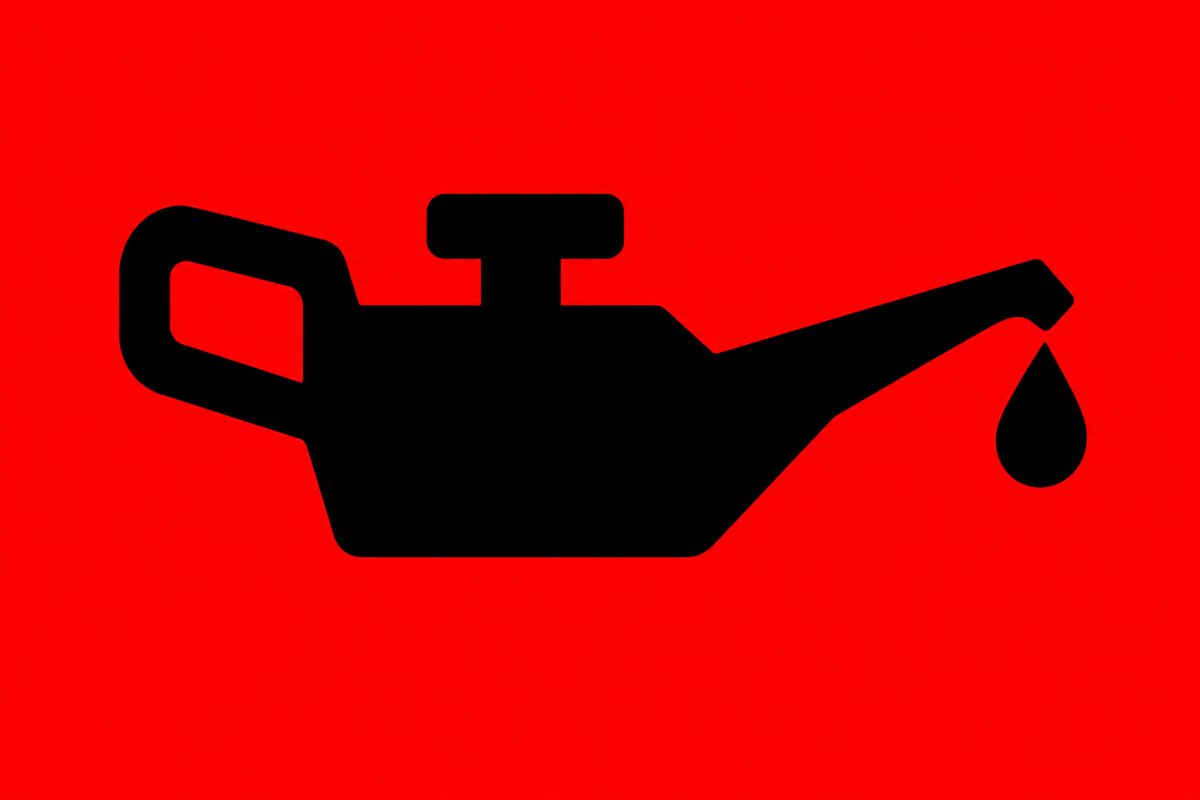
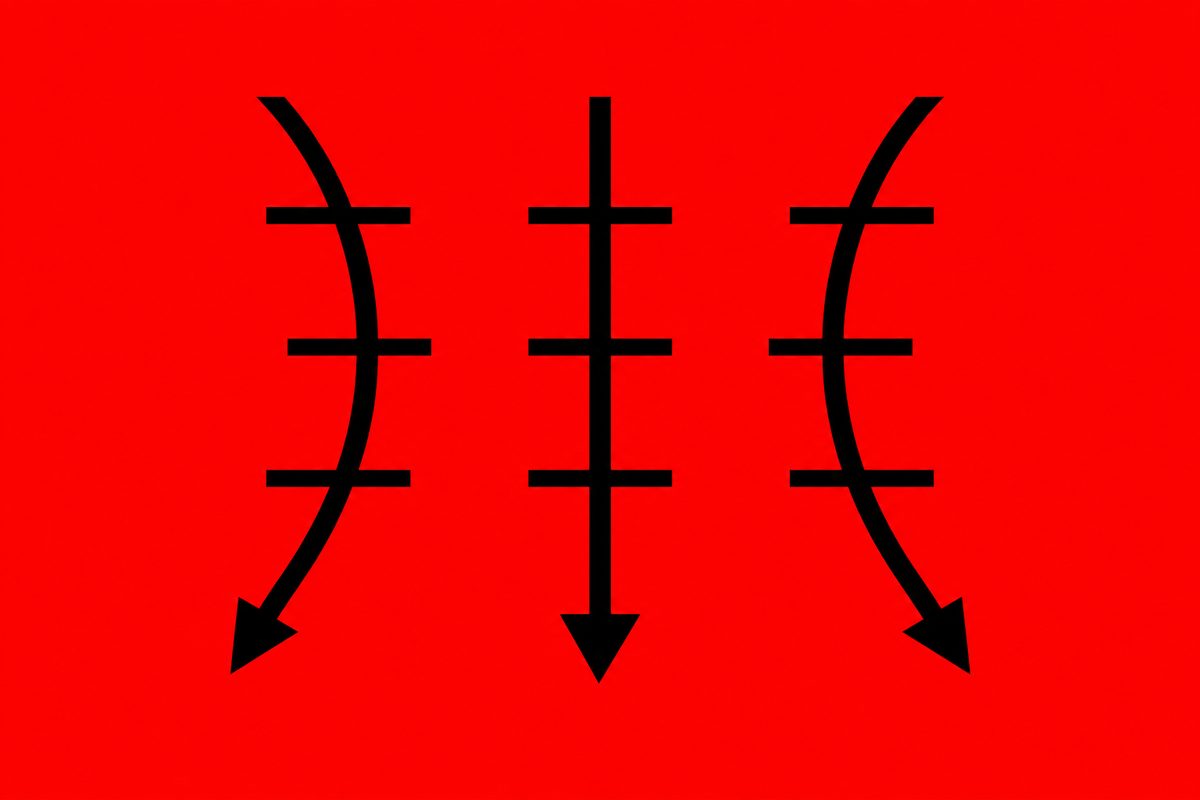



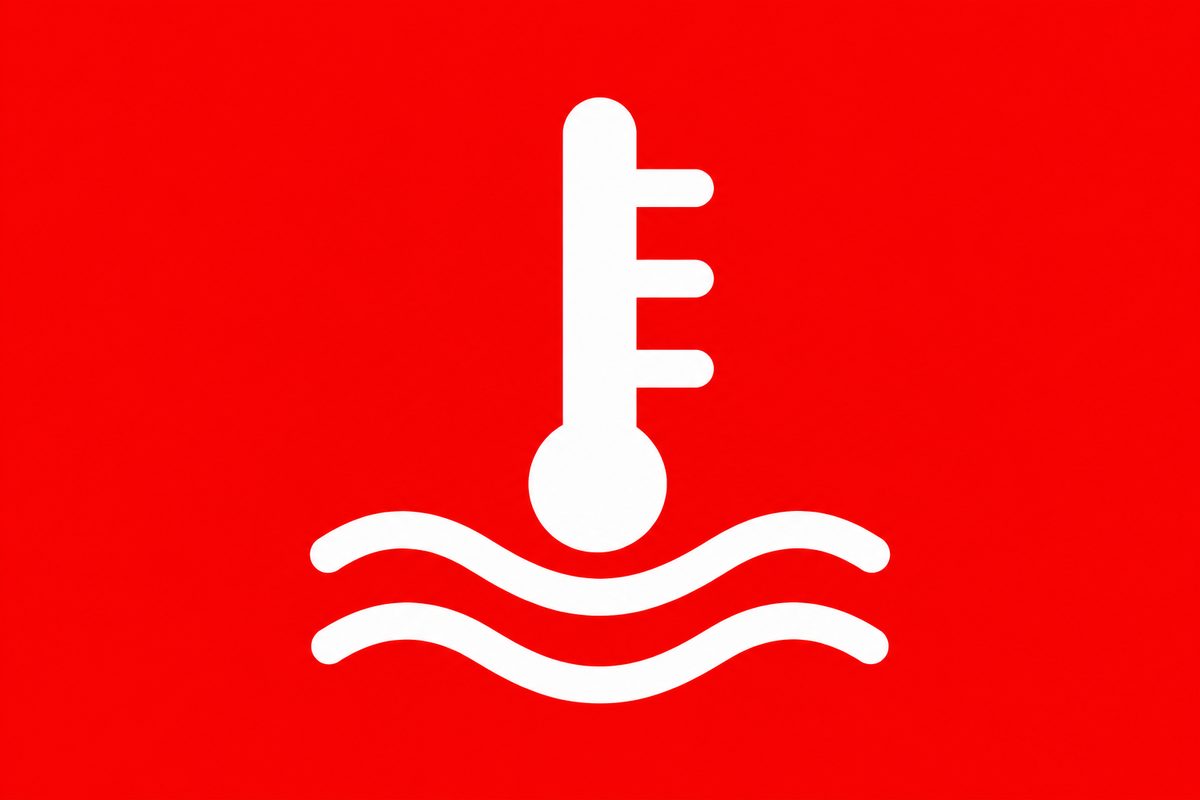
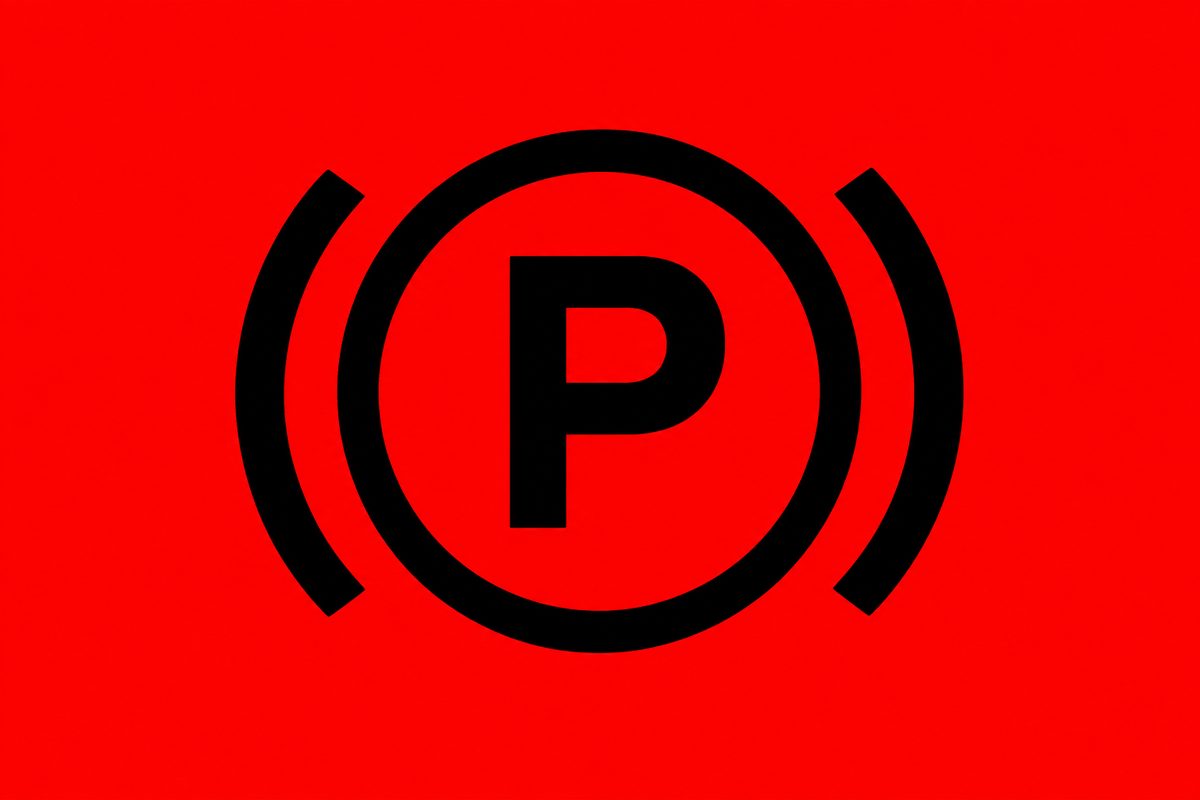
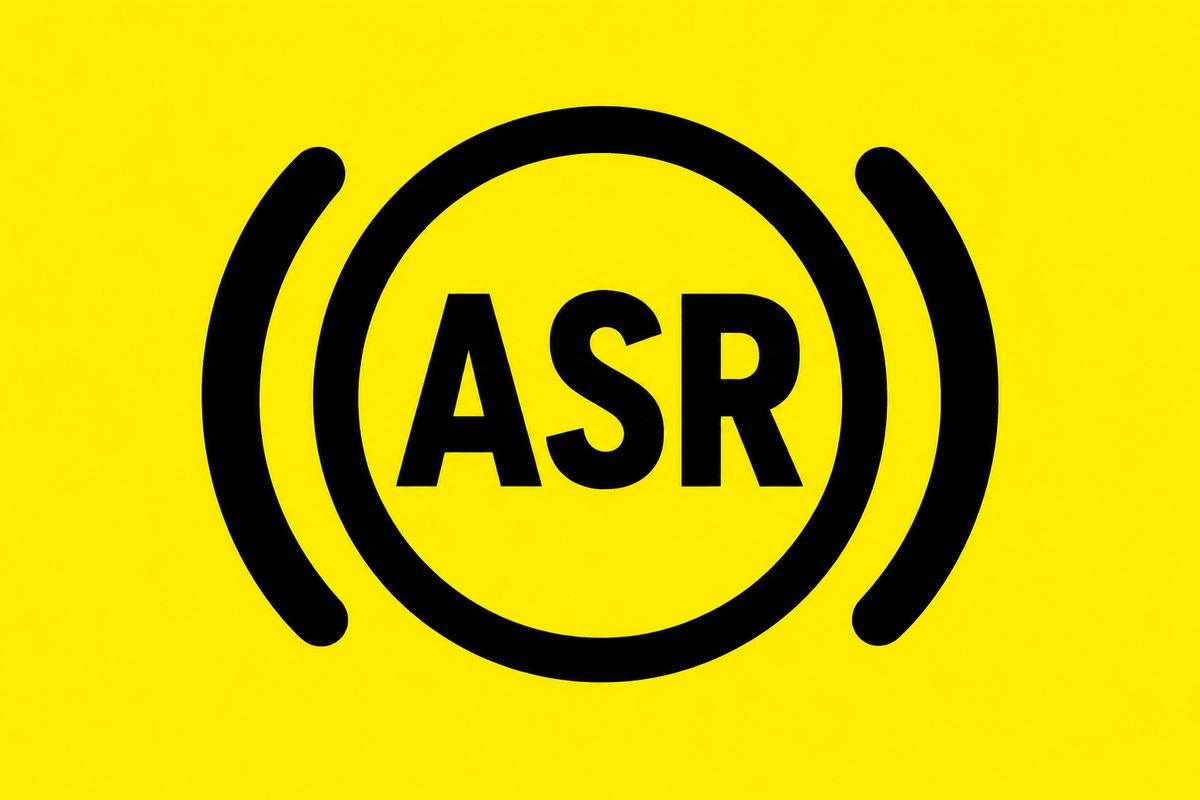
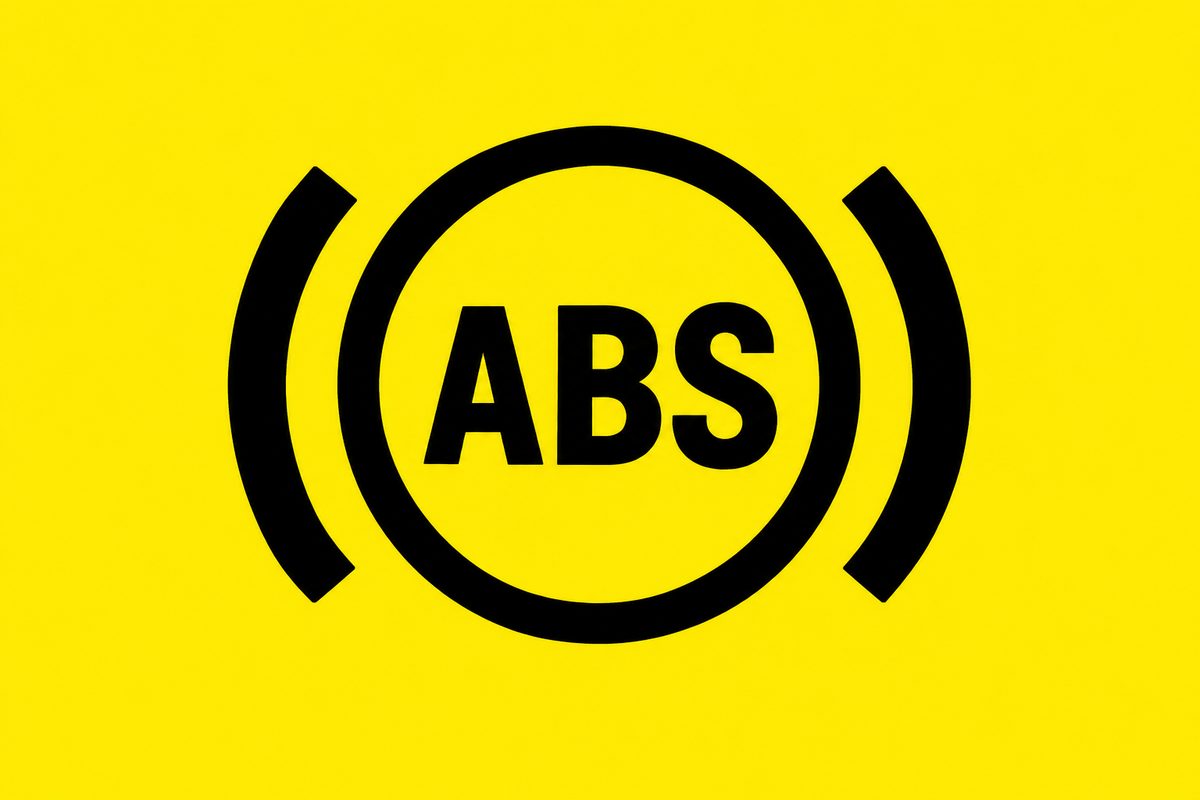
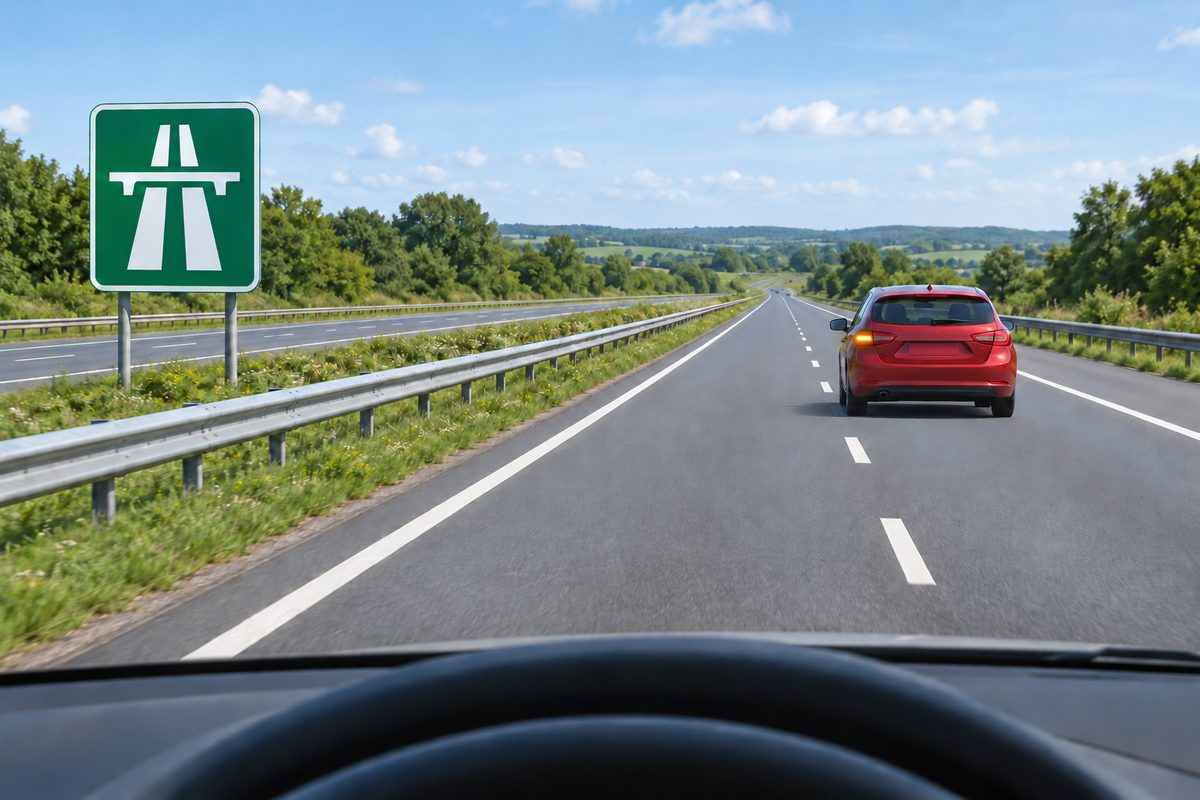
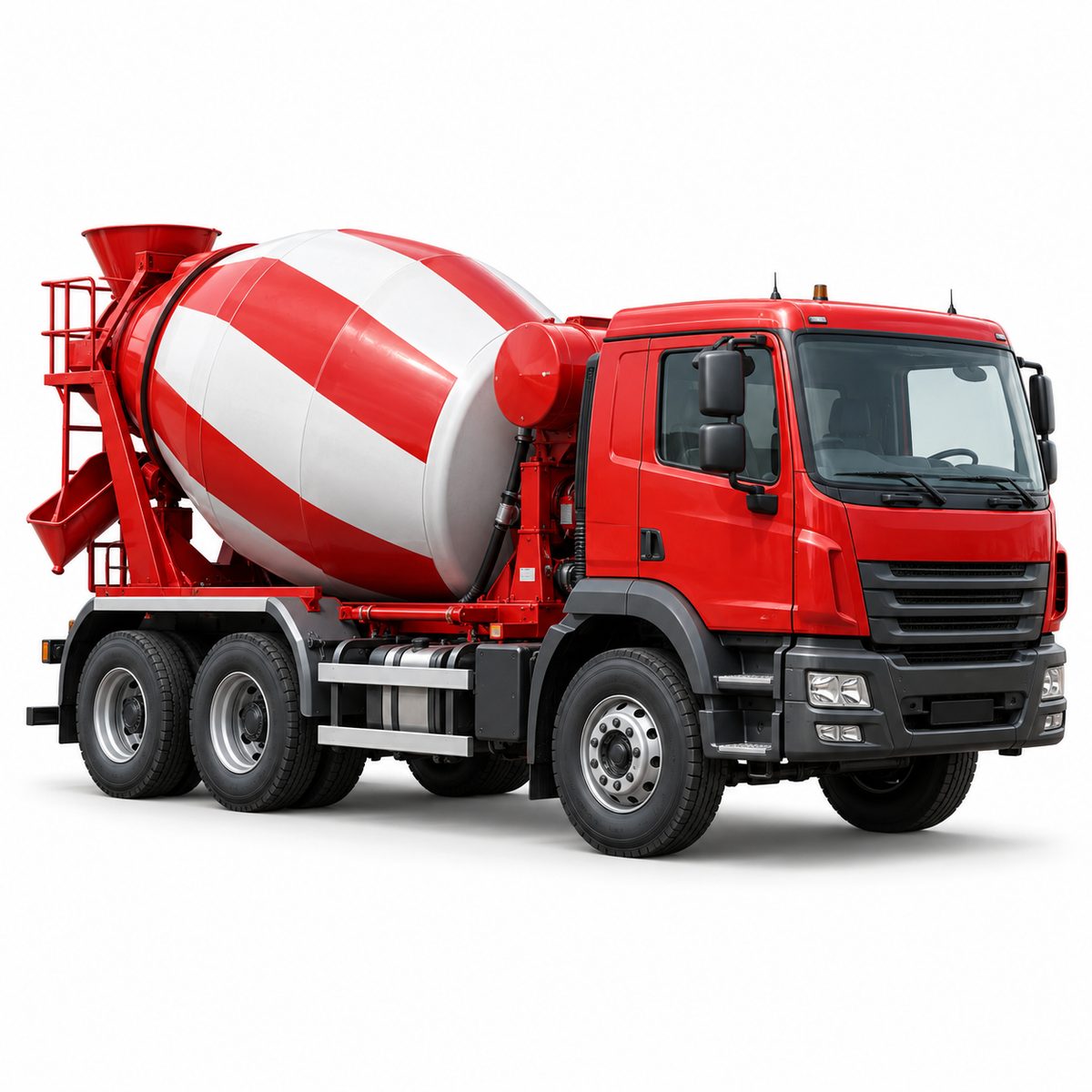
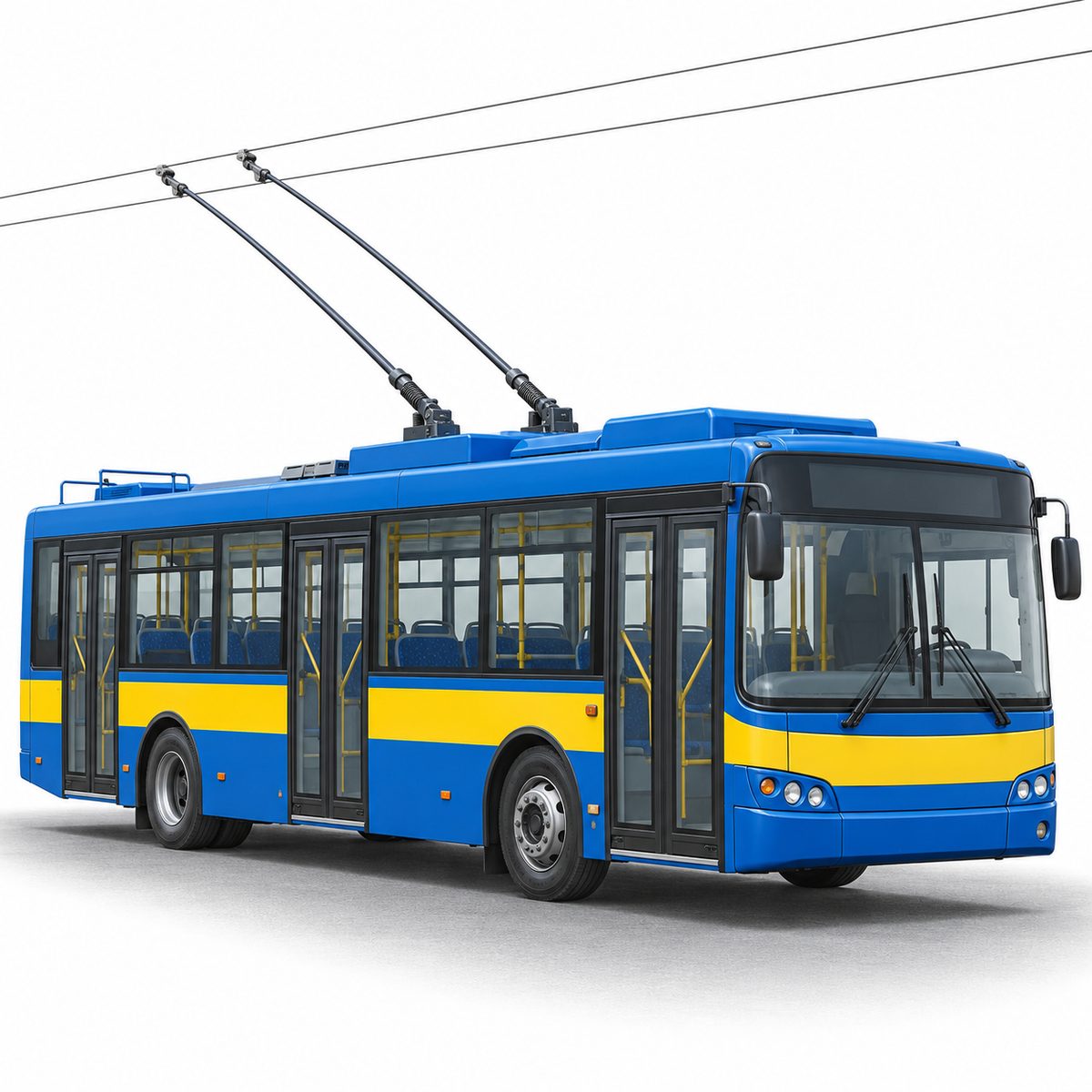
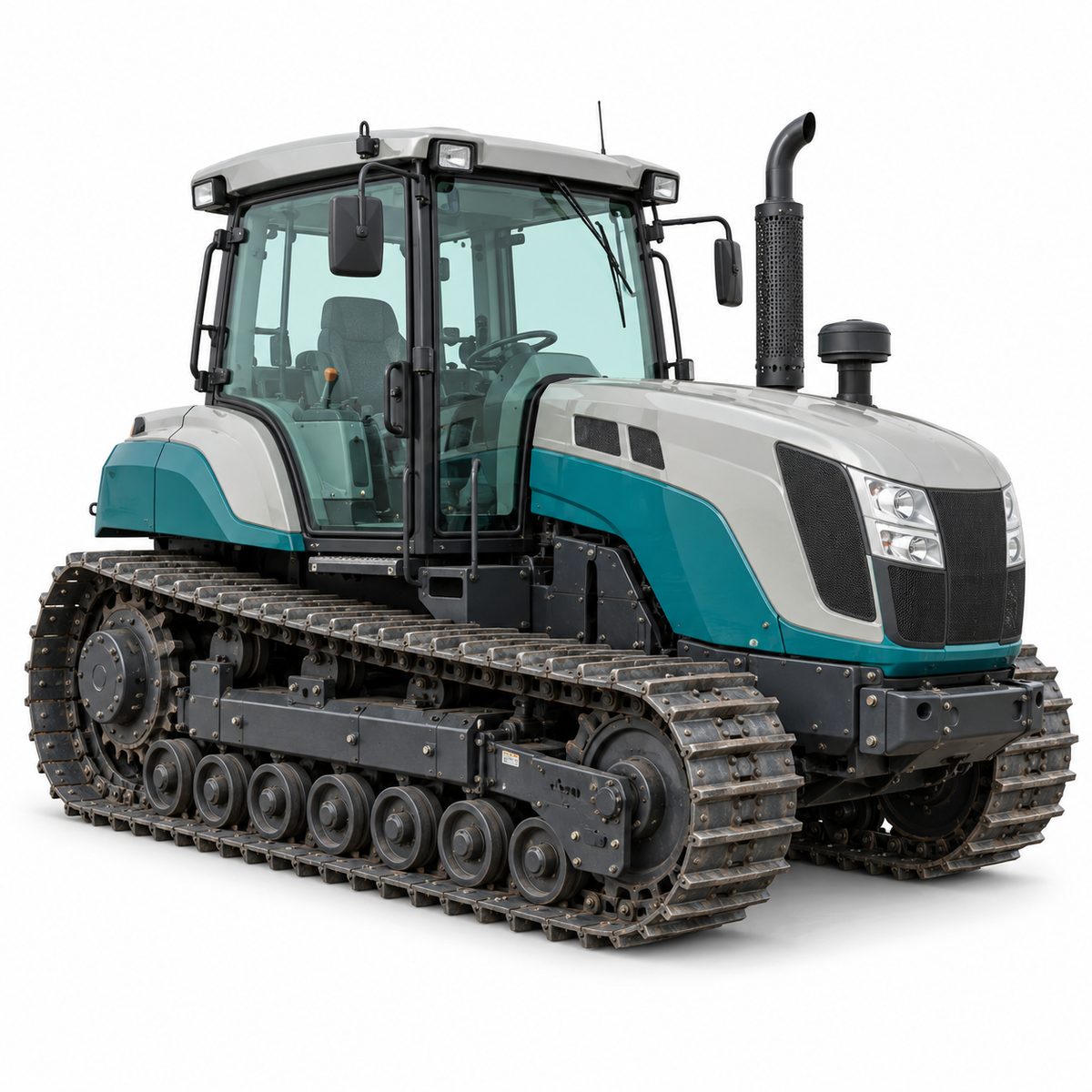
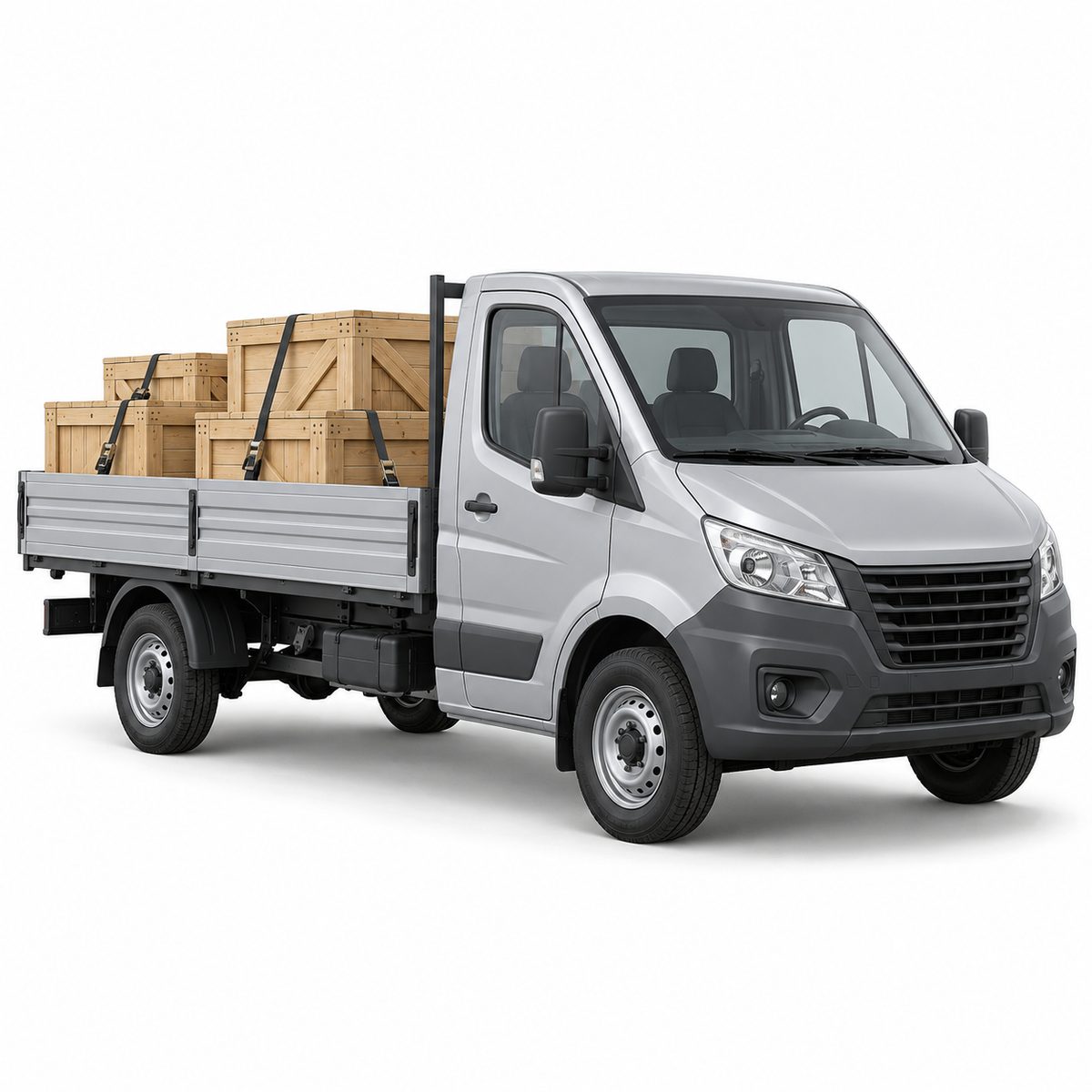
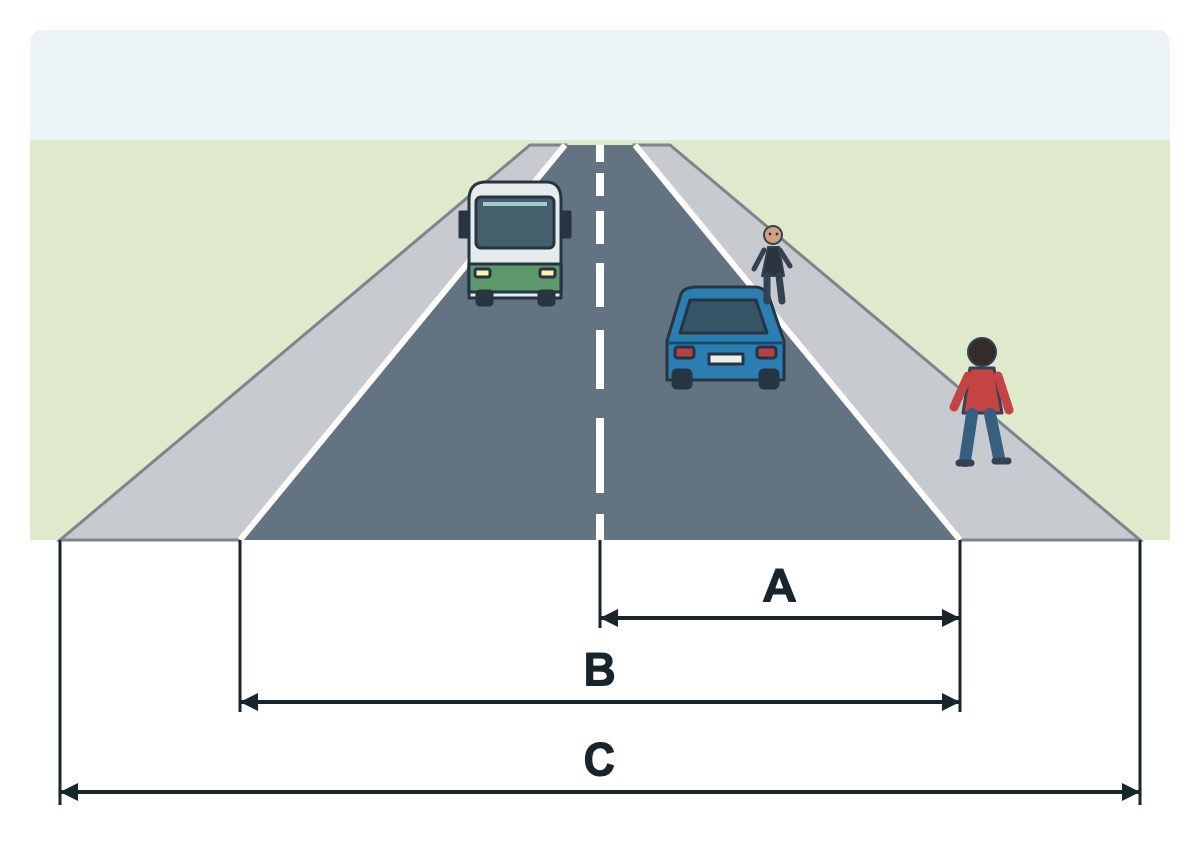
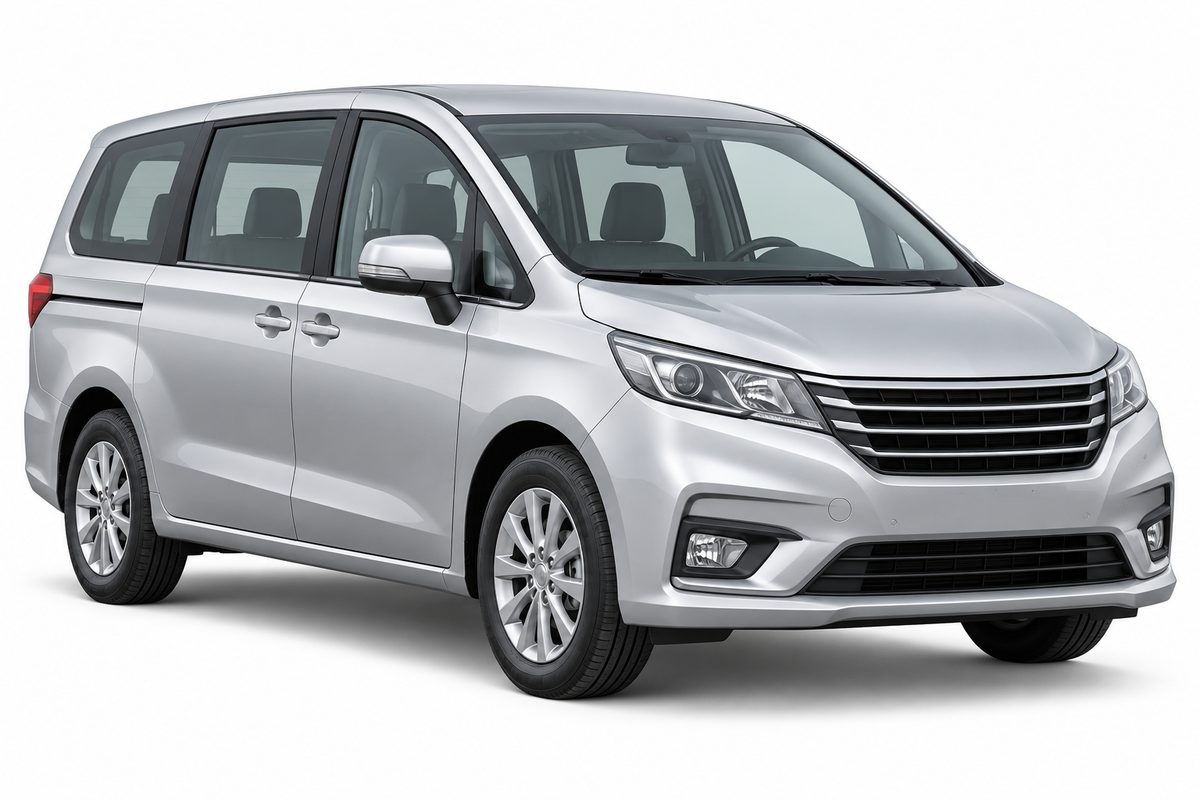
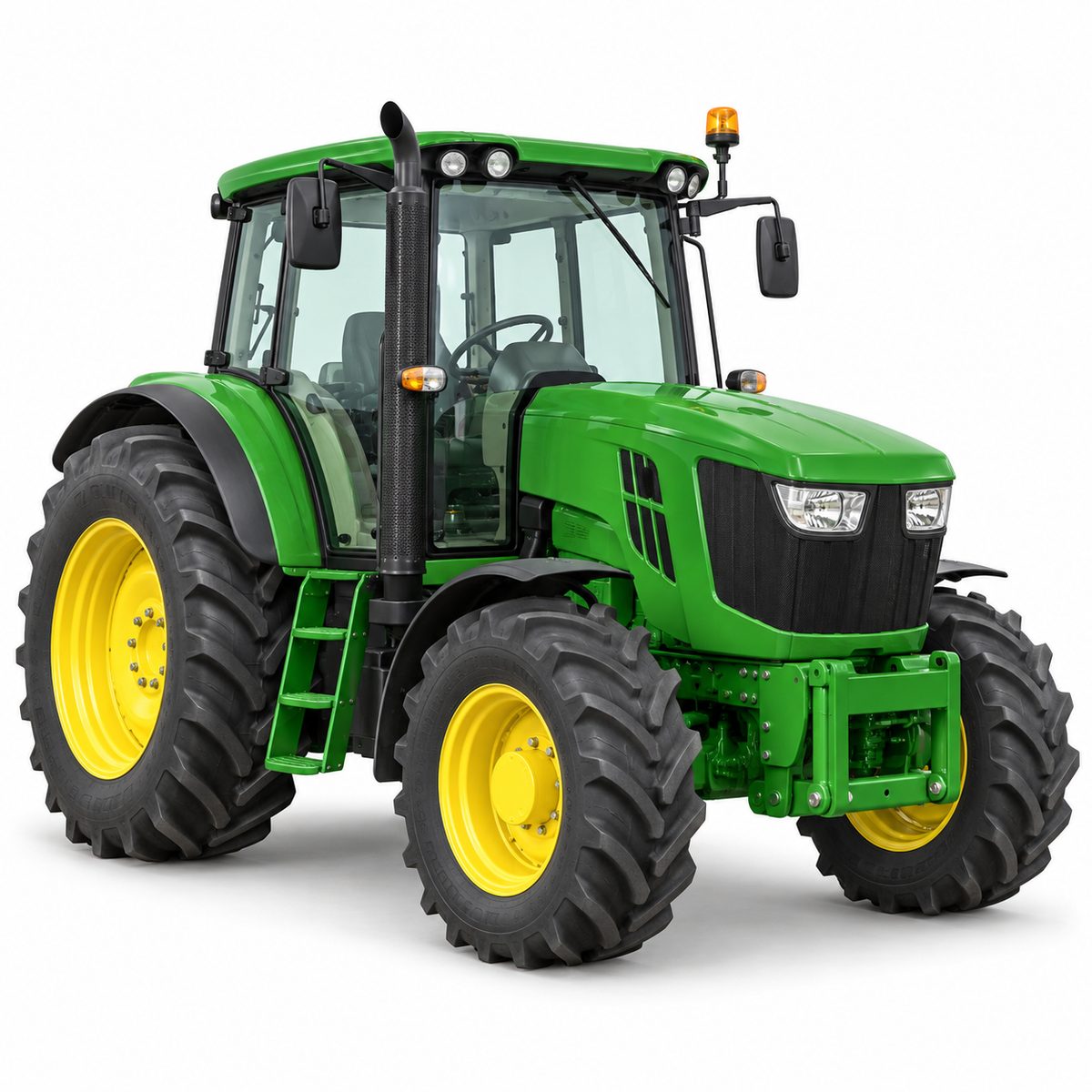
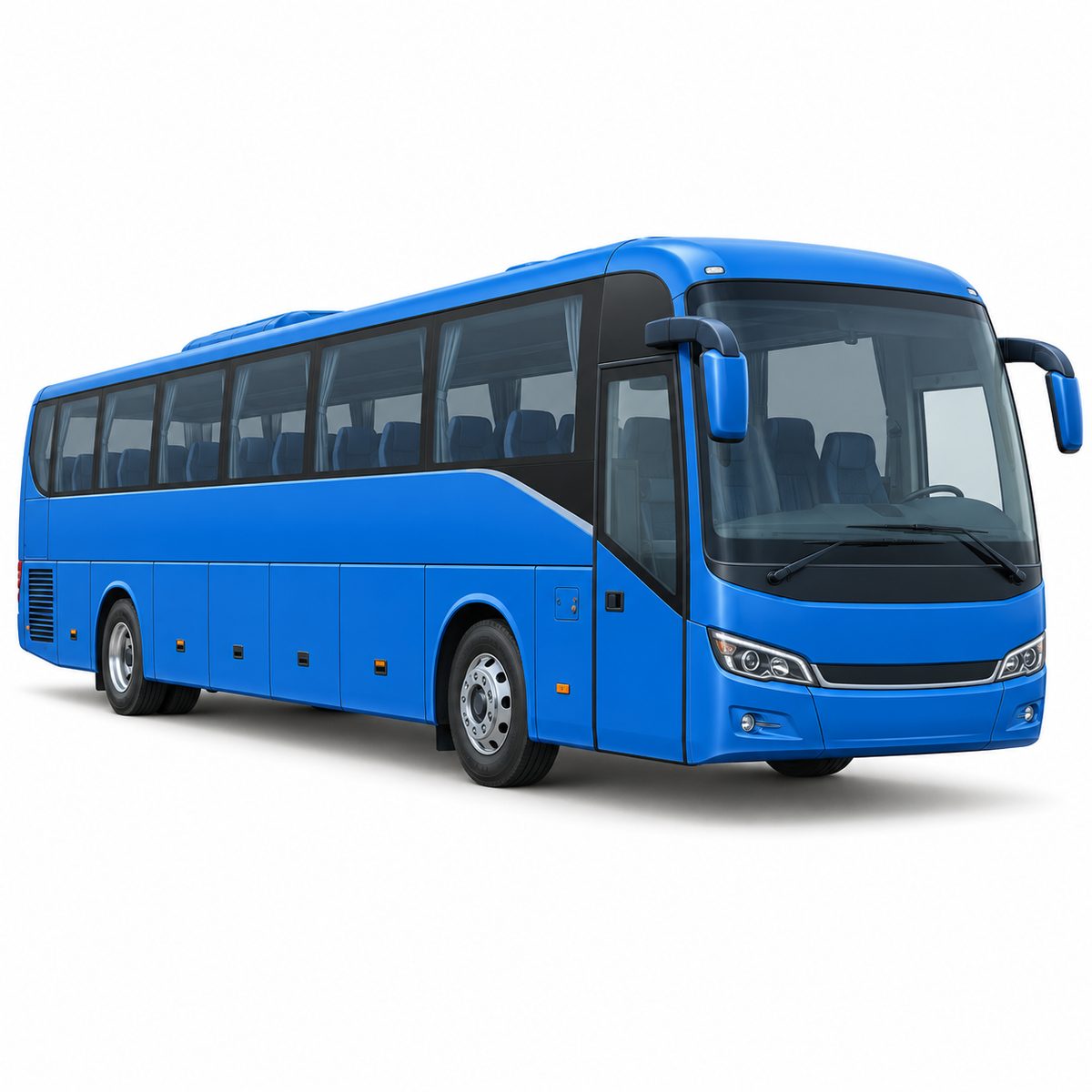
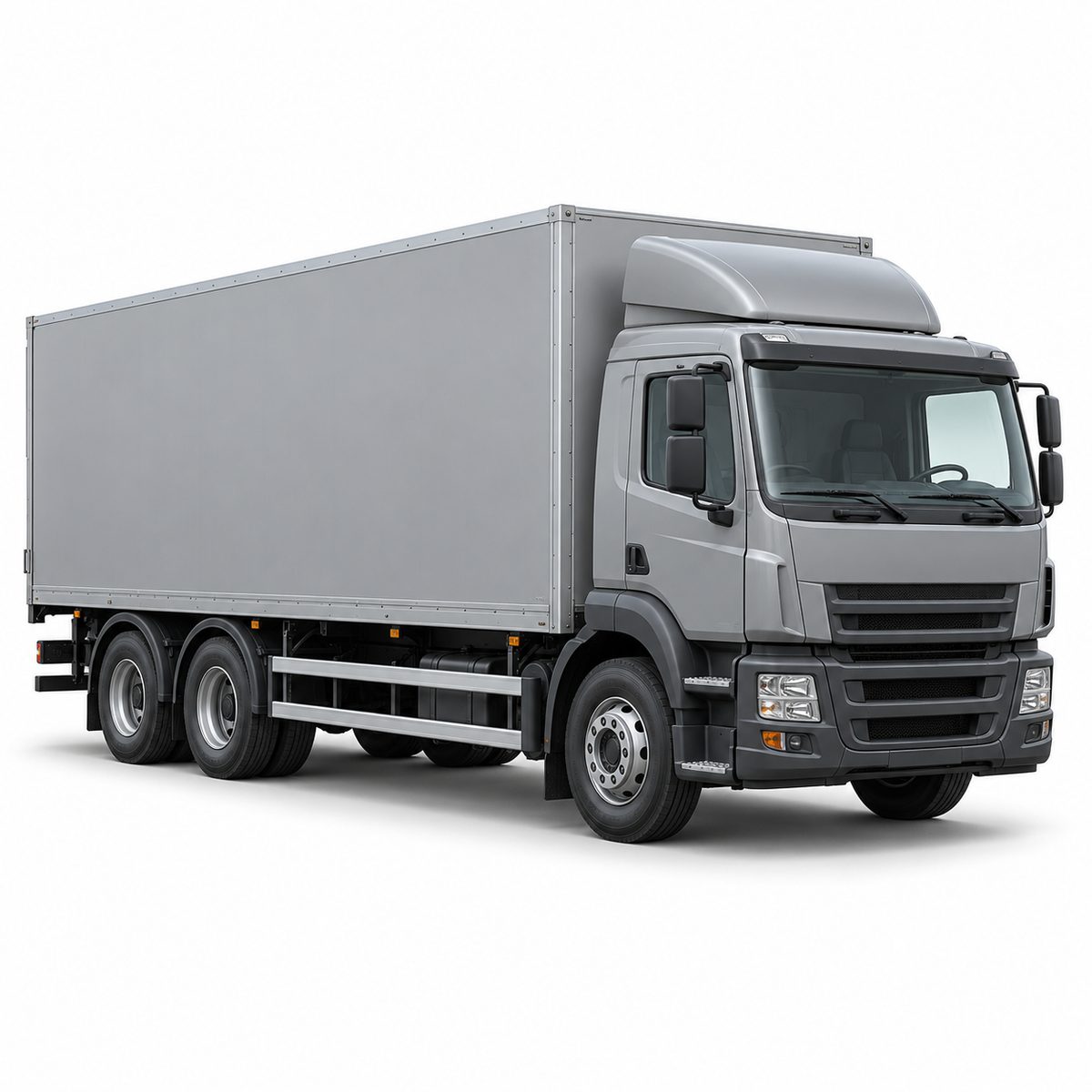
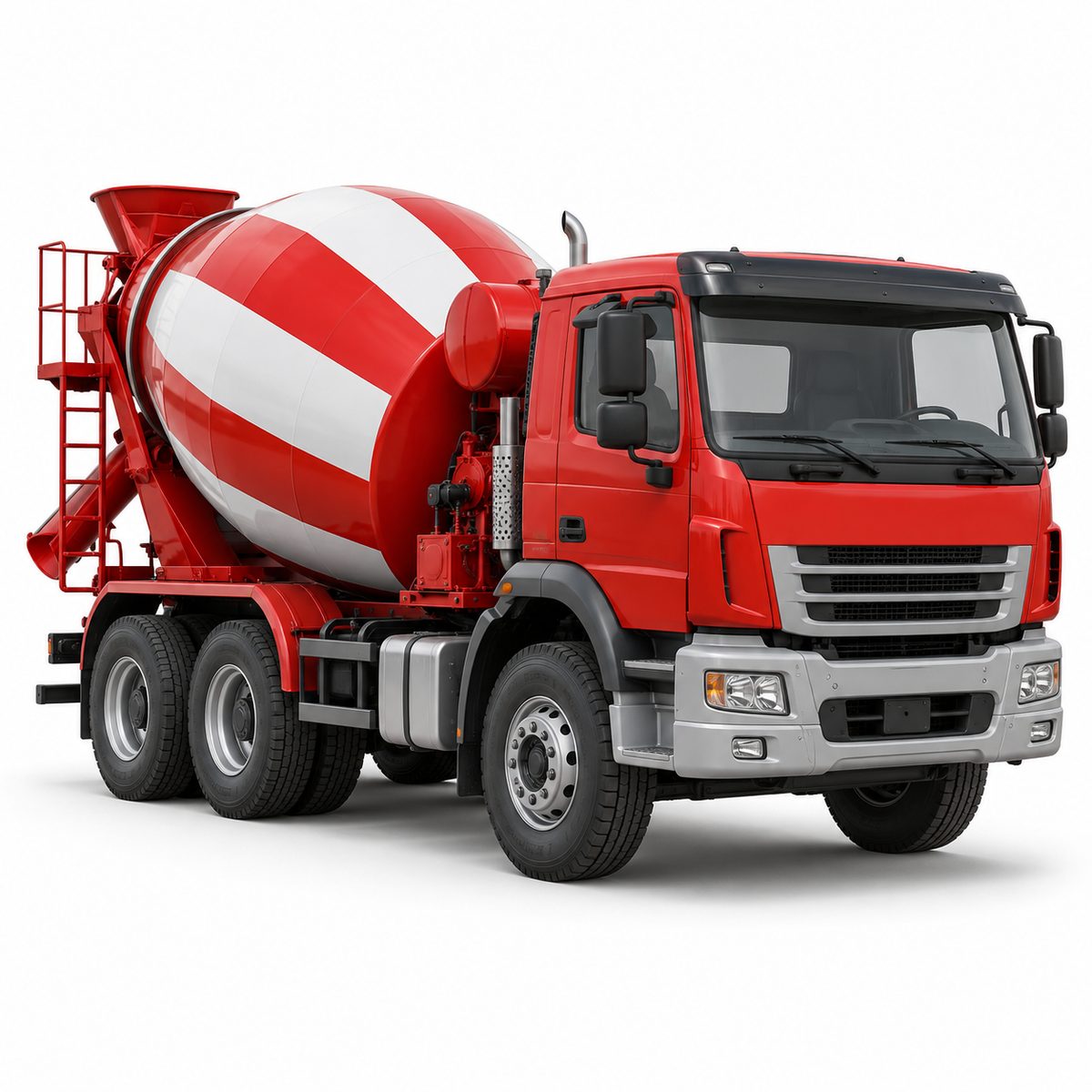
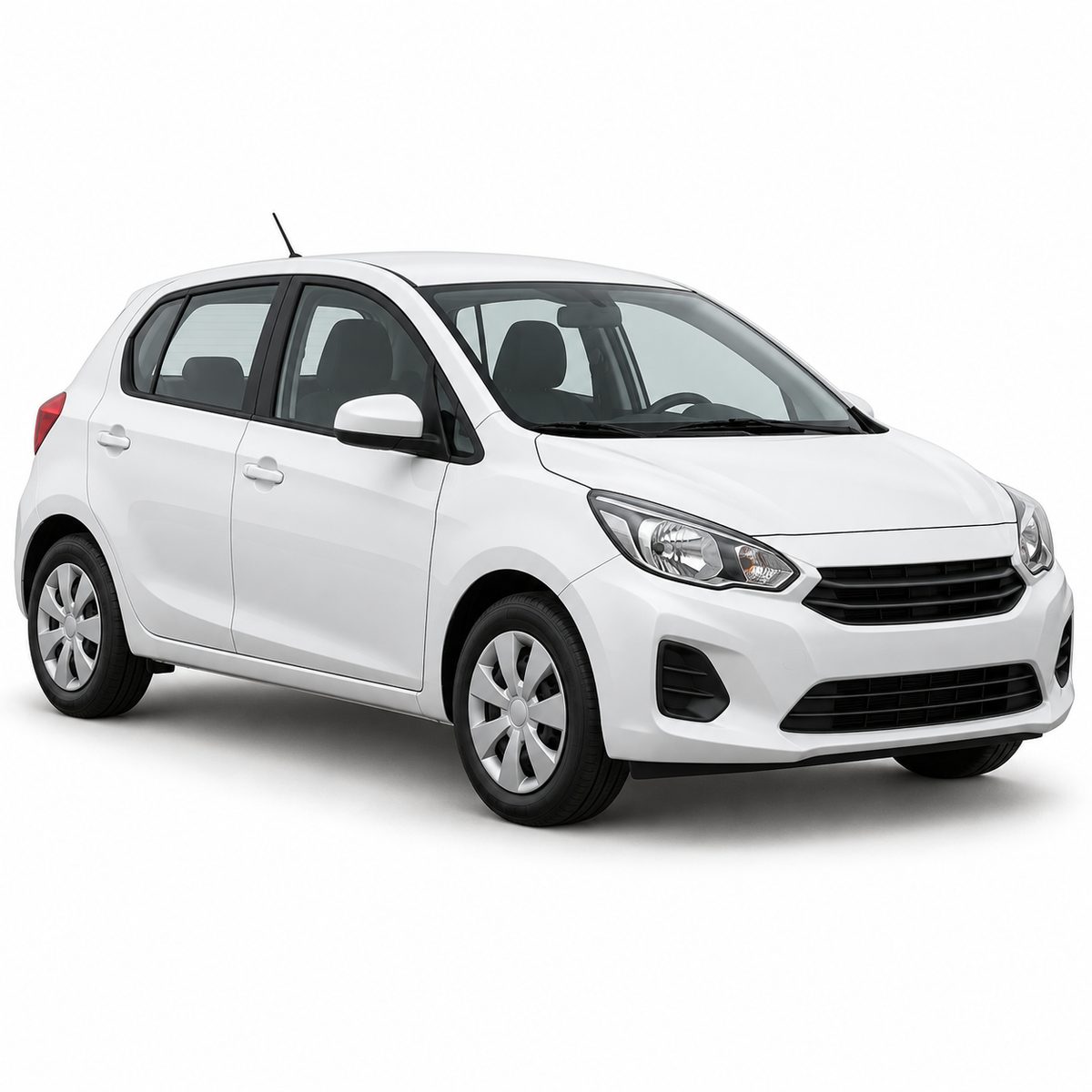
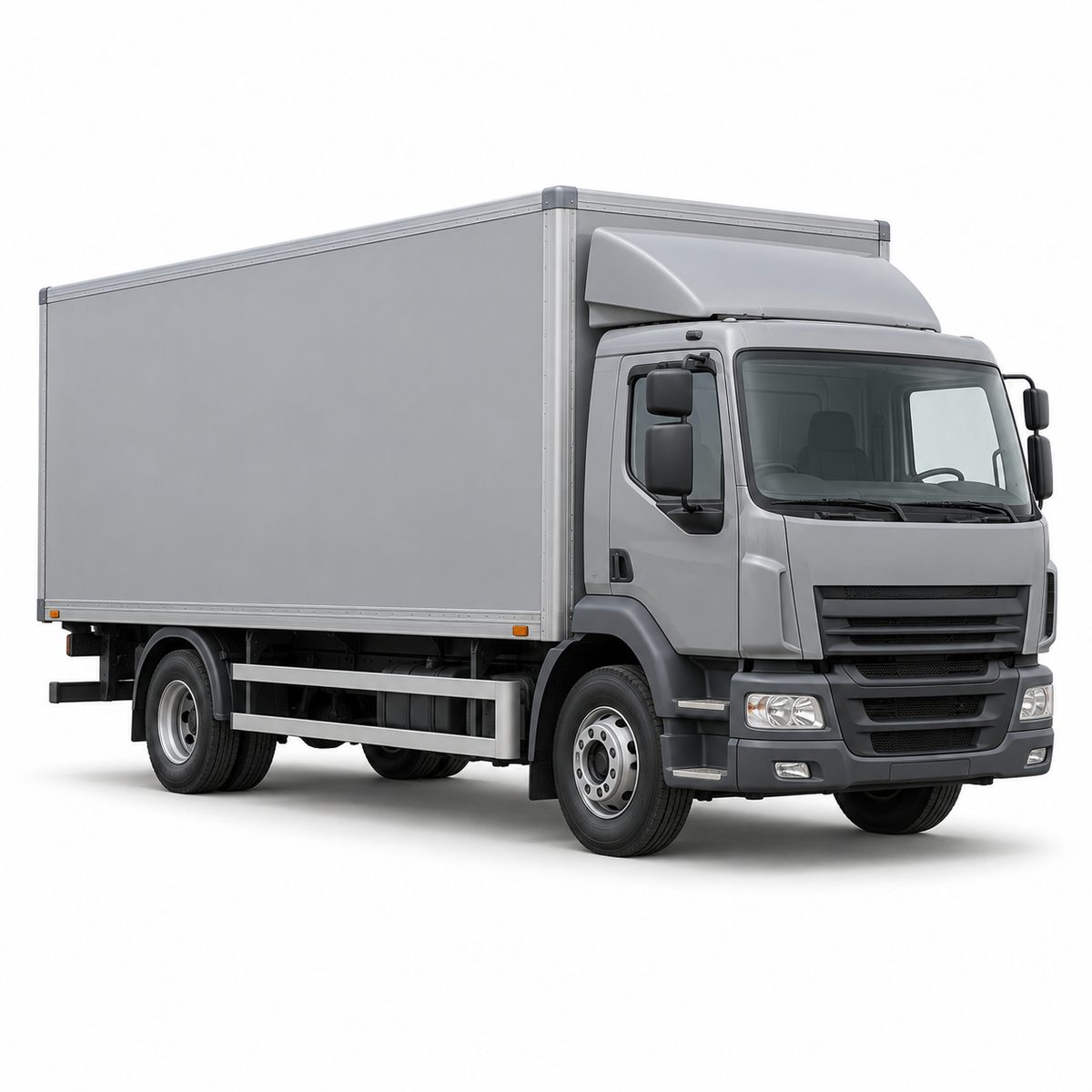
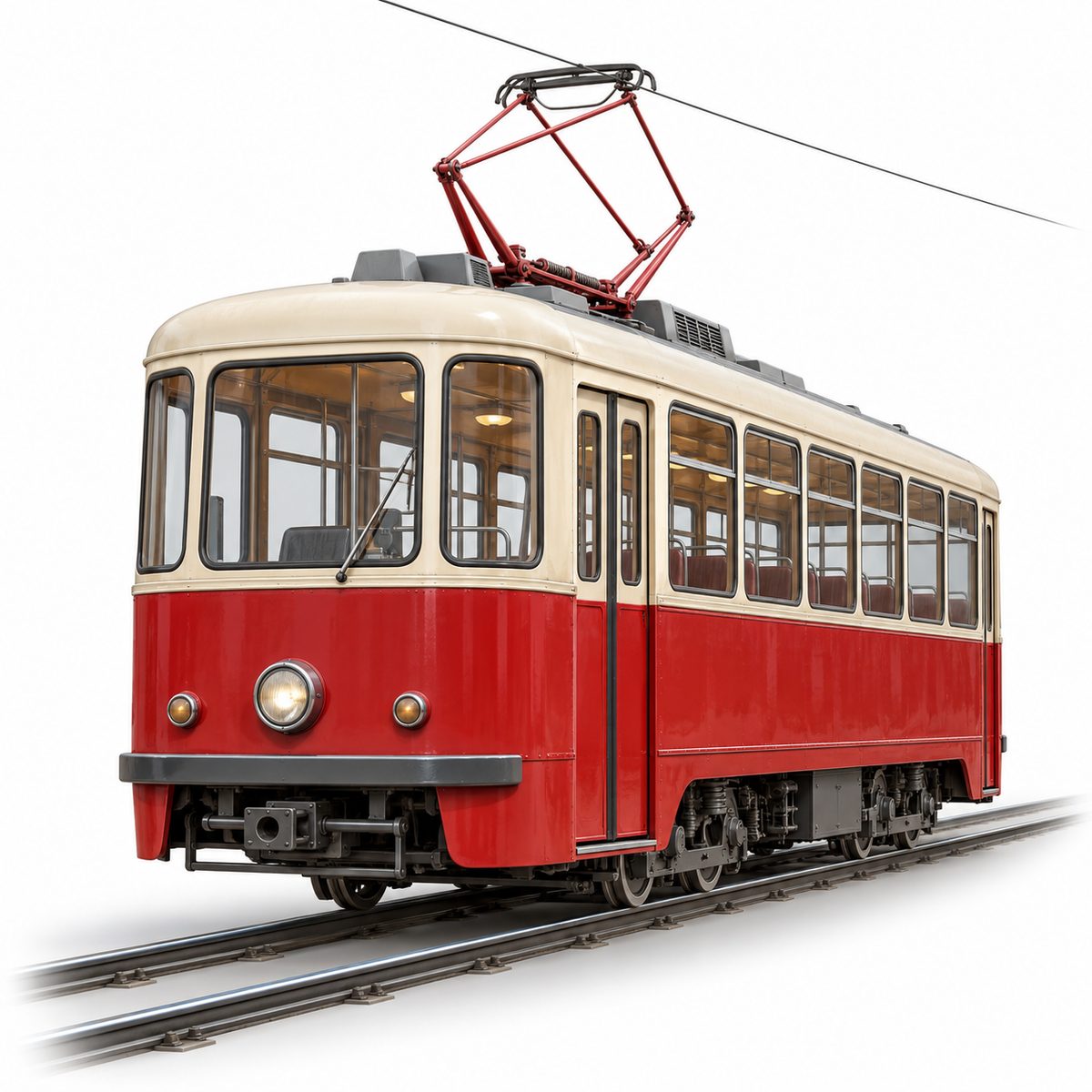
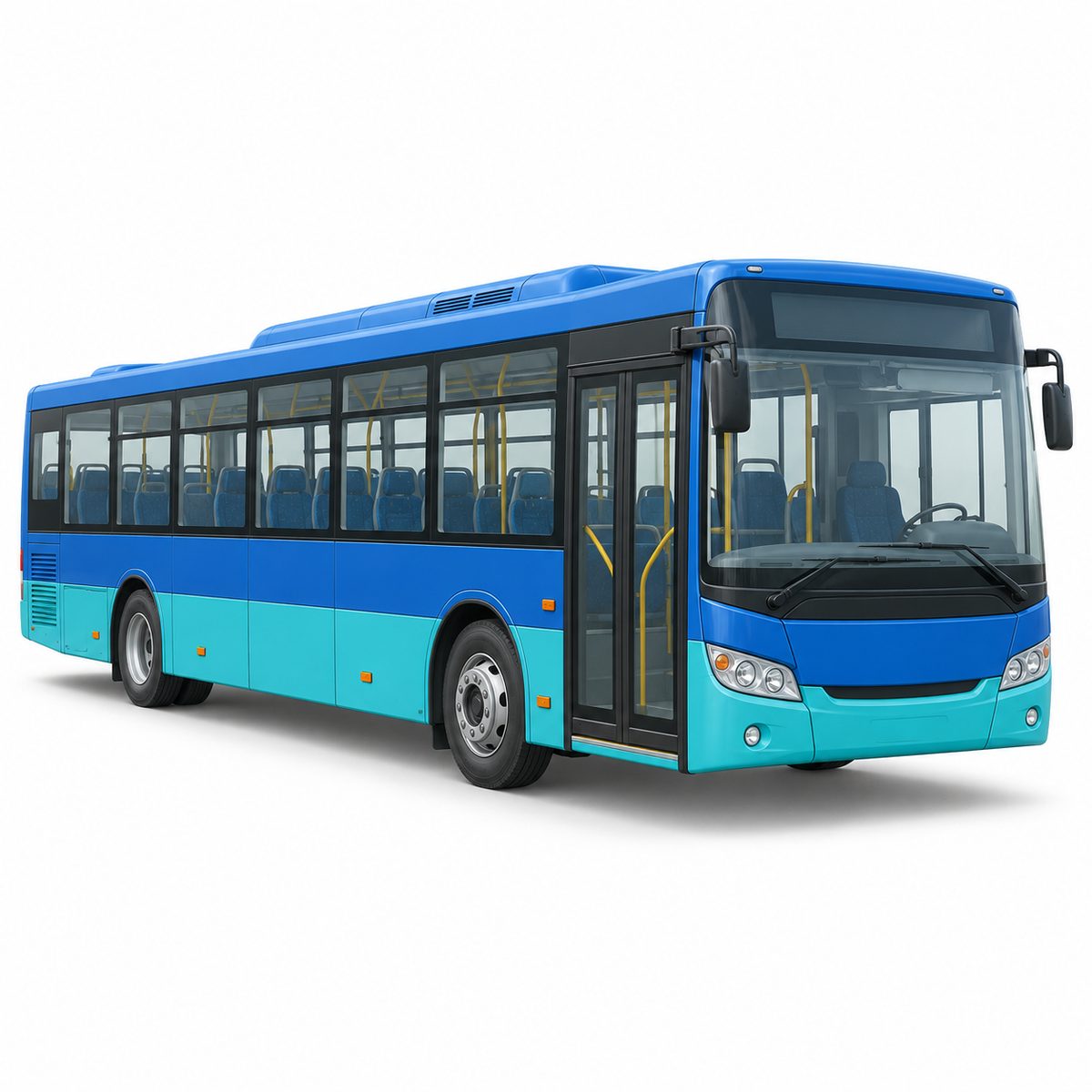
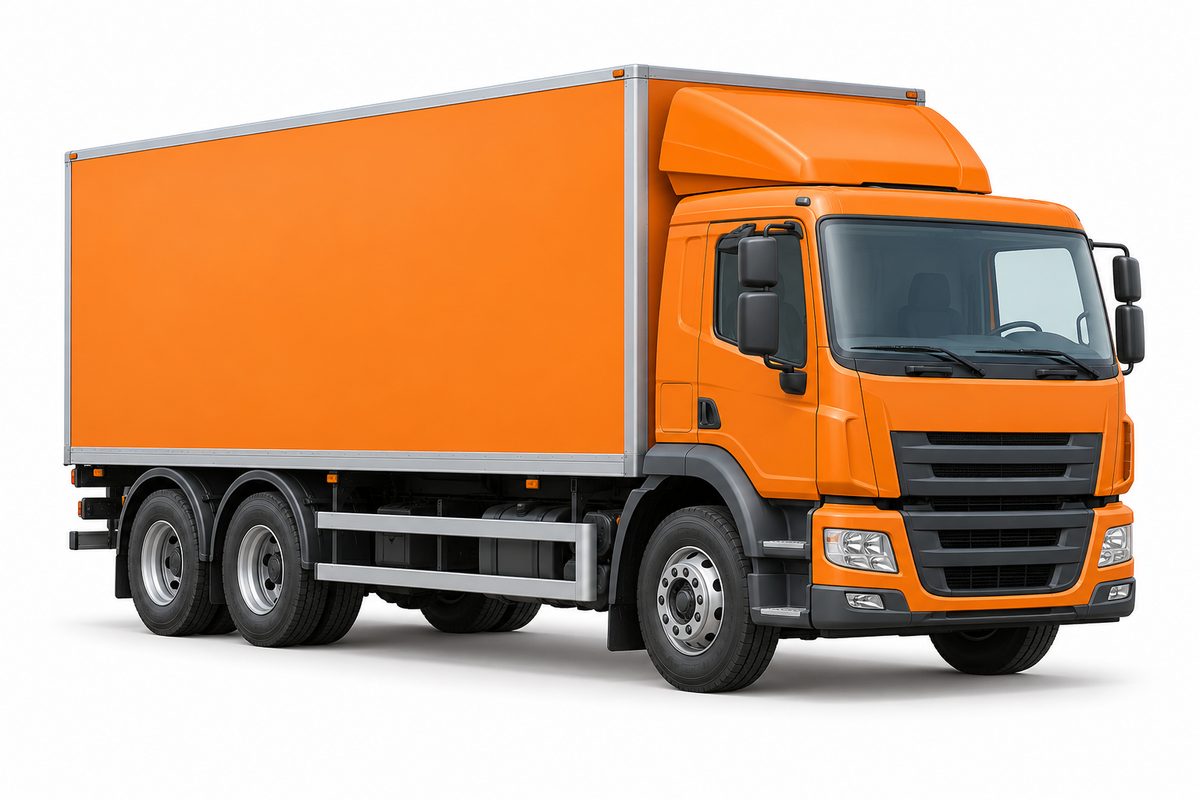
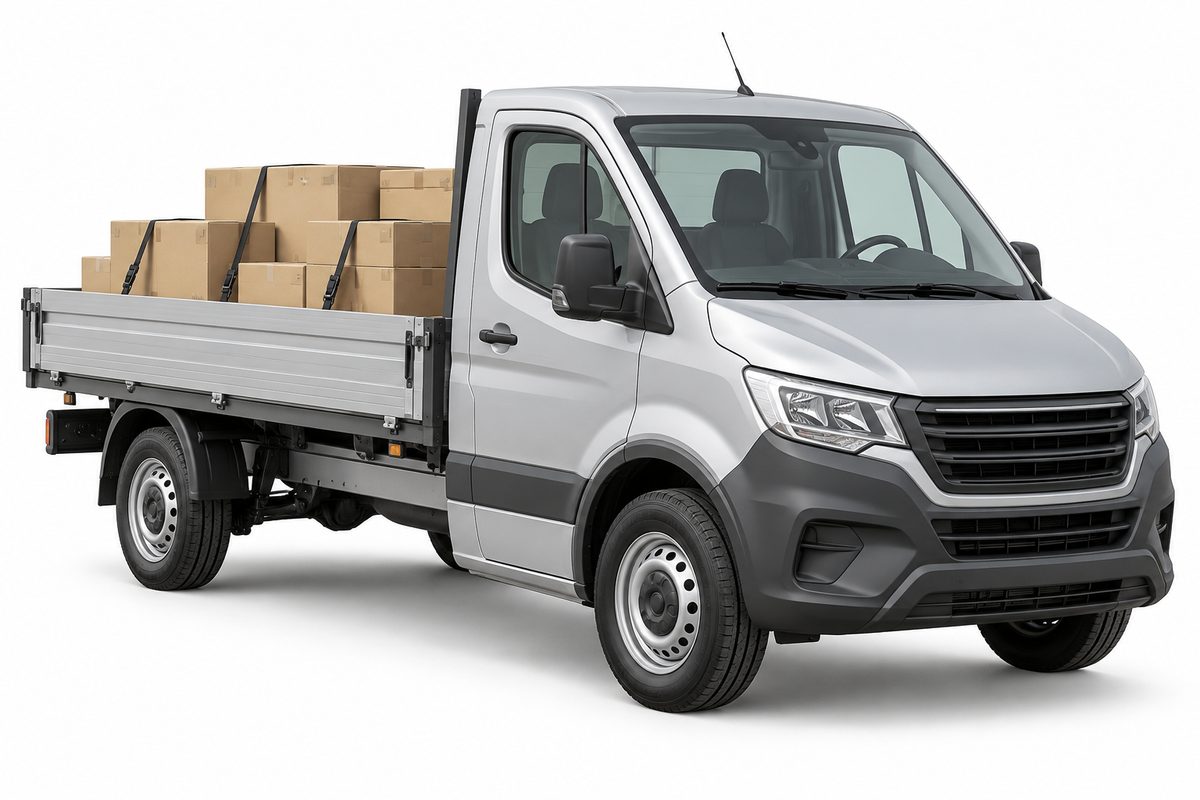
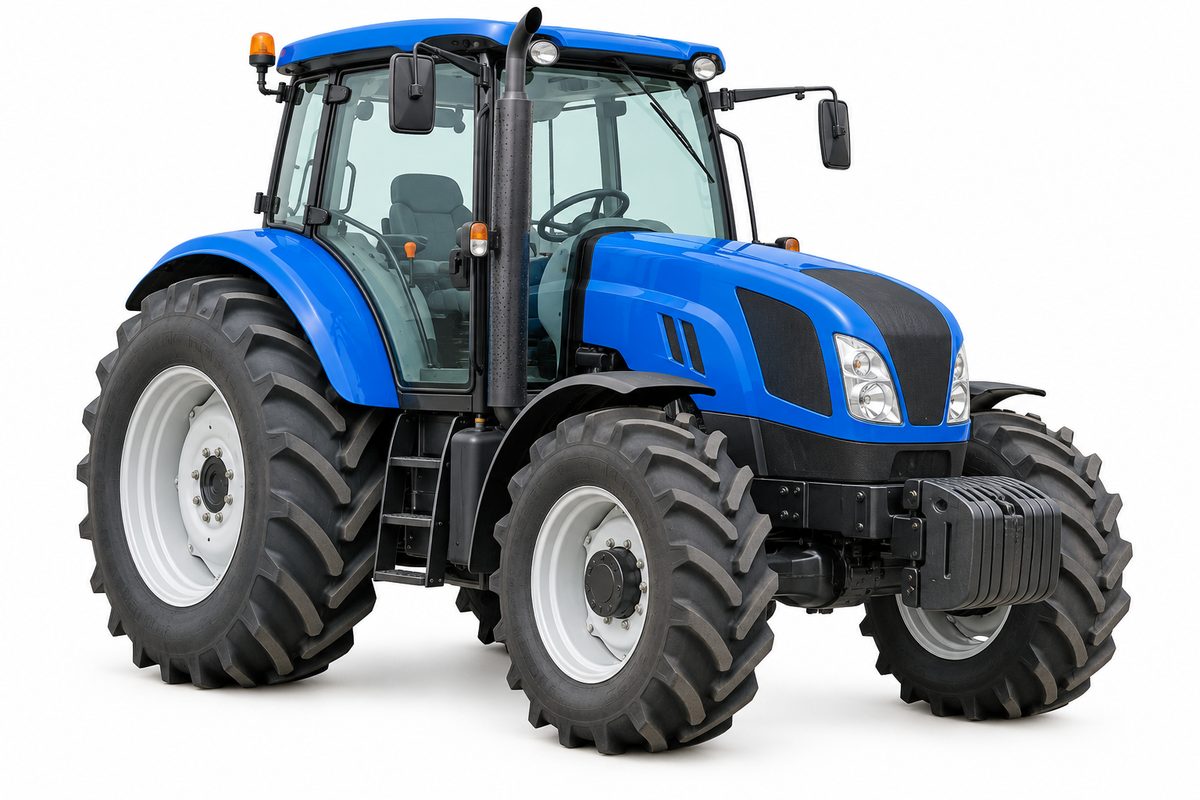
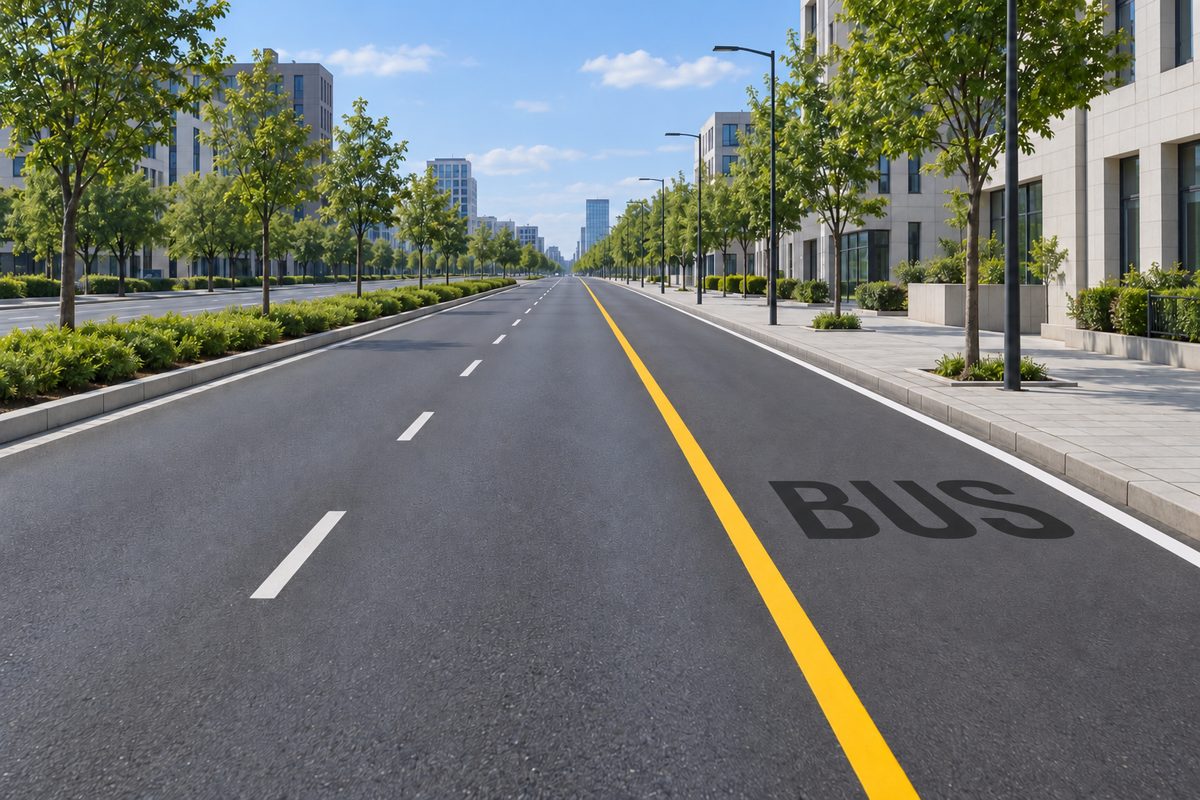
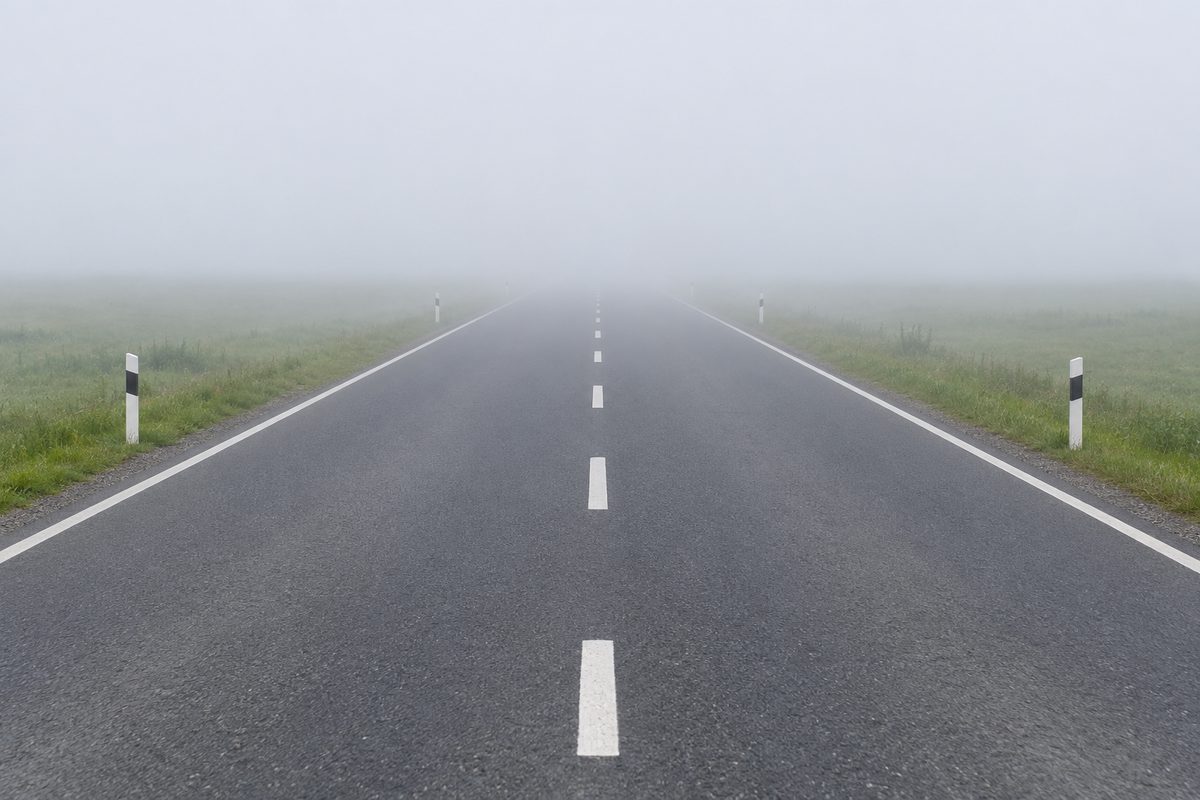
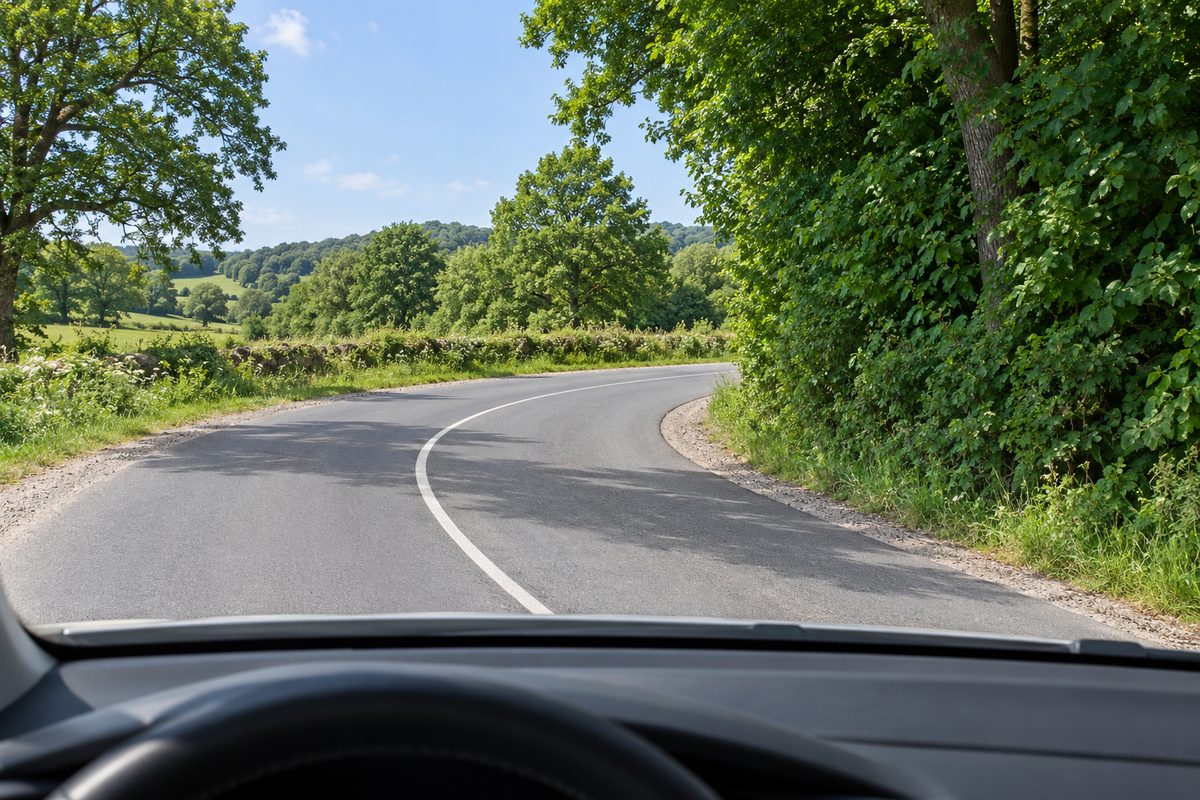
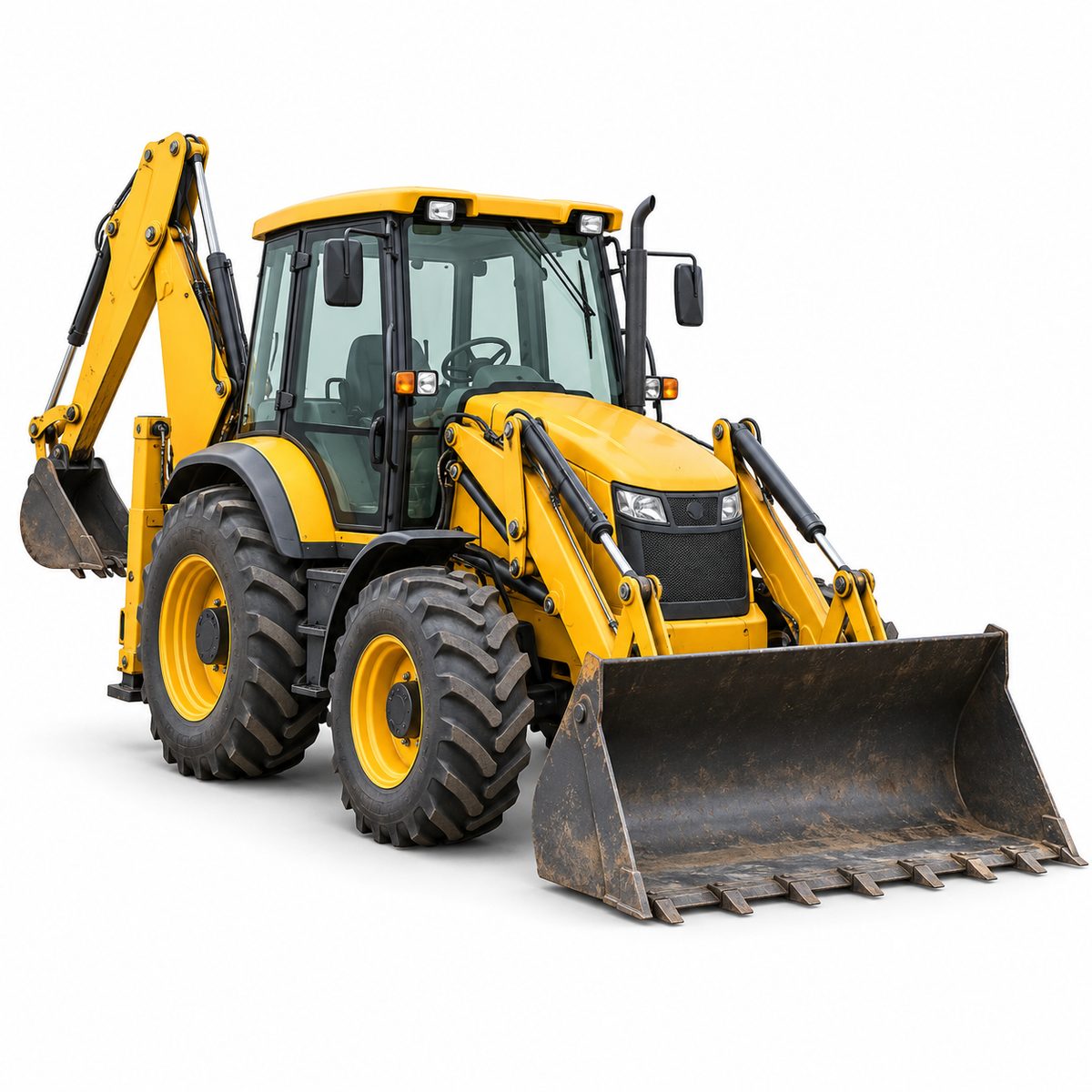
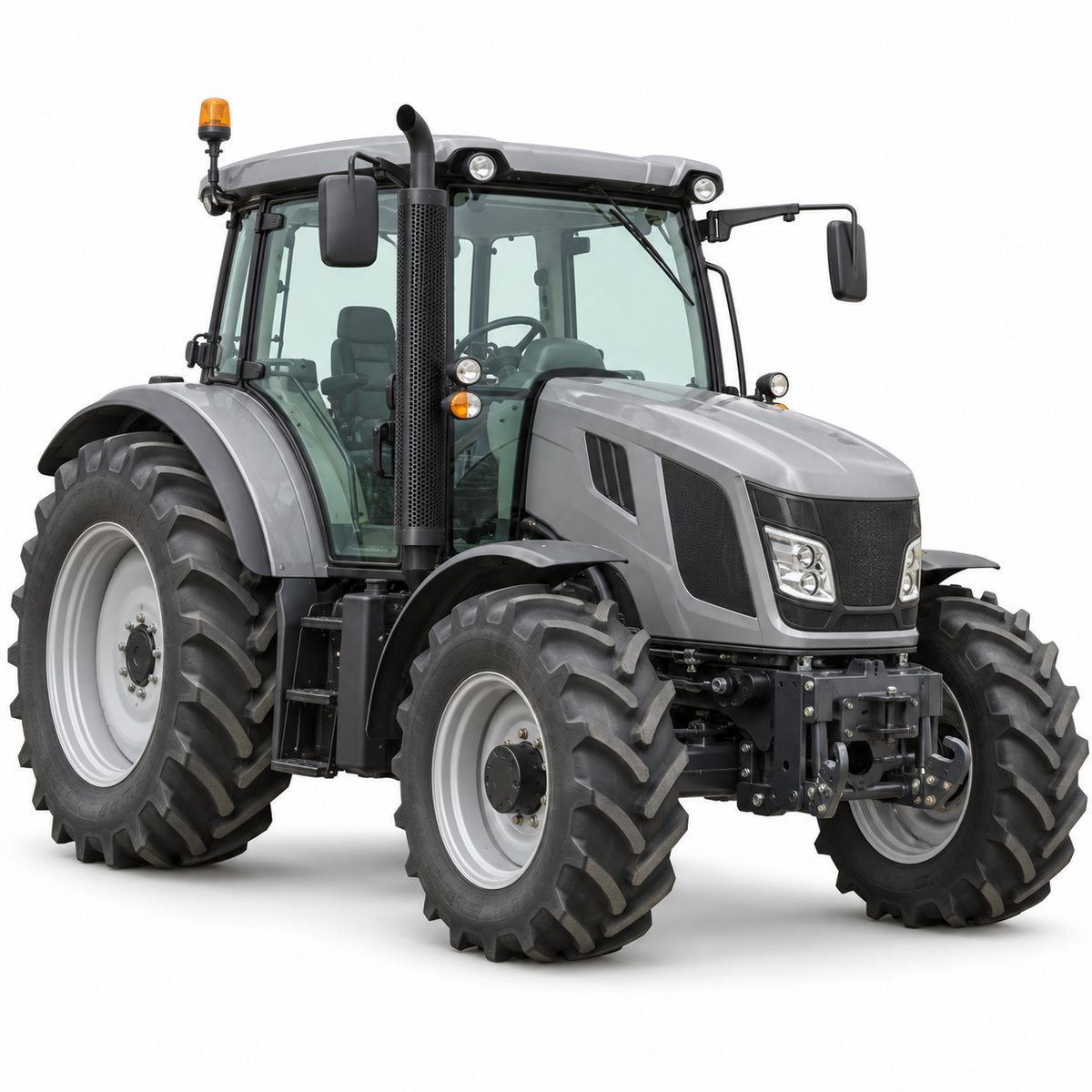
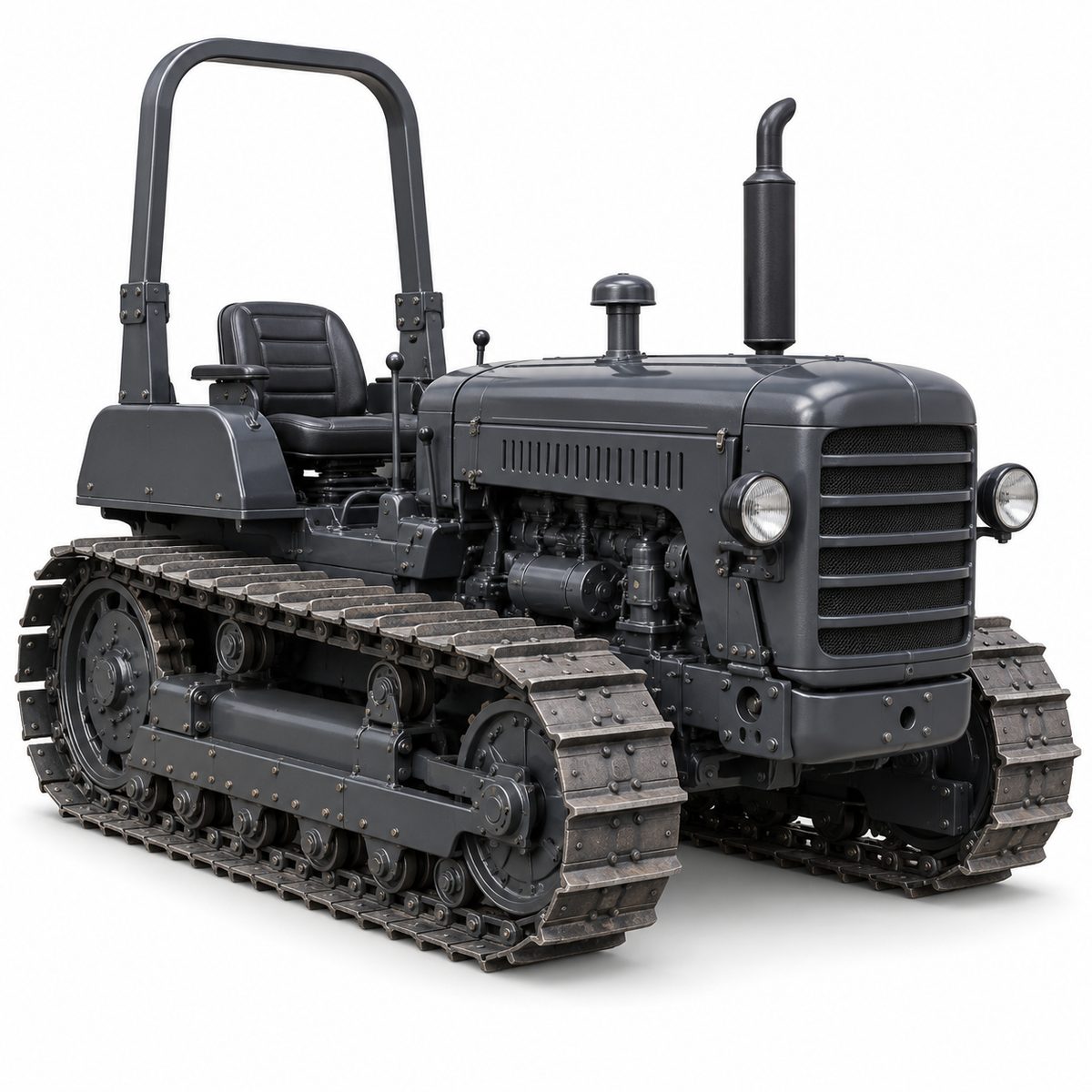
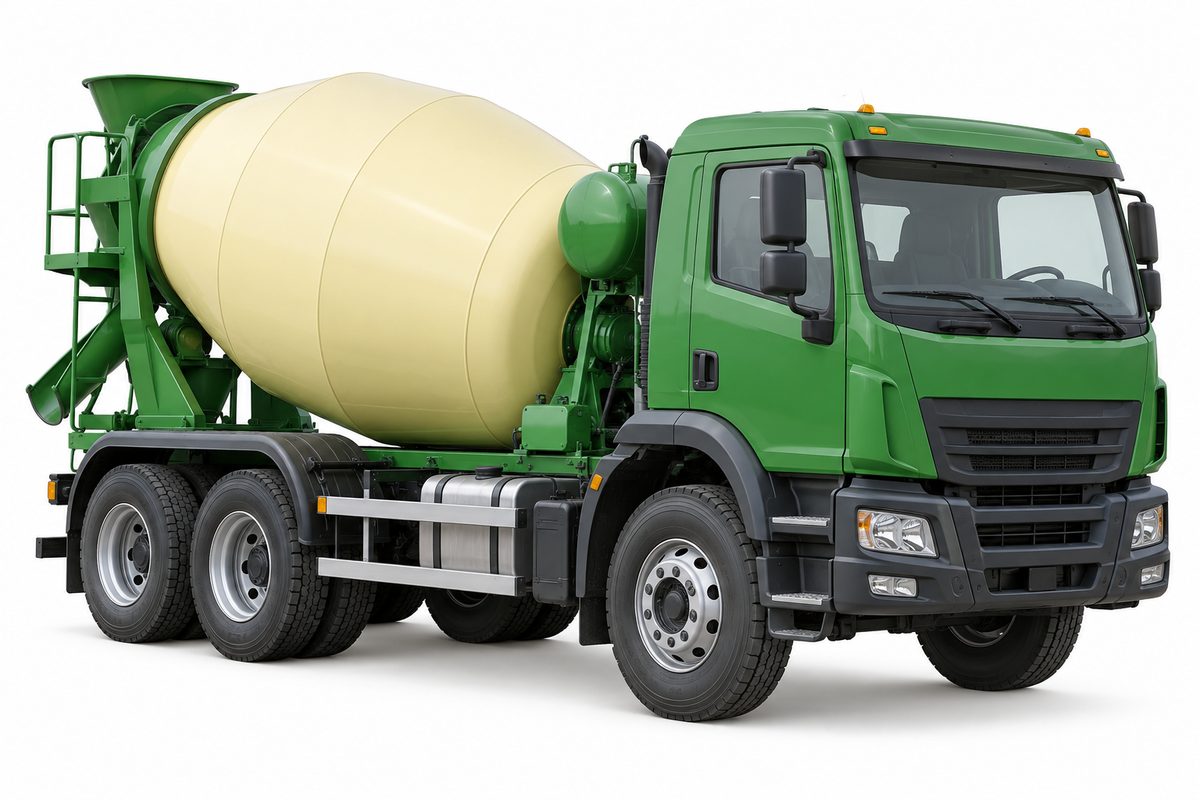
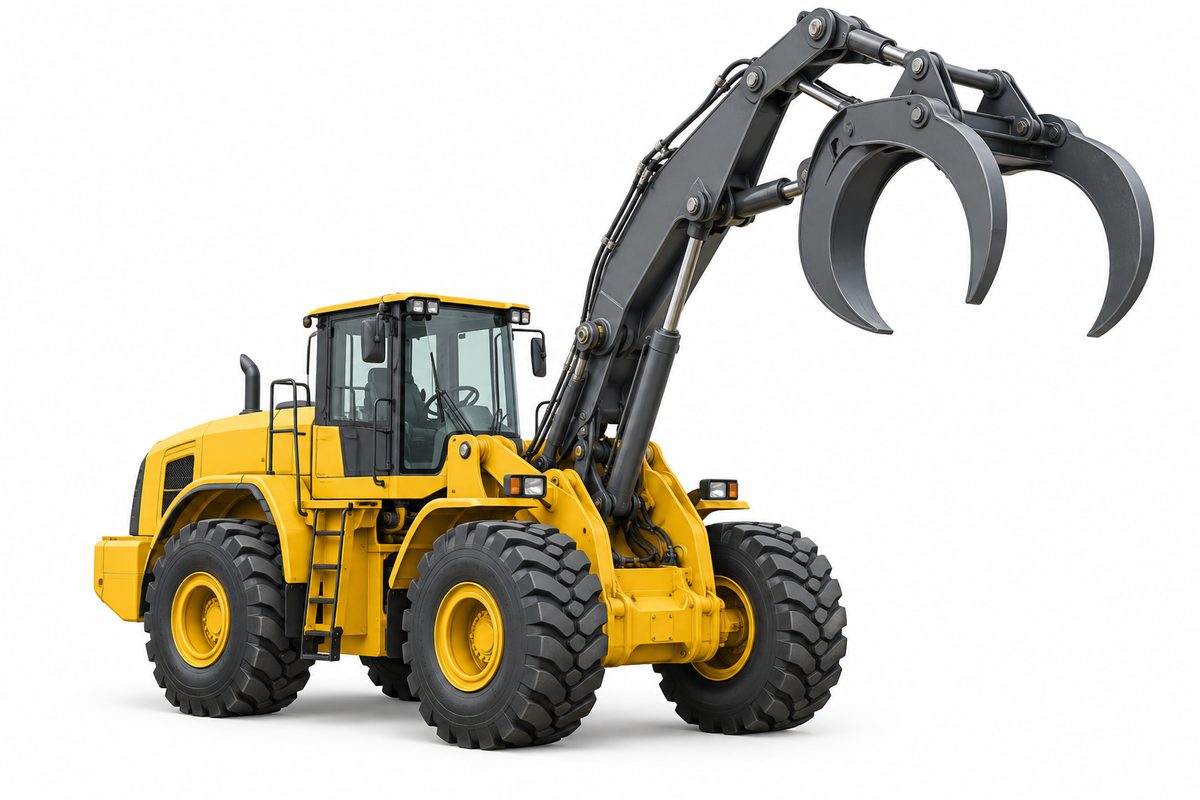
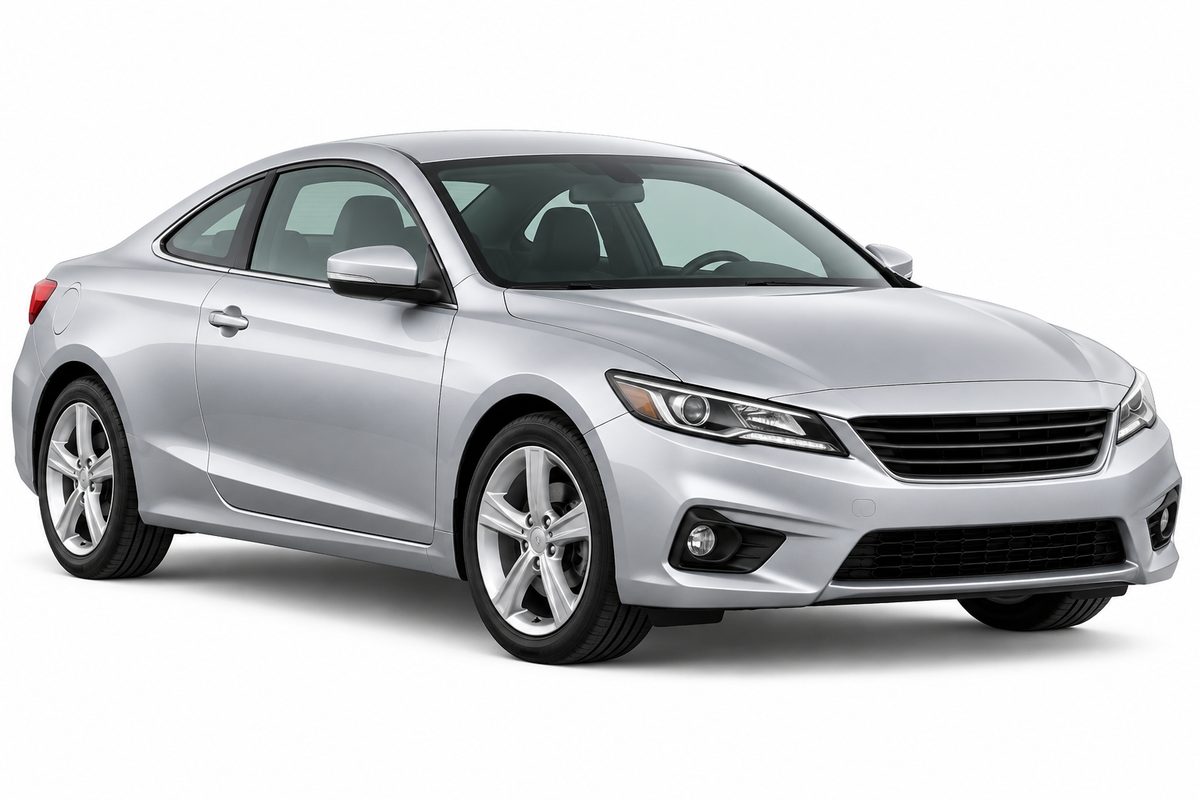
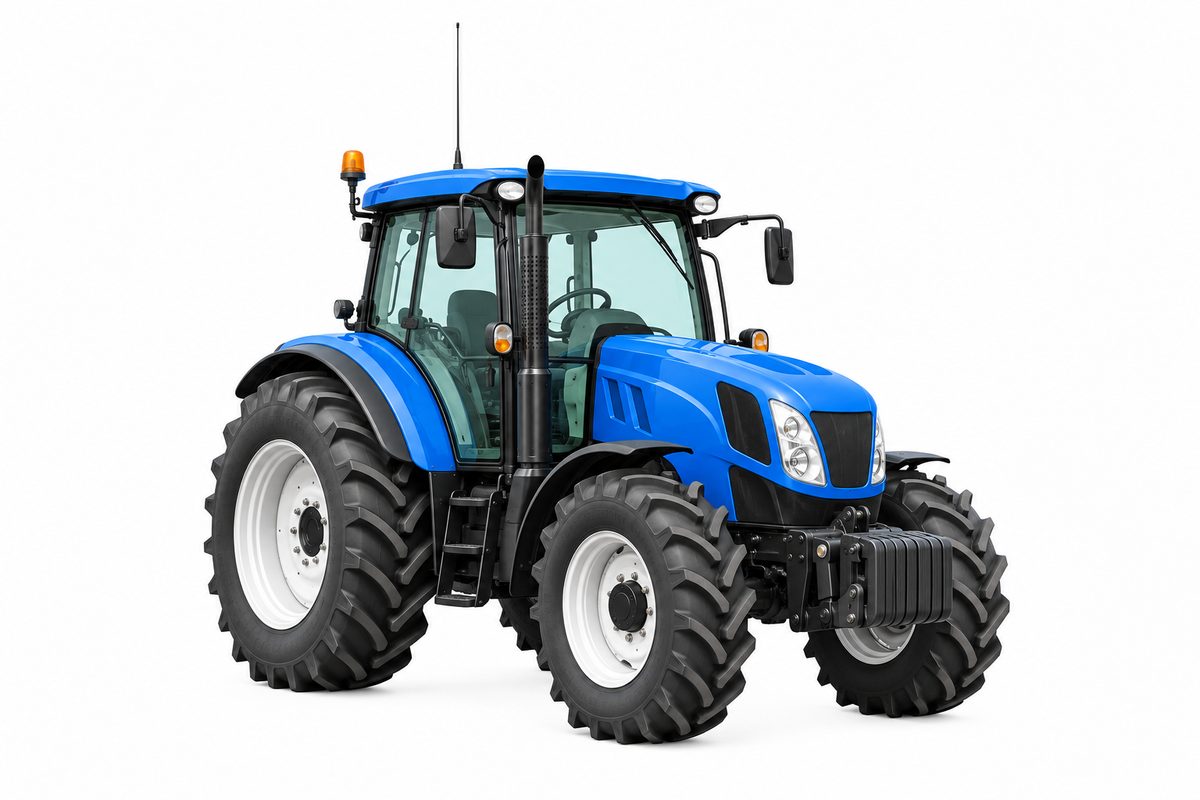
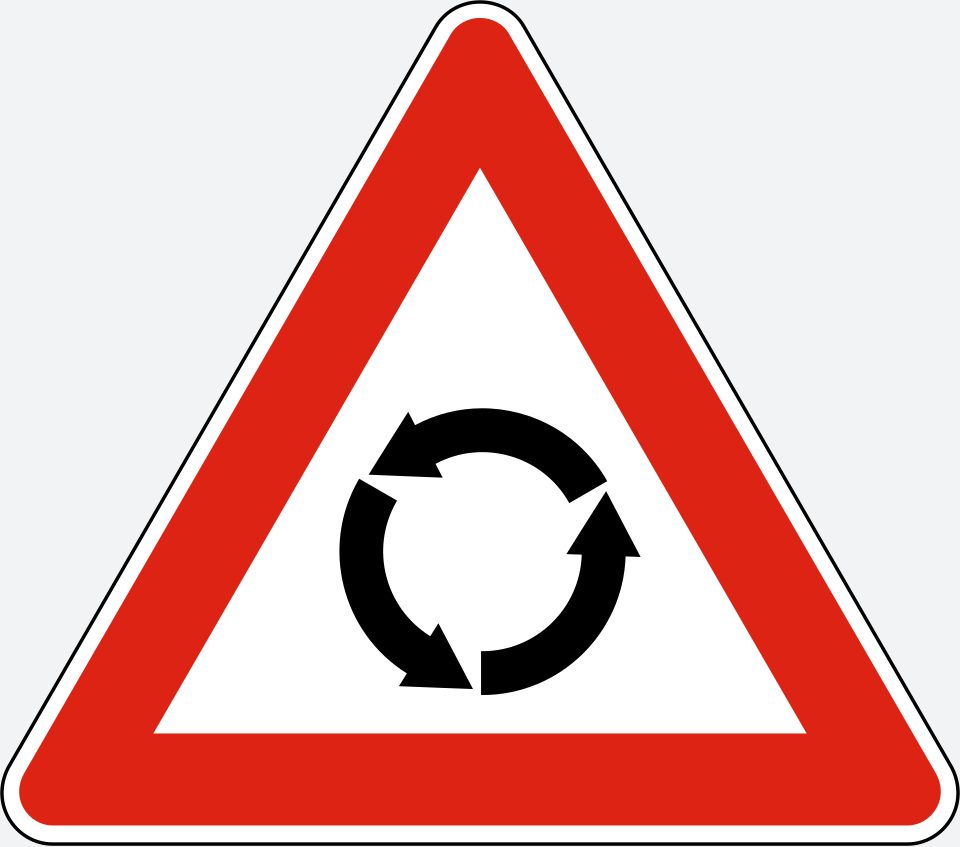
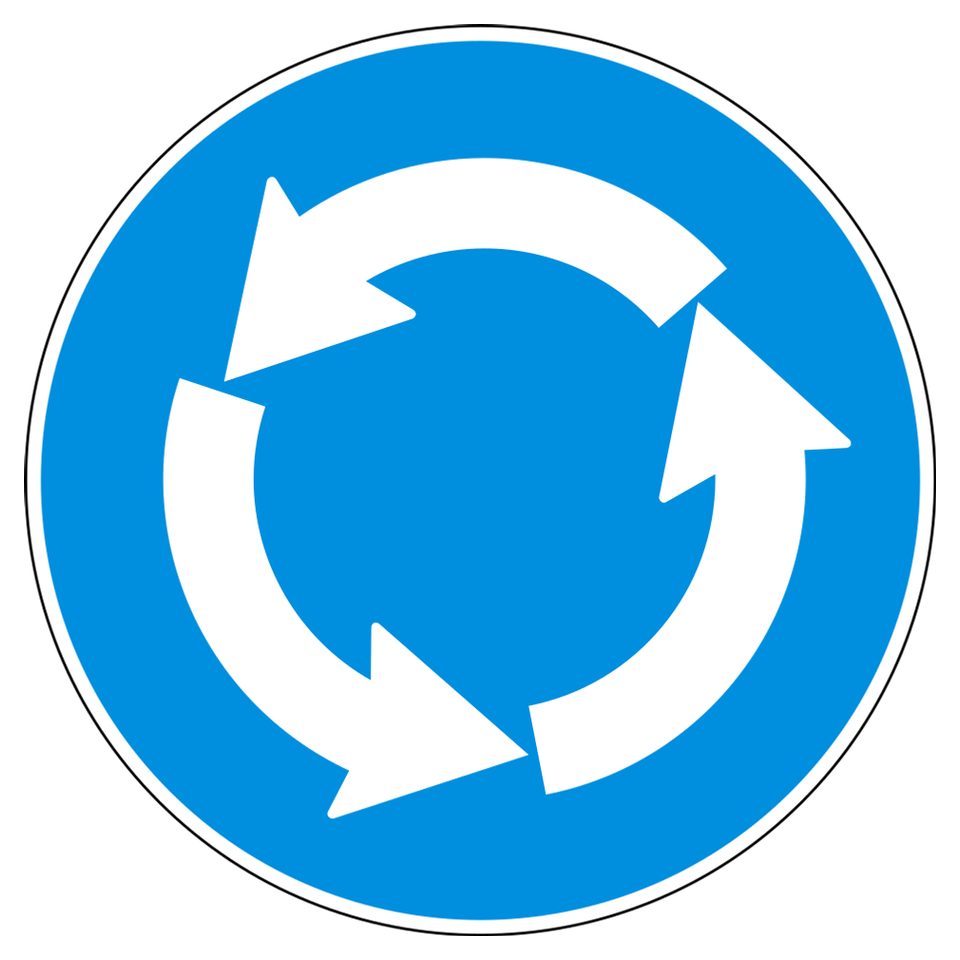
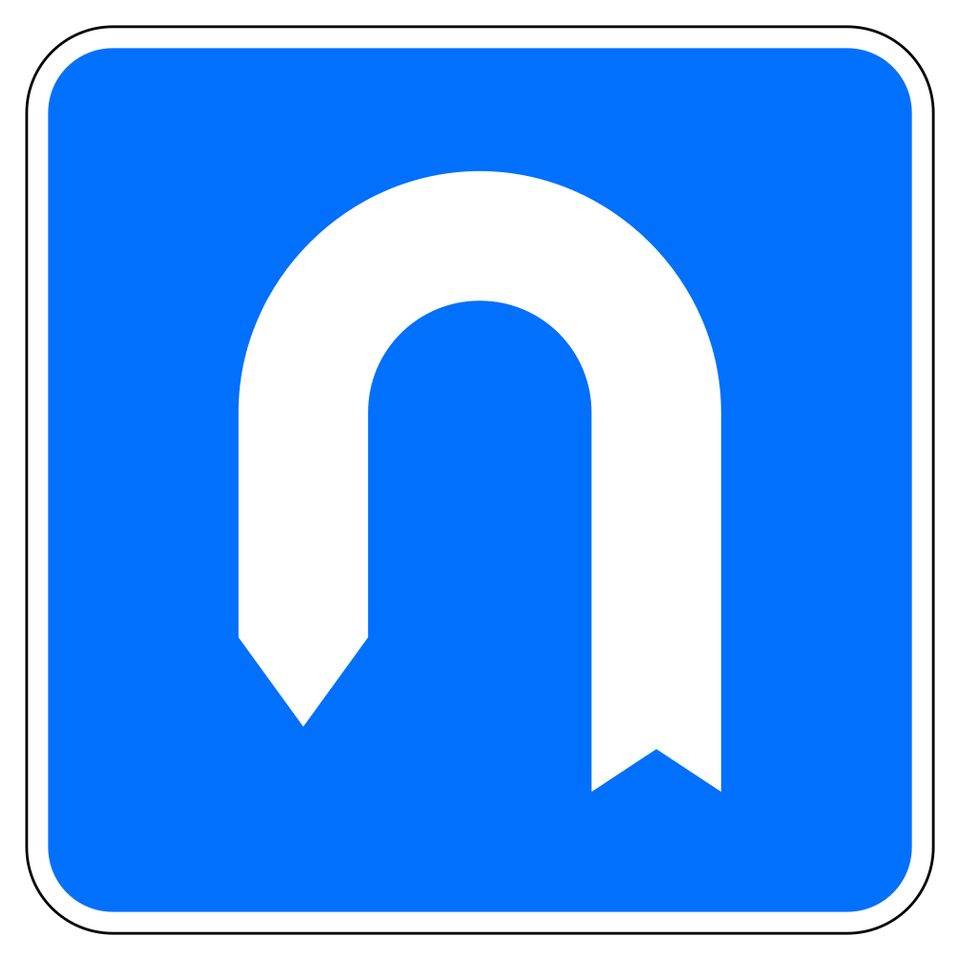
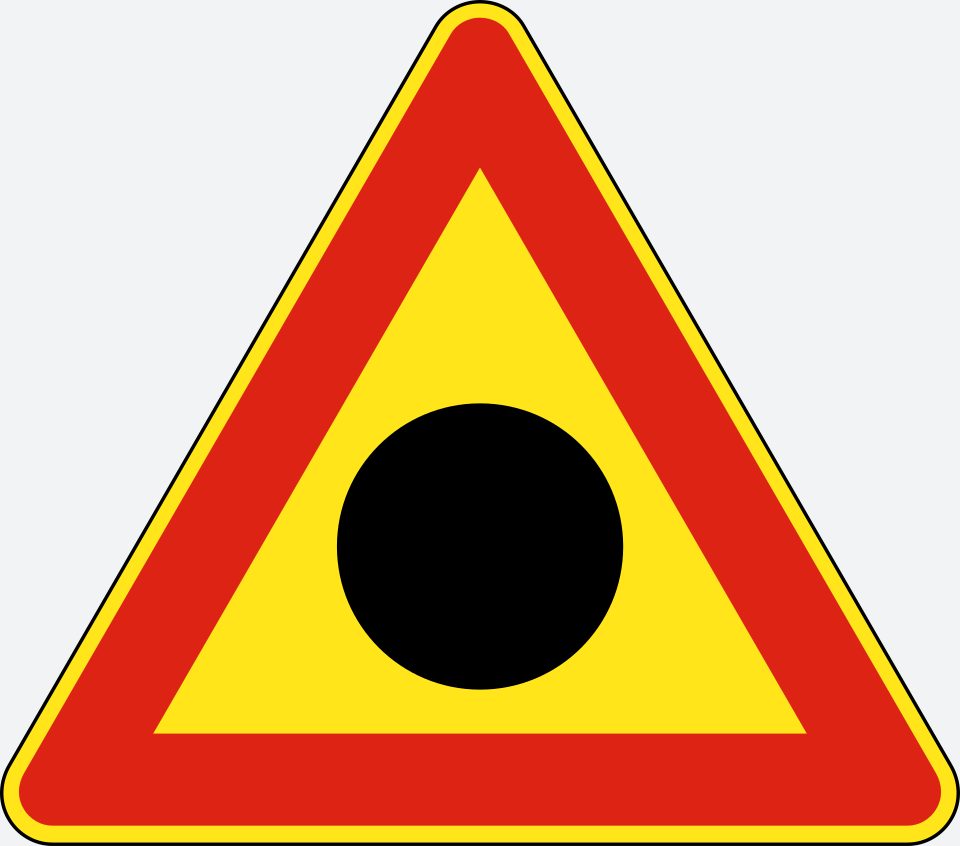
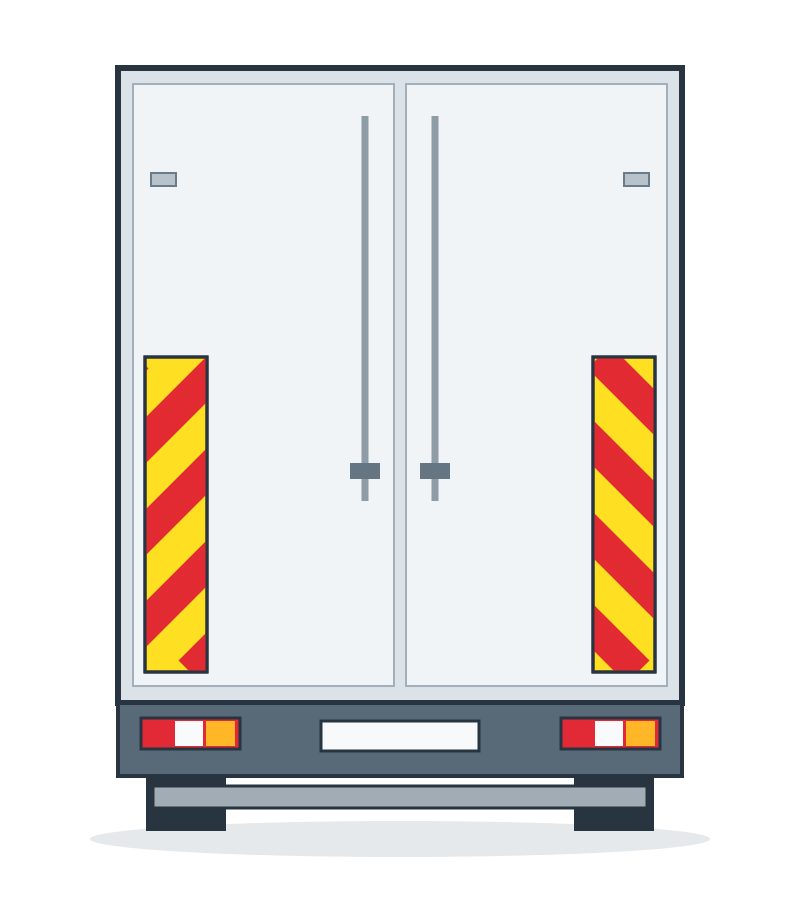
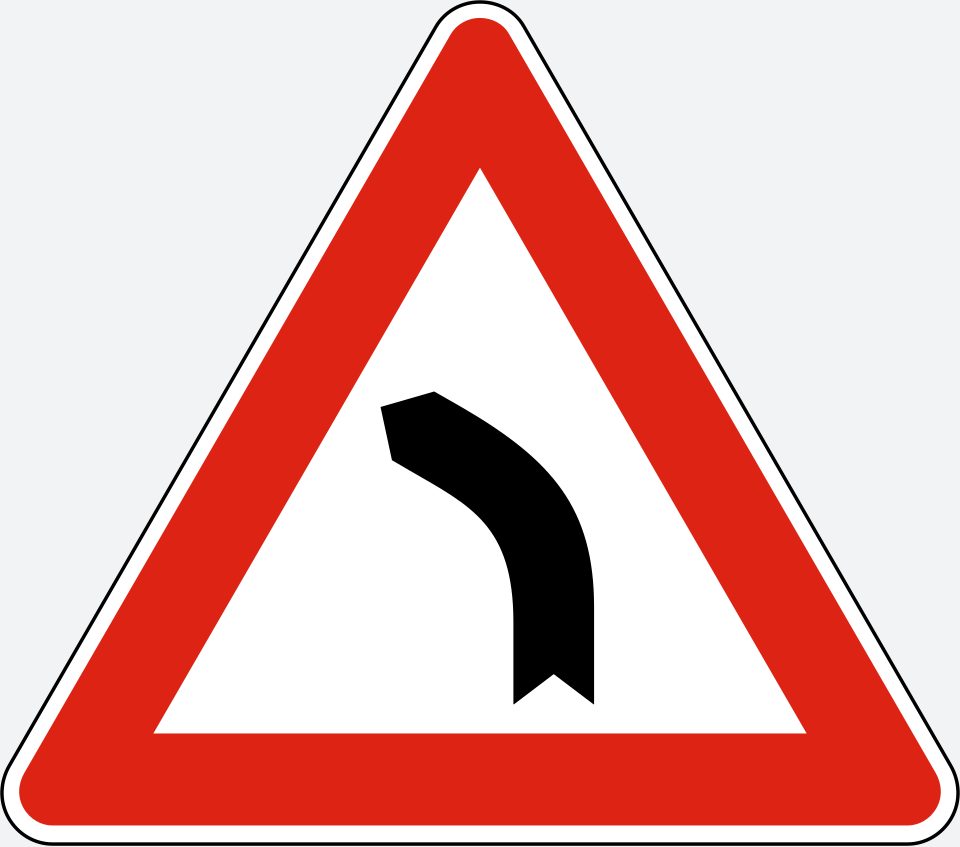

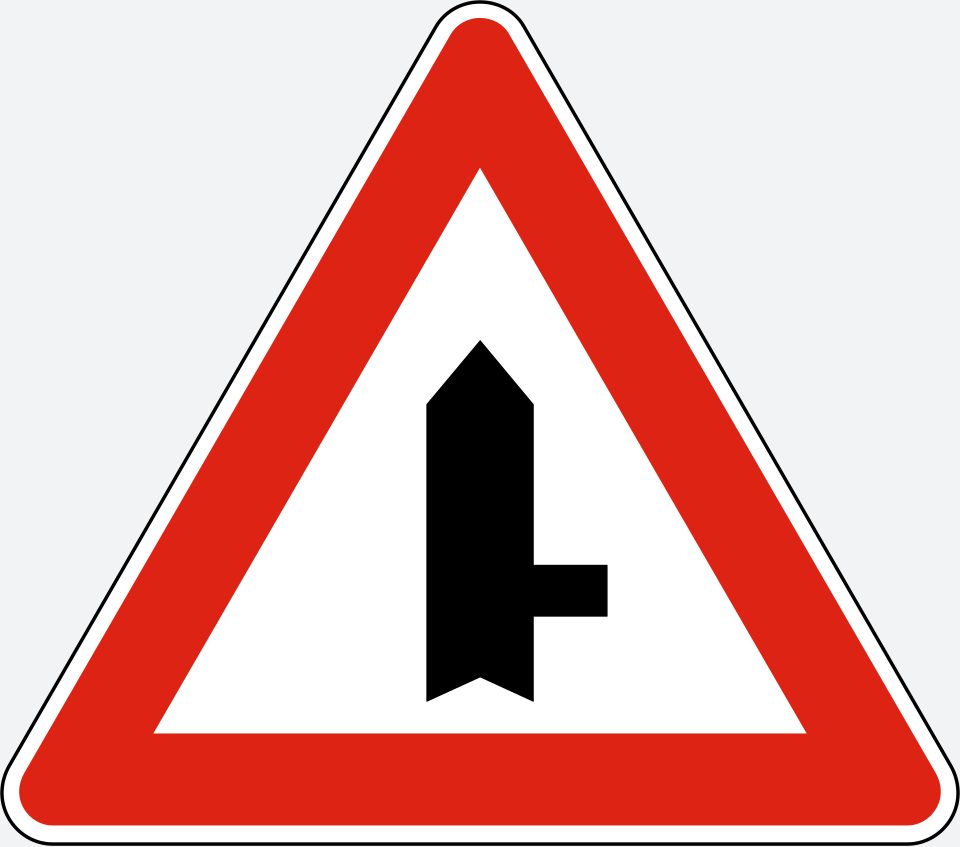
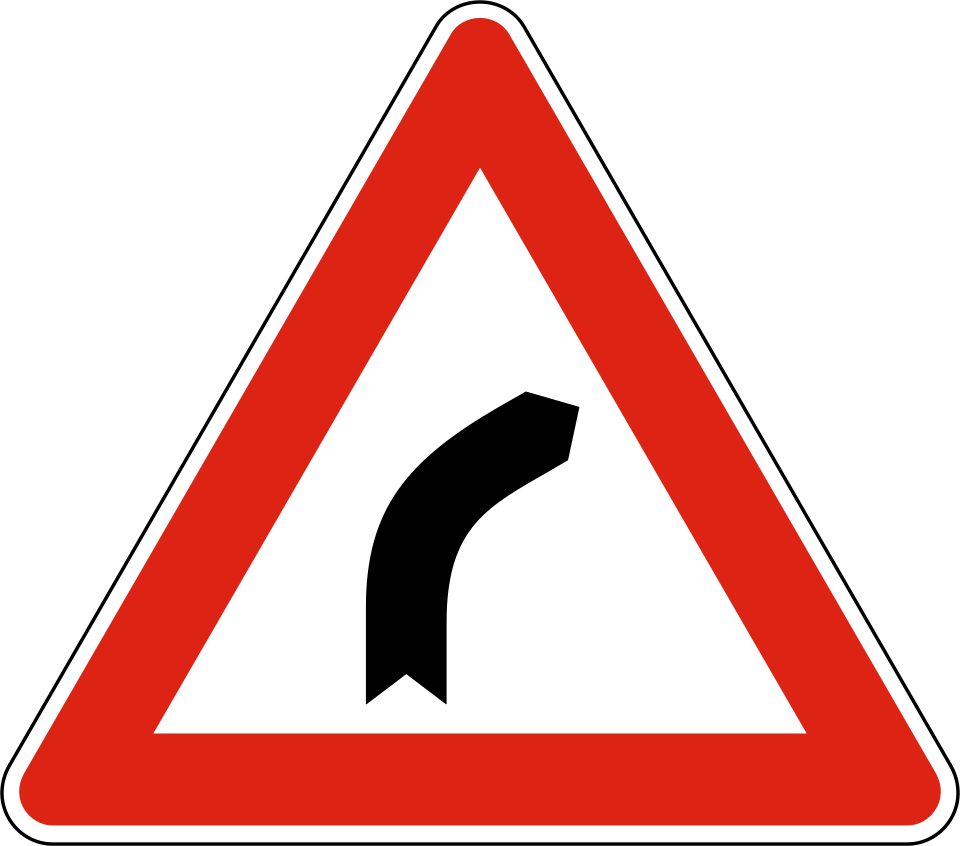
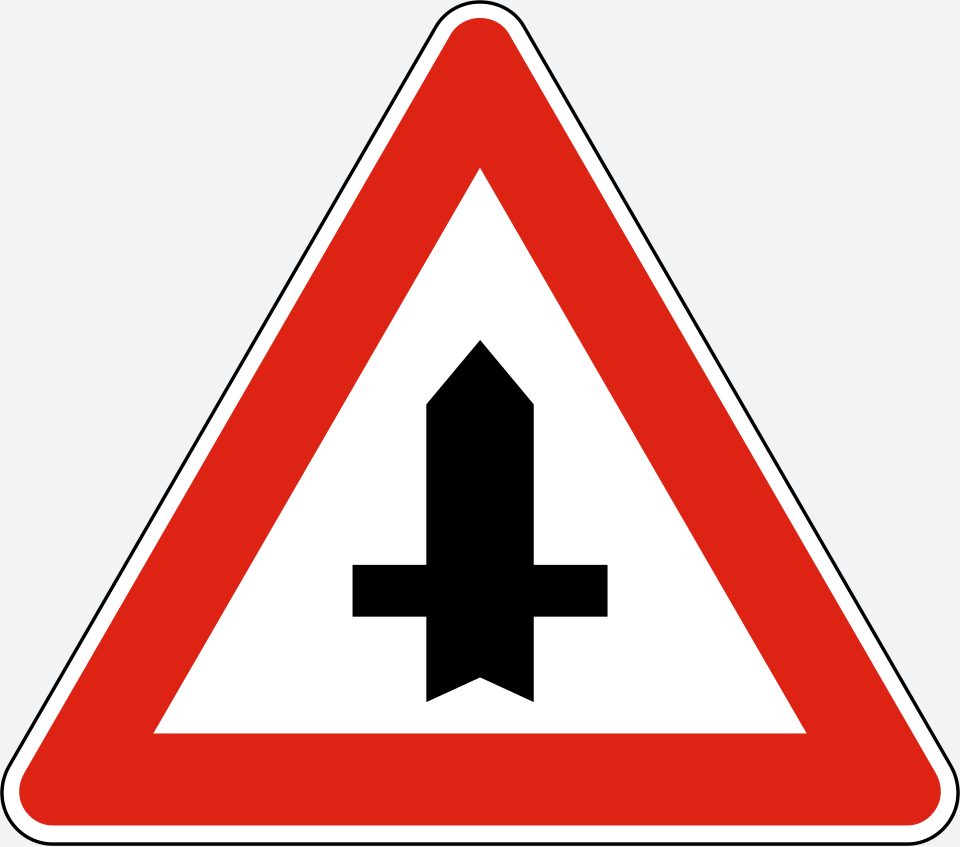
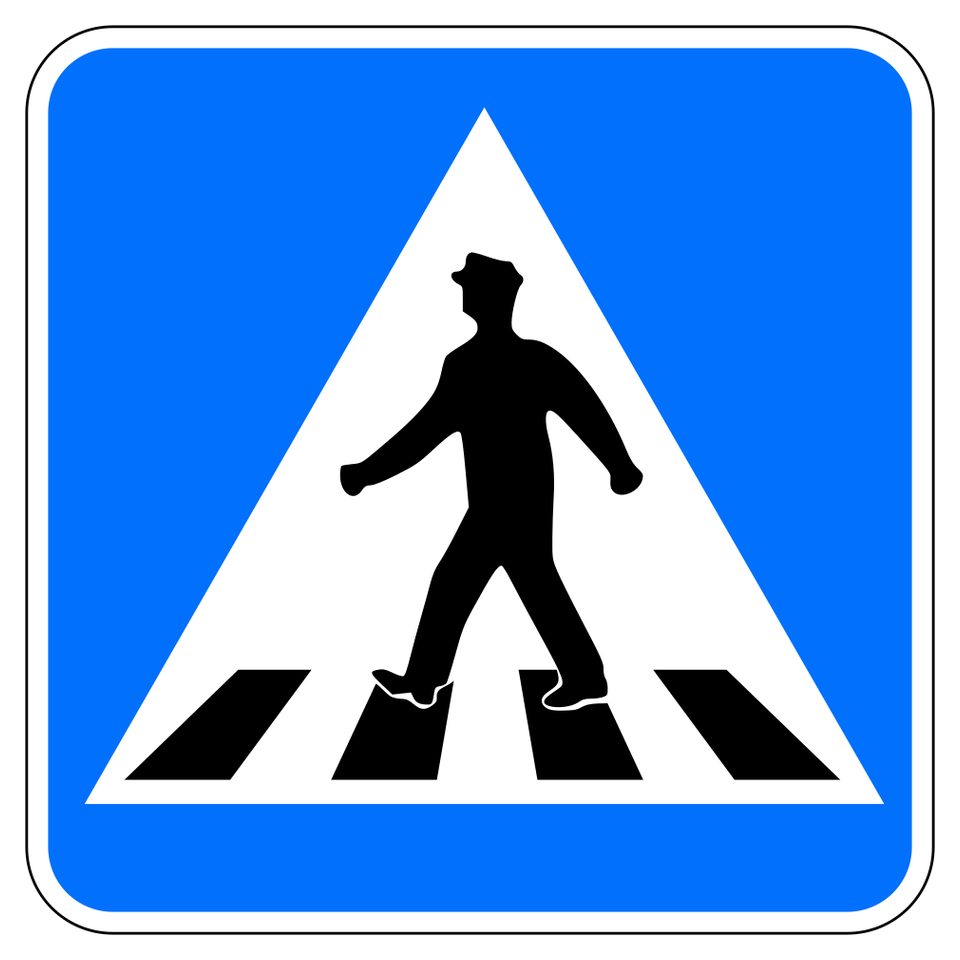
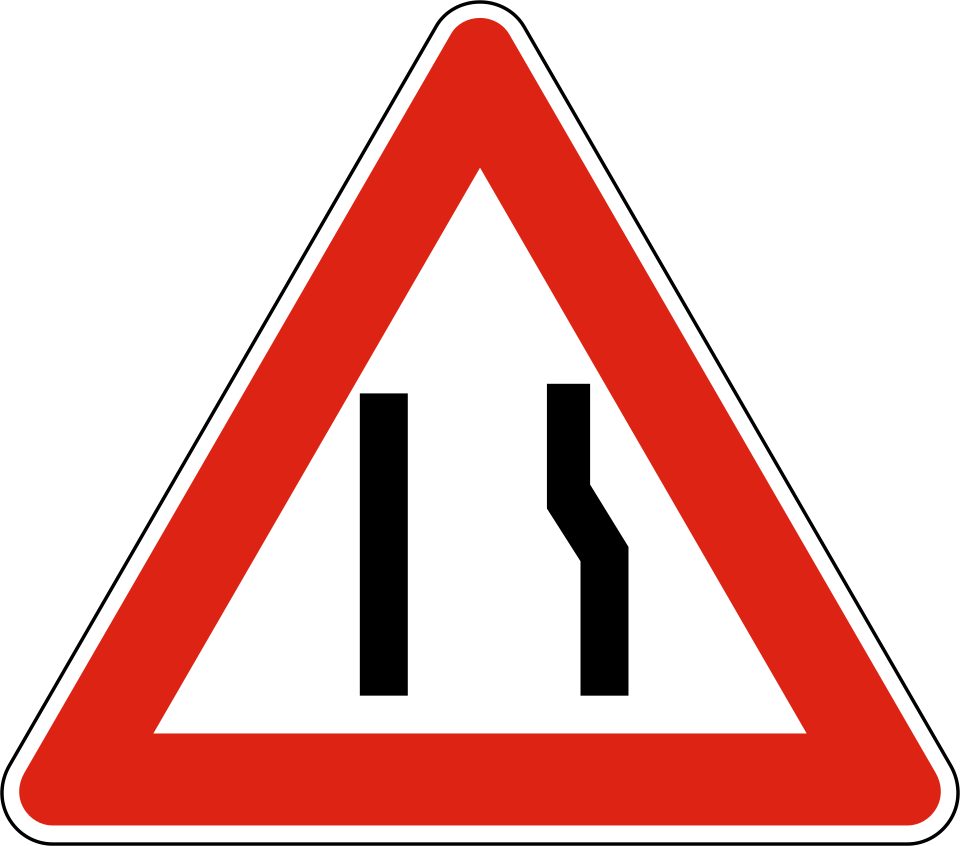
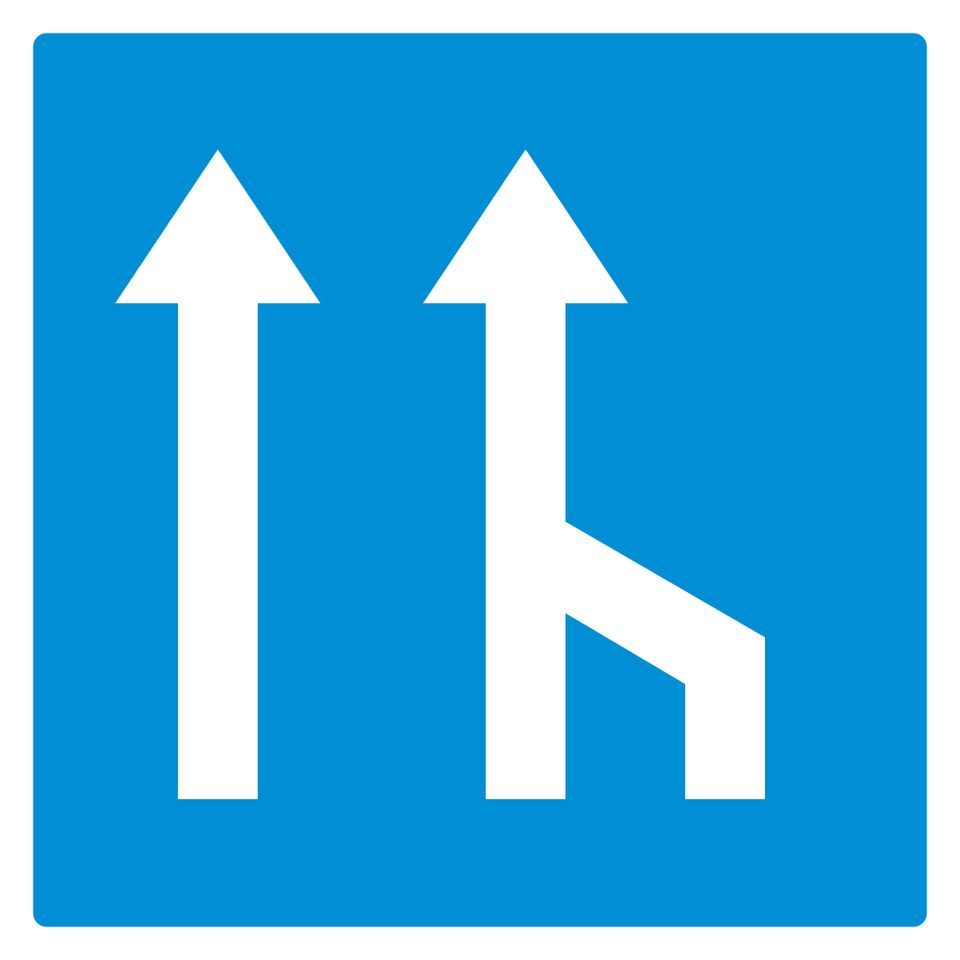
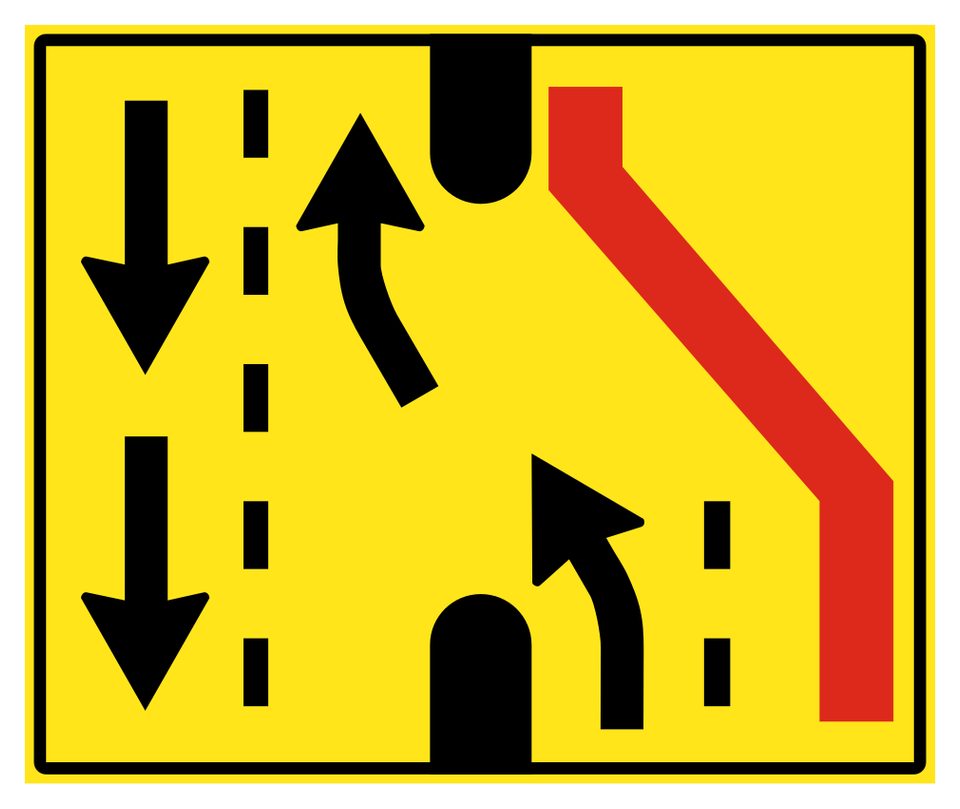
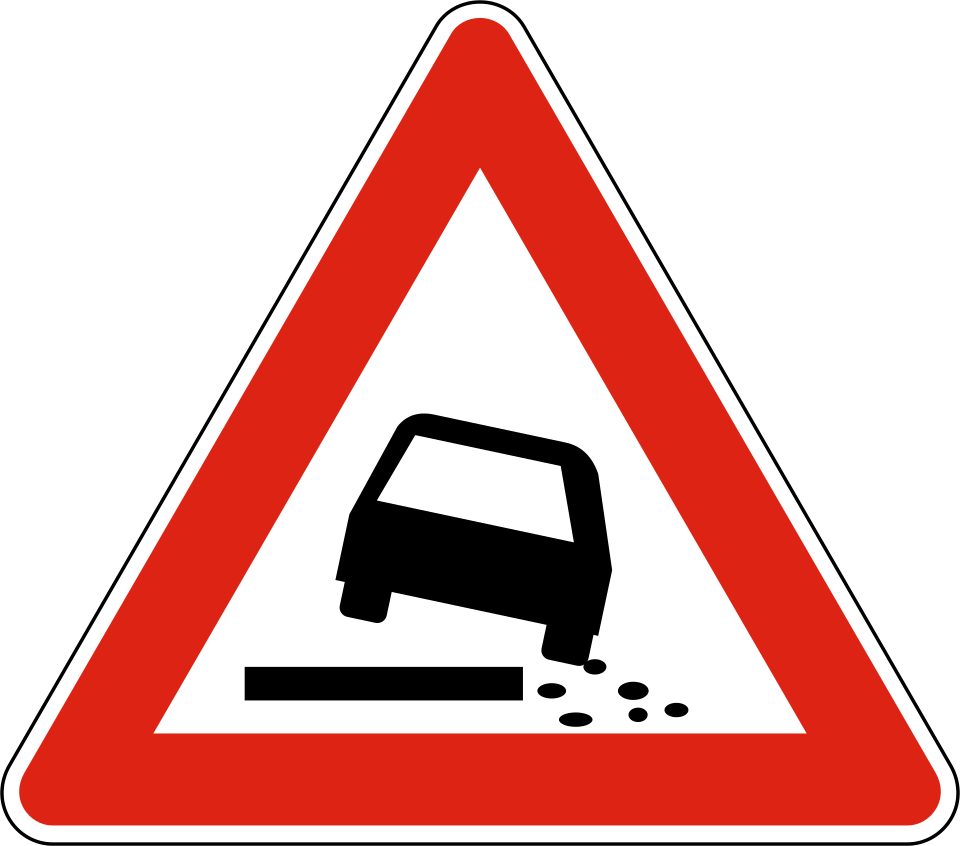
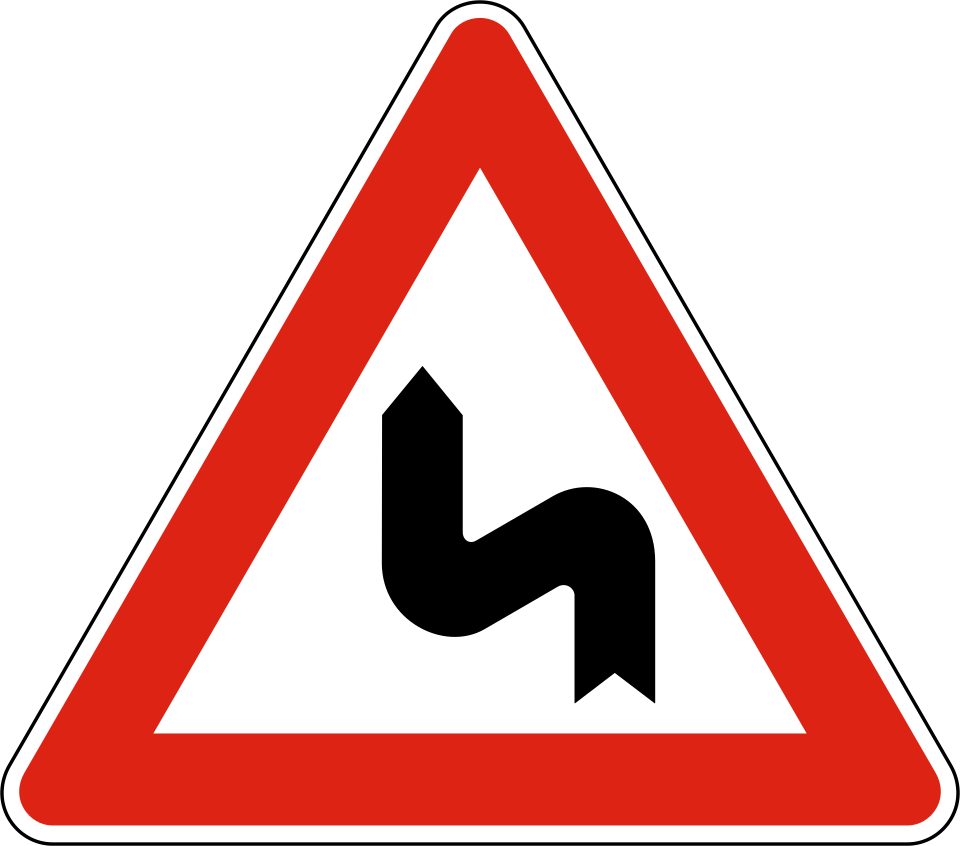
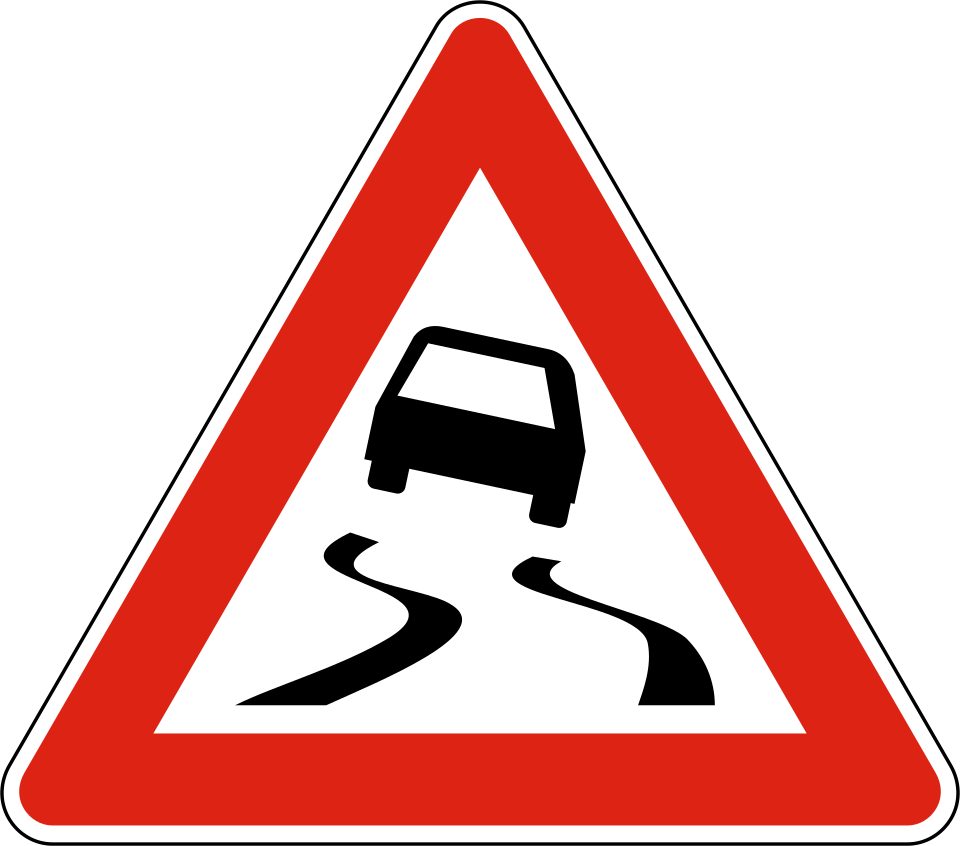
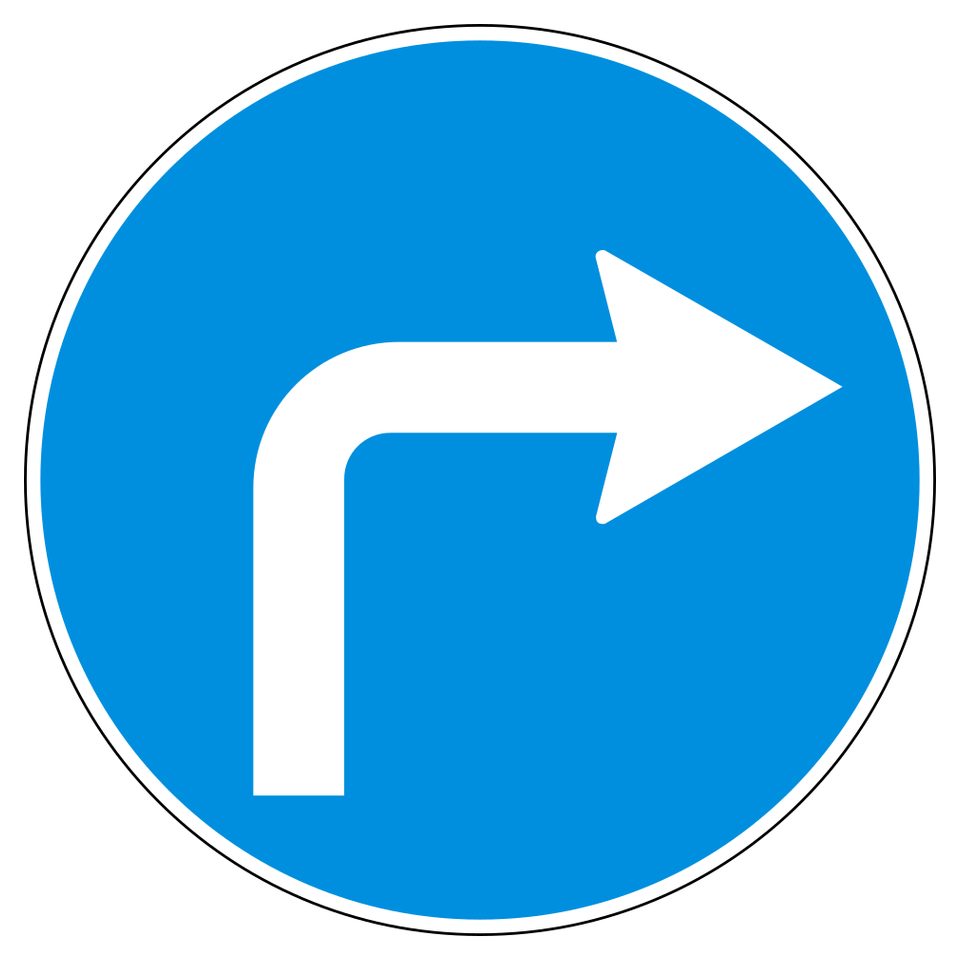
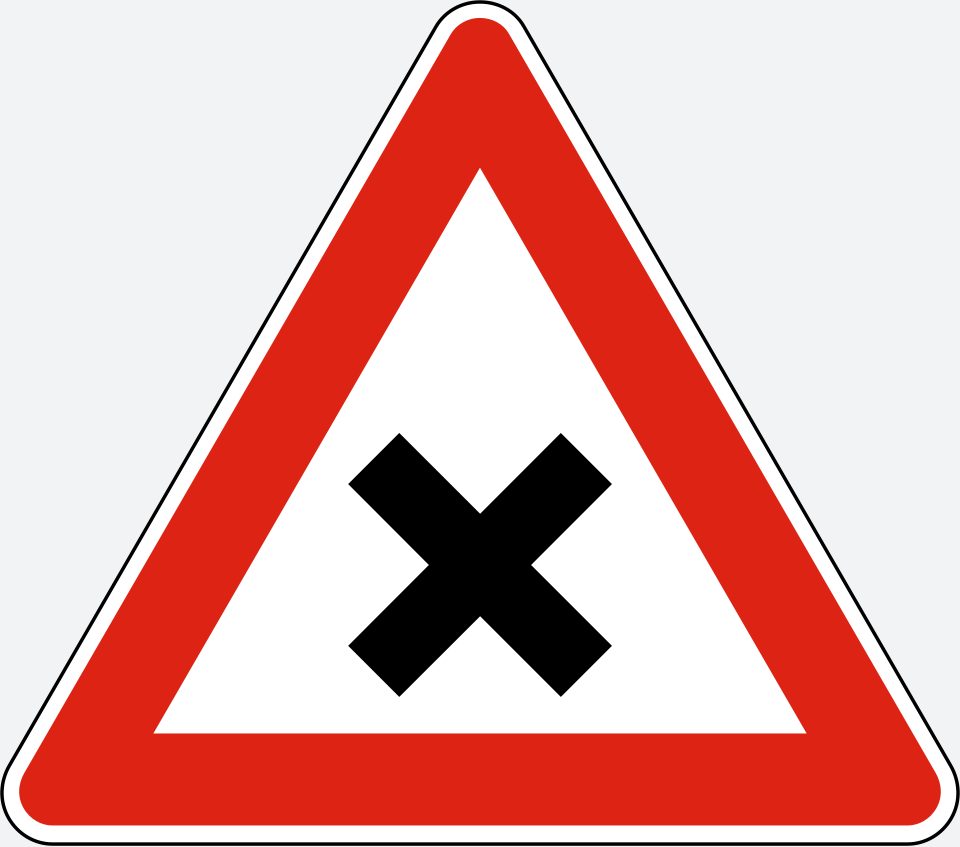
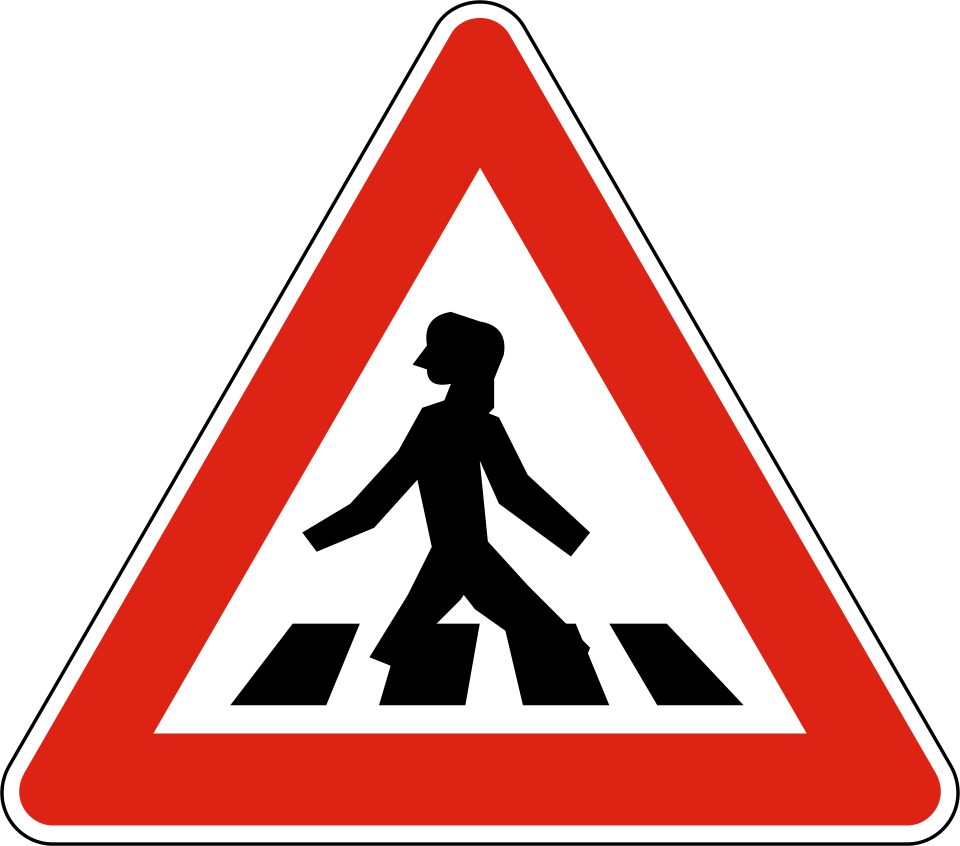
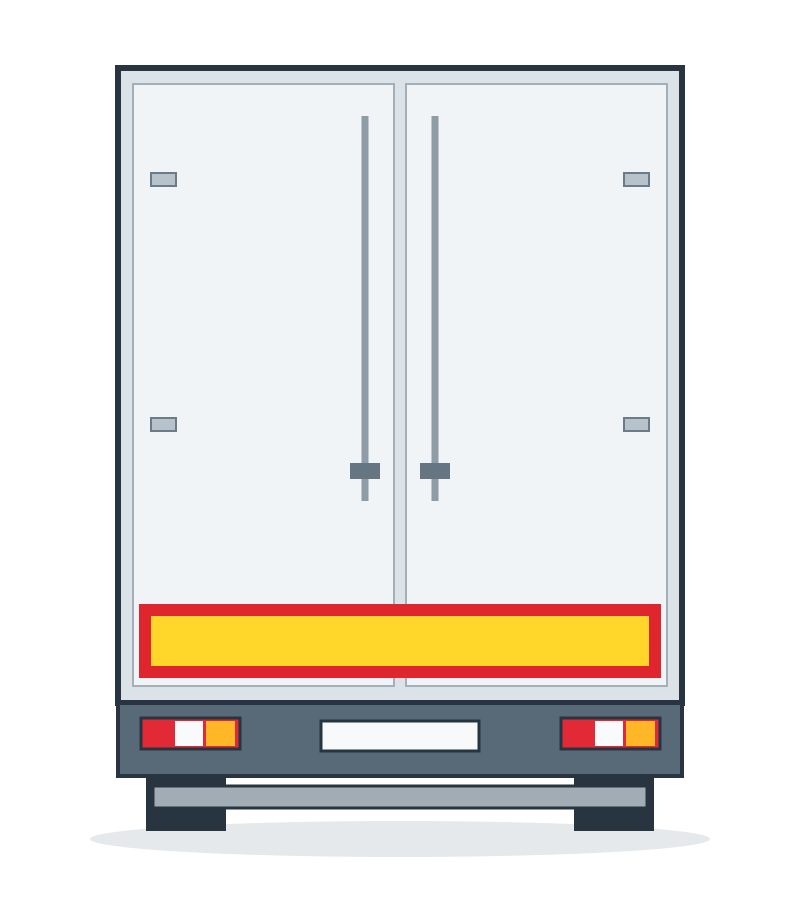
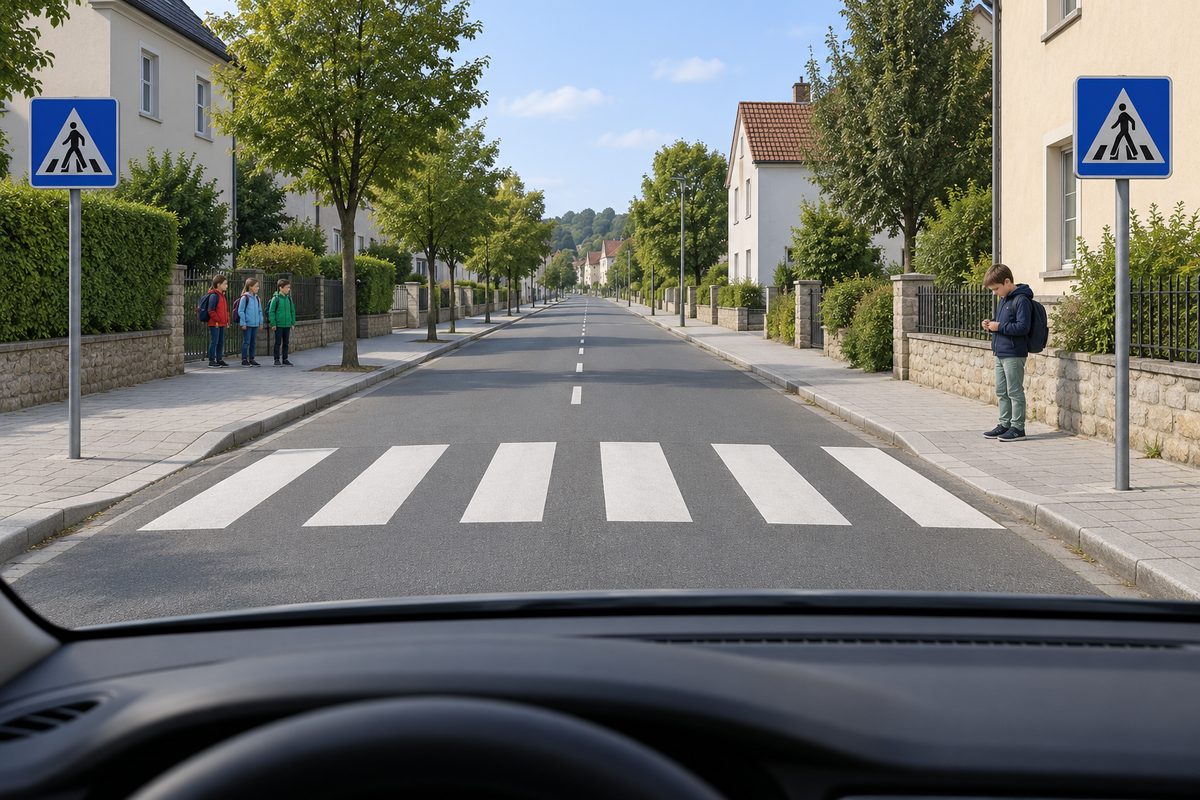
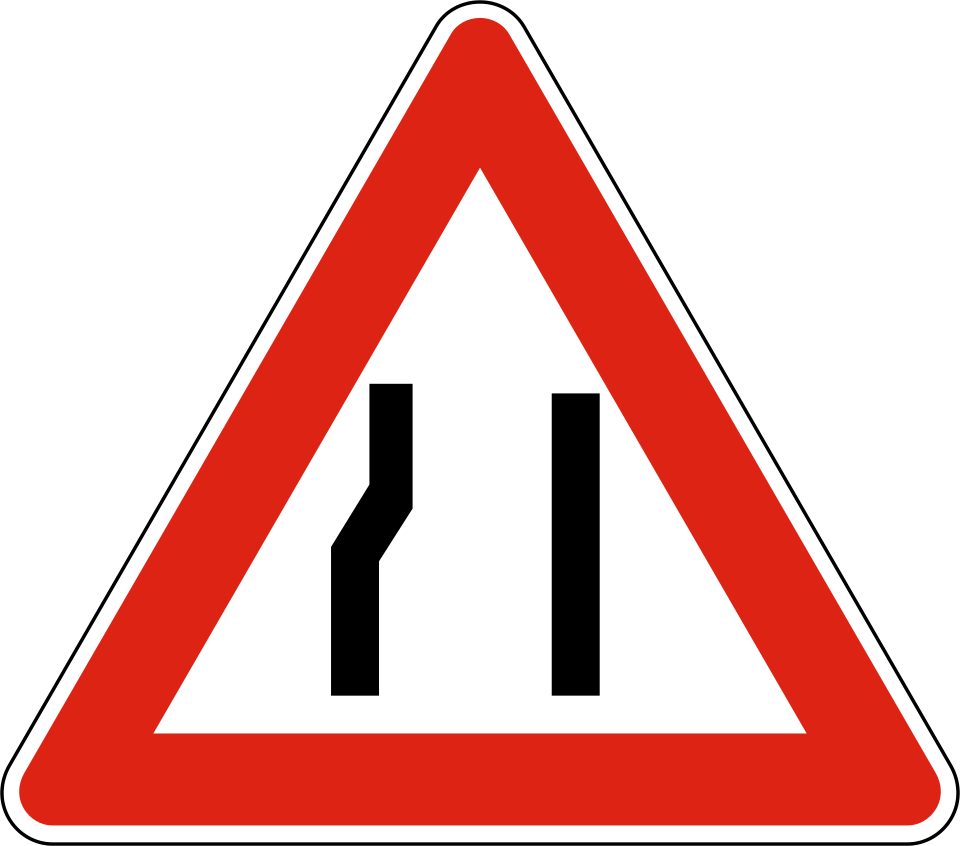
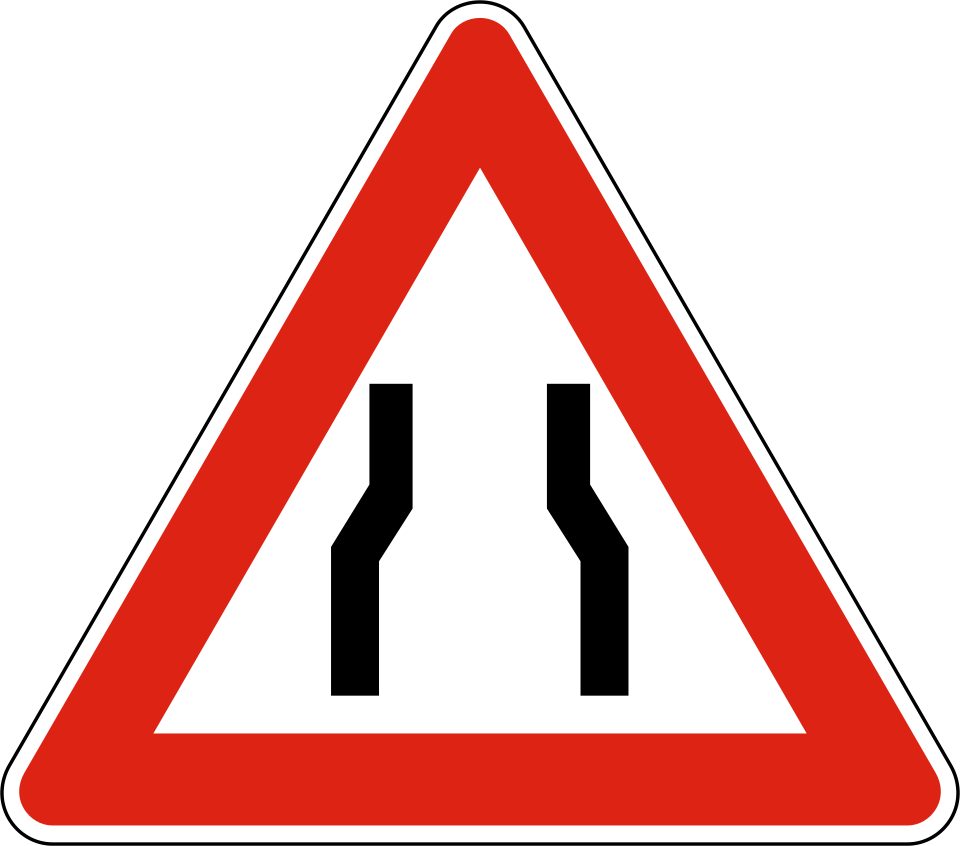
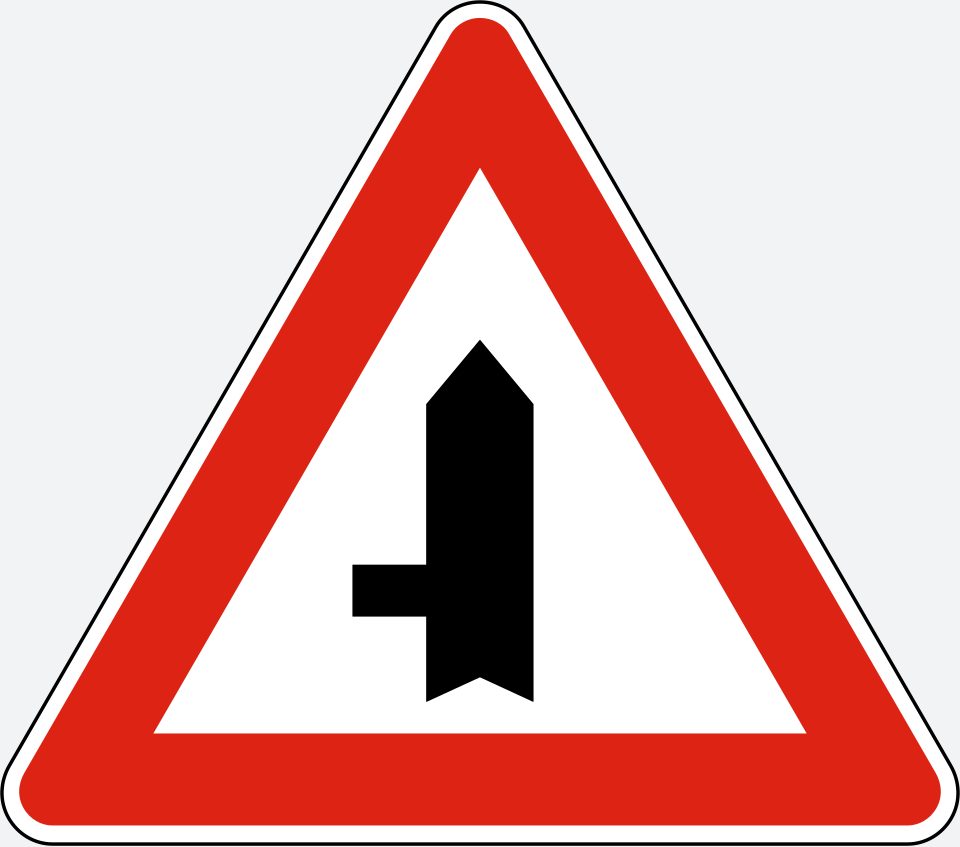
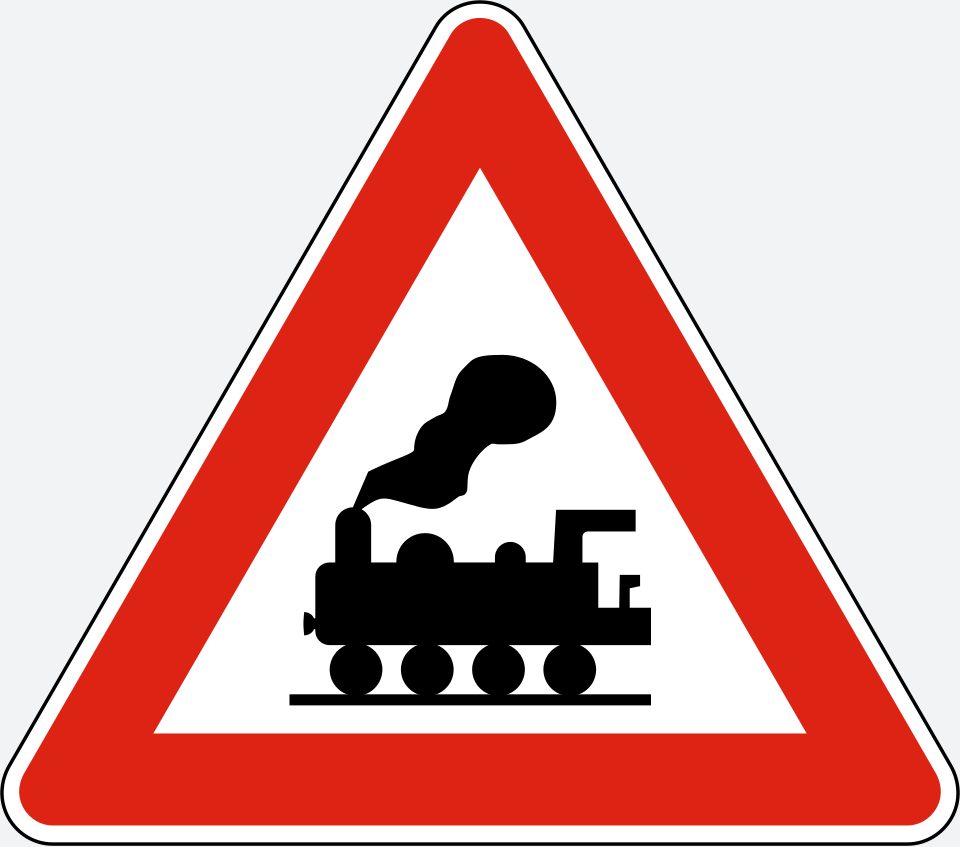
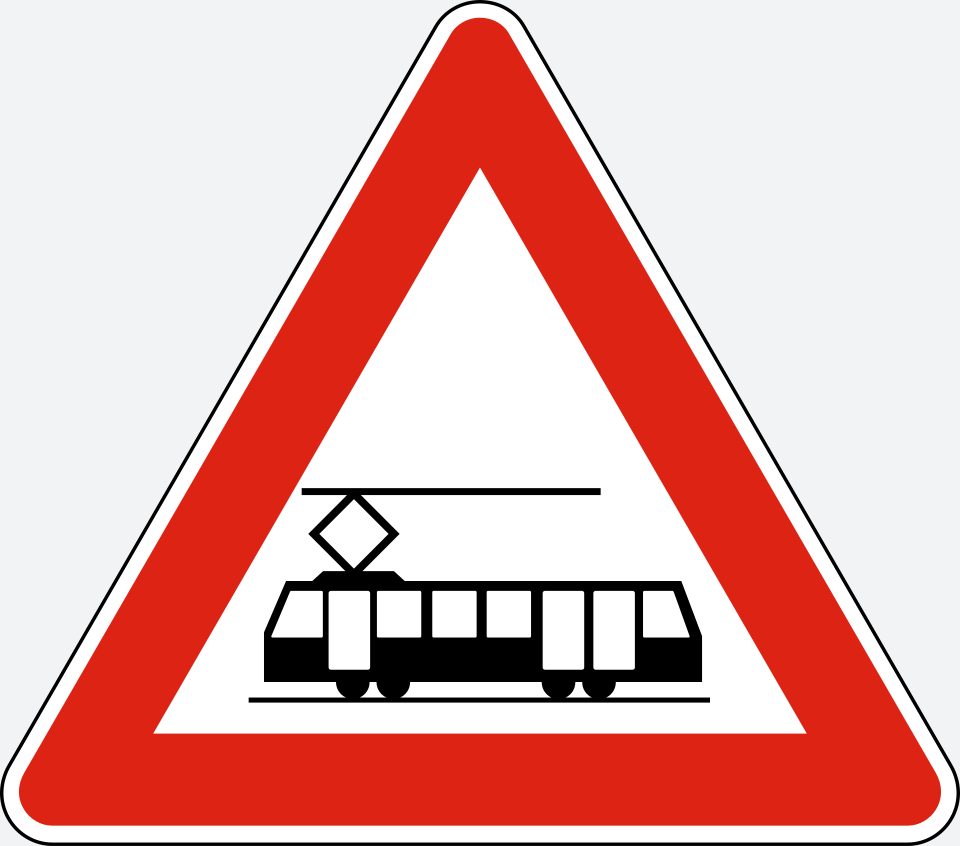
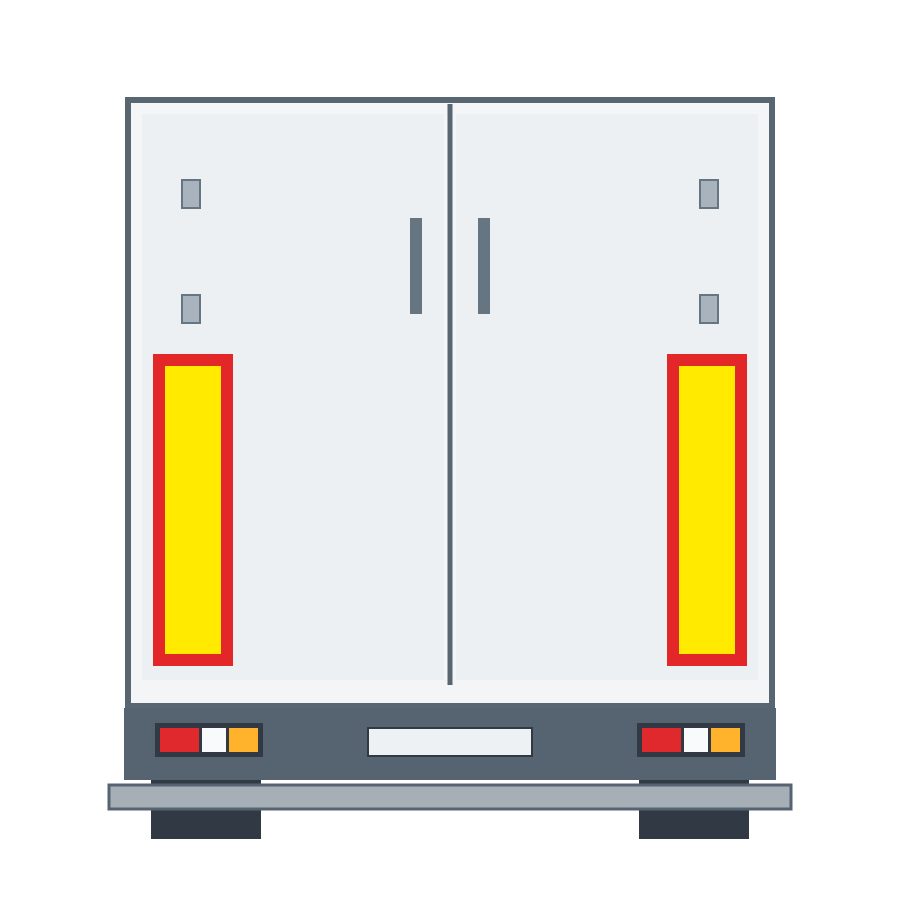
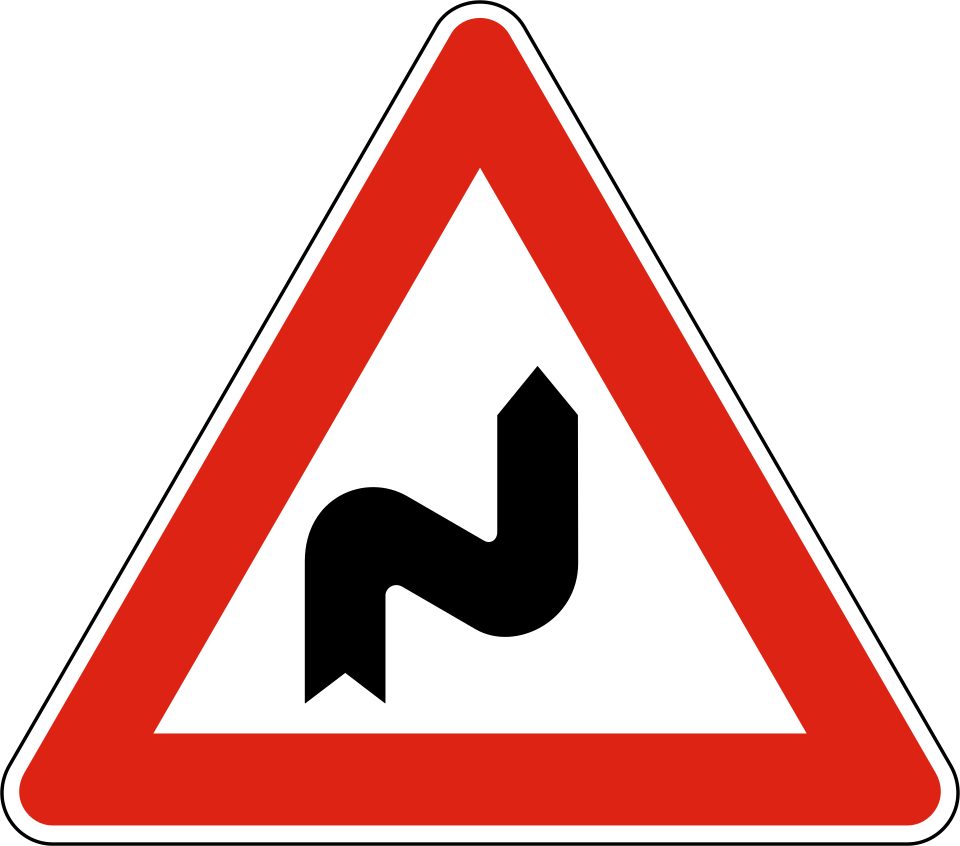
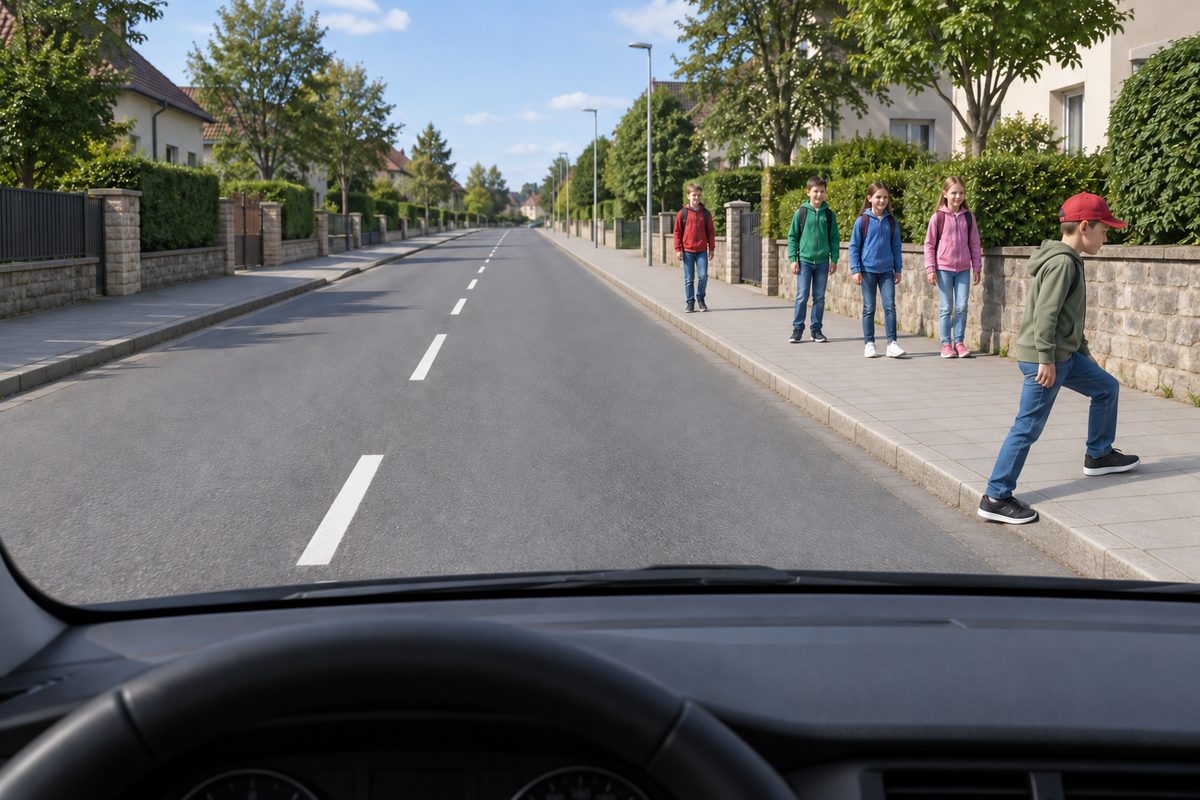
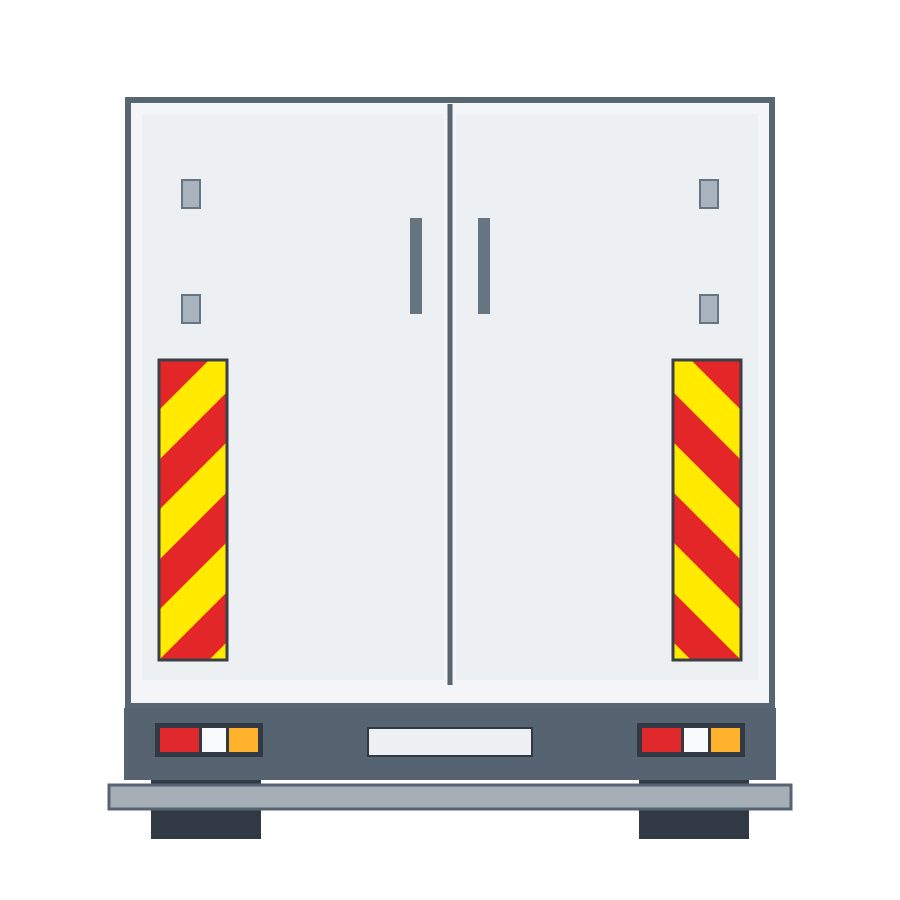
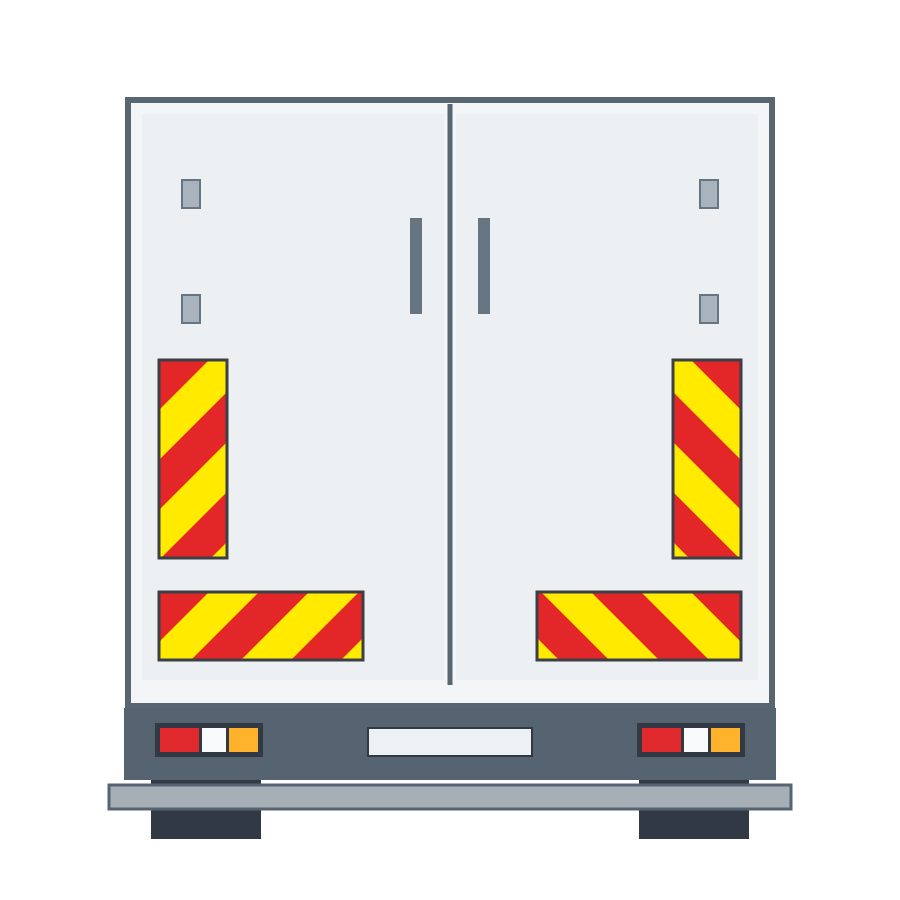
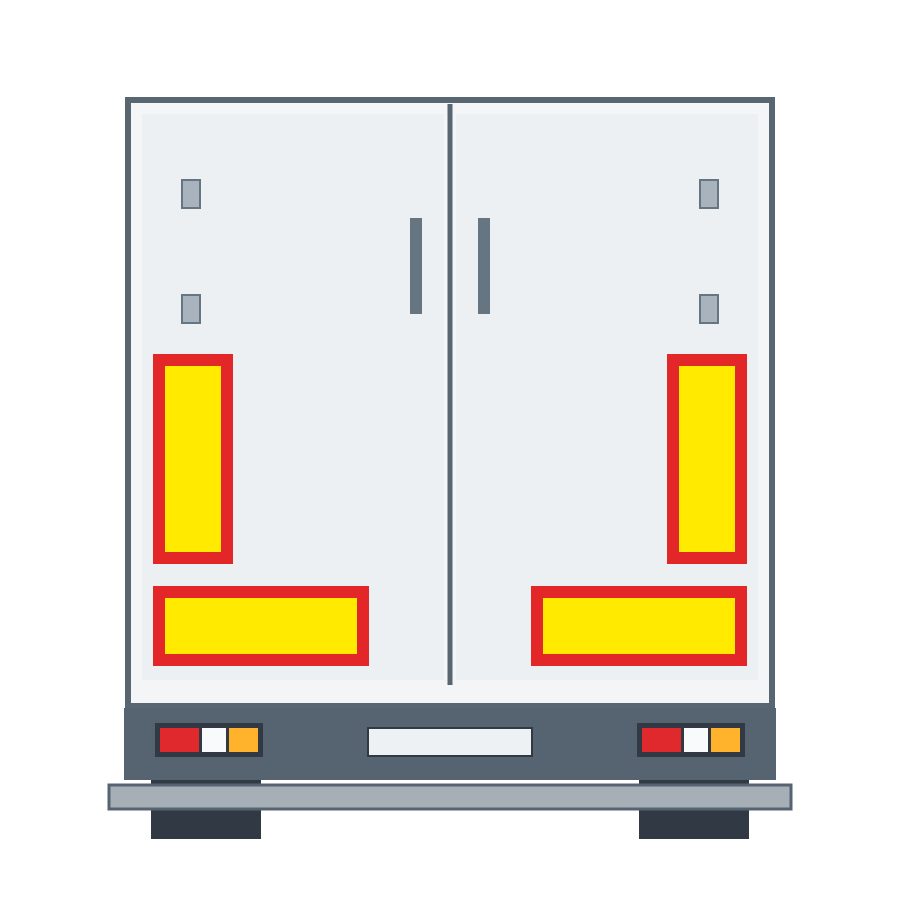

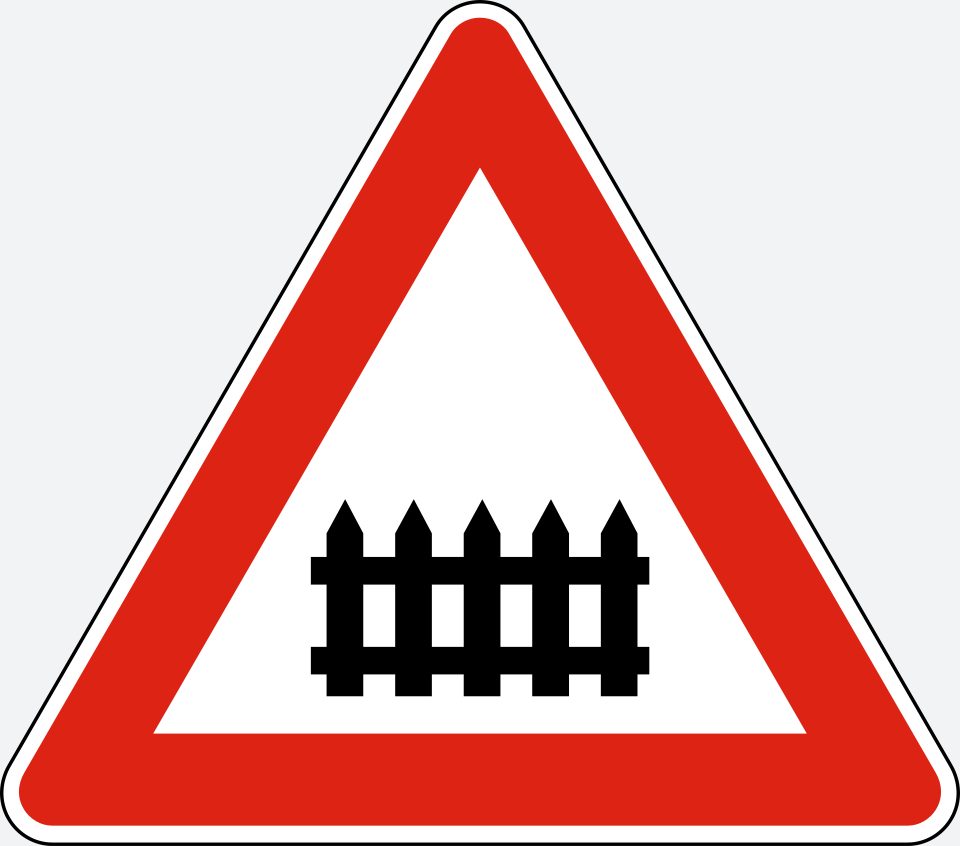
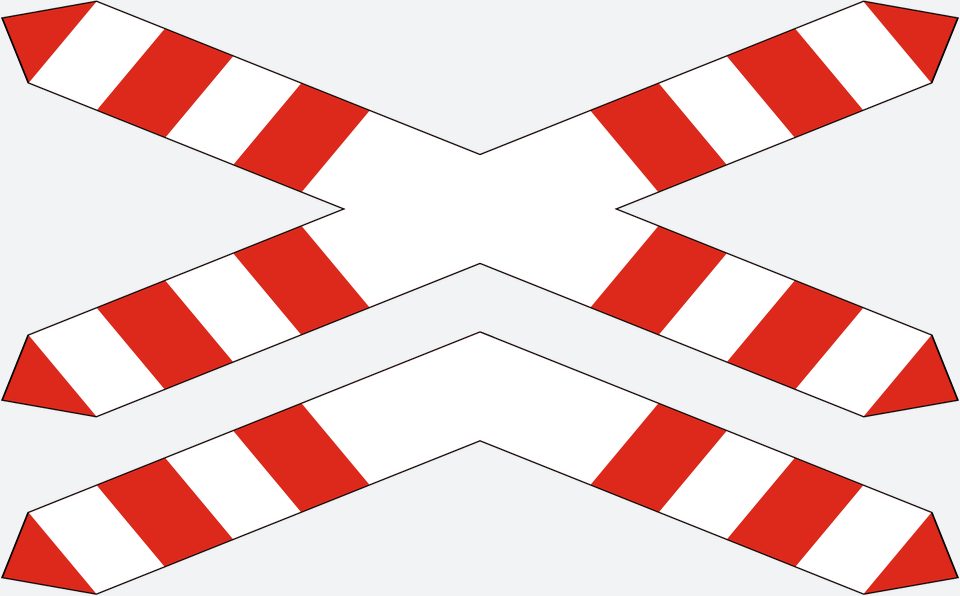
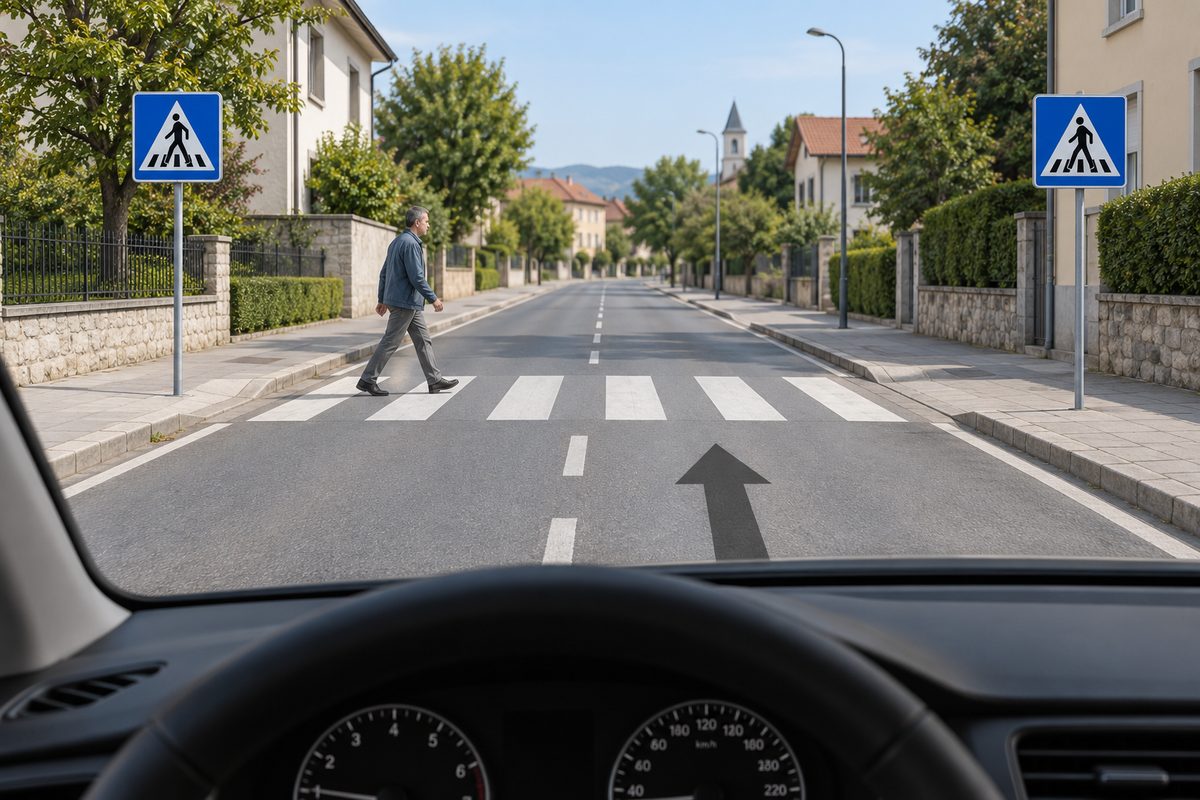
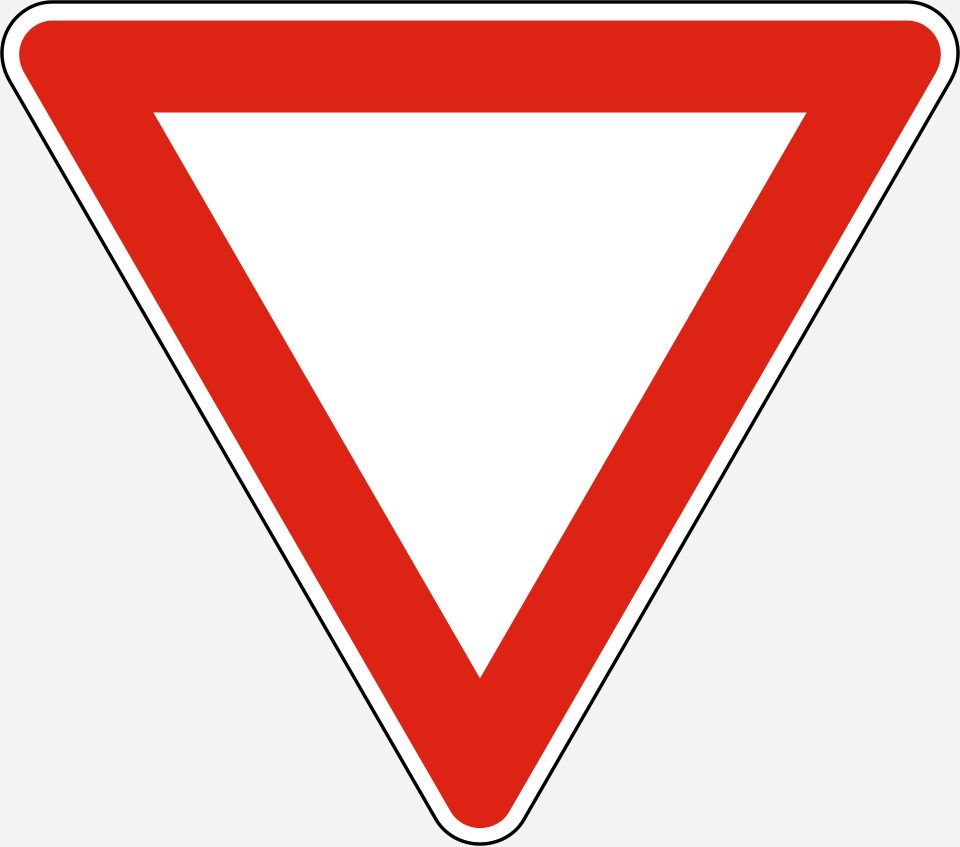
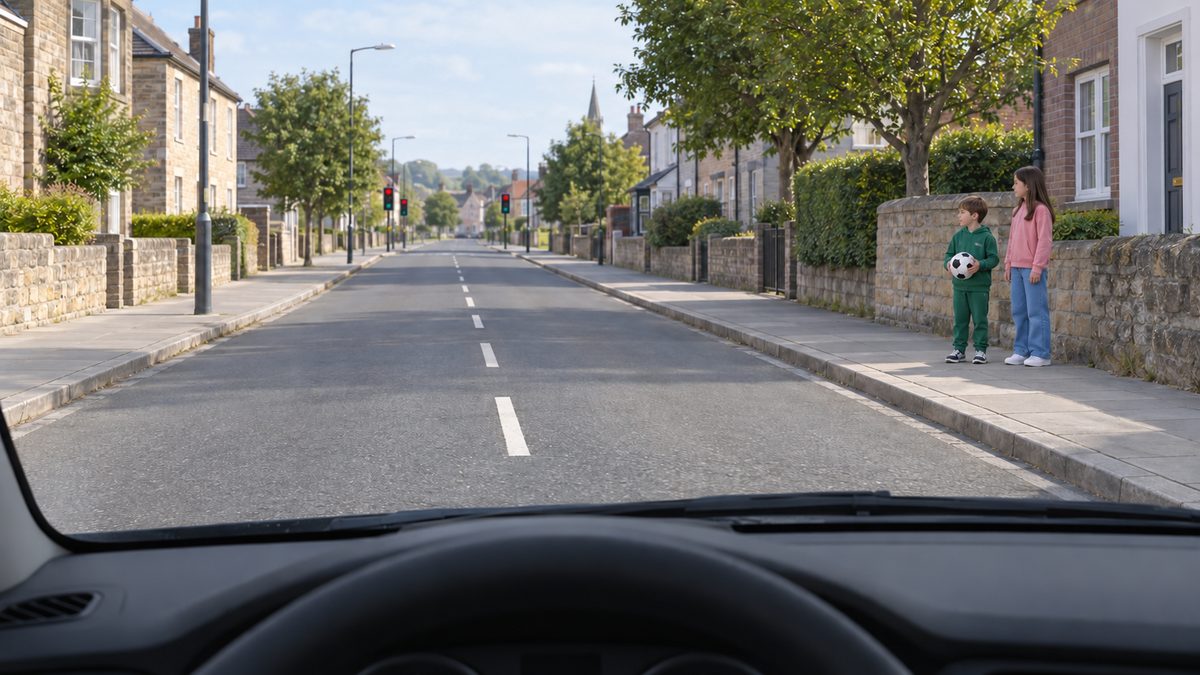
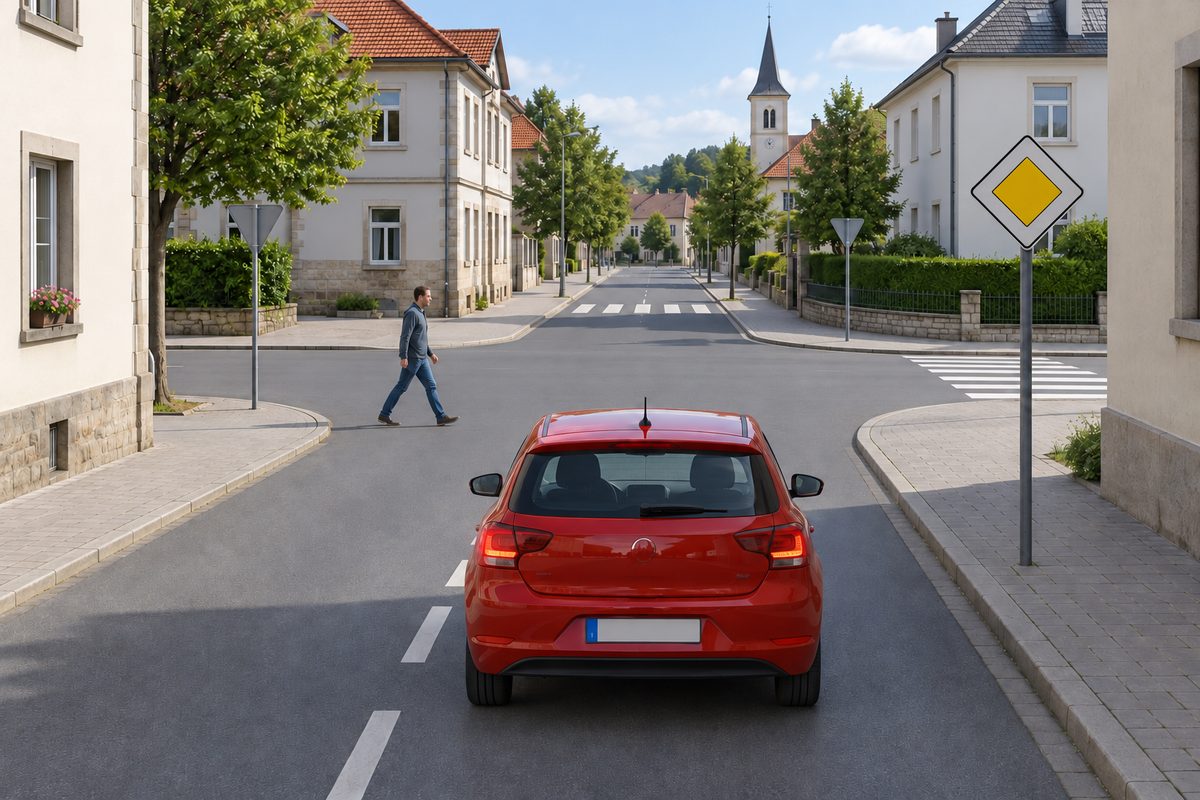
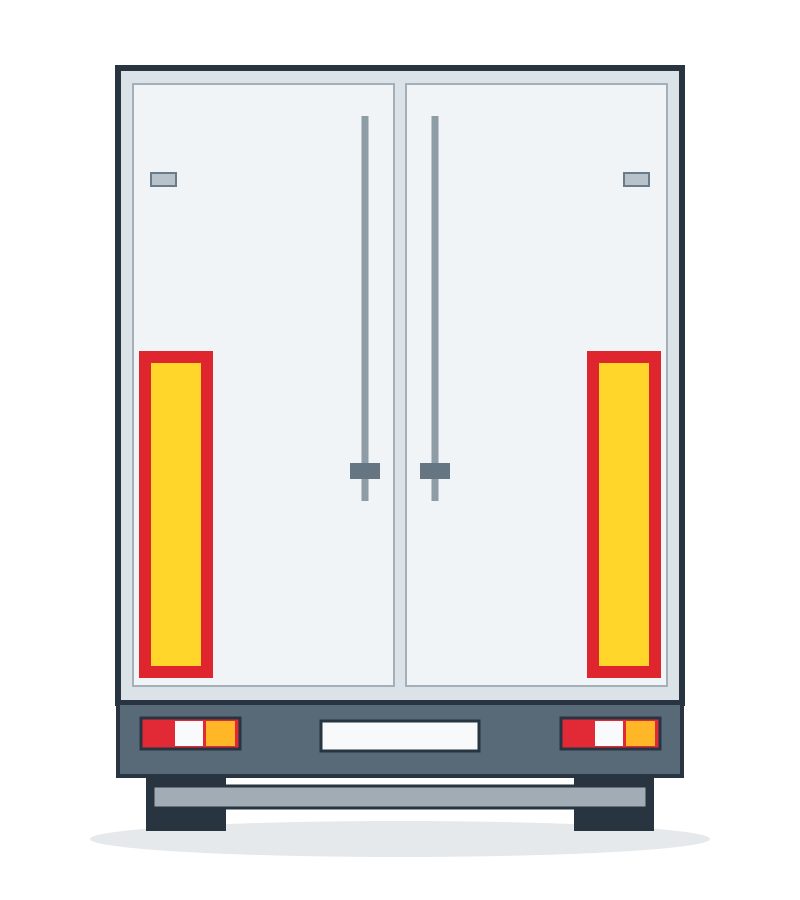
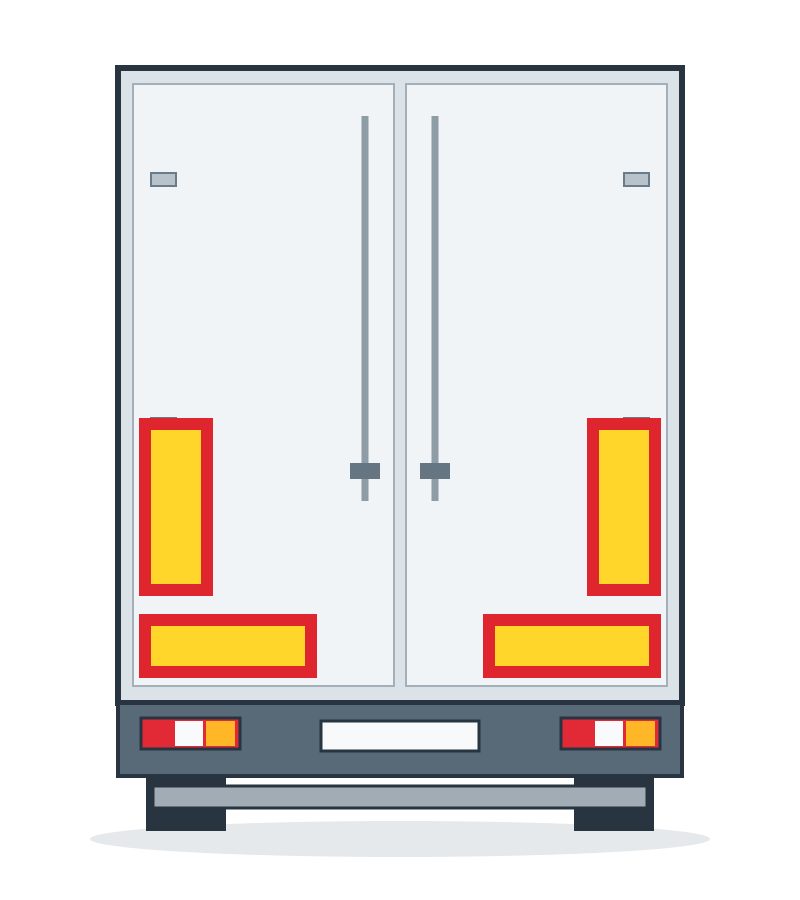
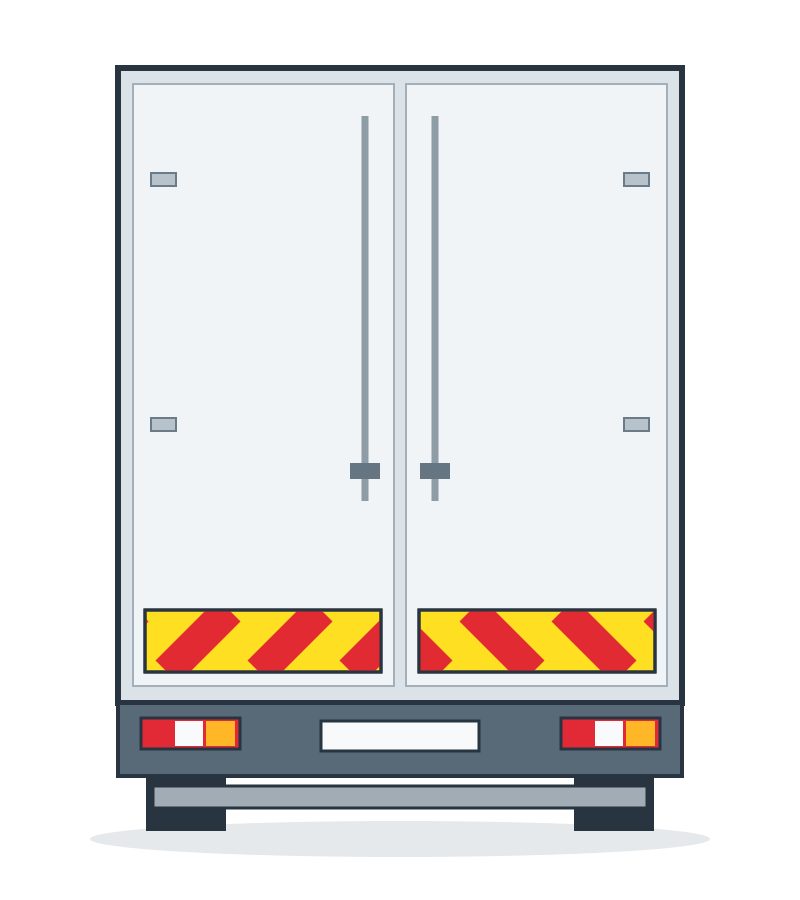
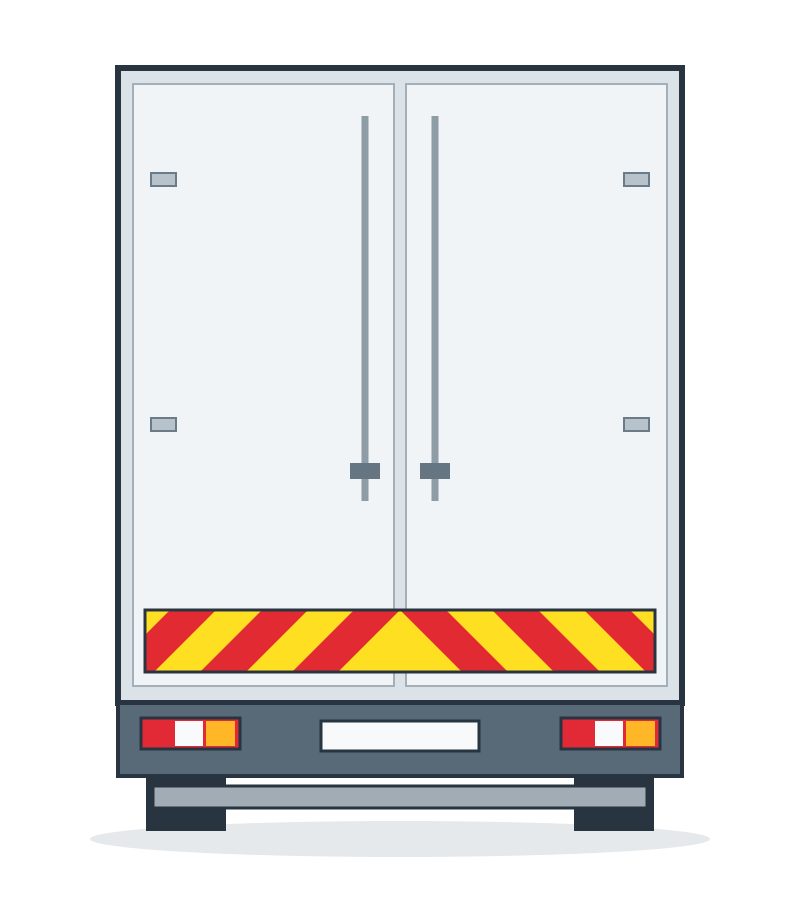
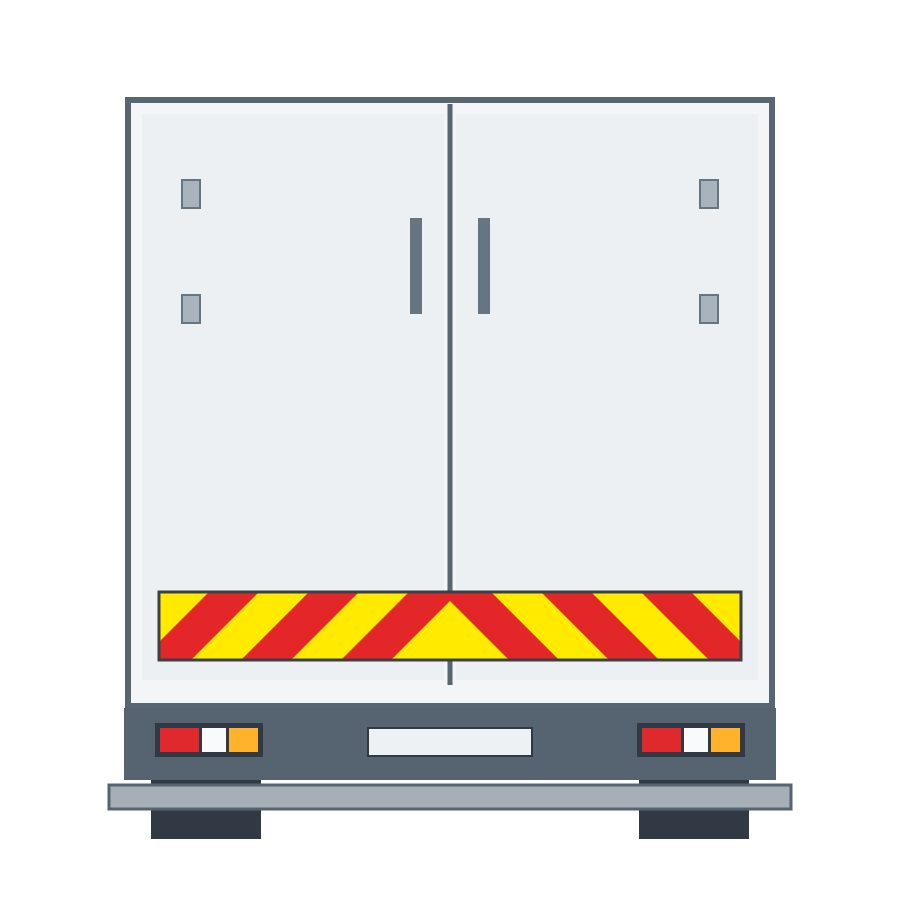
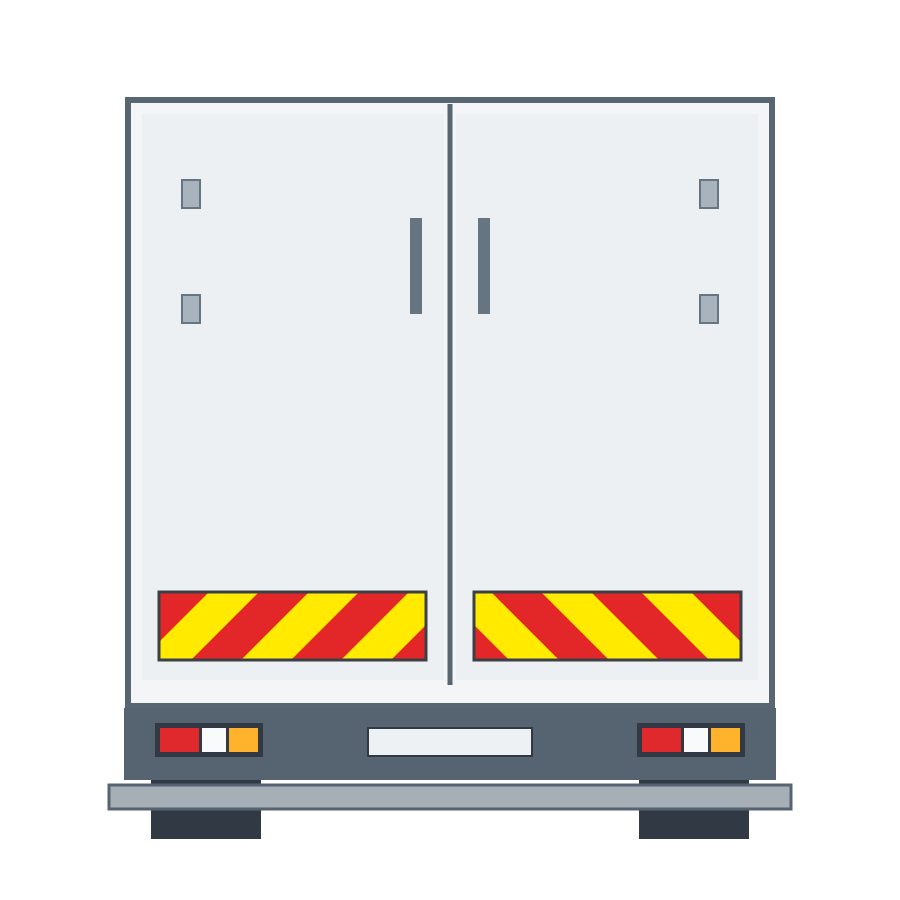
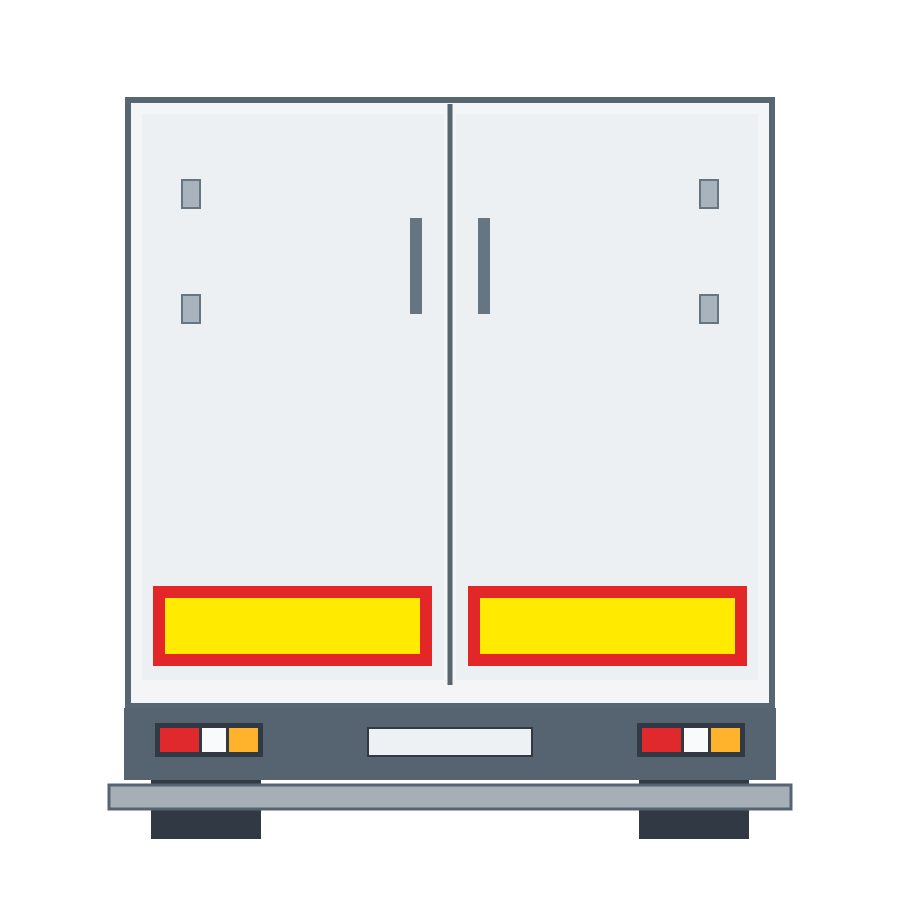
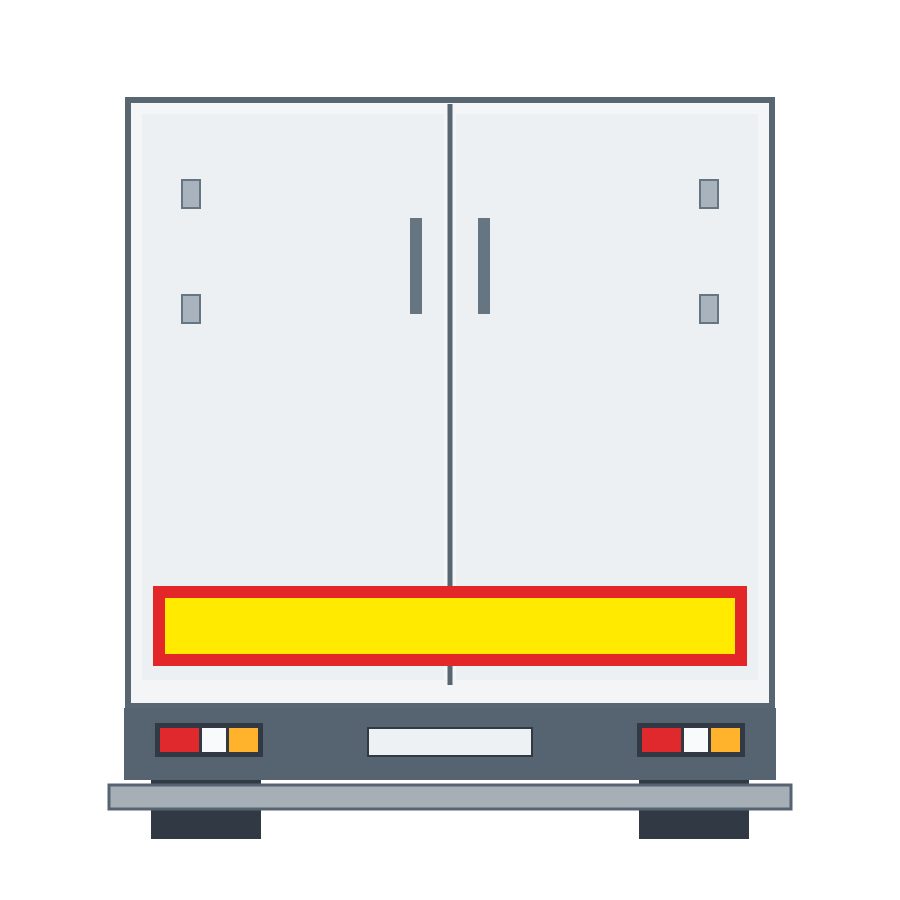
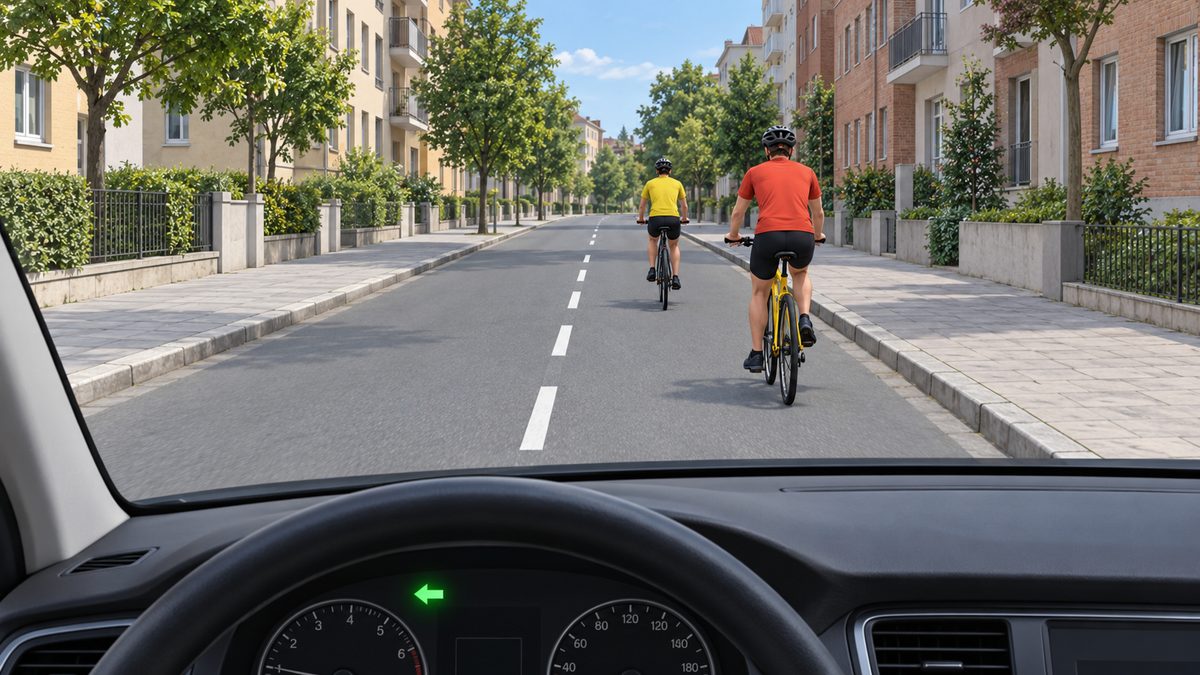
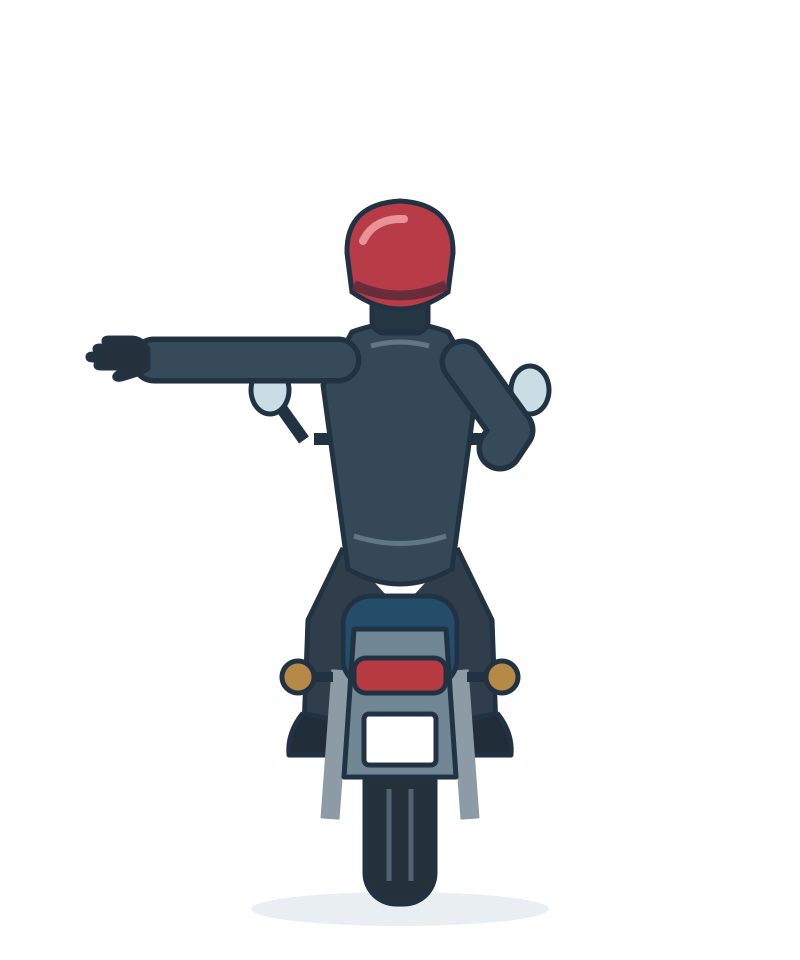
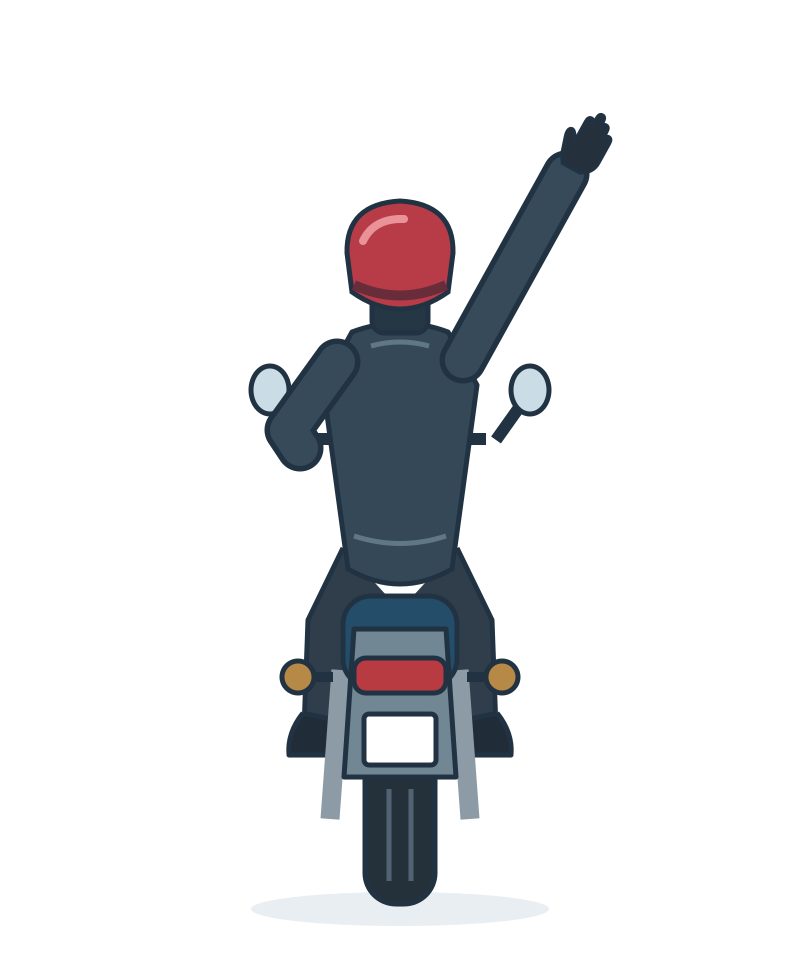
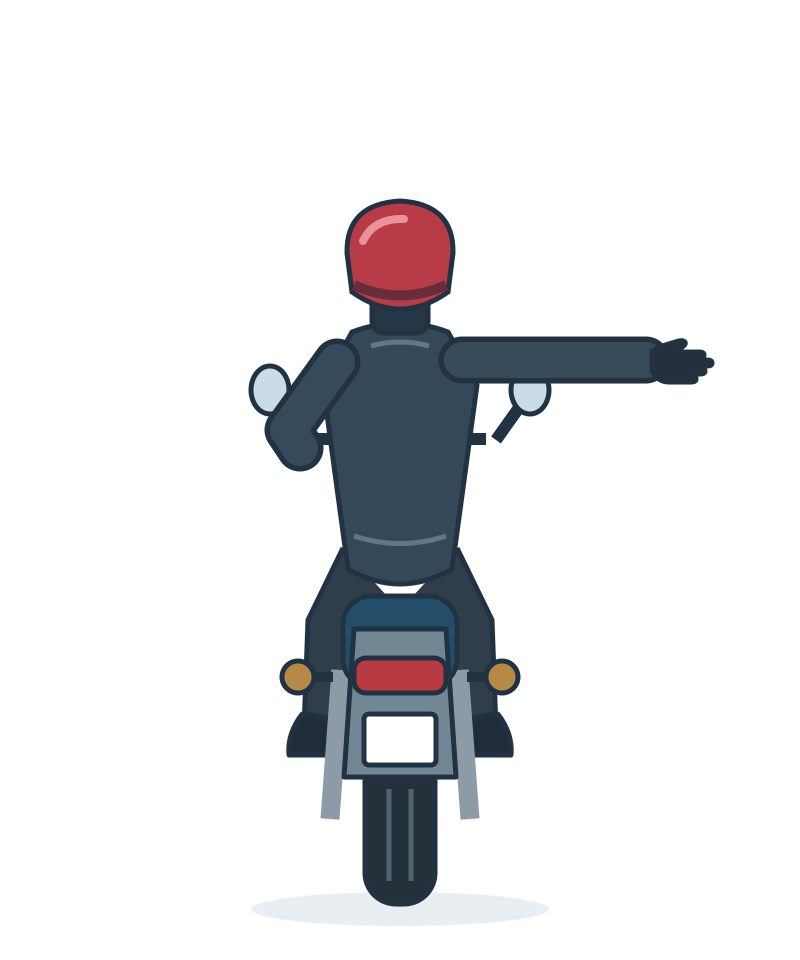
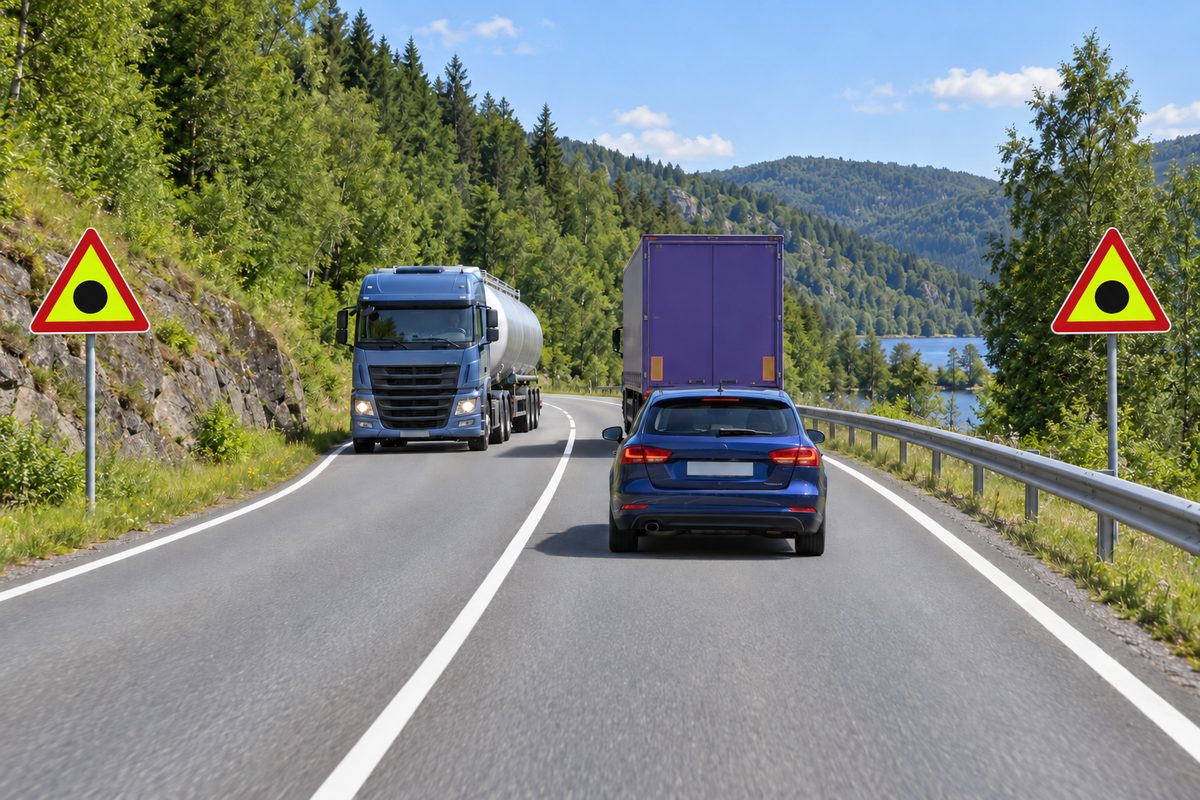
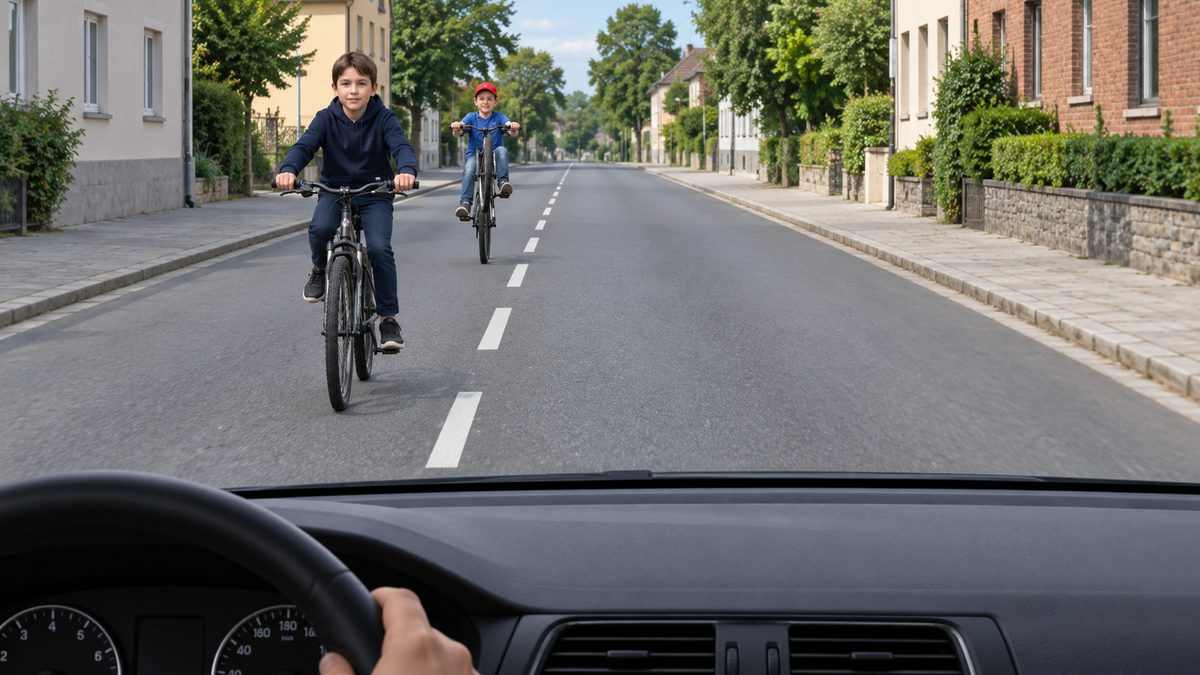
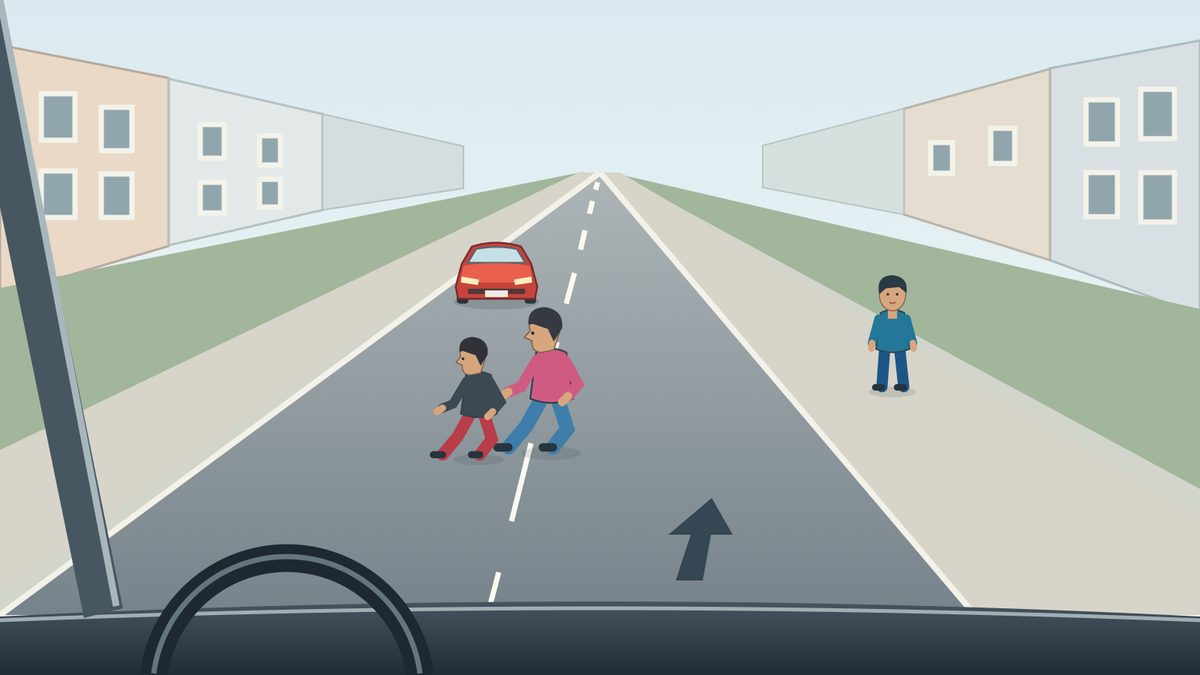
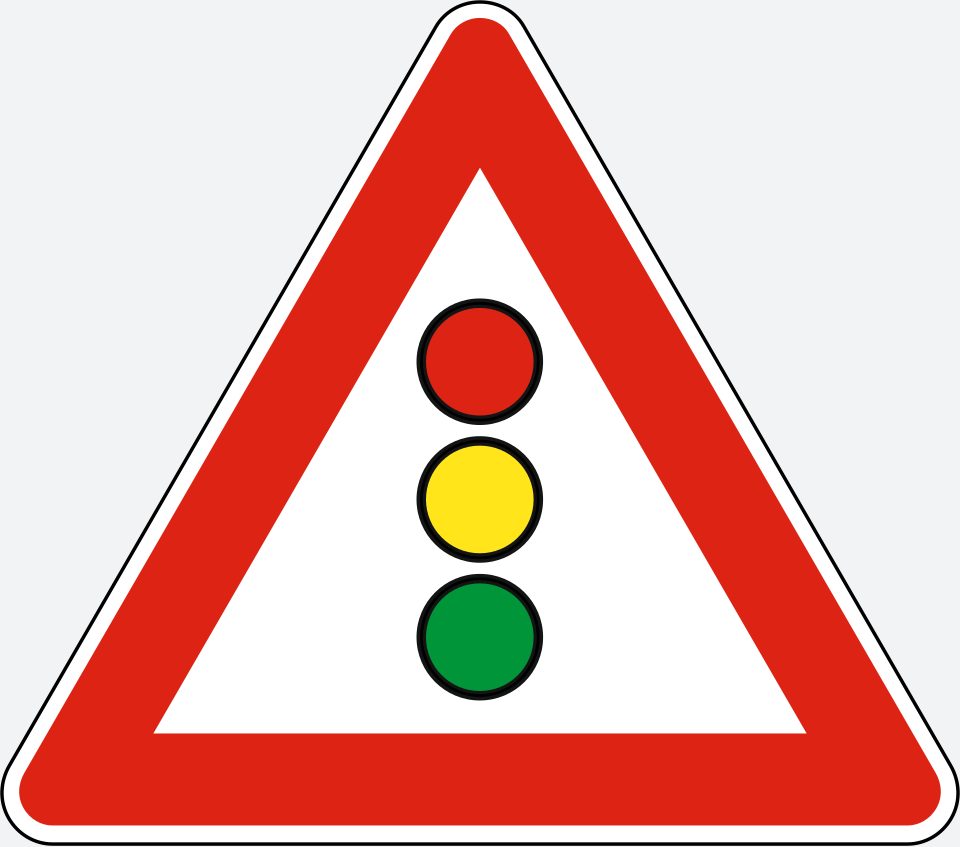
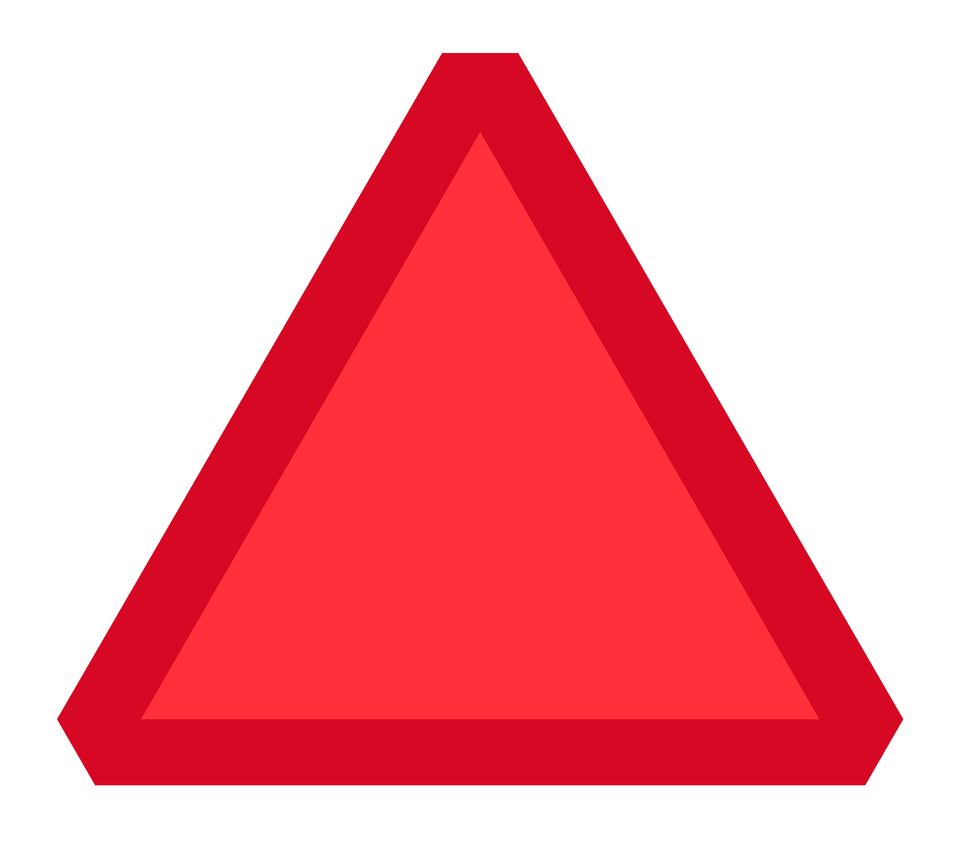
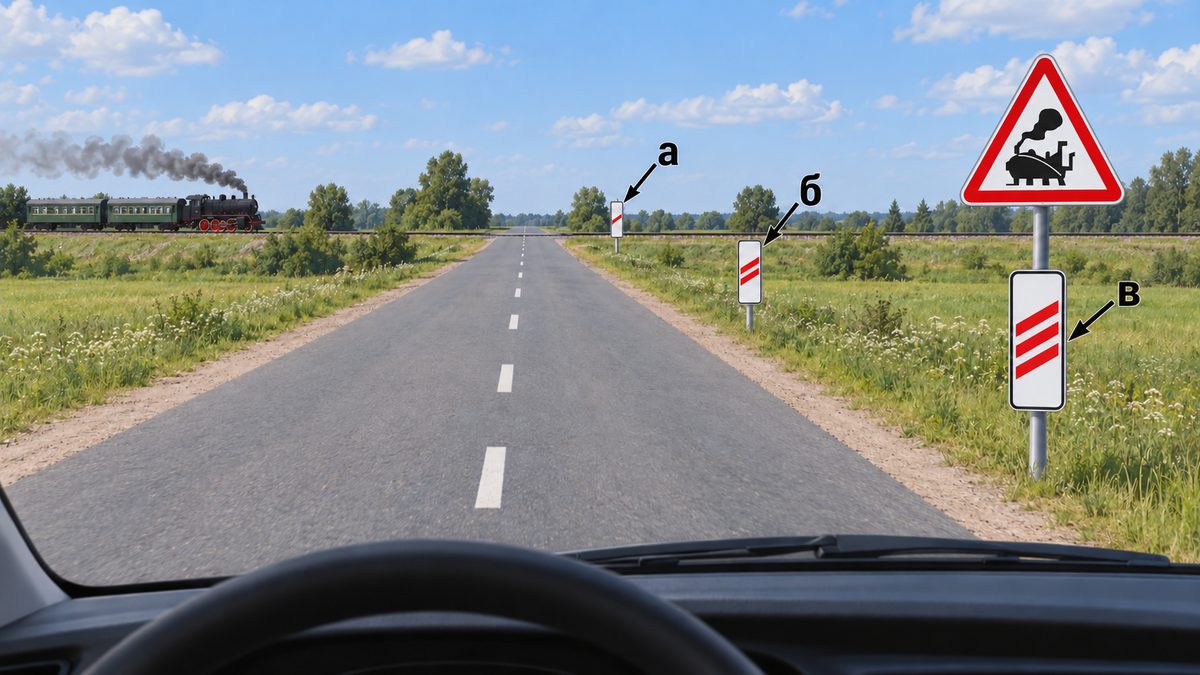
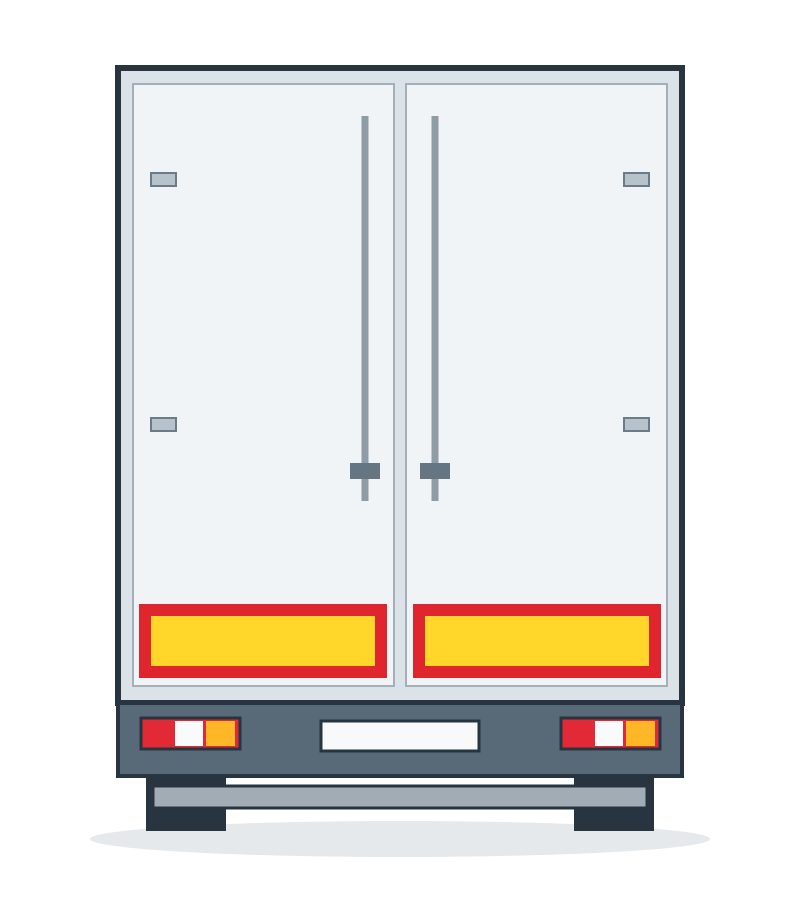
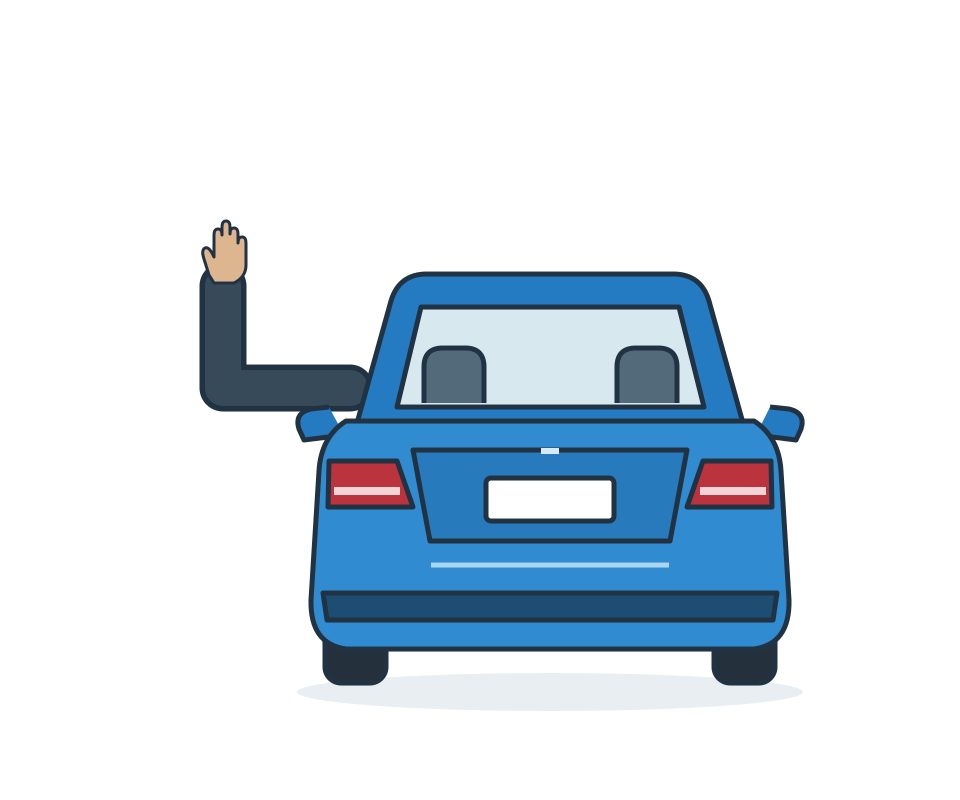
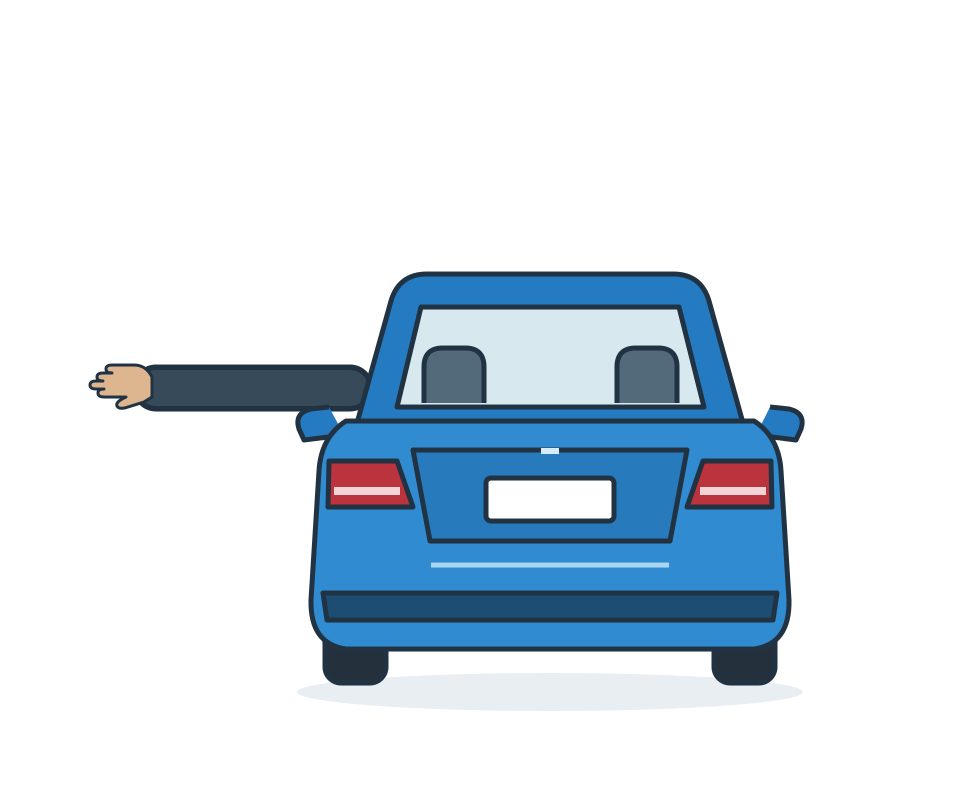
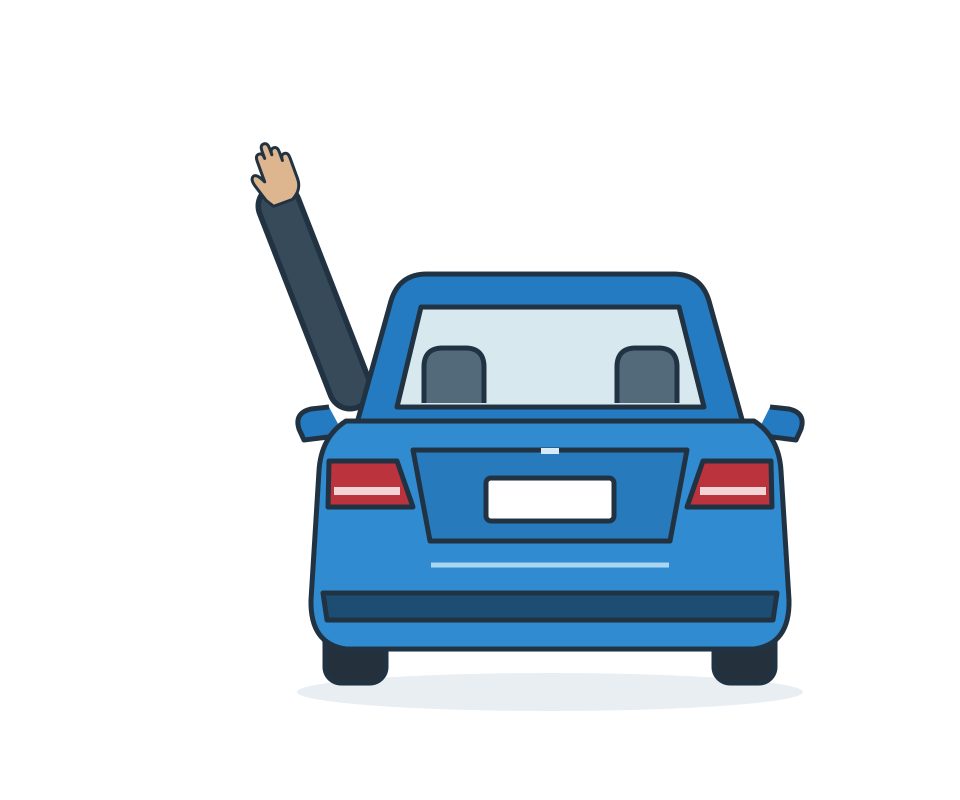
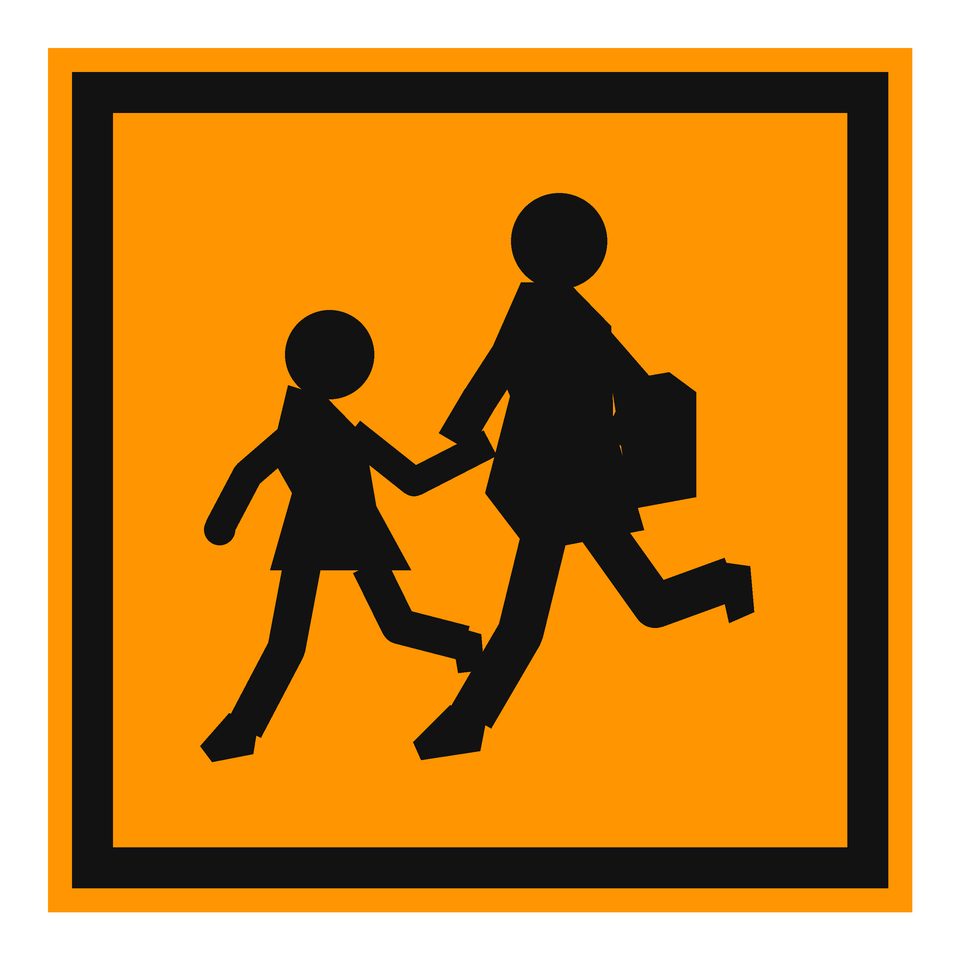
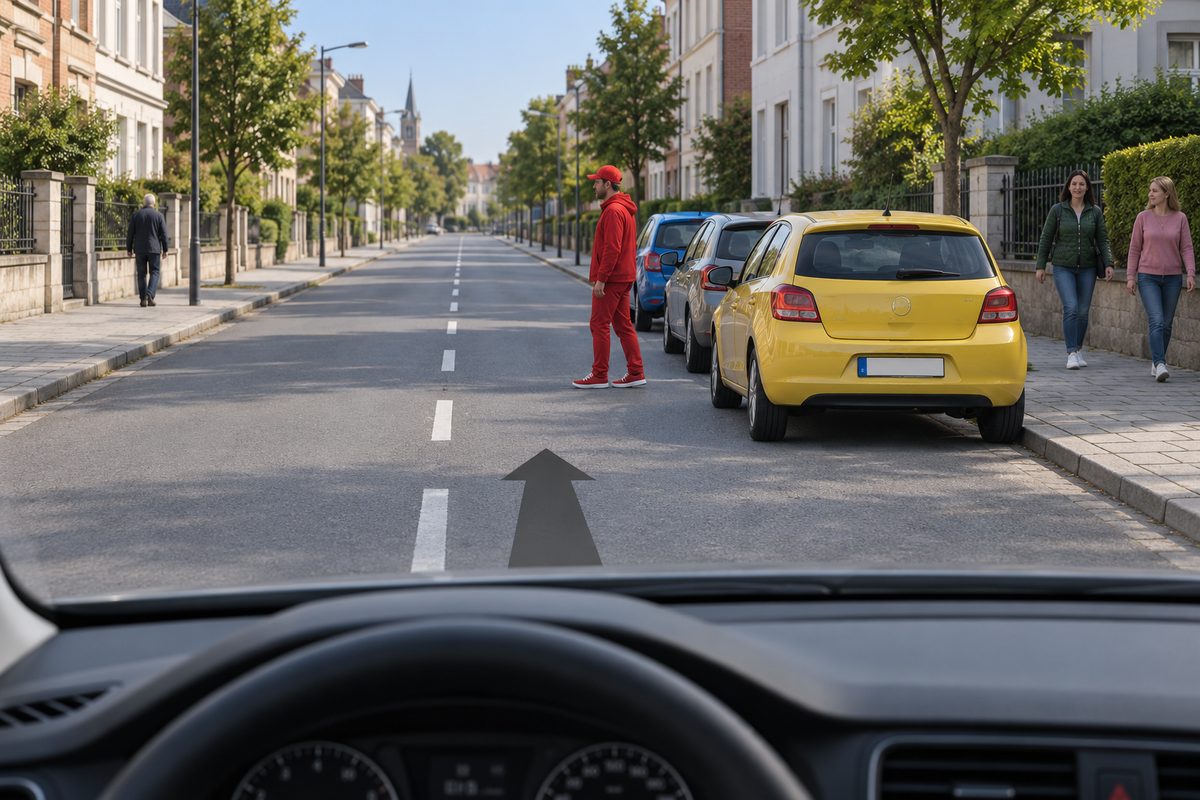
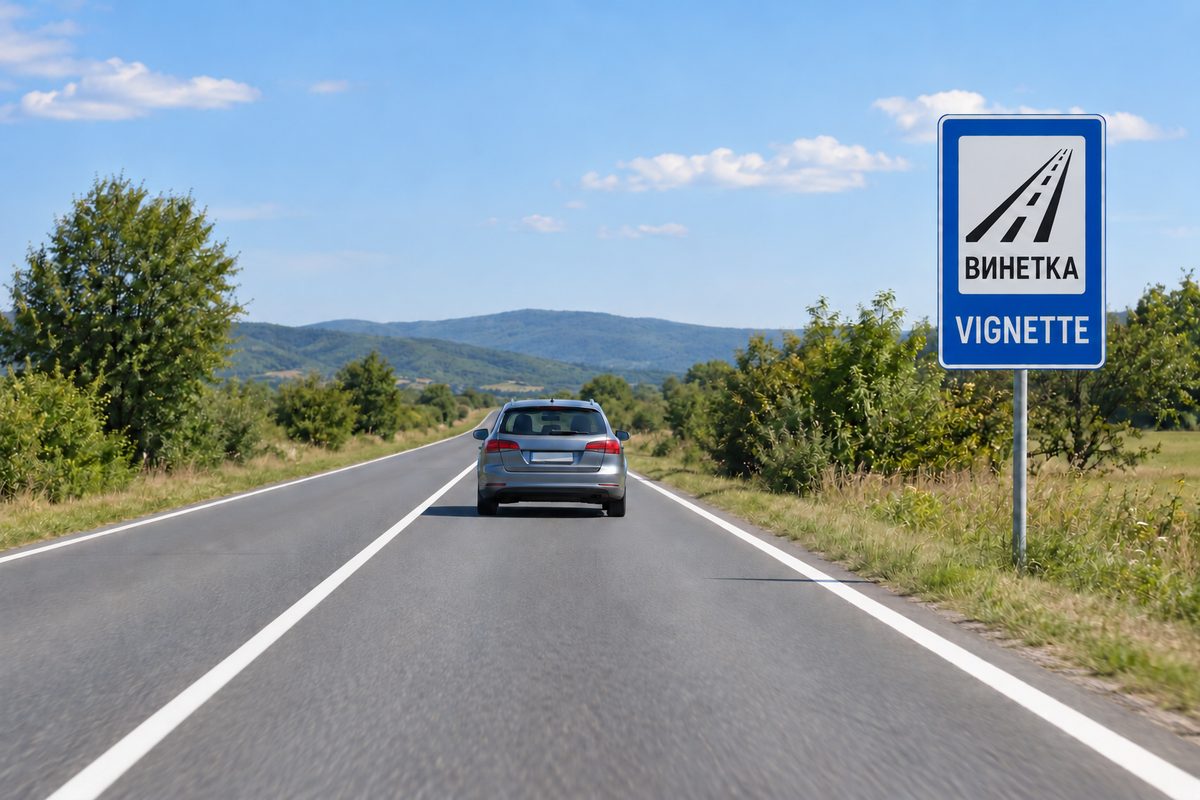
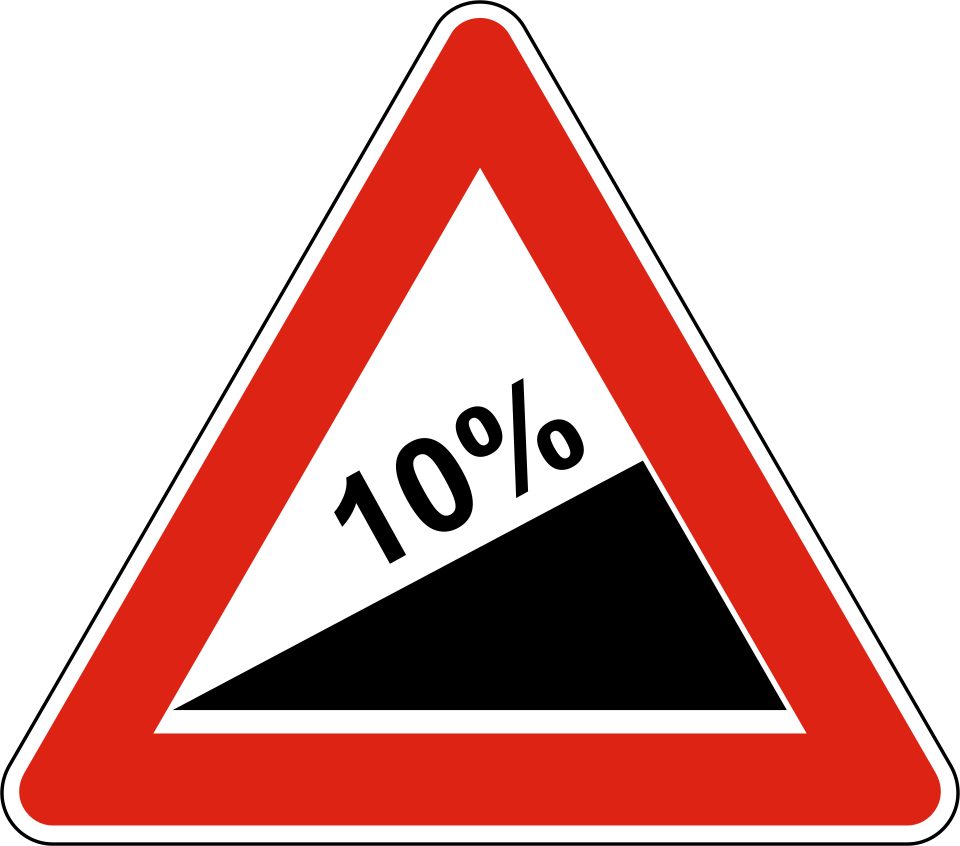
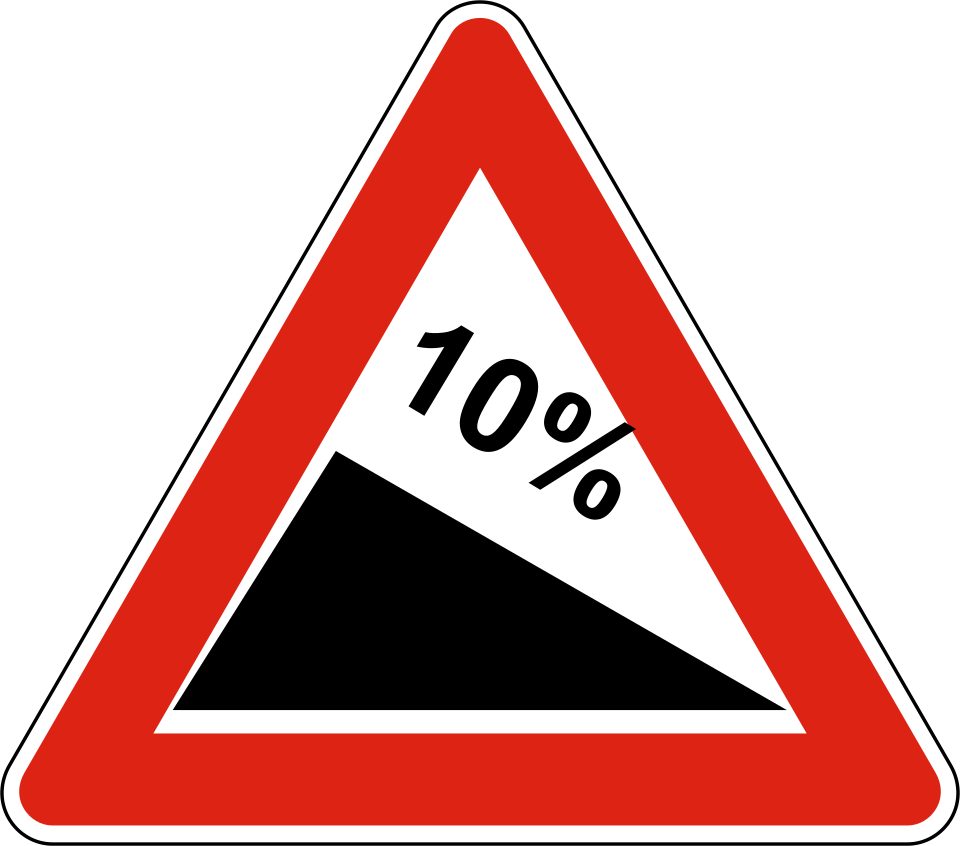
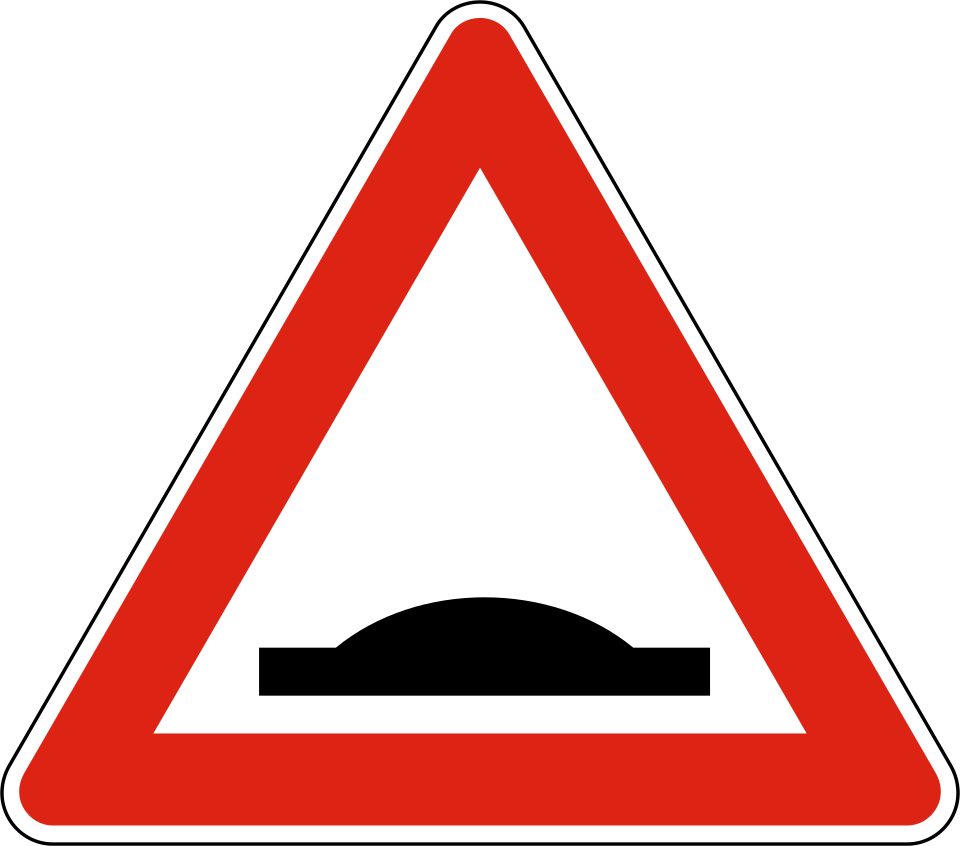
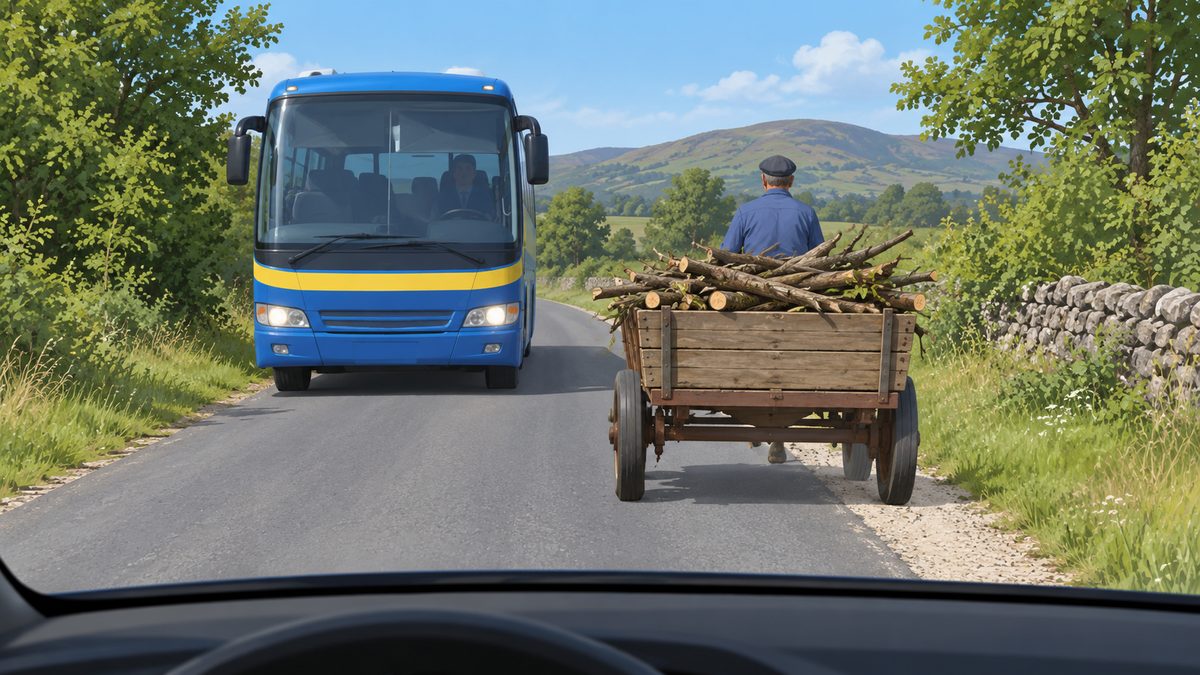
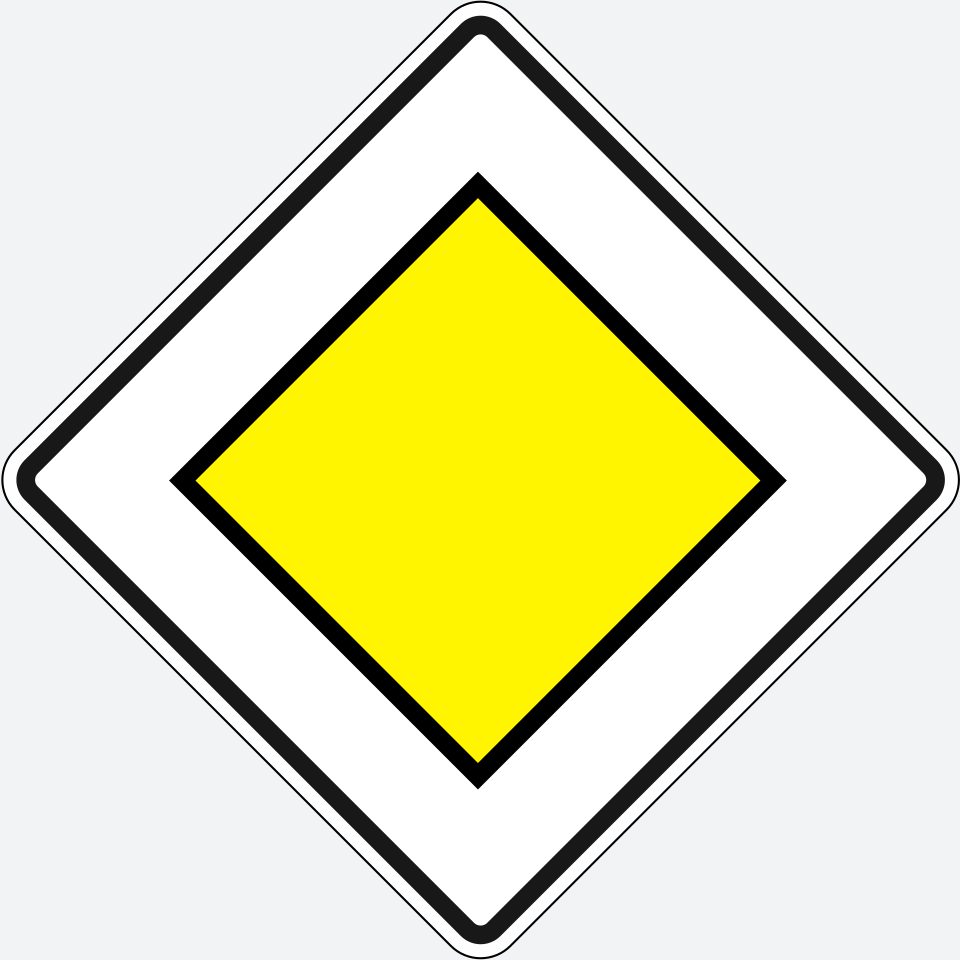
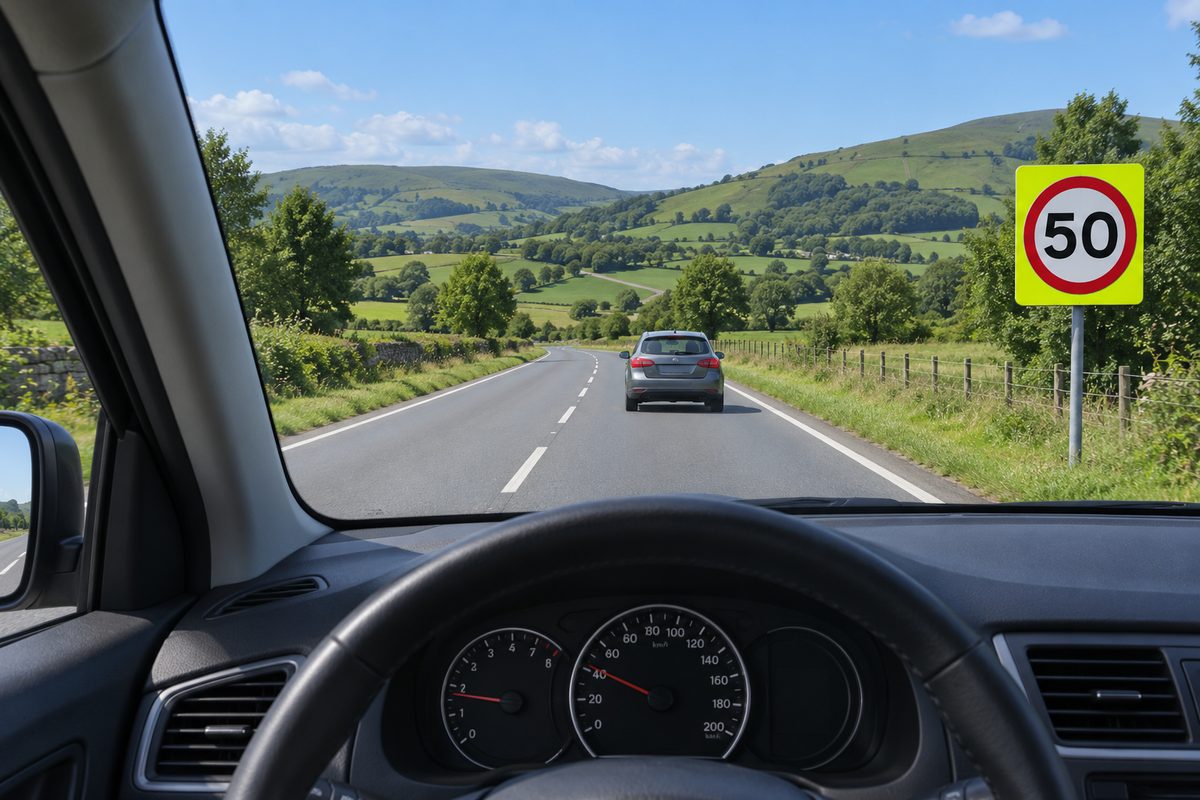
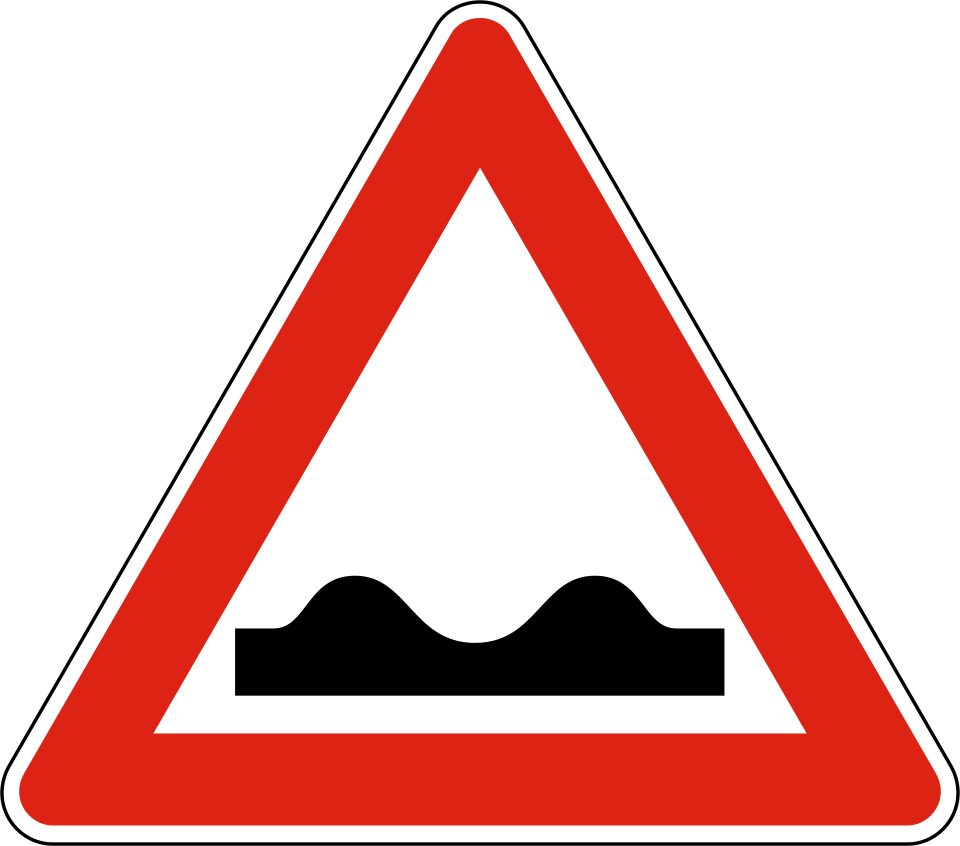
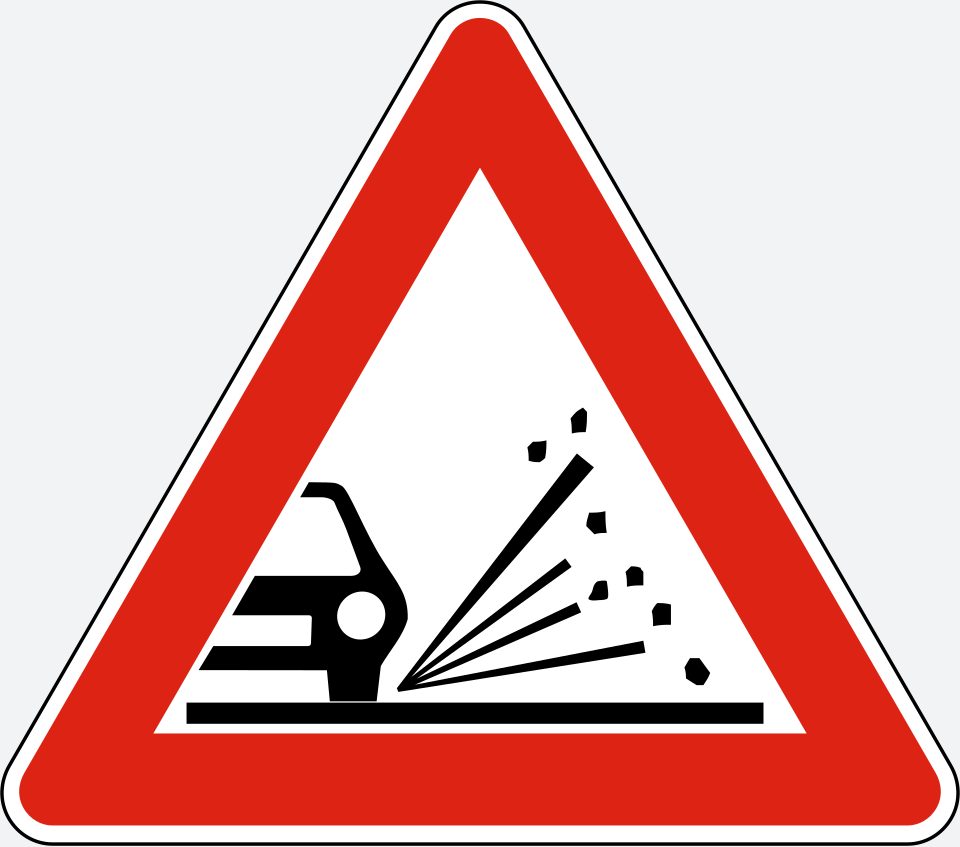
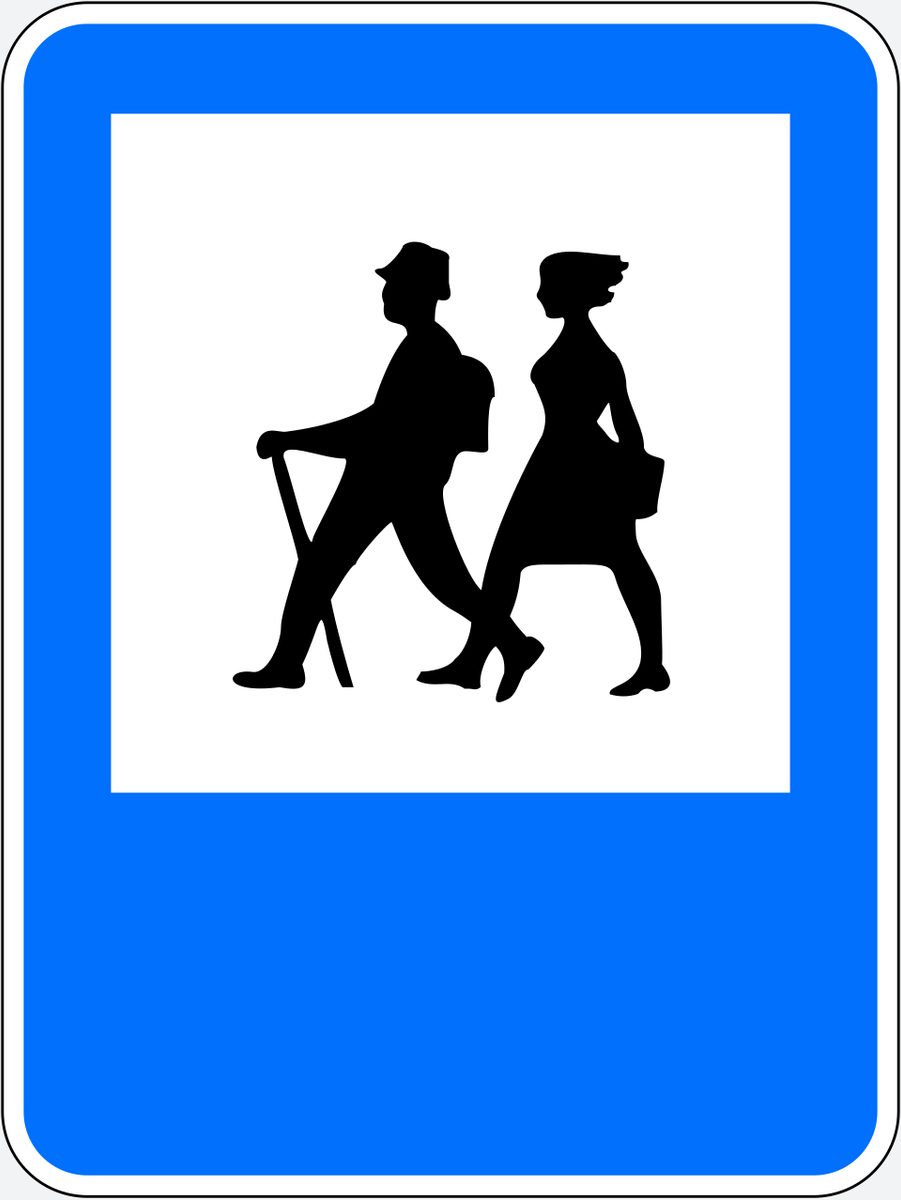
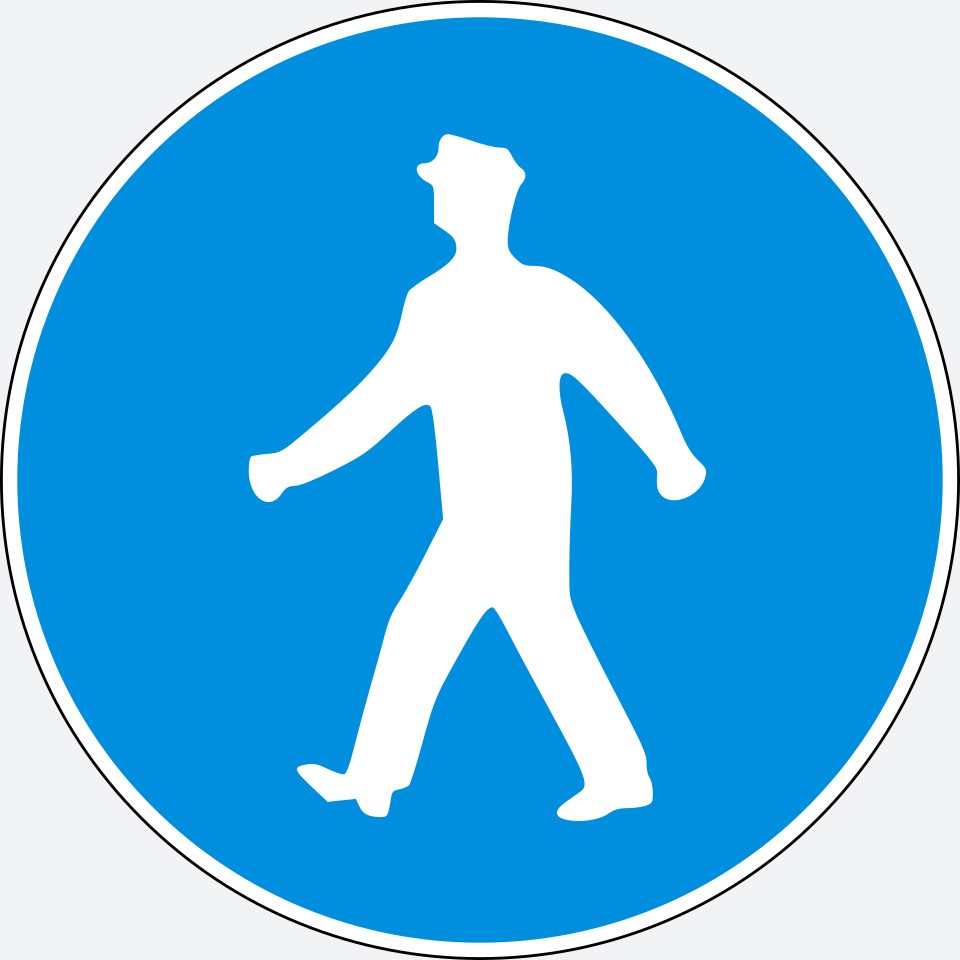
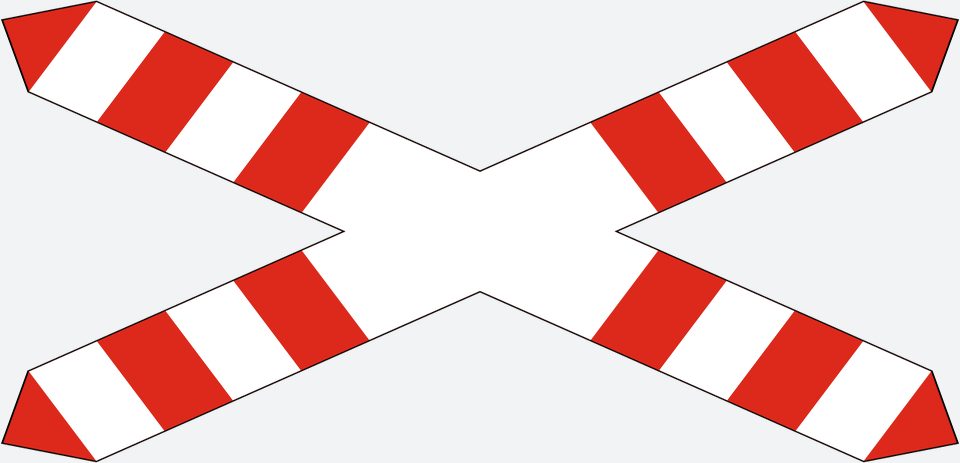
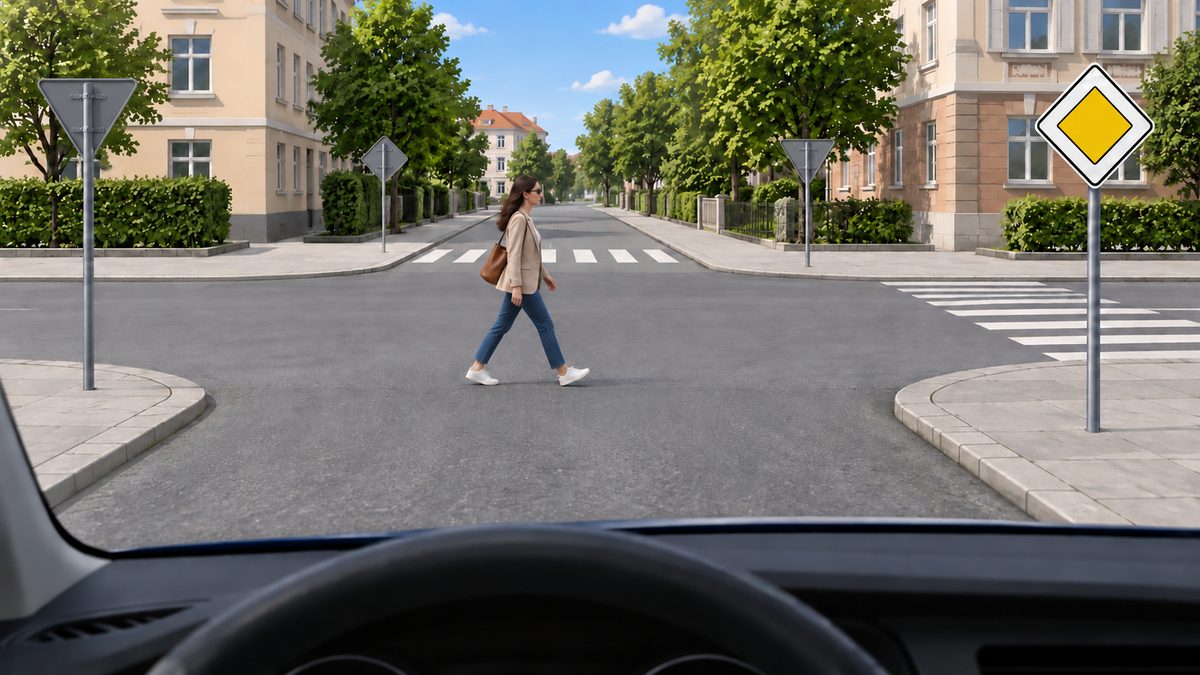
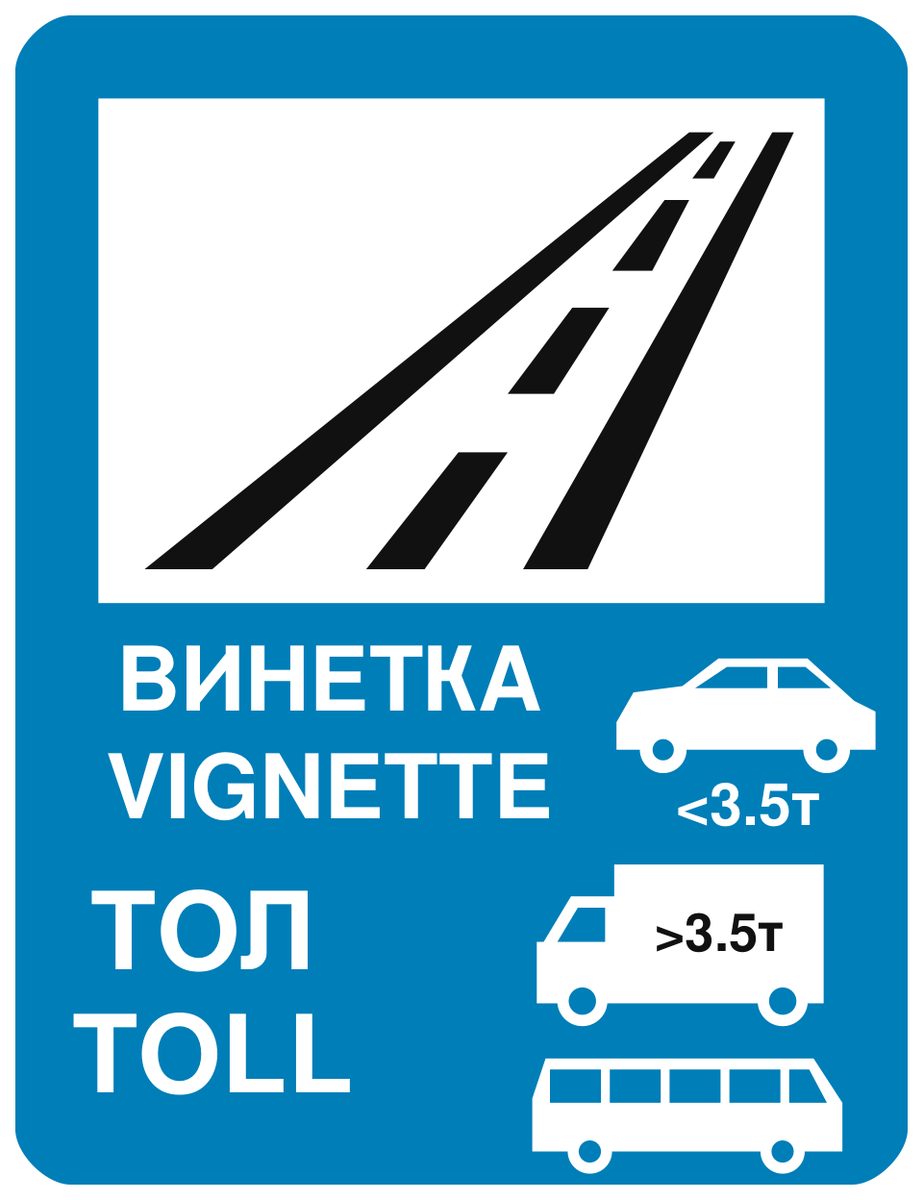
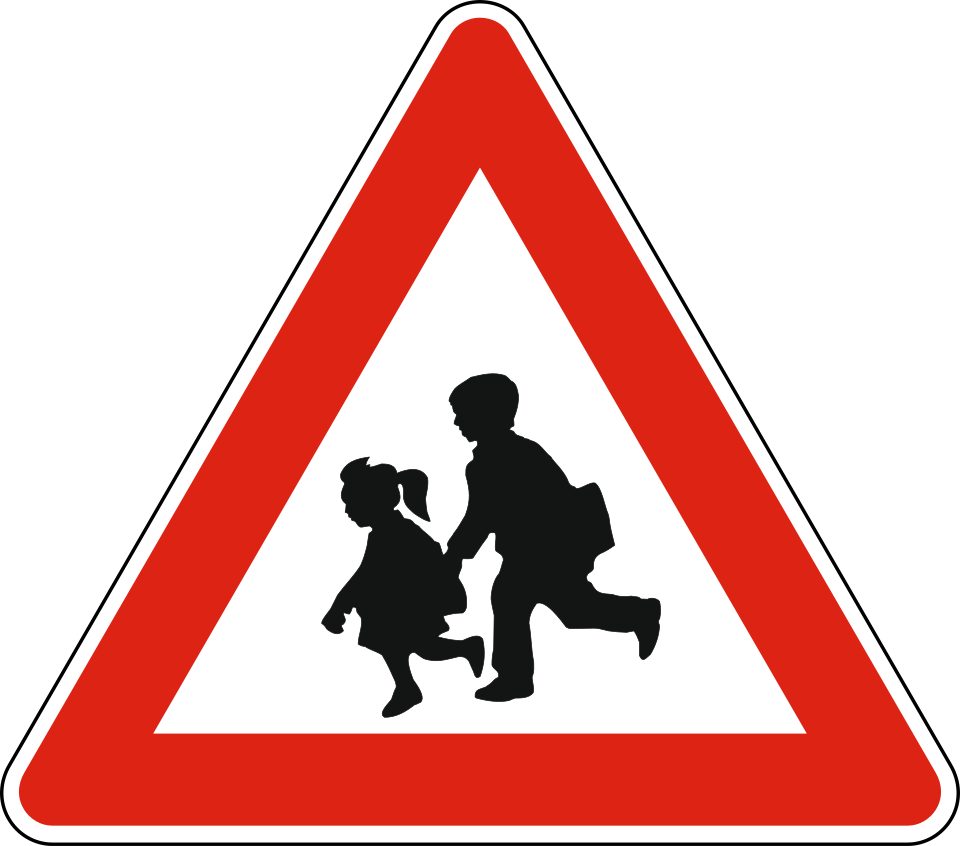
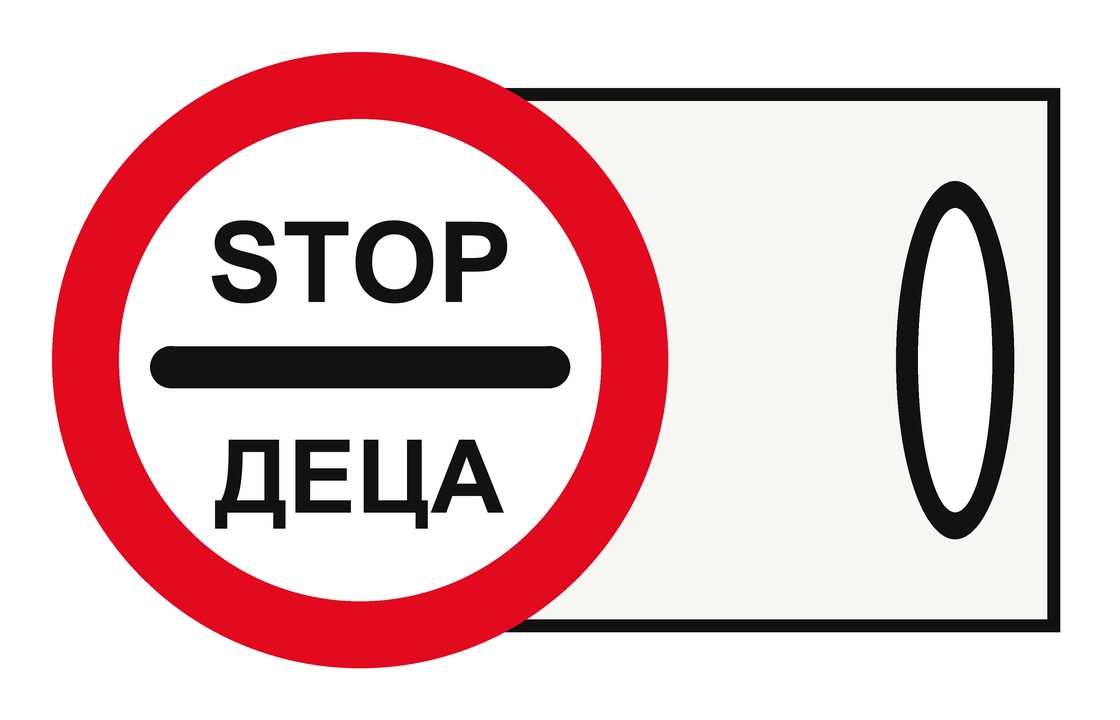

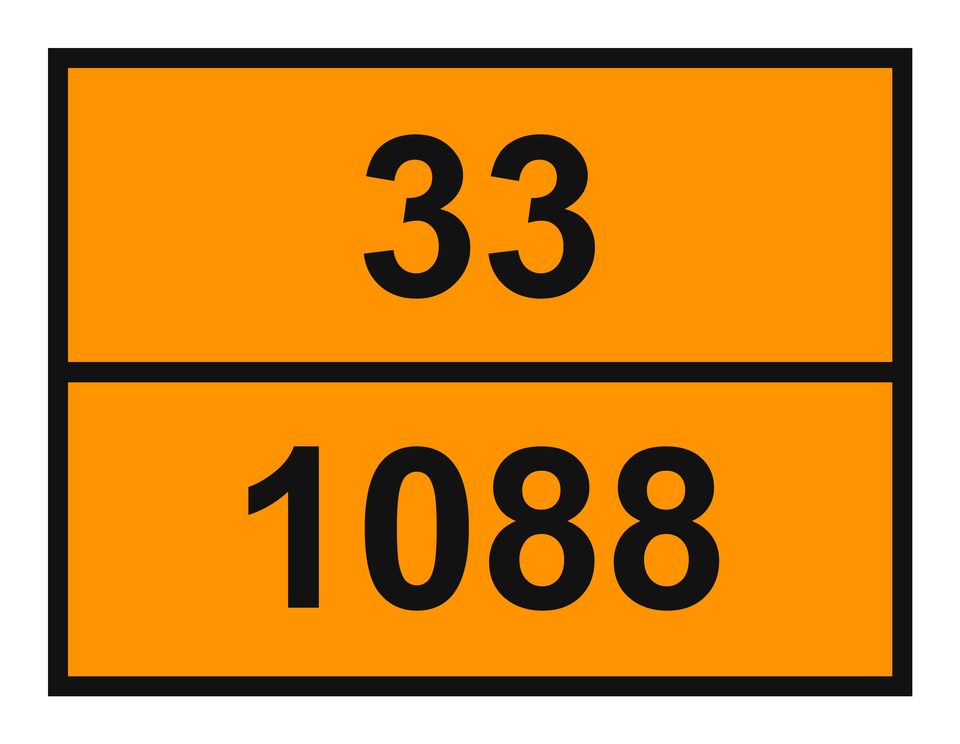

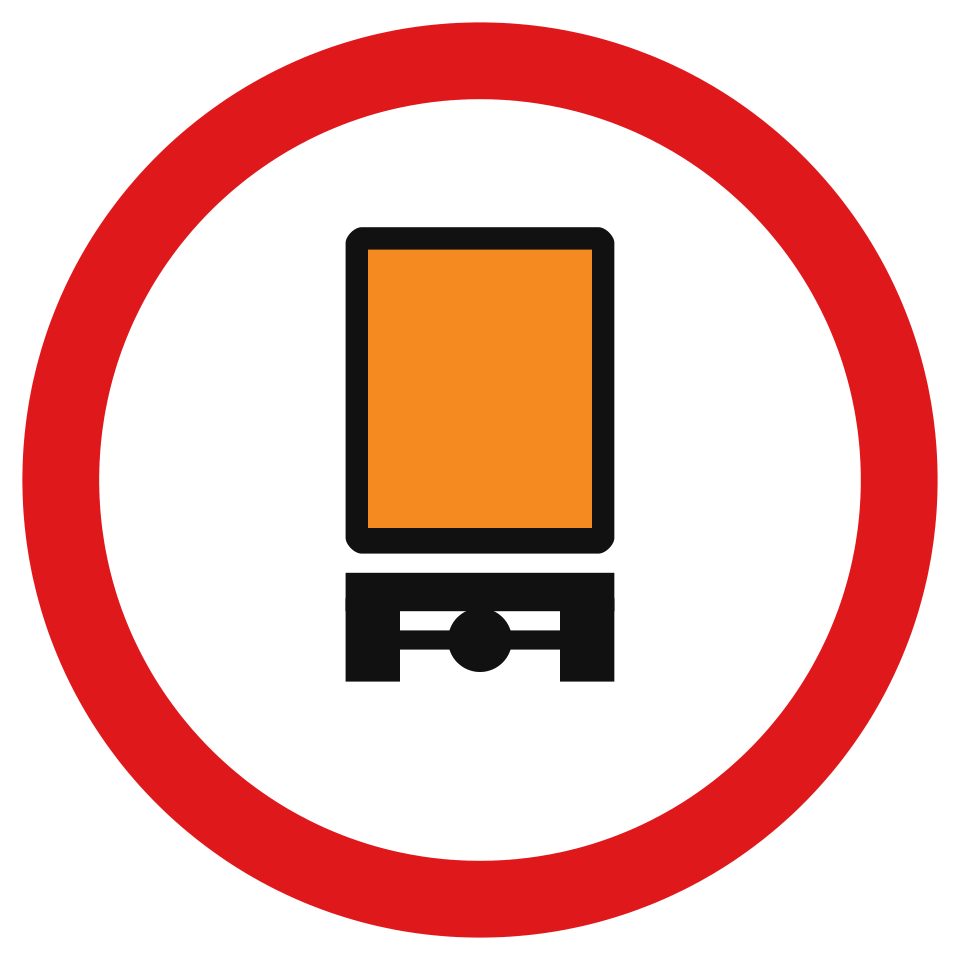
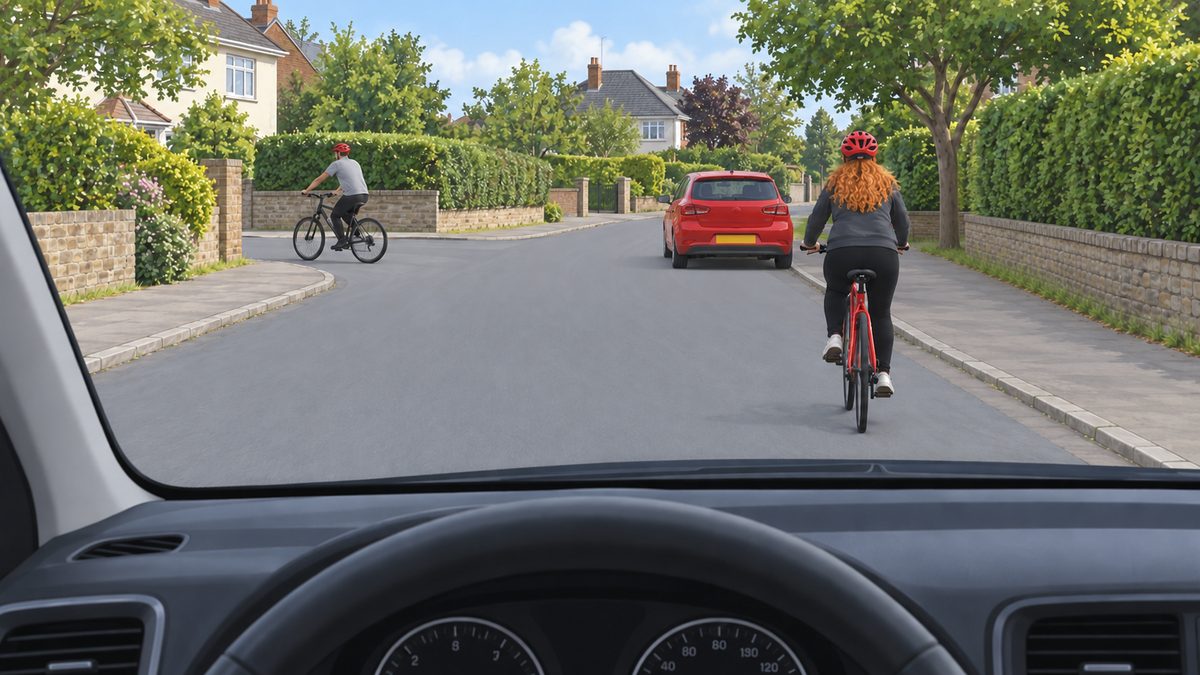
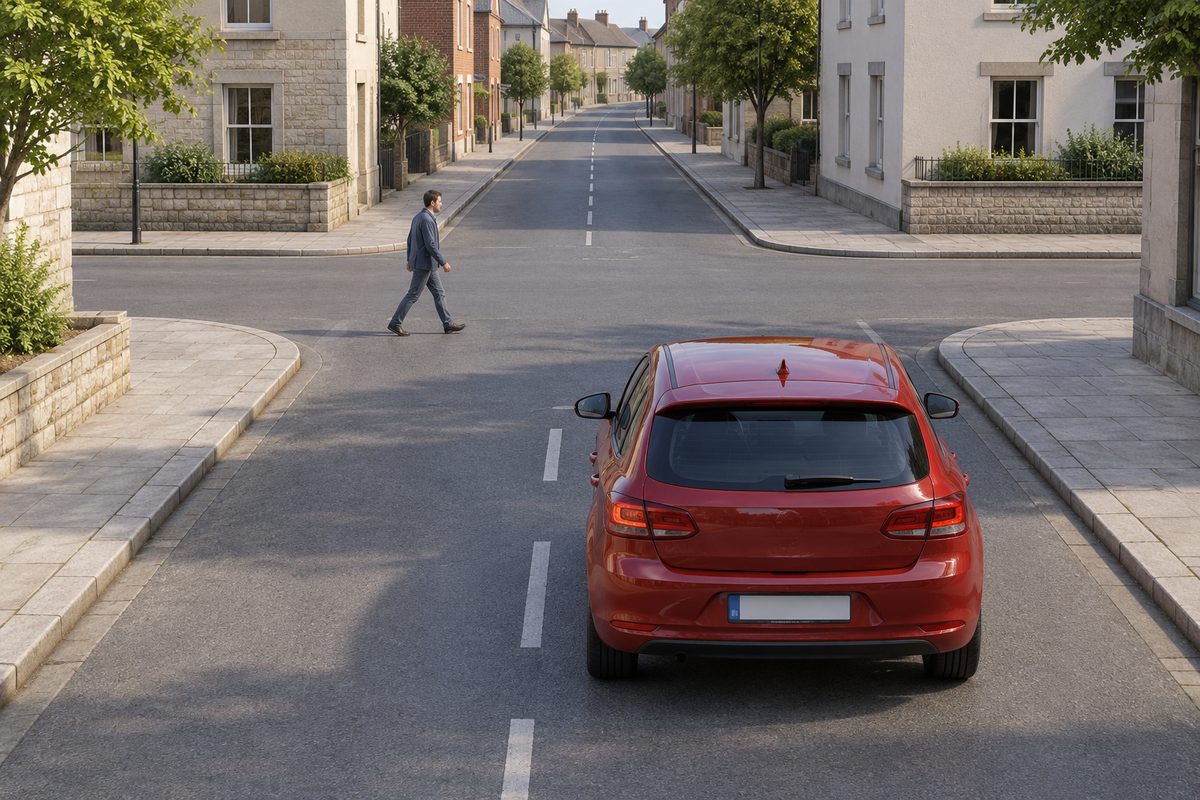
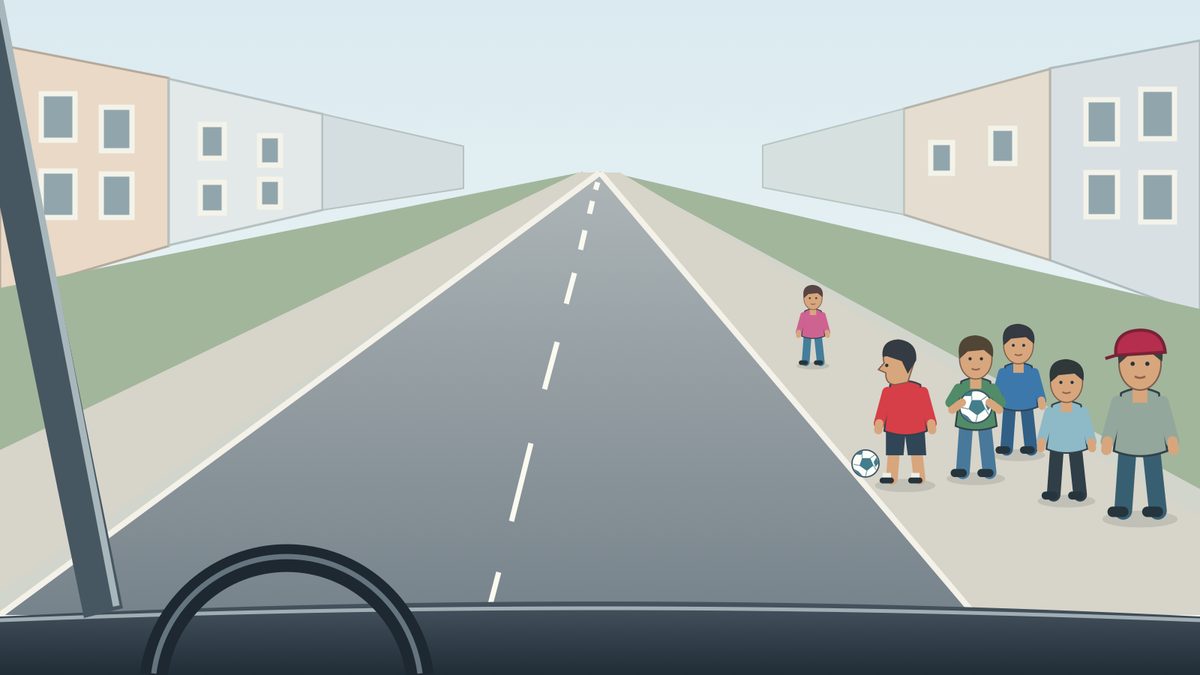
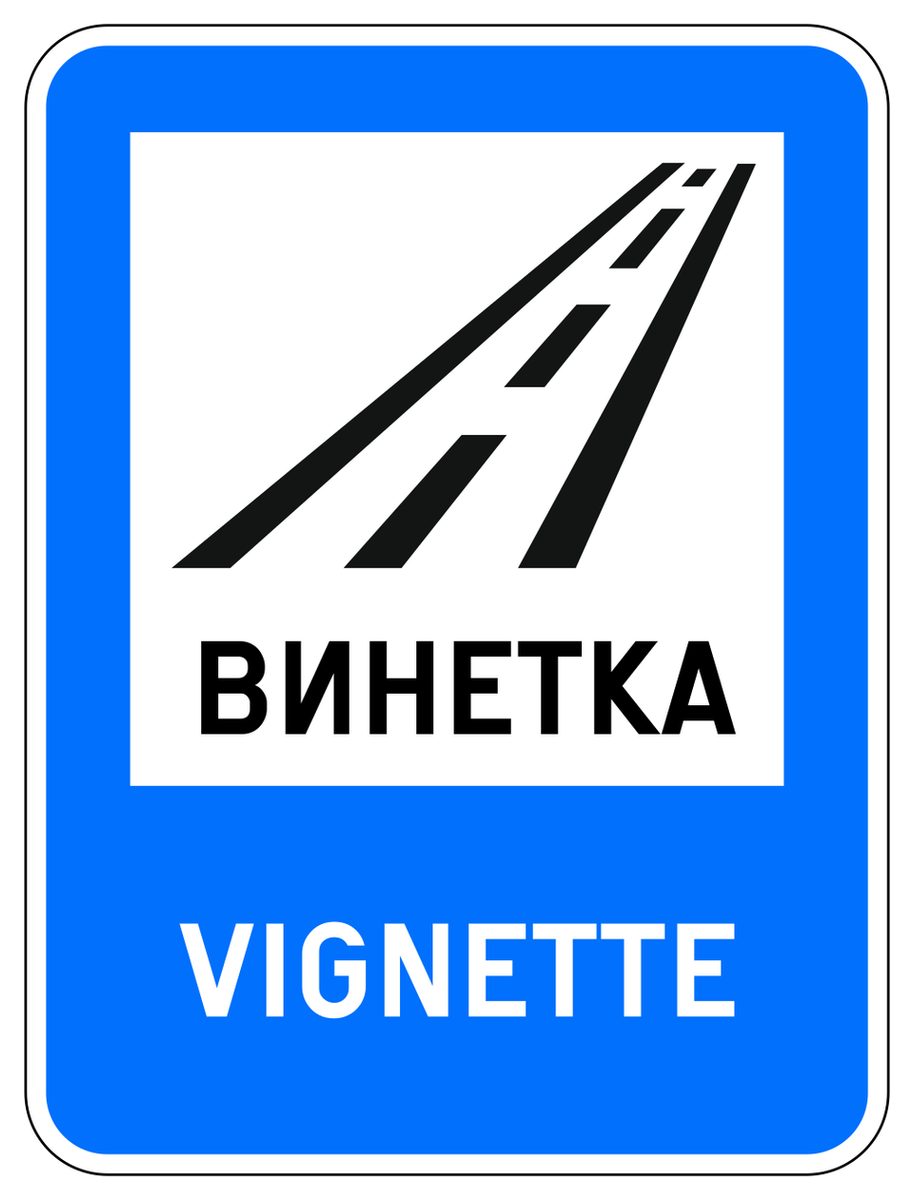
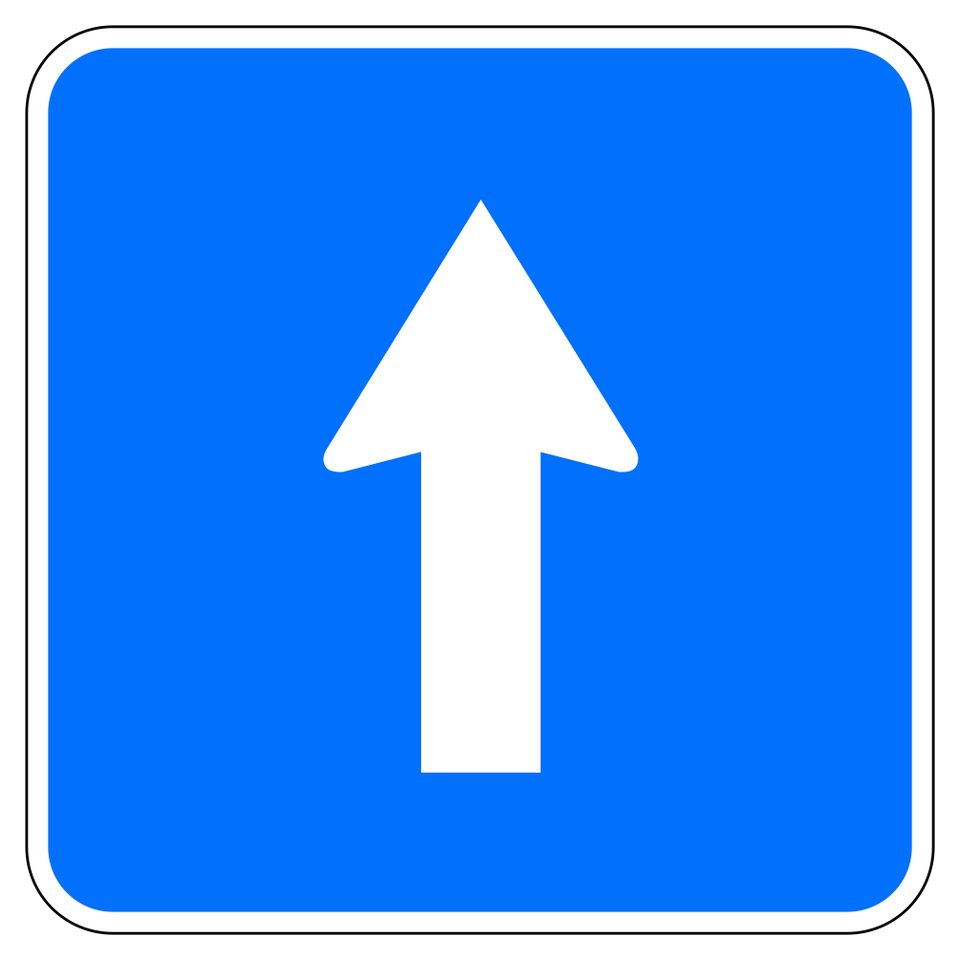
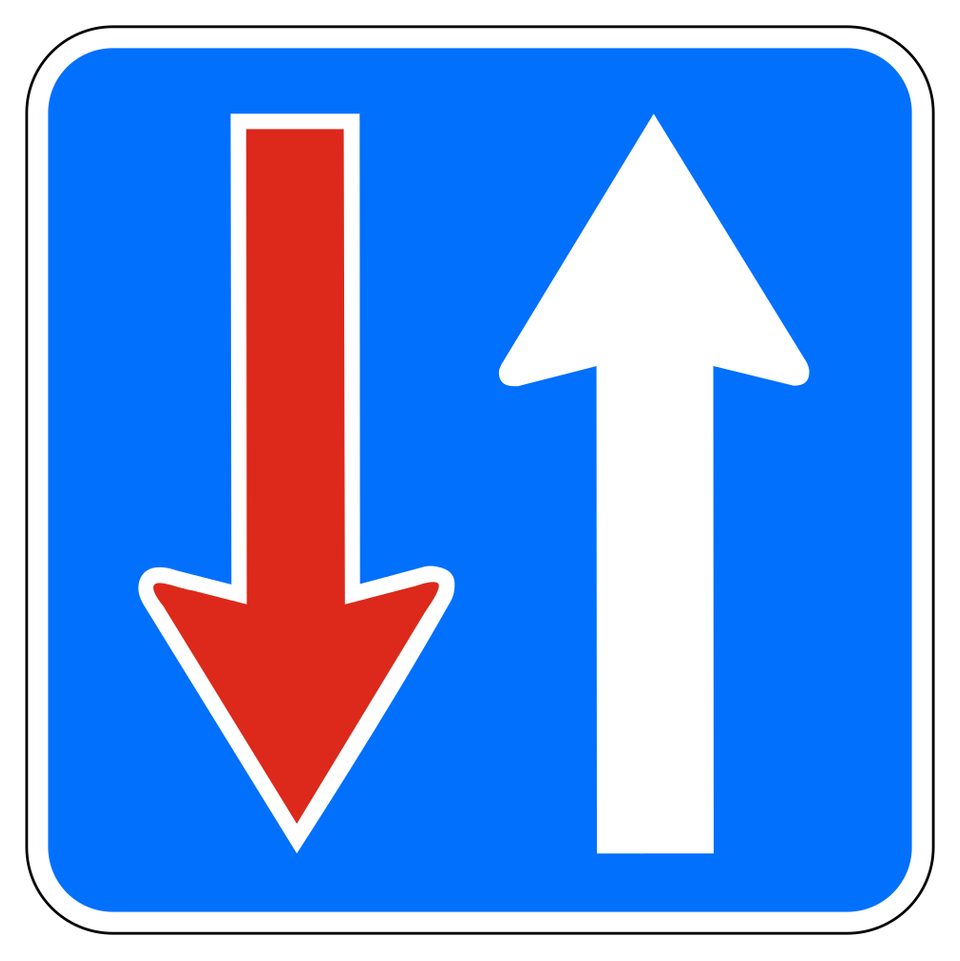
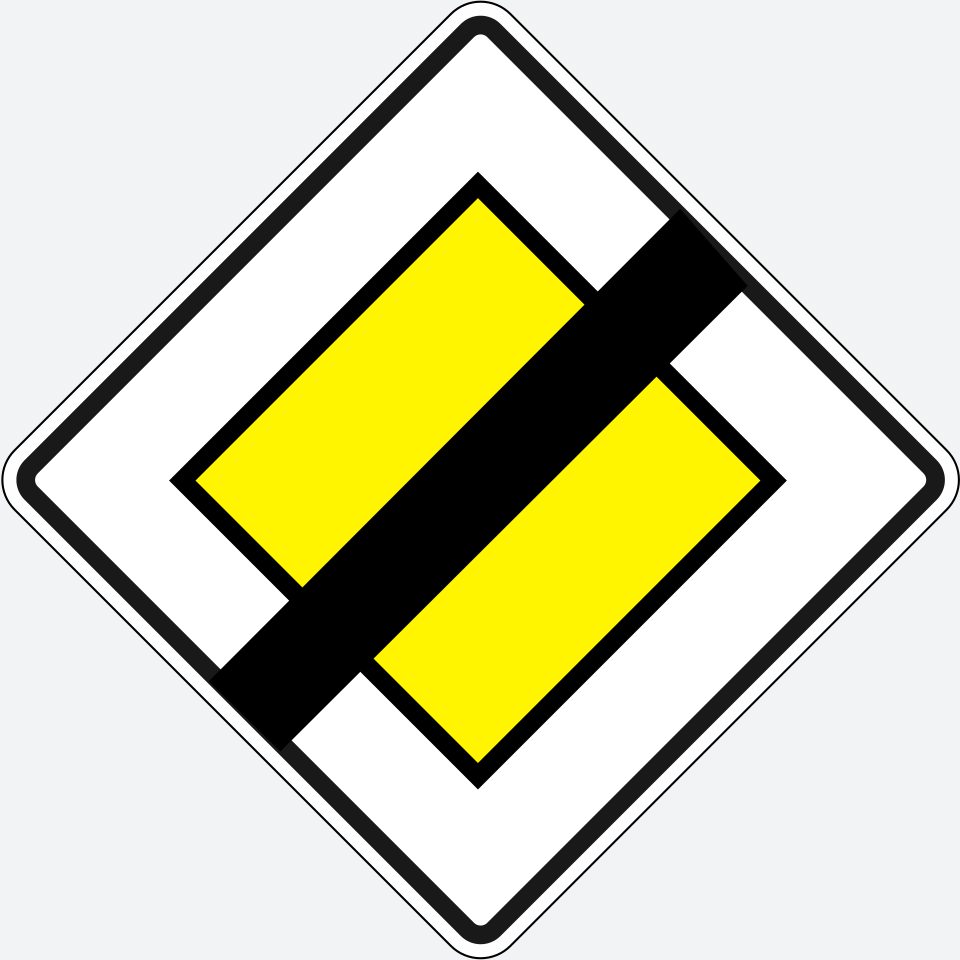

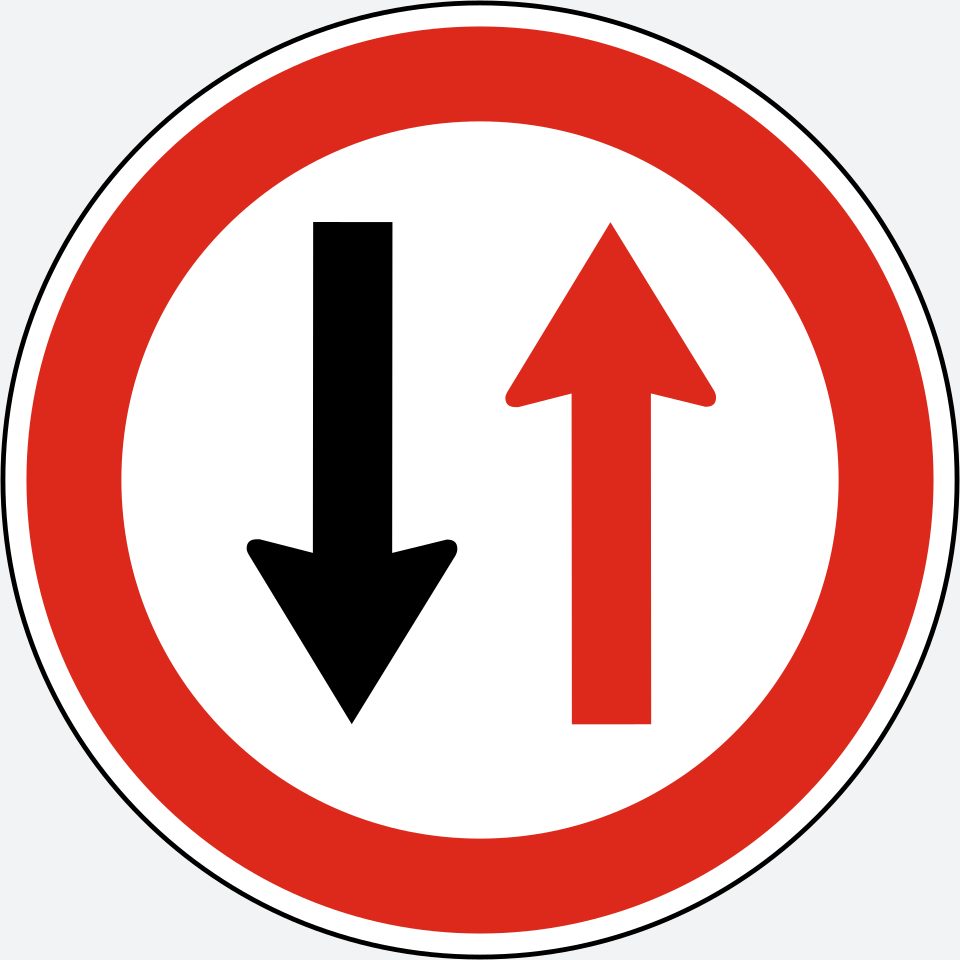
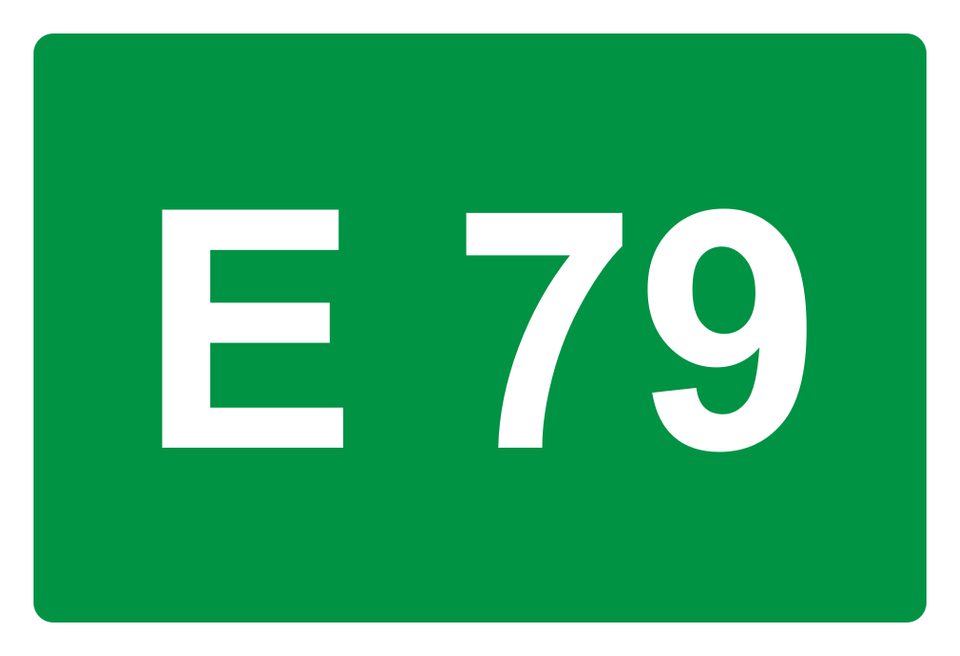
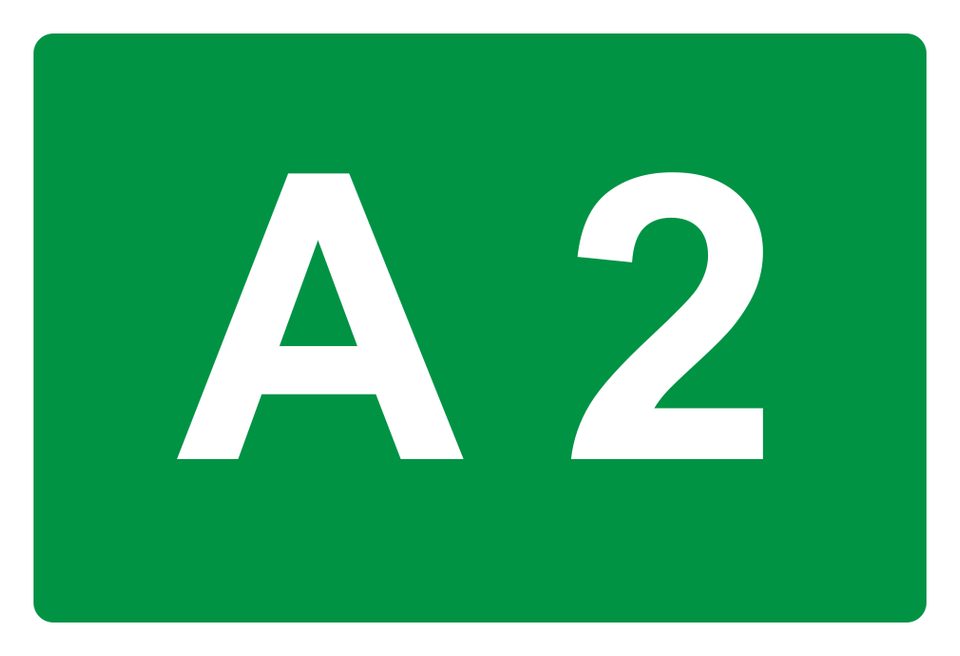
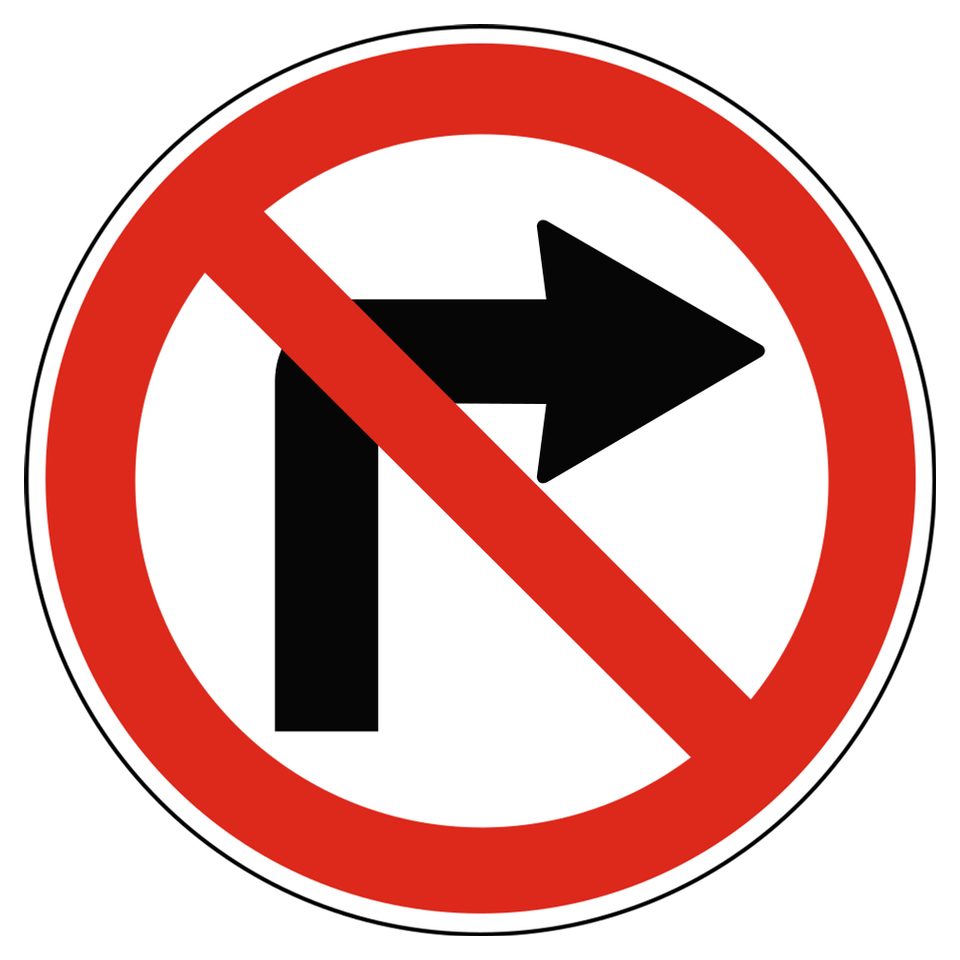
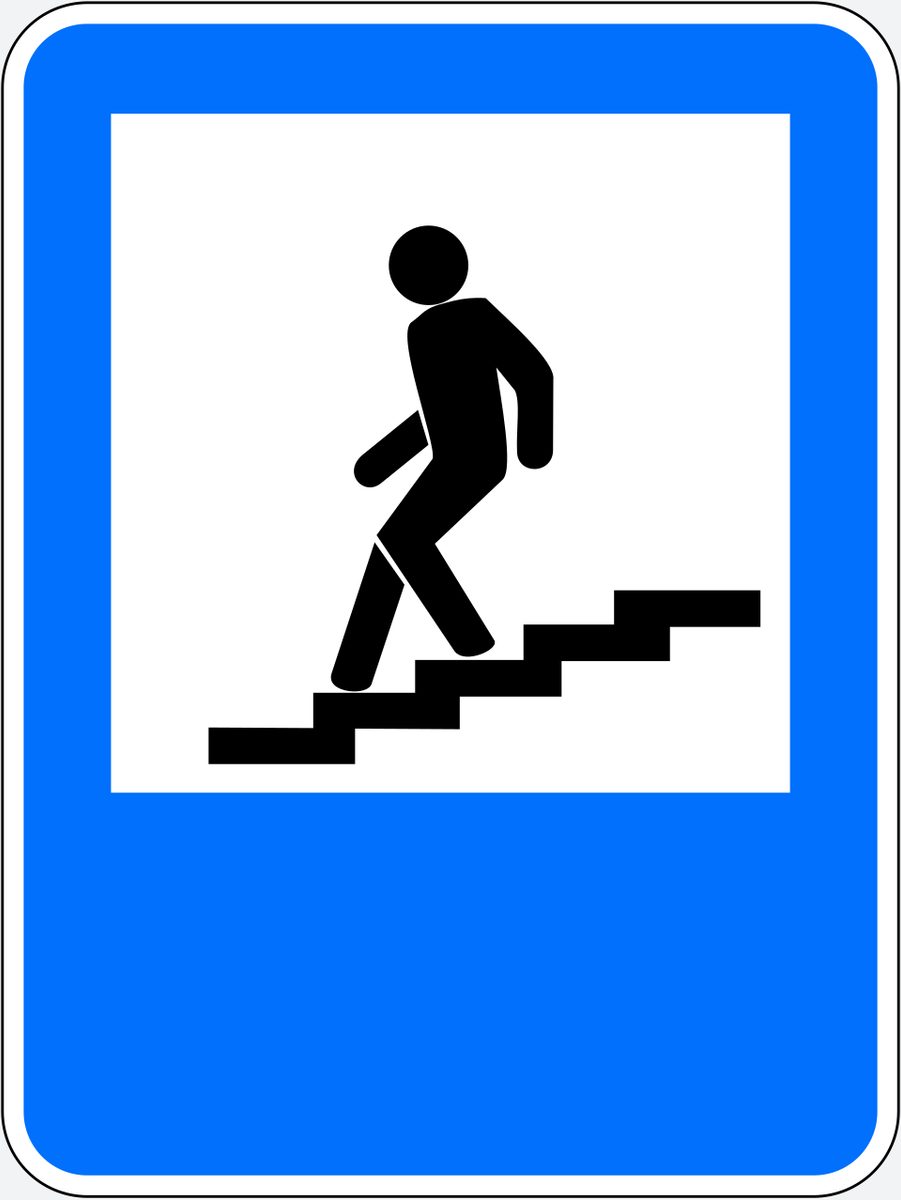
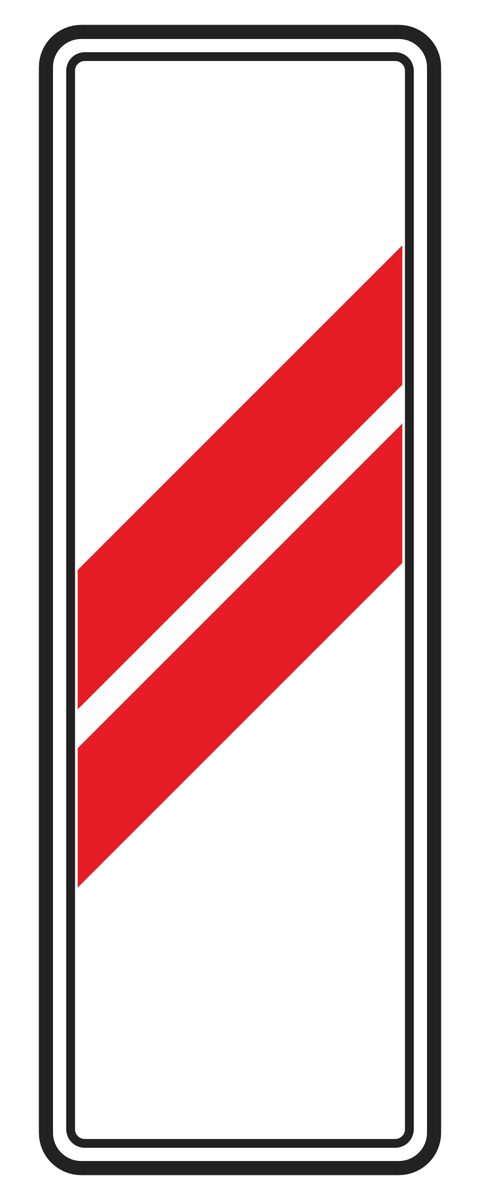
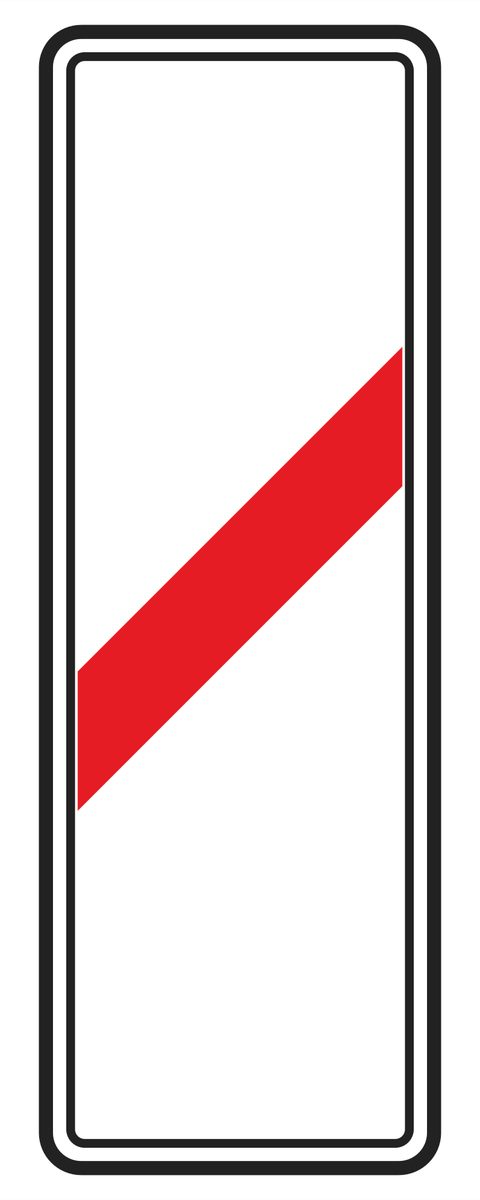
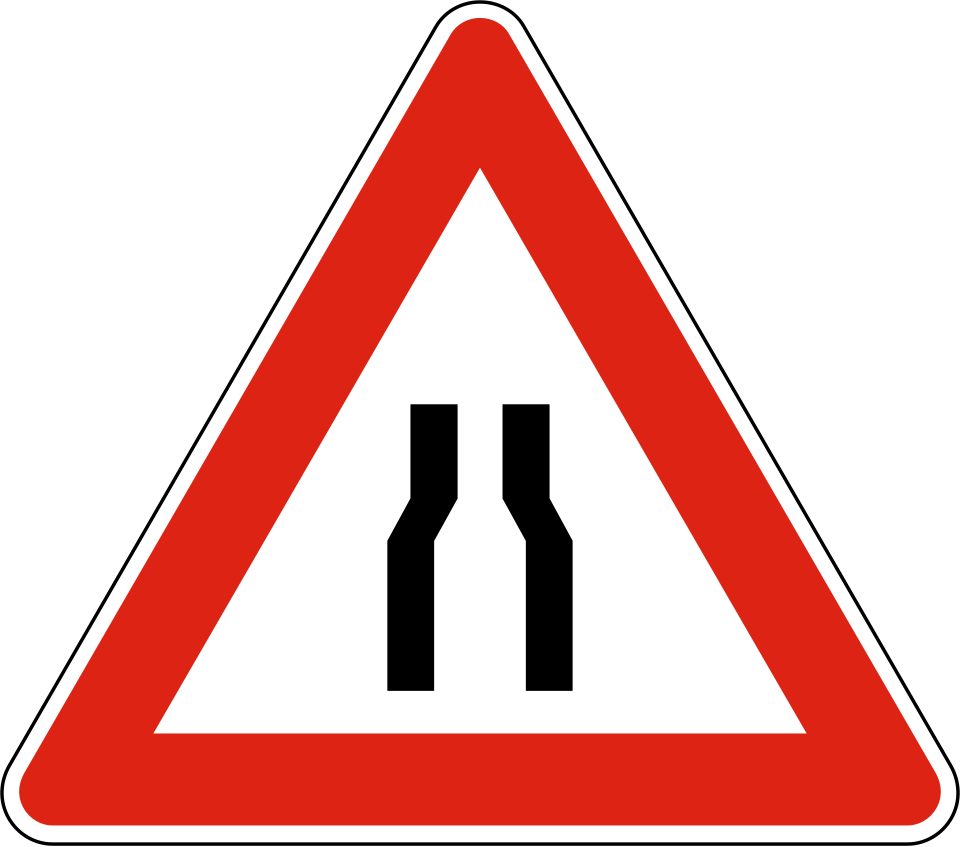
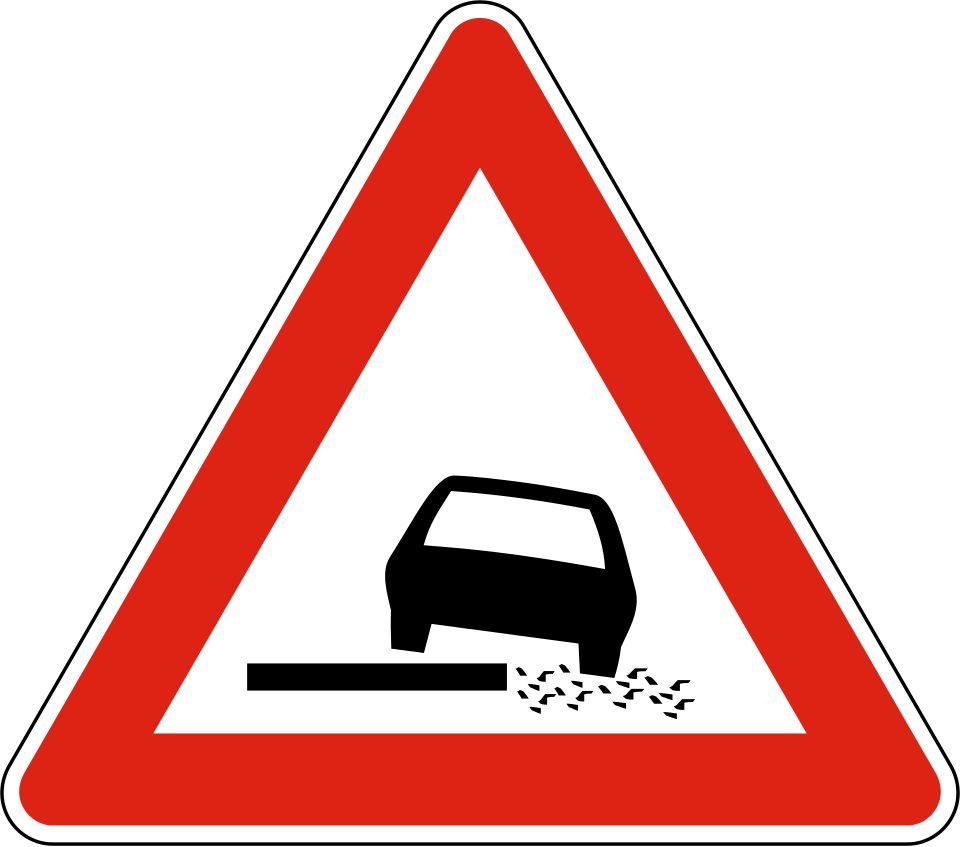
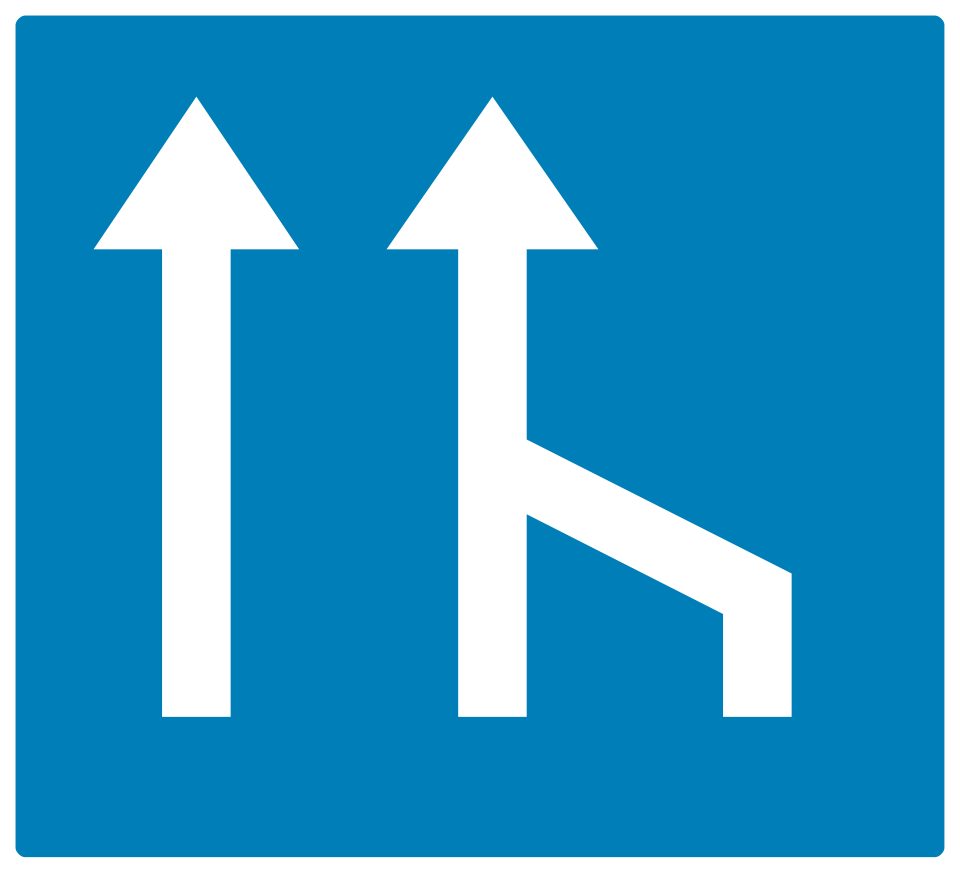
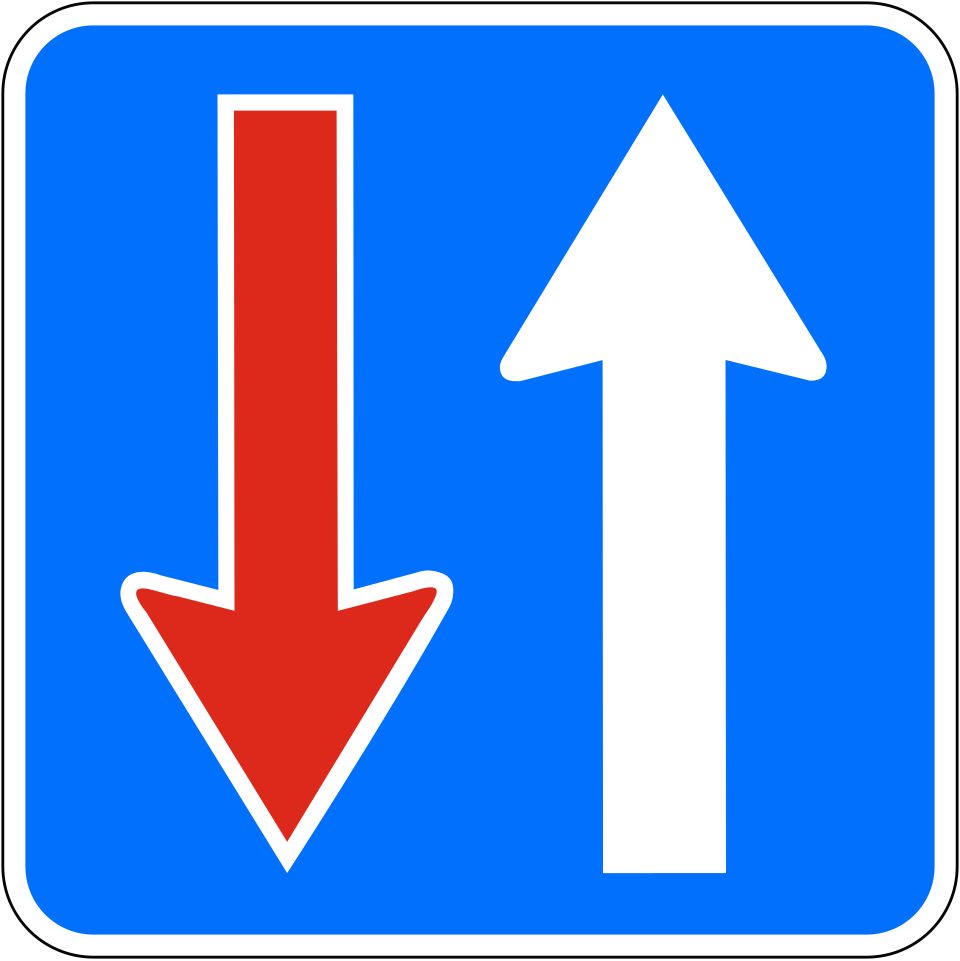
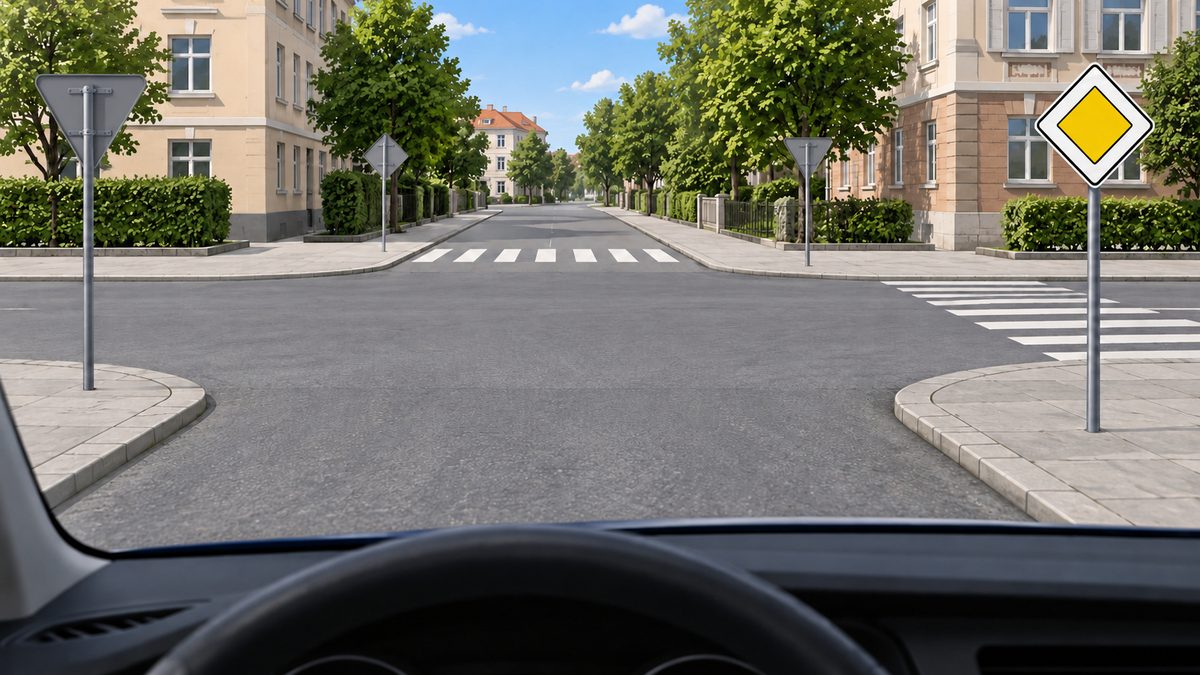
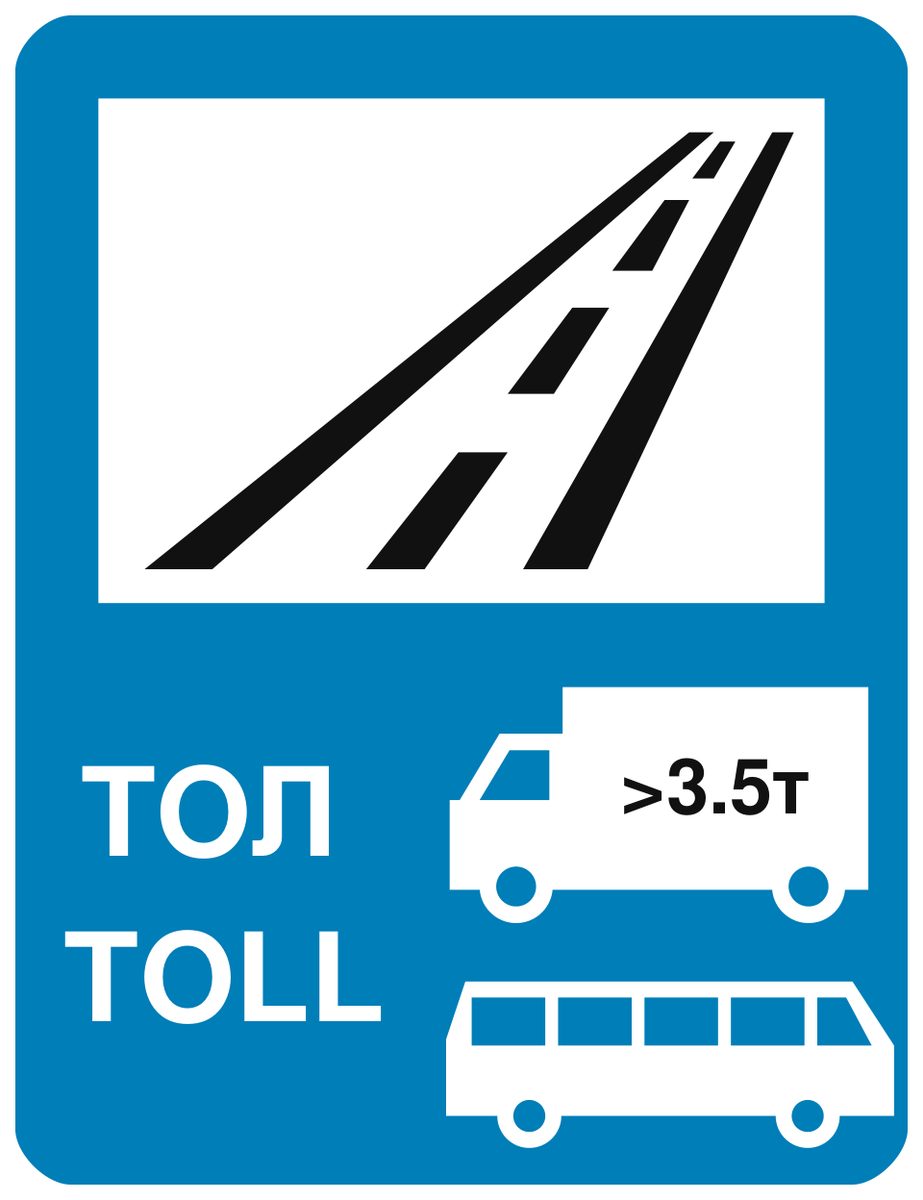
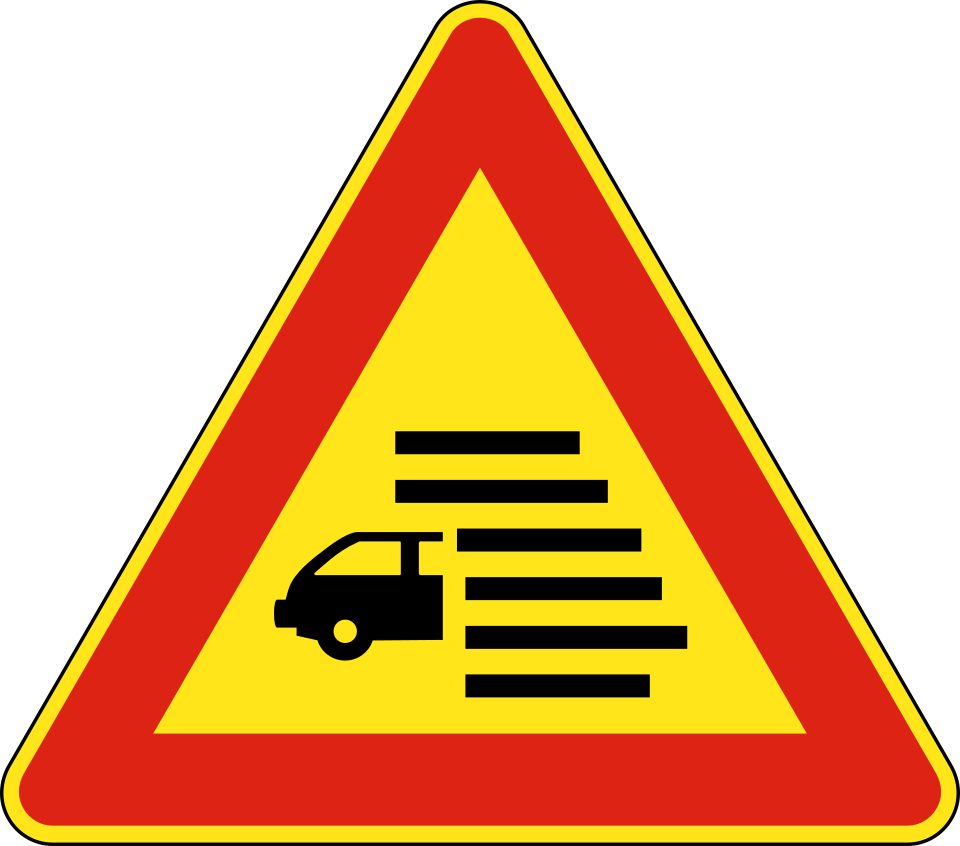
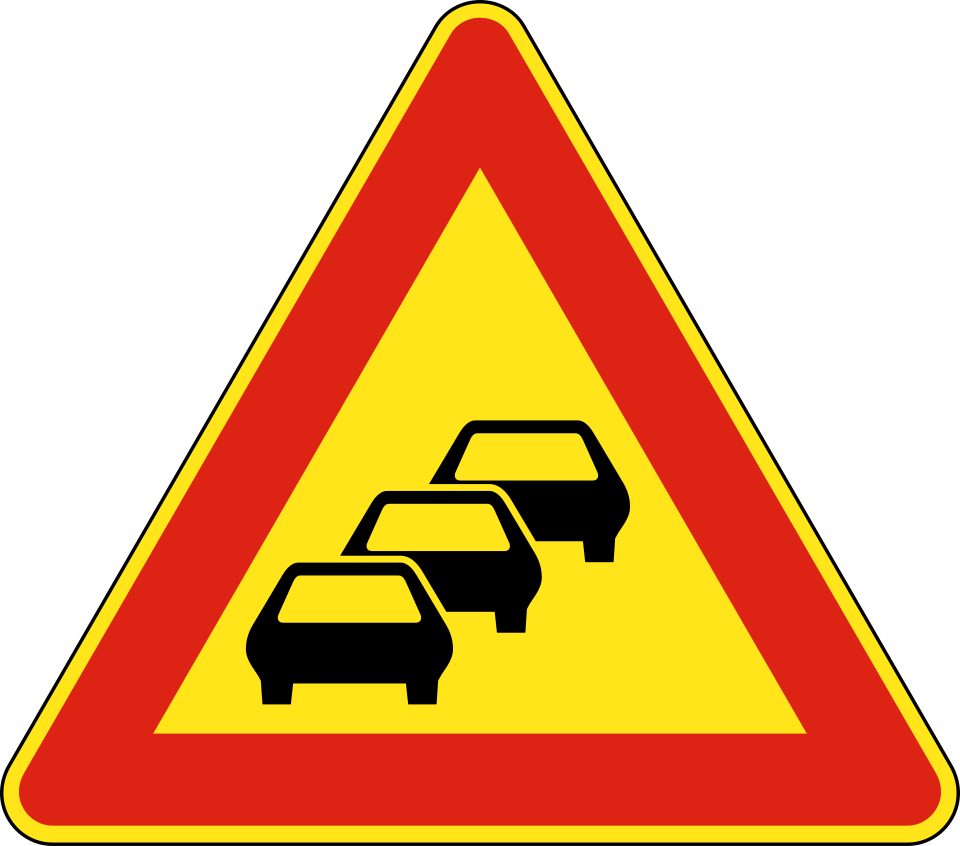
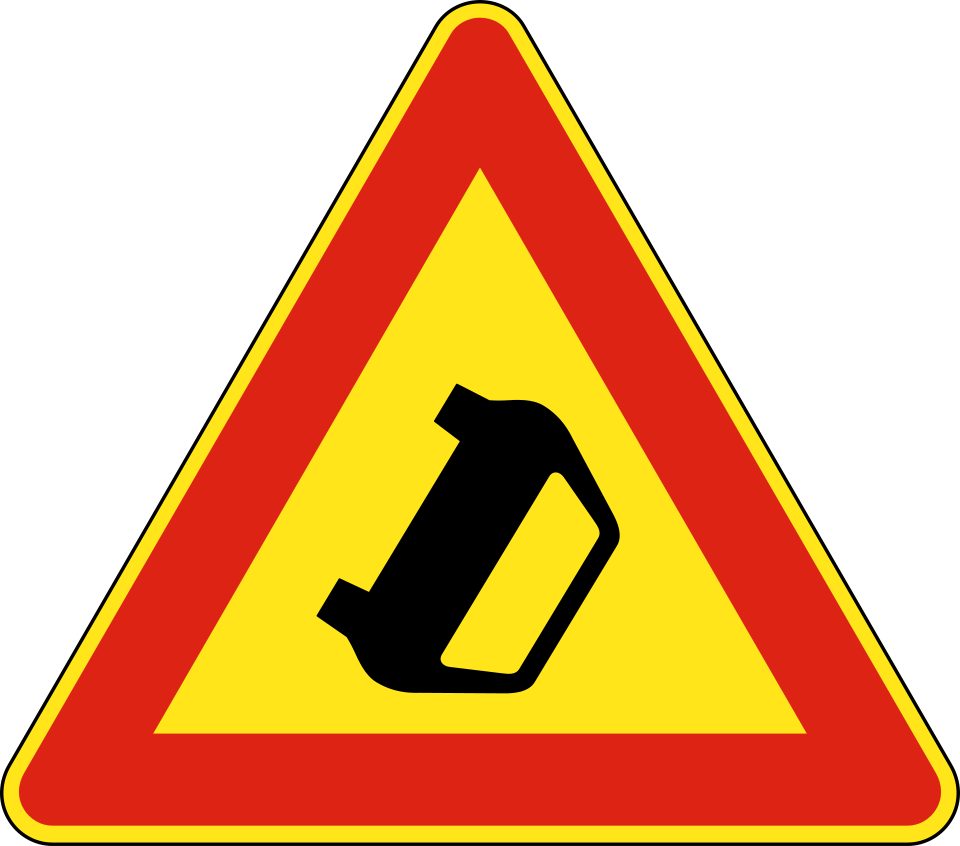
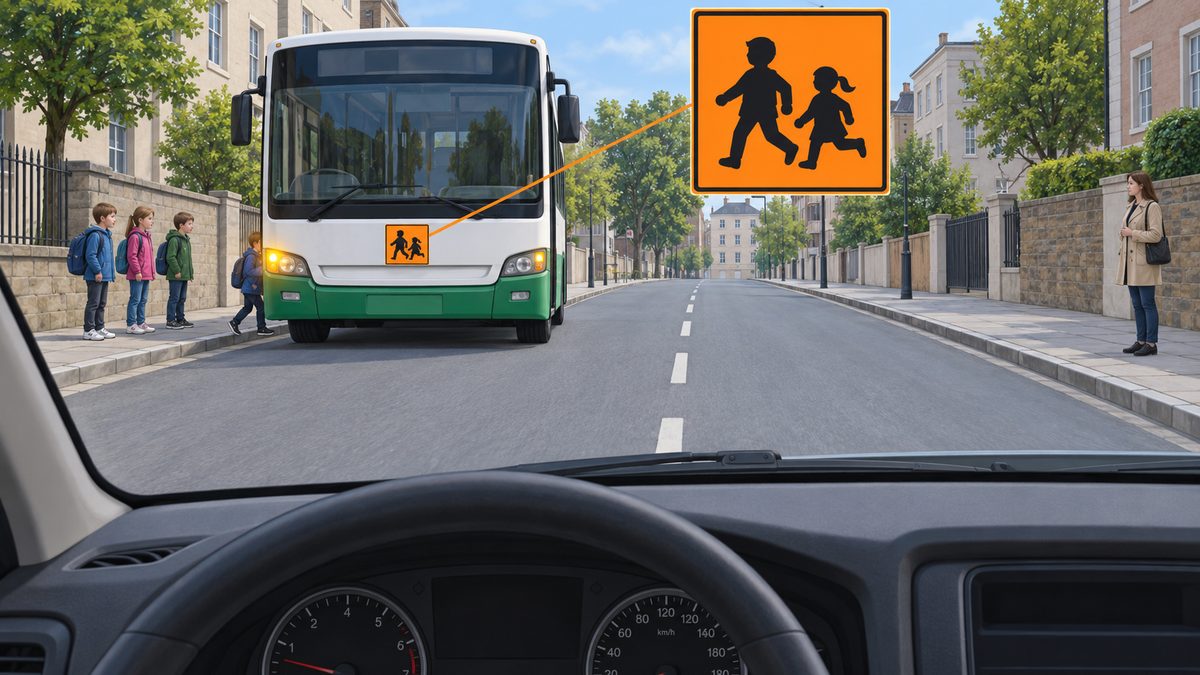
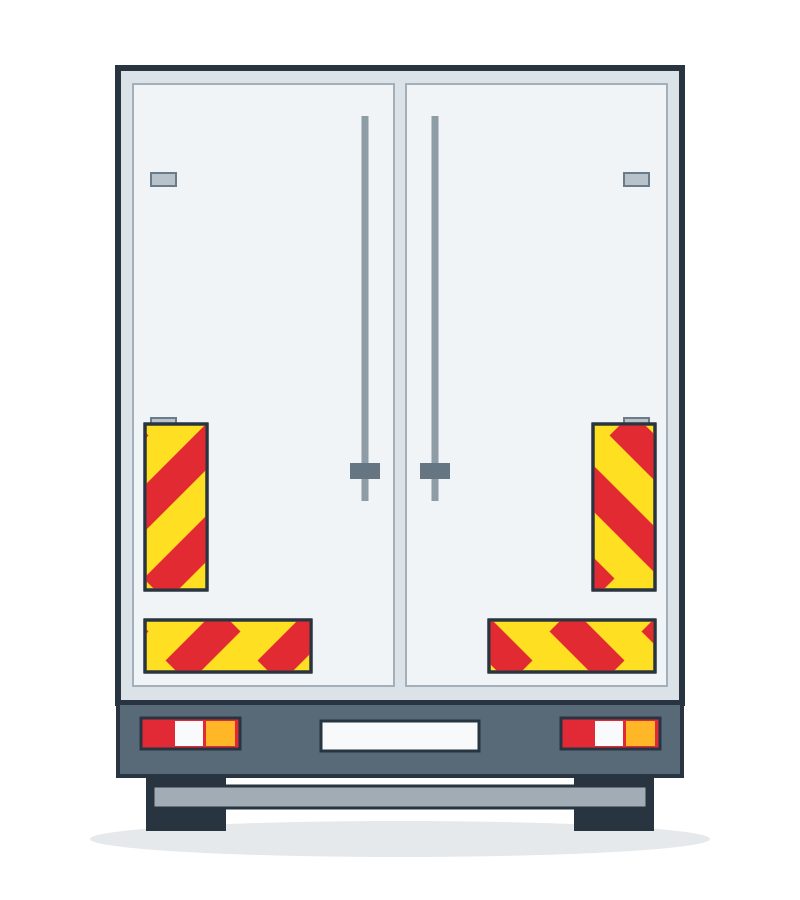
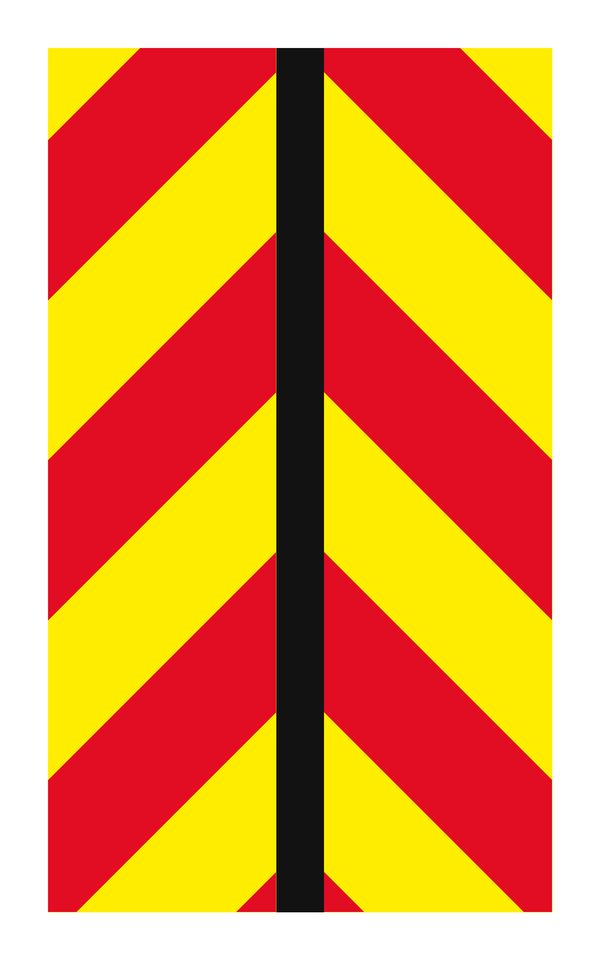
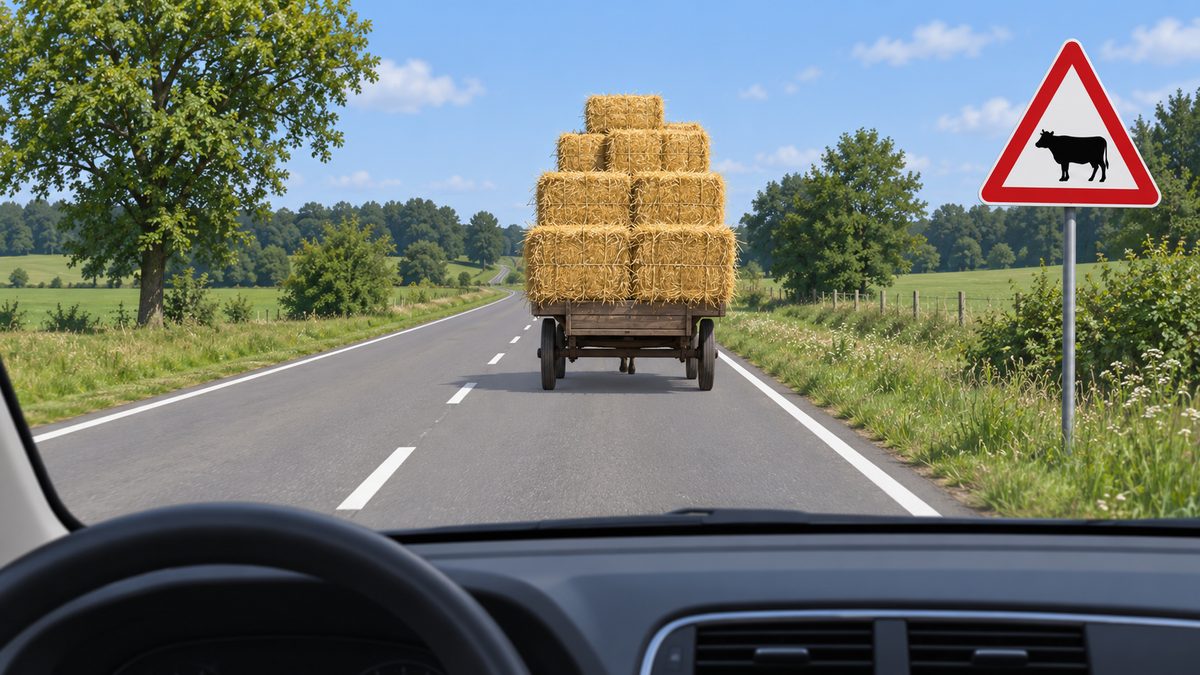
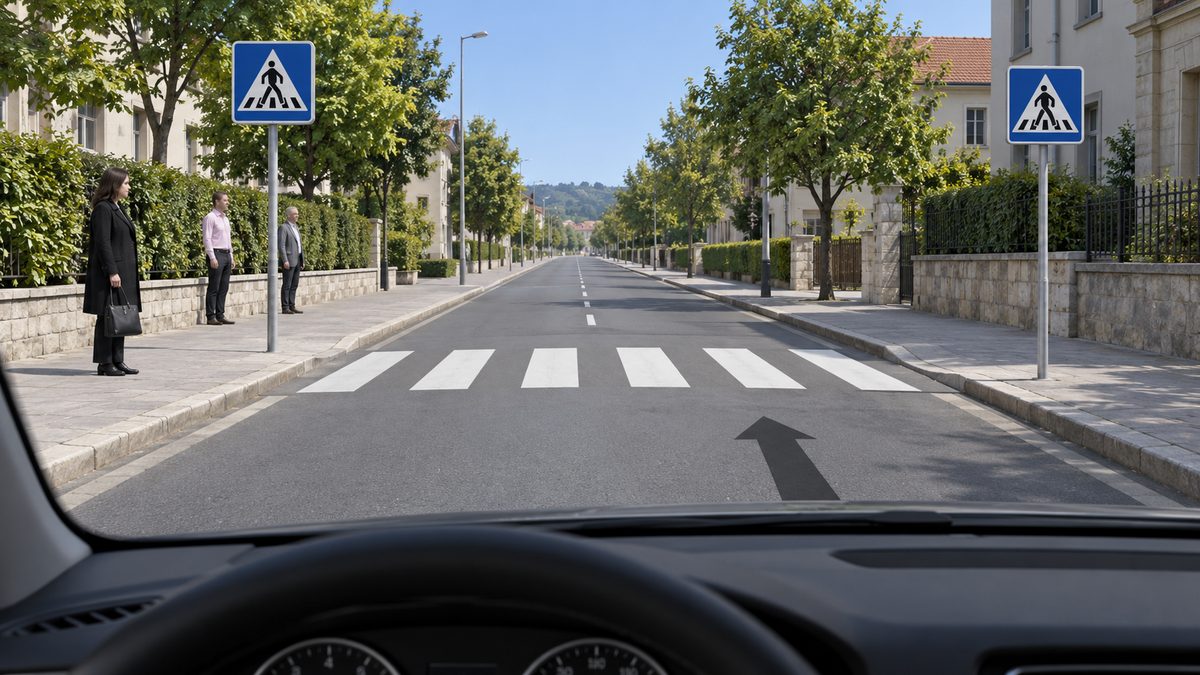
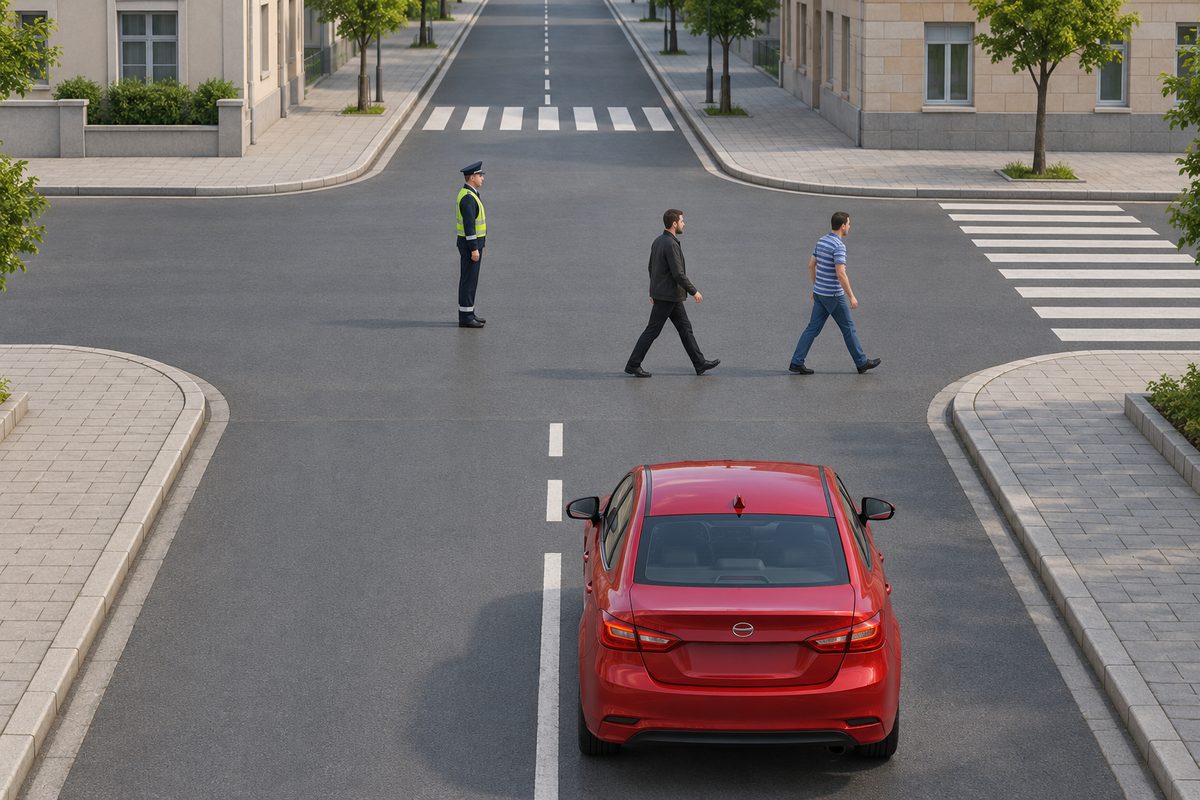
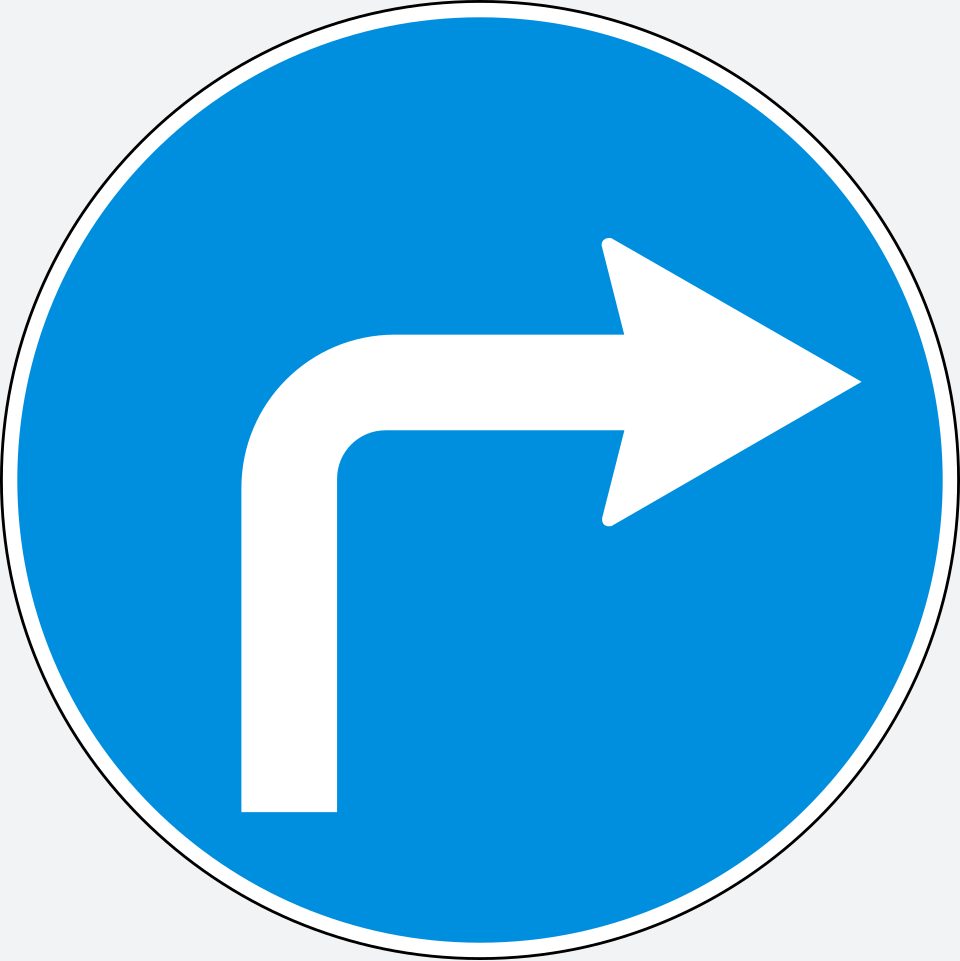

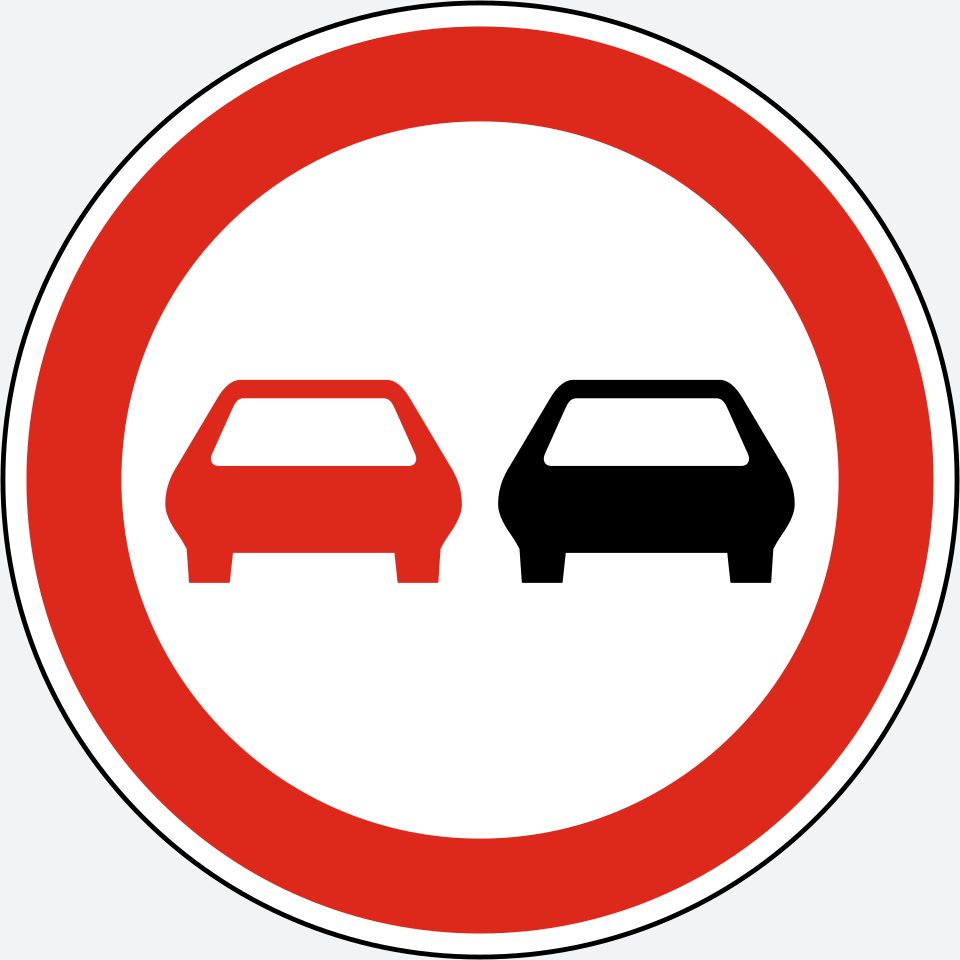
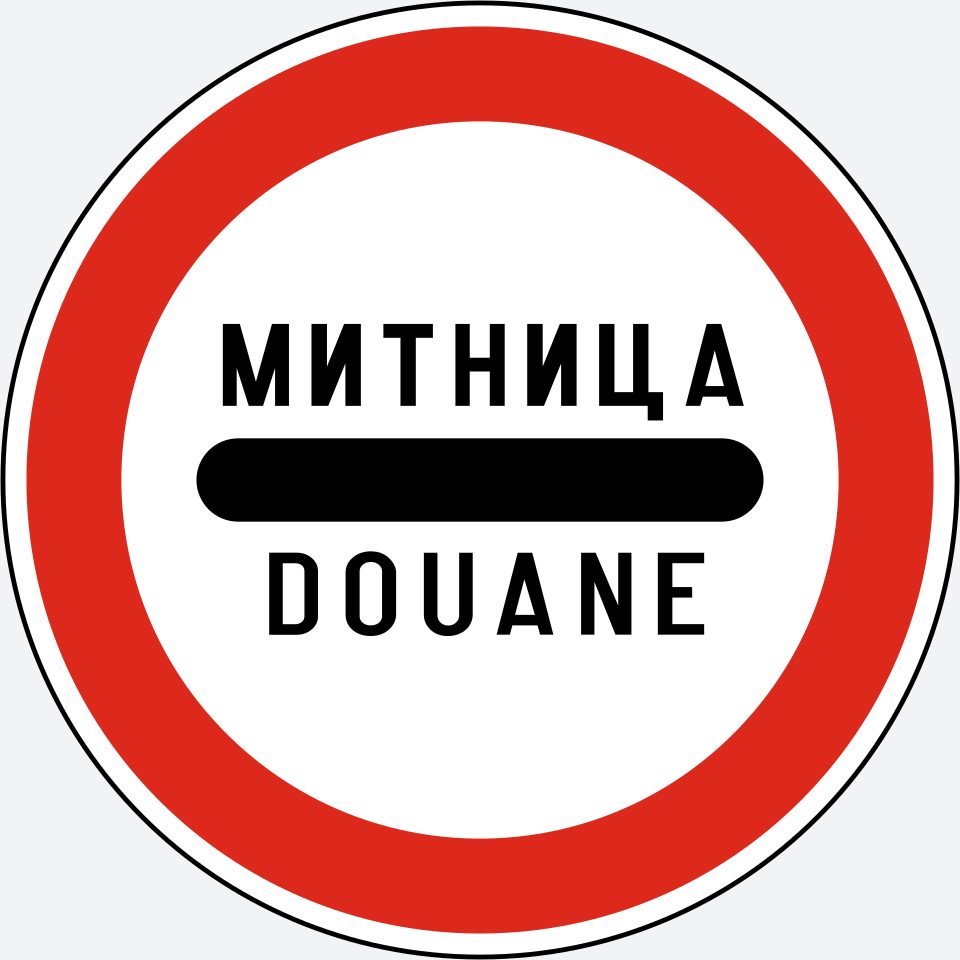
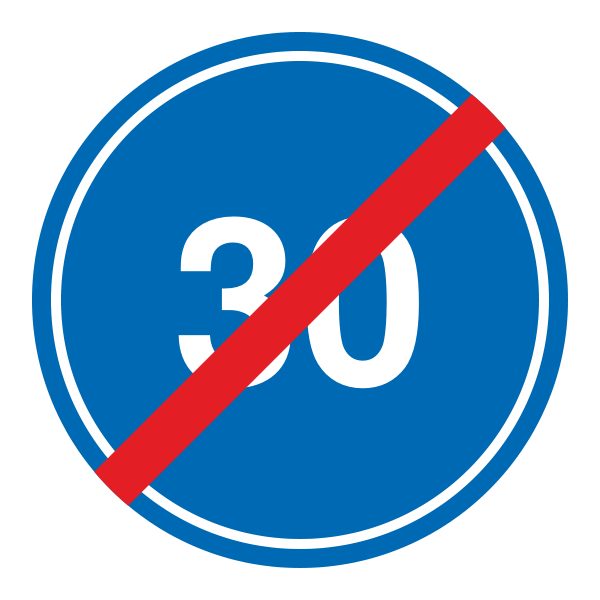
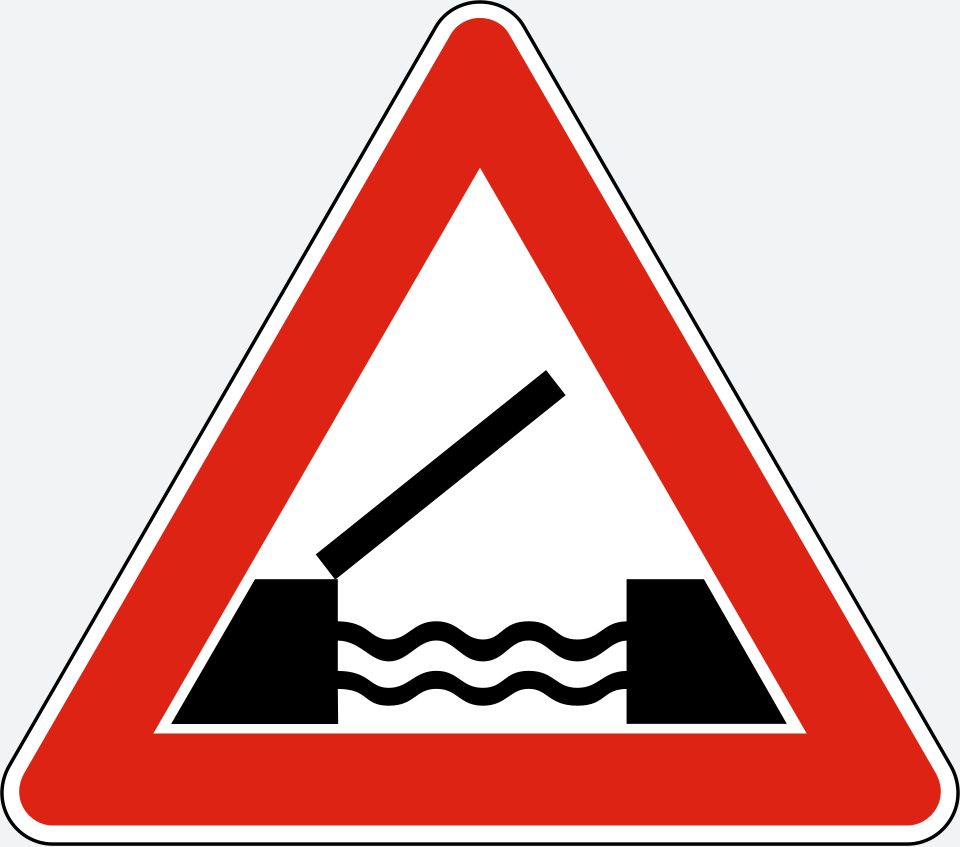
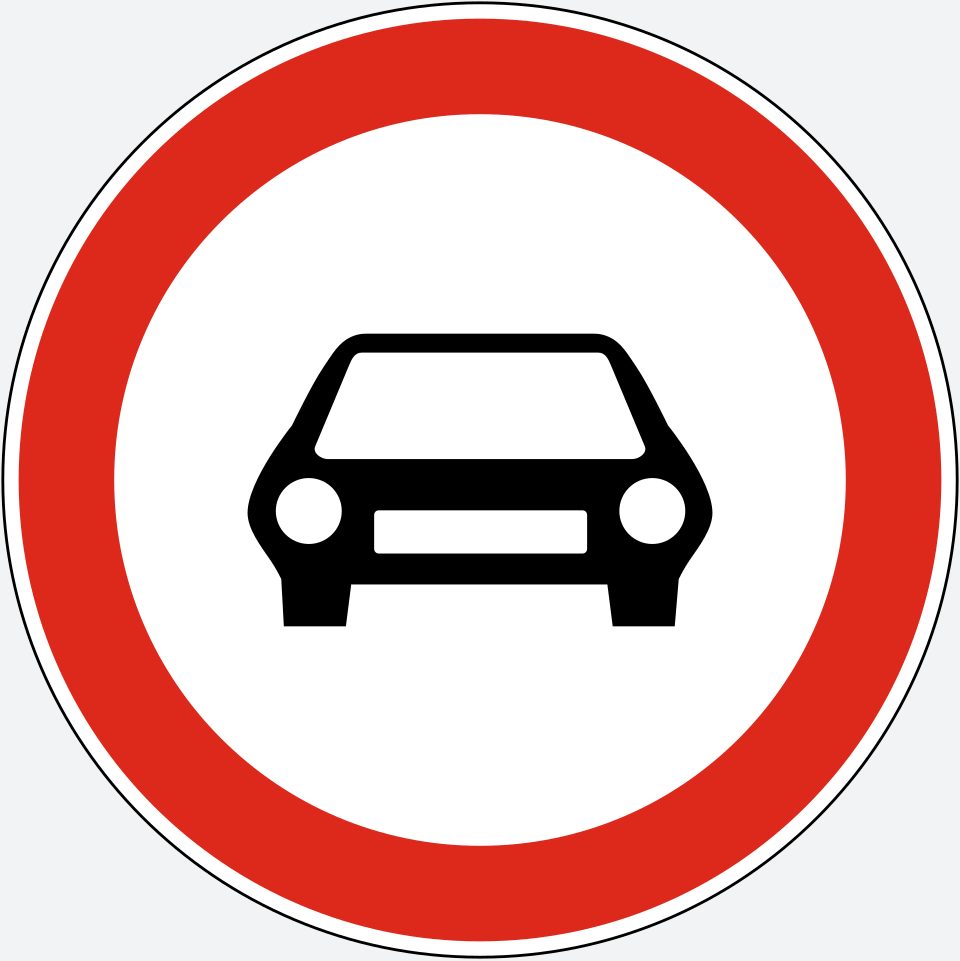
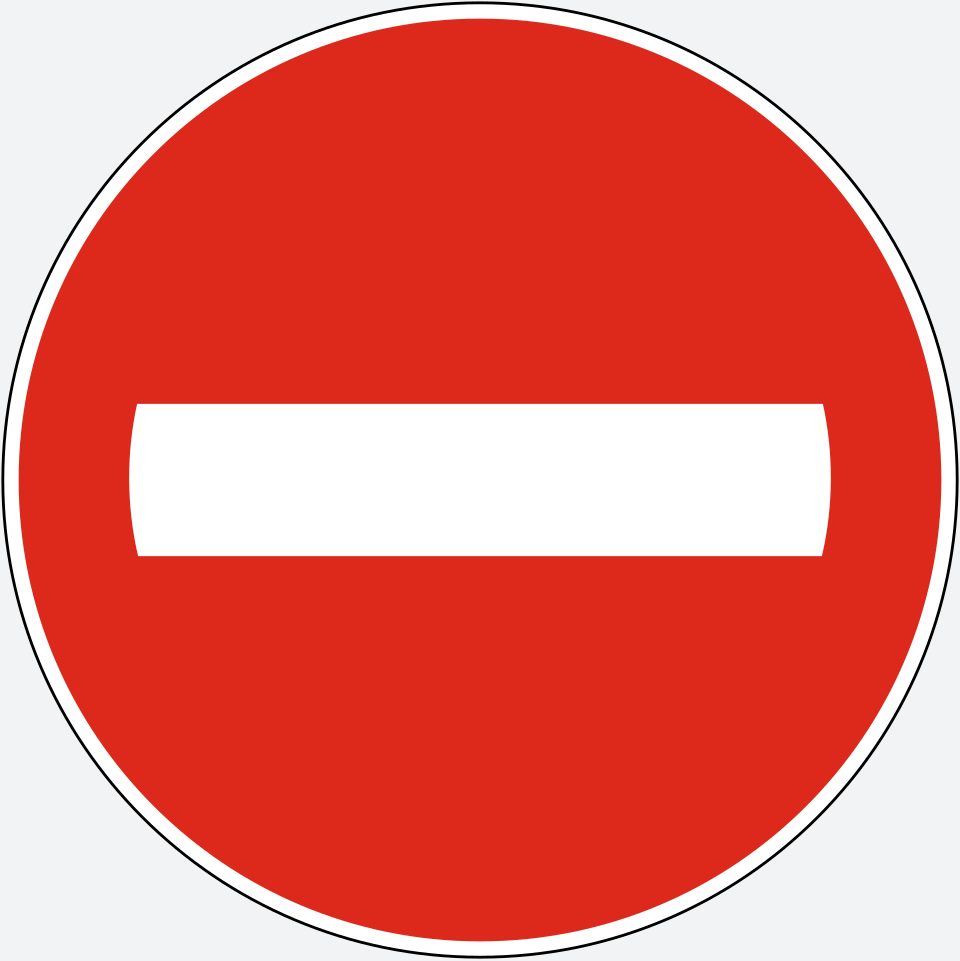
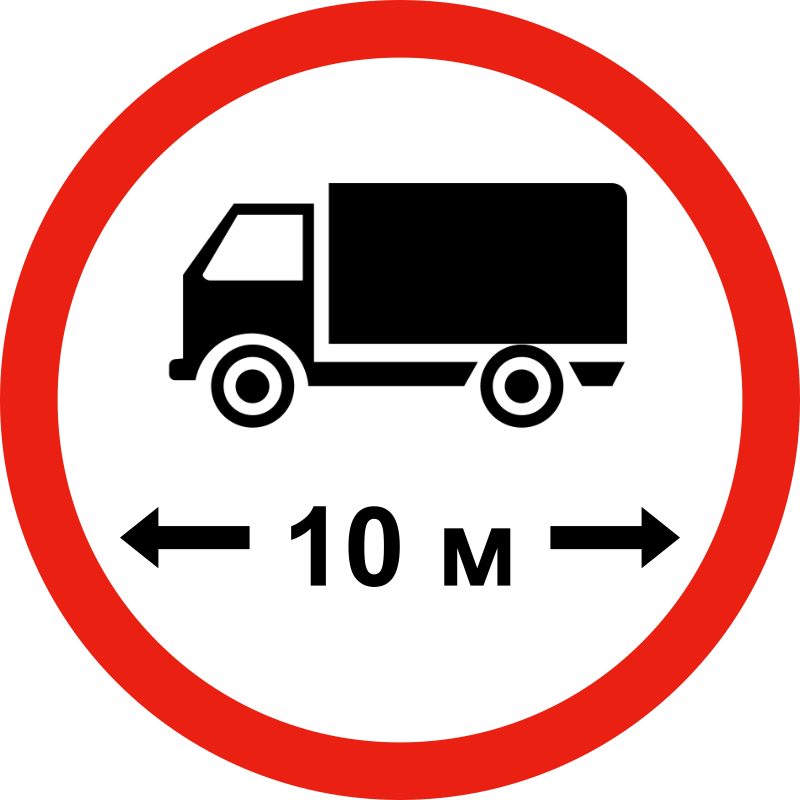
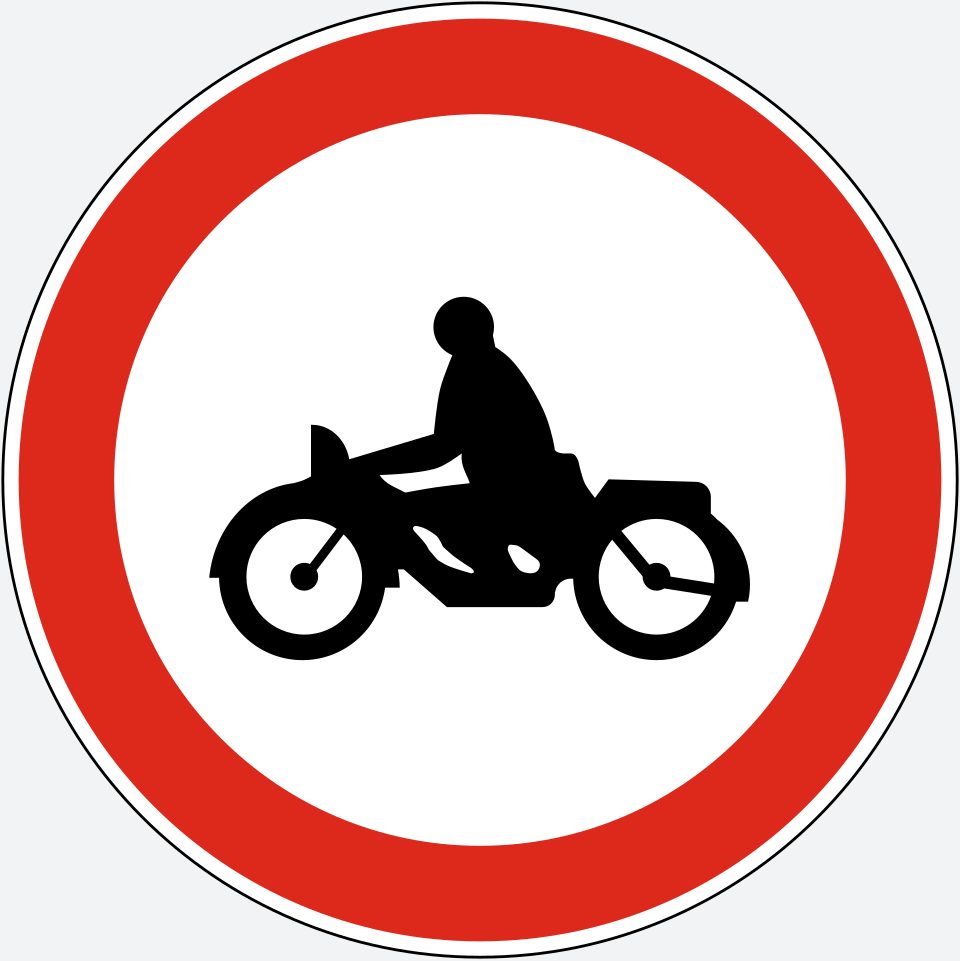
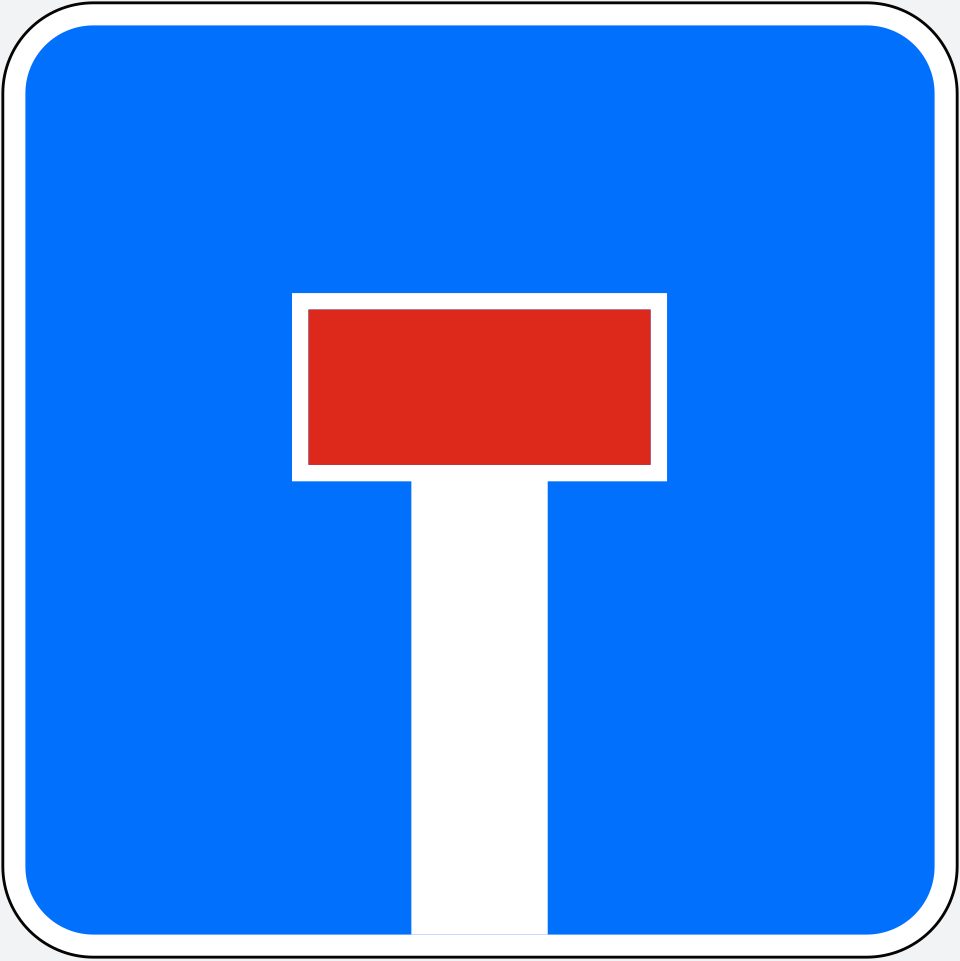
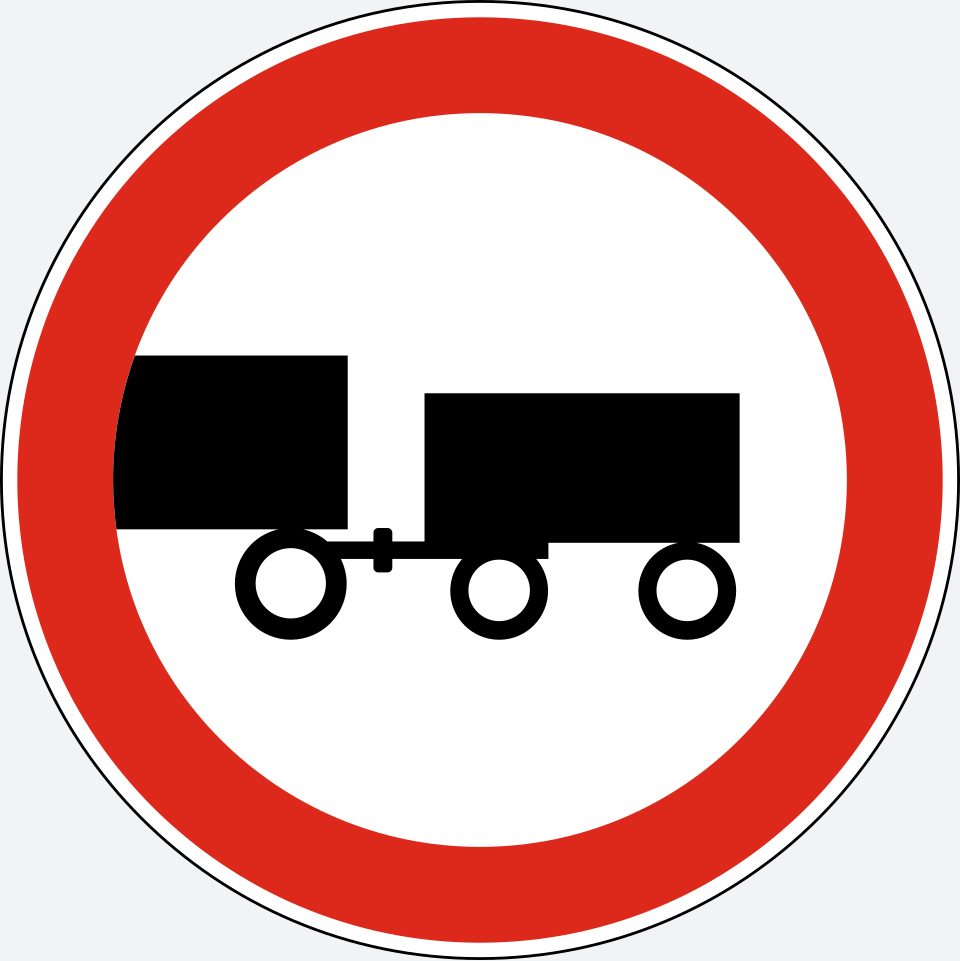
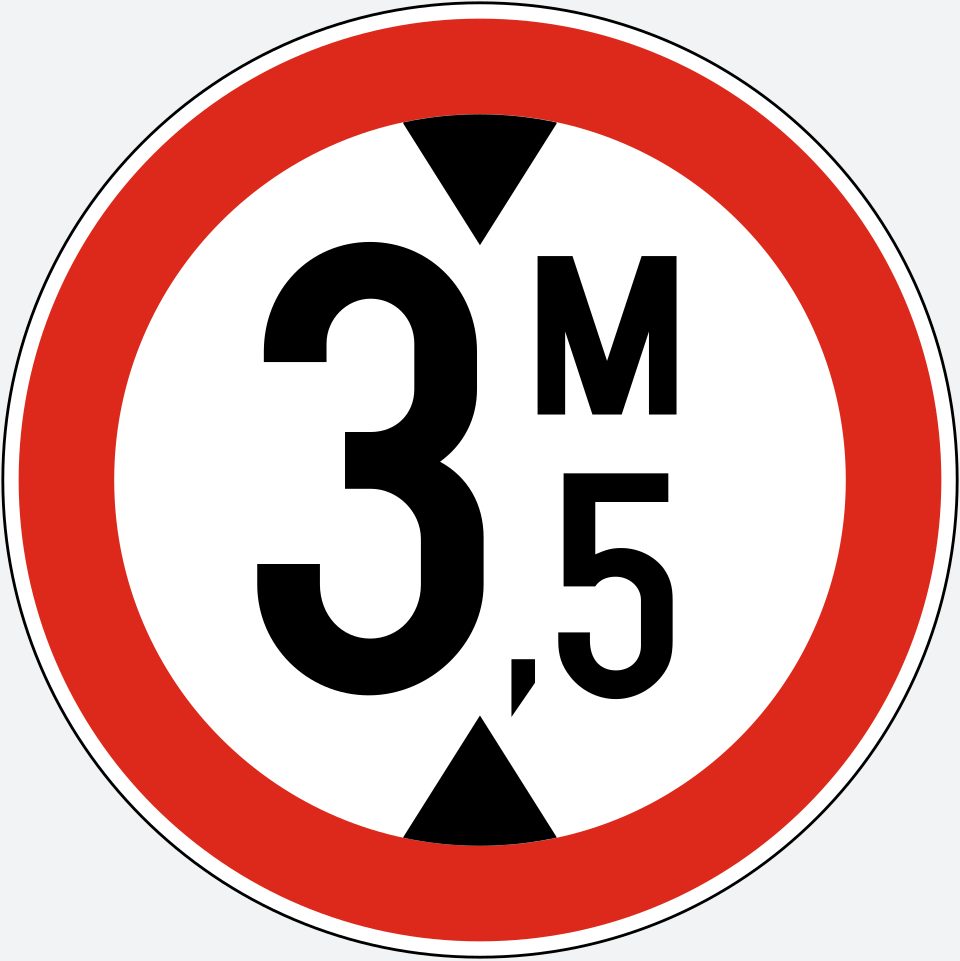
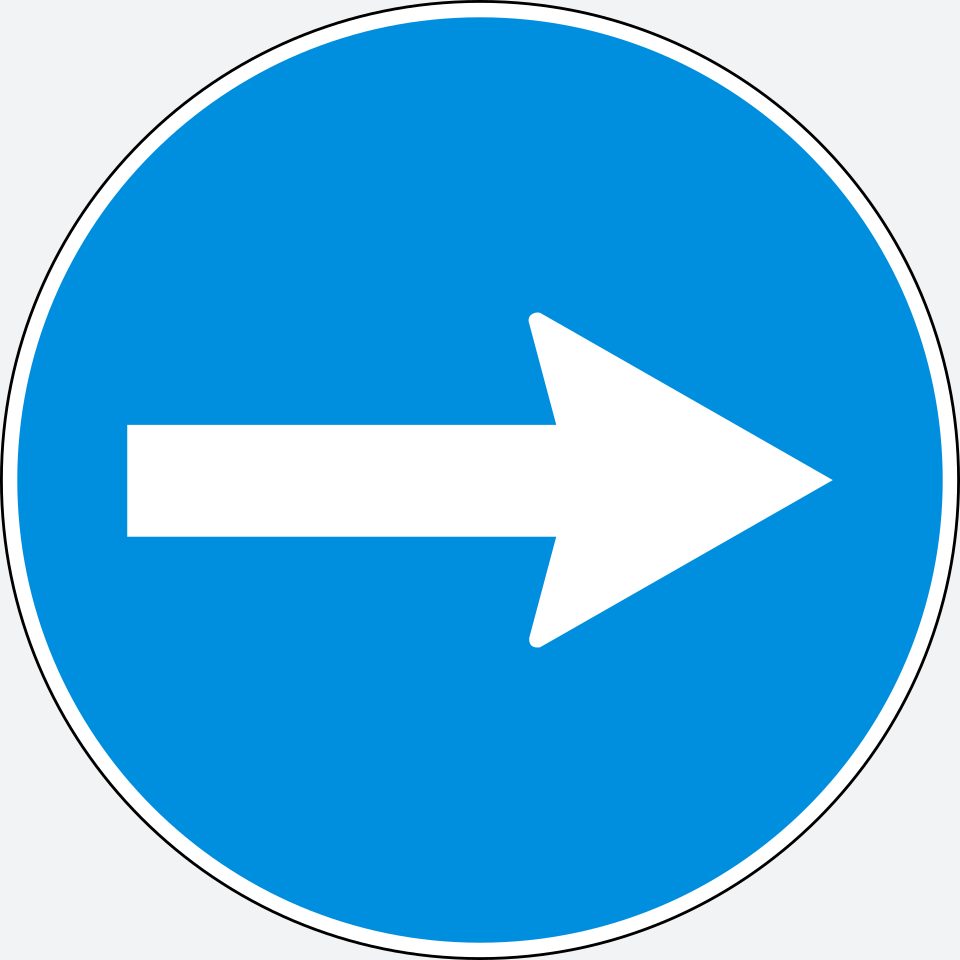
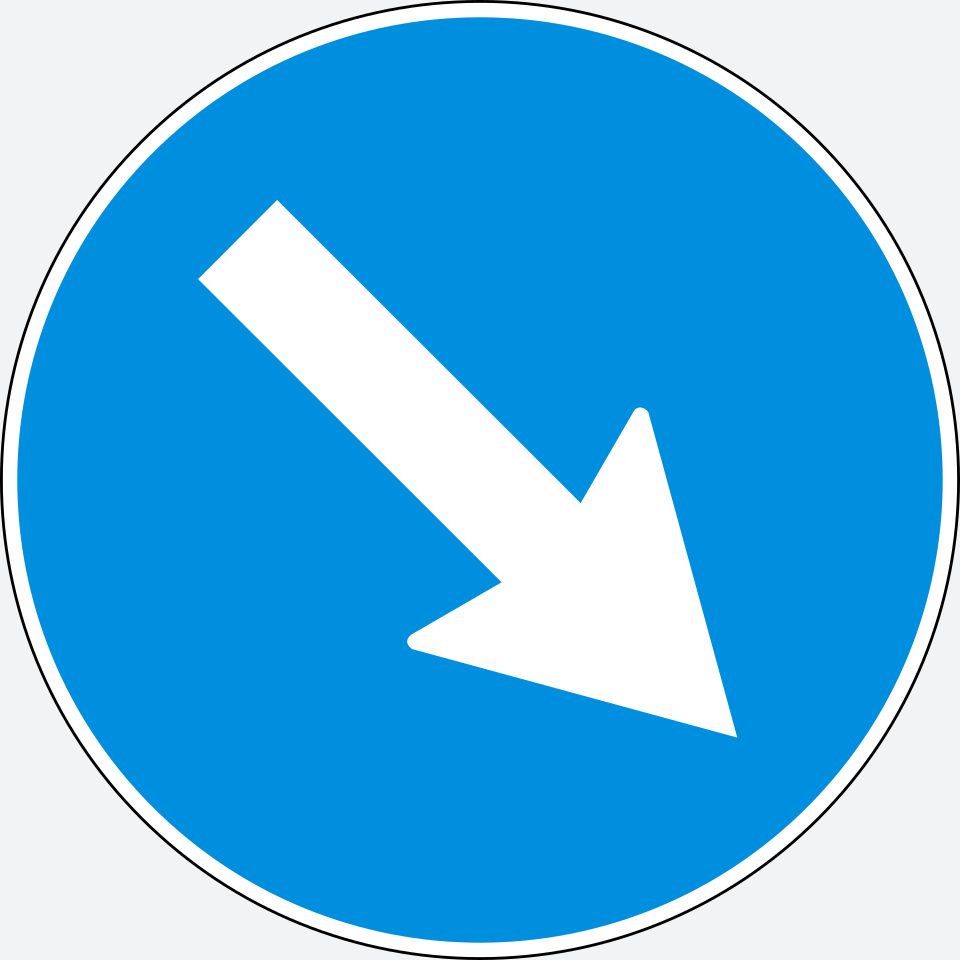
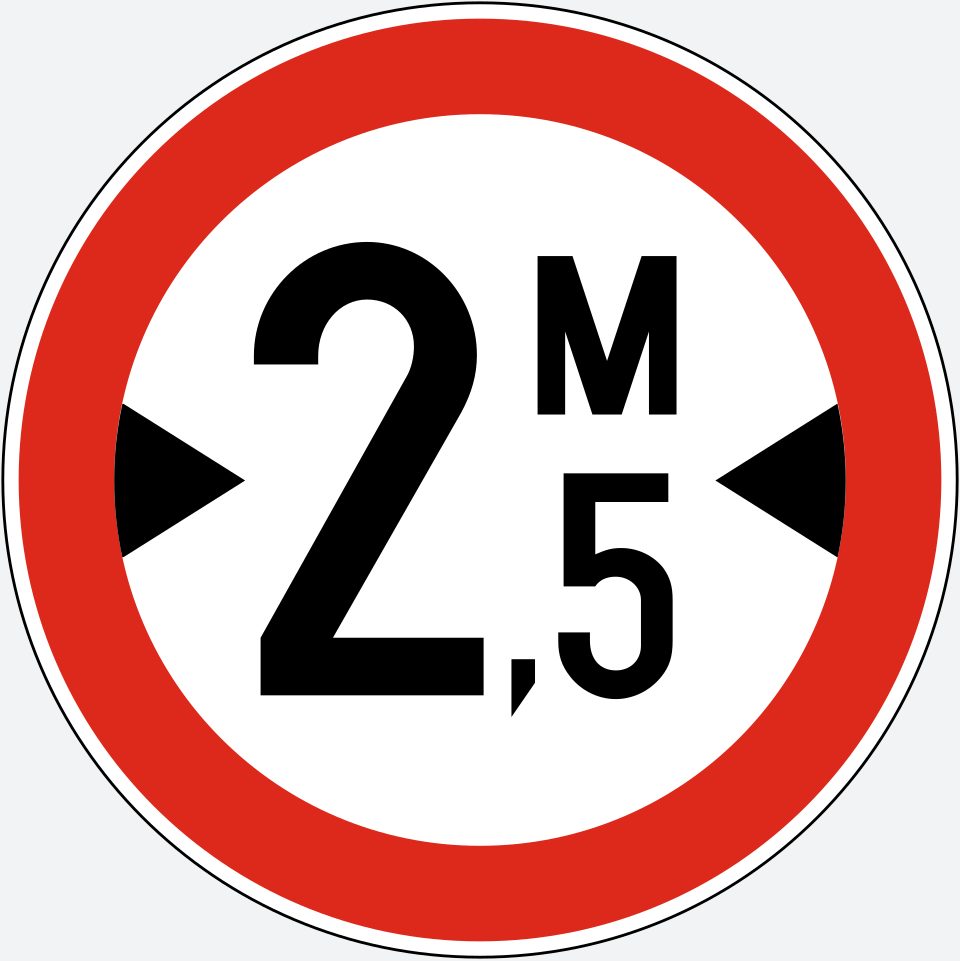
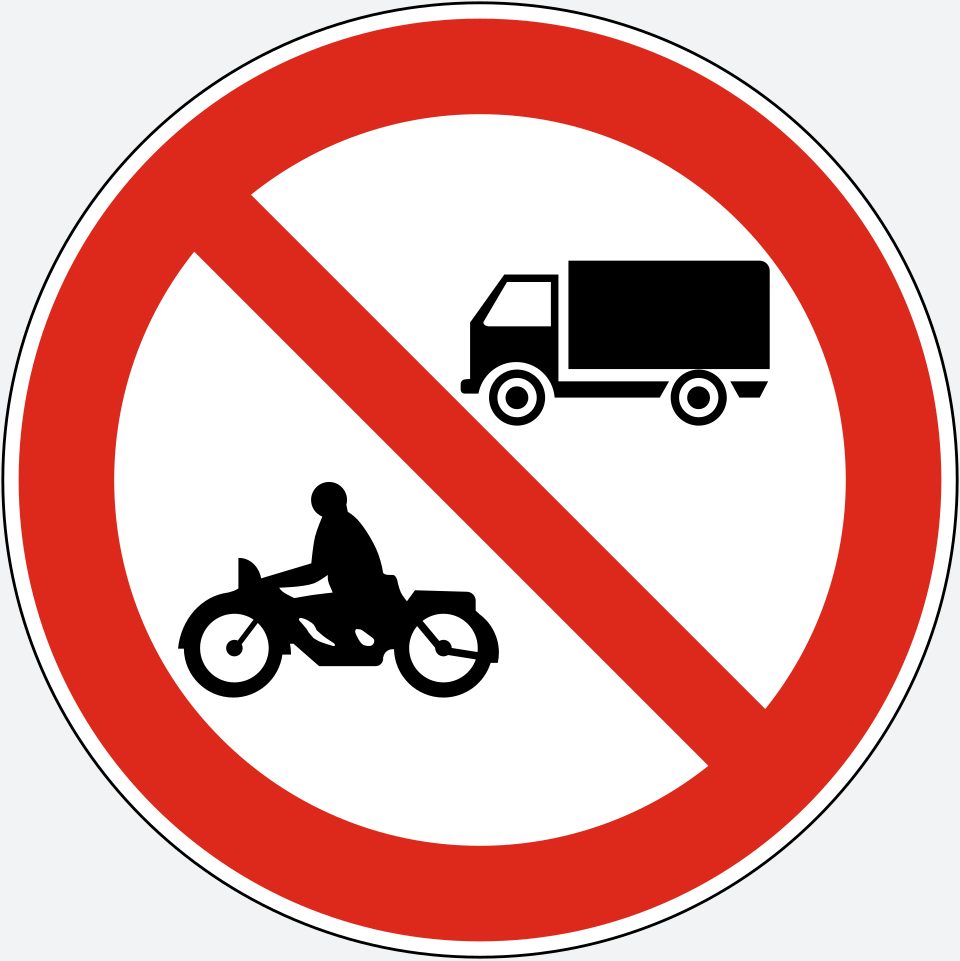
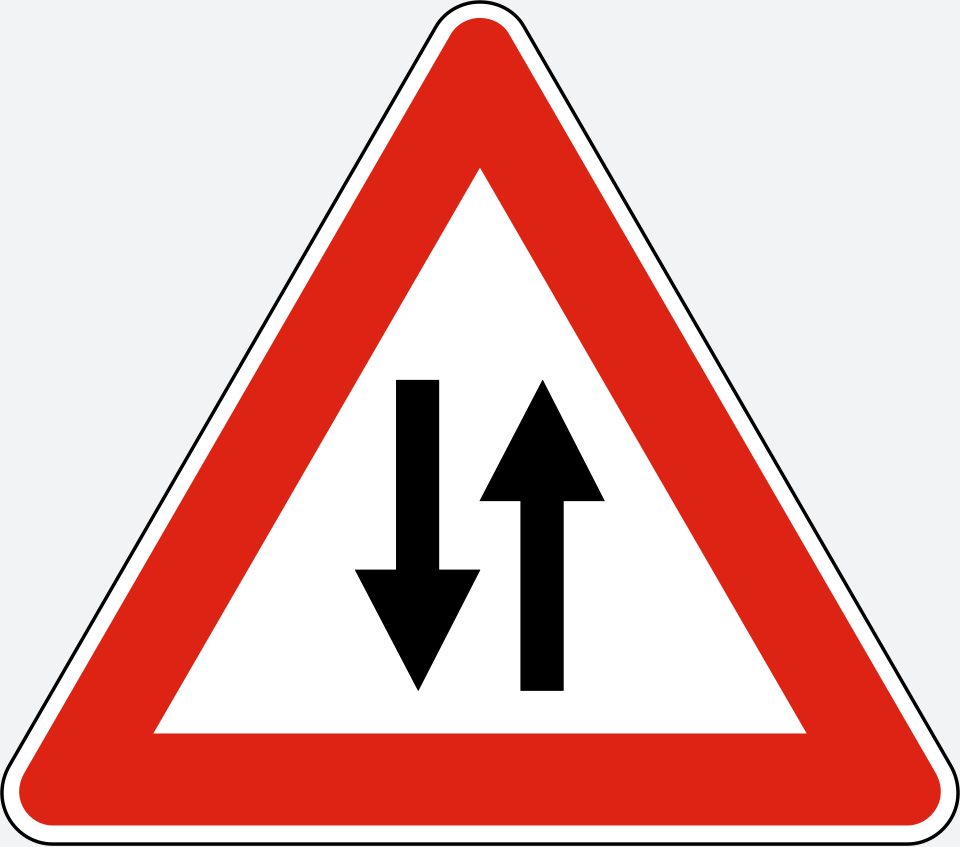
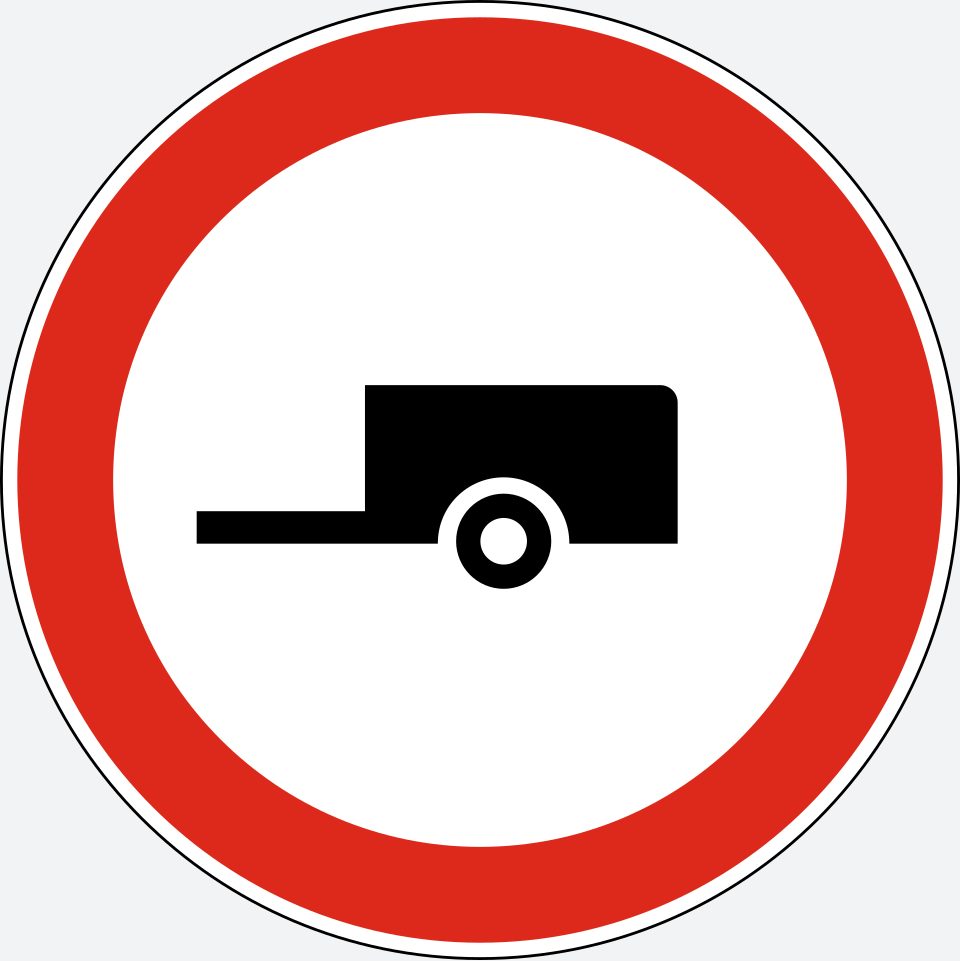
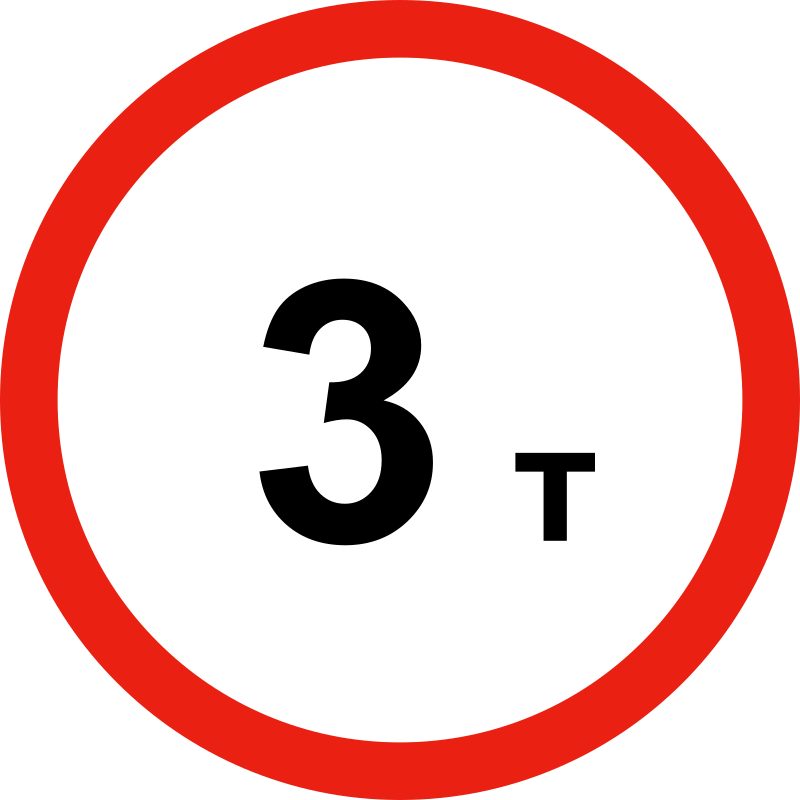
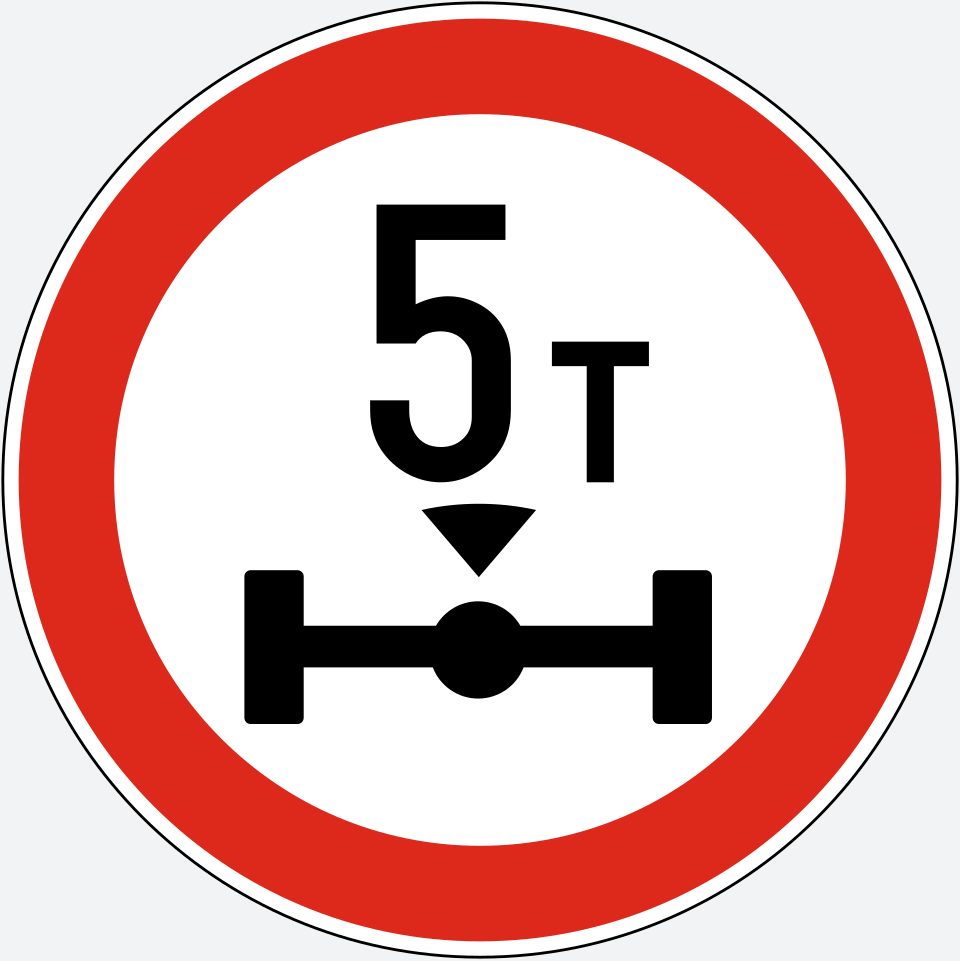
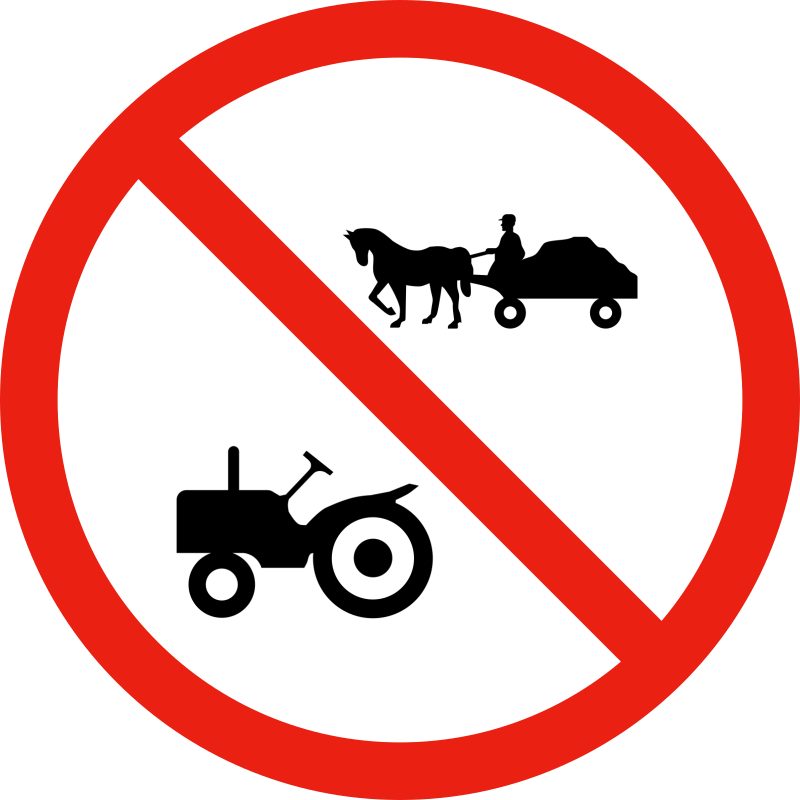
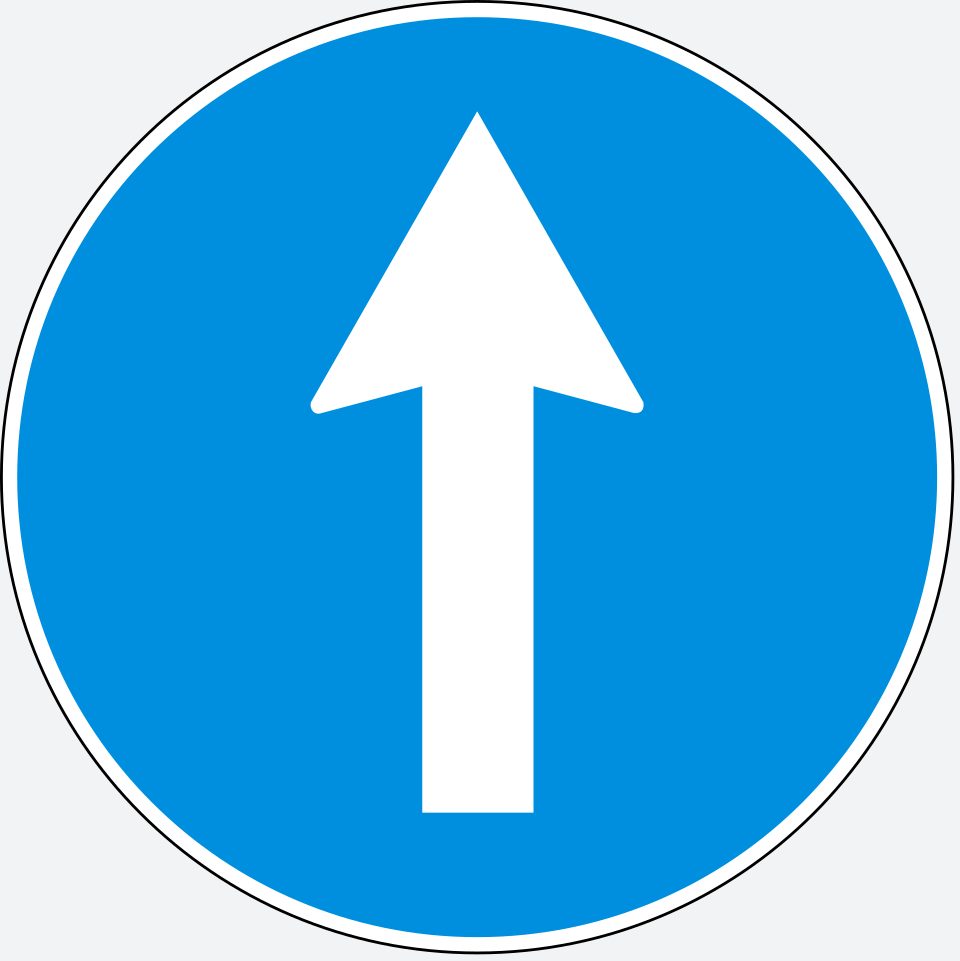
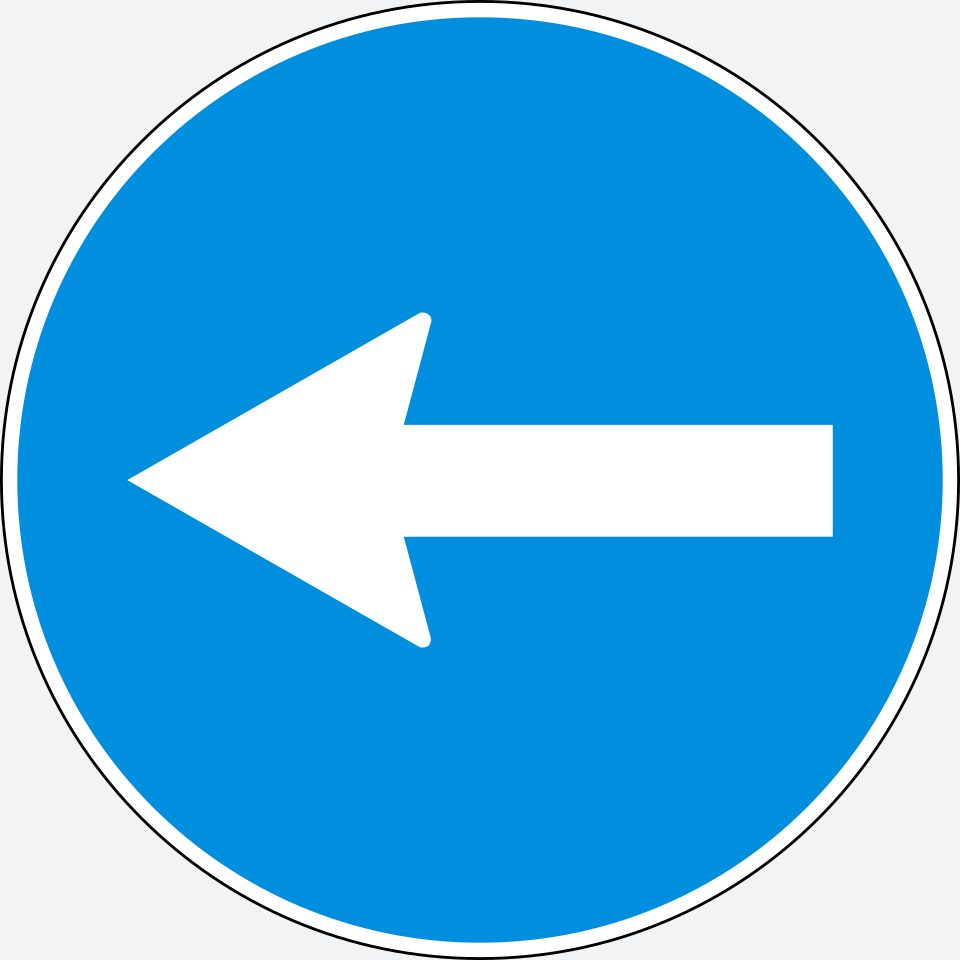
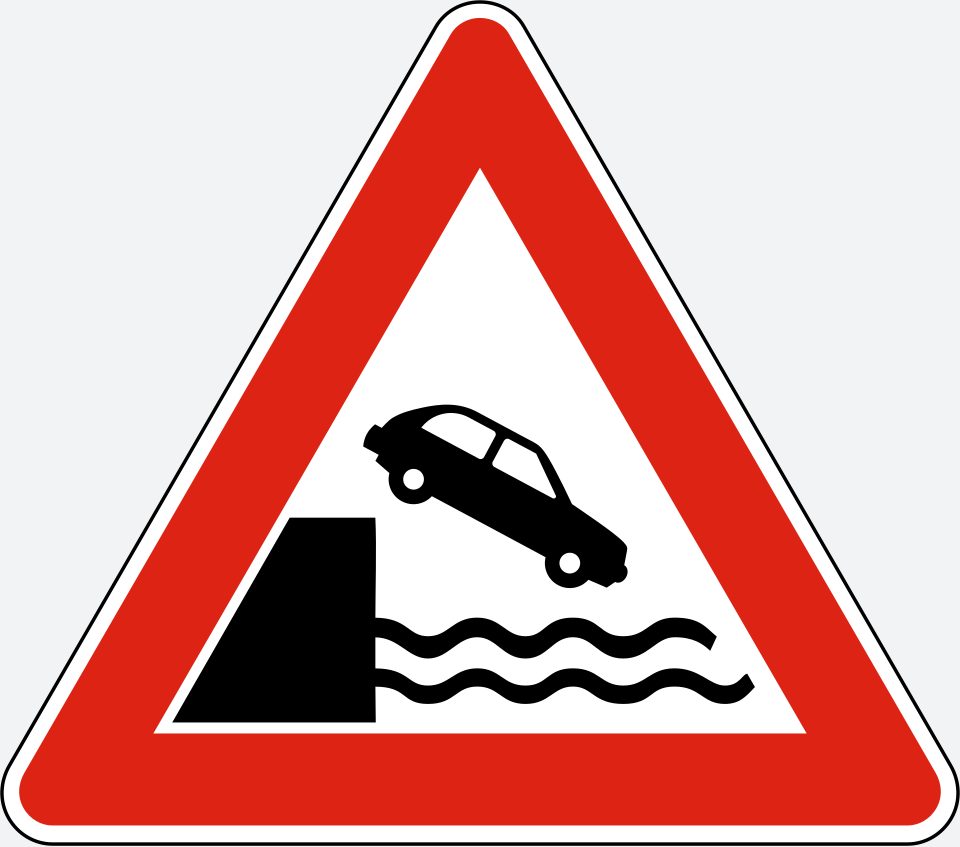
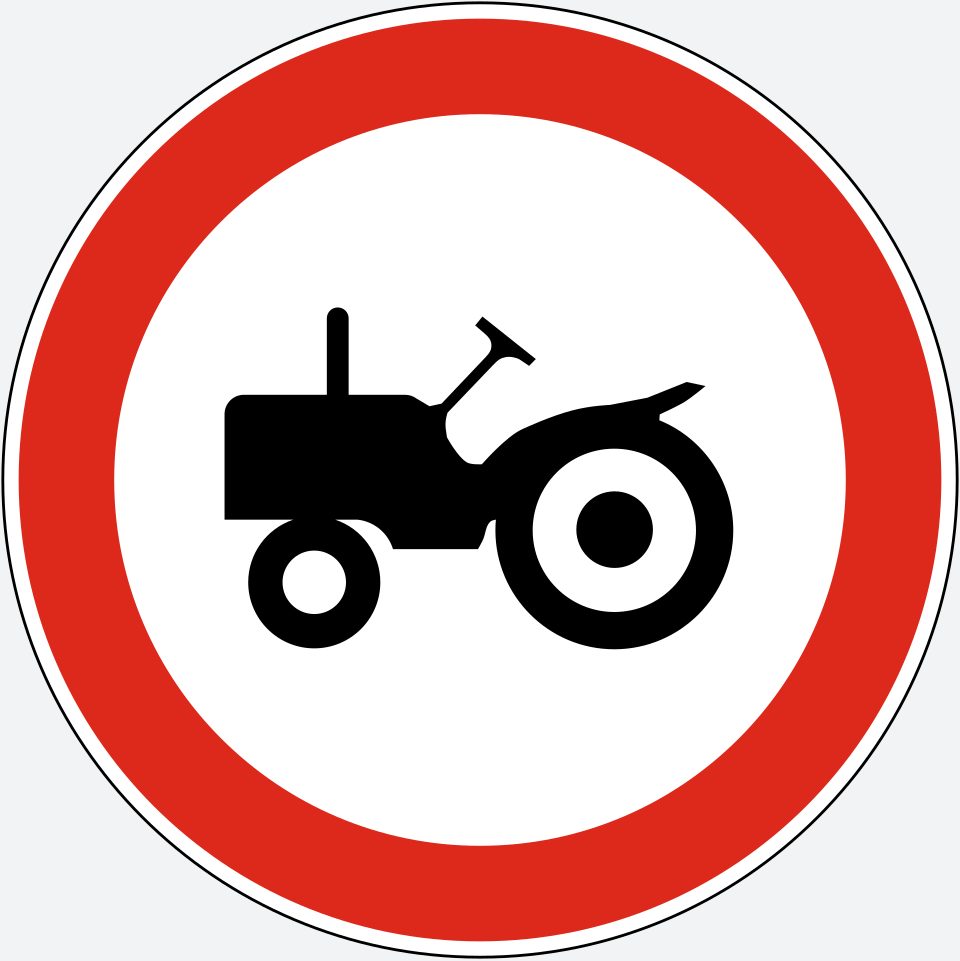
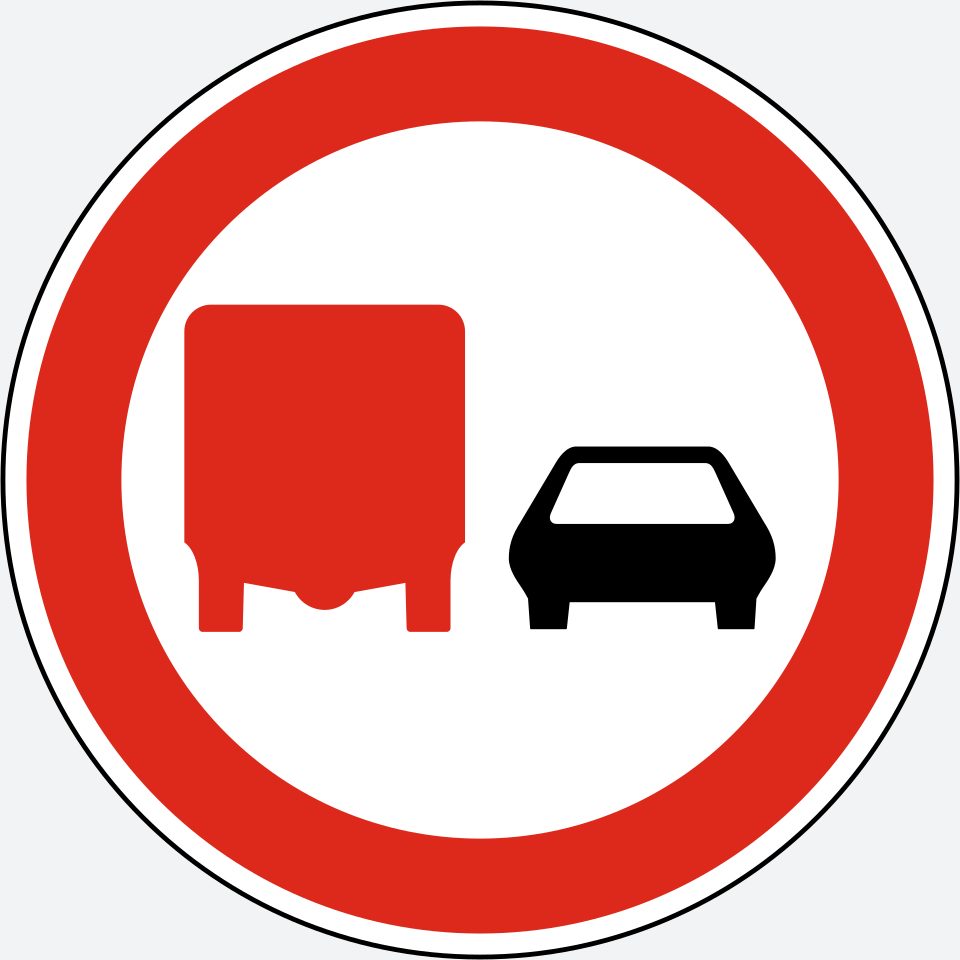

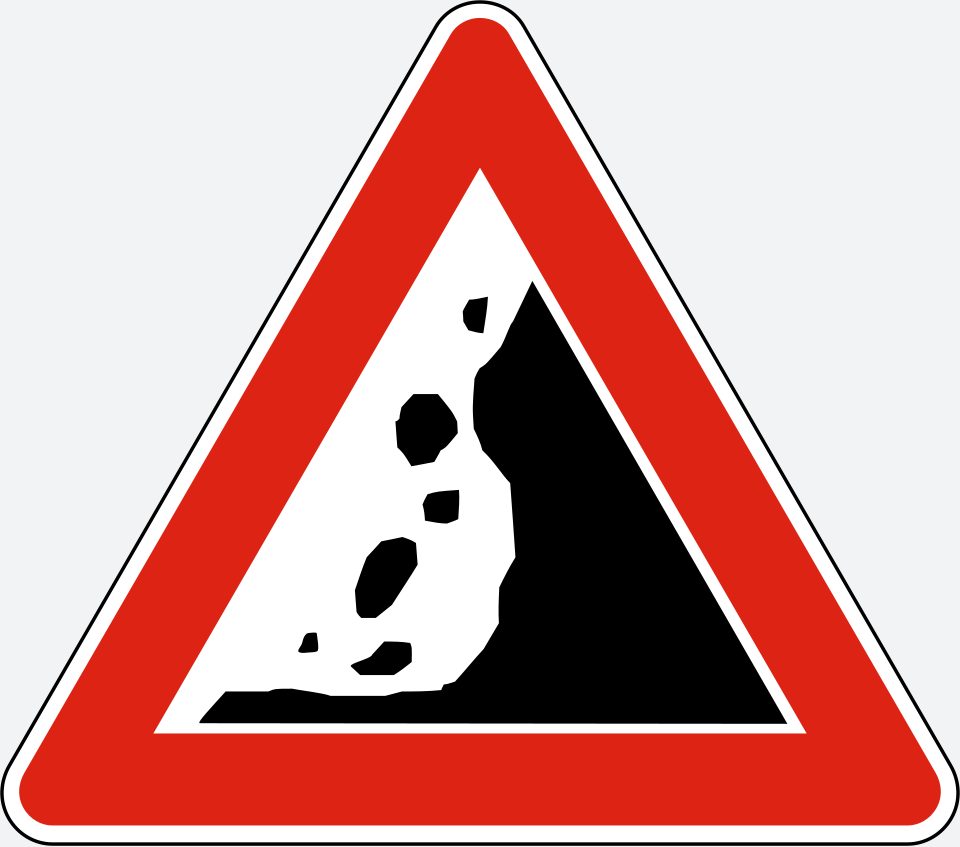
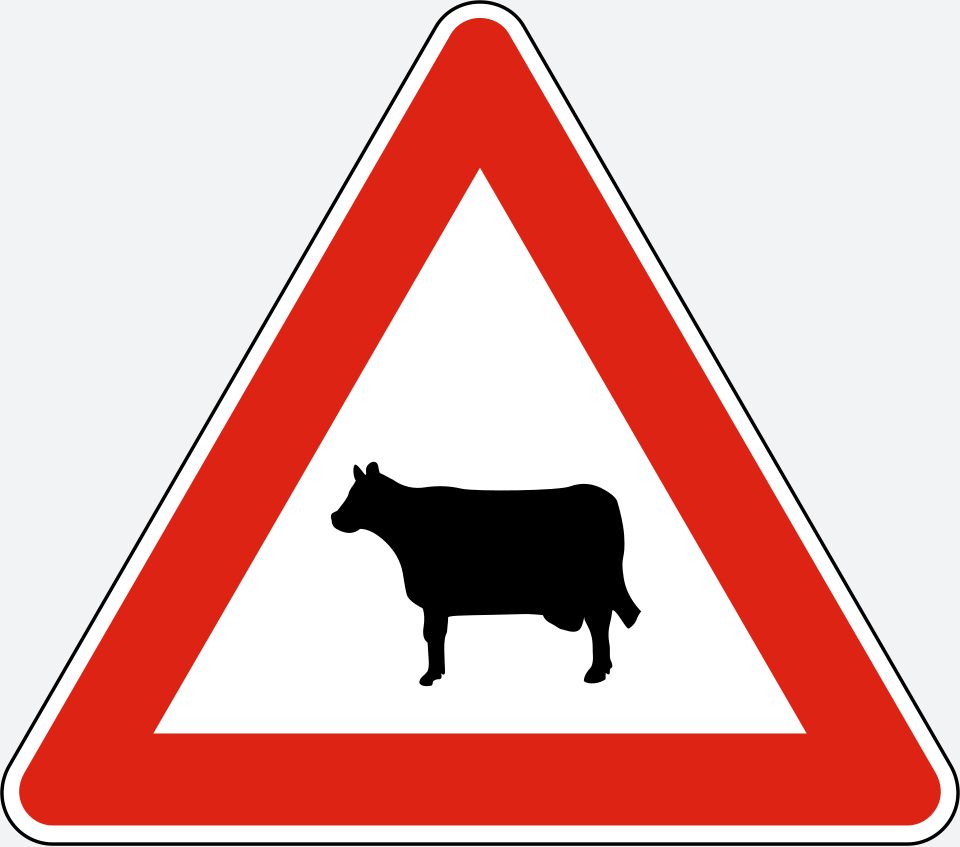
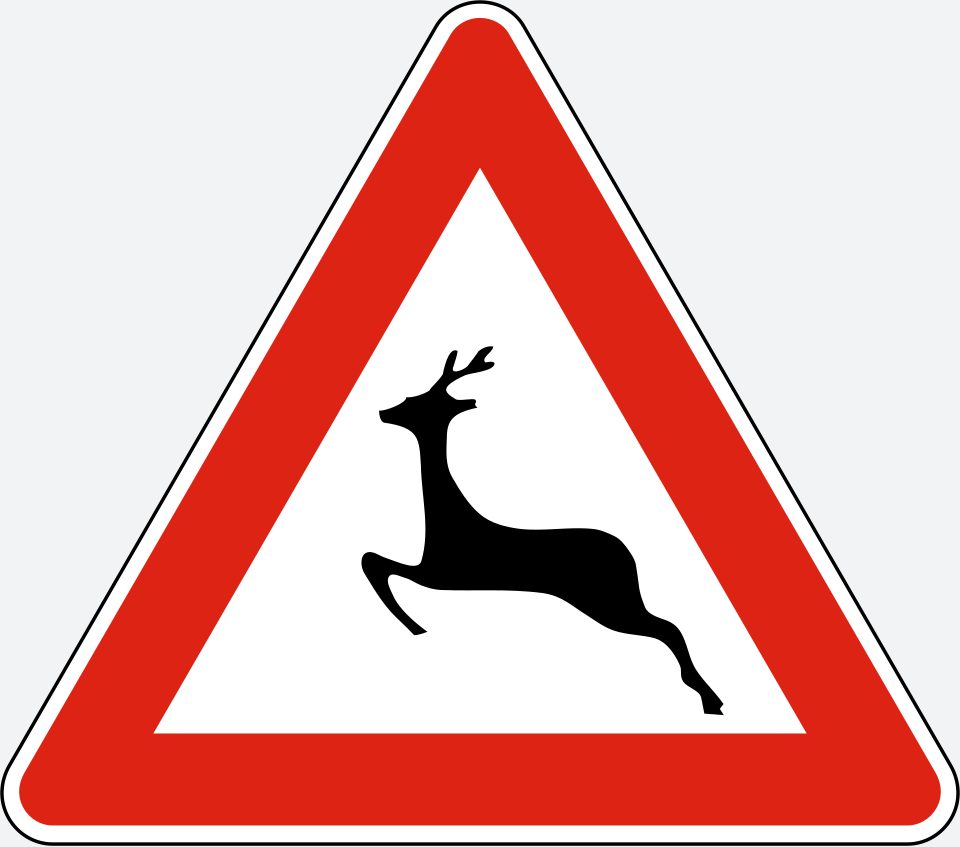
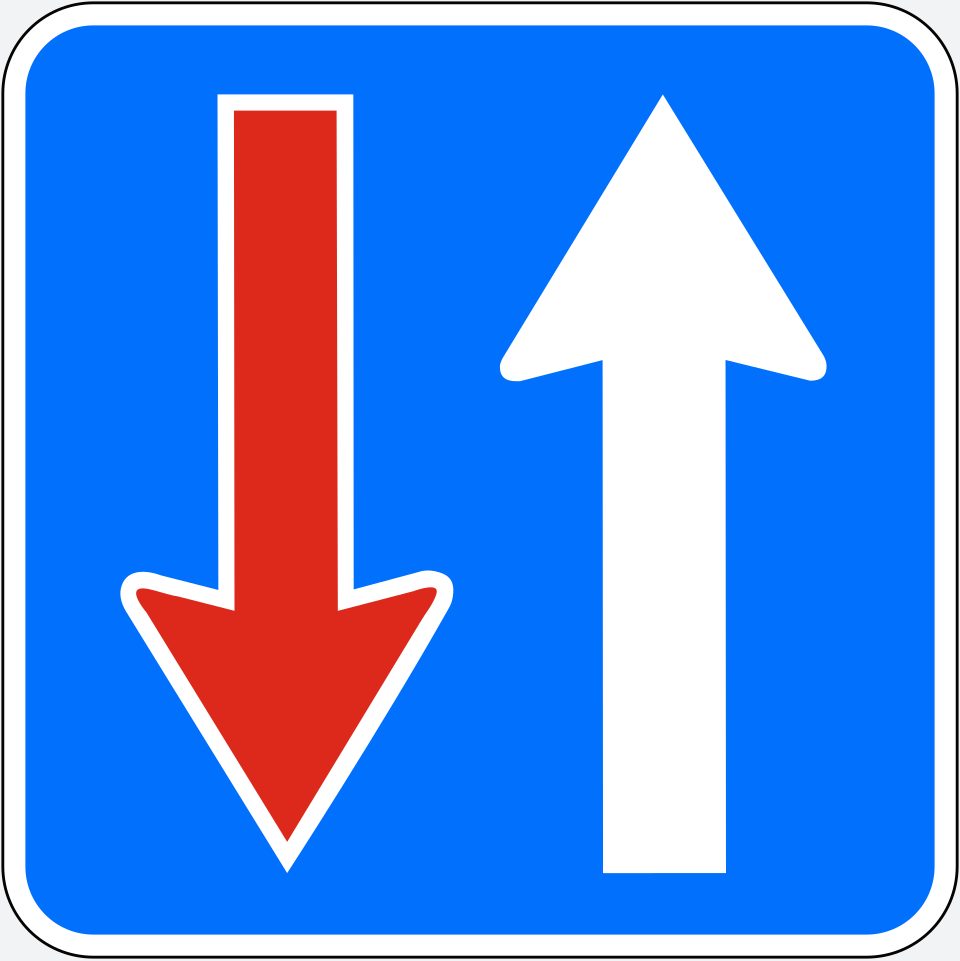
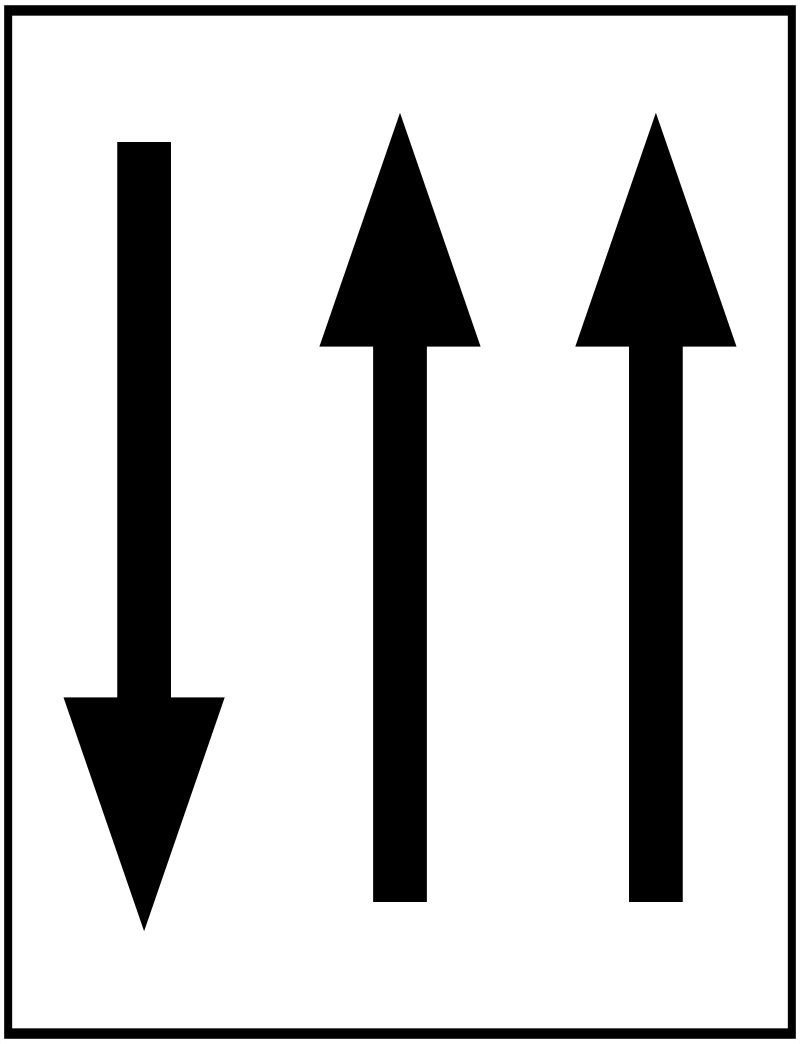
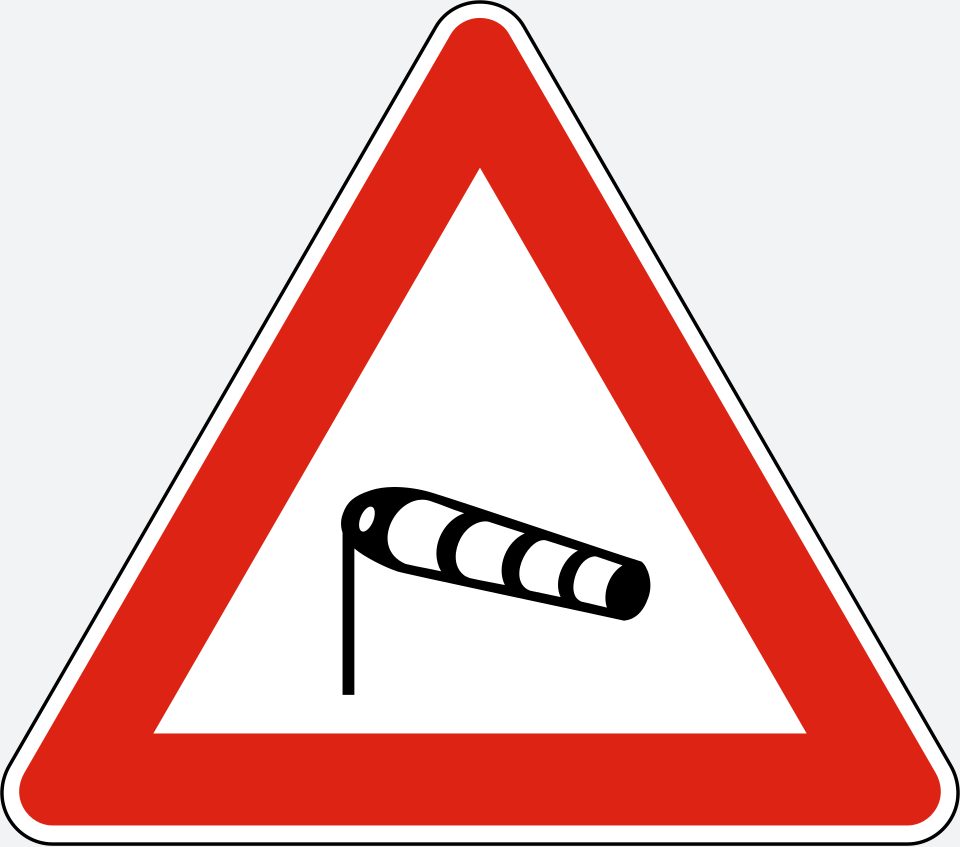
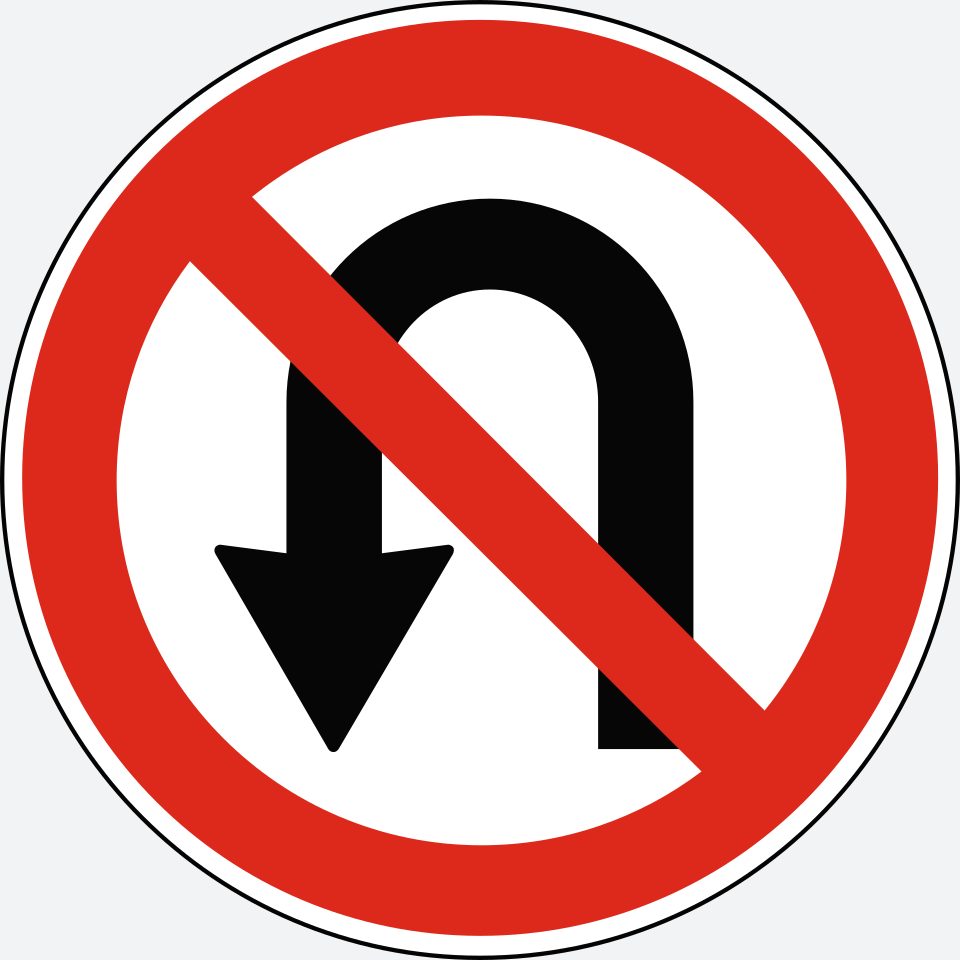
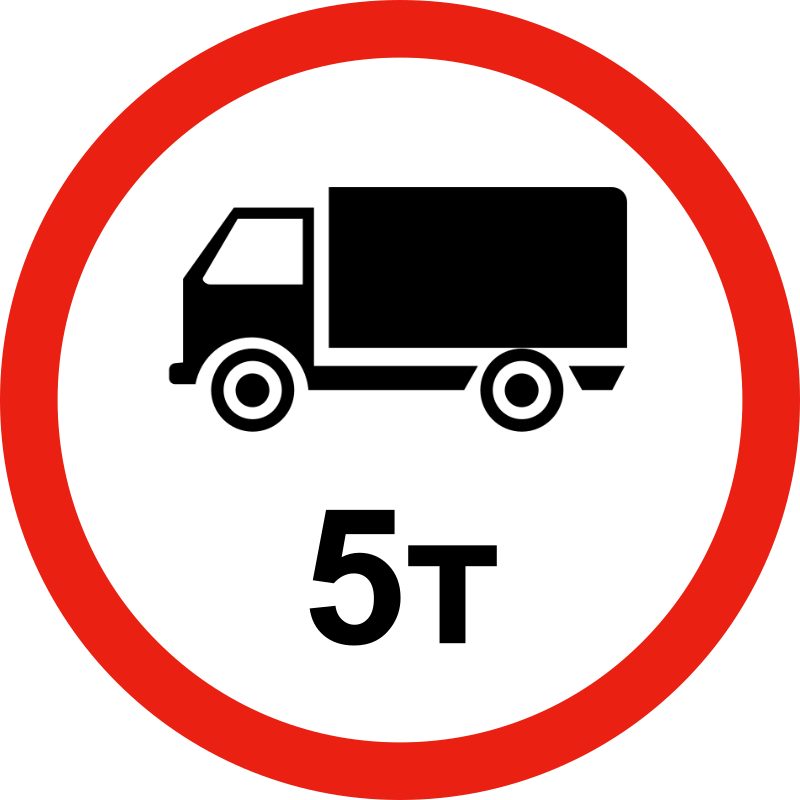
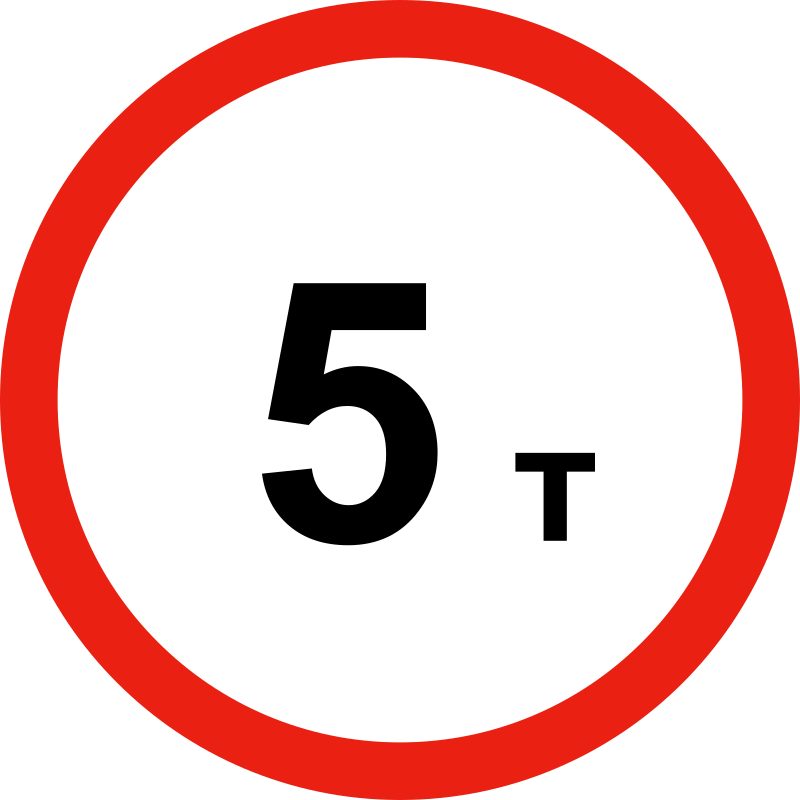
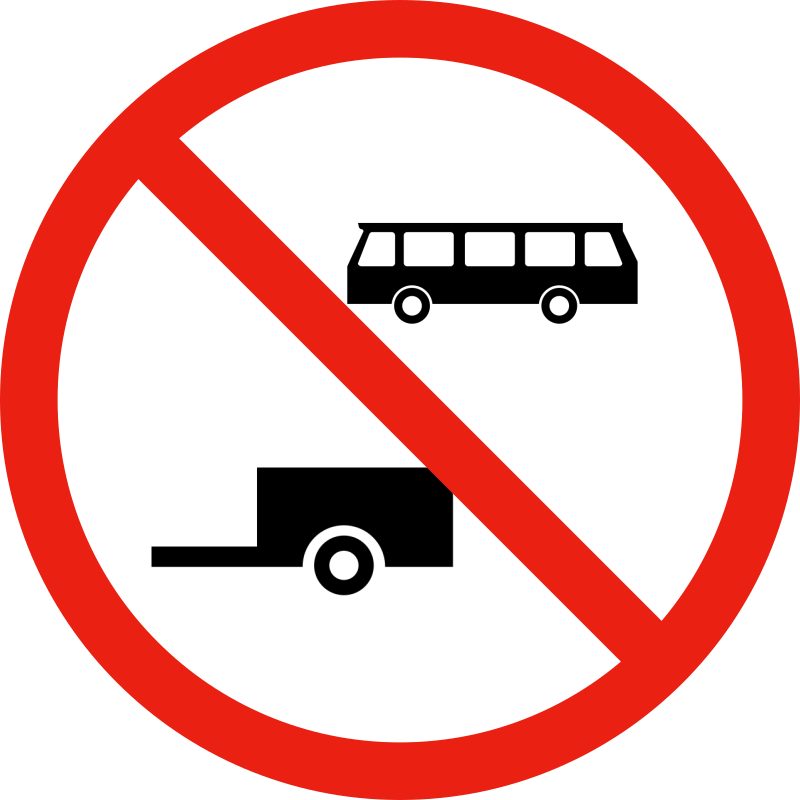
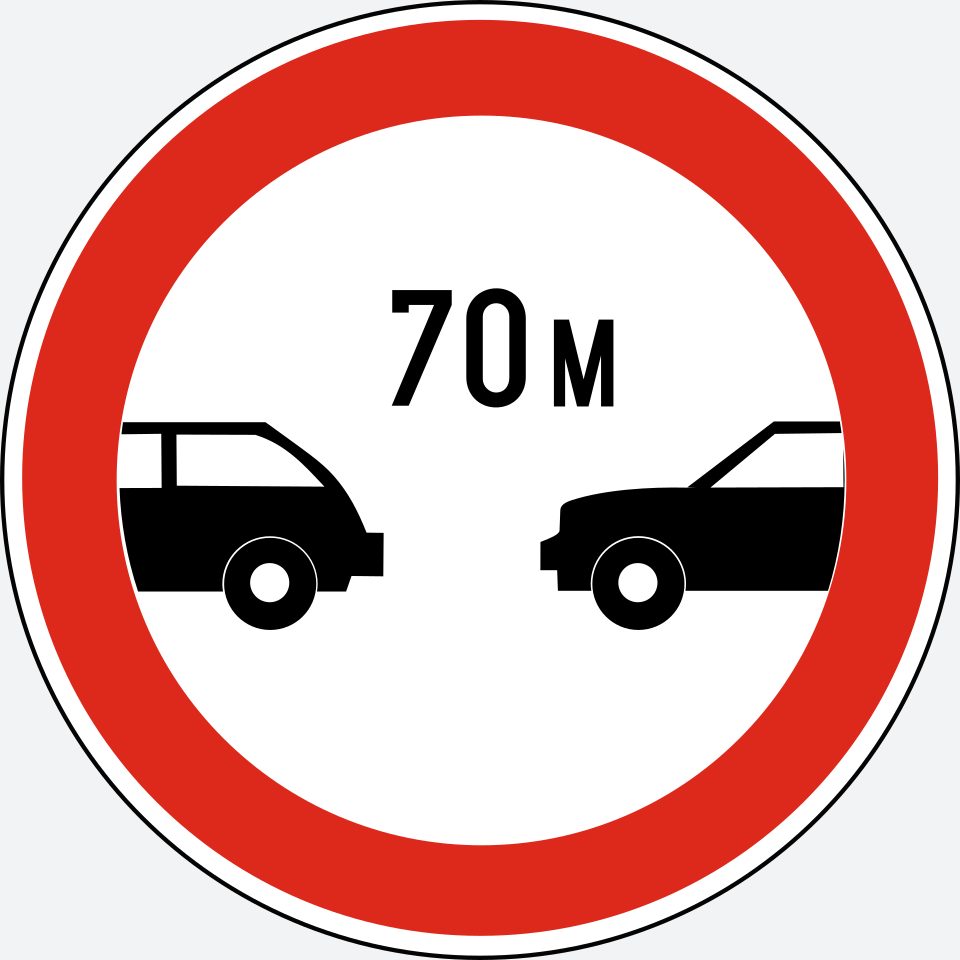

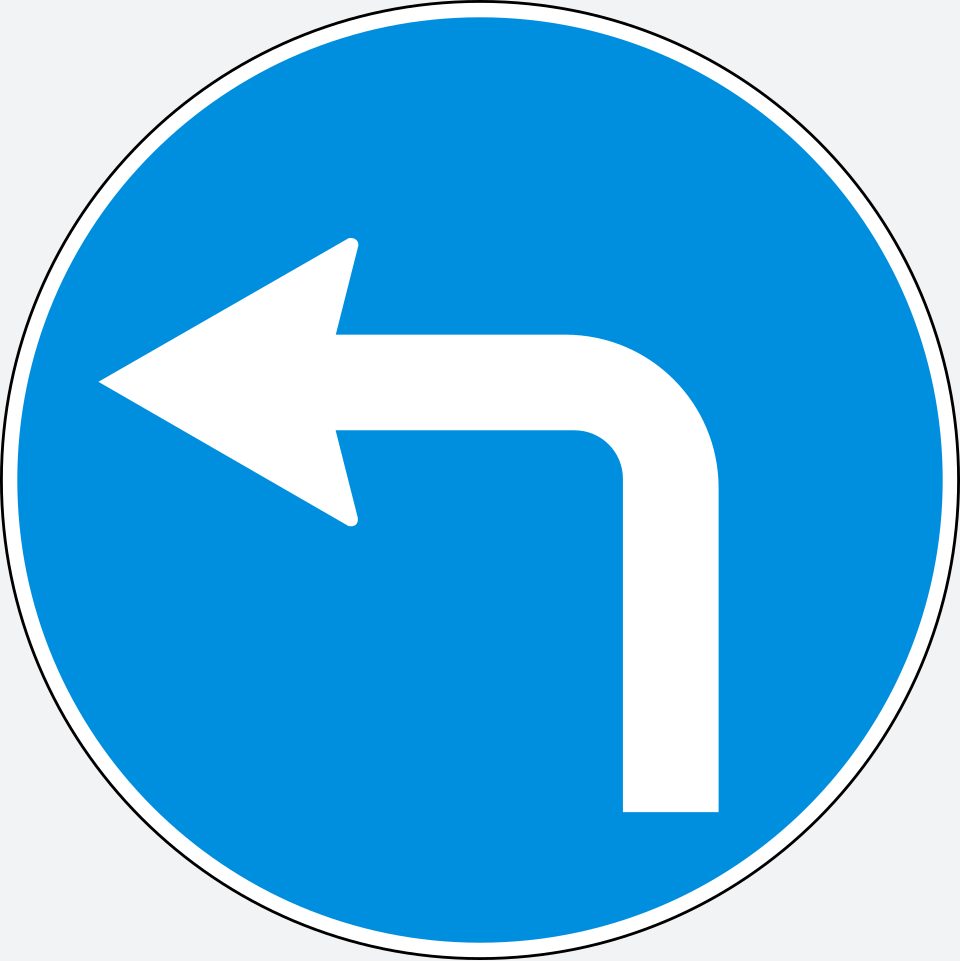
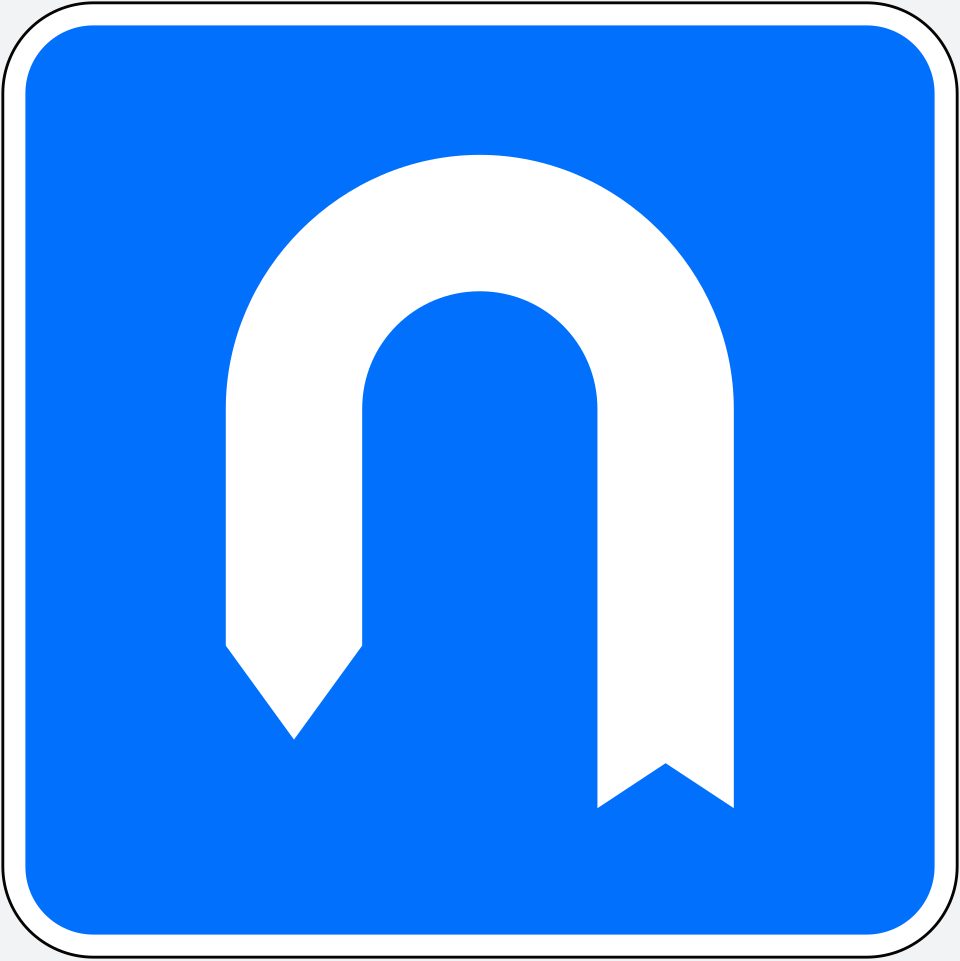
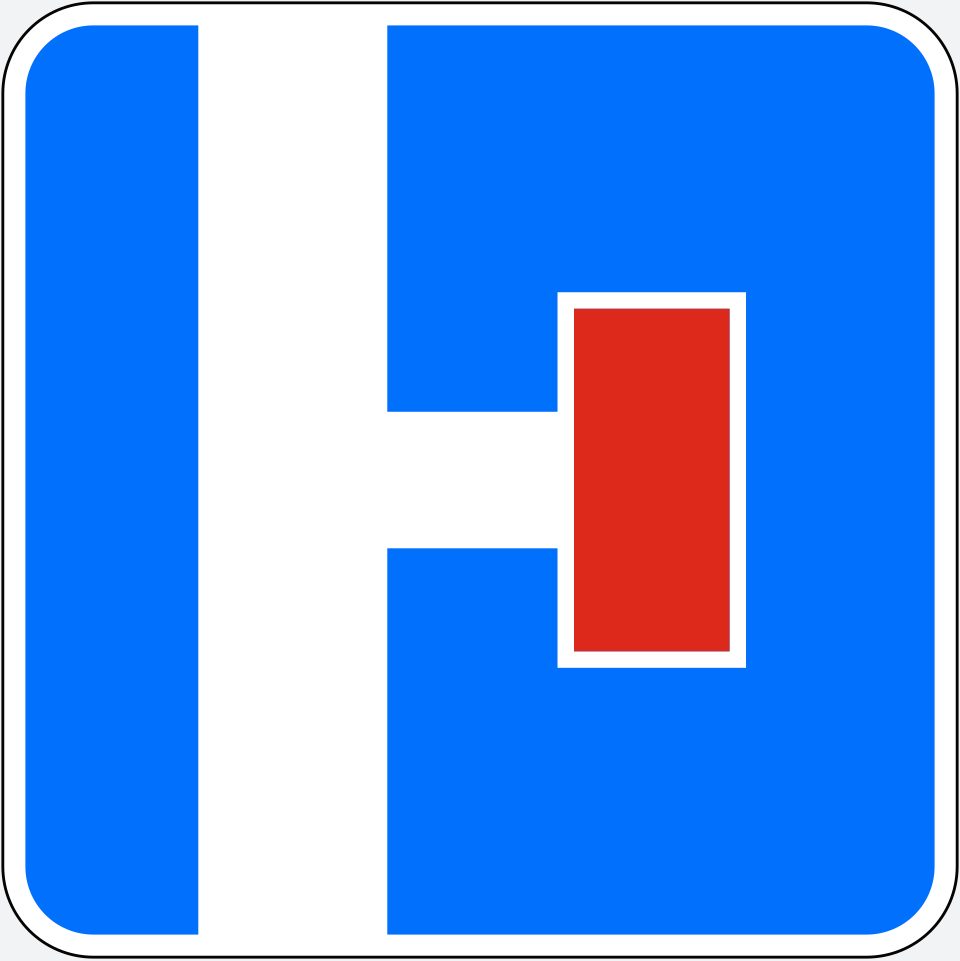
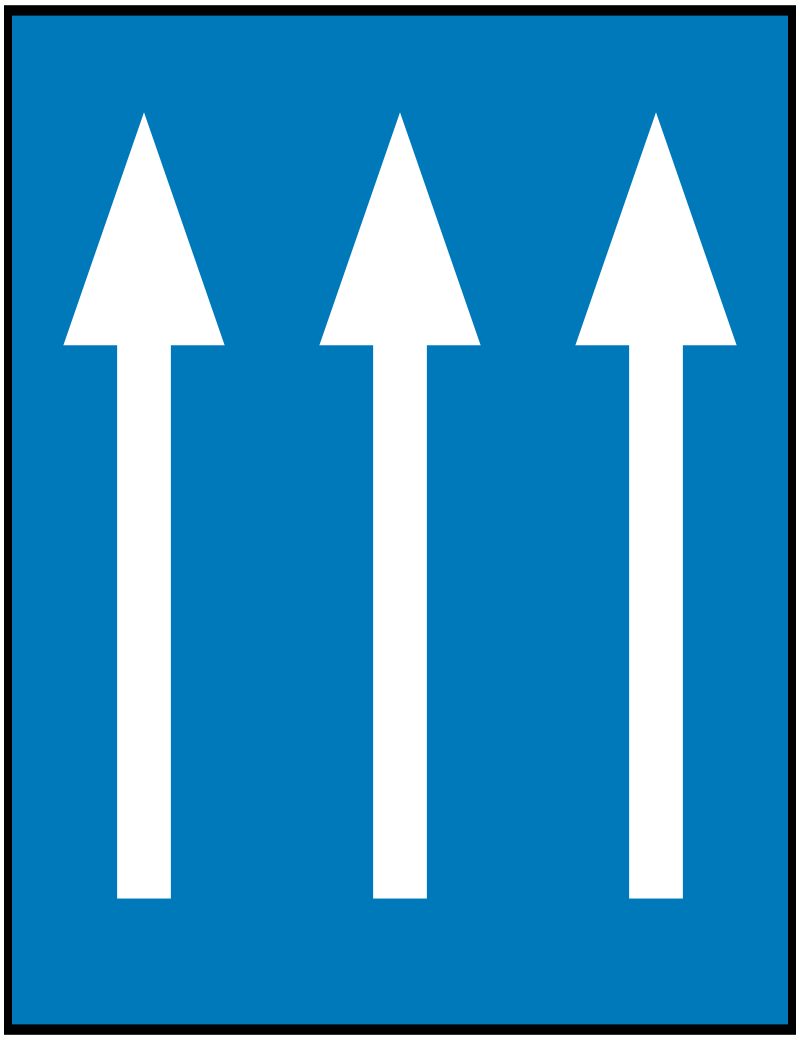
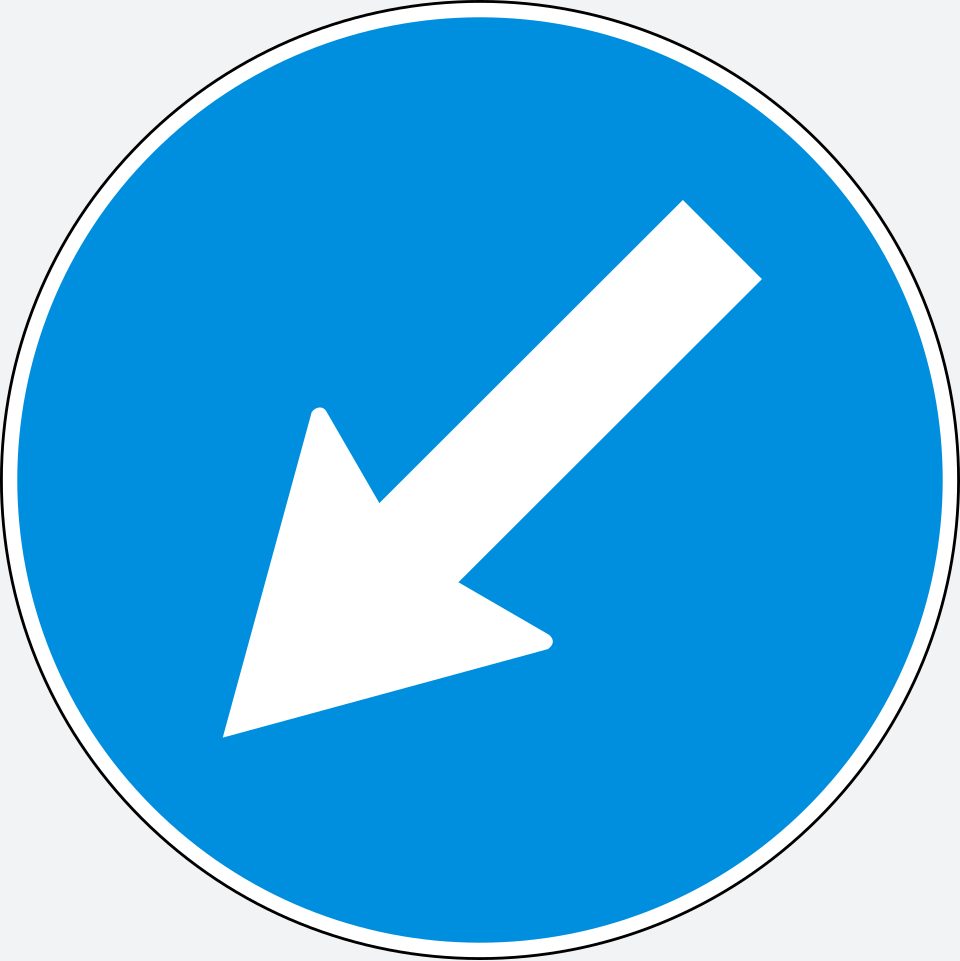
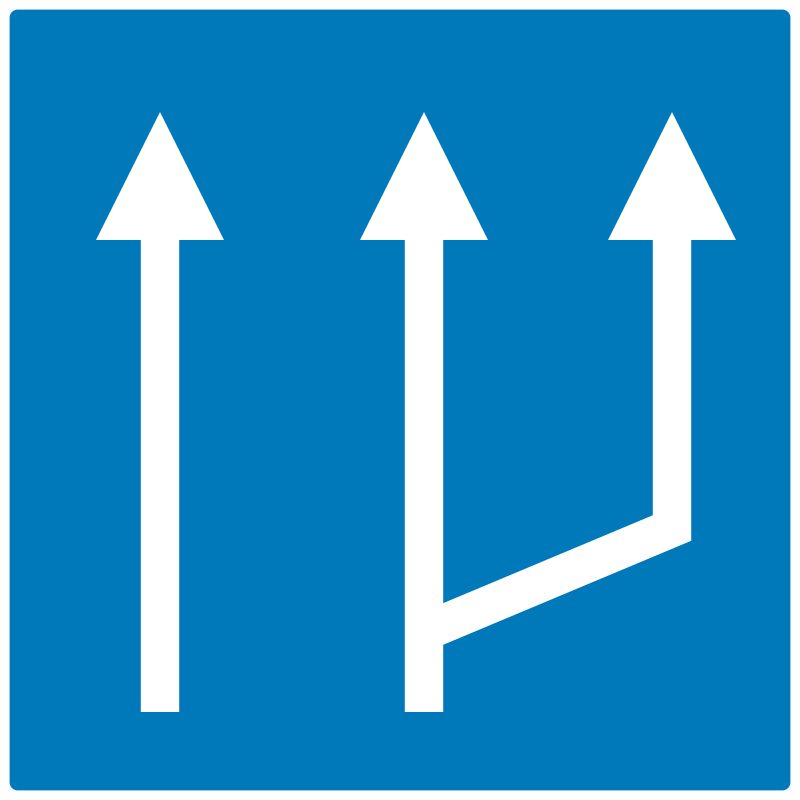
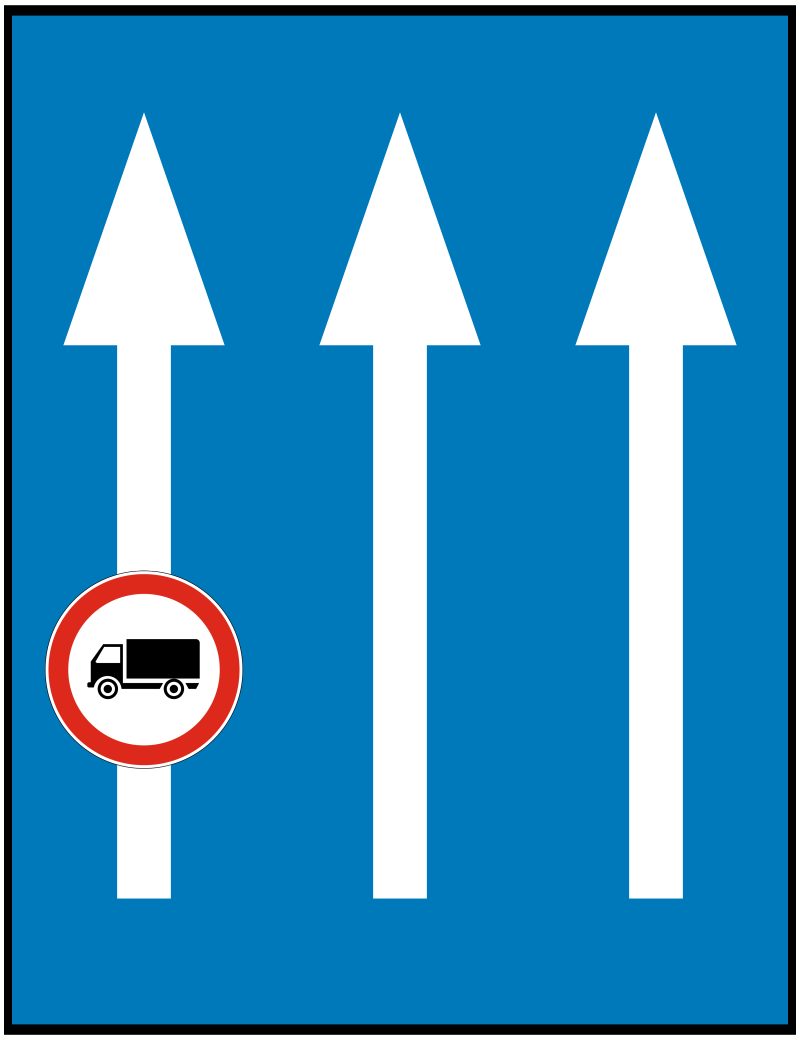
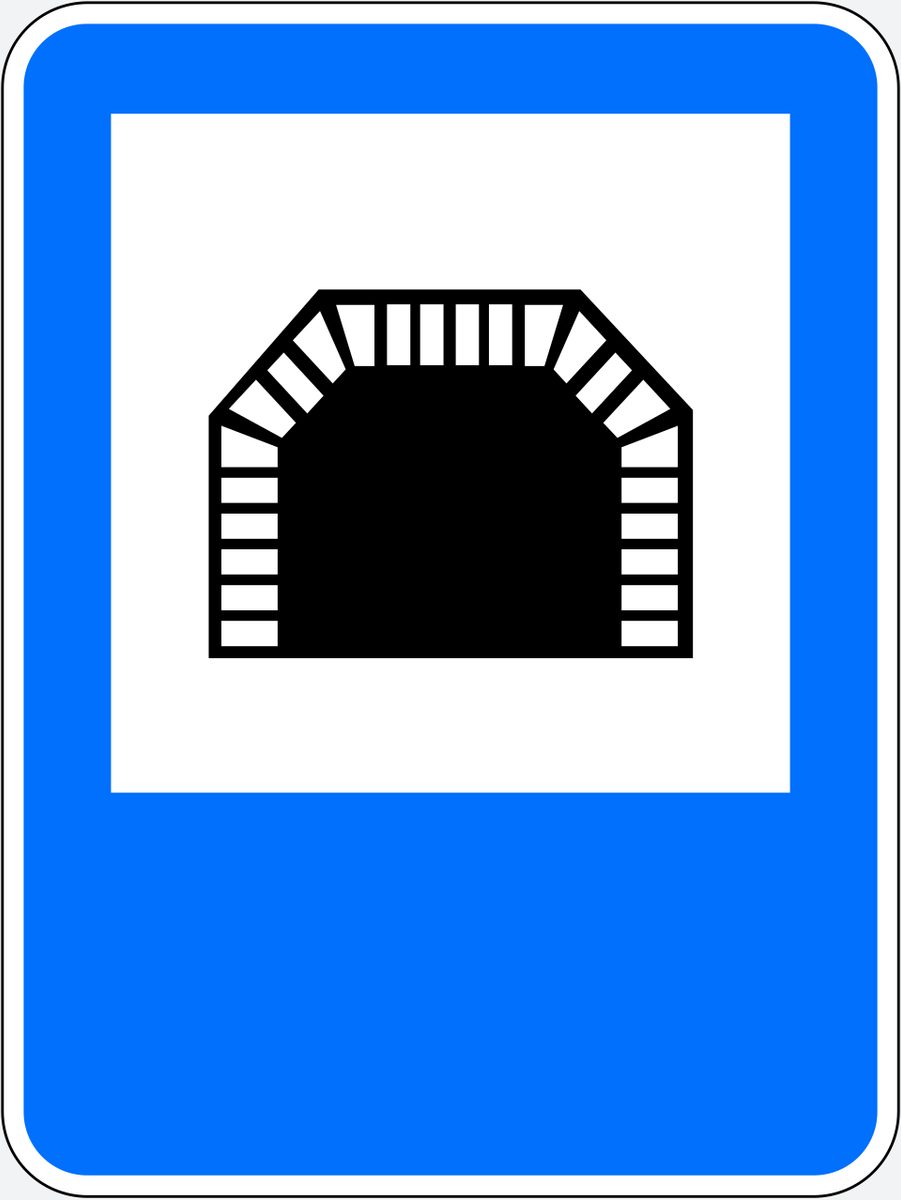
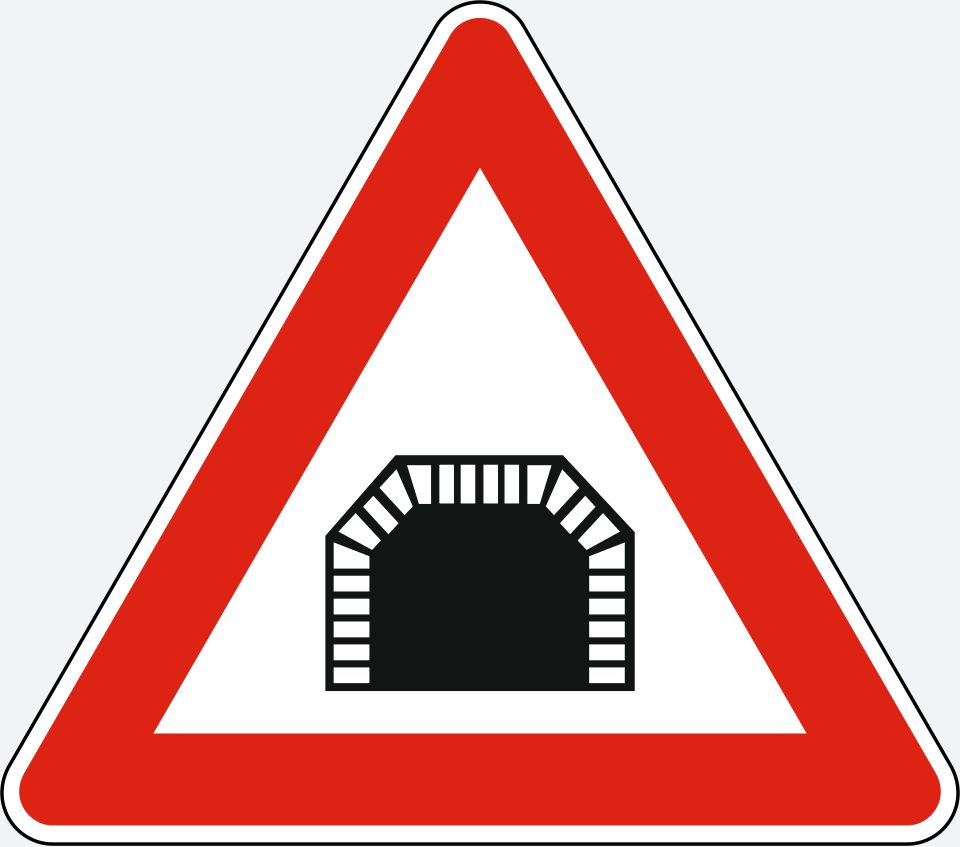
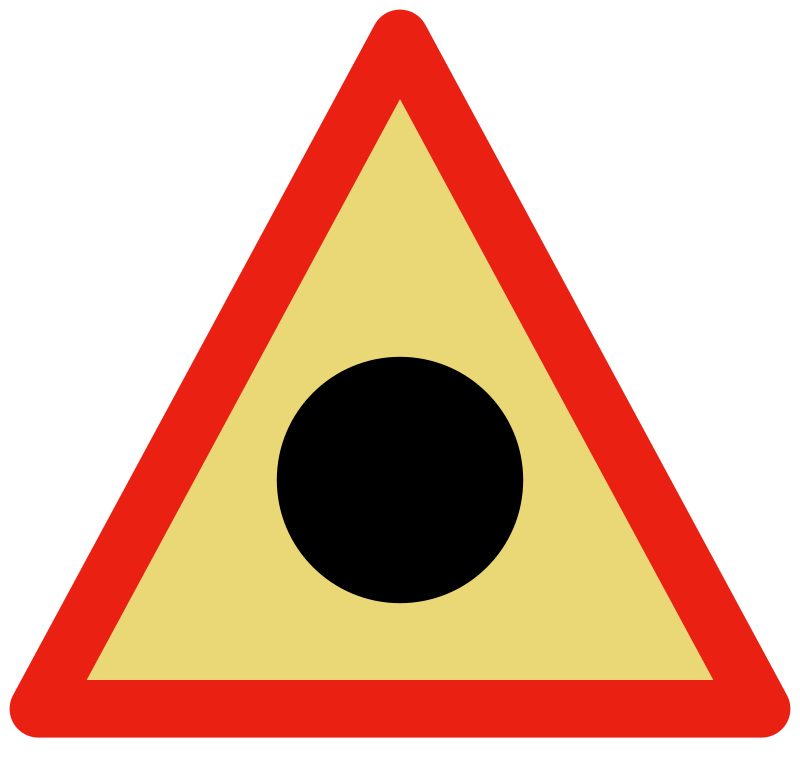
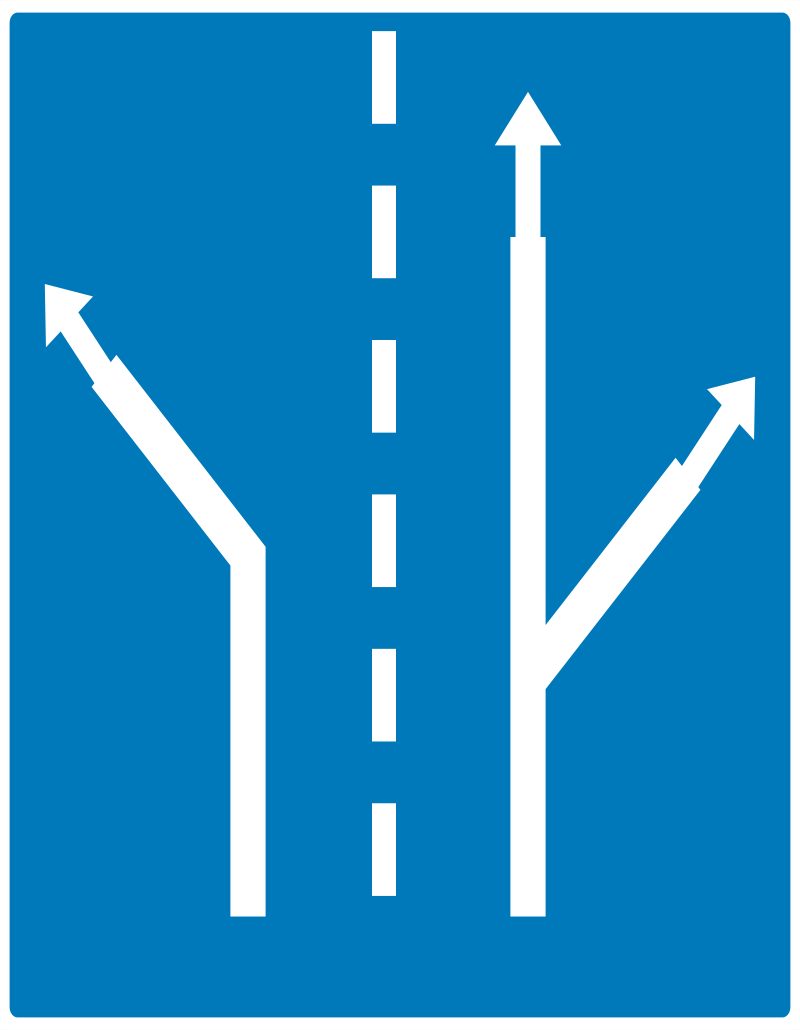

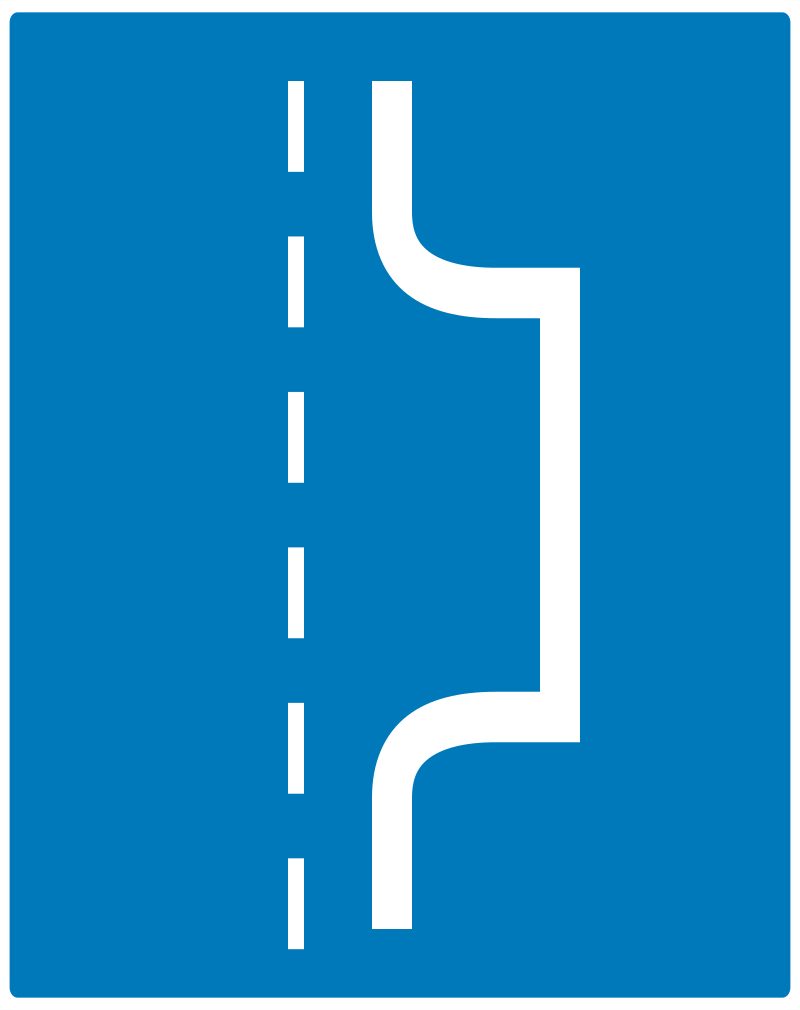
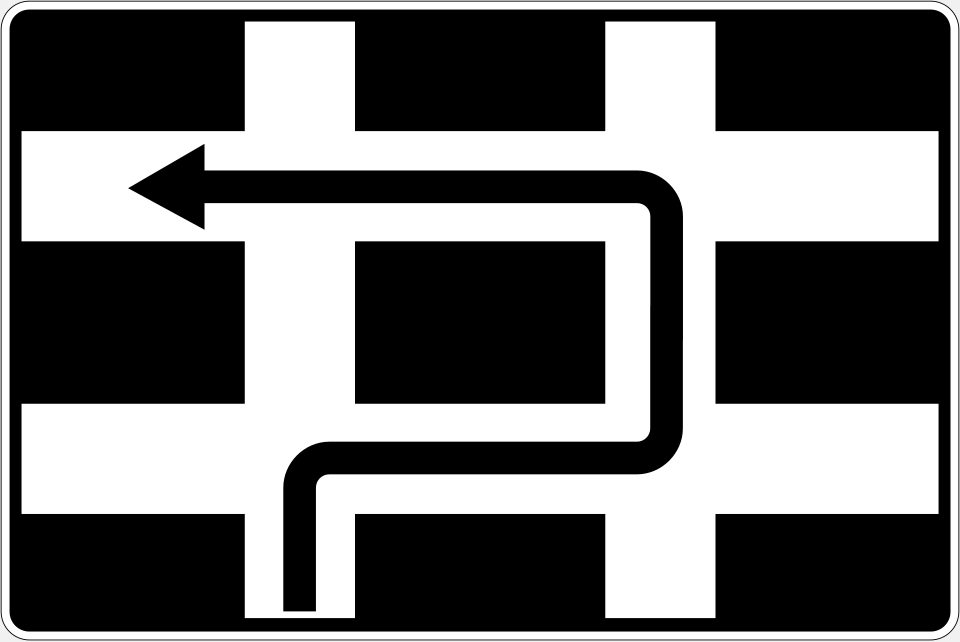
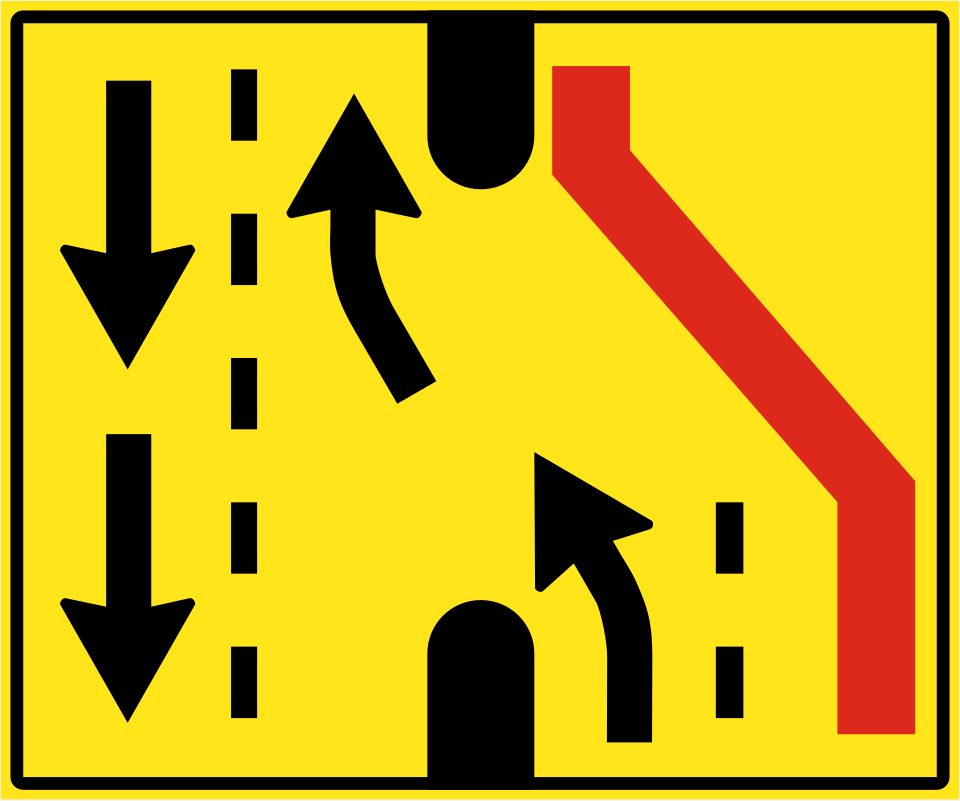
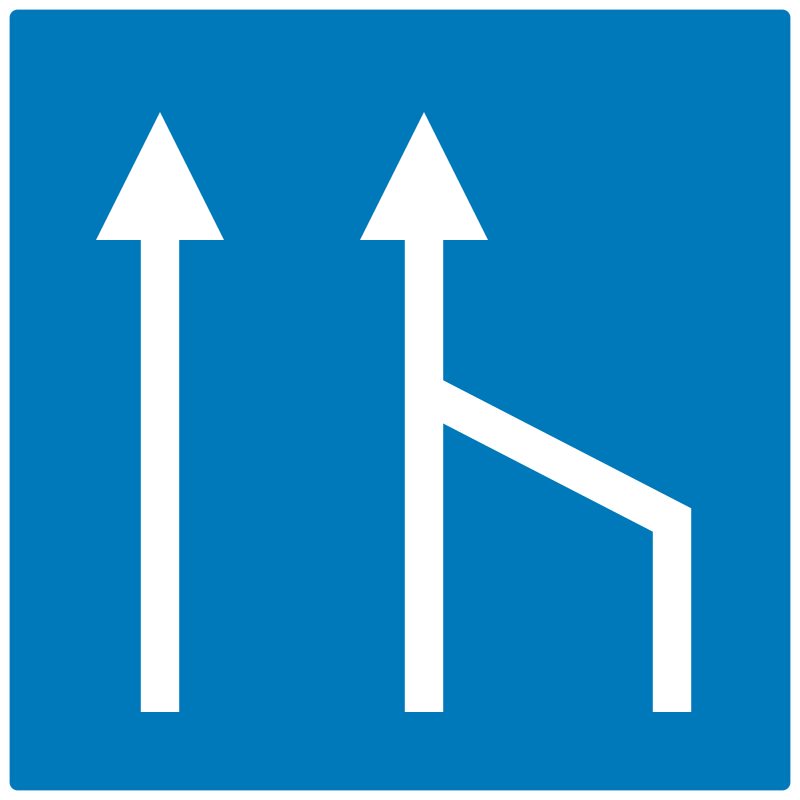
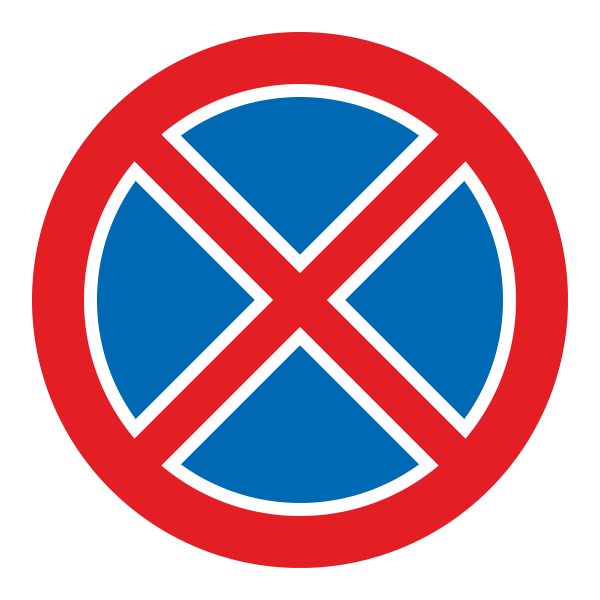
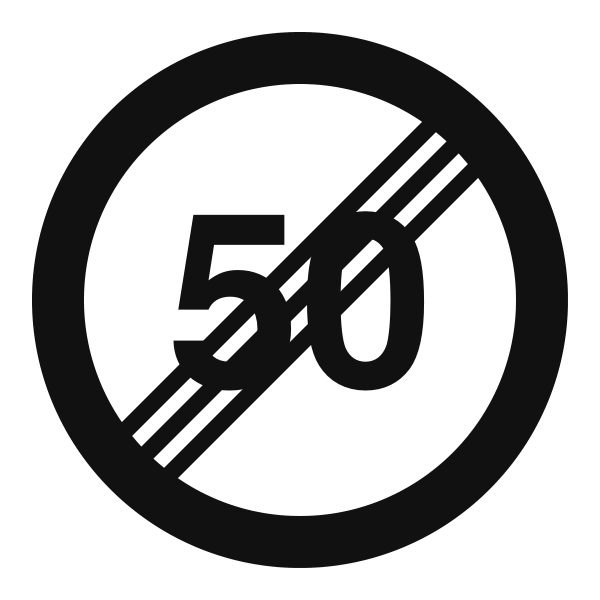
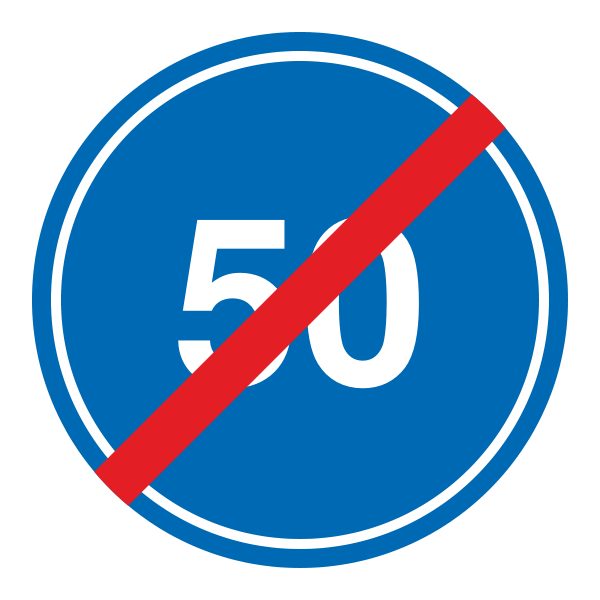
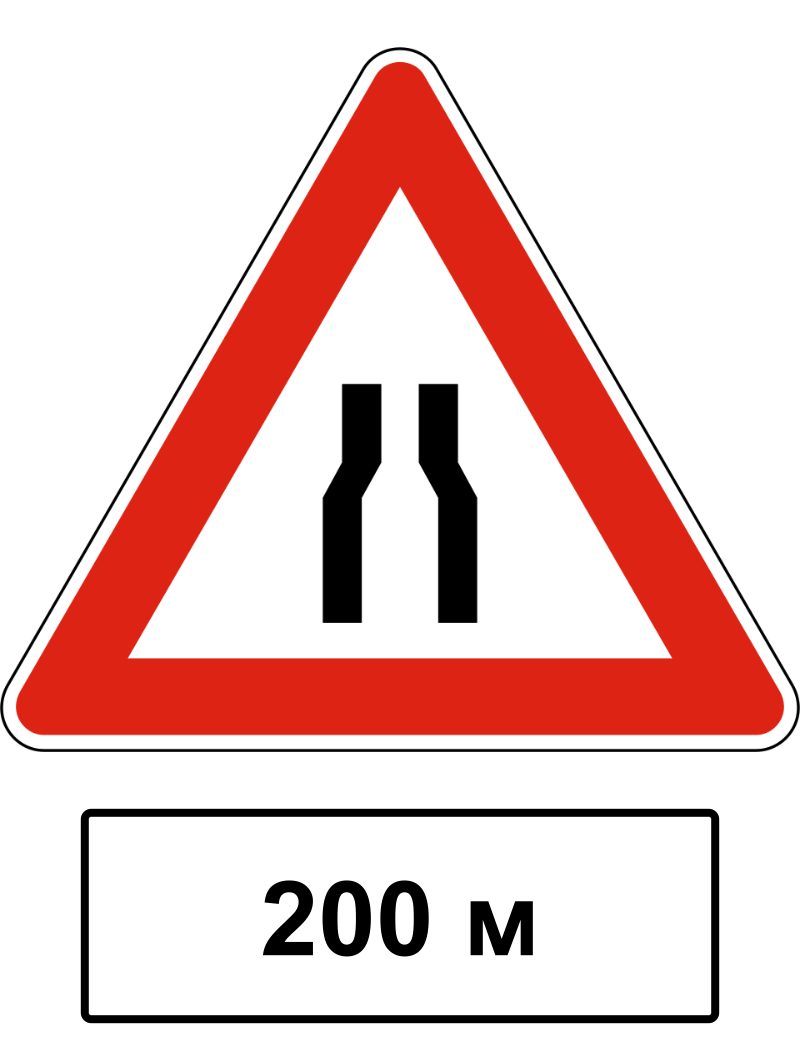
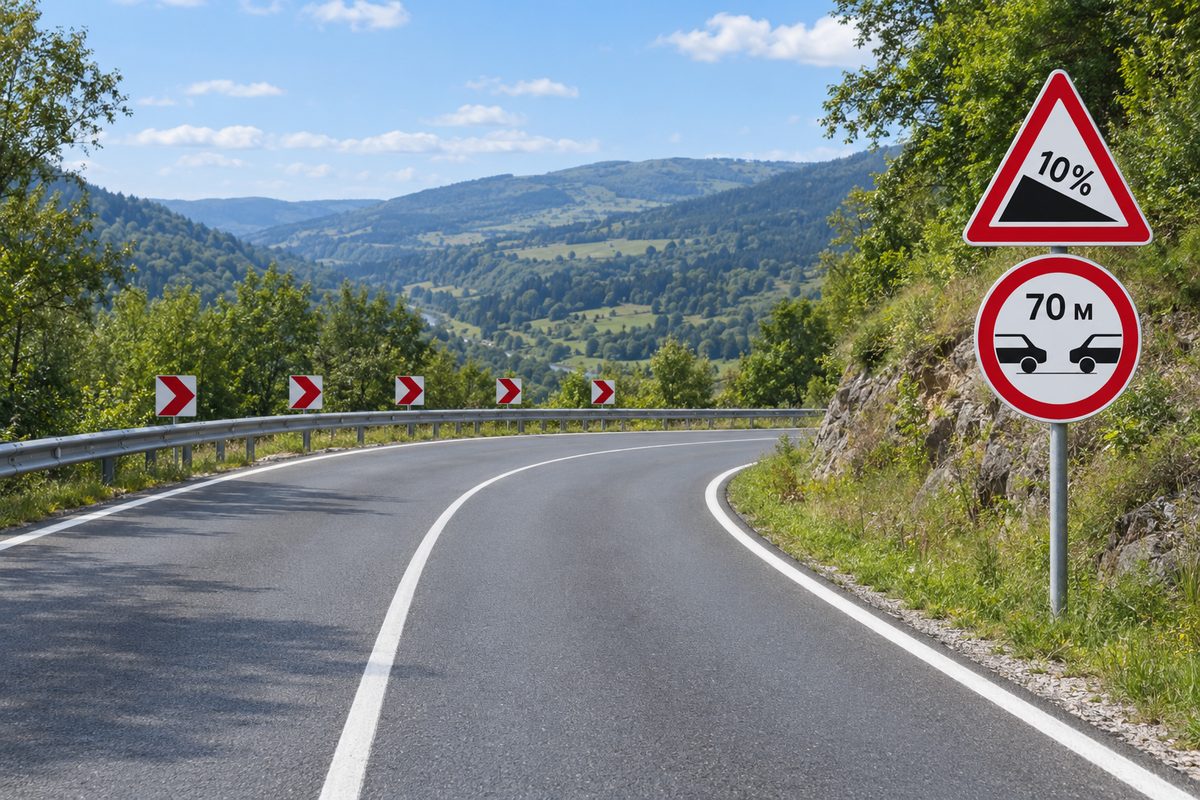
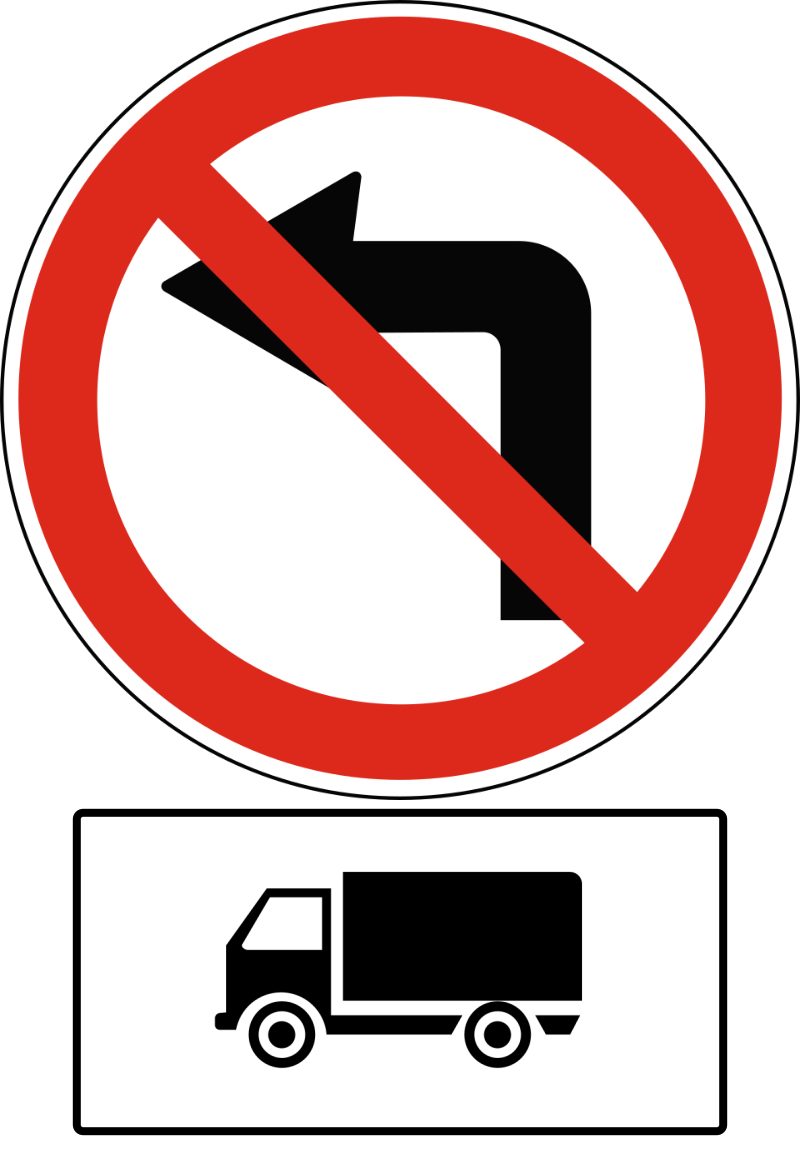

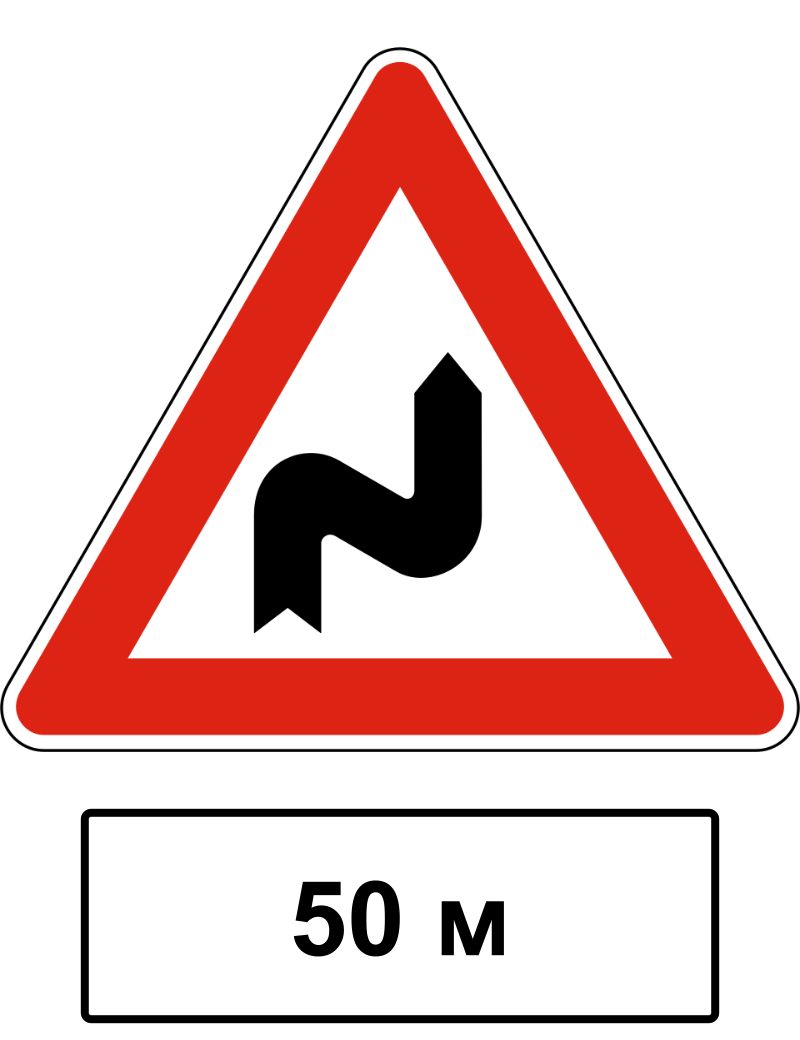
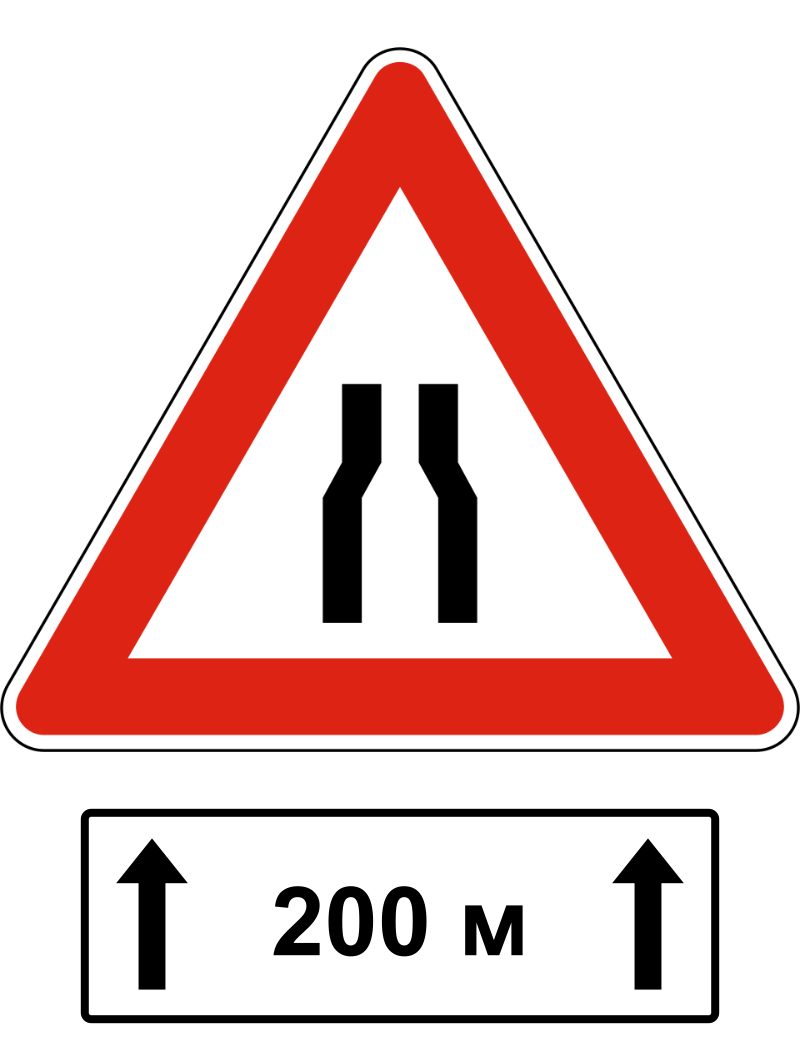
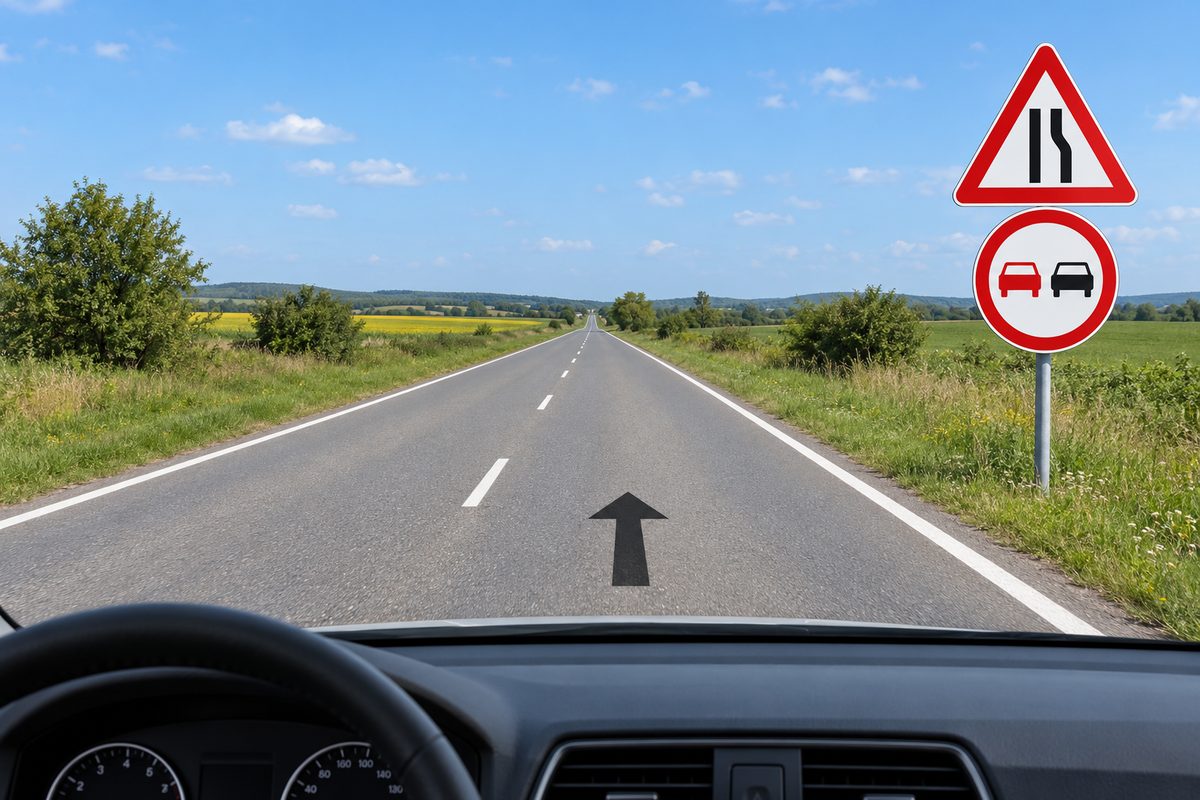
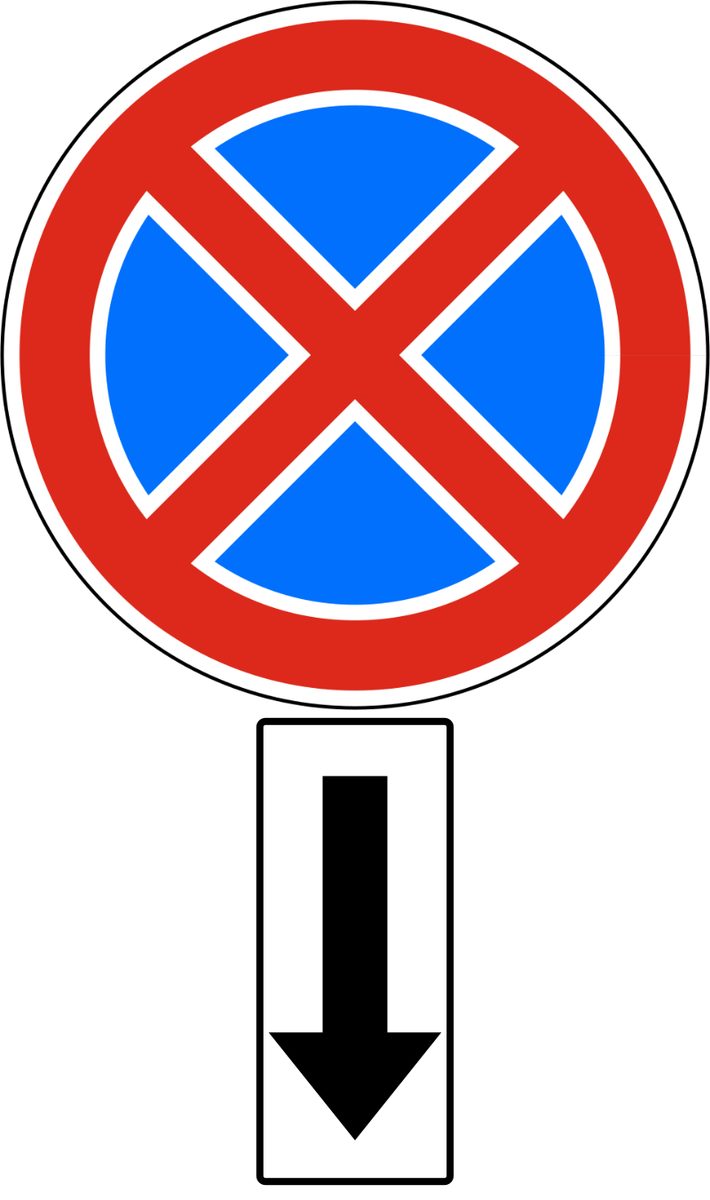
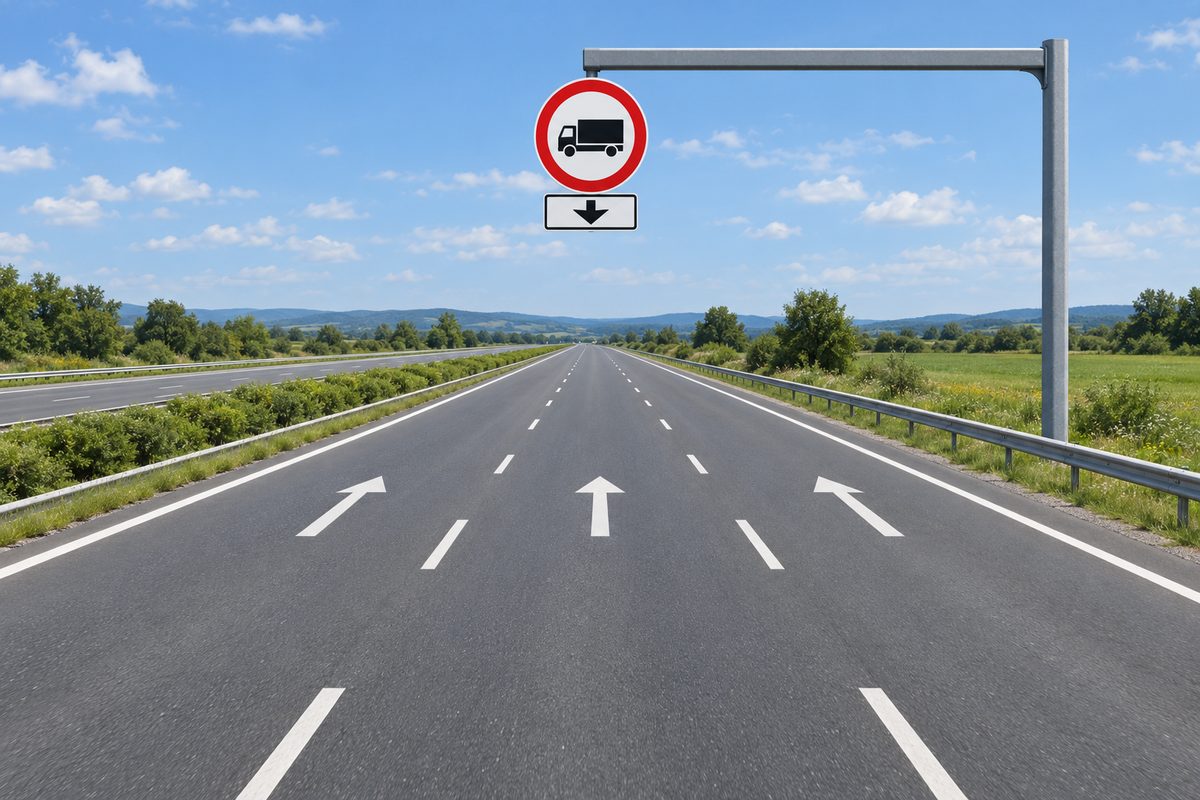
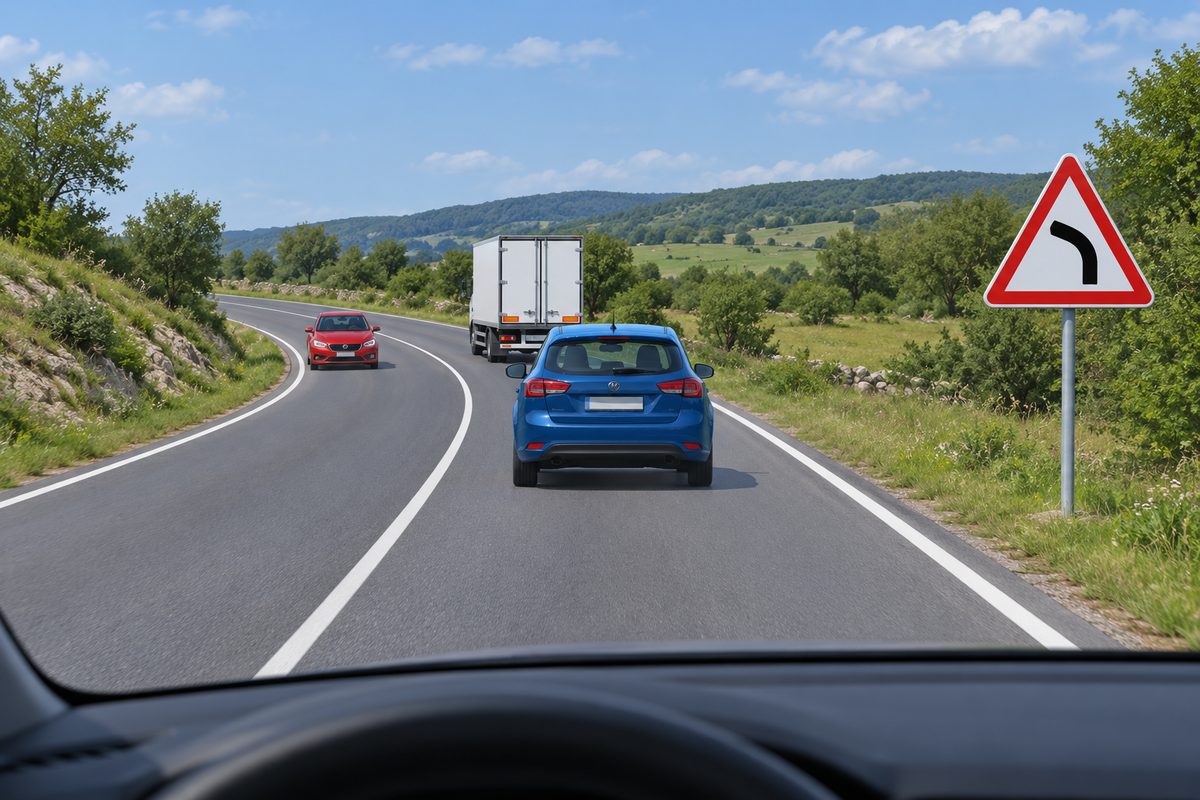
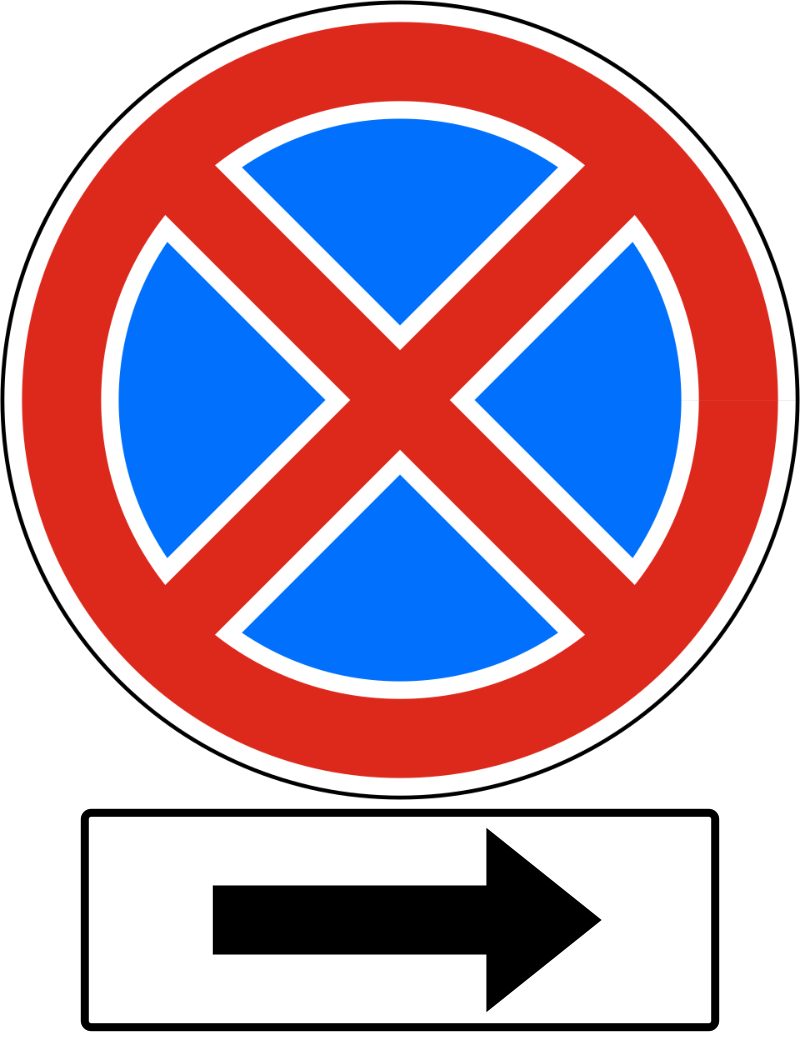
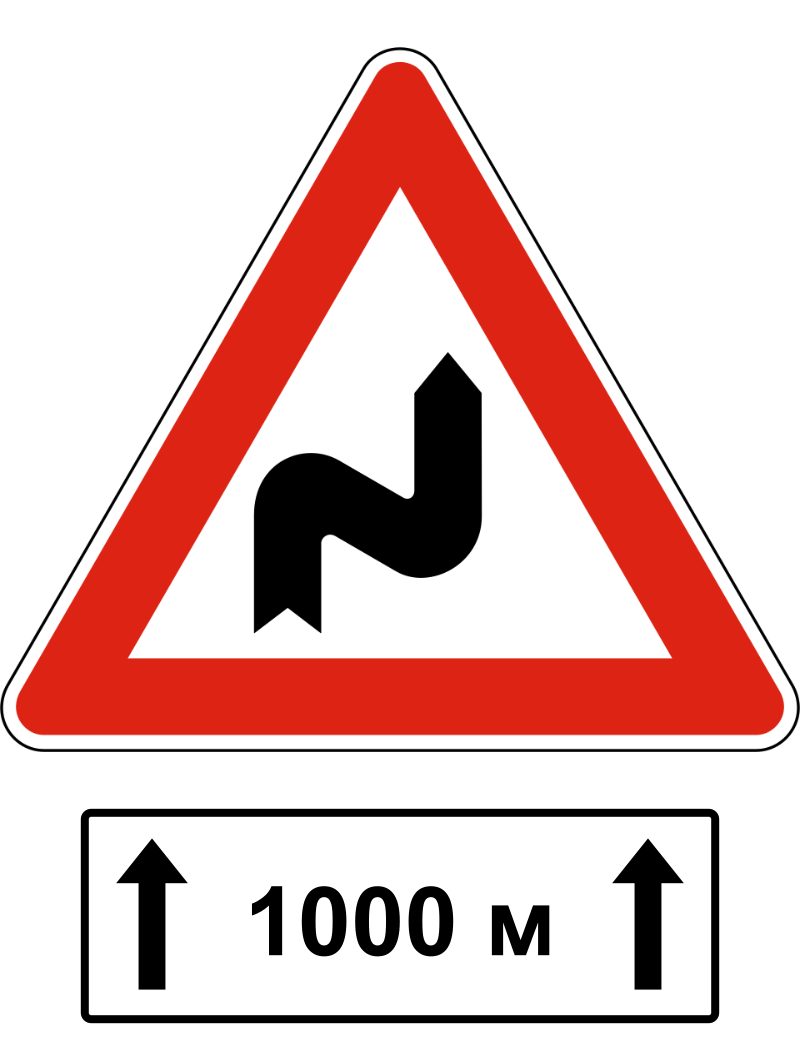
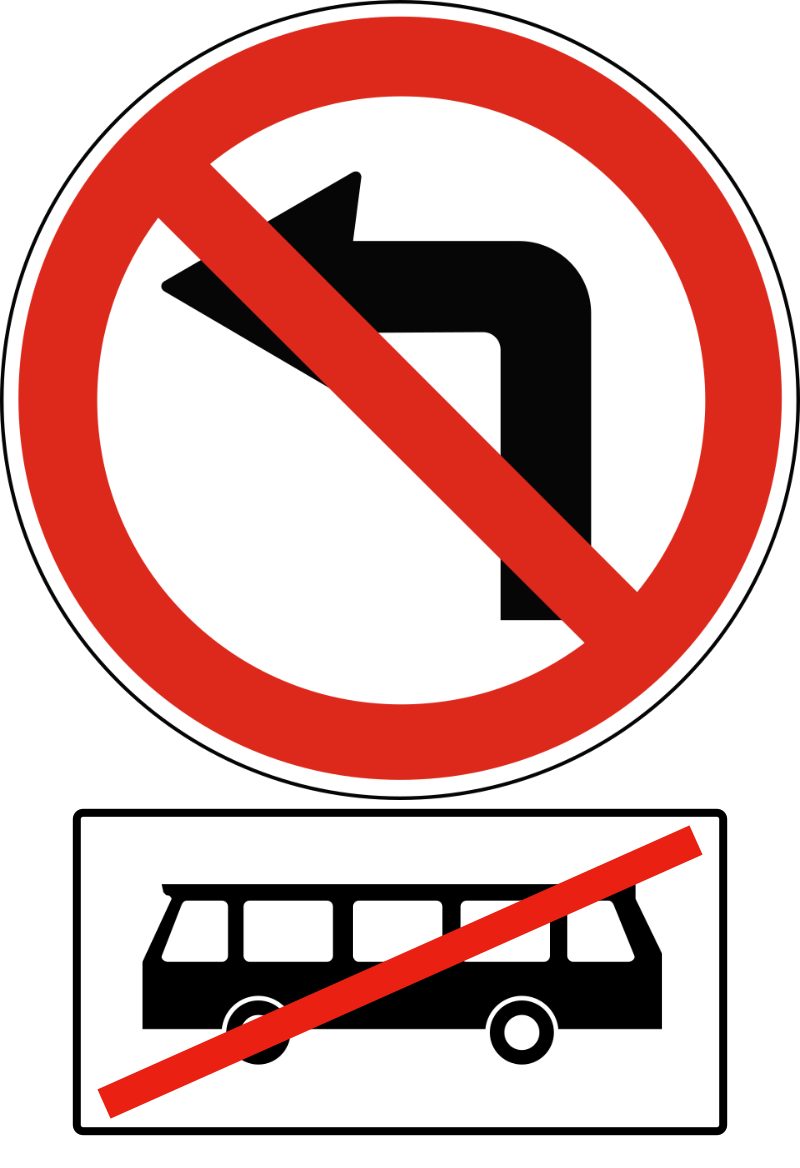
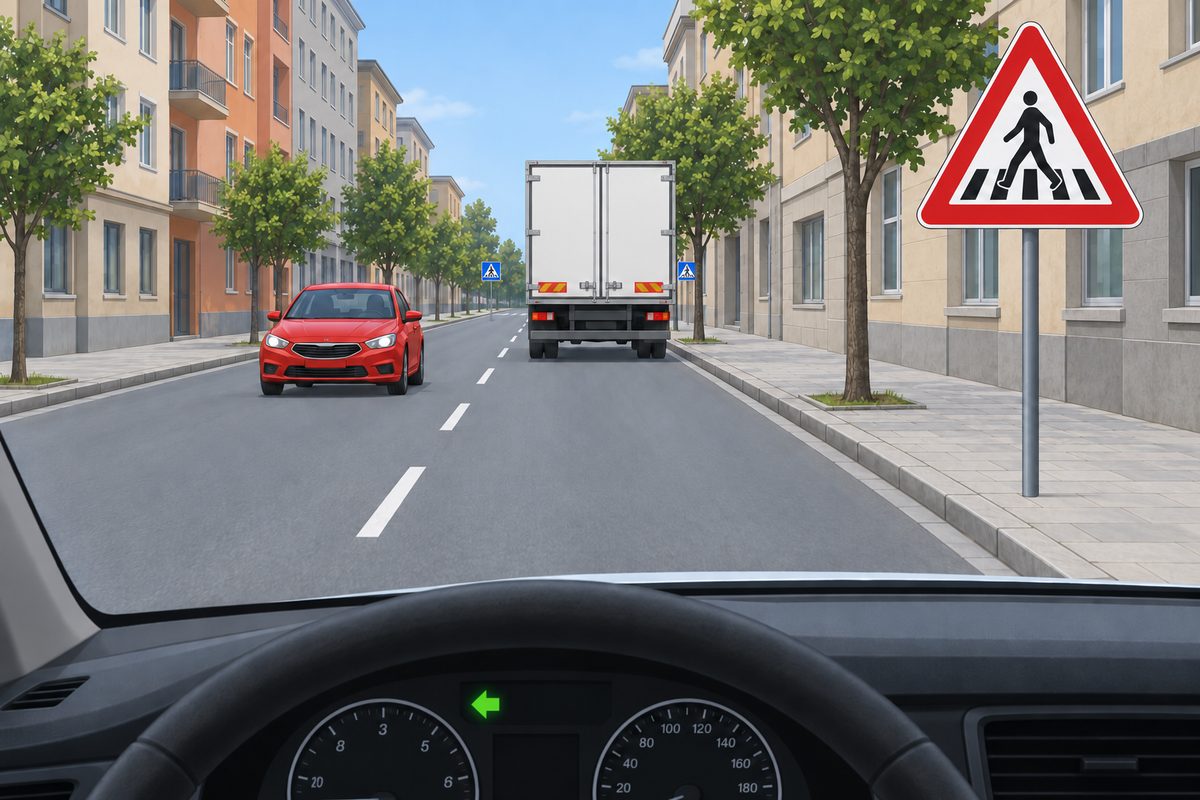
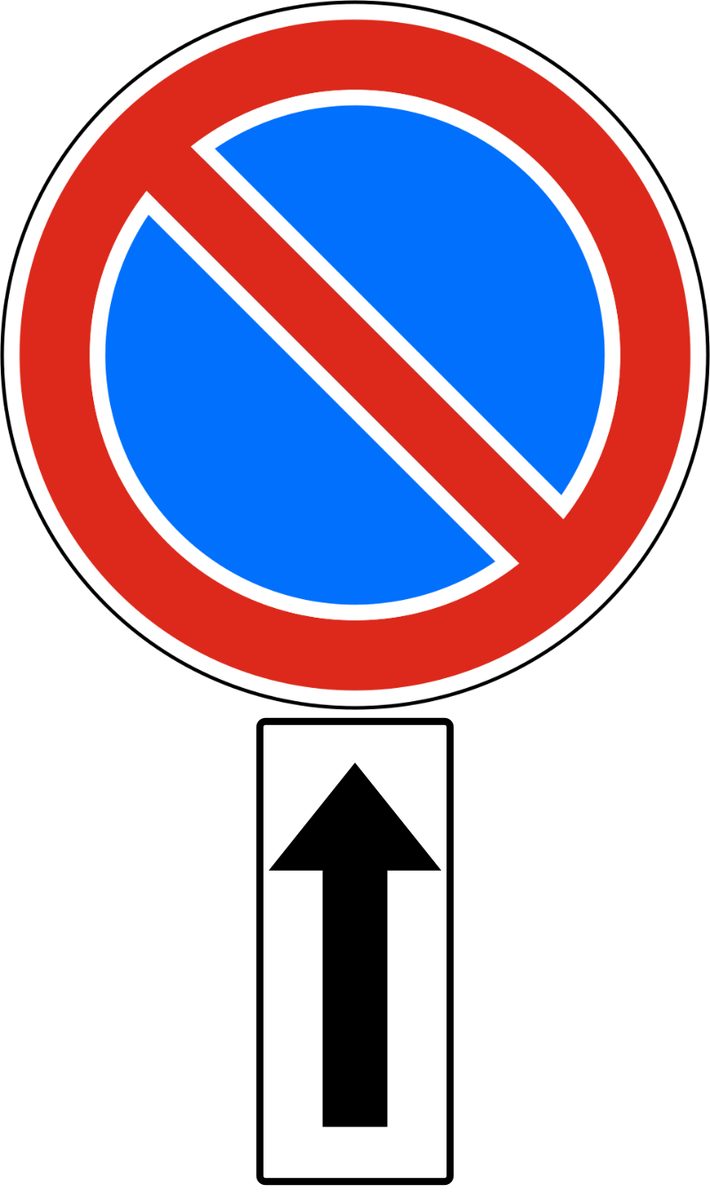
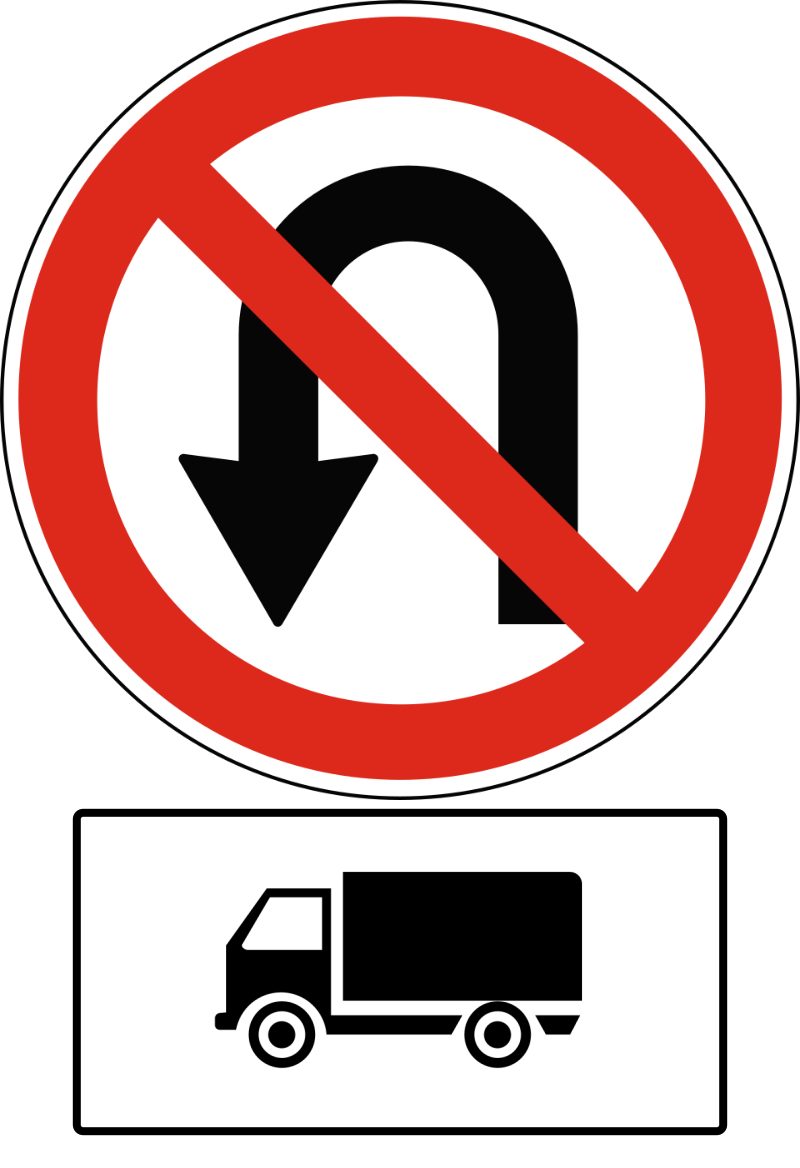
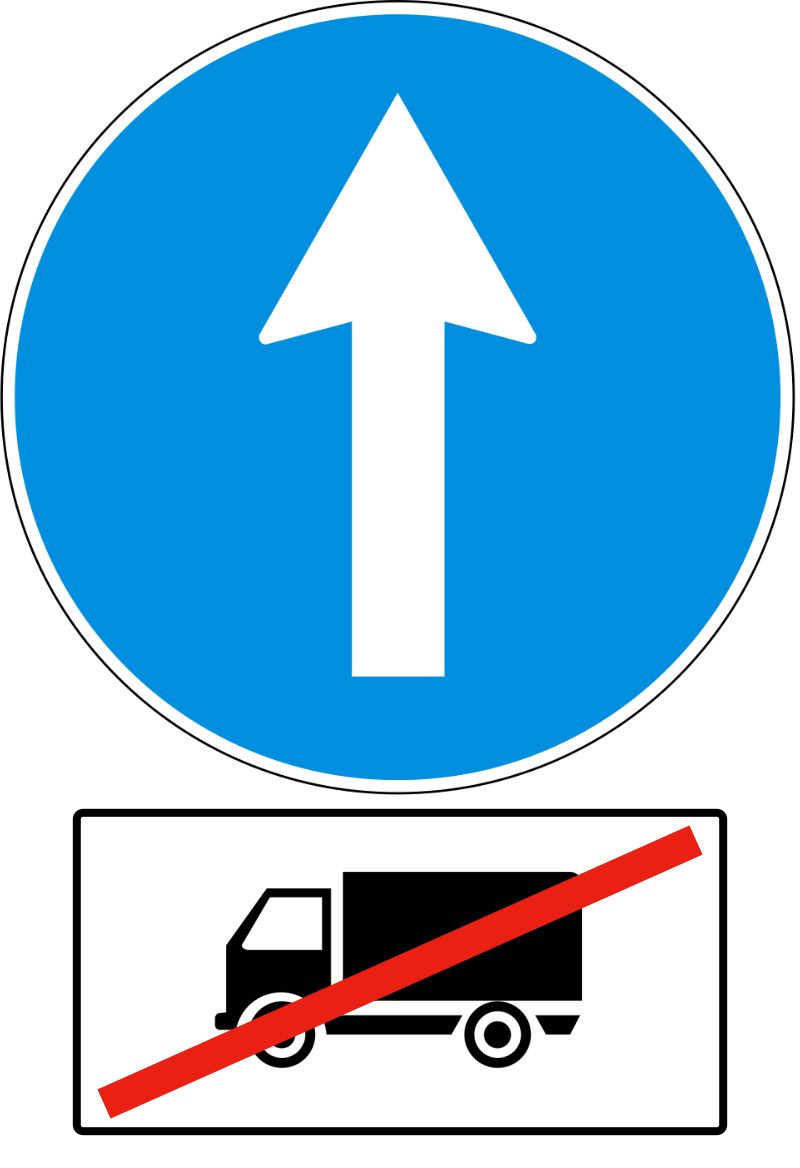
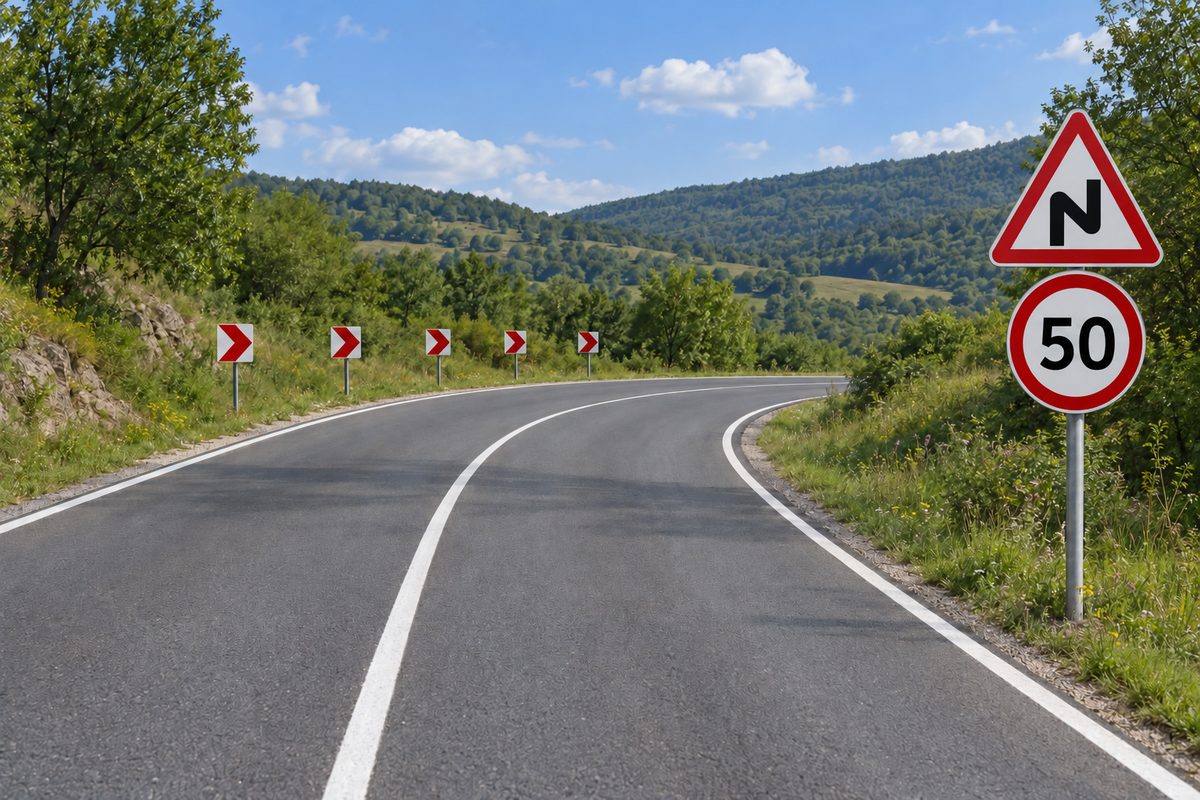
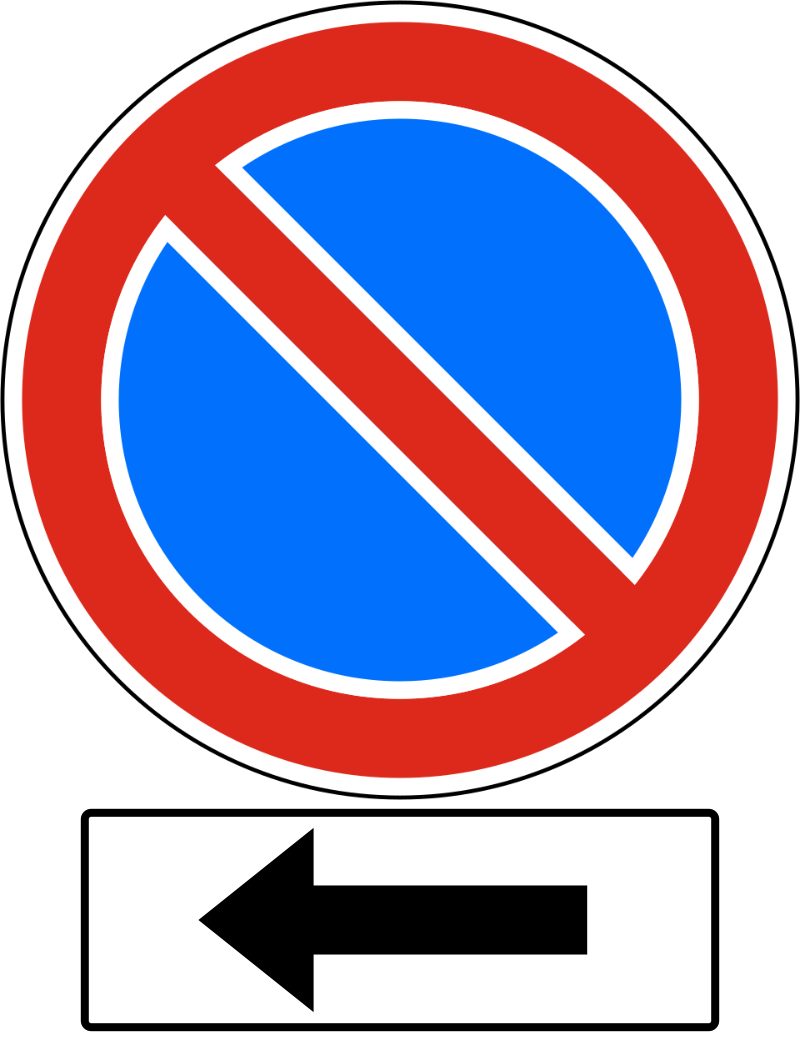
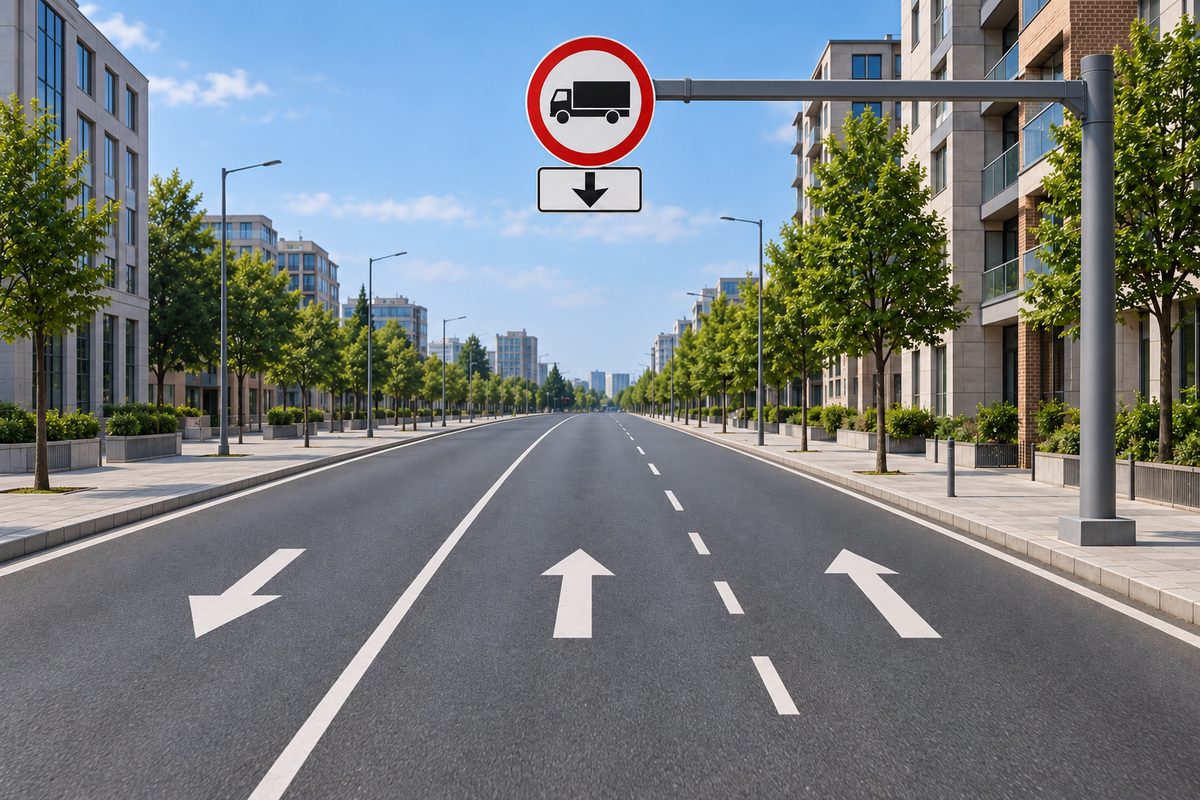
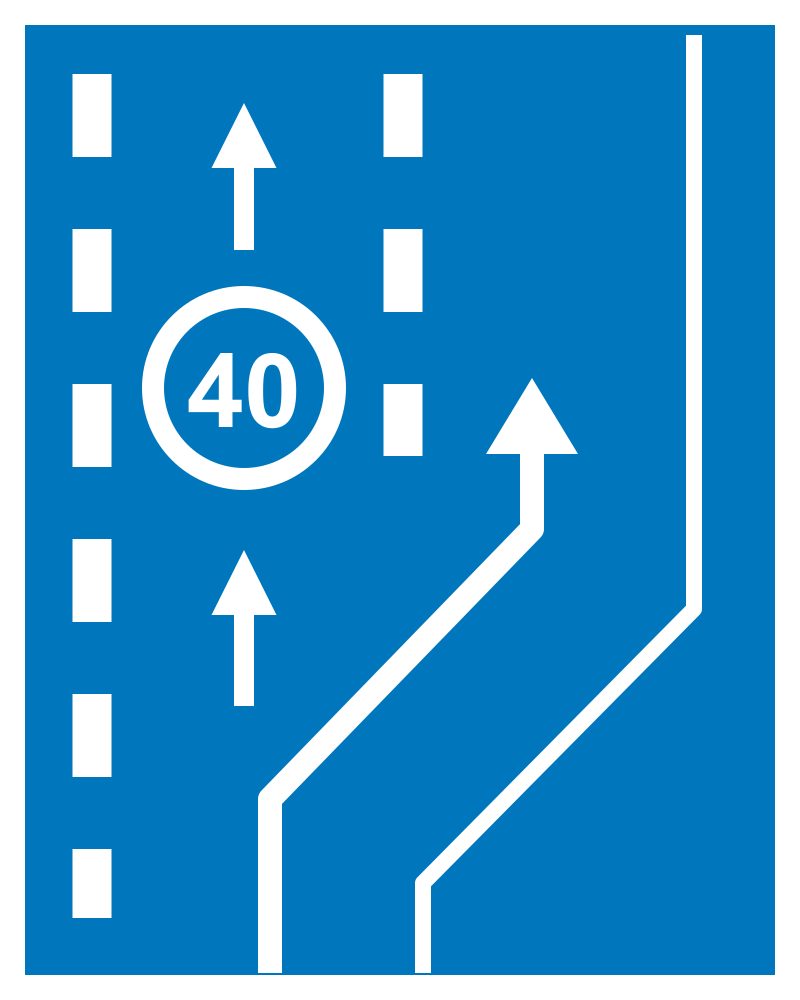
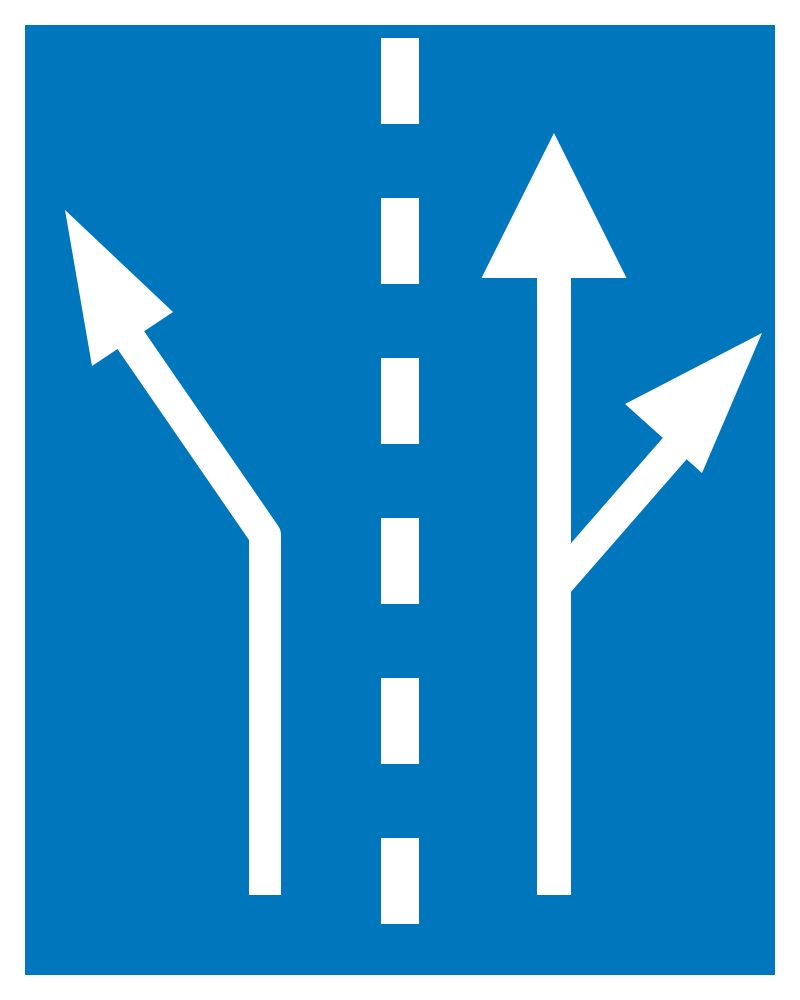
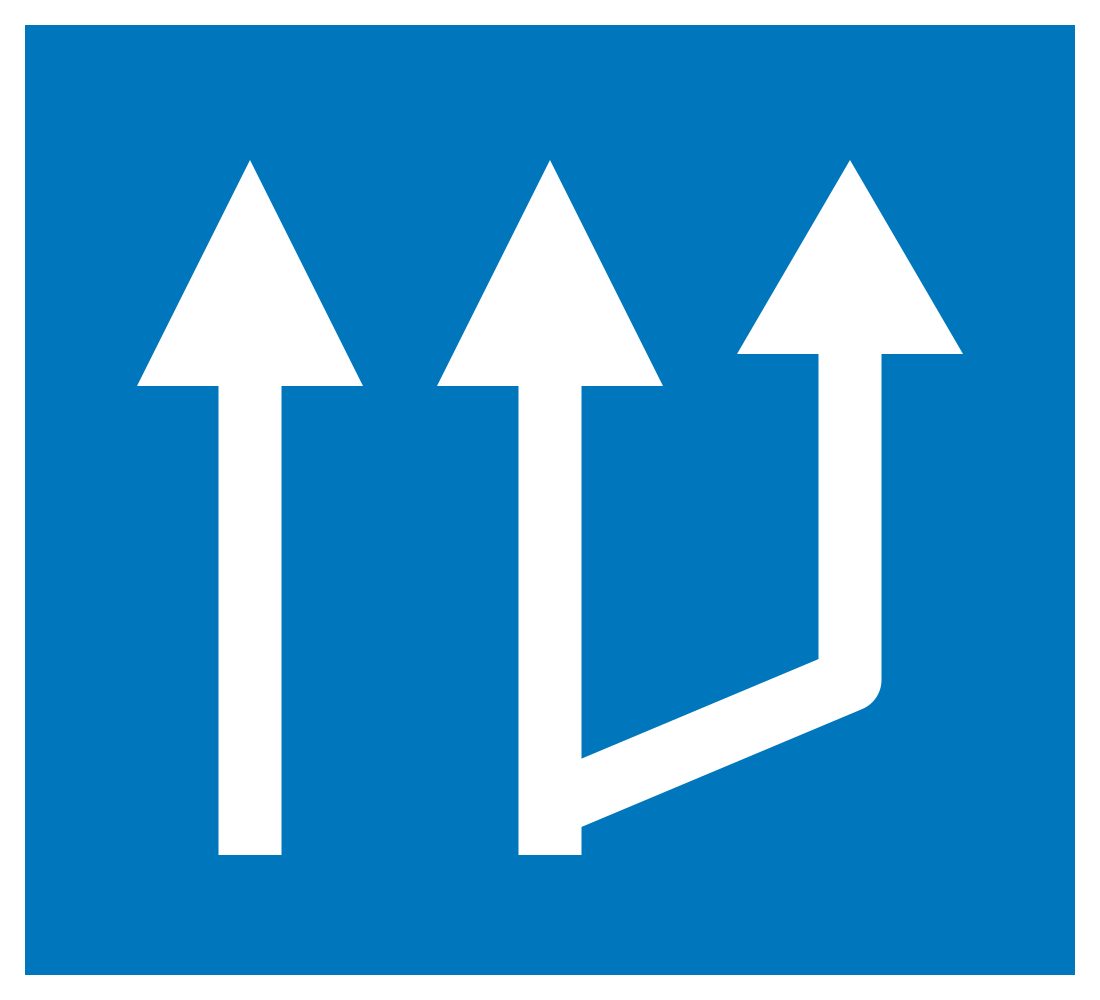
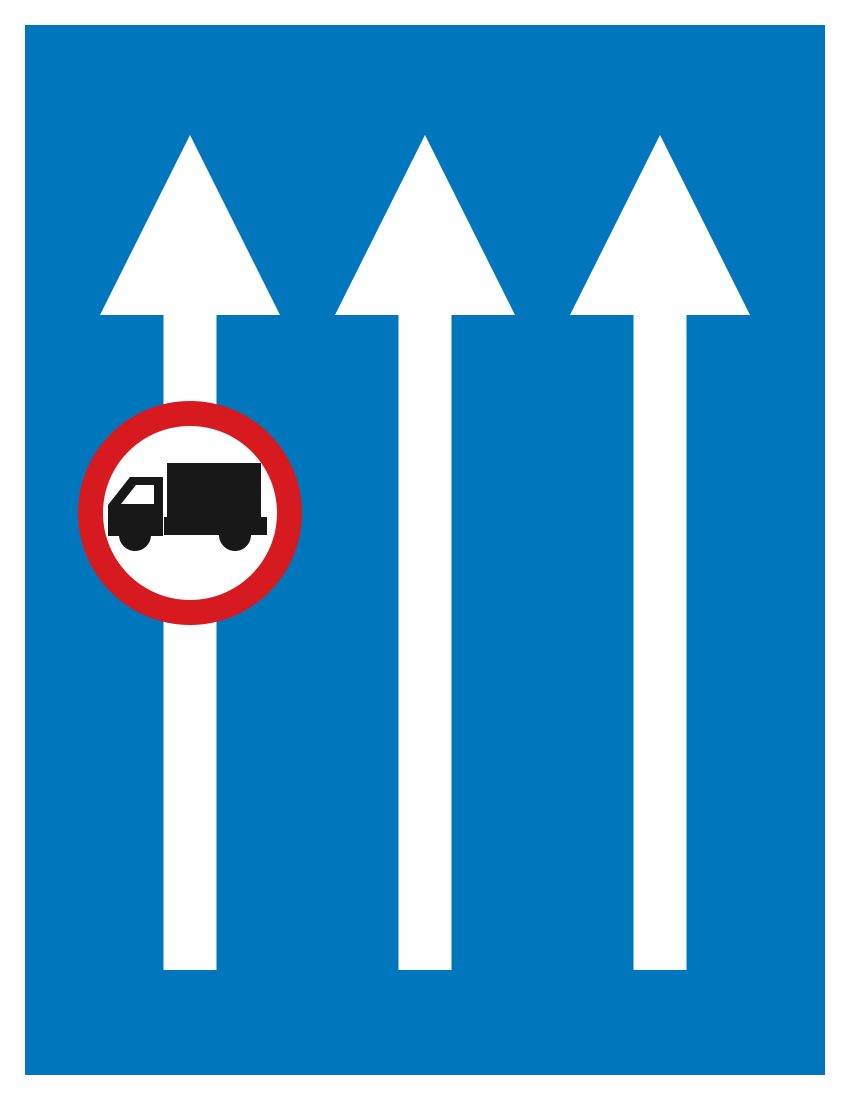
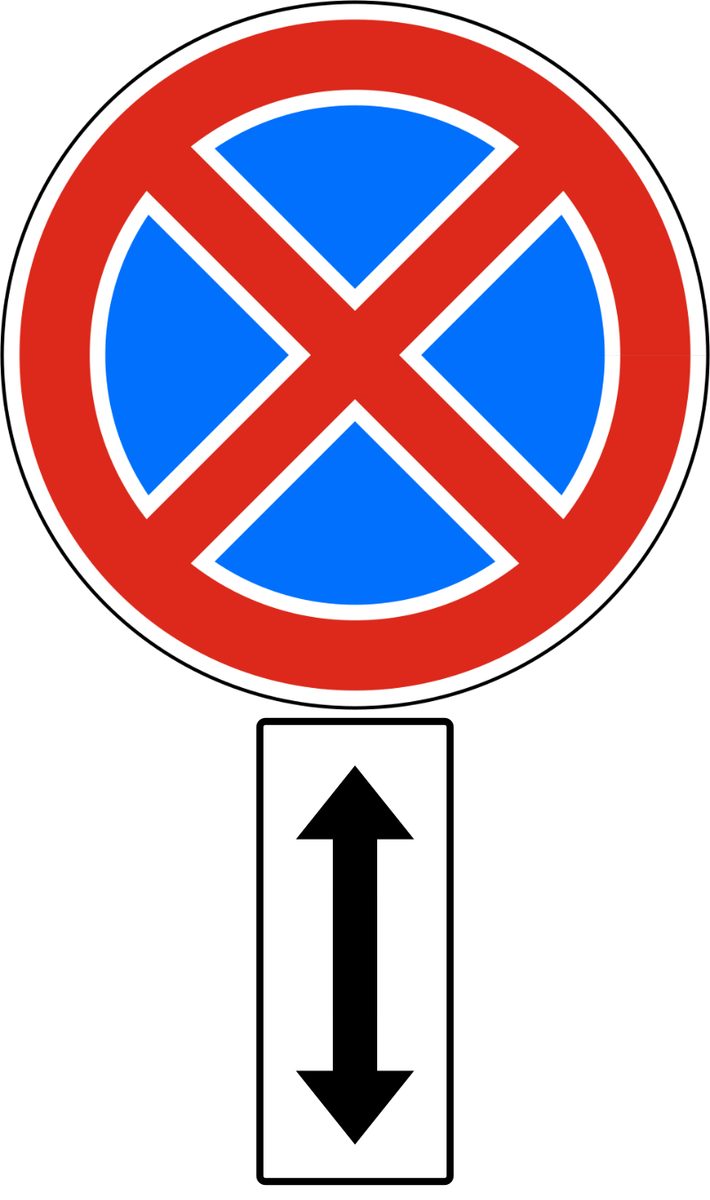

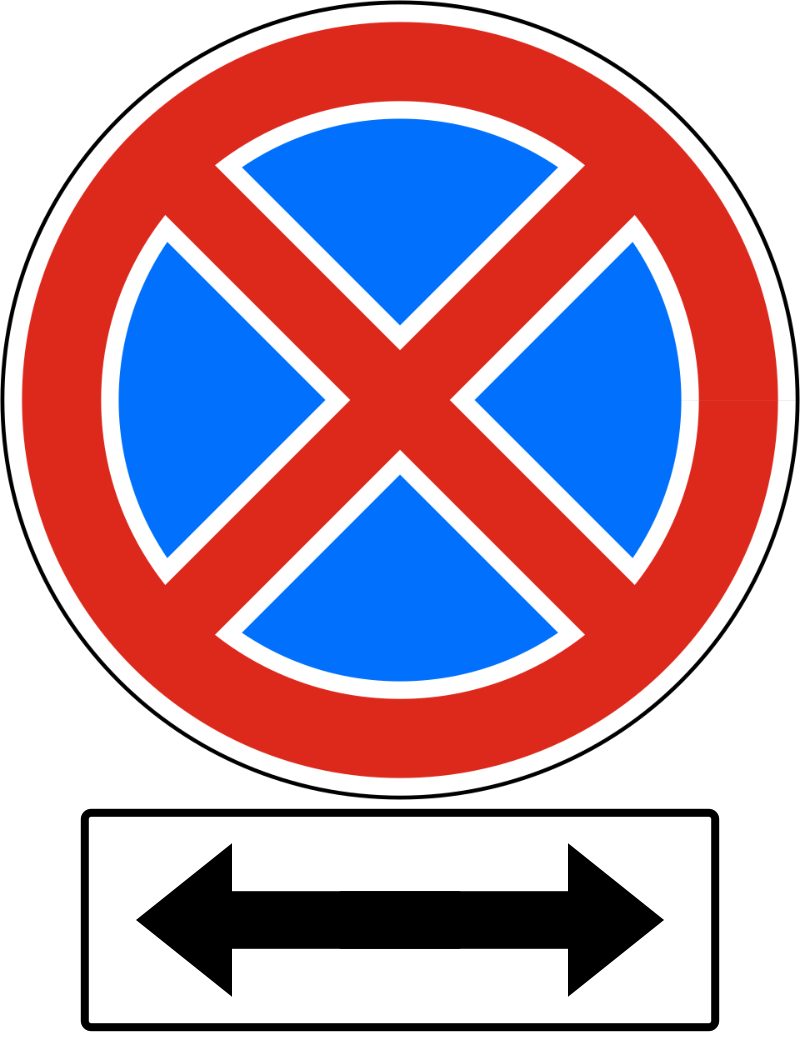
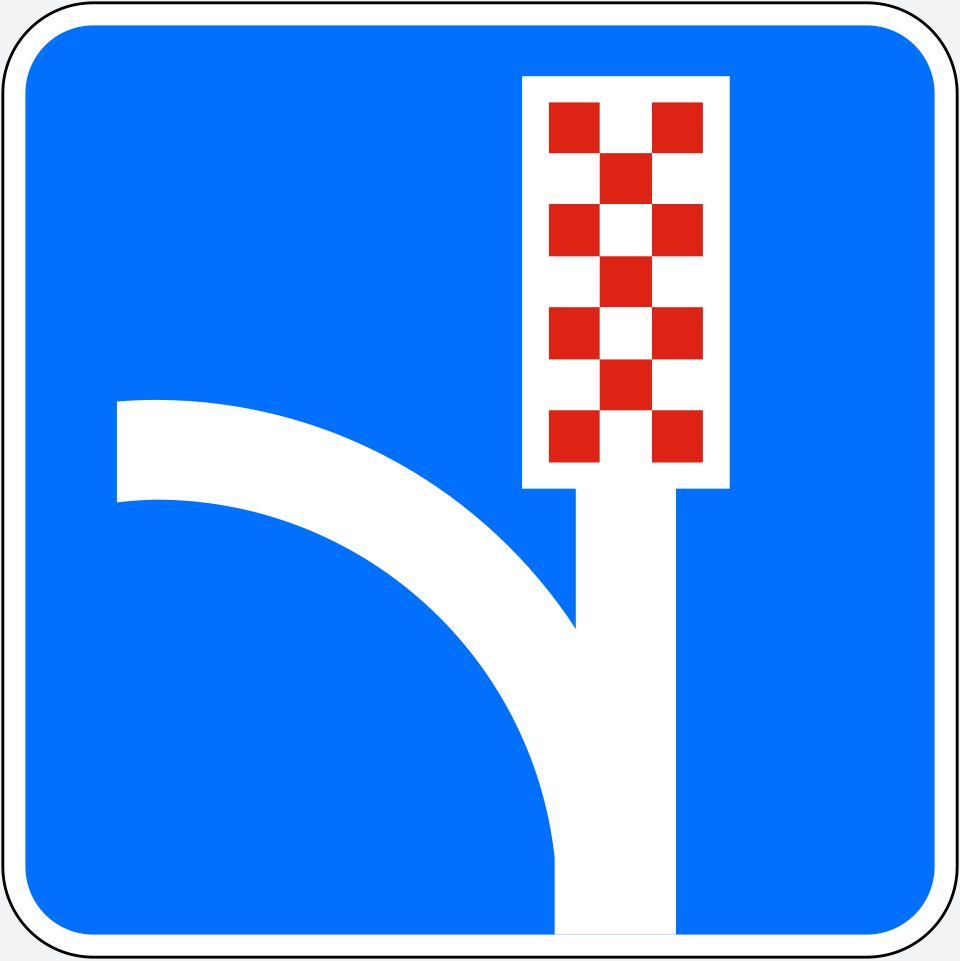
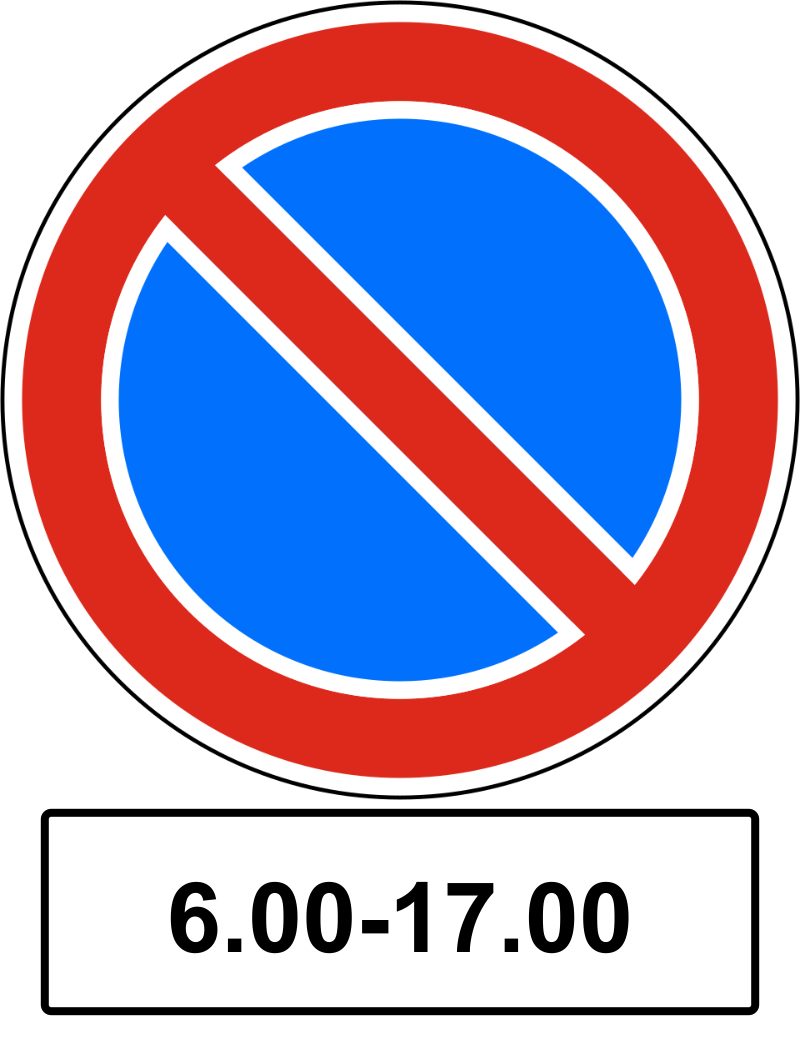
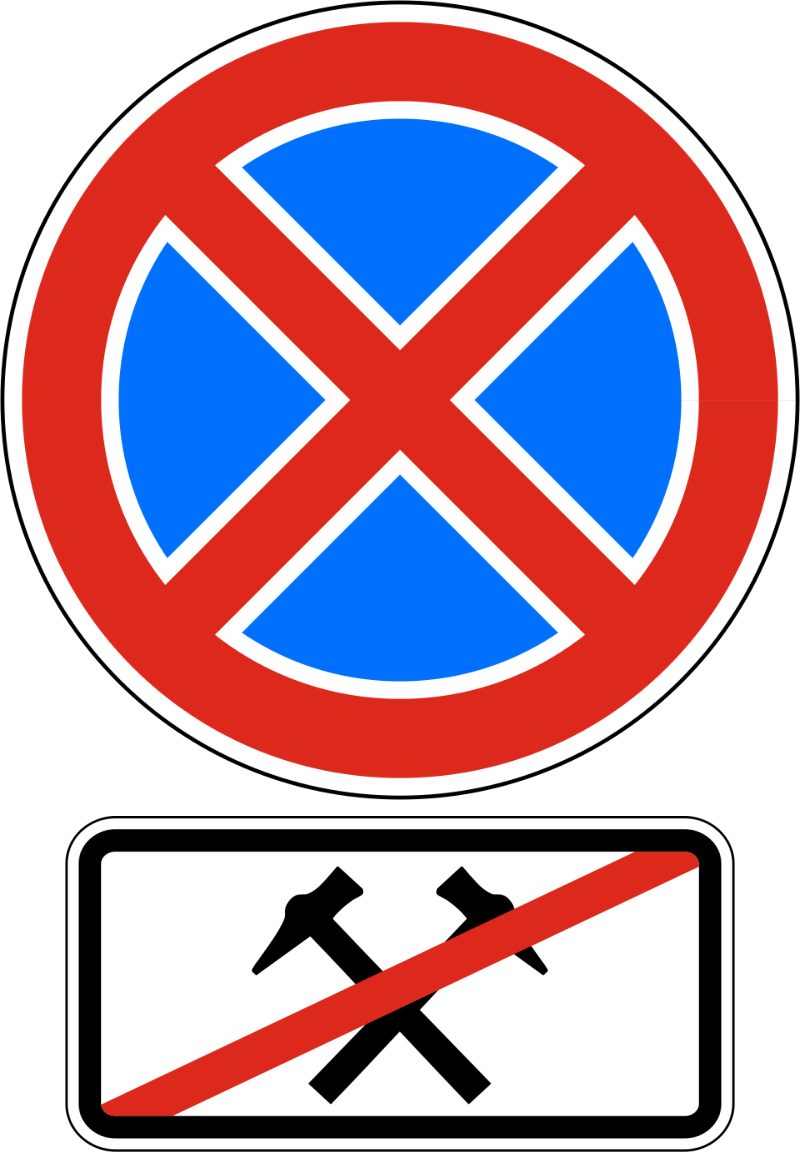
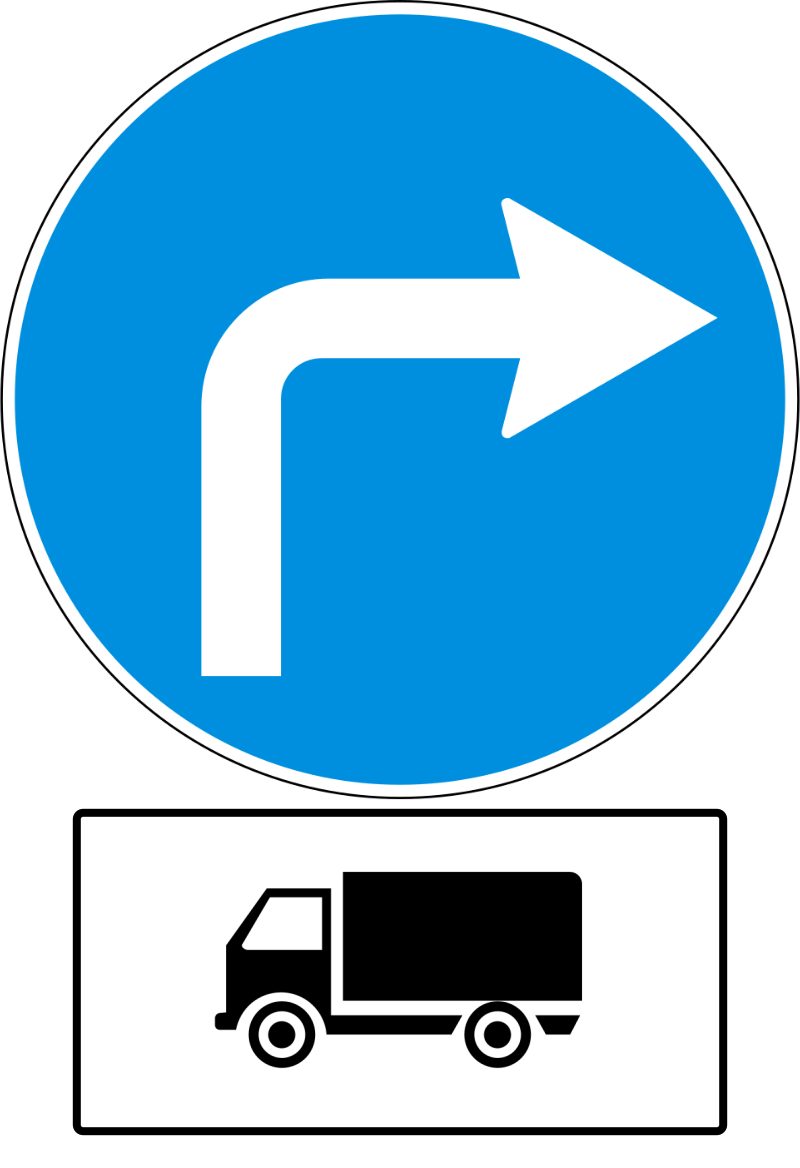
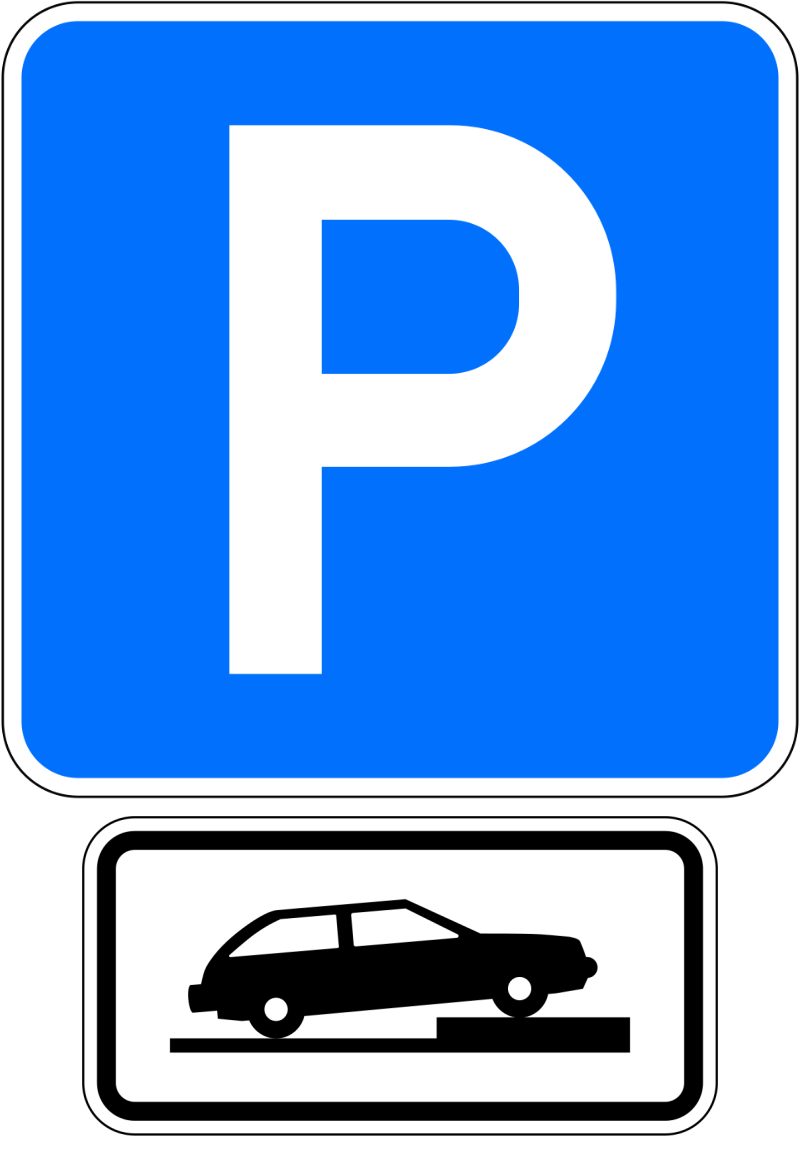
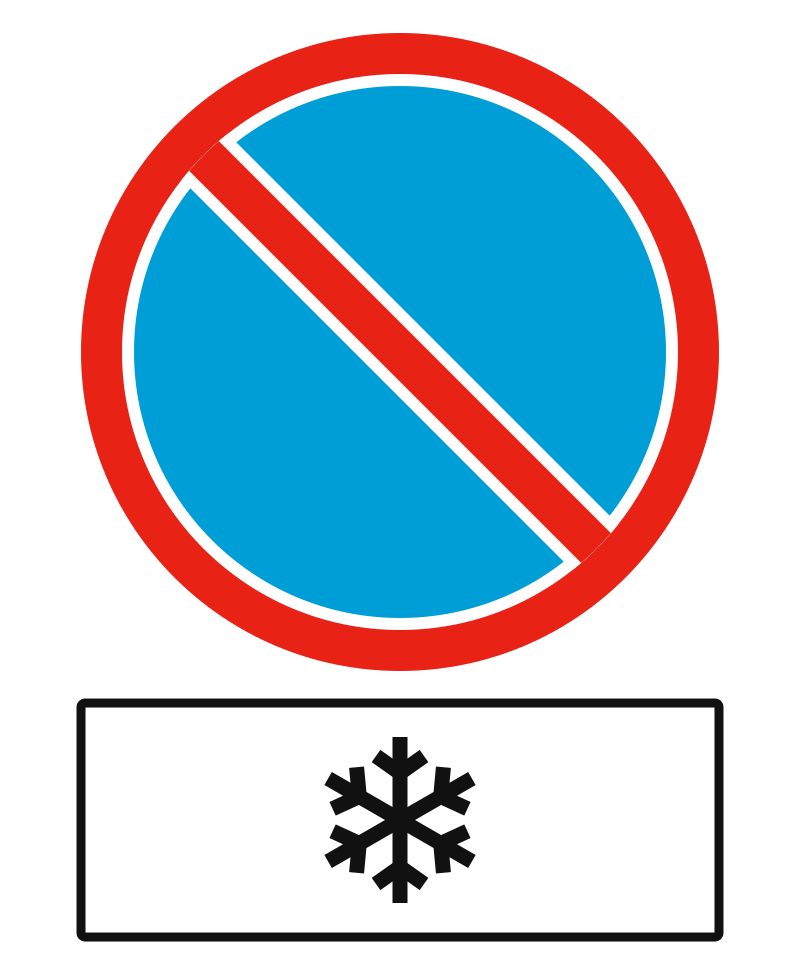
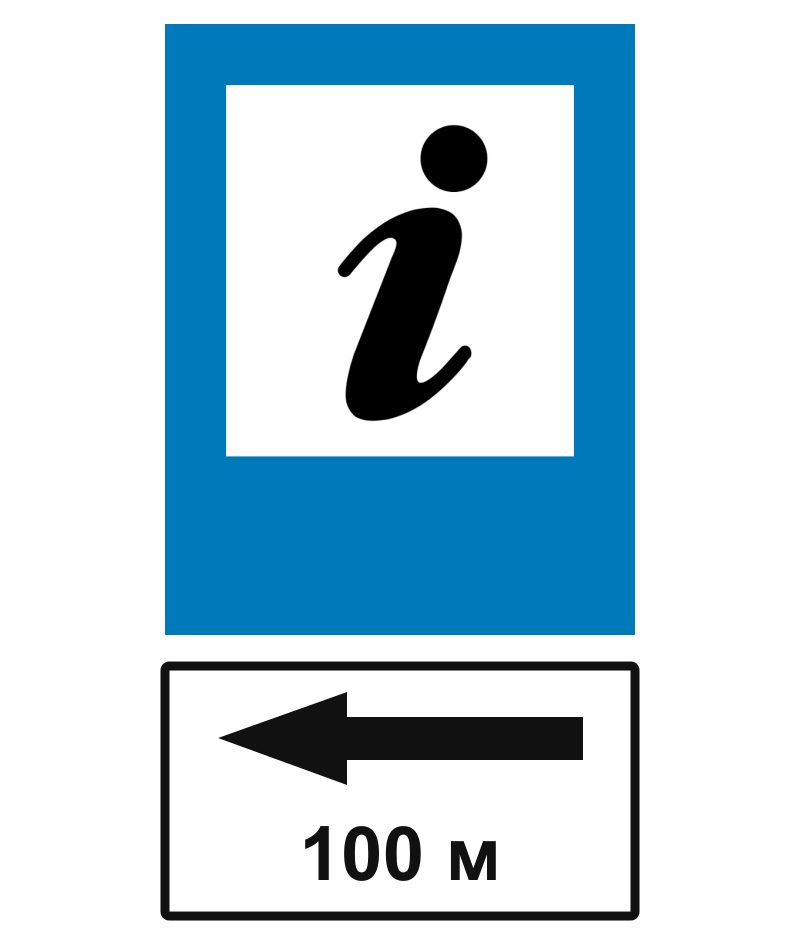
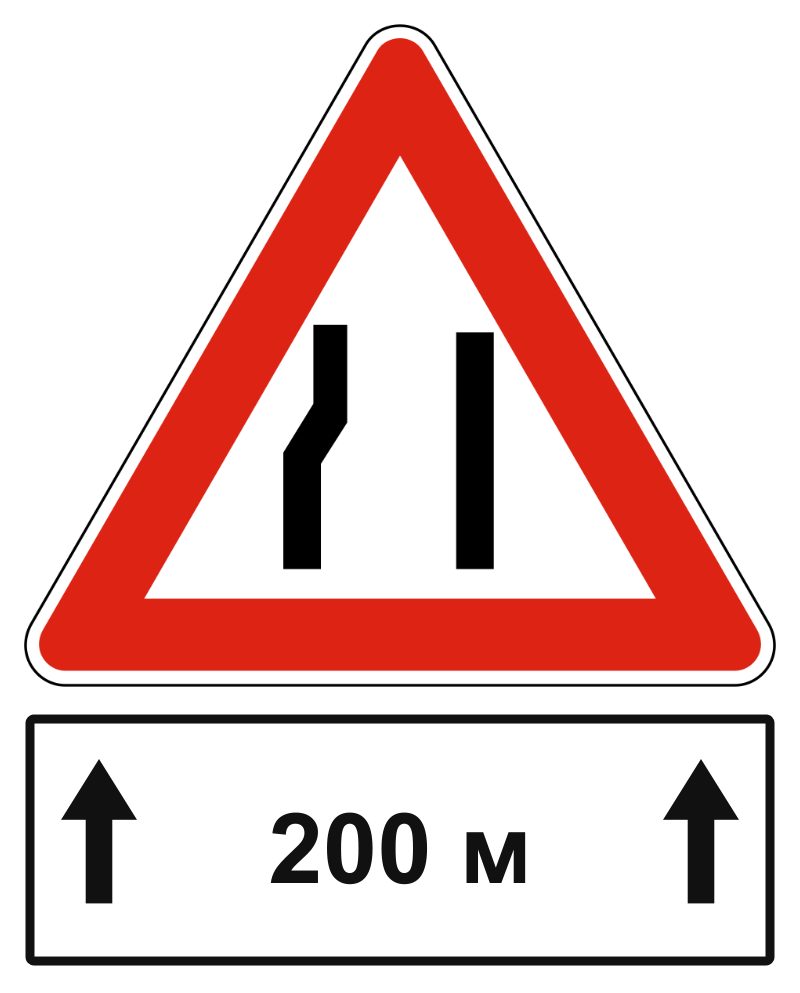
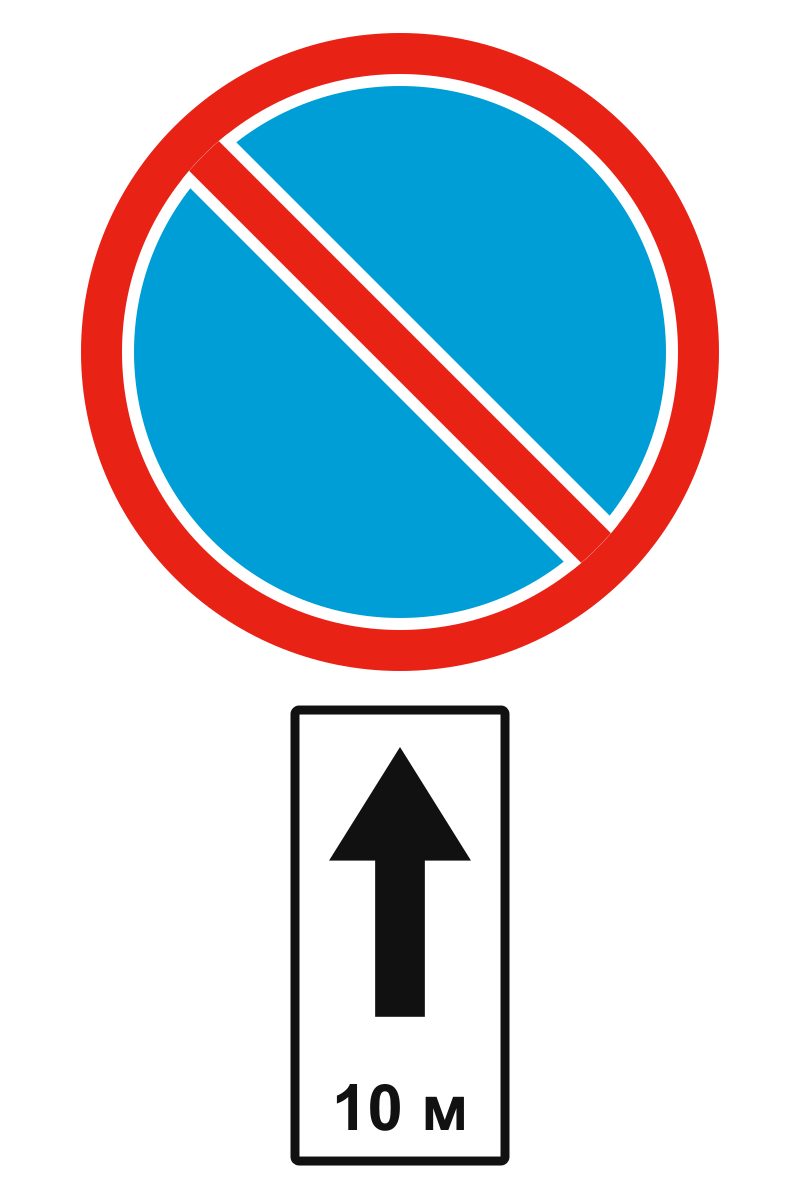
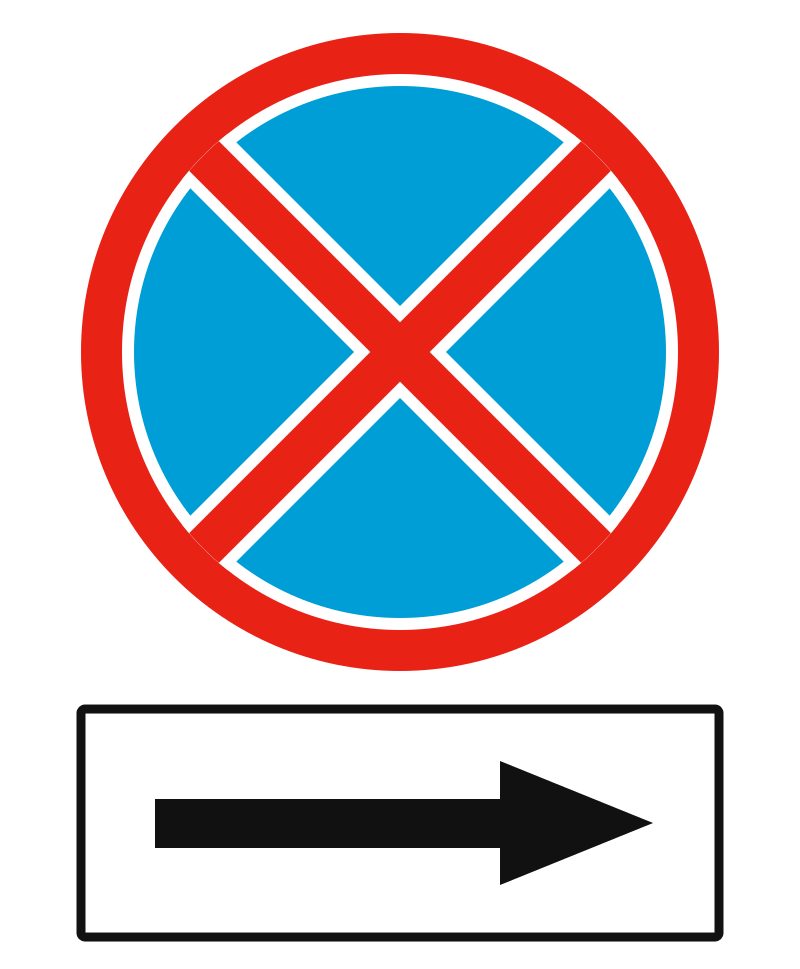
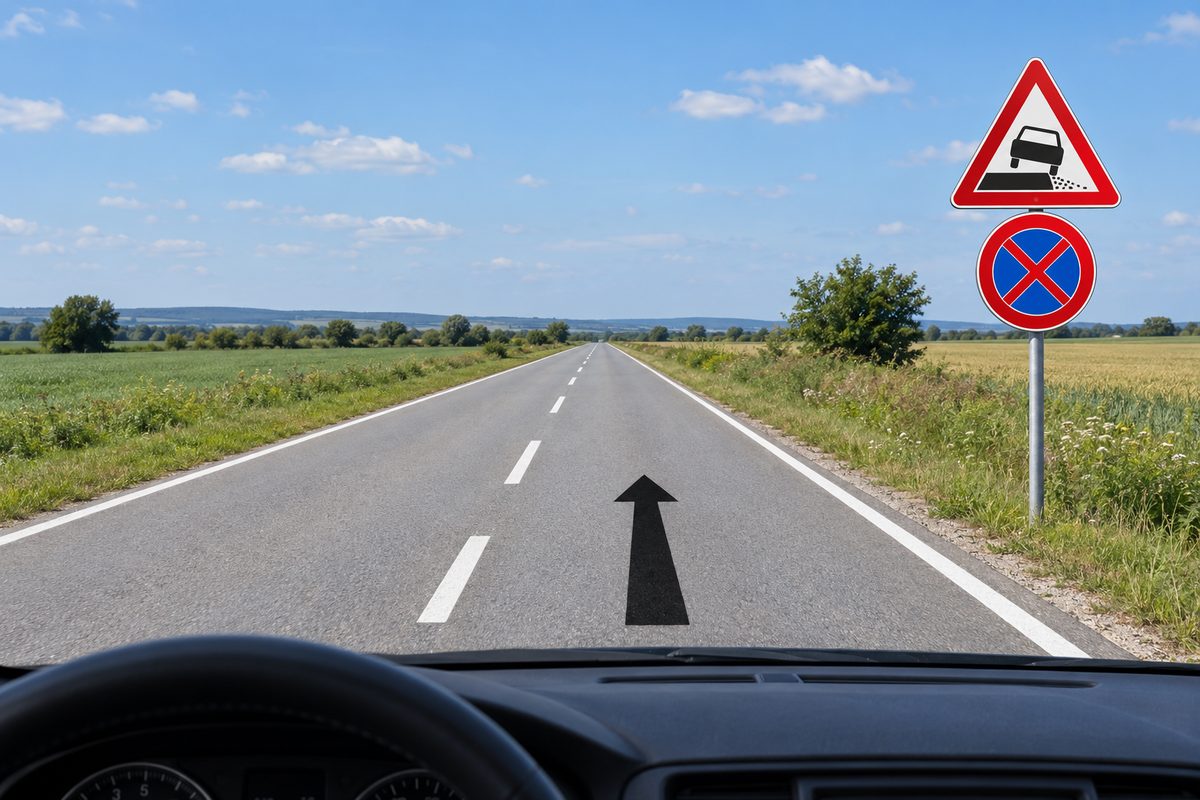
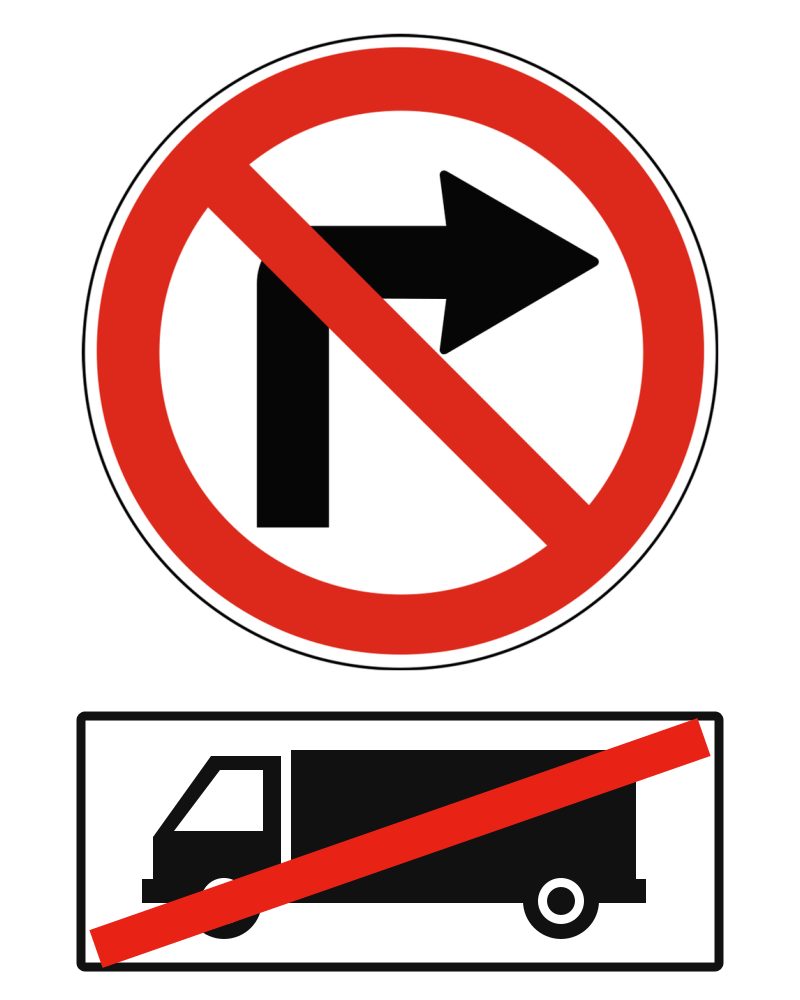
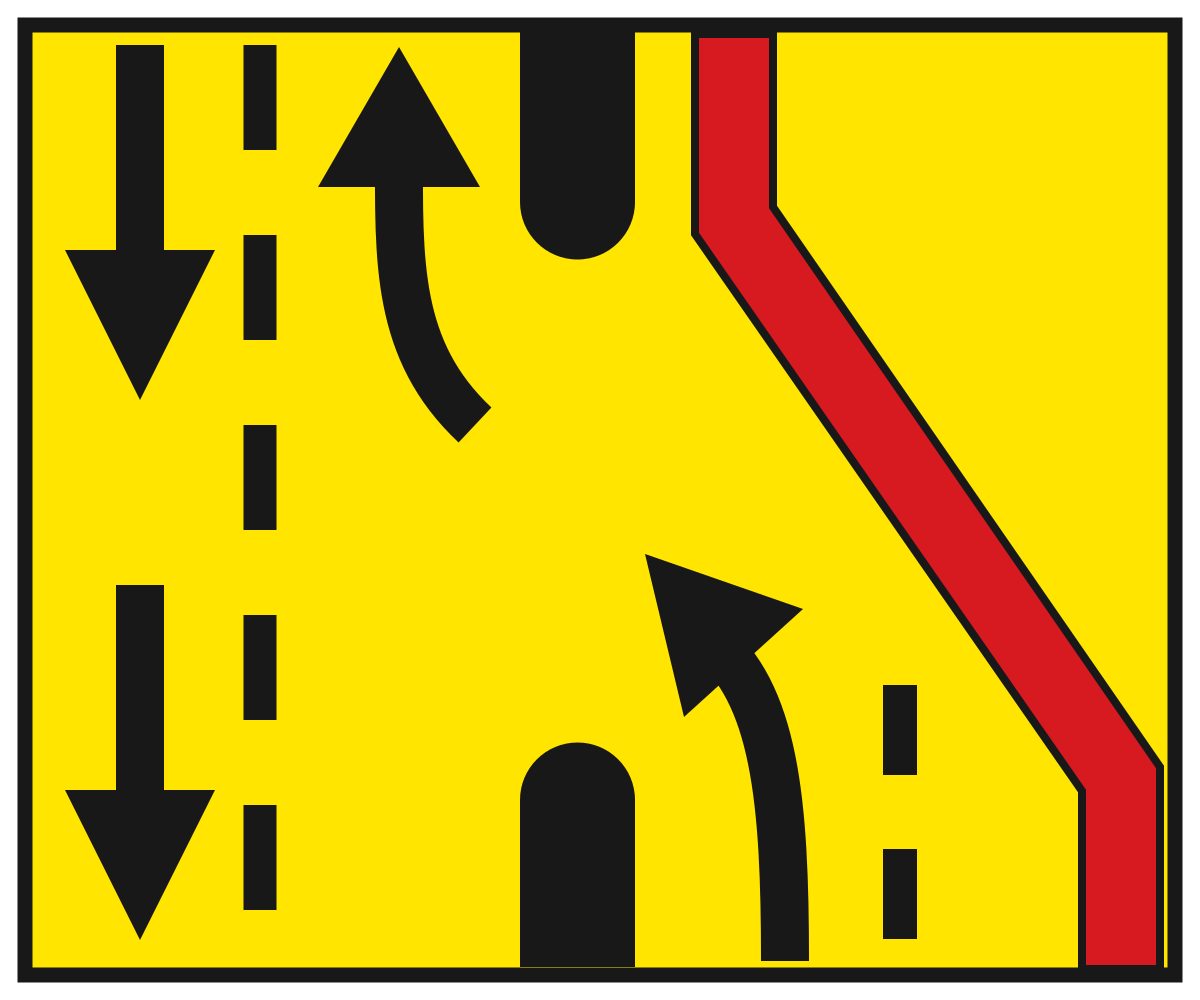
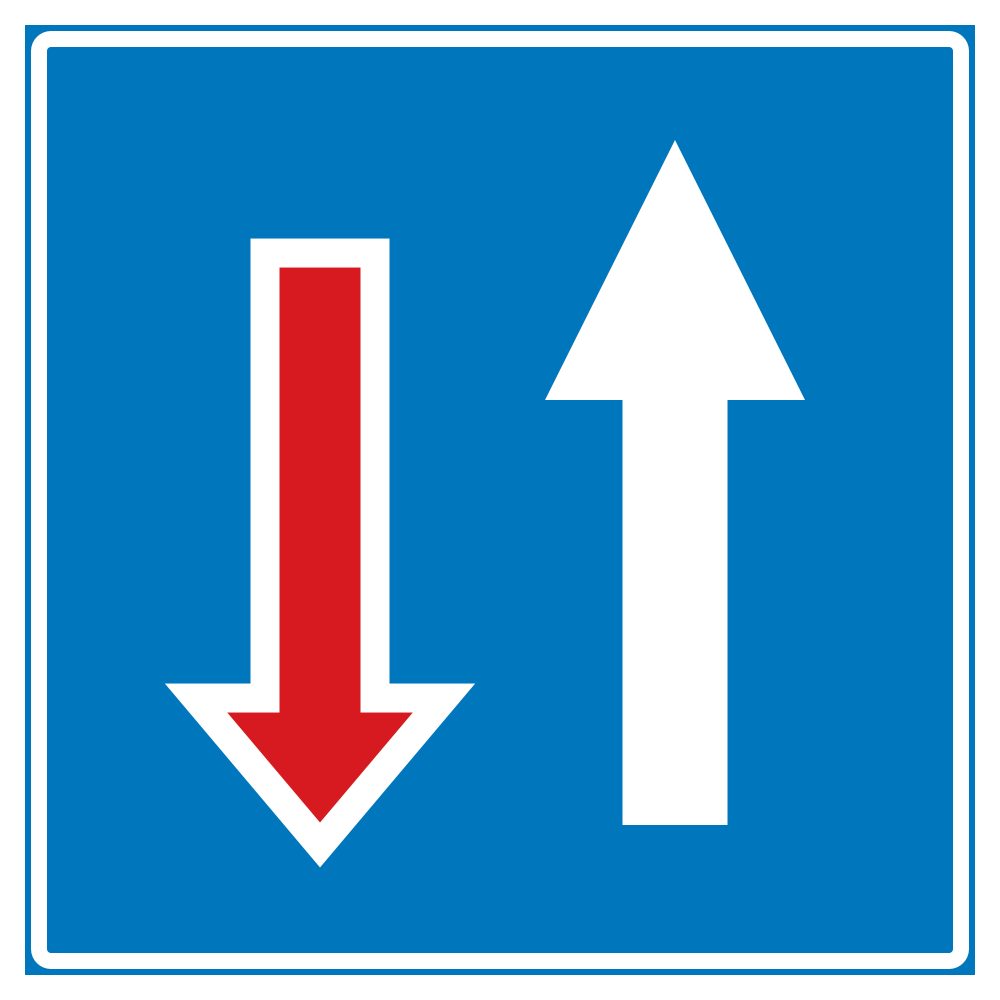
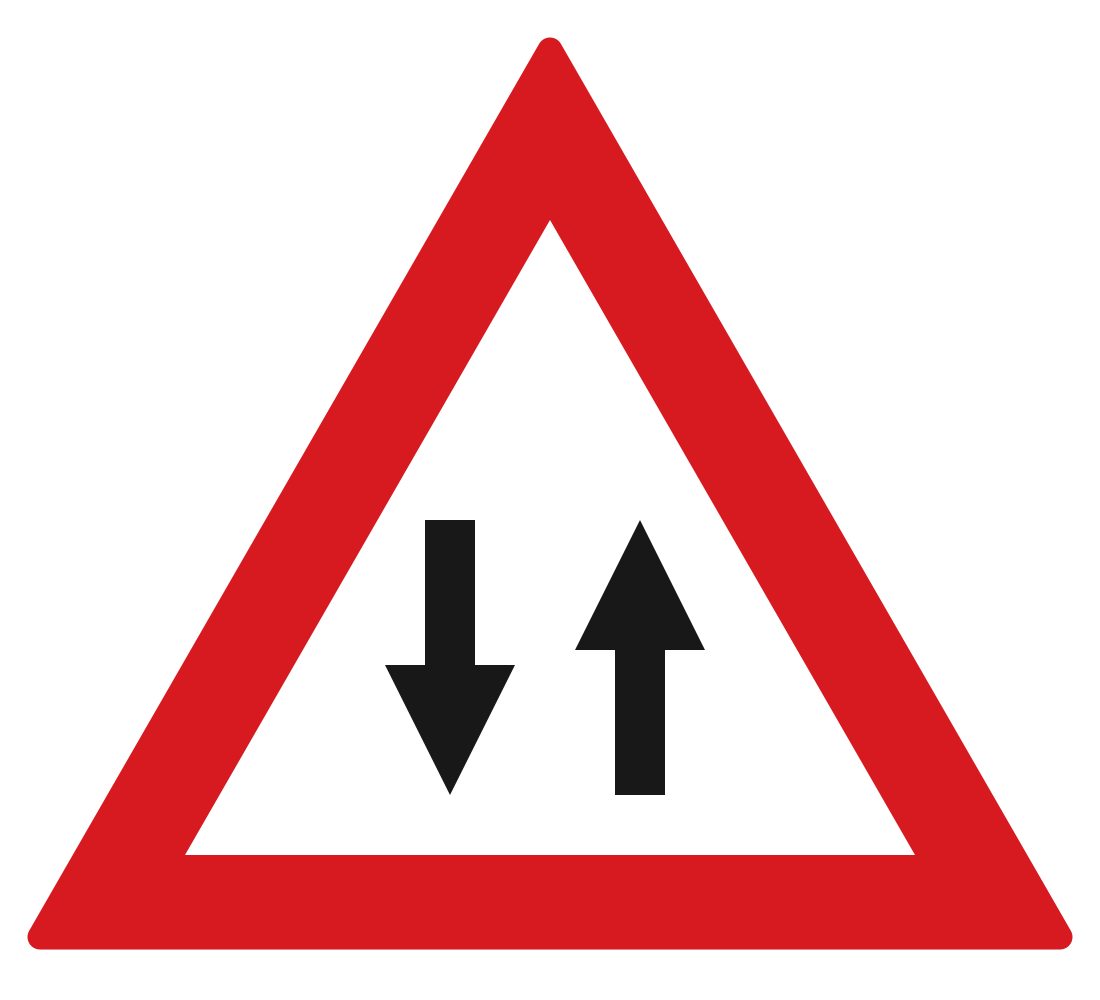
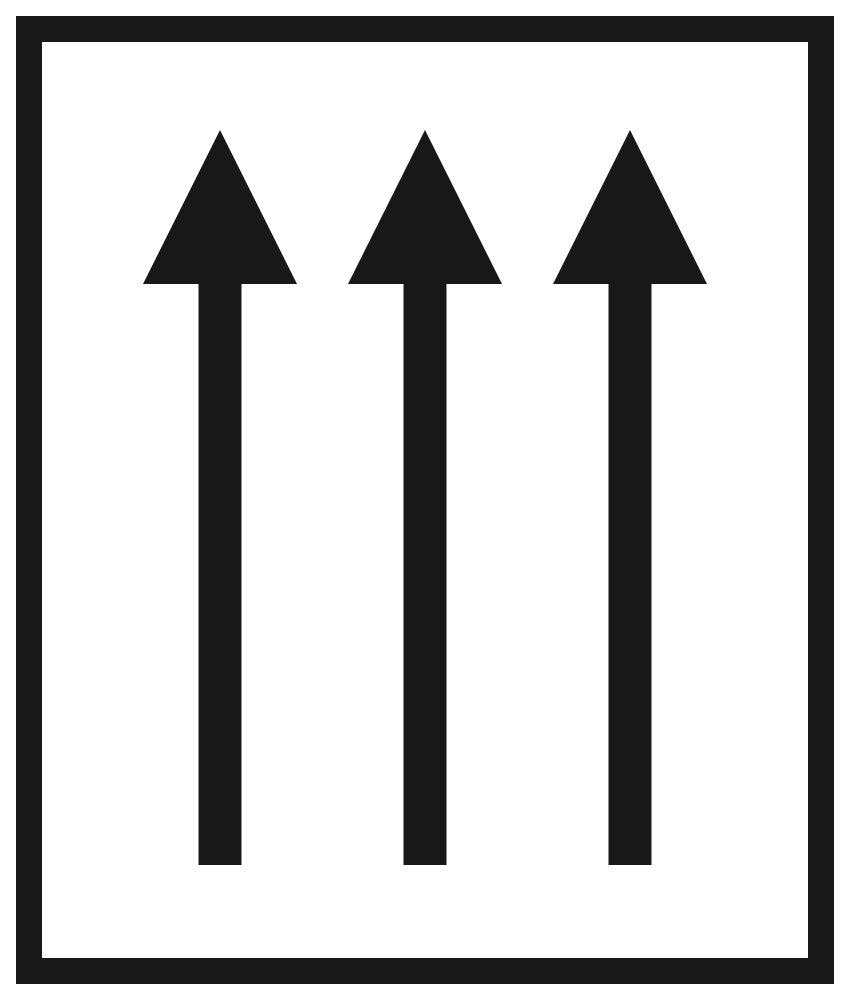
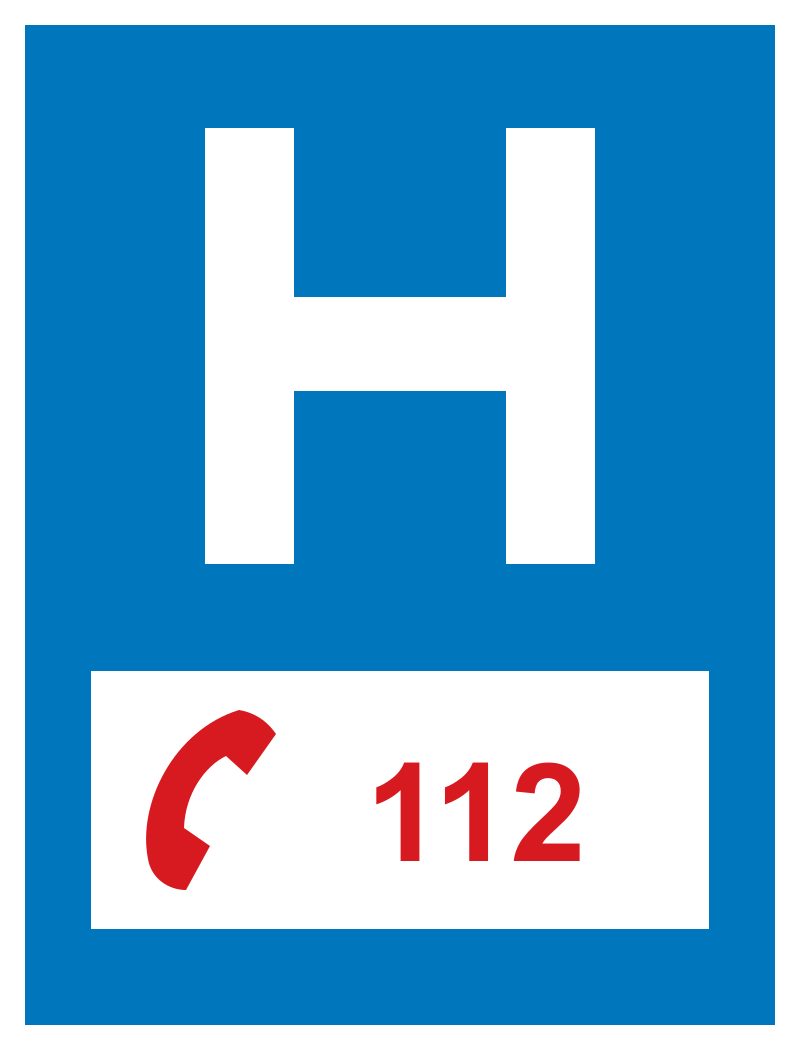
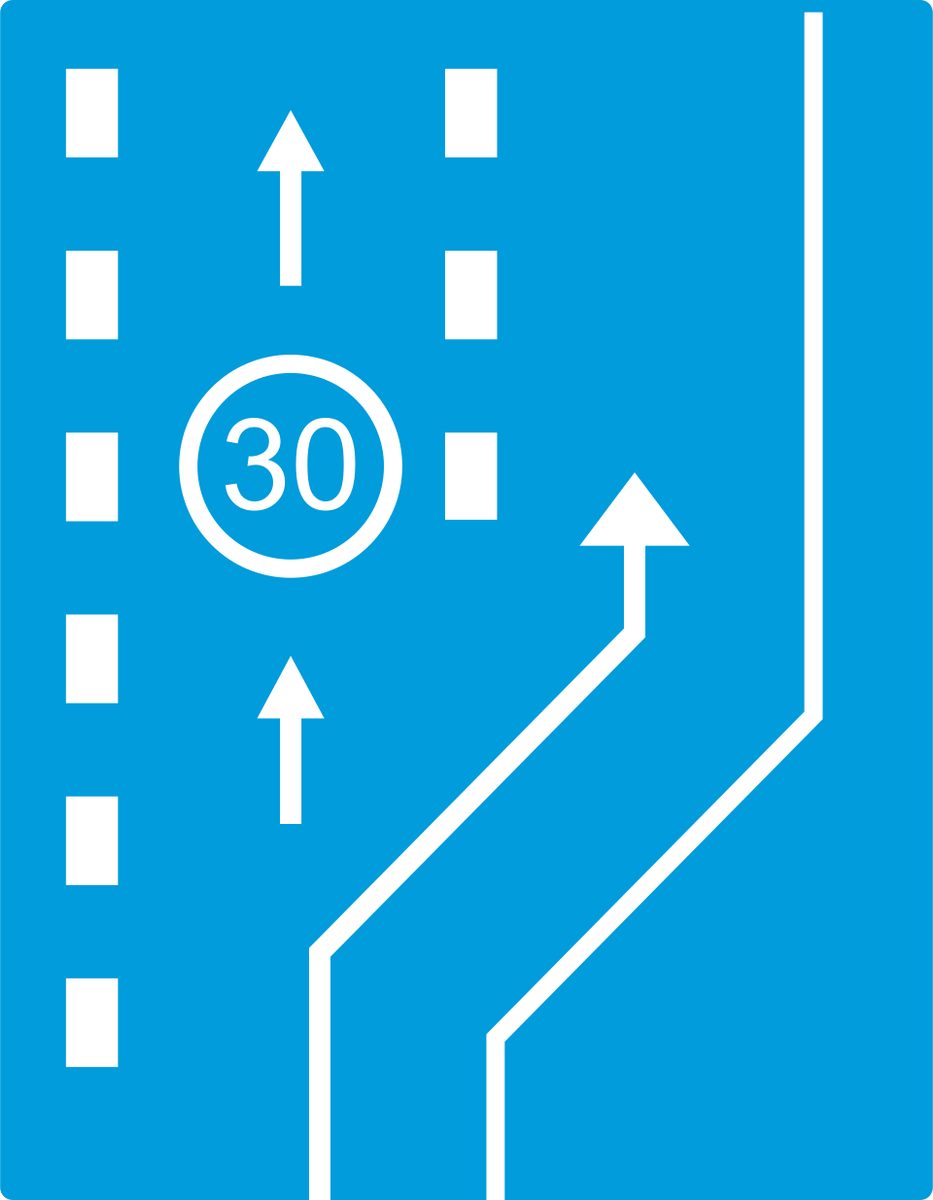

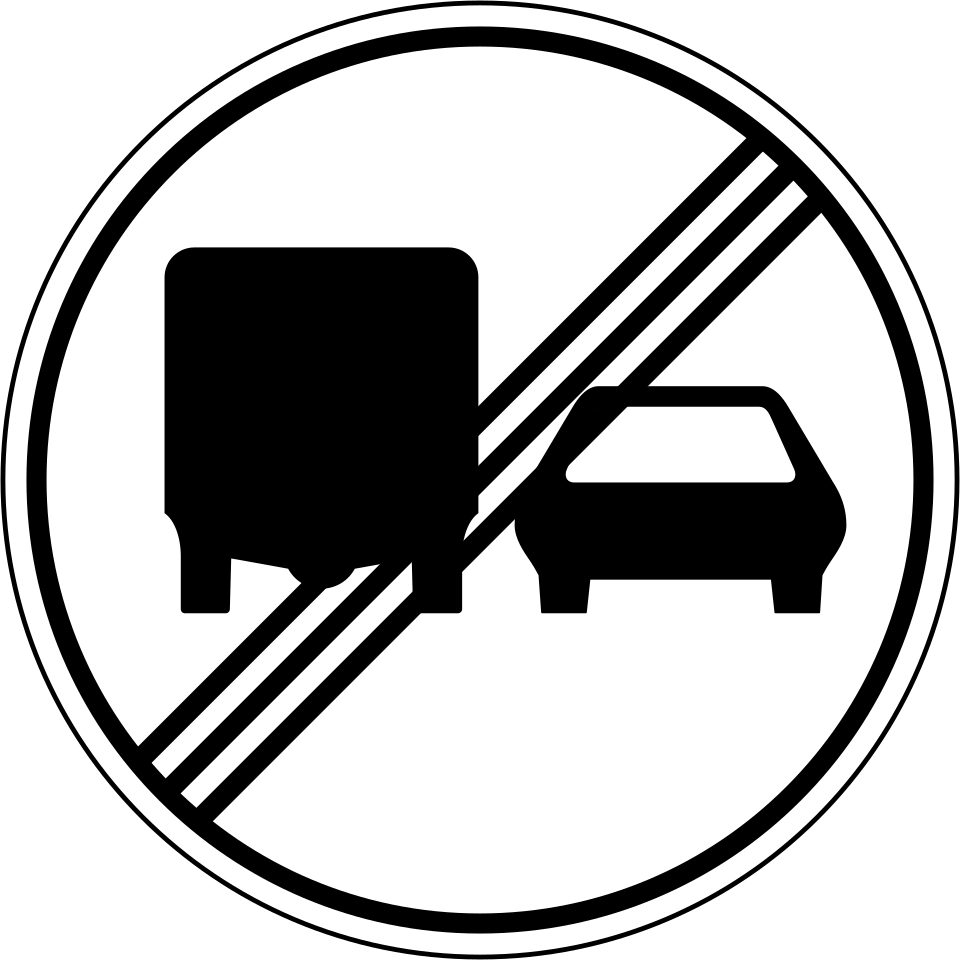
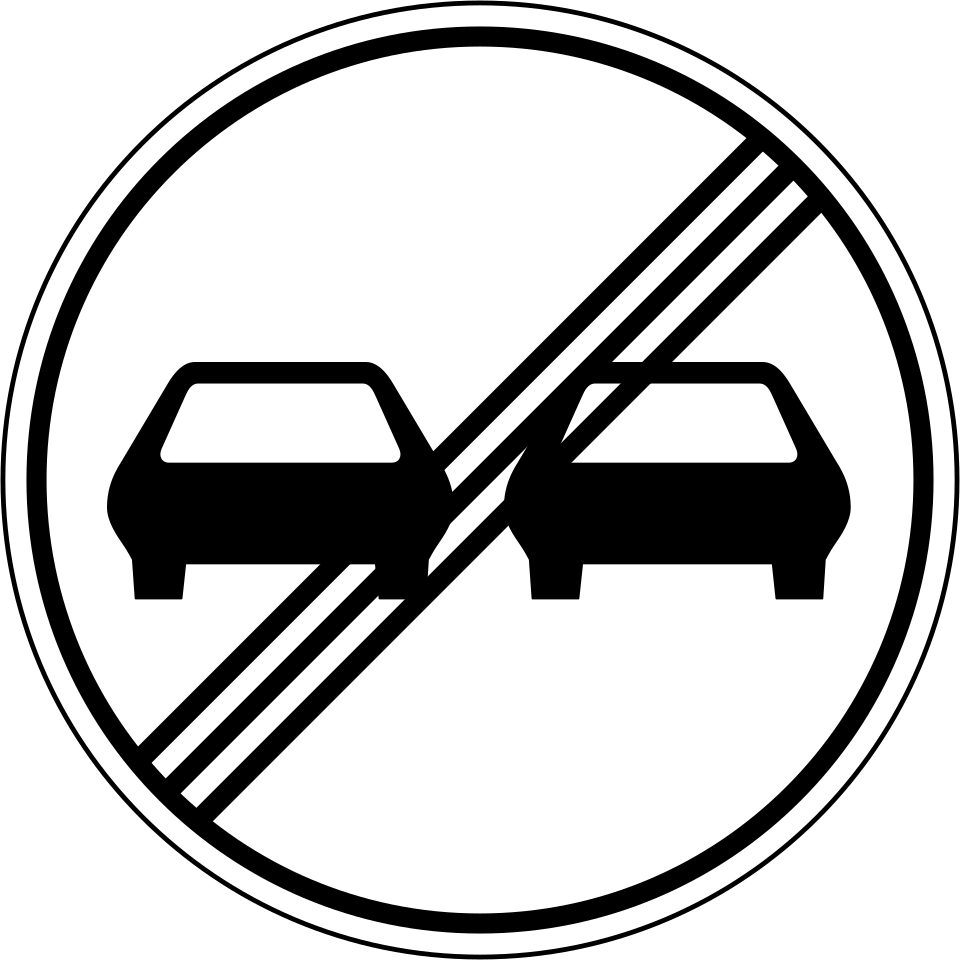
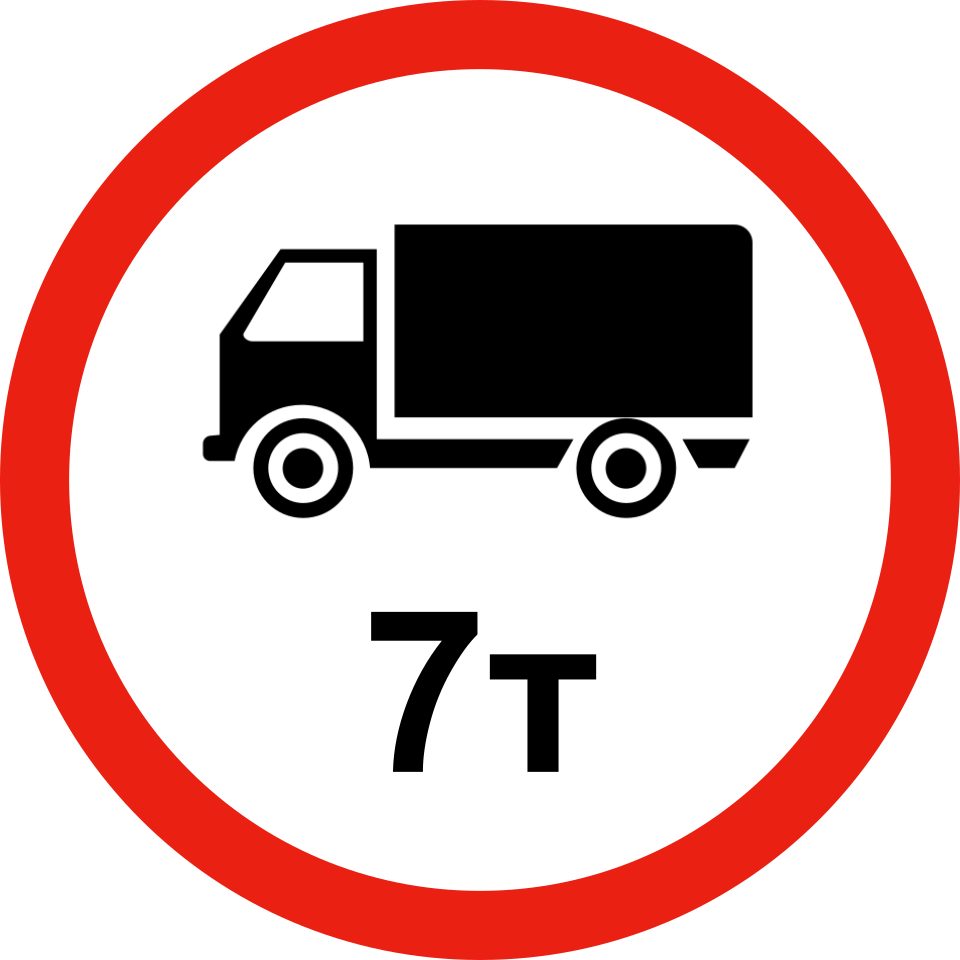
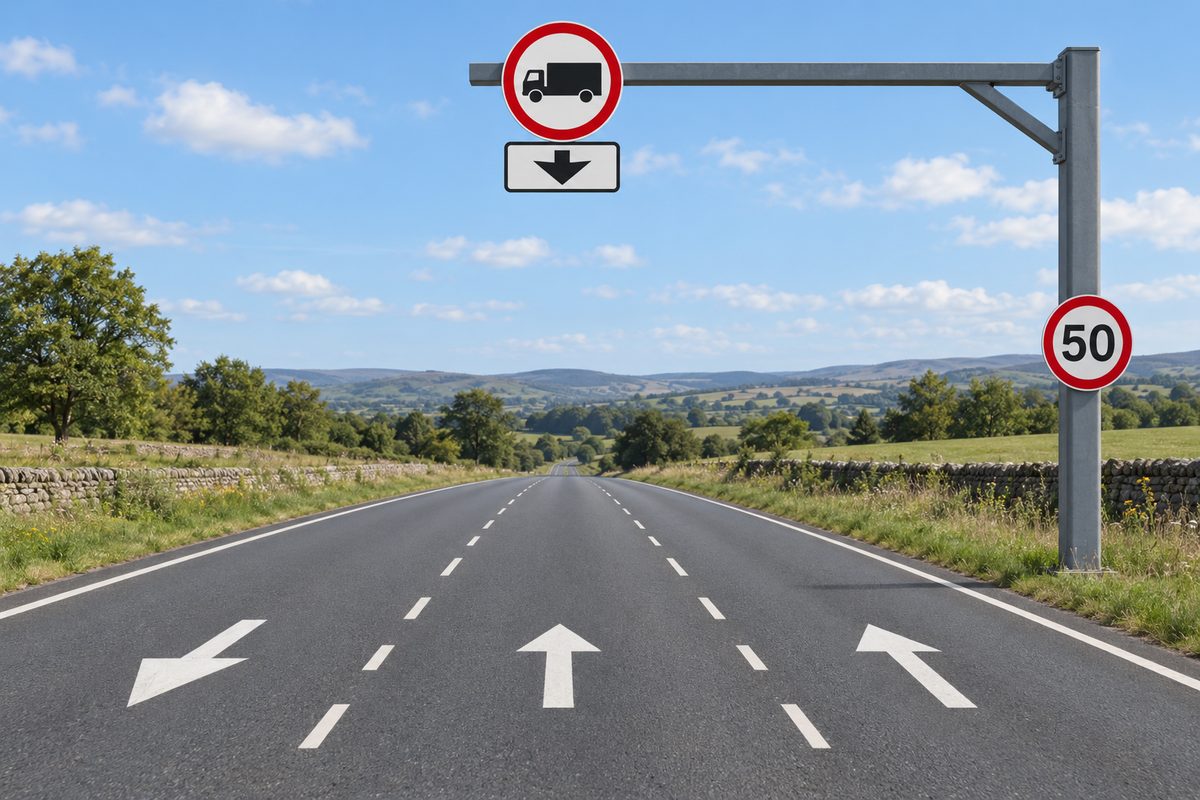
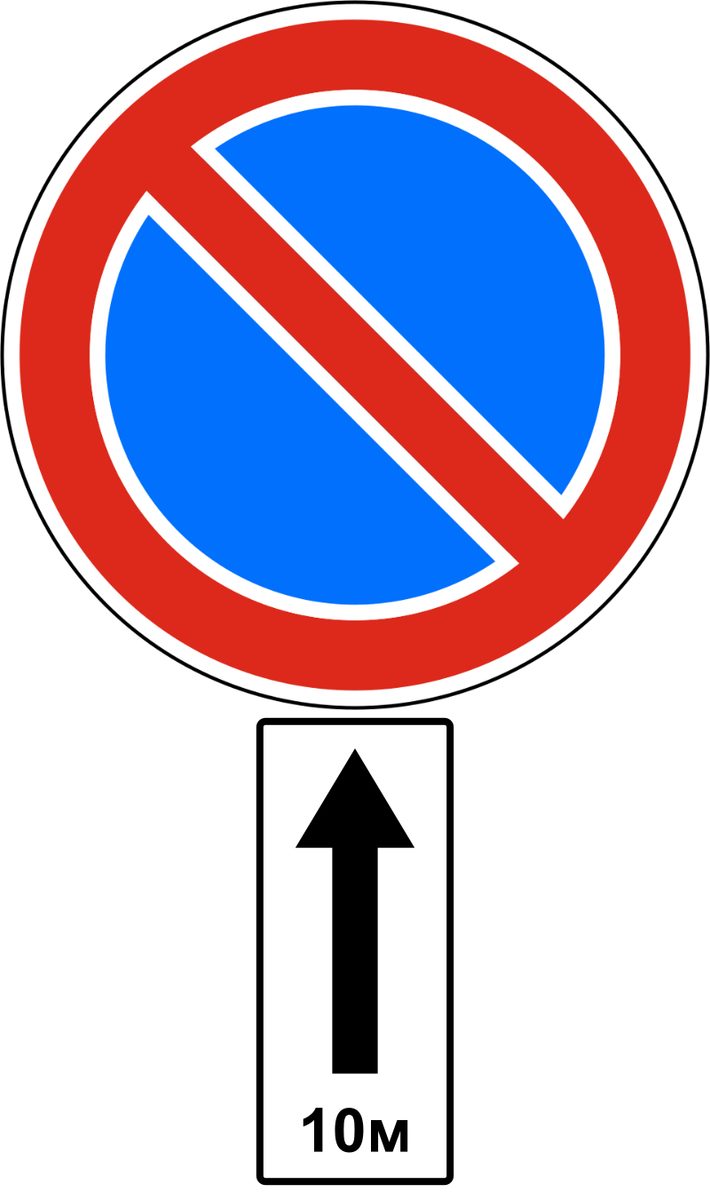
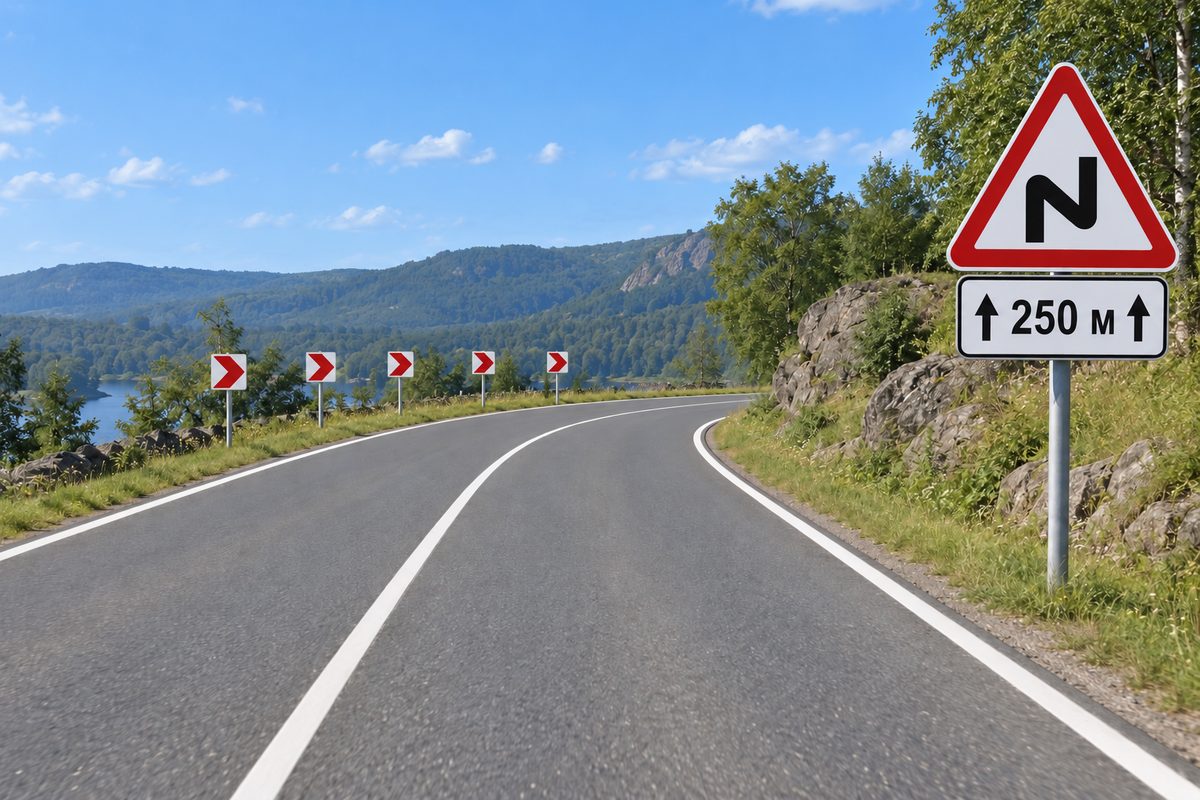
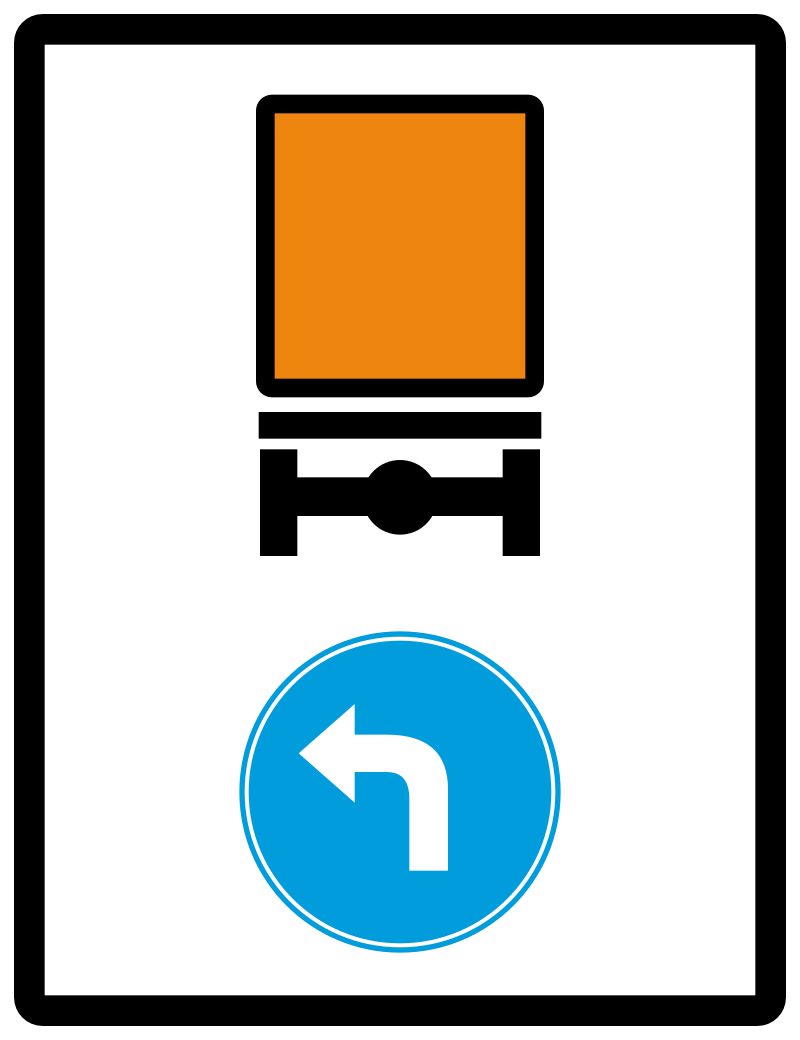
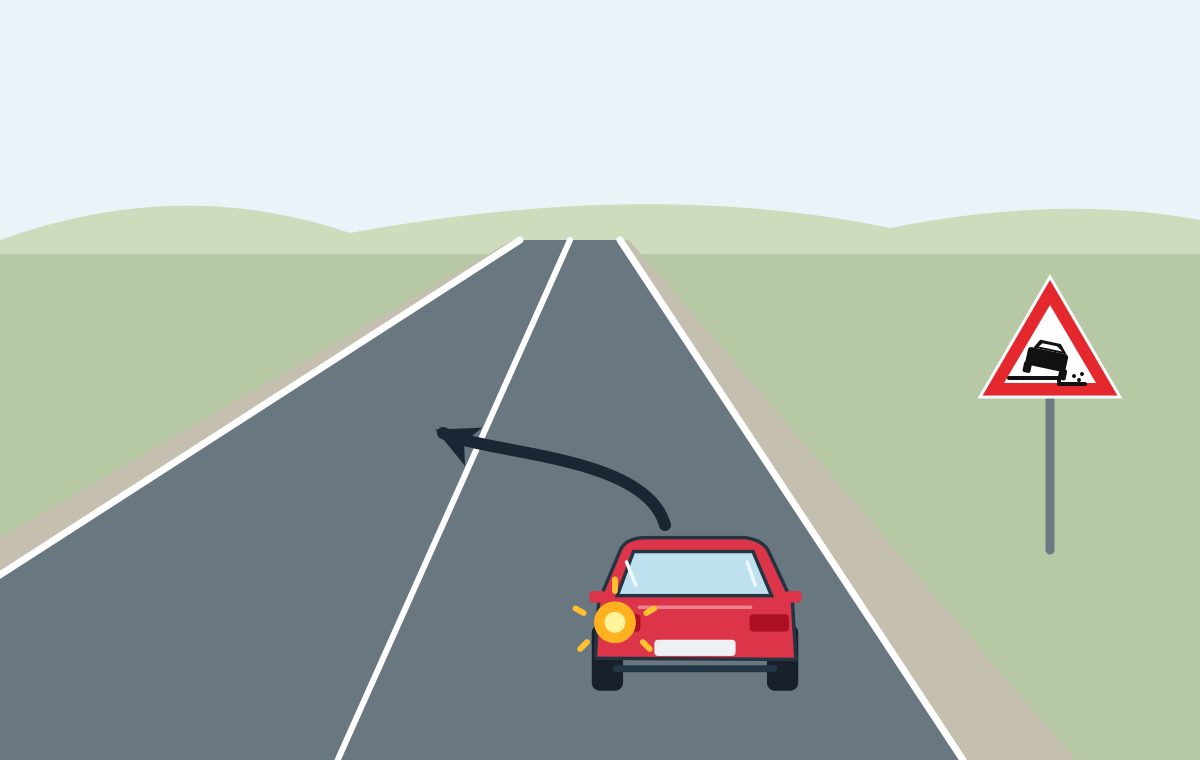
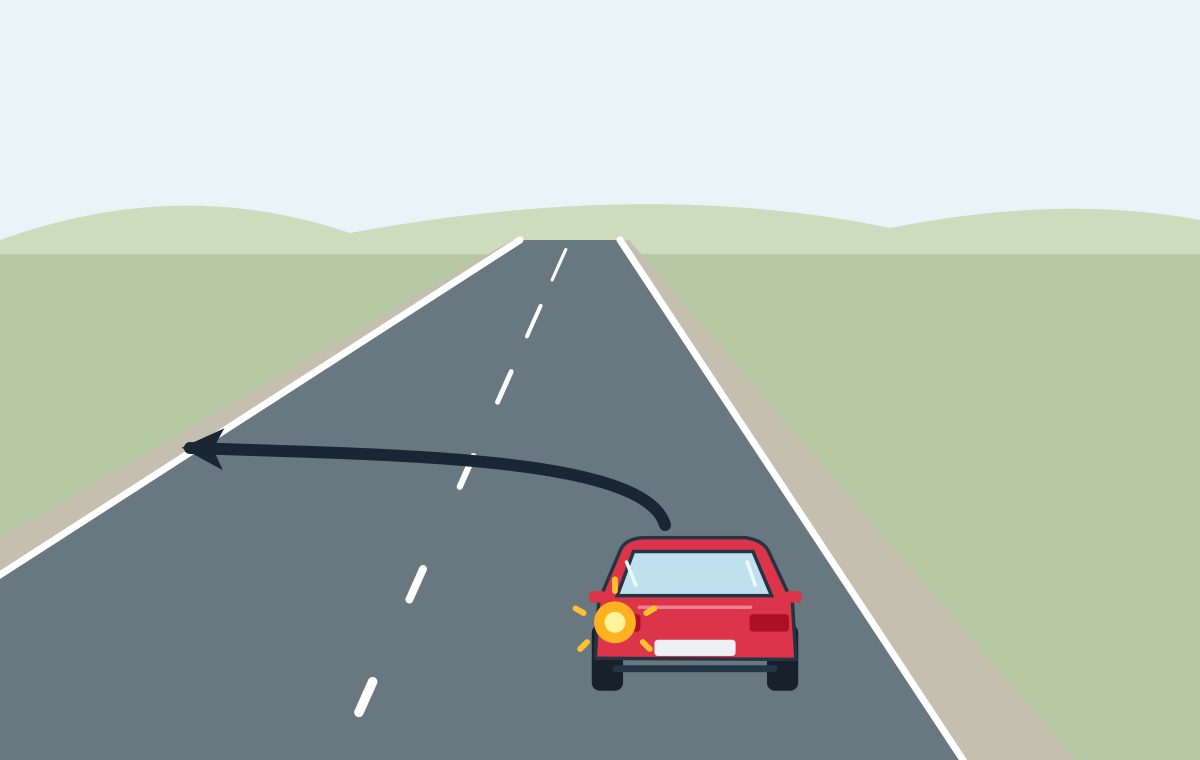
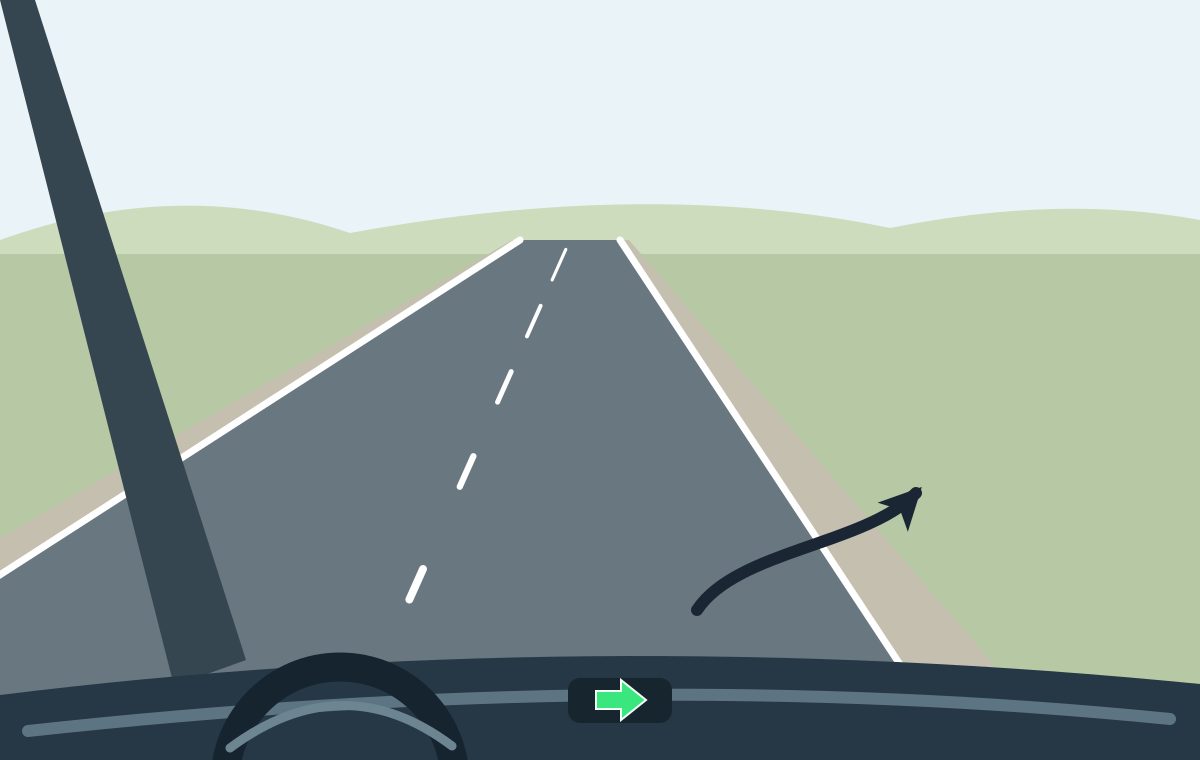
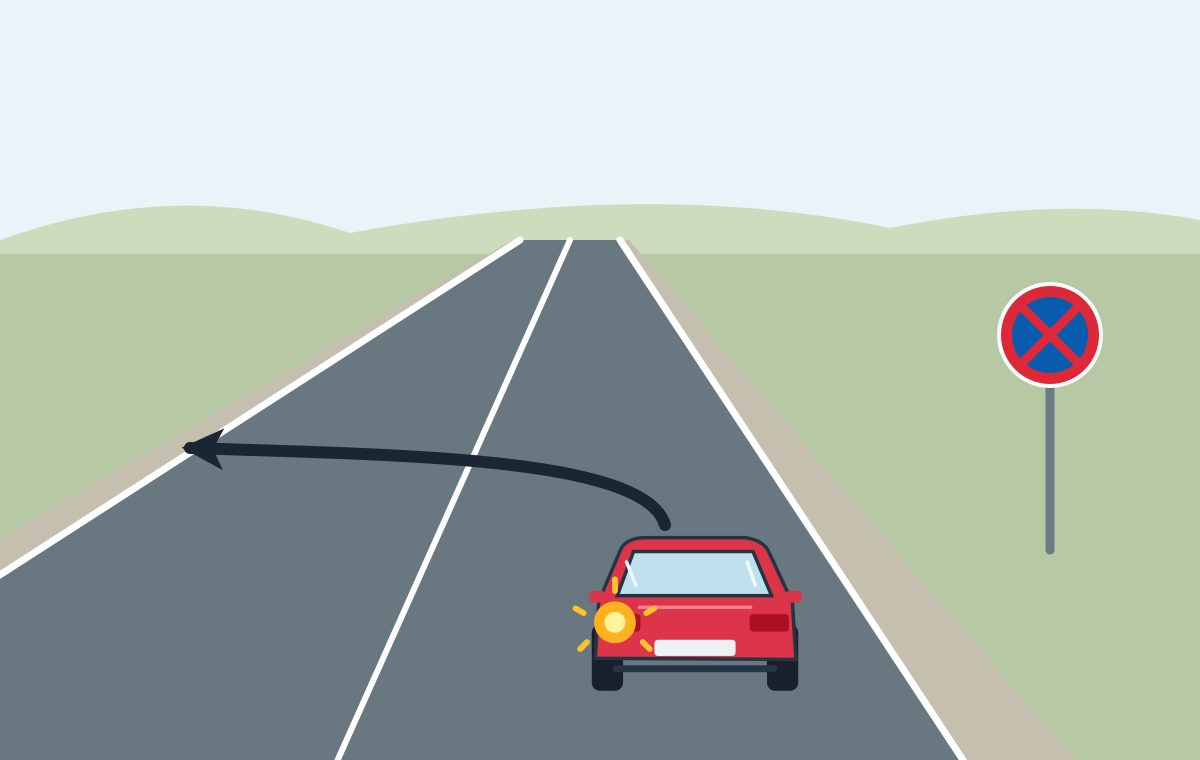
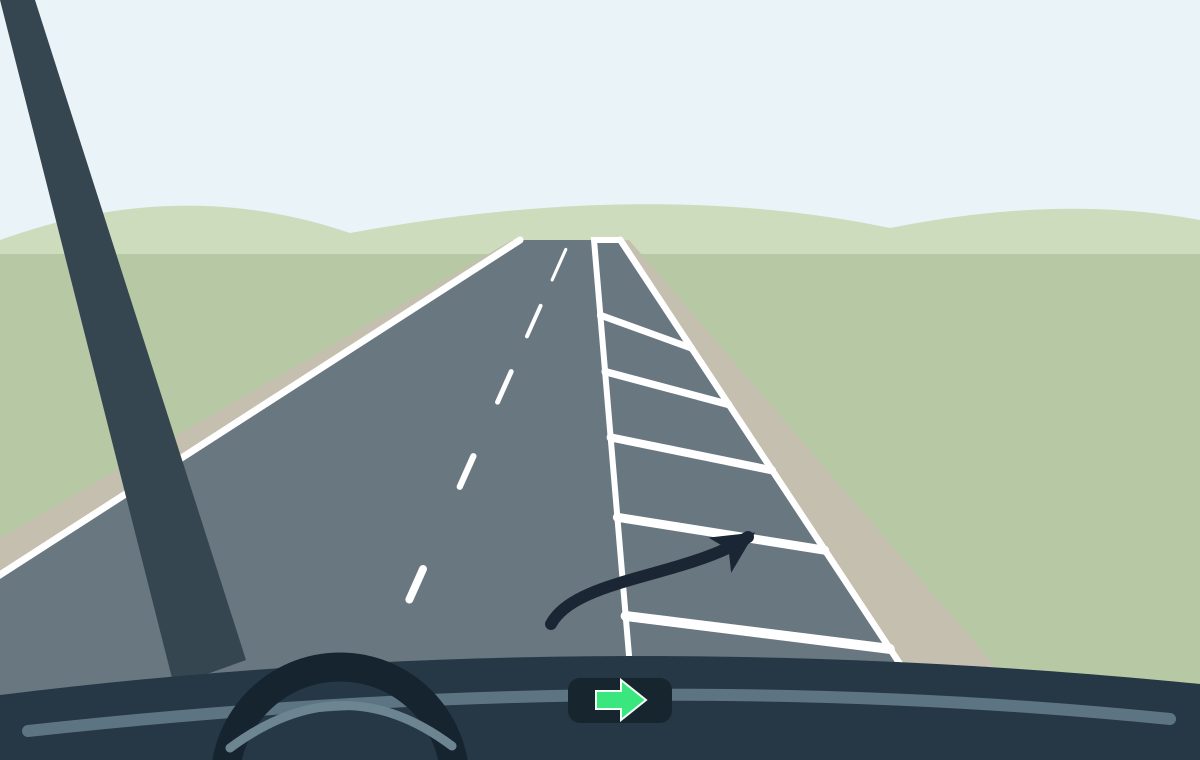
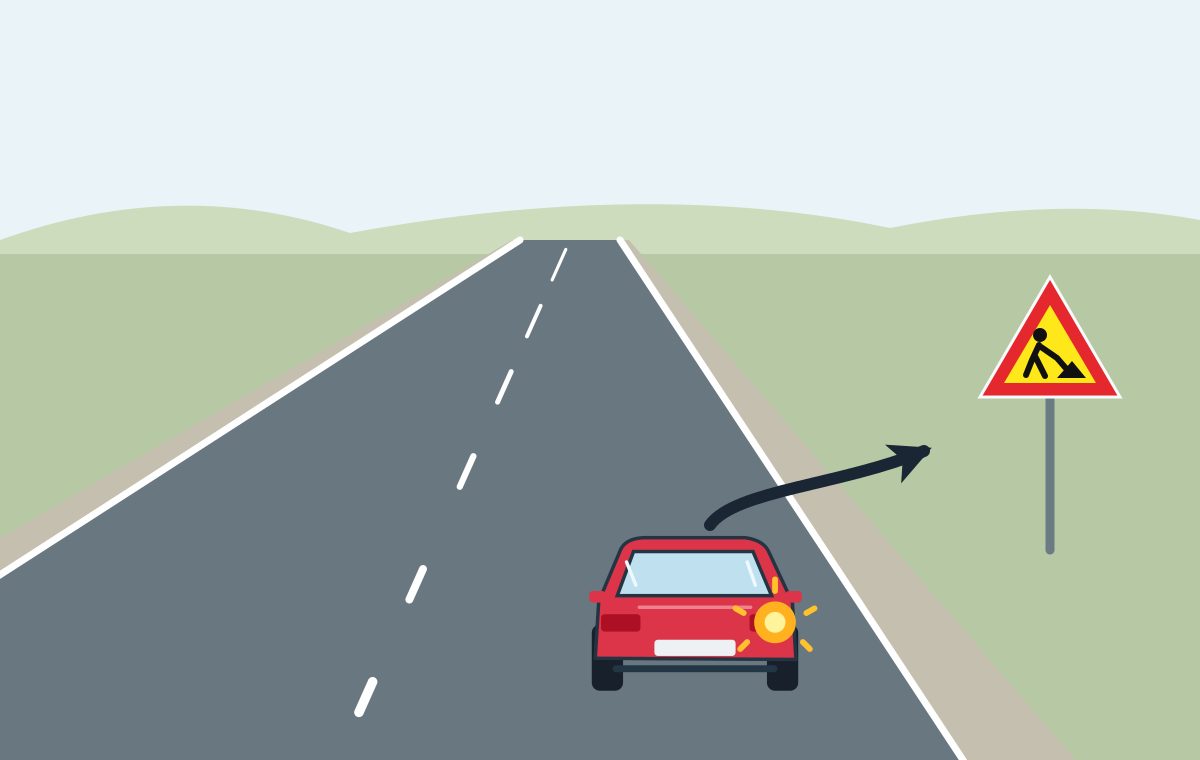
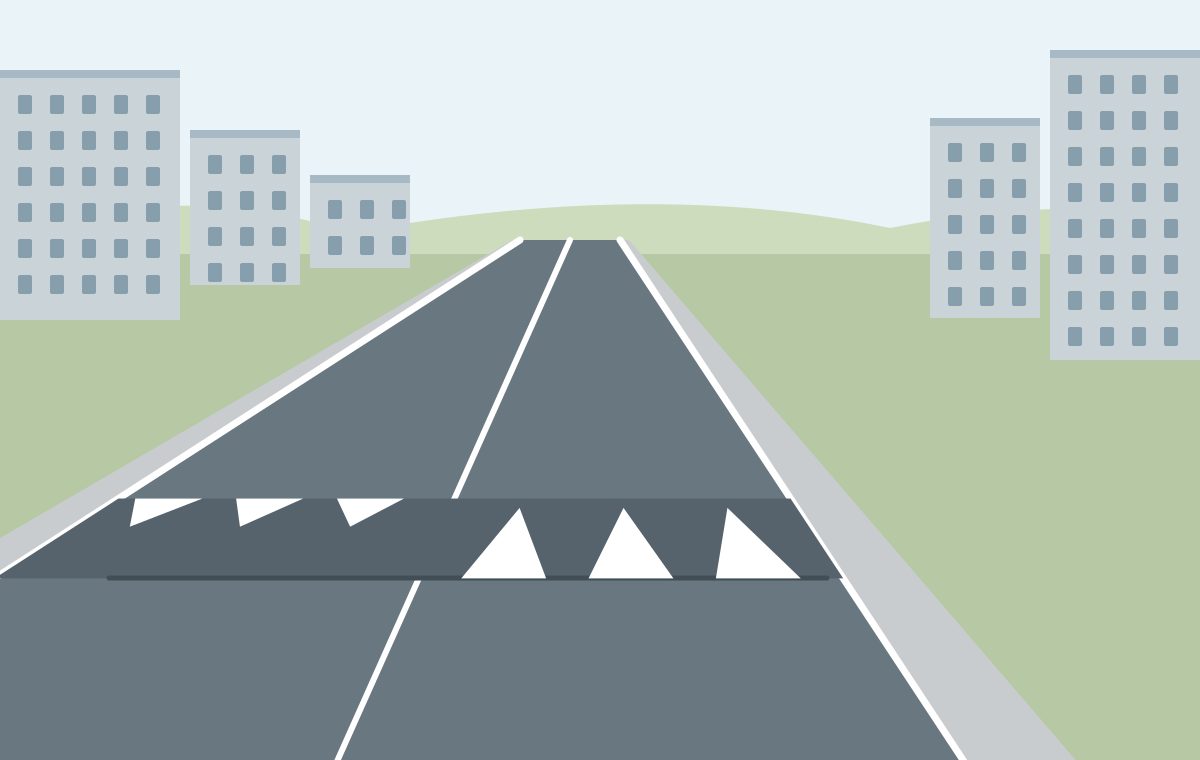
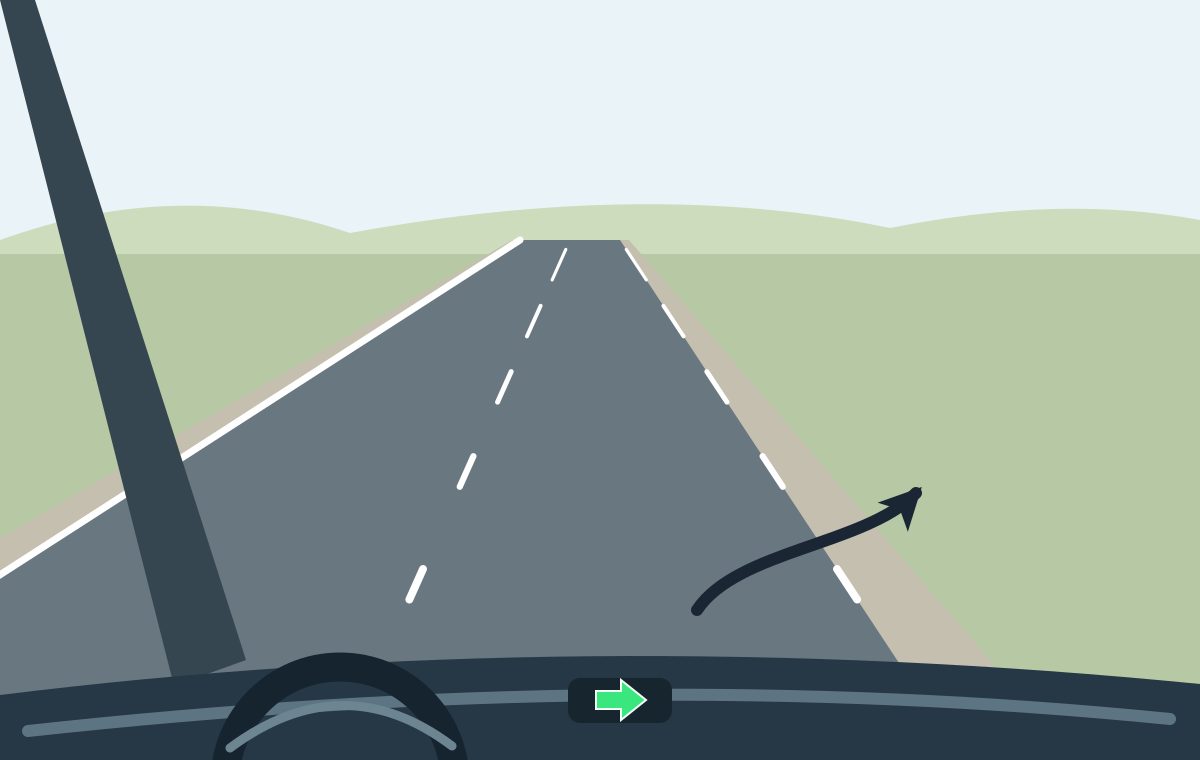
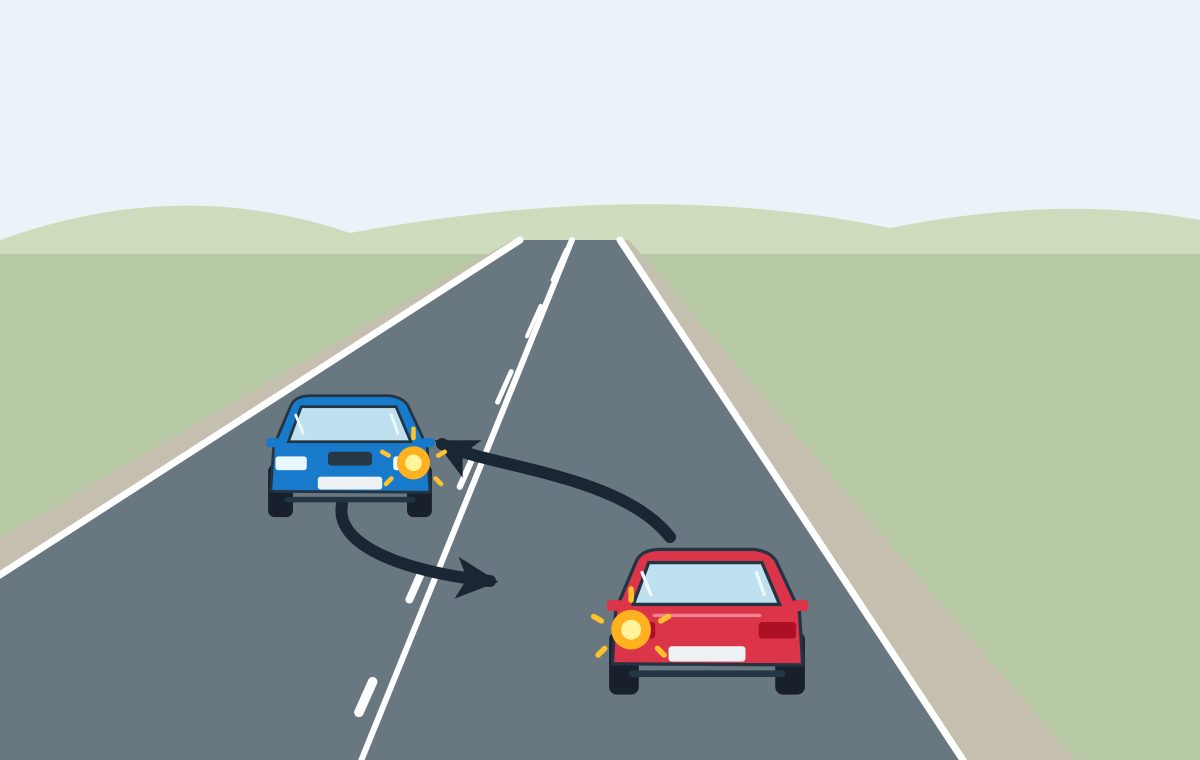
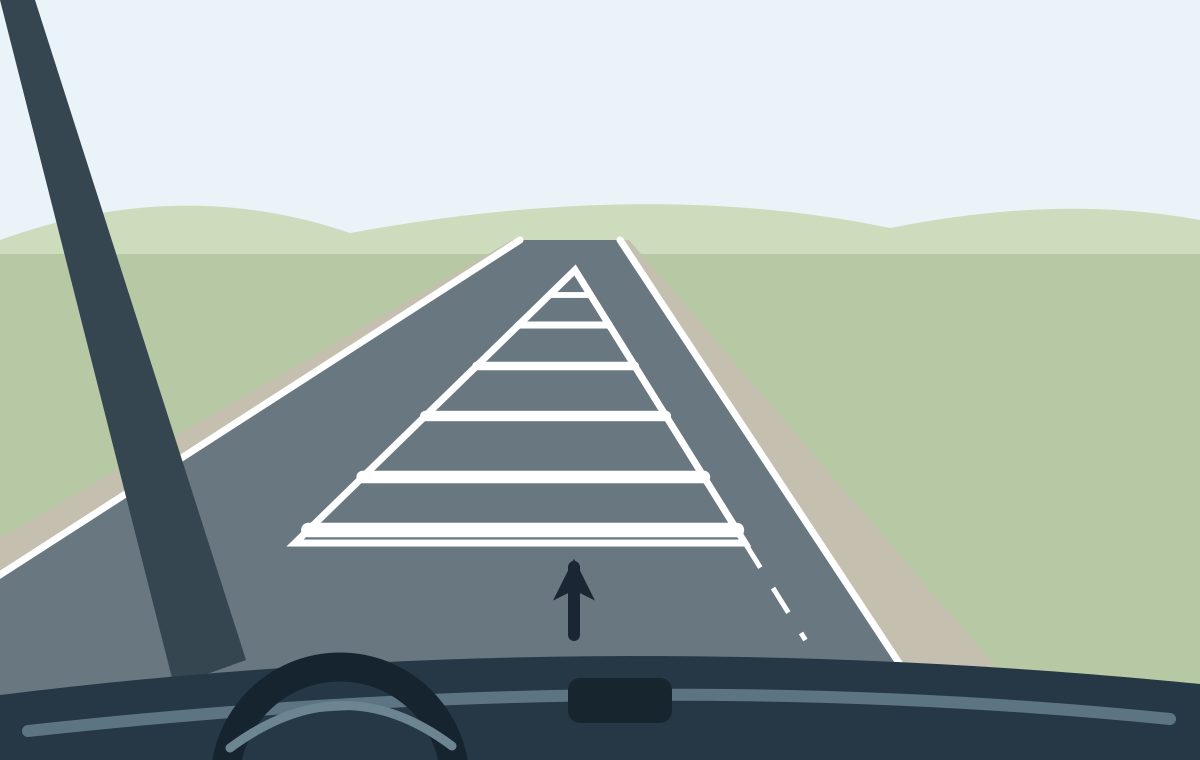
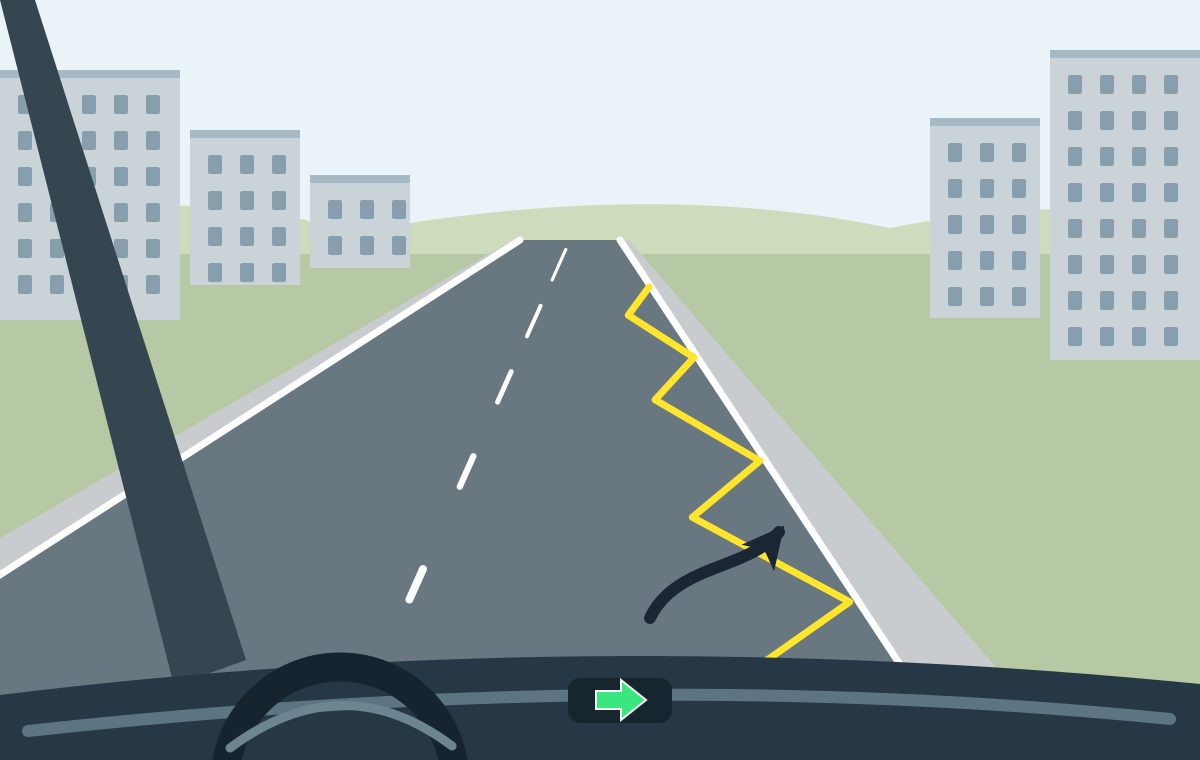
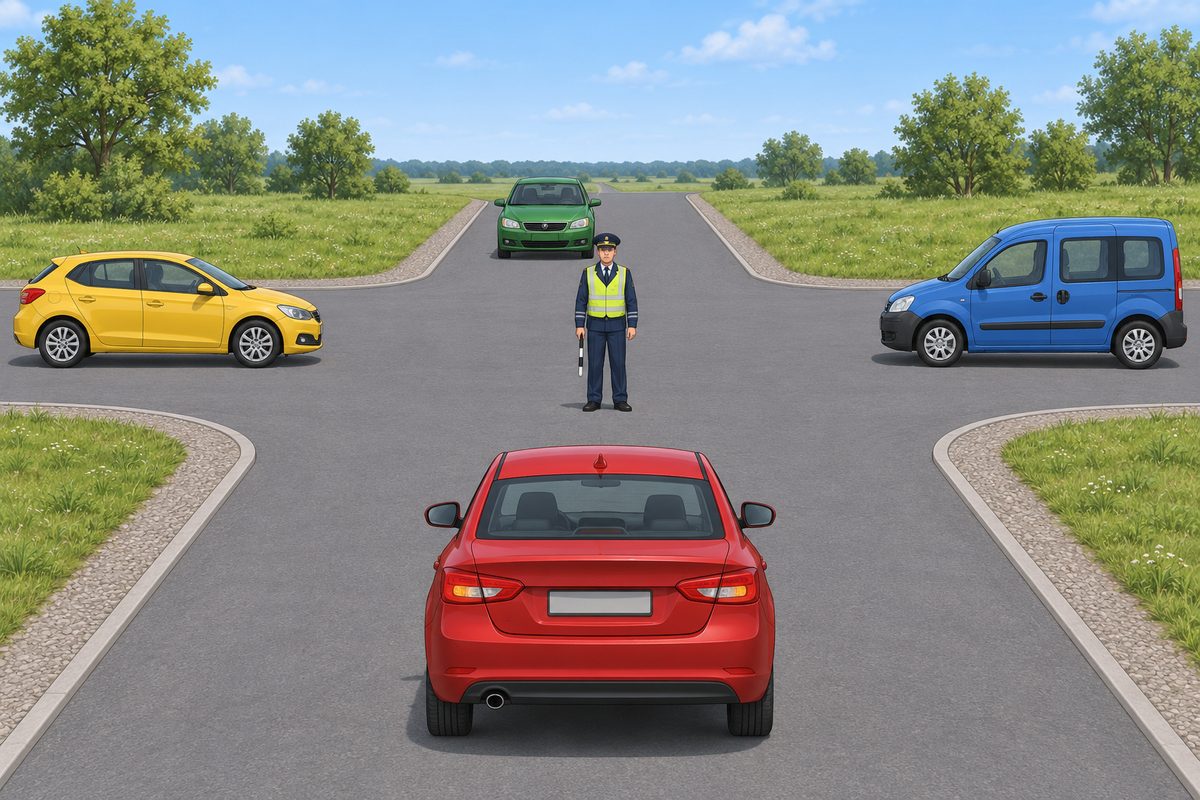
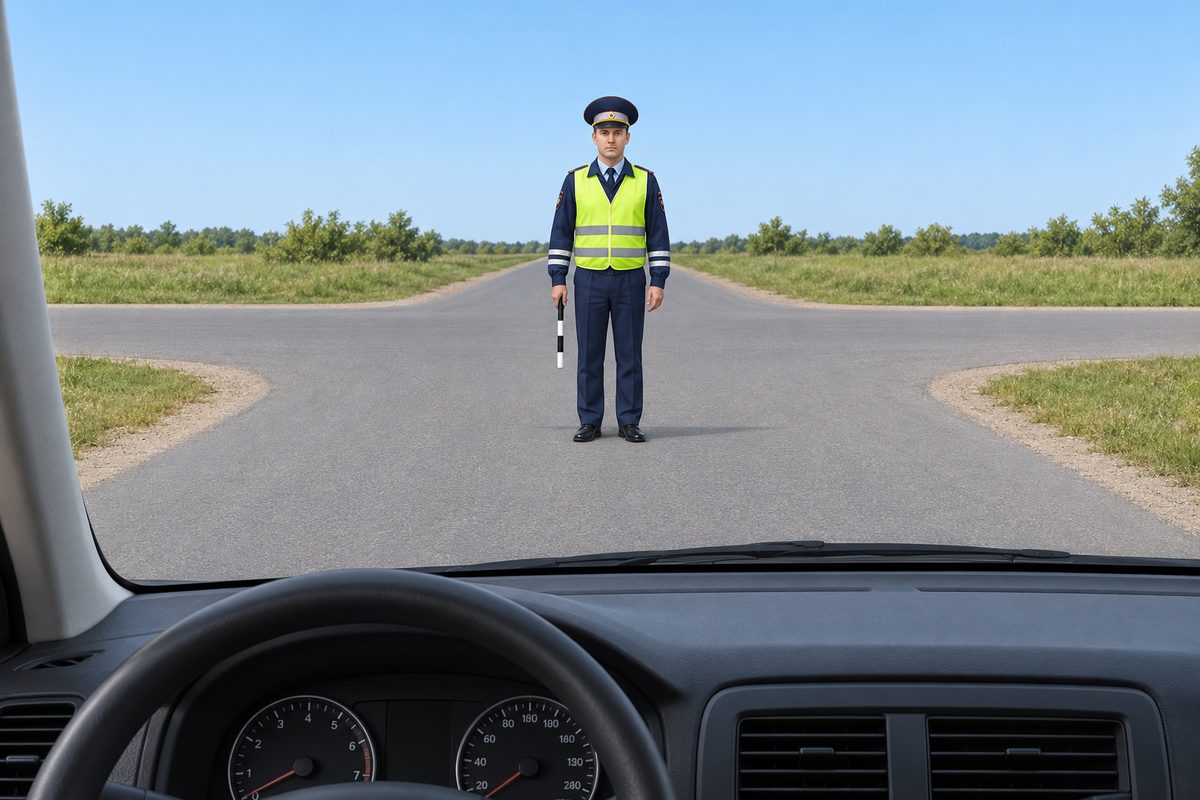
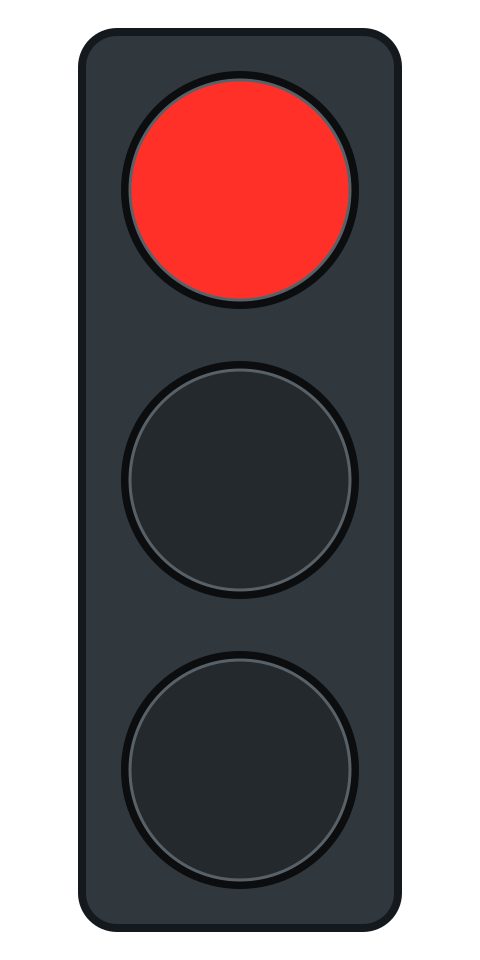
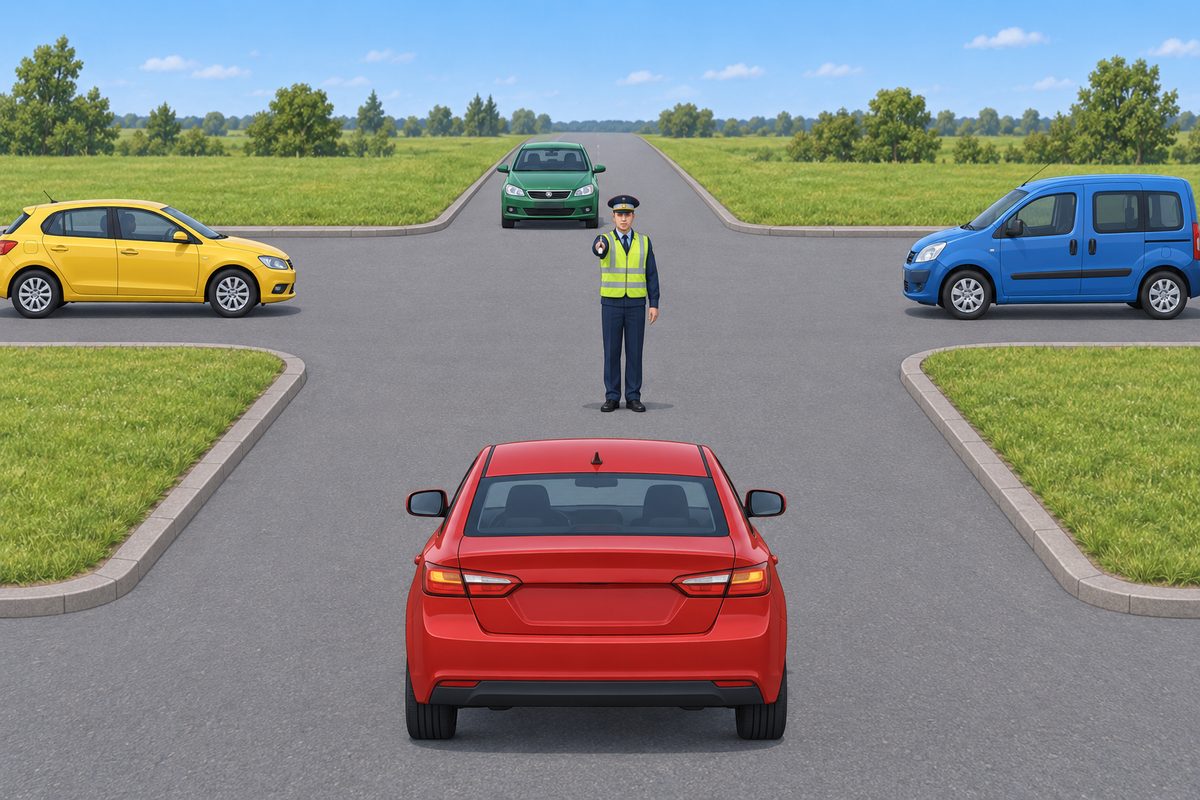
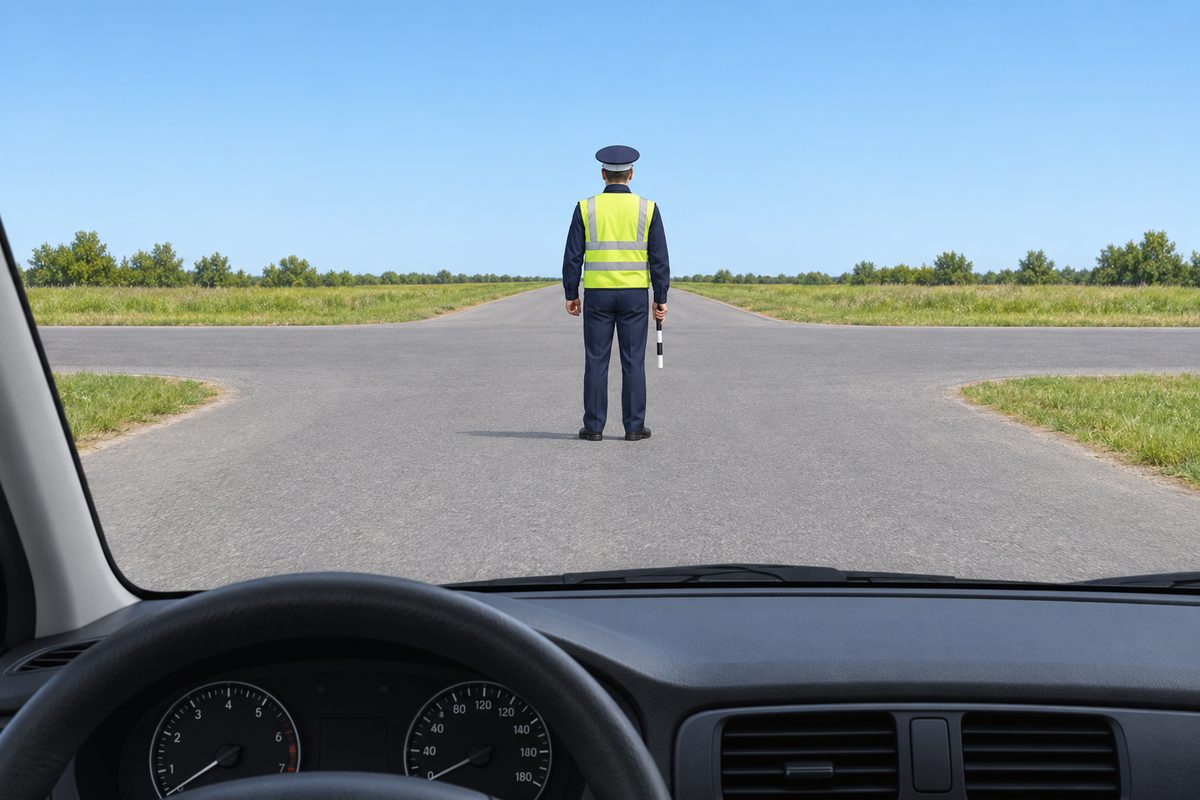
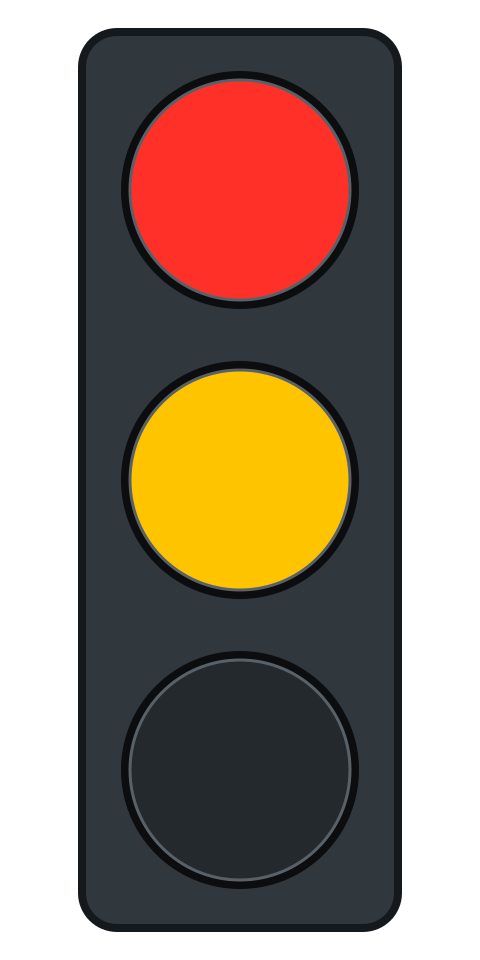
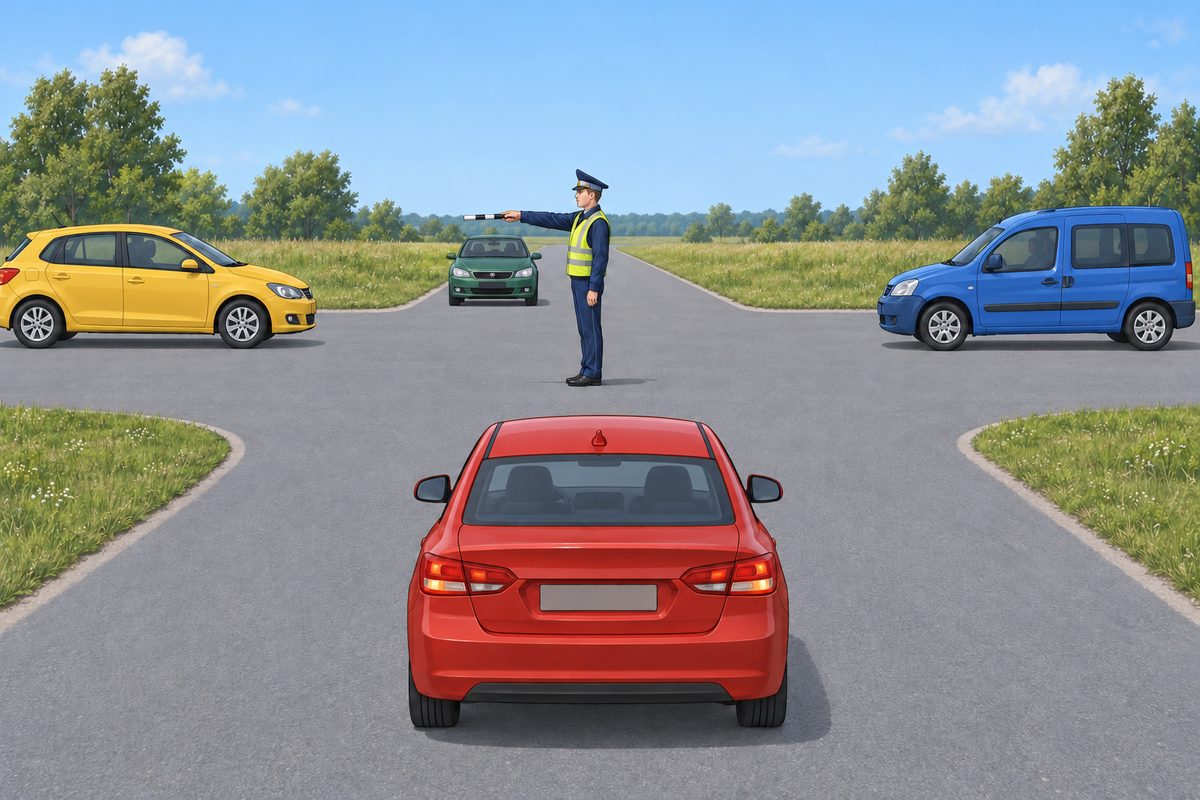
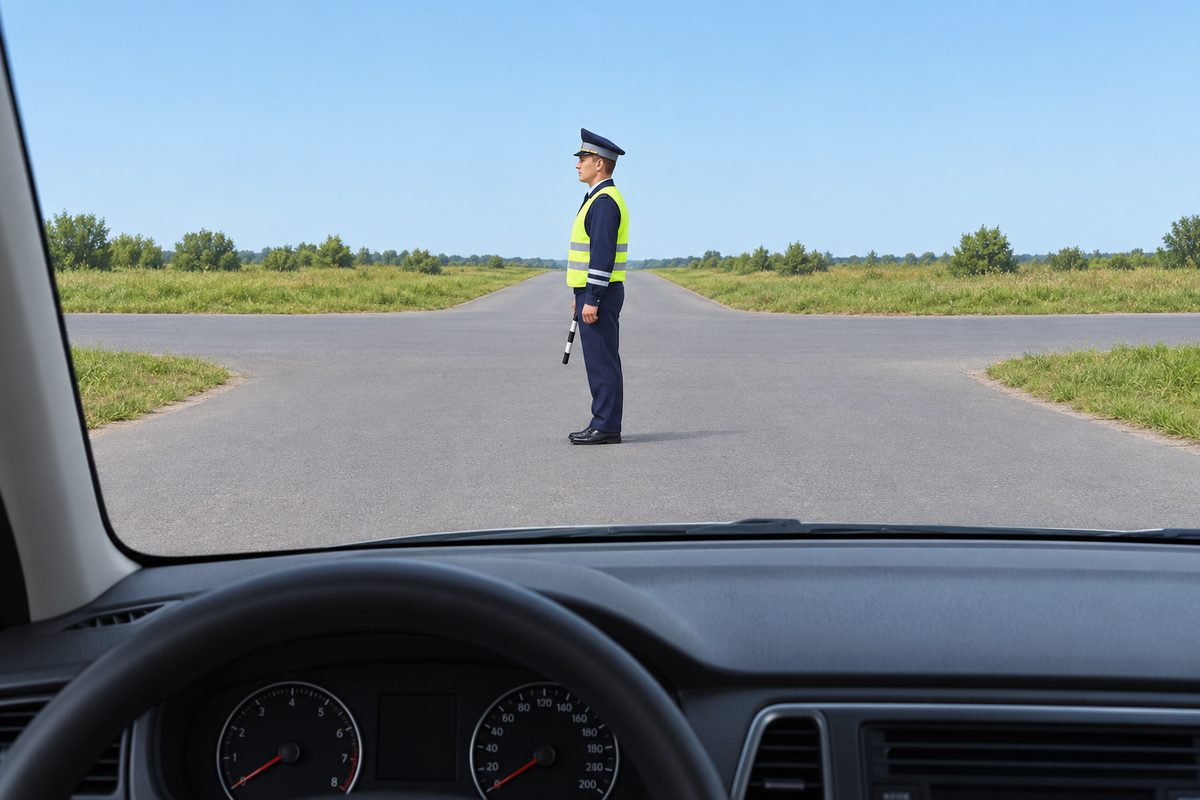
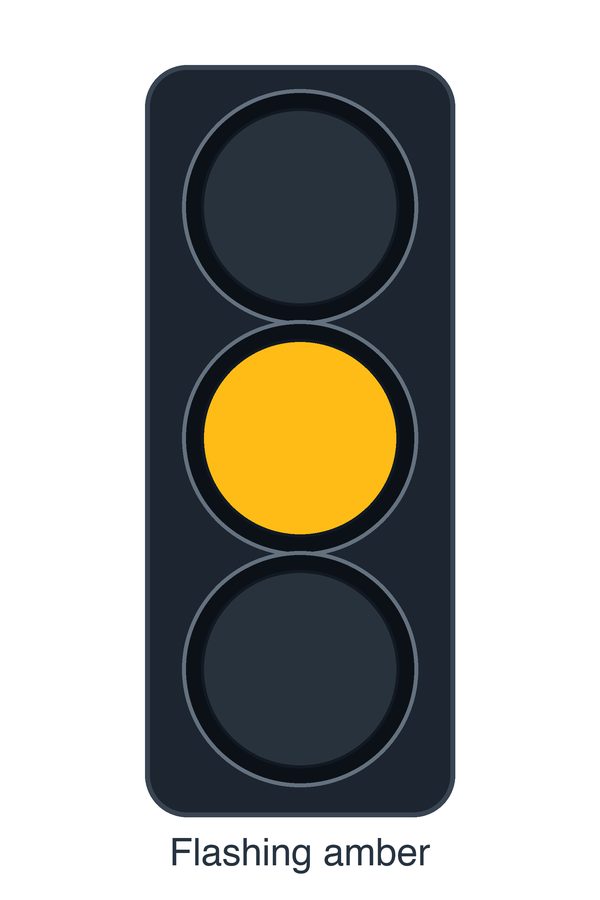
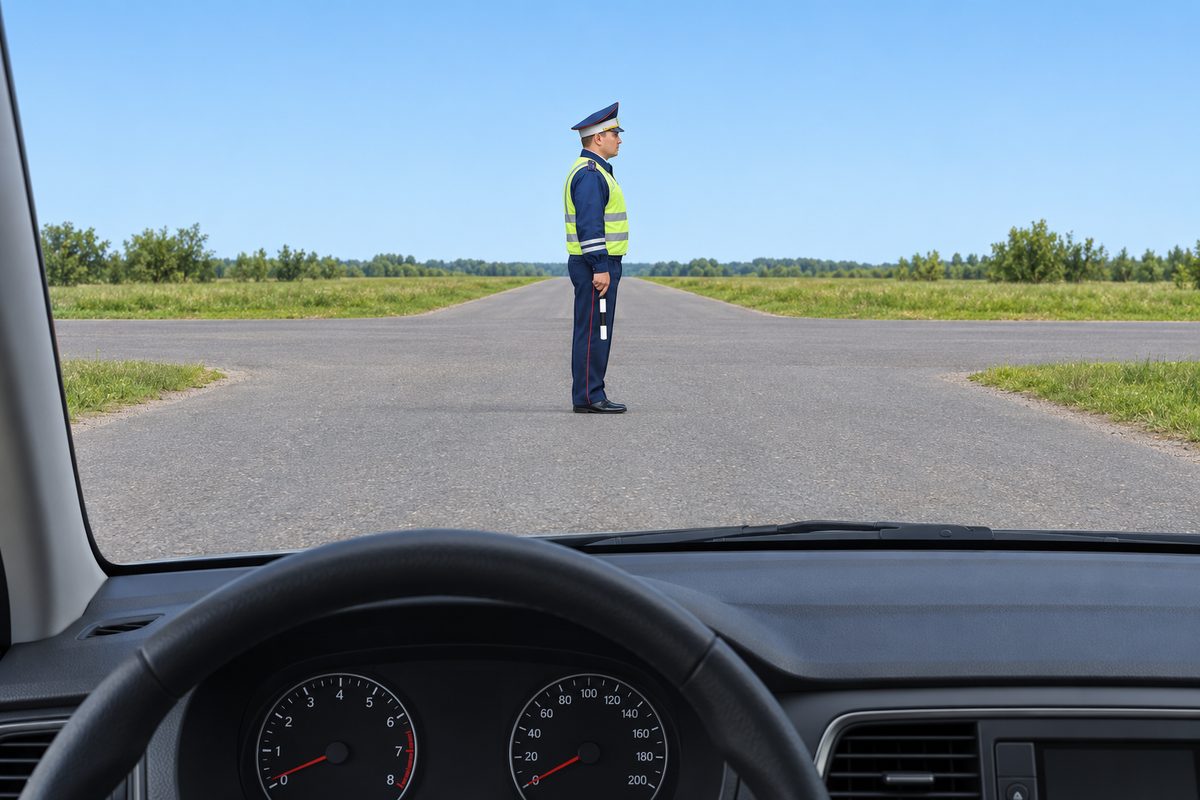
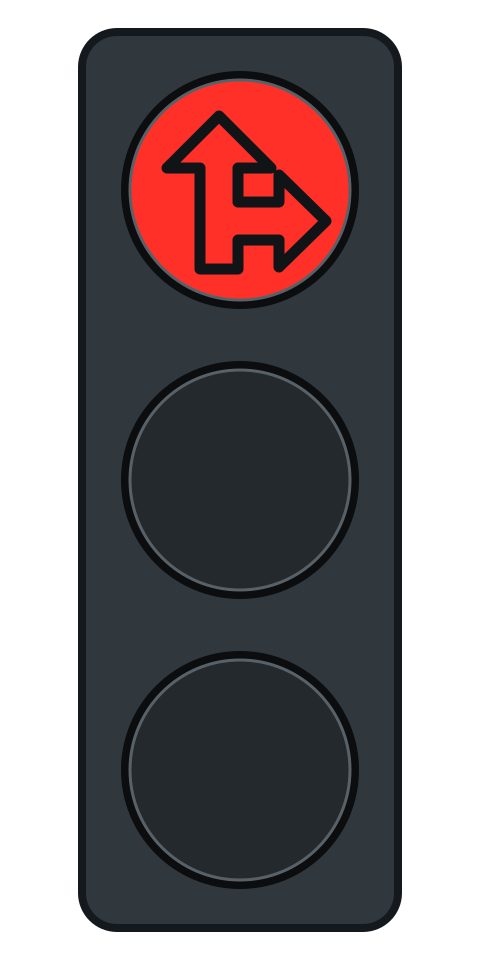
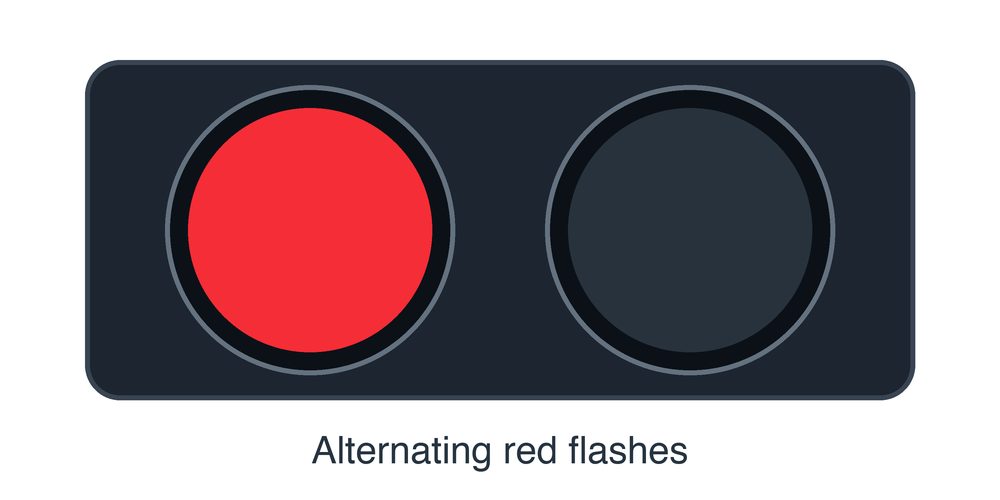
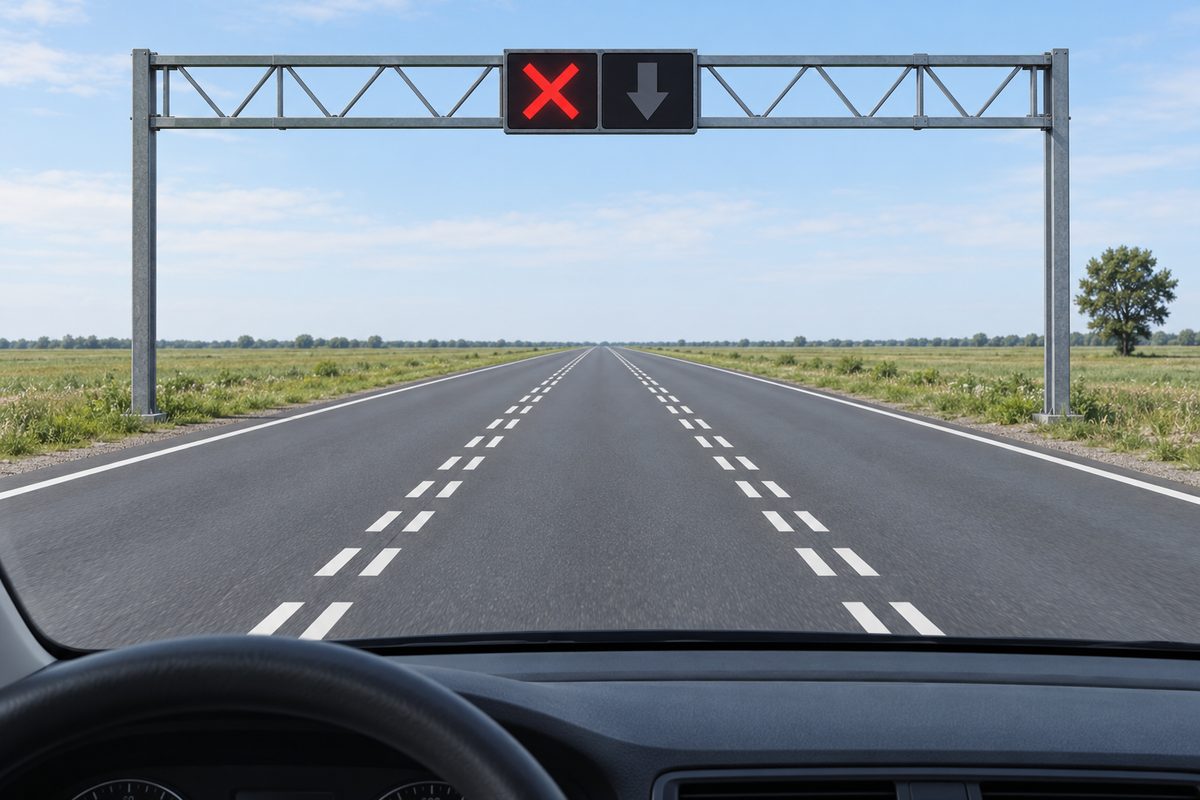
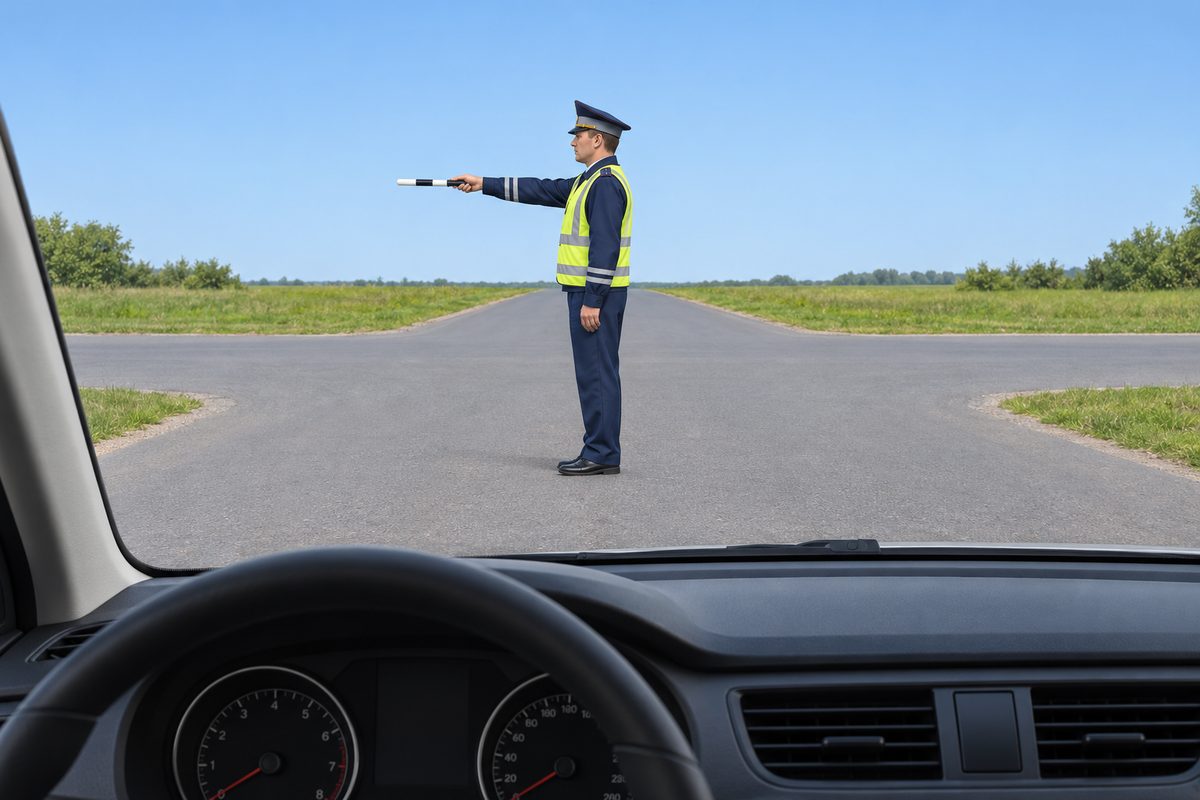
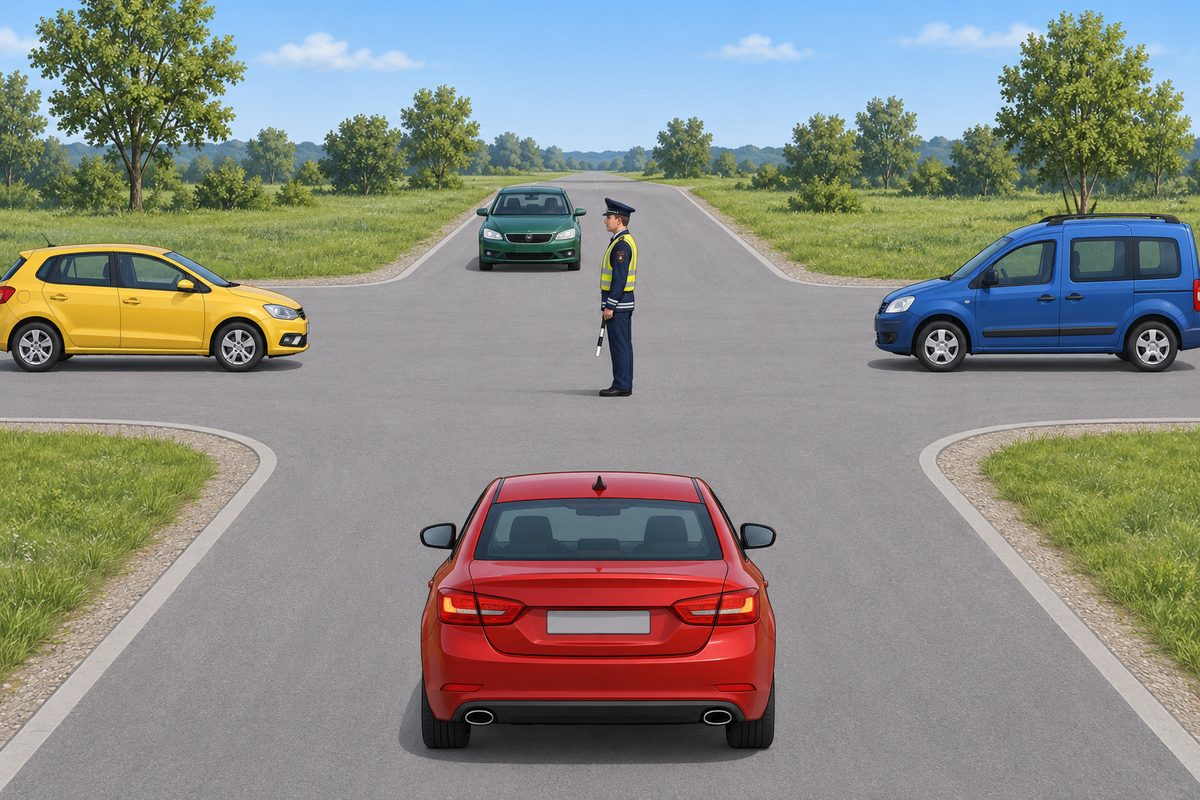
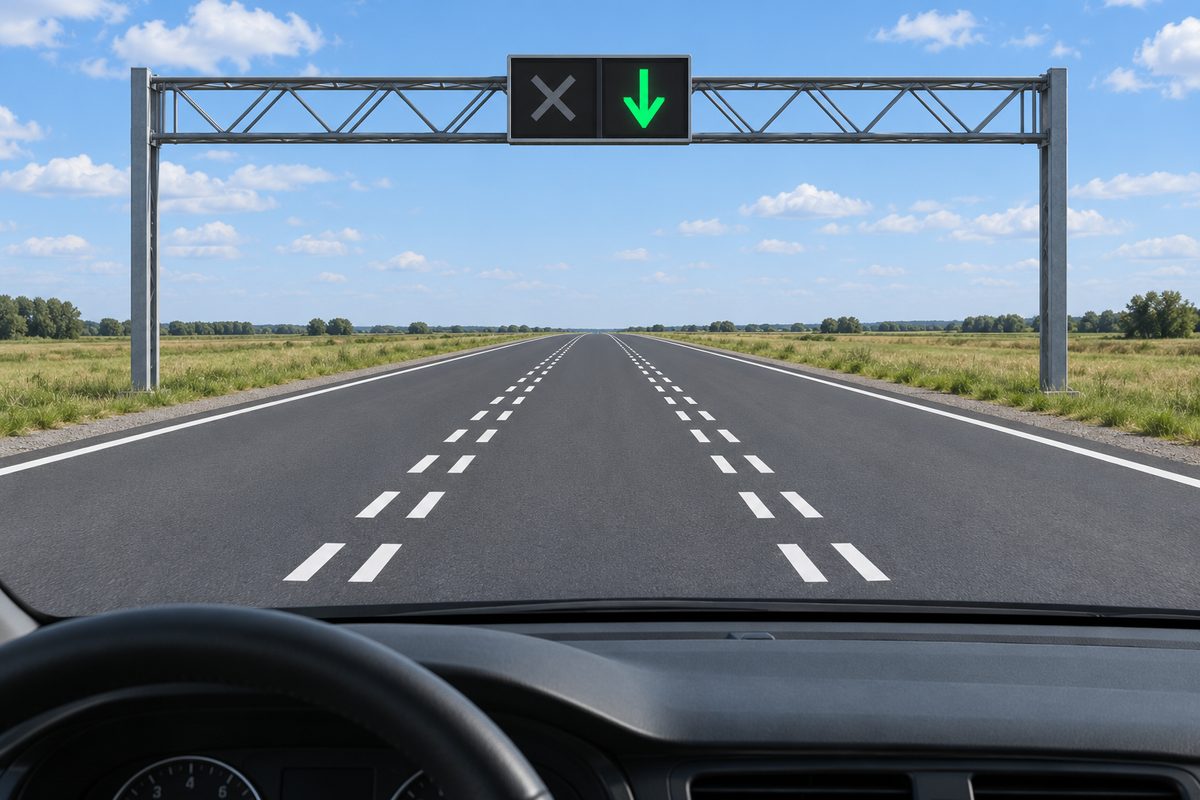
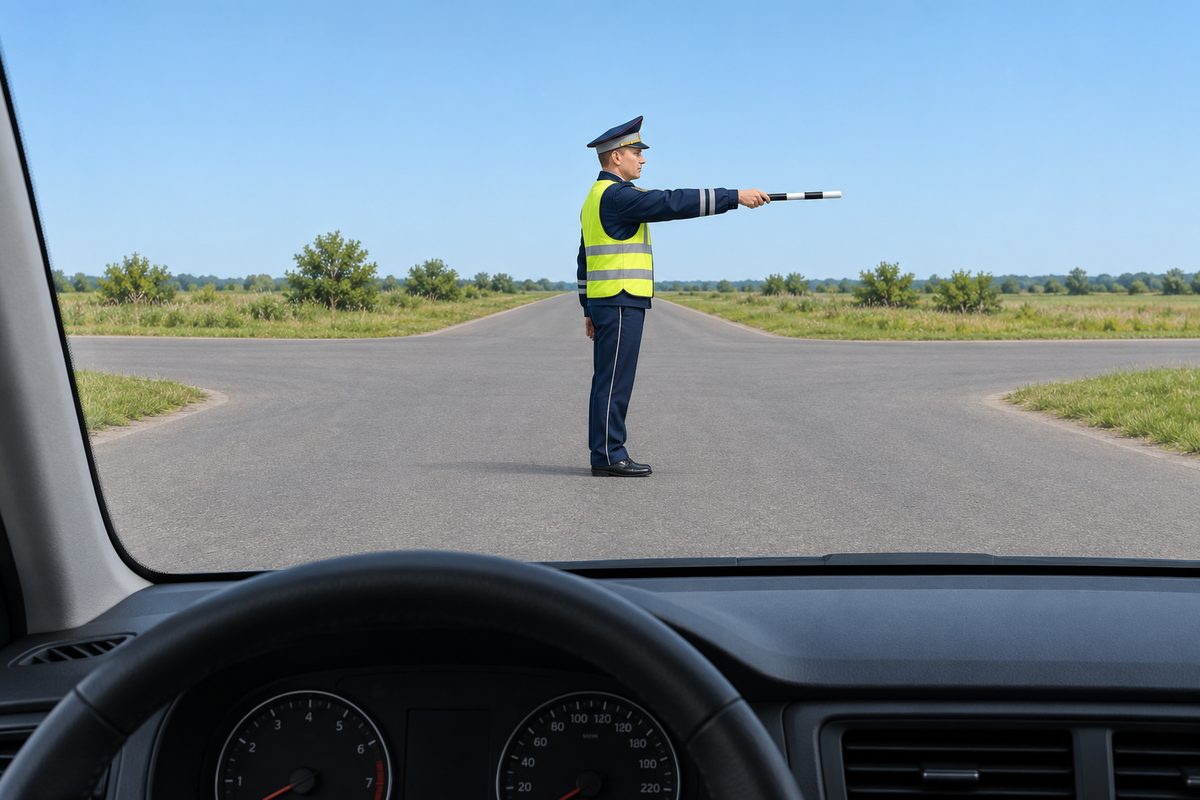
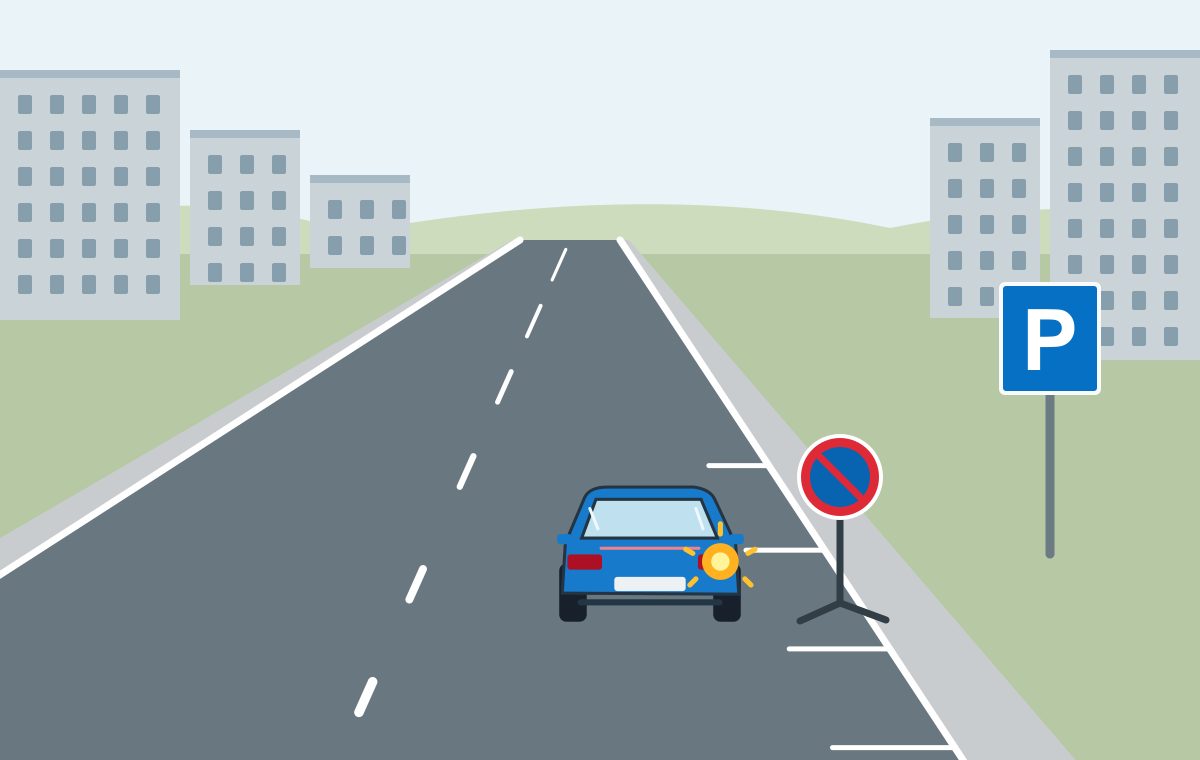
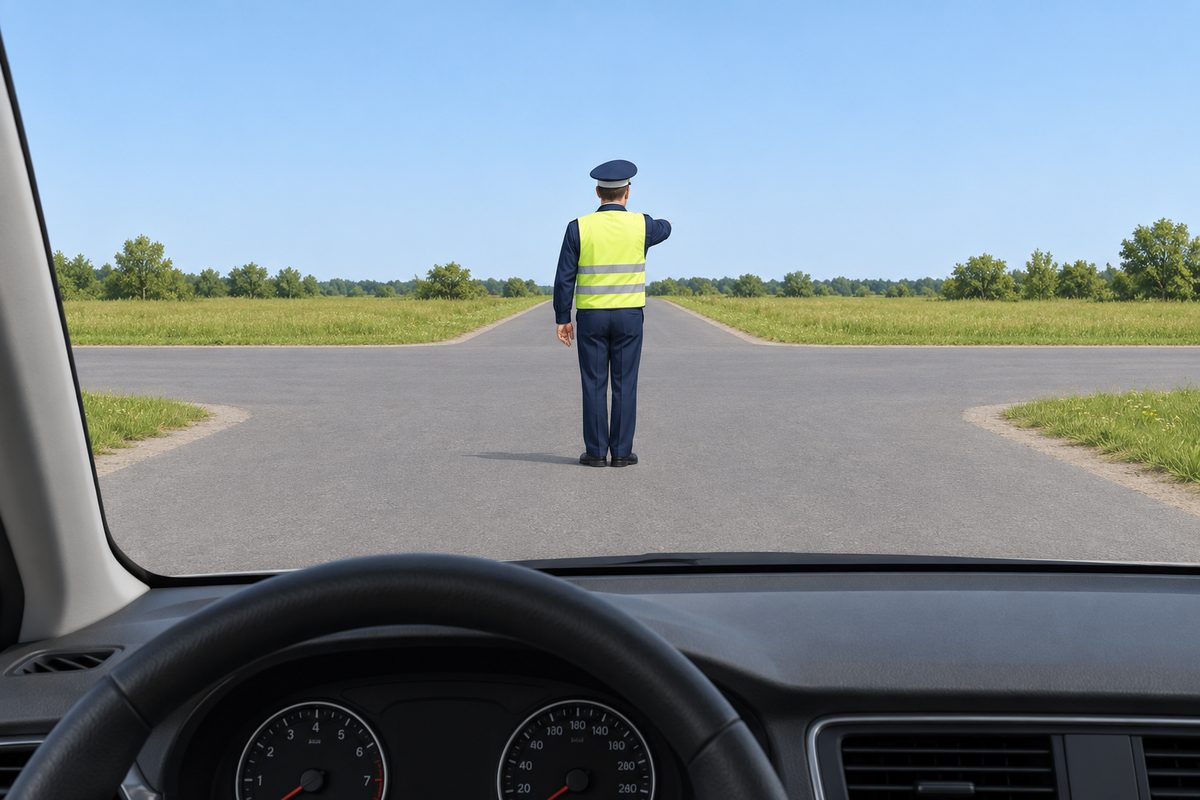
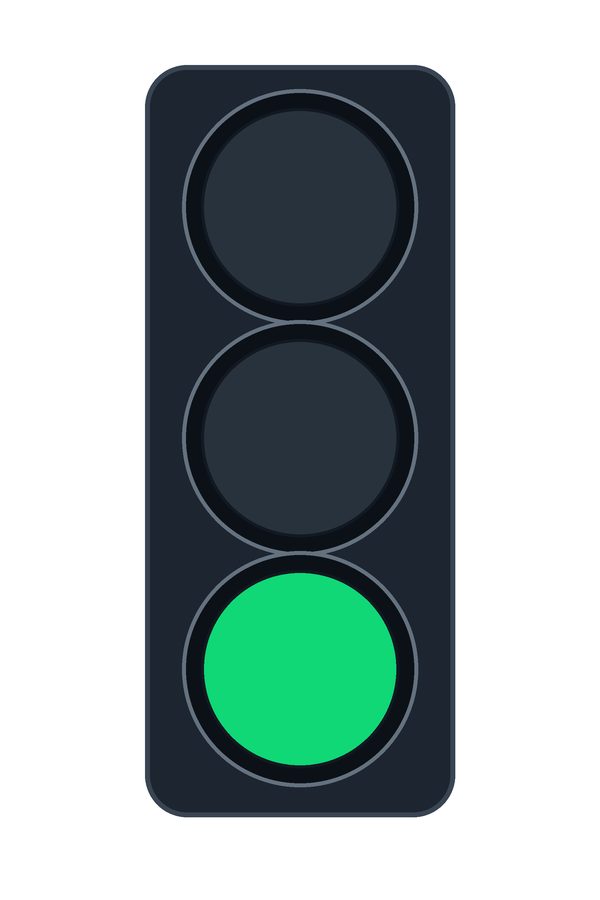
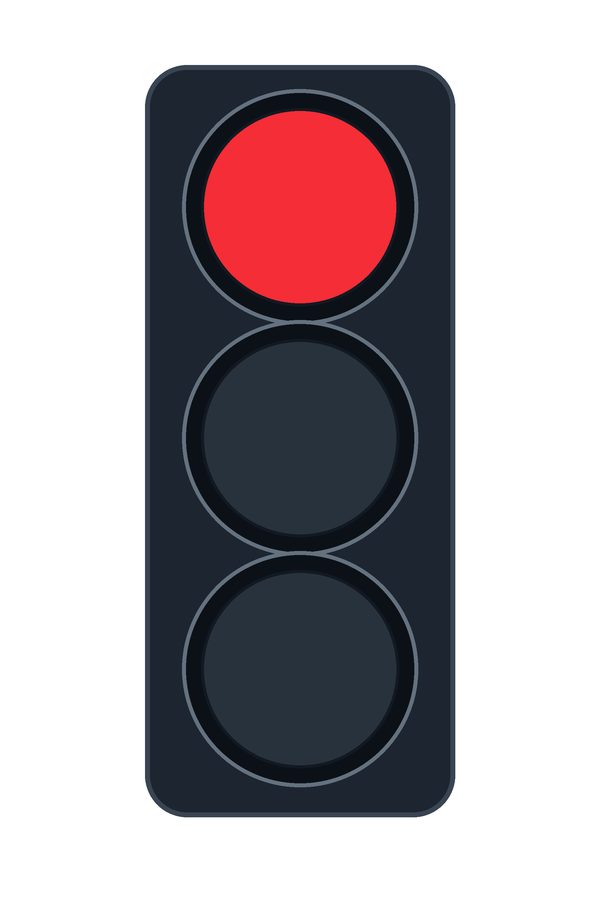
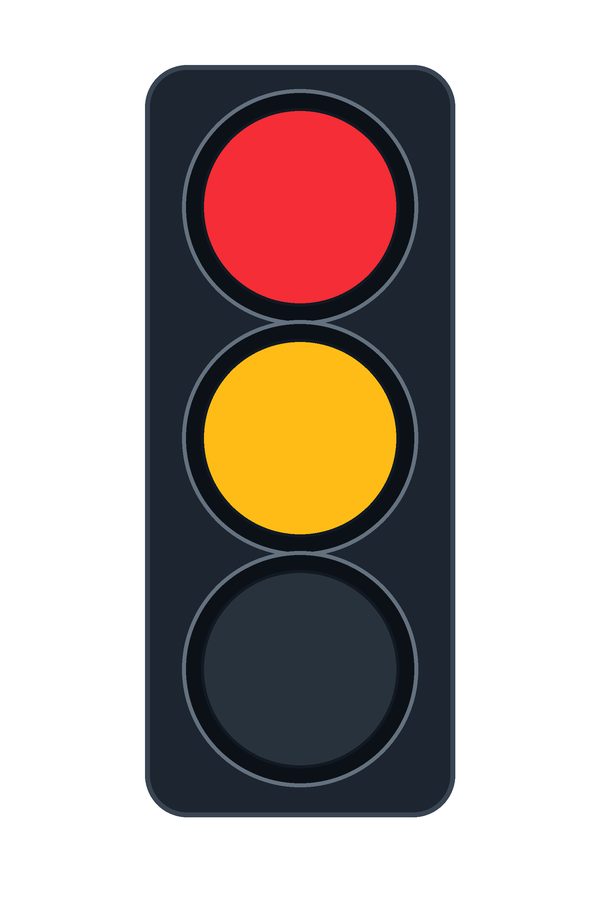
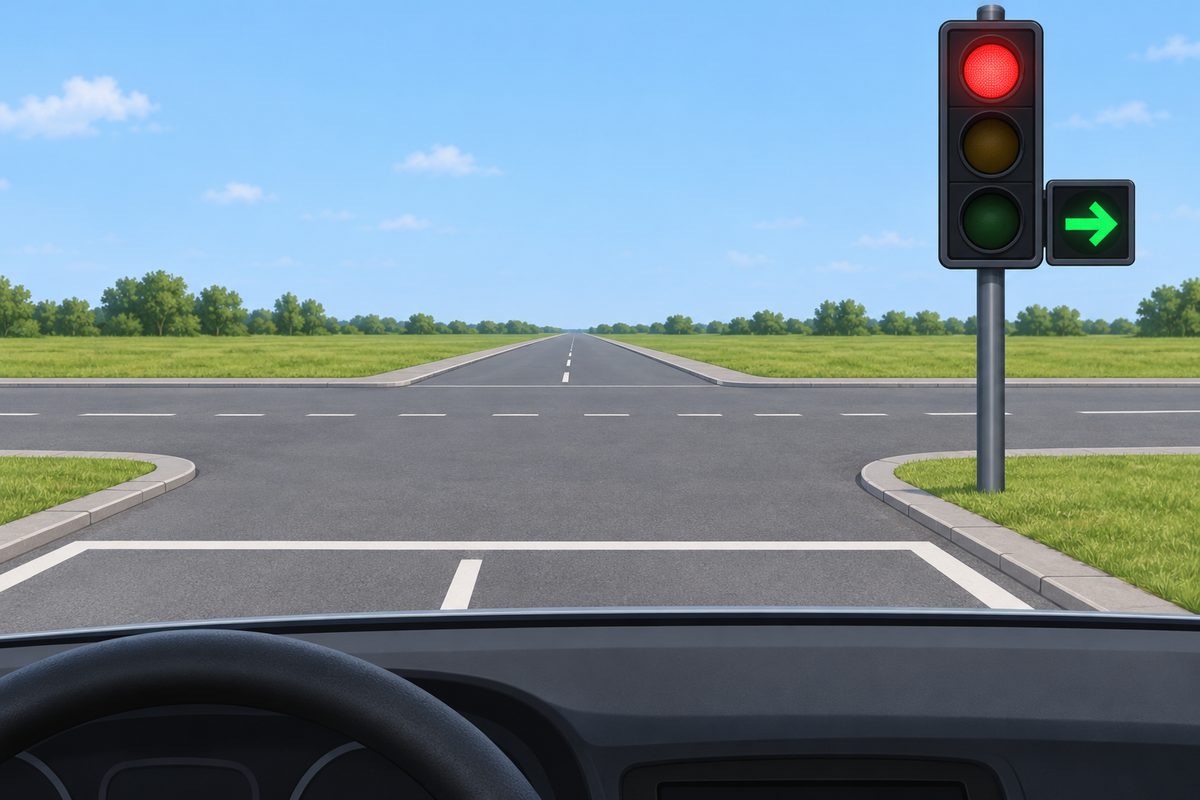
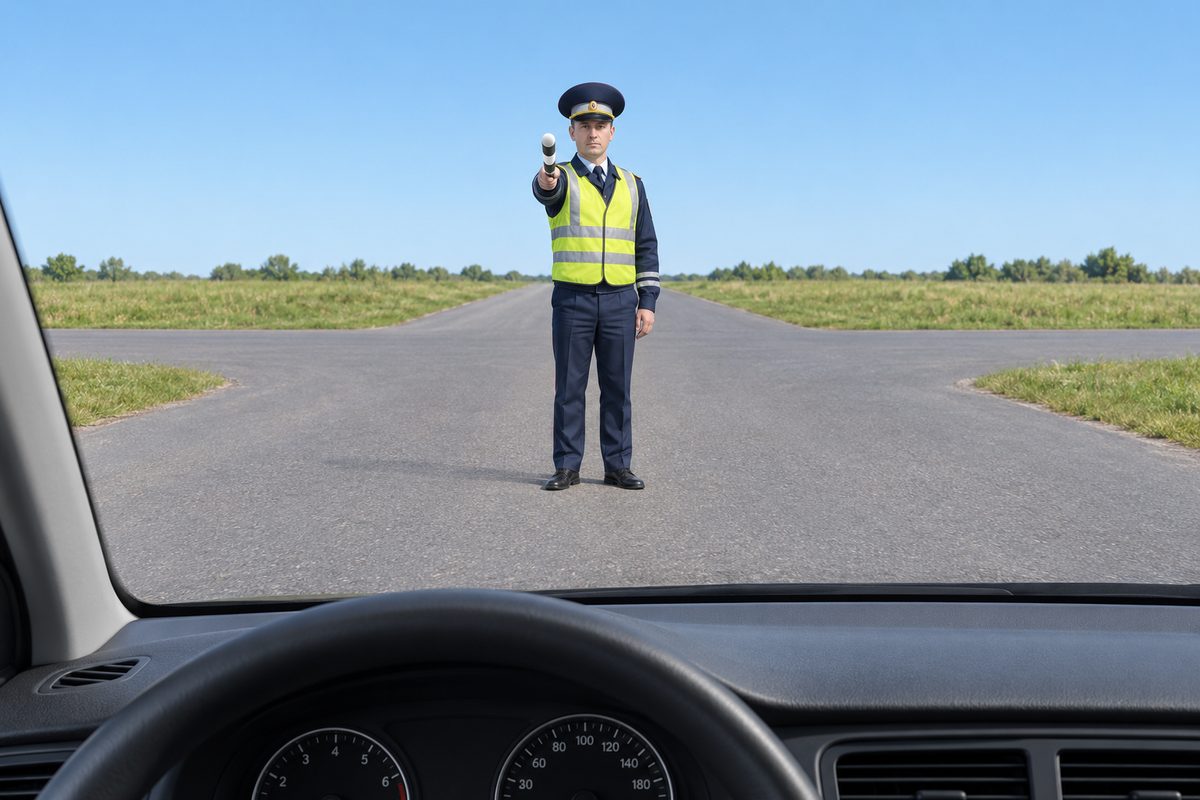
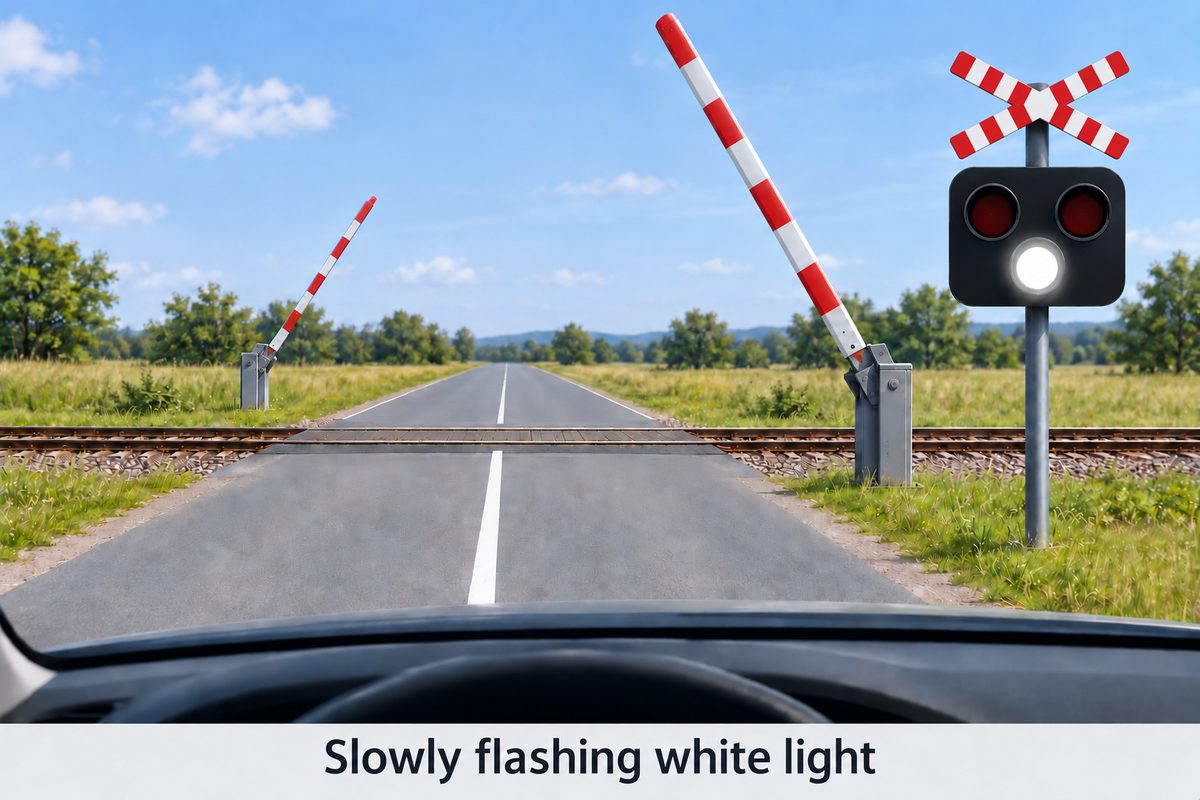
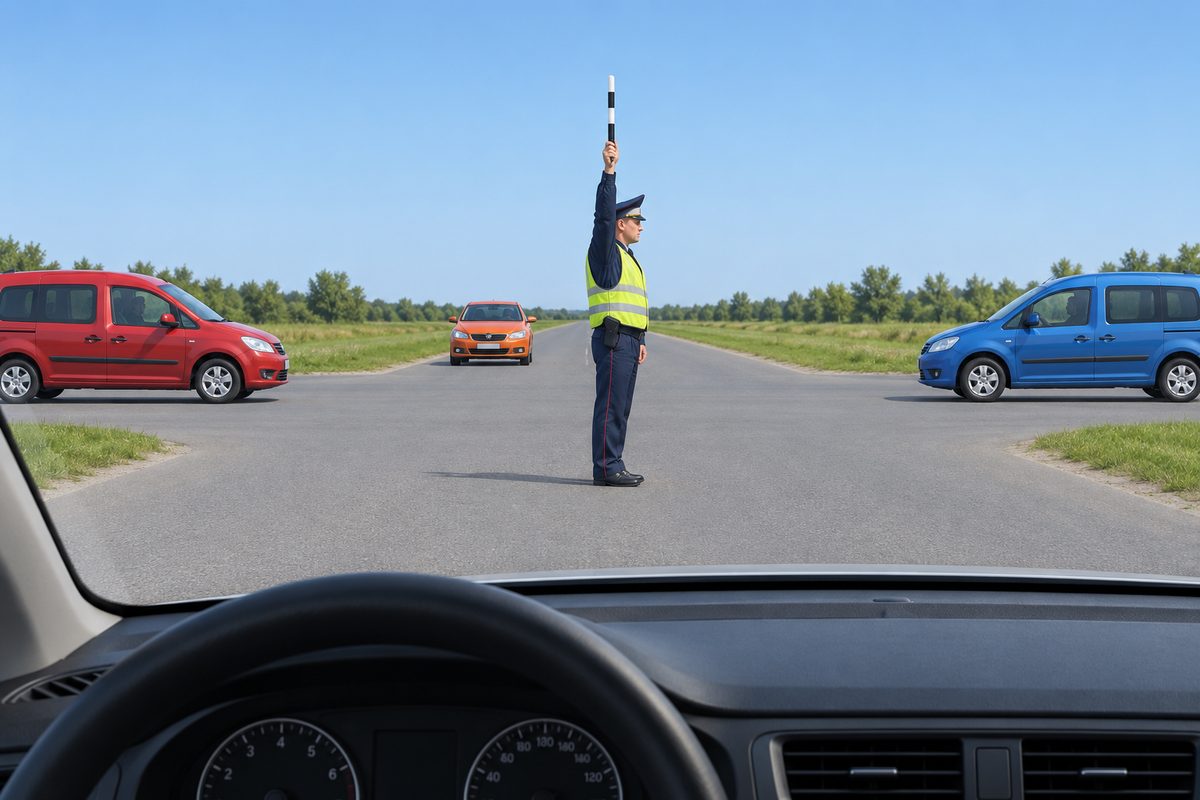
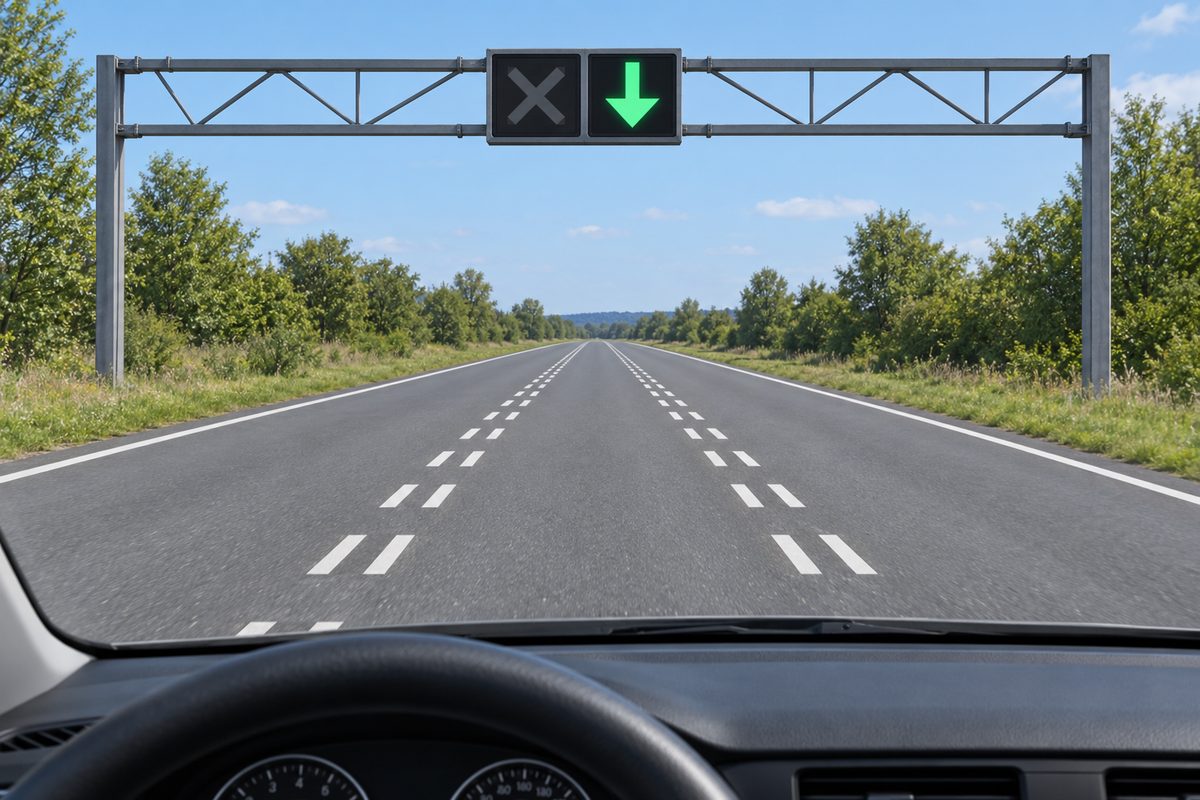
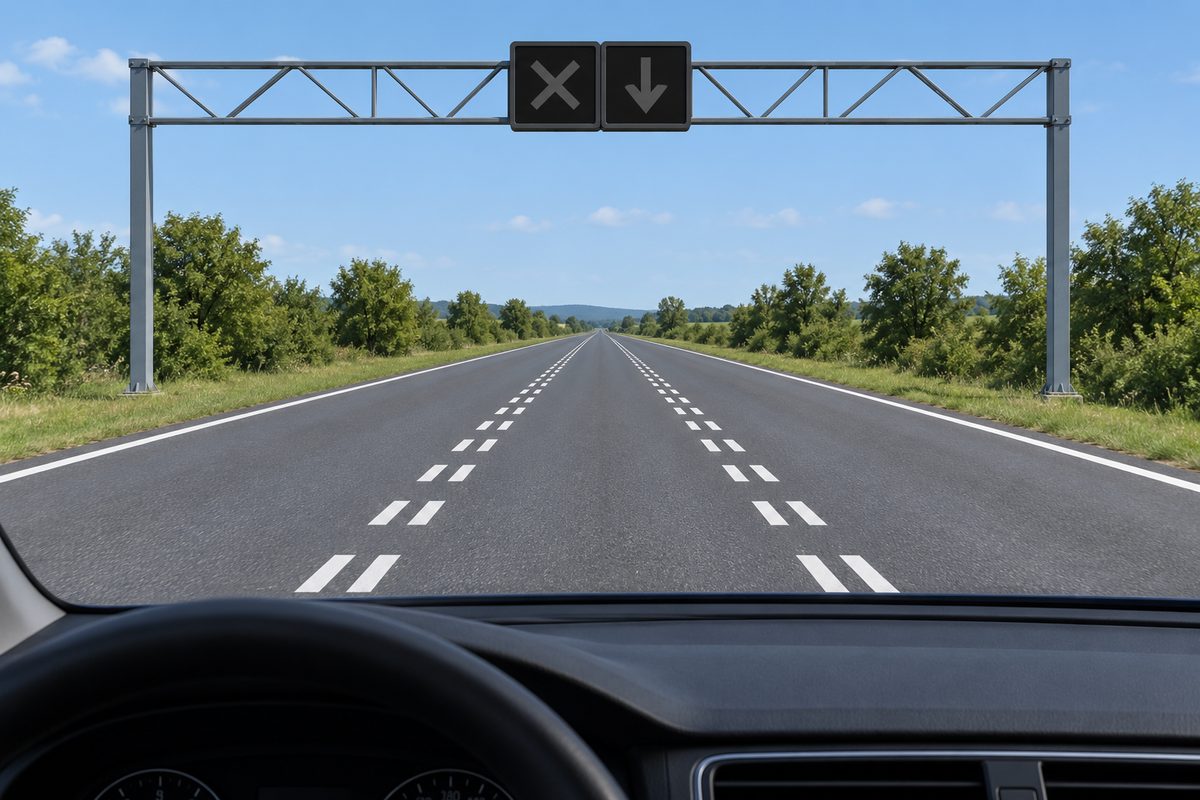
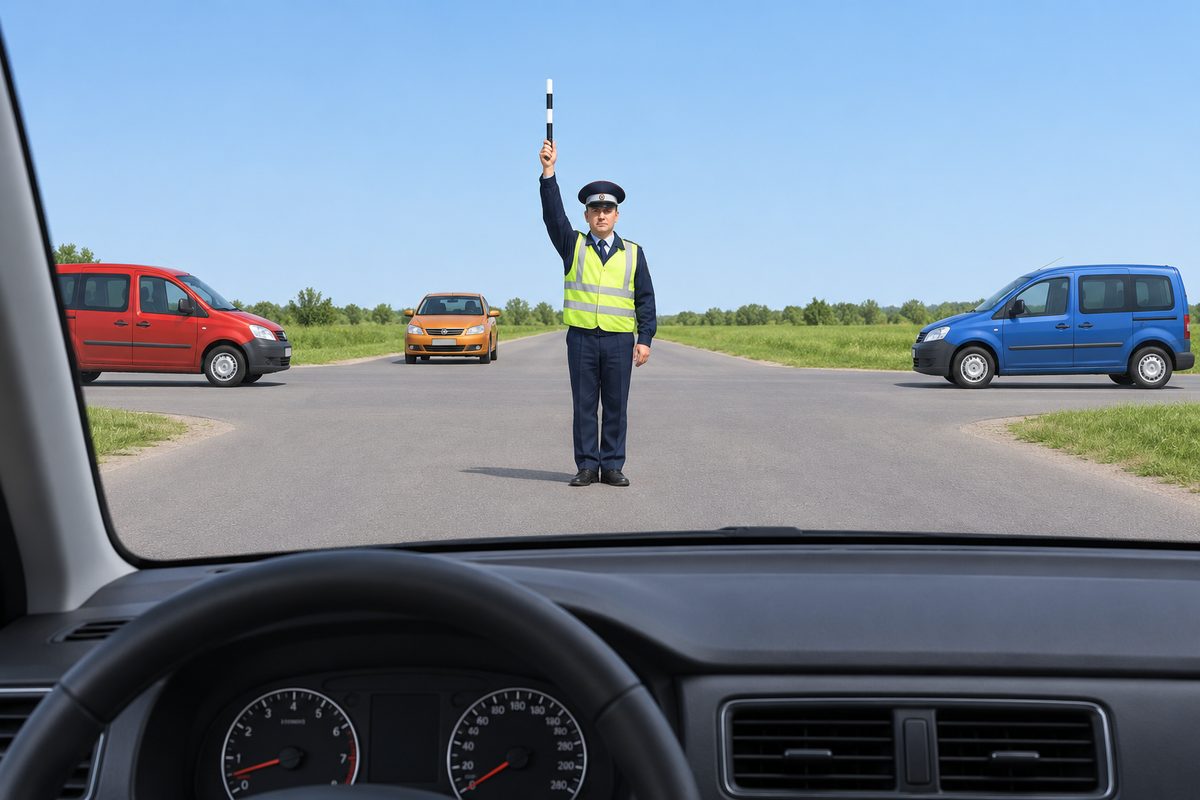
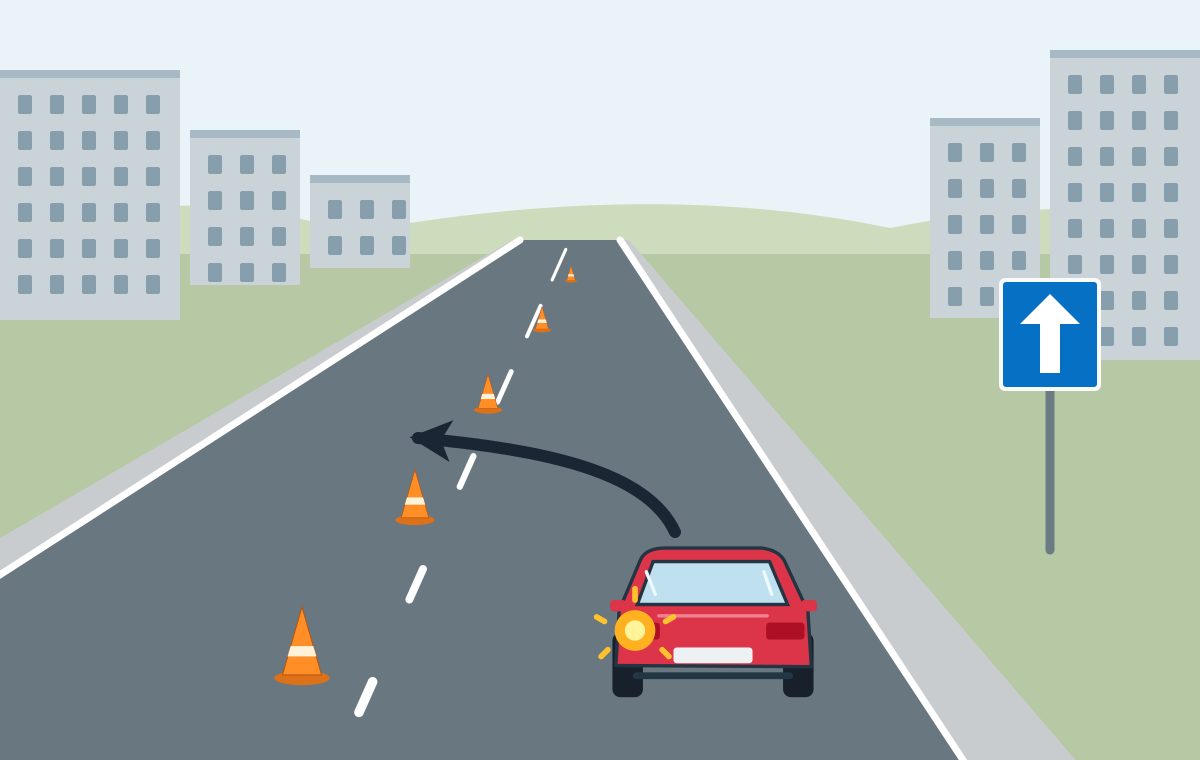
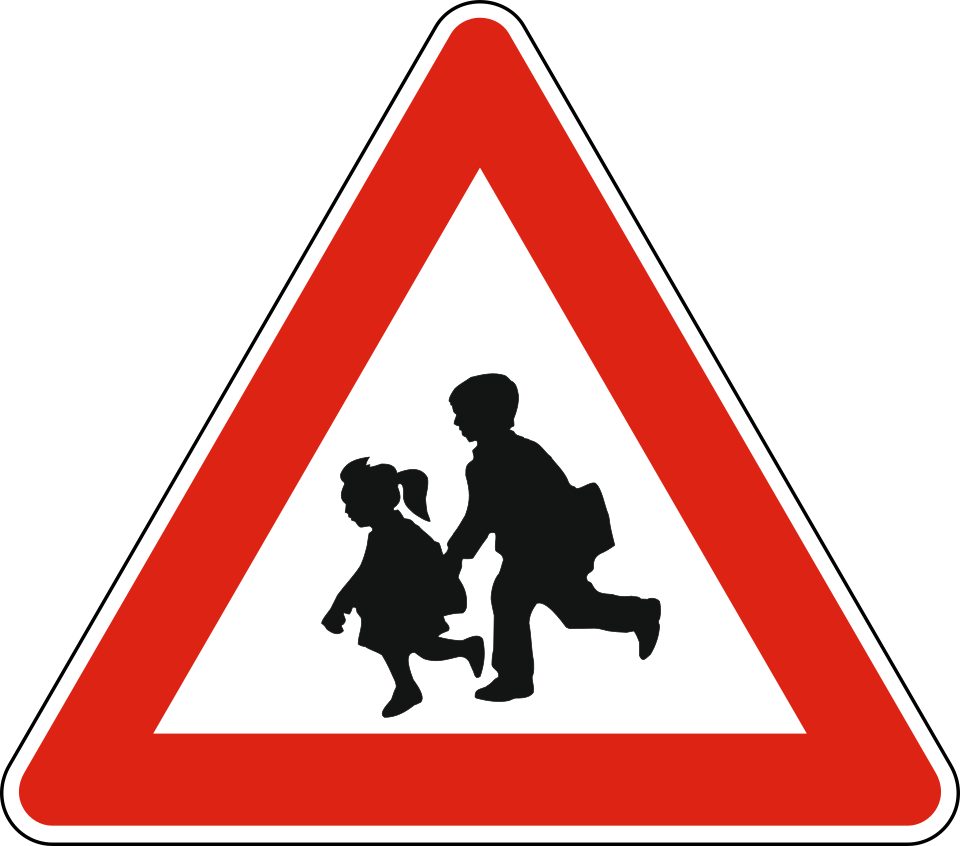
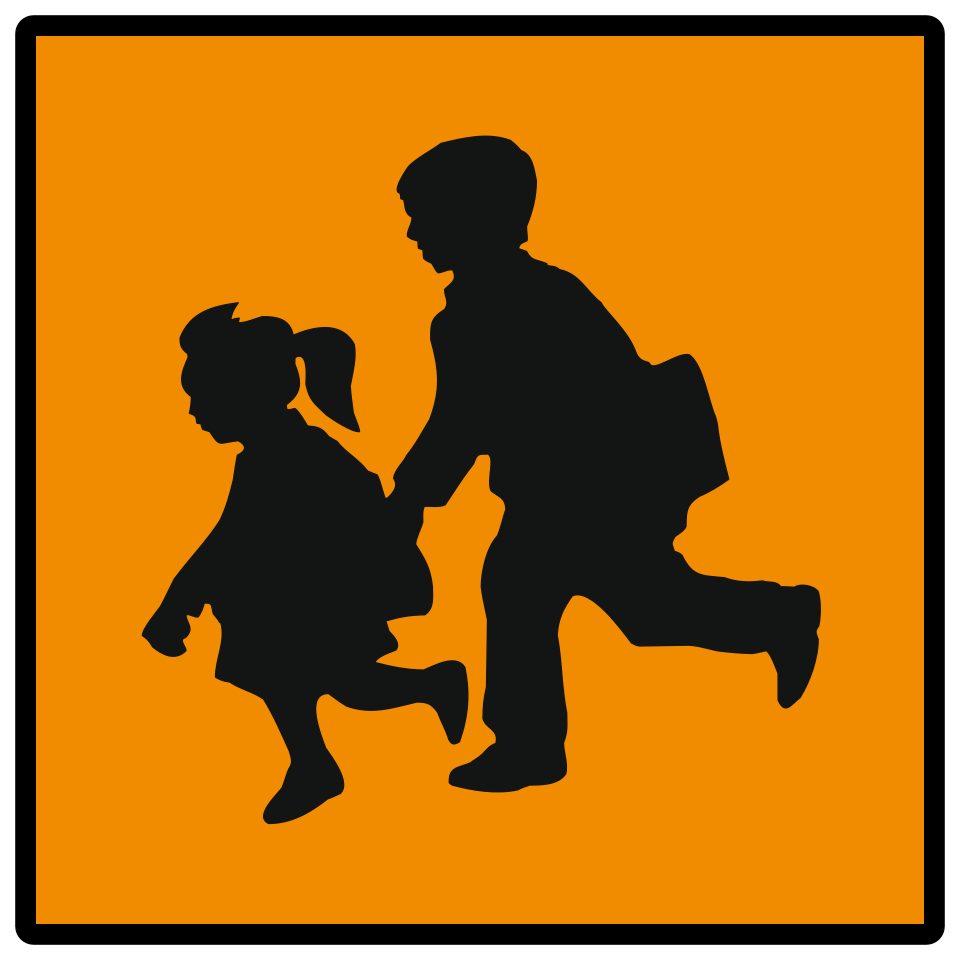
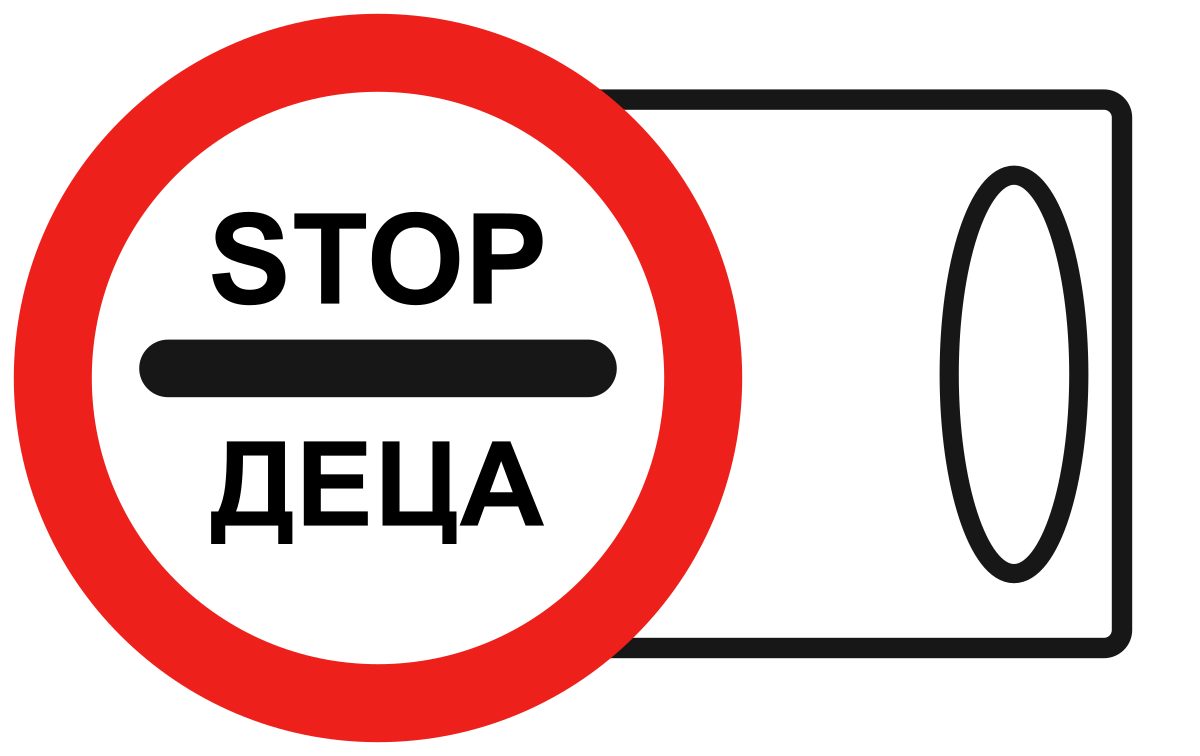
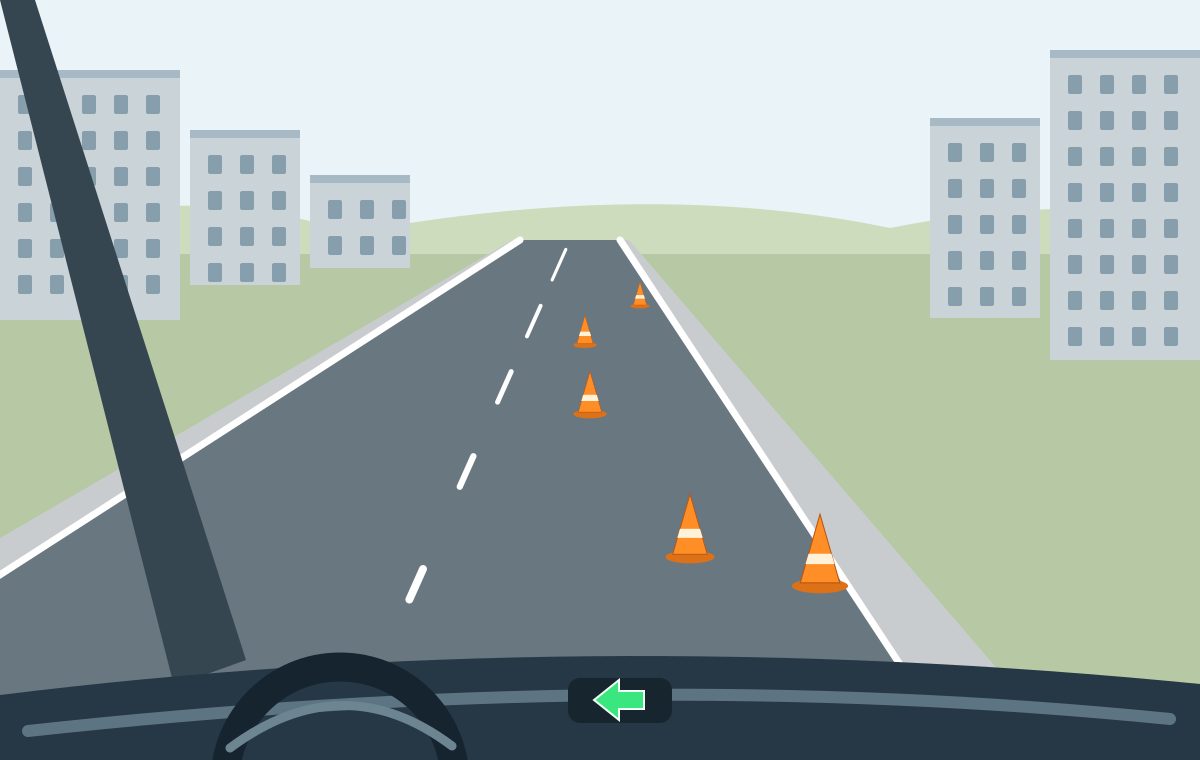
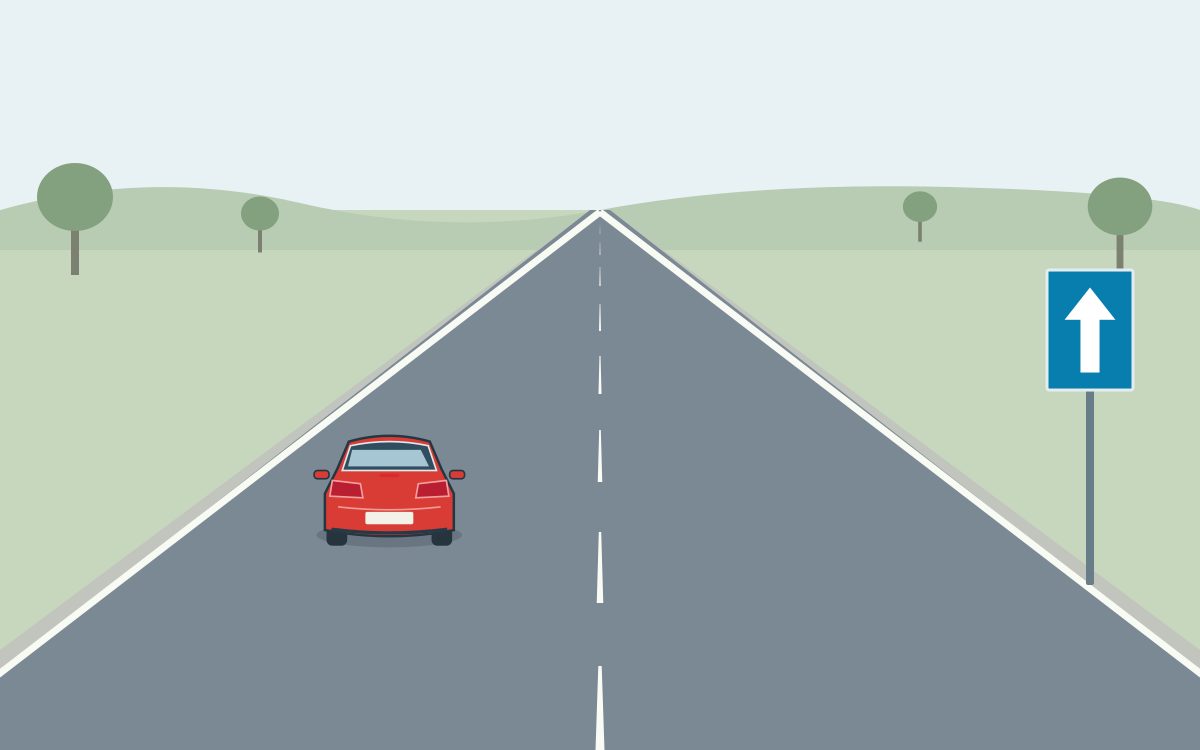
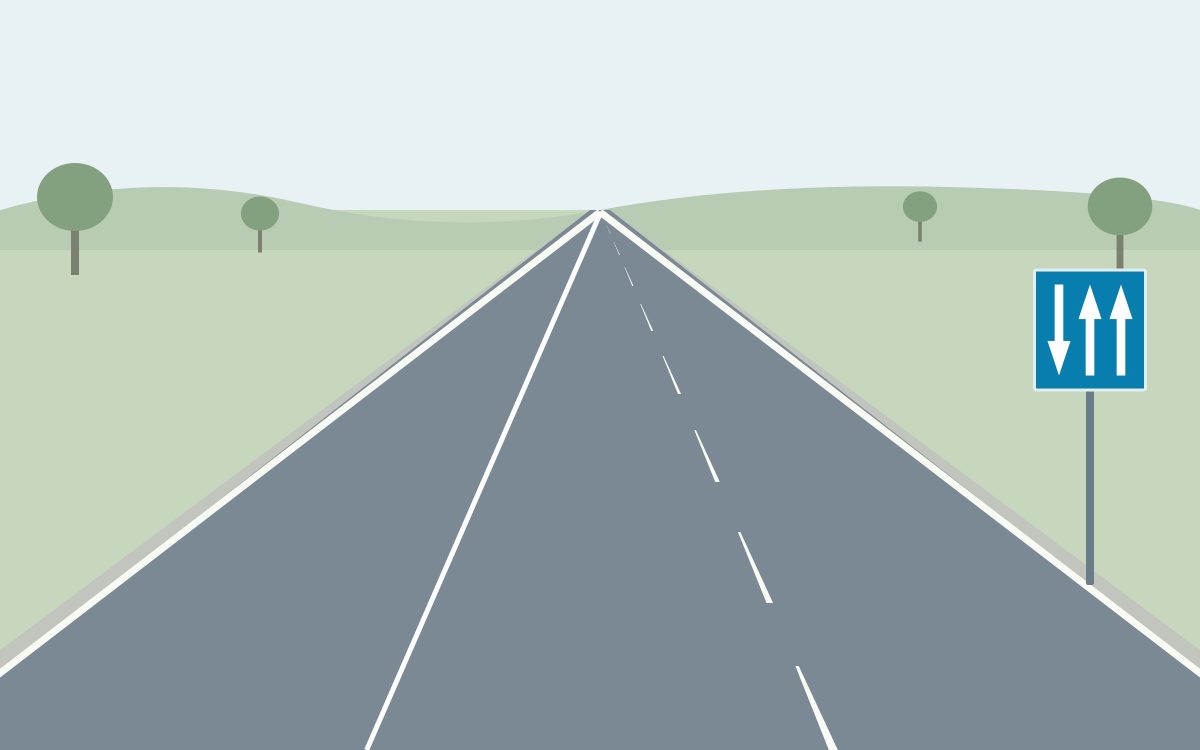
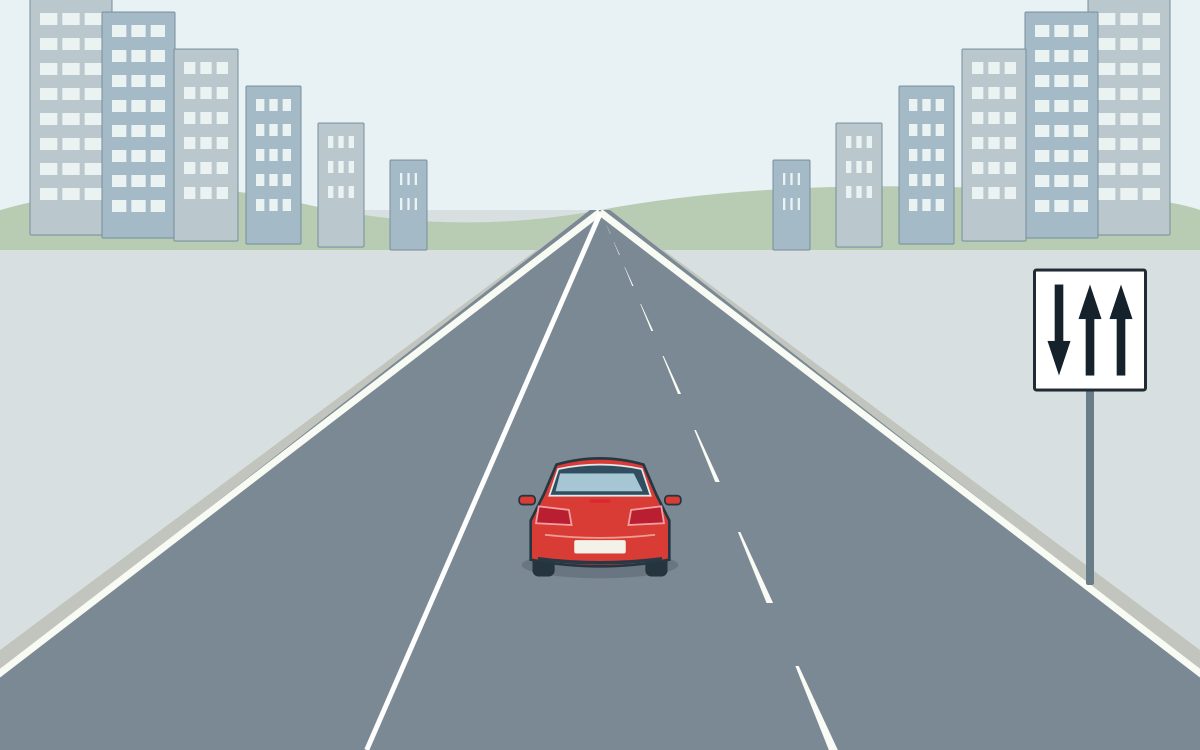
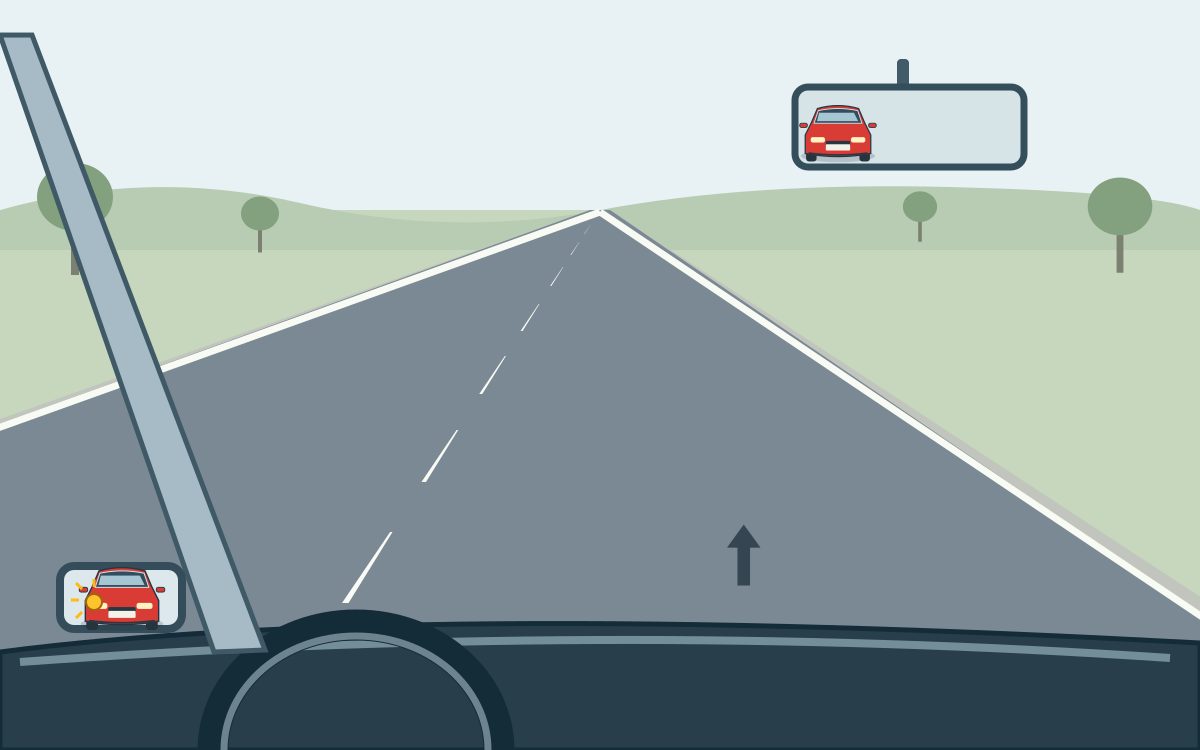
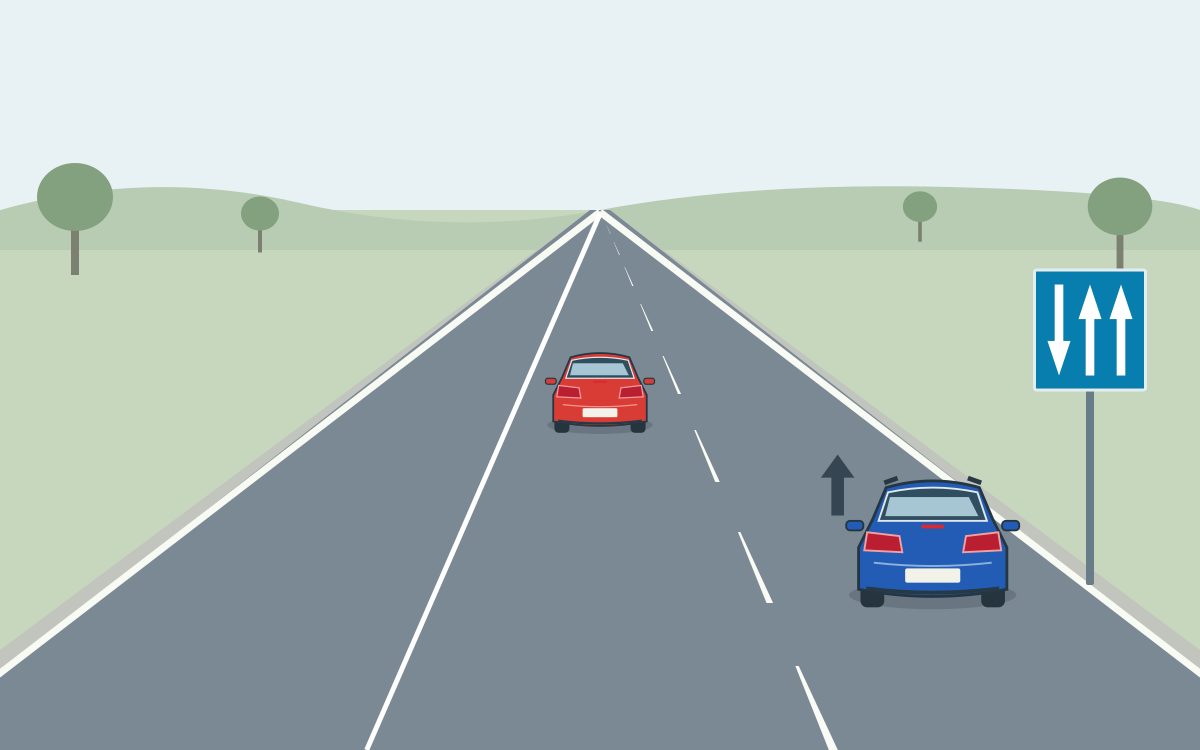
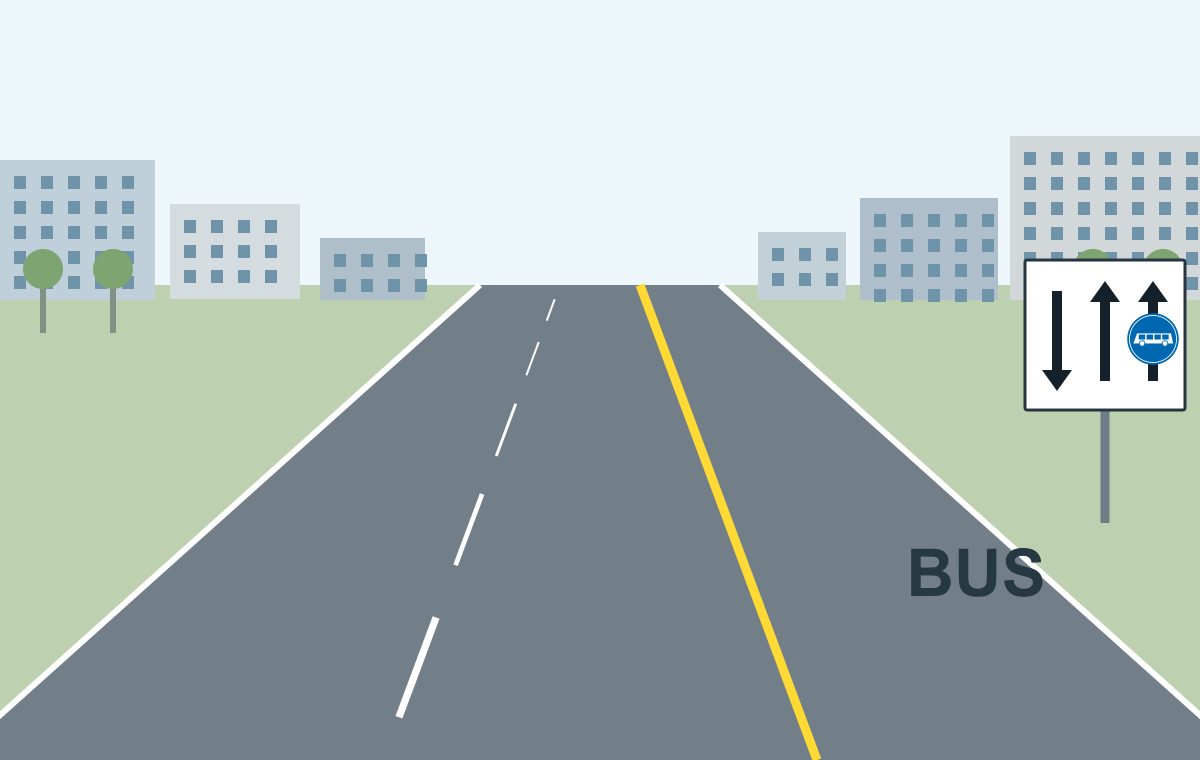
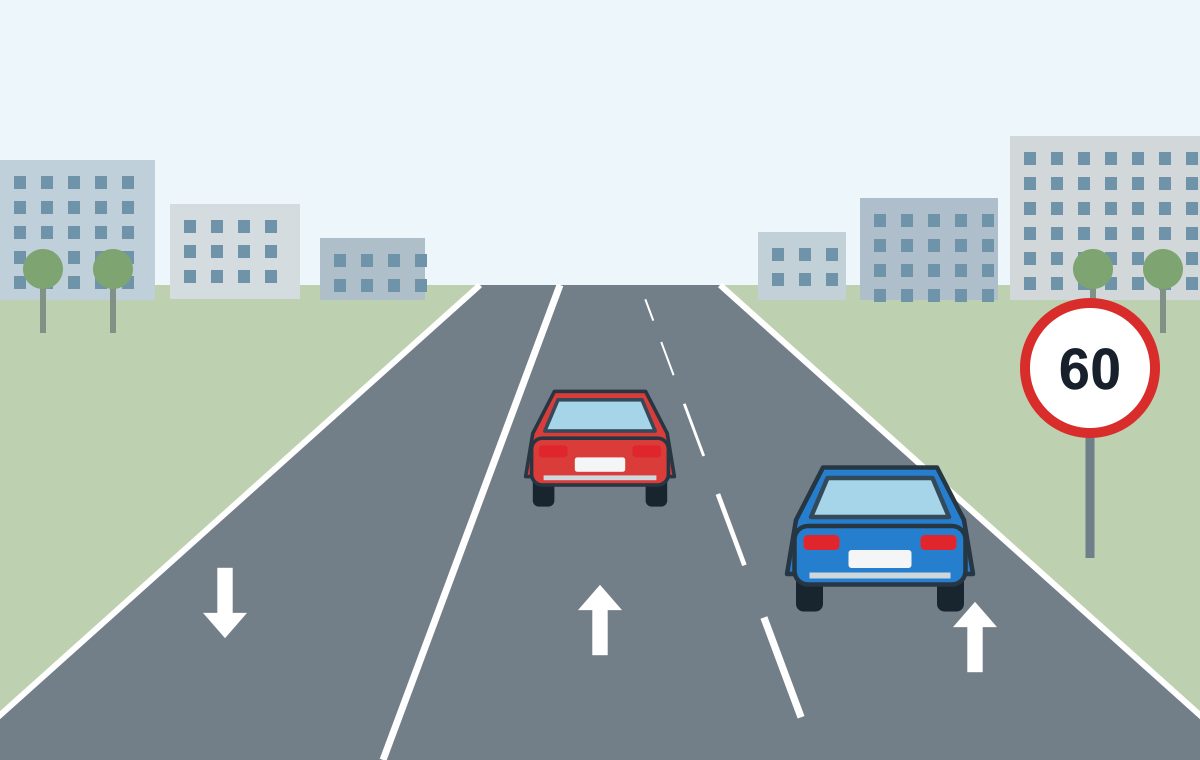
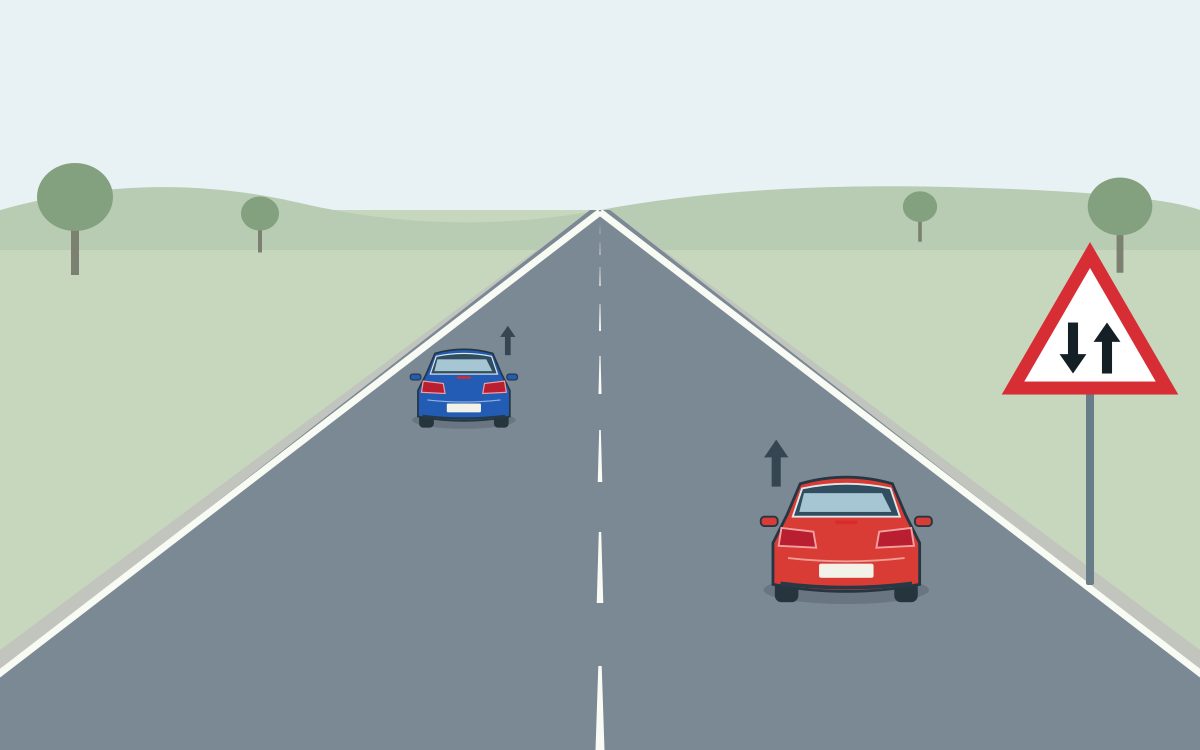
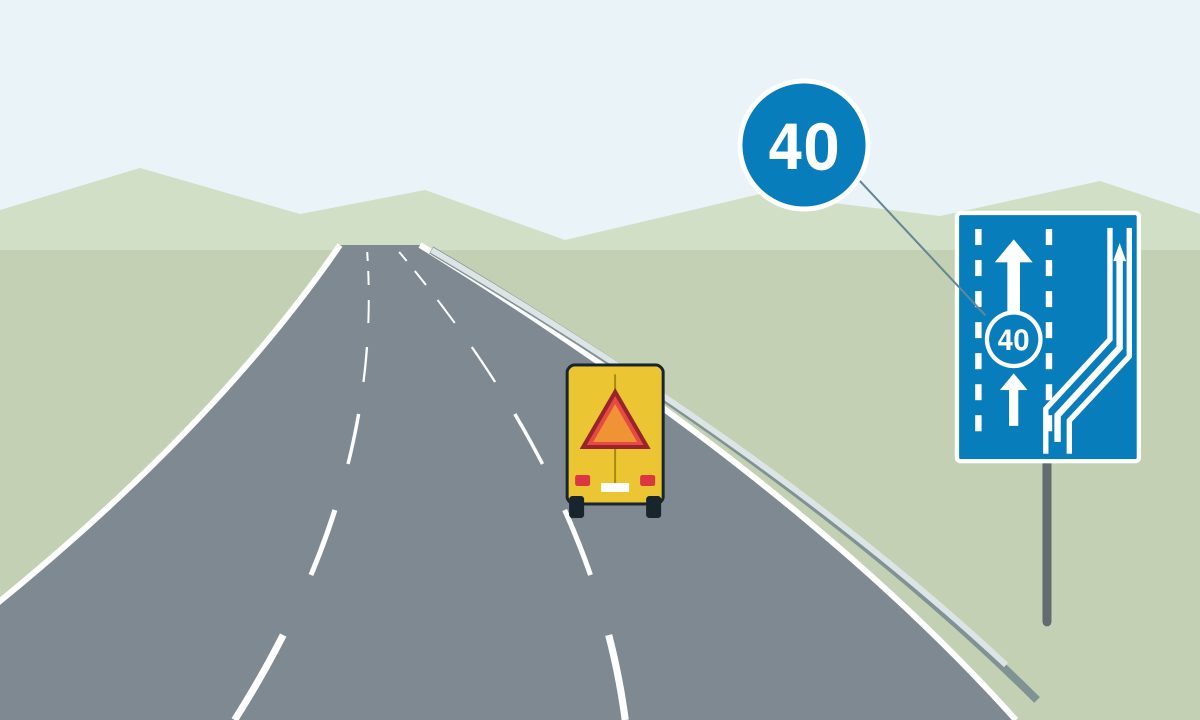
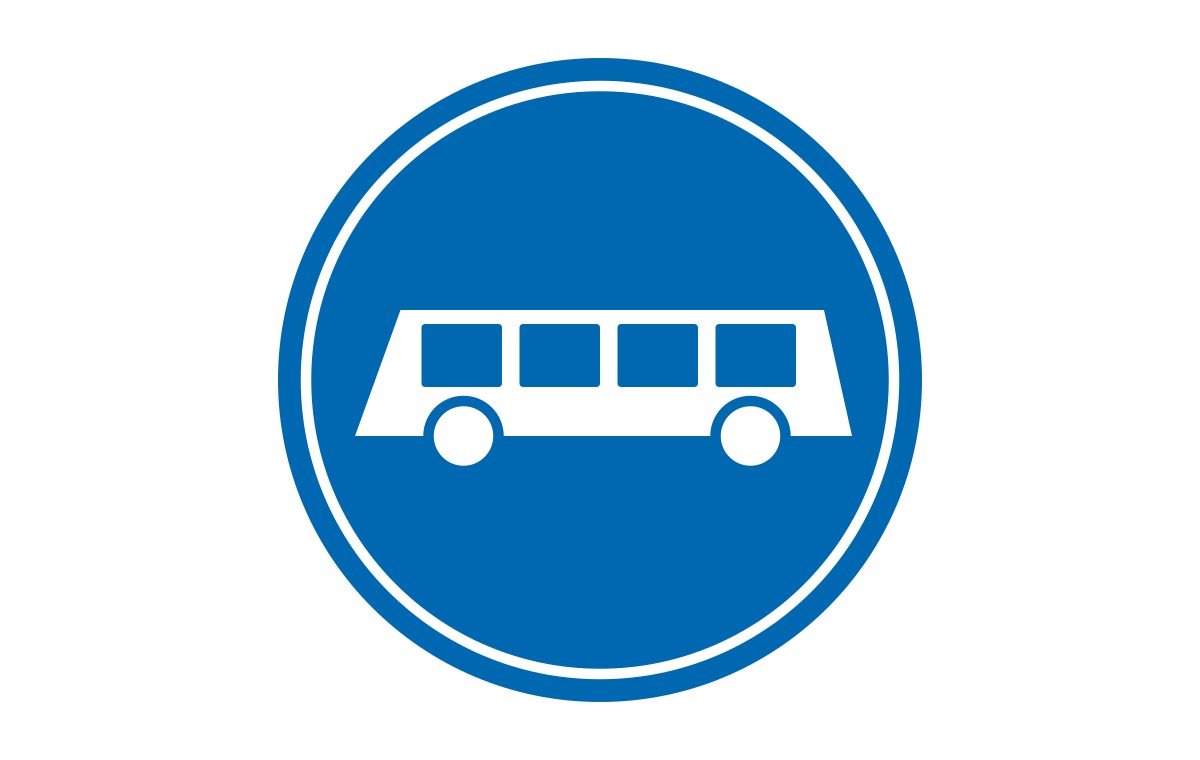
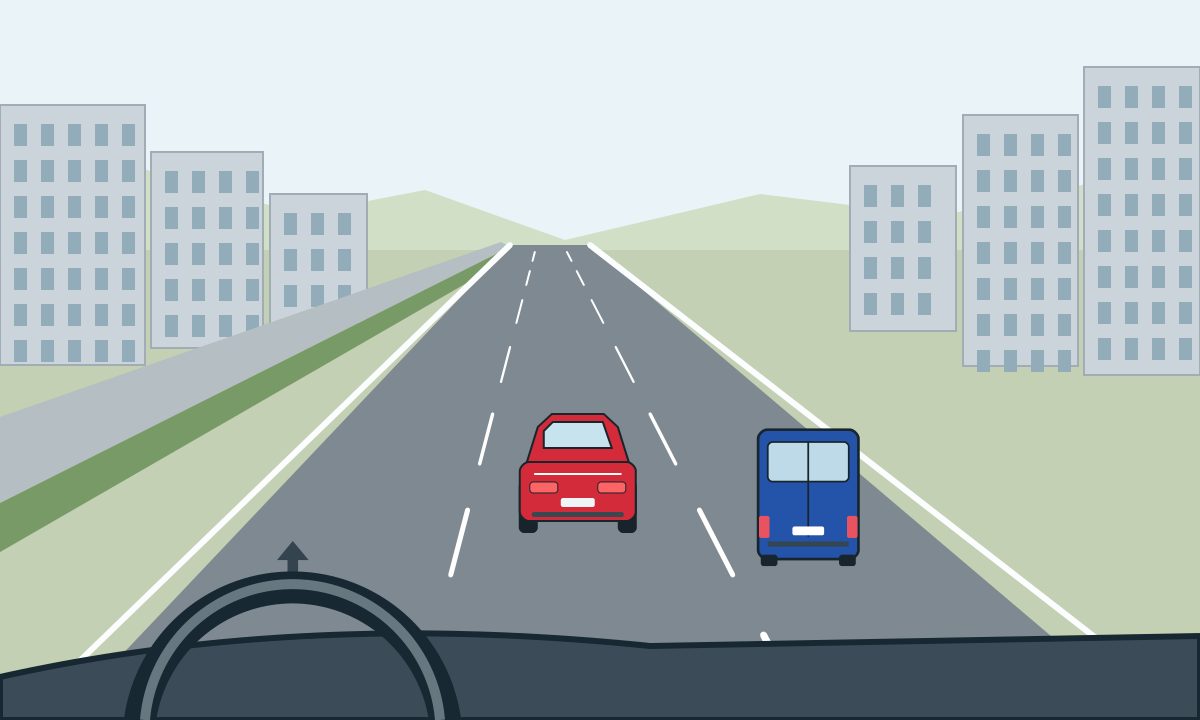
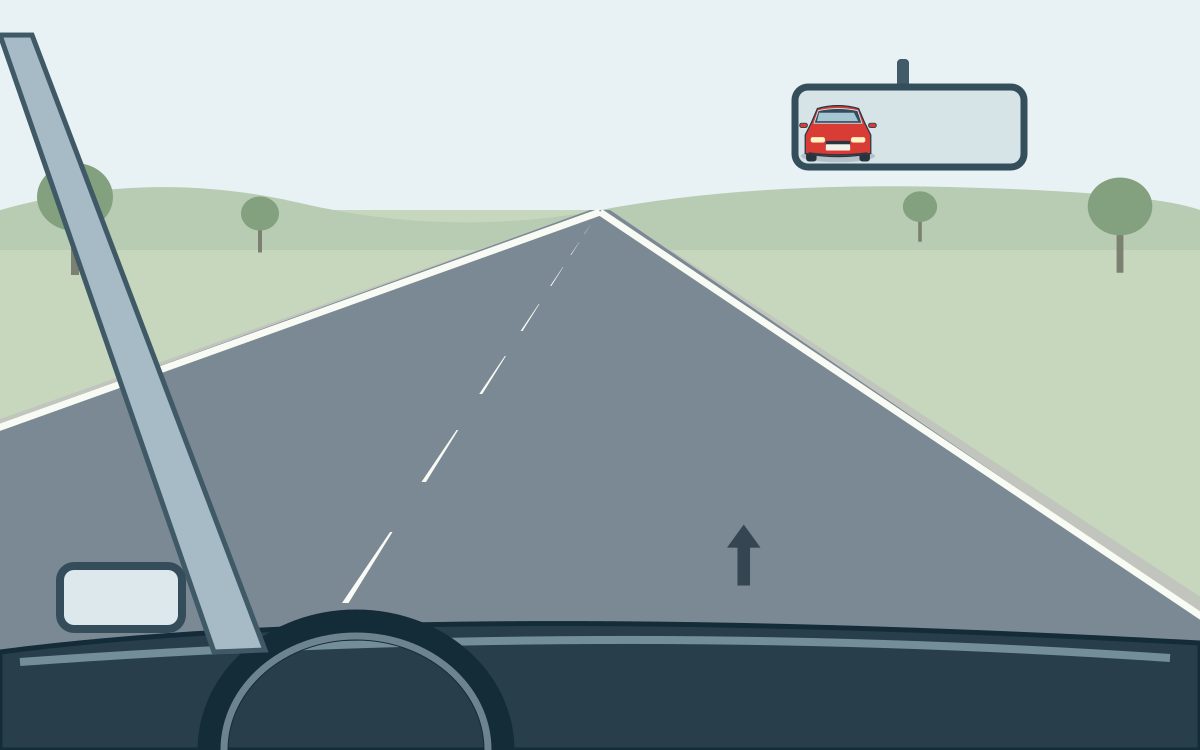
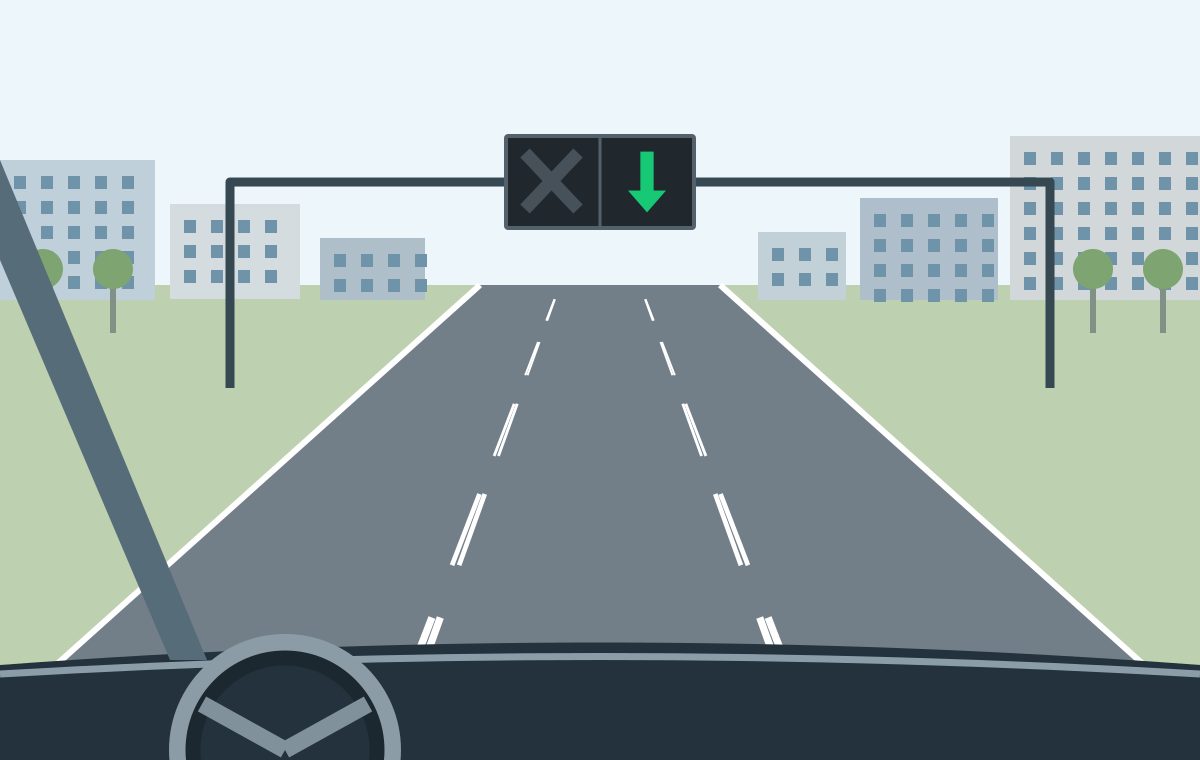
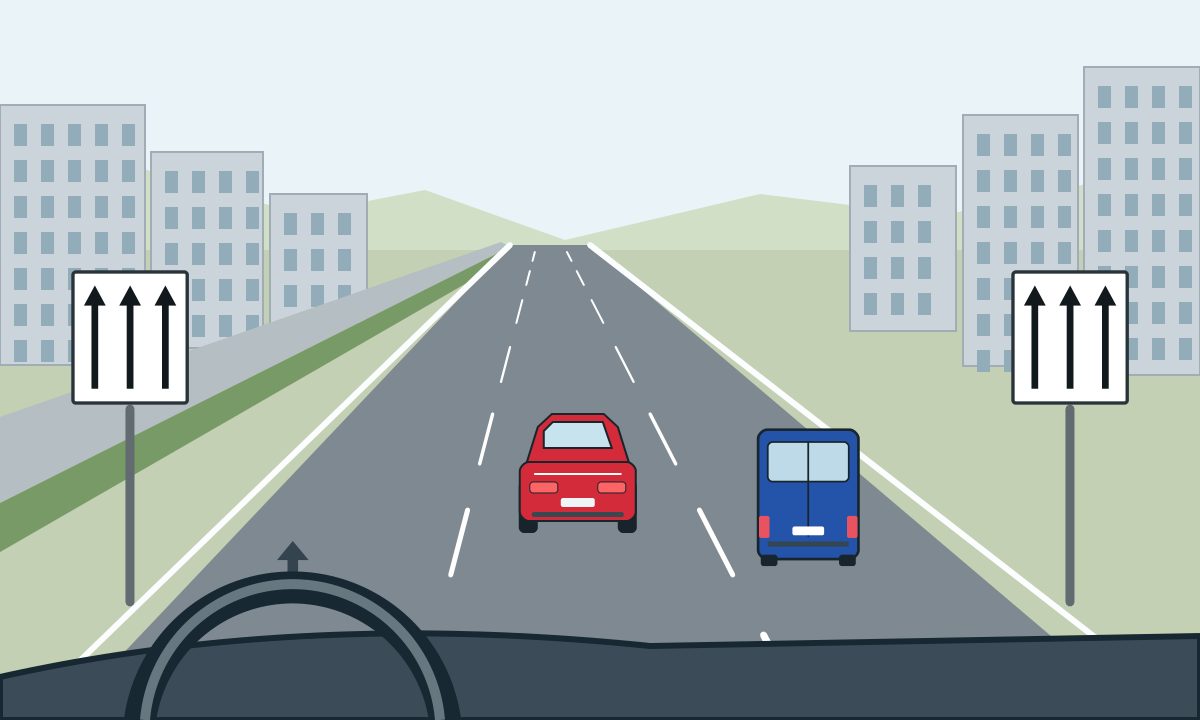
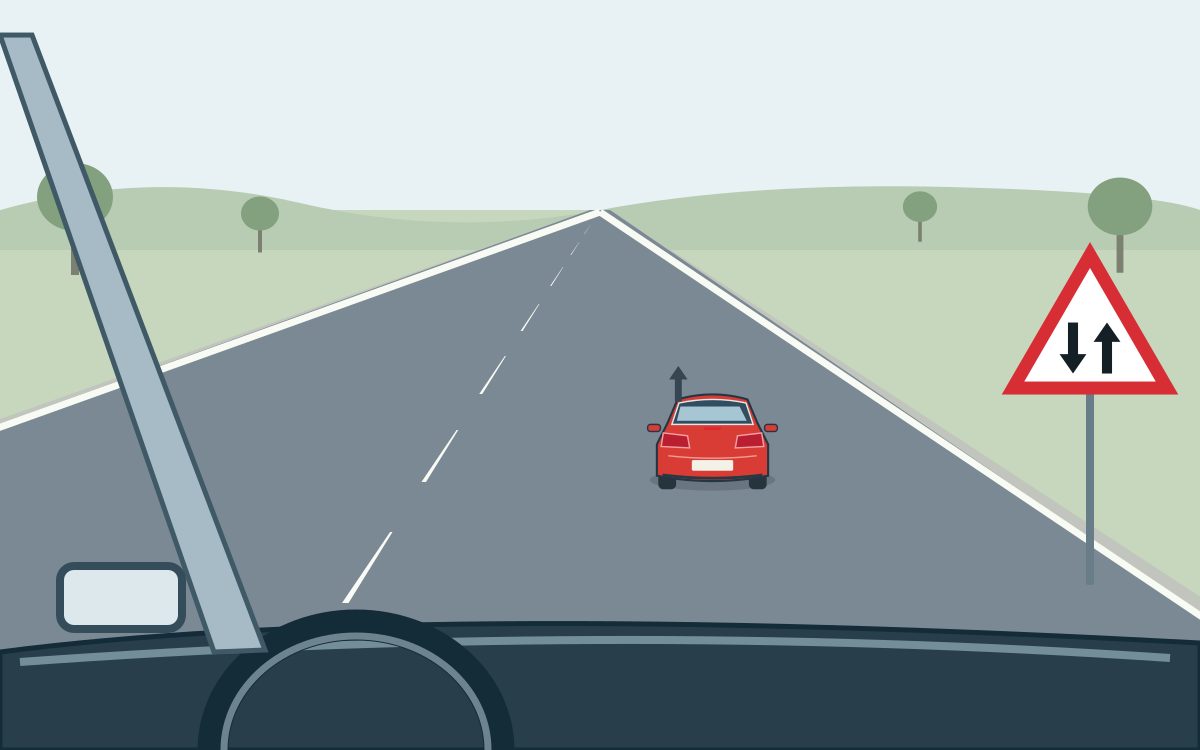
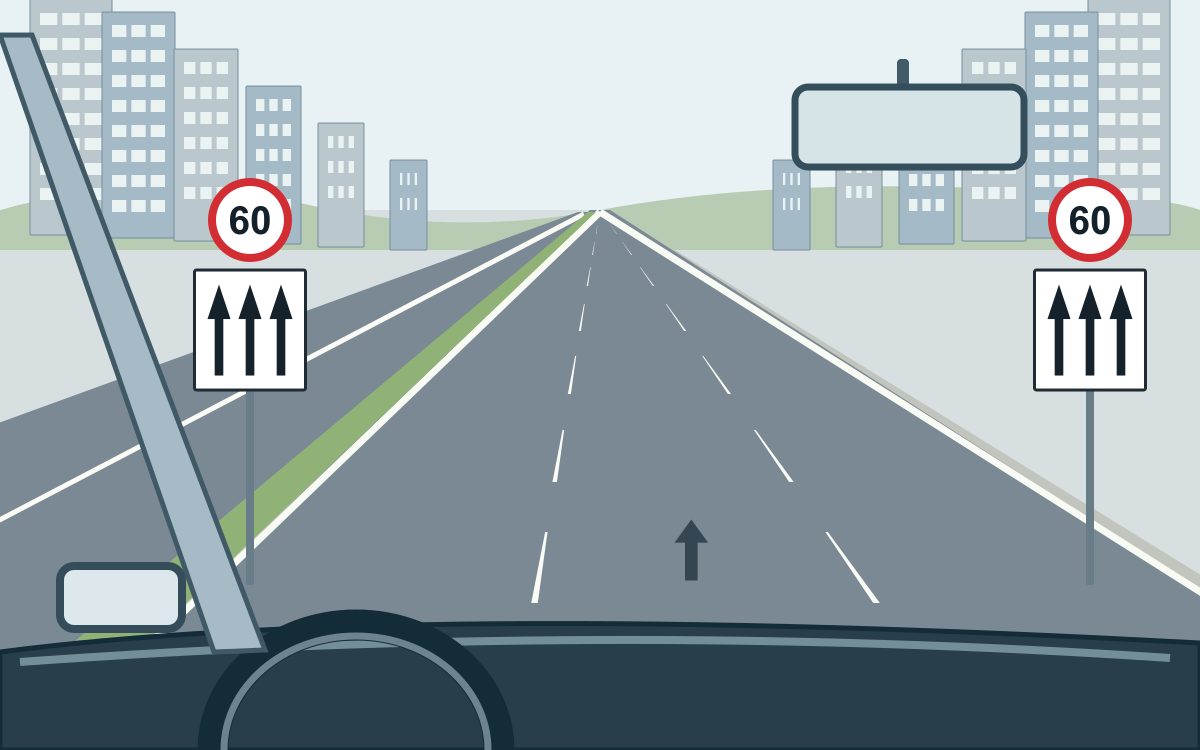
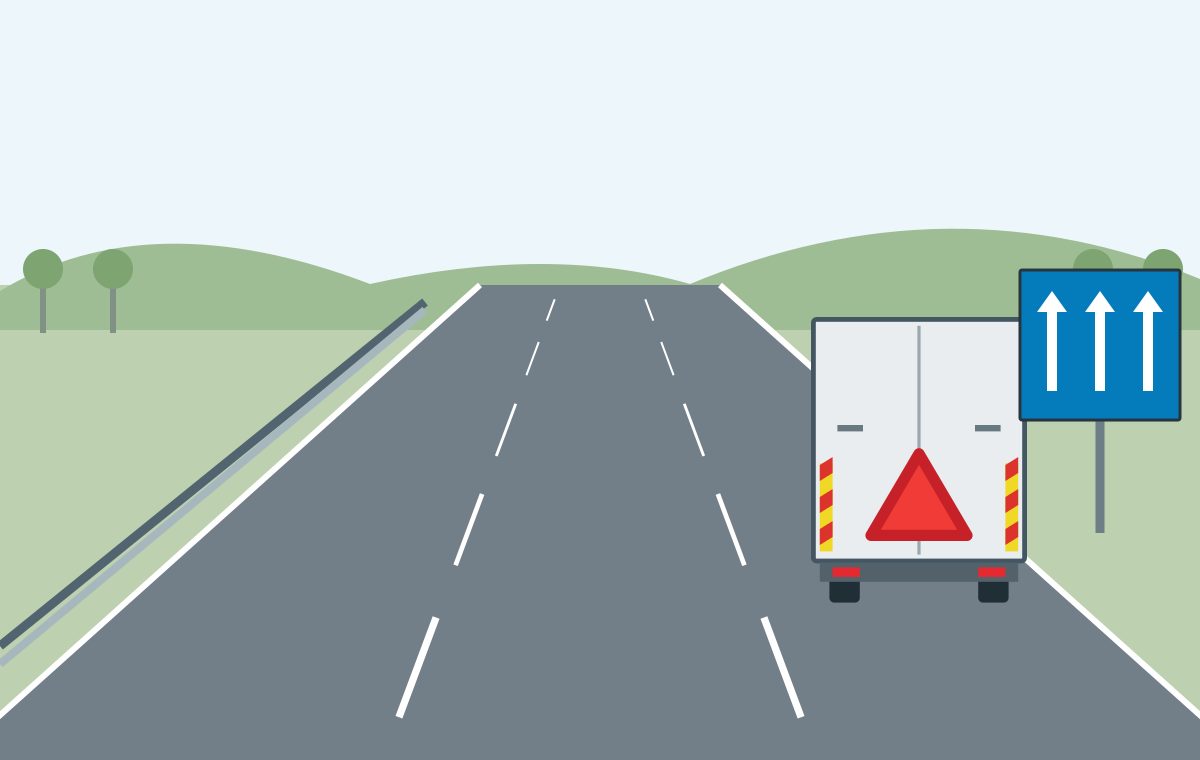
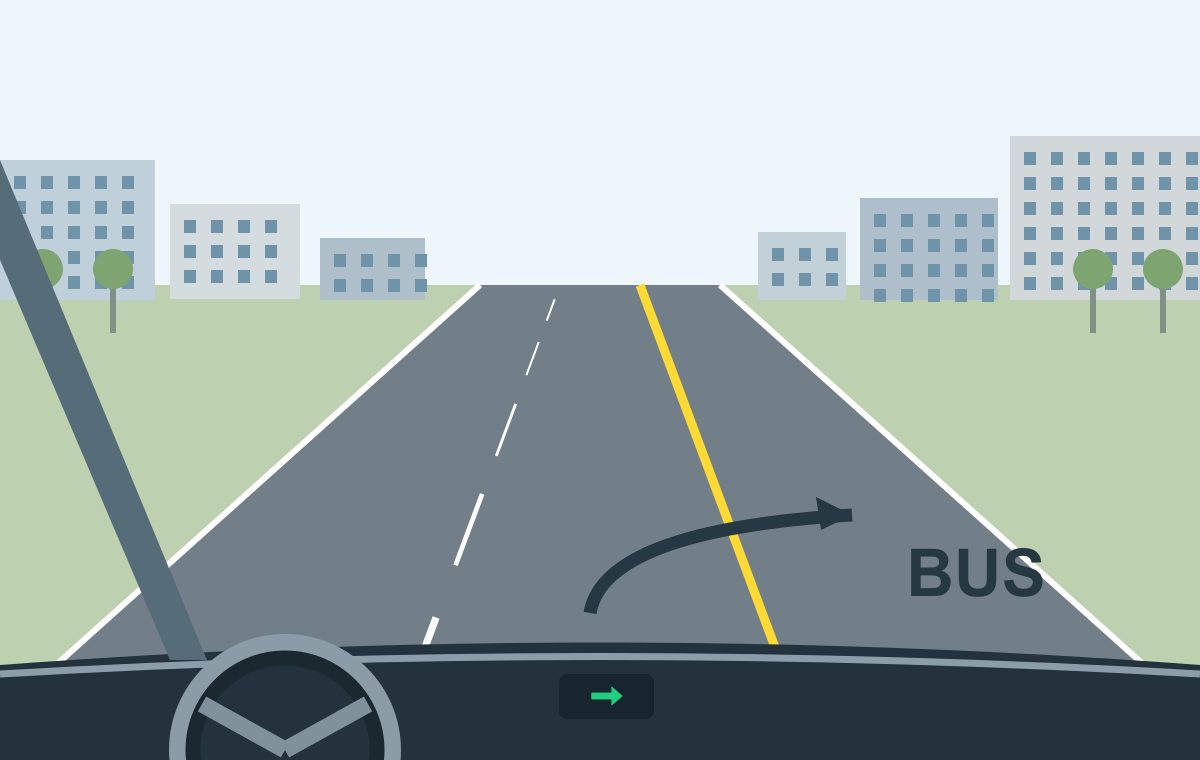
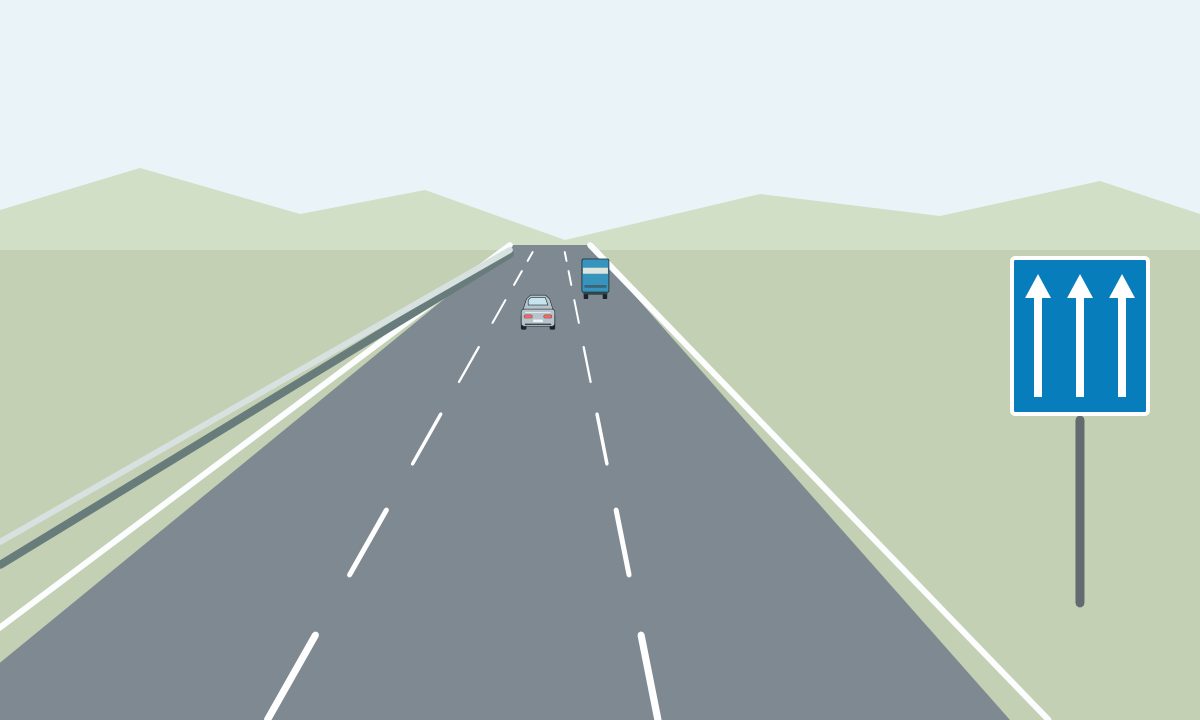
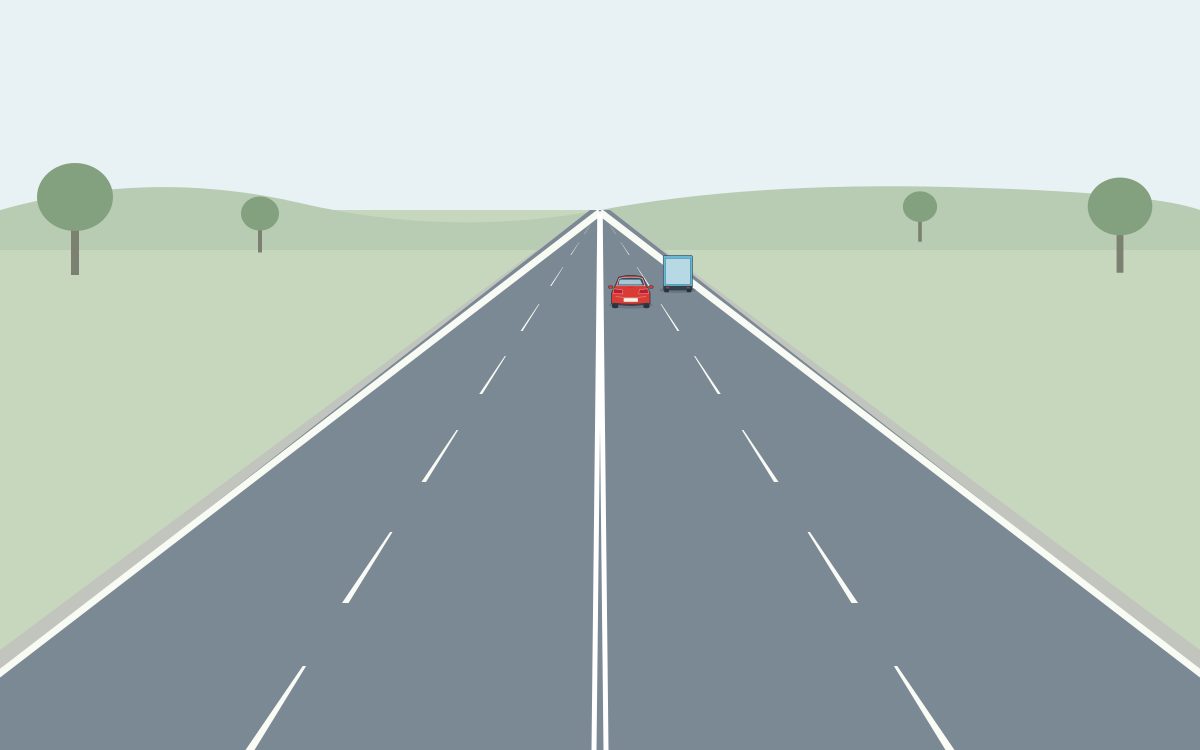
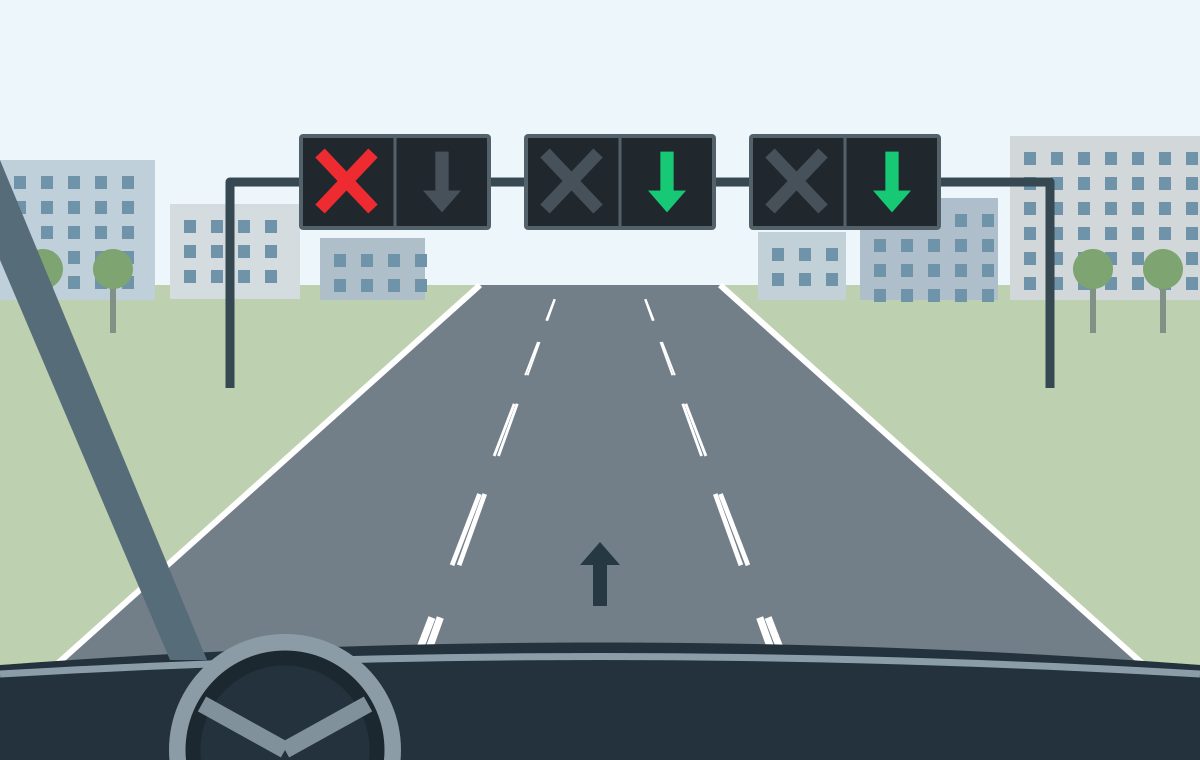
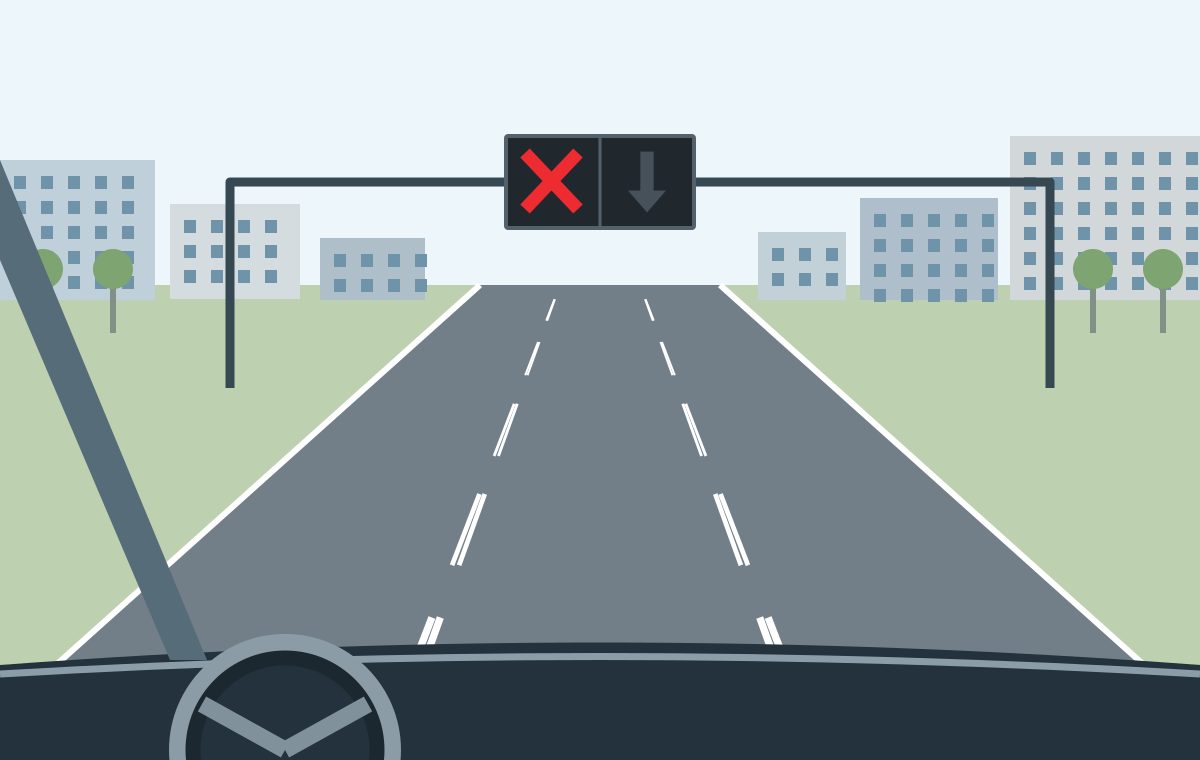
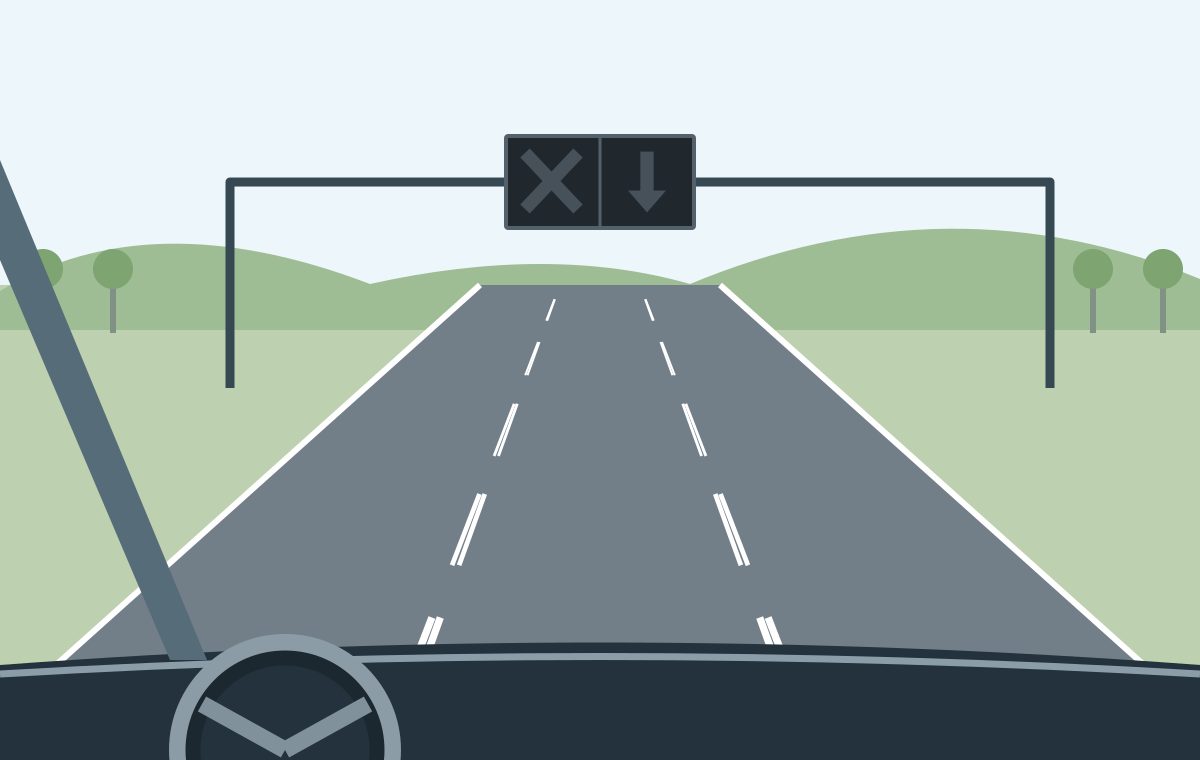
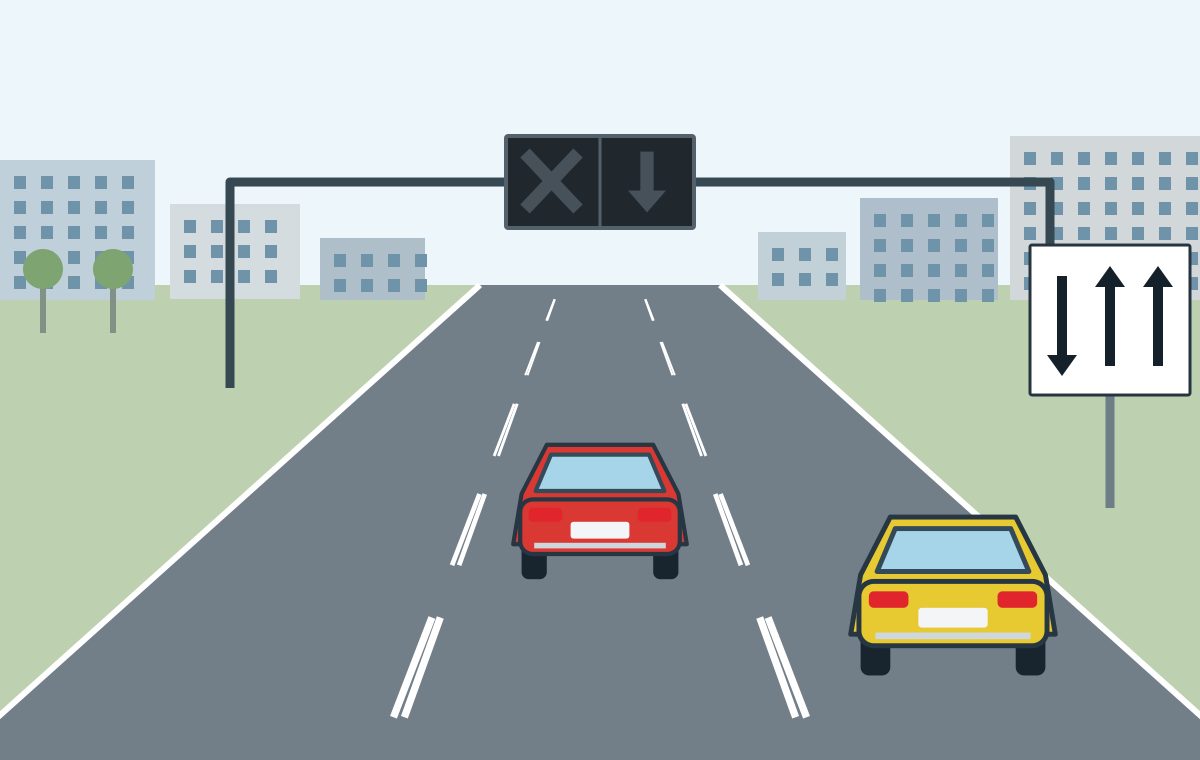
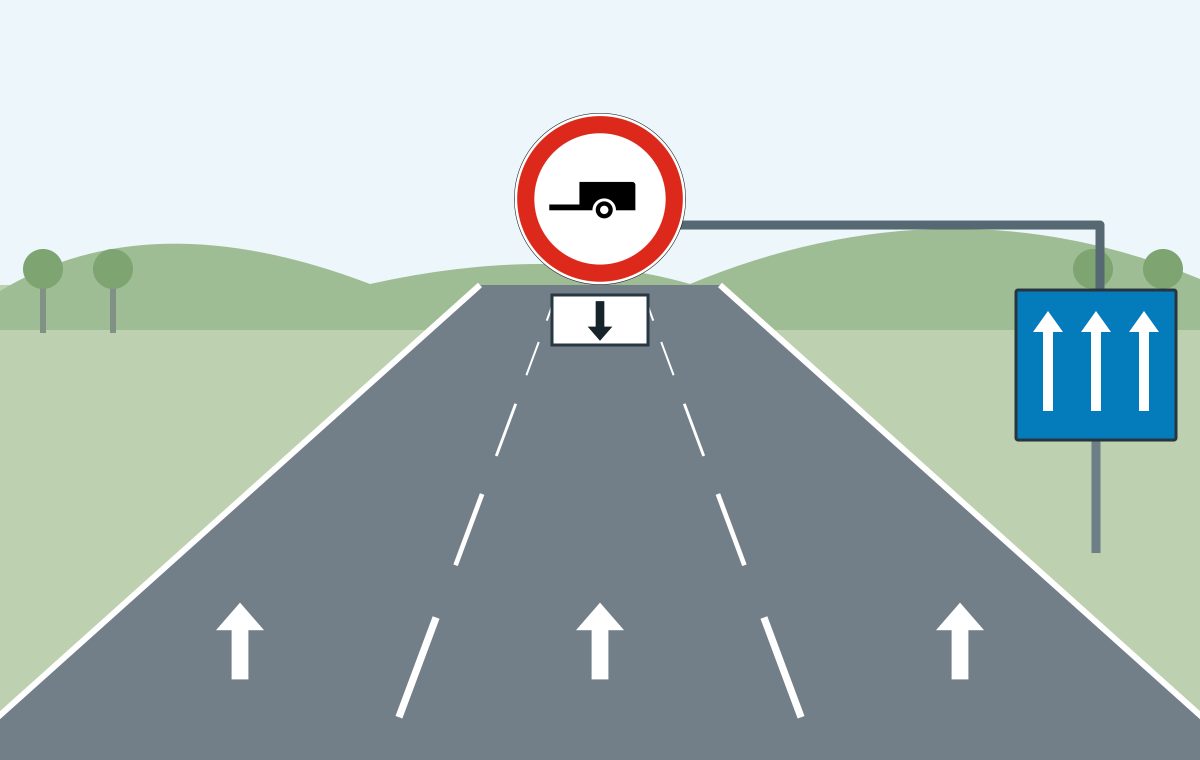
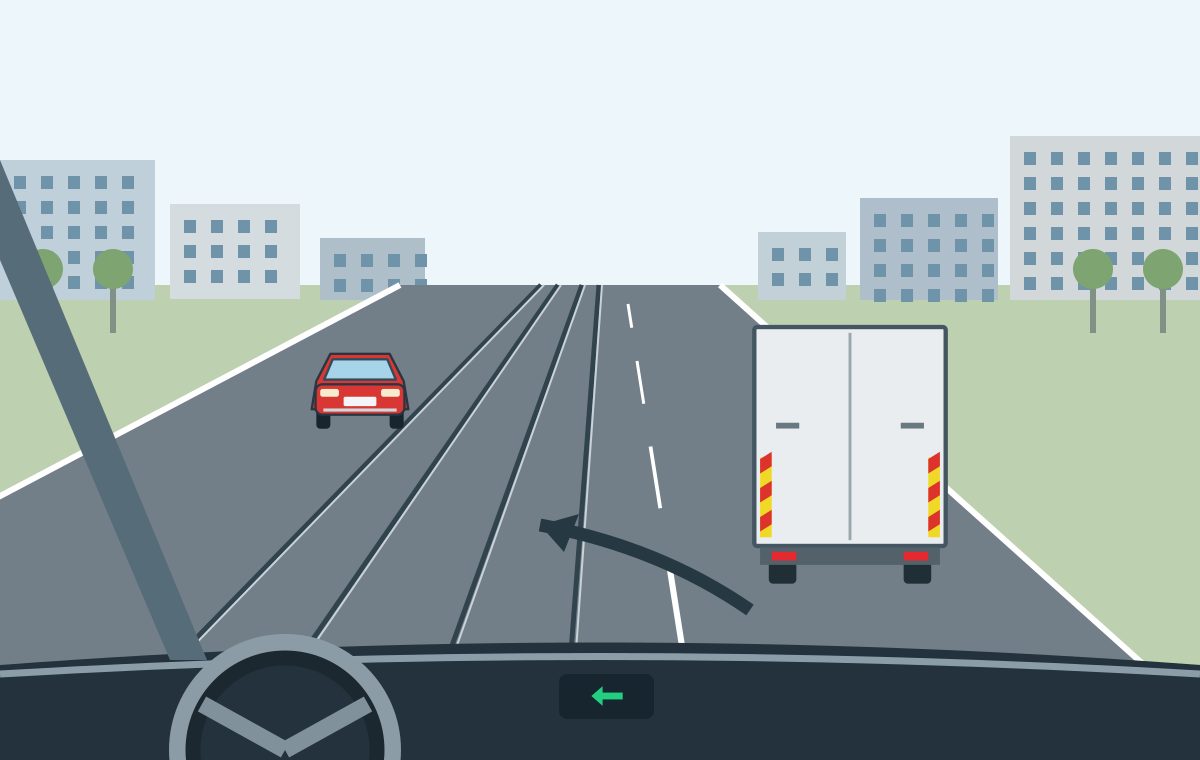
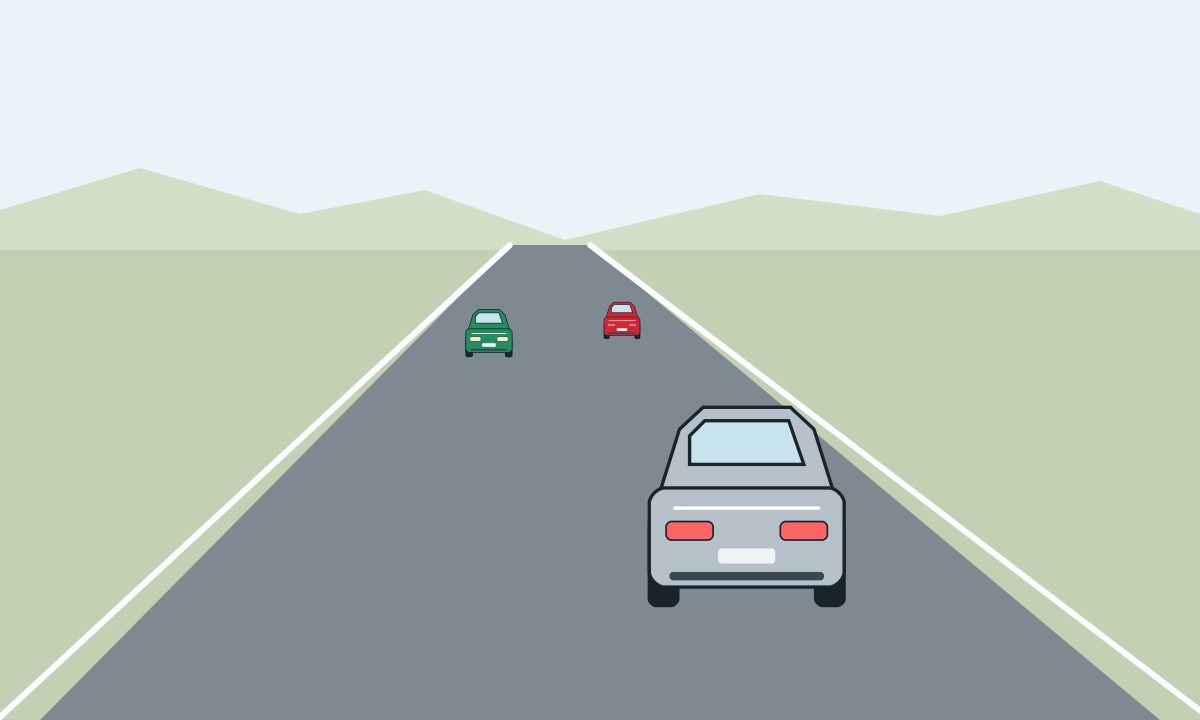
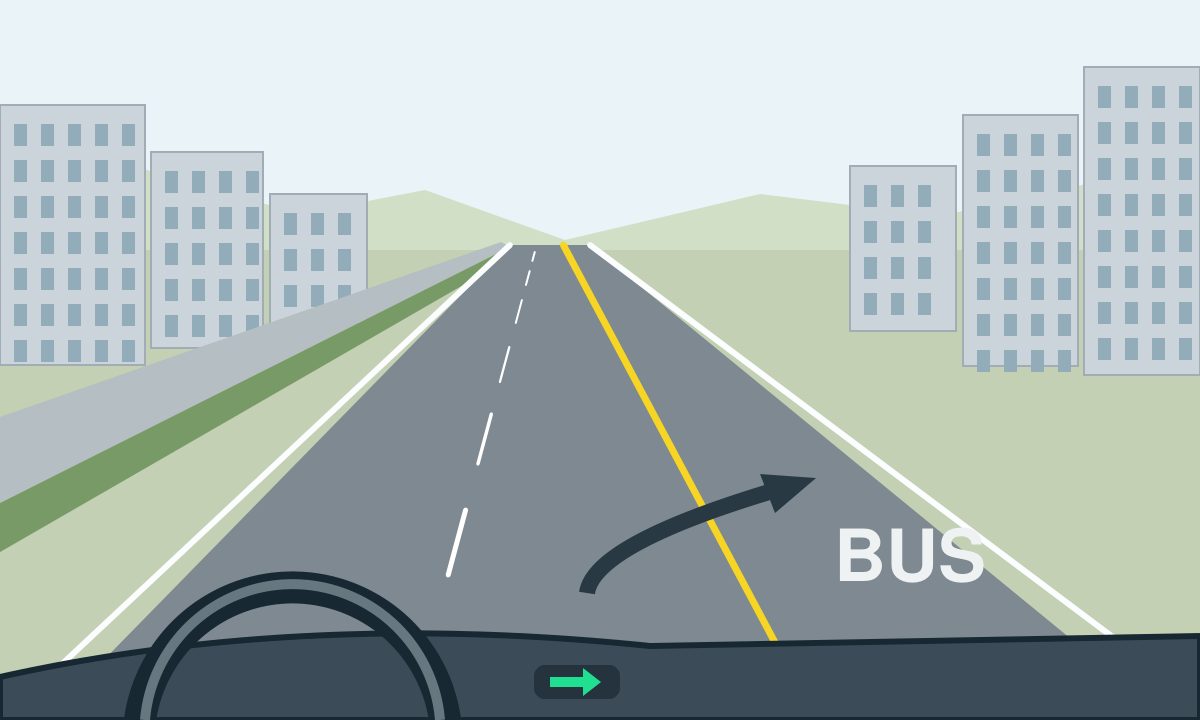
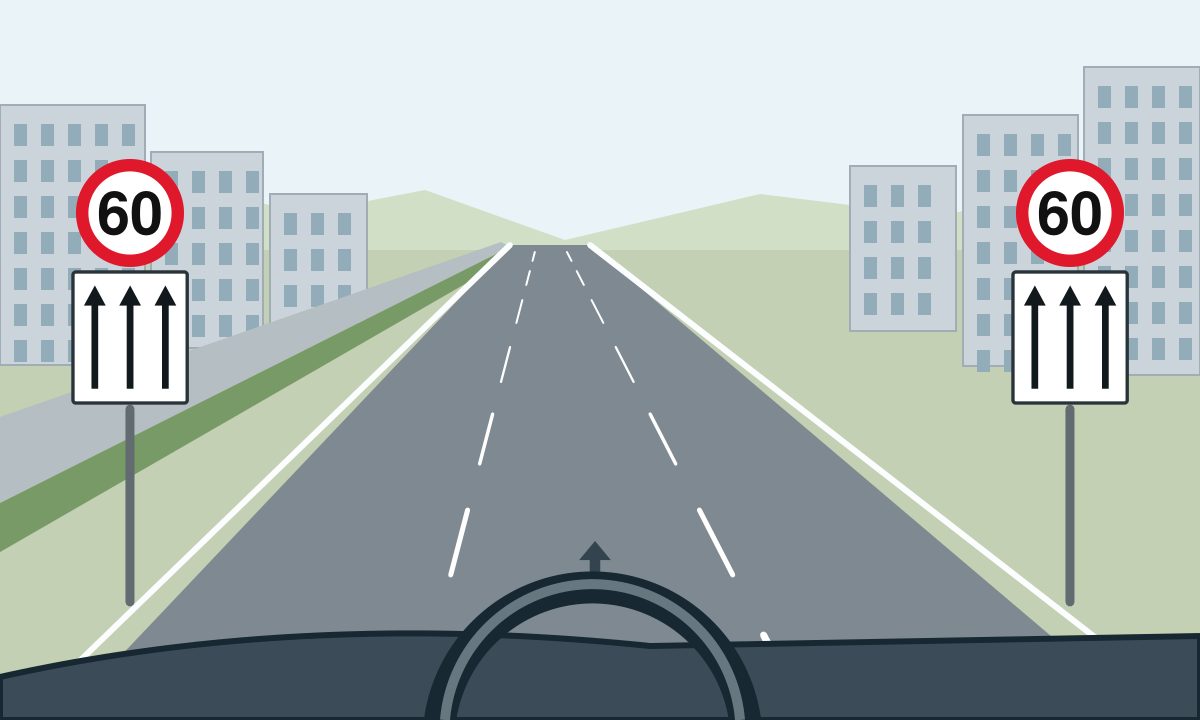
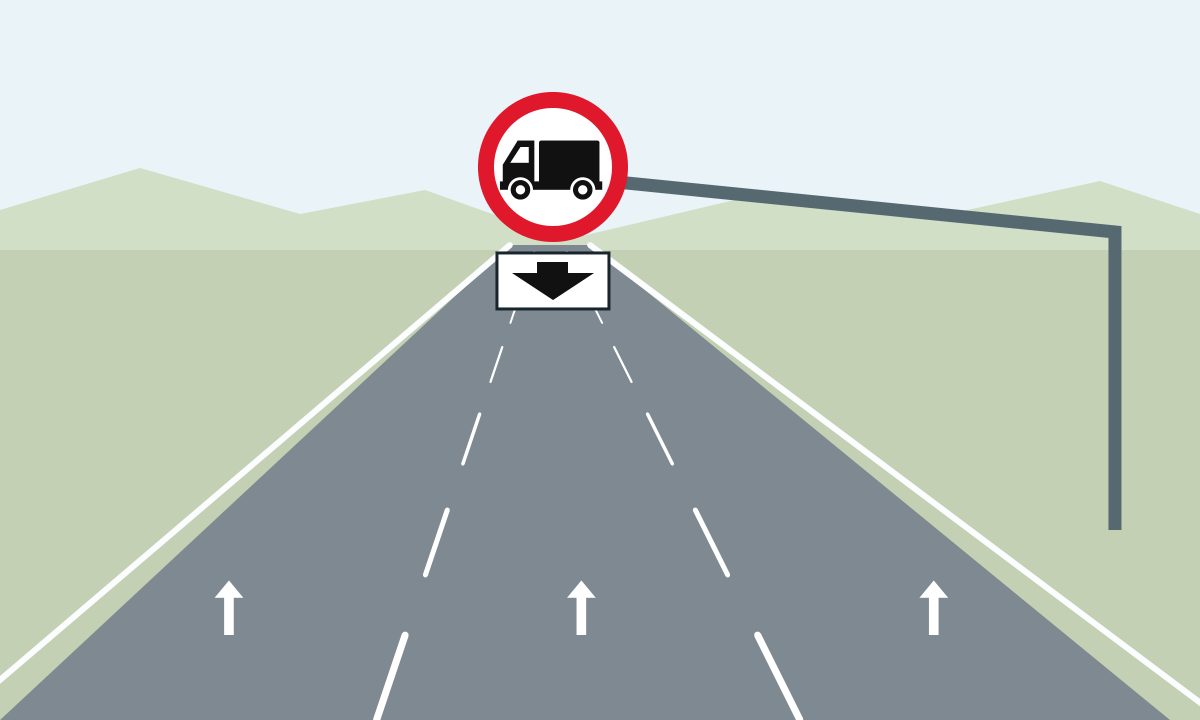
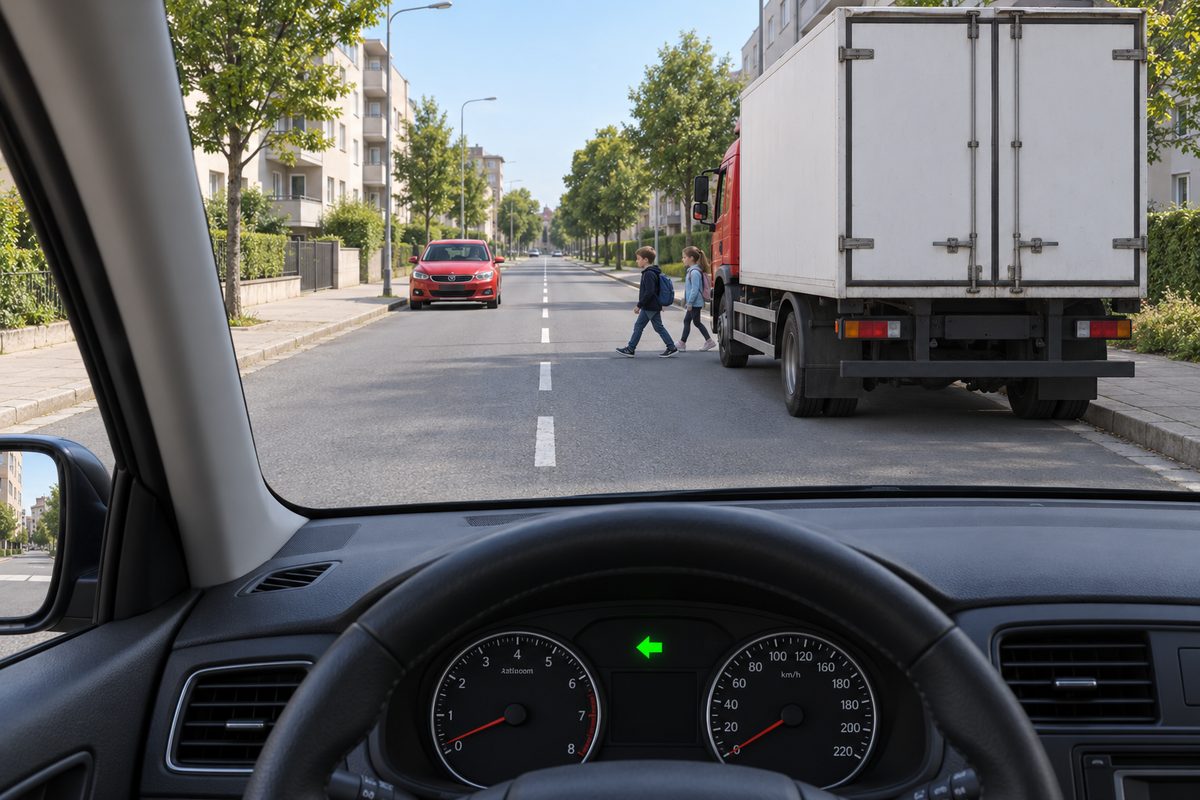
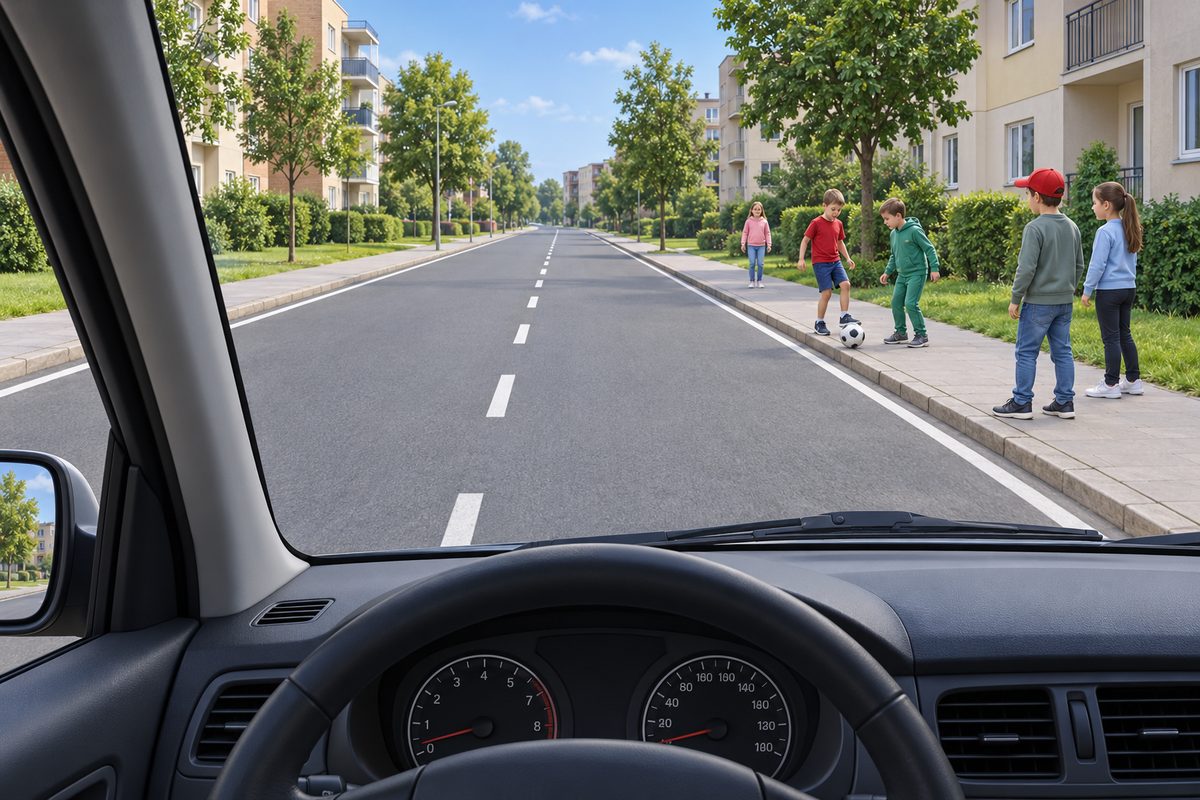
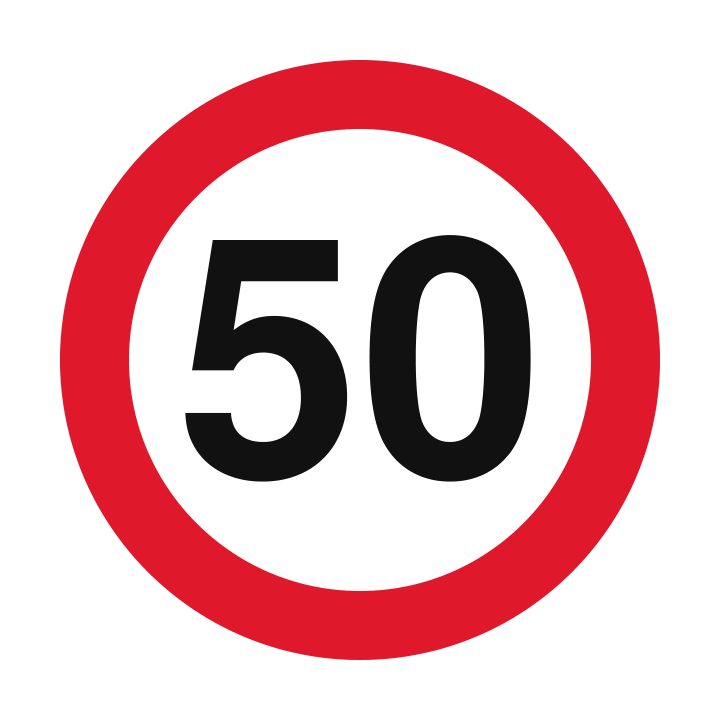
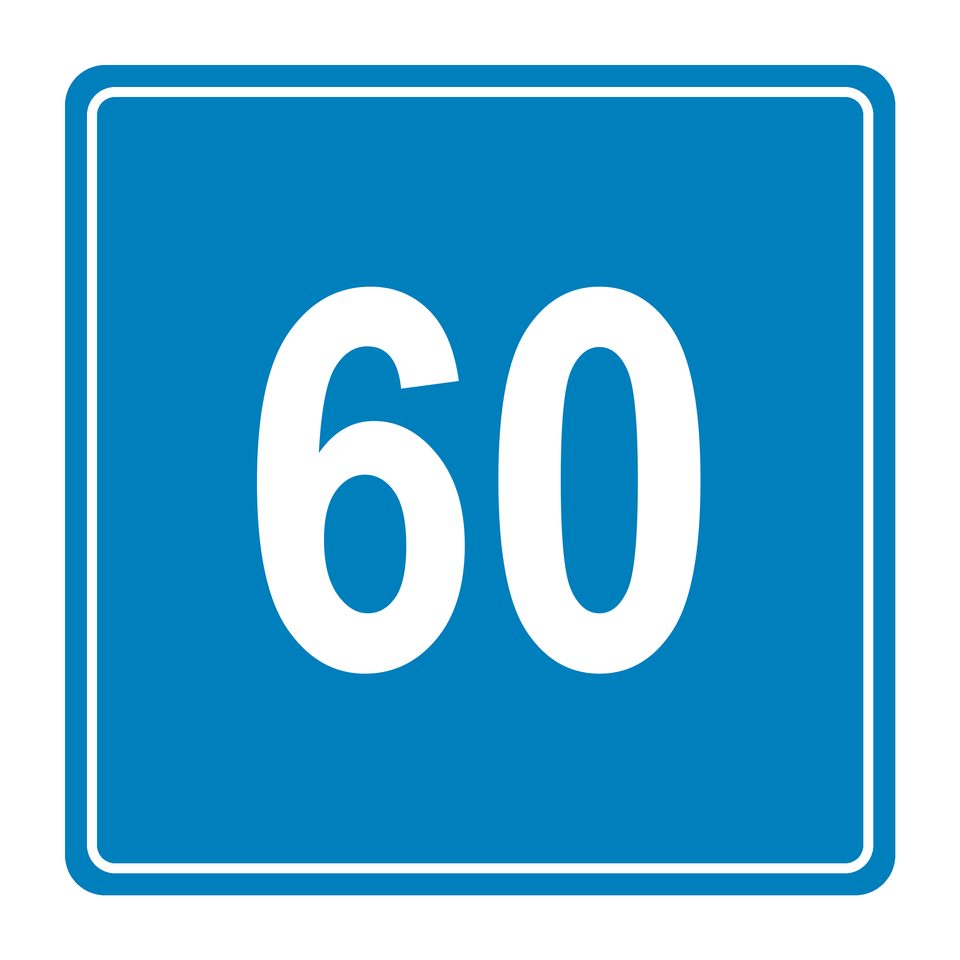
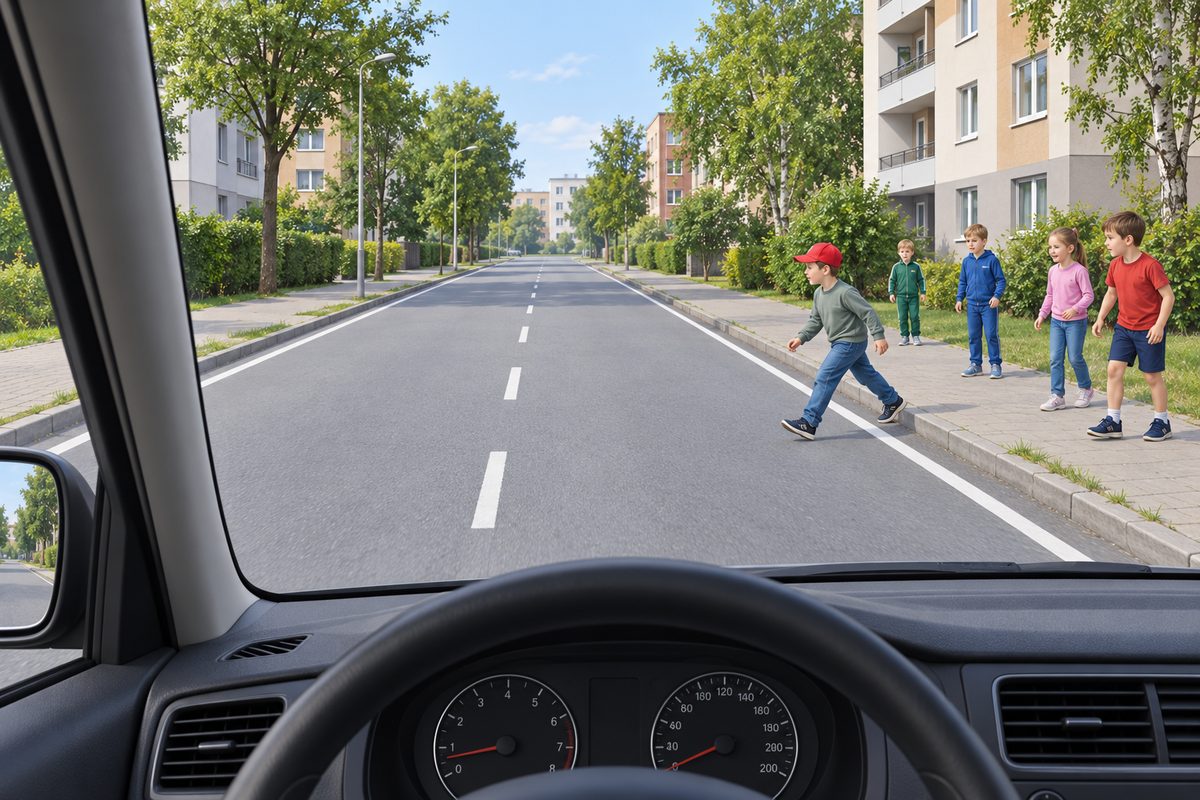
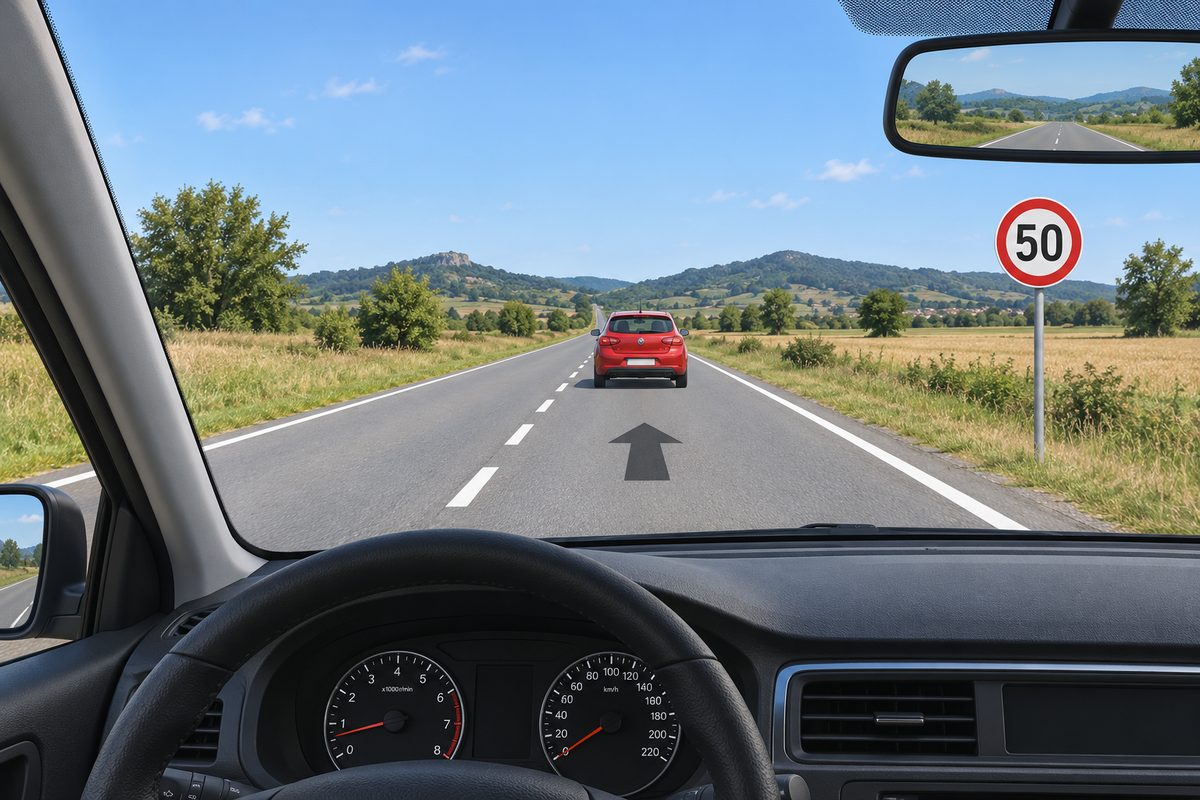
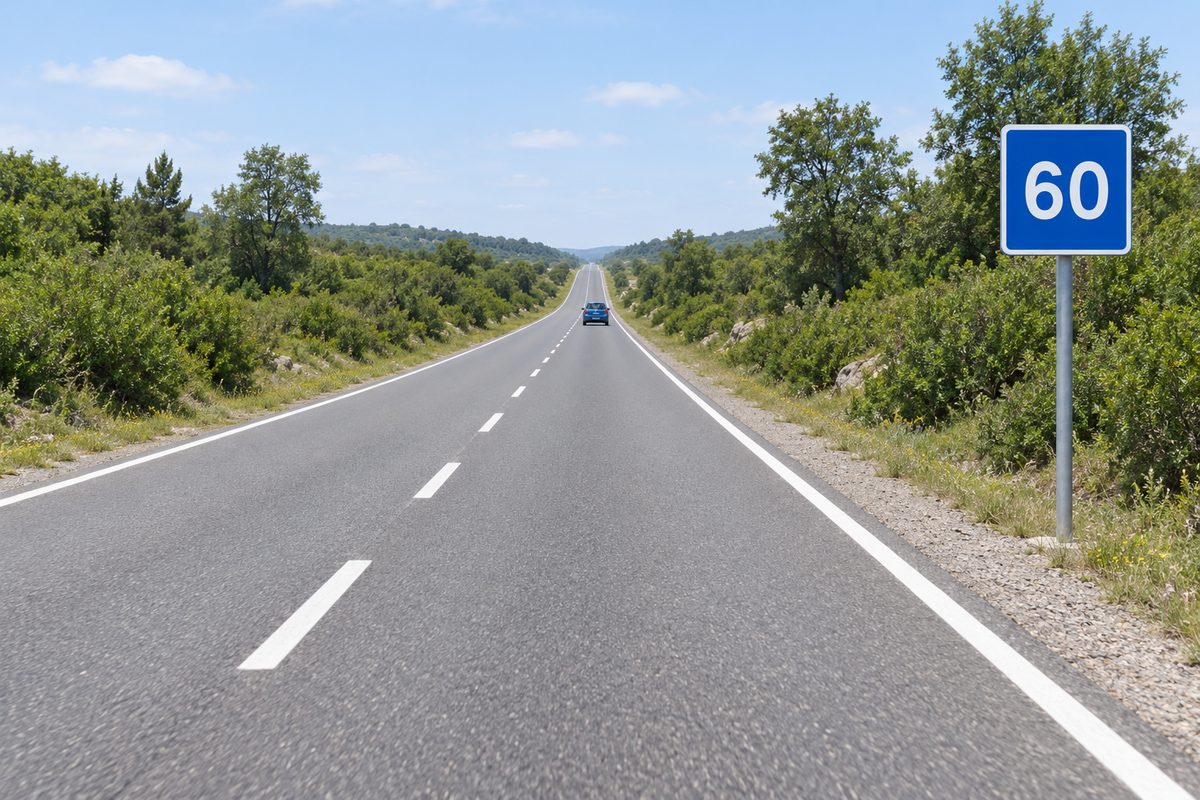
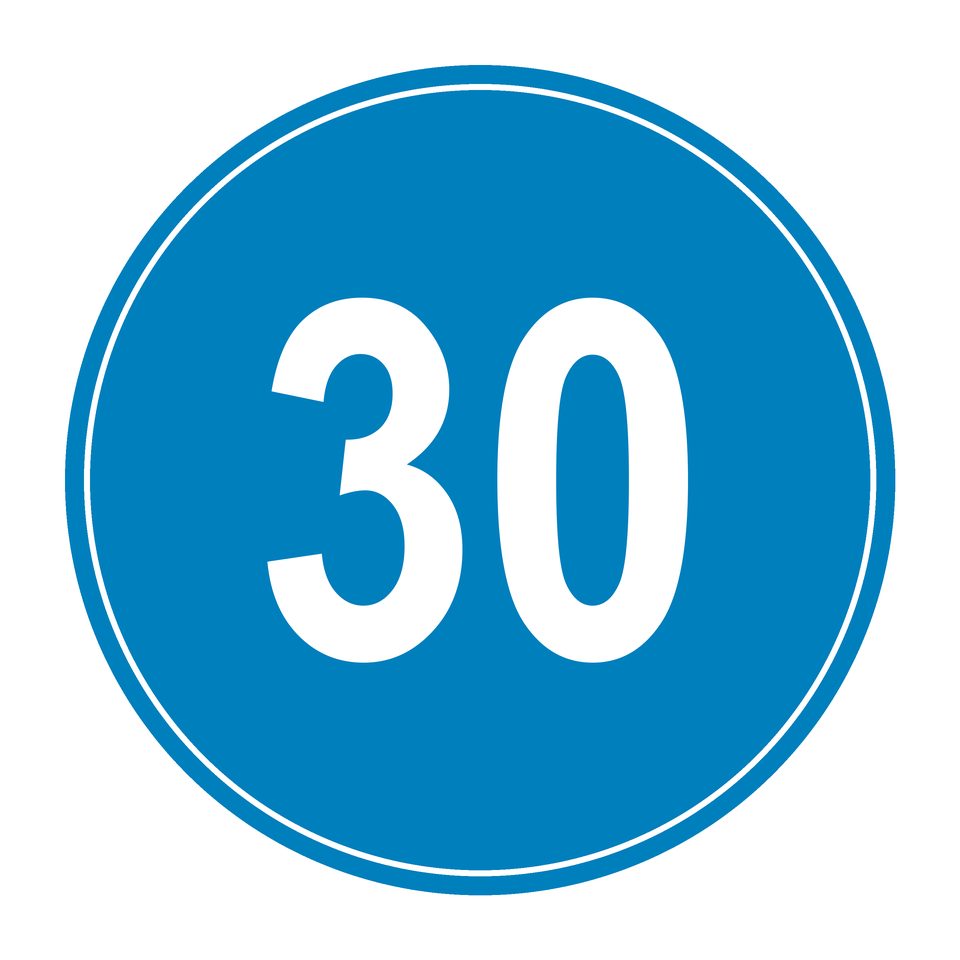
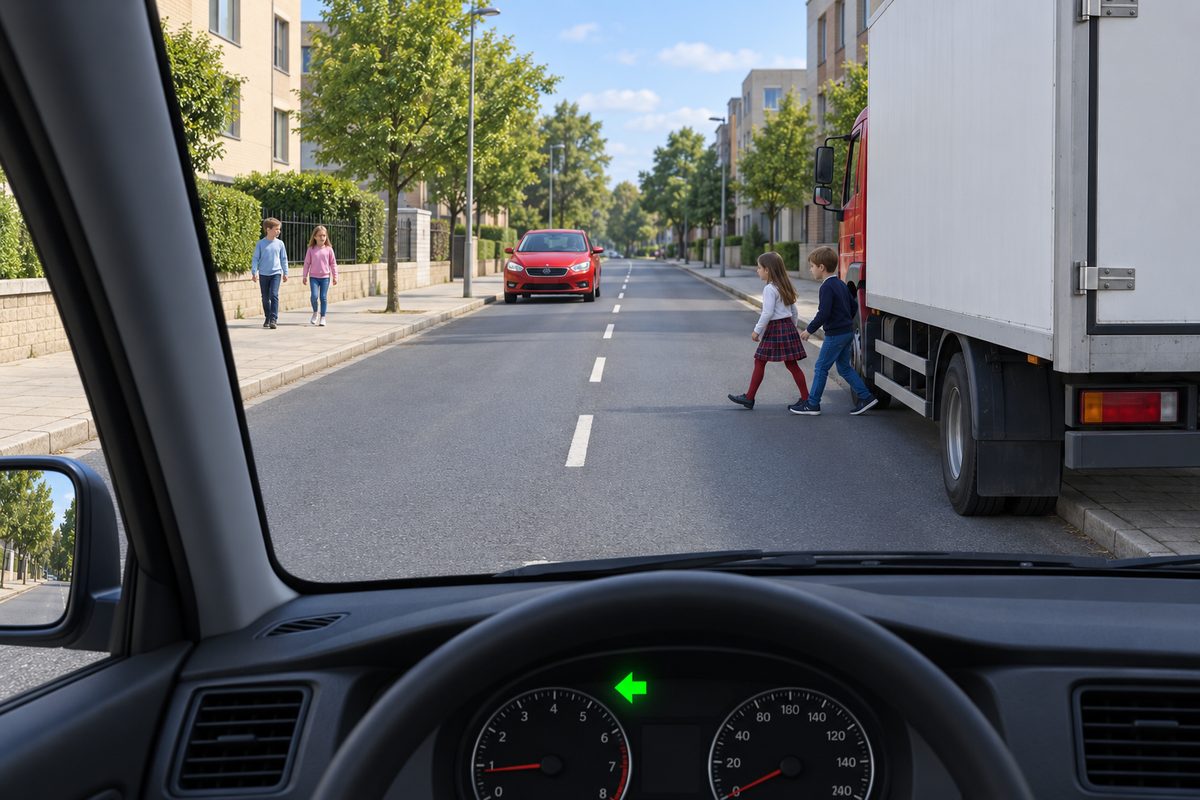
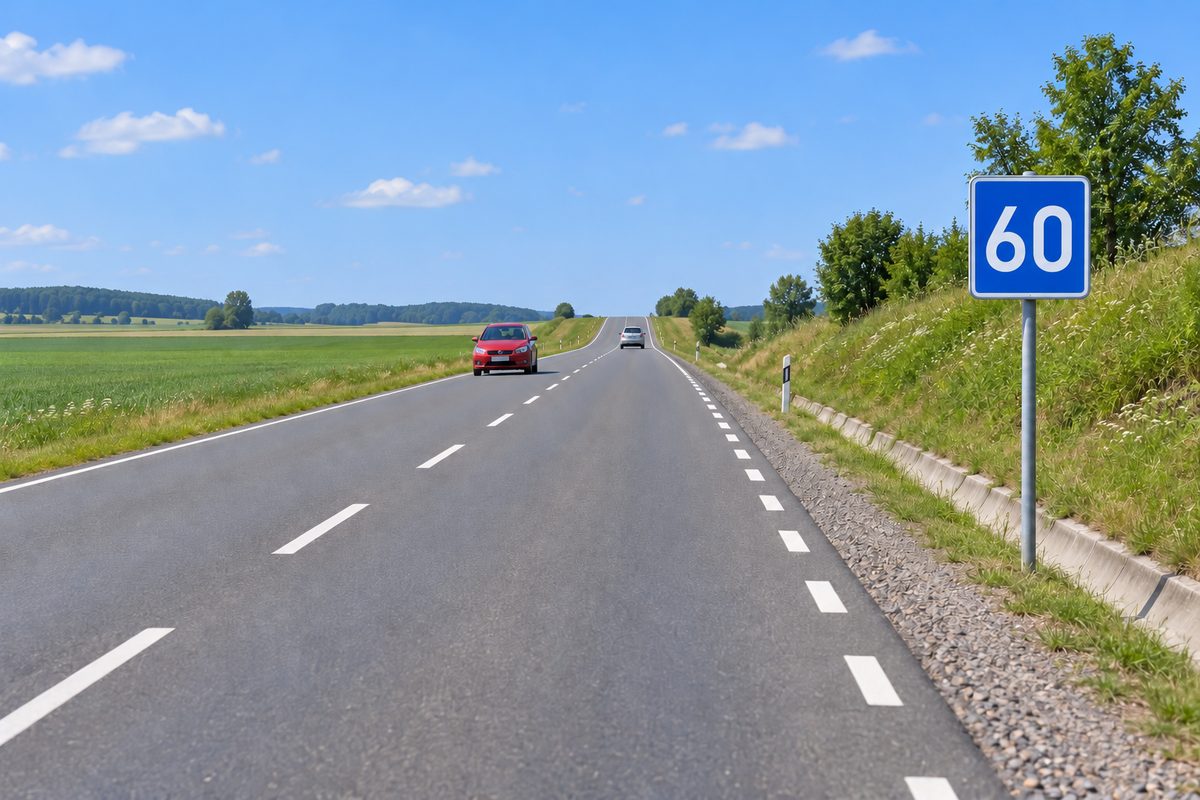
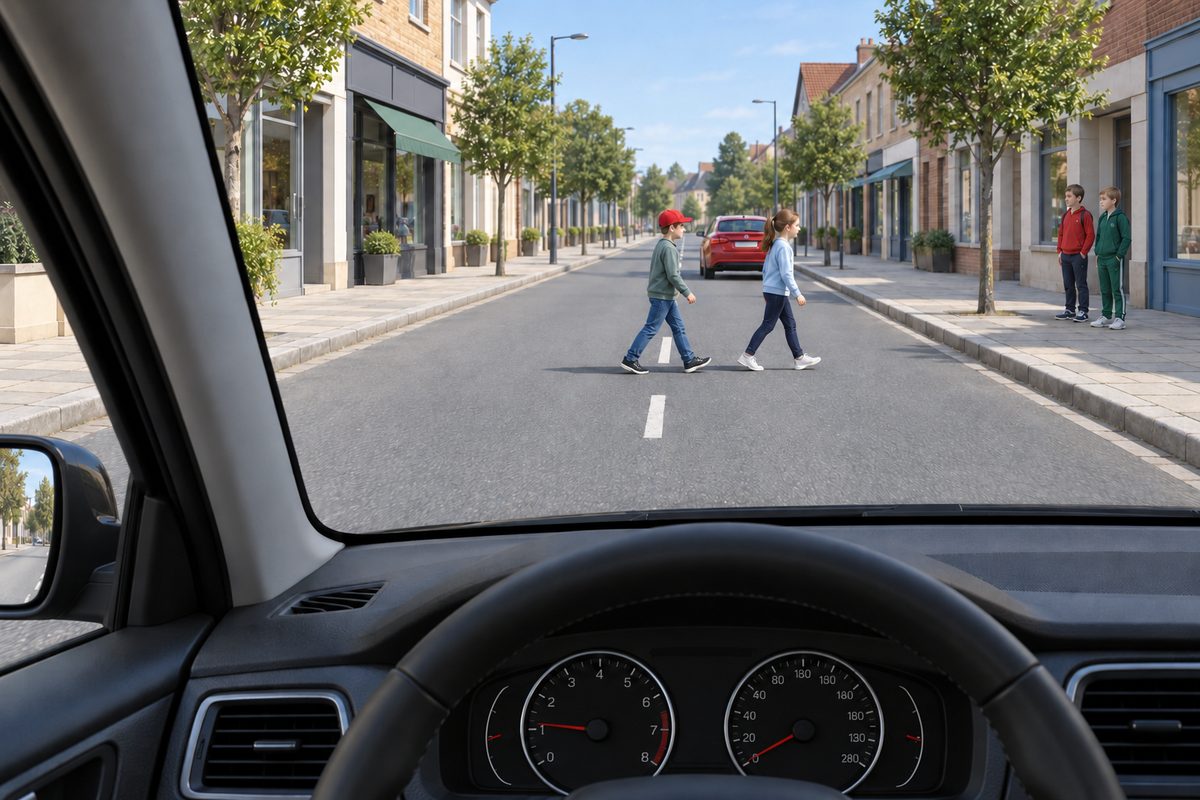
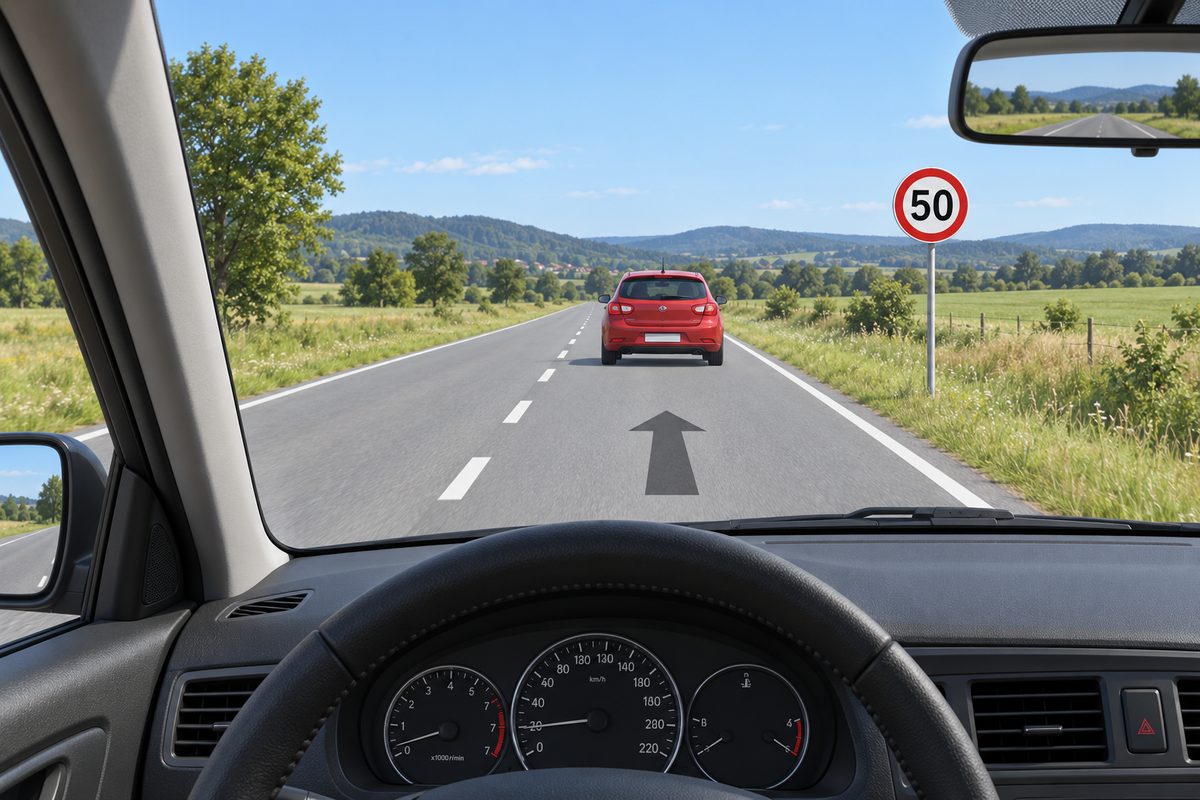
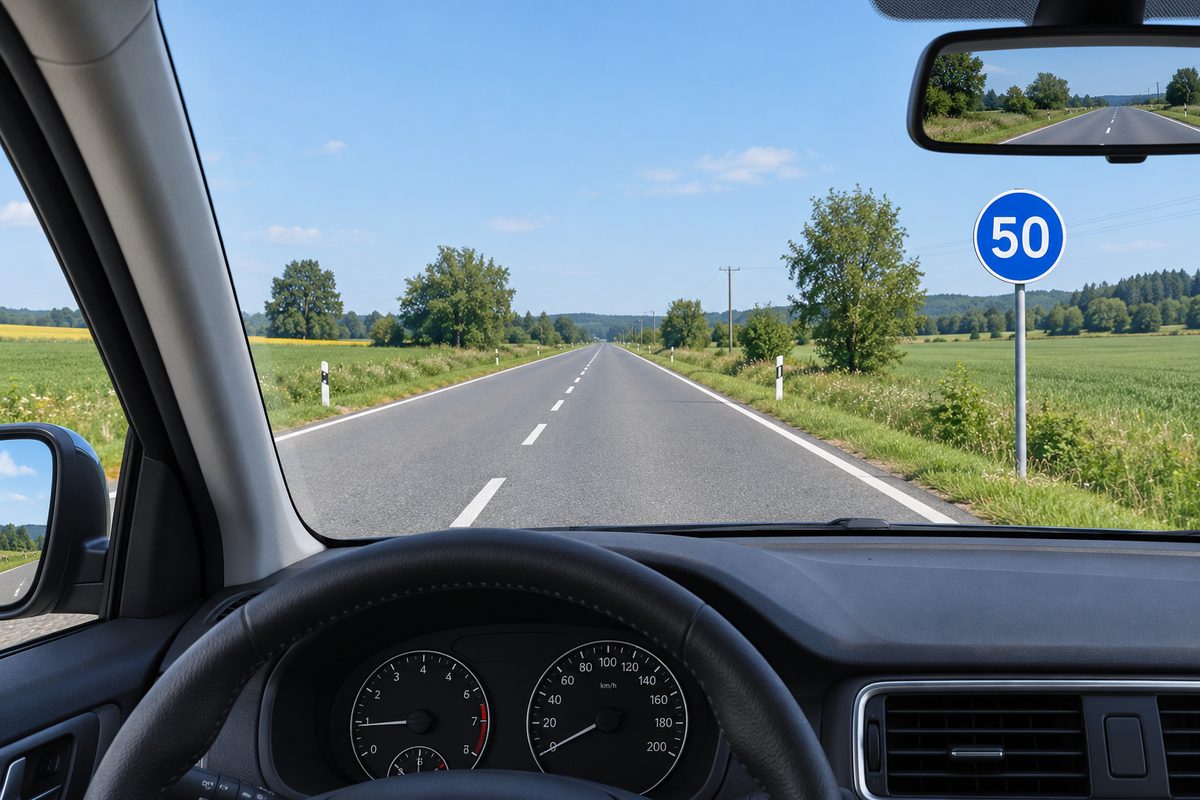
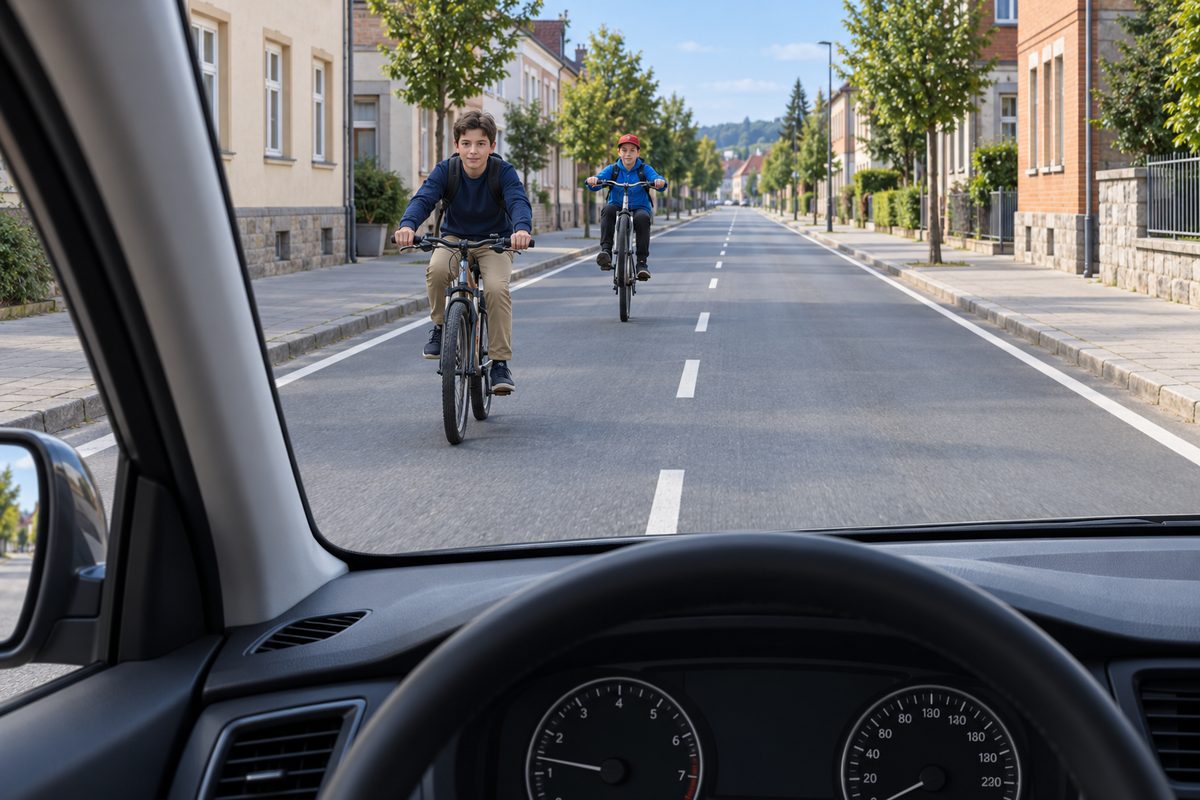
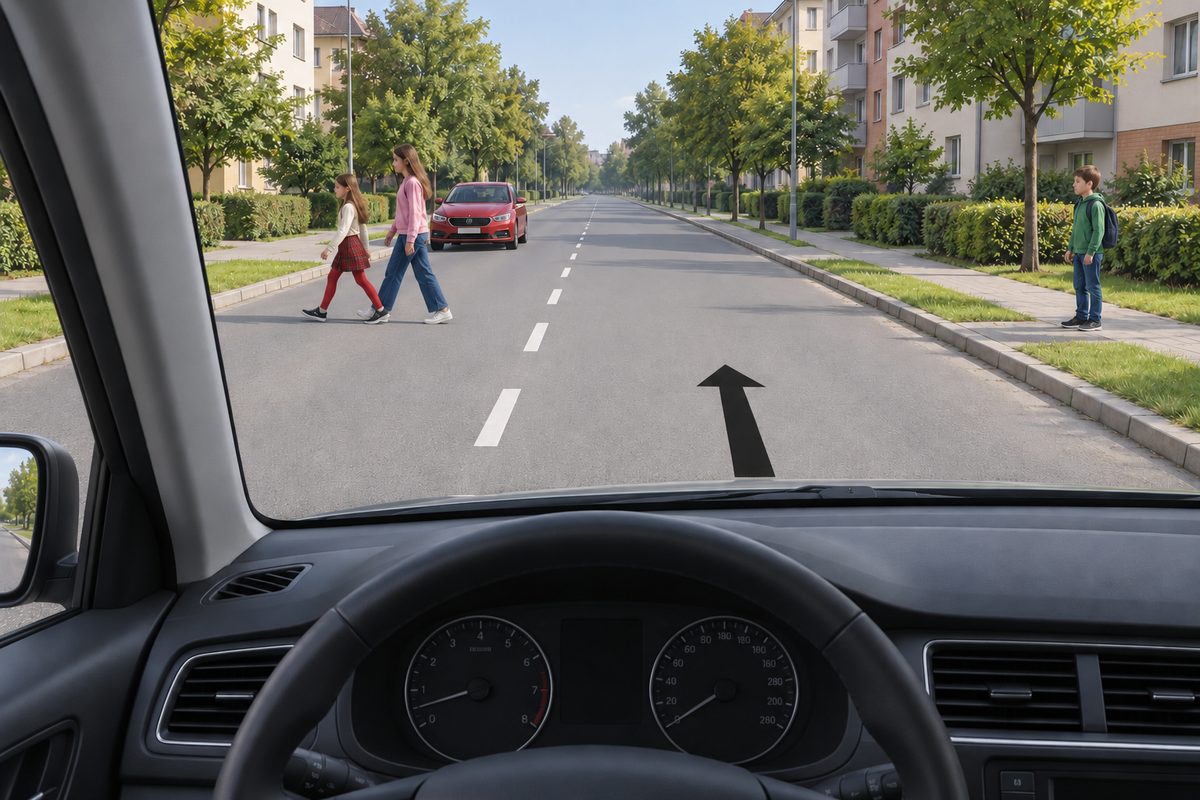
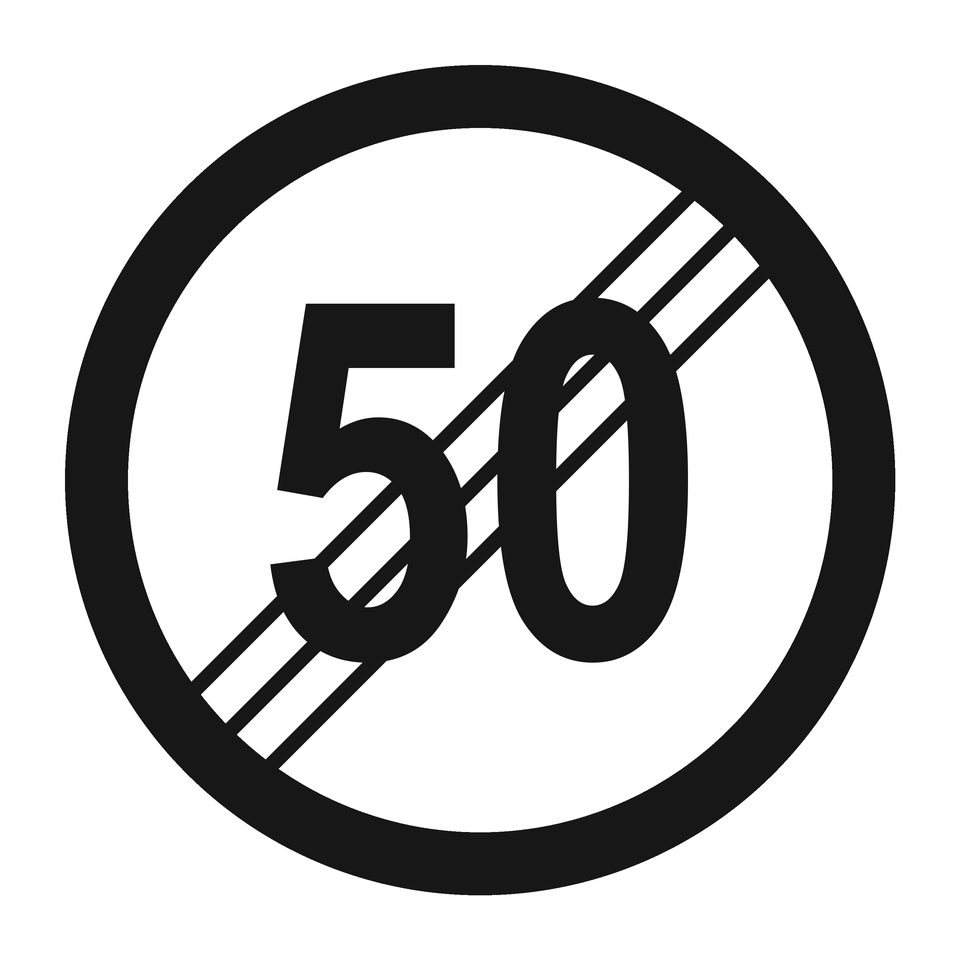
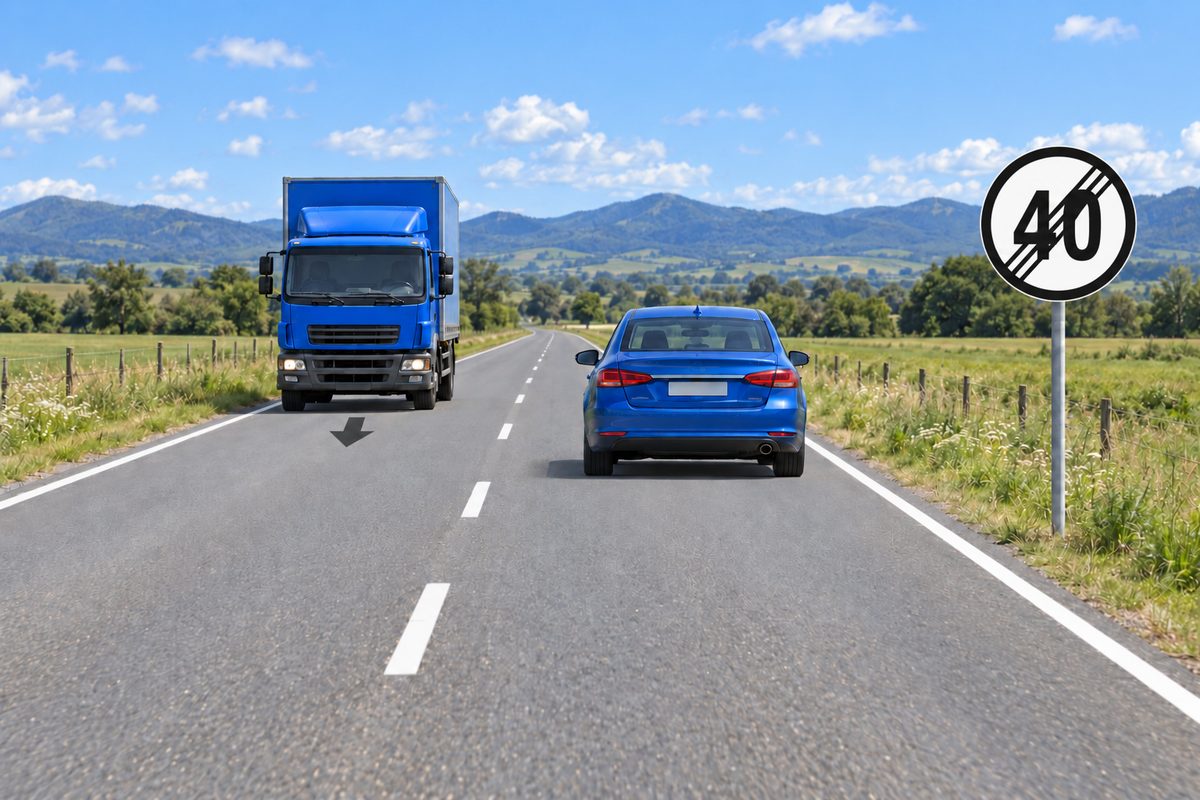
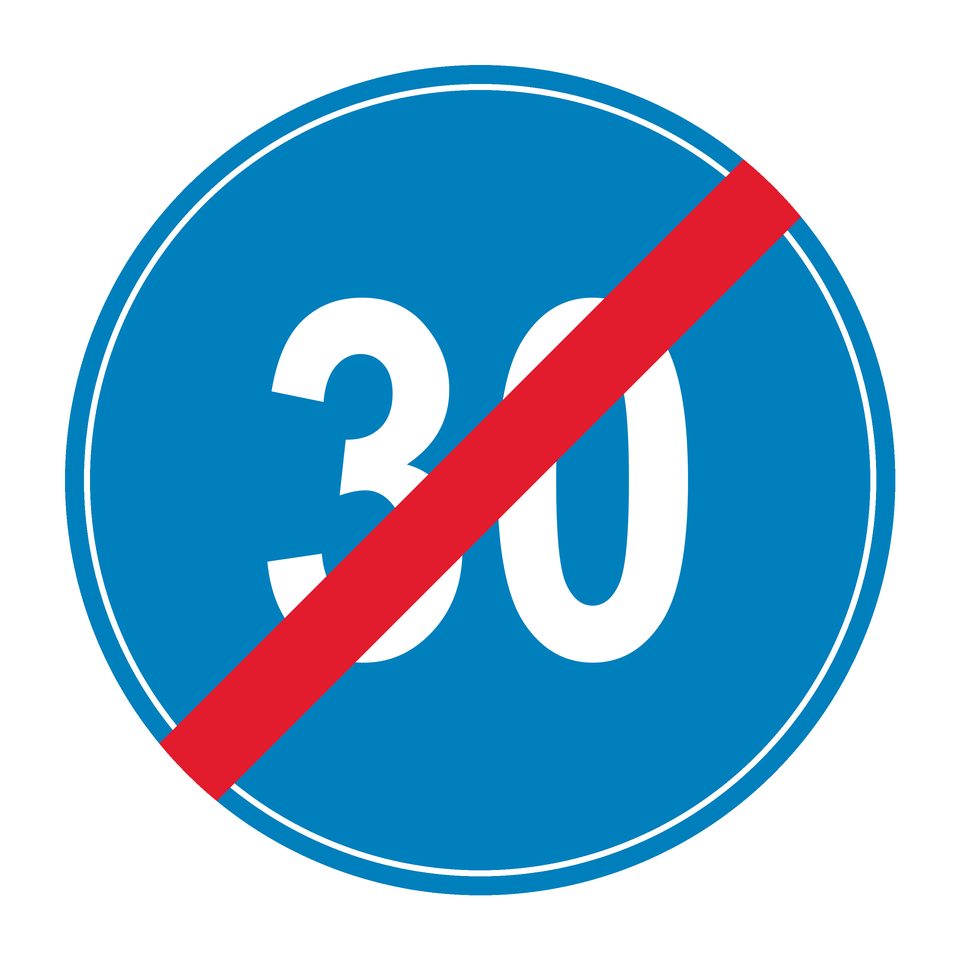
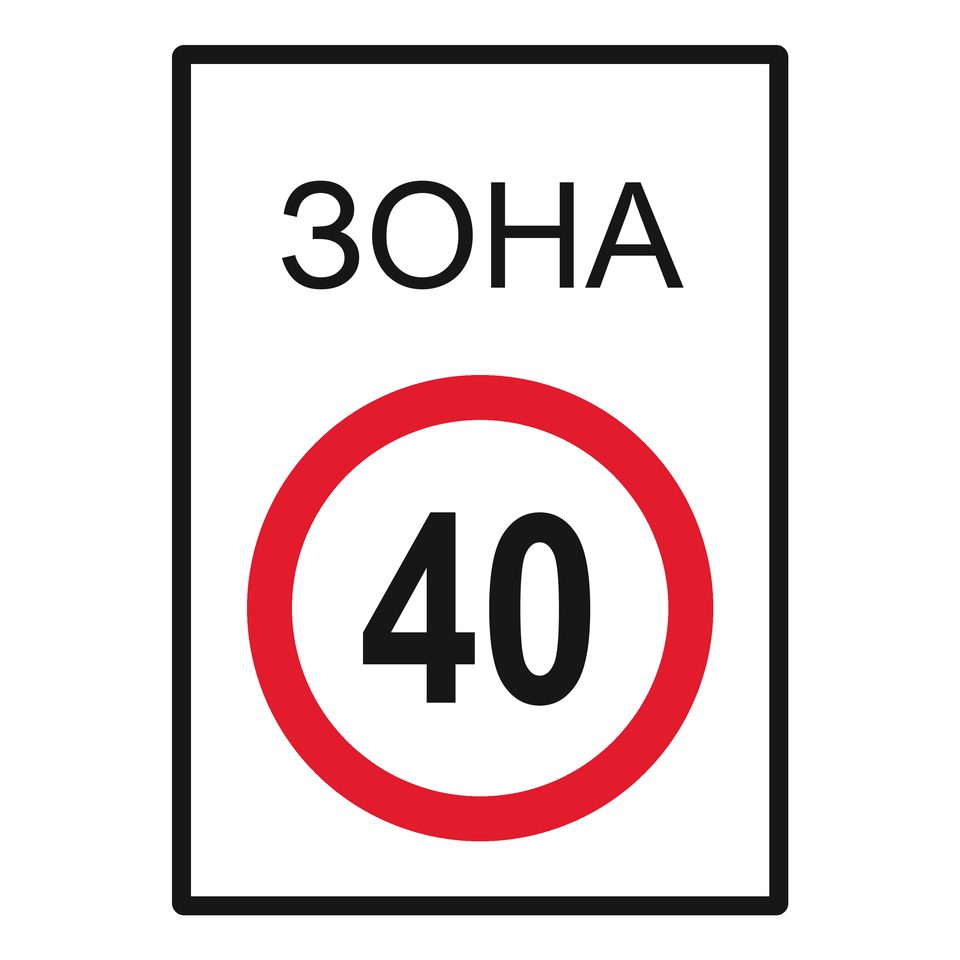
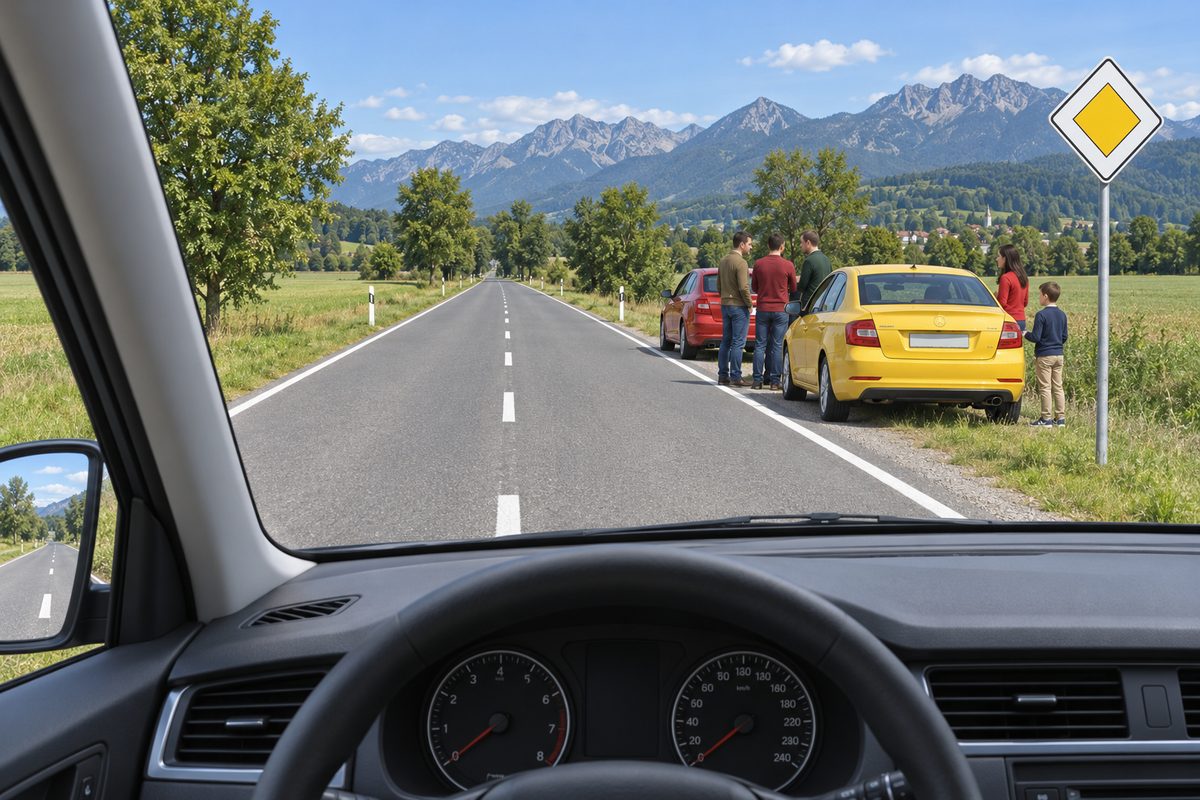
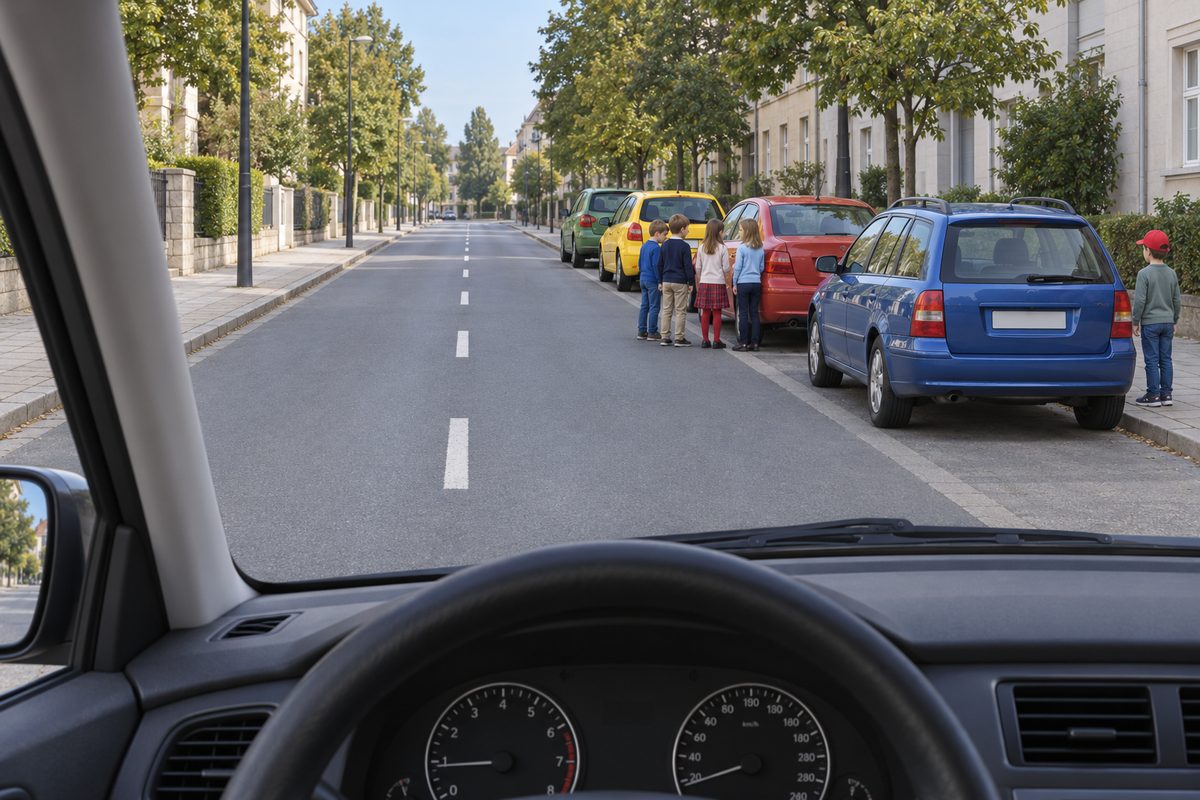
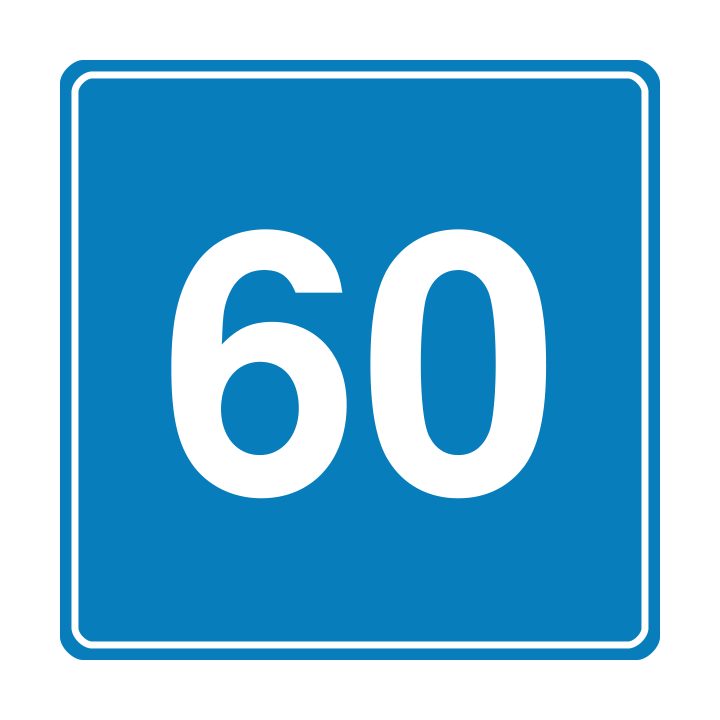
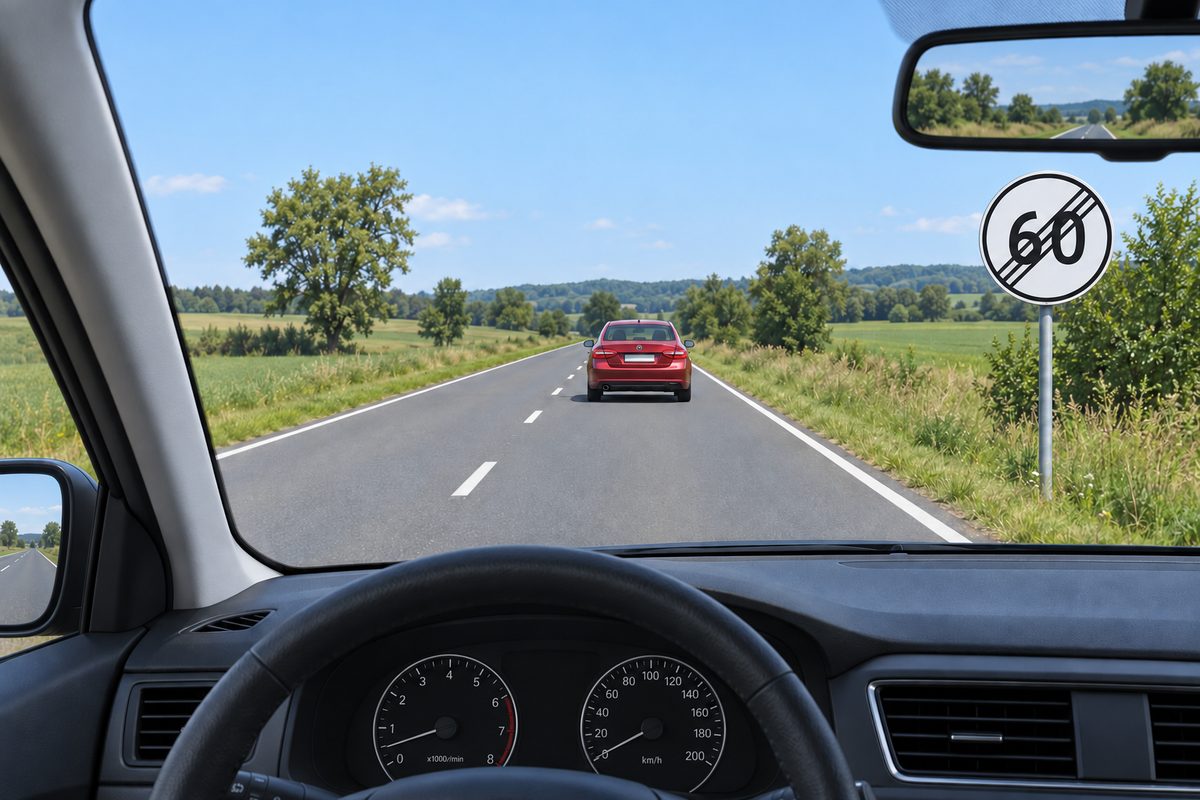
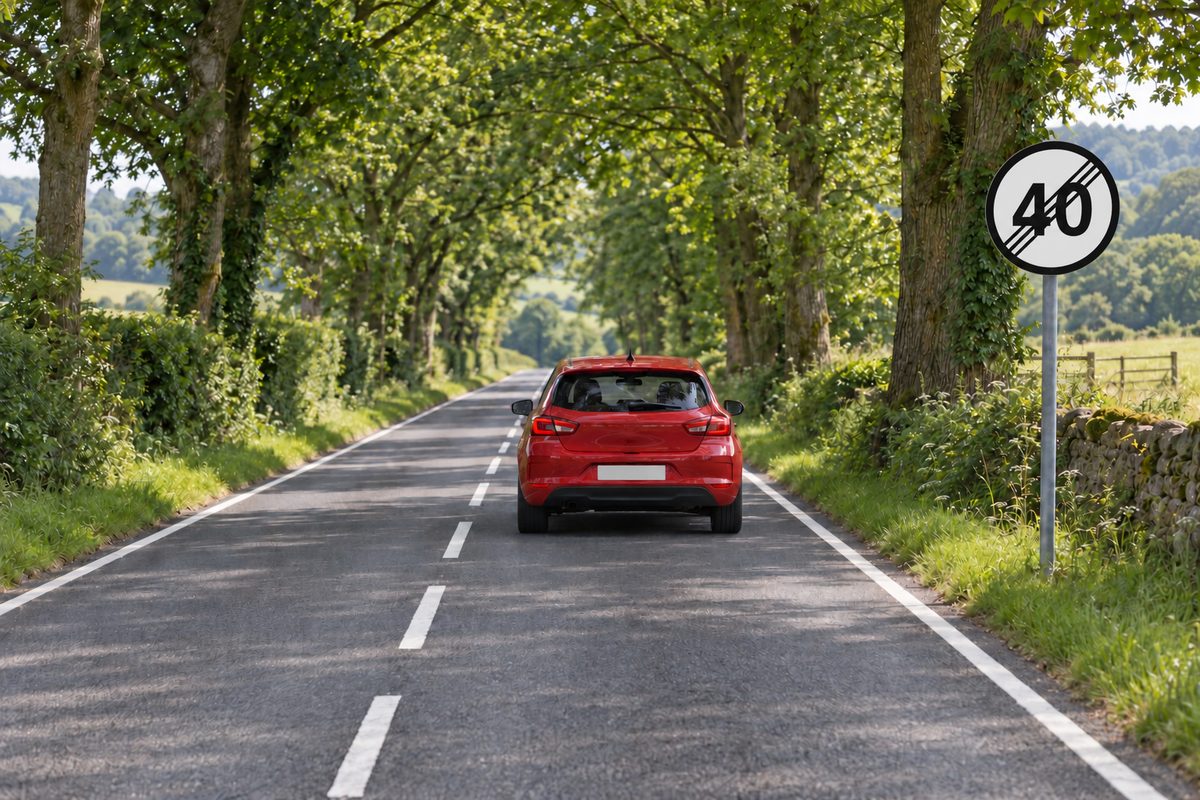
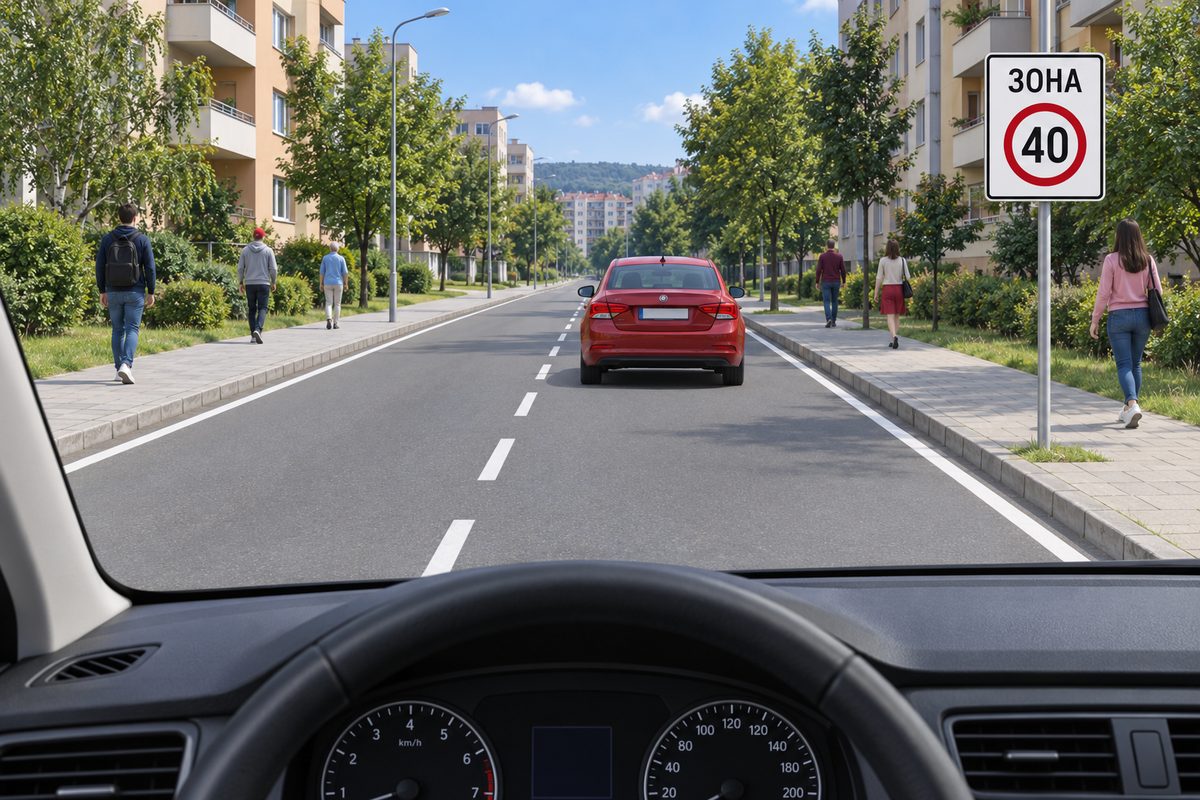
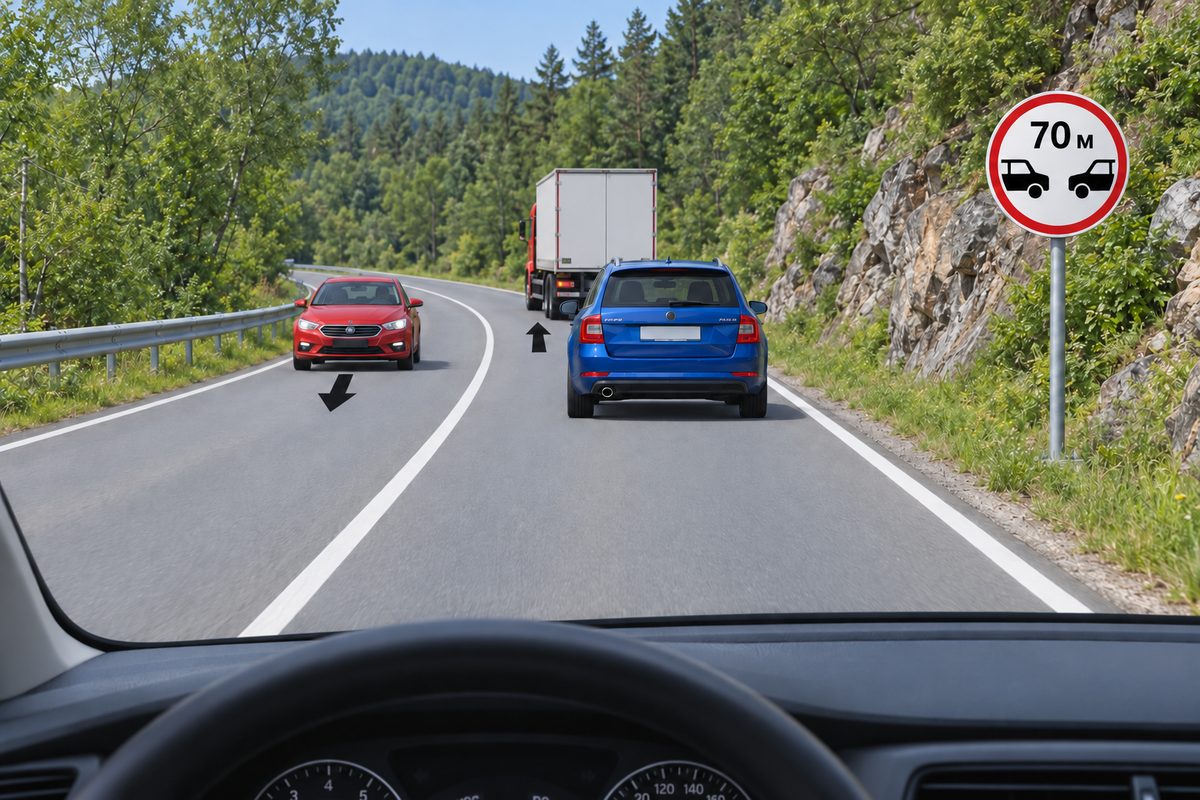
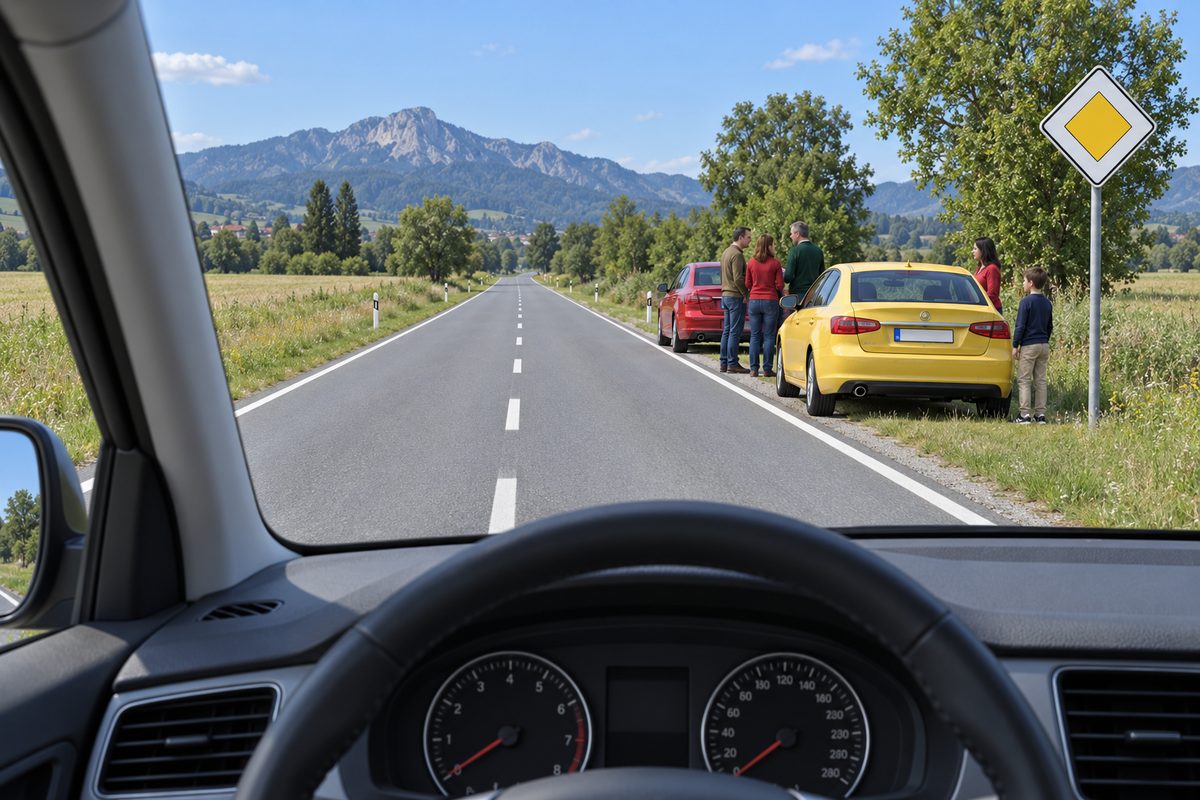
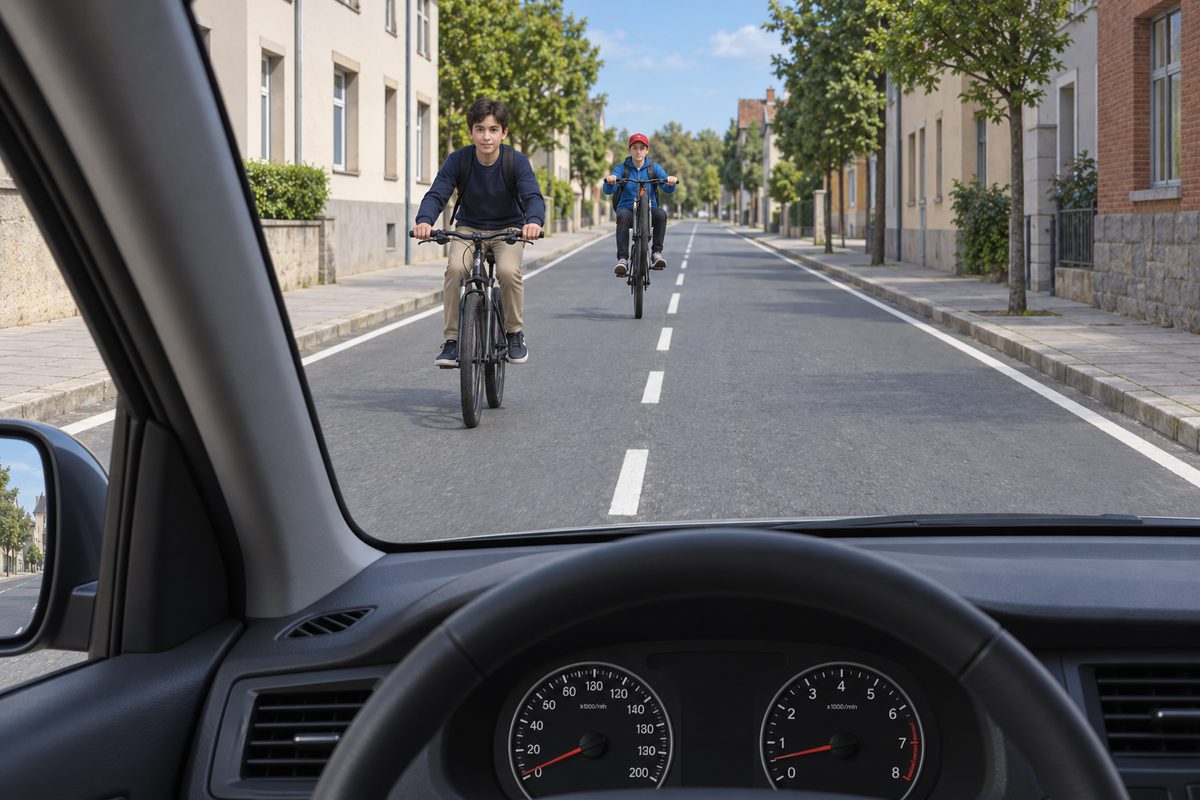
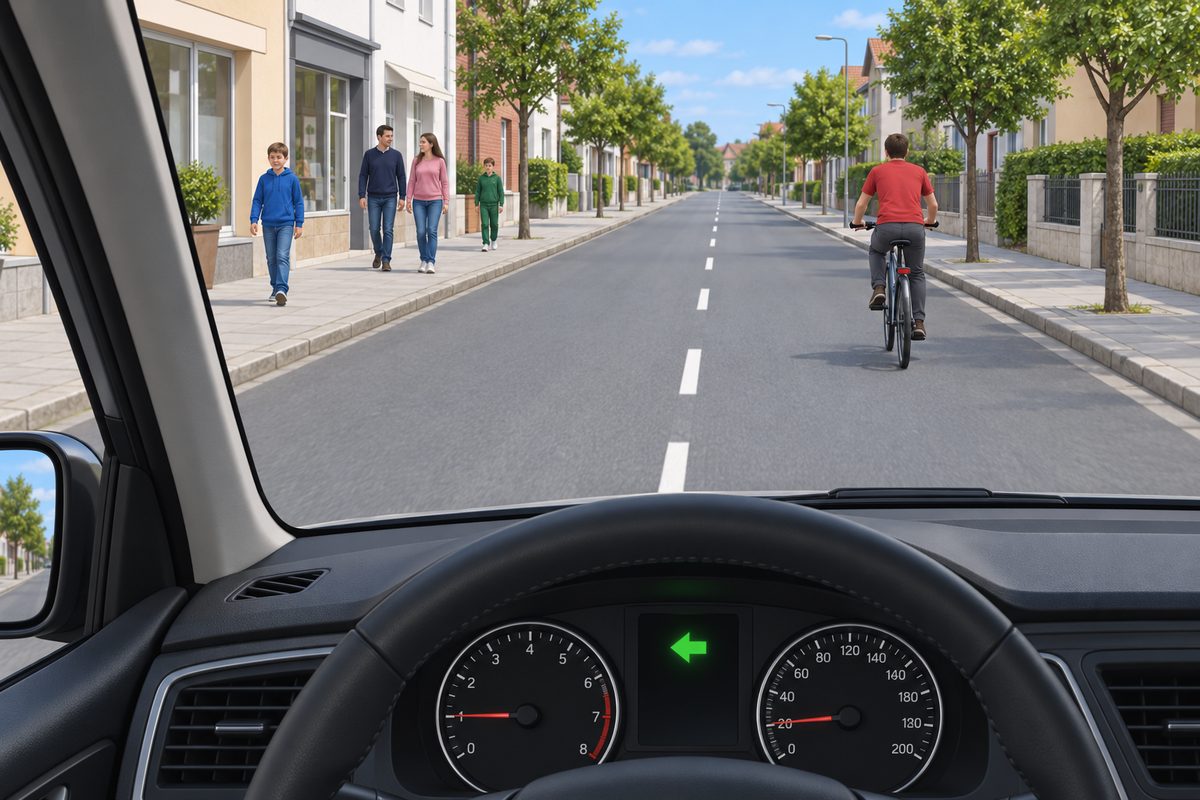
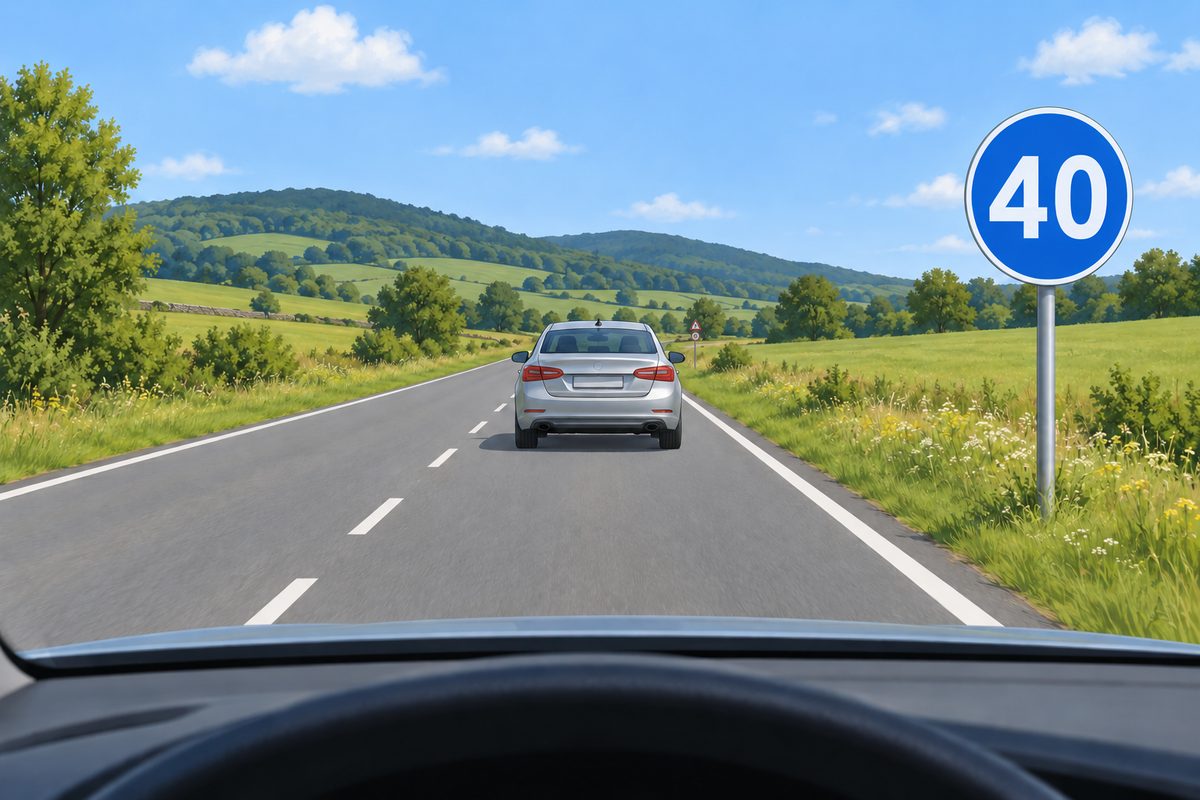
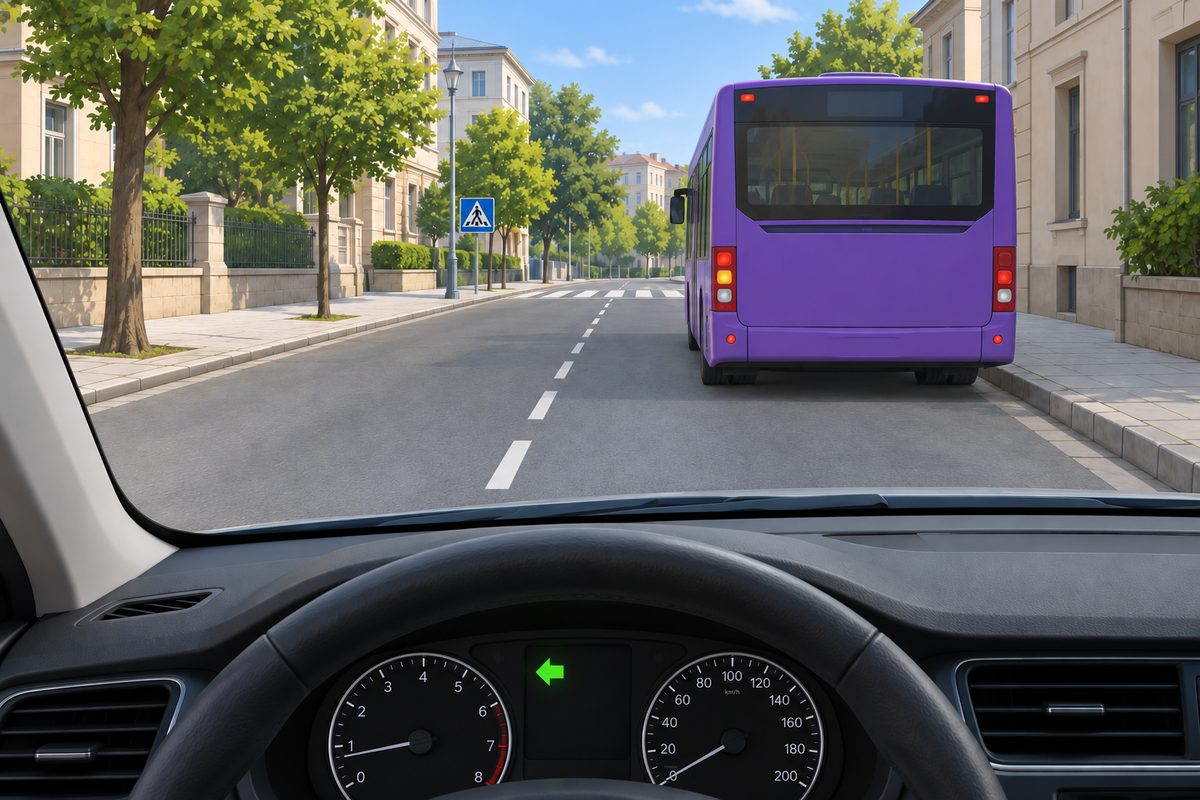
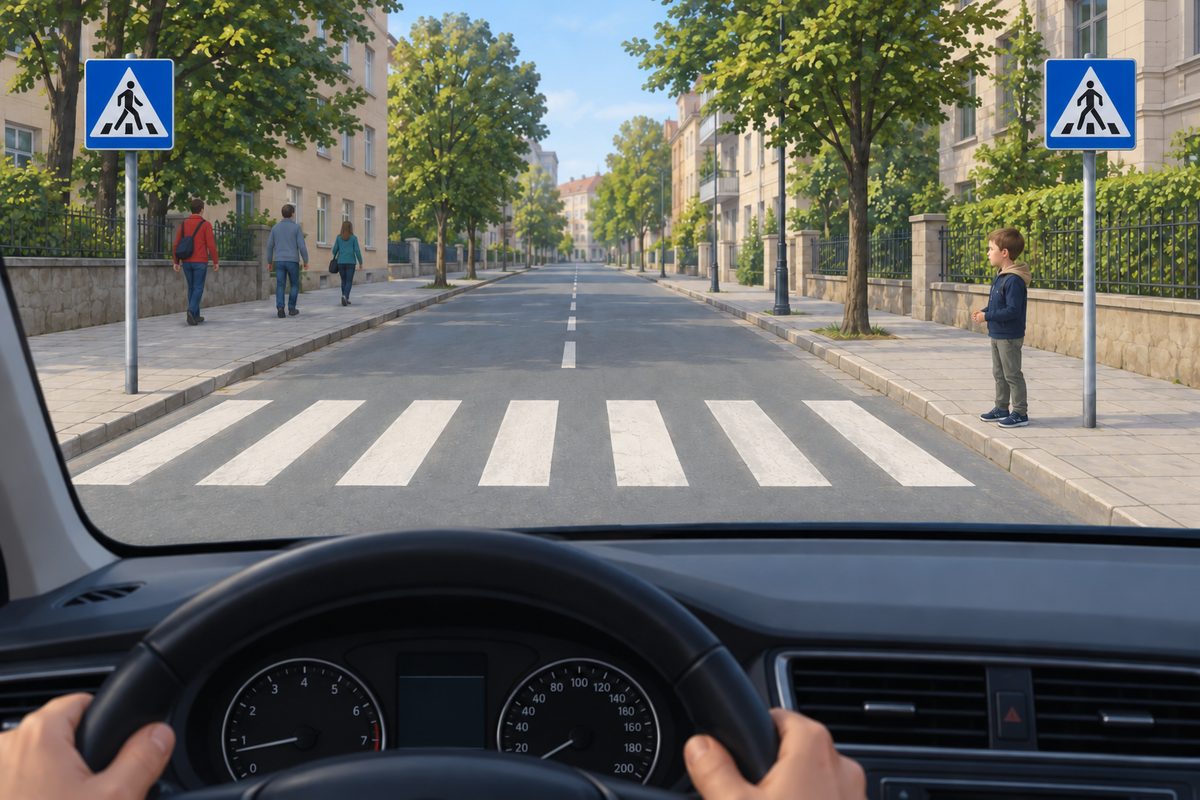
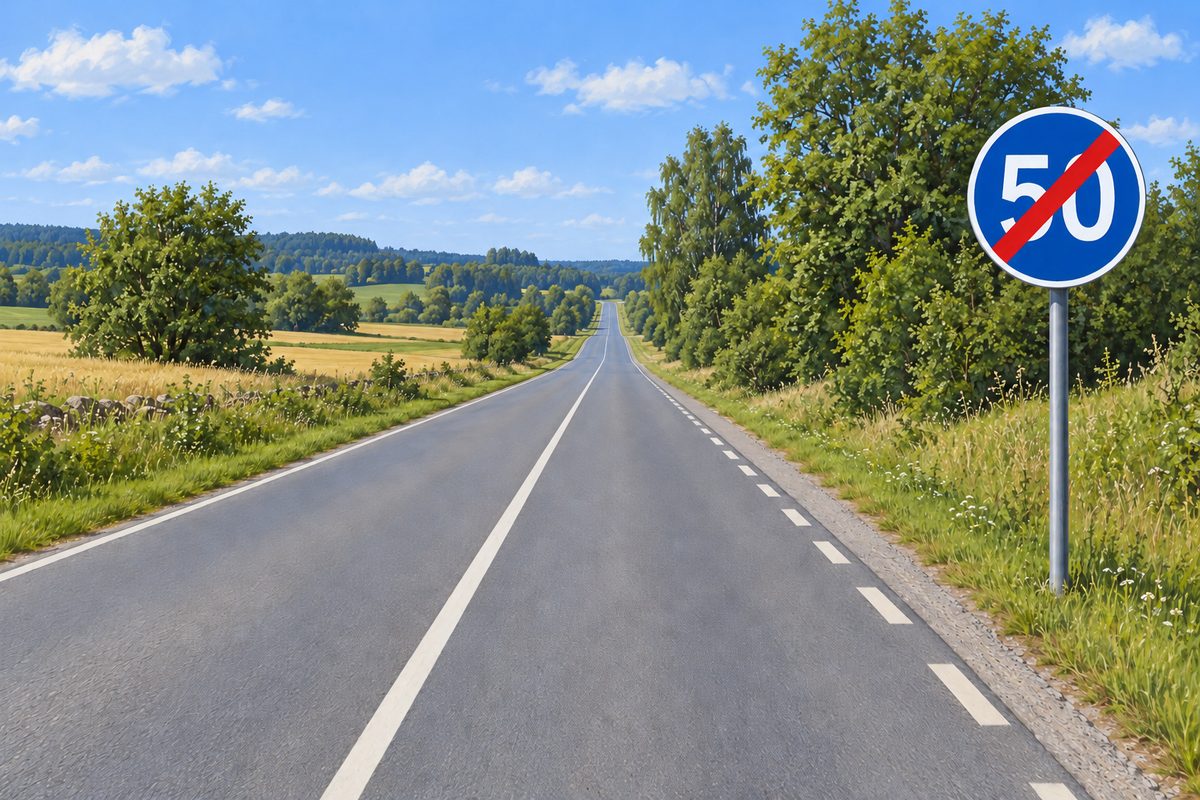
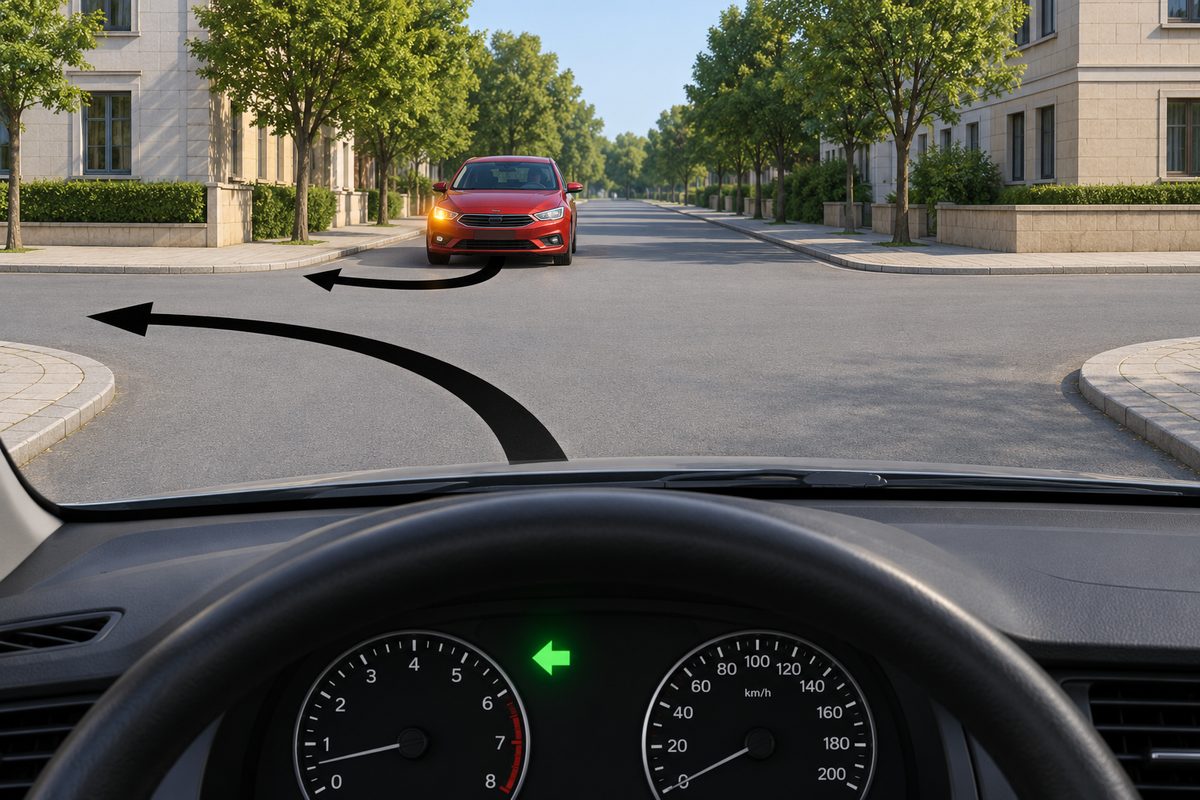
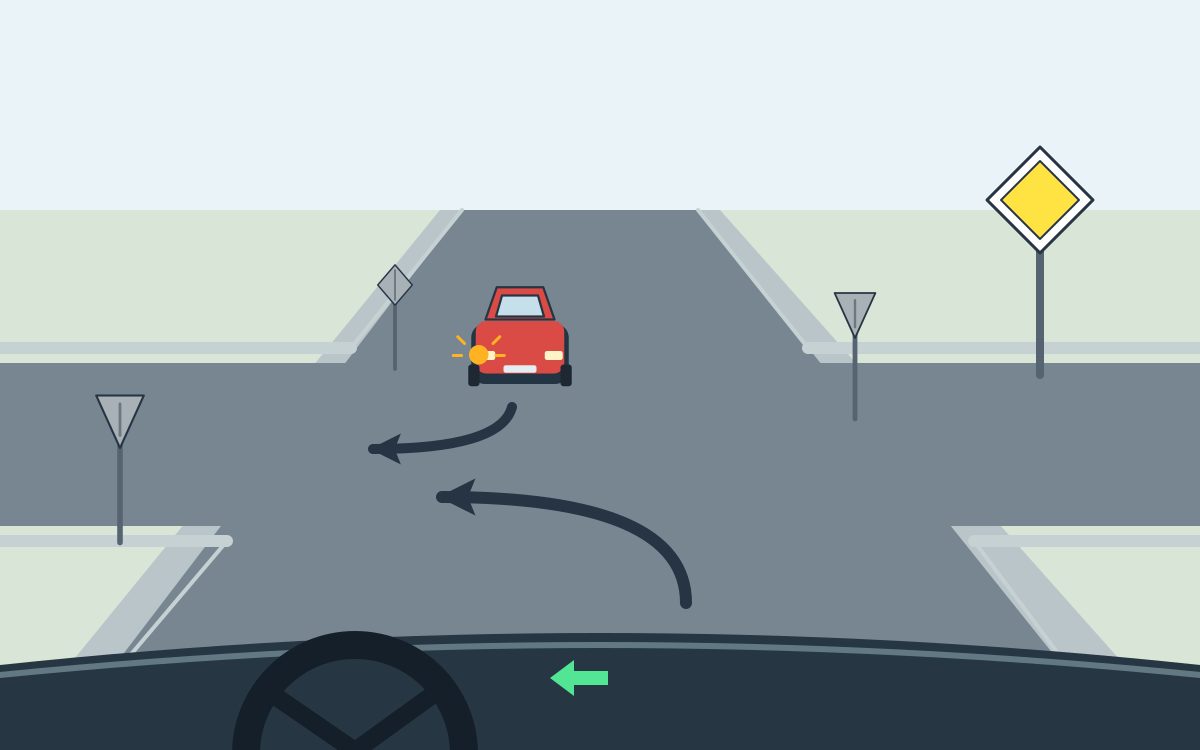
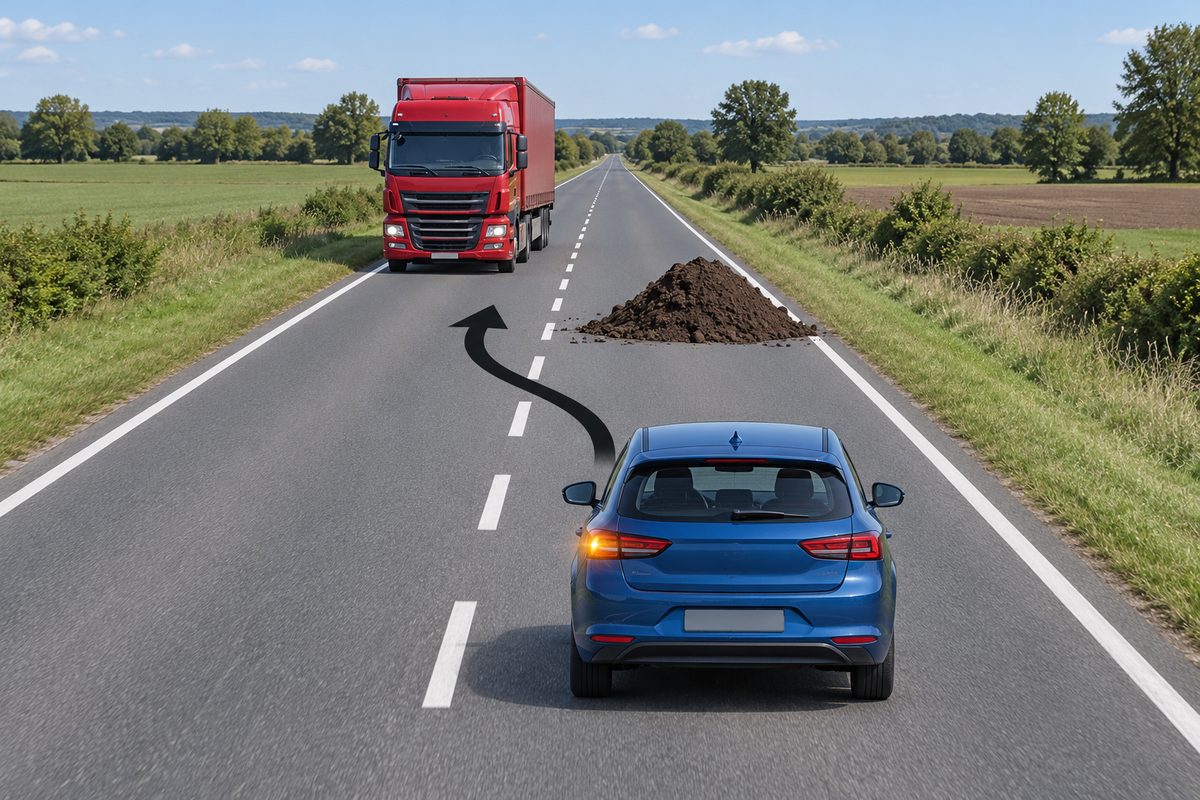
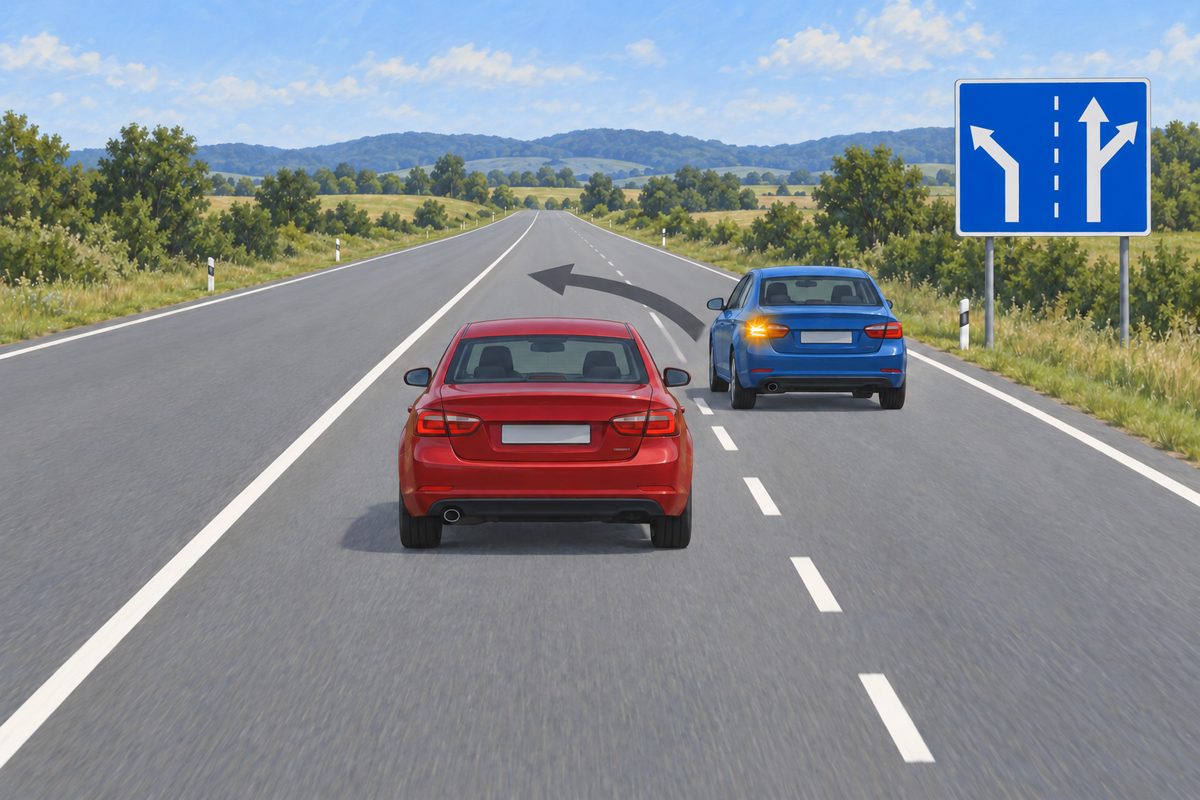
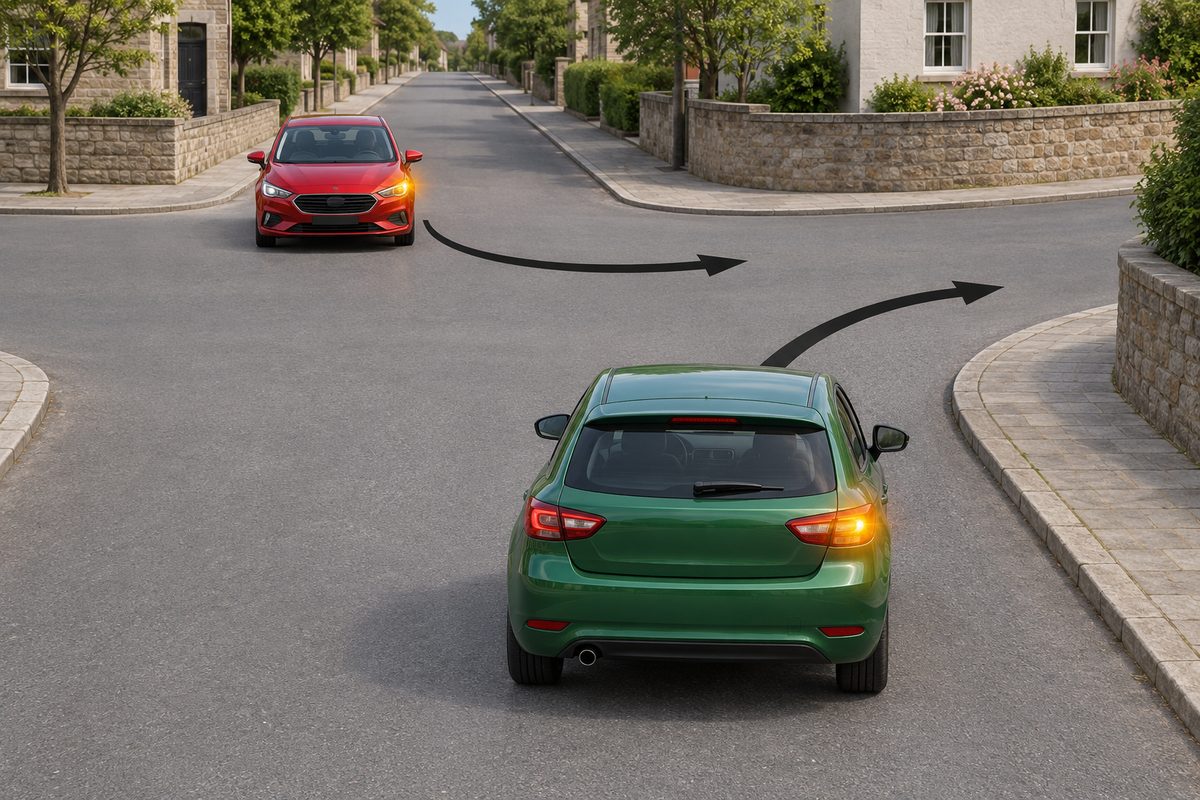
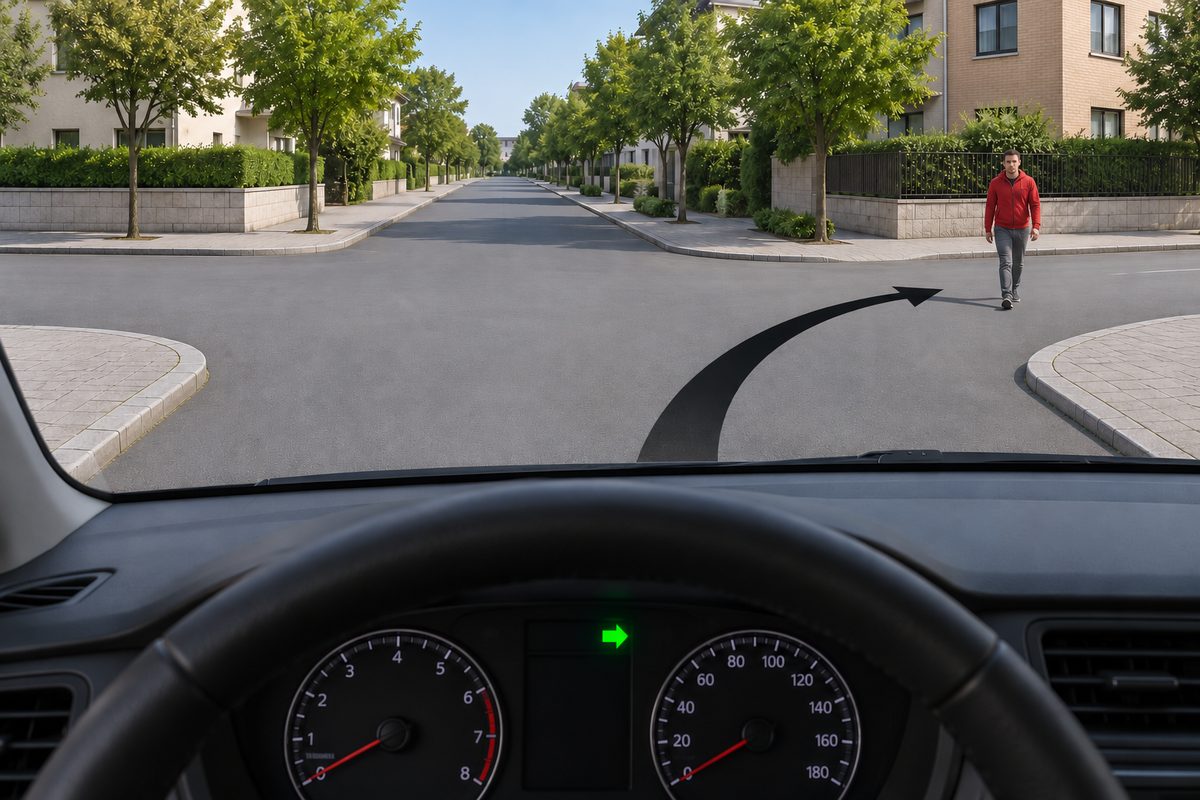
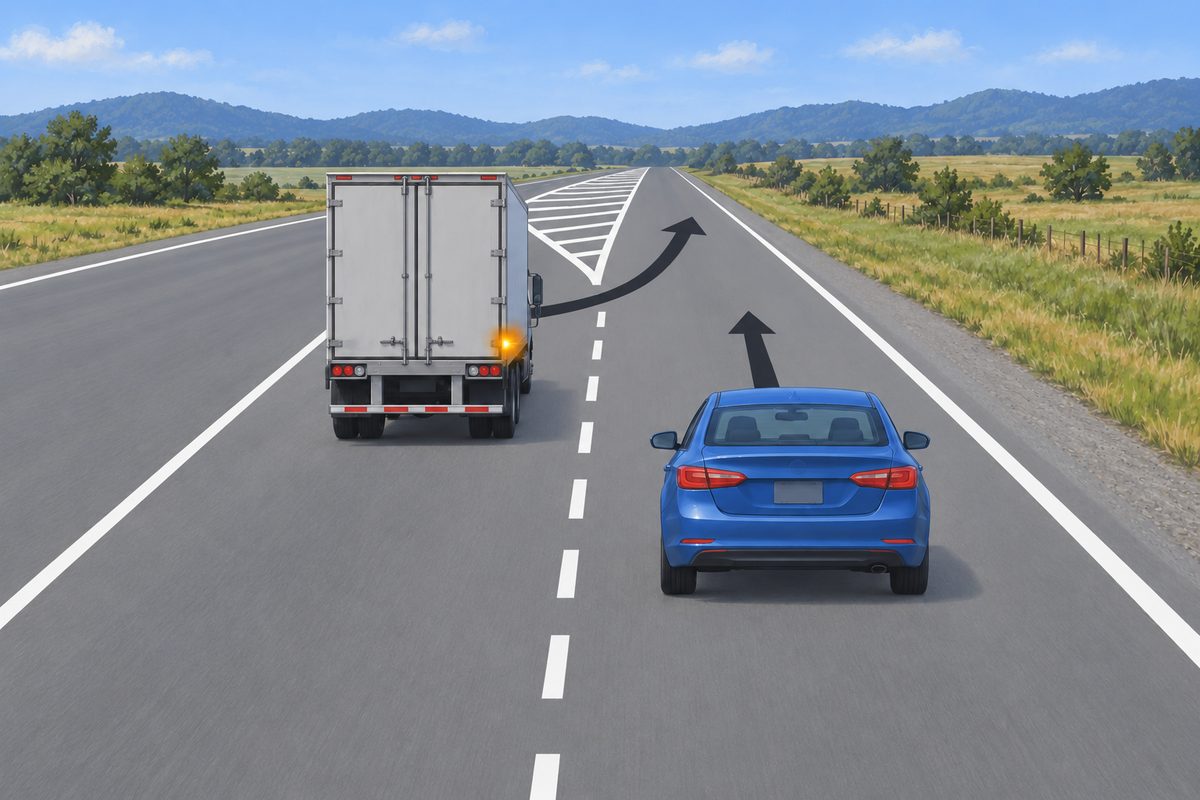
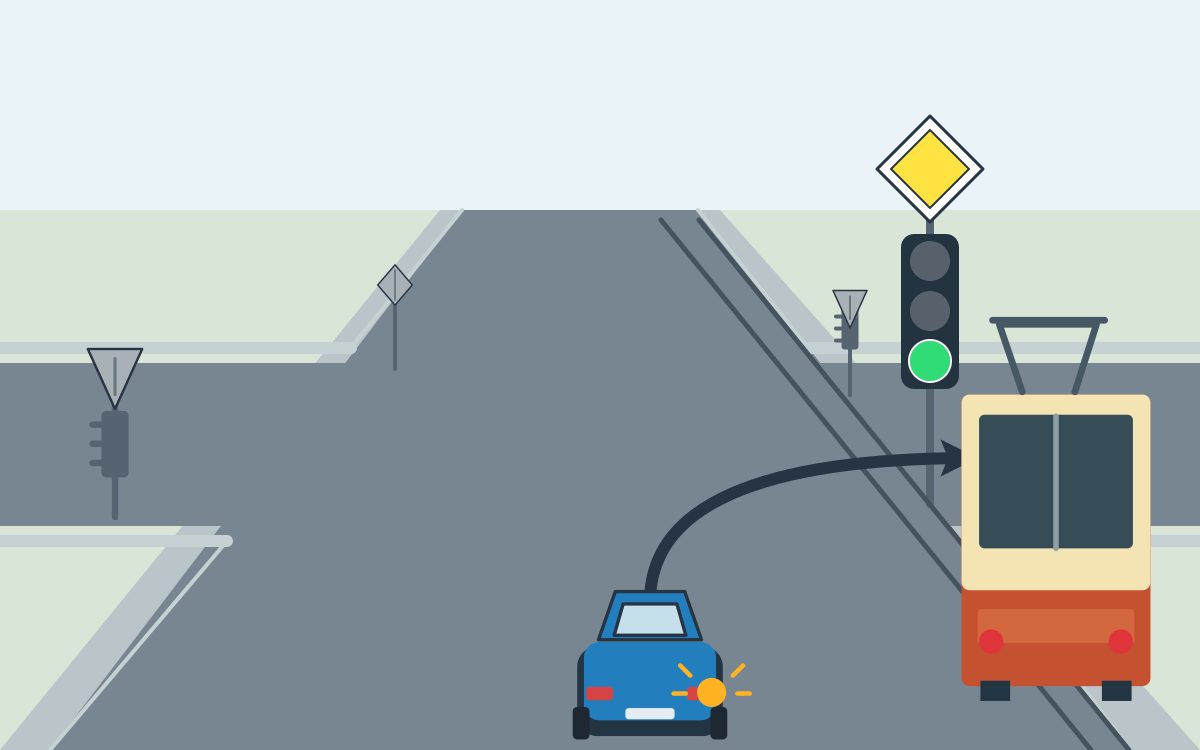
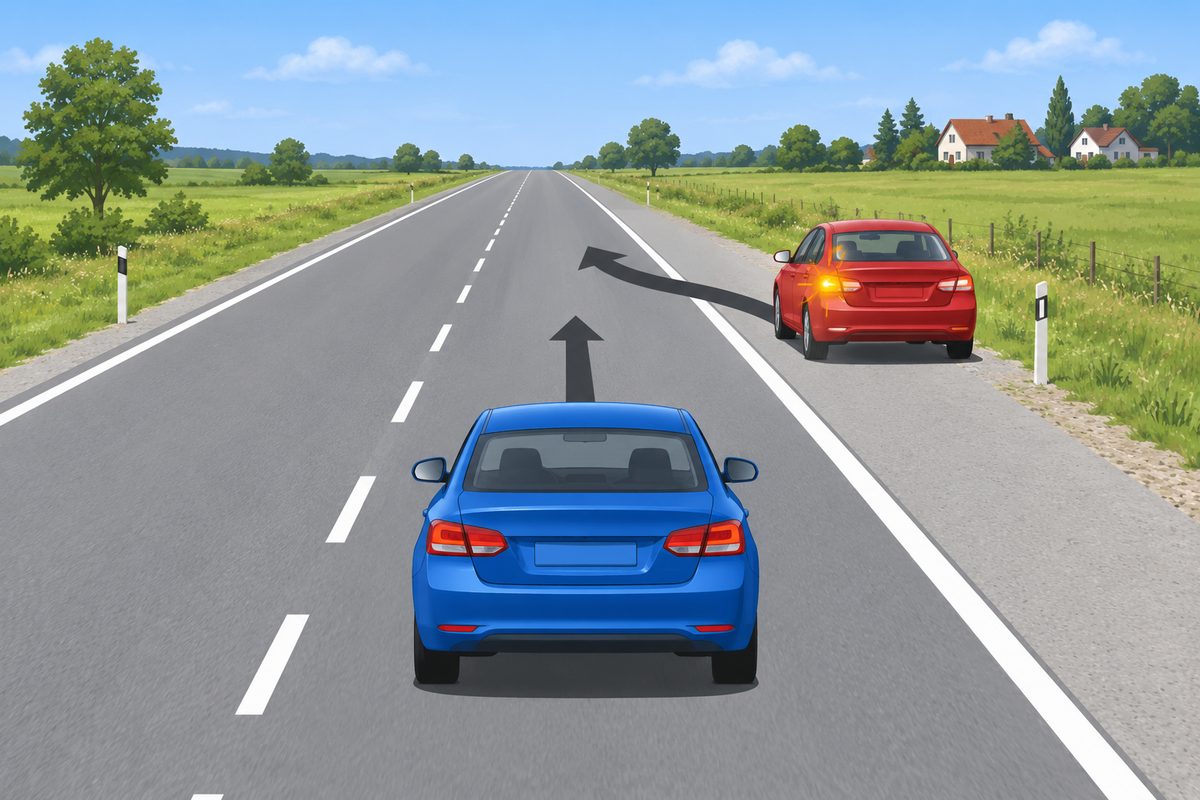
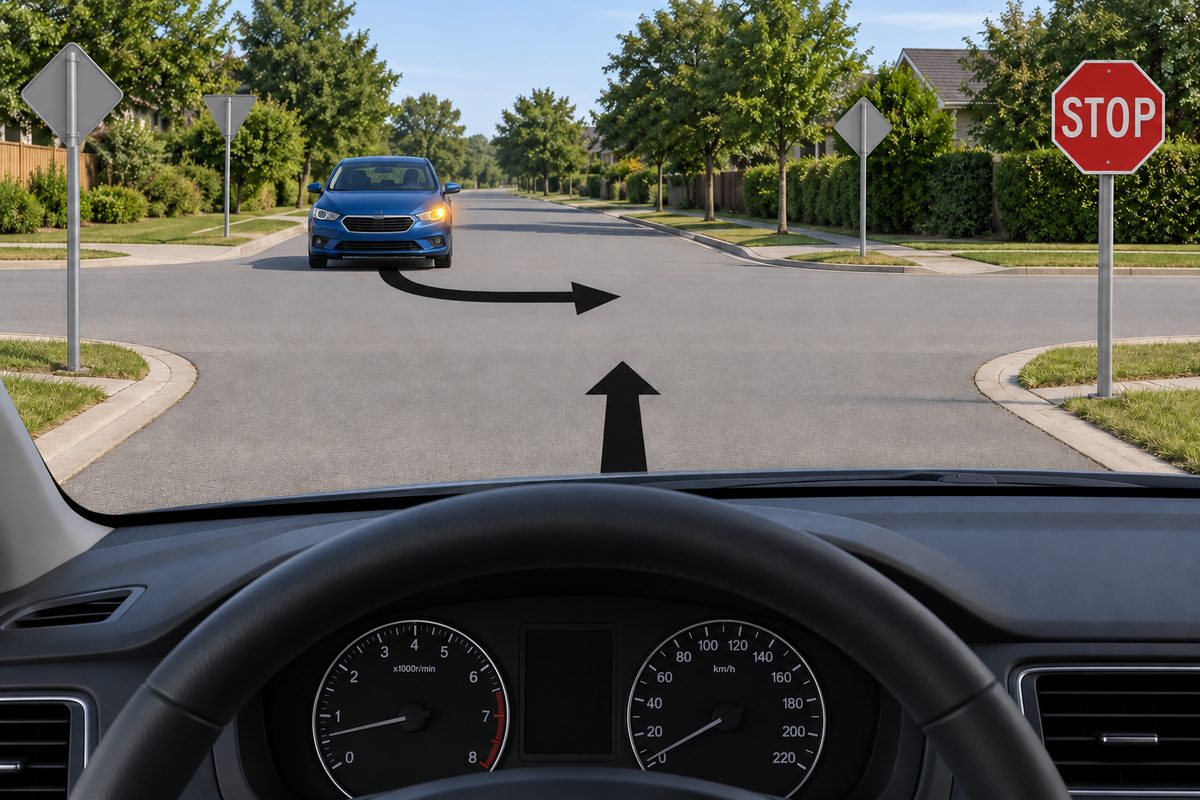
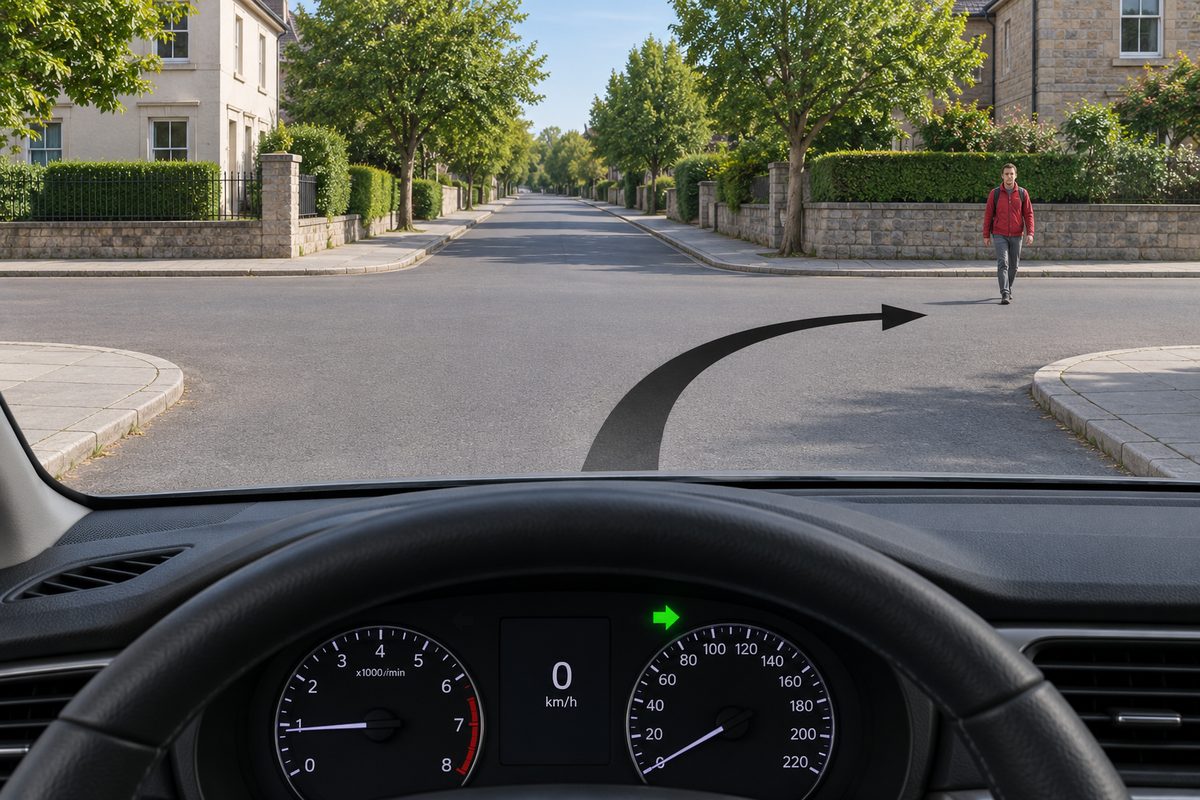
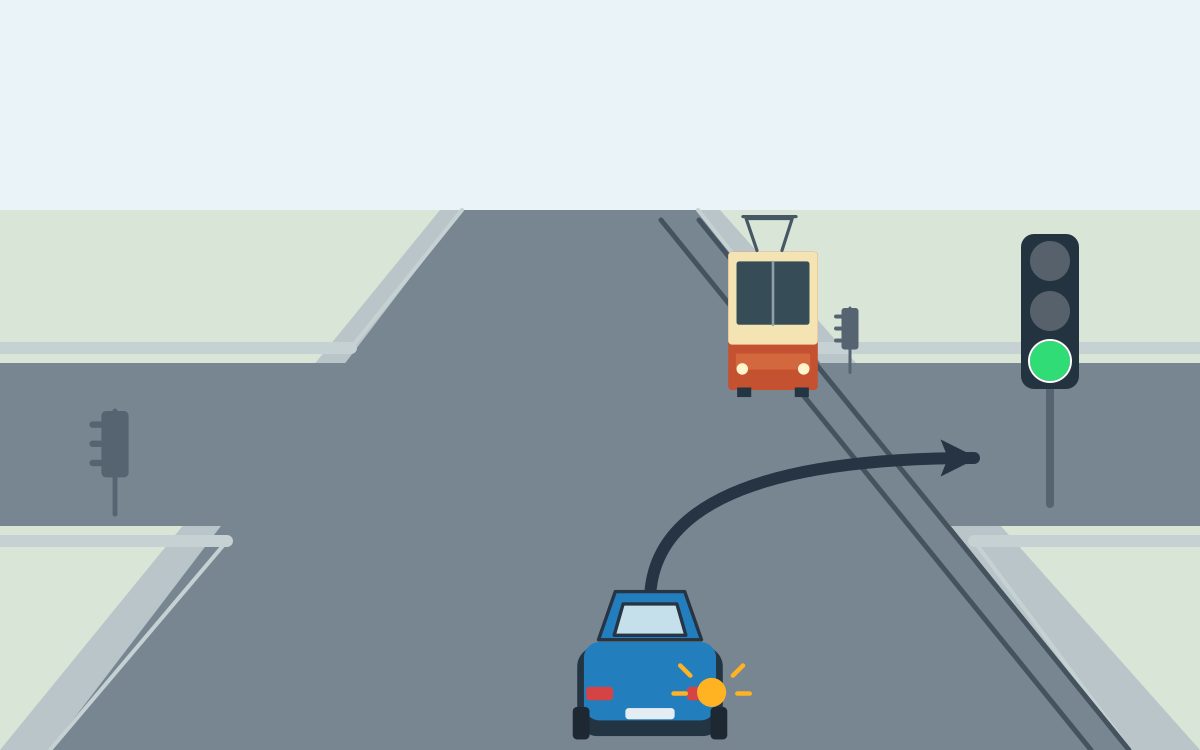
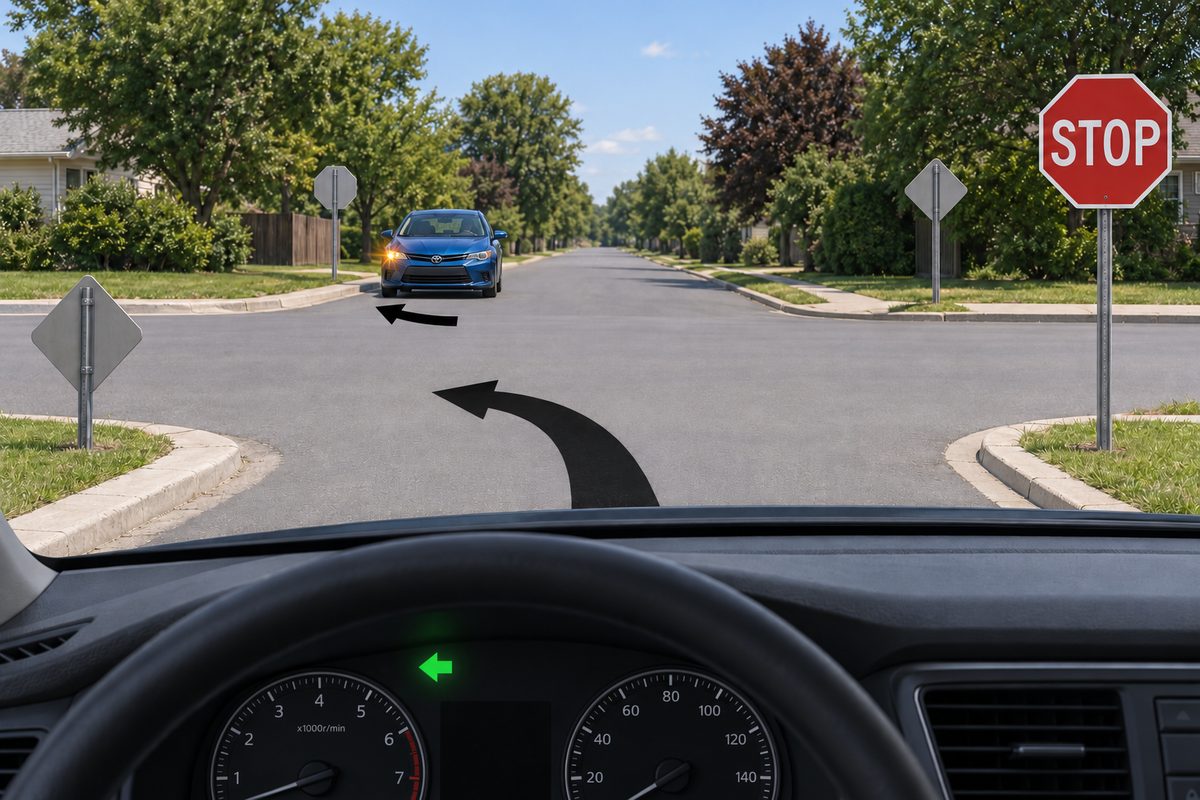
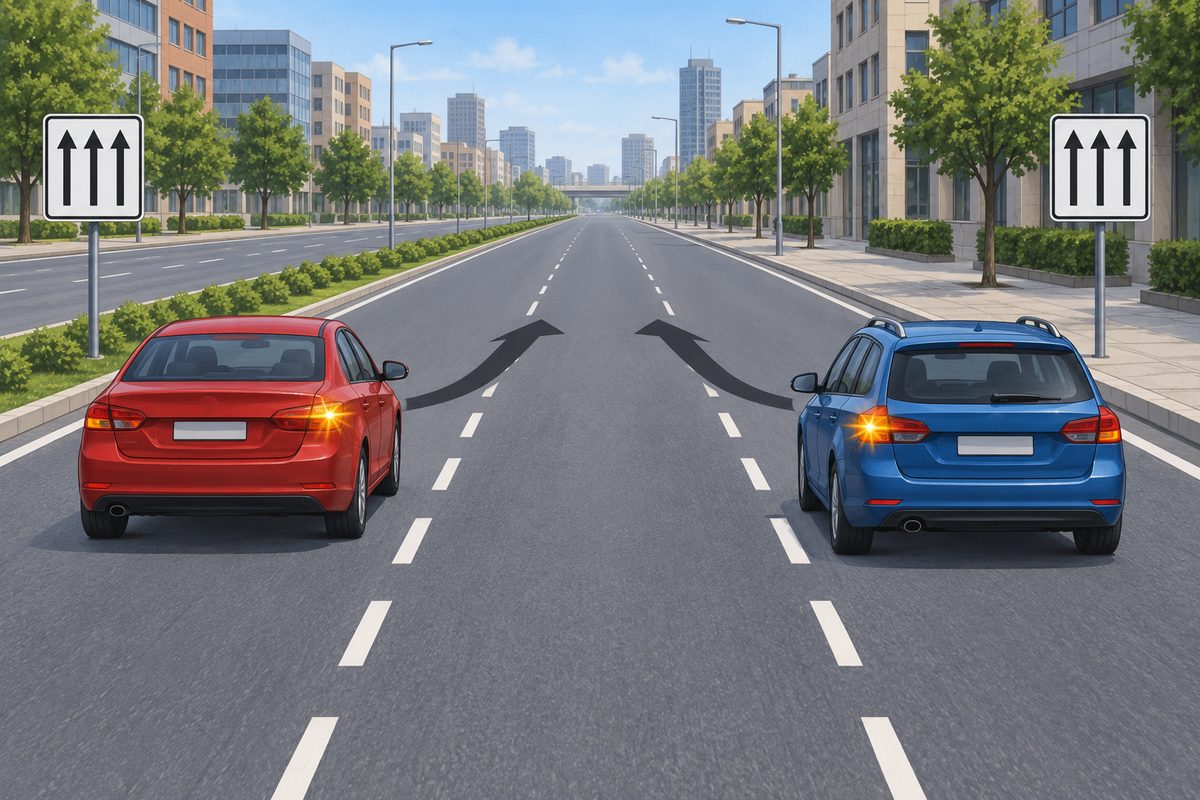
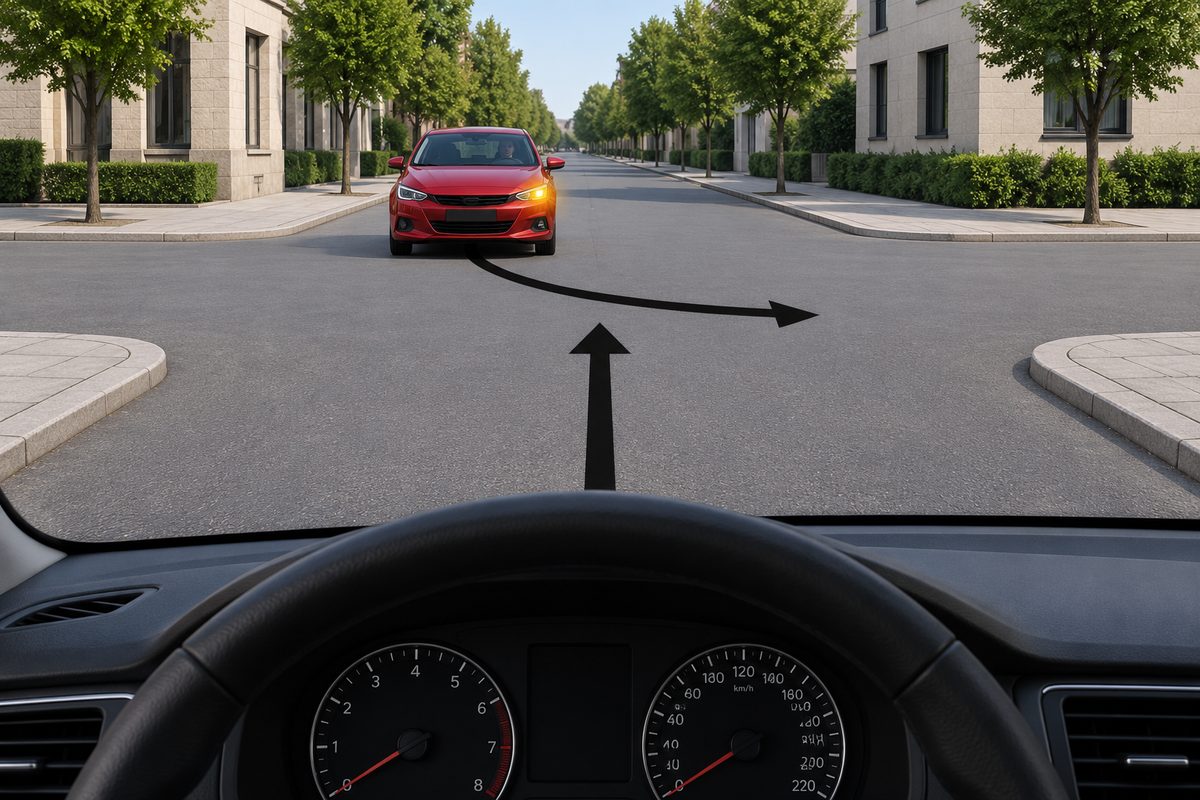
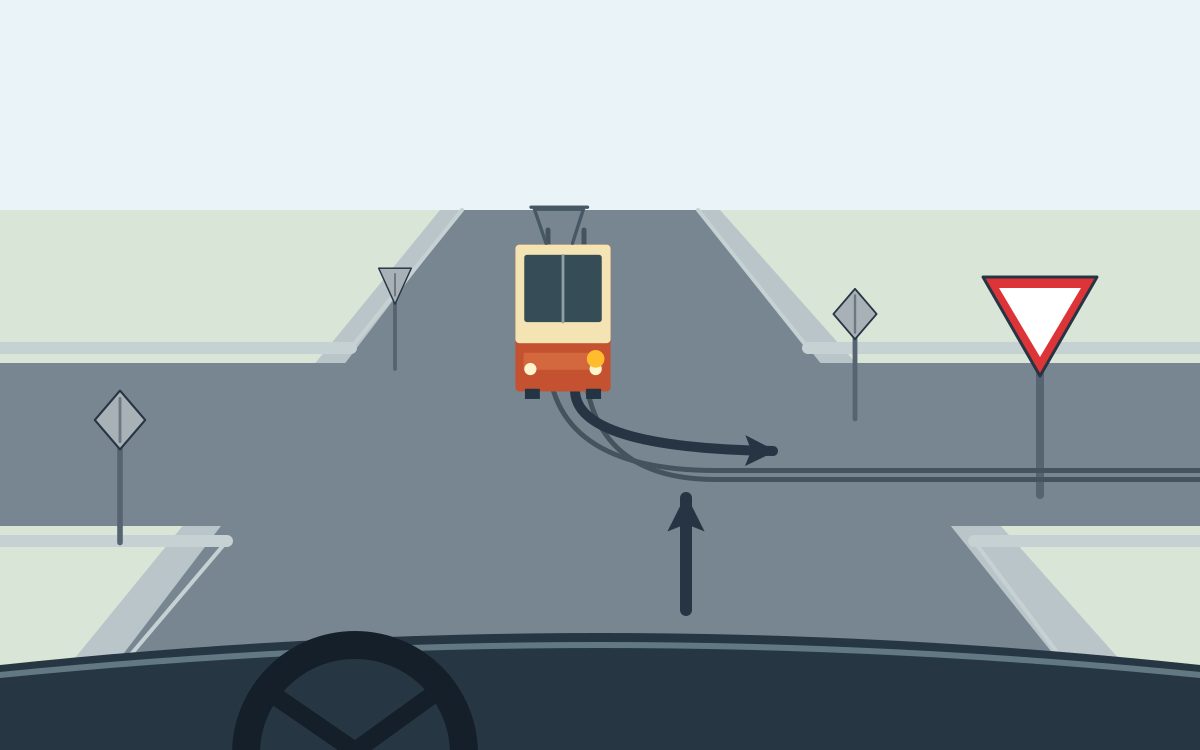
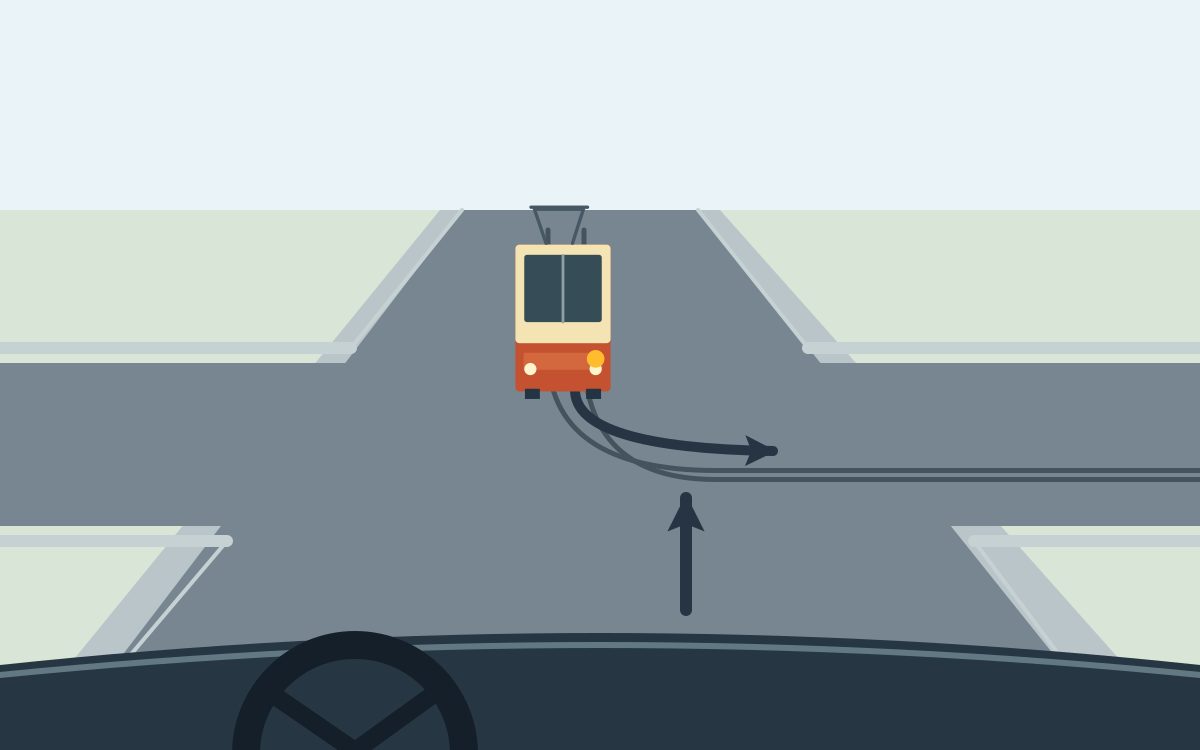
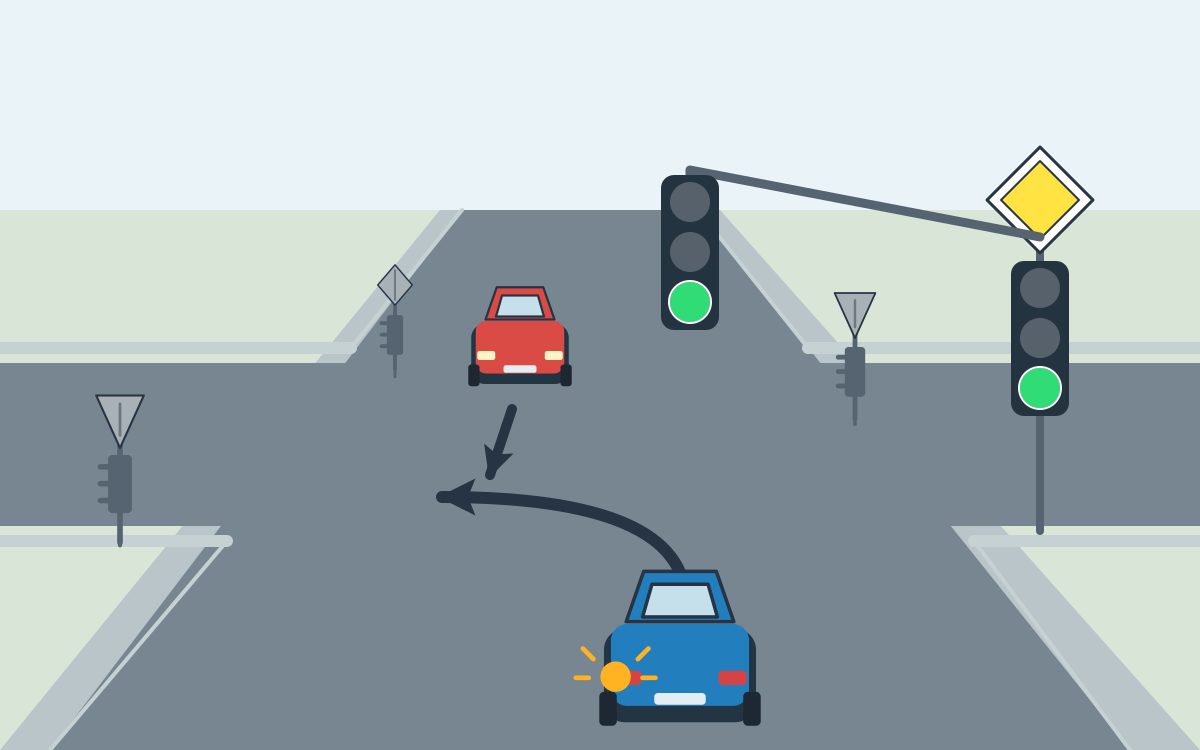
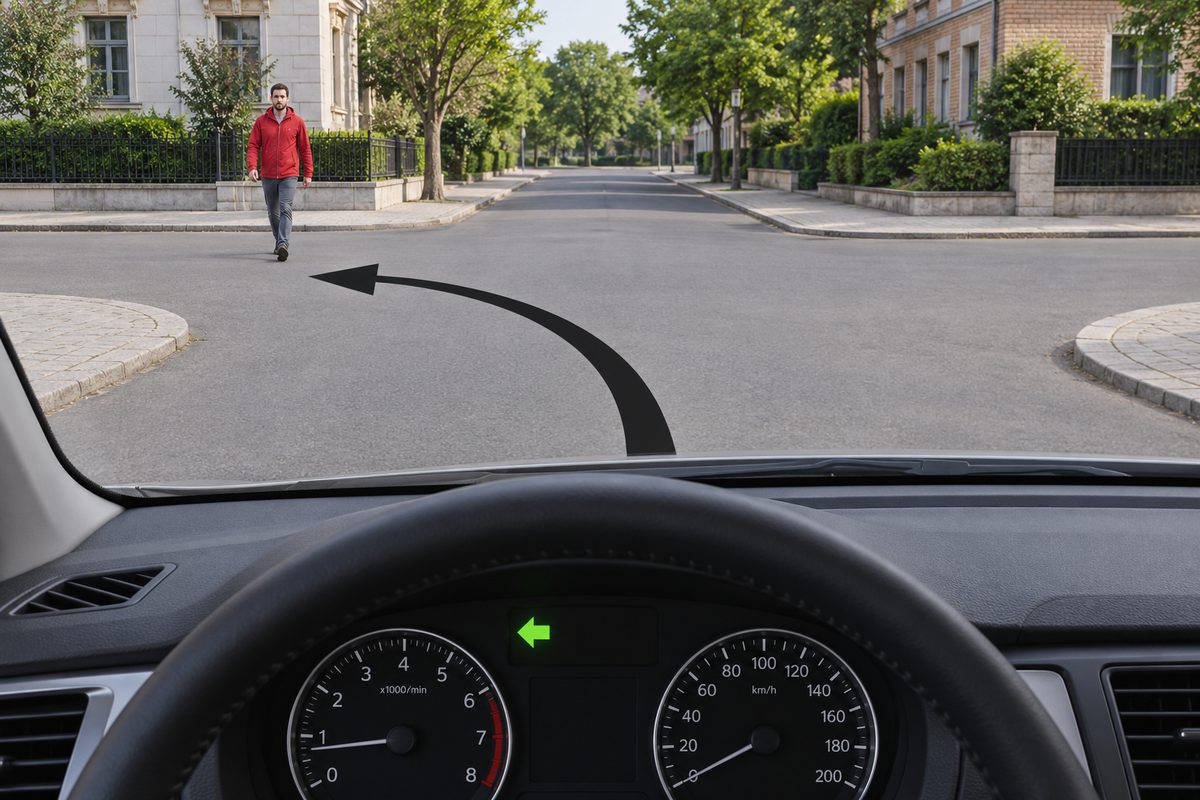
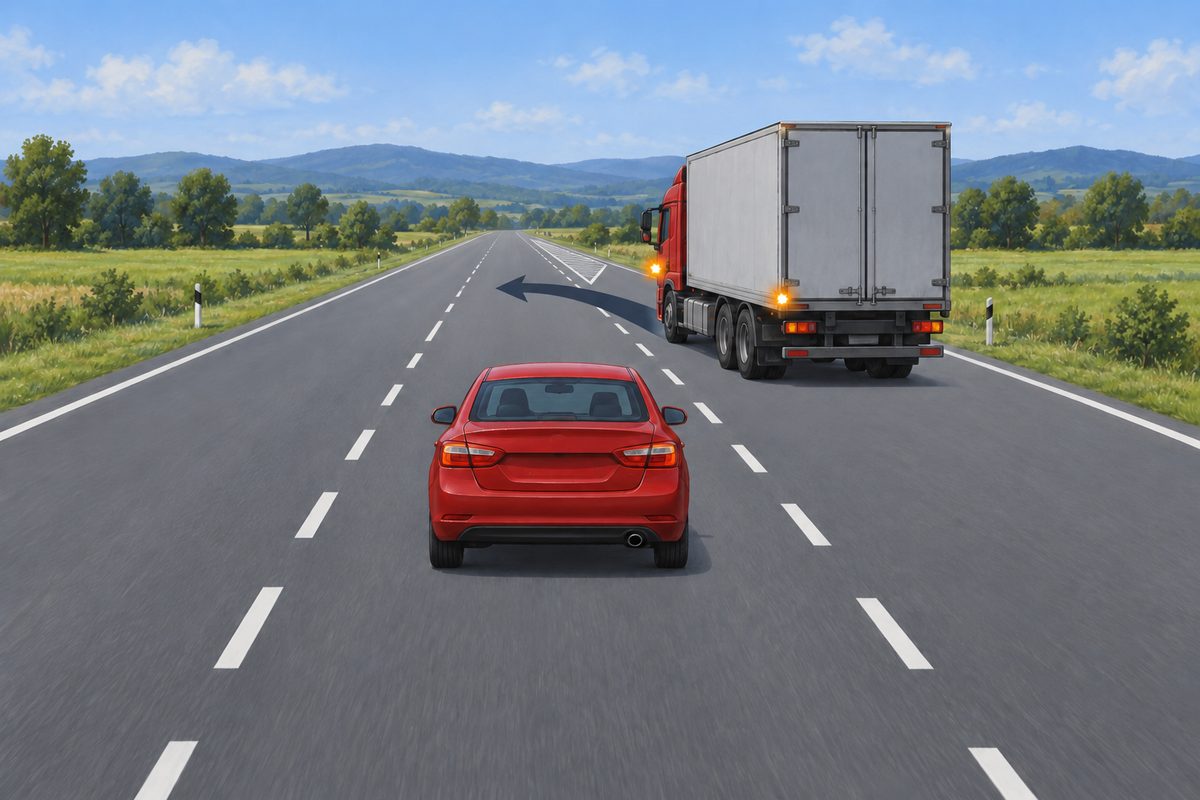
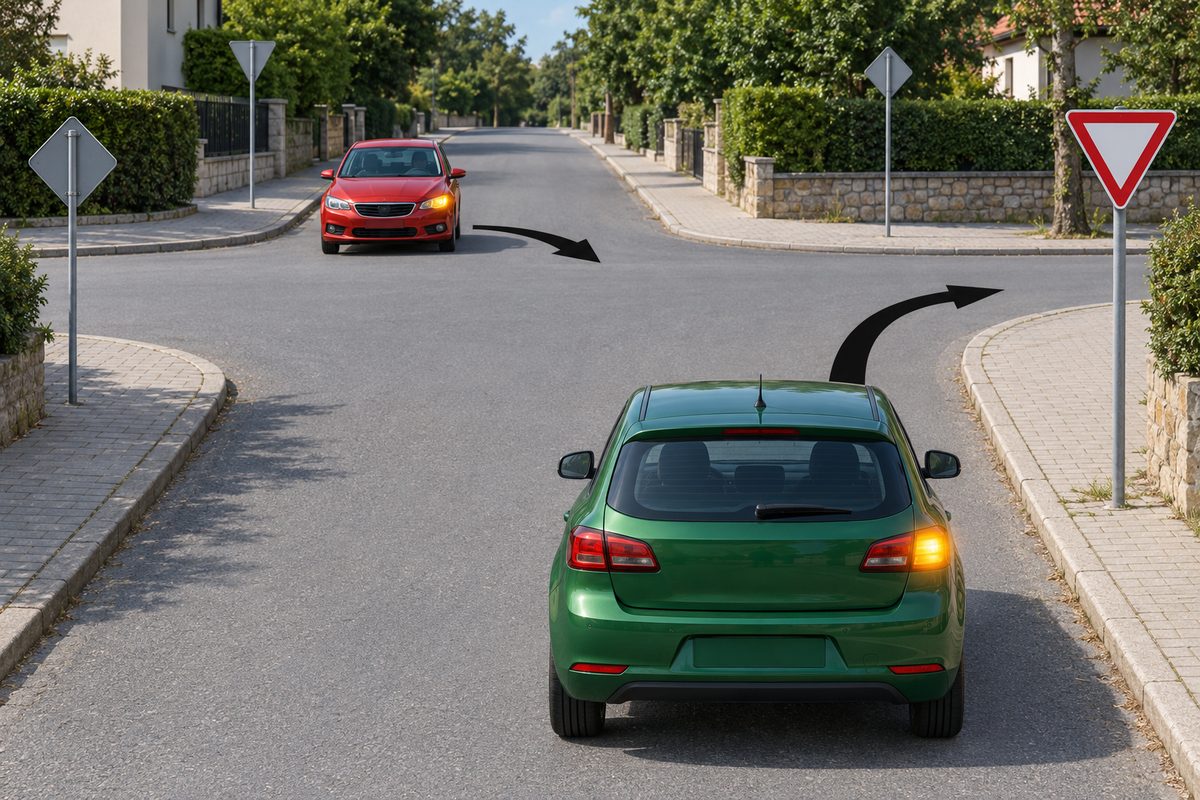
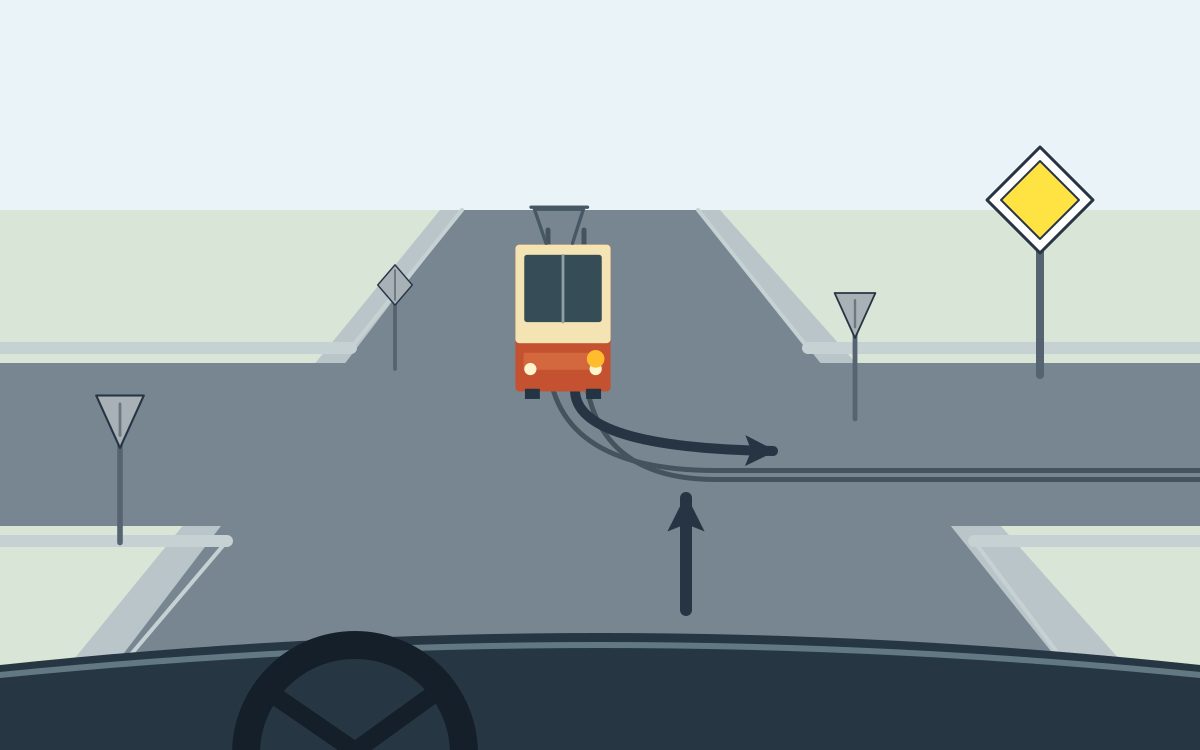
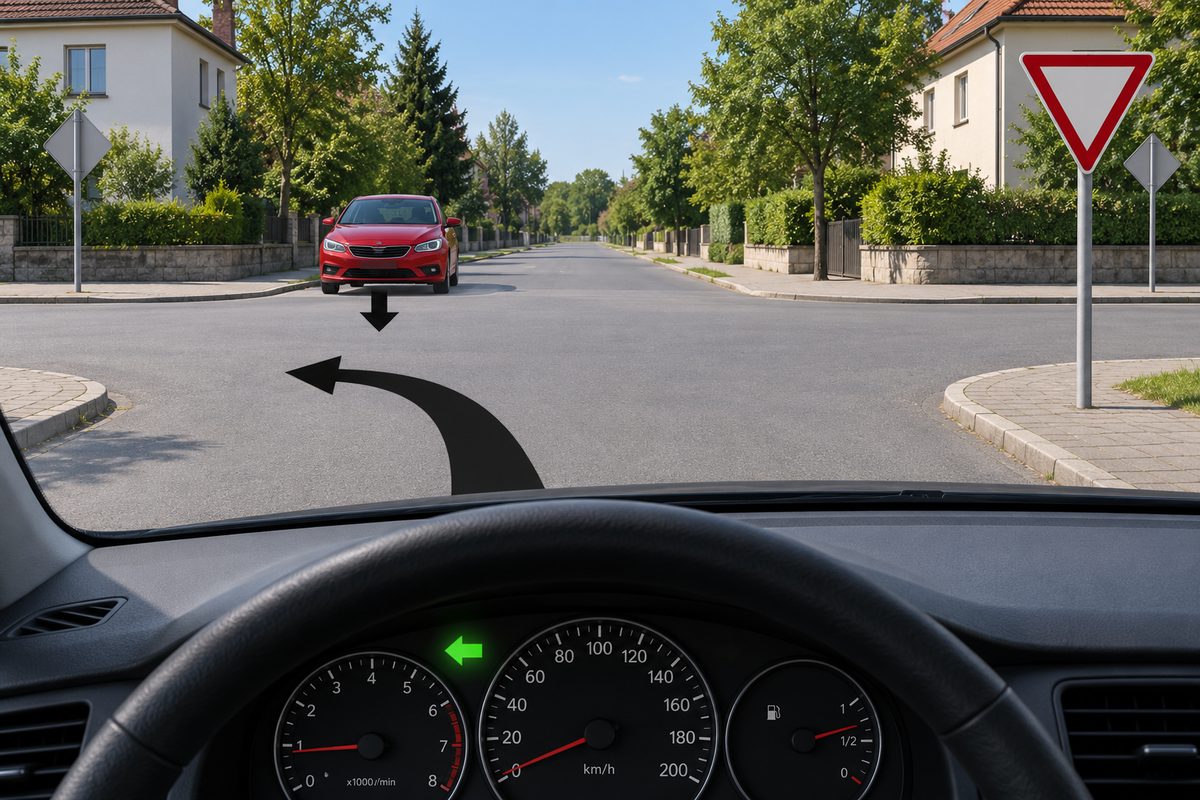
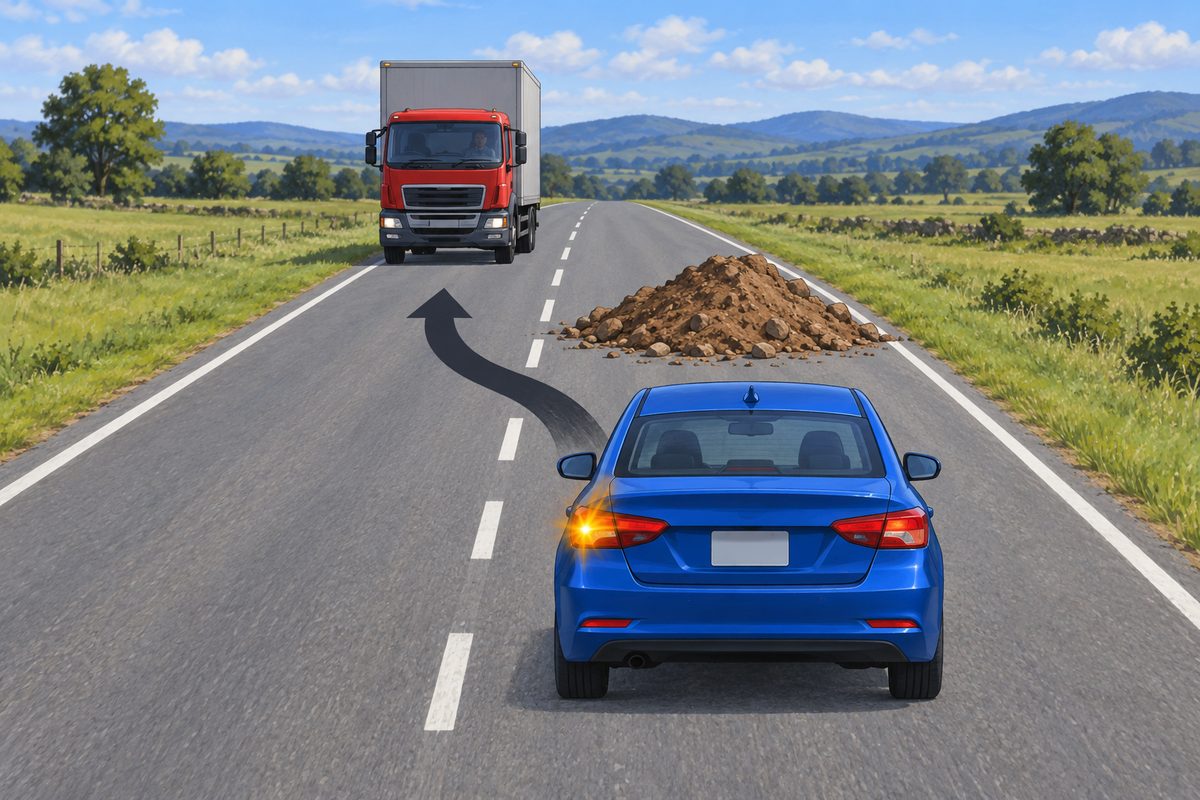
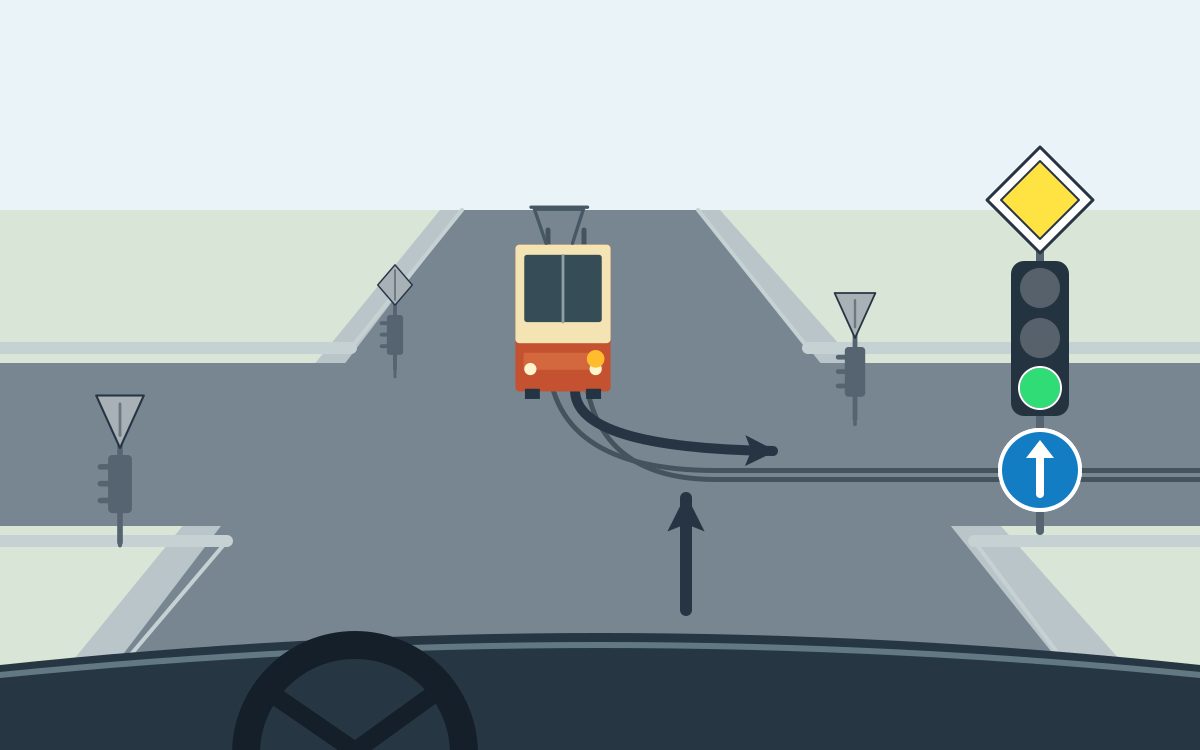
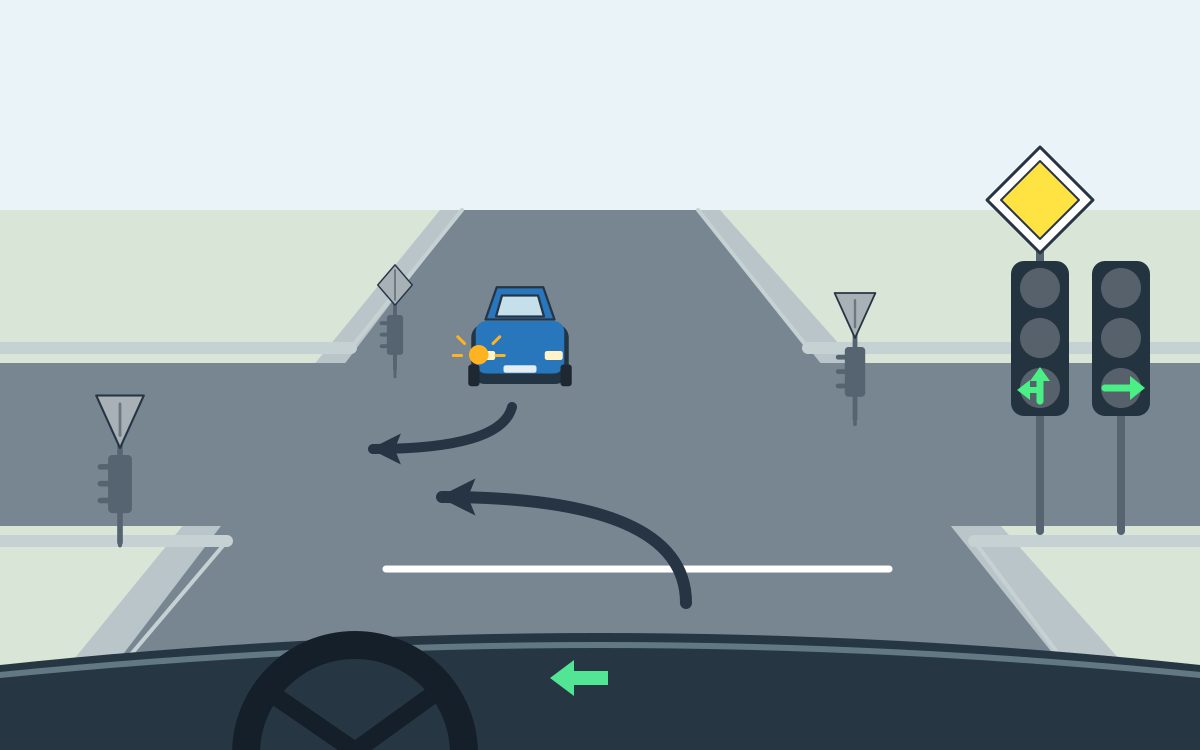
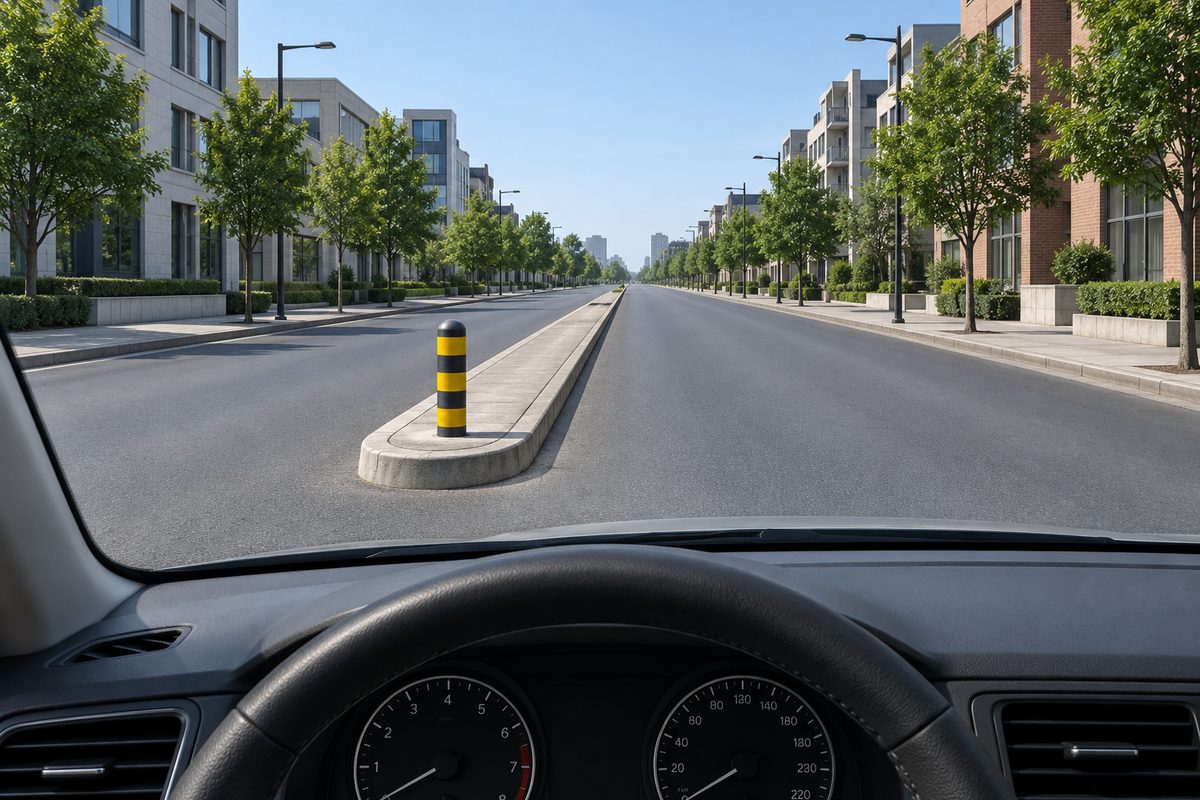
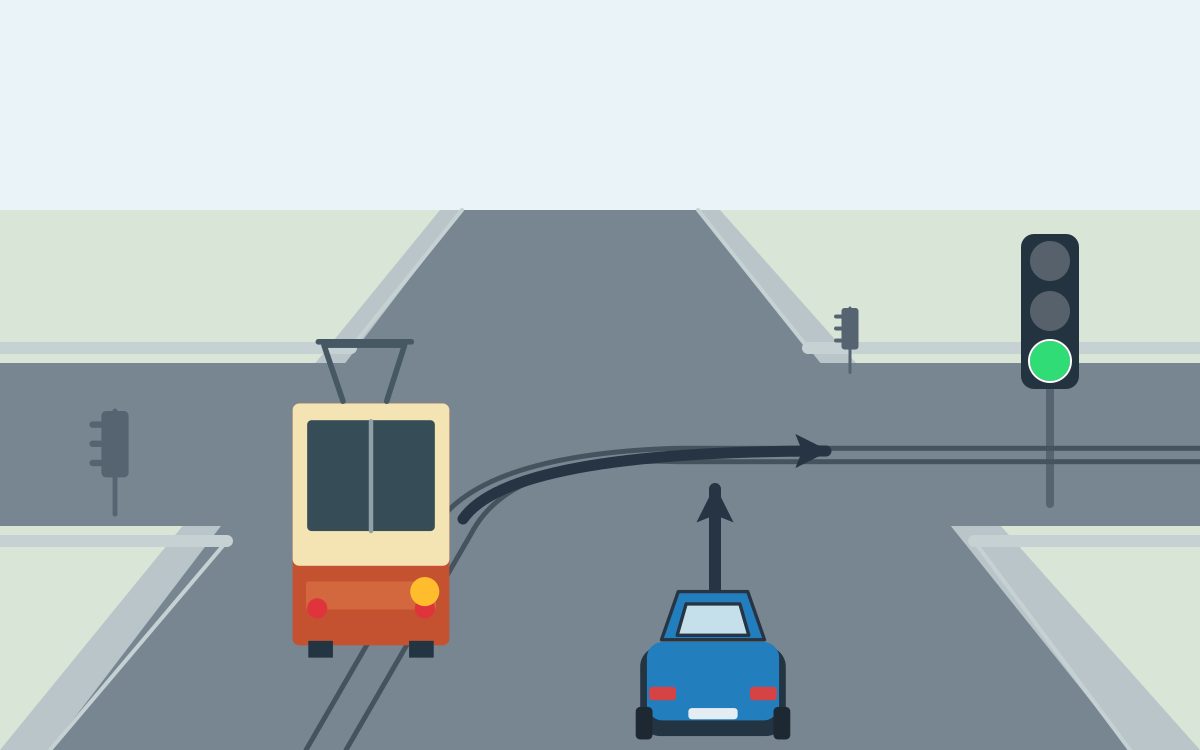
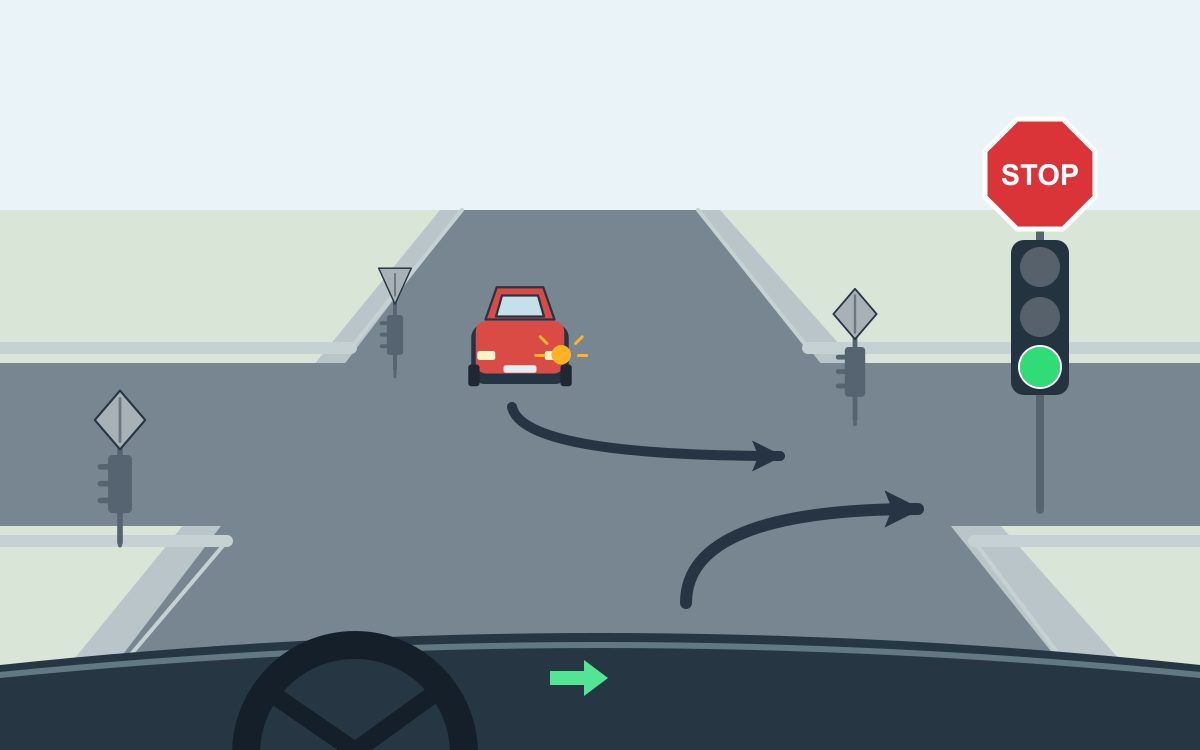
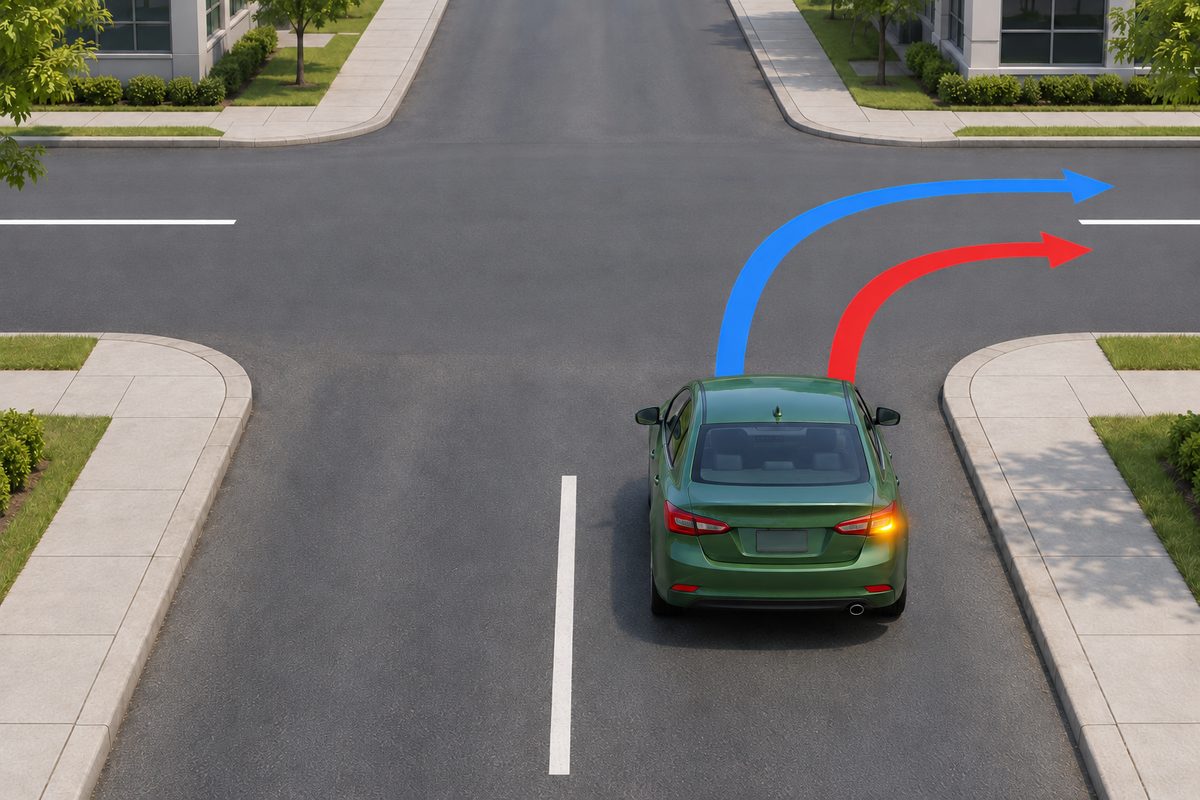
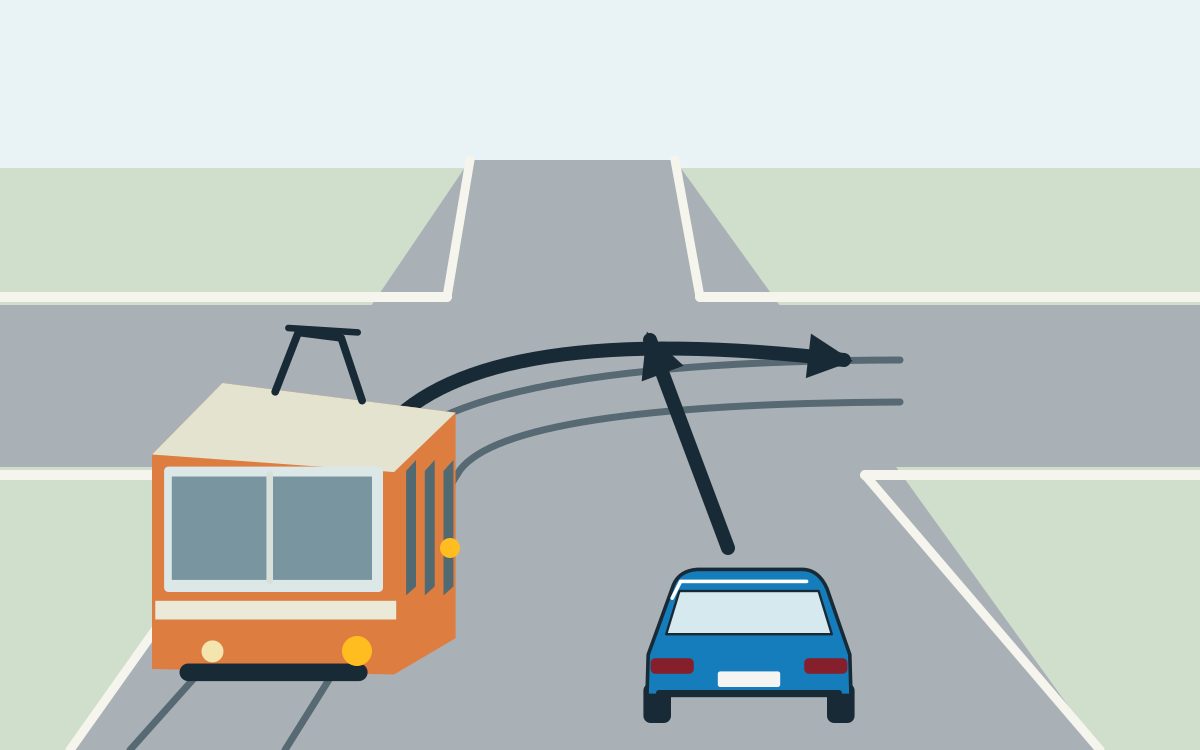
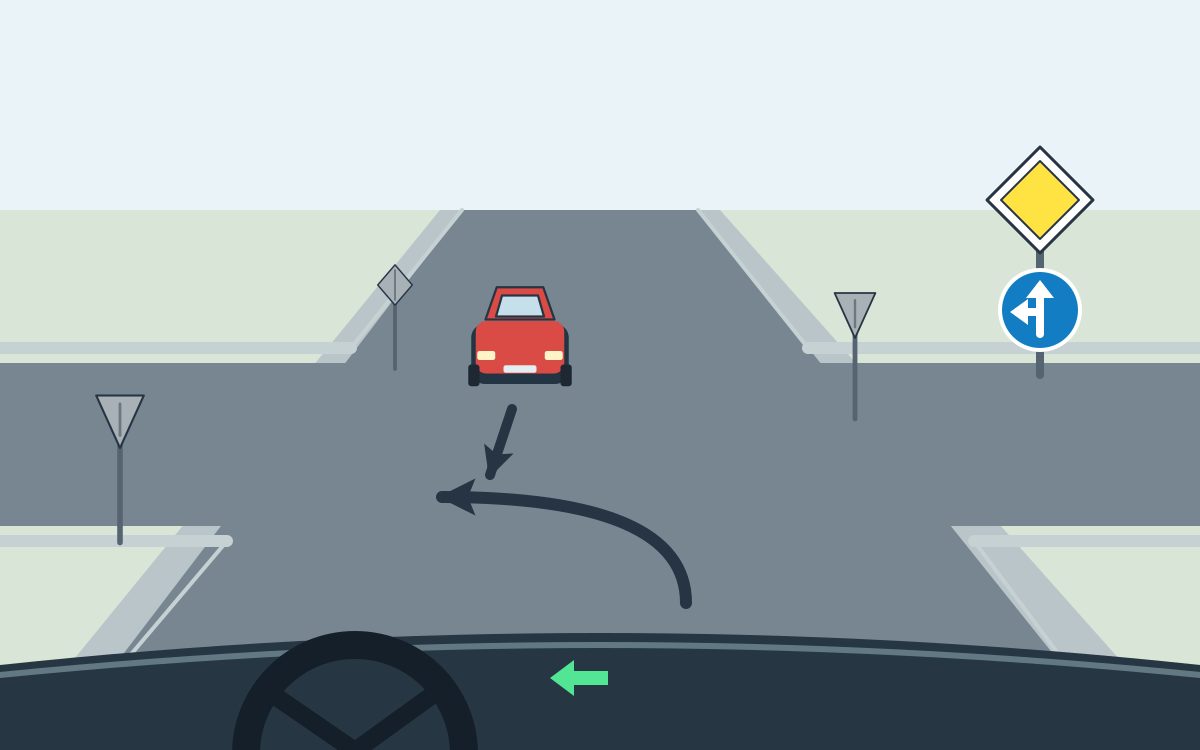
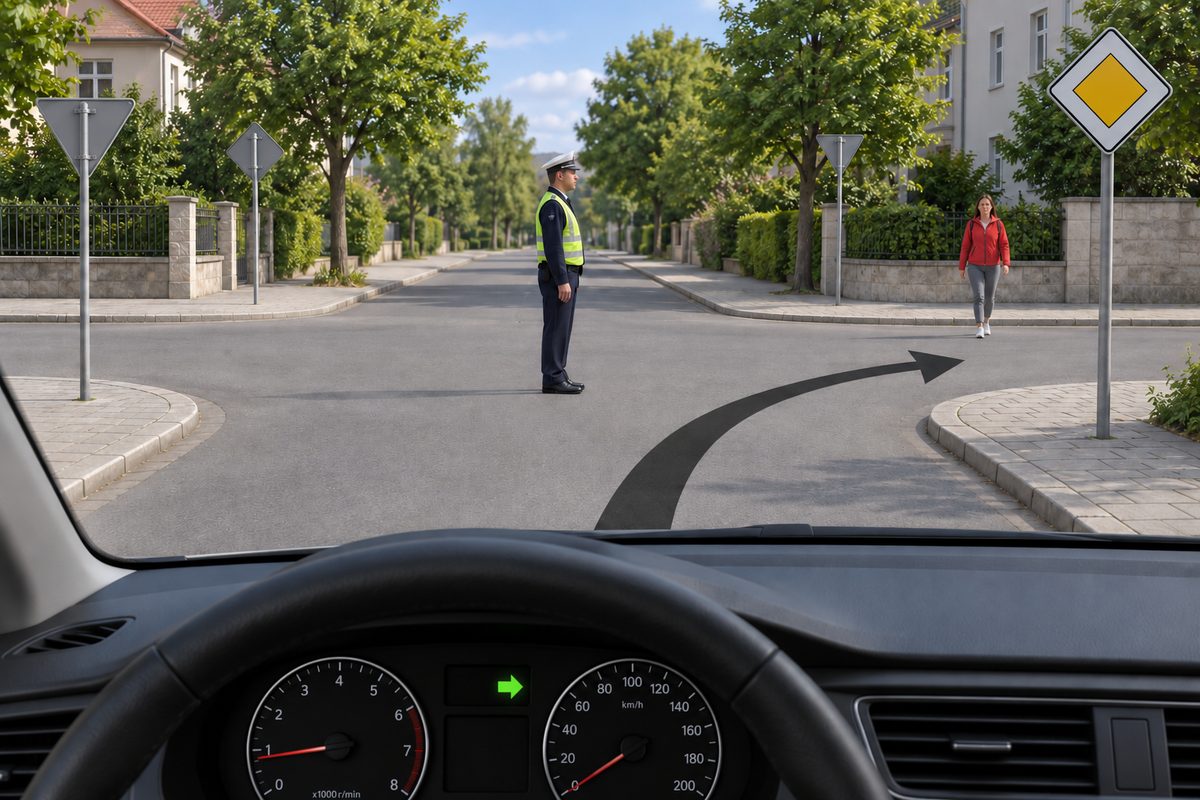
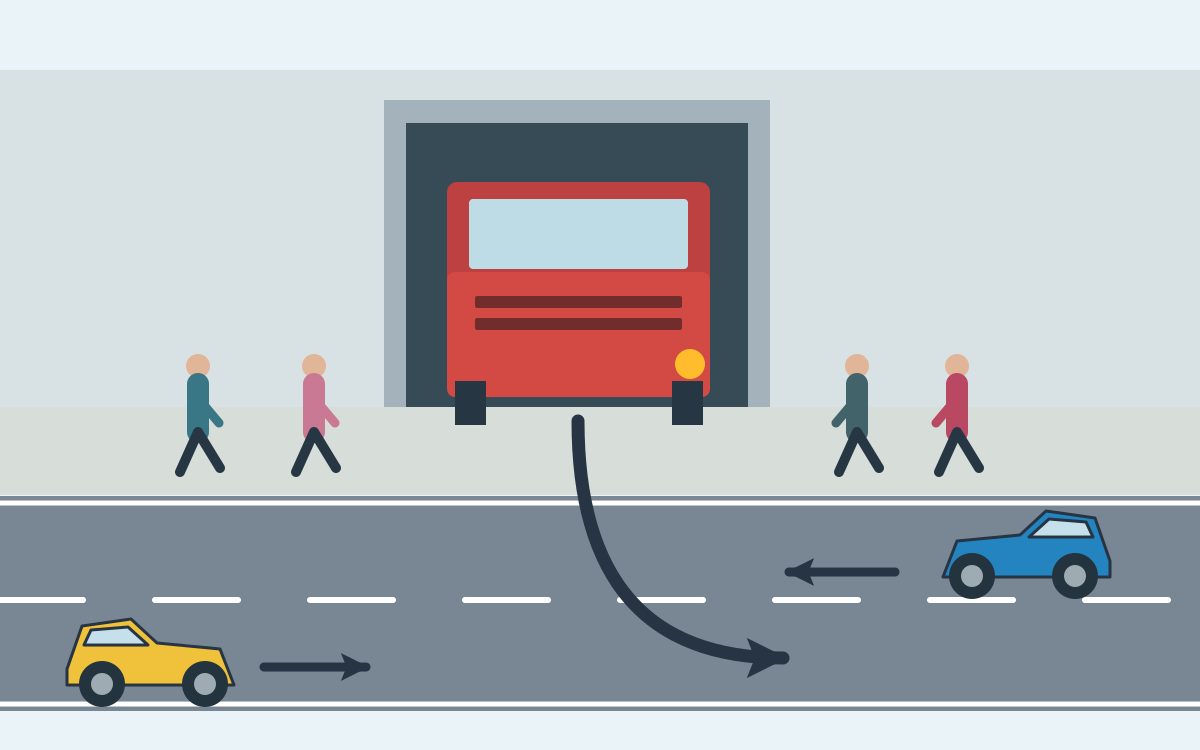
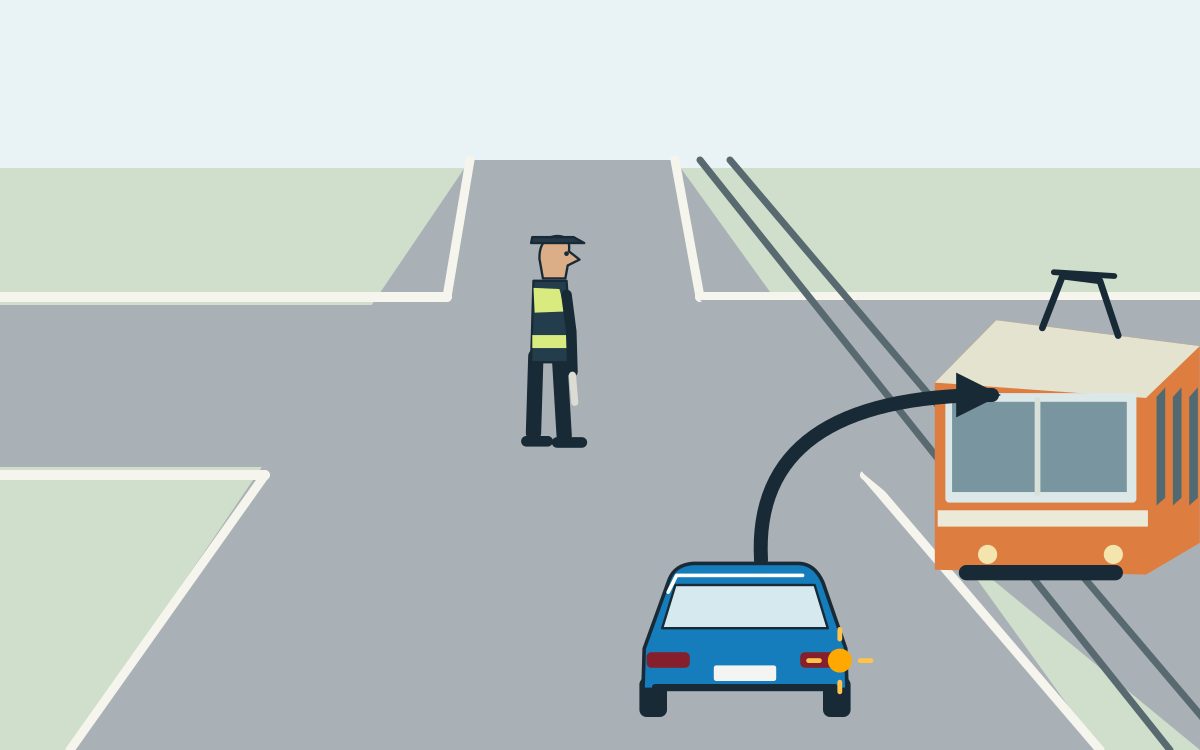
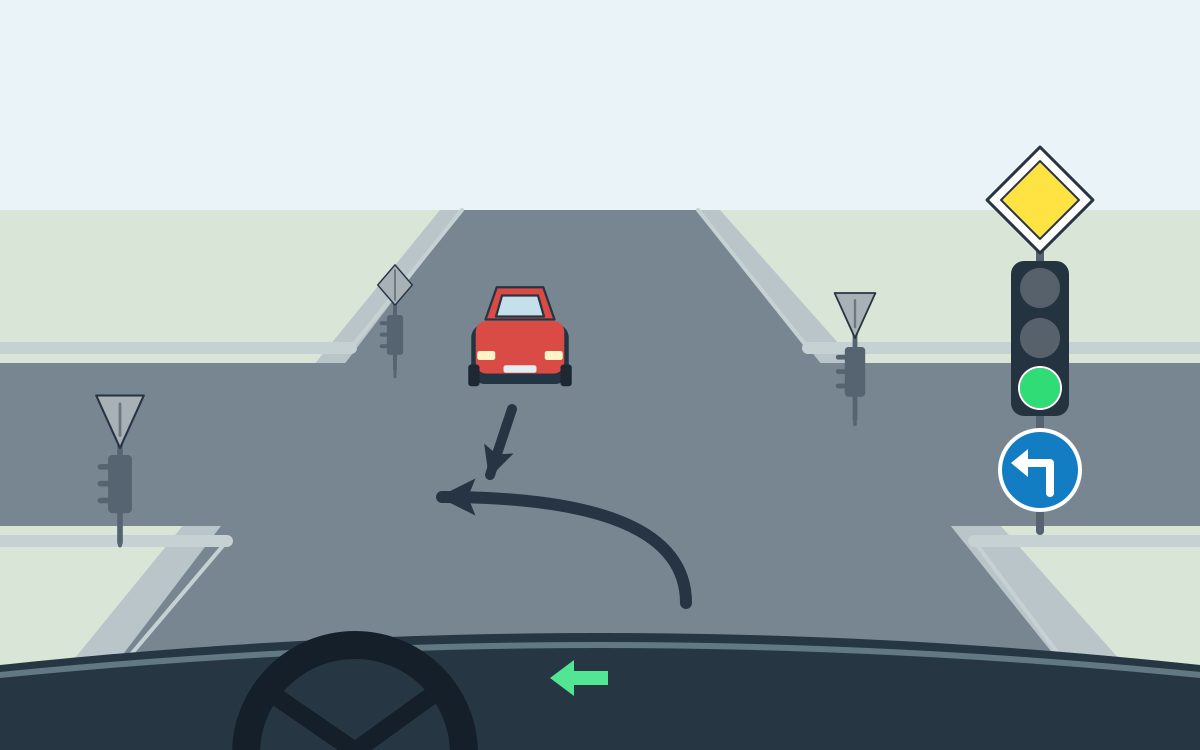
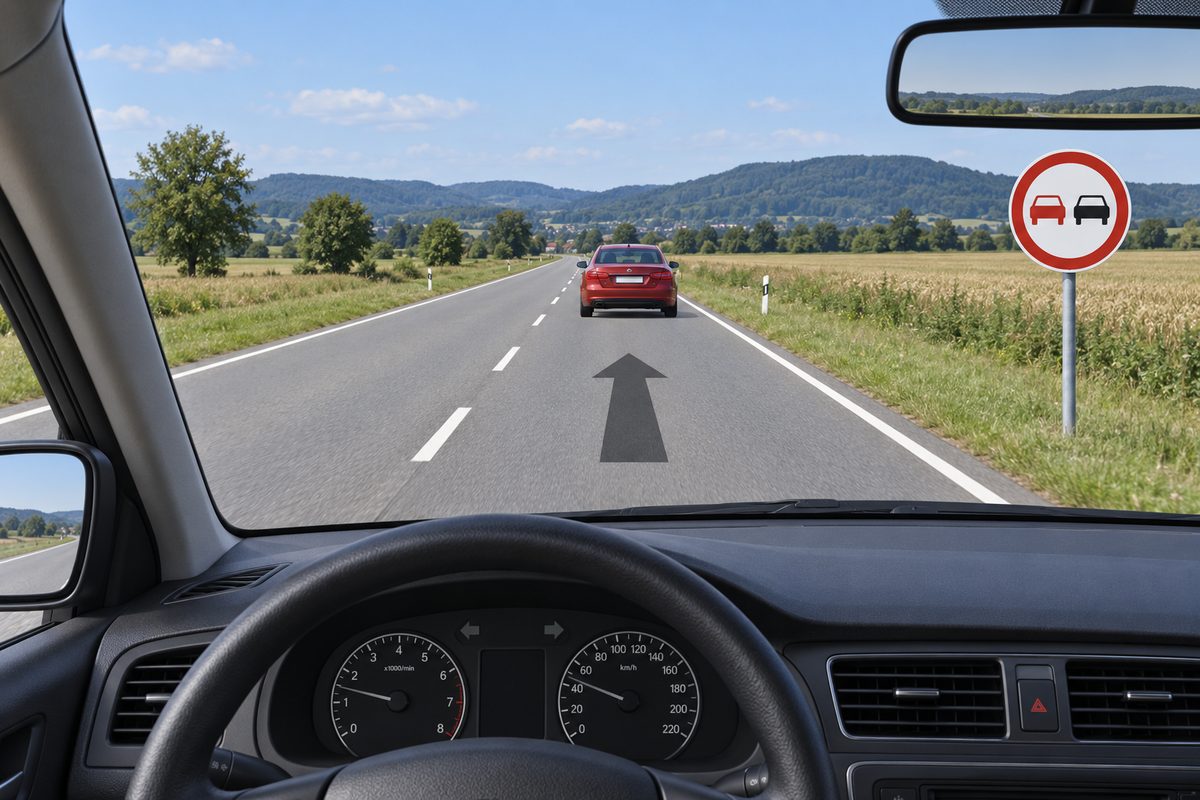
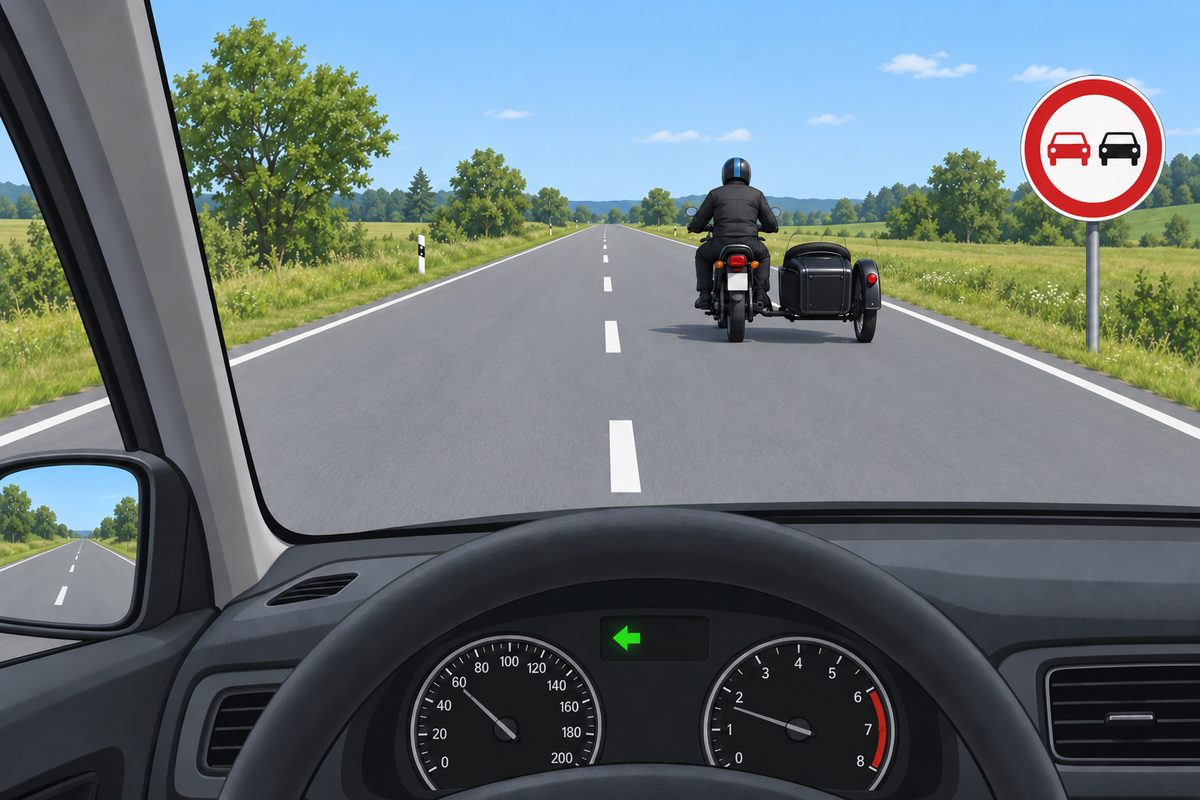
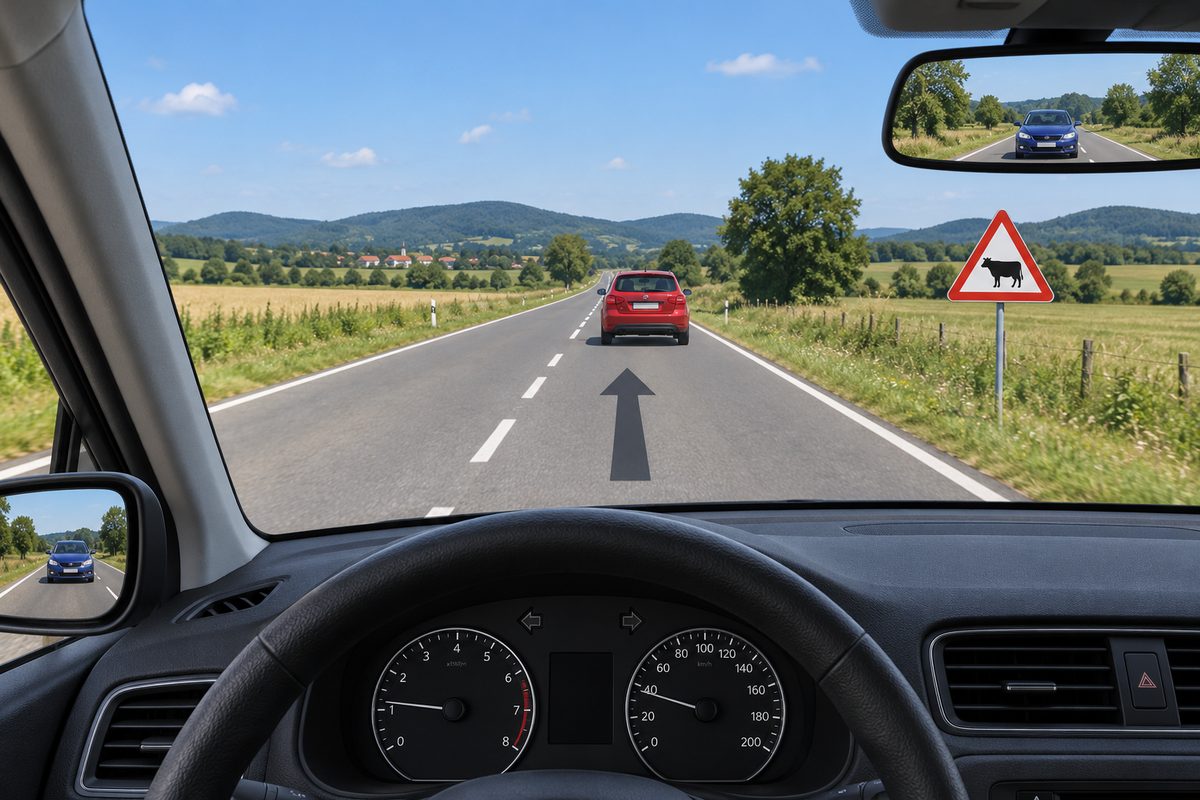
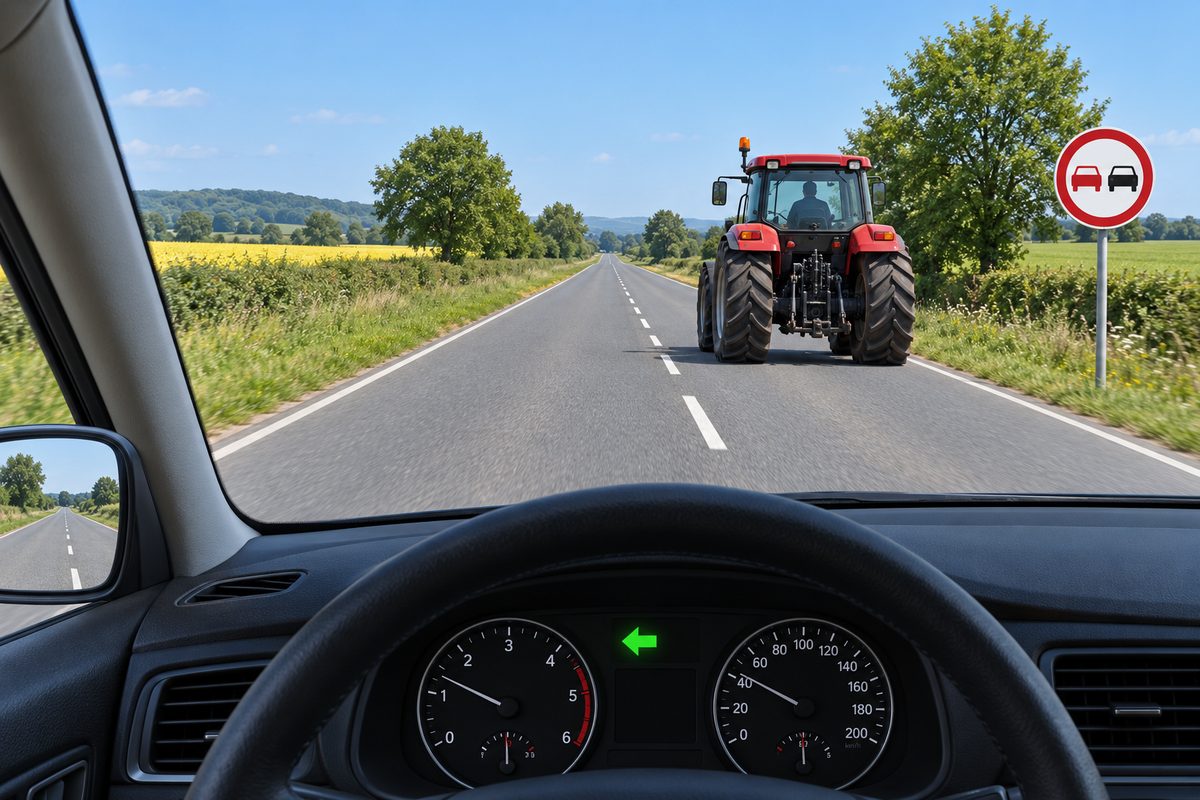
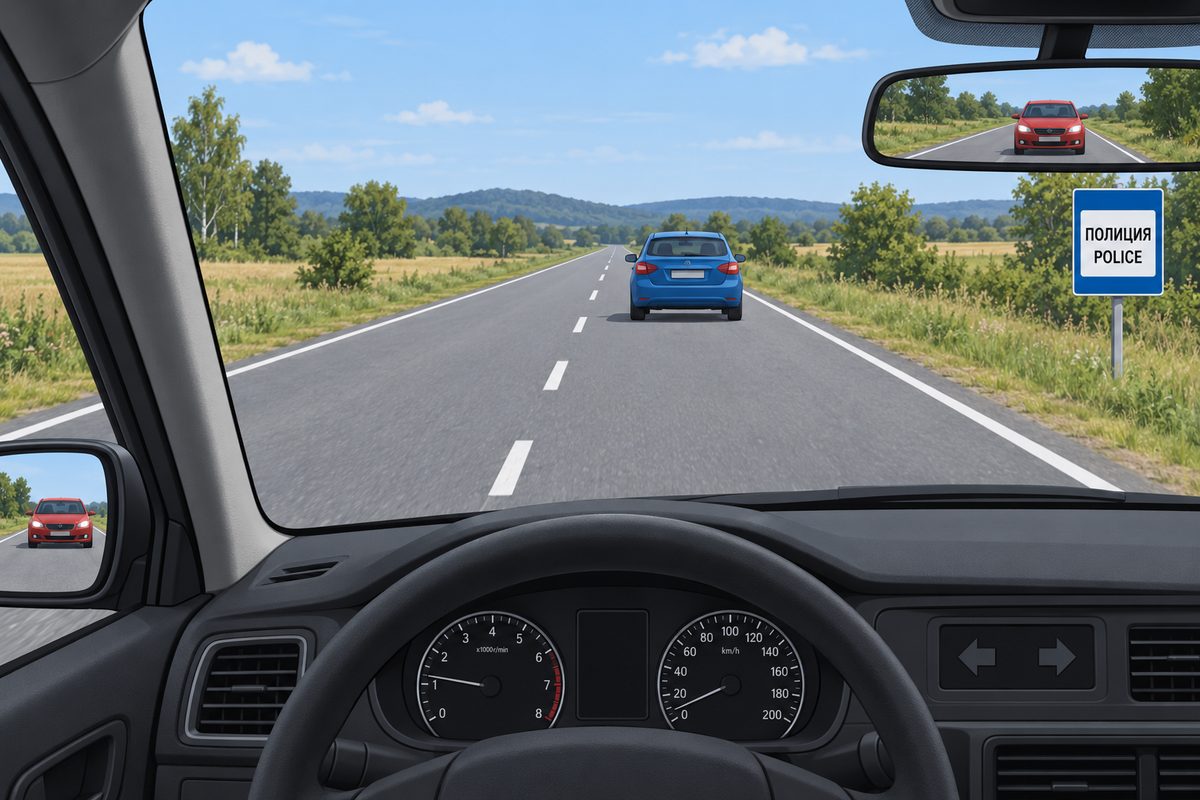
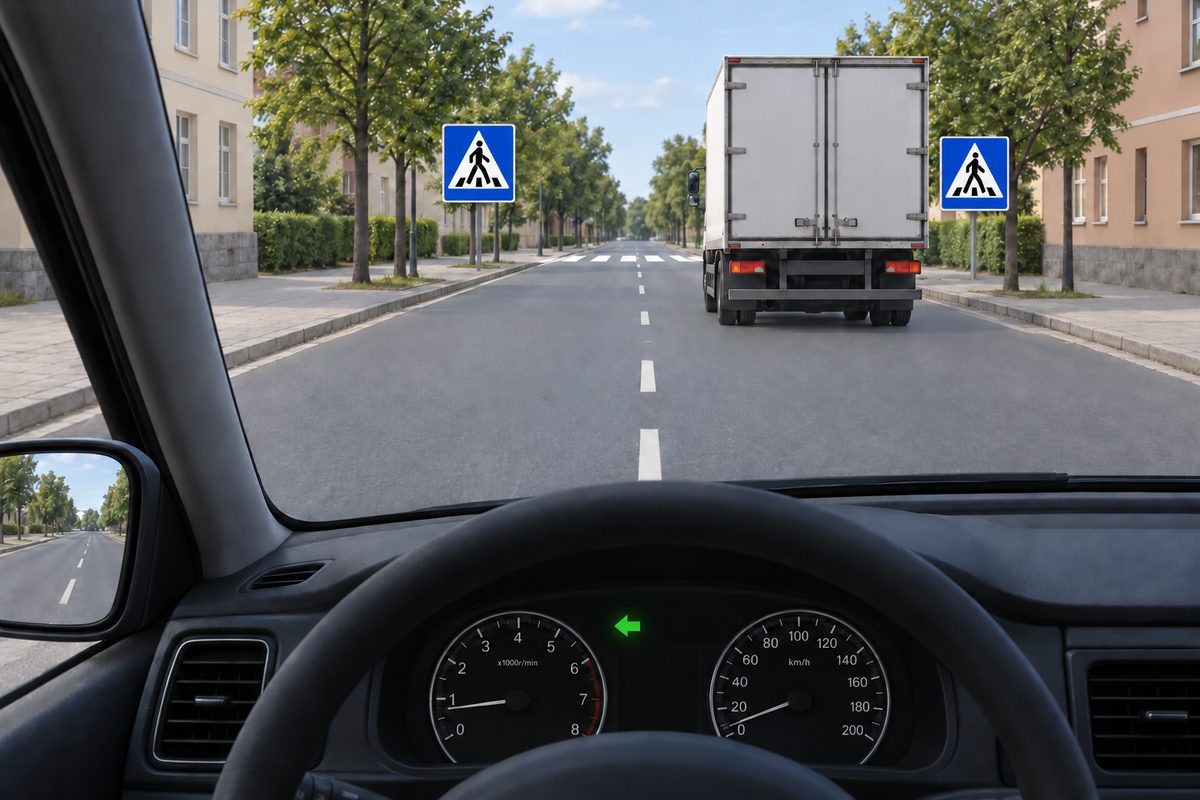
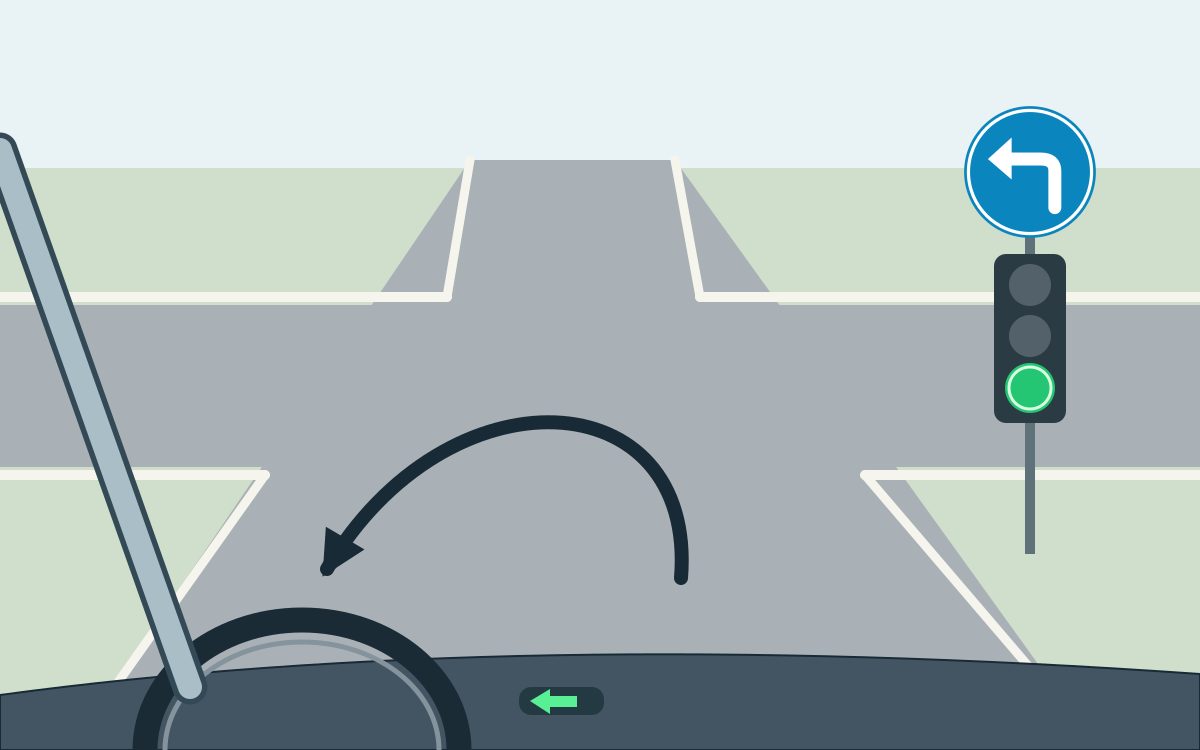
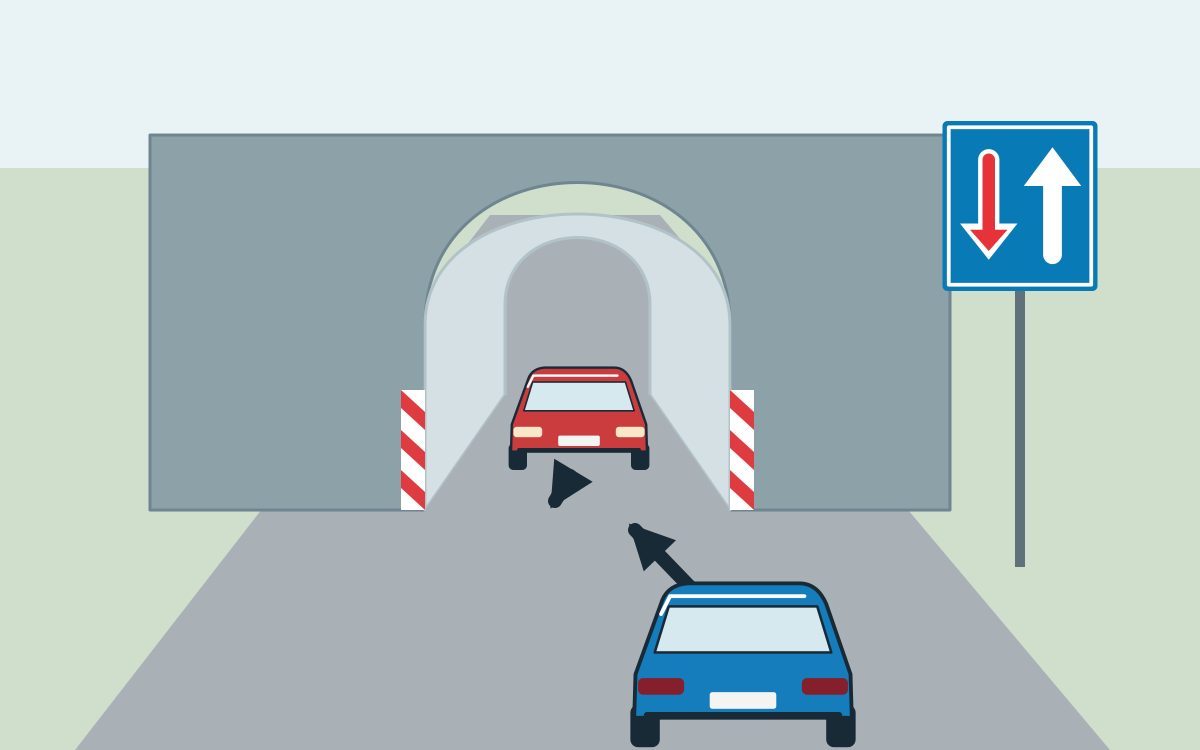
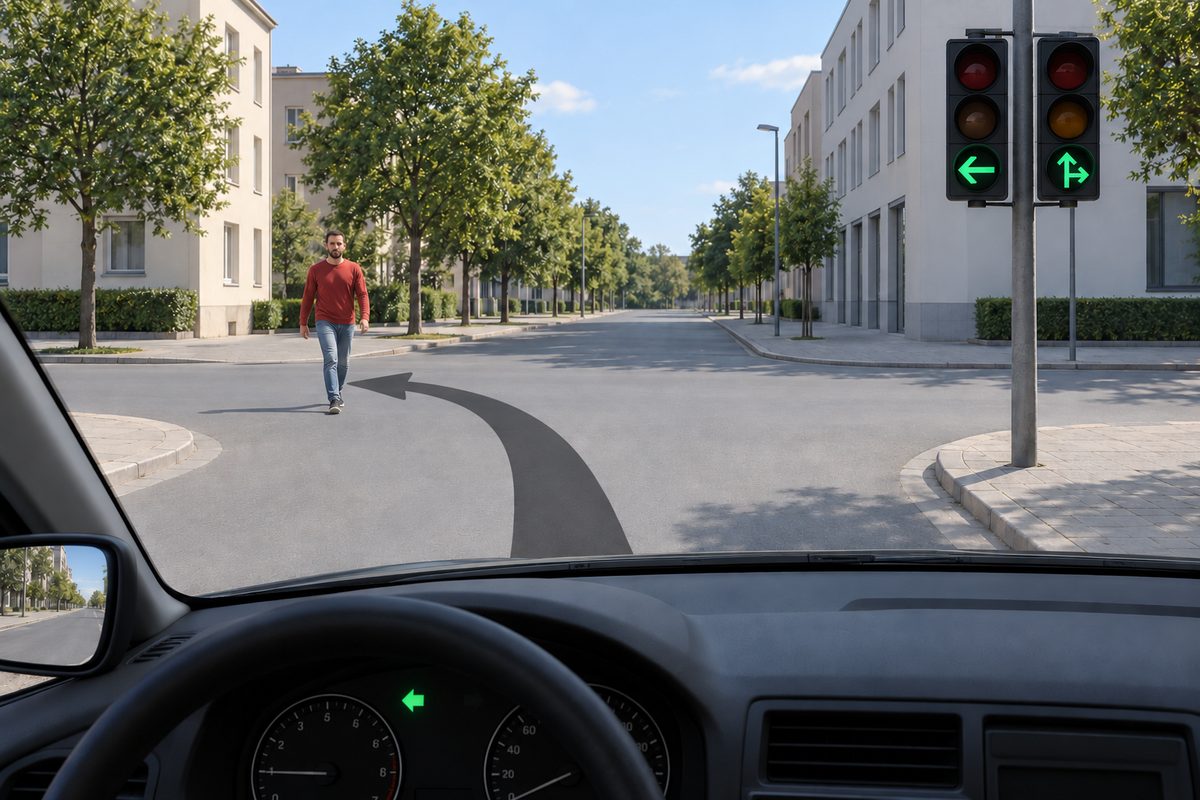
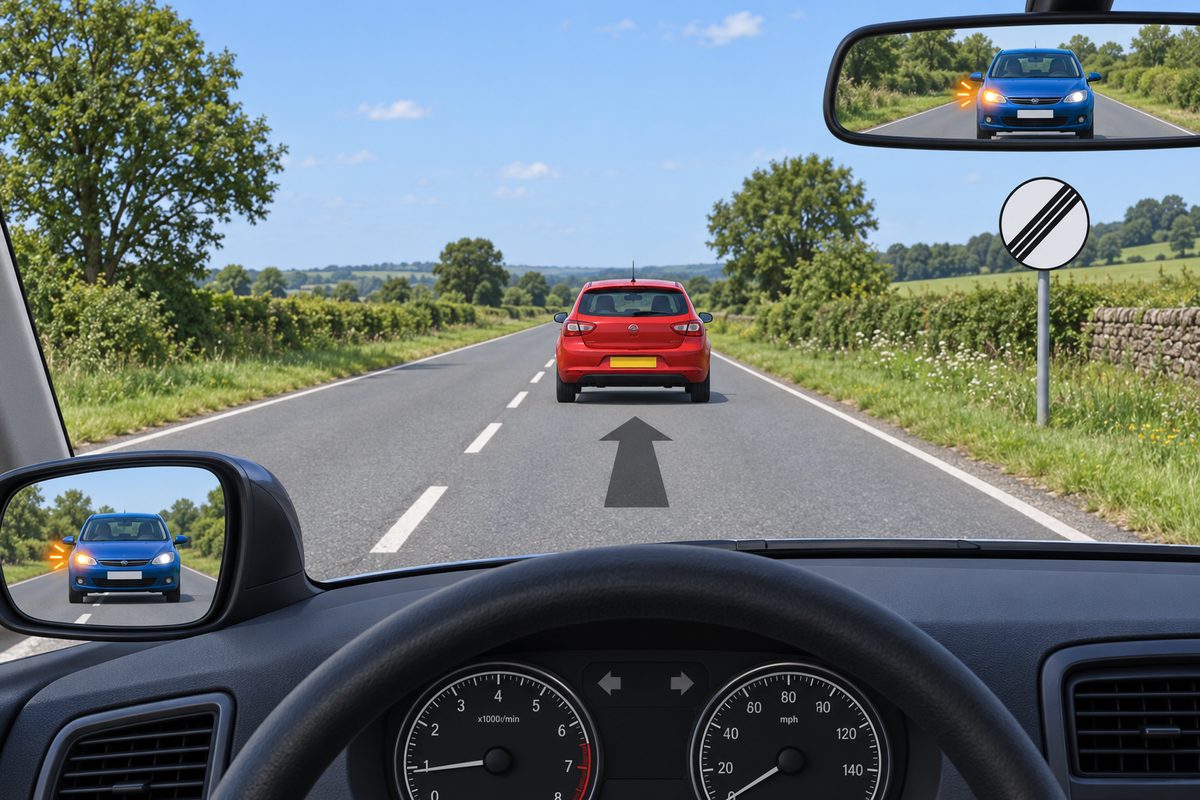
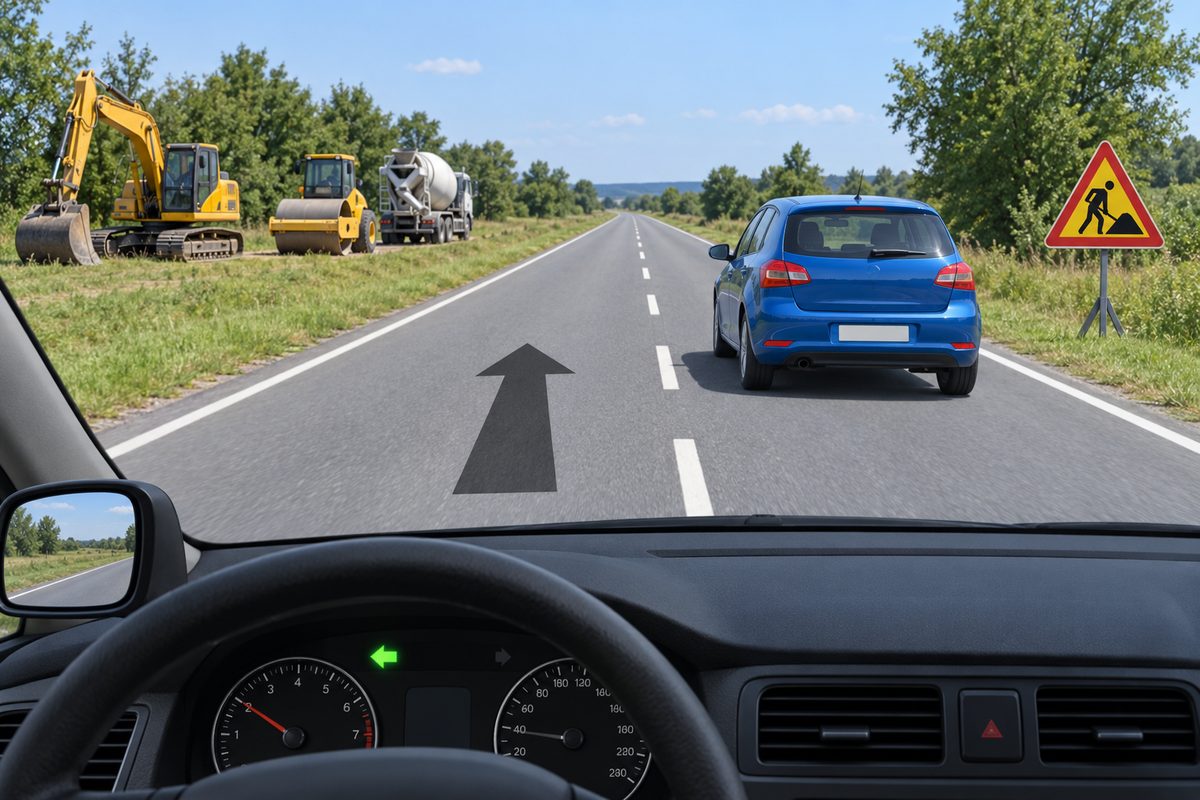
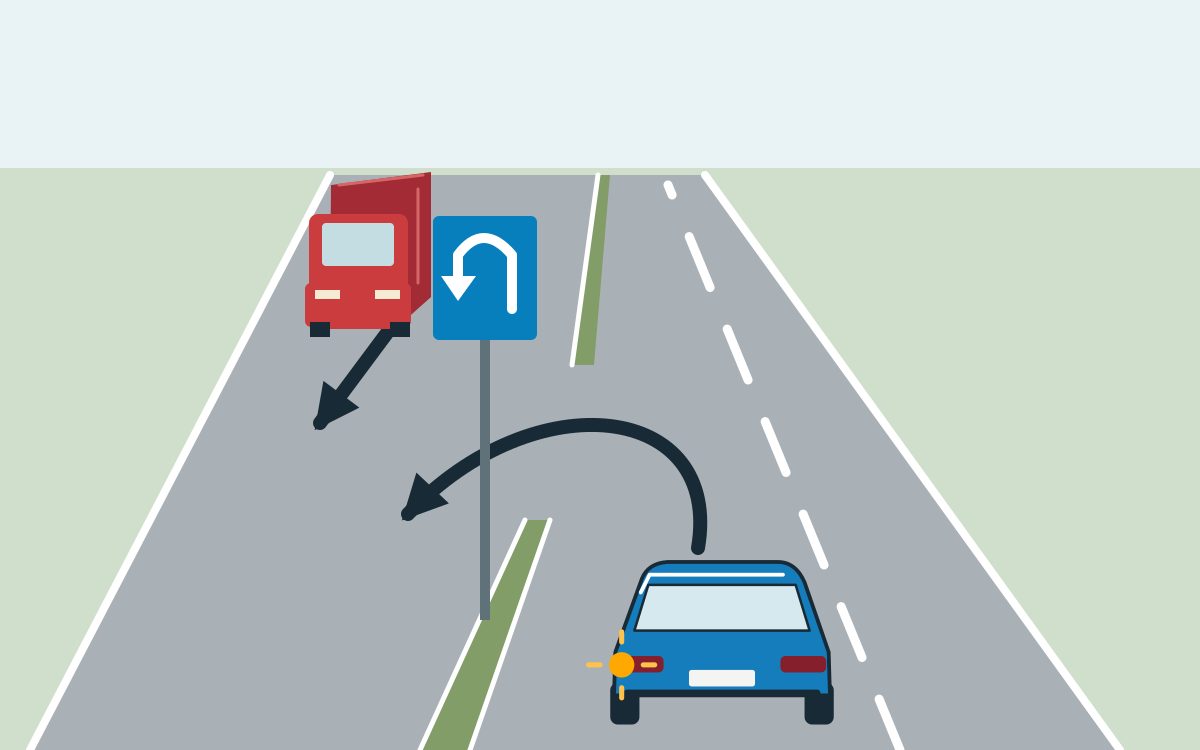
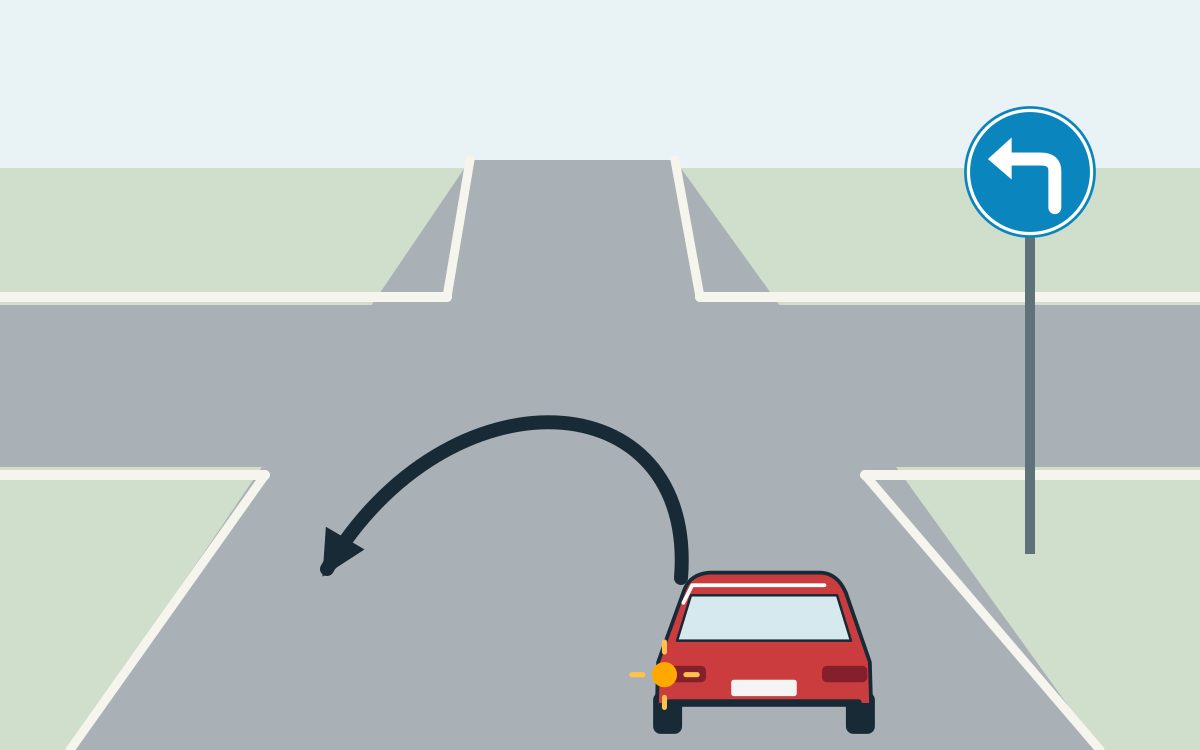
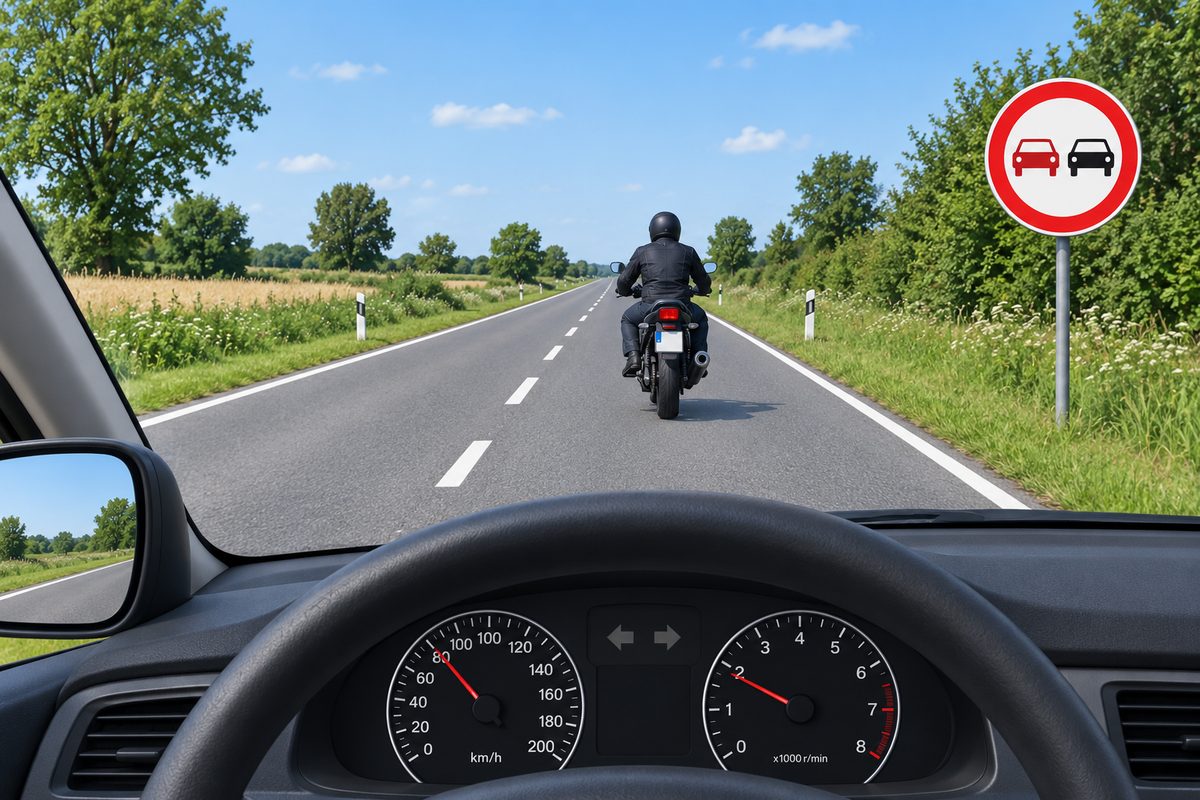
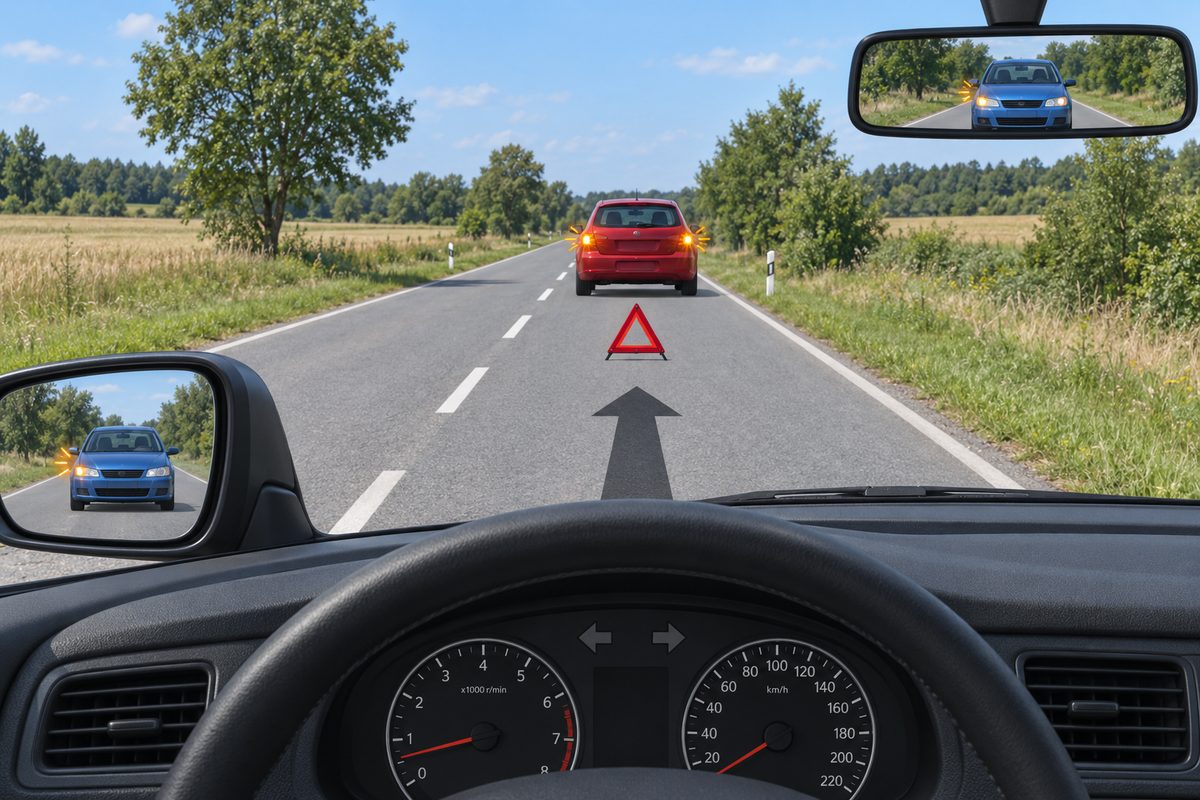
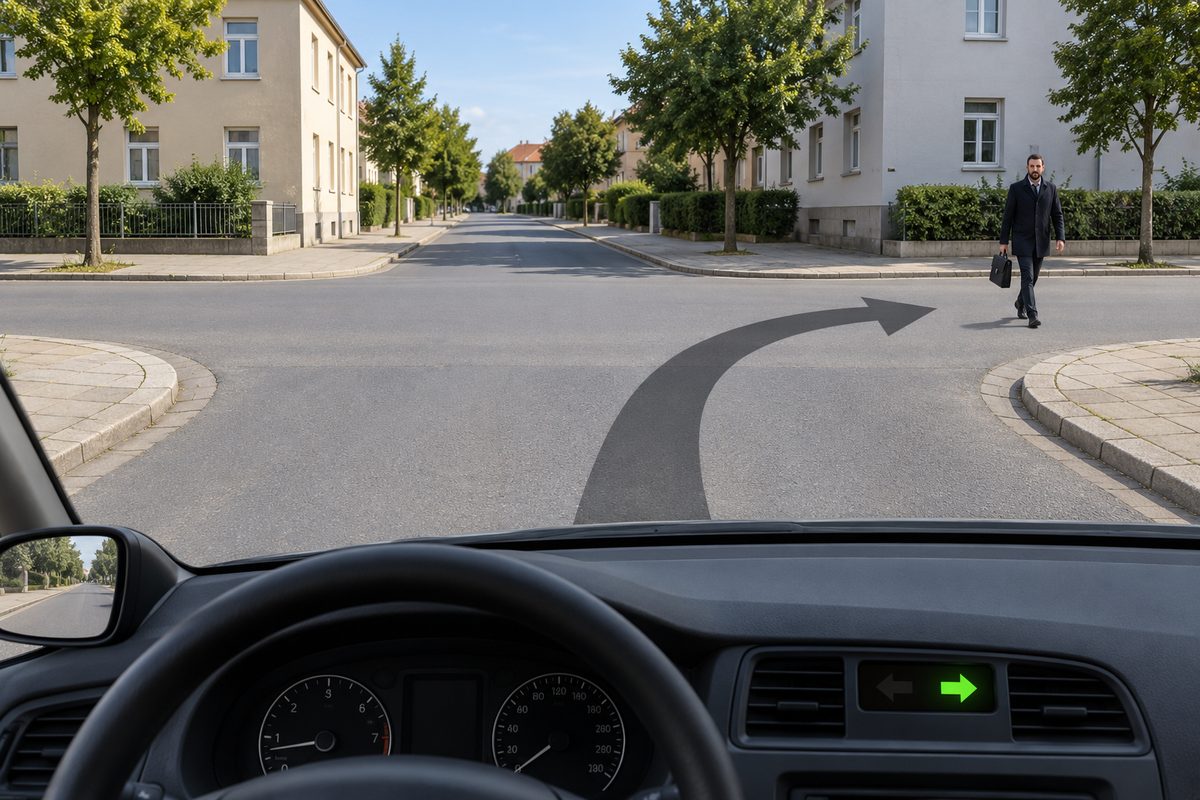
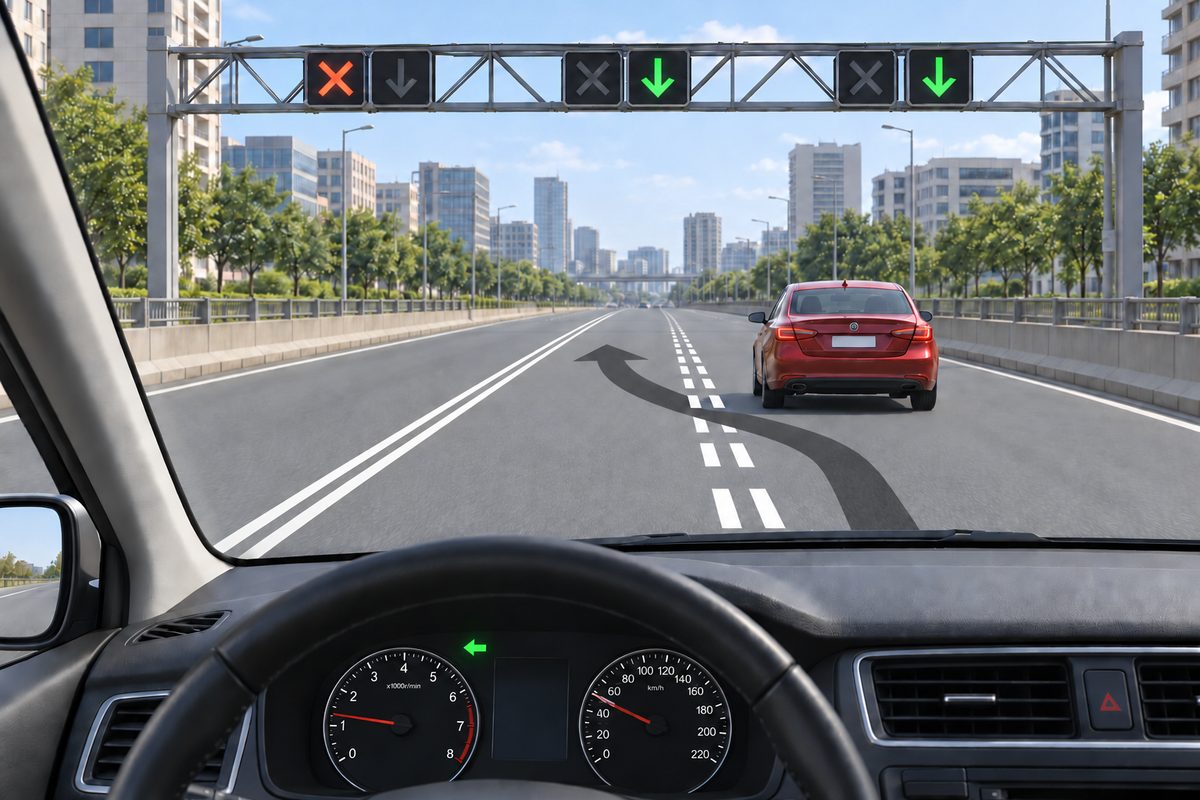
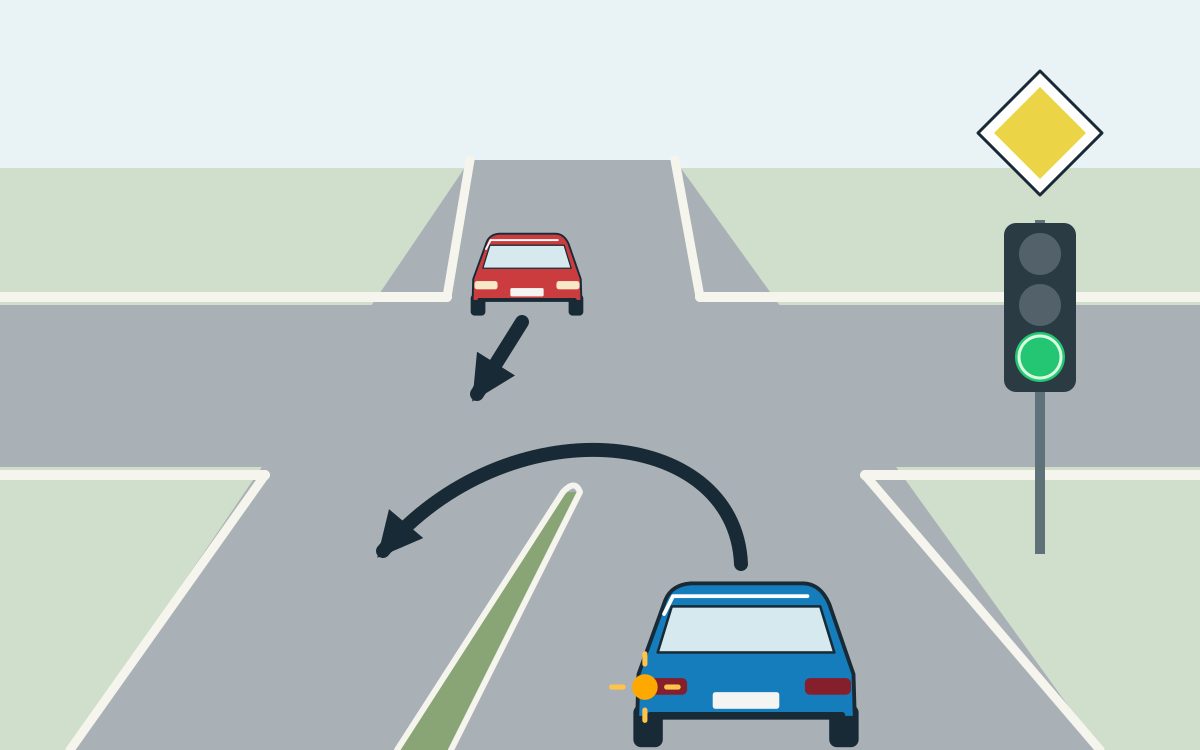
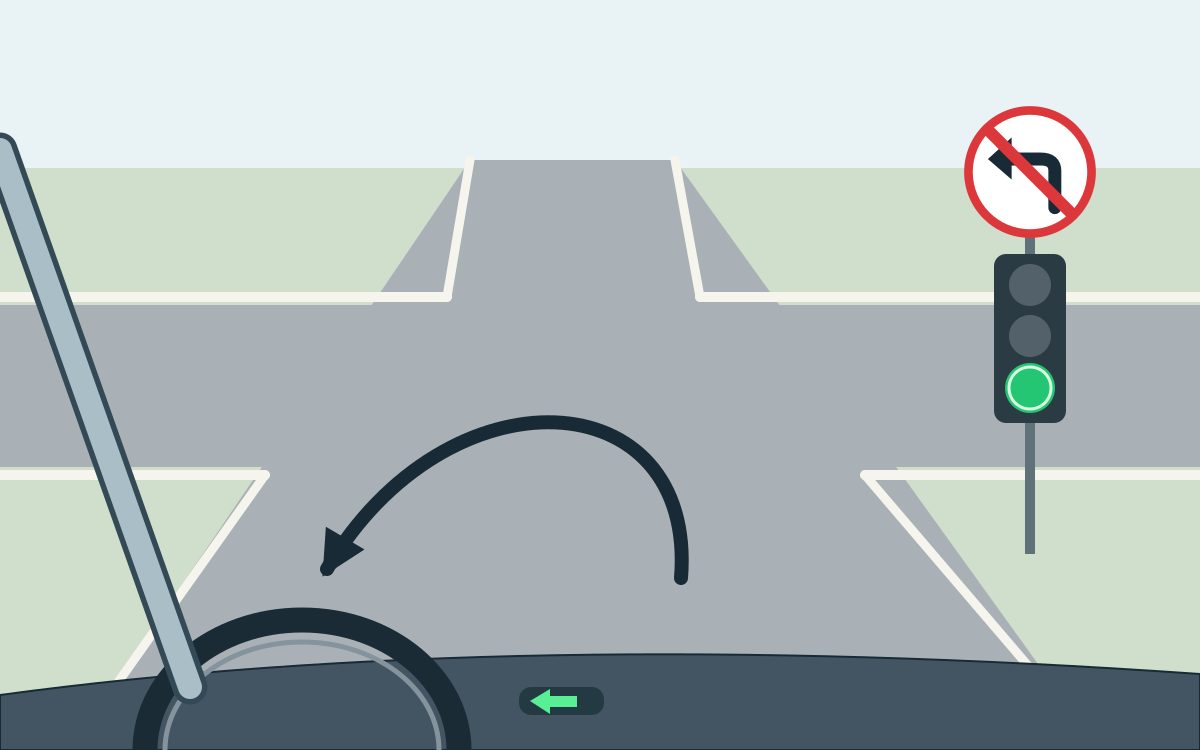
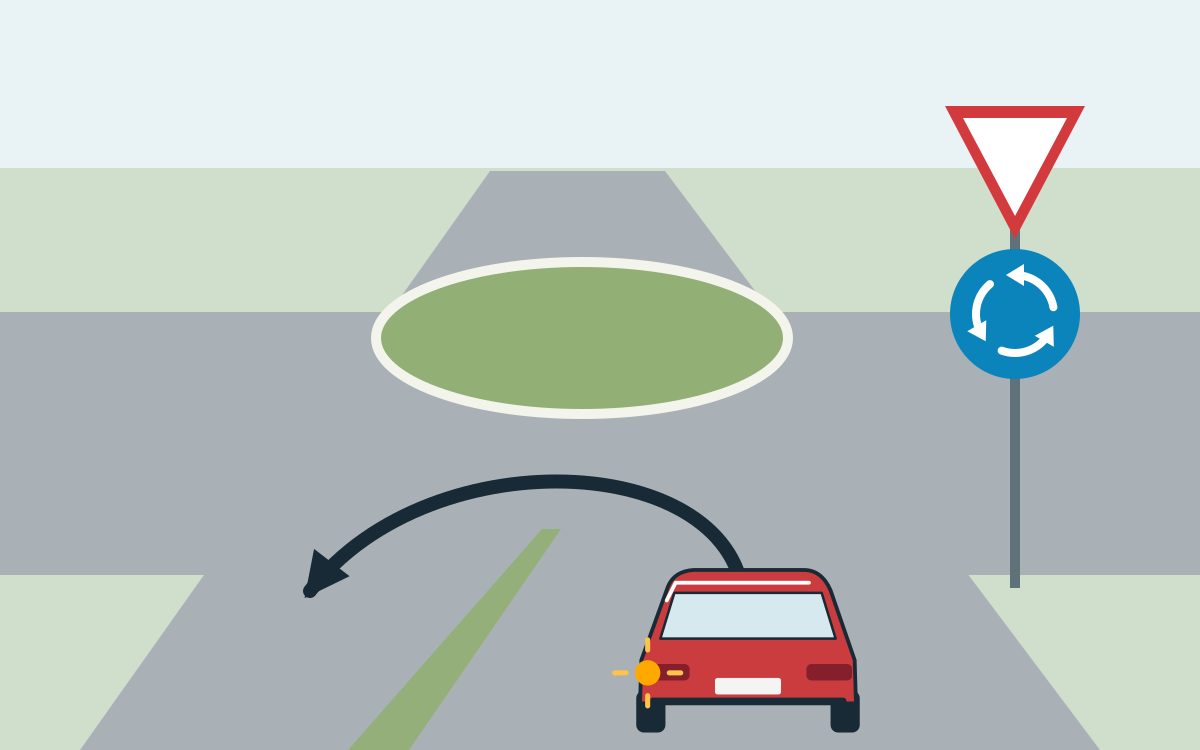
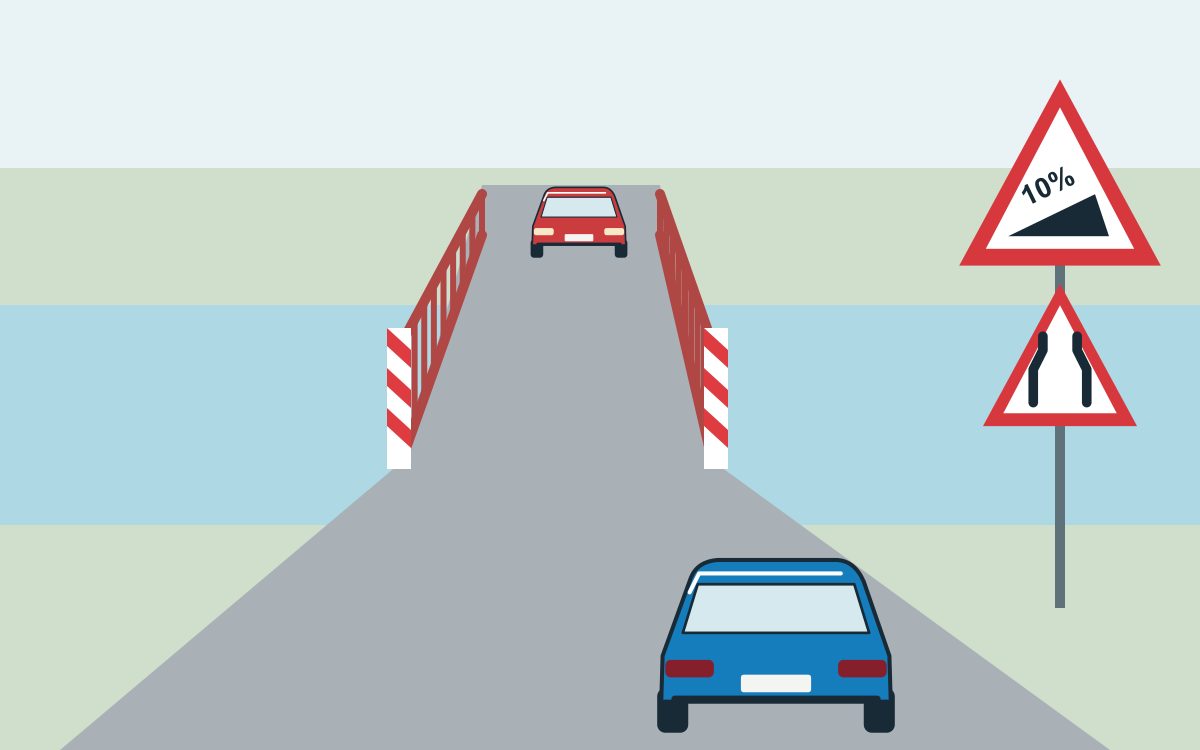
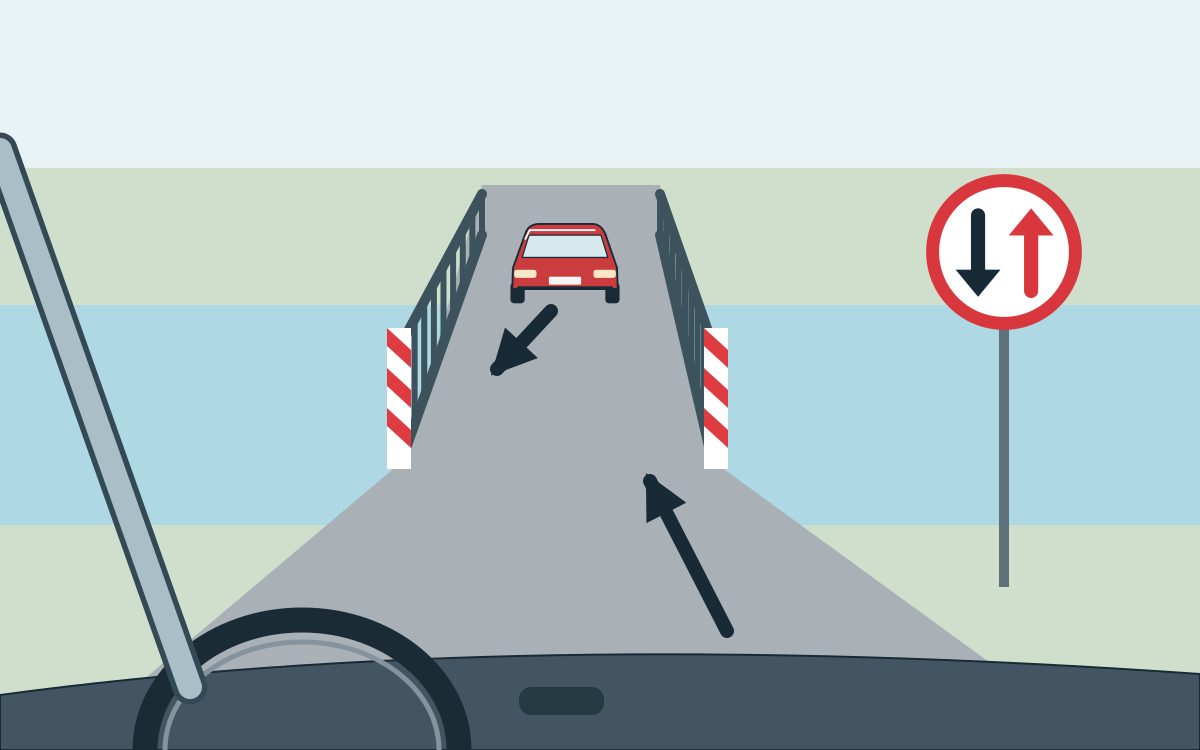
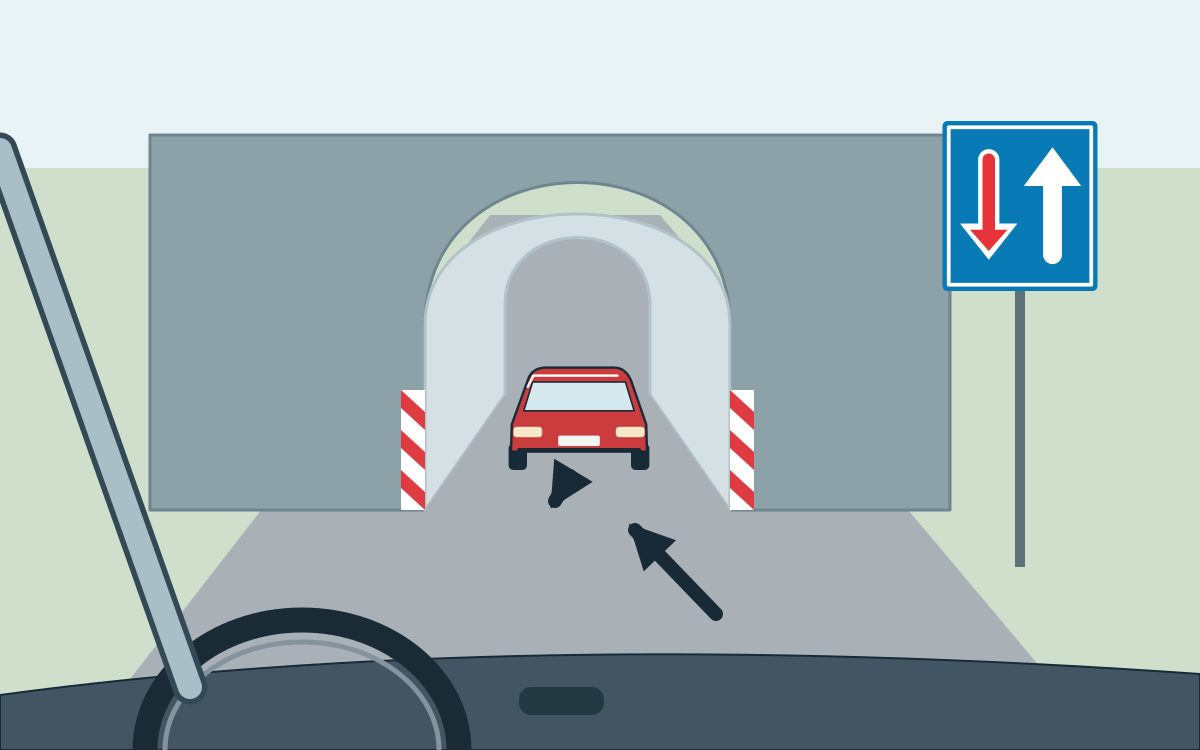
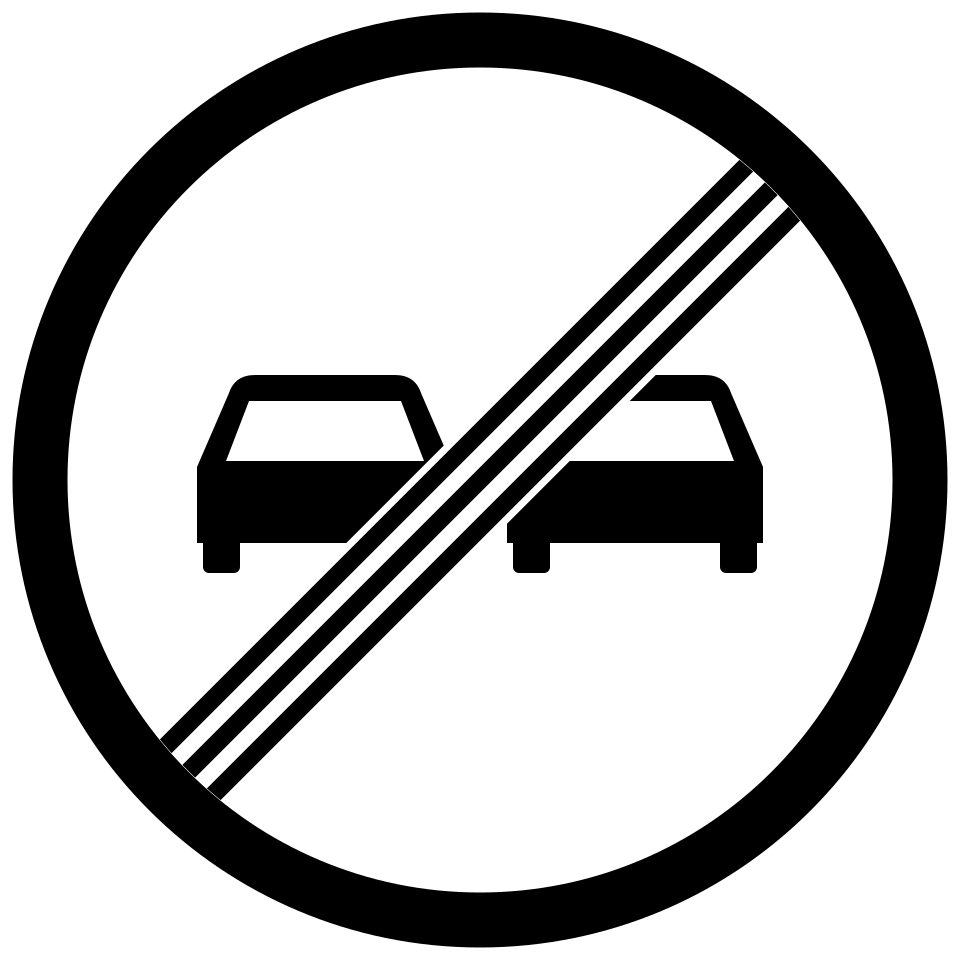
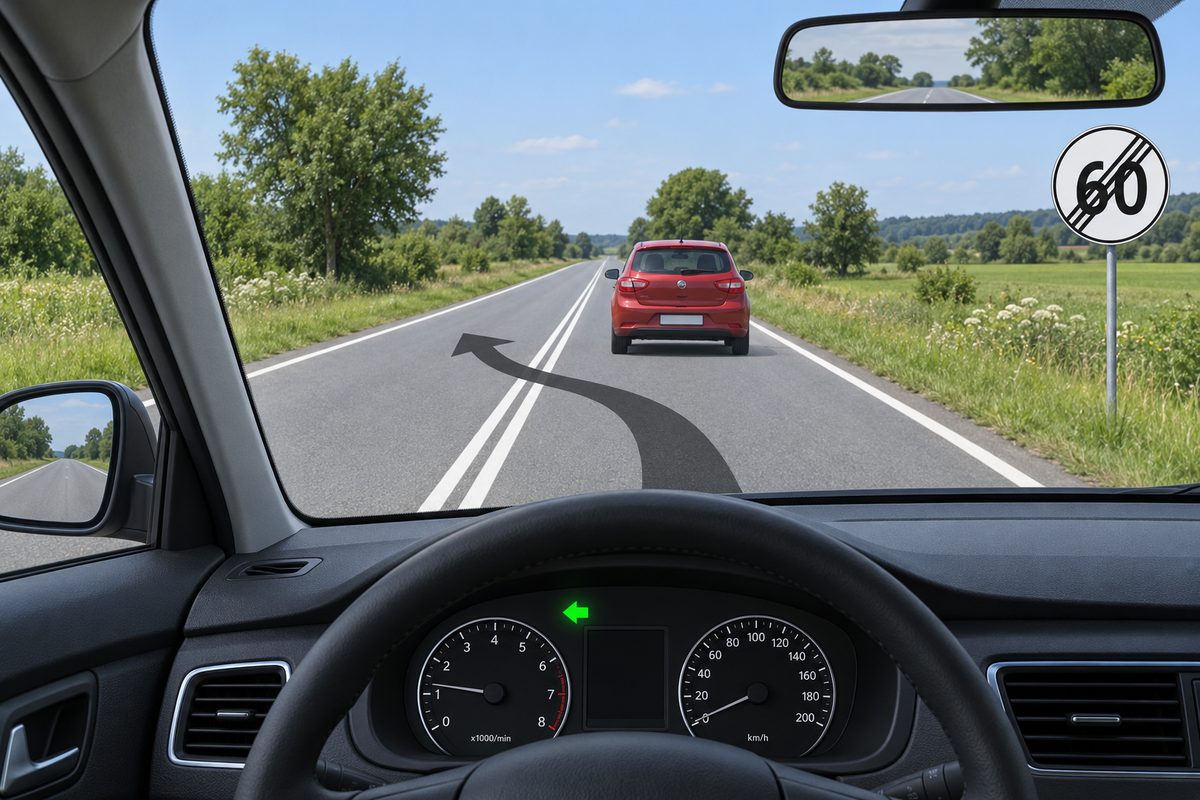
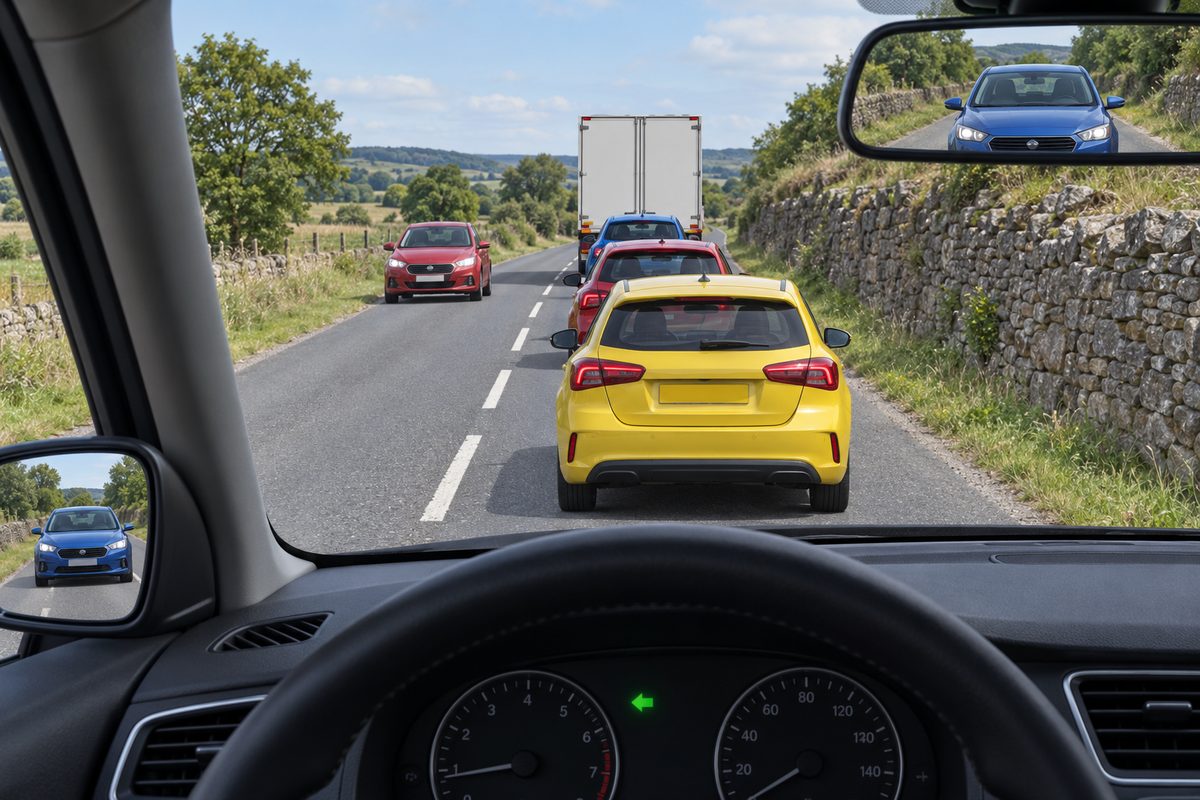
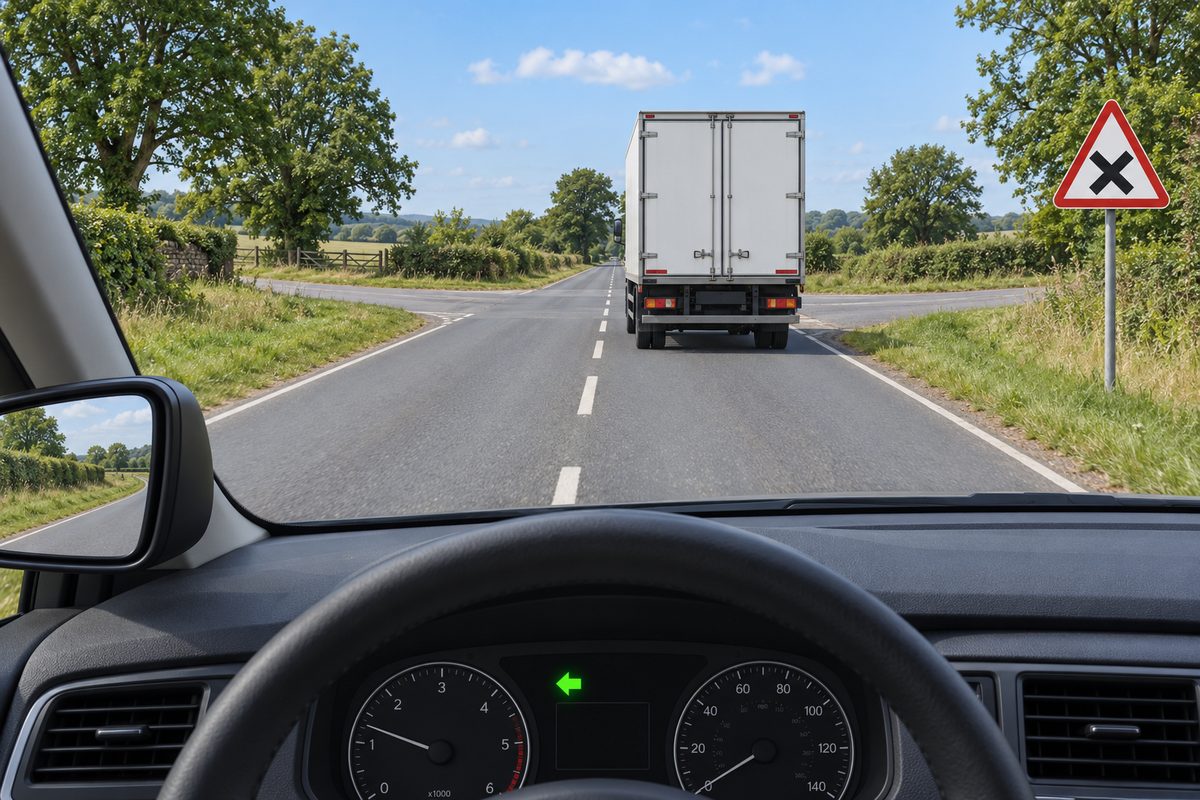
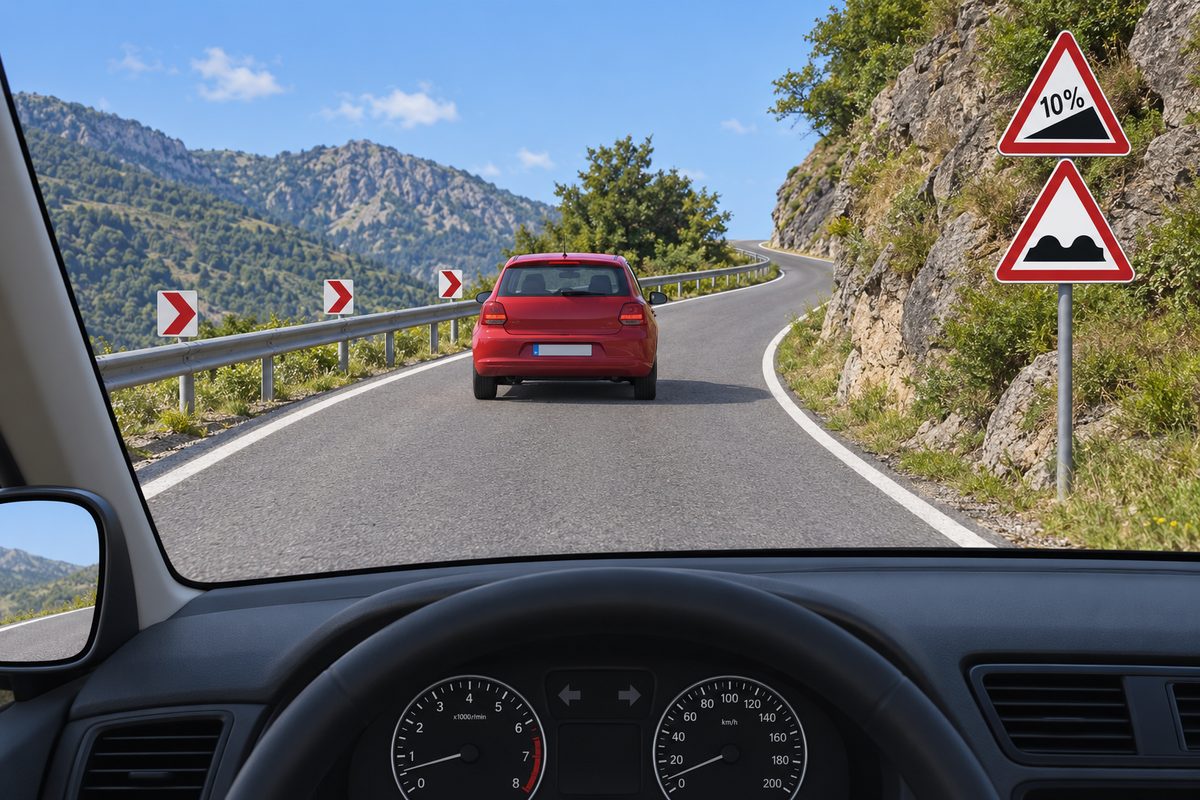
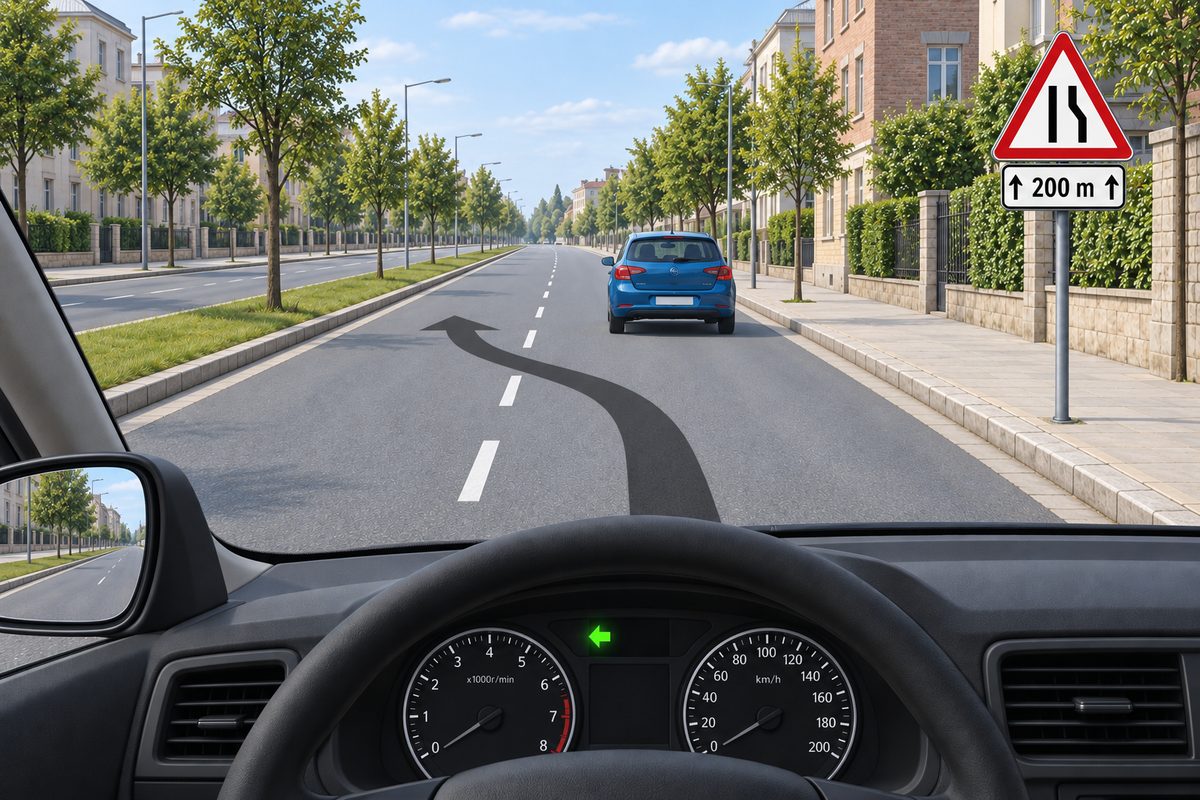
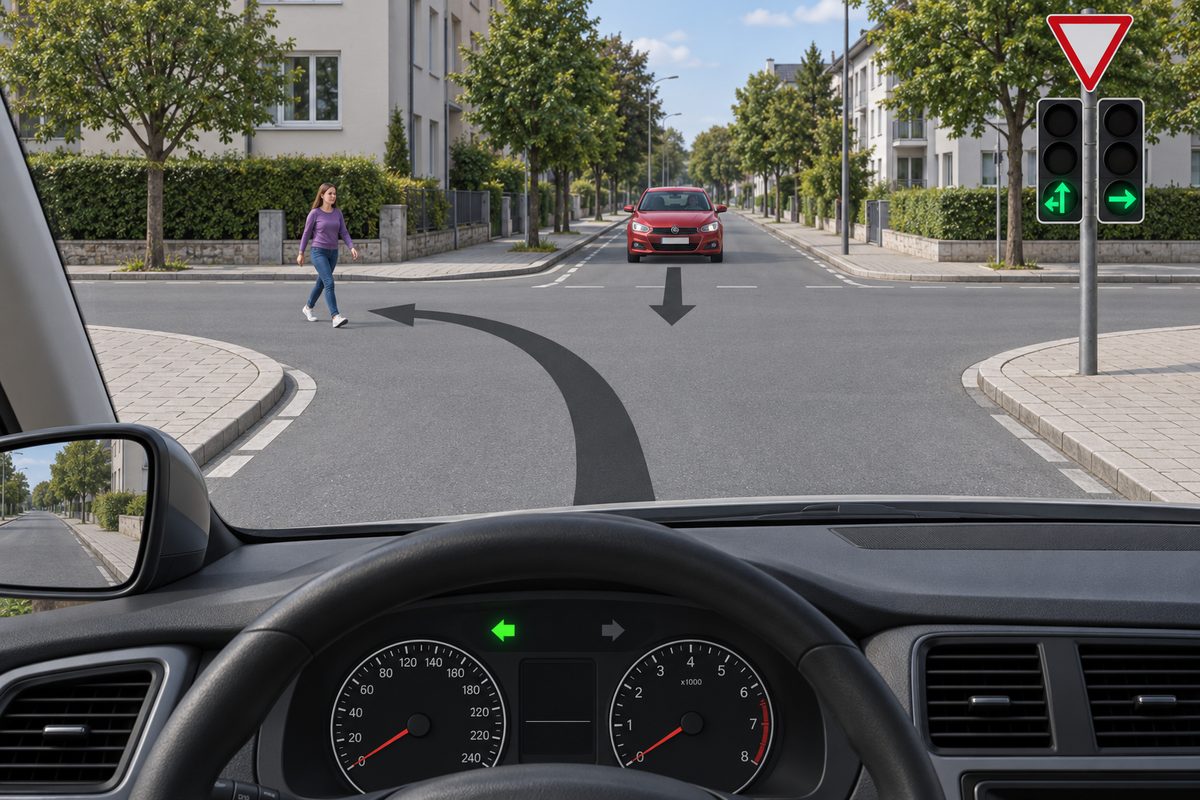
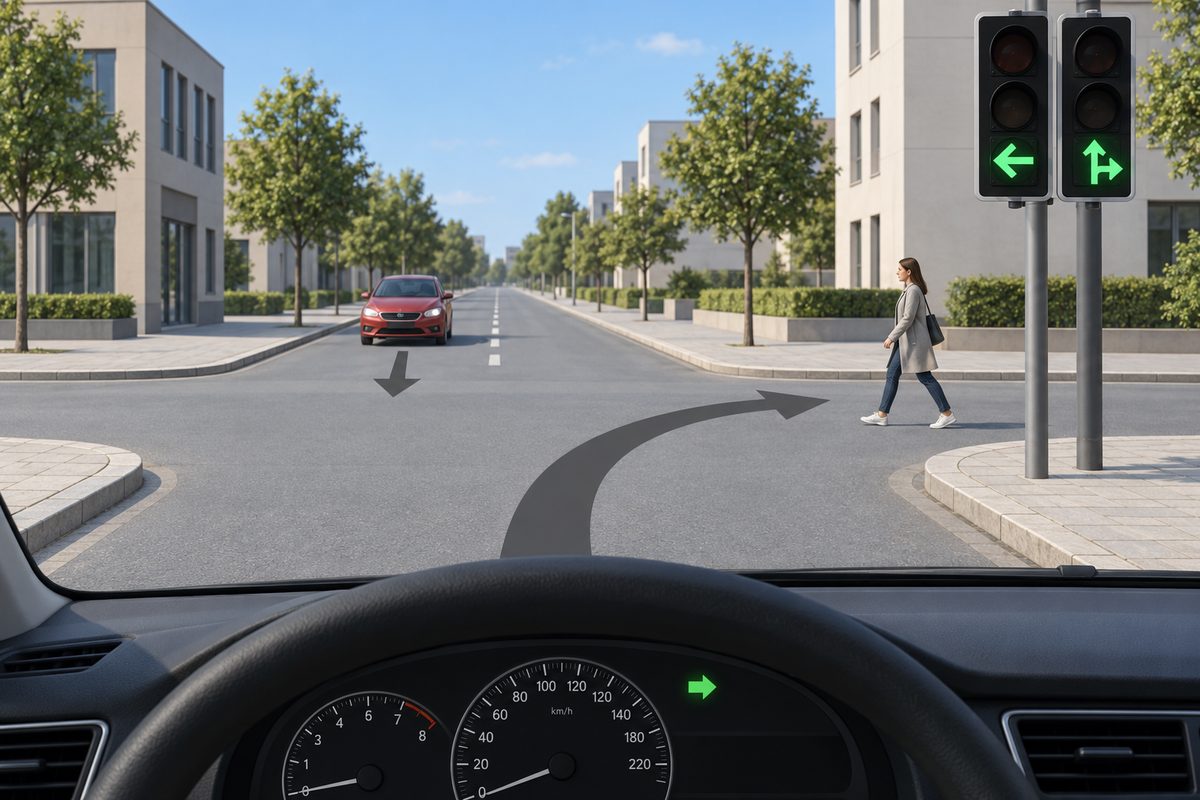
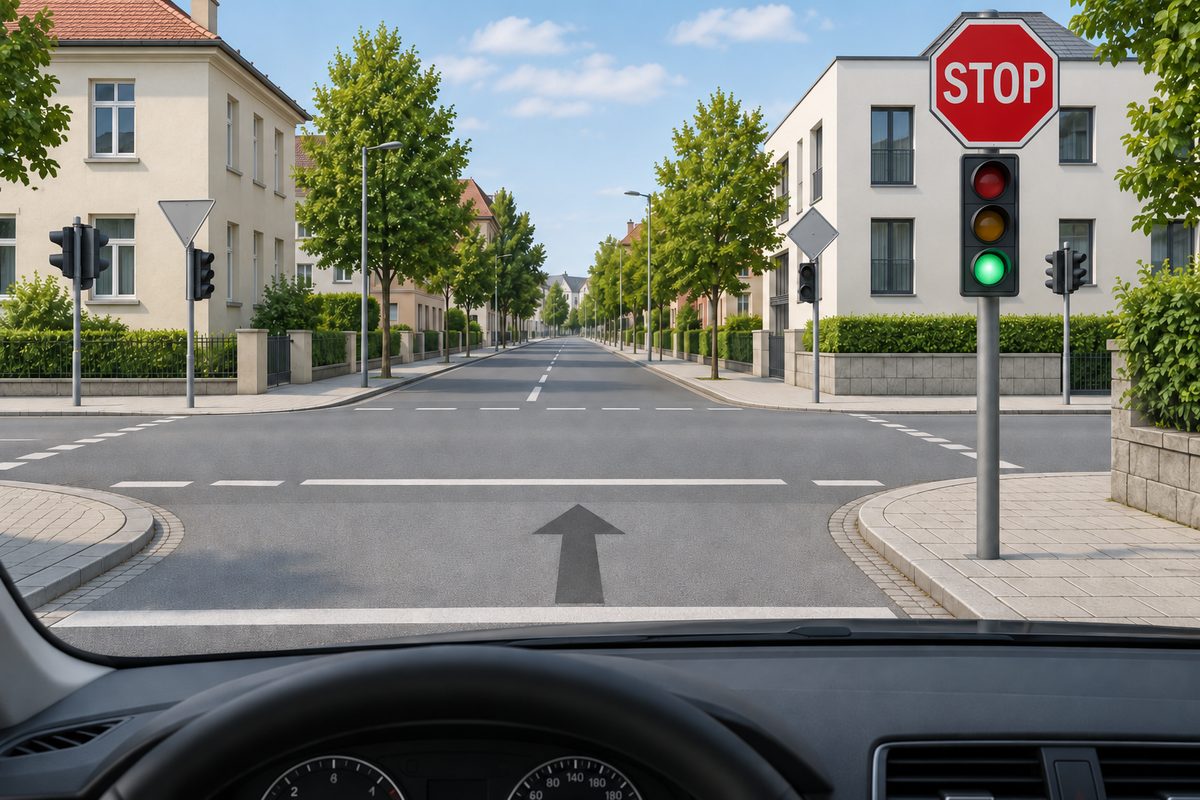
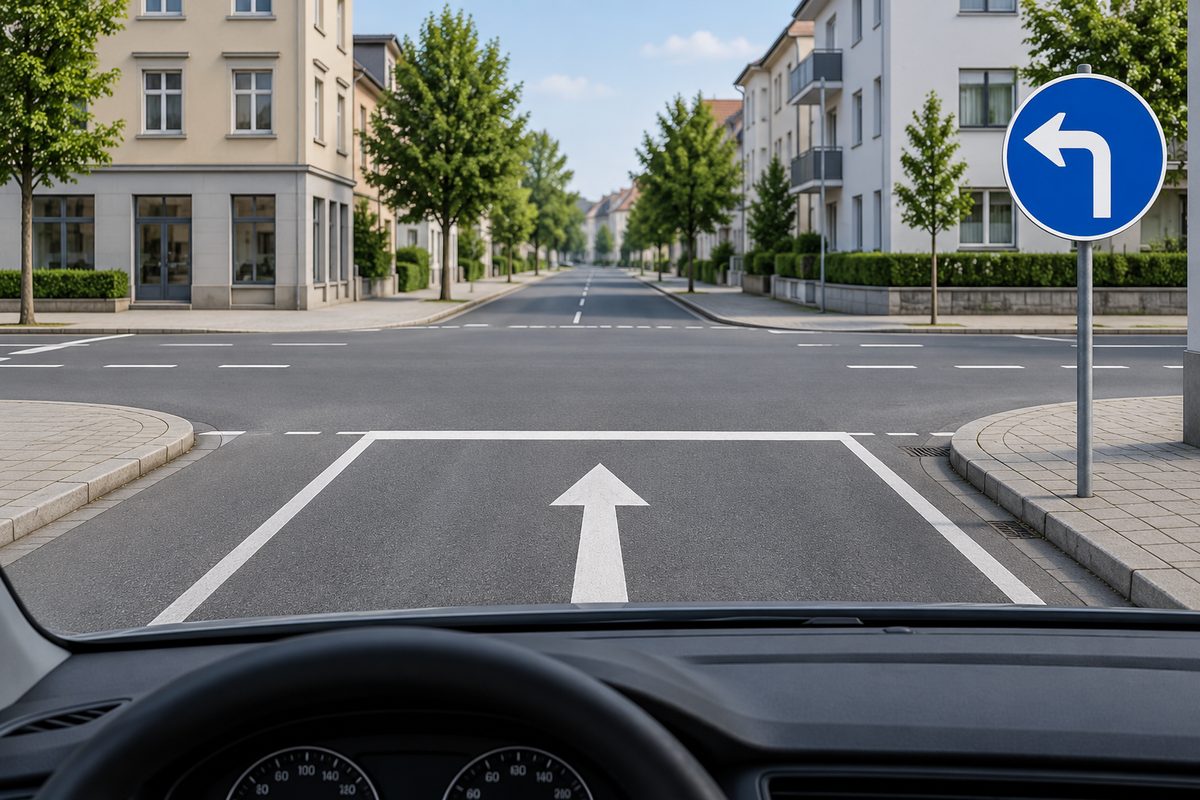
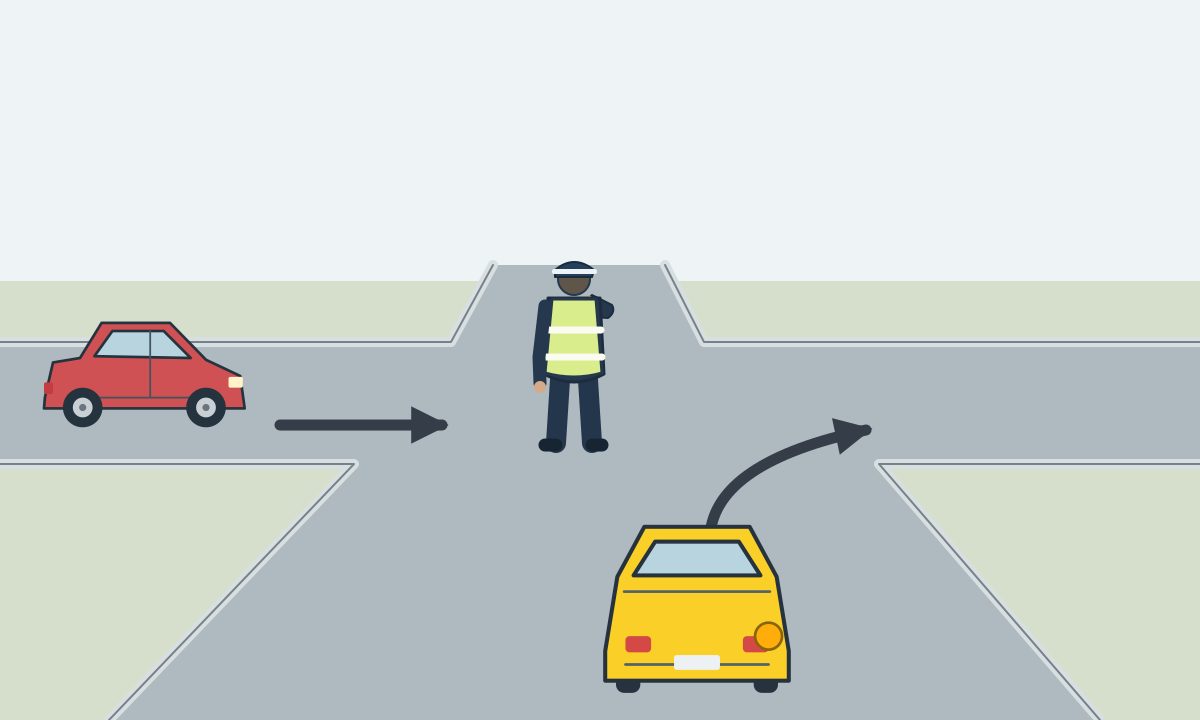
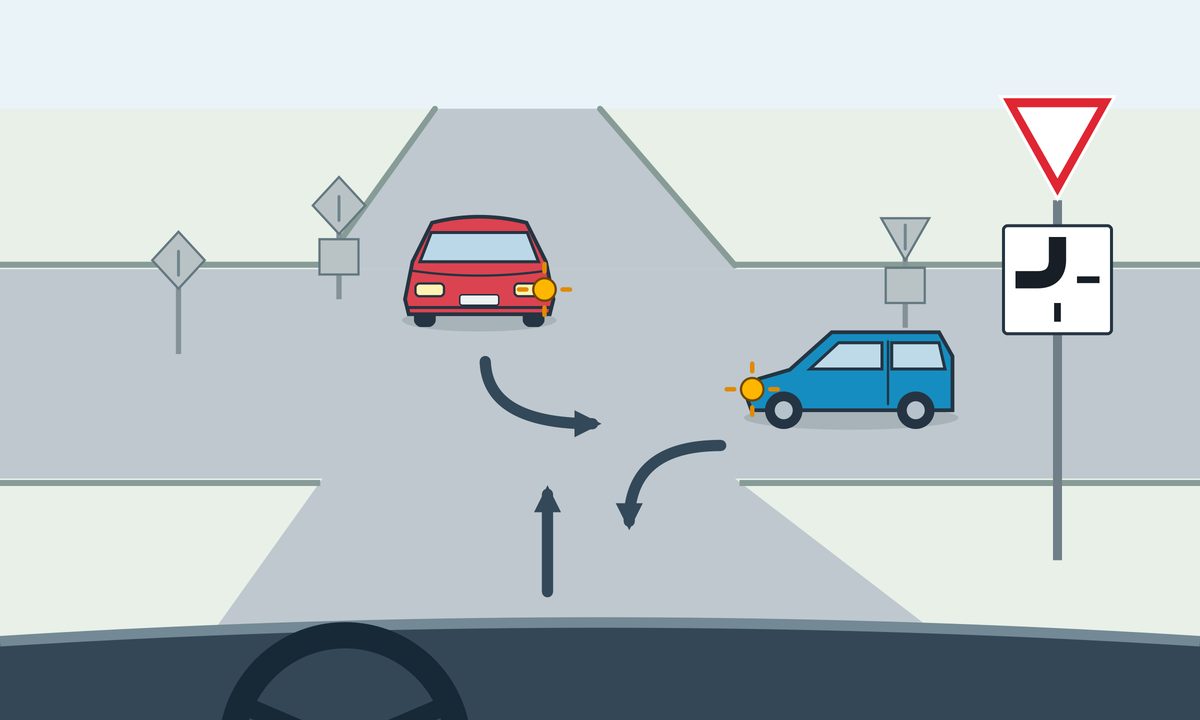
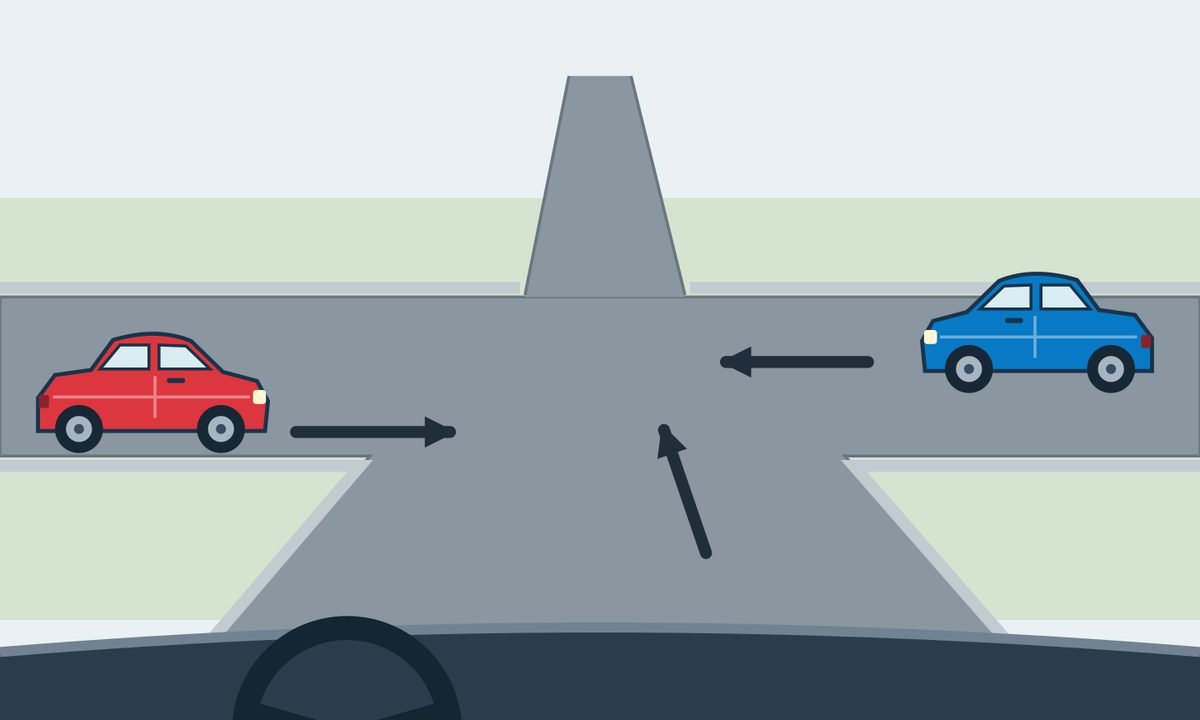
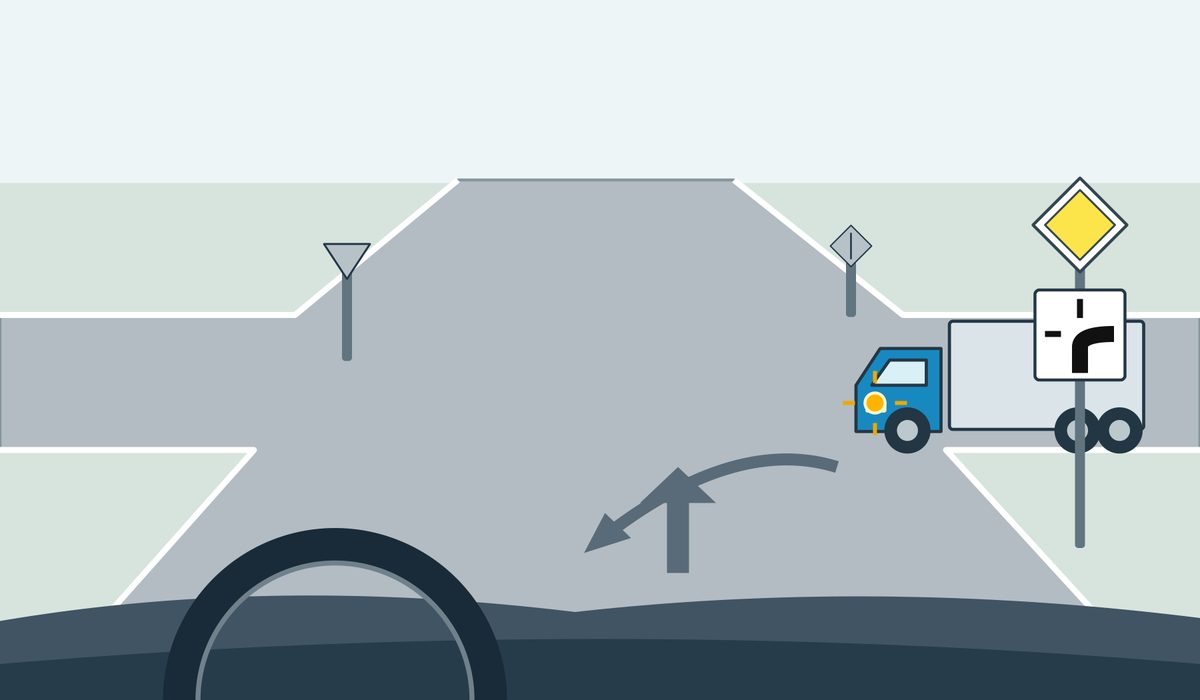
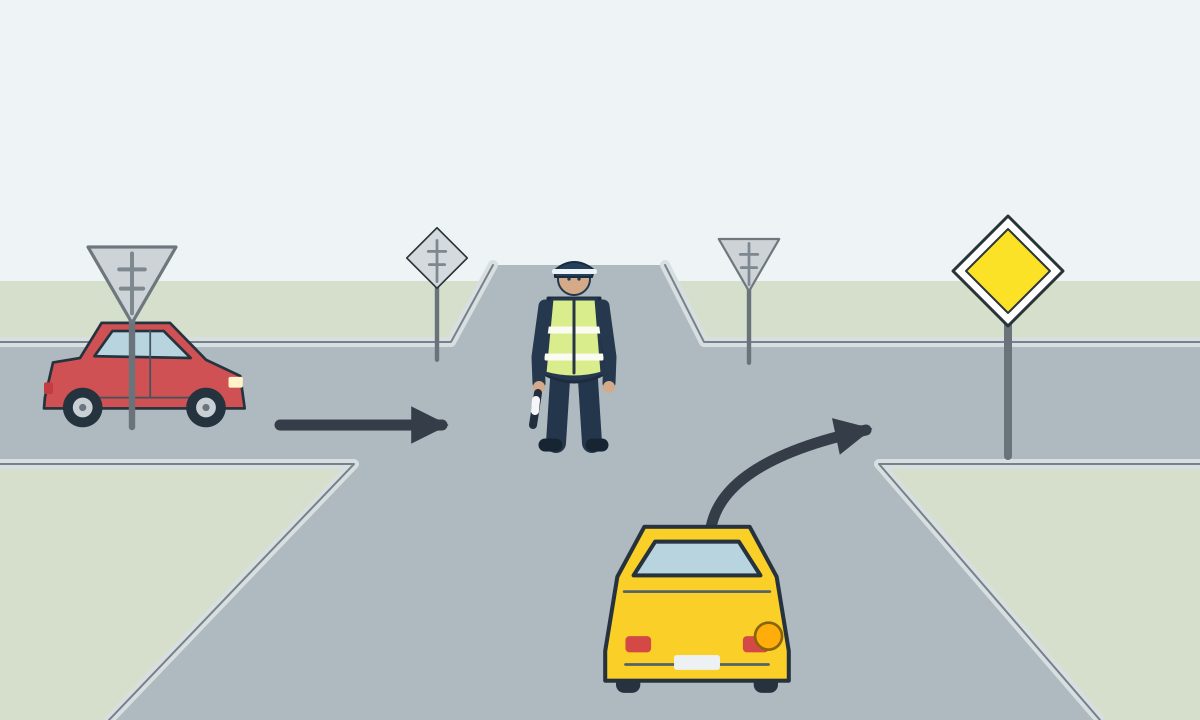
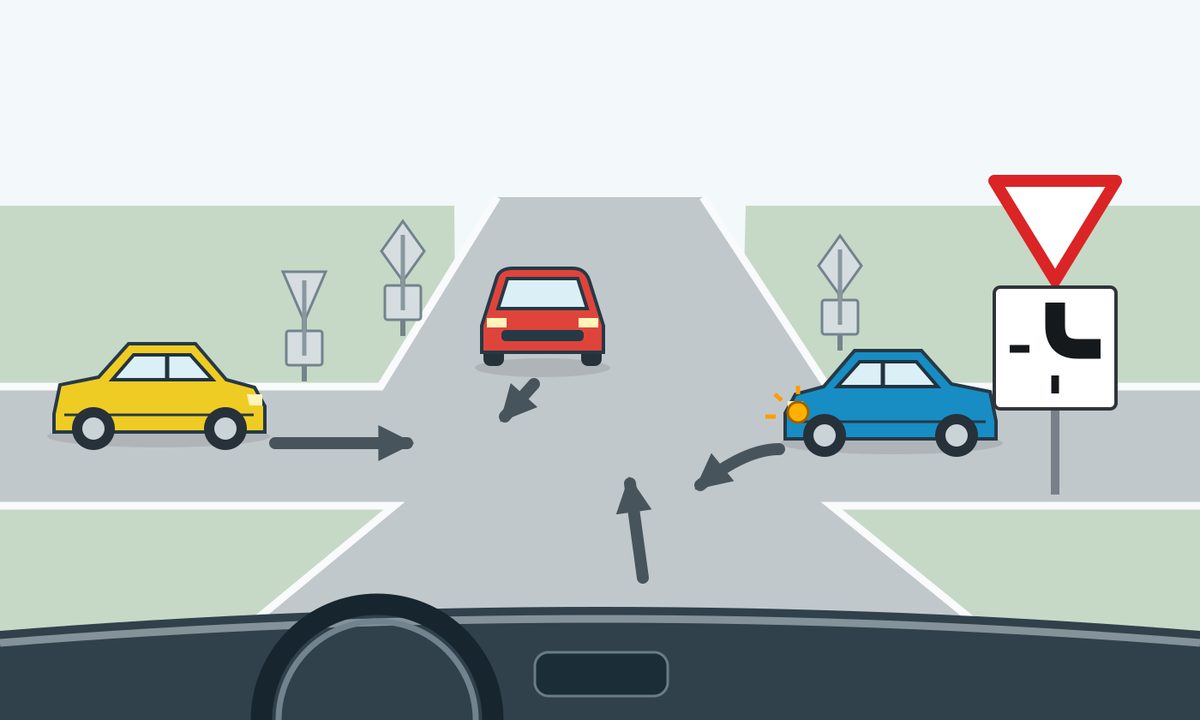
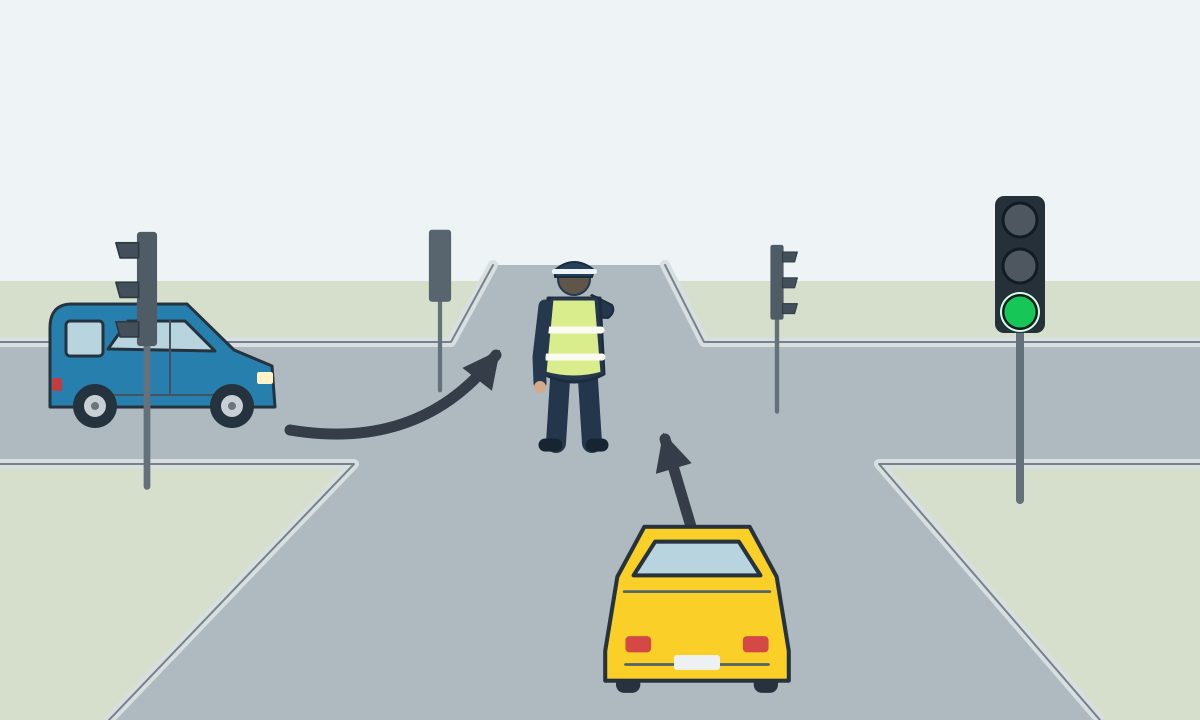
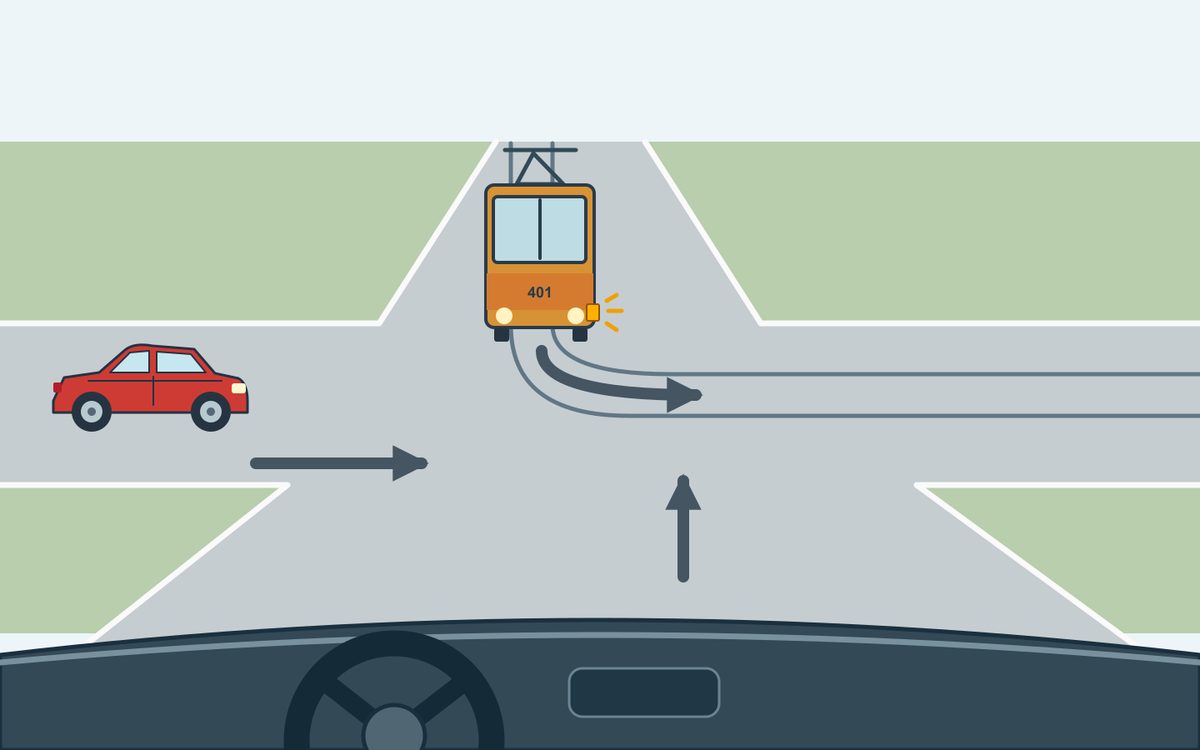
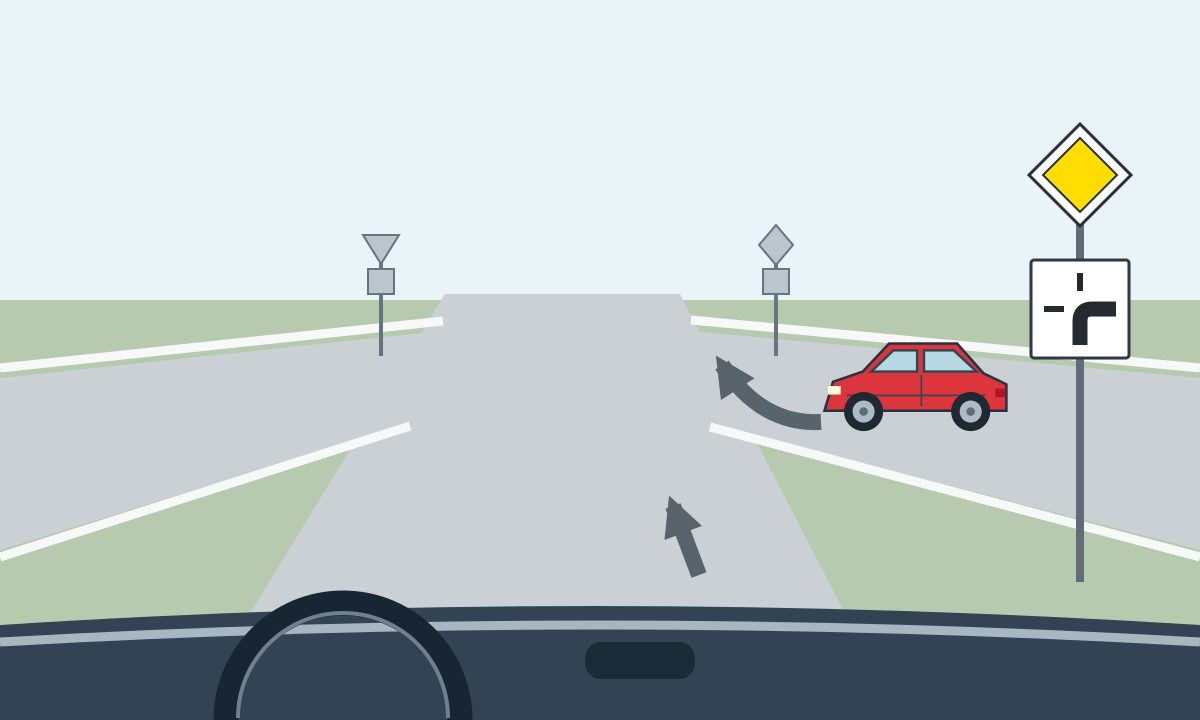
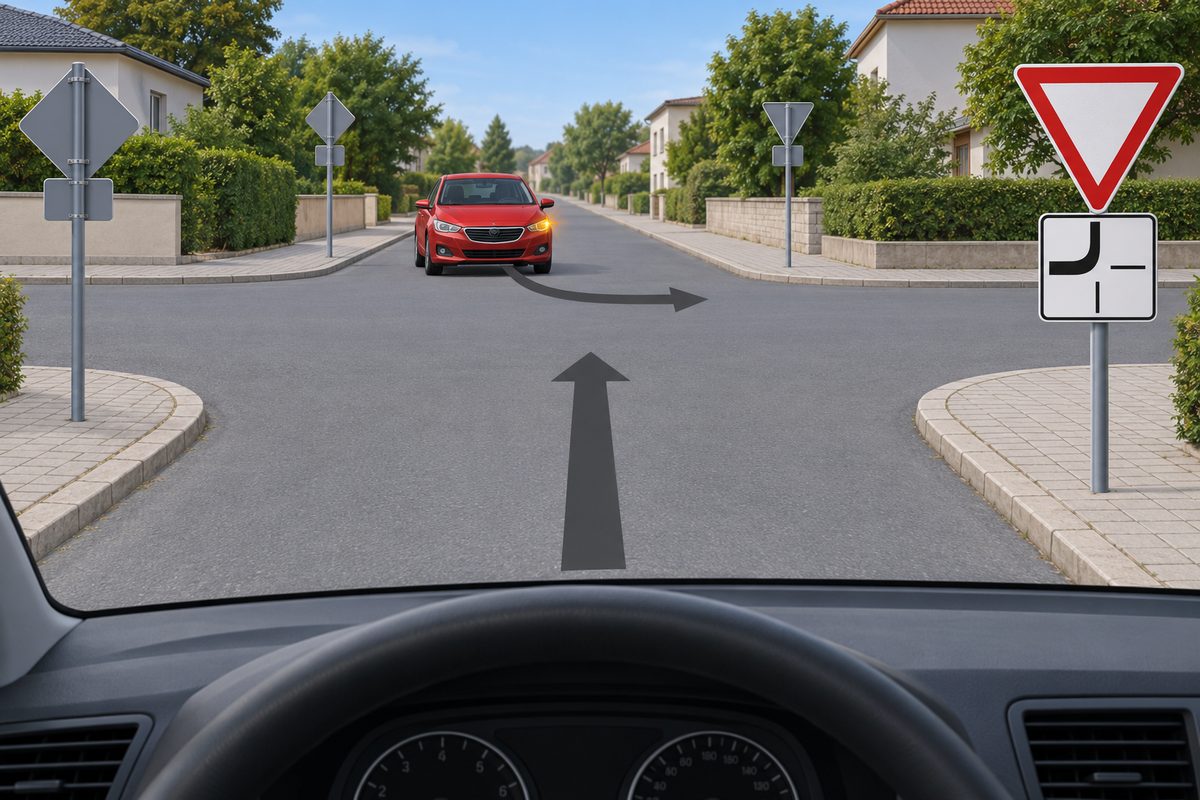
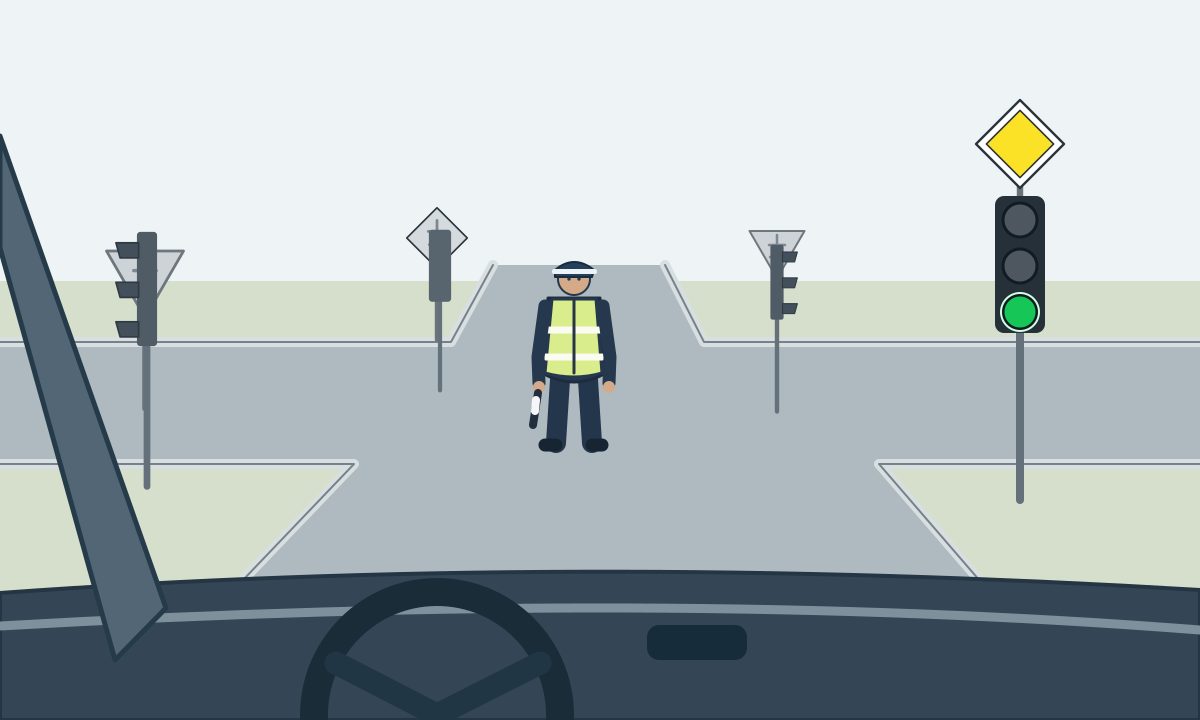
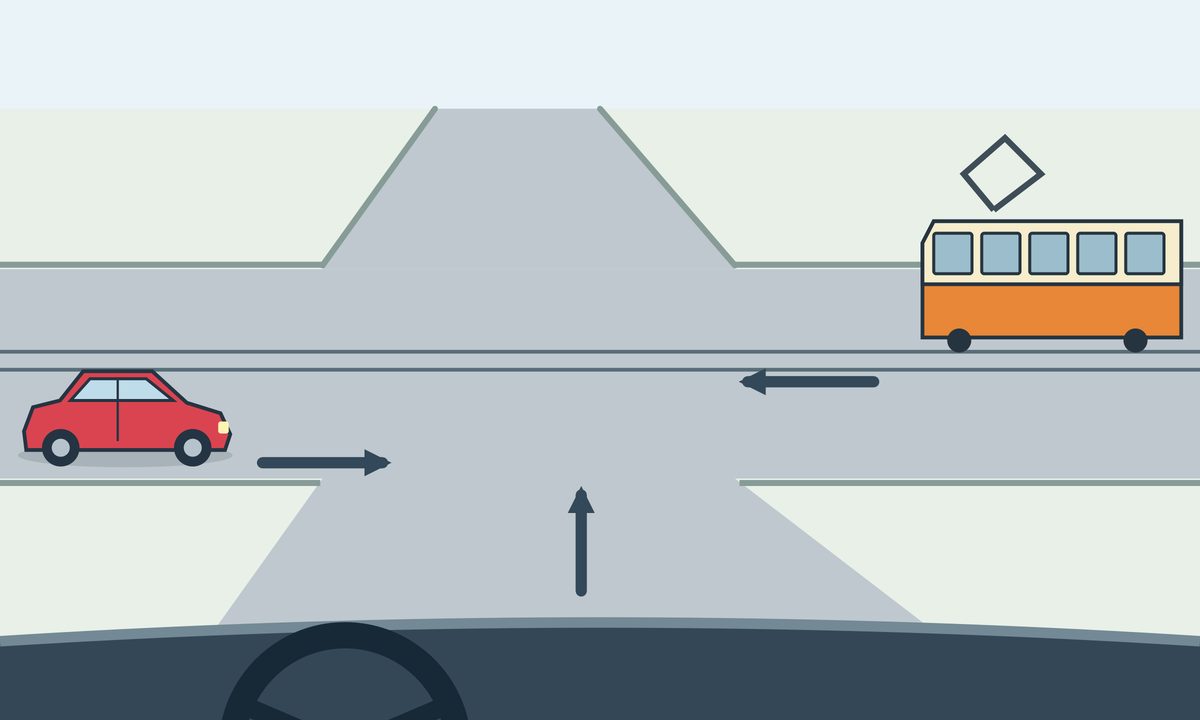
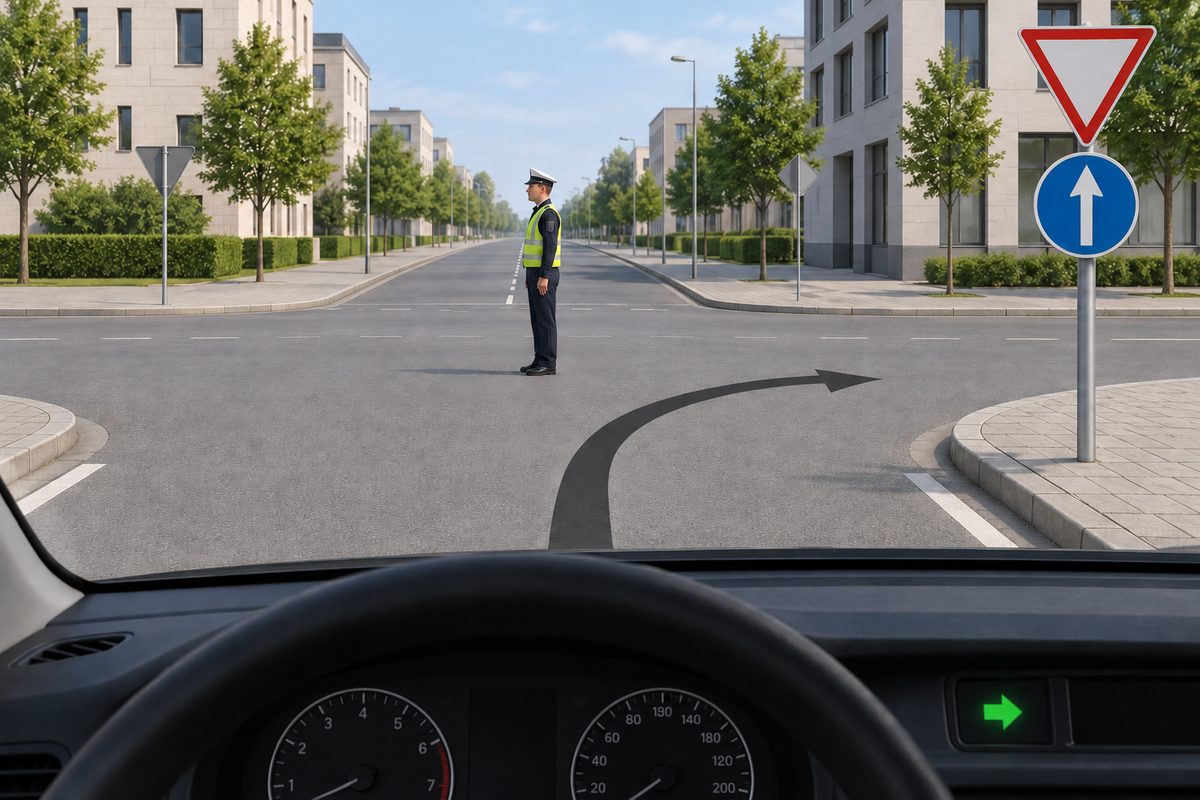
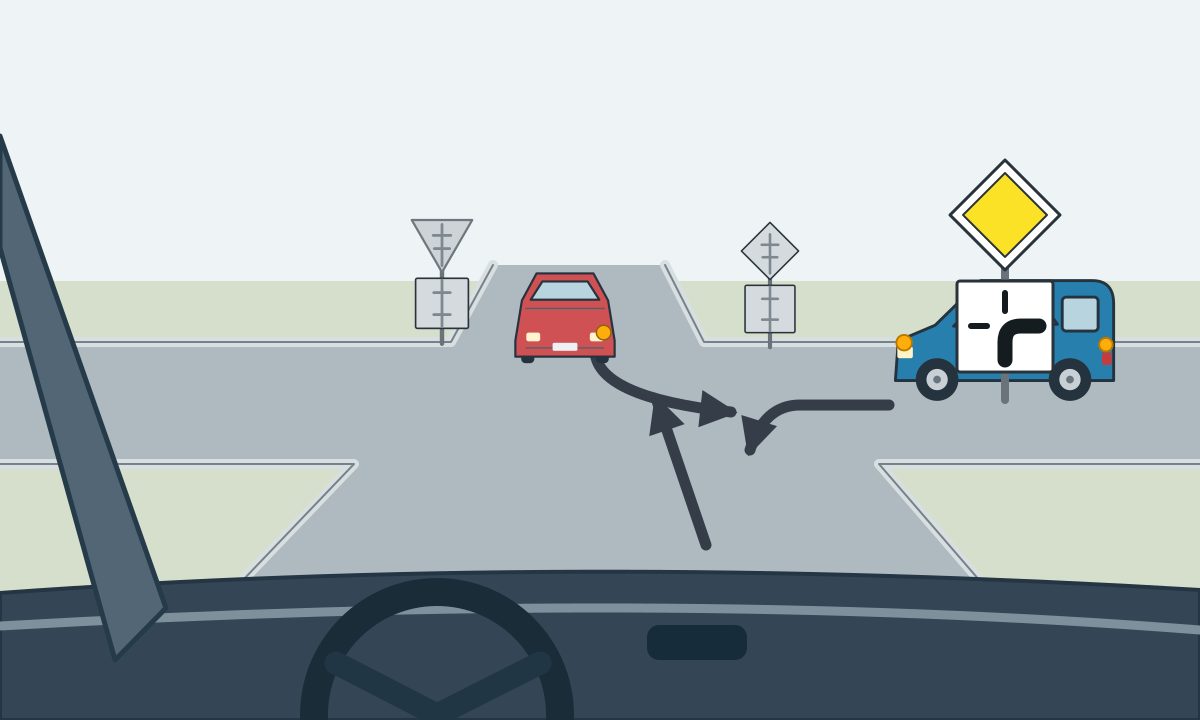
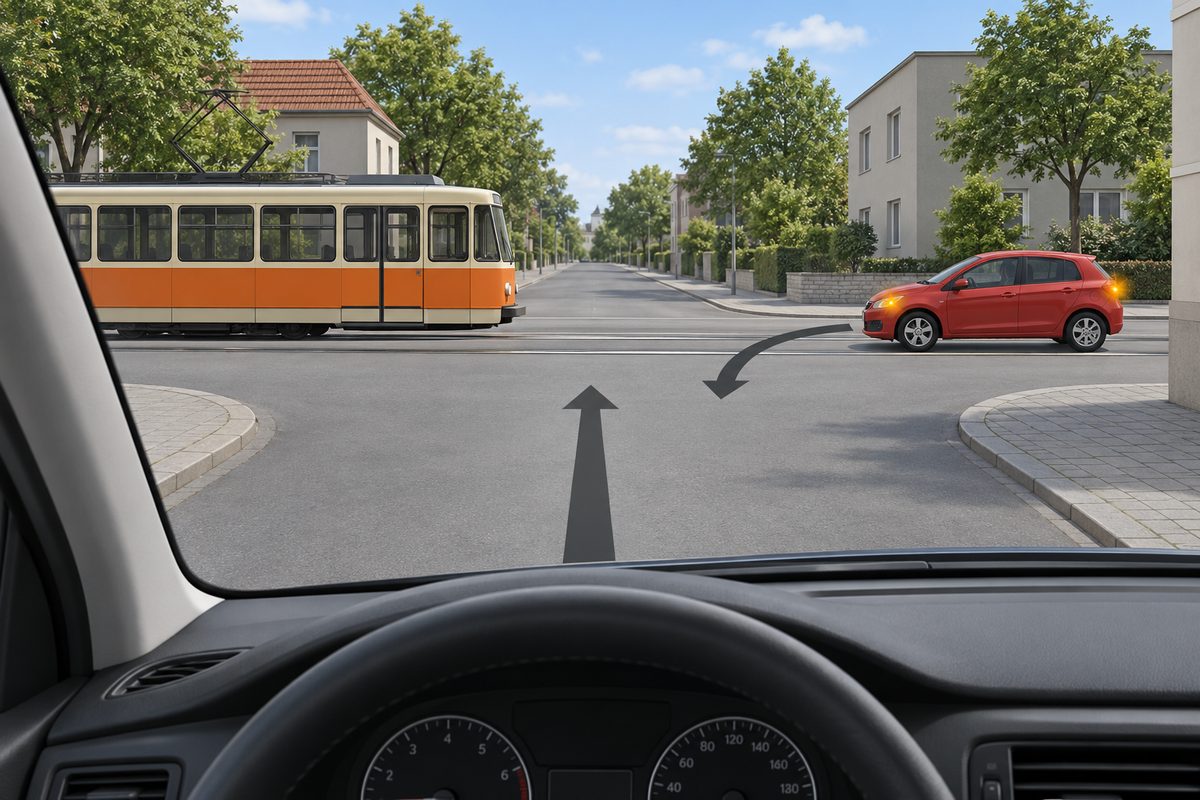
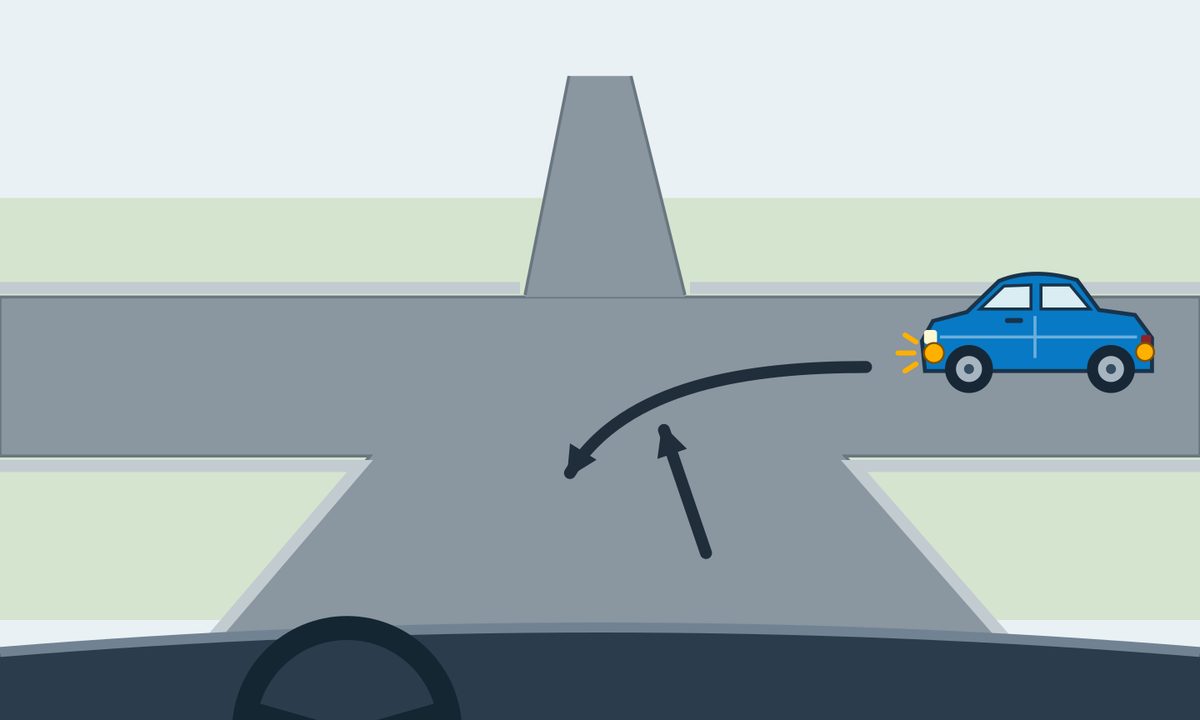
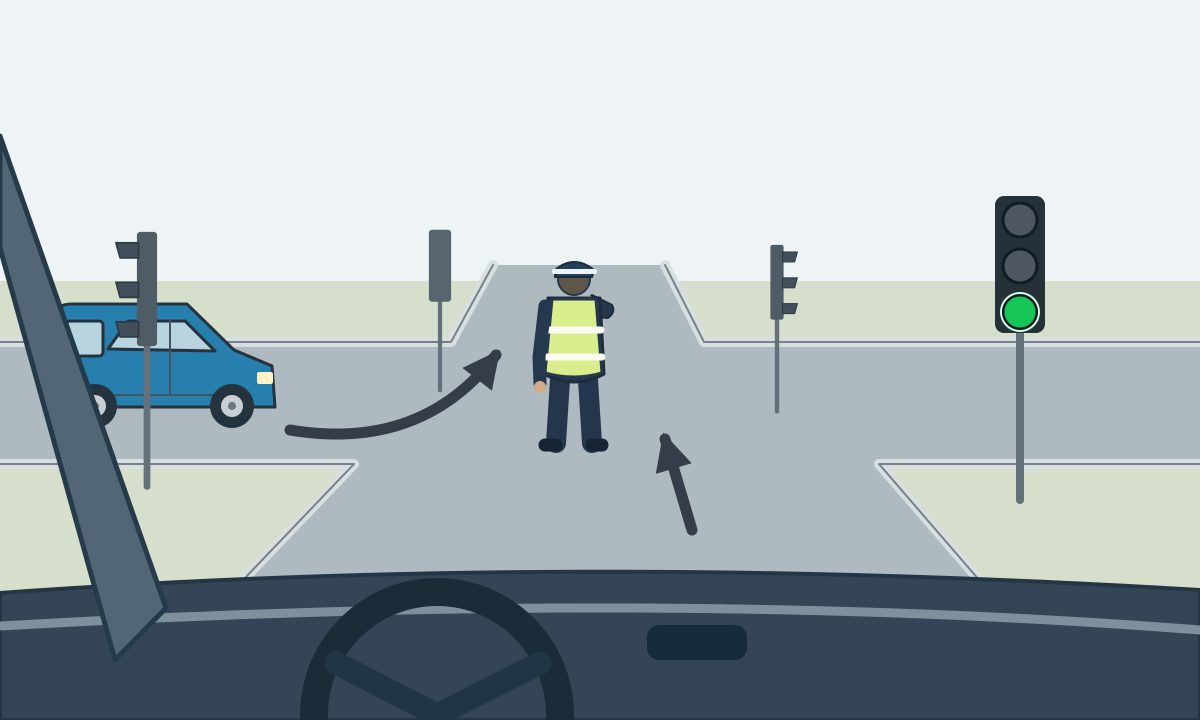
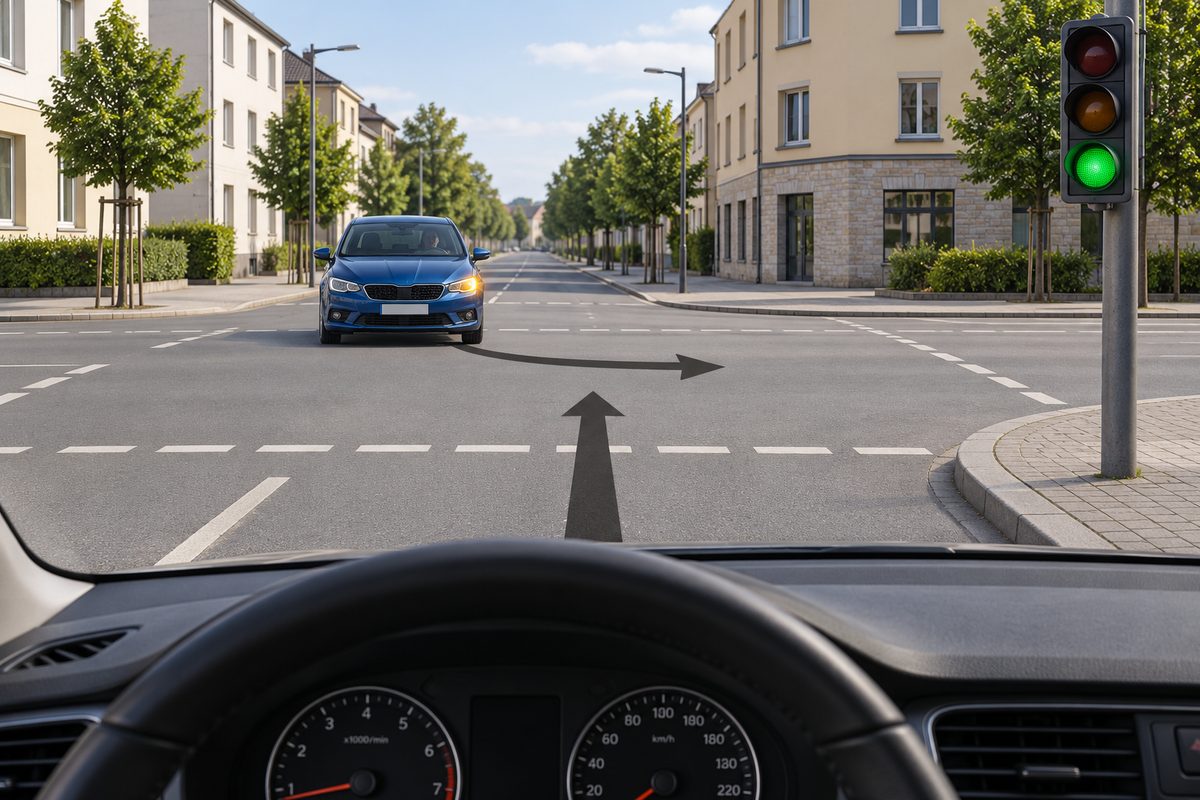
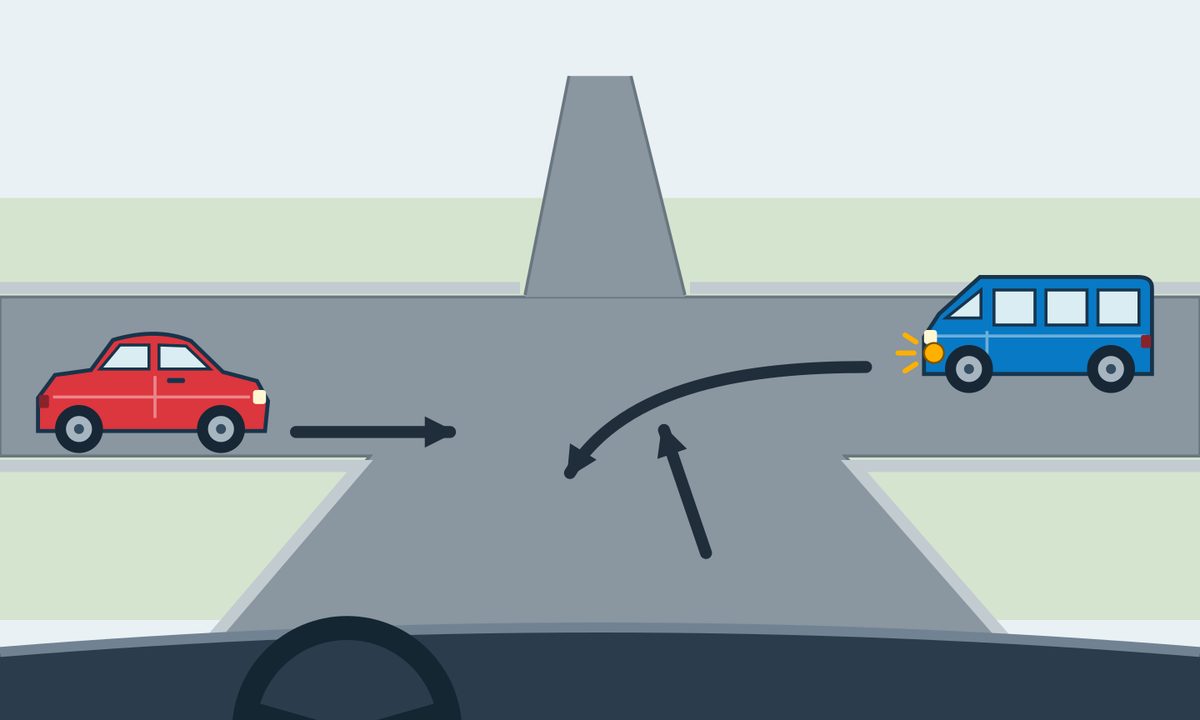
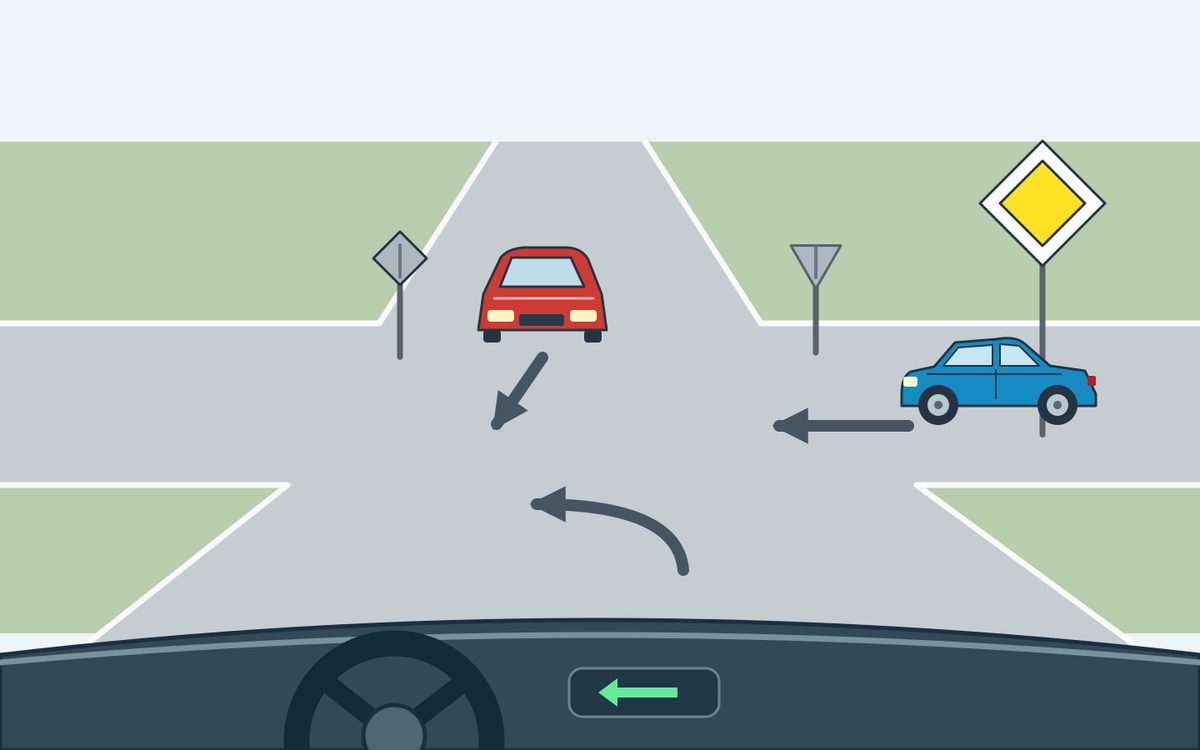
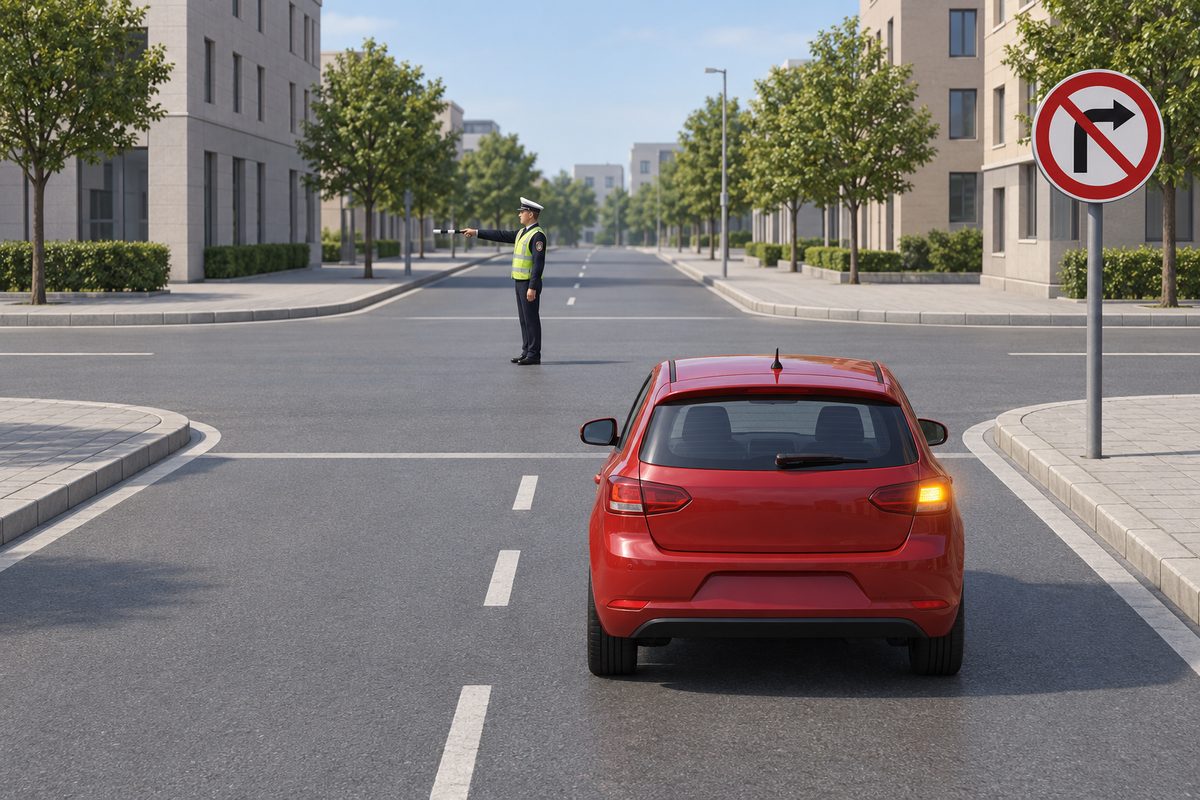
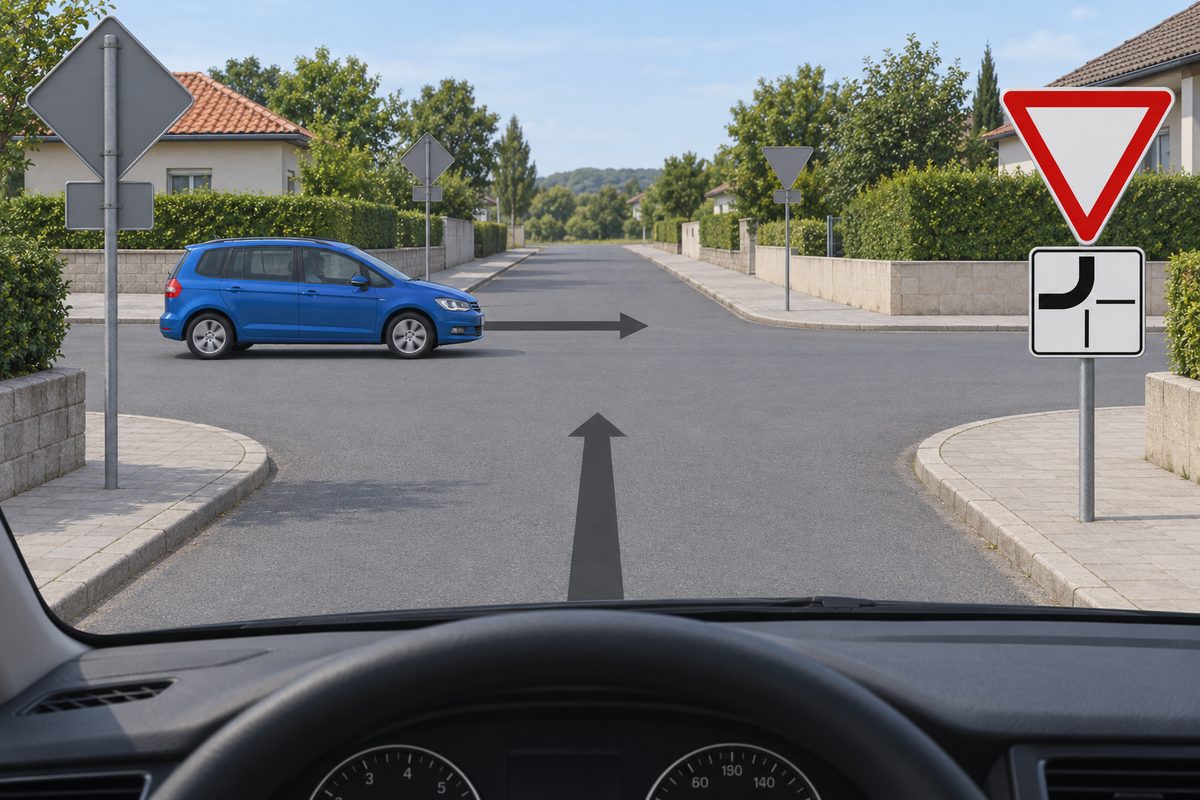
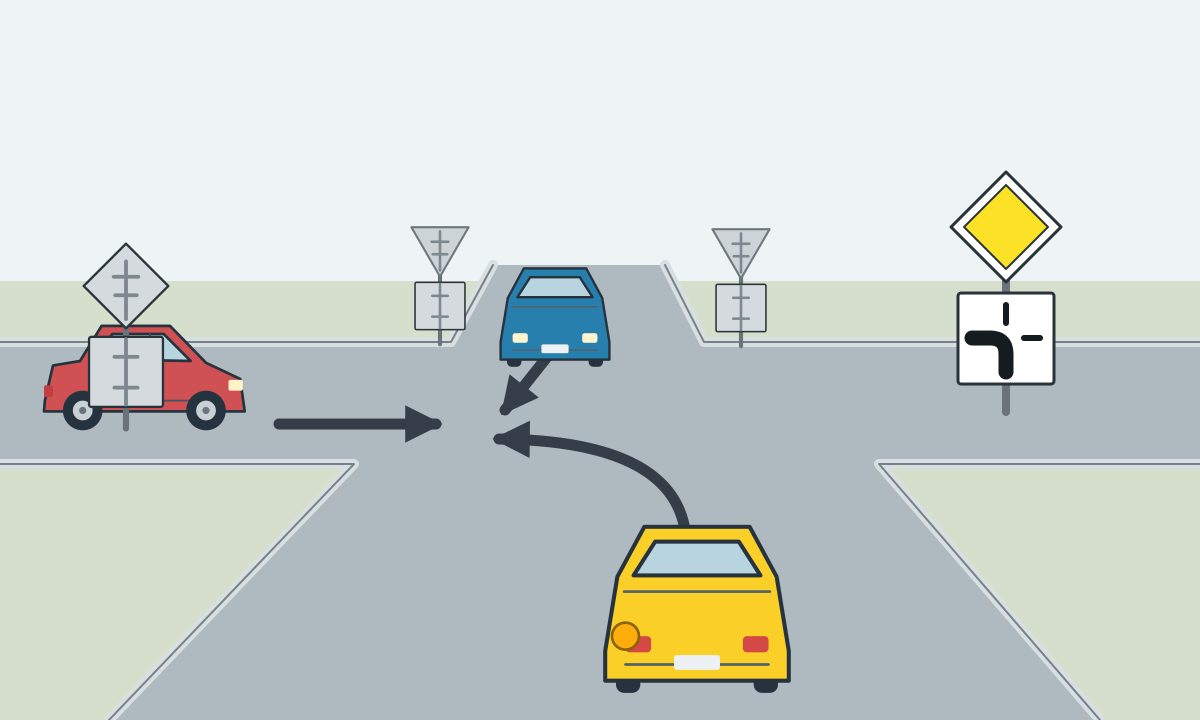
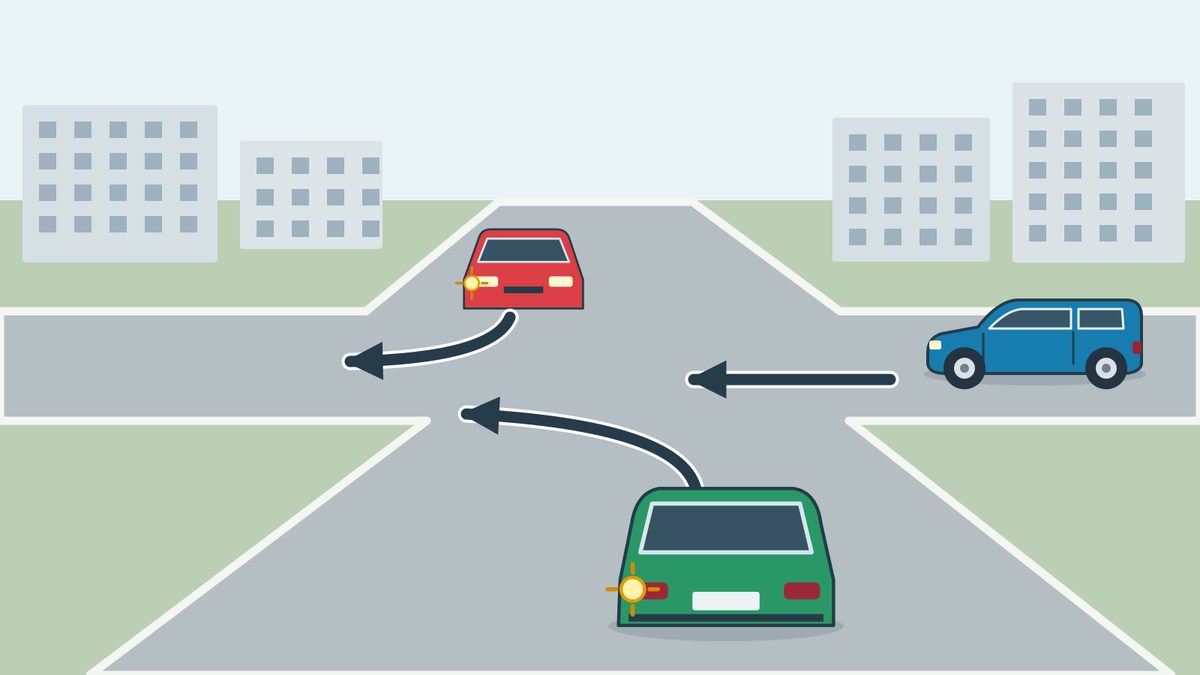
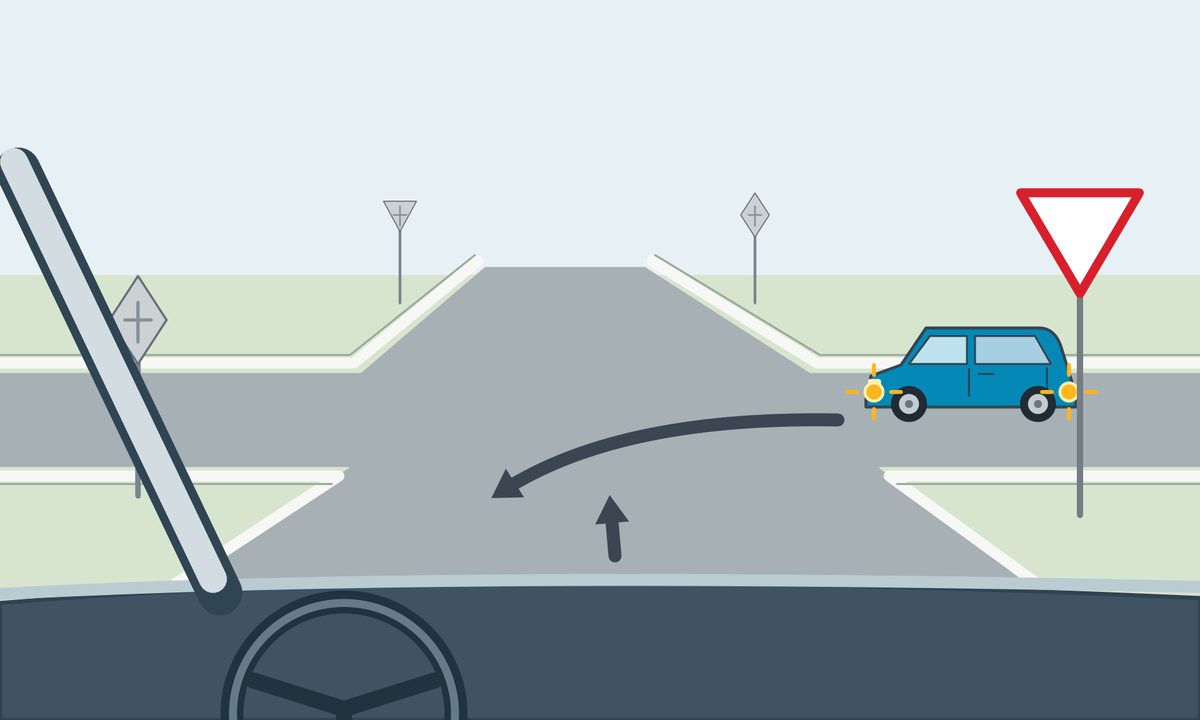
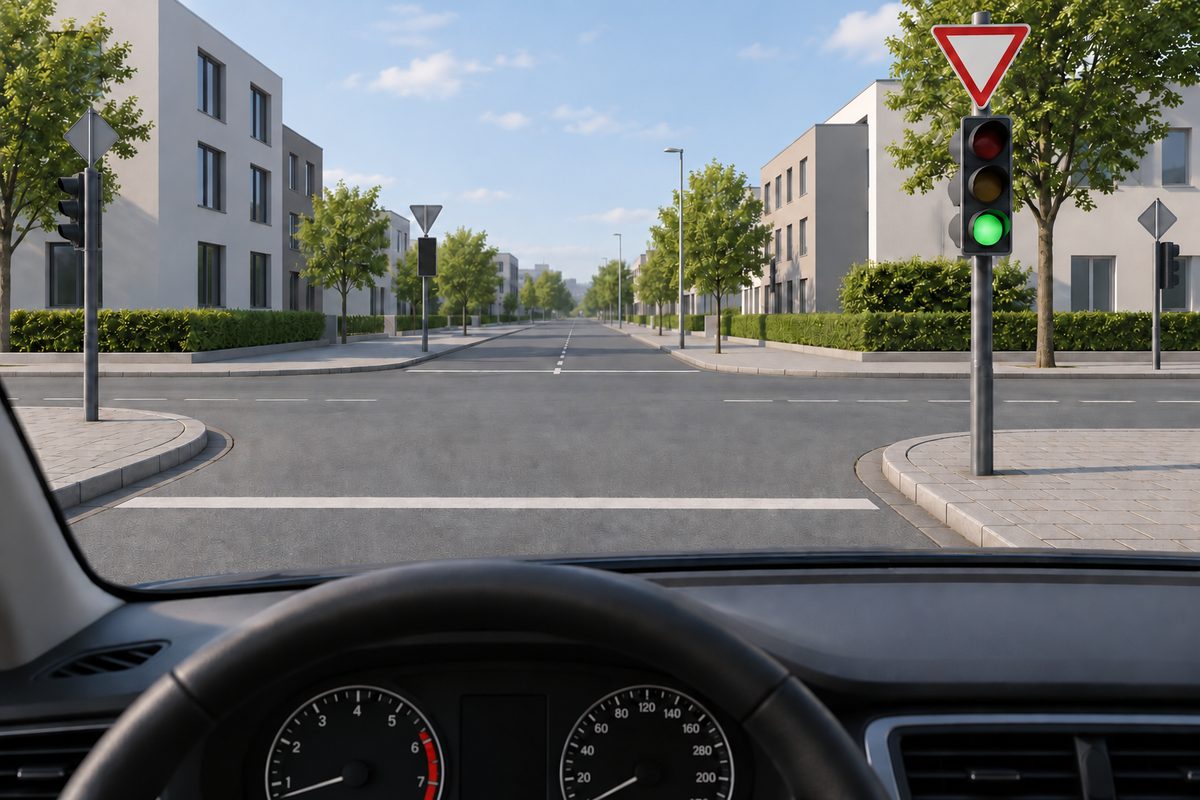
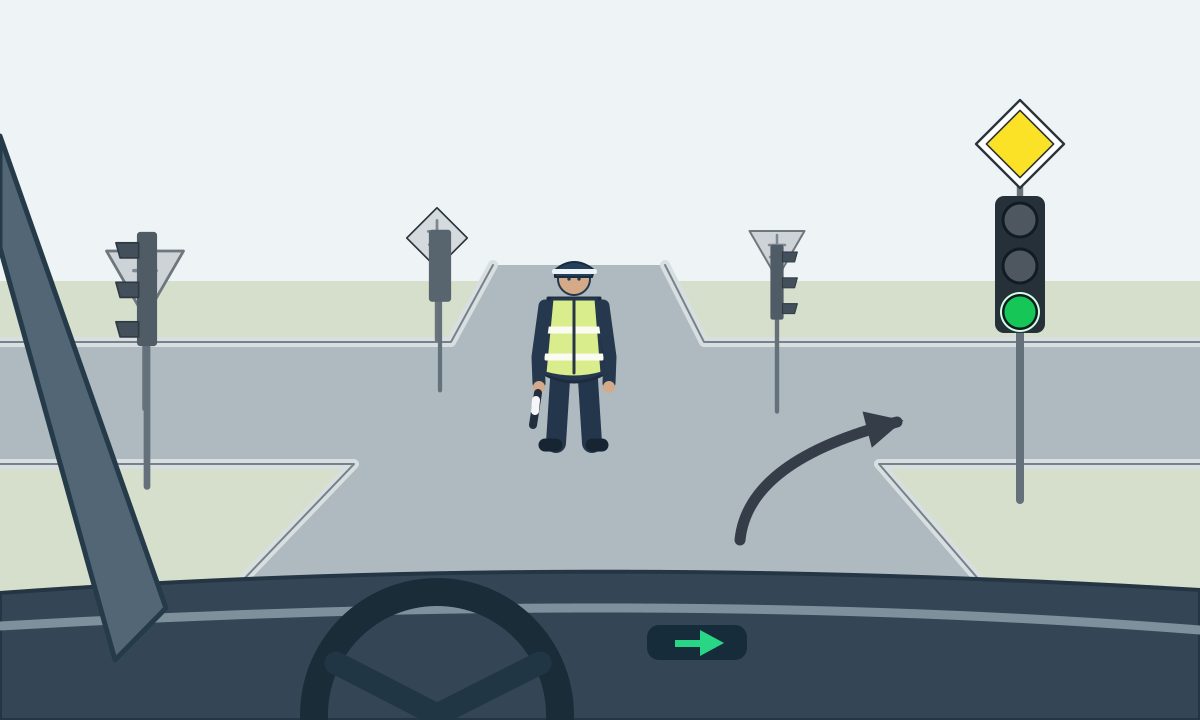
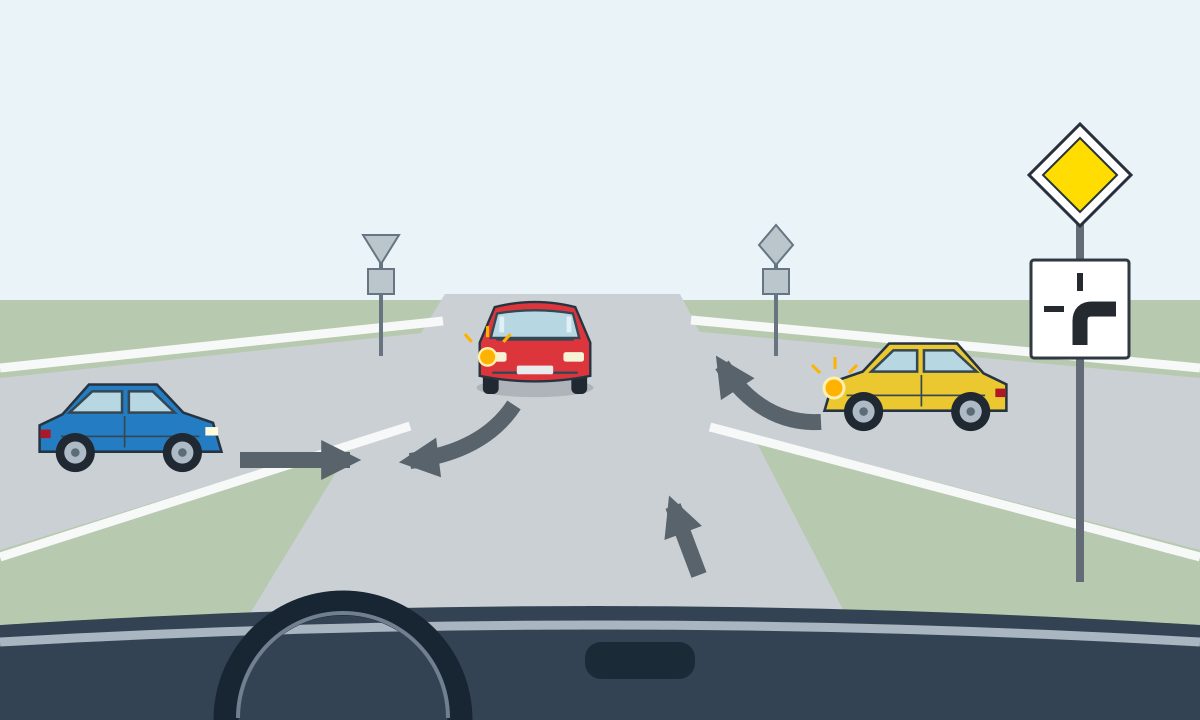
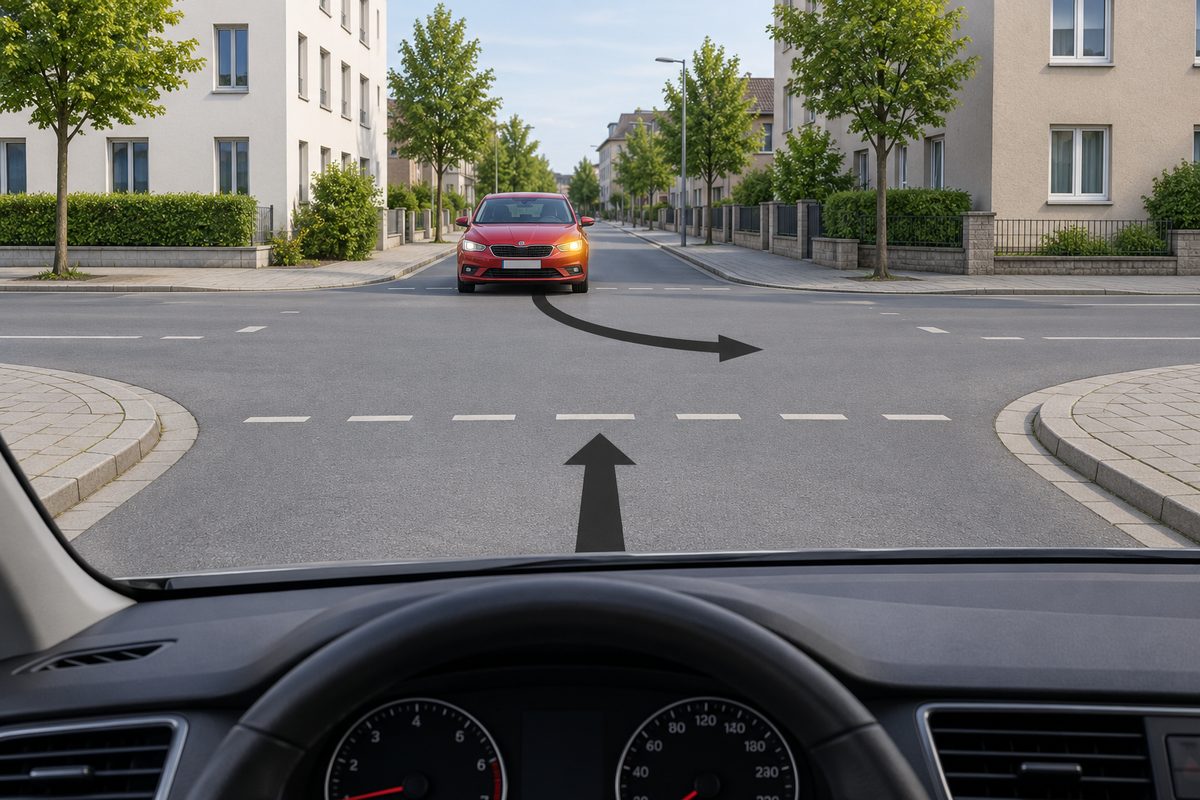
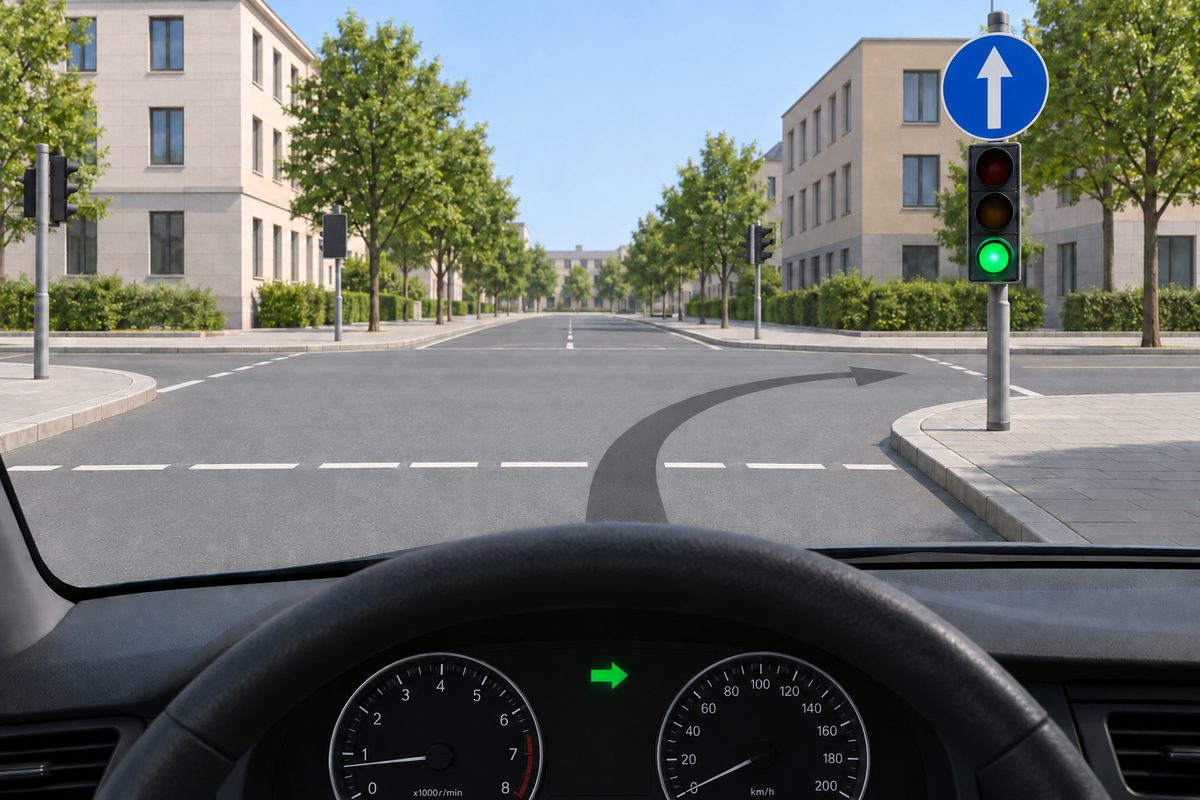
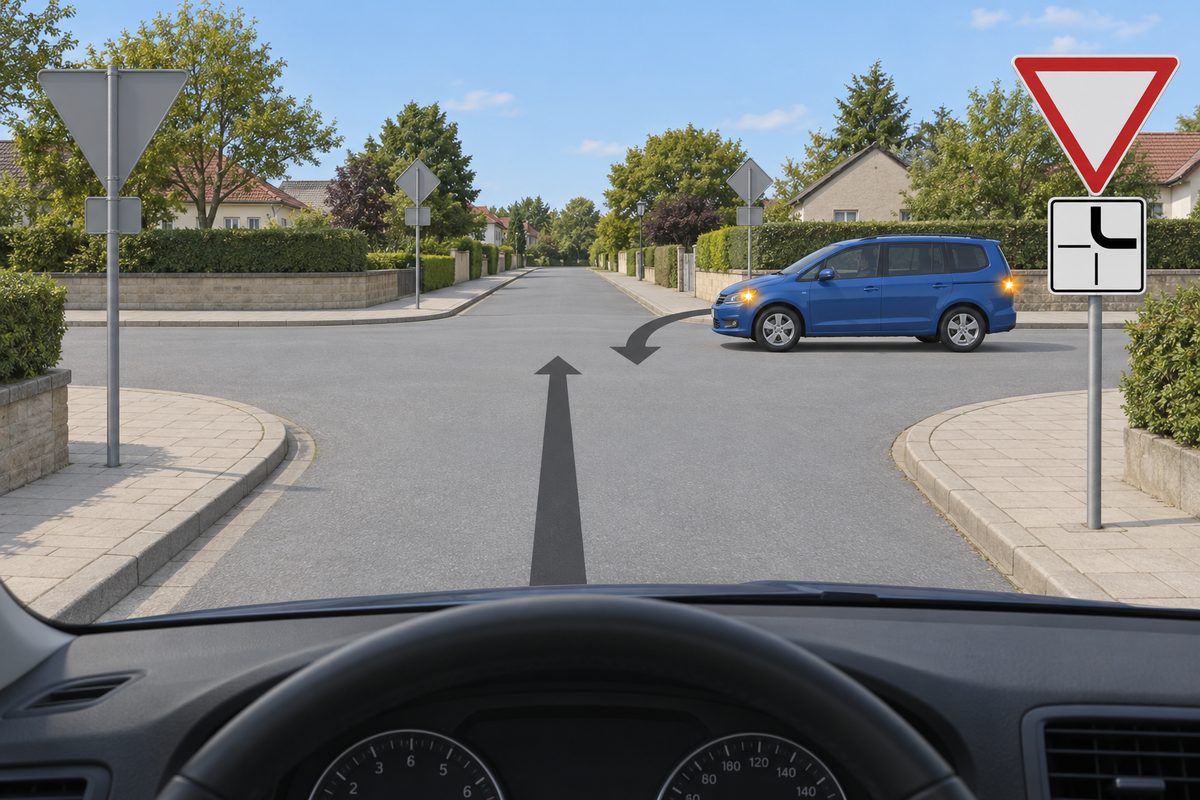
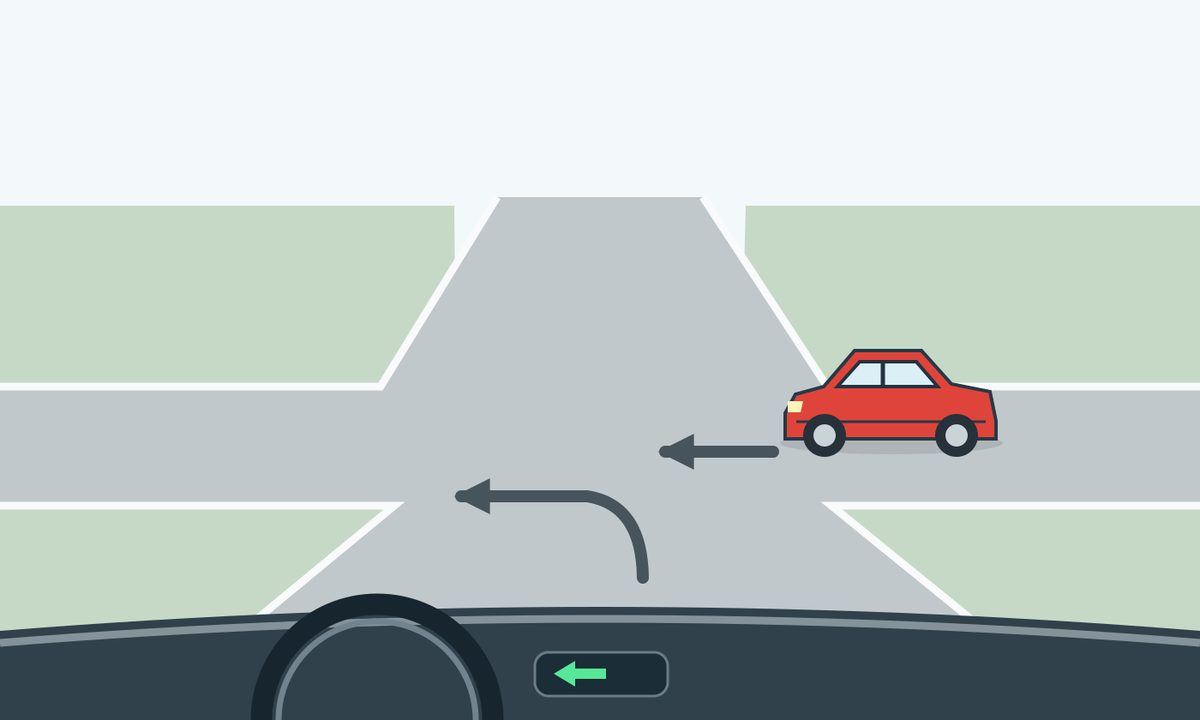
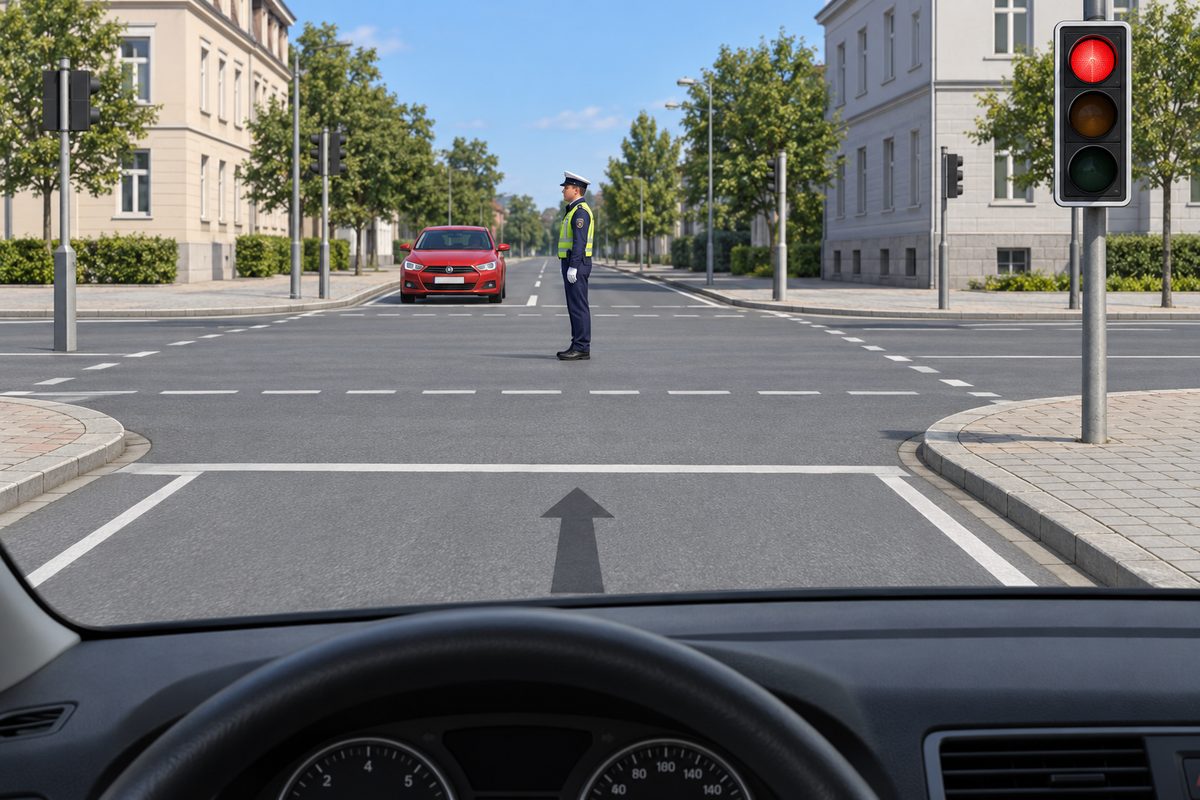
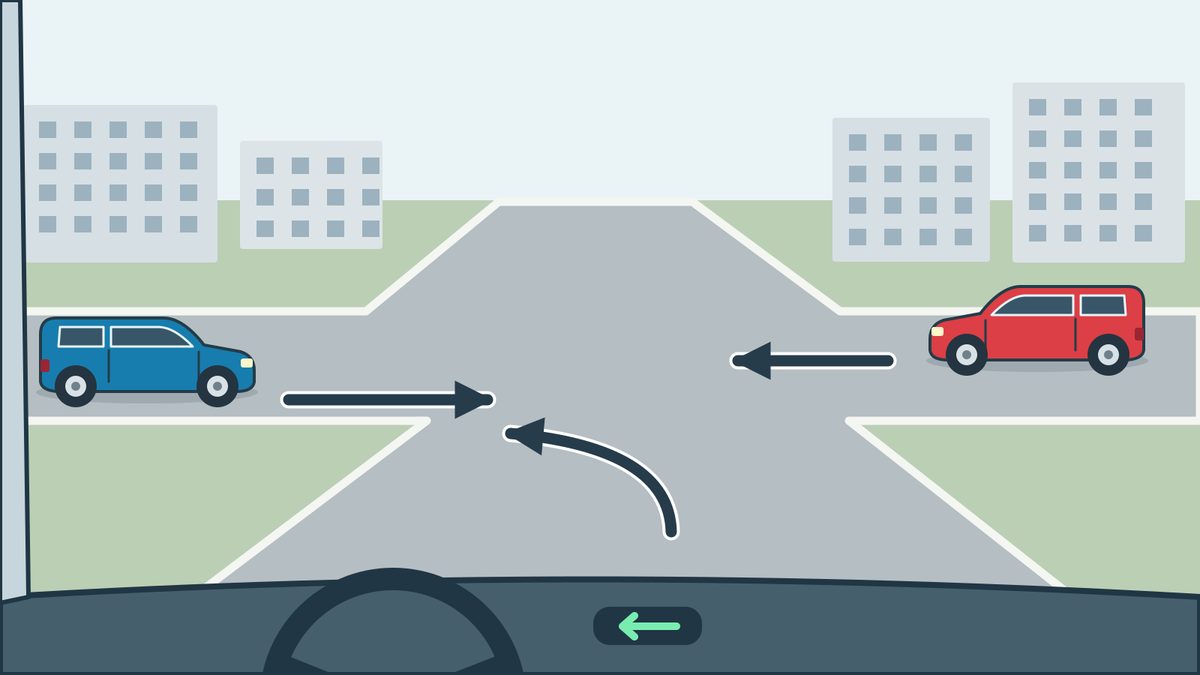
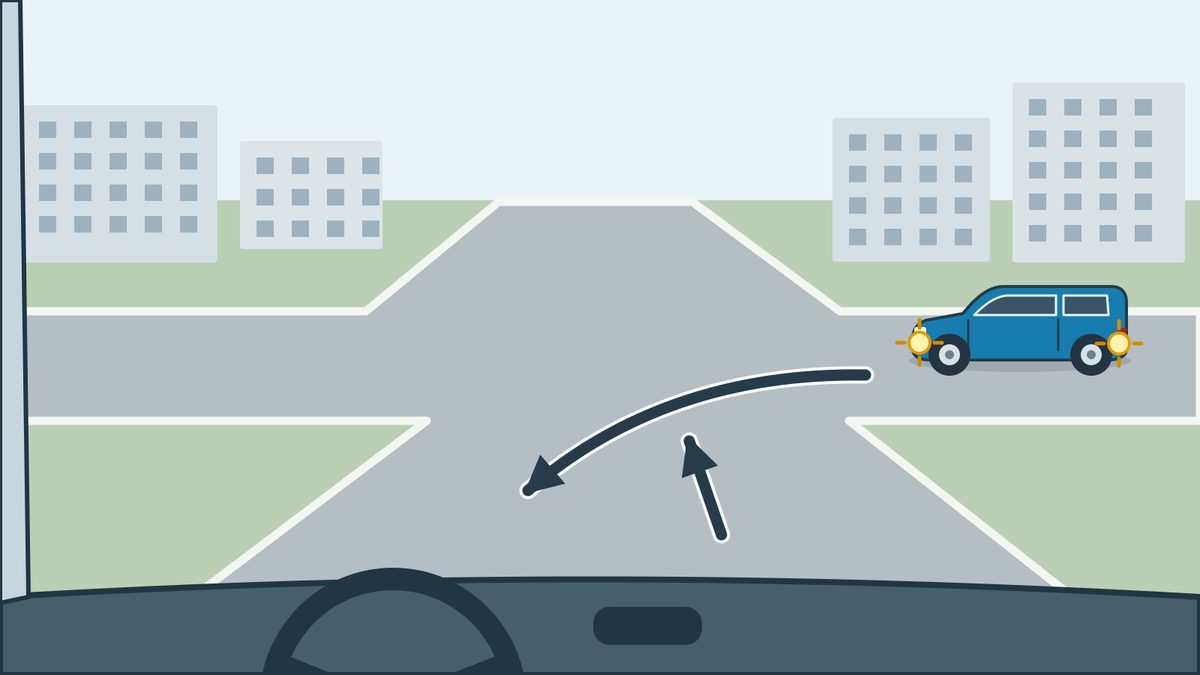
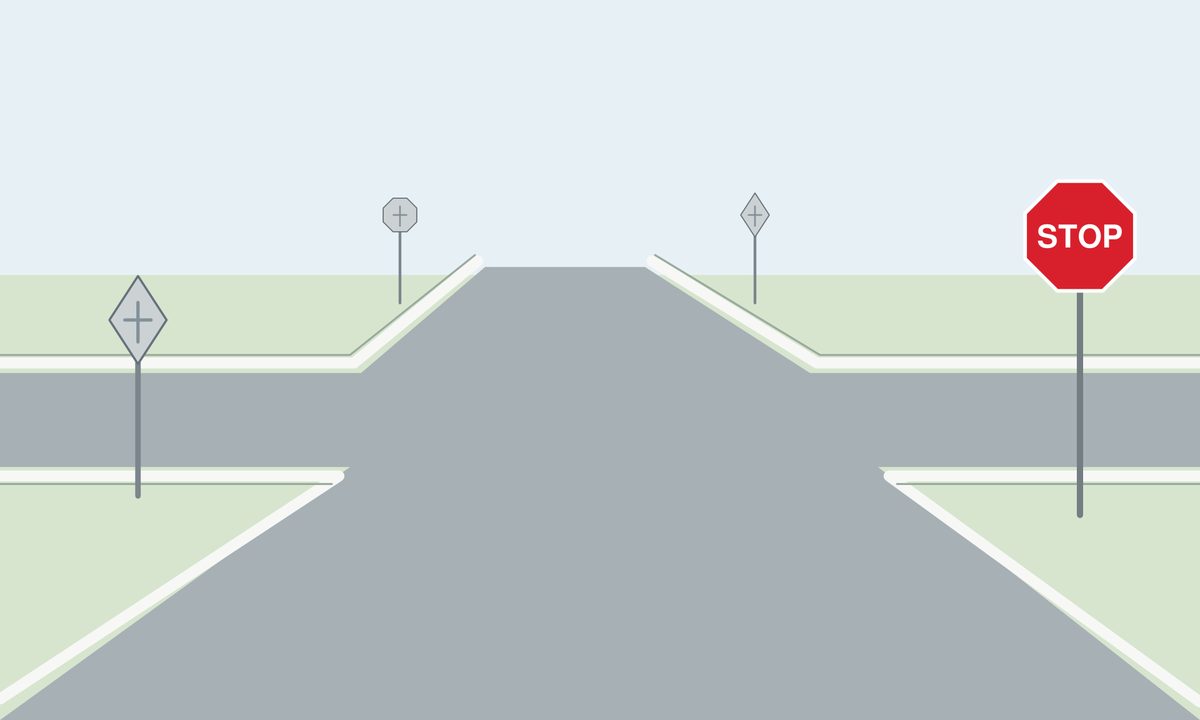
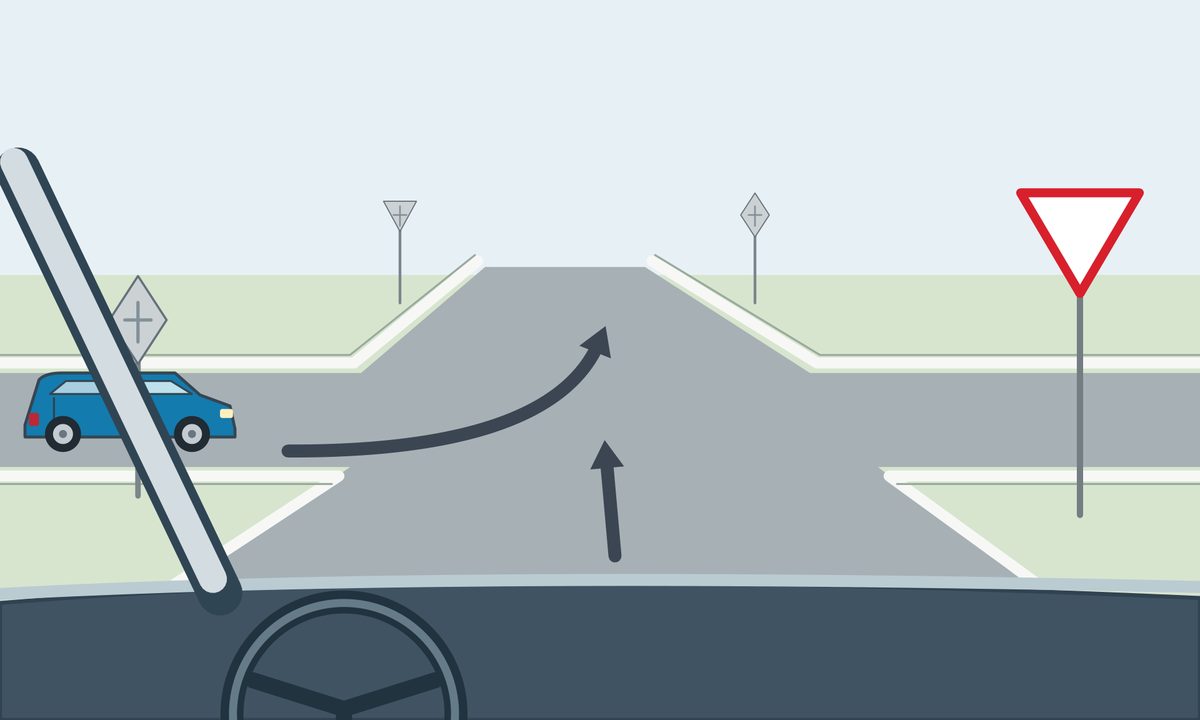
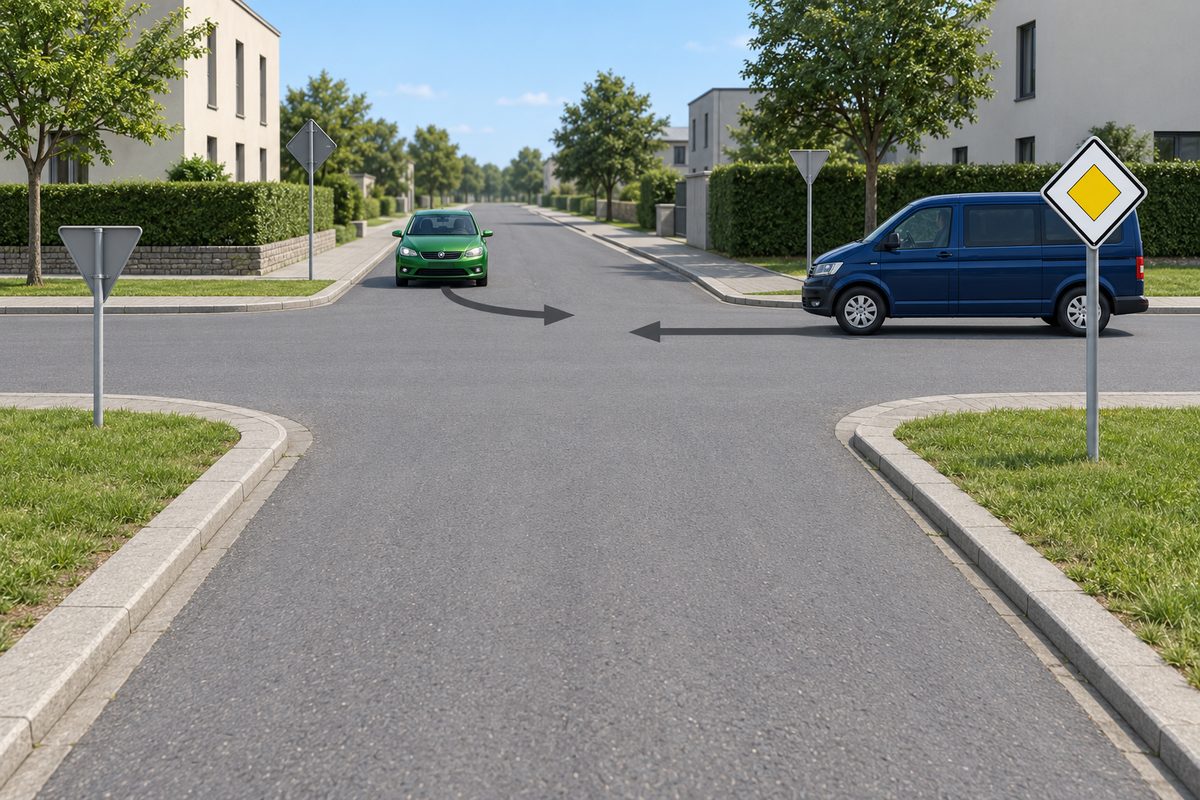
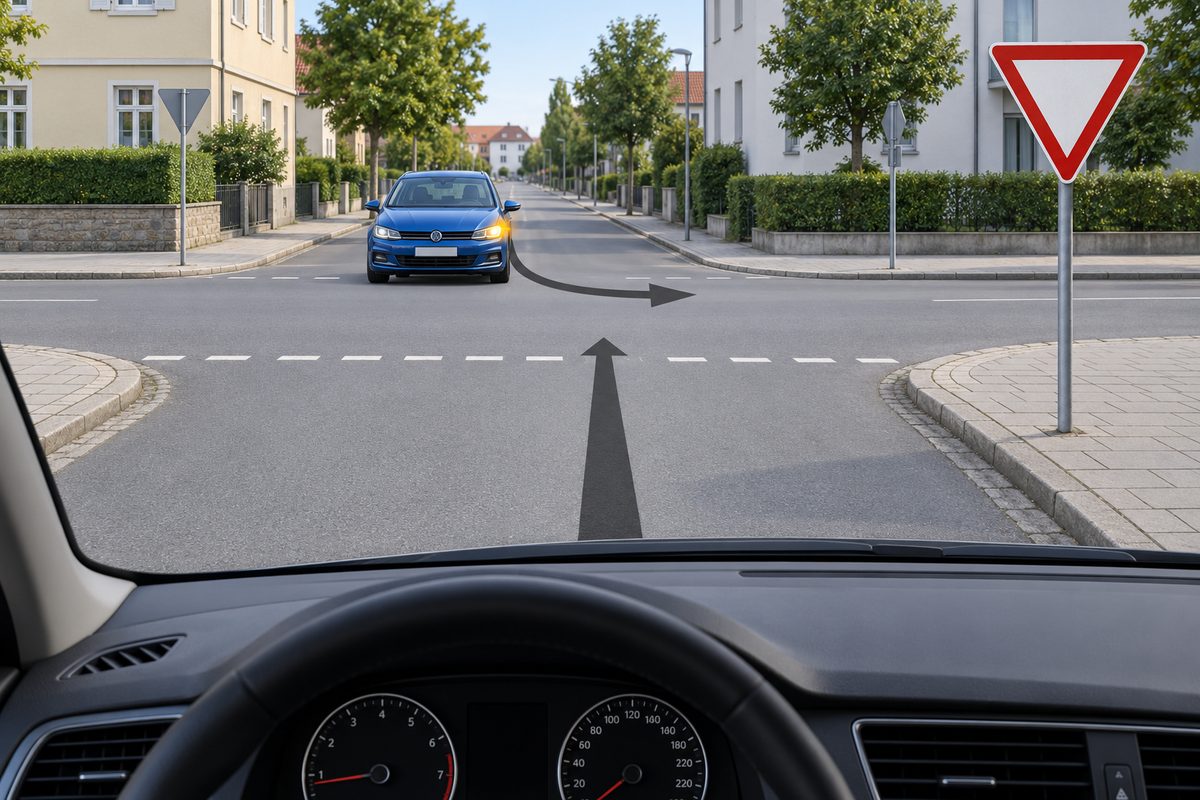
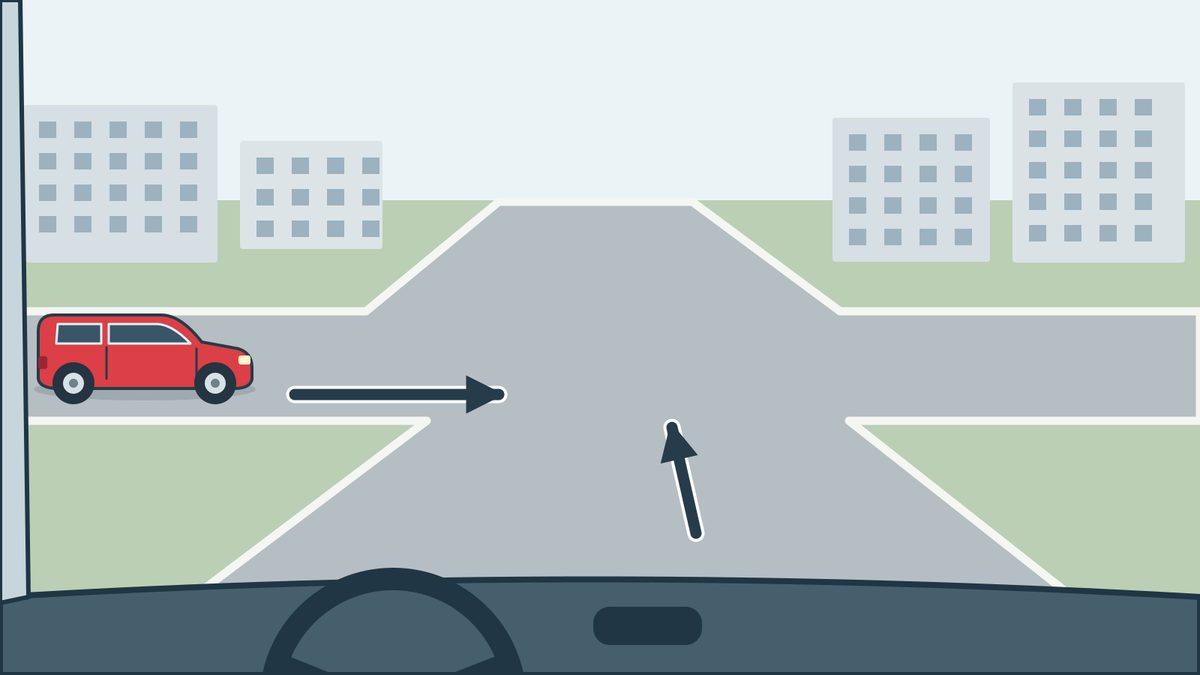
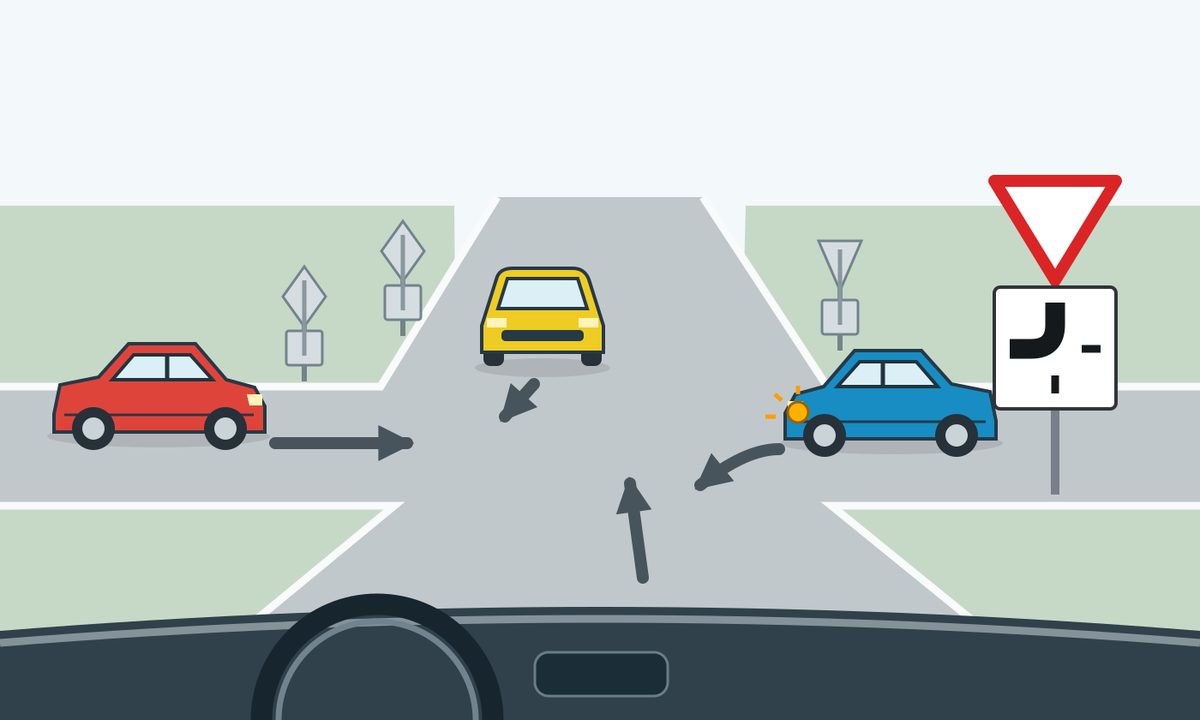
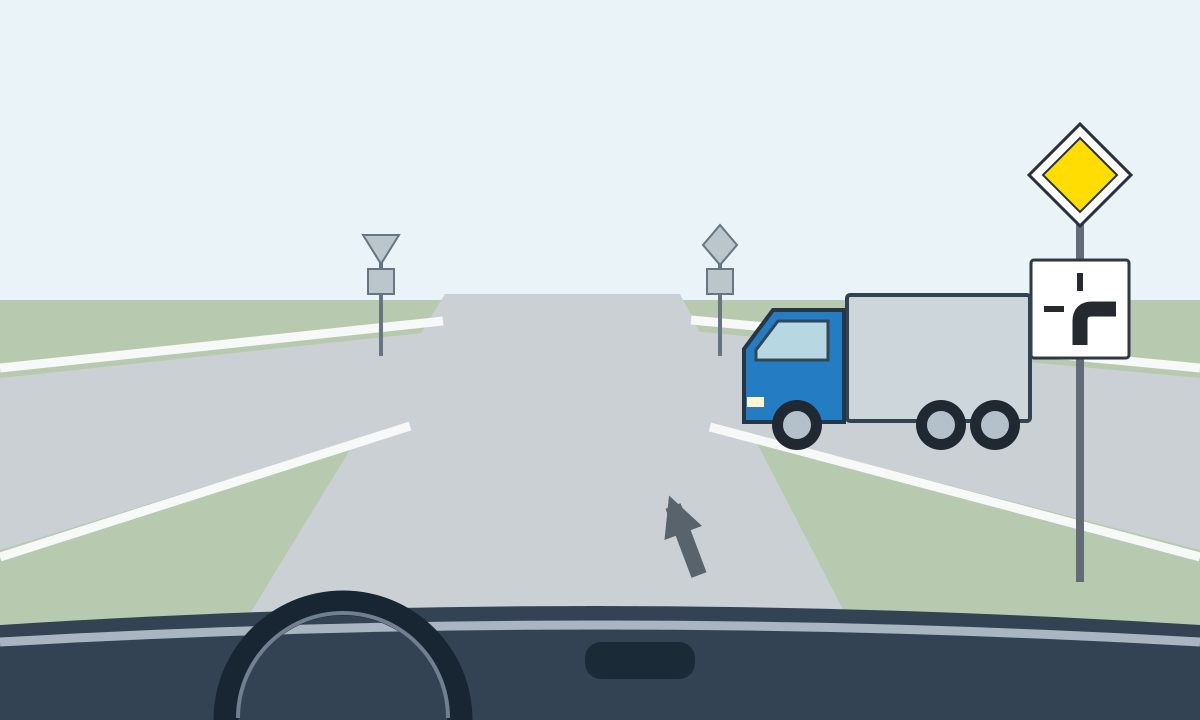
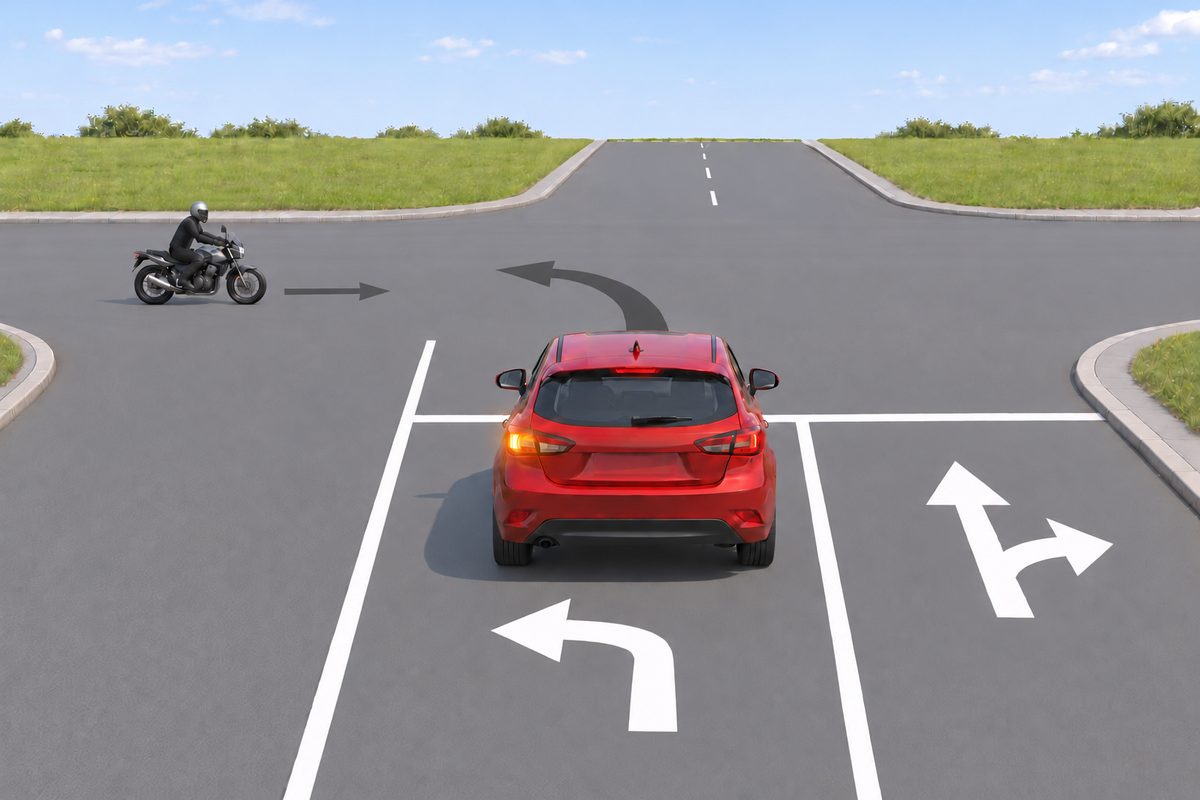
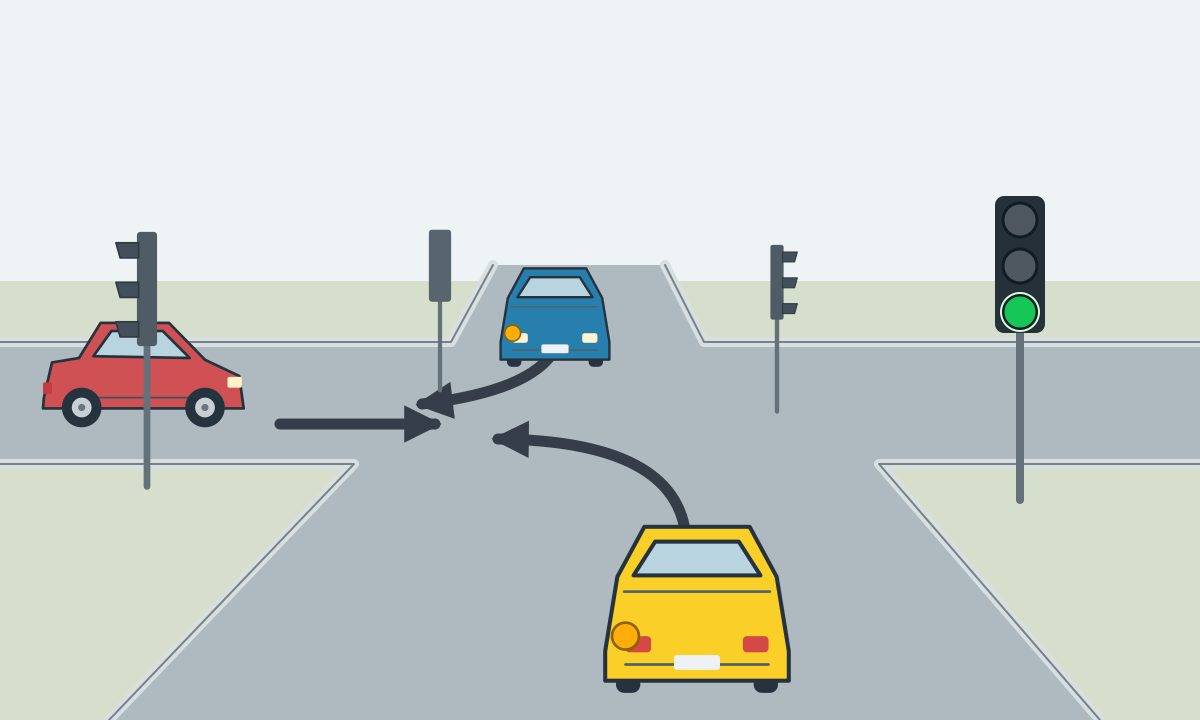
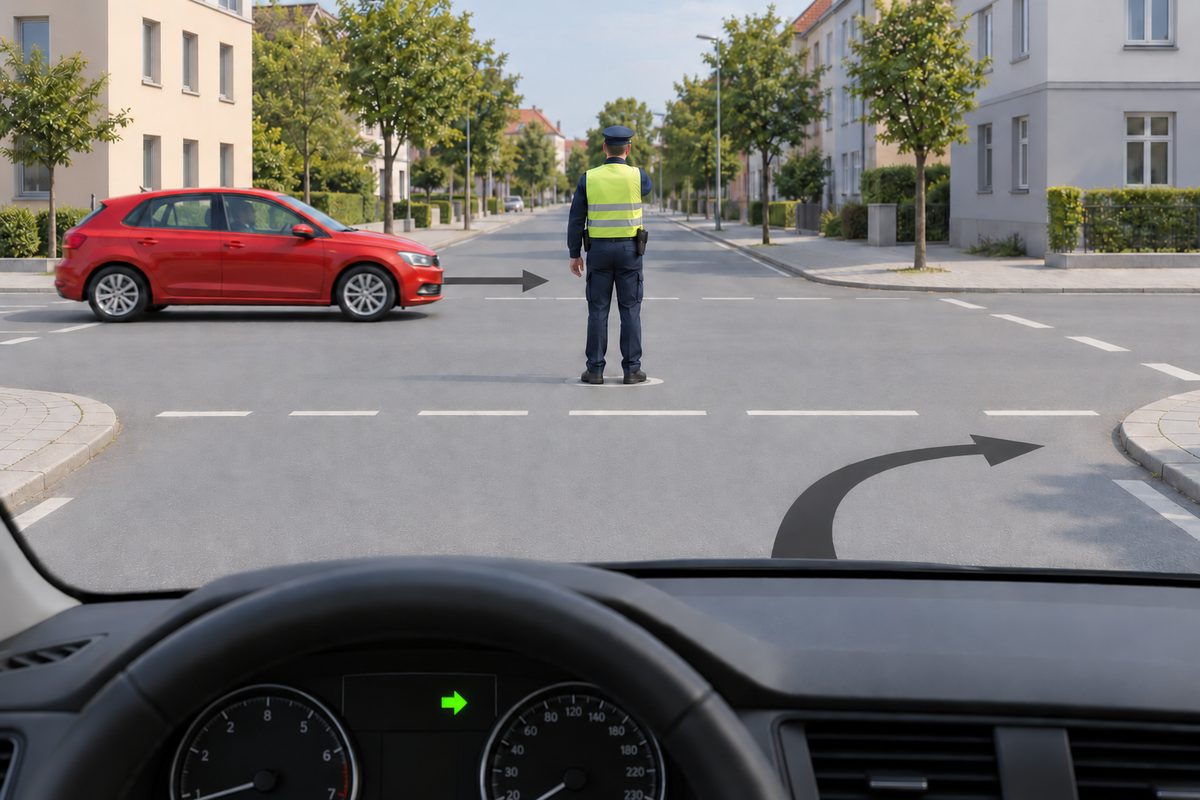
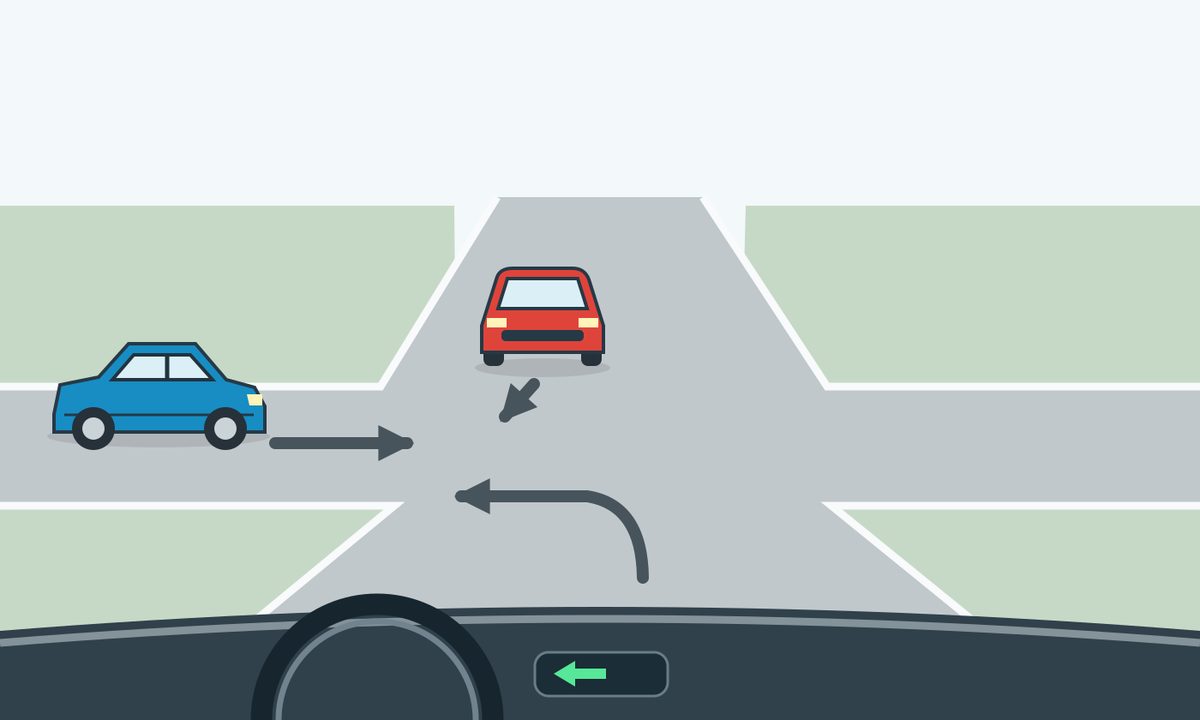
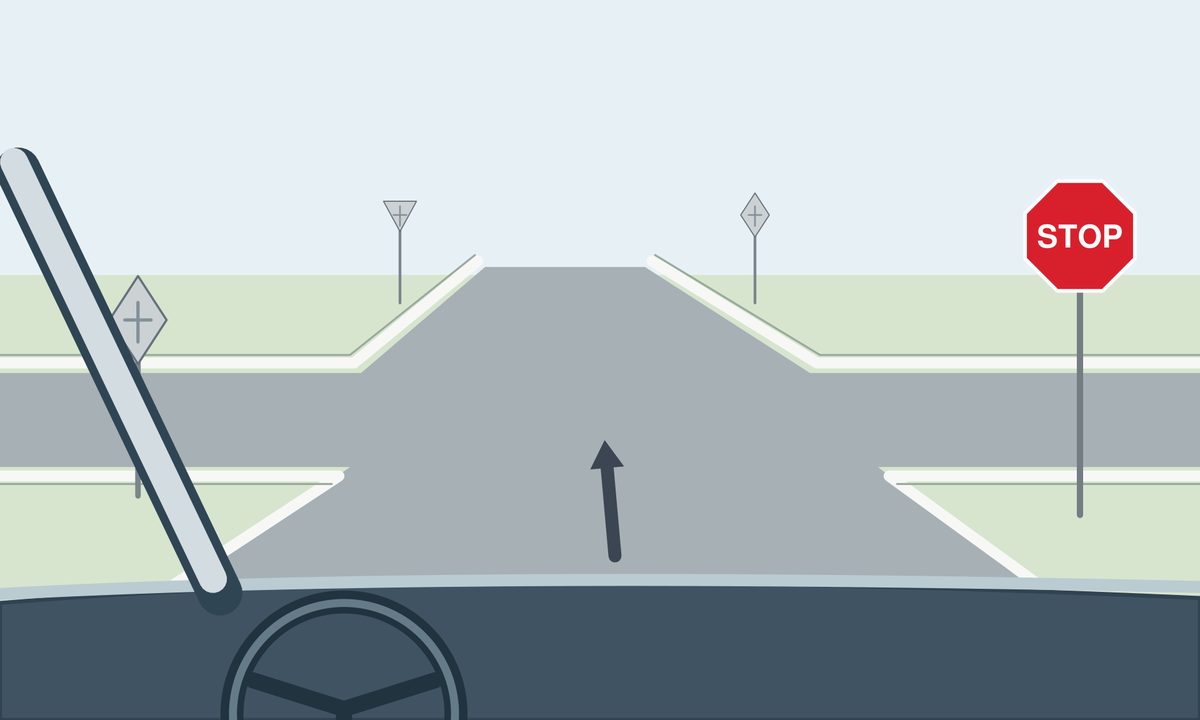
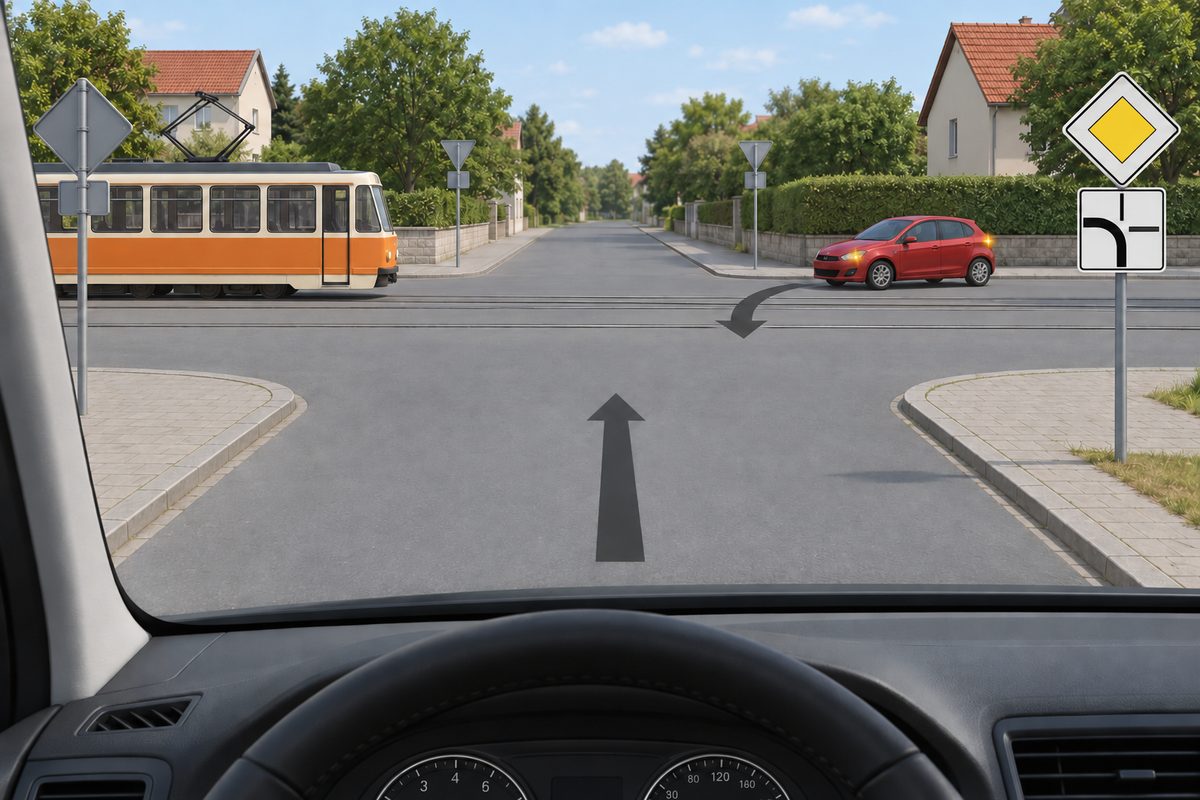
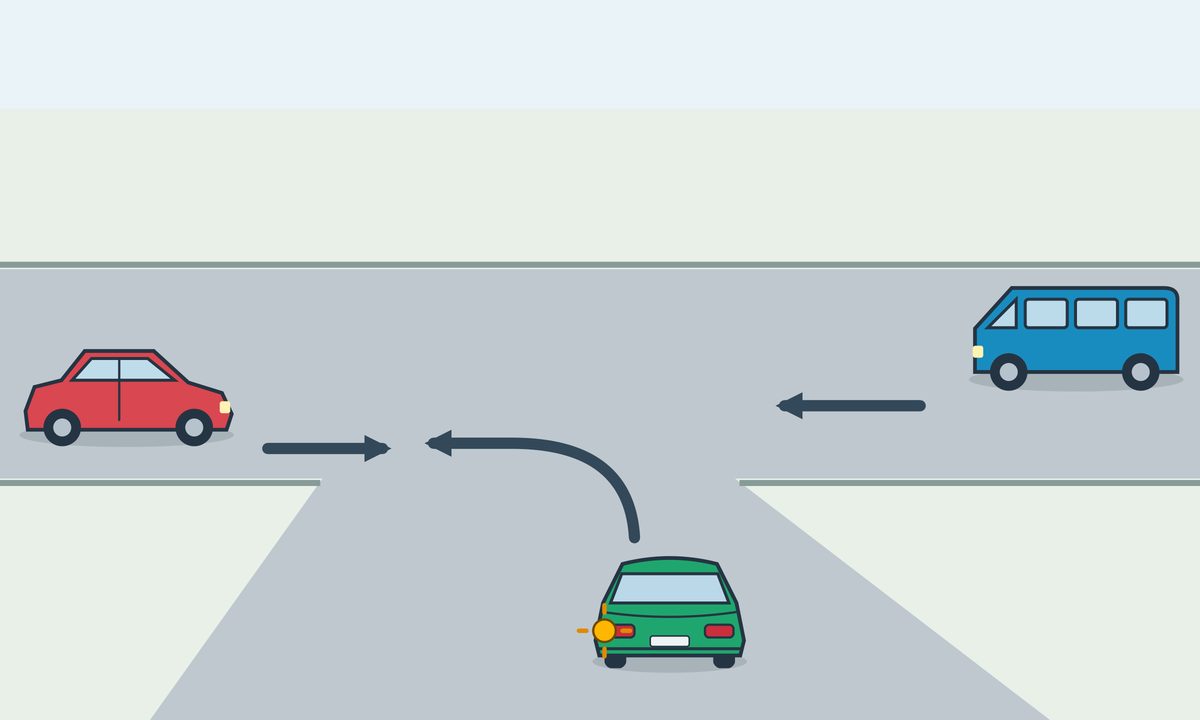
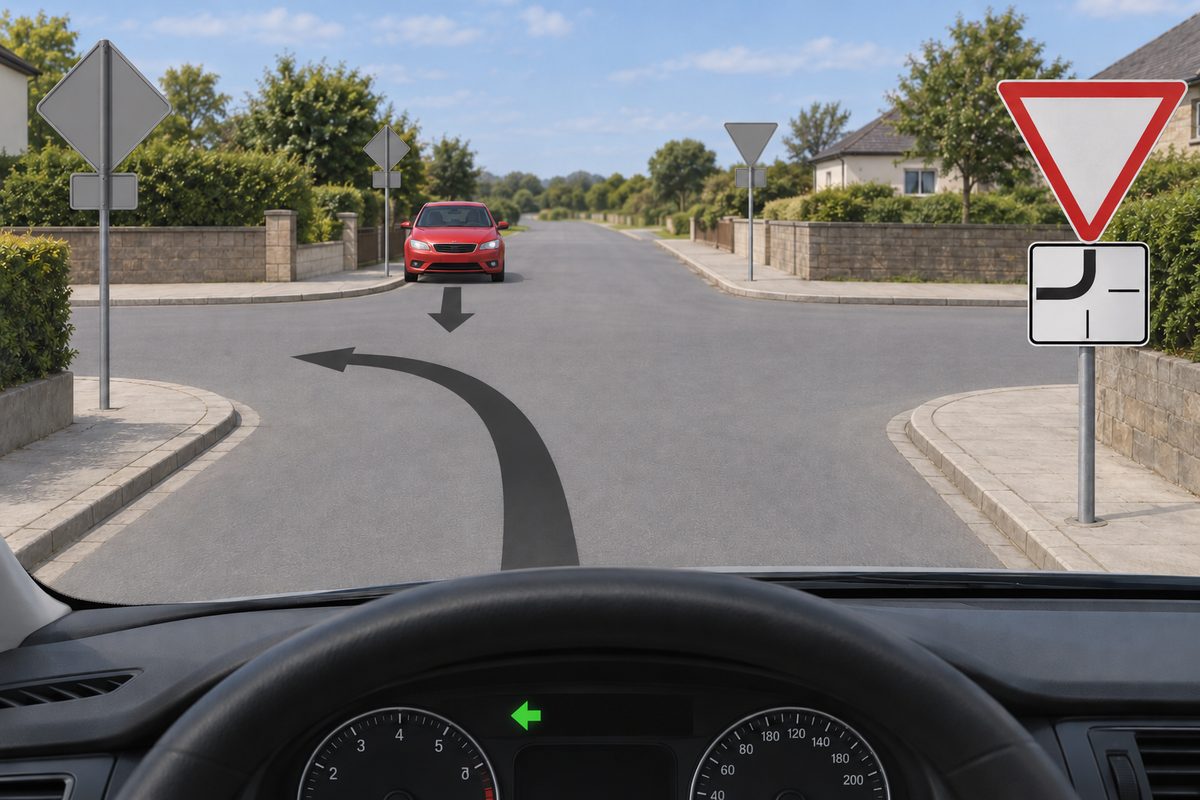
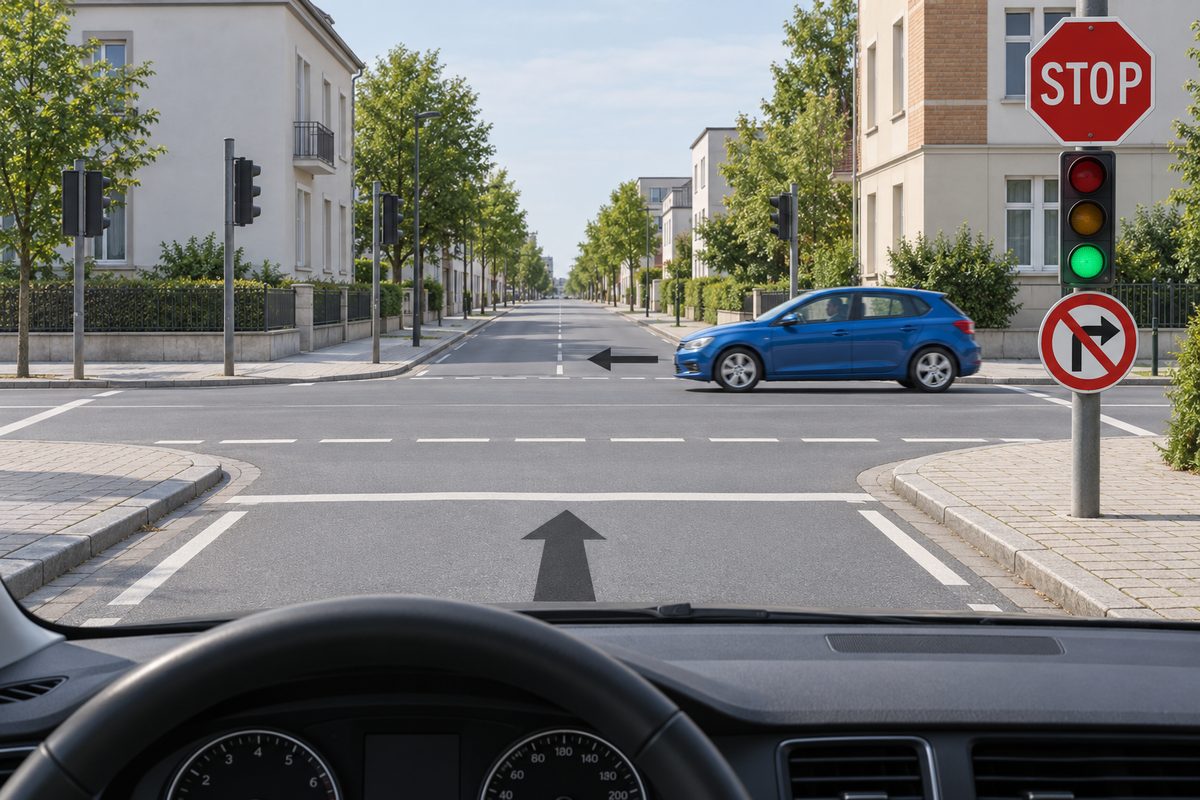
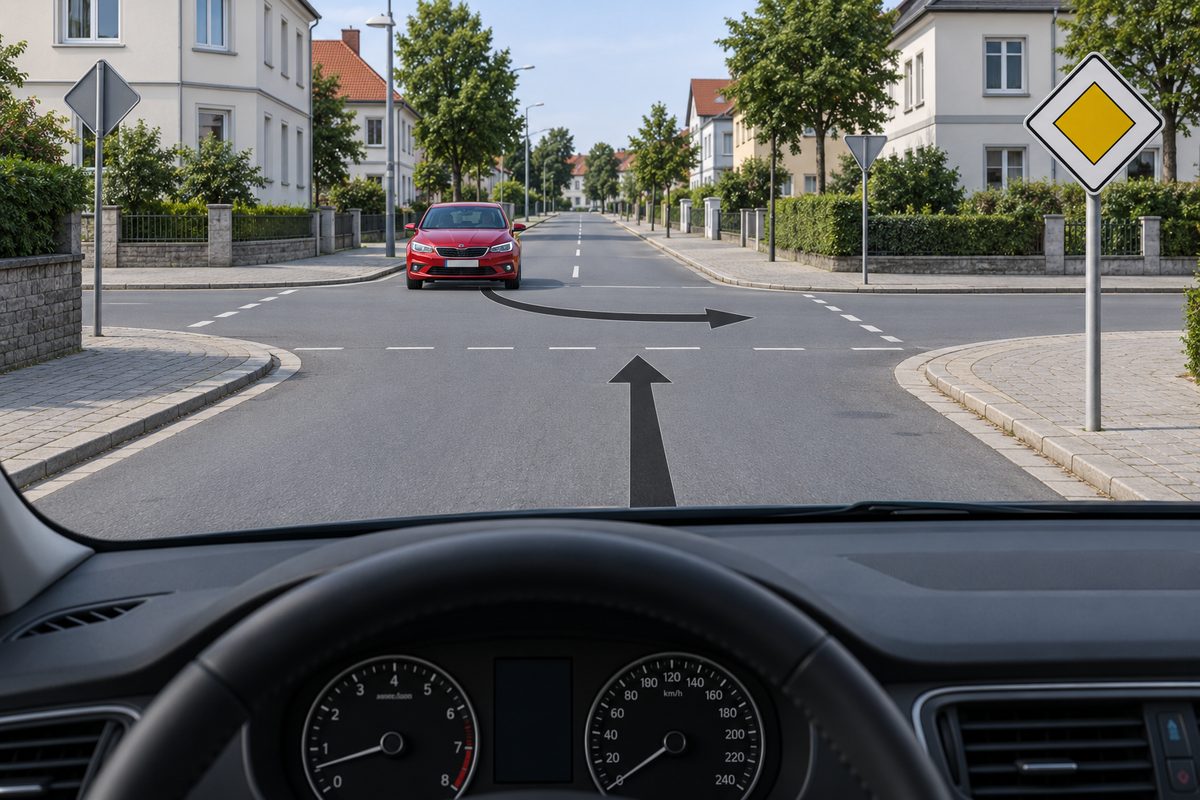
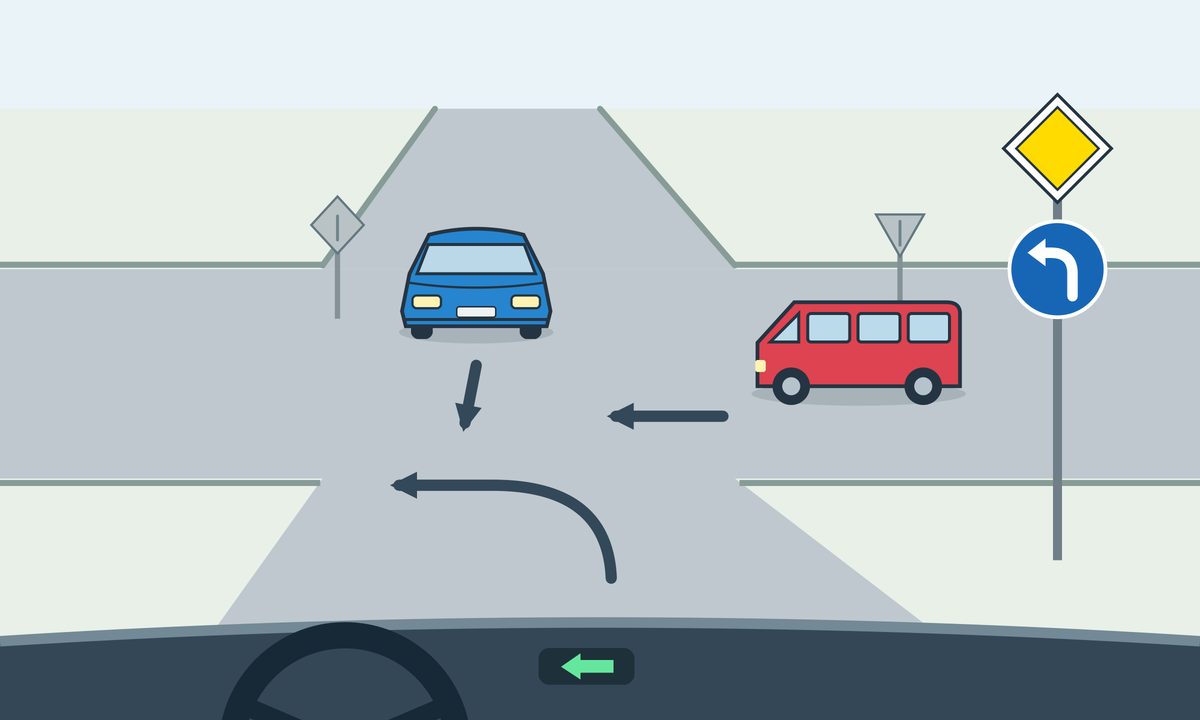
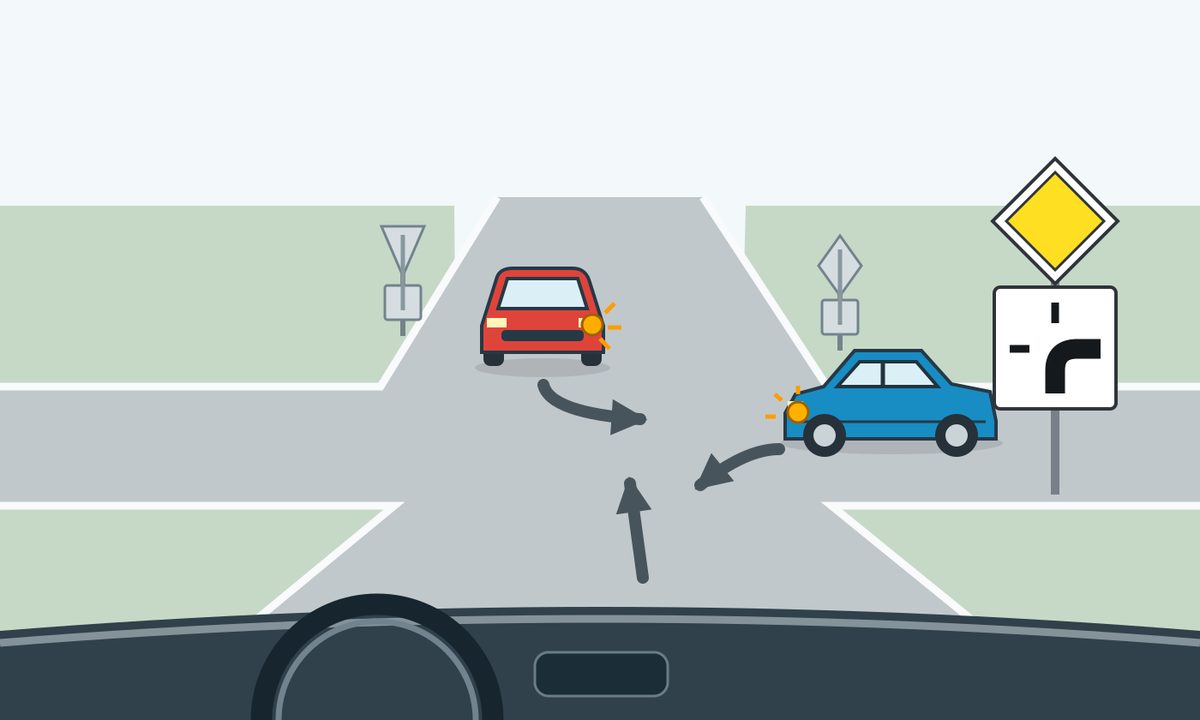
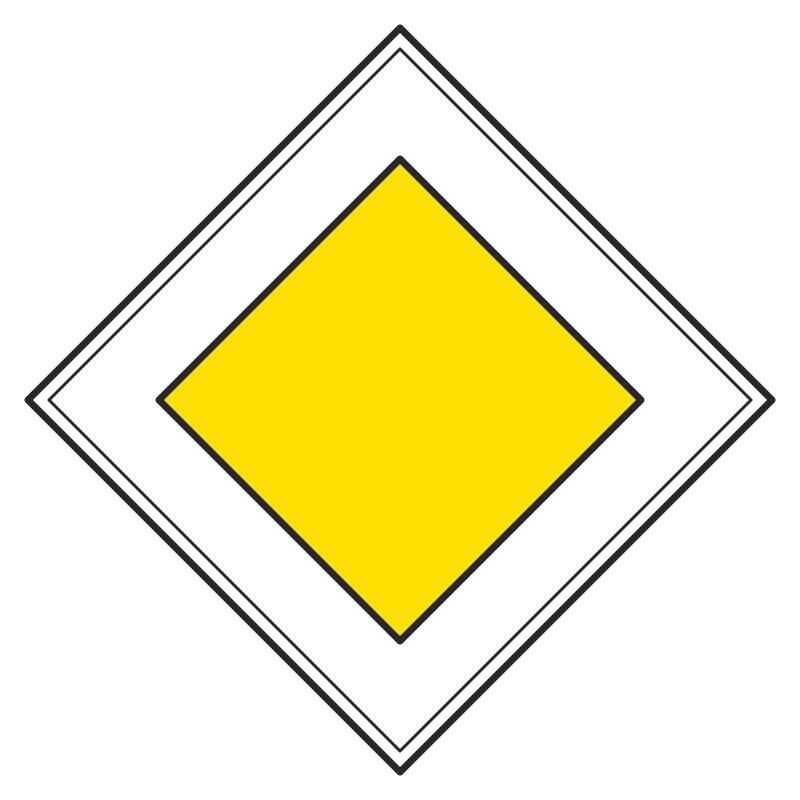
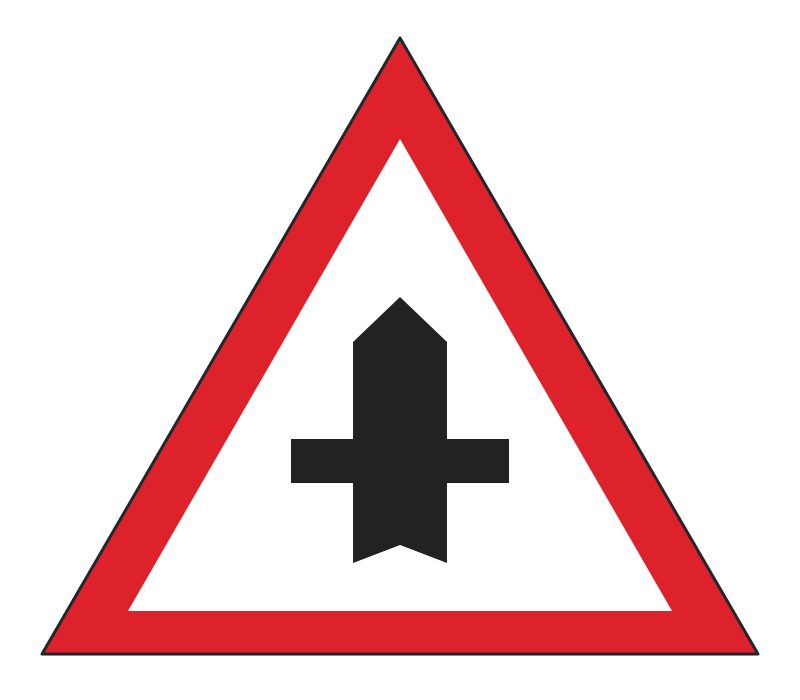
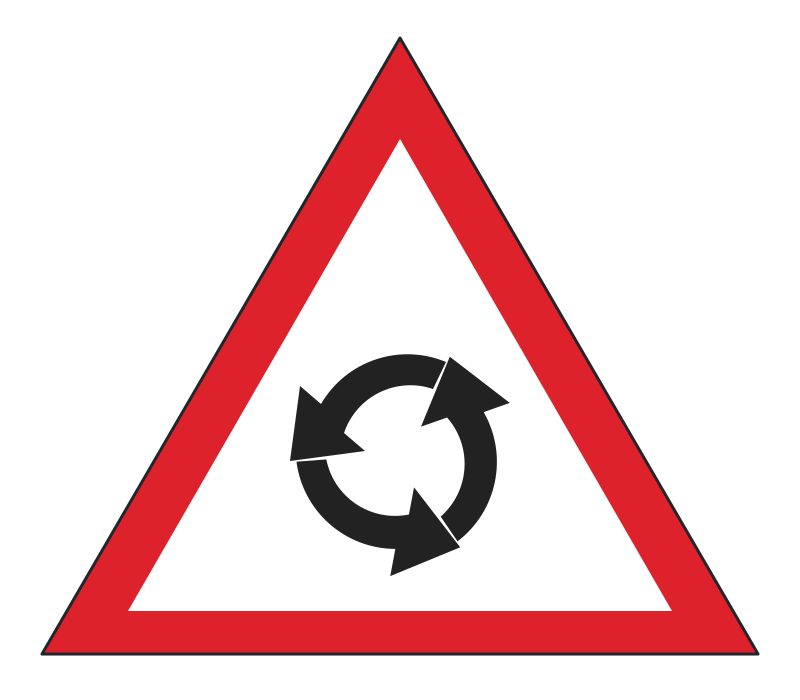
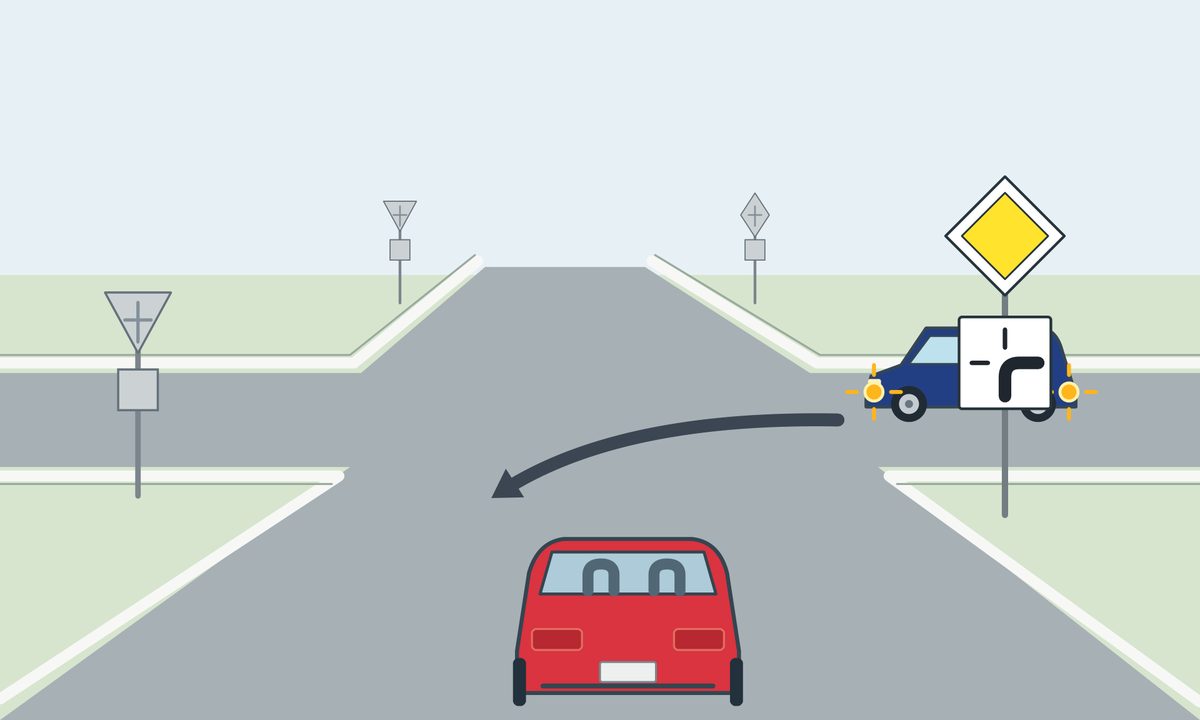
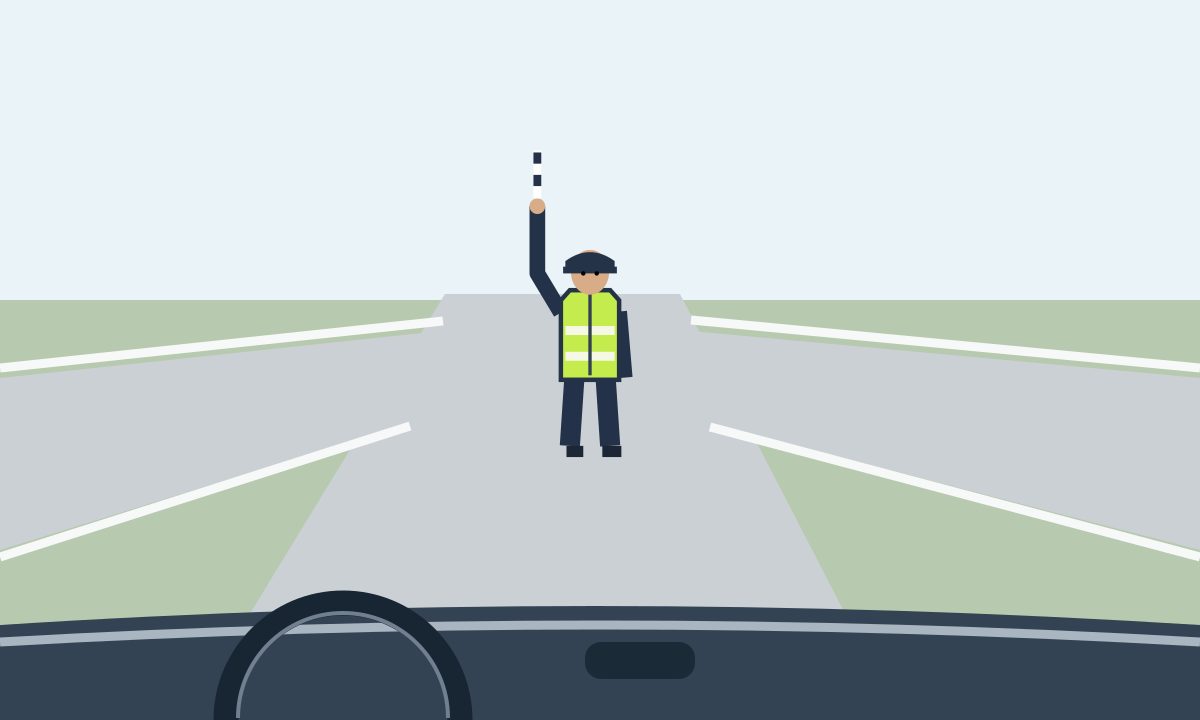
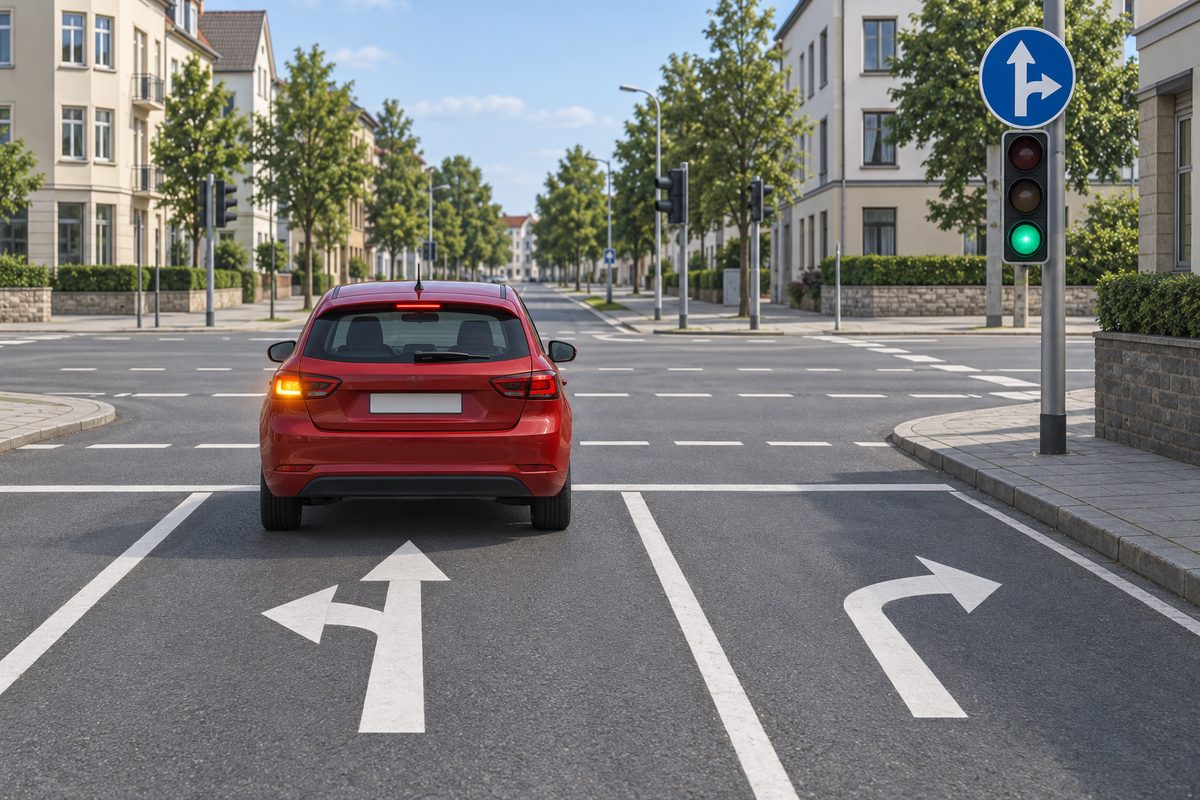
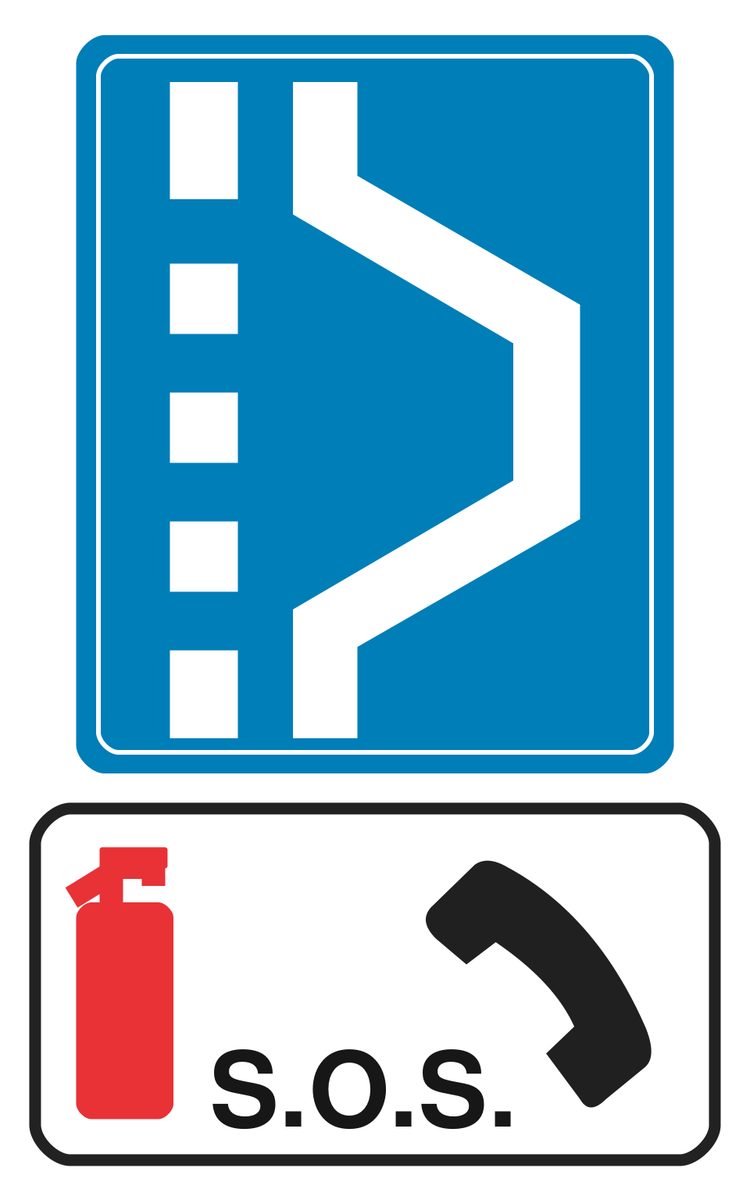
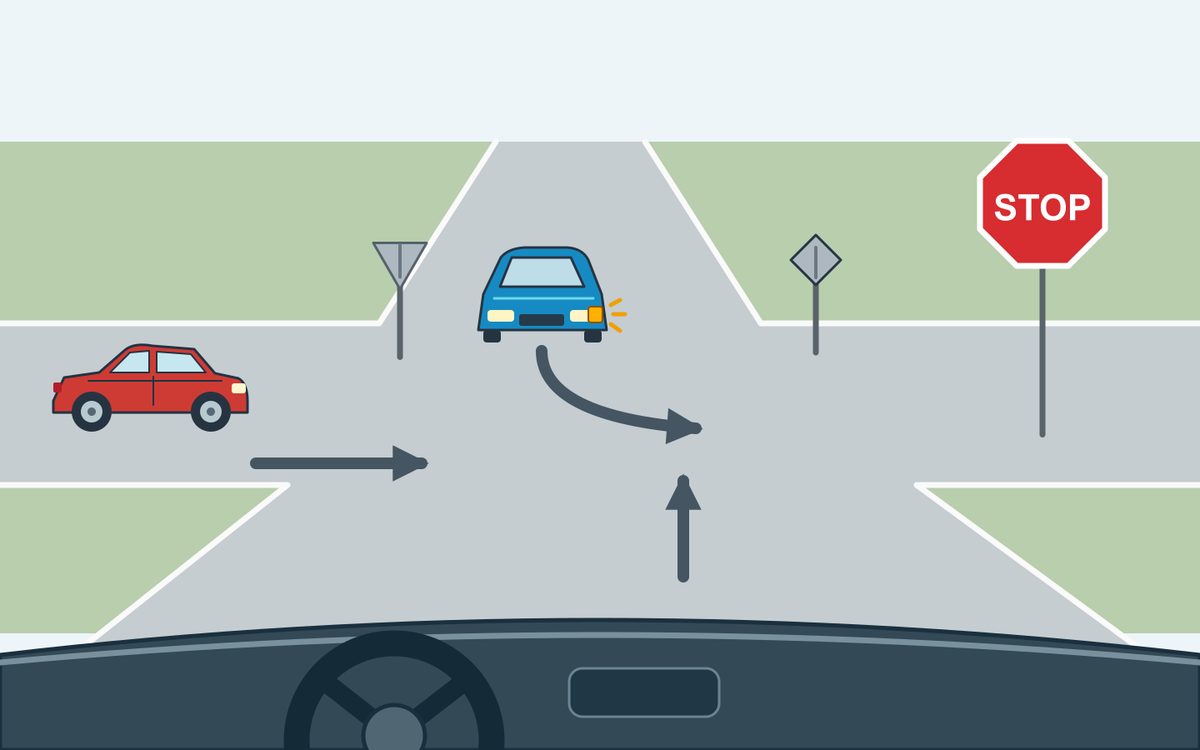
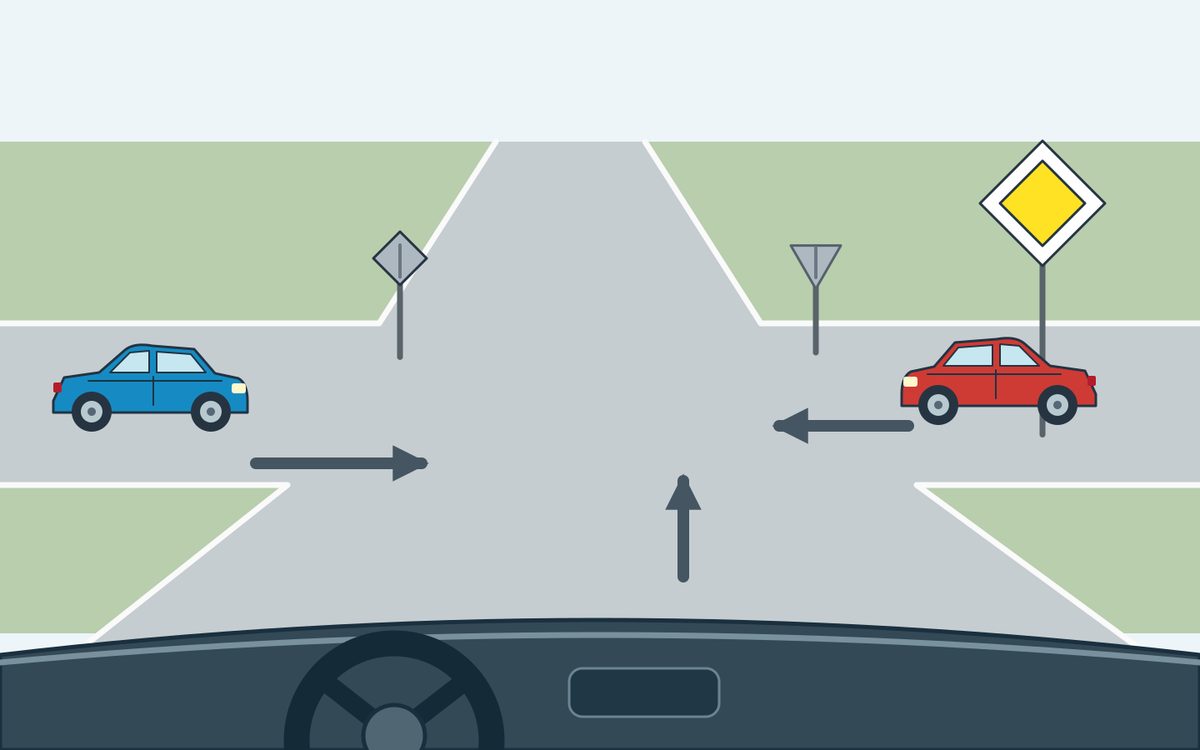
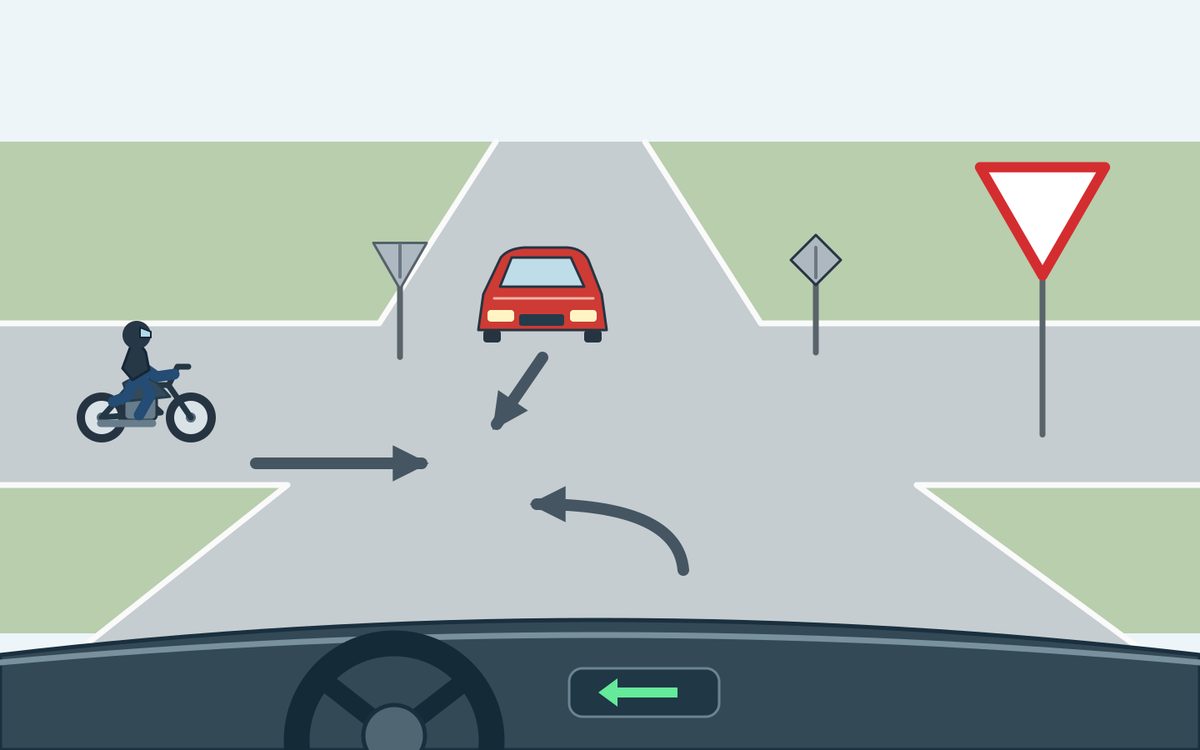
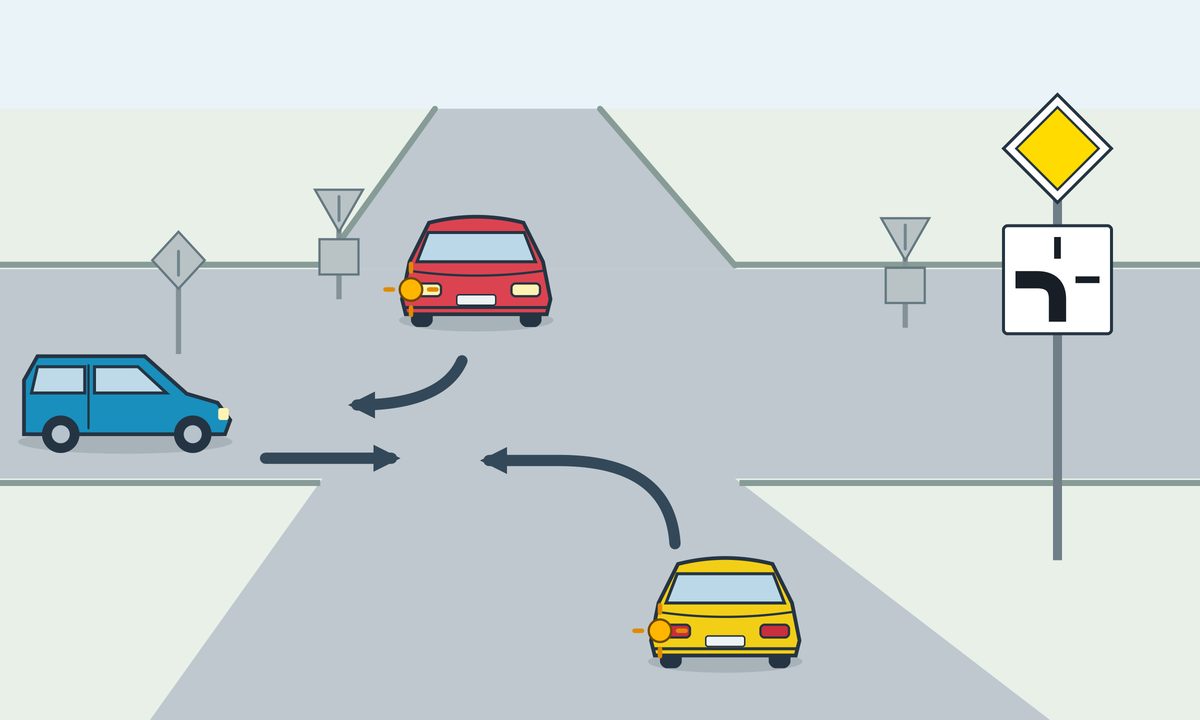
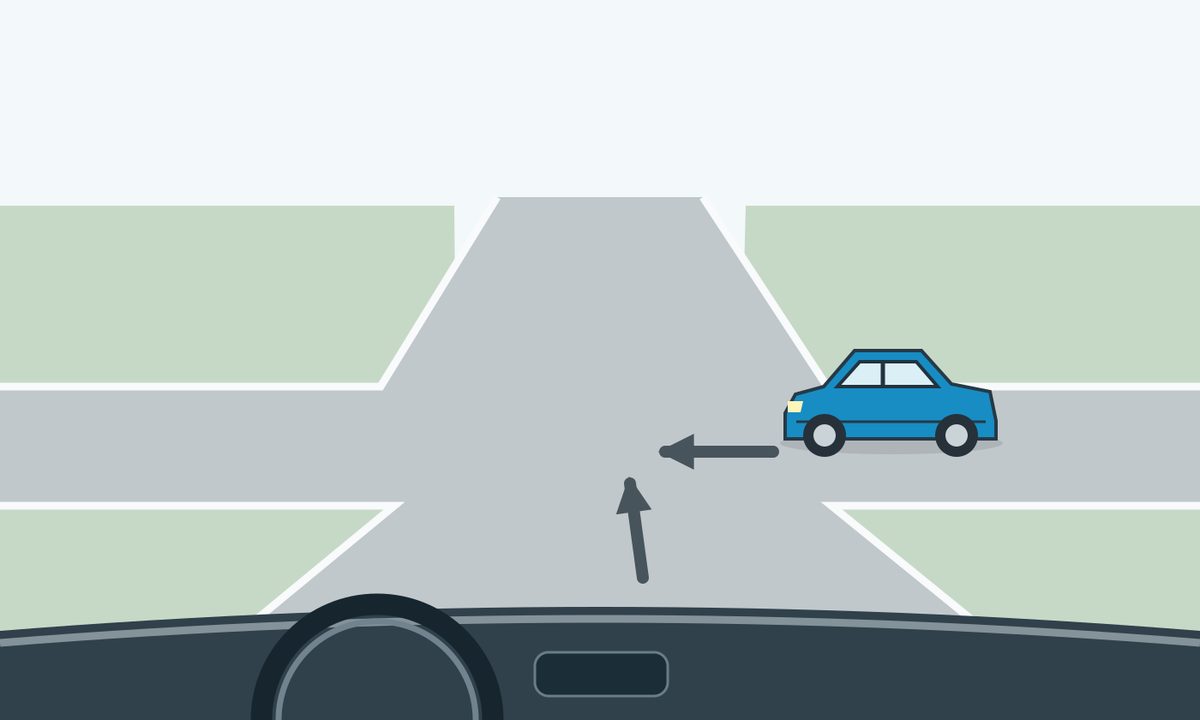
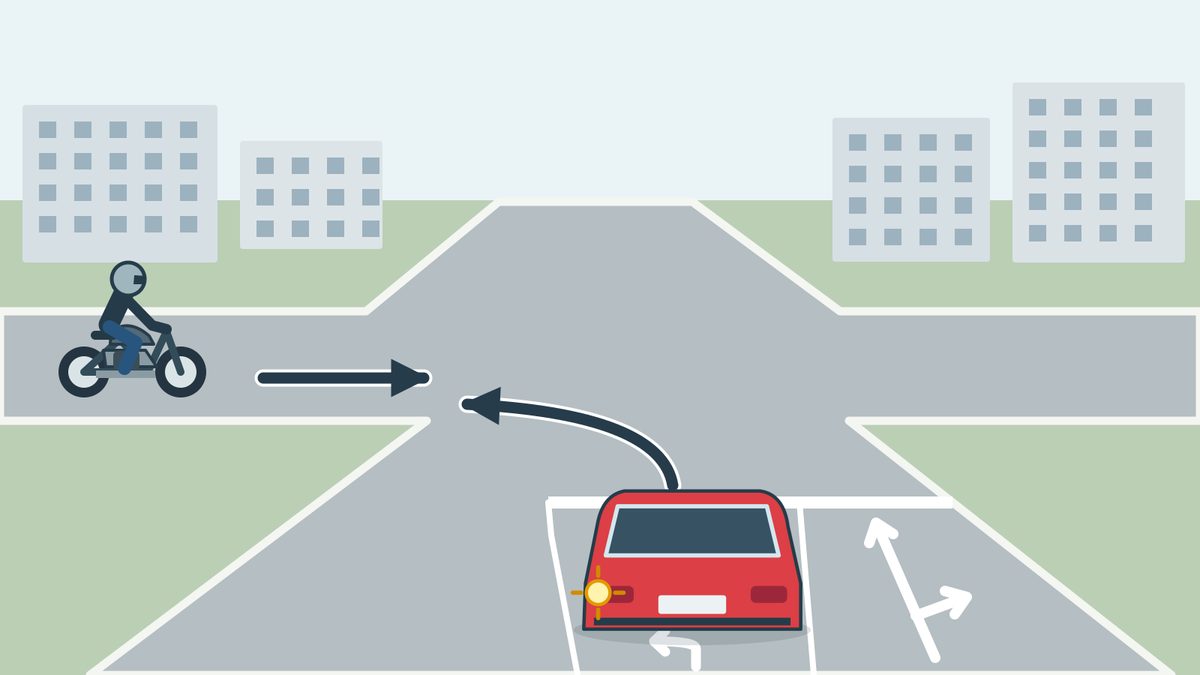
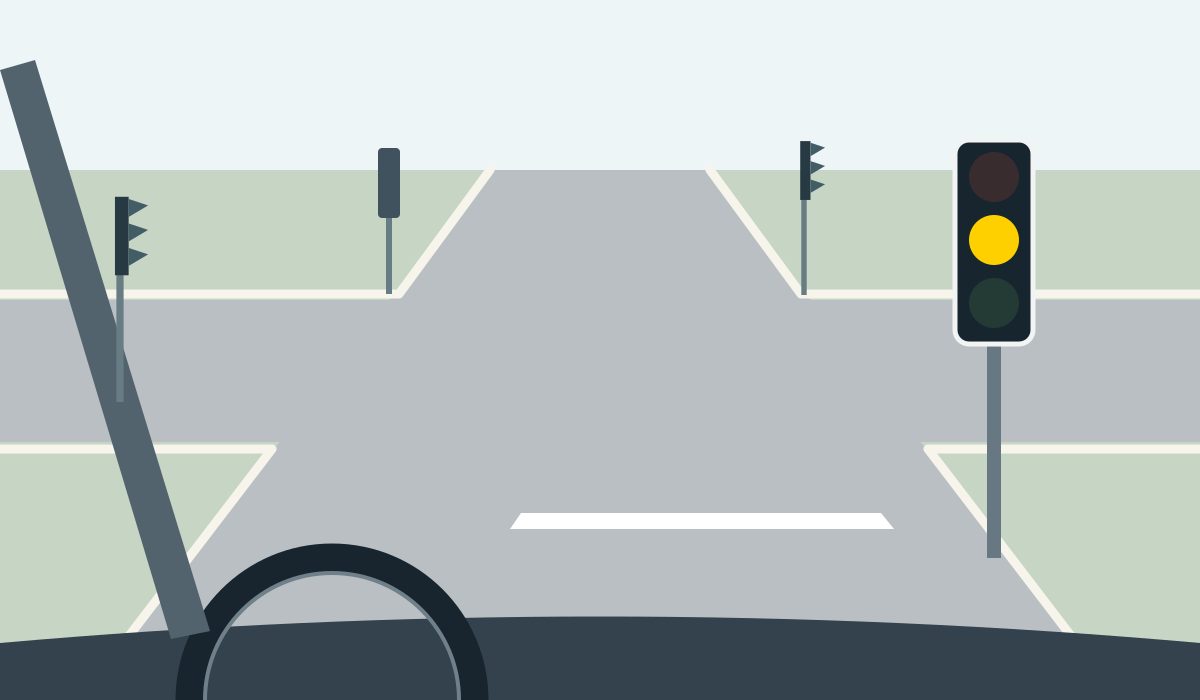
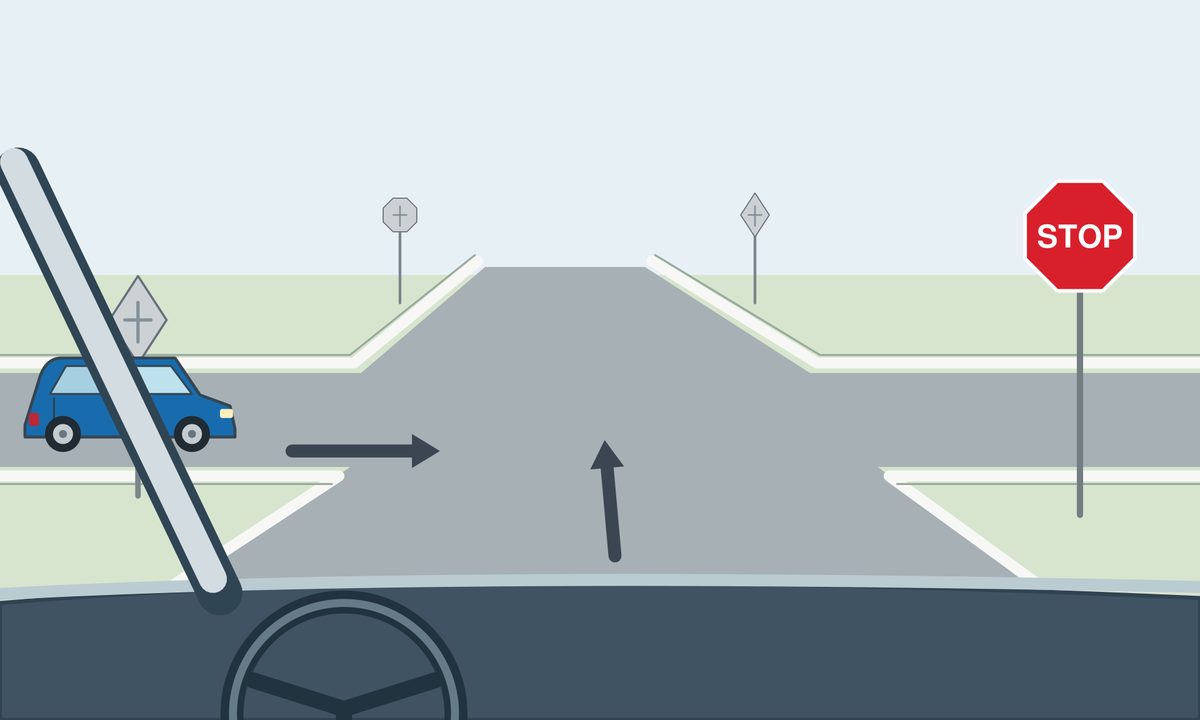
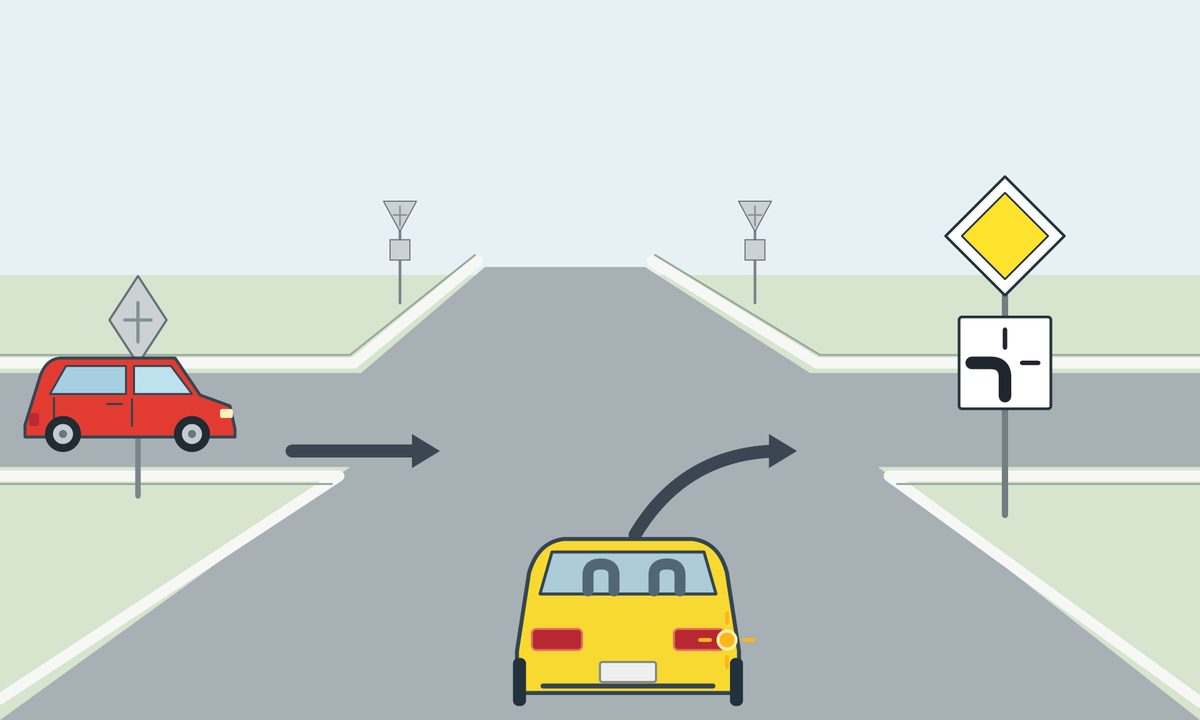
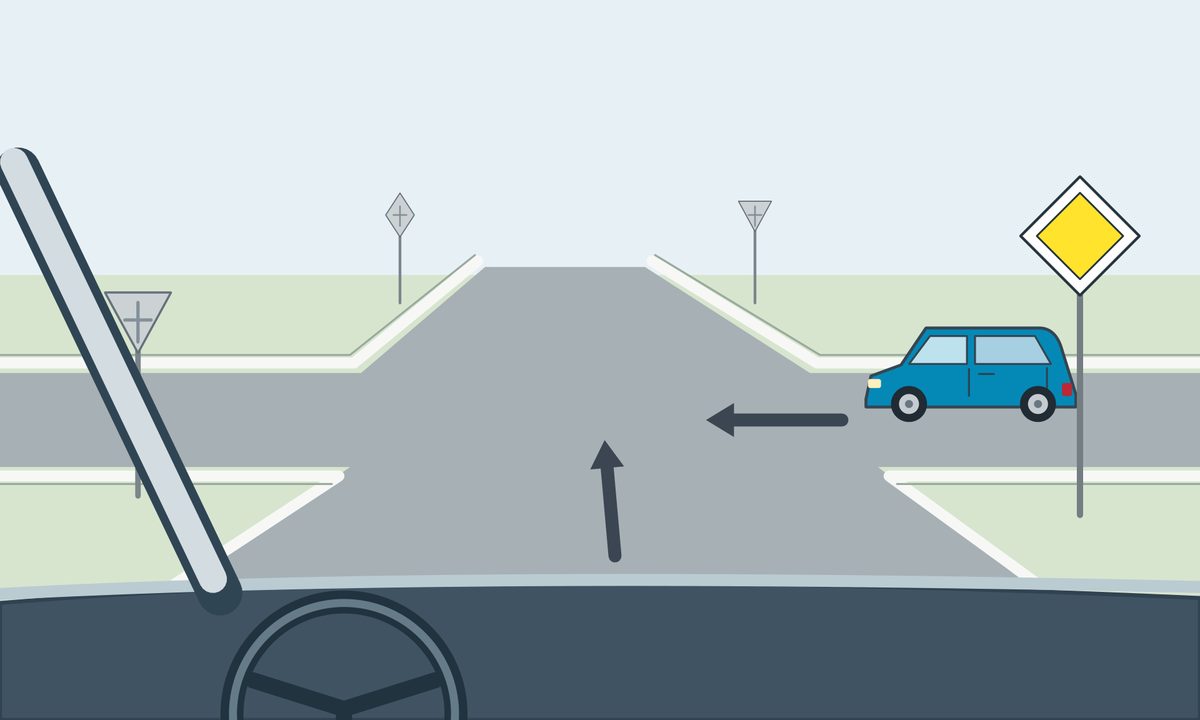
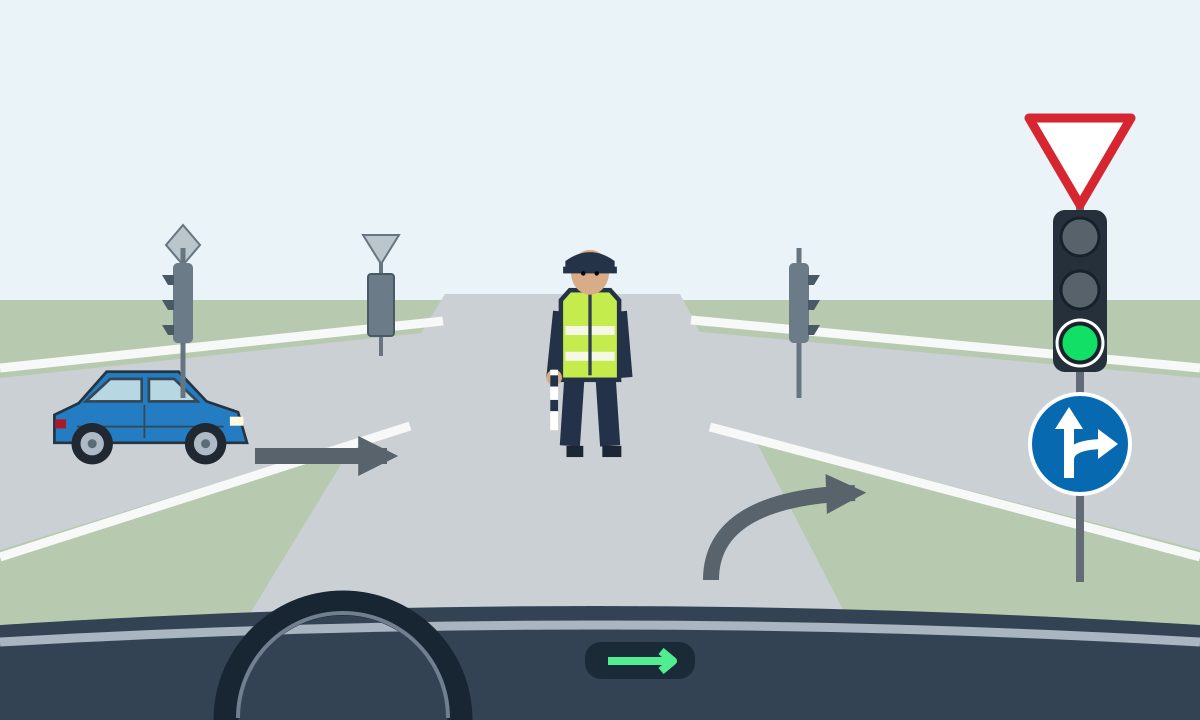
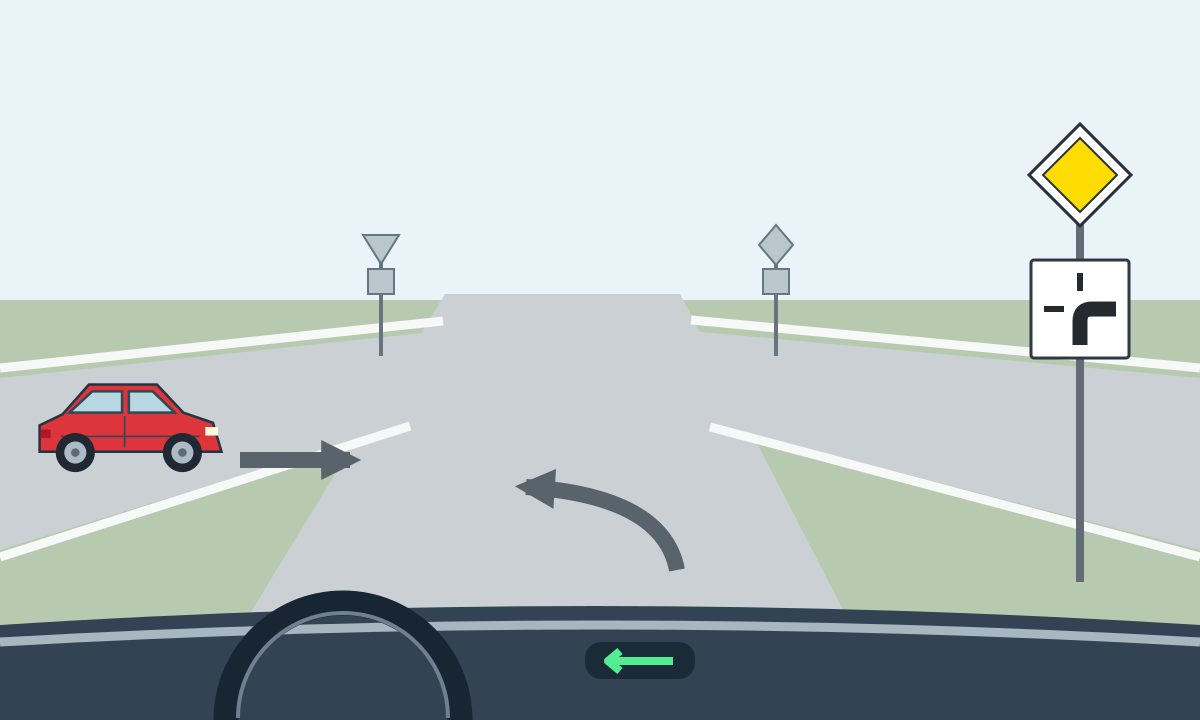
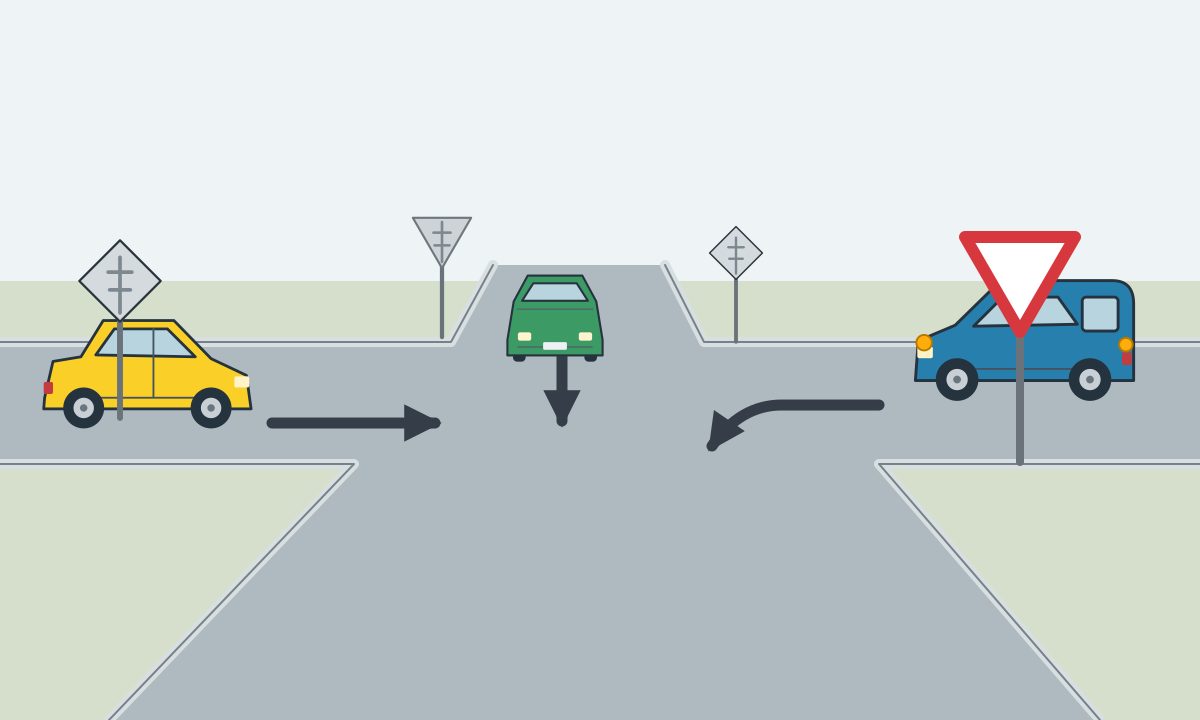
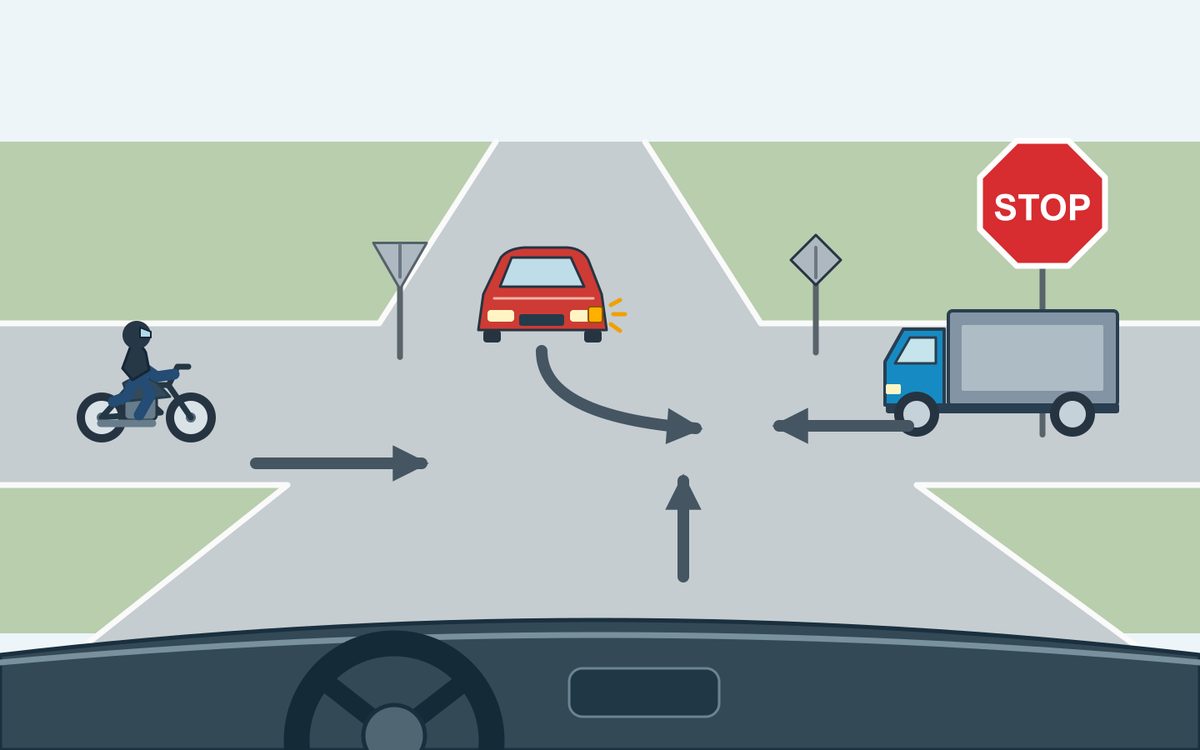
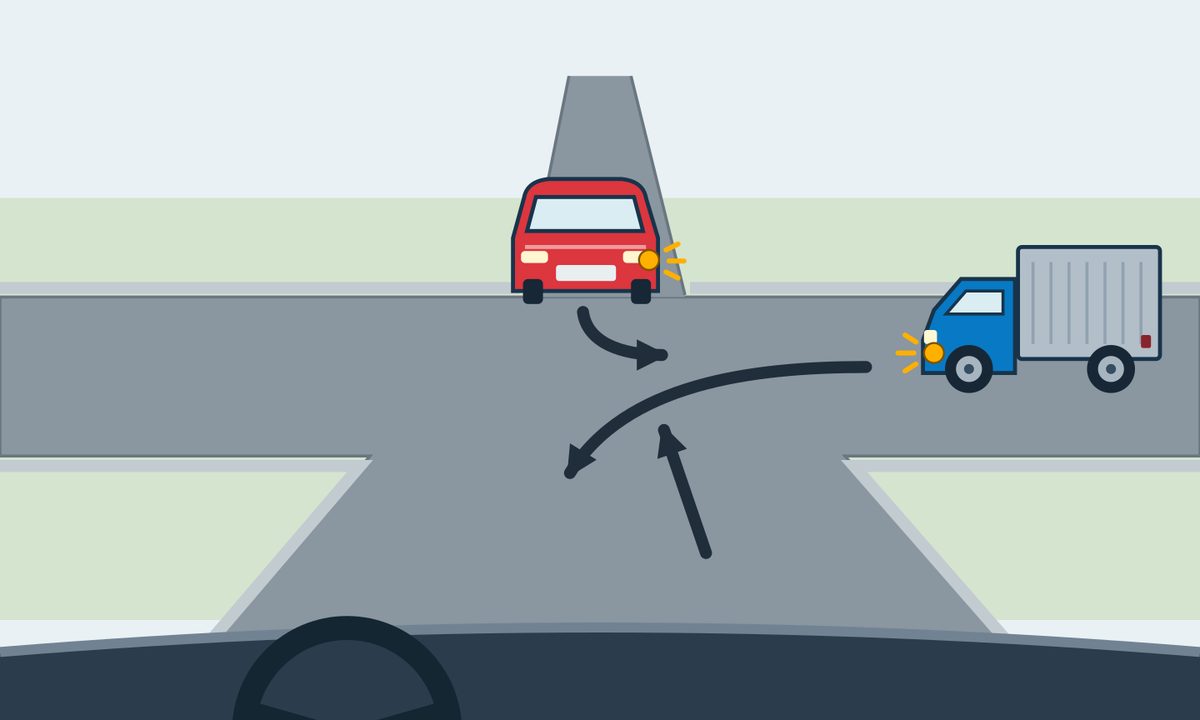
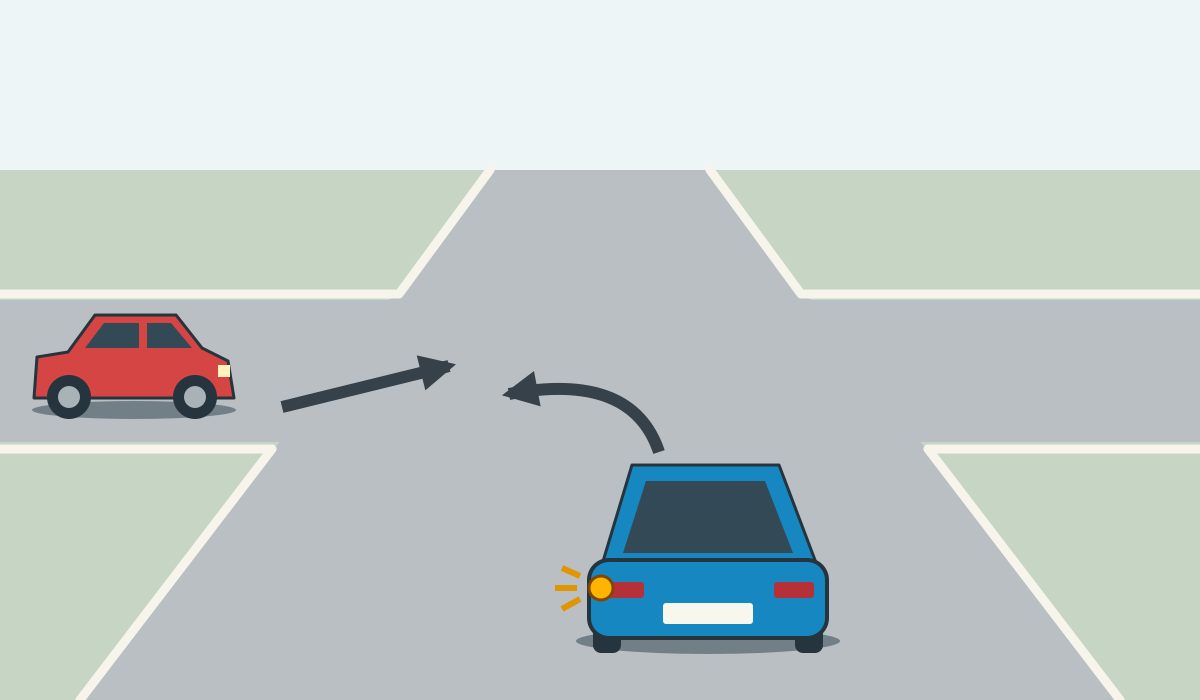
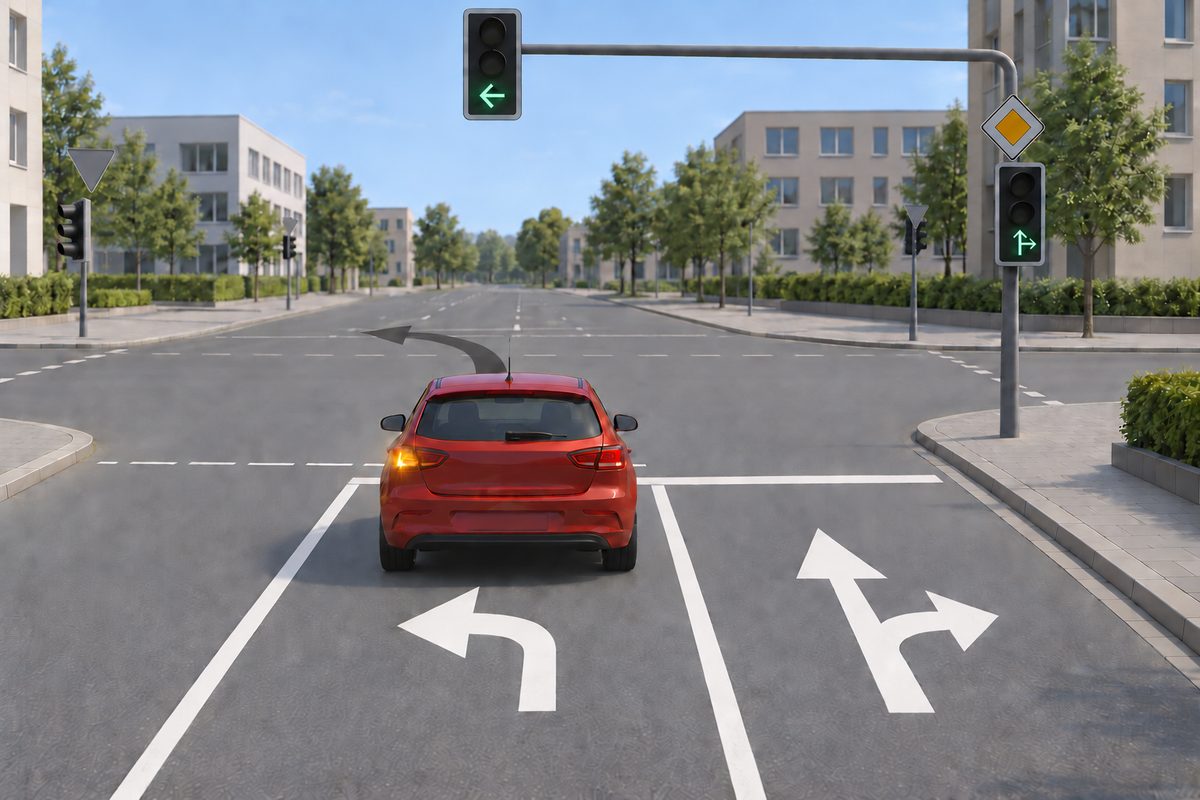
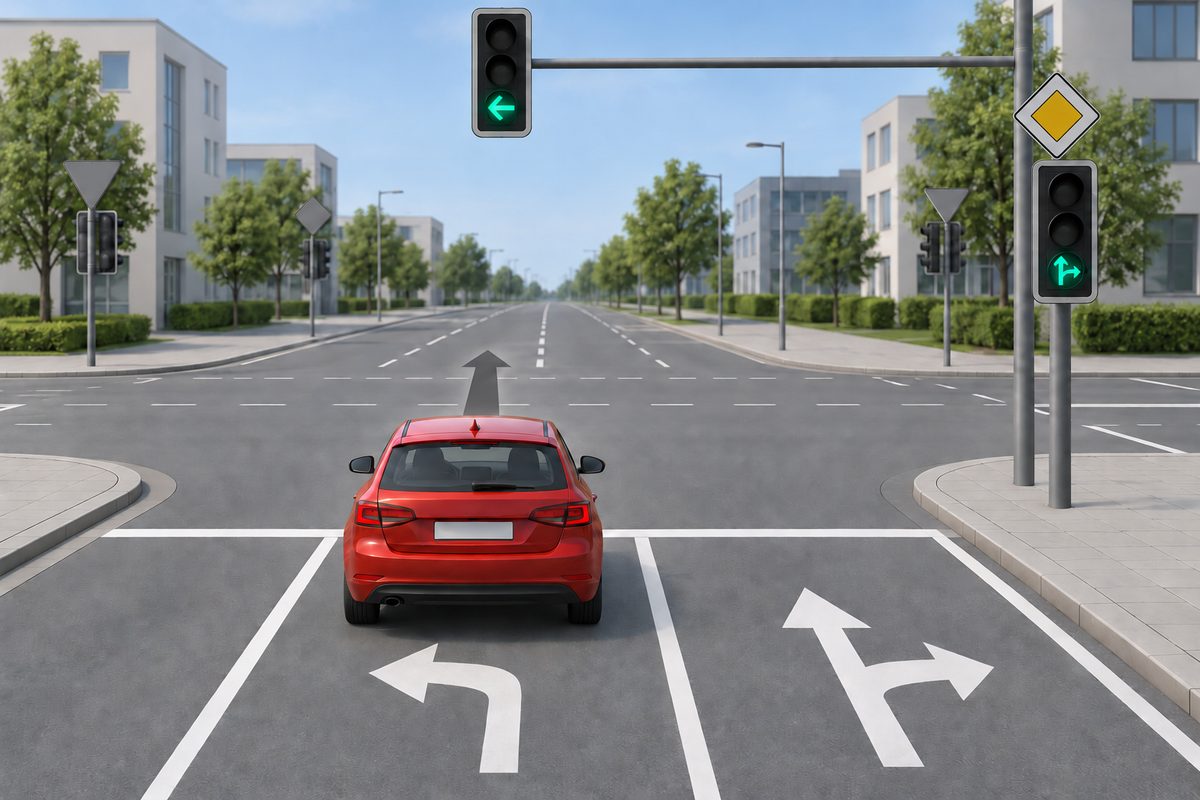
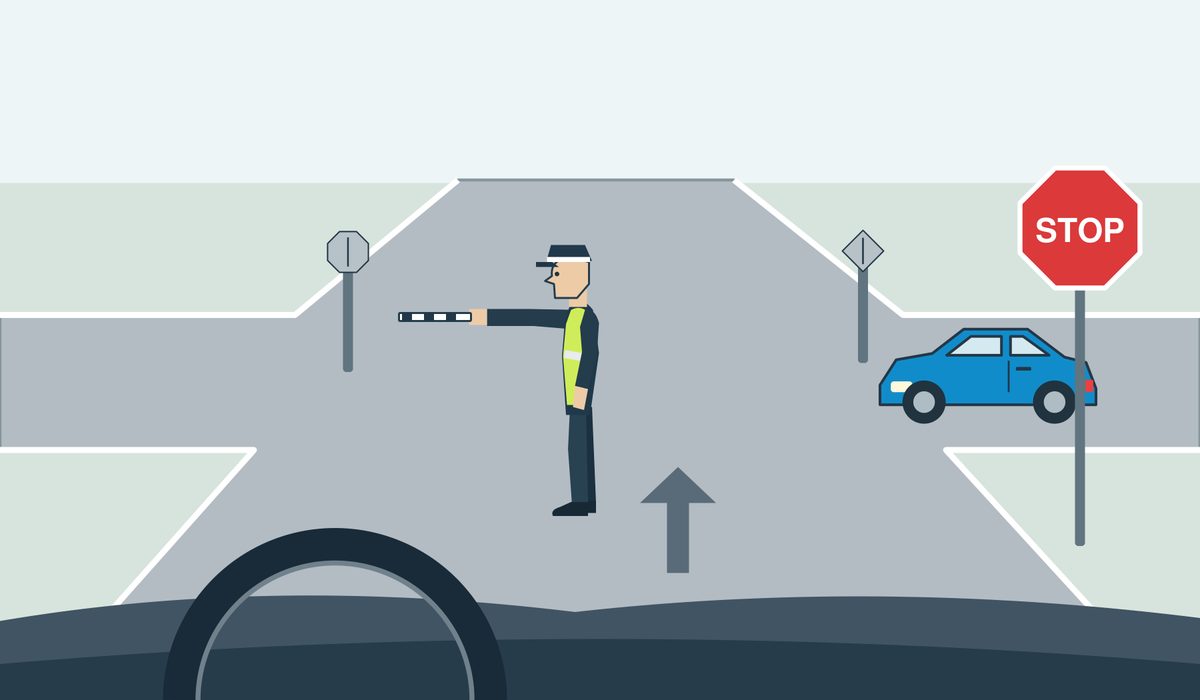
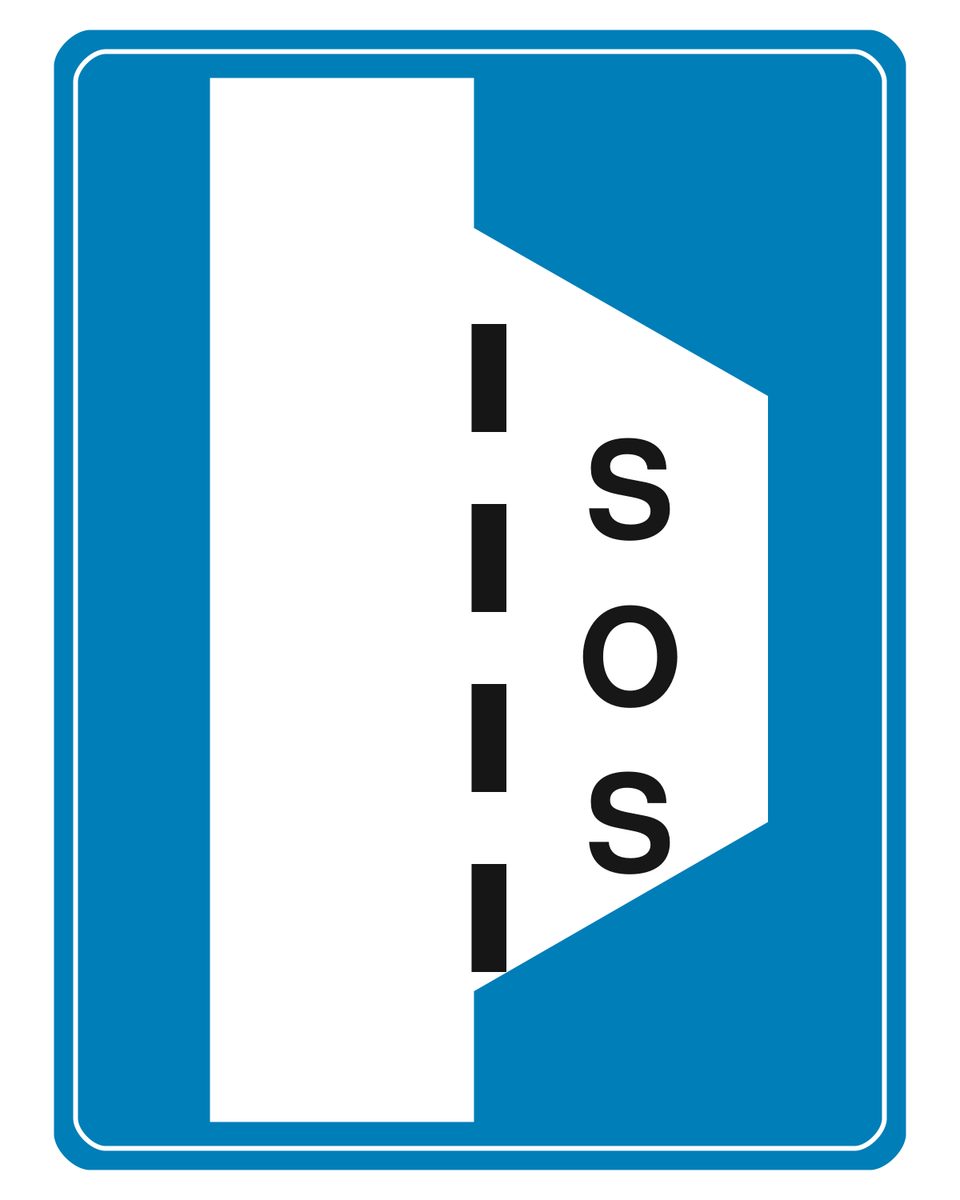
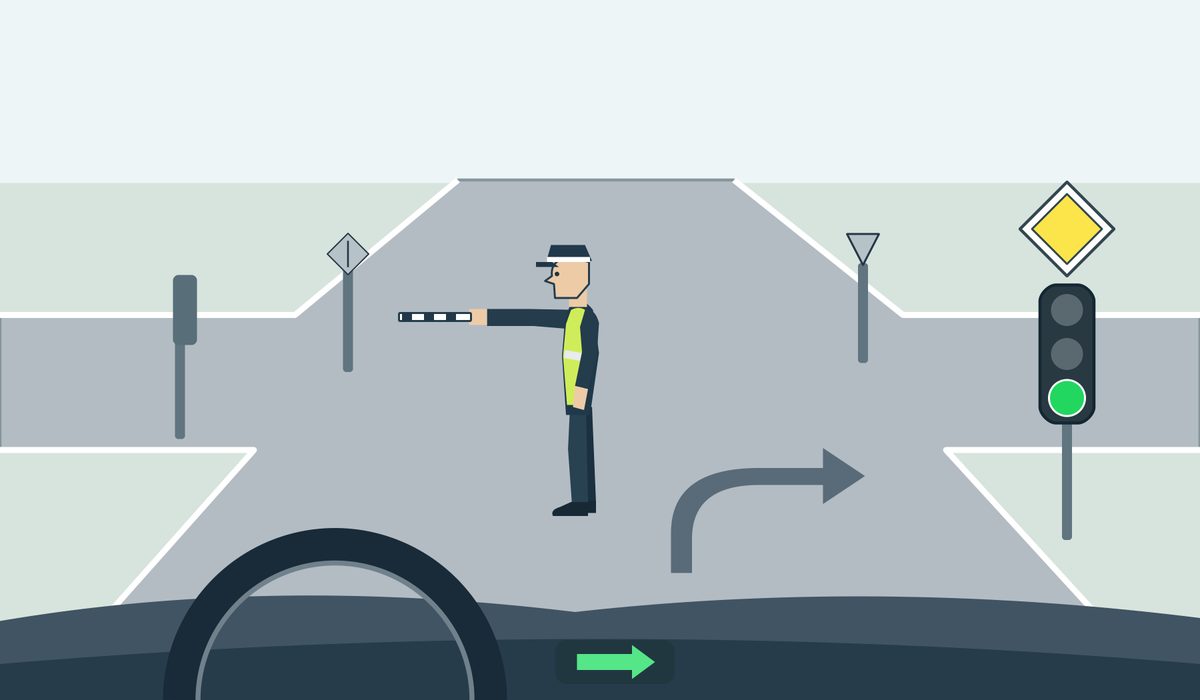
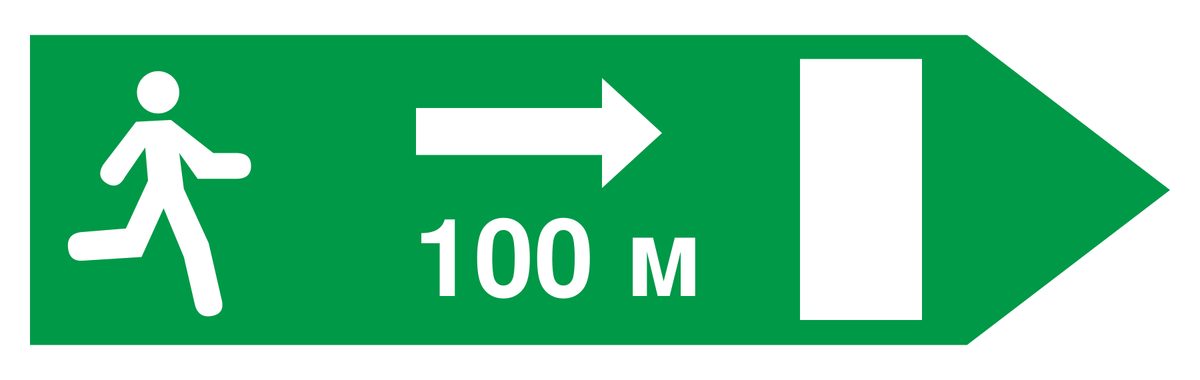
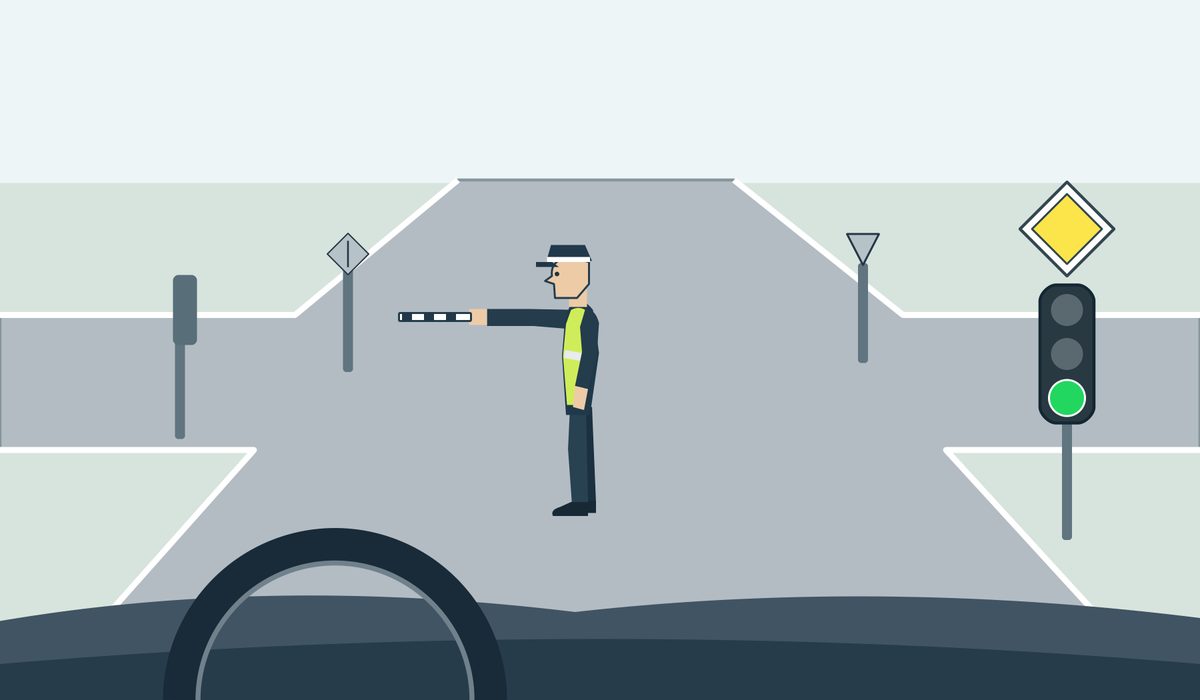
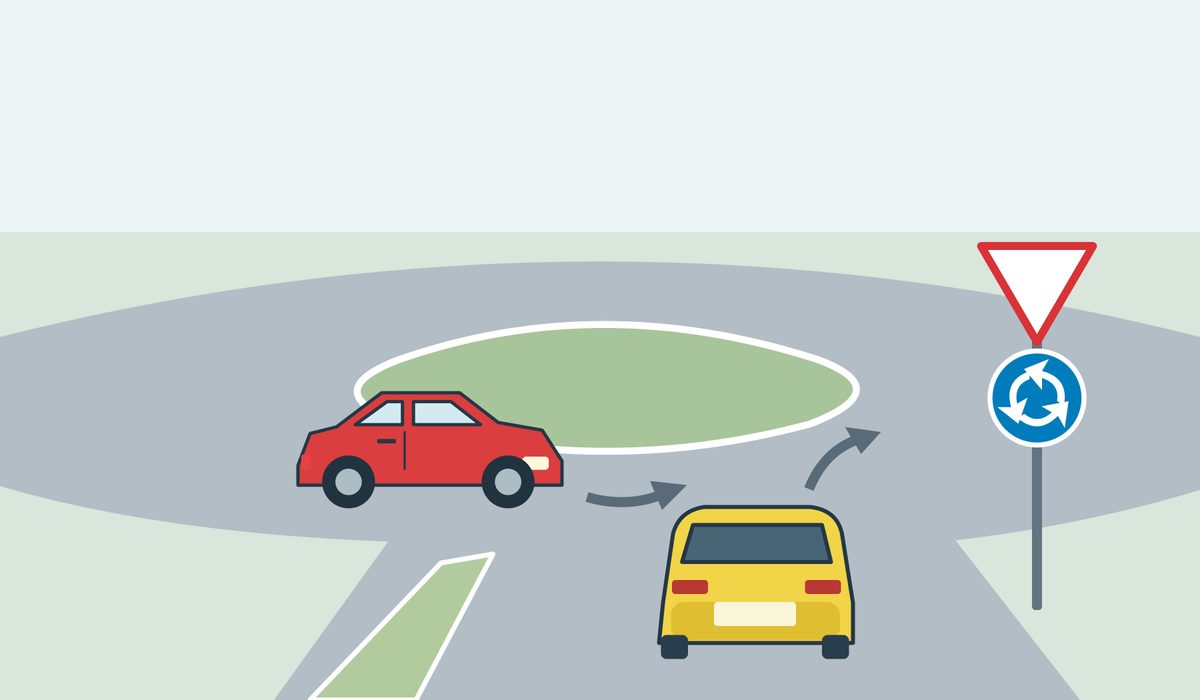
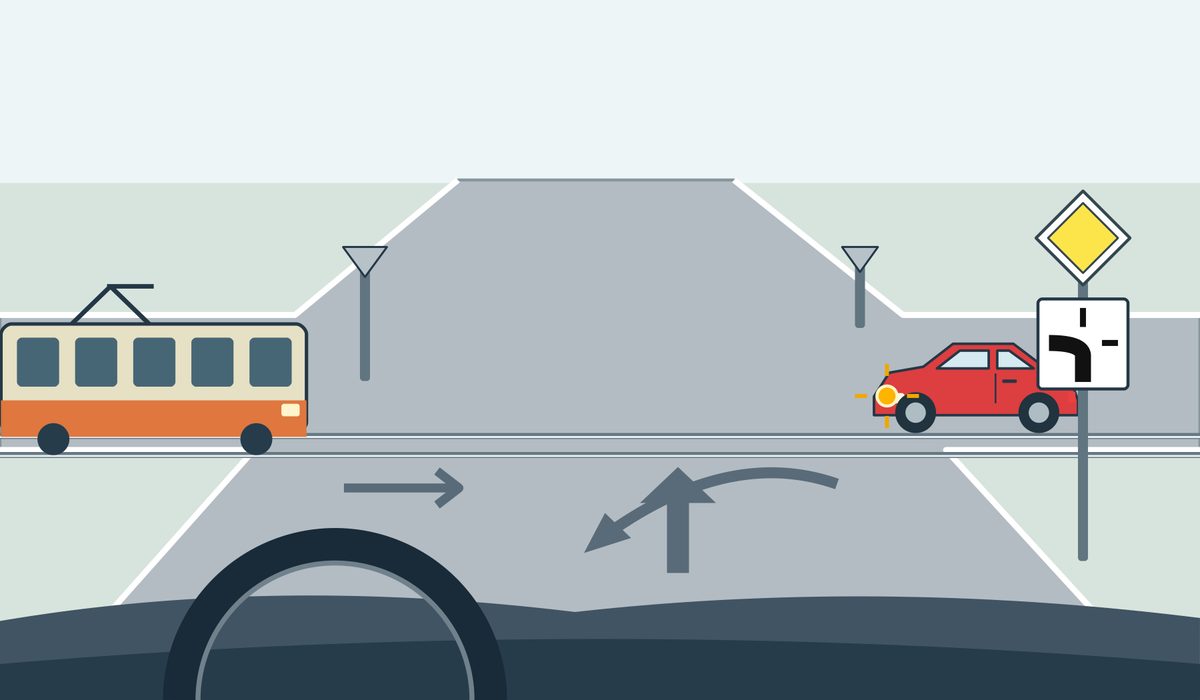
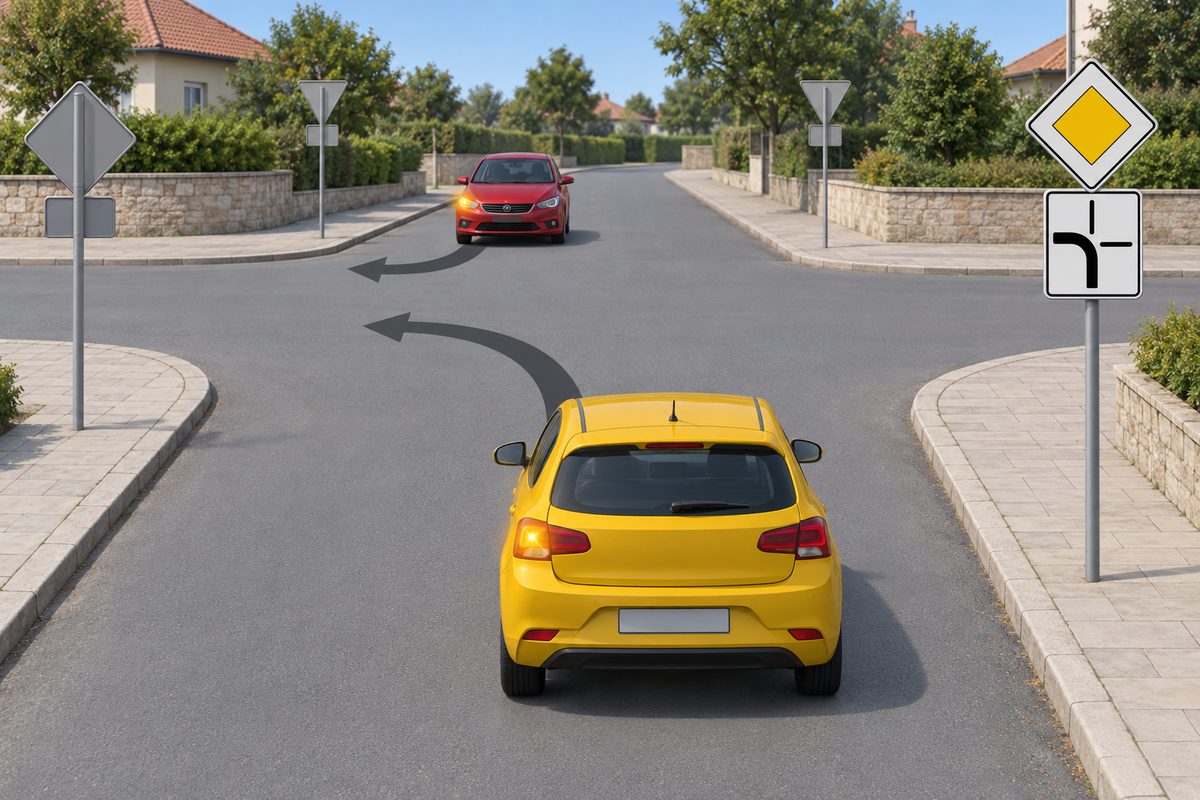
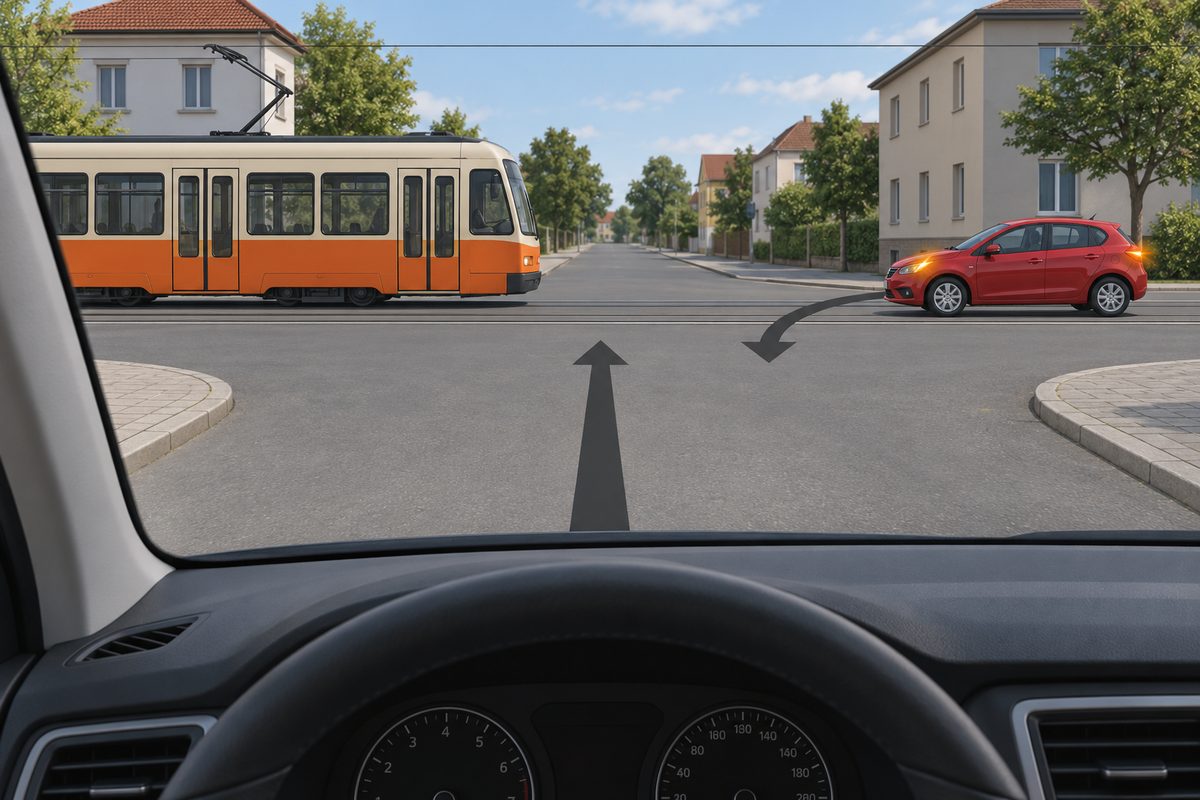
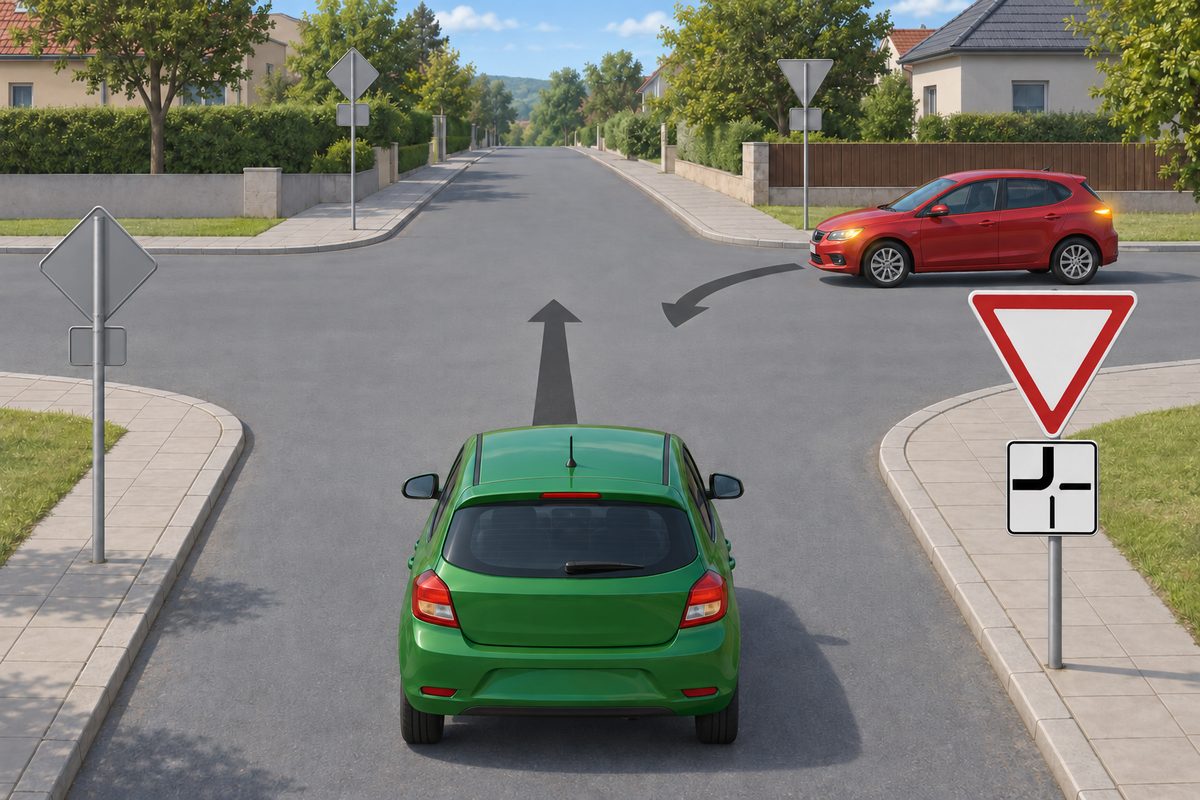
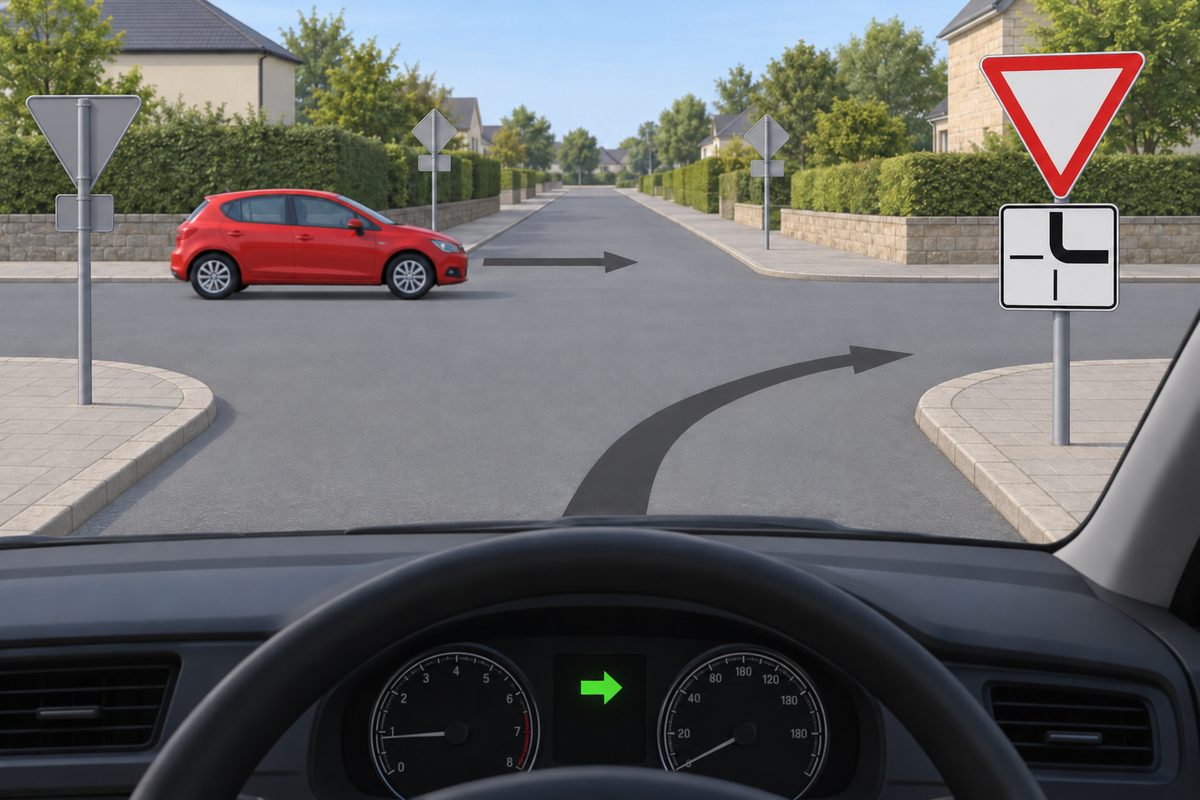
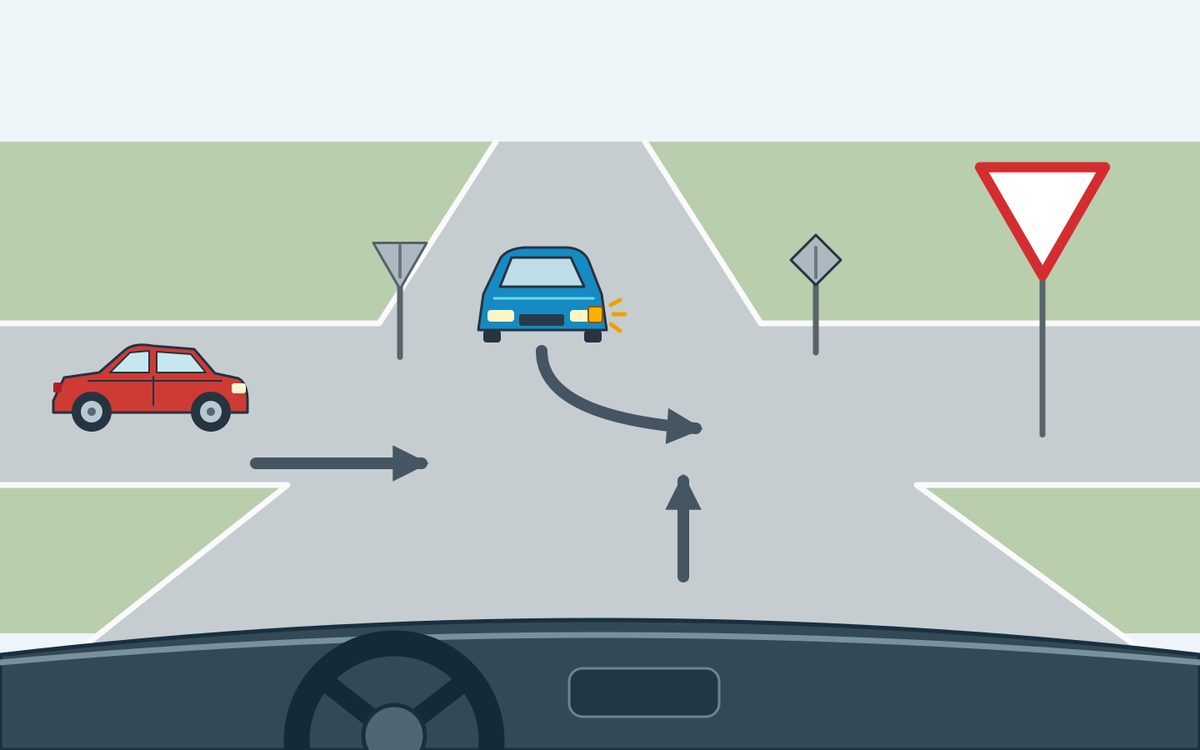
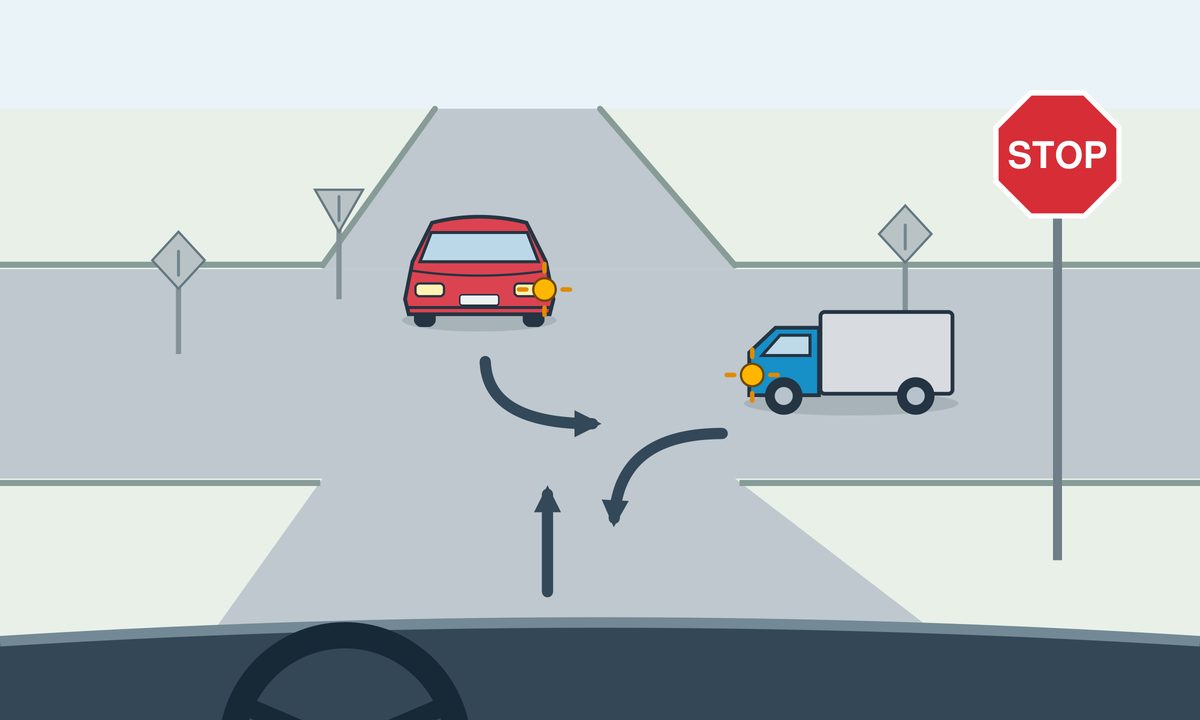
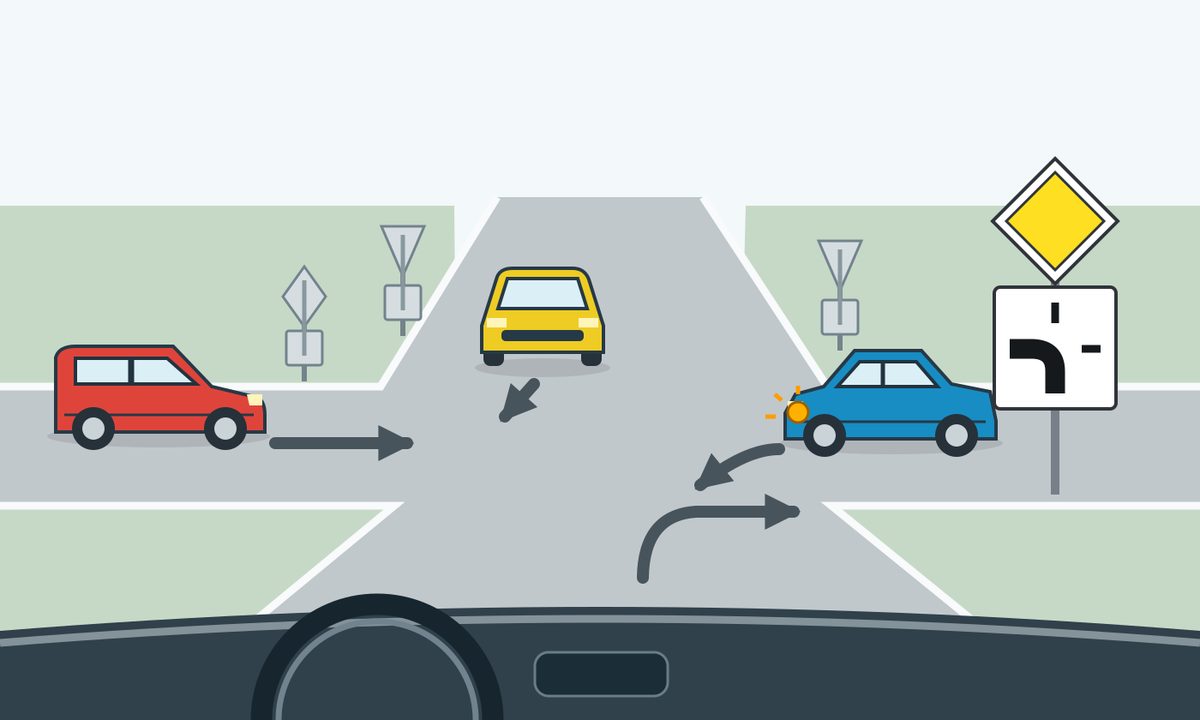
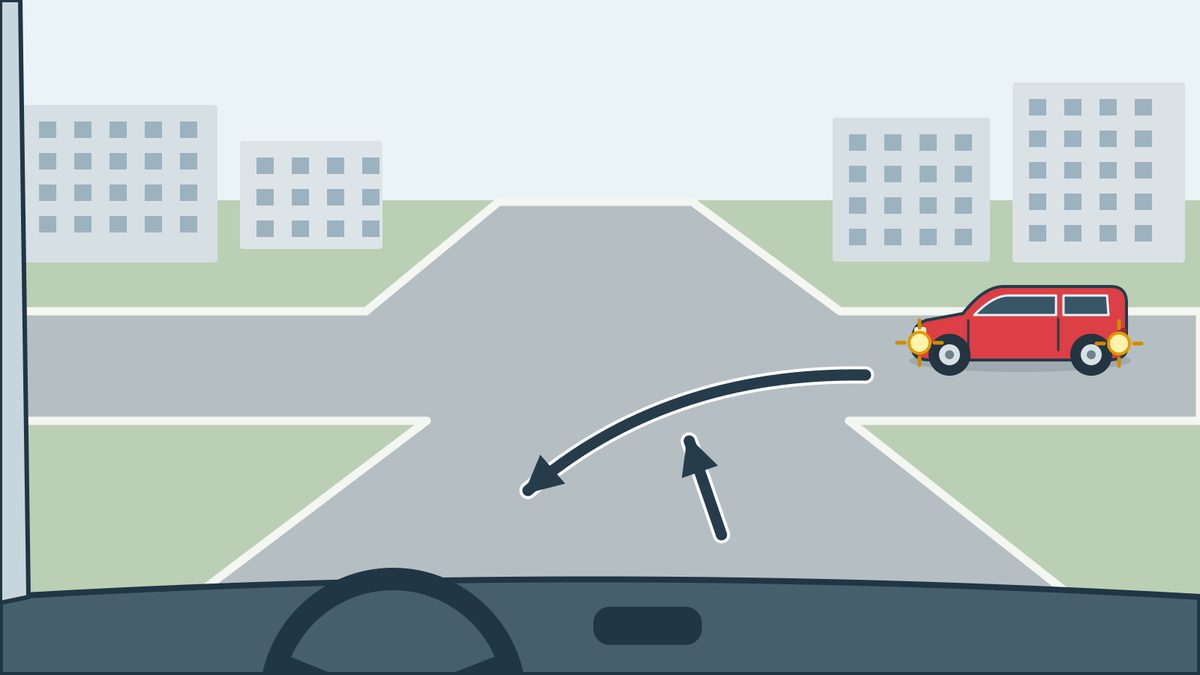
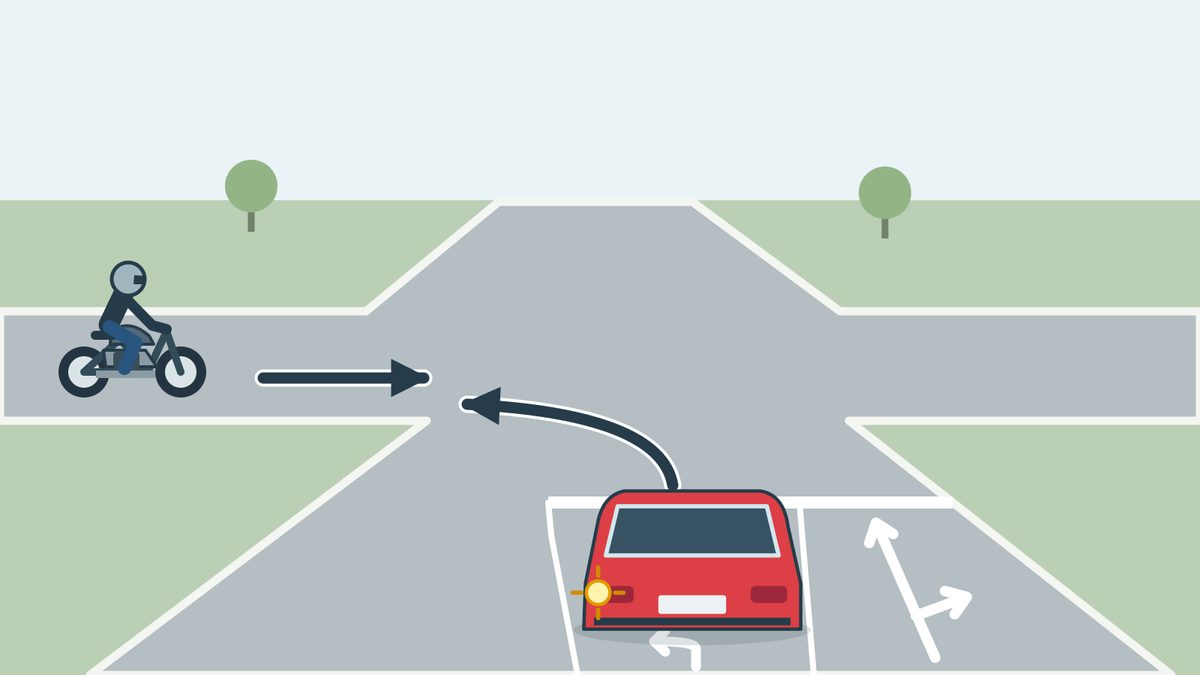
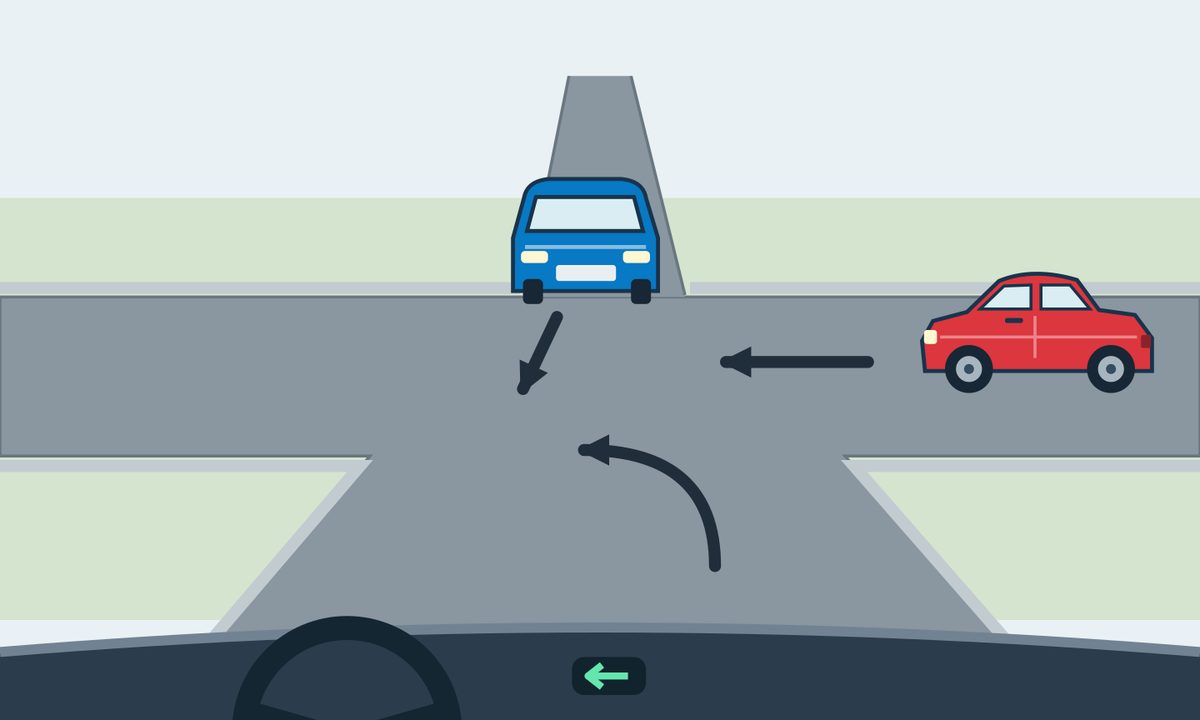
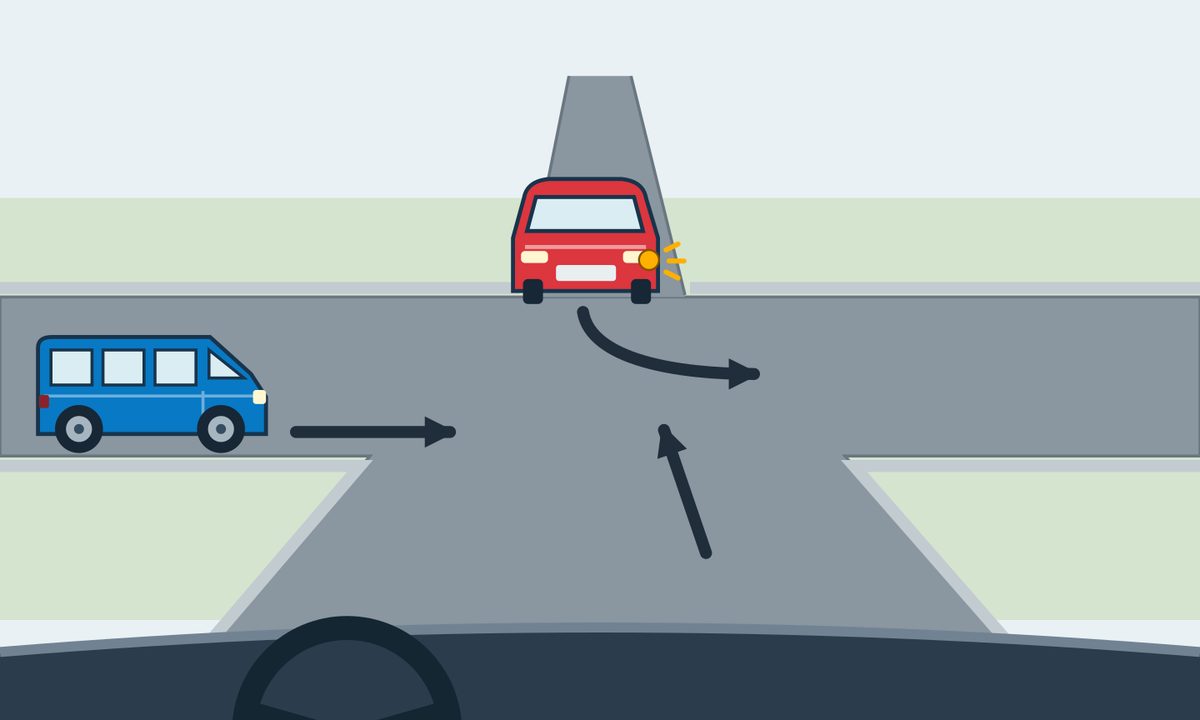
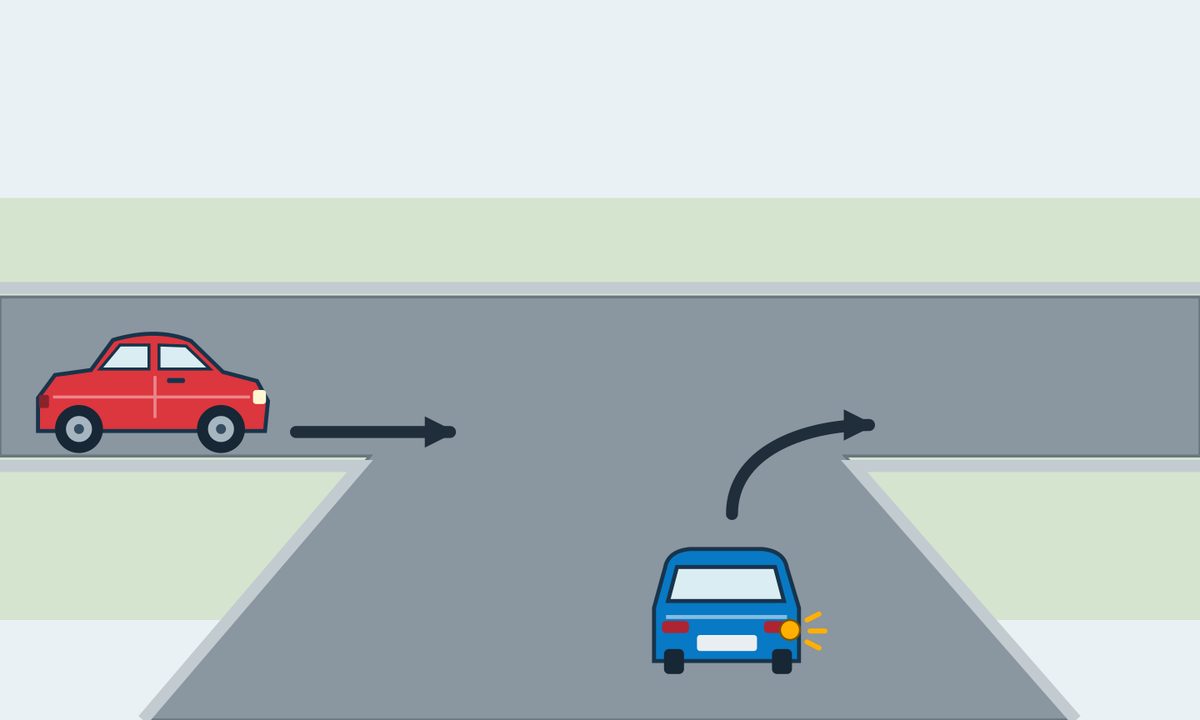
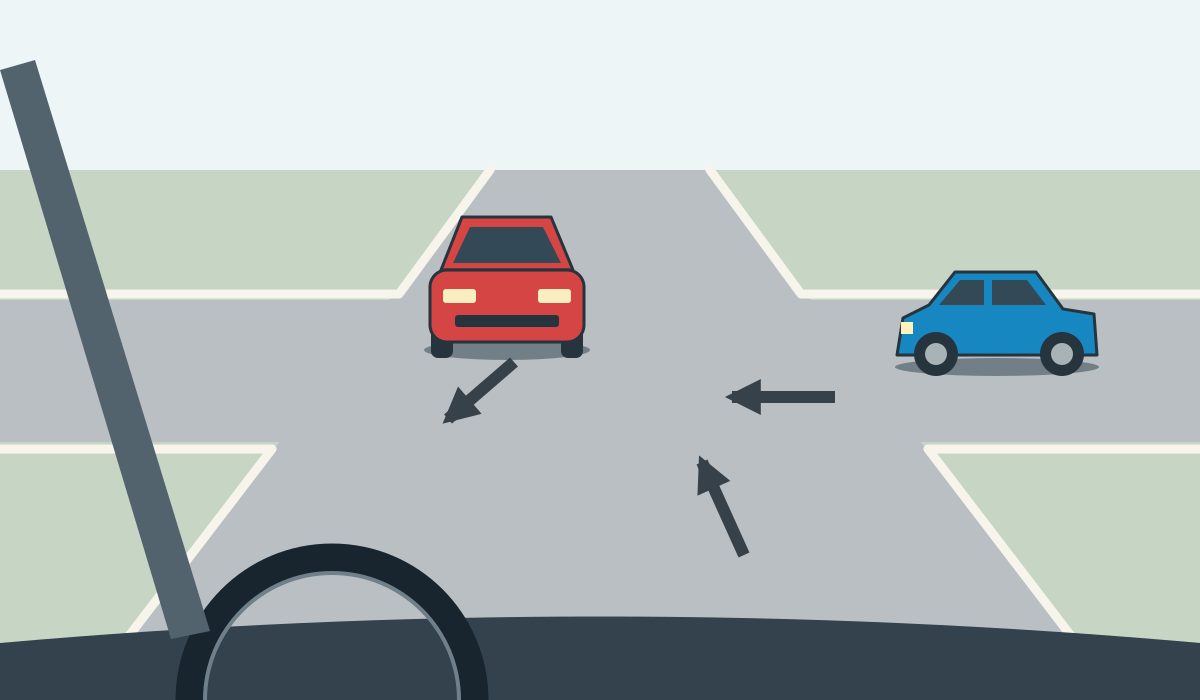
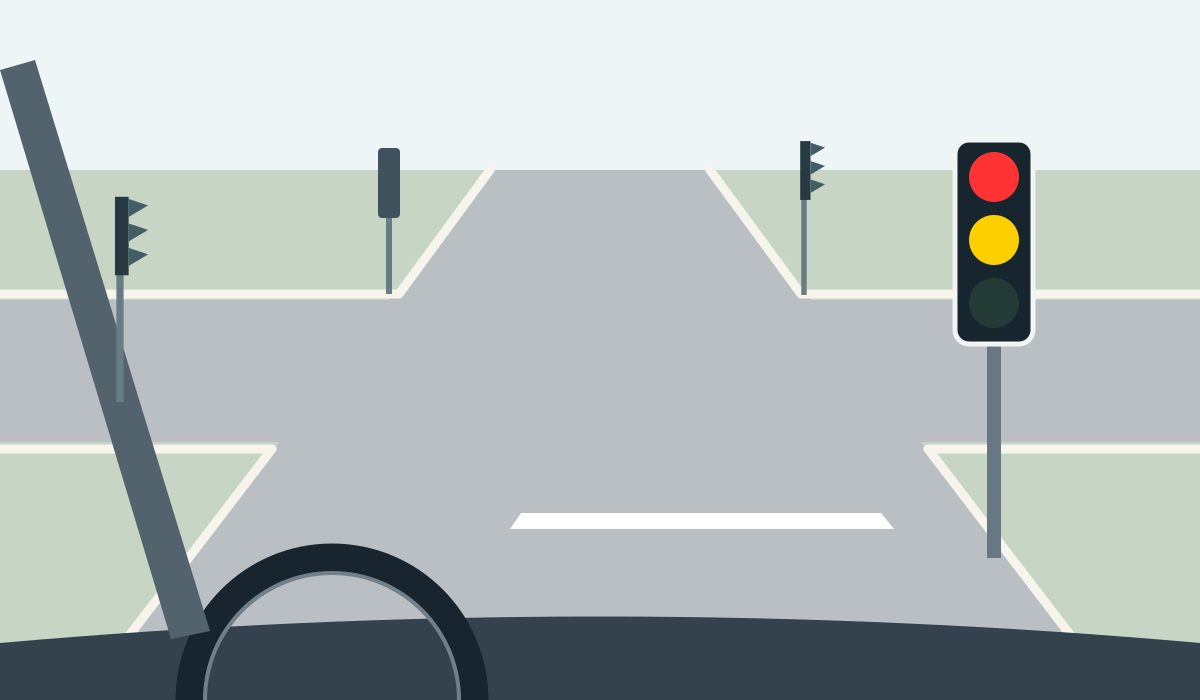
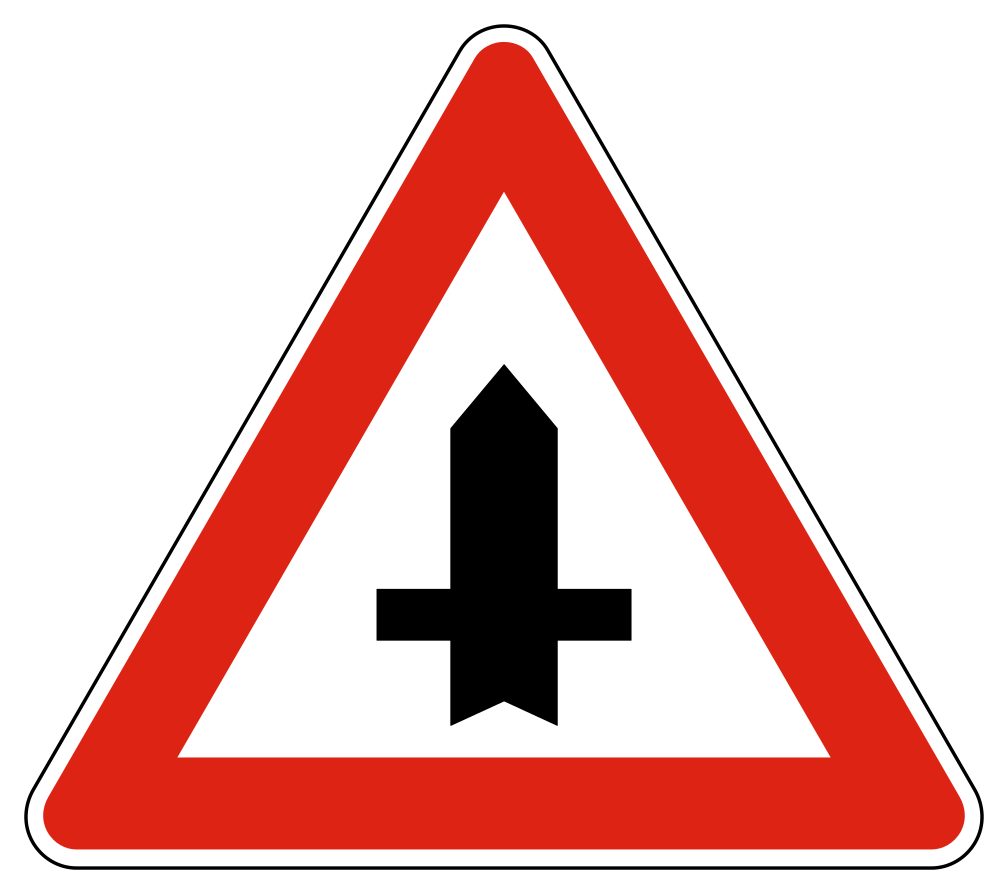
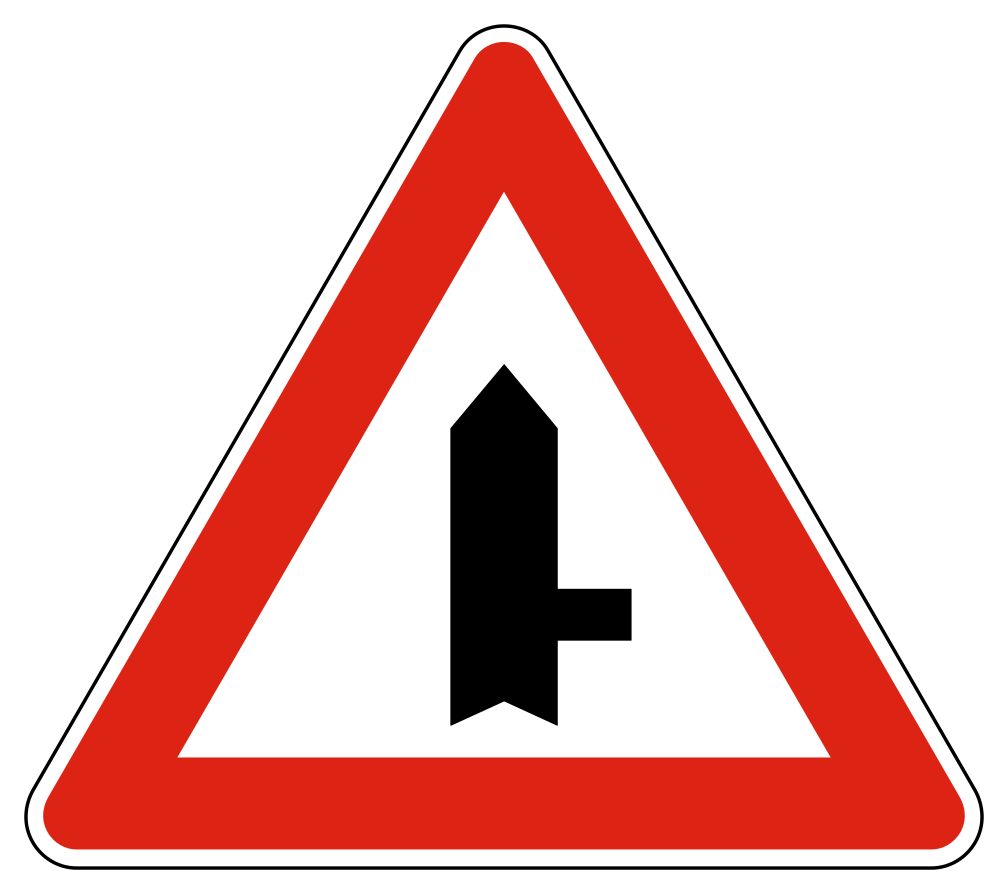
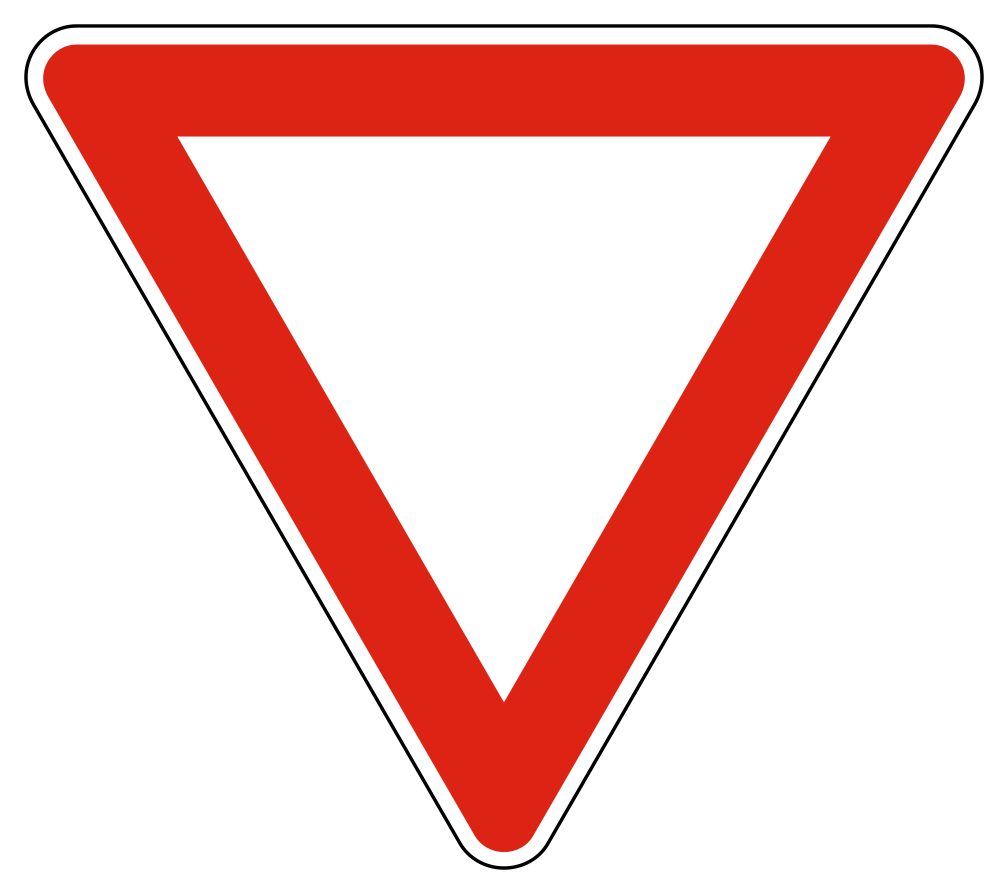
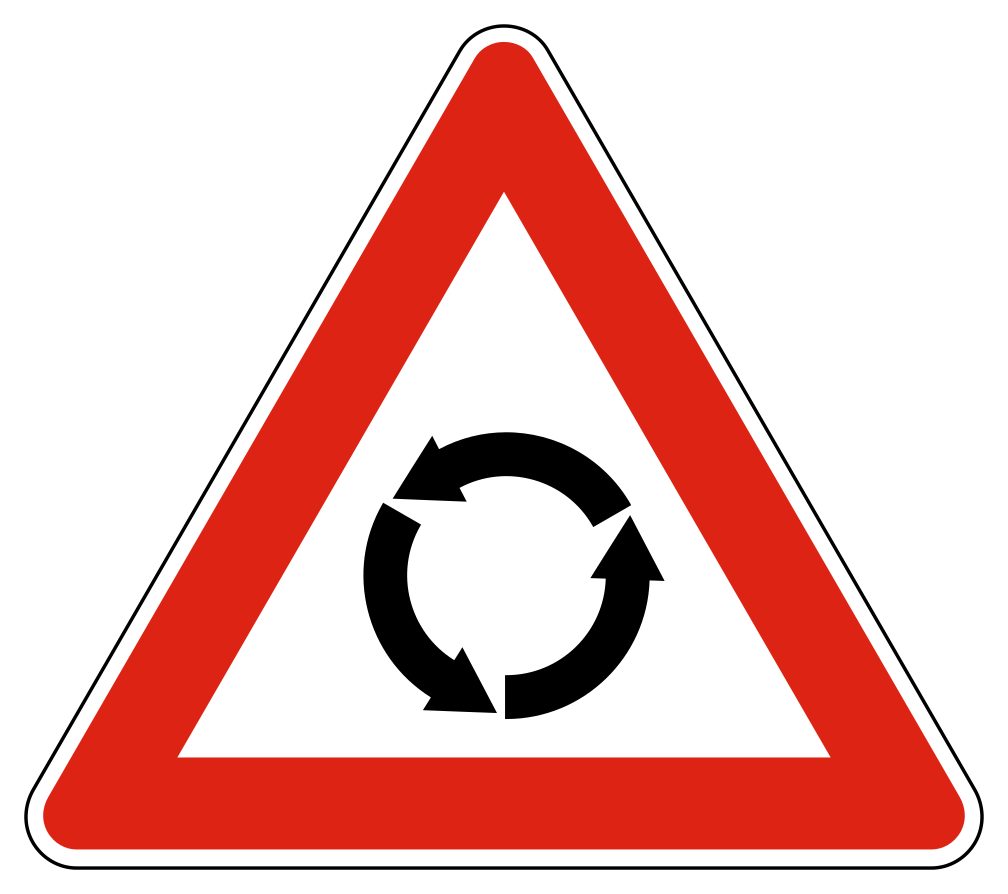
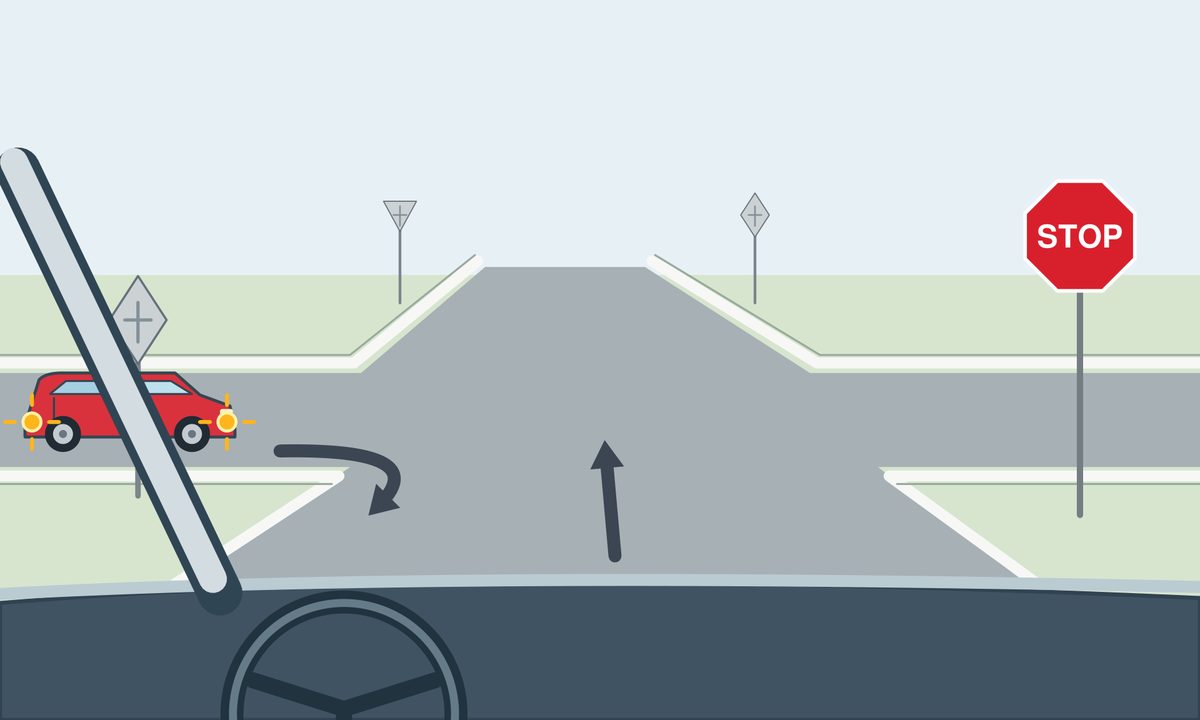
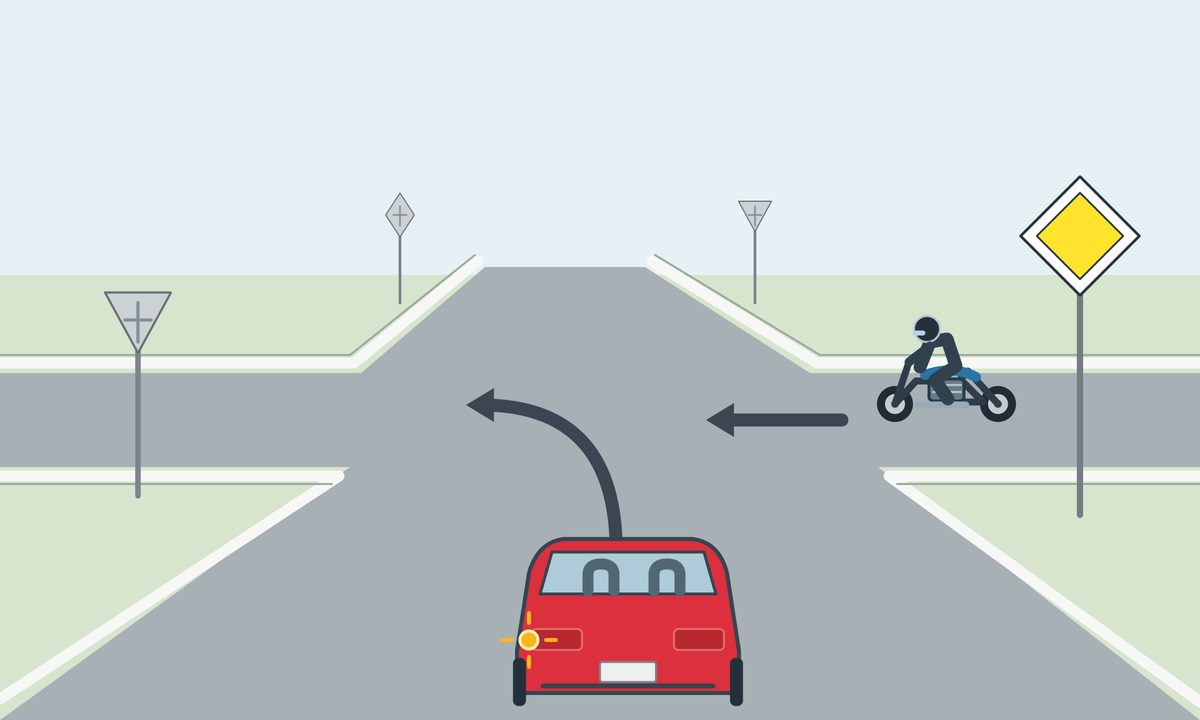
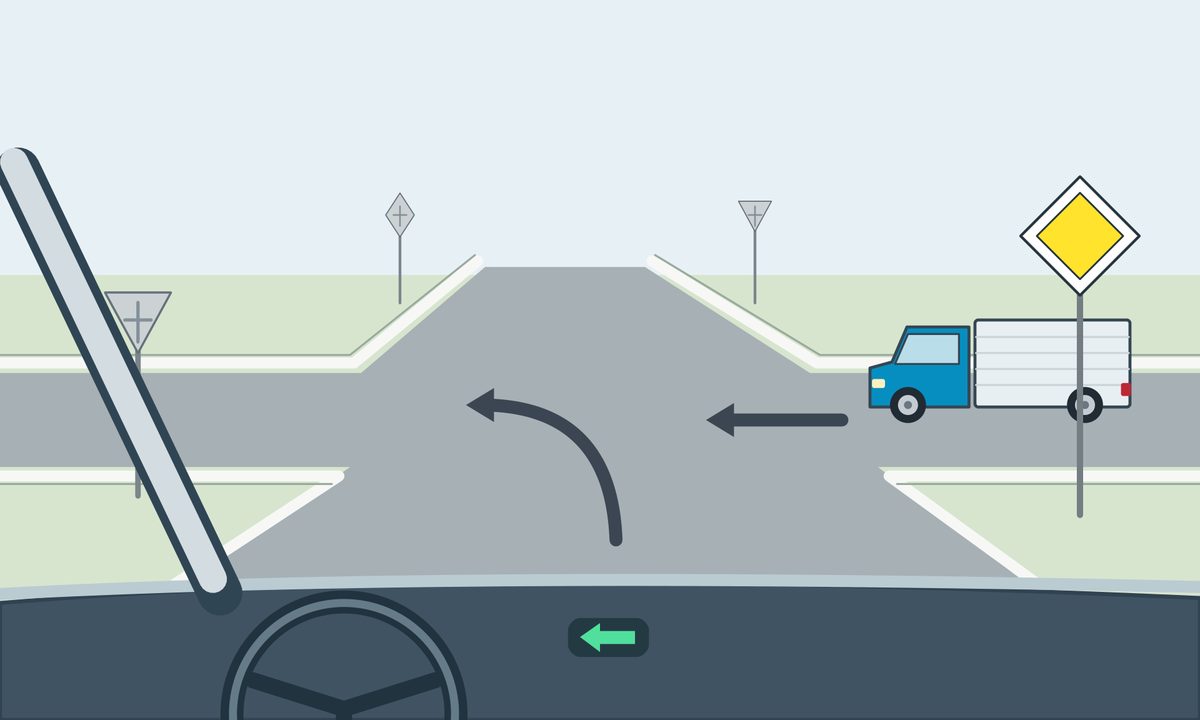
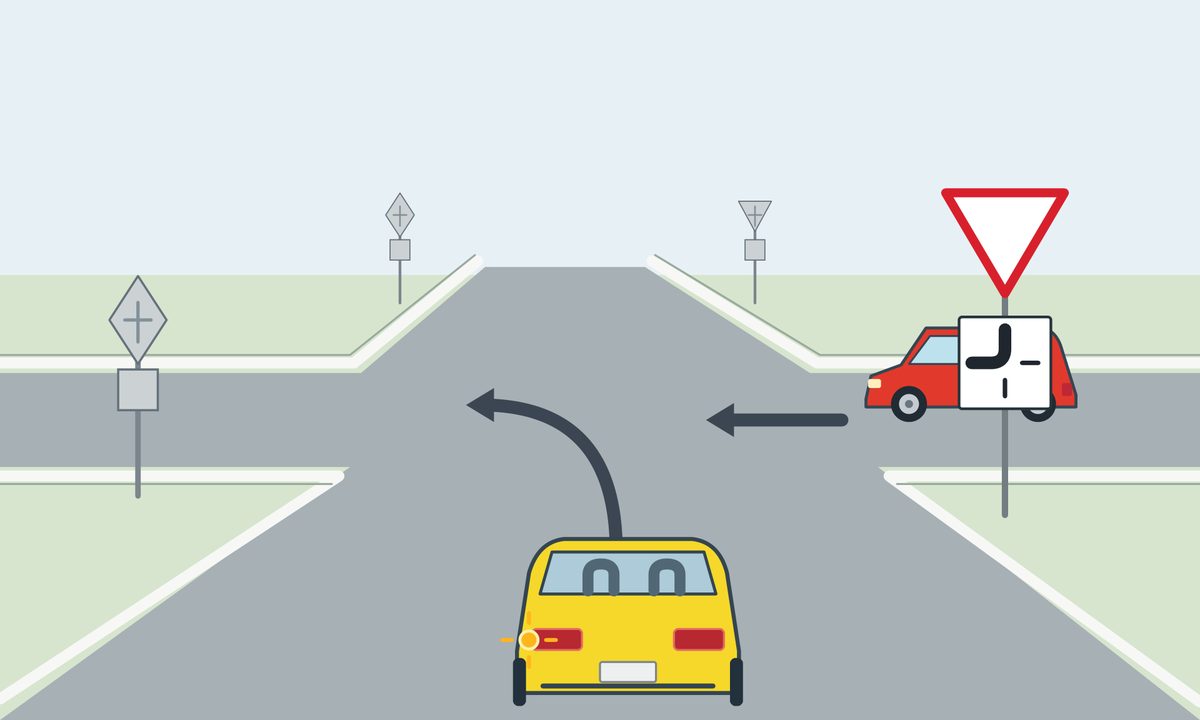
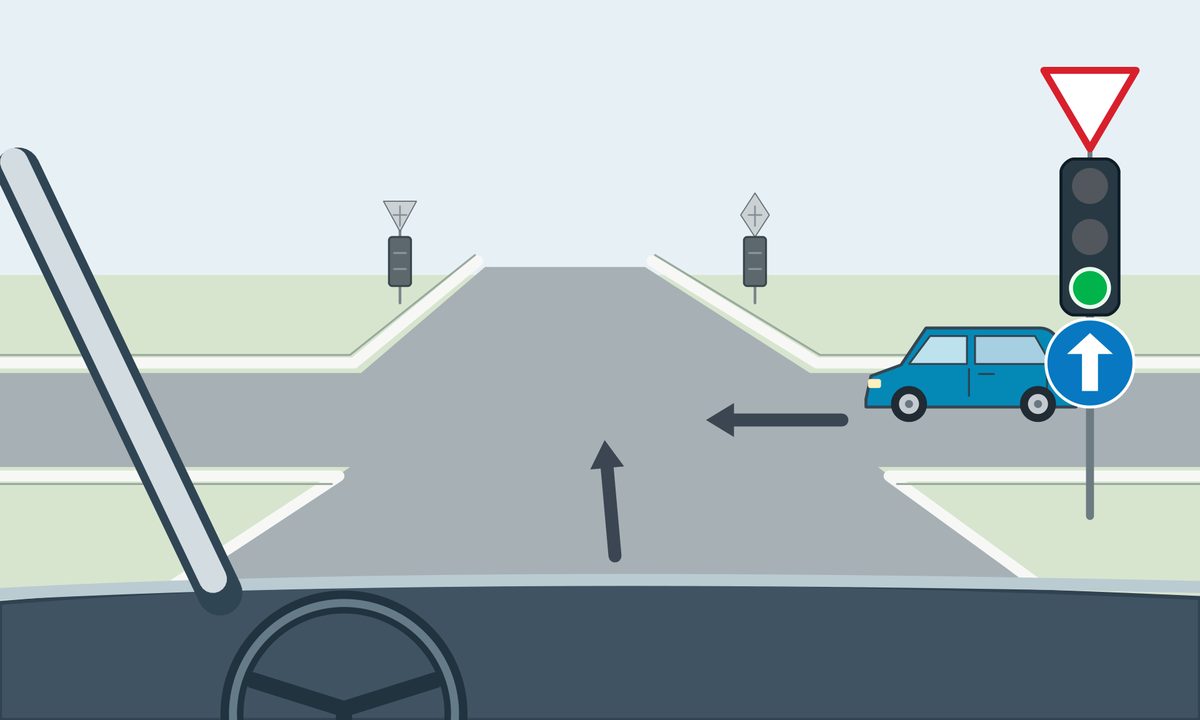
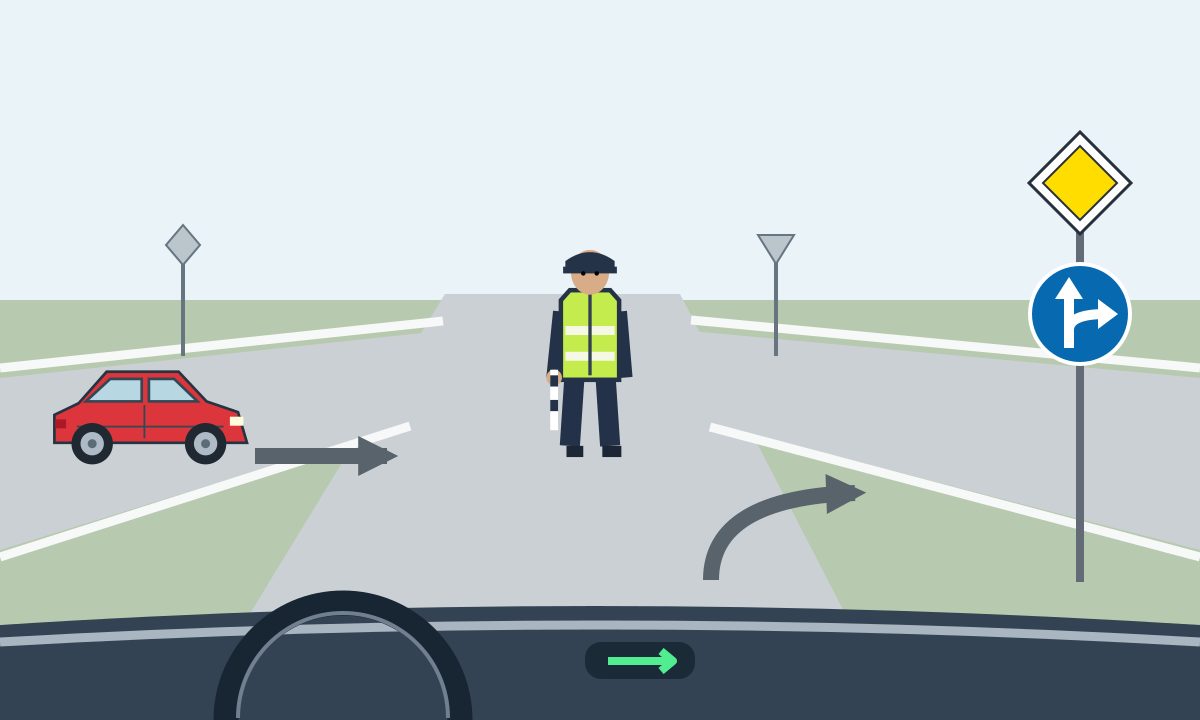
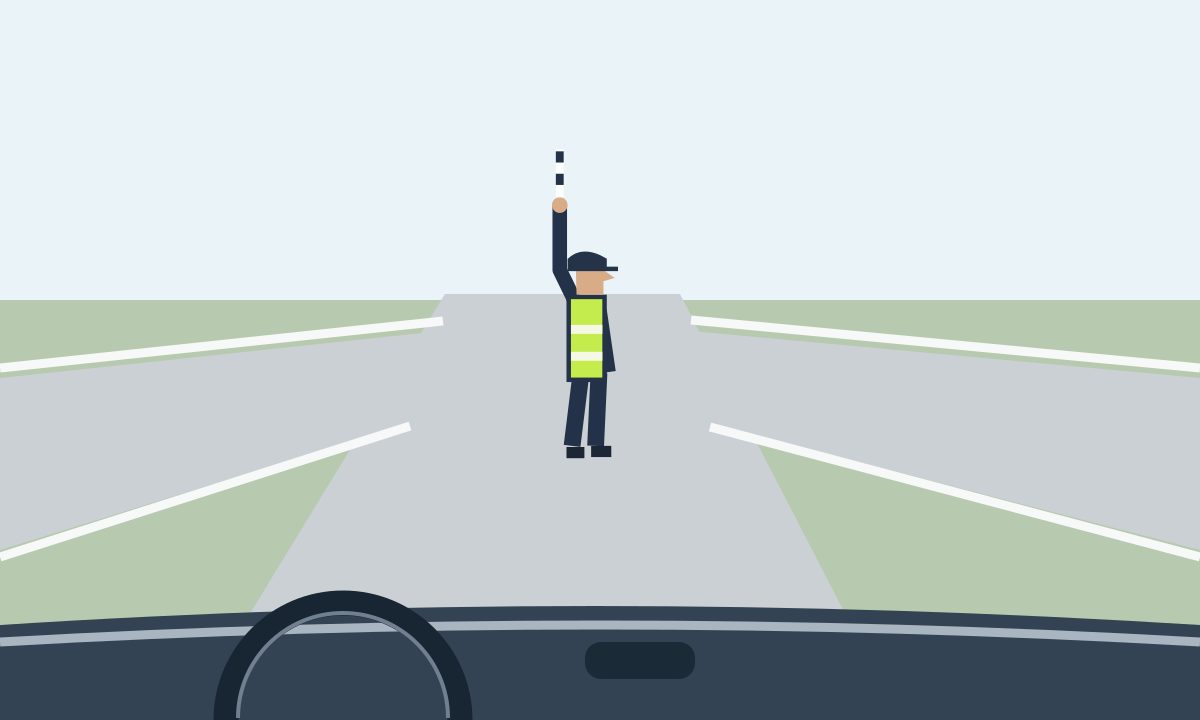
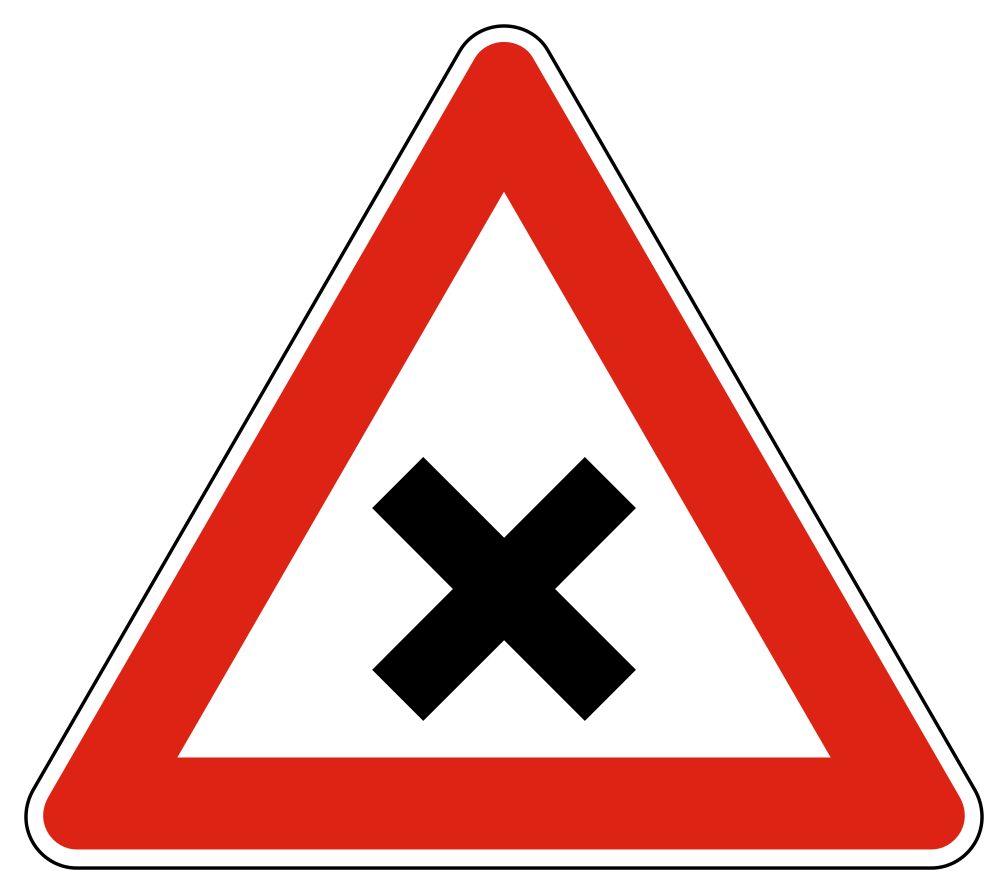
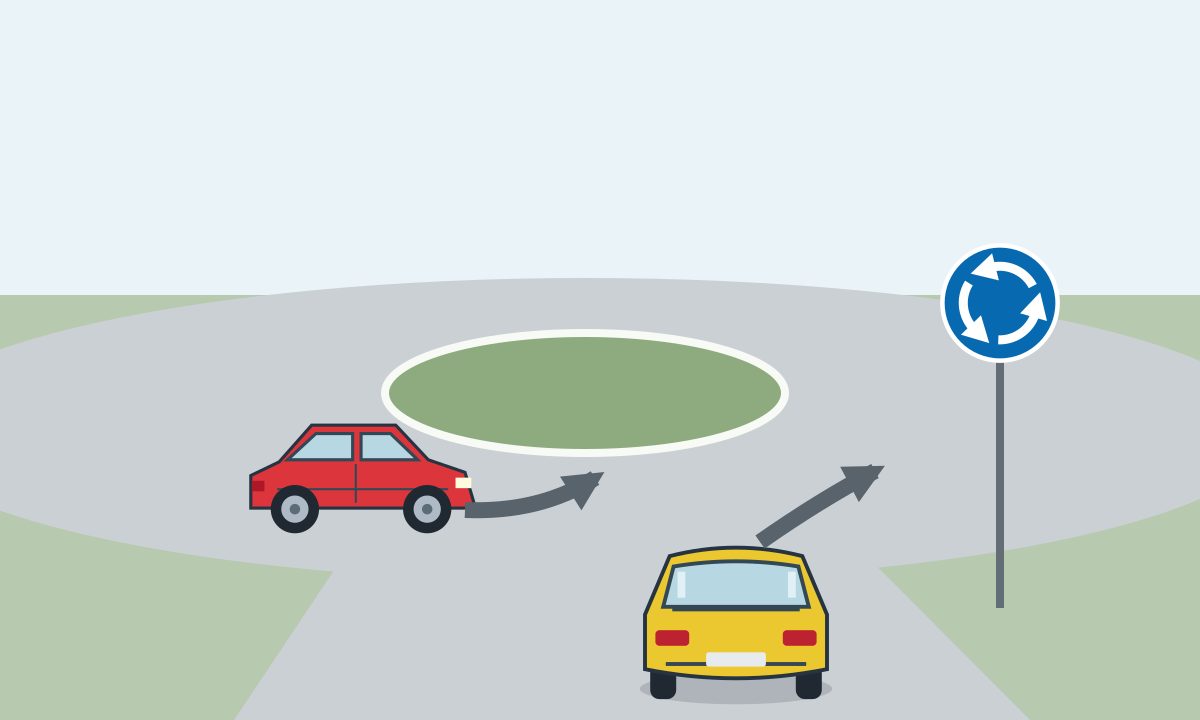
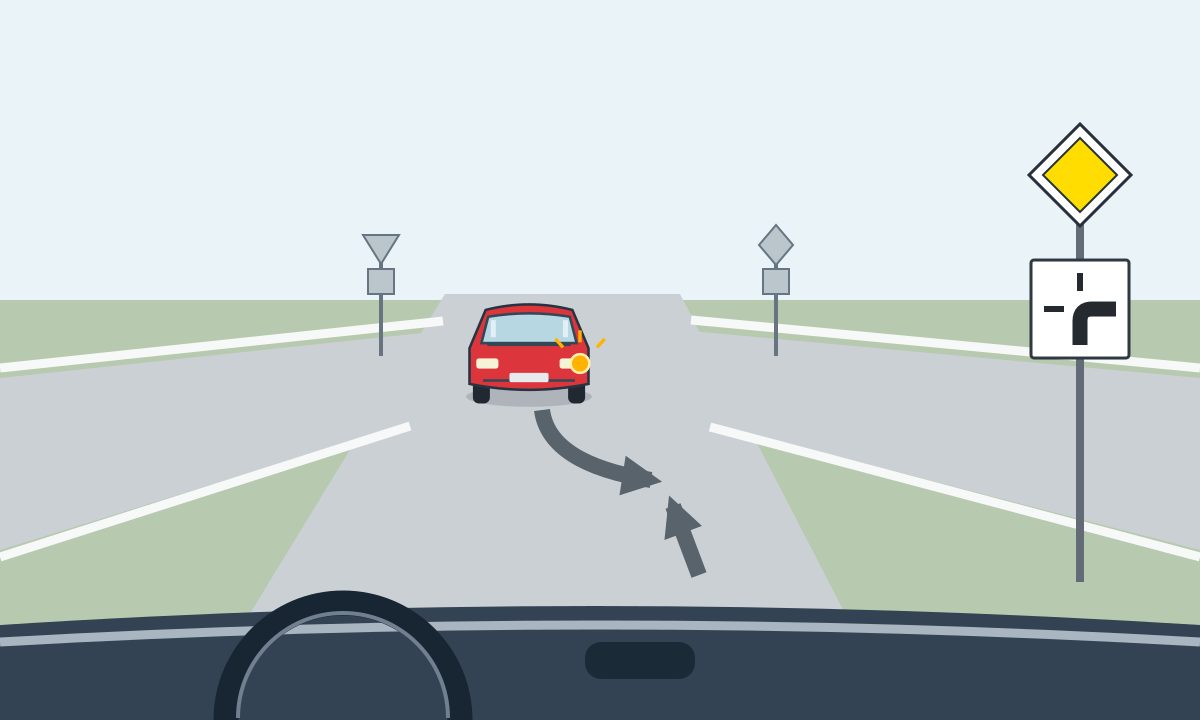
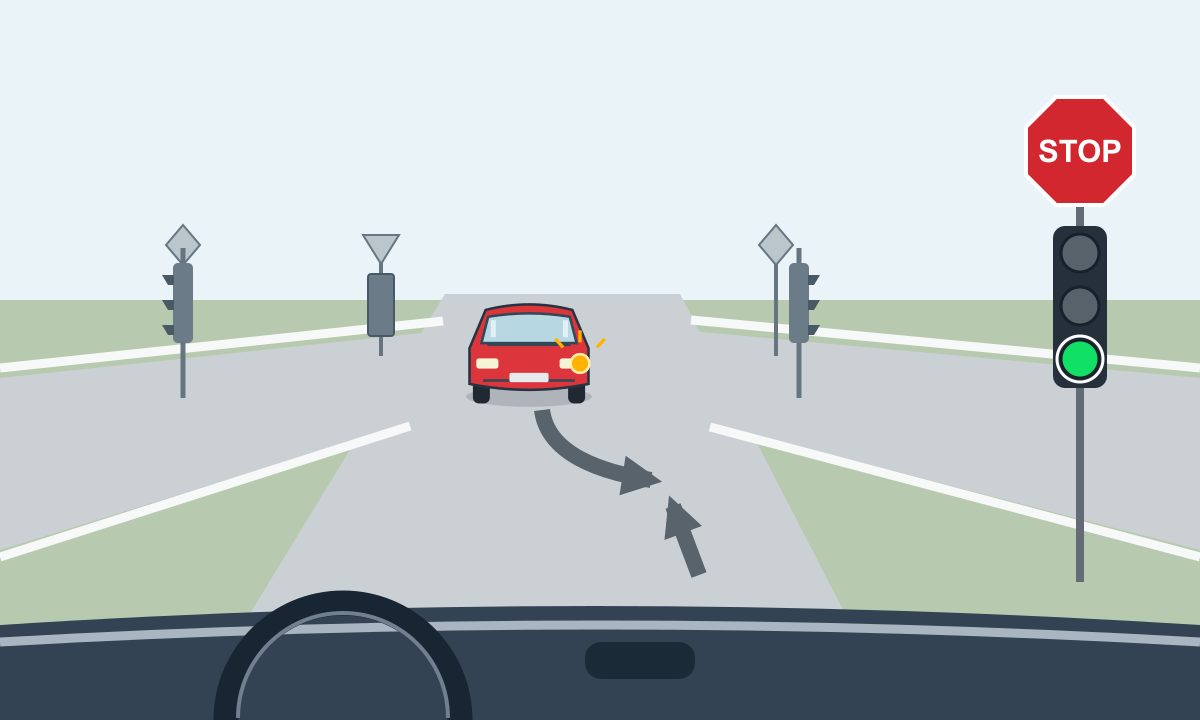
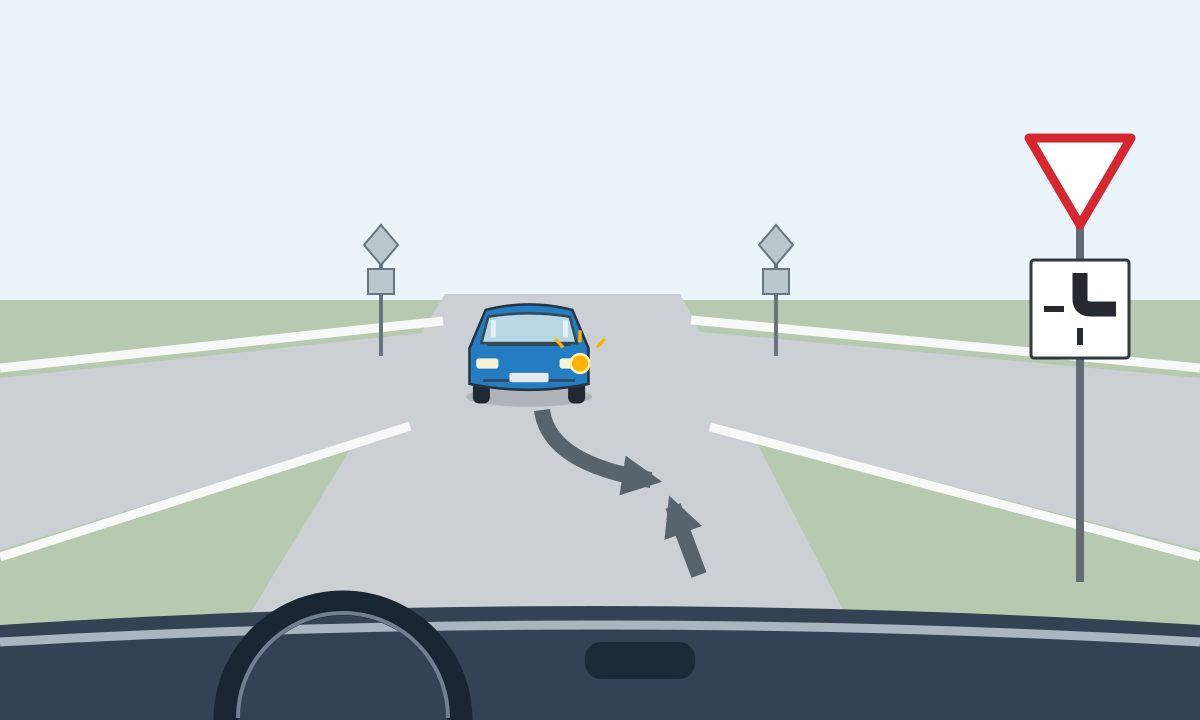
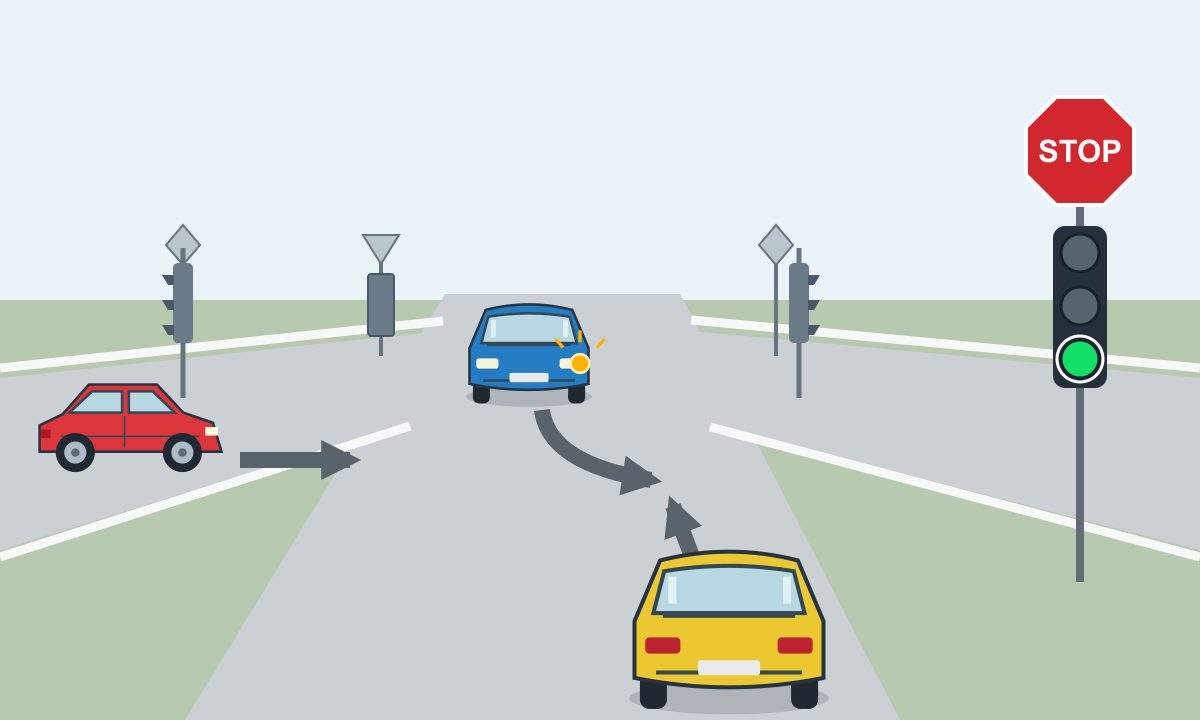
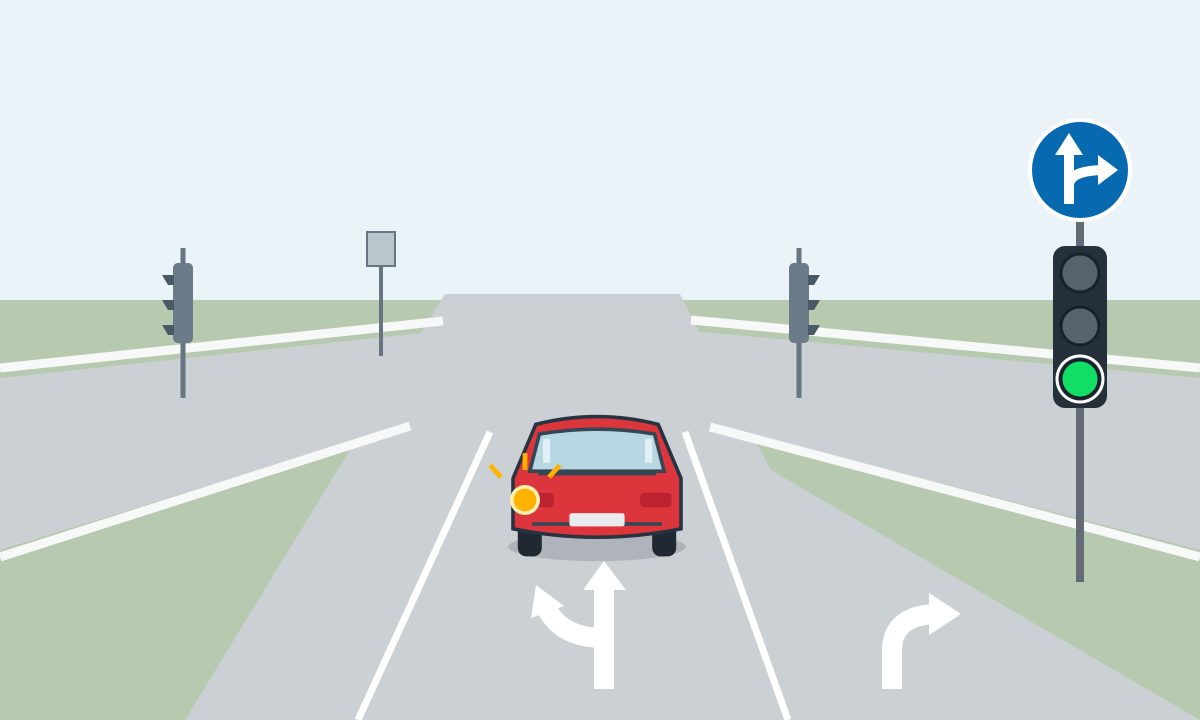
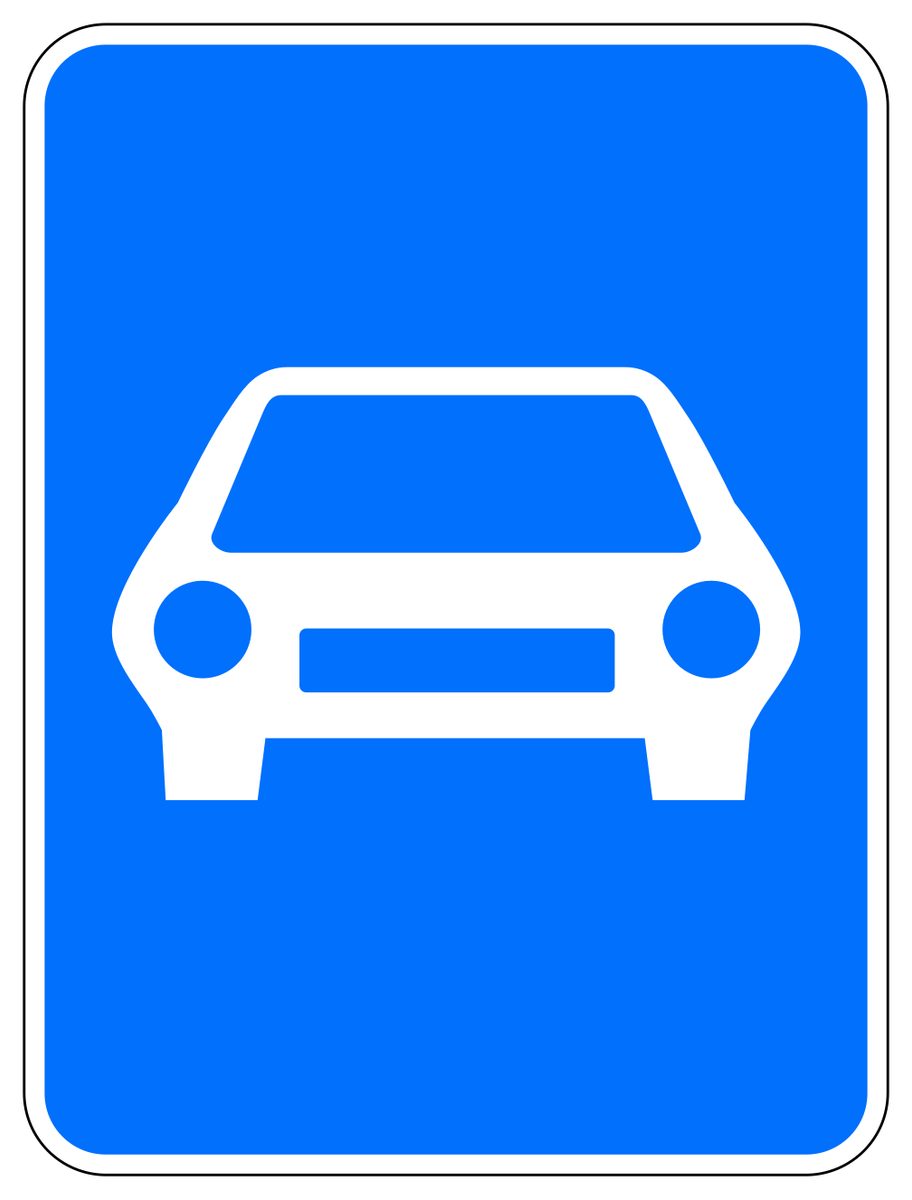
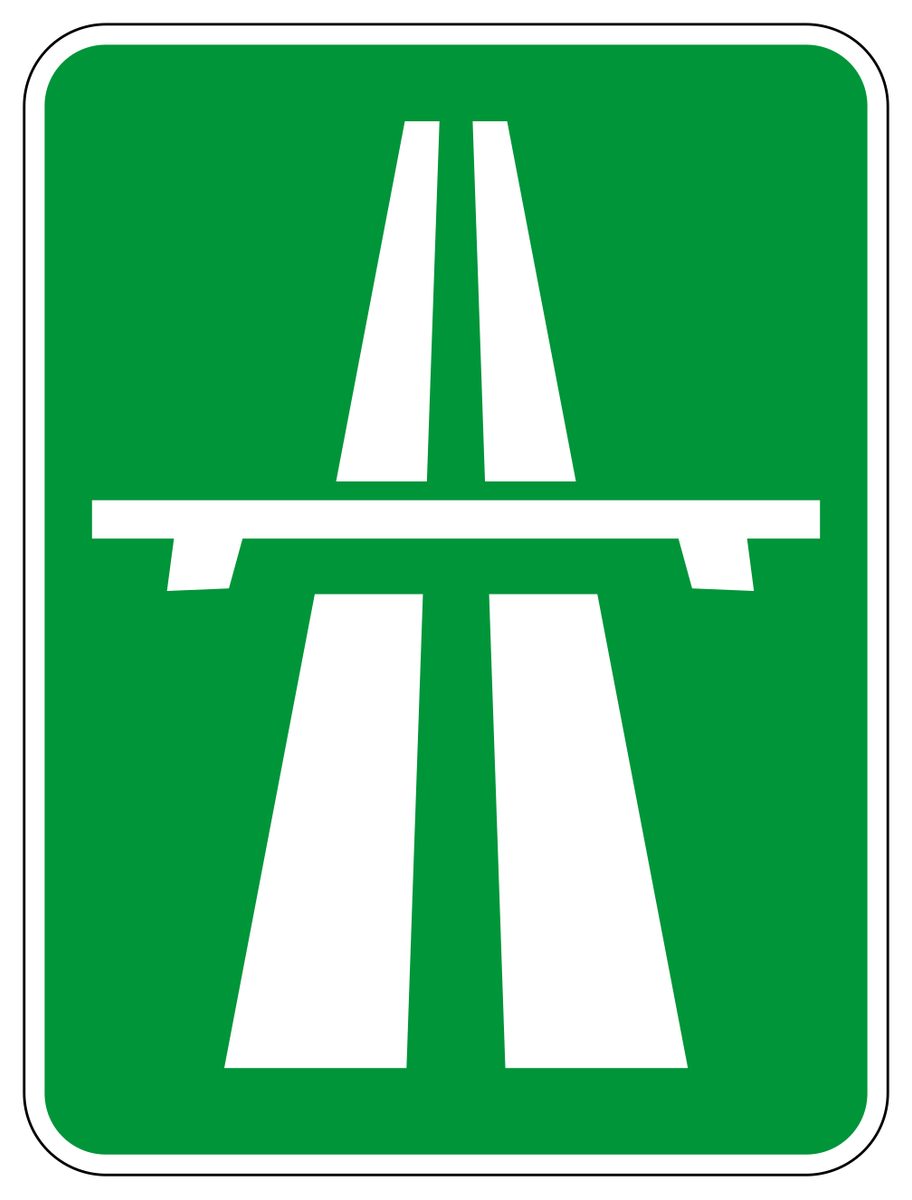
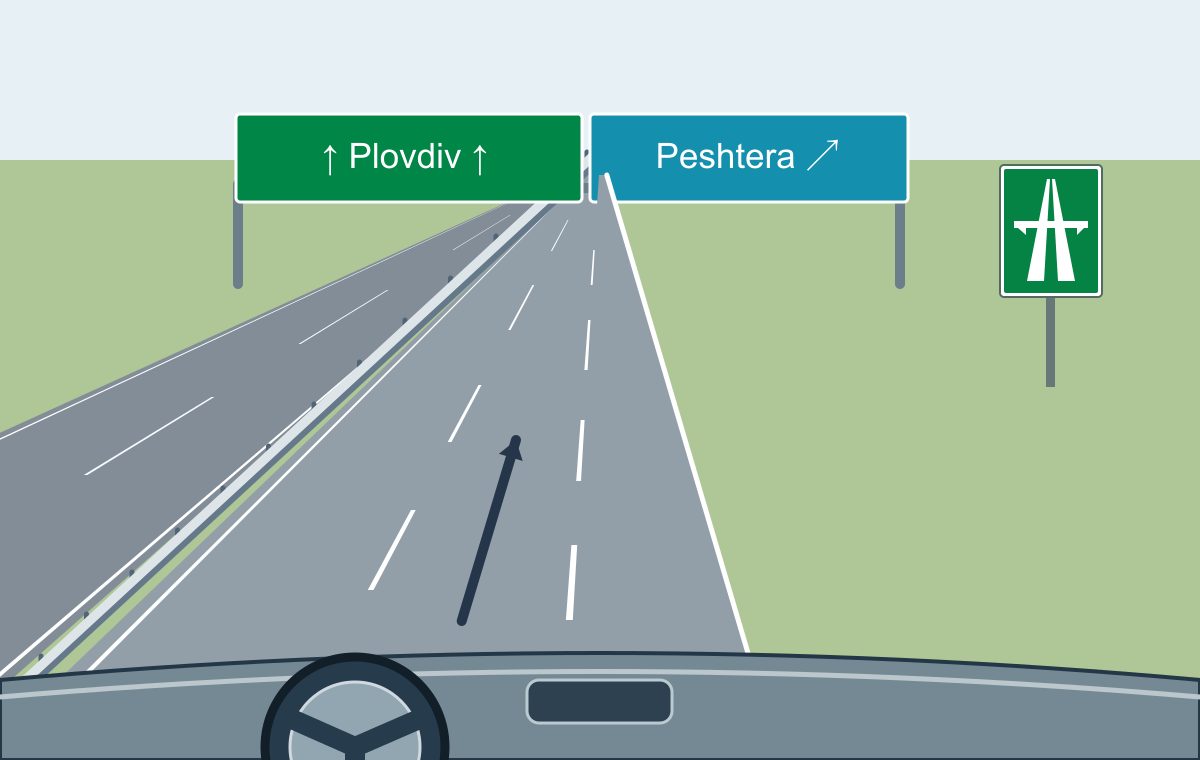
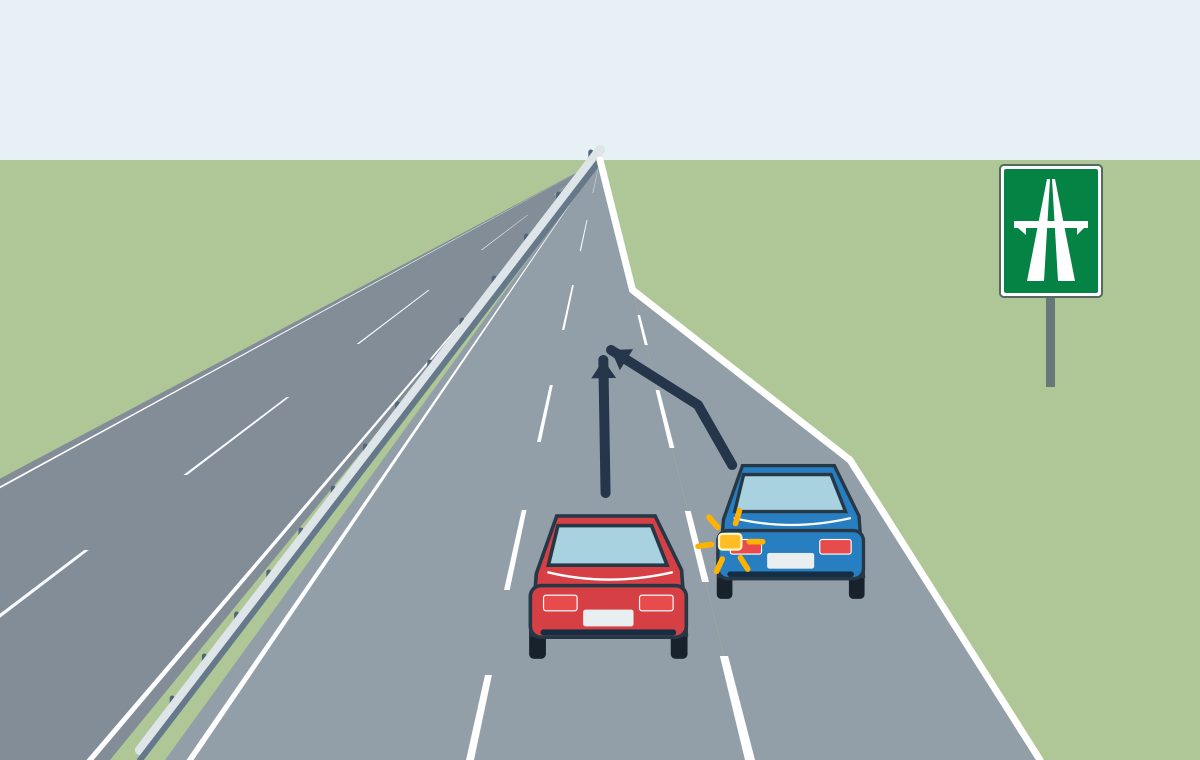
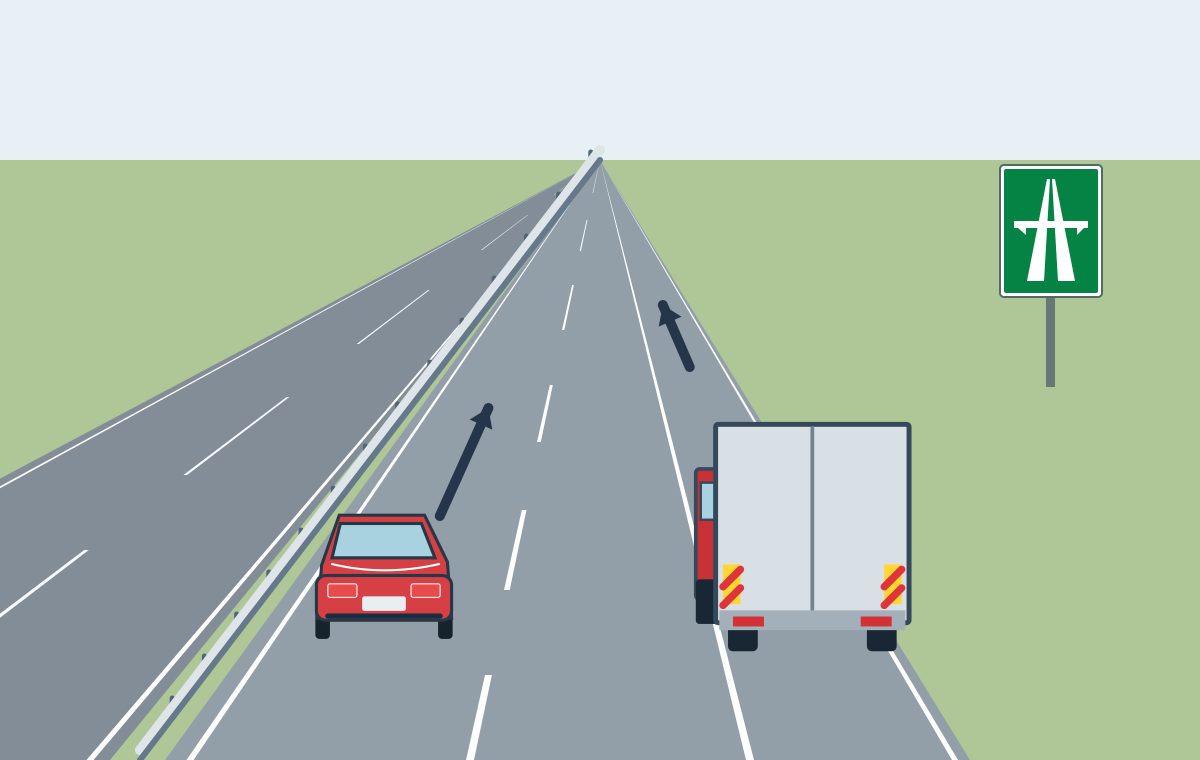
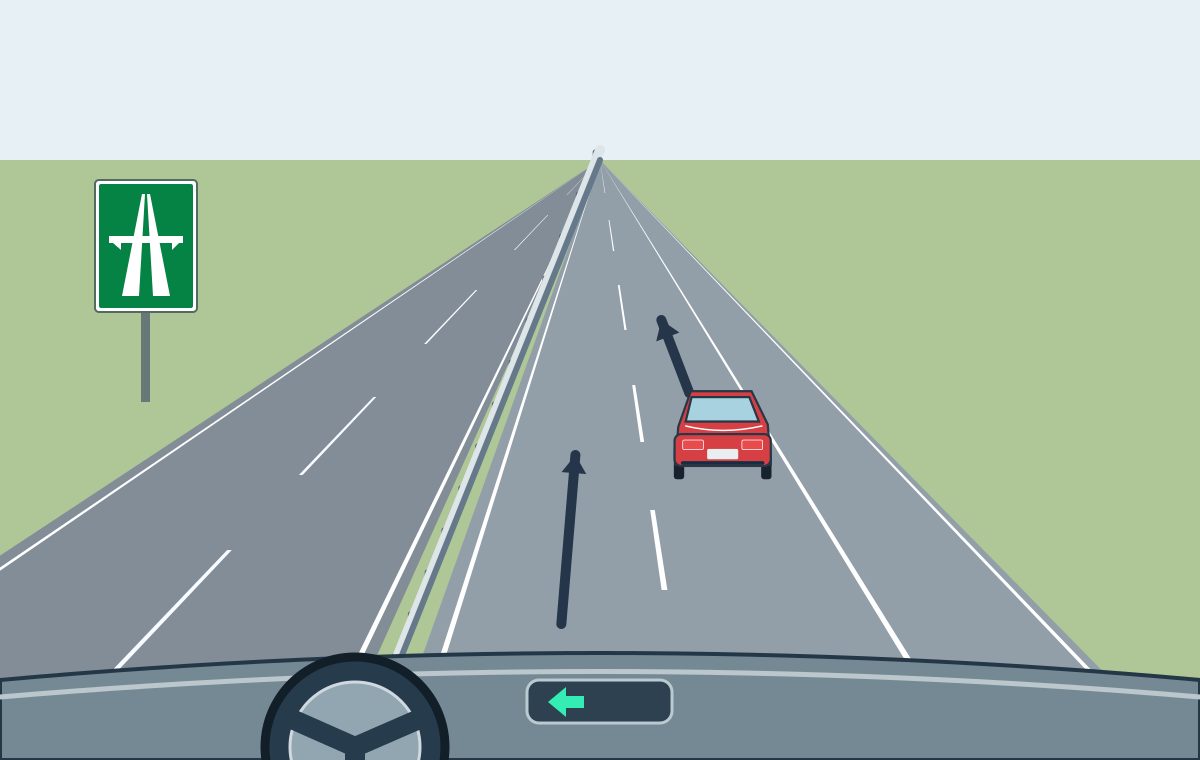
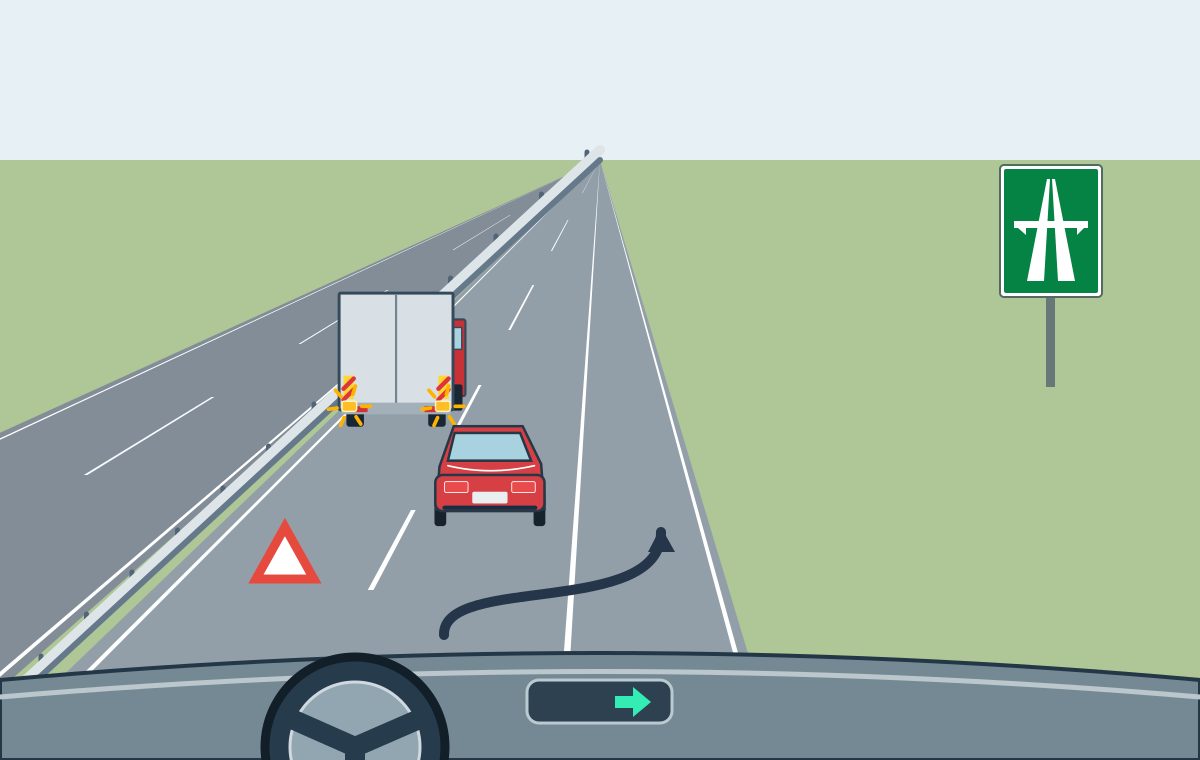
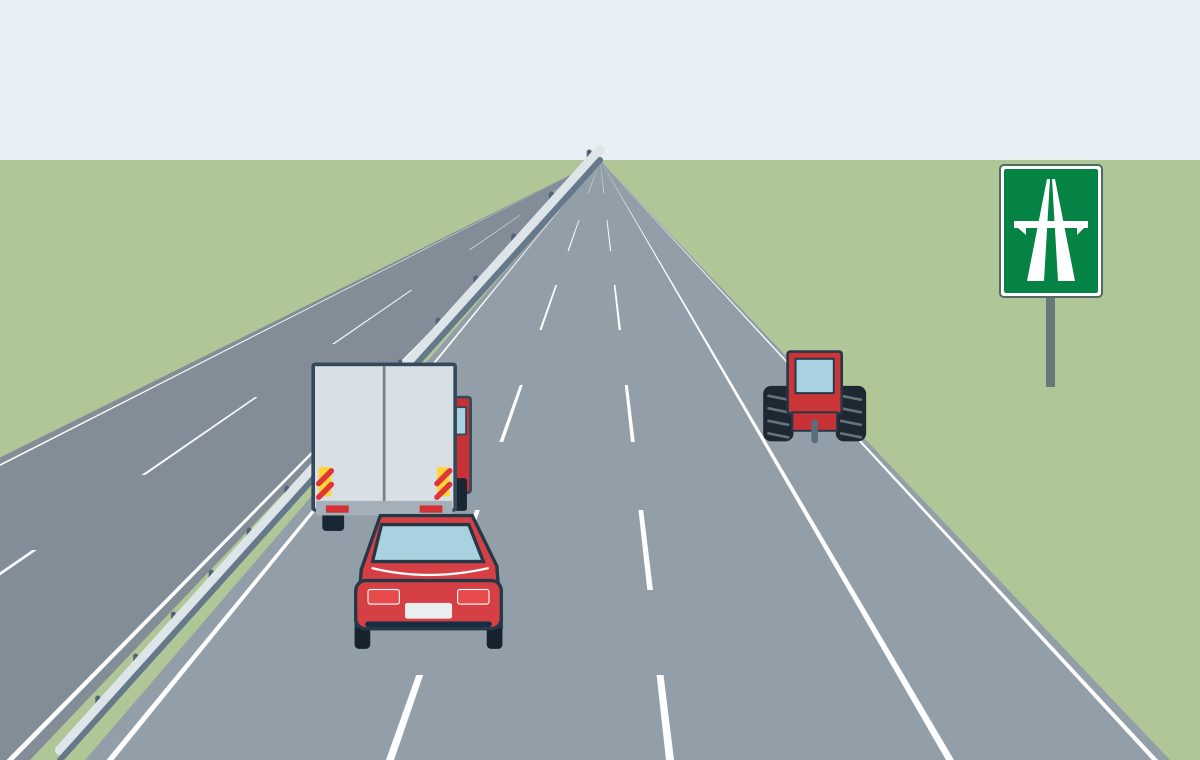
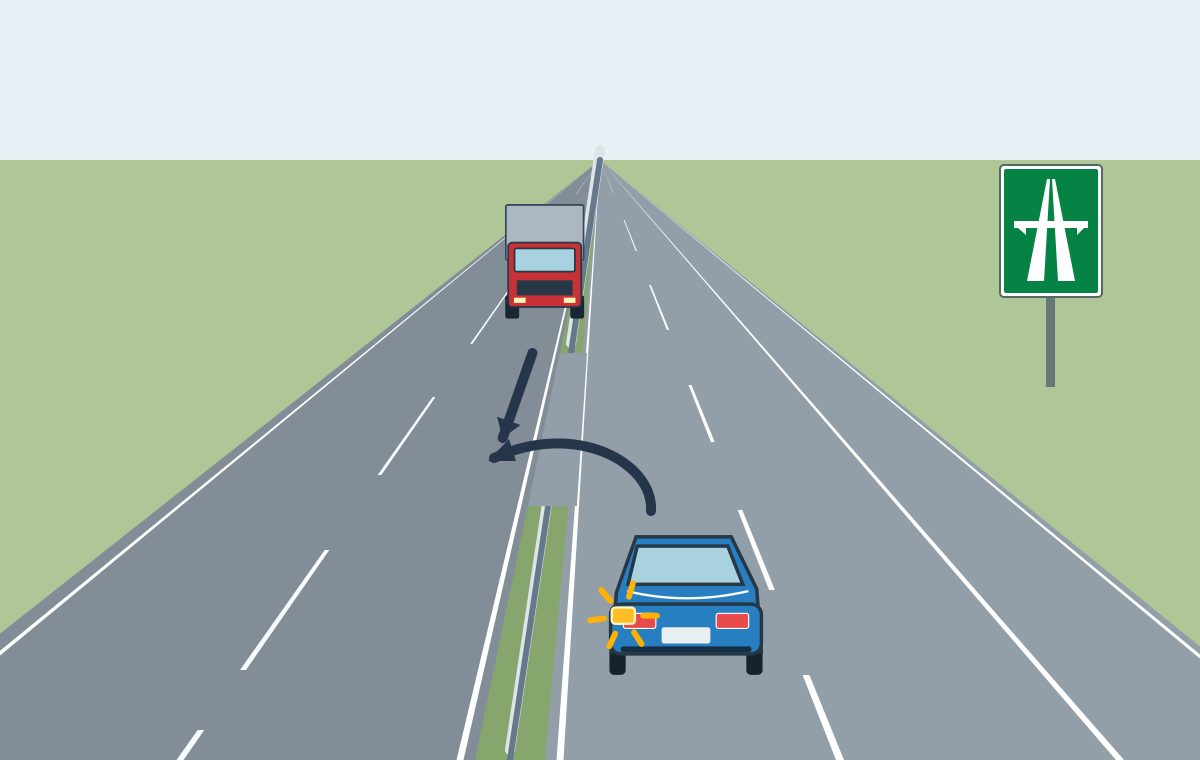
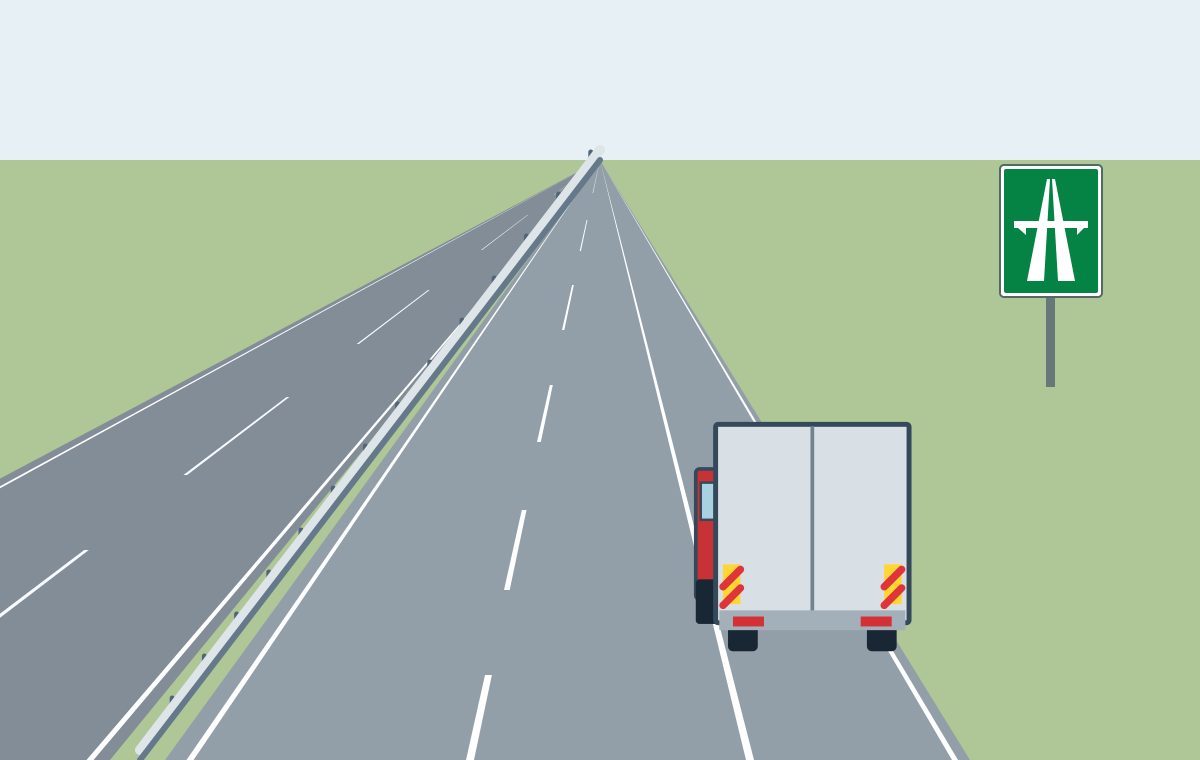
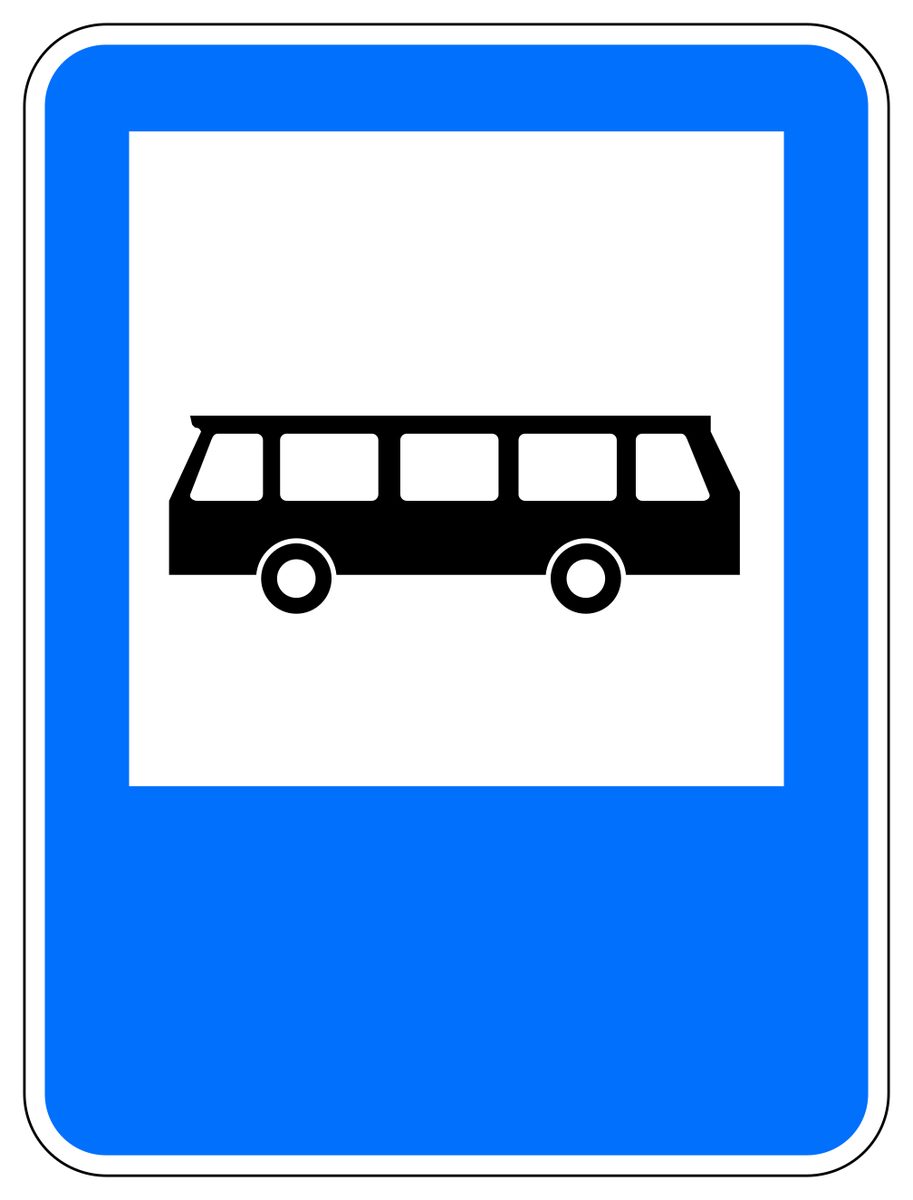
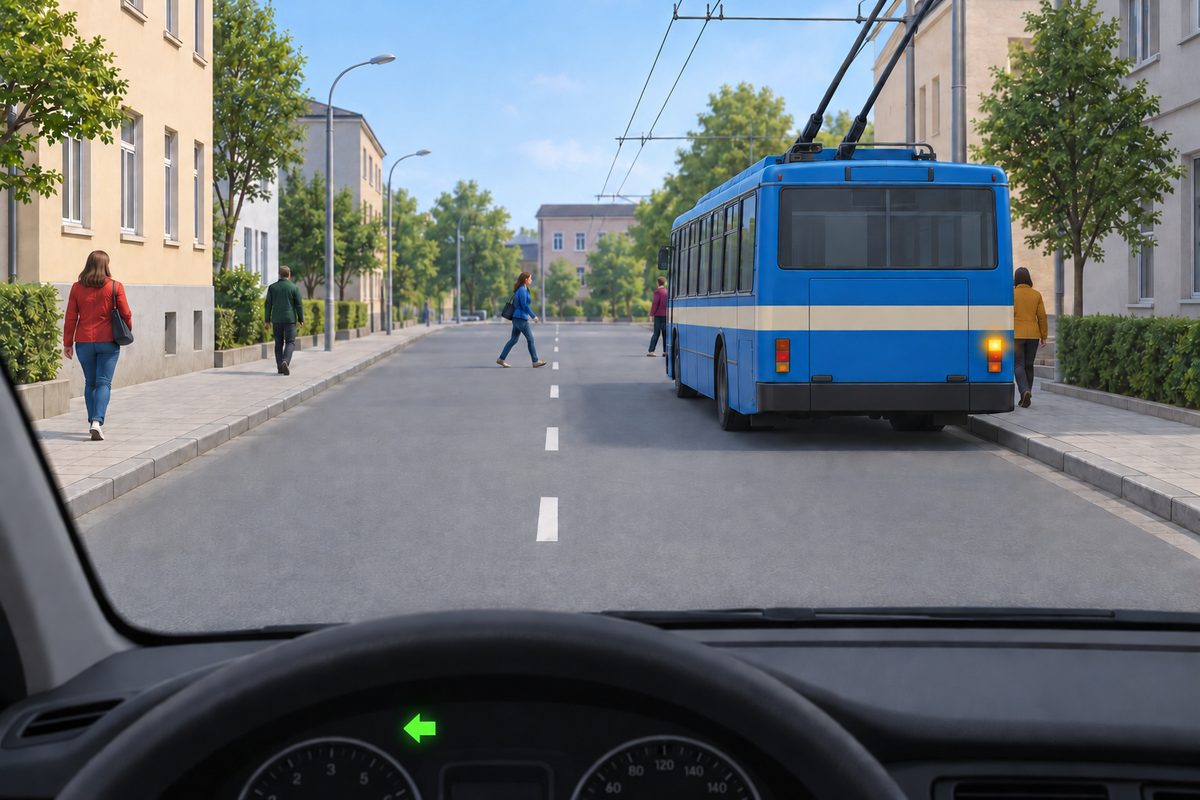
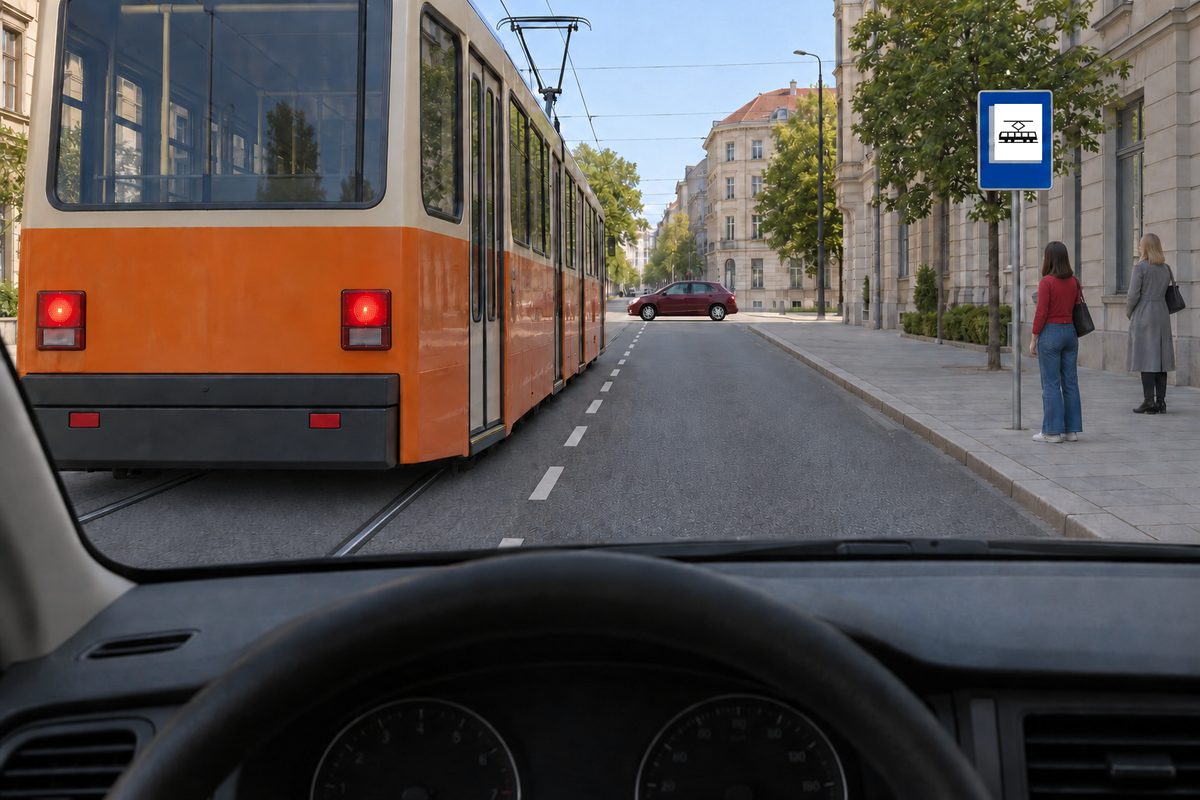
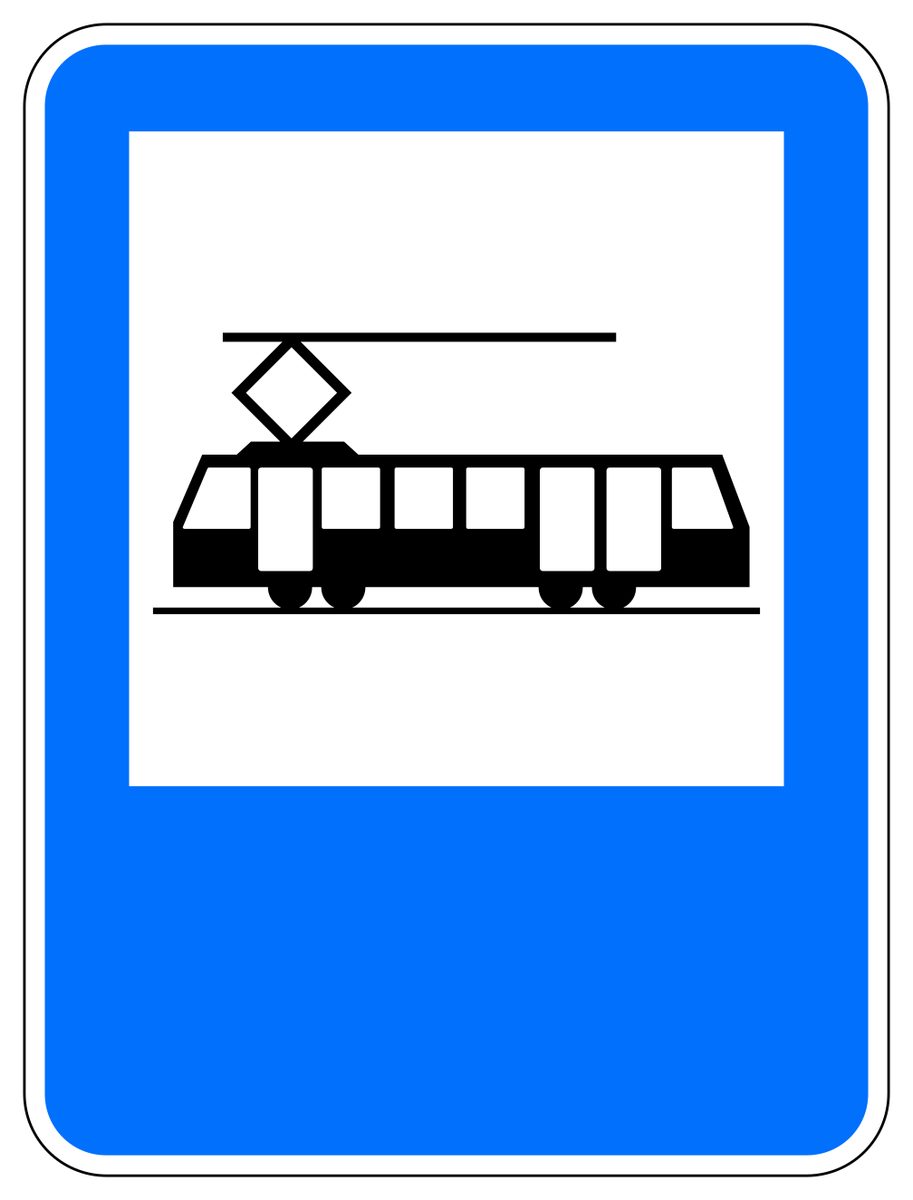
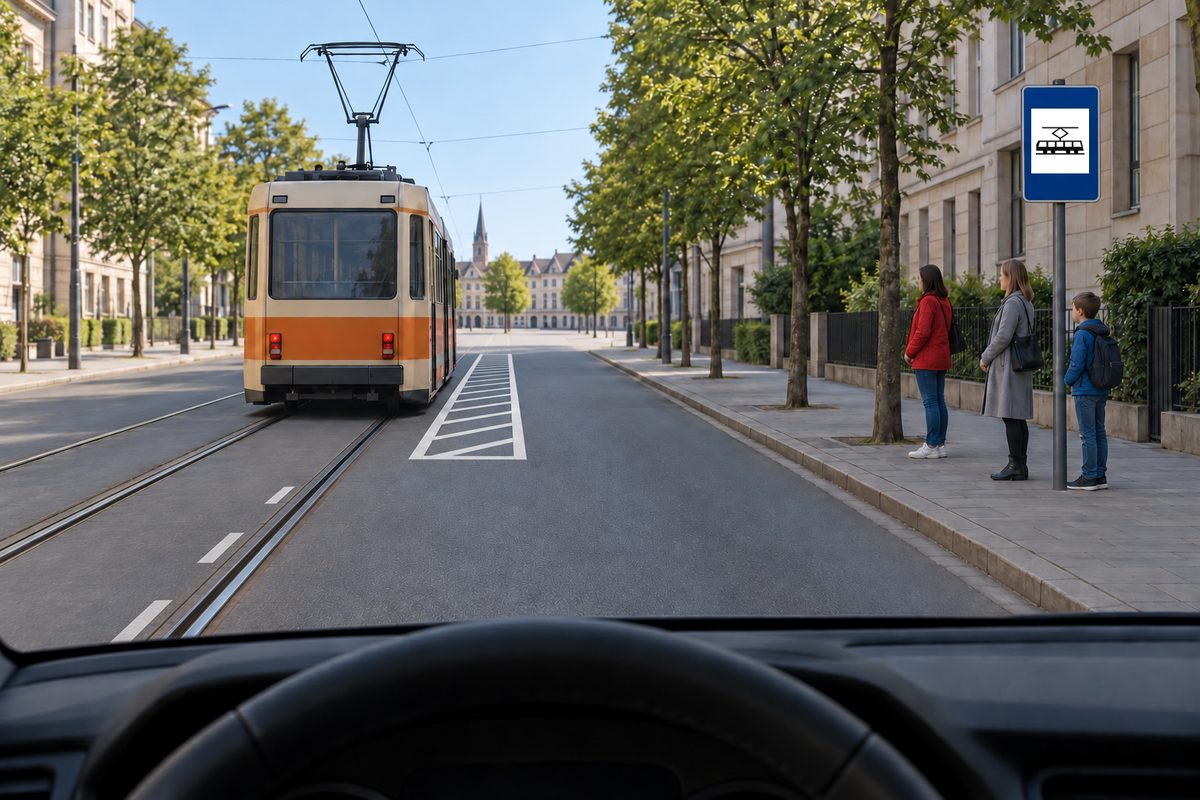
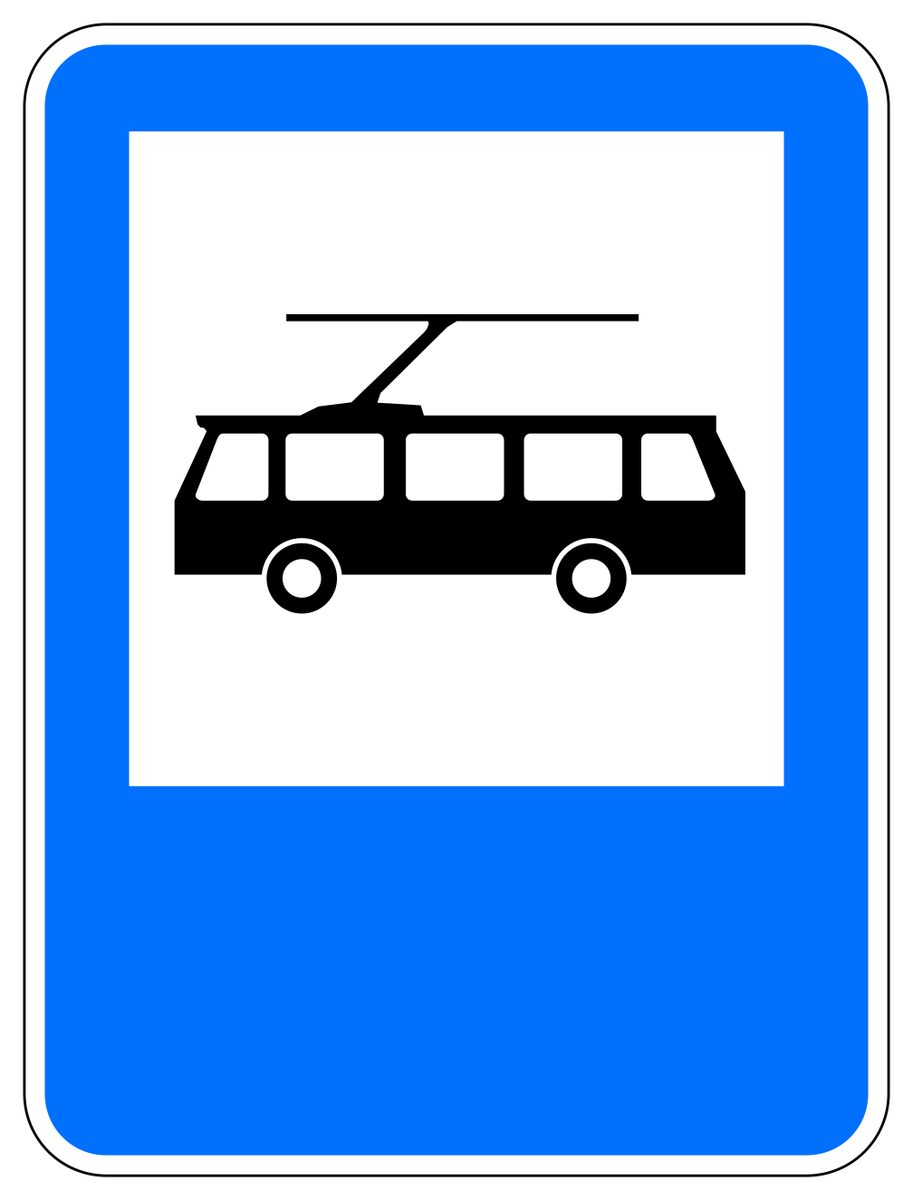
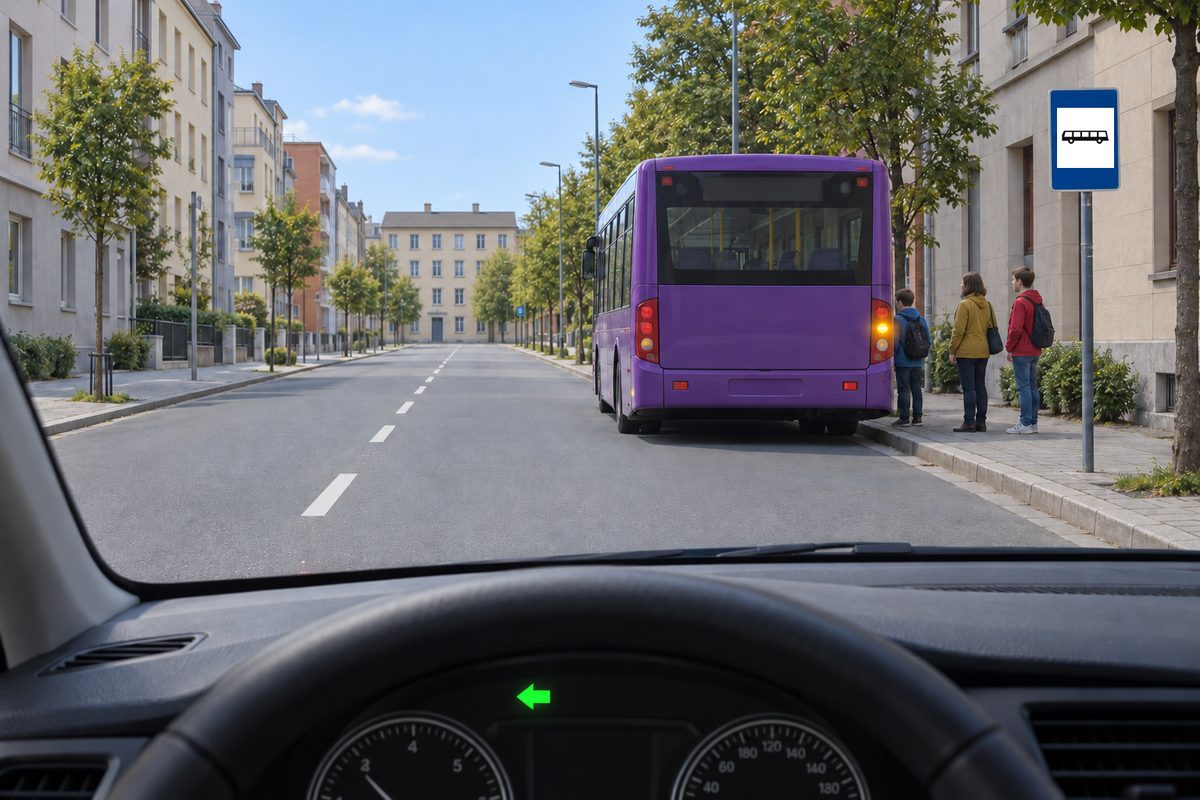
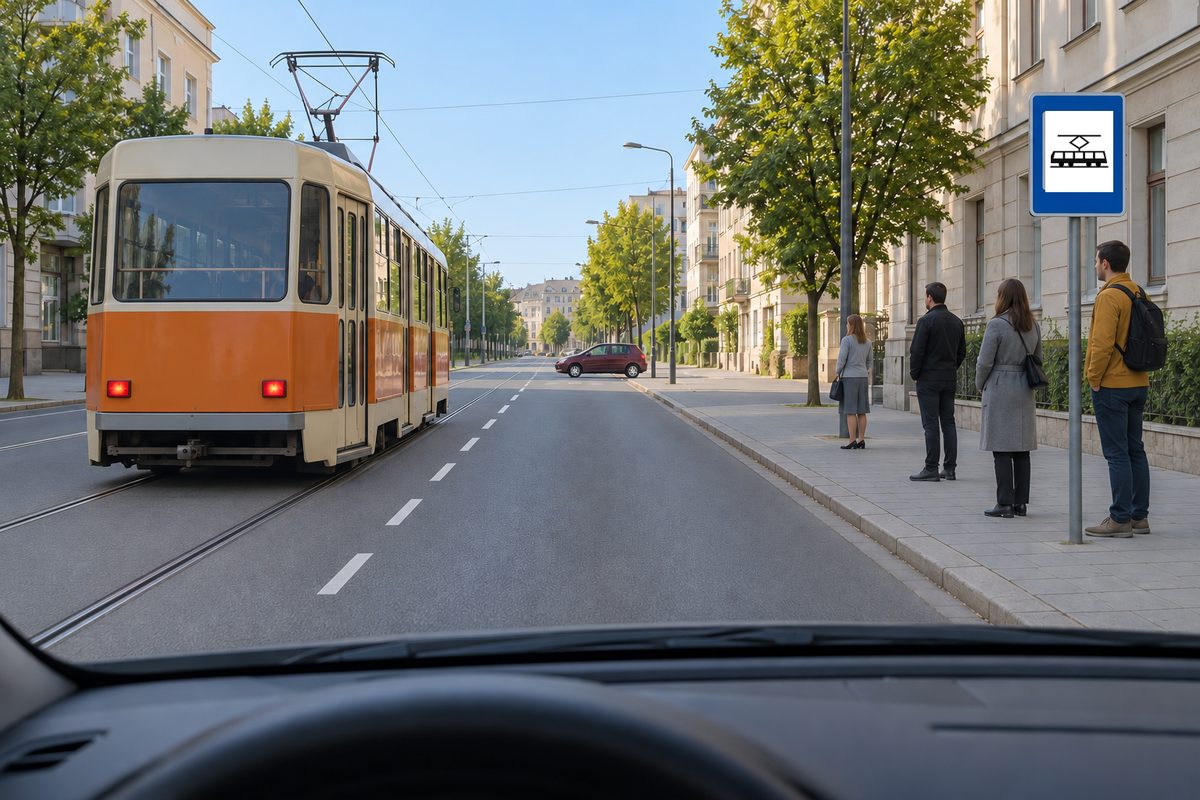
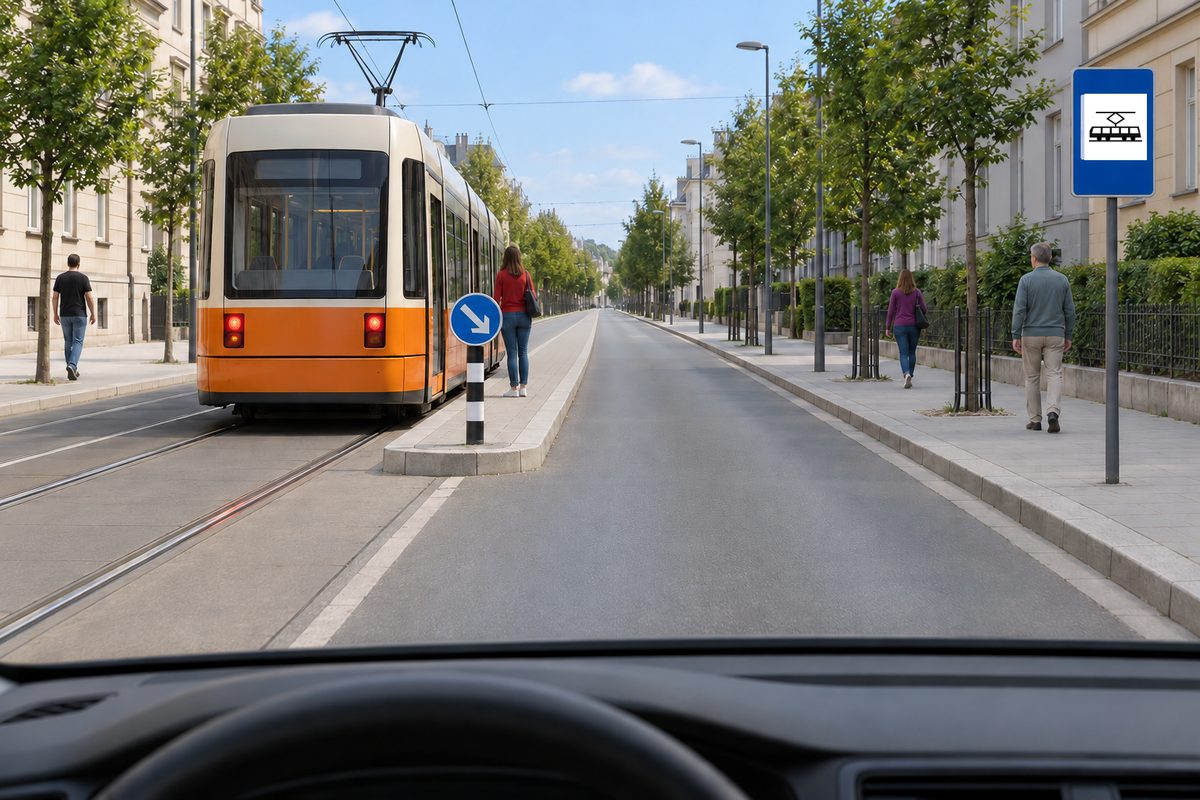
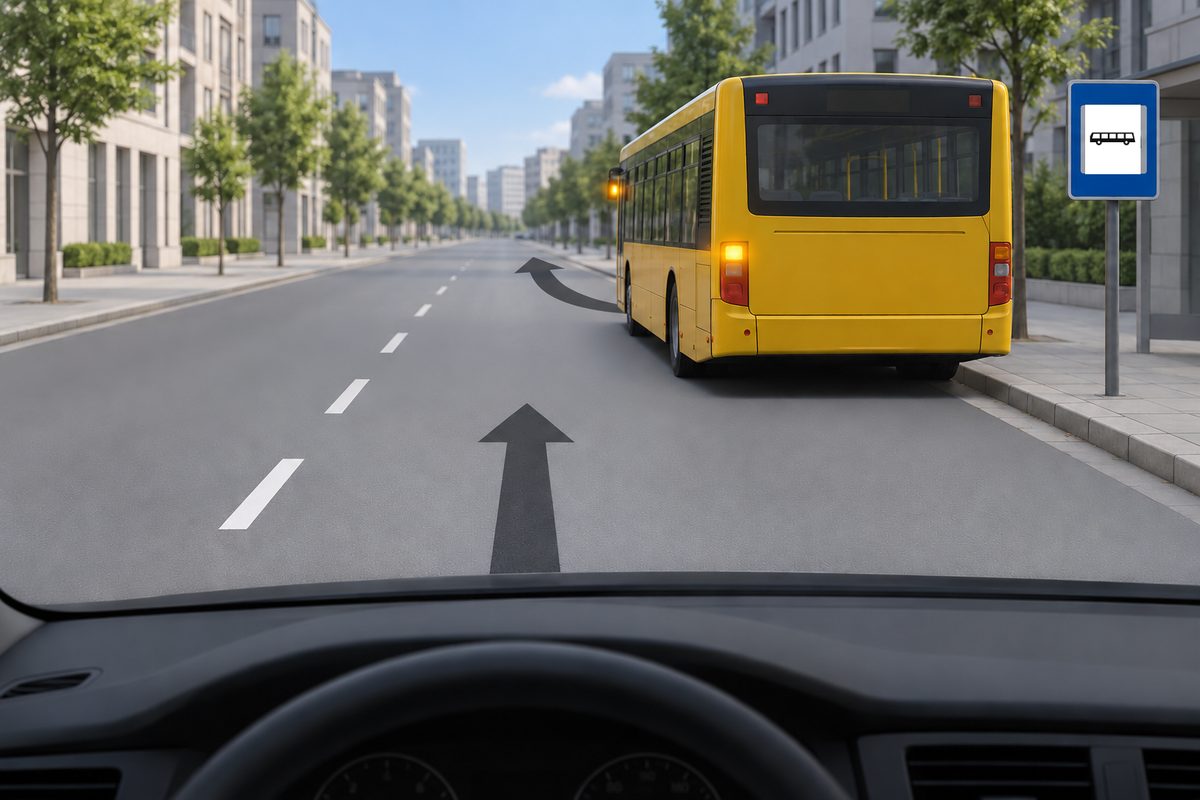
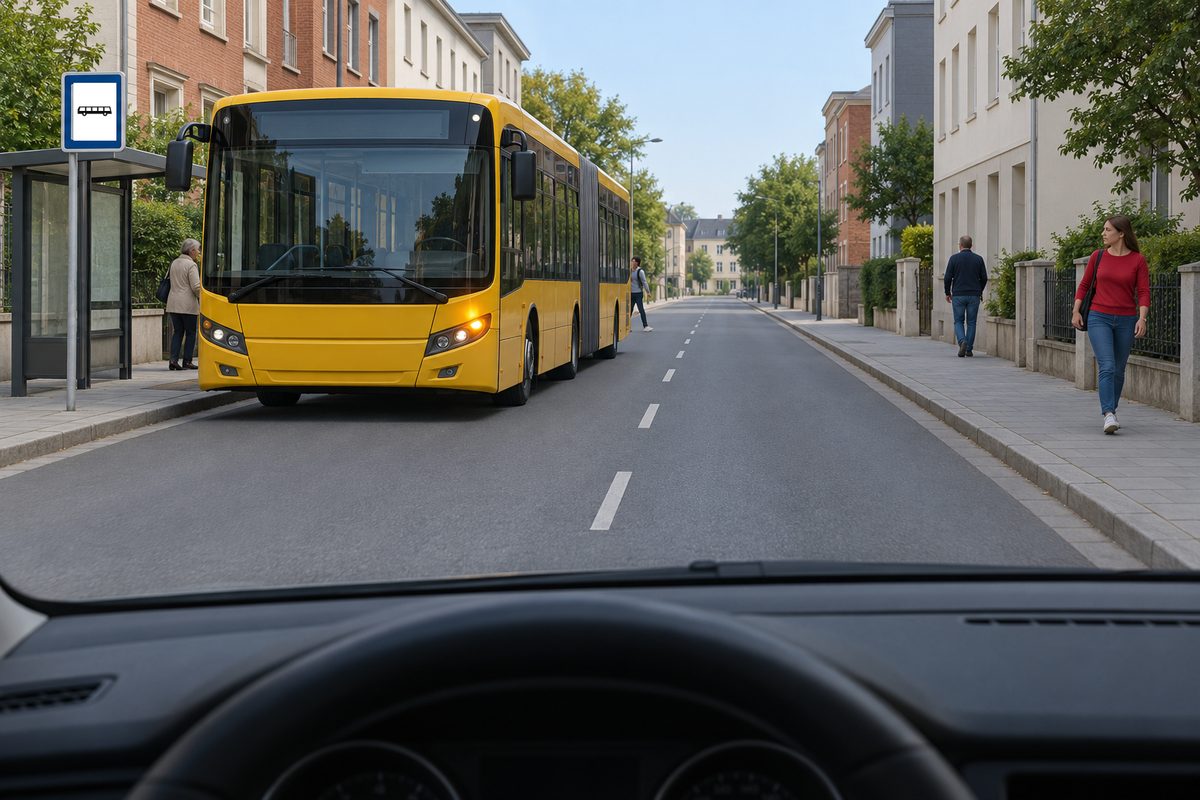
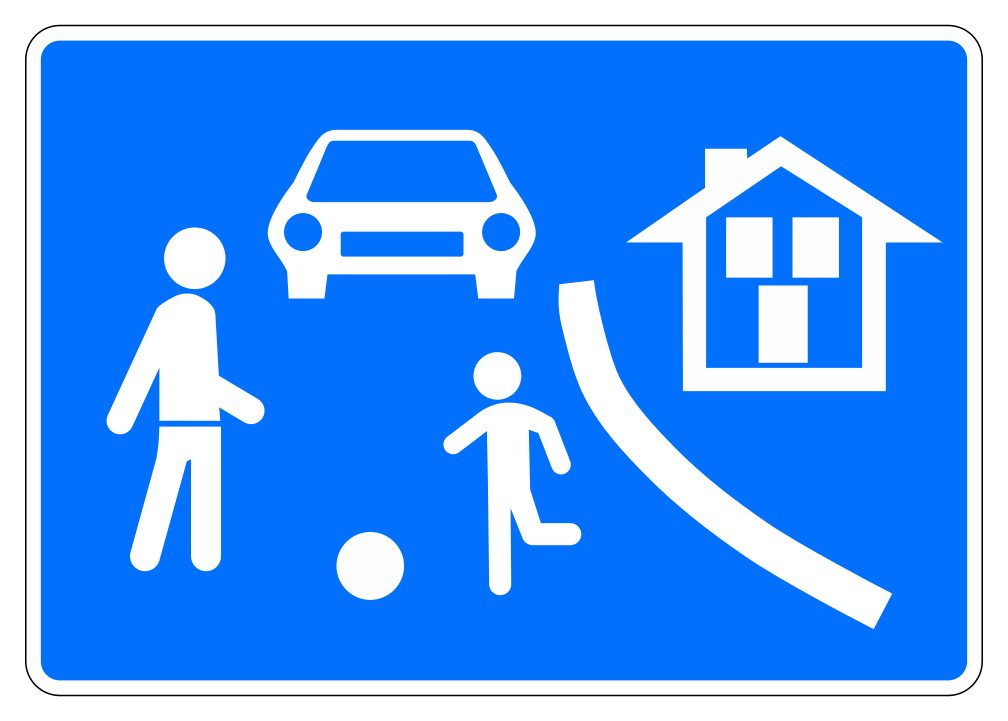
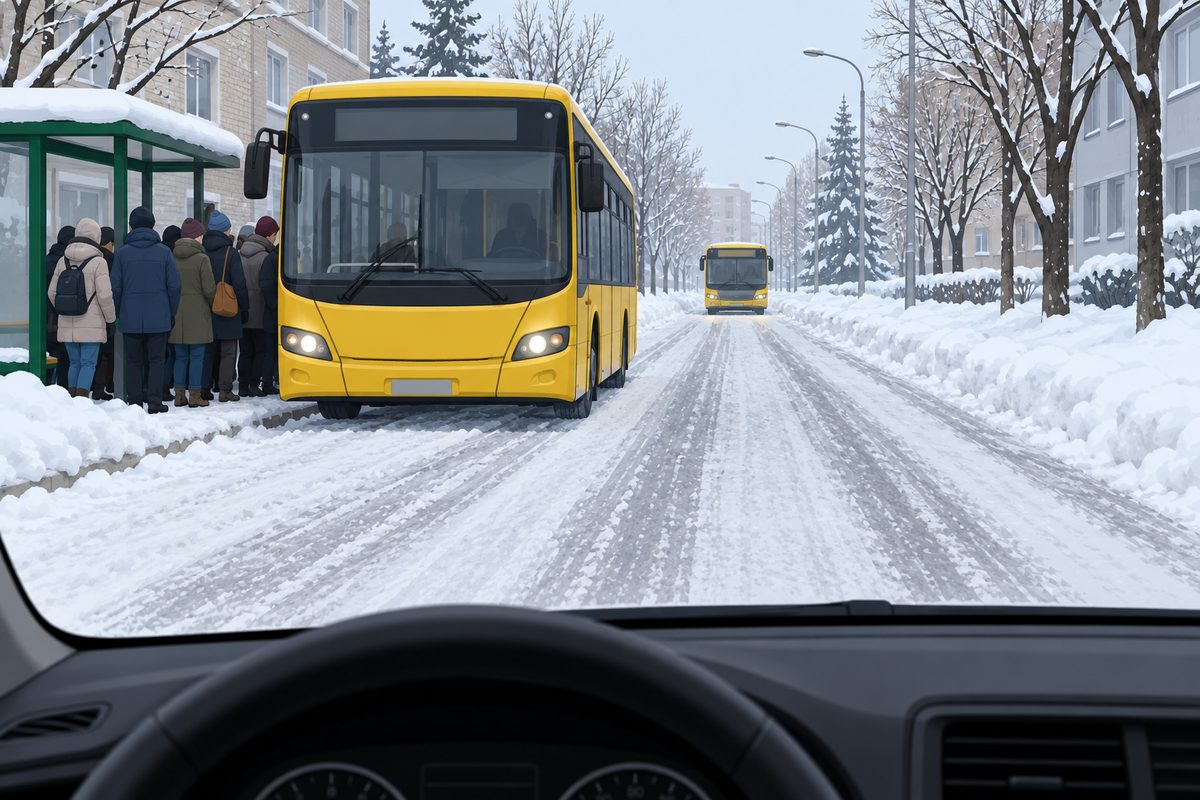
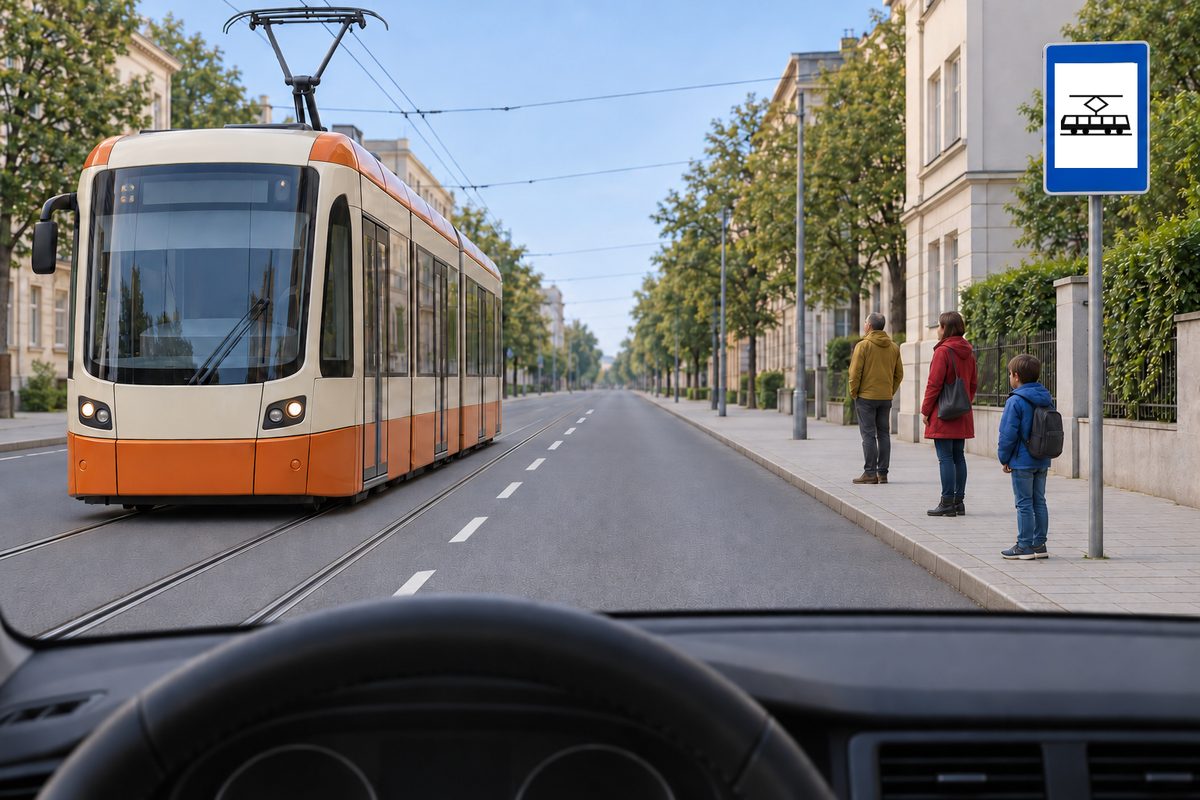
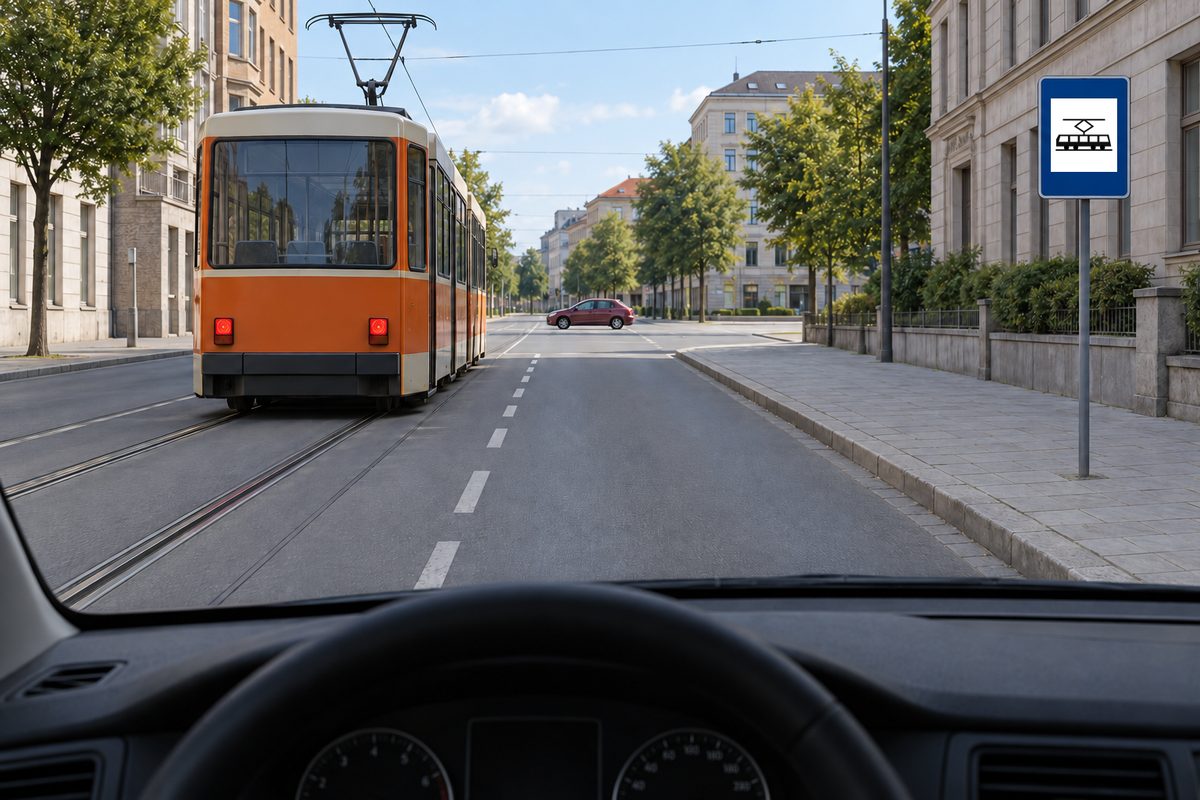
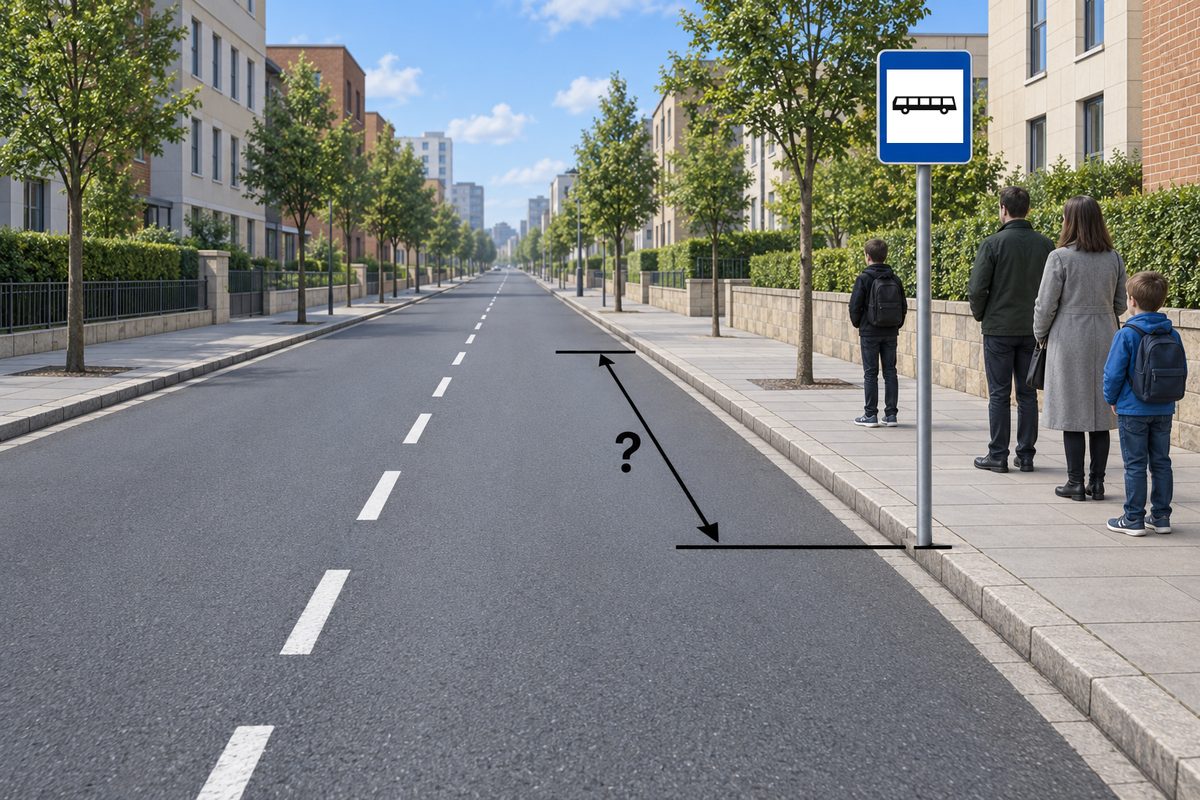
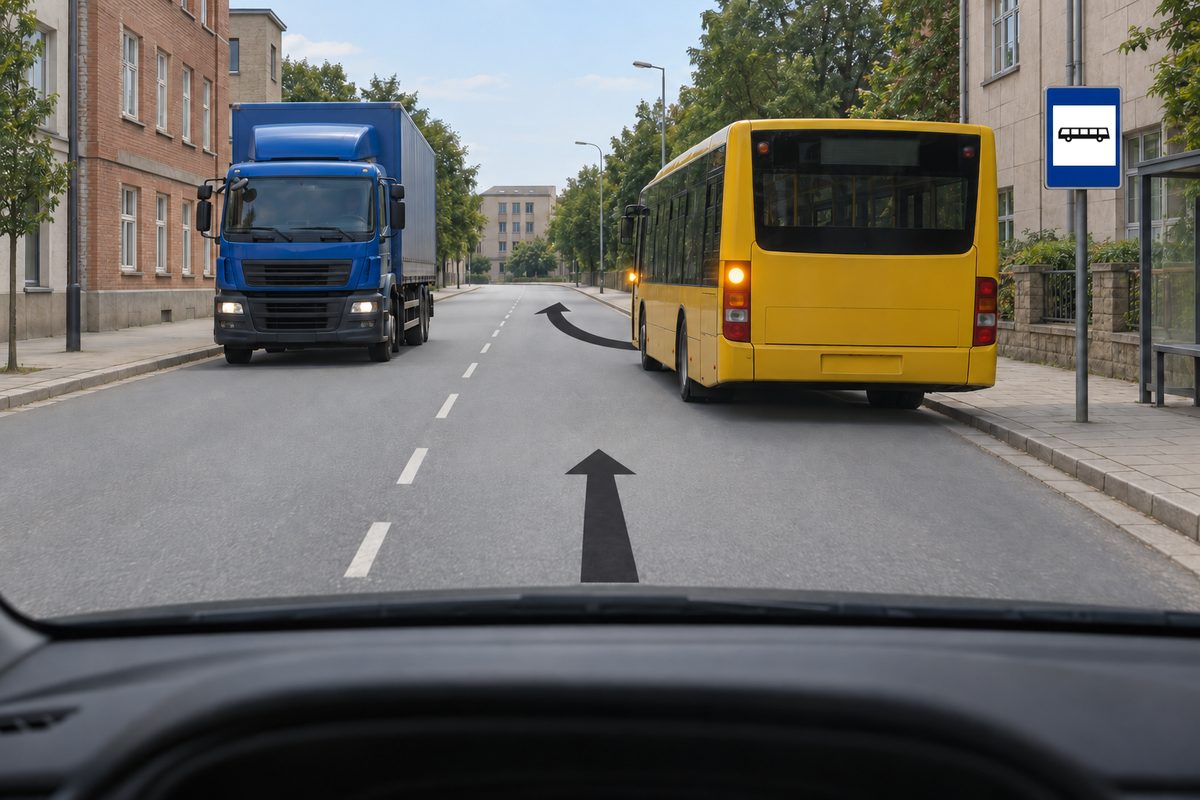
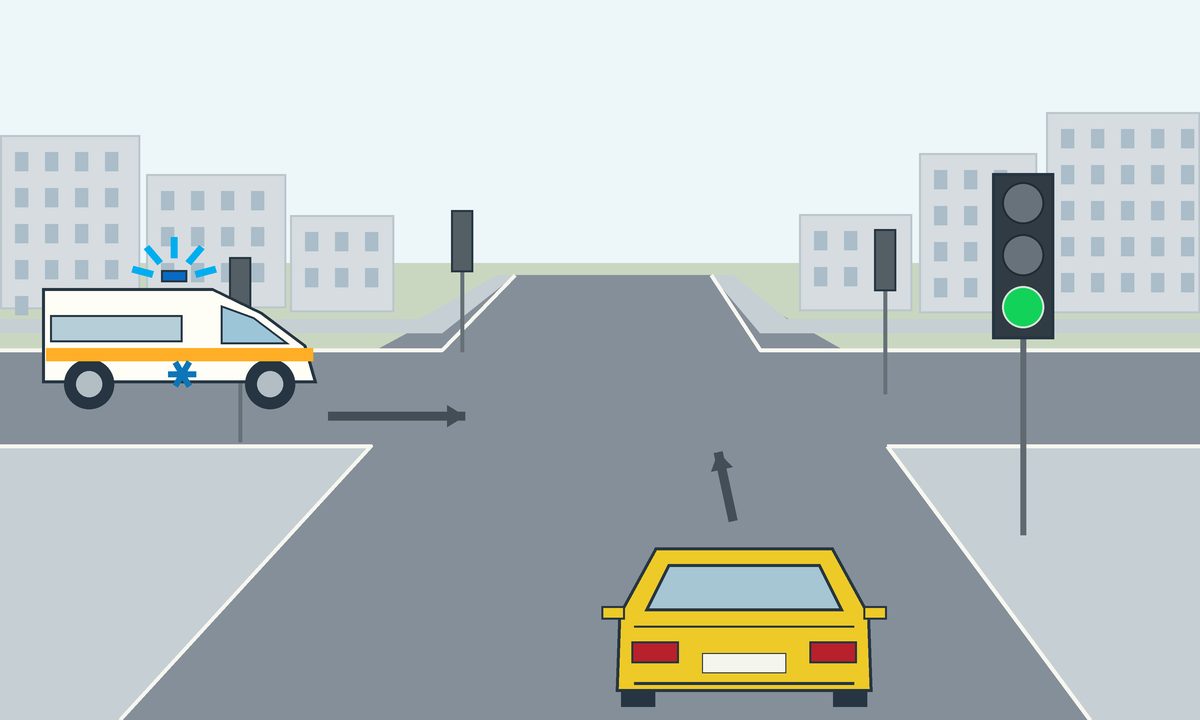
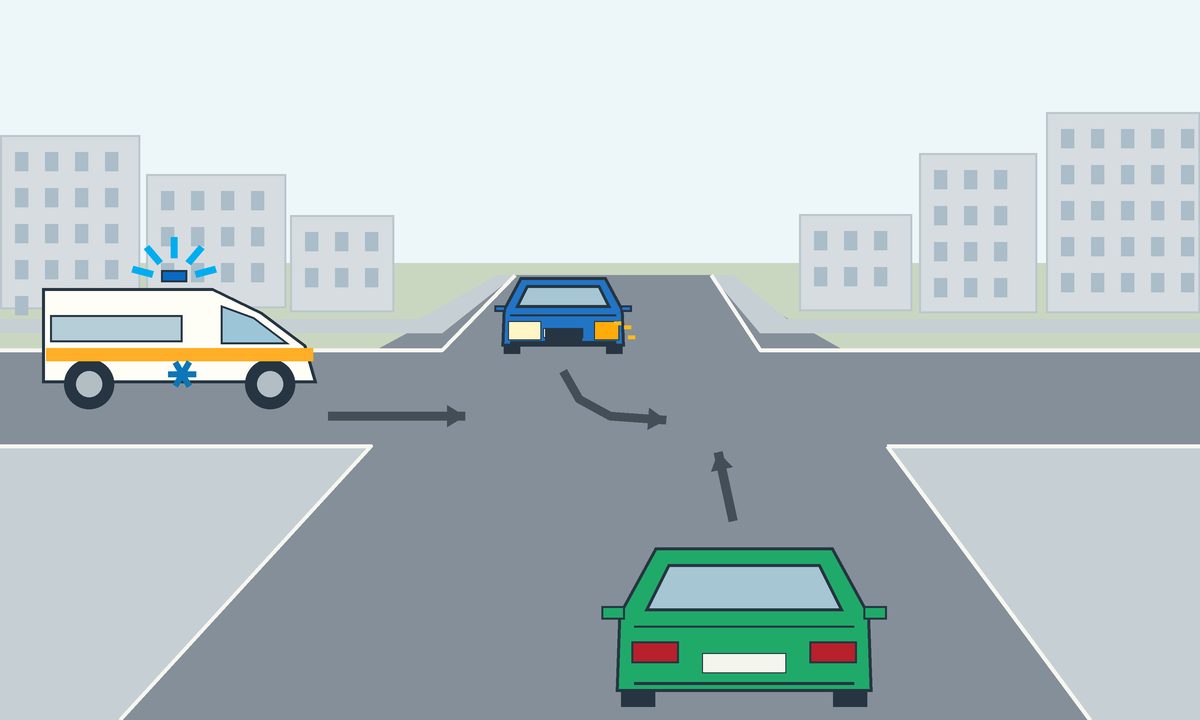
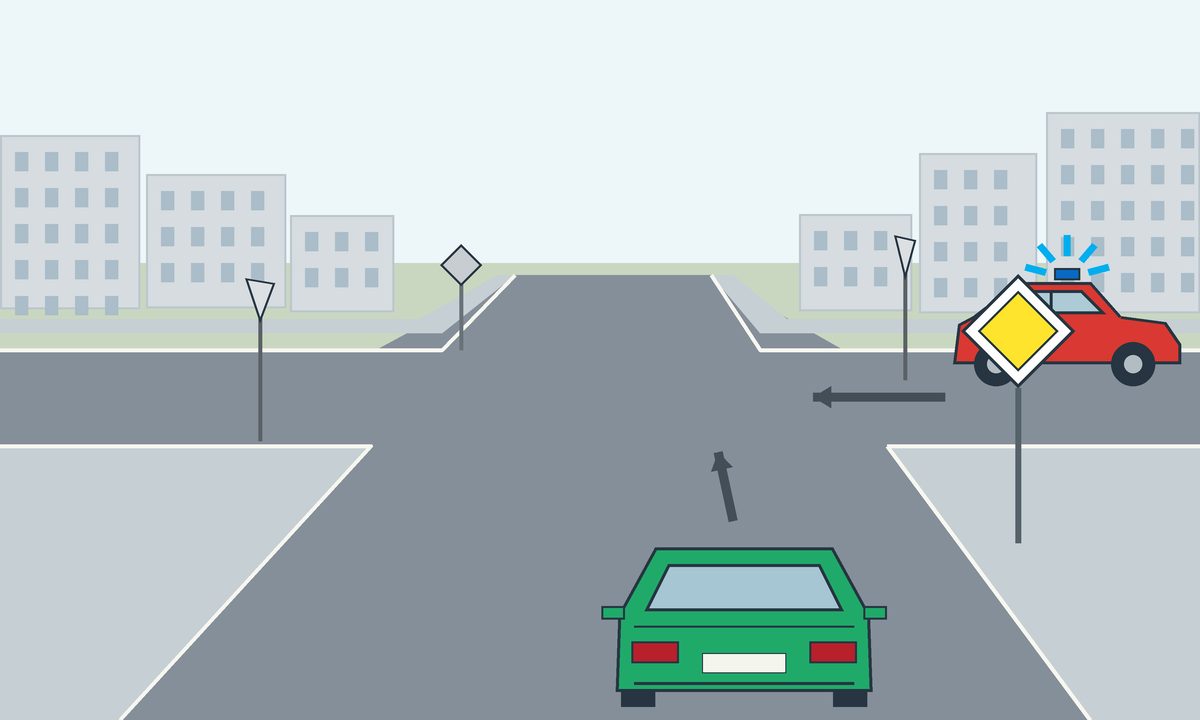
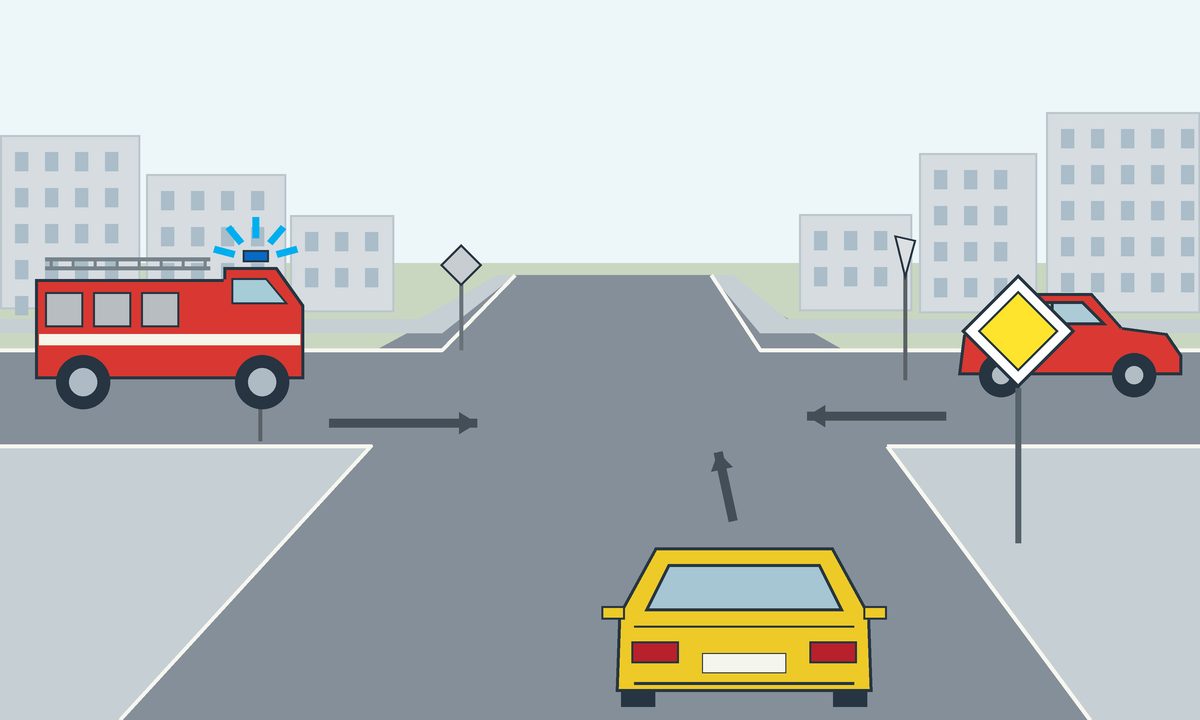
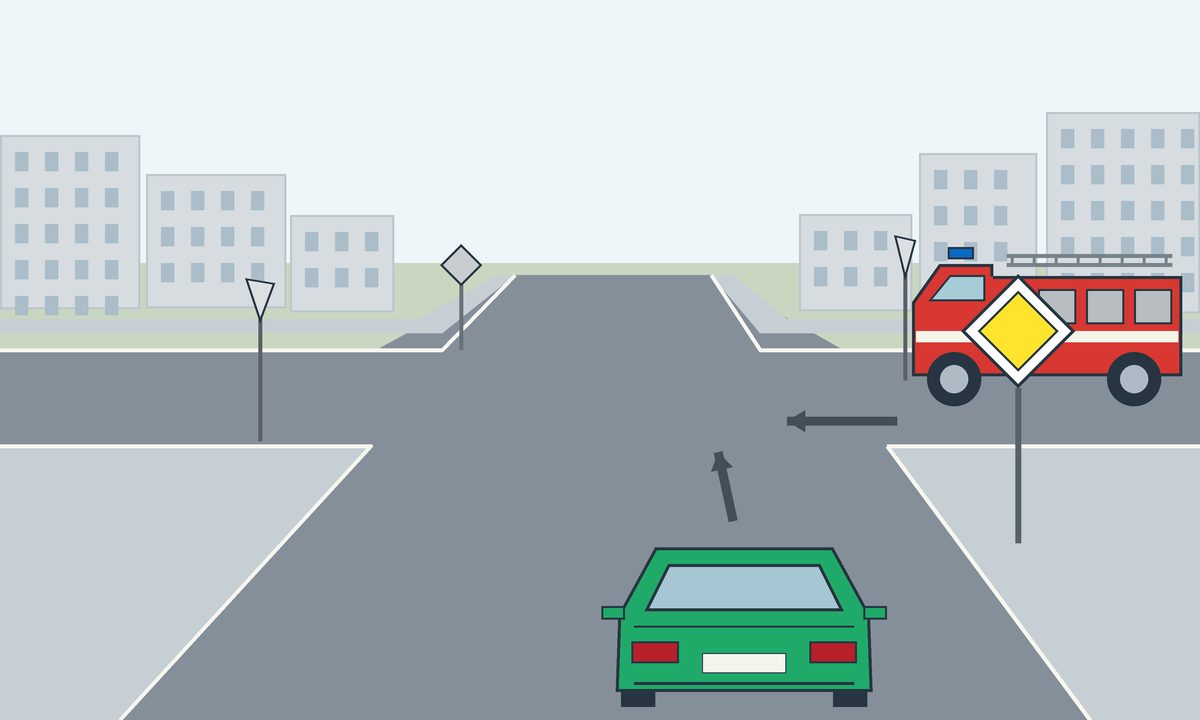
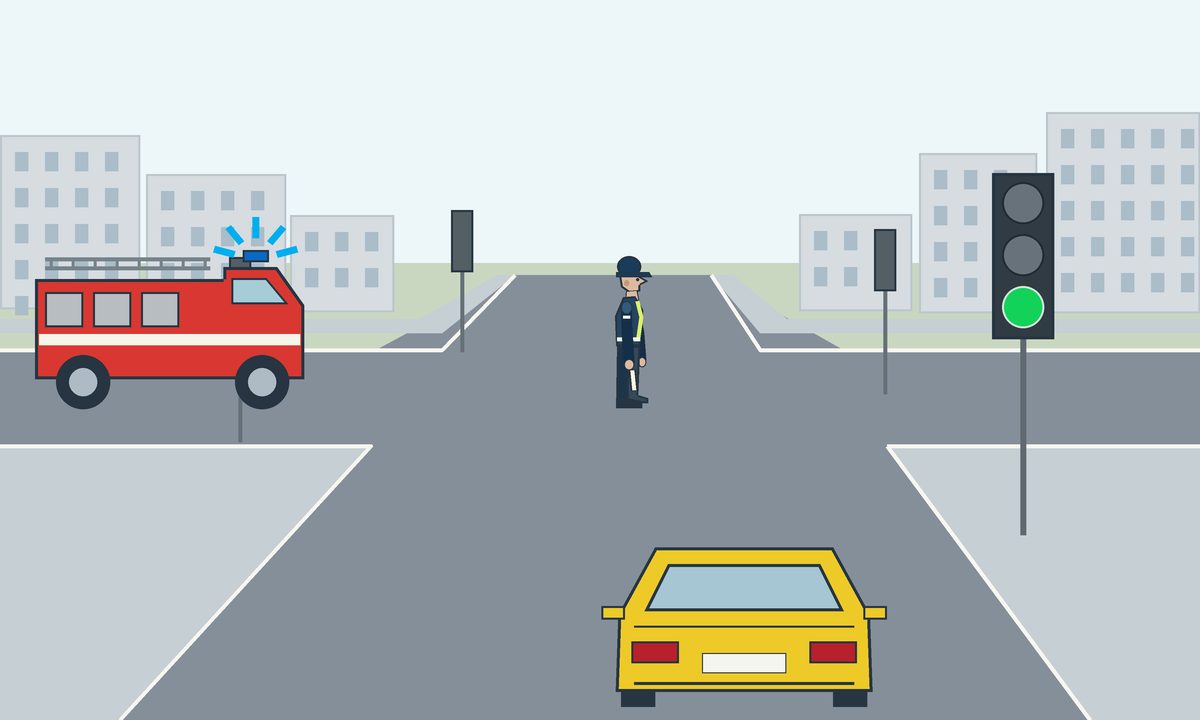
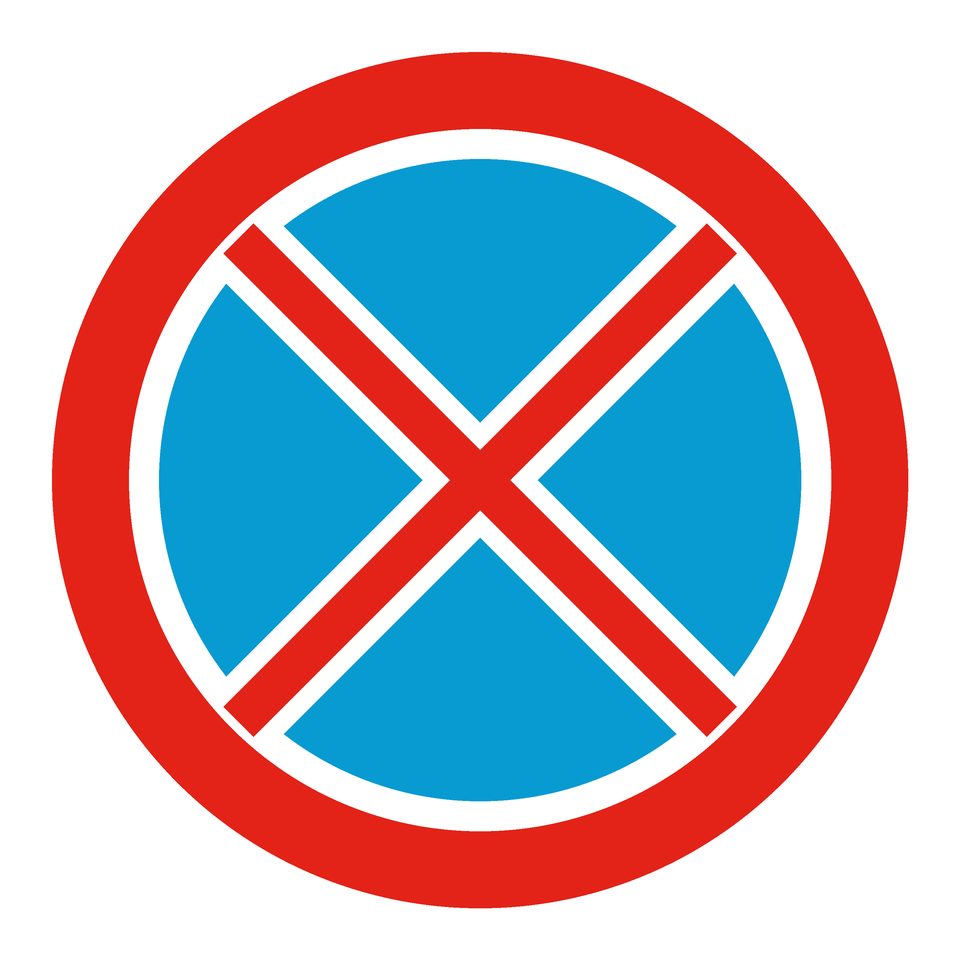
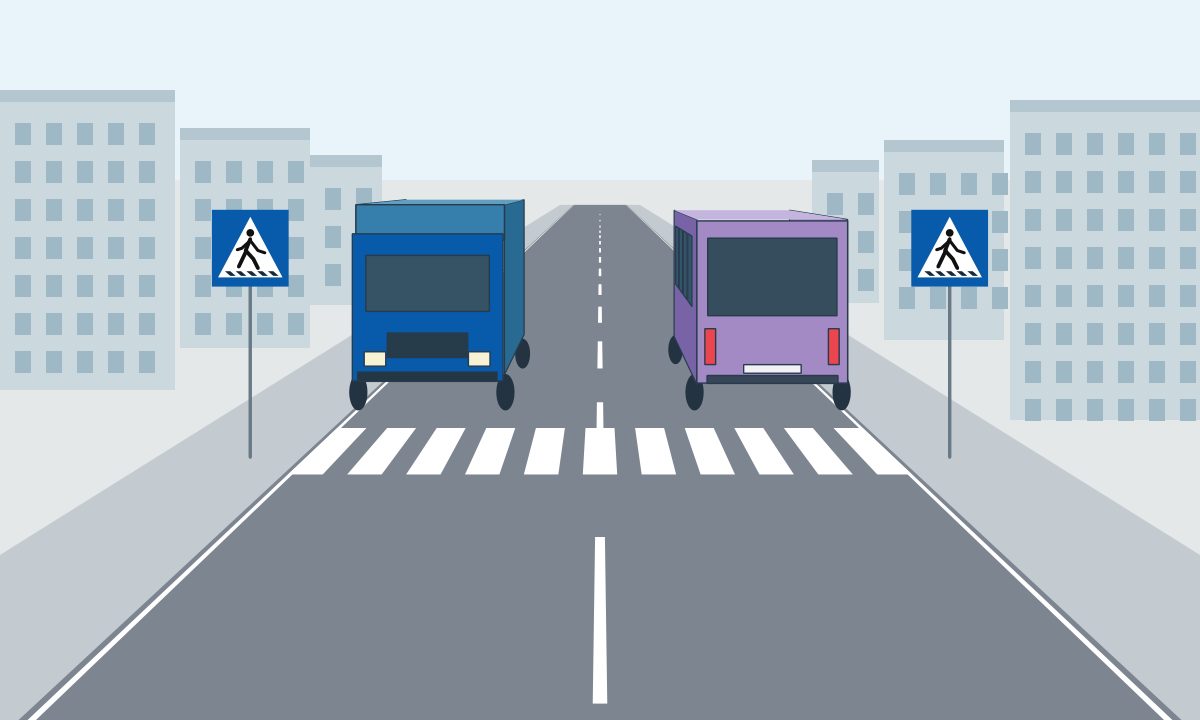
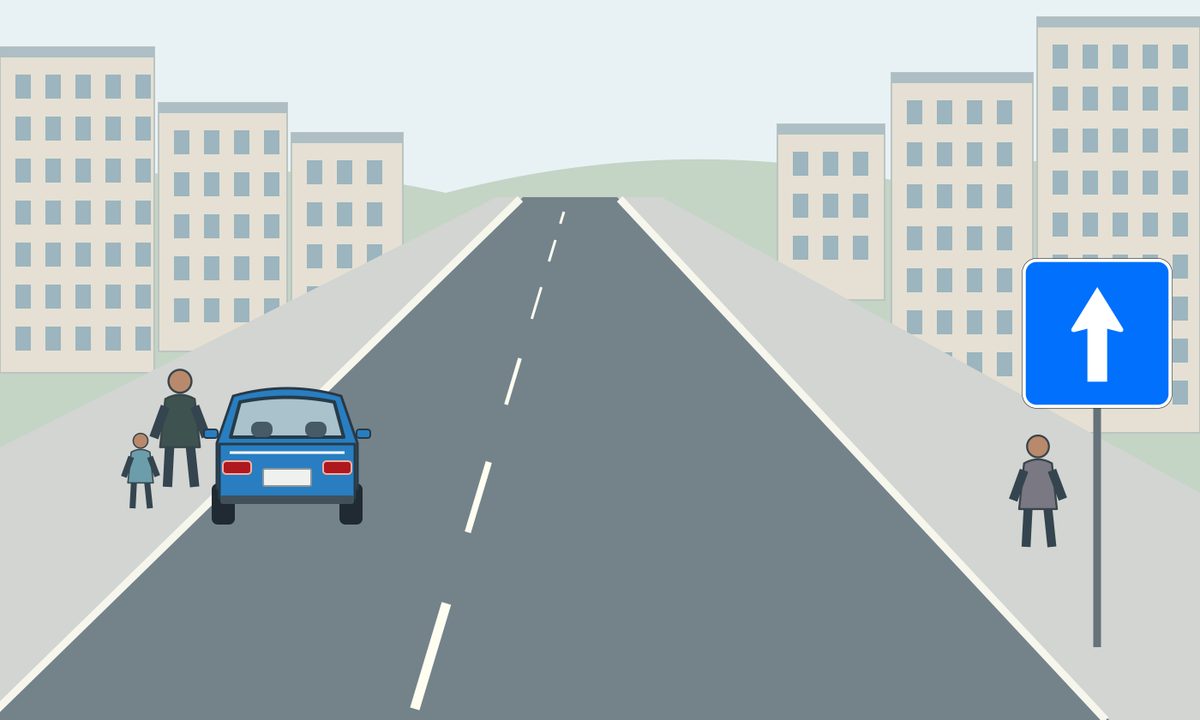
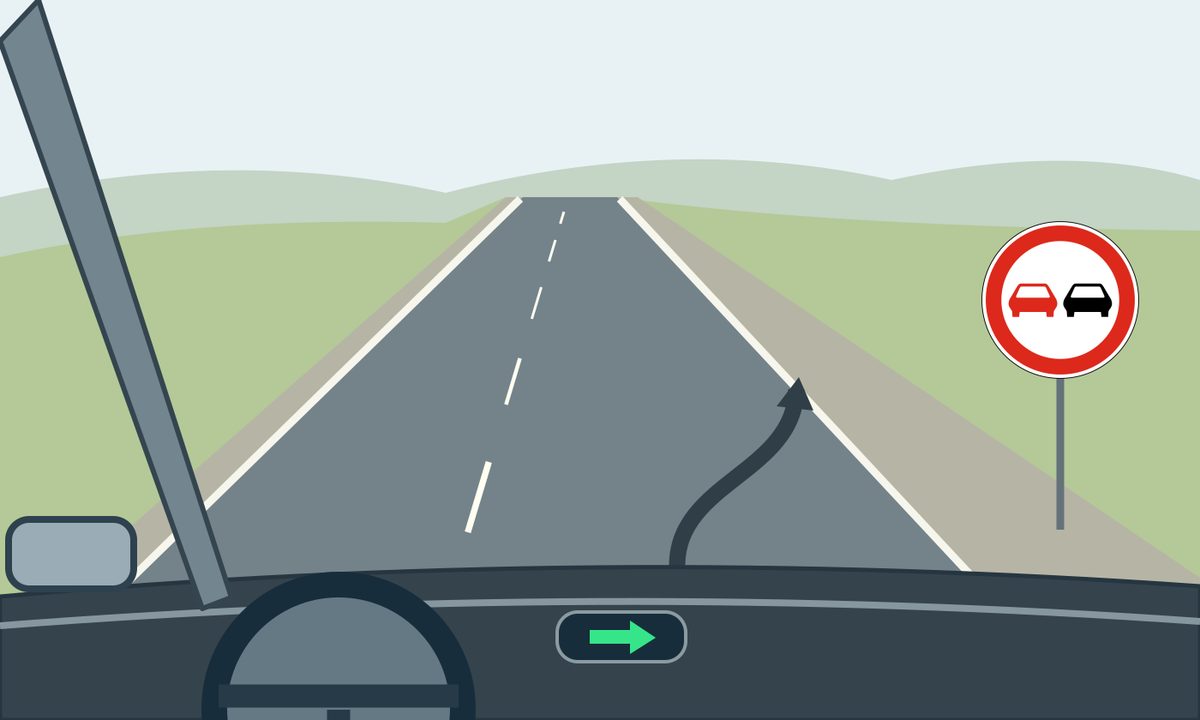
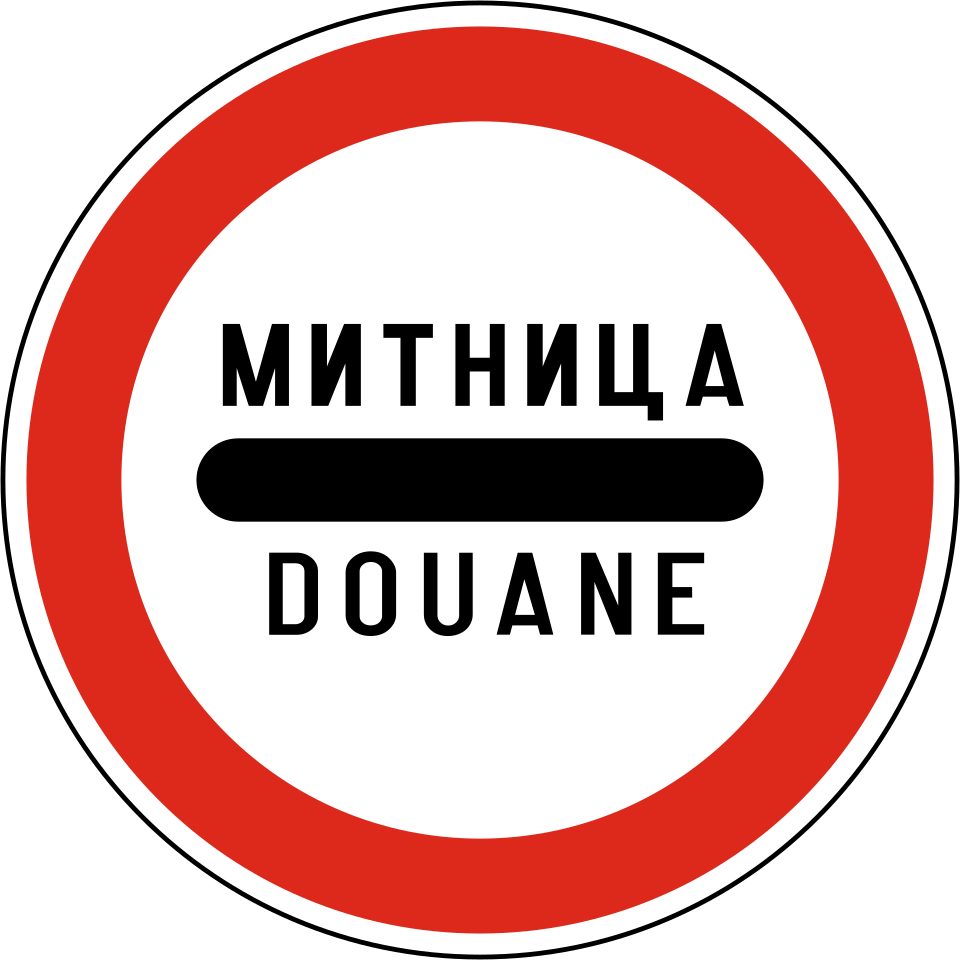
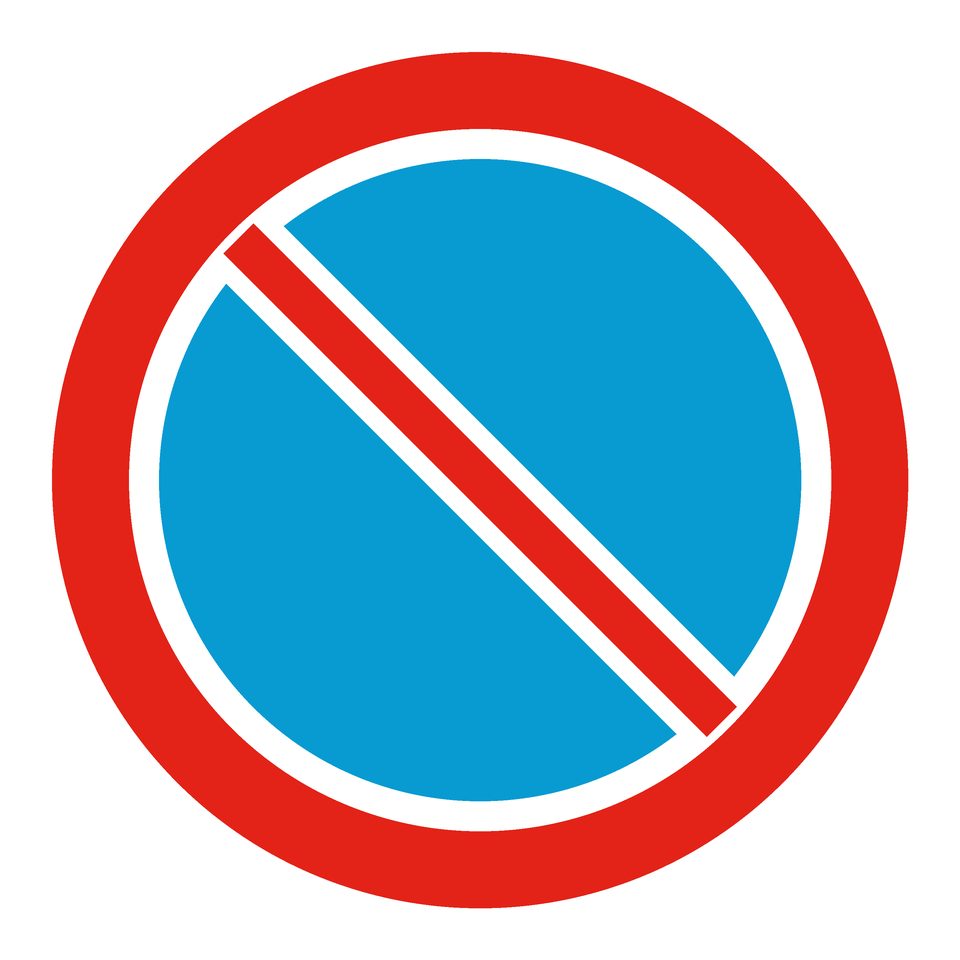
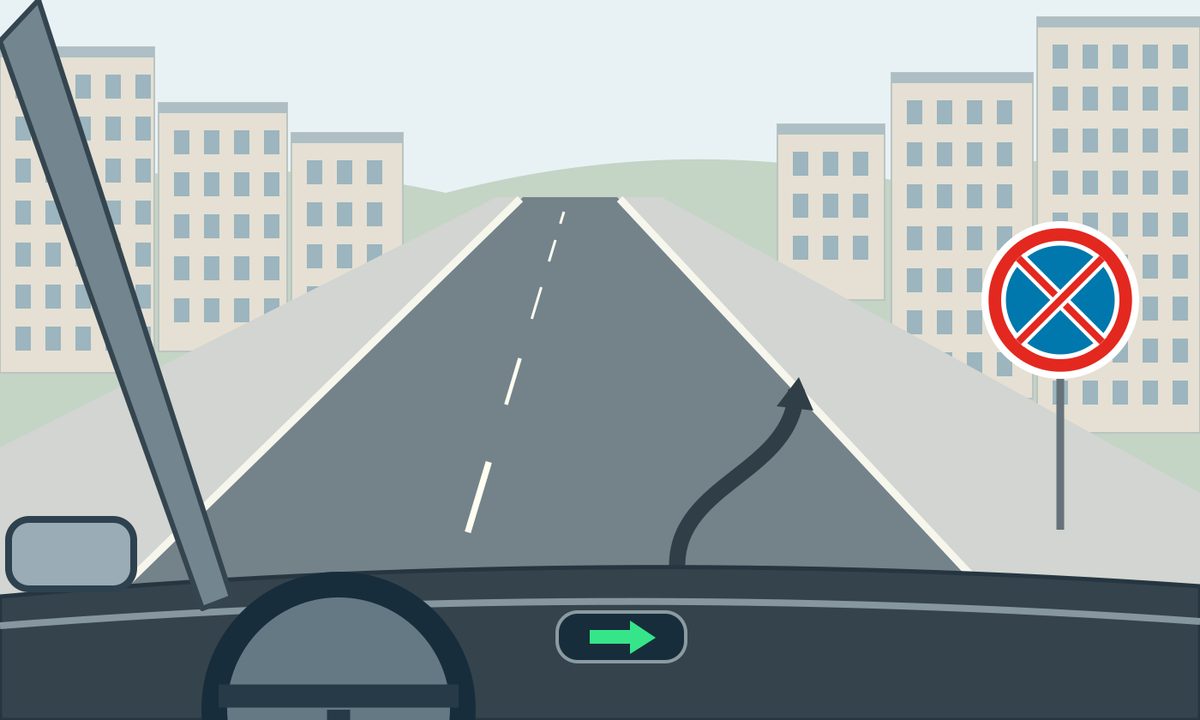
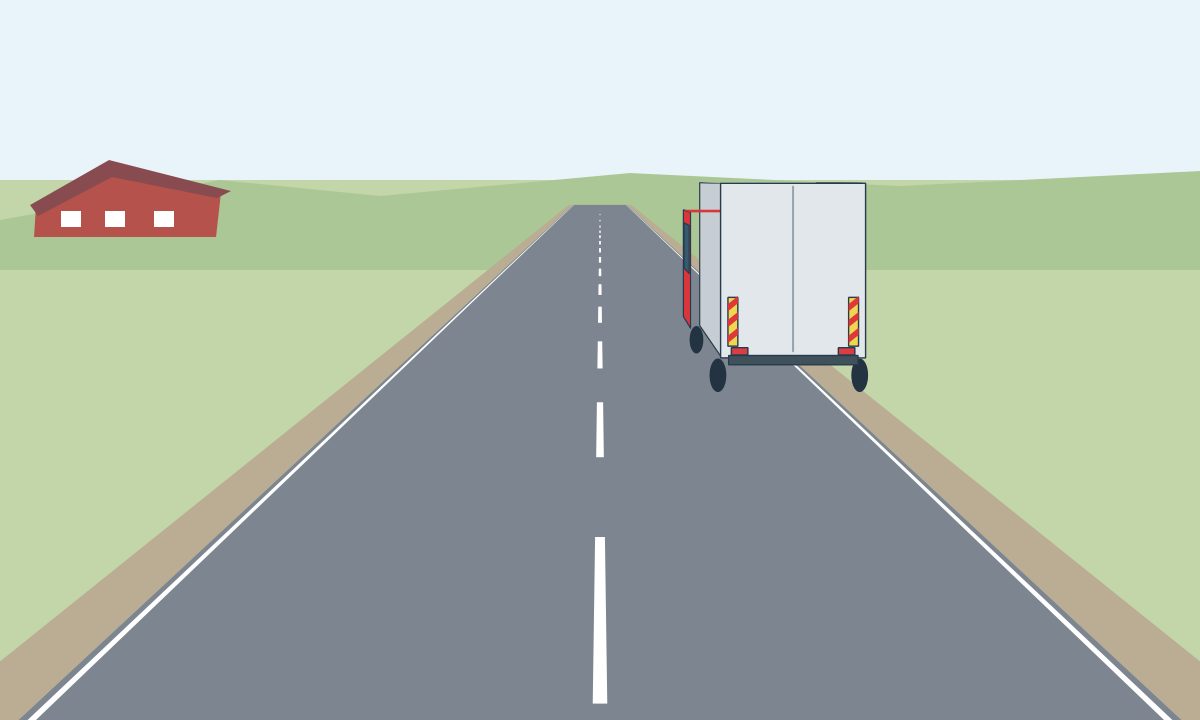
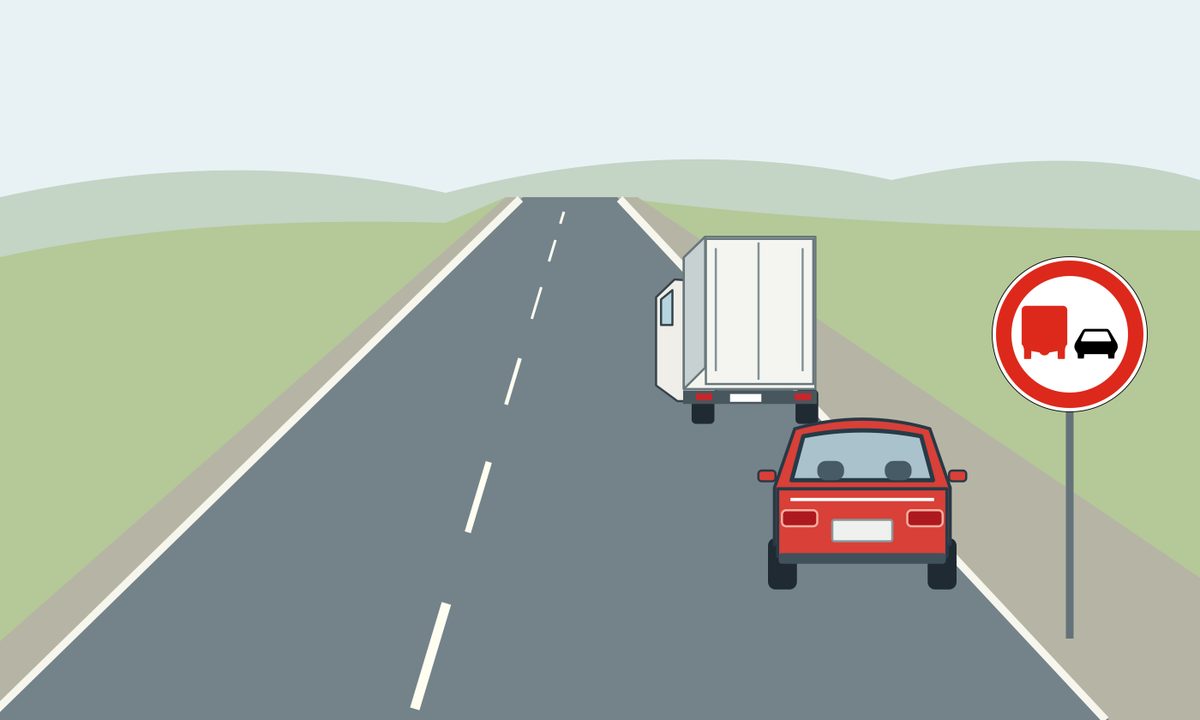
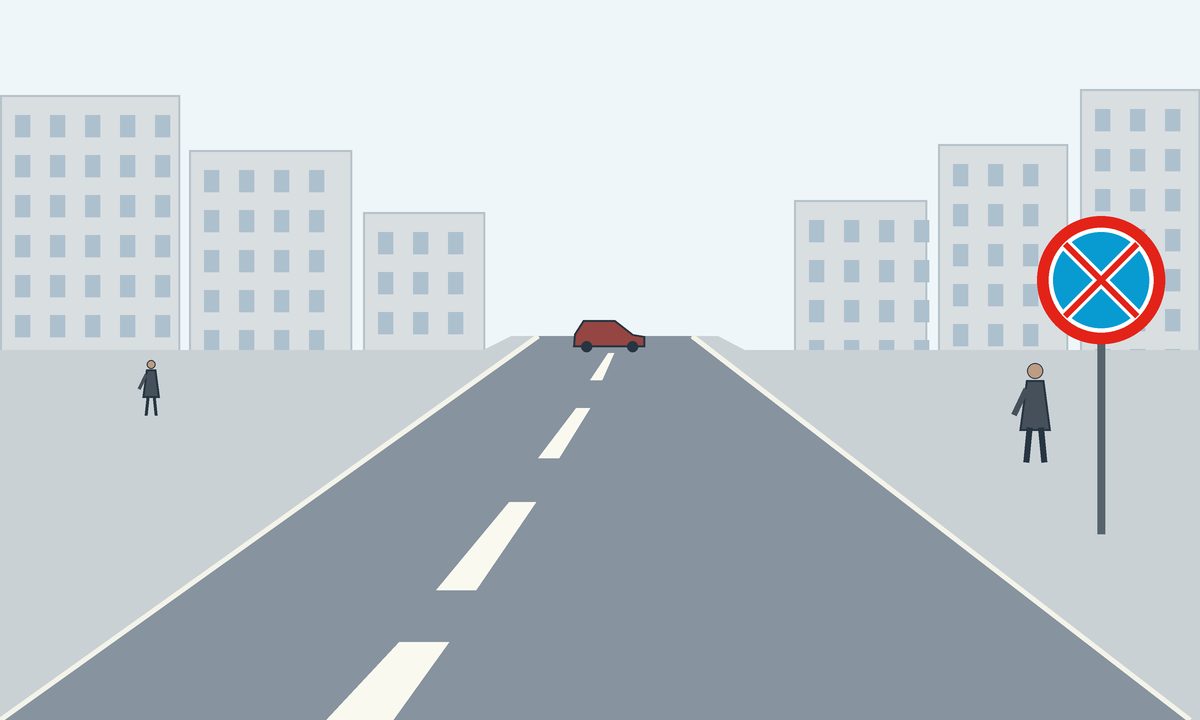
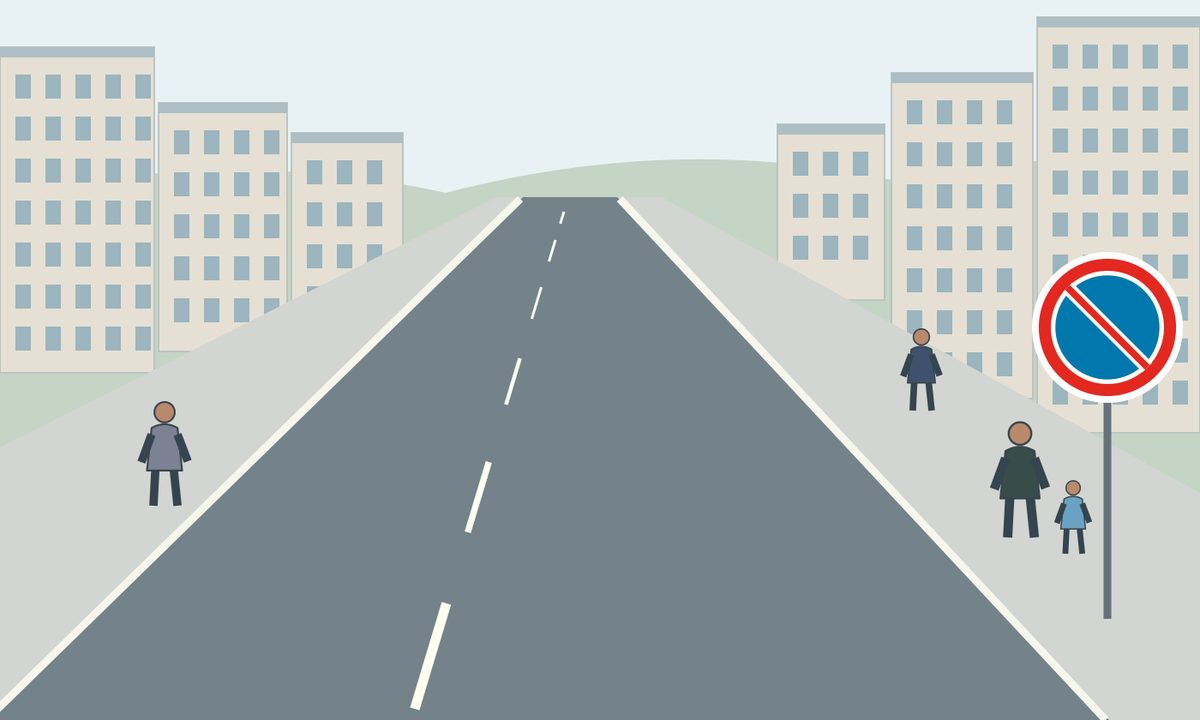
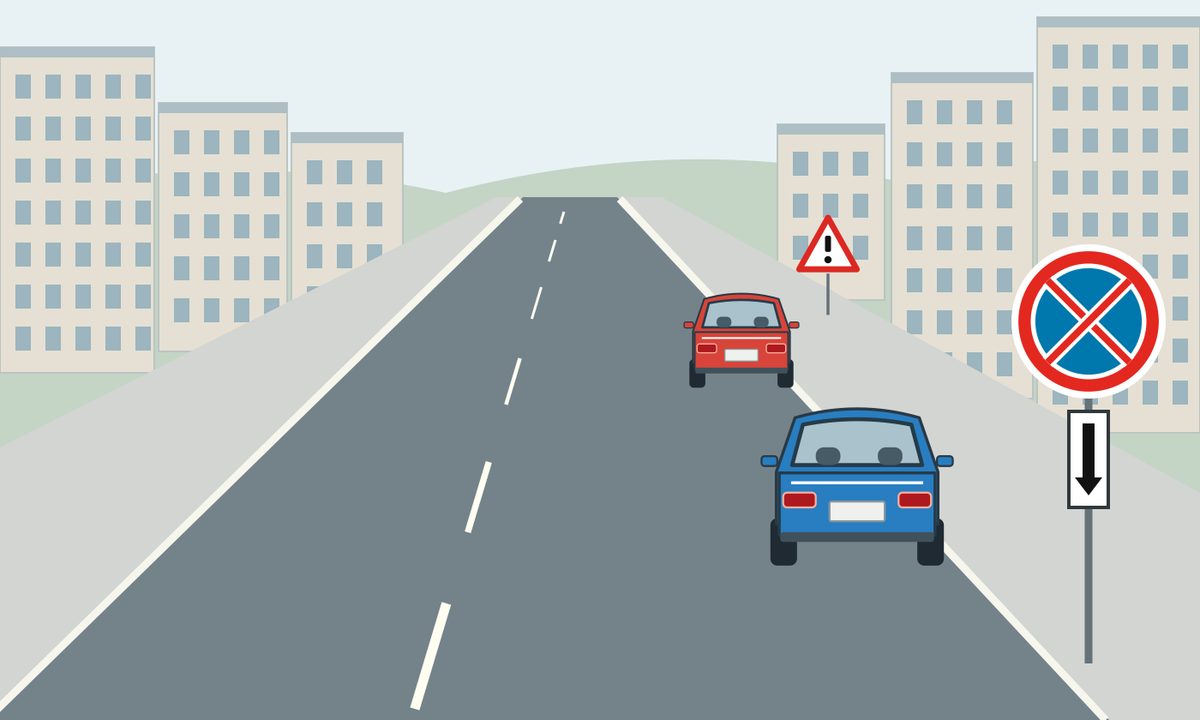
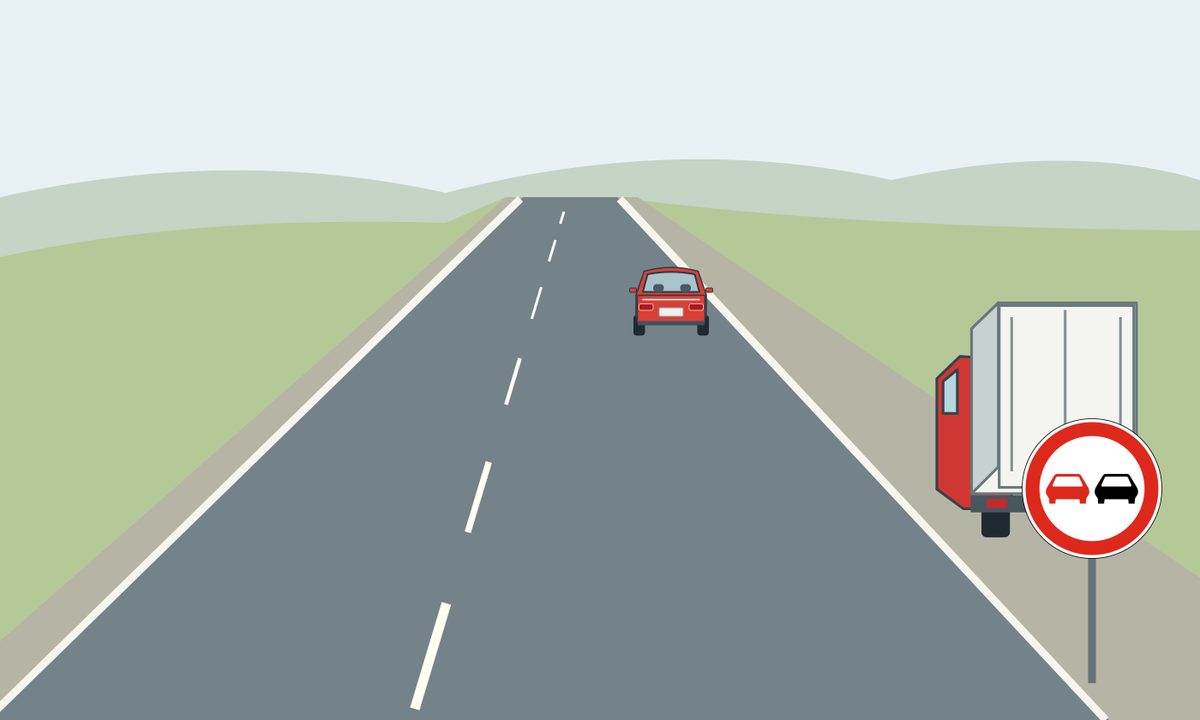
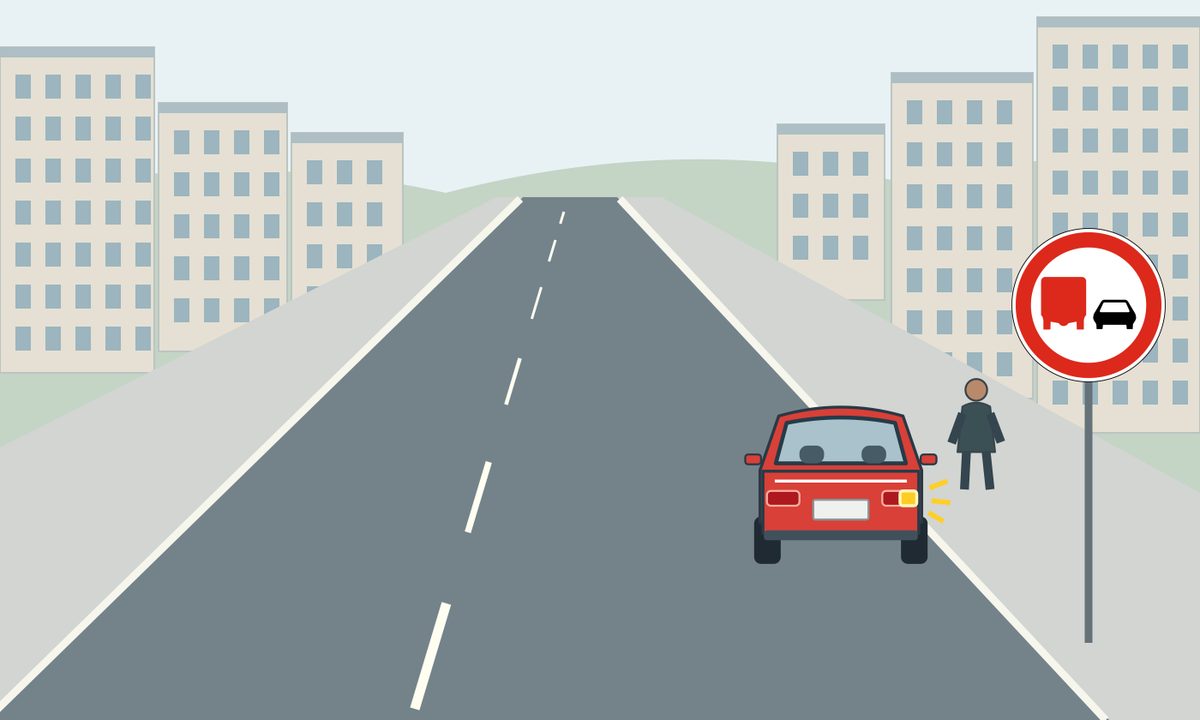
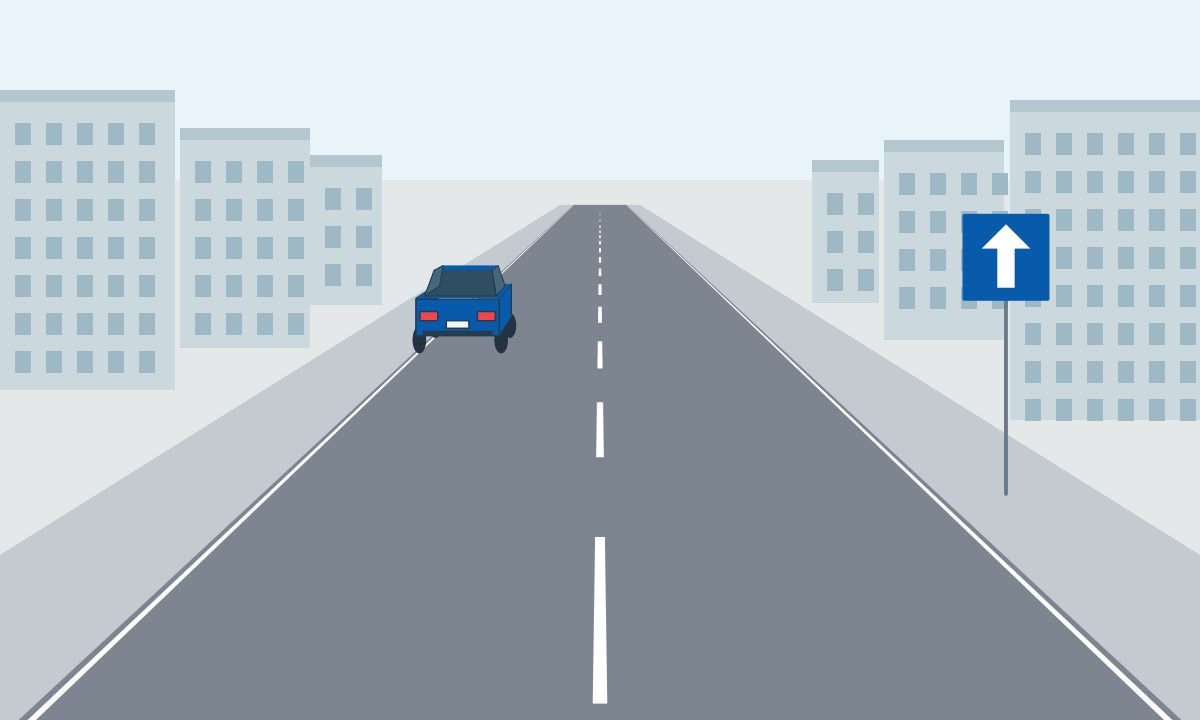
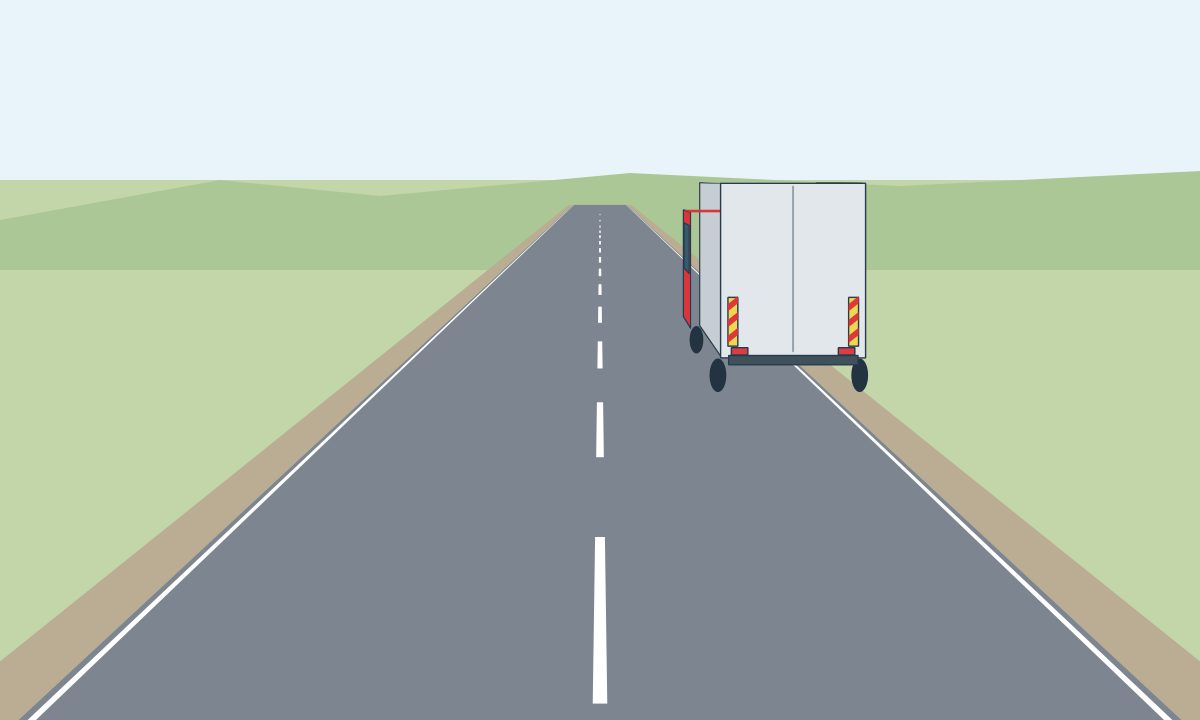
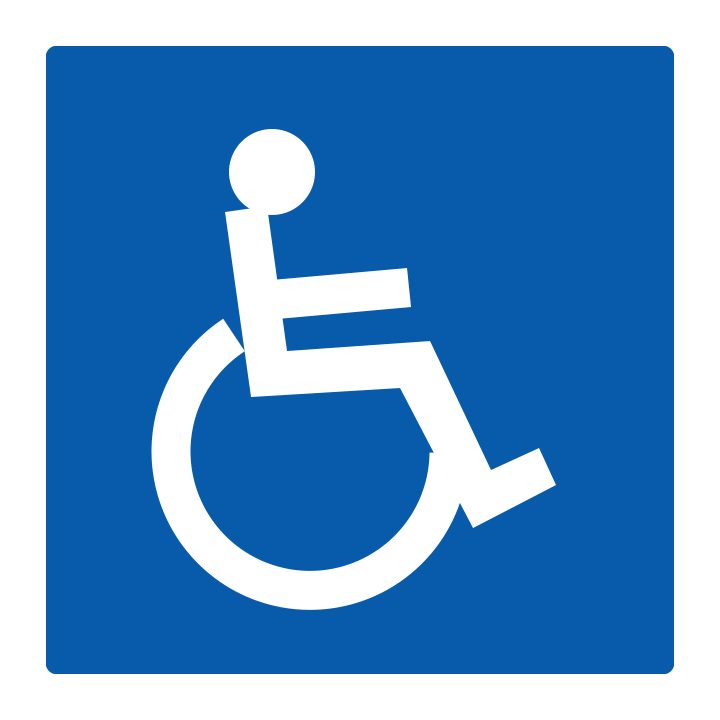
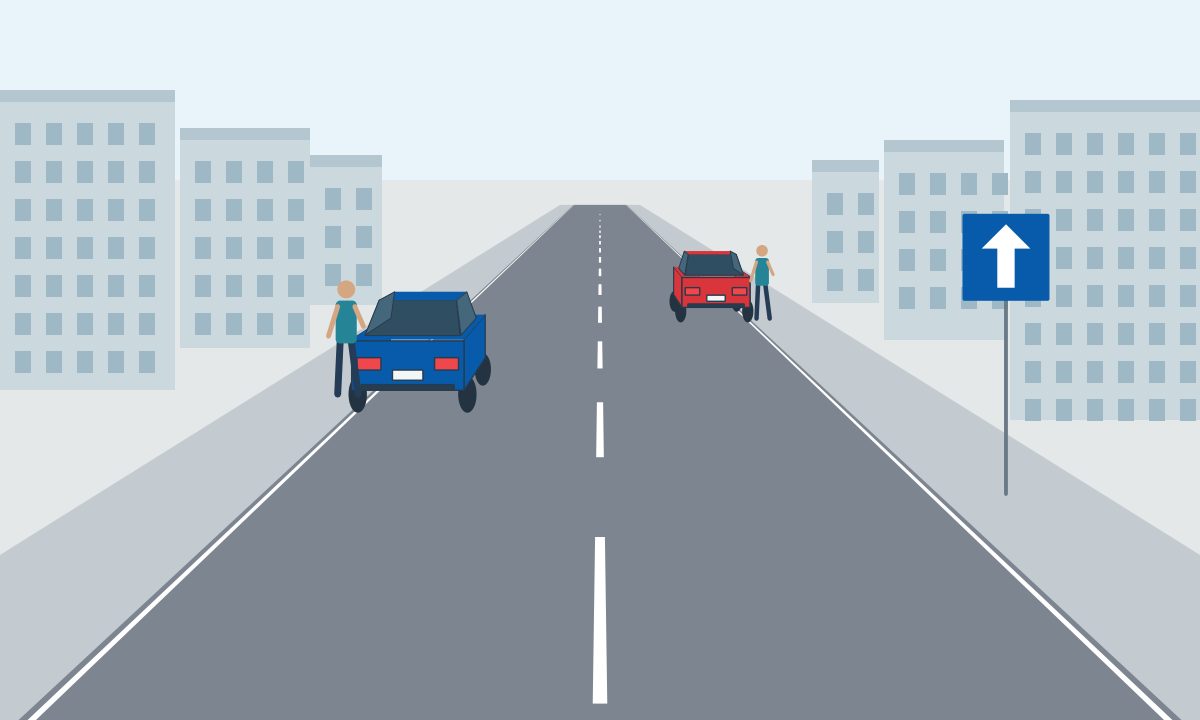
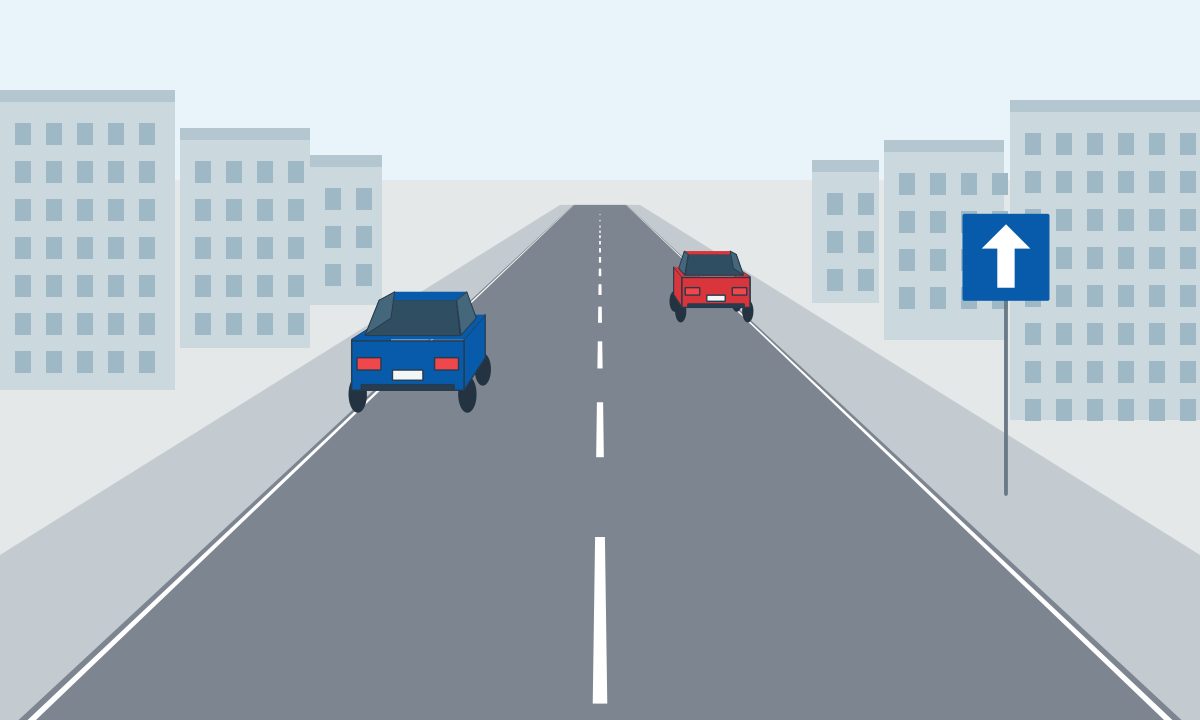
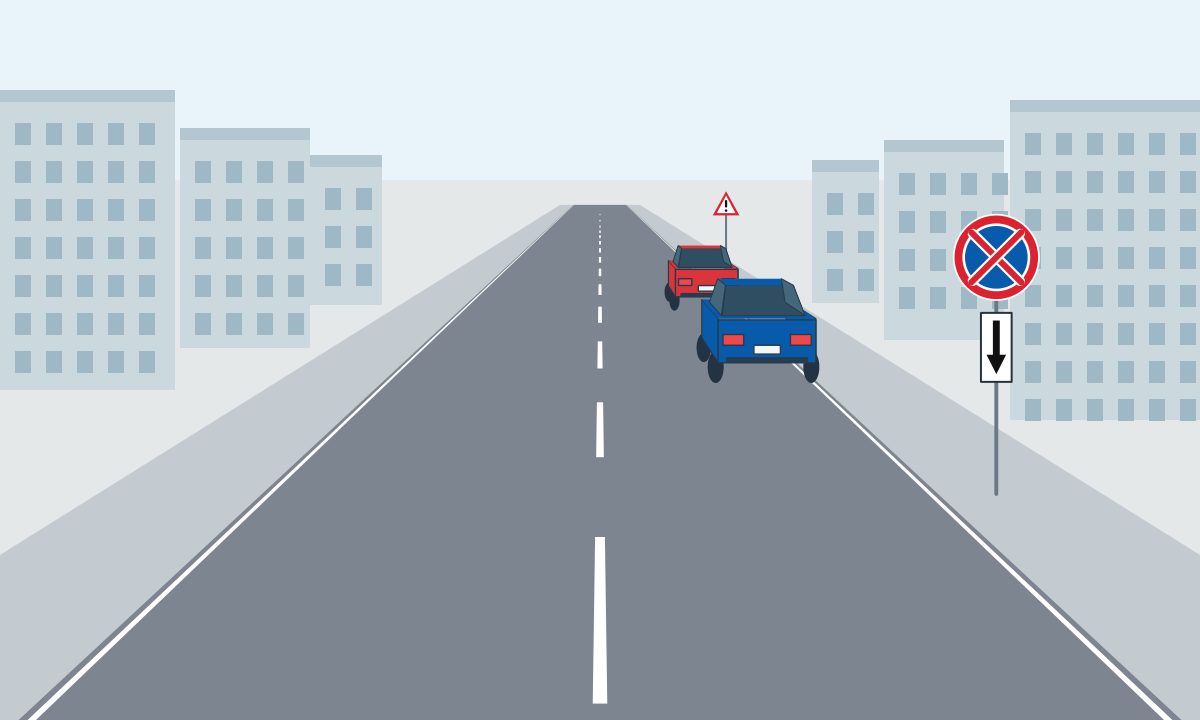
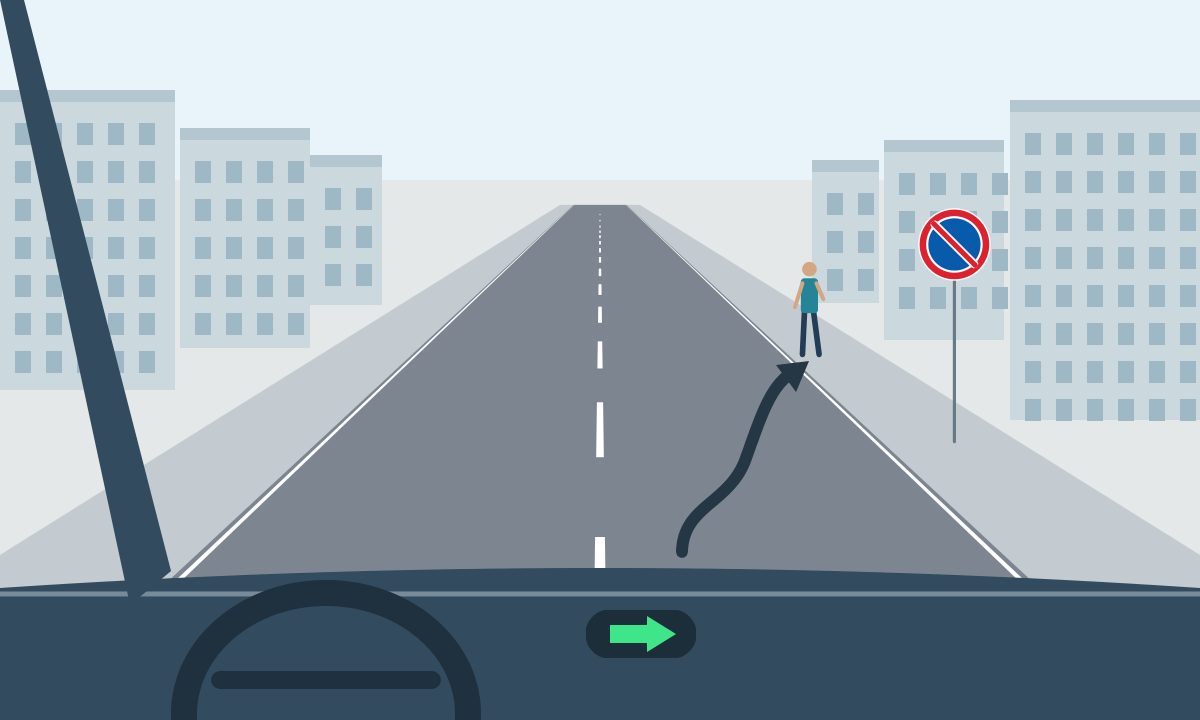
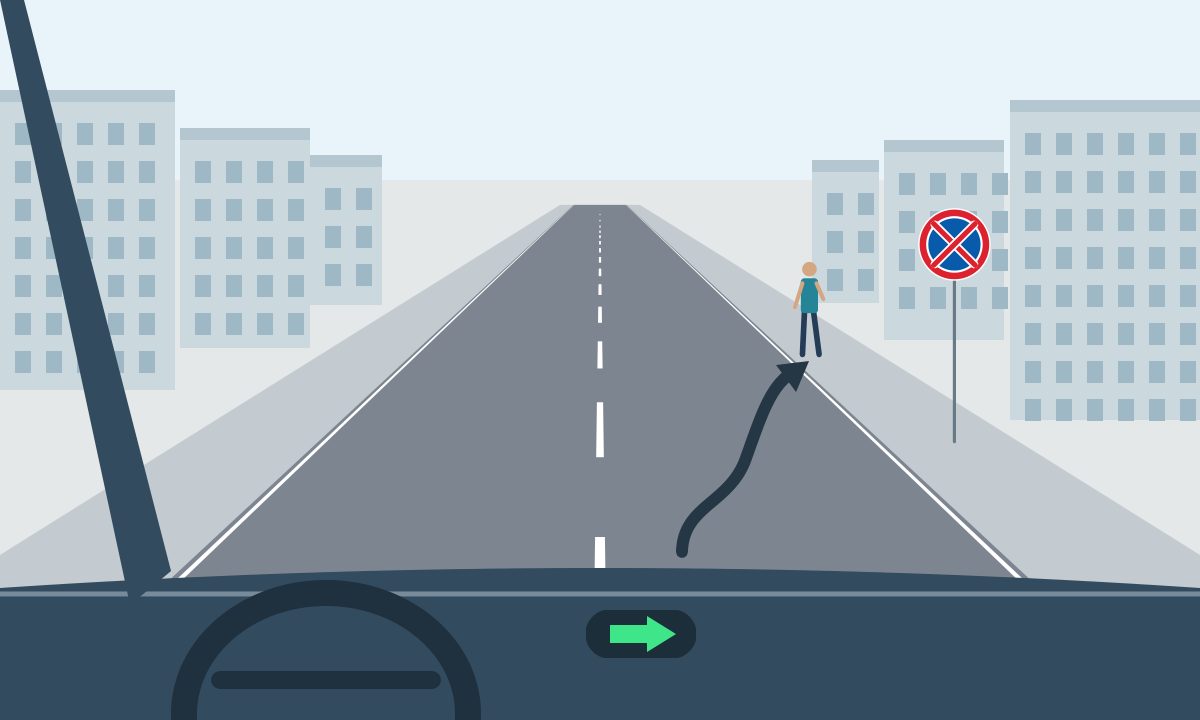
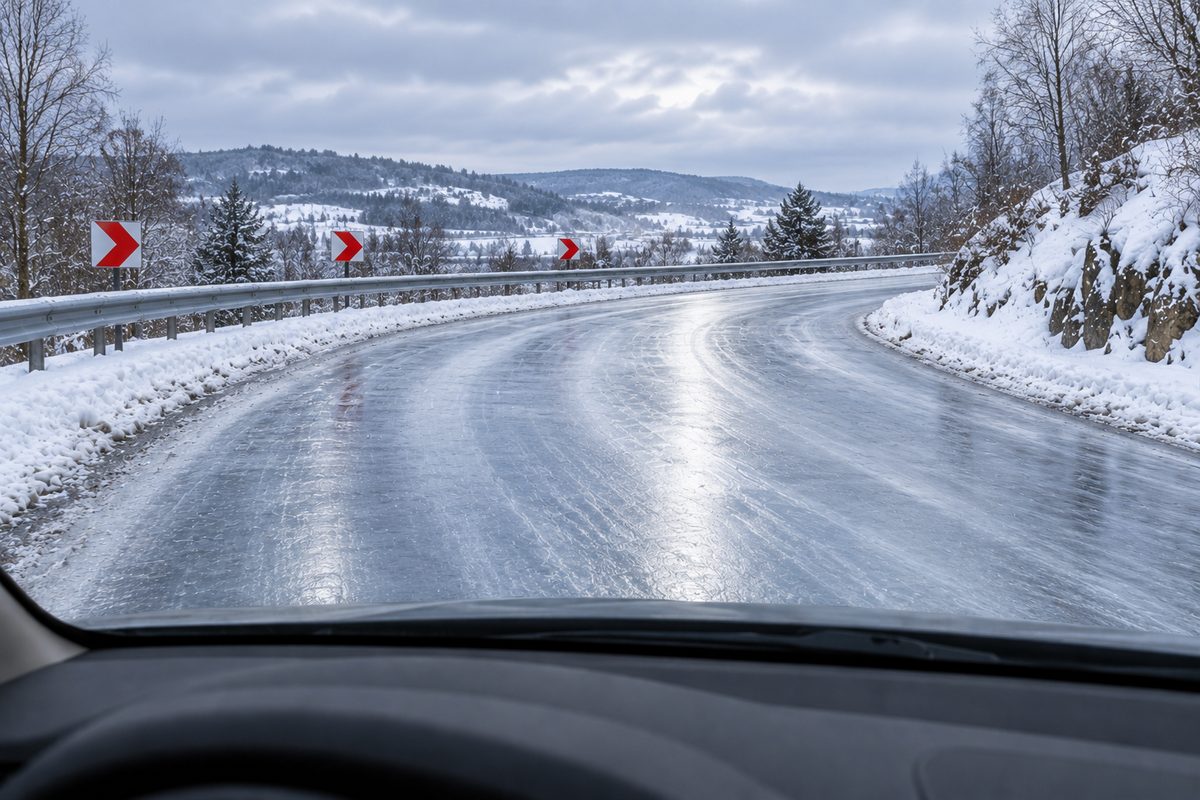


1440 kartīšu
Bulgarian Driving Theory Test Flashcards: Category B
Atvērsies Nibomo, lai vari sākt mācīties.