Recognize Everyday Dutch Words at Home and on the Go
Ik droog een bord af met de theedoek.
Ik droog een bord af means “I dry a plate.” Picture what you'd reach for. De theedoek is the cloth you use to dry it, a dish towel or tea towel. The action droog … af gives you the clue. Dutch Language Institute entry for theedoek
The 12 clues below give you that same kind of practice with everyday Dutch vocabulary for household objects and things you use on the go. They’re for English-speaking beginners who can read a short Dutch sentence with some help. Say or write the English name of the object in bold. “Dish towel” is enough. An English description like “the cloth for drying dishes” counts too.
Read the Dutch nouns, then use the clues
Look at the bold phrase first and see if you know the object. If you need help, read the rest of the sentence and look for an action or a detail that narrows it down. Put a dot next to any answer you got from the sentence so you can try that word on its own later.
The bold phrases include de or het, the two ways to say “the” with a singular Dutch noun. Read them together as one phrase, as in de theedoek. The English answer can just be the name of the object. Taalunie guide to Dutch articles
- Na het ontbijt veeg ik de kruimels in het stofblik.
- Het regent. Ik trek de regenjas aan voordat ik naar buiten ga.
- Er ligt zand op het tapijt. Ik haal de stofzuiger uit de kast.
- Met de garde klop ik het ei los in een kom.
- Met het meetlint kijk ik hoe breed de tafel is.
- Mijn fietsband is zacht. Ik haal de fietspomp uit de schuur.
- Met de wasknijper maak ik het shirt vast aan de waslijn.
- Ik hang de natte sokken op het droogrek.
- Met de deegroller maak ik het deeg plat voor de koekjes.
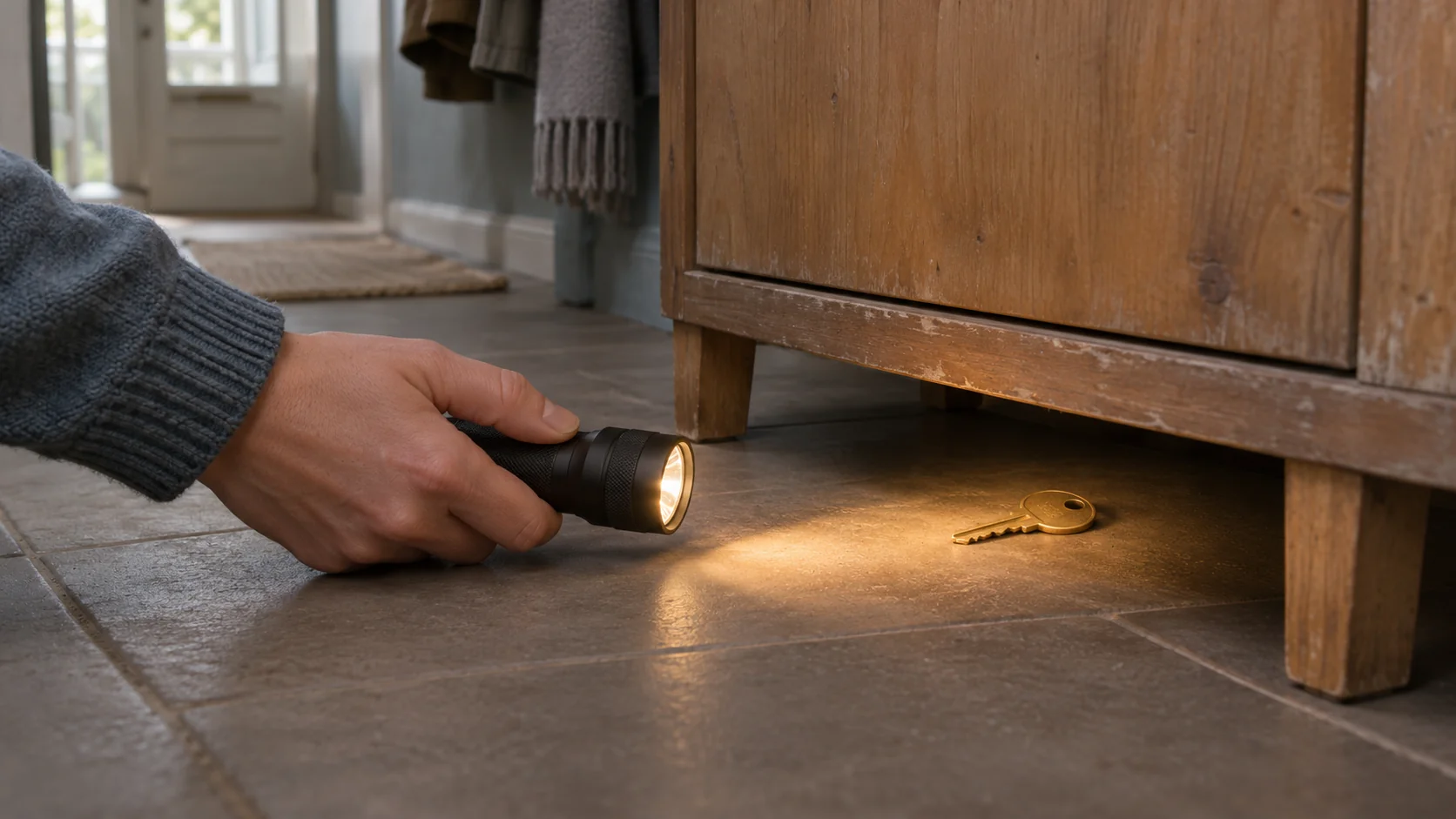
- Ik schijn met de zaklamp onder de kast en zie mijn sleutel.
- Met de flesopener haal ik de metalen dop van de limonadefles.
- De kurk zit nog in de fles. Pak jij de kurkentrekker even?
A few words can help you get started. Kruimels are crumbs, tapijt is carpet, and plat means “flat.” Klop … los means “beat” in the egg sentence. Waslijn means “clothesline,” schijn means “shine,” dop is a cap, and kurk is a cork.
Check which clue points to each object
- Het stofblik means dustpan. Veeg … in tells you where the crumbs go. The dustpan catches them as you sweep.
- De regenjas means raincoat. Het regent means “it's raining.” The speaker puts on the coat before going outside. Dutch Word List entry for regenjas
- De stofzuiger means vacuum cleaner. Zand op het tapijt, “sand on the carpet,” points to the machine the speaker takes out of the cupboard. Dutch Word List entry for stofzuiger
- De garde means whisk. The speaker uses it to beat an egg in a bowl. Dutch Word List entry for garde
- Het meetlint means tape measure. Hoe breed means “how wide.” The speaker uses the tape to check the table's width.
- De fietspomp means bike pump. A soft tire tells you why the speaker fetches the pump from the shed.
- De wasknijper means clothespin or clothes peg. Maak … vast means “fasten.” The clip holds the shirt on the clothesline.
- Het droogrek means clothes drying rack. Natte sokken are wet socks. You hang them on the rack to dry.
- De deegroller means rolling pin. Ik maak het deeg plat means “I flatten the dough.” The speaker rolls it flat to make cookies. Dutch Word List entry for deegroller
- De zaklamp means flashlight or torch. The speaker shines it under the cabinet and spots the key.
- De flesopener means bottle opener here. Metalen dop, “metal cap,” points to the tool that lifts the cap off the bottle.
- De kurkentrekker means corkscrew. The stopper is a kurk, a cork. This tool pulls it out.
Both het stofblik and de stofzuiger begin with stof, meaning “dust.” Look at the second part to tell them apart. A blik can be a tin or container, like the pan that catches what you sweep up. In stofzuiger, zuiger comes from zuigen, meaning “to suck.” Dutch writes each compound as one word. Official Dutch spelling guide to compound words
Try a few words without their sentences
Cover the answers and say what de wasknijper, het stofblik, and de zaklamp mean. Check them against answers 7, 1, and 10. Now try the words you marked with a dot. If you need the whole sentence again, use it, then come back to the noun after a few other words. For a second look at the two openers, try de kurkentrekker and de flesopener side by side and say what each one removes.
Try a few of the same nouns tomorrow in a different order, with the answers covered. Attempting the meaning before checking gives you a chance to retrieve it. Coming back after a gap lets you practice that recall in a later session. Both methods can help you remember the words longer. Vocabulary retrieval experiment and study on spacing reviews
When you're ready to go from an English cue to a Dutch word or write a Dutch plural, use the Dutch vocabulary guide for home, work, and family. It has separate prompts for those skills.
AI tools helped create the practice sentences, explanations, and illustration. The Dutch spellings and articles were checked against the official Dutch Word List and the language references above.