How to Say “Wear” and “Put On” in Russian
A friend is trying to spot you at the station. “I’m wearing a blue jacket” helps them find you. “I usually wear a blue jacket” leaves them guessing. In Russian, the first sentence can start with На мне (“I have on”). For the habit, use носи́ть (“to wear”).
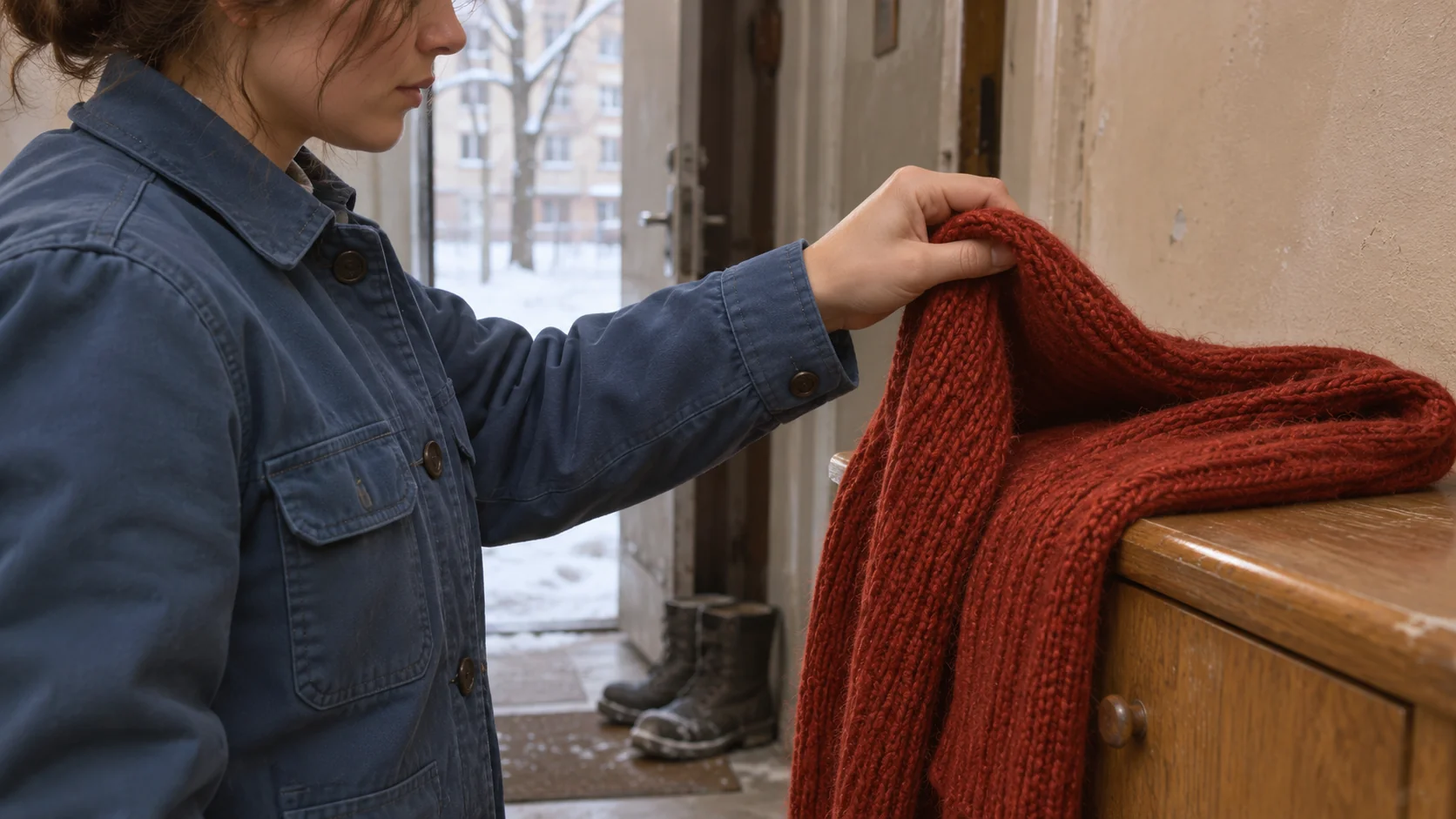
One jacket, three things to say
| What you mean | What you can say |
|---|---|
| I usually wear a blue jacket. | Я обы́чно ношу́ си́нюю ку́ртку. |
| I put on a blue jacket this morning. | Сего́дня у́тром я наде́ла си́нюю ку́ртку. |
| I’m wearing a blue jacket now. | На мне си́няя ку́ртка. |
Носи́ть is useful for habits, and ношу́ is its “I” form. Наде́ть means “to put on” and presents the action as completed in the past example above. The feminine past tense is наде́ла, and the masculine is наде́л. The stress marks show which syllable to say with emphasis. Ordinary Russian writing usually omits them. Dictionary entry for носи́ть
The verb надева́ть is the imperfective partner of наде́ть. Use it for an action in progress or a step you repeat. Я надева́ю кроссо́вки can mean “I’m putting on my sneakers.” Add пе́ред пробе́жкой (“before a run”) to talk about when you put them on each time. Я ношу́ кроссо́вки says what you wear. Dictionary entry for надева́ть
When the item is already on, На мне си́няя ку́ртка and Я в си́ней ку́ртке both work. In на мне, на goes with мне (“me”), and the garment stays in the nominative, the form you’d look up in a dictionary. In в си́ней ку́ртке, the preposition в goes with the garment and puts both the adjective and noun in the prepositional case. Prepositional case guide from Между нами
Watch what happens to the ending
In these examples, the item you wear or put on is the direct object of the verb, so it takes the accusative. With ку́ртка, you can hear the change to ку́ртку. With джи́нсы, the nominative and accusative sound the same. Direct-object endings from Между нами
| Item | I have it on | I put it on | I’m wearing it, using в |
|---|---|---|---|
| ку́ртка (jacket) | На мне ку́ртка. | Я наде́ла ку́ртку. | Я в ку́ртке. |
| джи́нсы (jeans) | На мне джи́нсы. | Я наде́ла джи́нсы. | Я в джи́нсах. |
| пальто́ (coat) | На мне пальто́. | Я наде́ла пальто́. | Я в пальто́. |
Пальто́ is indeclinable, so it keeps the same form even after в. Джи́нсы (jeans), брю́ки (trousers or pants), and колго́тки (tights) are plural even for one garment. Use a plural adjective too, as in На мне си́ние джи́нсы (“I’m wearing blue jeans”). Носки́ (“socks”) has a singular, носо́к (“sock”). You can check spelling and stress in Akademos, the Russian Academy of Sciences’ spelling dictionary, and hear several of these words in the Между нами clothing lesson.
Оде́ть means “to dress someone.” The direct object is the person in оде́ть ребёнка (“to dress a child”). When you say which item goes on the child, use наде́ть ша́пку на ребёнка (“to put a hat on a child”). The hat is the direct object. Usage note on наде́ть and оде́ть
Practice at the coat rack
Say each answer aloud before checking. Start with пе́ред прогу́лкой for “before a walk” and сего́дня у́тром for “this morning” if you want to focus on the clothing and verb forms.
- Say “I usually wear trousers” using носи́ть.
- Say “I have a blue jacket on,” starting with На мне.
- Point out a friend. Say “She’s wearing a blue jacket” using в.
- Tell a friend “Put on a warm hat.” Start from тёплая ша́пка and use the informal command from наде́ть.
- Say “I put on gloves before a walk,” describing a step you repeat. The word for gloves is перча́тки.
- Say “This morning she put on tights.”
Answers
- Я обы́чно ношу́ брю́ки. Ношу́ is the form for “I wear.” The plural direct object брю́ки looks just like the dictionary form.
- На мне си́няя ку́ртка. Си́няя ку́ртка is nominative because it names what is on you.
- Она́ в си́ней ку́ртке. After в, both words change to the prepositional.
- Наде́нь тёплую ша́пку. Наде́нь gives the instruction to one person informally. Тёплую ша́пку is the accusative.
- Пе́ред прогу́лкой я надева́ю перча́тки. Надева́ю describes the repeated act of putting the gloves on.
- Сего́дня у́тром она́ наде́ла колго́тки. Наде́ла is the feminine past form and describes the completed action.
If си́няя ку́ртка came easily but в си́ней ку́ртке took a second, try the same switch with но́вая руба́шка (“a new shirt”). “She’s wearing a new shirt” is Она́ в но́вой руба́шке. Hide the answer and try it again tomorrow.
The Russian clothing flashcards give you English cues for clothes and footwear, plus prompts for choosing a verb or case. Say the Russian answer before flipping the card and try it again in later sessions. Retrieval practice and spacing out review can help you recall what you learn later.
For everyday words beyond clothes, try the beginner Russian vocabulary guide and its short exercise on meaning, stress, and useful phrases.
AI tools helped draft this guide and its original practice examples and generate the illustration. The dictionary and teaching references support the Russian forms and usage.