Subject–Verb Agreement Practice: Find the Subject
“The price of these notebooks is reasonable.” Several notebooks, one price. Change notebooks to notebook, and is stays. Change price to prices, and you need are. The noun closest to the verb doesn't decide the answer.
This subject–verb agreement practice is for learners who know forms such as is/are and has/have but lose track of the subject in a longer sentence. You'll check intervening phrases, each, as well as, and relative clauses, then change sentences to see which verbs must follow.
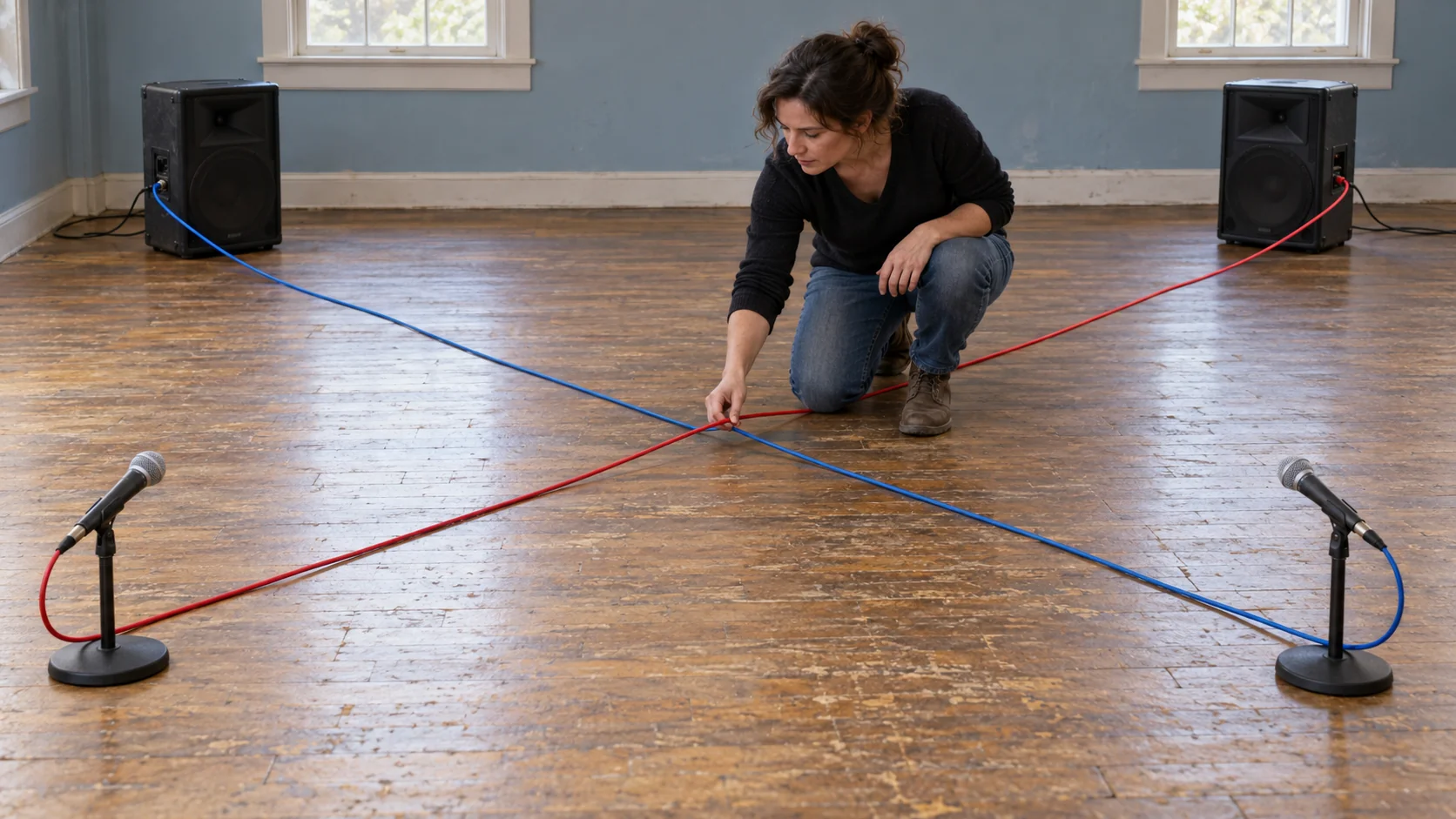
Find the full subject, then its head
In “The price of these notebooks is reasonable,” the full subject is the price of these notebooks. Its head noun is price: the central noun that determines singular or plural agreement here. Notebooks belongs inside the phrase of these notebooks.
Mark it like this:
The price [of these notebooks] is reasonable.
The brackets help you check agreement. Keep the phrase's meaning: it tells the reader which price you mean. You aren't deleting it from the sentence. Purdue OWL's agreement guide explains why a noun inside an intervening phrase doesn't control the main verb.
For each sentence:
- Locate the verb you're checking.
- Find its full subject, then mark the head noun or subject pronoun. We'll call this the controller.
- Connect the controller to its verb, bracketing intervening material if useful.
- Repeat for any other clause with its own subject and verb.
This builds on Purdue's proofreading advice to mark subjects and check their verbs individually.
A subject doesn't have to be the person doing an action. In “The cards beside the register are checked by Lena,” the subject is the cards beside the register, headed by plural cards. Lena does the checking, but cards governs are. In this passive verb phrase, checked doesn't change for number. If choosing the participle itself is difficult, see past simple vs past participle.
Each of the students vs the students each
Moving each changes the structure:
| Sentence | Controller | Verb |
|---|---|---|
| Each of the students has a locker. | Singular pronoun each | has |
| The students each have a locker. | Plural noun students | have |
In the first sentence, of the students specifies the people being considered individually. In the second, each refers to the plural subject the students; it doesn't replace that subject.
Cambridge's guide to each describes both positions and notes that plural verbs after each of also occur in informal speech. For the formal written English practiced here, use each of the students has and the students each have.
As well as doesn't work like and
Compare two sentences about separate people:
The curator, as well as the assistants, checks the display.
The curator and the assistants check the display.
With as well as, singular curator governs checks. With and, the curator and the assistants form a plural compound subject. Name both parts when explaining its agreement. These patterns are covered in the Purdue agreement reference.
Give each clause its own line
A relative clause adds another verb to check:
The labels that the assistant checks are readable.
There are two agreement relationships:
| Clause | Full subject | Controller | Verb |
|---|---|---|---|
| Main clause | The labels that the assistant checks | Plural labels | are |
| Relative clause: that the assistant checks | The assistant | Singular assistant | checks |
For the main clause, bracket the whole modifier: “The labels [that the assistant checks] are readable.” Then look inside it. The assistant checks the labels, so assistant governs checks. Here, that stands for the labels as the object of checks.
Now compare:
The assistant who checks the labels is ready.
| Clause | Full subject | Controller | Verb |
|---|---|---|---|
| Main clause | The assistant who checks the labels | Singular assistant | is |
| Relative clause: who checks the labels | Who | Who, referring to singular assistant | checks |
The role of the relative pronoun matters. In the first example, that is the object, and the relative clause has its own subject, the assistant. In the second, who is the subject of the relative clause. Its reference to one assistant gives singular checks. Cambridge's relative-pronoun guide distinguishes these subject and object uses.
Bracketing a clause for the main agreement check doesn't remove its own grammar. Commas and which people a clause identifies are a separate decision; the restrictive vs nonrestrictive clauses guide practices that distinction.
Try 12 sentences
Work in formal written English. Choose a form in items 1–8. For items 9–12, keep the sentence or repair its agreement. Some are already correct.
For each clause, write a controller → verb pair. Rewrite sentences that need a repair. A sentence with two clauses needs two pairs. In a passive phrase such as were translated, record were, the word that carries agreement; translated stays unchanged.
- The price of the notebooks (includes / include) delivery.
- The notebooks beside the lamp (is / are) mine.
- A map of the islands (shows / show) the ferry route.
- The forms in the blue folder (needs / need) signatures.
- Each of the students (has / have) a locker.
- The students each (has / have) a locker.
- The curator, as well as the assistants, (checks / check) the display.
- The curator and the assistants (checks / check) the display.
- The labels that the assistant checks are readable.
- The clerk who sorts the envelopes work upstairs.
- The instructions for the new scanner were translated by two volunteers.
- The pictures that the guide describes is displayed near the entrance.
Answers with their controllers
- Price → includes. Singular price heads the full subject the price of the notebooks. Plural notebooks is inside the of phrase.
- Notebooks → are. The head is plural. Singular lamp belongs to the phrase describing their location.
- Map → shows. One map shows the route, even though it covers several islands.
- Forms → need. Plural forms governs the verb; singular folder doesn't.
- Each → has. The full subject each of the students takes singular agreement in the formal pattern practiced here.
- Students → have. The subject remains plural when each follows it.
- Curator → checks. The as well as phrase adds the assistants without creating a plural compound subject.
- Curator and assistants → check. And joins the separate people into a plural subject.
- Keep it: labels → are; assistant → checks. Inside the relative clause, that is the object. It doesn't replace assistant as the subject of checks.
- The clerk who sorts the envelopes works upstairs. Main clause: clerk → works. Relative clause: who → sorts, with who referring to singular clerk. Plural envelopes is the object of sorts.
- Keep it: instructions → were. For the new scanner doesn't change the plural head. The volunteers perform the action, but they aren't the subject of this passive clause. Translated is the participle.
- The pictures that the guide describes are displayed near the entrance. Main clause: pictures → are. Relative clause: guide → describes. That is the object of describes, and displayed stays unchanged.
Change one part and predict the result
Cover the answers below. For each transformation, rewrite the whole sentence and name the controller of each clause's verb. Keep everything else unchanged unless agreement requires a change.
| Task | Starting sentence | Change |
|---|---|---|
| A | The label on the jars is smudged. | Change jars to jar. |
| B | The label on the jars is smudged. | Change label to labels. |
| C | The notes that the tutor keeps are private. | Change tutor to tutors. |
Check your predictions
- A: The label on the jar is smudged. Label → is stays singular. Only a noun inside the modifier changed.
- B: The labels on the jars are smudged. The main subject's head changed to plural: labels → are.
- C: The notes that the tutors keep are private. Inside the relative clause, tutors → keep changes. The main relationship, notes → are, stays plural.
A and B test whether you can separate a subject's head from a nearby noun. C adds a second decision: a noun inside the main subject's modifier can still control a verb in its own clause.
If you got a verb right but couldn't name its controller, return to that sentence before repeating the worksheet. Keep the full sentence in a practice card and ask for both the verb and the reason. For example: “The notes that the tutor ___ are private. (keep/keeps; name the controller.)” The answer is “keeps — tutor, the singular subject inside the relative clause.” Our guide to making better flashcards covers keeping a prompt focused on the decision you need to practice.
On another review, use transformation C's plural version. That small change requires a fresh agreement decision instead of recall of the earlier answer.
AI tools researched and drafted this article and its original exercises and generated the illustration. The linked grammar references informed the explanations.