German Verbs with Prepositions for Spanish Speakers: A Practice Guide
Pienso en mi hermano becomes Ich denke an meinen Bruder. Spanish en helps you identify the meaning, but German needs an and the accusative meinen Bruder. Remembering denken alone leaves you guessing part of the sentence.
This guide is for Spanish-speaking learners with A2 foundations who are building longer German sentences, mainly around B1 study with a few distinctions useful beyond it. It offers selected everyday, social and work practice, without claiming to cover a complete B1 or B2 curriculum. The explanations are in English; the meaning cues are in Spanish. The optional companion deck has Spanish prompts and explanations, with German answers.
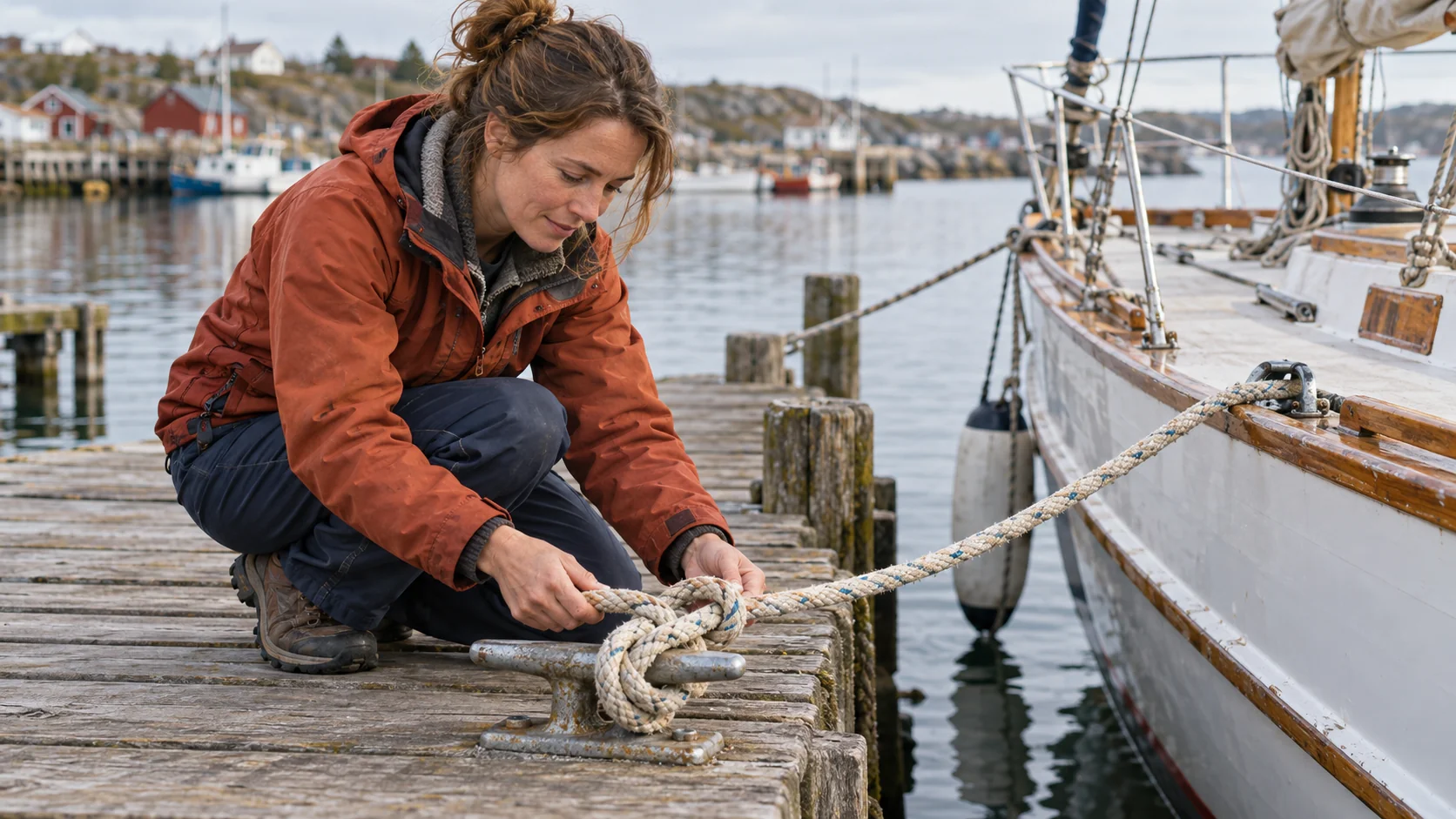
AI-generated illustration.
Check the construction before building the sentence
For each expression, ask: what do I mean, does this German construction need a reflexive pronoun, and which preposition and case go with it? Record the verb with those pieces, then make a complete sentence.
Try Me acuerdo de aquel día:
| Check | Answer for this meaning |
|---|---|
| Intended sense | Recall a day from memory |
| German construction | sich erinnern an + accusative |
| Reflexive pronoun with ich | mich |
| Phrase after an | jenen Tag, accusative of jener Tag |
| Complete sentence | Ich erinnere mich an jenen Tag. |
The IDS entry for sich erinnern confirms this construction. The table is a way to make each decision visible. You can learn one useful sense of a verb before collecting its other meanings.
Now compare two prepositional phrases in one sentence:
Ich warte vor dem Büro auf den Techniker.
Espero al técnico delante de la oficina.
Vor dem Büro gives the location. Auf den Techniker identifies the person you’re waiting for. Move the waiting to im Café and auf den Techniker stays the same. IDS distinguishes verb-selected prepositions from freer location expressions.
The movement-versus-location shortcut won’t choose the case in these verb constructions. Nobody needs to move in Ich warte auf den Techniker. Learn warten auf + accusative together.
Spanish cues won’t supply the German preposition or case
Keep a short Spanish cue beside a German model:
| Spanish cue | German model | Construction to retrieve |
|---|---|---|
| Pienso en mi hermano. | Ich denke an meinen Bruder. | denken an + accusative |
| Espero al técnico. | Ich warte auf den Techniker. | warten auf + accusative |
| Participo en el curso. | Ich nehme an dem Kurs teil. | teilnehmen an + dative |
| Depende del precio. | Das hängt vom Preis ab. | abhängen von + dative |
Notice the two uses of an: denken an takes the accusative here; teilnehmen an takes the dative. Knowing the preposition still leaves the case to retrieve. The IDS entries for denken and abhängen, and its verb-and-preposition lists, support these patterns.
Write out the noun phrase when checking: mein Bruder → meinen Bruder, der Kurs → dem Kurs, der Preis → dem Preis. In vom Preis, vom contracts von dem. Some forms look identical across cases, so an unchanged ending doesn’t mean there is no case rule.
Keep the separable prefixes too: teilnehmen → Ich nehme … teil; abhängen → Das hängt … ab. If sentence formation is the difficulty, the separate German verb-second word-order practice works through main clauses and separable verbs.
Check German reflexivity independently of Spanish
Spanish offers both Recuerdo aquel día and Me acuerdo de aquel día. The RAE explains these patterns under recordar and acordar, acordarse. Either can cue Ich erinnere mich an jenen Tag. Choosing the Spanish verb without a pronoun doesn’t remove German mich.
For the accusative reflexive constructions practised here, the forms are ich → mich, du → dich, er/sie/es → sich, wir → uns, ihr → euch, sie/Sie → sich. German also has dative reflexive constructions; this is not a pronoun chart for every reflexive use. IDS explains reflexive pronouns and the case distinction.
A small pronoun change can also change the job of the sentence:
- Ich erinnere mich an den Termin. — Me acuerdo de la cita. I remember the appointment.
- Ich erinnere dich an den Termin. — Te recuerdo la cita. I remind you of the appointment.
In the second sentence, dich is the person receiving the reminder, in the accusative. It doesn’t refer back to ich, so it isn’t reflexive here. An den Termin names what you remind that person about. The IDS entry for reminding someone records this separate construction. Check who remembers and who receives the reminder before choosing the pronoun.
Give each person and topic its own place
A work or social sentence may need two complements. Compare these two ways to thank someone:
| Spanish cue | German model | Pieces to check |
|---|---|---|
| Te doy las gracias por el consejo. | Ich danke dir für den Rat. | danken + person in dative; für + reason in accusative |
| Te agradezco el consejo. | Ich bedanke mich bei dir für den Rat. | mich; bei + person in dative; für + reason in accusative |
Both models thank the other person. Moving from danken to sich bedanken changes the construction: keep mich and introduce the person with bei. The IDS A1 list records danken; its A2 list records sich bei jemandem für etwas bedanken. These source labels don’t certify this guide’s level.
Use the same role check for a conversation:
Ich spreche mit meiner Kollegin über den Zeitplan.
Hablo con mi compañera sobre el calendario.
Mit meiner Kollegin identifies the person, with the dative. Über den Zeitplan identifies the topic, with the accusative. Learn mit jemandem über etwas sprechen as a usable pattern, supported by the IDS A1 list above. A cue such as “talk about work” hides the person slot and gives you less to practise.
Choose the kind of joy before auf or über
Both constructions below require a reflexive pronoun and an accusative phrase after the preposition:
| Situation and Spanish cue | German model |
|---|---|
| You’re looking forward to next week’s workshop. Me hace ilusión el taller de la semana que viene. | Ich freue mich auf den Workshop nächste Woche. |
| A friend has sent a helpful message; you’re pleased about it. Me alegro de tu mensaje. | Ich freue mich über deine Nachricht. |
IDS distinguishes joyful anticipation with auf from being pleased about something with über. A strict “future versus past” rule is too crude: you can be pleased about news concerning a future event. Check the meaning you want to express.
A review prompt therefore needs more than Ich freue mich ___ …. Give it a situation that makes anticipation or a pleased reaction clear. Otherwise, both prepositions may be possible with different meanings.
Keep the preposition when replacing a noun
For things or situations, German has forms such as darauf, daran and davon. For a person in these patterns, use the preposition and a personal pronoun:
| Reference | Question and answer | Spanish meaning |
|---|---|---|
| A result | Wartest du auf das Ergebnis? — Ja, ich warte darauf. | ¿Esperas el resultado? — Sí, lo espero. |
| A technician | Wartest du auf den Techniker? — Ja, ich warte auf ihn. | ¿Esperas al técnico? — Sí, lo espero. |
Spanish lo works in both replies here. German distinguishes darauf from auf ihn. IDS describes these prepositional adverbs and their reference to things rather than people.
Questions retain the distinction too: Worauf wartest du? asks what you’re waiting for; Auf wen wartest du? asks which person you’re waiting for. Learn the complete forms, including the linking r in worauf and darauf.
Try ten mixed prompts
Cover the models. Say or write each answer before reading the key. Use the supplied verb or expression so that you’re checking the construction, rather than searching for any possible translation.
- Participo en el curso. Complete with the correct article: Ich nehme an ___ Kurs teil. (der Kurs)
- Te recuerdo la cita. Complete: Ich erinnere ___ ___ den Termin.
- Depende del precio. Build a sentence with das, abhängen and der Preis.
- A friend’s helpful message has just arrived. Complete: Ich freue ___ ___ deine Nachricht.
- Te doy las gracias por el consejo. Complete using danken: Ich danke ___ ___ den Rat.
- Te acuerdas de aquel día. Complete: Du erinnerst ___ ___ jenen Tag.
- You’re looking forward to next week’s workshop. Complete: Ich freue ___ ___ den Workshop nächste Woche.
- Answer both questions with Ja, replacing the bold phrase: Wartest du auf das Ergebnis? / Wartest du auf den Techniker?
- Te agradezco el consejo. Complete using sich bedanken: Ich bedanke ___ ___ dir ___ den Rat.
- At a professional event, you want to establish new contacts. Complete the expression with knüpfen in the right form: Bei der Veranstaltung ___ ich neue Kontakte.
Answers and what to check
- Ich nehme an dem Kurs teil. An + dative: der Kurs → dem Kurs. Ich nehme am Kurs teil is also correct; am contracts an dem. Keep final teil.
- Ich erinnere dich an den Termin. Dich is the person receiving the reminder, in the accusative. Mich would make this remembering the appointment yourself.
- Das hängt vom Preis ab. Check conjugated hängt, von dem → vom with the dative, and final ab.
- Ich freue mich über deine Nachricht. The cue asks for a pleased reaction to the message. Keep both mich and über.
- Ich danke dir für den Rat. Dir is the person in the dative; für den Rat gives the reason with the accusative.
- Du erinnerst dich an jenen Tag. Dich refers back to du. The construction is sich erinnern an + accusative.
- Ich freue mich auf den Workshop nächste Woche. The cue asks for anticipation, hence auf. The German construction also needs mich.
- Ja, ich warte darauf. / Ja, ich warte auf ihn. Darauf refers to the result; auf ihn refers to the technician. Both preserve auf.
- Ich bedanke mich bei dir für den Rat. Retrieve the whole pattern: reflexive mich, bei dir for the person, für den Rat for the reason.
- Bei der Veranstaltung knüpfe ich neue Kontakte. Kontakte knüpfen means establishing contacts, as recorded by Duden. Learn the expression with a social or professional situation, rather than translating knüpfen in isolation.
These are controlled construction exercises. In conversation, another verb or expression may communicate the same intention. Check a plausible alternative separately; a departure from this answer key isn’t automatically incorrect German.
Review the part you missed, then use it in context
After a miss, identify the difficulty: intended meaning, reflexive pronoun, preposition, case, or sentence formation. Ich freue auf … points to missing mich. Choosing über for anticipation points to the meaning contrast. Losing ab in abhängen calls for practice with the complete sentence.
Make one short prompt for that difficulty. A situation can ask you to choose an expression; a completion can isolate a pronoun or case; a contrast can ask who receives a reminder. Put the full answer and a brief explanation on the back. Attempt the answer before revealing it, check the correction, and try again after other items and in later sessions. Once it becomes easy, change one detail, such as the person or topic, and build a fresh sentence.
Regular retrieval with spaced review can support long-term retention. Karpicke and Roediger’s vocabulary experiment supports repeated retrieval for delayed recall; Cepeda and colleagues’ spacing study shows that useful gaps depend on the later retention interval. Neither study tested these exercises or the companion deck, and neither provides a universal review calendar.
The optional German expressions and verb constructions deck with Spanish prompts and explanations offers construction recall, component completions and contextual use tasks. Its study instructions are in Spanish. Use text recall alongside listening, conversation and longer texts, where you also need to understand unexpected replies.
How this practice was made: AI was used substantially for source research, drafting, original examples and exercises, and editorial work. The references support language usage and the general review method; their examples and lesson inventories were not reproduced. This material hasn’t been tested with learners or reviewed by a human German teacher or native speaker. It is independent material, without endorsement from the cited institutions.