Alto Clef Practice With a Two-Measure Worksheet
In treble clef, middle C (C4) sits on the first ledger line below the staff. Open a viola part in alto clef and that same C sits on the middle line, third from the bottom. The center of the C clef points to that line. If you're used to reading treble, start with that line and count up or down to the note you need. Fundamentals of Music Theory, University of Edinburgh (PDF)
Find the notes around middle C
In alto clef, the space just above C4 is D4 and the next line up is E4. One space below C4 is B3. The octave number changes at C, so B3 and C4 are neighbors. Octave Registers, Music Theory for the 21st-Century Classroom
- The five lines from bottom to top are F3, A3, C4, E4, and G4.
- The four spaces from bottom to top are G3, B3, D4, and F4.
If you read bass clef too, look for the same C4 on the first ledger line above the bass staff. Bass clef notes and middle C
Rewrite two measures from treble to alto clef
Read the treble staff from left to right. Say the letter and octave of each note, then write it on the blank alto staff or on your own staff paper. Keep each pitch and note length the same, and put the barline in the same place. Both measures are in 4/4 and use natural notes throughout, with no key signature or accidentals.
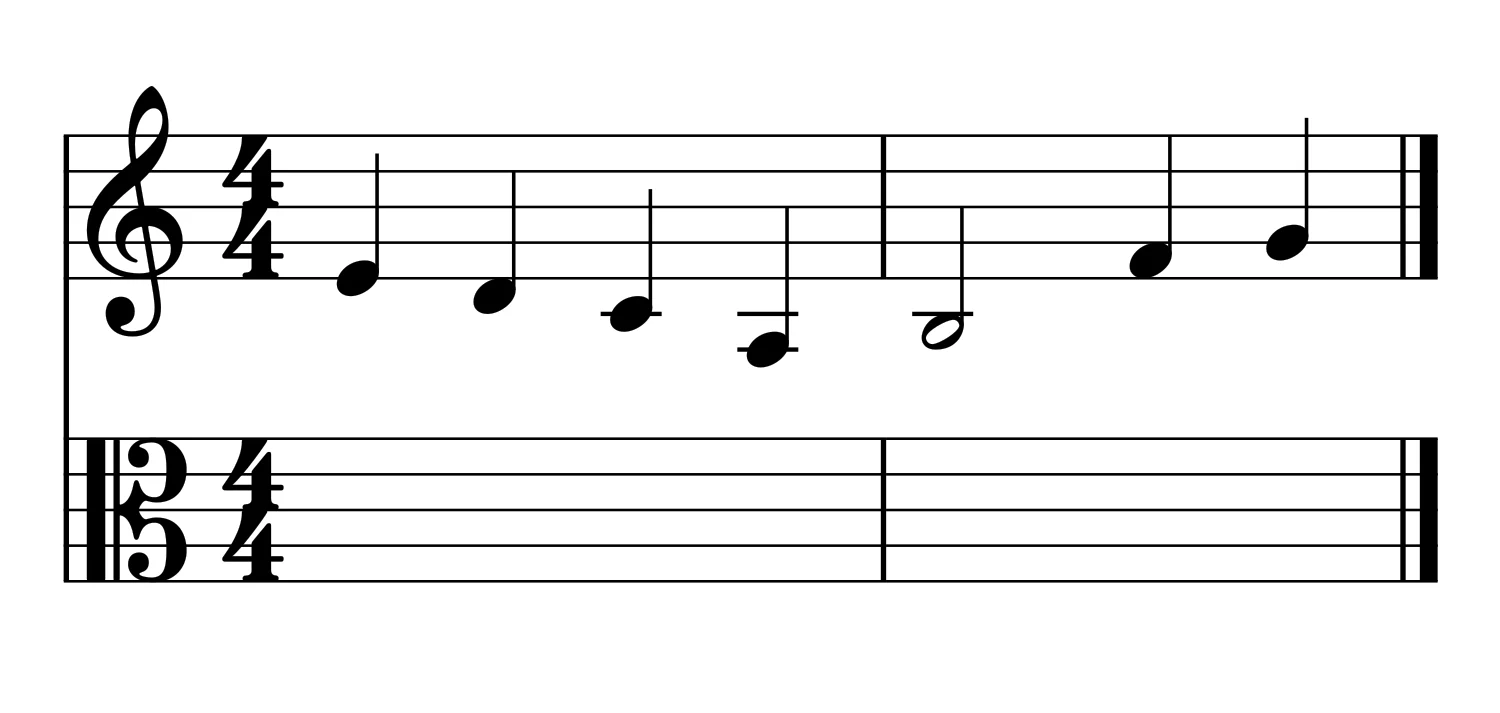
For the text version of the worksheet, use the treble staff positions below. Count staff lines and spaces from the bottom. Ledger lines are the short lines that extend the staff. Notation, Music Theory for the 21st-Century Classroom
- Measure 1 has four quarter notes. Start on the bottom line, then move to the space just below it, the first ledger line below the staff, and the second ledger line below the staff.
- Measure 2 starts with a half note in the space between the first and second ledger lines below the staff. The next two notes are quarter notes, one in the first staff space and one on the second staff line.
Once you've written both measures, cover the treble version and read your alto part back aloud. Include the octave number each time. Once the short phrase feels familiar, try reading a longer excerpt. Alto clef scoring drills, Orchestration Online
Check your alto staff
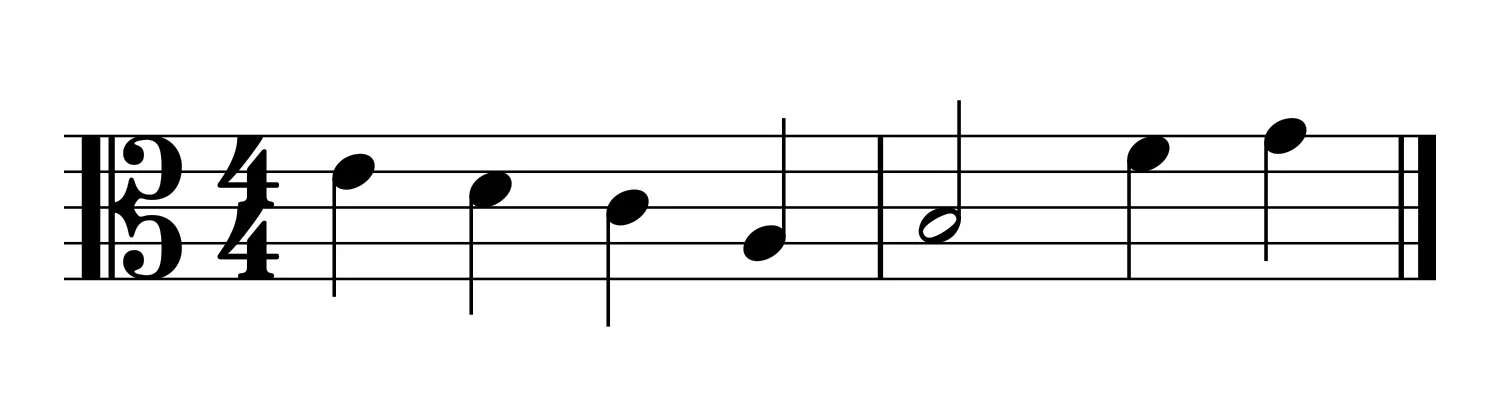
| Measure | Starting beat | Pitch | Length | Alto staff position from the bottom |
|---|---|---|---|---|
| 1 | 1 | E4 | Quarter note | Fourth line |
| 1 | 2 | D4 | Quarter note | Third space |
| 1 | 3 | C4 | Quarter note | Third line |
| 1 | 4 | A3 | Quarter note | Second line |
| 2 | 1 | B3 | Half note | Second space |
| 2 | 3 | F4 | Quarter note | Fourth space |
| 2 | 4 | G4 | Quarter note | Fifth line |
Check the first note for two easy slips. Copying its treble position onto the bottom line of the alto staff gives you F3. The space just below the alto staff gives you E3, an octave too low. E4 belongs on the fourth line, one line above C4.
In the second measure, count beats one and two on the B3 half note. F4 starts on beat three and G4 starts on beat four. Durational Symbols, Music Theory for the 21st-Century Classroom
Try one note again tomorrow
Pick a note you missed or had to count twice. Write a question like “Where is B3 in alto clef?” on one side of a card and “Second space from the bottom, just below C4” on the other. Tomorrow, draw the note before flipping the card. A few days later, try it the other way around. Look at the note you drew and say its letter and octave from memory. Music theory flashcard prompts
This article and worksheet were drafted and edited with AI assistance. The cover illustration is AI-generated.